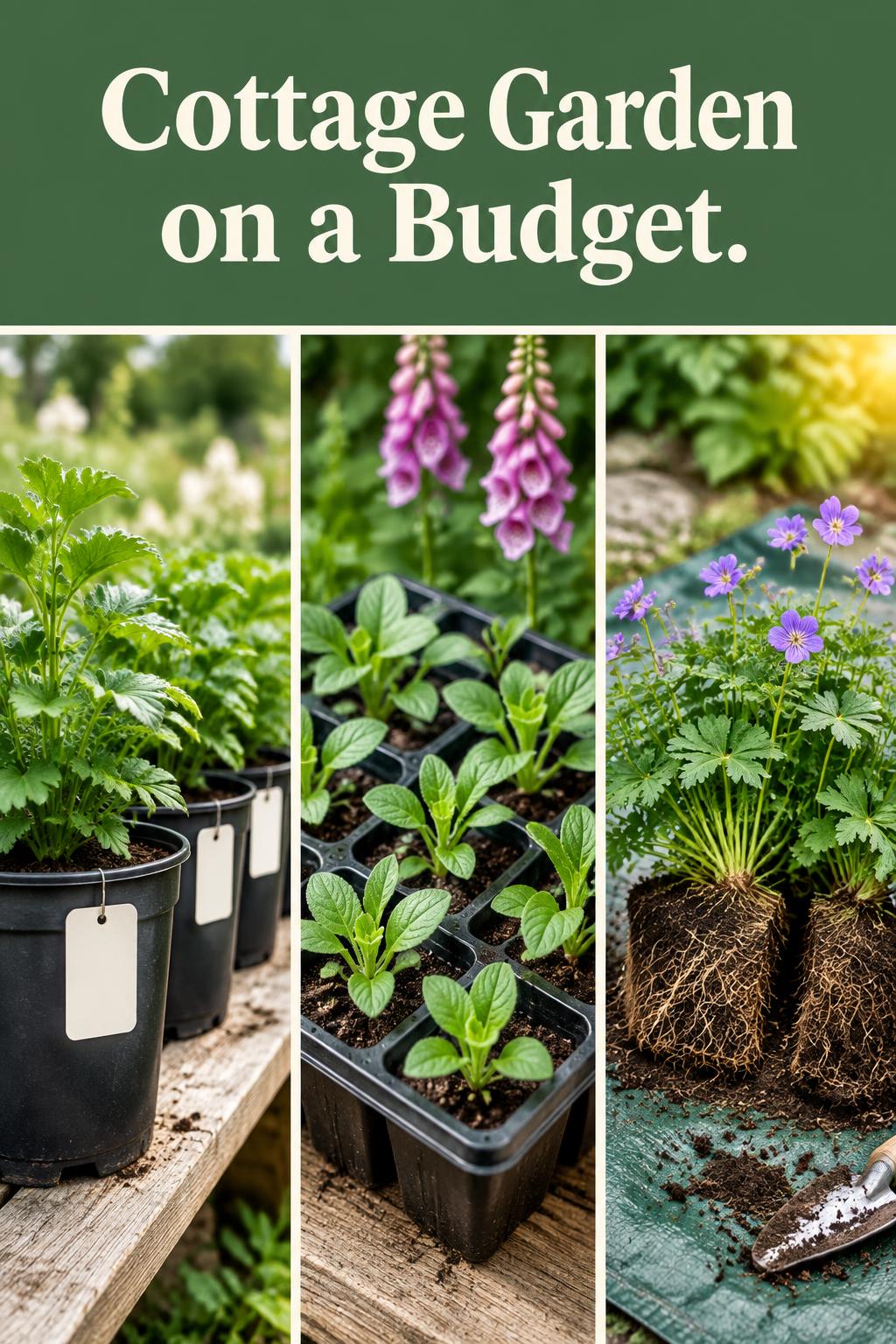
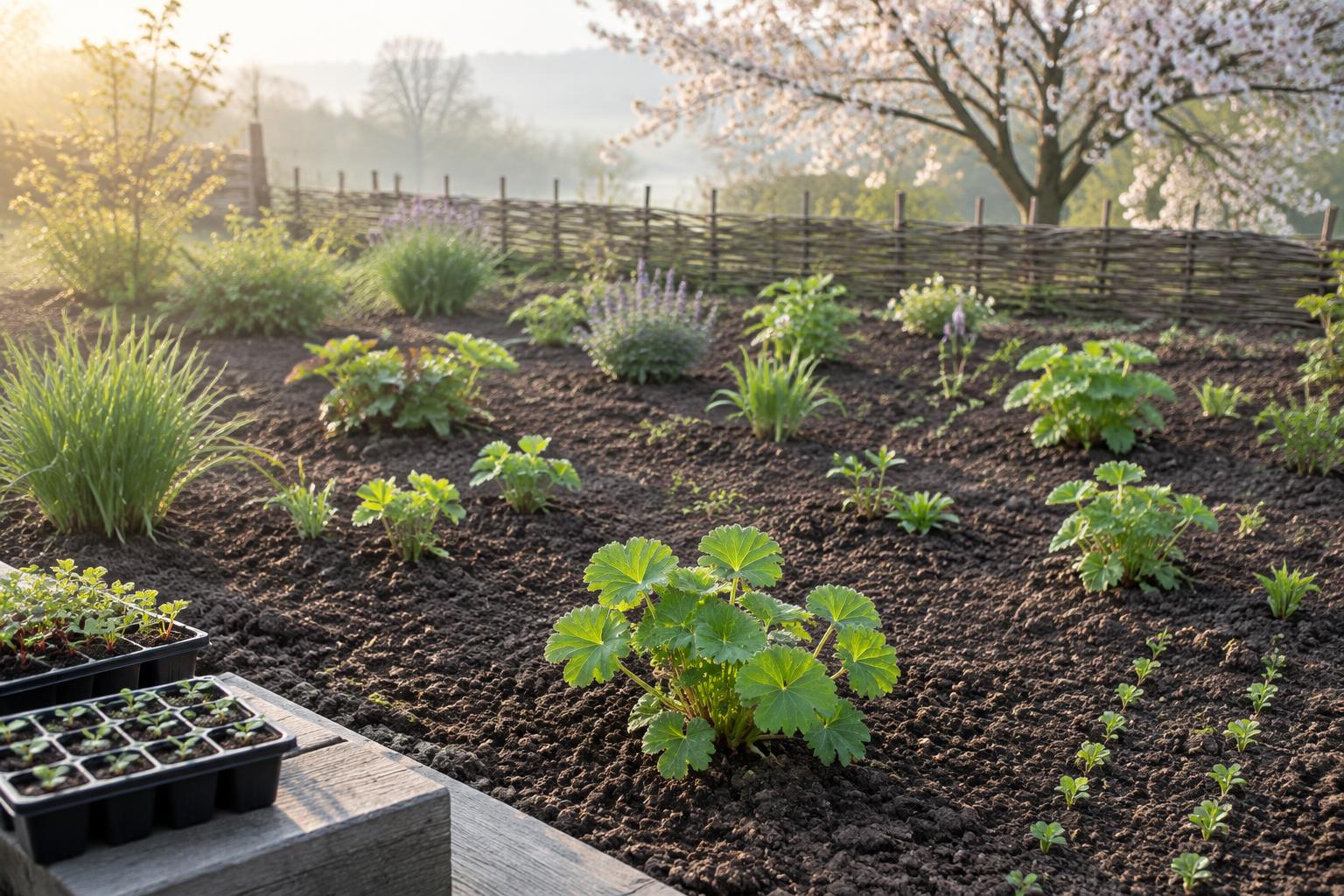

$305.82. That’s what 18 gallon perennials cost for one 4 x 10 ft bed at $16.99 a pot (an independent garden center, November 2026), before a bag of soil goes in the cart. A cottage garden on a budget fills the bed in a different order: buy six perennials that divide, sow the other twelve spots from three seed packets, and let years two and three do the filling. Same bed, $111.81. The catch is time.
TL;DR
- At 18 in spacing a 4 x 10 ft bed holds 18 plants (40 sq ft x 0.44 = 17.6, rounded up), which is $305.82 in gallon pots at $16.99 (one independent garden center, November 2026) or $111.81 as six gallon pots plus three seed packets.
- Sow cosmos for flowers the first summer and foxglove and hollyhock for spires in the second, since those two biennials spend year one as a low leaf rosette.
- Buy perennials that divide, such as hardy geranium, garden phlox and catmint, then split them every two to four years and ask neighbors for divisions in spring.
A Cottage Garden on a Budget Starts With One Priced Bed
Price the bed before you shop. Take one 4 x 10 ft bed: 40 square feet, narrow enough to reach into from the front. Wherever it sits in your cottage garden layout, the math works the same way.
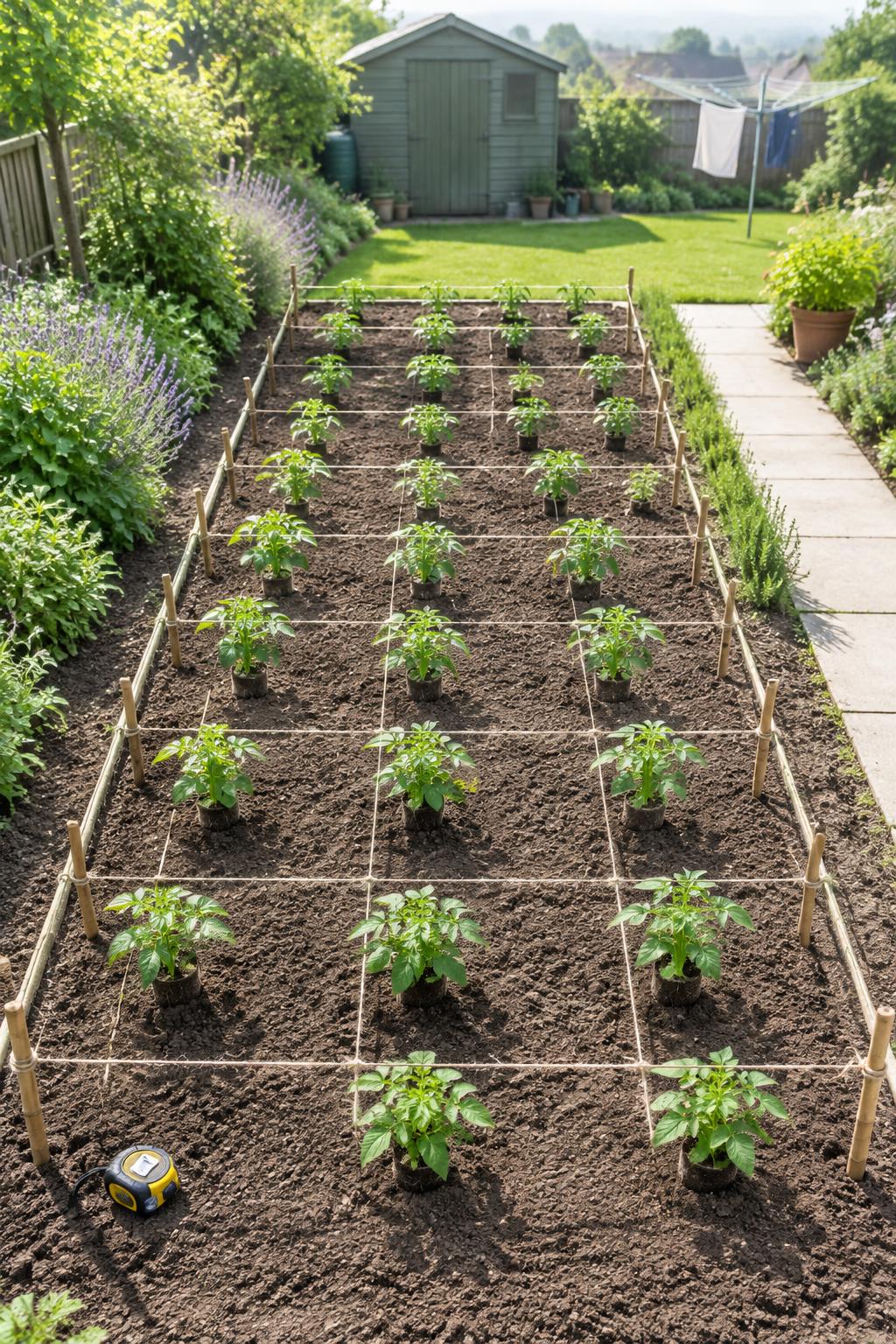
Spacing sets the plant count, and the plant count sets the bill. At 18 in apart, center to center, each plant gets 2.25 sq ft, which works out to 0.44 plants per square foot. Multiply: 40 x 0.44 = 17.6, so 18 plants. Tighten to 12 in and you need 40. Set them in staggered triangles, not rows.
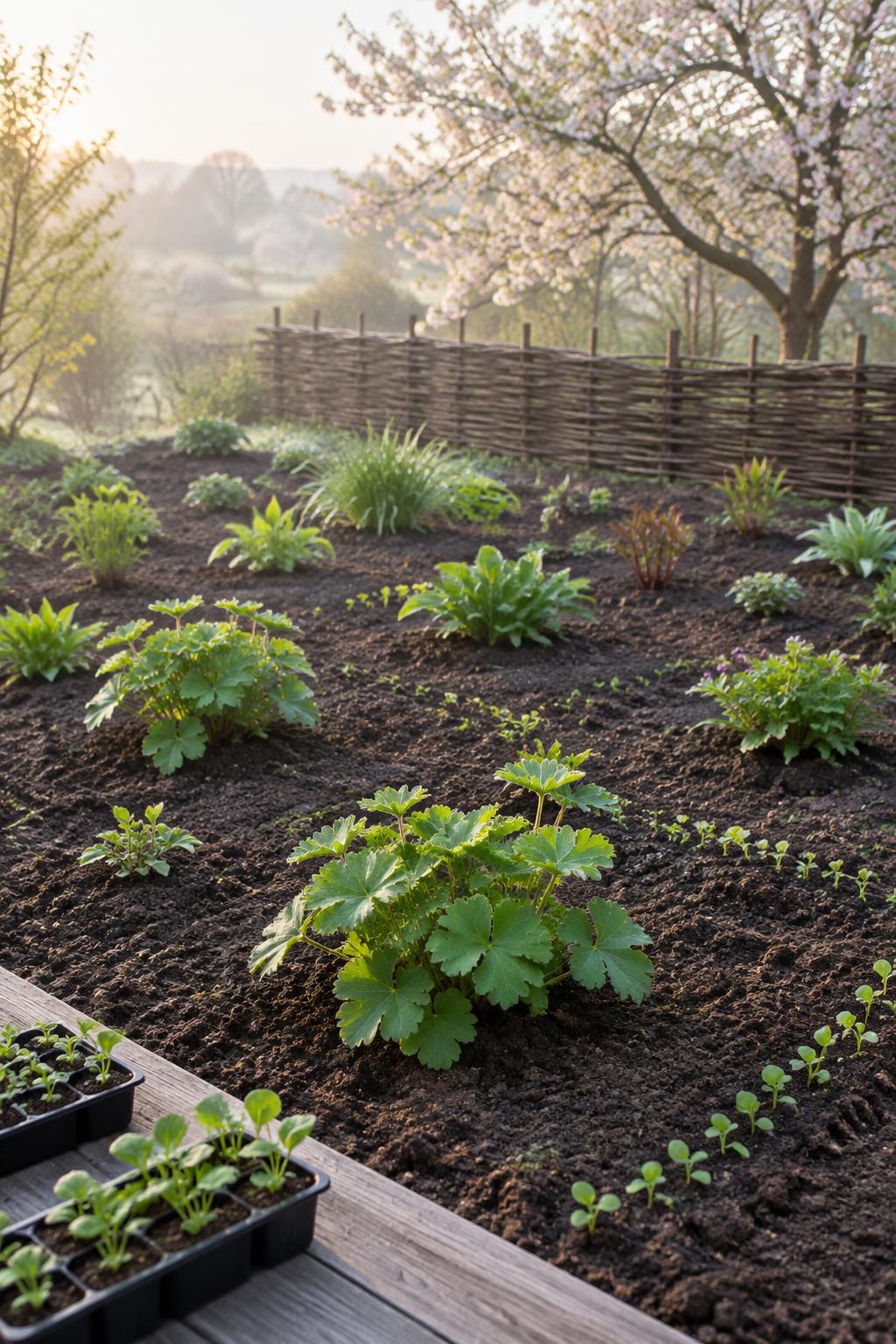
Most beginners buy too many plants, the same way they buy too many tools. A 4-inch potted perennial spreads to cover two or more square feet in two to three years, which is about the room 18 in spacing leaves. The gaps you see in May are the plan working, not a mistake.
Work in this order in year one:
- Ask a neighbor for divisions in spring, when gardeners are splitting their own plants.
- Buy six perennials, and only ones that divide later.
- Sow annuals after the last frost, and biennials in spring or late summer.
- Divide the bought plants in year two or three.
The all-pot bed is 18 x $16.99 = $305.82. The plan comes to 6 x $16.99 = $101.94 in pots, plus $9.87 for three packets, so $111.81. Every total here covers plants only. Soil, mulch, edging, seed-starting supplies and your Saturdays are extra.
Gallon Pots, Plugs or Seed: What the Same Bed Costs Each Way
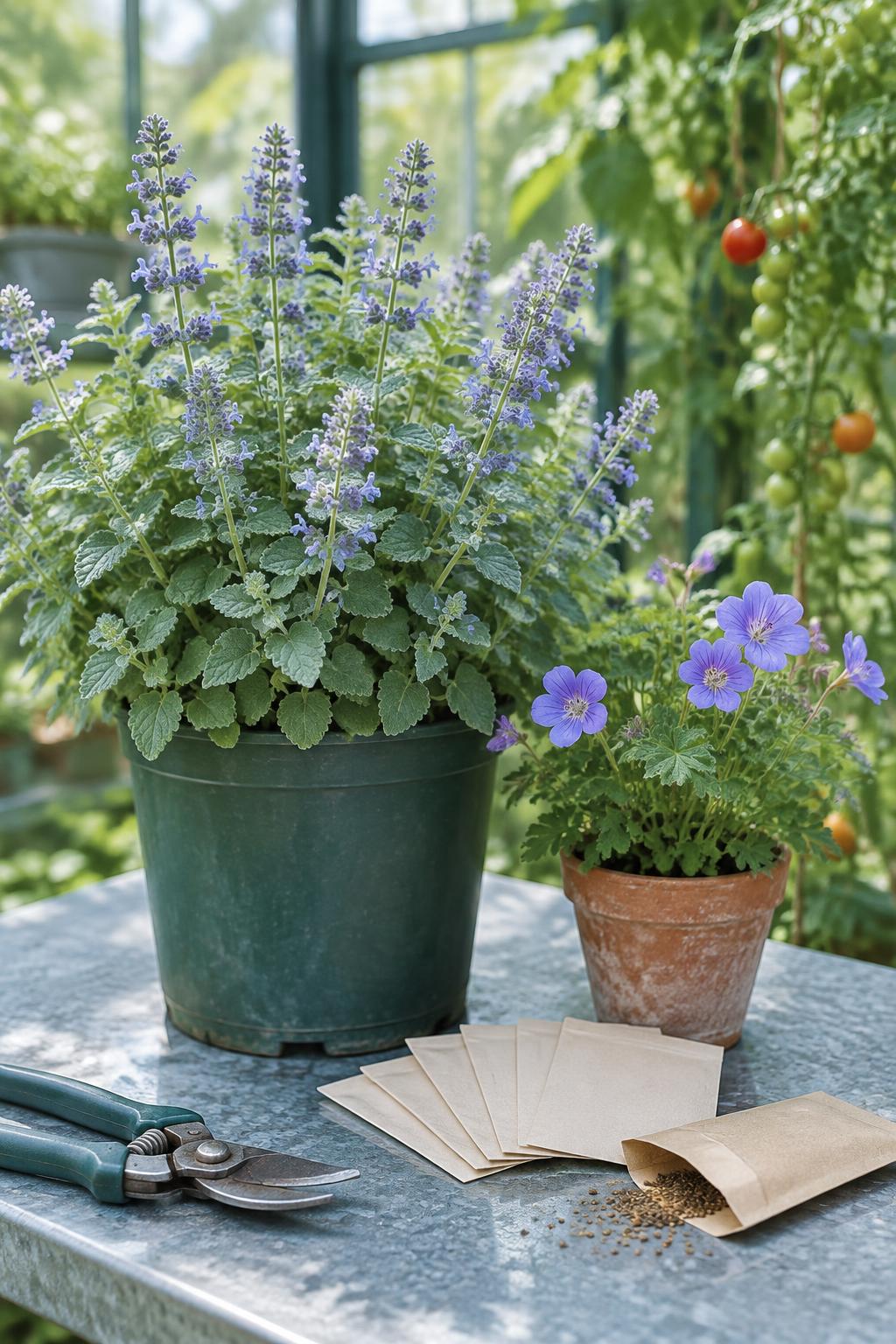
Gallon prices were all over the place in November 2026, from $8.99 on an end-of-season markdown to $39.99 in the top tier of one store’s price sheet. My benchmark is one store’s price: $16.99 for catmint and coneflower at an independent garden center in Fort Collins, Colorado. Seed packets ran $2.69 to $4.49 from online seed sellers.
| Route for the 4 x 10 ft bed | What you buy | Cost (prices checked November 2026) |
|---|---|---|
| Full look, tight | 40 gallon pots at 12 in, $16.99 (independent garden center) | $679.60 |
| Full look, proper spacing | 18 gallon pots at 18 in, $9.99 (chain) | $179.82 |
| Full look, proper spacing | 18 gallon pots at 18 in, $16.99 (independent garden center) | $305.82 |
| Full look, proper spacing | 18 gallon pots at 18 in, $29.99 (branded, chain) | $539.82 |
| Small pots | 18 4.5-in pots at $8.99 (independent hardware and garden store) | $161.82 |
| Plugs | No retail plug price found; one wholesale tray is 50 cells at $425.97 | Not cheaper at home quantities |
| The plan | 6 gallon pots at $16.99 (independent) + foxglove $4.49, hollyhock $2.69, cosmos $2.69 | $111.81 |
| The plan, chain prices | 6 gallon pots at $9.99 (chain) + the same three packets | $69.81 |
Small pots are already cheap. At $8.99, 4.5-in pots nearly halve the gallon bill, and smaller plants usually catch up in a season or two, so the trap is the gallon pot specifically. Plugs didn’t come out cheaper at home quantities: the only plug price was a wholesale tray of 50, and you’d have to buy the whole tray.
The plan beats an all-gallon bed at every price from $8.99 to $29.99. At the $16.99 benchmark it saves $194.01 ($305.82 minus $111.81), which means you pay about 37 cents on the dollar. Across that range the plan costs 35 to 39 percent of the pot version. The plan row assumes all twelve sown spots take, which they won’t every time. Buy the extra packet.
Sow the Annuals and Biennials
The cheapest plants are the ones you sow, and the two groups keep very different clocks.
Annuals that flower the first summer
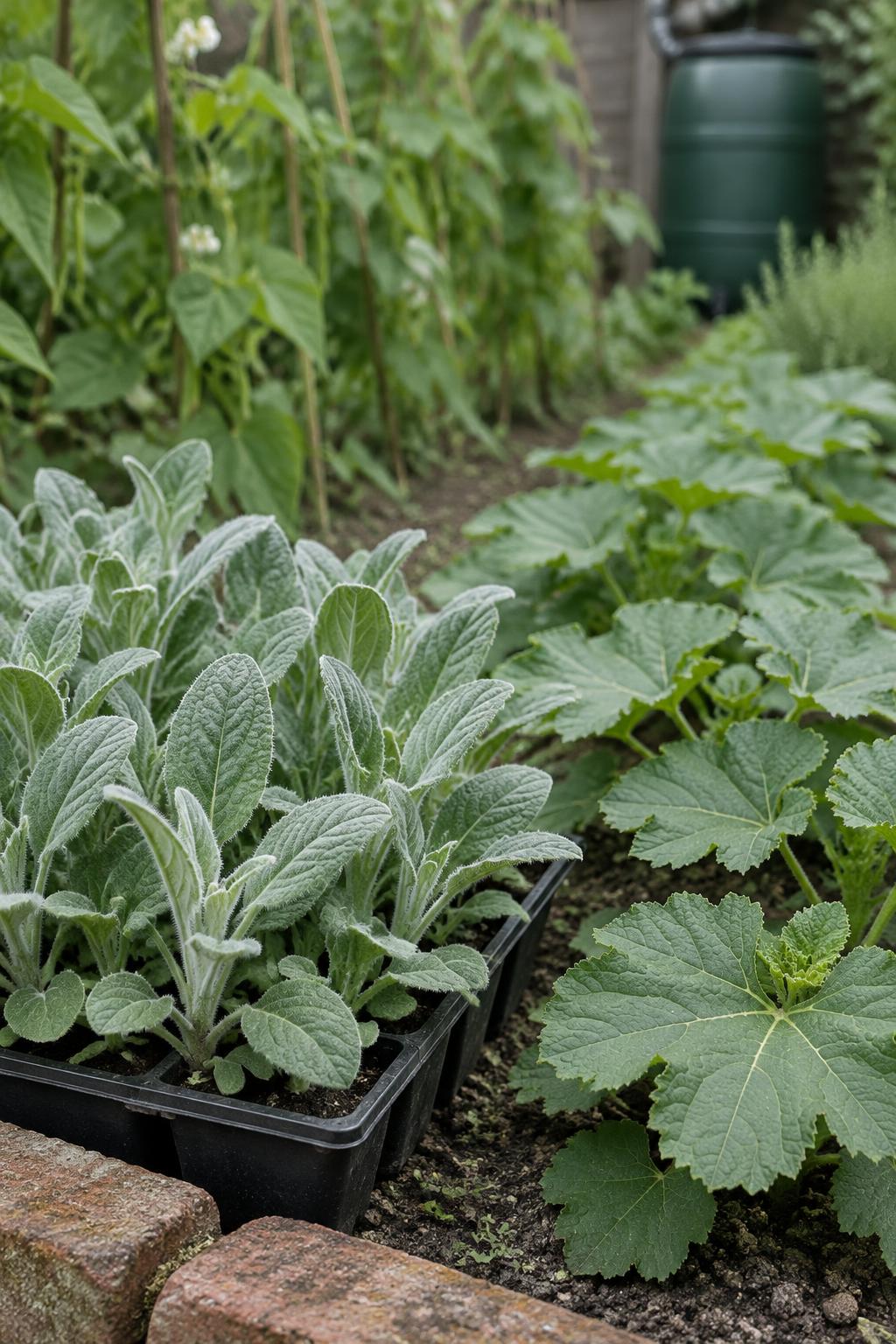
Cosmos carries year one. Sow it straight into the bed once frost is done and the soil is around 65°F. Cover the seed with about 1/8 in of soil and expect sprouts in 7 to 14 days. Thin to 12 to 18 in. It flowers from summer to frost and wants poor-to-average soil; rich soil gives weak stems and sparse, late flowers.
Biennials that make you wait a year
Foxglove and hollyhock are the tall spires everyone pictures, and they make you wait. Year one is a low rosette of leaves with no flowers. Year two sends up the stalk, 3 to 4 ft for common foxglove, blooming in early summer. You can sow foxglove in late summer for flowers the next year, or start it indoors in late spring. Hollyhock goes in a week or two after the last frost.
The exception is foxglove. ‘Foxy’ and the Camelot and Dalmatian series bloom from seed in their first year, and Foxy is compact at 2 to 3 ft. That gets you color sooner, but it’s a different plant from the classic tall foxglove.
Someone sows foxglove in spring, sees nothing but a flat clump of leaves by August, decides it failed and pulls it as a weed. That rosette was next June’s flower spike. The other way to lose it is to bury the seed. Foxglove needs light to germinate, so press it onto the surface and leave it uncovered.
Divide and Swap First
Ask around first. A division from a neighbor’s healthy clump is a proven plant, and can be more established than one from a nursery. Spring is when to ask, because that’s when gardeners are digging and splitting anyway. Plant swaps work the same way.
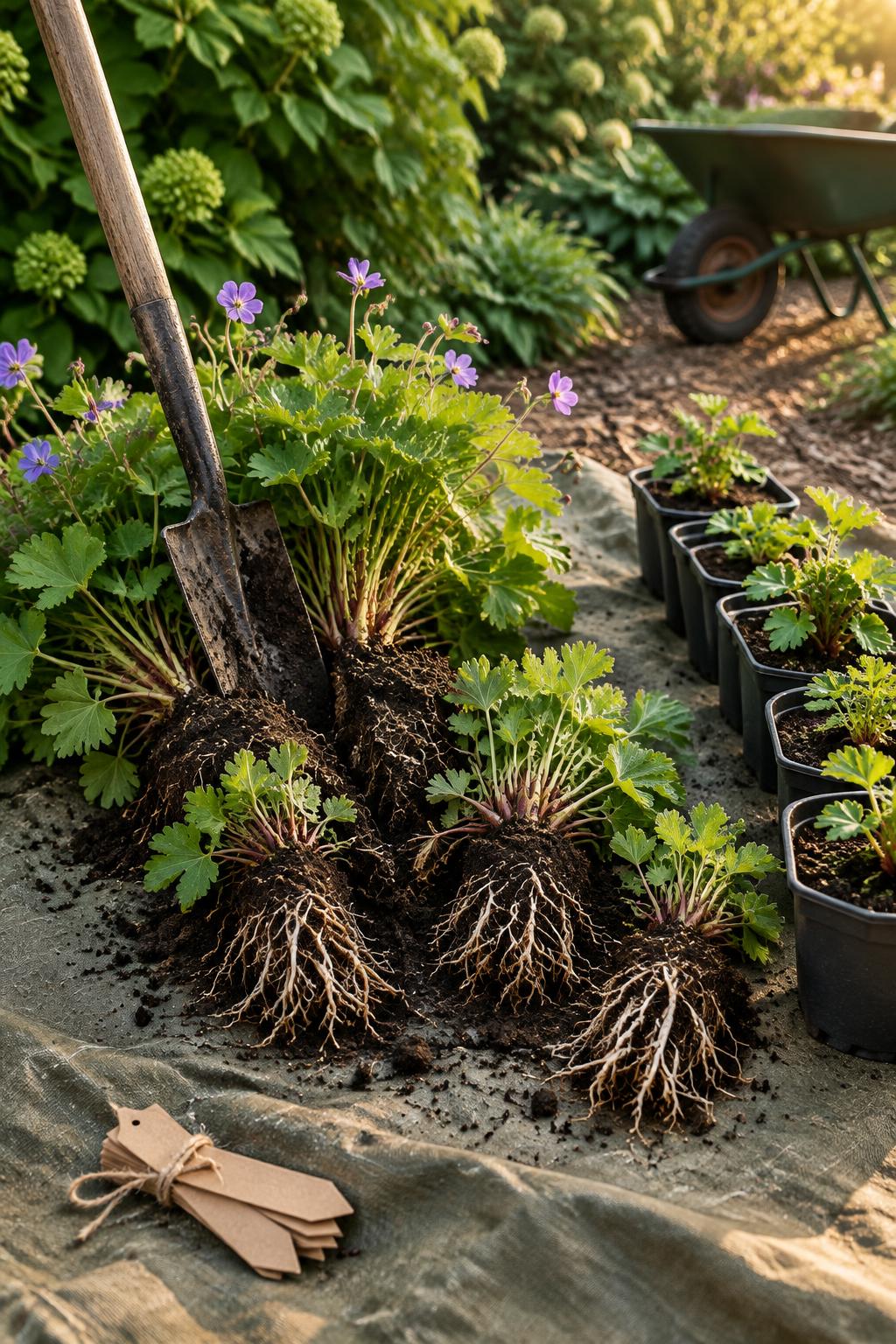
Then pick your six bought plants by whether they’ll multiply. Hardy geranium splits every two to four years, in spring or late summer to fall. Garden phlox goes every three to four years in the same seasons. Catmint is the most forgiving: divide it in spring, and every year if it needs it. Skip a first-year plant. One you bought this spring has nothing to split yet.
- Dig the whole root ball on a cloudy day.
- Split it with your hands, a sharp knife, a spade or two garden forks back to back.
- Keep three to five strong shoots and healthy roots on each piece, and throw out the old woody center.
- Replant at the same depth right away, then mulch and water steadily through the first growing season.
I count three pieces per clump, and that’s a cautious number. One $16.99 catmint split into three gives two extra plants, worth $33.98 at the same price, so it pays for itself twice over. Split two of the six bought clumps in year two and that’s four new plants, worth $67.96. Divisions usually flower well from their second season, though some bloom sooner.
What Years One, Two and Three Honestly Look Like
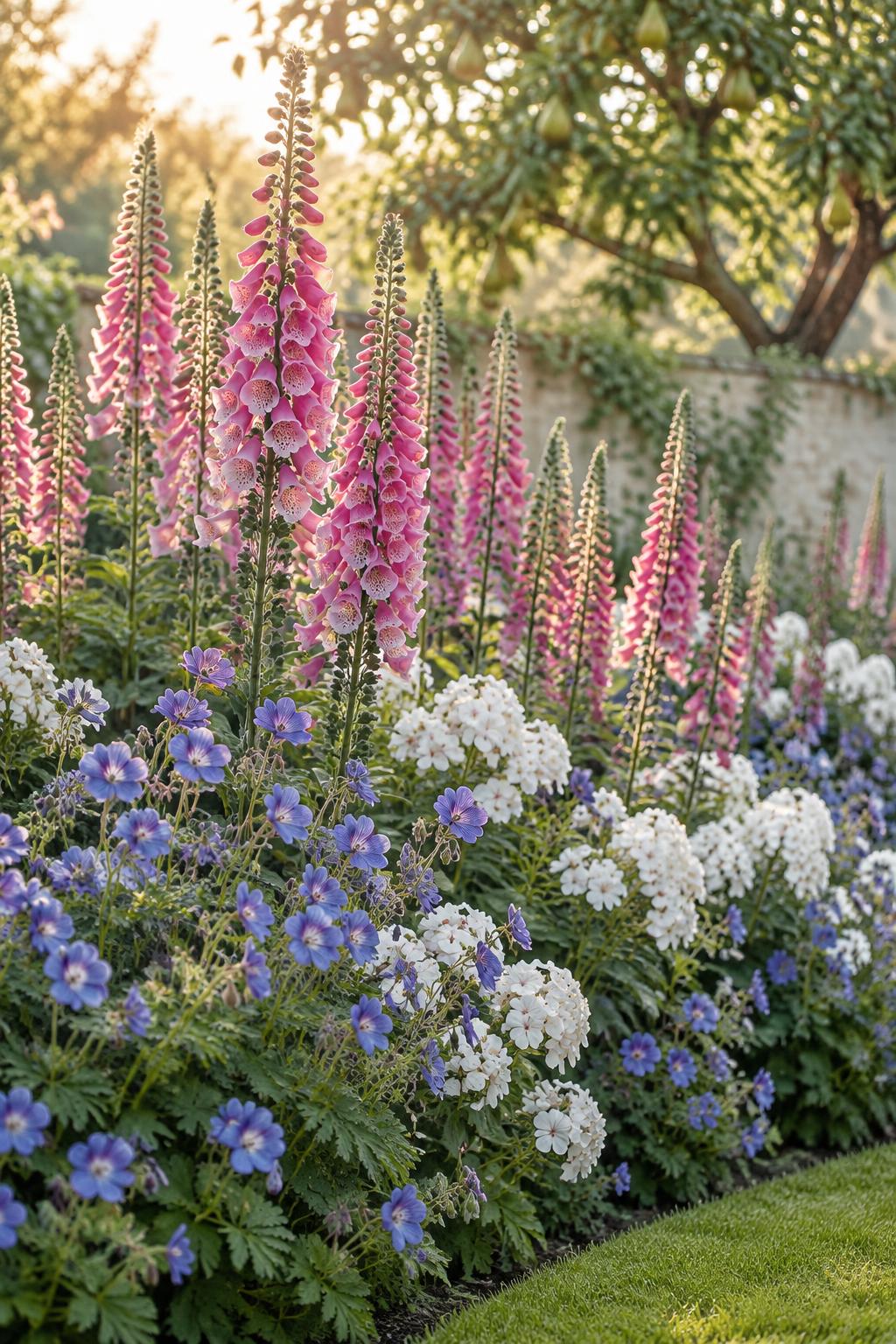
The old saying is right: the first year they sleep, the next year they creep, the third year they leap. In year one the perennials put their effort into roots, with leafy growth and few or no flowers. Cosmos is what blooms that summer. In year two the perennials spread and flower properly, and the foxglove and hollyhock rosettes send up their first spires. By year three the bed fills out.
So budget time the way you budget money. The project always takes one more weekend than the video said, and a garden takes one more season. Plan for it out loud so August of year one doesn’t look like a failure.
A retired teacher in my Saturday class built a bookcase that came out a quarter inch out of square. I told her to keep it, and she uses it every day. Functional beats perfect, and a sparse first-year bed is the same deal. The right plants are in the right places, working underground. Don’t judge it in July and run back to the garden center for more pots to fill the holes.
Year two is when the free plants start showing up. Foxglove and hollyhock self-seed, so some plants will be flowering while others are still rosettes, and the planting keeps going like a perennial one. If you want to know which self-seeders to welcome, that depends on the plant and where you live.
Spend on What Lasts, and Pull Seedlings That Turn Into Work
You saved money, so spend it where it lasts. Peonies can live for decades and can sit undisturbed for many years. Shrub roses were $19.99 for a 1-gallon at the chain store and $49.99 for a 2 or 3 gallon at the Colorado hardware store’s 2026 price sheet. Delphinium, Shasta daisy and many columbines are short-lived, and columbine is hard to divide. Sow those instead.
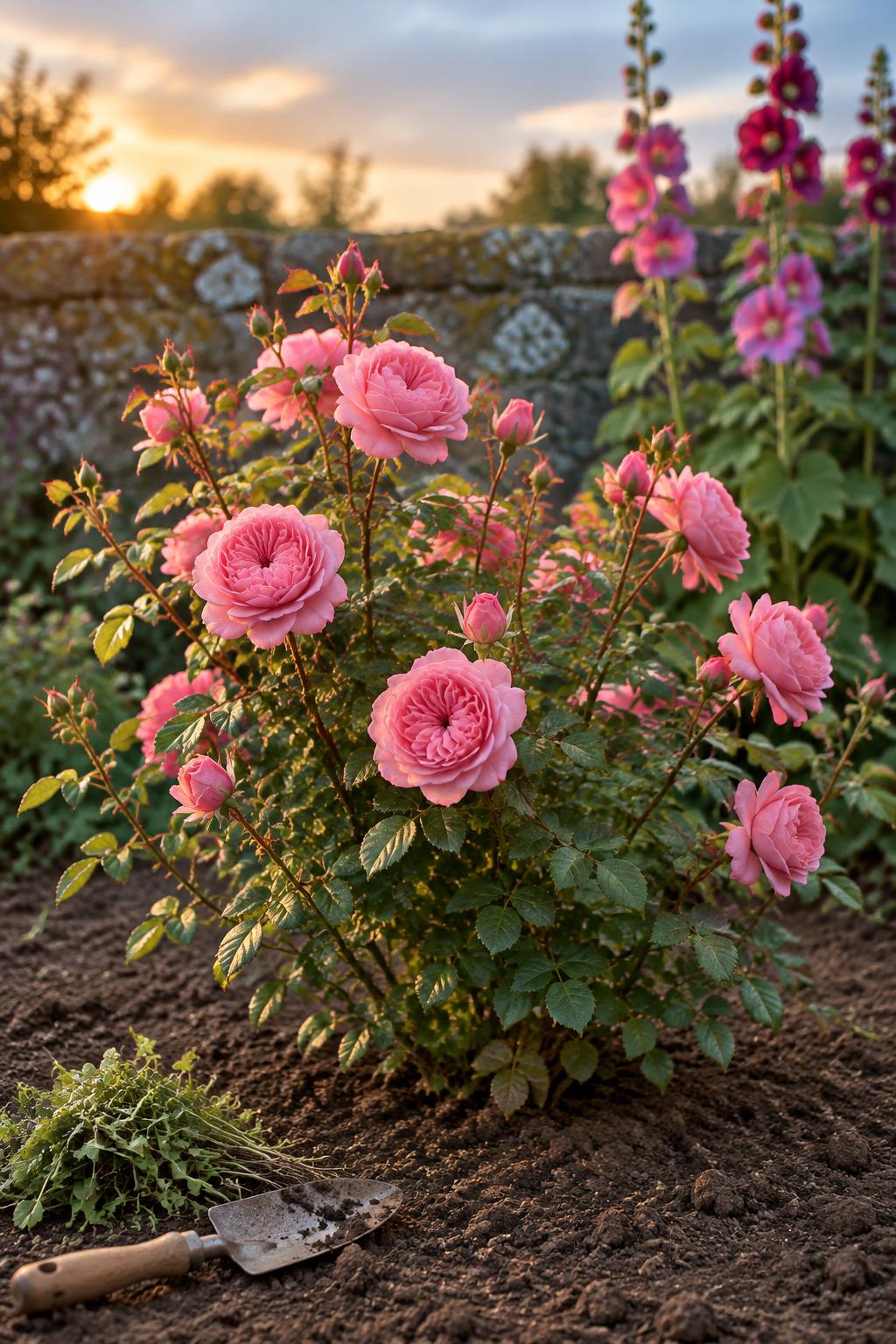
Free seedlings cost you time instead. A single foxglove can set 1 to 2 million seeds. Cosmos self-seeds so freely it can turn weedy. Before you let any volunteer stay, check your state or regional invasive-plant list. Keeping self-seeders in check gets easier once you know which ones to pull.
I’m fixing up a ranch house outside Knoxville room by room, so slow and finished suits me. Start by measuring your bed. Multiply the square feet by 0.44 and write the plant count down before you go anywhere near a garden center. Then ask one neighbor for a division. For the 4 x 10 ft bed that’s 18 plants, and the plan comes in at $111.81 instead of $305.82. That figure assumes $16.99 a gallon pot and all twelve sown spots taking.
FAQ
Can you start a cottage garden in the fall?
Yes, and fall is a good time to start. Plant perennials from late August to early October, at least 6 to 8 weeks before the first hard frost, and they get a head start in spring. Sow foxglove in late summer for flowers next year. Nurseries also mark plants down in late fall, sometimes by half.
Do cottage garden flowers need rich soil?
No. The ones you sow here want good drainage and average soil. Cosmos does worse in rich soil, growing leggy with weak stems and few, late flowers. Foxglove and hollyhock want moist, well-drained soil, with full sun for hollyhock and afternoon shade for foxglove, and hollyhock dislikes wet winter ground. Get a soil test and amend only for what it shows.
Which cottage garden flowers can I grow from cuttings?
Catmint, garden phlox, perennial sage, penstemon, veronica and asters all root well from stem cuttings, usually in 4 to 6 weeks. Take soft cuttings from young shoot tips in spring or early summer. Catmint cuttings 6 to 8 in long will even root in a glass of water. Foxglove and hollyhock grow from seed.