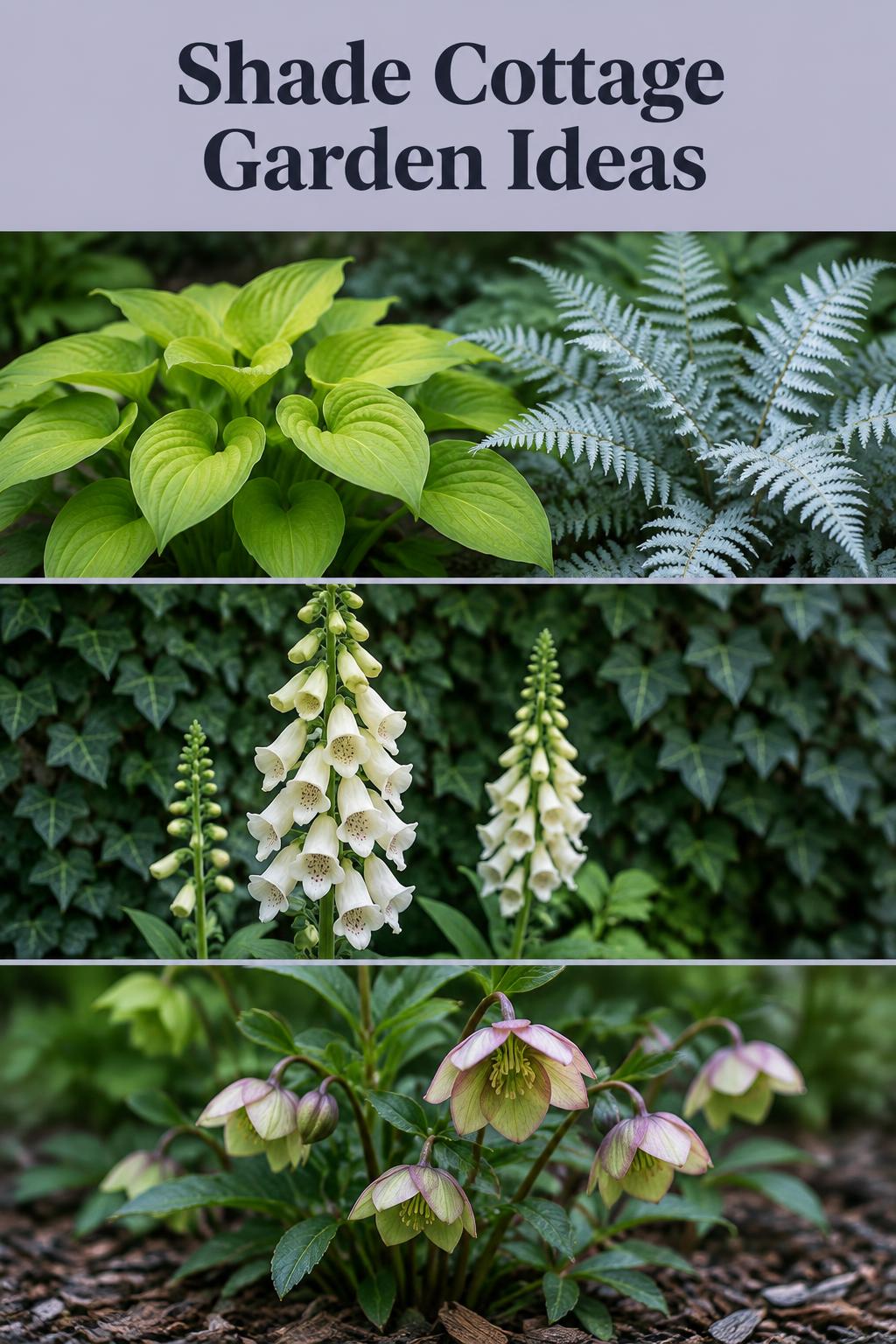
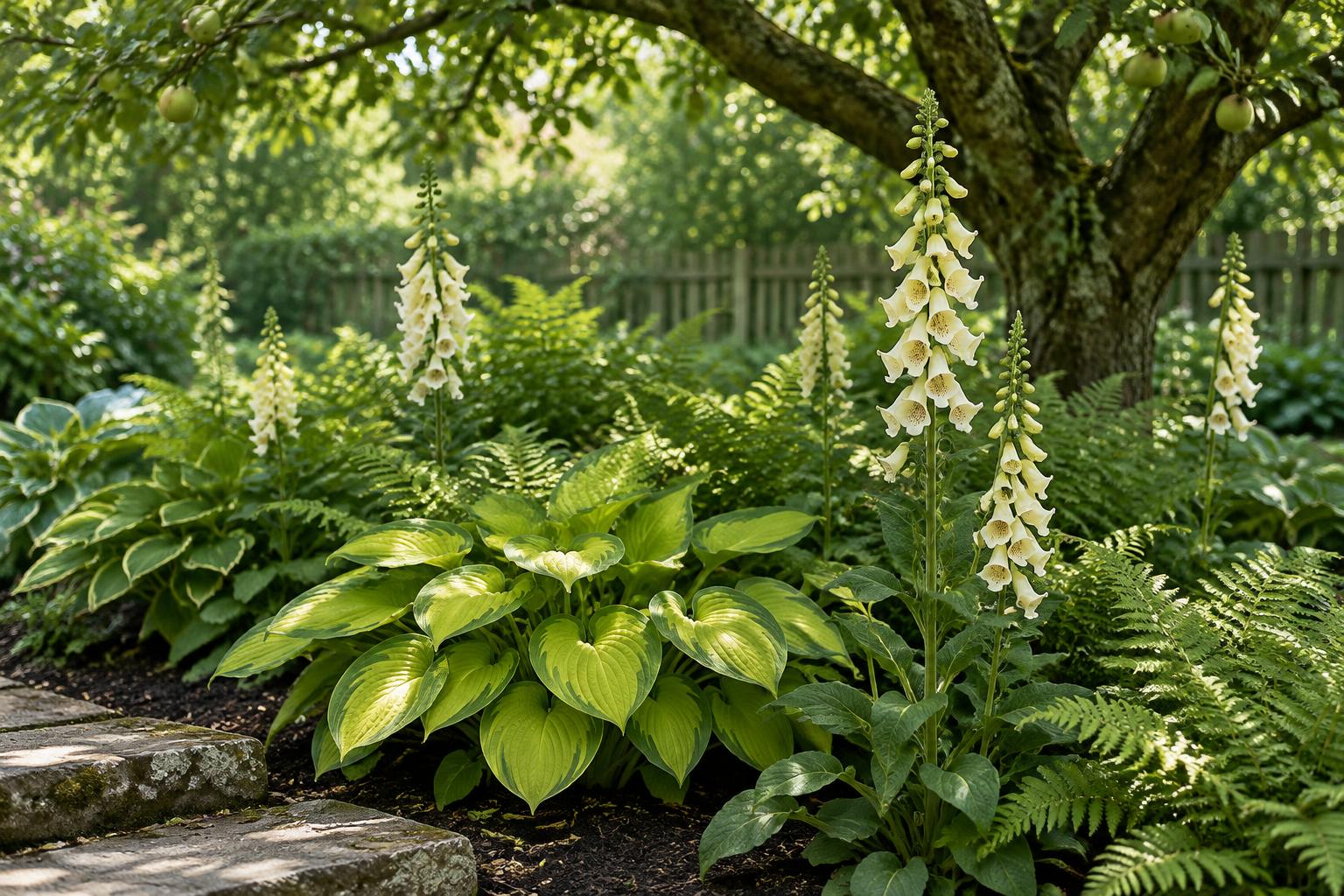
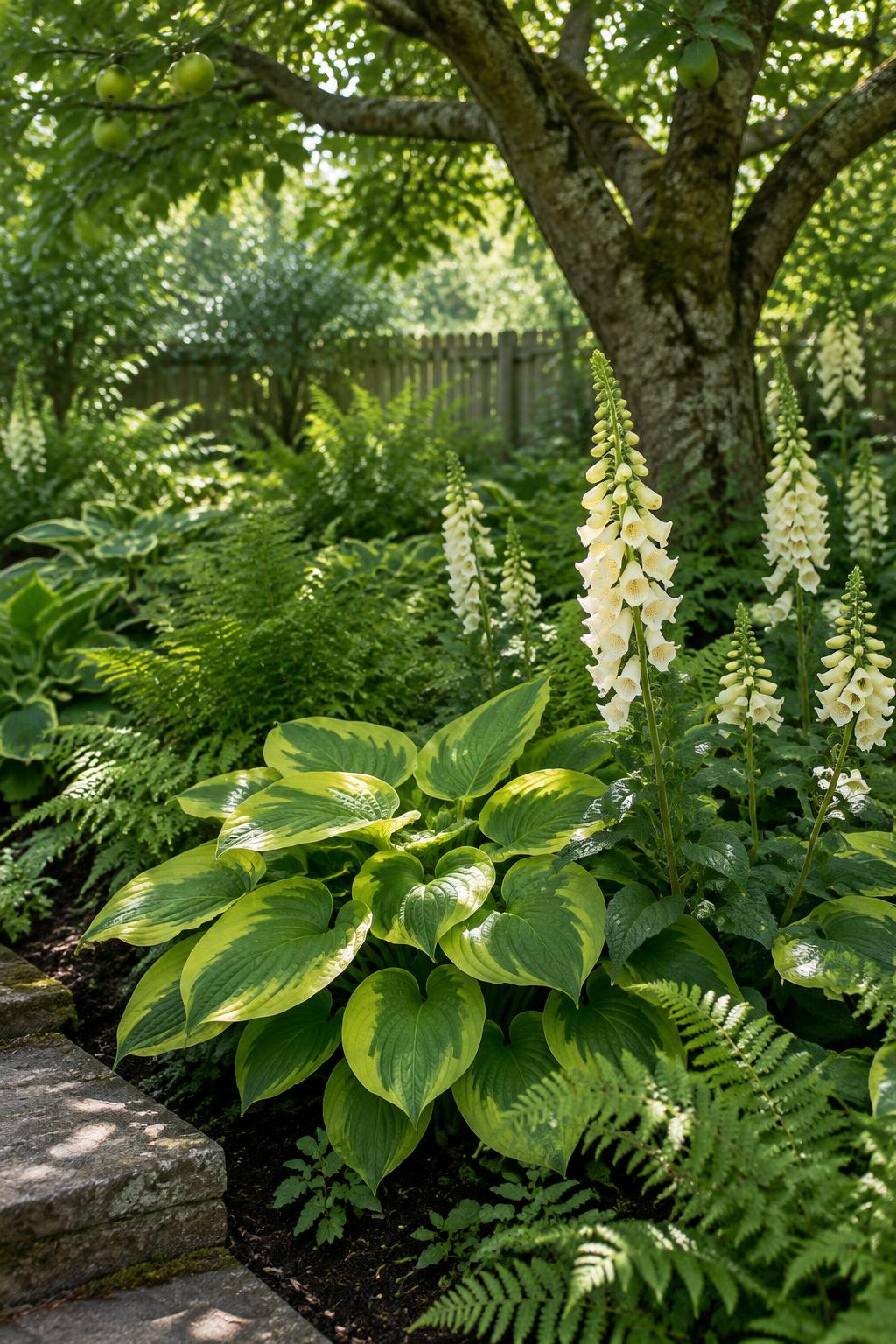
In shade, the leaf does the work the flower does in the sun. You buy the picture from the sunny catalog, plant it under the maple, and get sulking plants and a weaker copy of someone else’s garden. A shade cottage garden works when you stop forcing the sun plants and change what it is made of: leaves first, in contrasting sizes and lighter greens, with a handful of shade-tolerant cottage flowers set among them as accents.
TL;DR
- Name your shade in hours first: full sun is 6 or more hours of direct sun, partial shade is 2 to 6, and deep shade is under 2.
- Build the bed from leaves: bold hostas against fine ferns, with gold hostas where there are 4 to 6 hours of sun and blue hostas in the heavy shade.
- Under a tree, add no more than 2 inches of soil or compost, none within a foot of the trunk, and plant small, moving the hole if you hit a root 2 inches across.
Map the Light First: Dappled, Part-Day and Deep Shade
Light is the first material of any room, and a garden is a room with the ceiling taken off. In winter countries you learn to measure it or you live badly. The same discipline makes cottage garden design work in shade: count the hours of direct sun a bed gets, and let that number choose the plants.
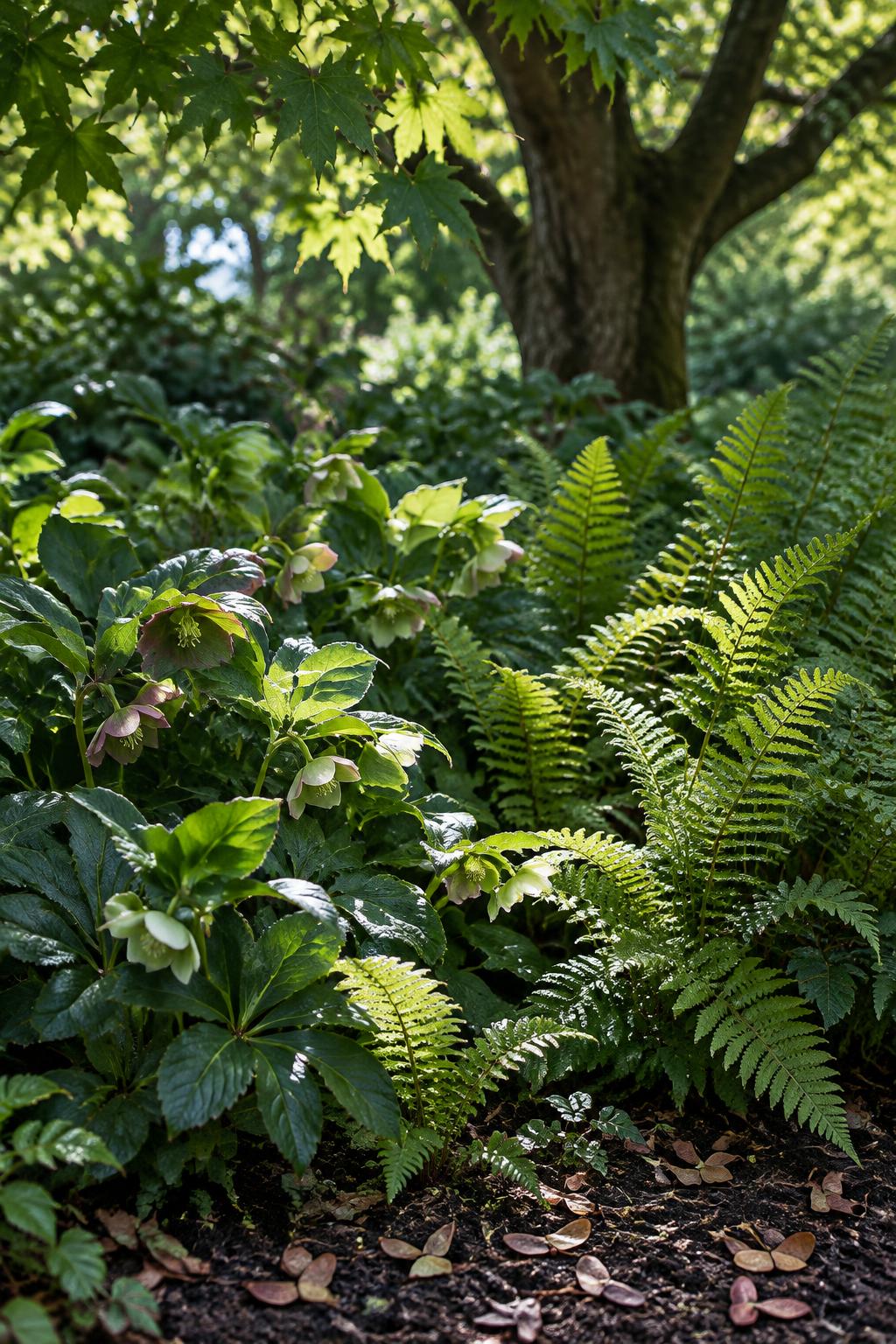
I use NC State Extension’s bands because they are plain. Six or more hours of direct sun is full sun. Two to six hours is partial shade. Under two hours, down to none at all, is deep shade. Nebraska Extension puts light shade at 3 to 5 hours and the Chicago Botanic Garden puts partial sun at 3 to 6, so treat the edges as soft, though the categories hold.
Dappled shade
Dappled shade is set by the canopy. It is the shifting, broken light under a tree with a thin crown, shade through the upper canopy all day. Under a light crown it behaves like part shade. Under a dense one it behaves like full shade. You see it most clearly in spring, once the trees leaf out.
Part-day shade
Here it matters which half of the day you get. Morning sun is gentler, and shade plants take it easily. Afternoon sun is a different thing: Nebraska Extension counts a bed in sun from noon until dusk as a full-sun spot, even if the whole morning is shaded. Many shade-tolerant plants prefer four hours of sun or fewer, ideally in the morning or evening.
Deep shade
Very few plants tolerate dark shade all day. The hardest versions are the shadow of a building, ground knotted with tree roots, and spots that stay very wet or very dry. Shade also moves with the seasons and grows as the trees do, so a bed you mapped five years ago may be darker now.
A Shade Cottage Garden Is Built From Leaves, Not Blooms
Shade flowers are quieter than sun flowers. The Chicago Botanic Garden says that in many shade gardens, leaves, with their texture, shape, size and color, contribute more than the flowers do. In shade I would plan the leaves as if there were no flowers at all, and treat every bloom as a bonus.
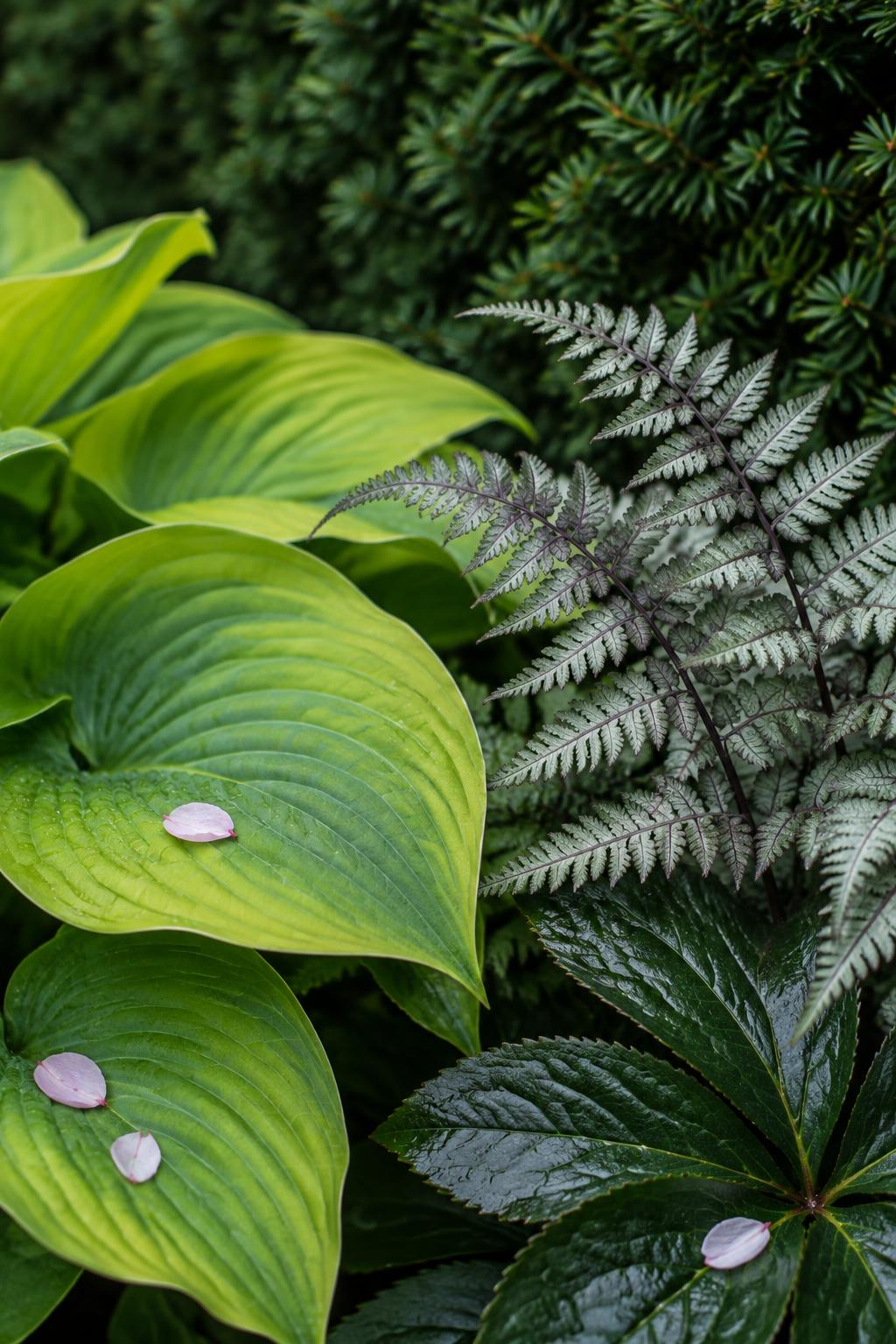
That means you stop copying the sun-loving cottage classics into a spot that cannot feed them, and start working with contrast. A large hosta leaf is coarse. A finely divided wood fern is fine. Put them side by side and each makes the other look deliberate. Japanese painted fern adds silver, and it holds that silver best in light shade, because too much sun washes it out.
Lighter leaves carry the brightness. The garden designer Rebecca Sweet calls yellow-variegated plants the “missing sunshine” of a dark garden, and she has a useful rule for mixing them: contrast the leaf sizes and shapes, and add one bold, solid-colored plant as the referee.
Gold and yellow hostas, though, develop their best color in partial sun, about 4 to 6 hours. In partial to heavy shade they drift to a yellow-green, still pleasant, but no longer glowing. Blue hostas are the opposite. They need heavy shade to keep their blue. So the gold goes where some sun reaches and the blue goes into the dark corner.
The Cottage Flowers That Accept Shade
Most of the cottage flowers that tolerate shade are part-shade plants, which is why they work as accents. Only hellebore, among the flowers, is listed for deep shade; hosta and ferns are the leaf partners that go with it there.
| Plant | Shade it takes | Height | What it needs | Its job |
|---|---|---|---|---|
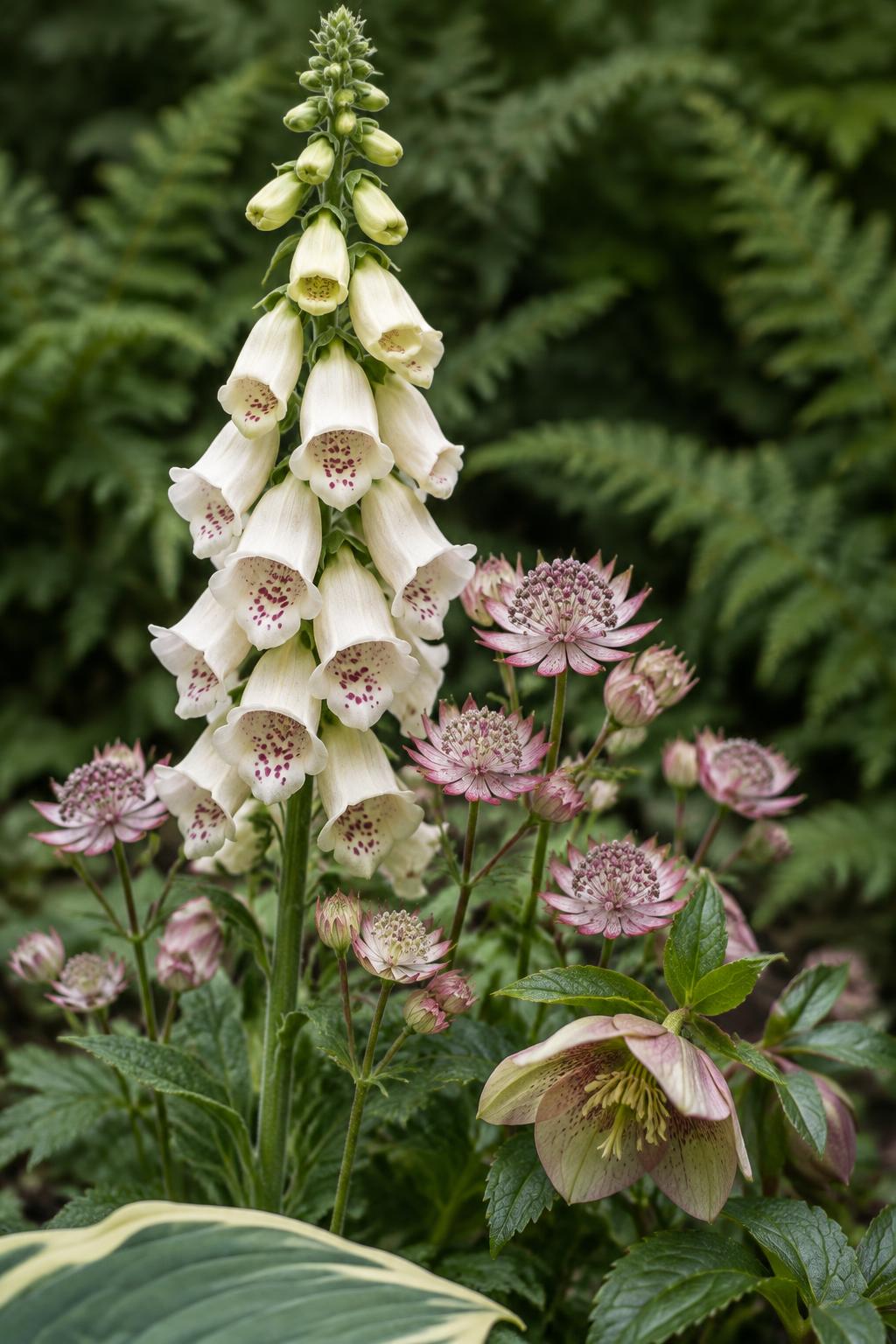
| Foxglove | Partial shade (2–6 h); best with afternoon shade | Tall spike in year two | Moist, organic soil that never dries out; biennial; highly poisonous | Tall accent |
| Astrantia | Part shade: morning sun, dappled the rest; blooms poorly in full shade | Up to 1.5 ft | Fertile, continuously moist soil | Fine foliage against hostas |
| Columbine | Part shade preferred | 0.5–3 ft | Moisture; short-lived (2–3 years) but seeds itself | Accent that seeds about |
| Japanese anemone | Part shade, 4–6 h, morning light | 2–3 ft | Moist, well-drained soil; flops in too much shade; can spread hard | Late flowers, August–September |
| Hellebore | Dappled, partial and deep shade | 1–1.5 ft | Shade from bright winter sun; all parts poisonous | The flower for the darkest spot |
| Hosta | Dappled, partial and deep shade | Varies by type | Moist, well-drained soil; dies back in late fall | Bold leaf |
| Ferns | Most do best in dappled shade | Painted fern 10–15 in; lady fern 1–3 ft | Moist soil | Fine leaf |
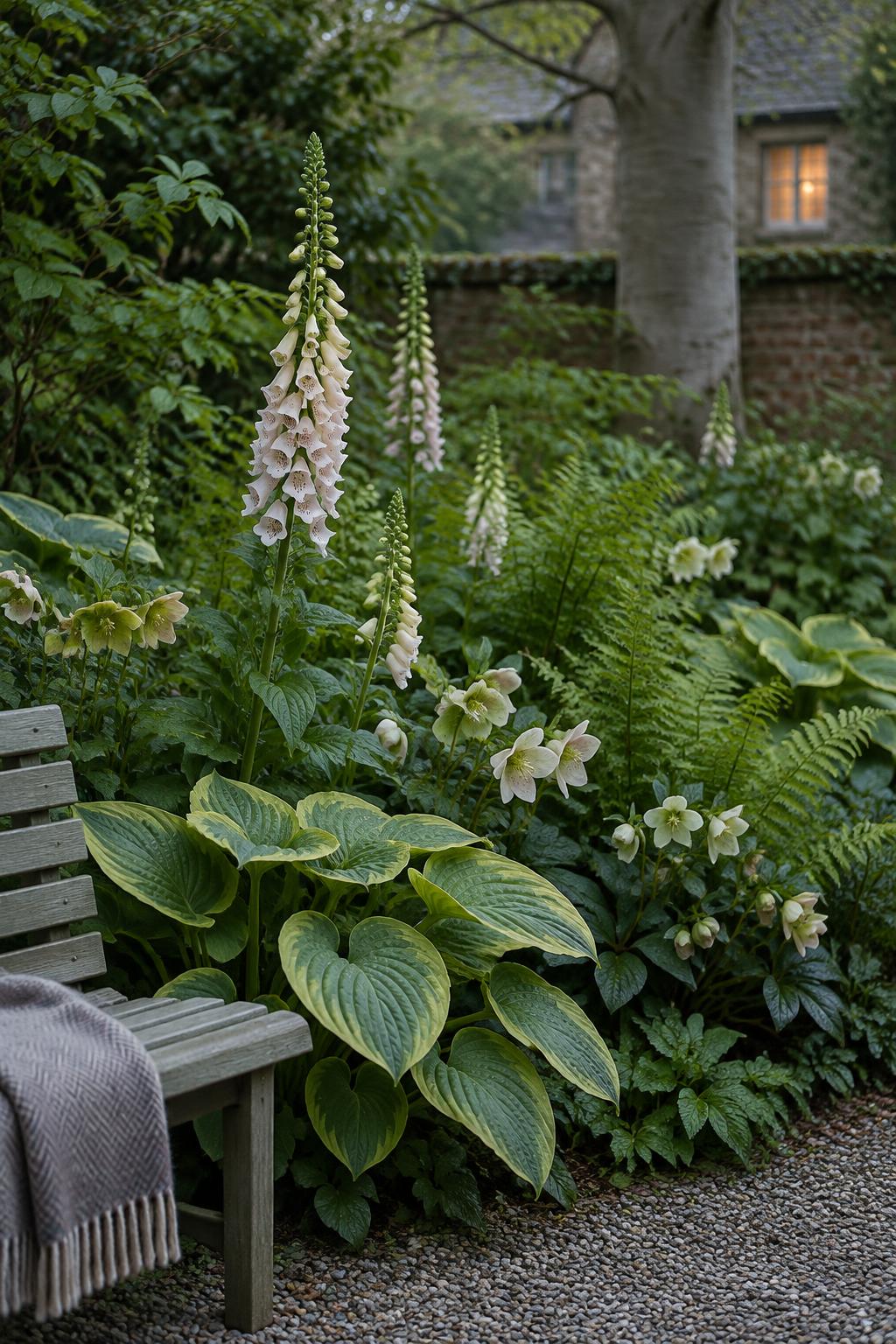
If you plant one flower in your deepest shade, make it hellebore. For the part-shade edge, I would pick foxglove, and I would plant it where you can see it from the house, because it is the one tall line the bed gets.
Under the Tree: Planting Among Roots Without Starving It or the Plants
Penn State Extension puts the problem in one sentence: “Tree roots absorb the available moisture and, when competing with other plants, always win.” Planting under a tree starts from accepting that. Shallow-rooted maples and willows are the most difficult hosts, and a bed under them can dry out faster than a sunny one in a long dry spell.
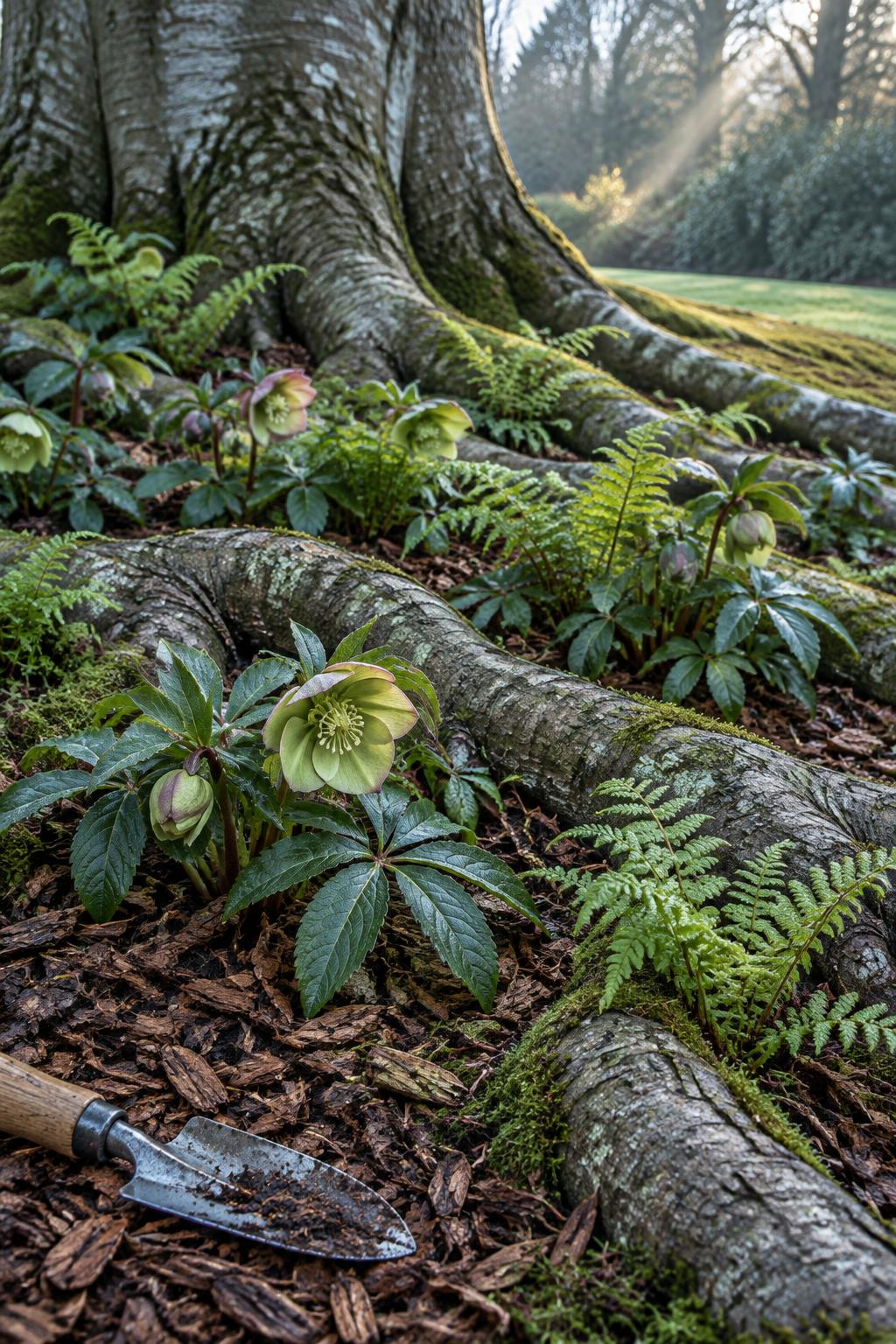
Work small. Clear the grass and weeds with a hand trowel, because a spade nicks roots and bark. Start about a foot from the trunk and leave the root flare alone. Use plugs, spring seedlings or small divisions, and dig each hole only as large as the plant needs. If you uncover a root two inches or more across, refill the hole and move somewhere else. Tennessee’s extension adds a rule of thumb: disturb no more than a third of the root zone at a time.
Go easy on new soil. Add no more than 2 inches of good soil or compost over the roots, and none within a foot of the trunk, where moisture held against the bark can rot it. That is the conservative figure. Other guidance allows 2 to 3 inches of a porous mix, and grade-change advice suggests some fill-tolerant trees cope with around 6 inches of good topsoil, but as little as 2 inches of clay can do irreparable damage, and the right amount depends on the species. None of it gives a safe depth for the hole itself, only that it should be small.
Limit the palette and plant in swaths. Lenten roses, Christmas fern and marginal wood fern give structure in dry shade. Finish with a thin mulch of finely shredded bark or compost, and water deeply once a week for the first year or two instead of sprinkling lightly.
Layering Leaf Over Leaf So the Bed Never Looks Bare
A bed of one height is a flat bed. Plant in tiers: shrubs or the largest plants first, at the back, then the mid-height clumps, then the low growers along the front. Each layer should differ from its neighbor in leaf size. Hostas in the middle, ferns rising behind, astrantia’s fine leaves in front of the big hosta leaves. Glossy leaves, like bergenia, have more impact than dull ones.
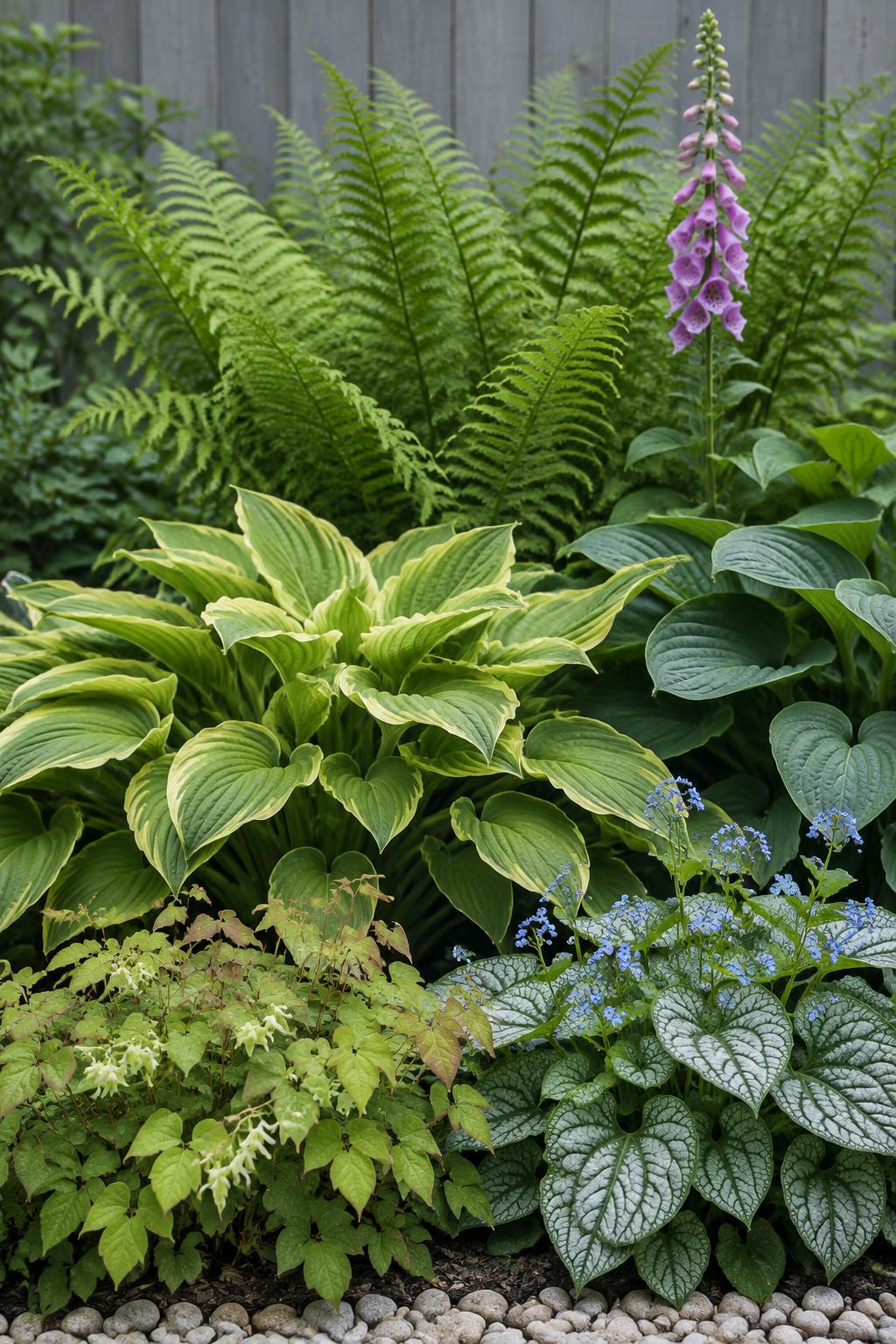
Watch for the sea of green. A bed made only of plain green leaves looks lackluster, however healthy it is. Variegation breaks it up.
Pale flowers show up in shade where dark ones disappear, which is the starting point for a pale color scheme.
Plan for the cold months, too. Hosta foliage is gone by late fall. Hellebore stays evergreen in mild winters, and Christmas fern holds the ground when the rest has gone.
A Gray Afternoon in a Garden Built for It
A garden planted for the light it has is good company on a dull day. The sunny picture needs sun to make sense. A shade bed built from leaves does not. Under cloud, the hosta, the silver fern and the hellebore keep their shapes, and the foxglove stands up out of them where you put it.
You can start without buying anything. Pick one day and check the bed in the morning, at noon and in the afternoon. Count the hours of direct sun and write the band beside it: partial shade, deep shade, dappled. Wait until the trees are in leaf, because the light changes with them.
Then choose the leaves for that number, and the flowers after. Come back to the bed on the next gray afternoon. The flowers will be doing very little. The hosta leaf, in the right amount of light, will be holding what light there is.
FAQ
Can you grow roses in the shade?
Mostly not. Roses do best with 6 to 8 hours of direct sun, and a rose sold as shade tolerant usually still needs 4 to 6. In shade they are more prone to mildew, and their roots compete poorly with trees, so keep them away from trunks. In a shady bed, let foxglove carry the cottage look instead.
Do shade plants need less water?
Not reliably. Under trees the roots take the water first, and a shade bed can dry out faster than a sunny one in a long dry spell. Hostas want an inch or more a week, more when tree roots compete, and astrantia and foxglove both suffer in dry soil. Water new plants deeply once a week.
How do you keep a shady cottage garden from looking dull in winter?
Plant evergreens. Hellebore keeps its leaves in mild winters, though it drops them in cold ones, and flowers from late winter into spring. Christmas fern and marginal wood fern hold their fronds and give the bed shape. Don’t rely on hostas, because their foliage dies back once temperatures fall to about 28°F.