One summer my nieces moved the hammock three times before they landed on the spot with afternoon shade. The lesson stuck: let people use a space before you fix anything in place.
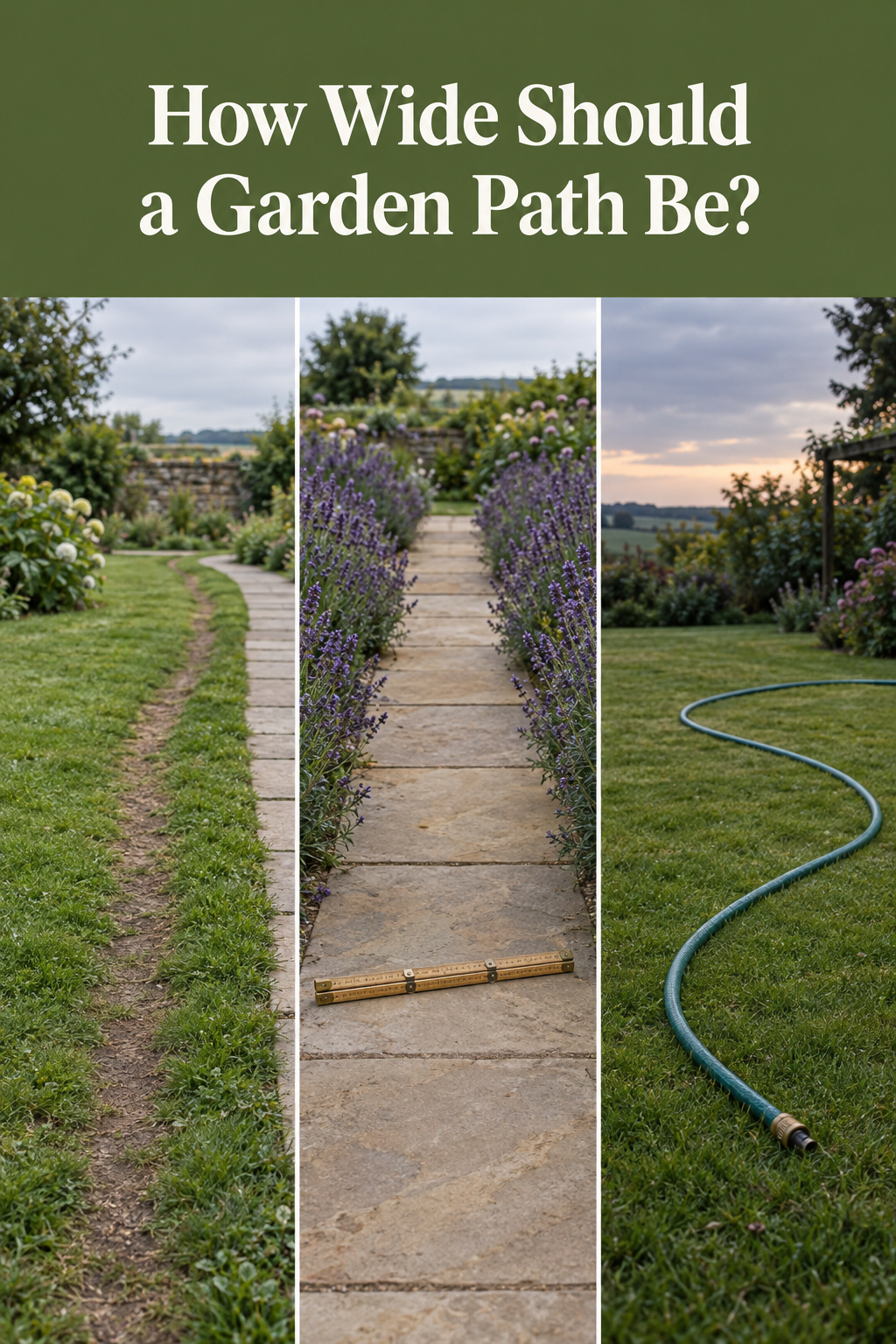
Ask how wide should a garden path be and you’ll get numbers. One person walking needs about 30 to 36 inches. Two people side by side need 48 inches at the least. A wheelbarrow tray runs 25.5 to 30 inches before you add your hands. The part that gets skipped is where the path goes, and a path in the wrong place gets walked beside, however wide it is.
TL;DR
- One person walking needs roughly 30 to 36 inches of clear path; two people side by side need 48 inches as a floor, and 5 to 6 feet if you want room for two adults, children or a garden cart.
- Size the path for the widest thing that uses it every week: a common 6 cu ft barrow is 25.5 to 30 inches across before your hands, and a “21-inch” push mower is really 22 to 23 inches wide.
- Before you fix the width, watch where the household already walks; the worn line across the lawn is the route, and the path belongs on it.
Let Your Household Wear the Route In Before You Build It
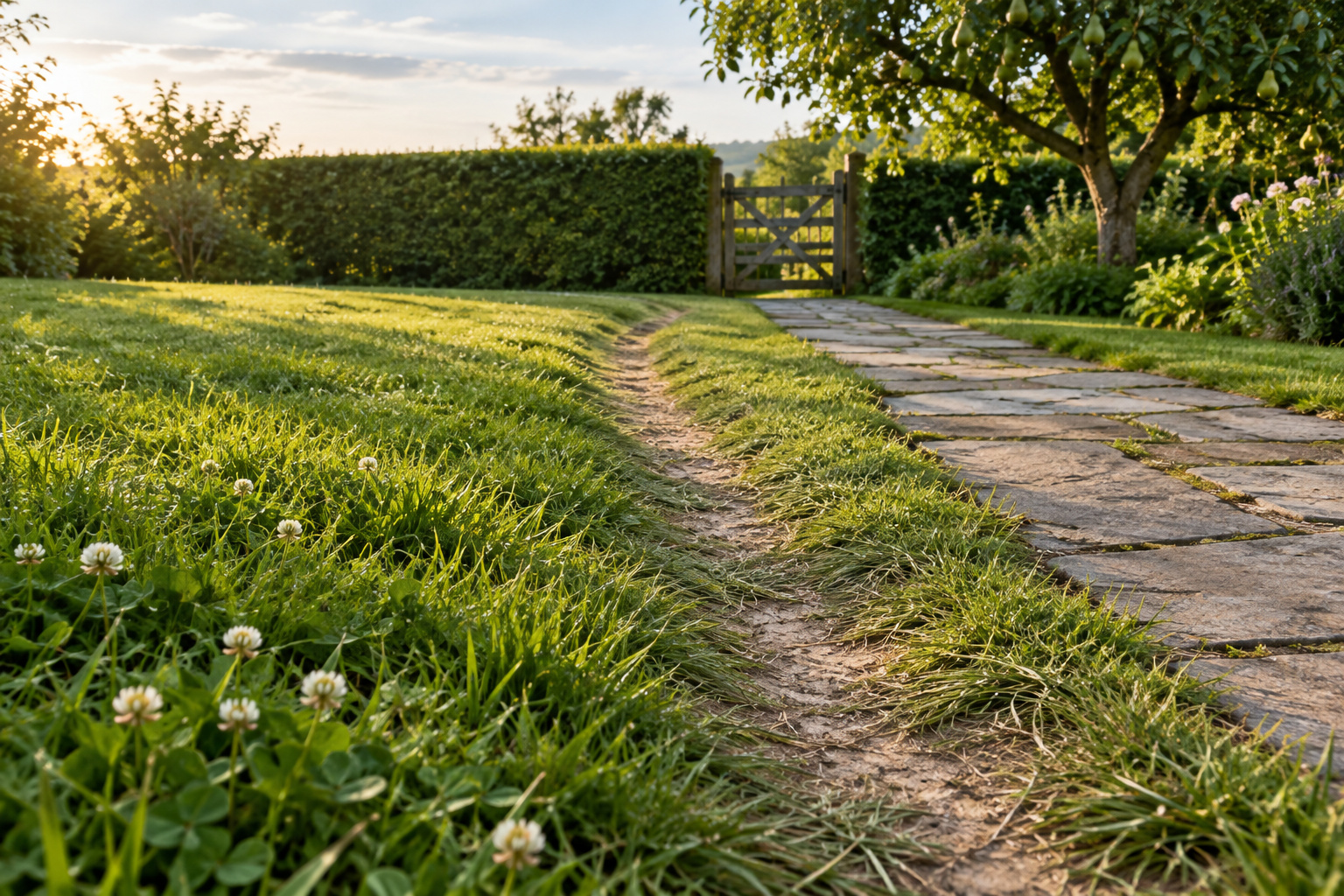
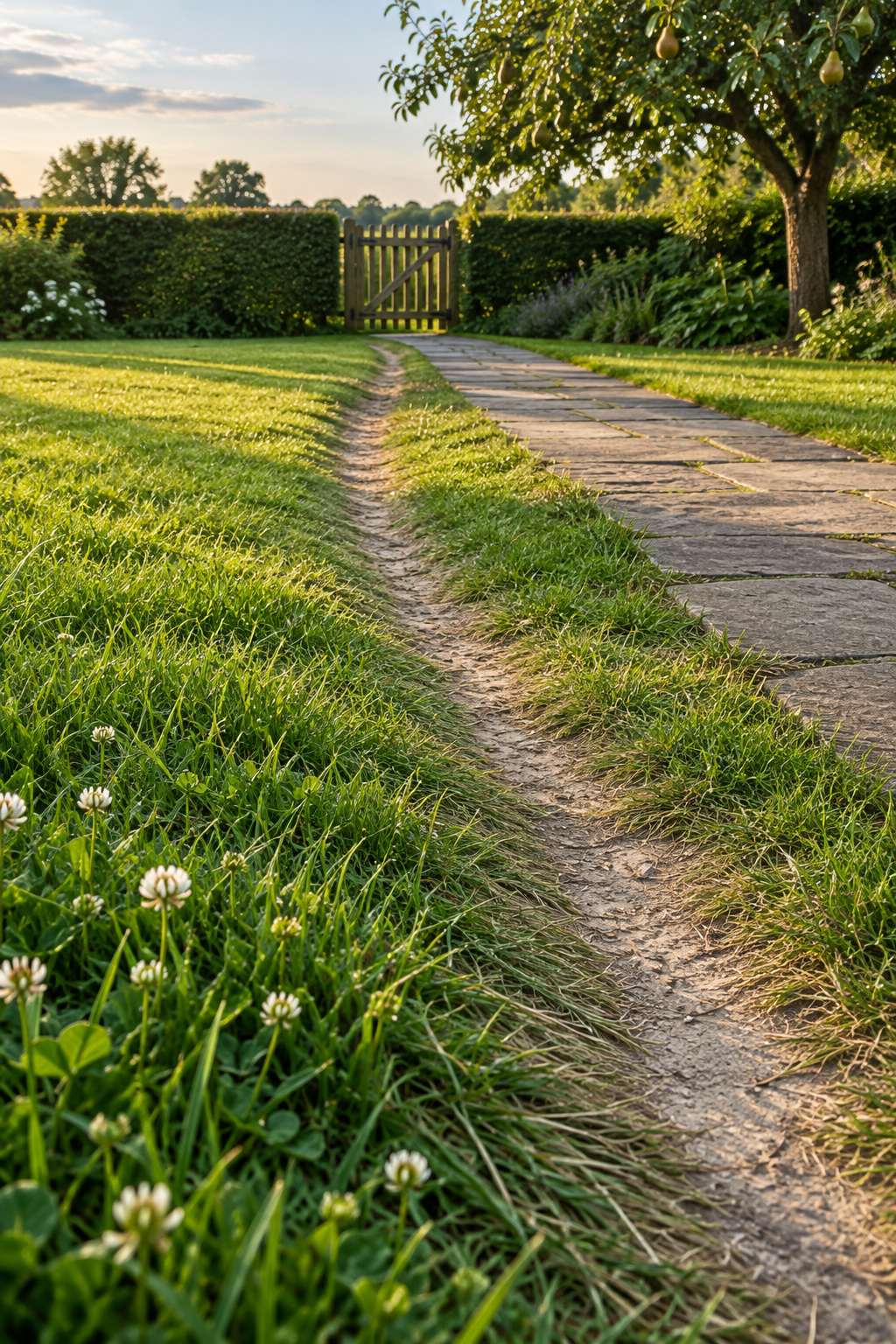
A path drawn from the kitchen window usually makes a tidy right angle around the lawn. Then everyone cuts the corner, and soon a strip of pressed-down grass and bare earth runs beside the new path, going the way people wanted to go all along.
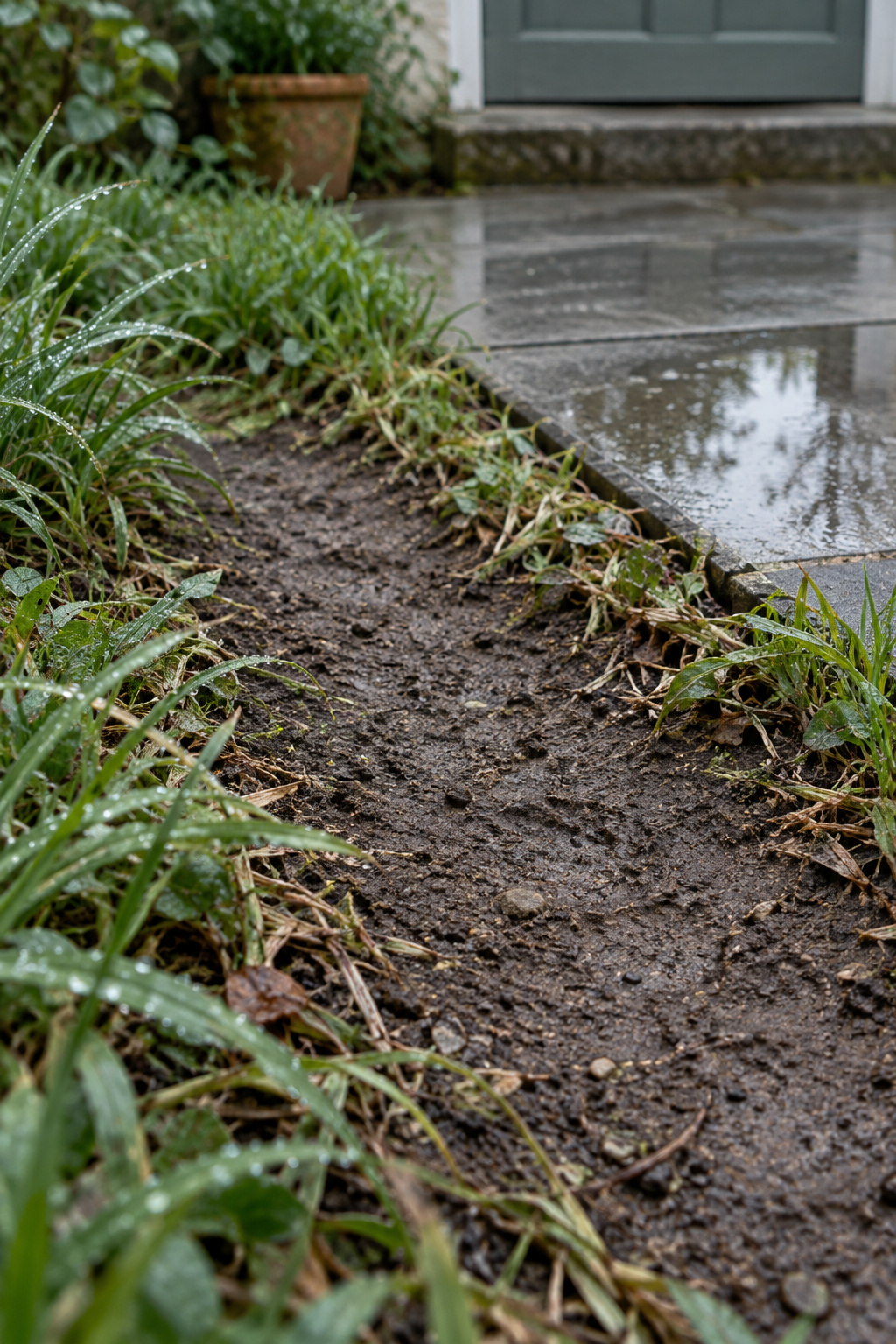
What a worn line is telling you
In public-space design that strip is called a desire line, and Dr Mike Harris, a landscape architect at UNSW, describes the method plainly: watch where people tend to walk, map the imprints on the ground, then formalize them. He means parks and city spaces, but the logic carries into a back garden: a worn shortcut is the household telling you how it wants to move.
Start with the places people actually have to reach: the back door, the bins, the compost, the hose bib, the gate, the shed. The path to a shed or a fire pit is a working route like any other. So is the walk to the washing. A clothesline is a design decision: somebody carries a full basket to it again and again, so its route deserves more thought than the path to a bench you sit on twice a summer.
How long to watch before you commit
There’s no set watching period for a home garden. My own rule is to wait until the same line shows up in wet weeks and dry ones, because a route people take in both is the real one. In the wet months the rain does half the work: soft ground shows where everyone walked.
Once the route is clear, what you surface it with depends on the trip it makes, and choosing a path for each route in the garden takes that route by route.
How Wide Should a Garden Path Be? Start With One Walker, Then Add a Friend
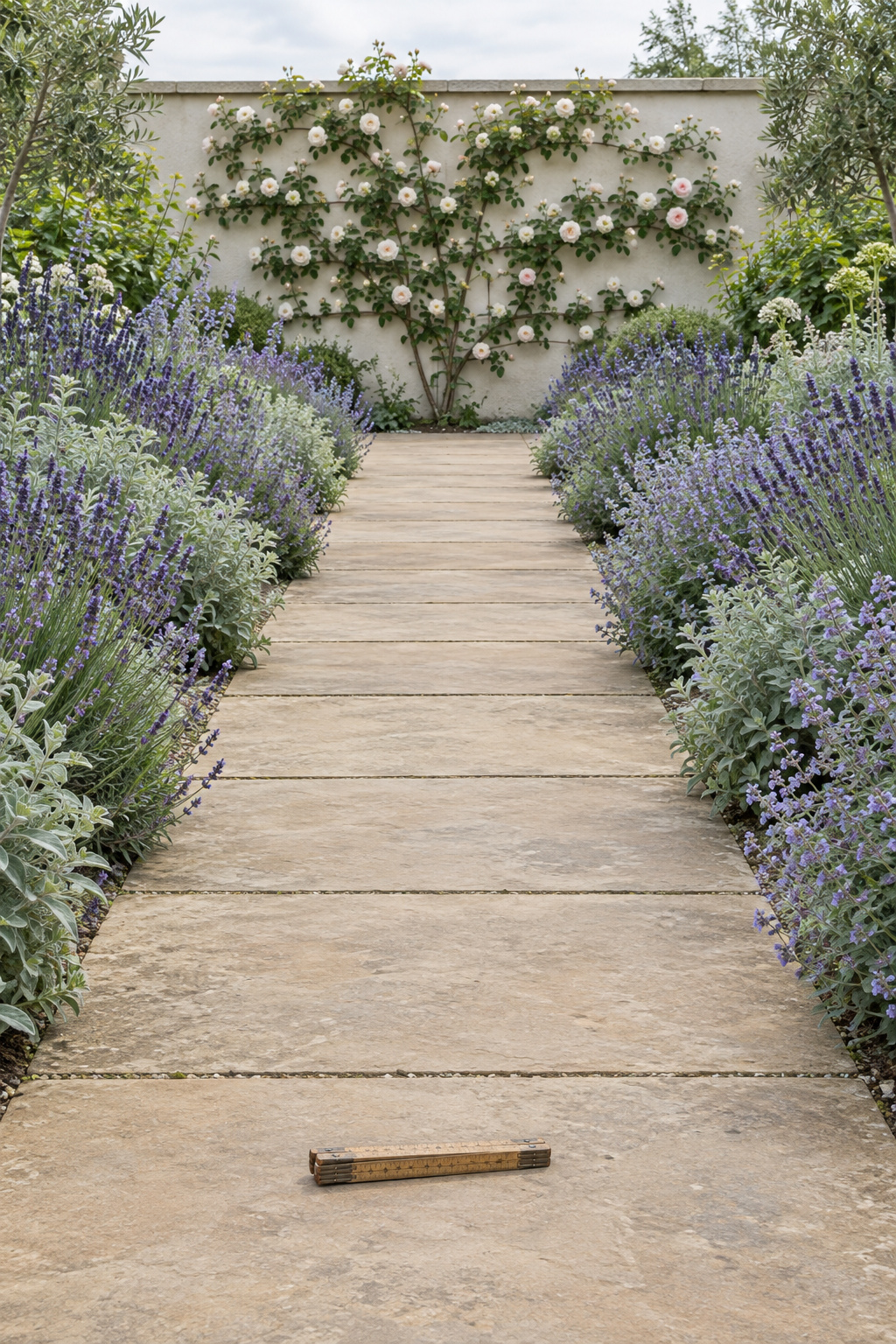
Width guides mostly agree, with some argument at the edges:
| Route | Clear width | How it feels in use |
|---|---|---|
| Occasional single file | 18 to 24 in | A minimum, for a route through beds you walk now and then |
| One person, every day | 30 to 36 in | Comfortable for one walker with empty hands |
| Two side by side | 48 in | The floor for walking together without brushing the planting |
| Two adults, children or a garden cart | 5 to 6 ft | Room to stroll, pass and push without thinking about it |
Guides split on the two-abreast row. Most put the floor at 48 inches. Kansas State’s extension service goes further and suggests five to six feet for two adults, kids or a large cart. I treat 48 inches as the minimum and the wider figure as what comfort costs.
Too narrow is the mistake I see more than any other. A path that looks right the week it’s laid gets squeezed once the planting fills in.
The narrow end of the table is stepping-stone country, and spacing stepping stones is its own question; a spacing figure is never a path width.
Size for the Widest Thing That Travels It: Barrow, Mower and Bin
If a loaded barrow comes out of the shed on a spring Saturday, the walker widths are only a baseline; whatever travels the route every week overrides them. Measure these before you set an edge:
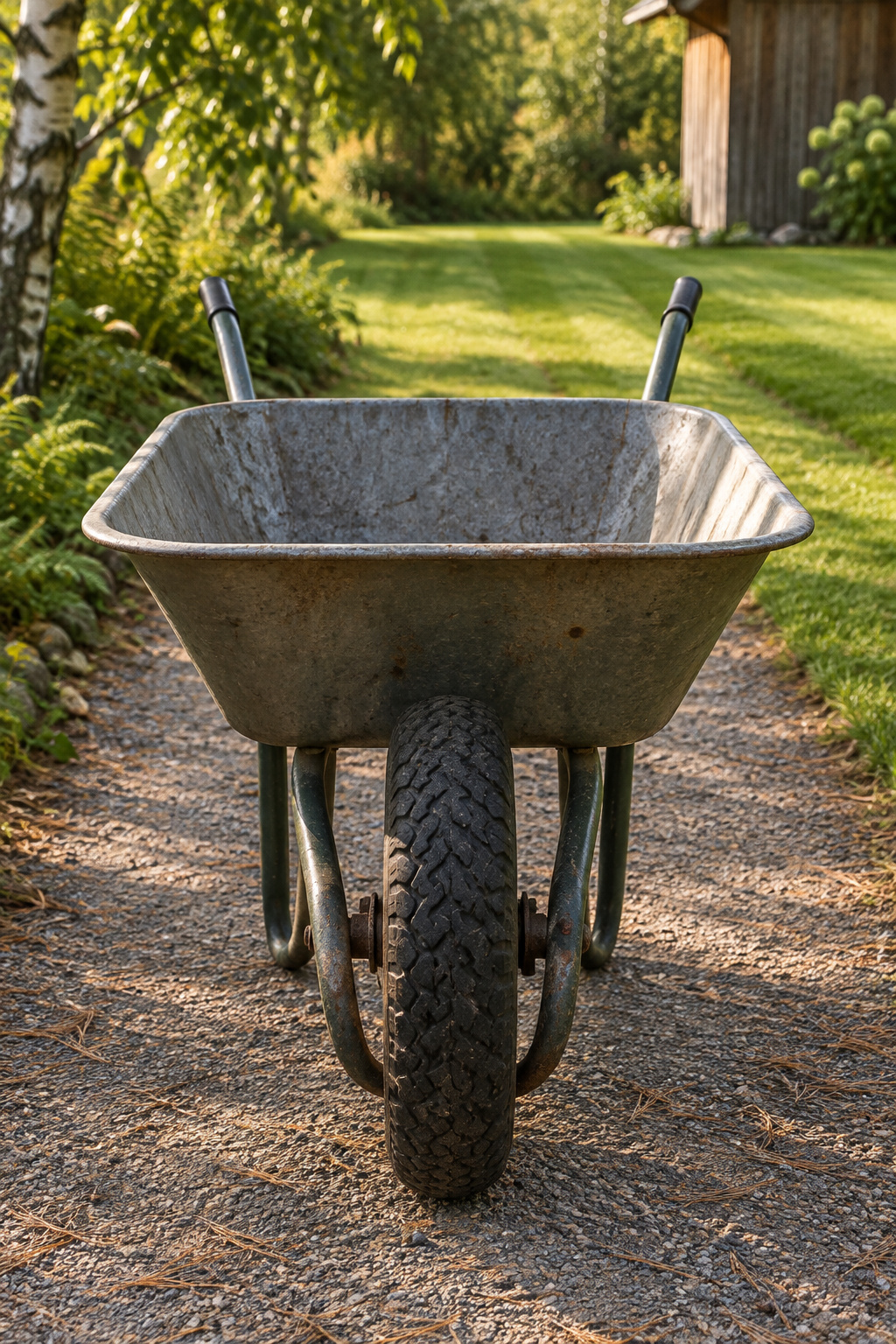
- Your barrow. A common 6 cu ft single-wheel barrow is 25.5 to 30 inches across the tray. The bigger 8 to 10 cu ft models run 32 to 36 inches.
- Your mower. A “21-inch” push mower is about 22 to 23 inches wide overall. The 21 is the cutting width, not the machine.
- Your bin. A 240-liter wheelie bin sits on a footprint of about 23 by 29 inches.
- Your hands. They ride outside the tray on the handles.
Then add working room to the widest one. This Old House puts a mower or garden cart path at about 3 to 4 feet, and Gardening Know How says a path should be at least as wide as the barrow or other equipment that has to fit through, at least 4 feet.
The 36-inch accessible-route benchmark
The one hard number here comes from accessibility rules. Section 403.5.1 of the ADA Standards says “the clear width of walking surfaces shall be 36 inches (915 mm) minimum,” with 32 inches allowed for a length of 24 inches at most. Those standards cover public and commercial facilities, not homes. No code sets a minimum width for a private garden path, so treat 36 inches as a benchmark: if someone with a wheelchair or walker may use the route, it’s a sensible floor.
Curves That Steer Feet Instead of Decorating the Lawn
An S-bend with nothing to go around is a shortcut waiting to happen. When a route isn’t the easier way from one place to another, people stop following it, and the desire line comes back across the bend.
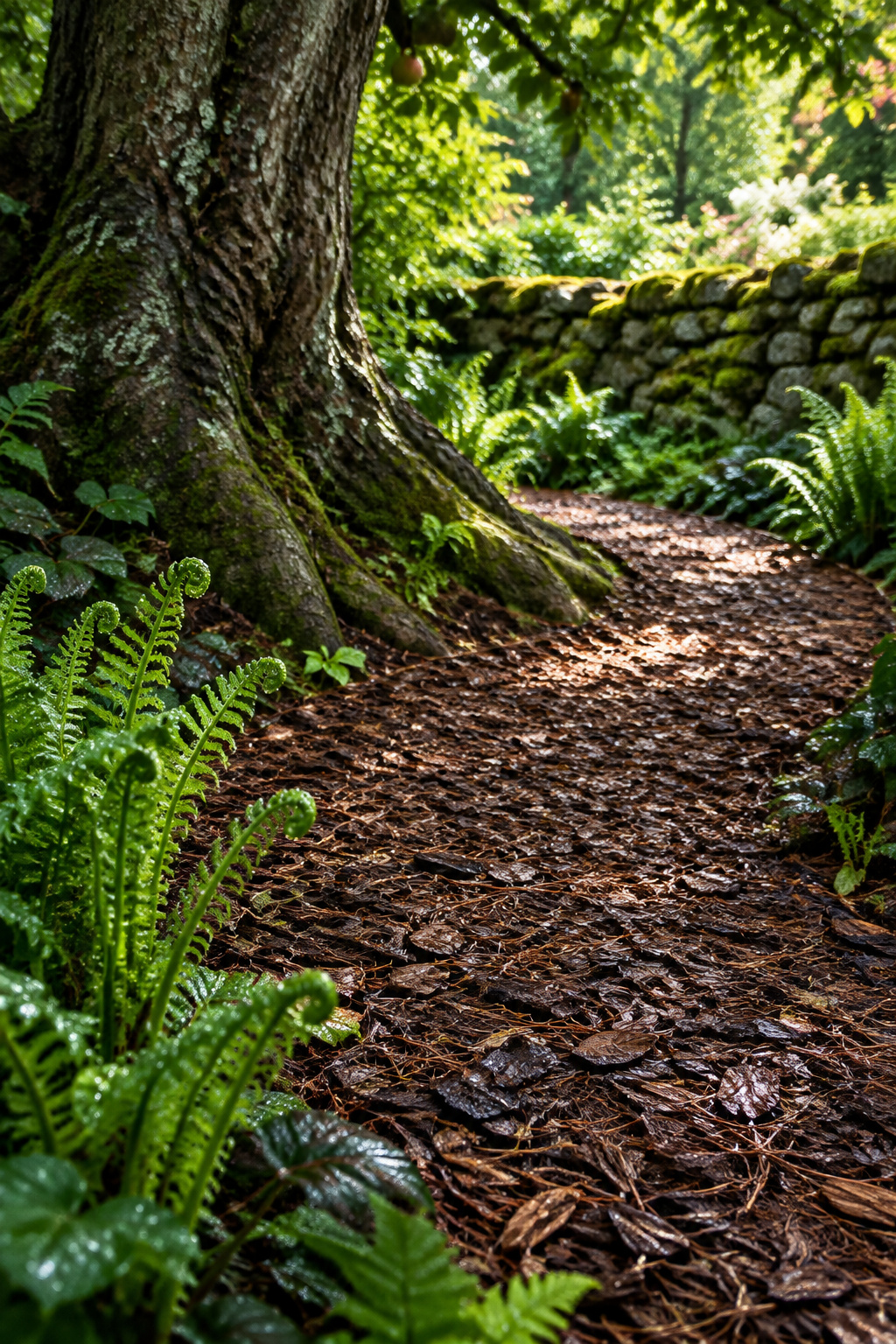
A curve belongs where something real is in the way or where the eye should be led: a tree, the edge of a bed, a view you want to arrive at. This Old House’s landscape contractor likes to route a path past a natural focal point such as a tree or a boulder. Make the bend broad enough to push a loaded barrow round without clipping the edging, and keep the routes that carry bins and groceries straight.
Turns, Junctions and Gates Need More Width Than the Straight Run
A barrow gets stuck at the turn, the gate and the junction.
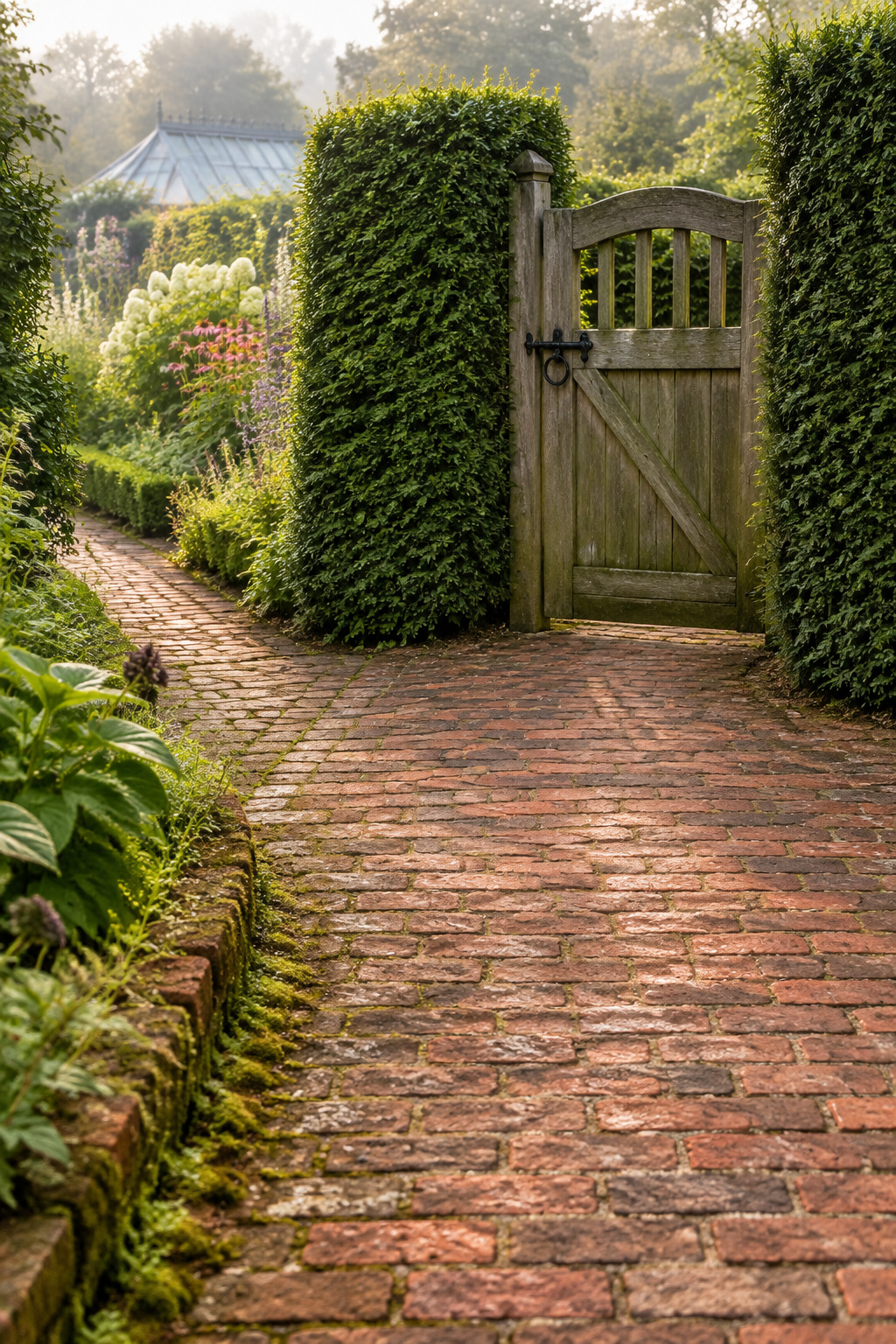
The accessibility rules give a useful benchmark here too. Where a route makes a full 180-degree turn around something less than 48 inches wide, they ask for 42 inches approaching the turn, 48 inches at it and 42 inches leaving it. A garden doesn’t have to meet that, but it shows where width belongs: where the swing happens.
At a gate, judge the opening with the leaf swung, not closed. A gate that opens into the path narrows it right where you’re standing with your hands full, so leave room to open it and step clear. And if the route has to change level, a loaded barrow and a flight of steps don’t mix; plan a work route around them. Paths that have to climb a slope bring their own width and route questions.
So I add width at the inside of every bend the barrow or mower takes, at junctions, on the swing side of a gate, at the landing by a door and either side of any step.
Mark It Out With a Hose, Then Push a Loaded Barrow Down It This Weekend
A hose costs nothing to move and a laid path costs a great deal, so do your arguing with the hose. Laying out hoses to show a path’s shape is ordinary landscaping practice; walking it with real loads is my addition.
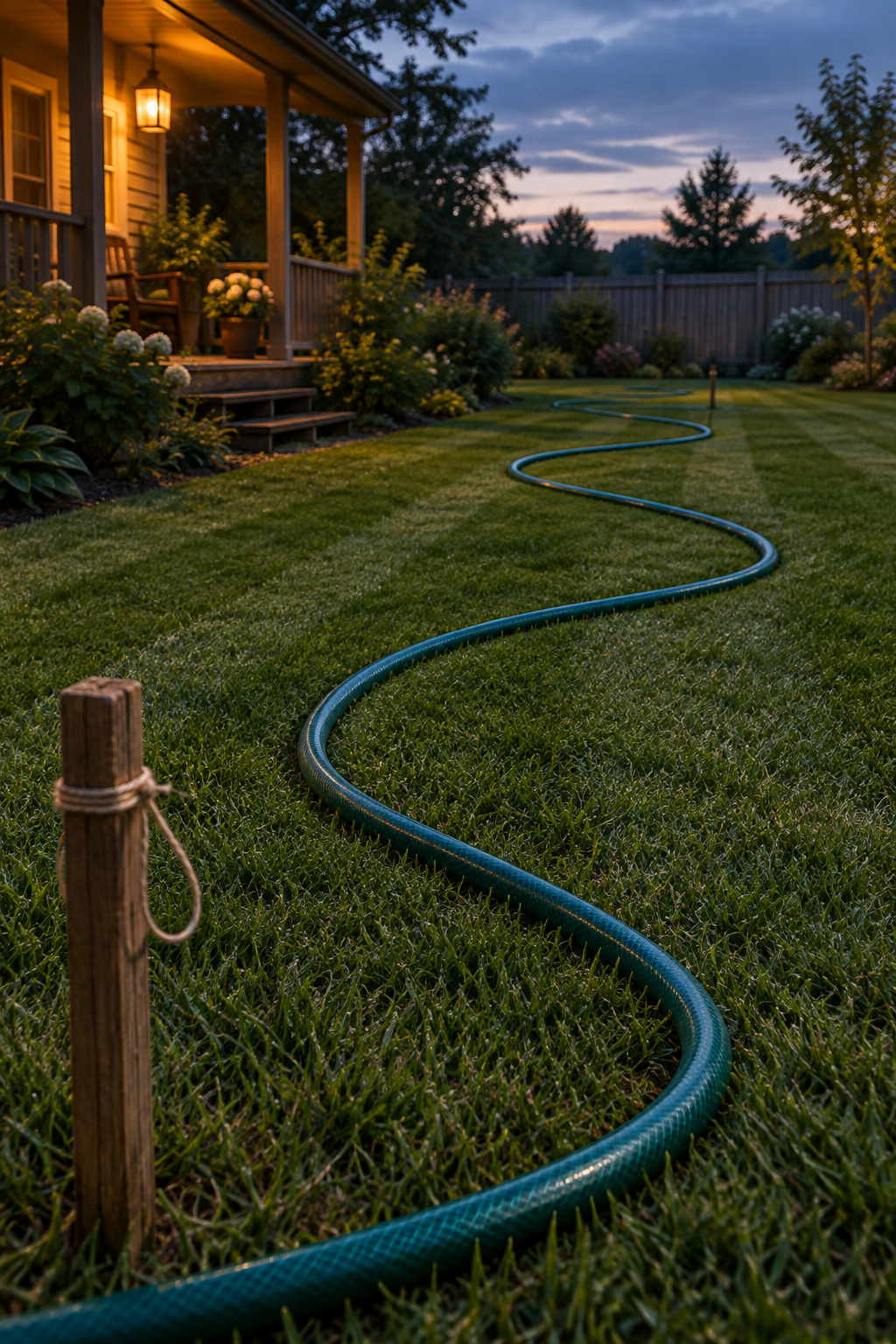
- Lay two hoses, or a hose and a rope, along the worn line at the width you think your widest traveller needs.
- Load the barrow the way you would on a real job and push it the full length, through every turn and through the gate with the leaf open.
- Run the mower down it.
- Walk it side by side with whoever you walk the garden with.
- Wherever a wheel, an elbow or a foot leaves the line, move the hose.
- Dig only once the hose stops moving.
A path that works only when it’s empty is too narrow. If a 6 cu ft barrow goes down the route every week, its 25.5 to 30 inch tray plus working room wants 3 to 4 feet of path, and with 4 to 12 inches each side for planting that spills over, a 36-inch path needs 44 to 60 inches between the bed edges. If what travels it every evening is the two of you walking together, 48 inches is the floor.
FAQ
Can a garden path be too wide?
Yes, though it happens far less often than too narrow. Garden designer Catherine Stewart warns that a path made too wide can start to look like a driveway. Most guides still lean generous, and I agree: a wide path costs some ground, while a narrow one gets walked around. Size for your widest regular traveller and stop there.
How much clearance do plants need beside a garden path?
Allow roughly 4 to 12 inches on each side for planting that spills over, the margin designer Joanne Willcocks suggests. Overgrown edges can turn a wide path into a narrow slalom, and it gets worse in wet weather. Keep the clear width you planned between the plants themselves, not just between the edging strips.
How wide should a path be for a pushchair or double stroller?
Plan on at least 3 feet for a pushchair, the minimum Gardeningetc gives for any path that takes wheelbarrows, mowers or pushchairs. Go wider if a stroller shares the route with people walking, toward the 48 inches that suits two side by side. Double strollers vary by model, so measure yours across the wheels before you build.