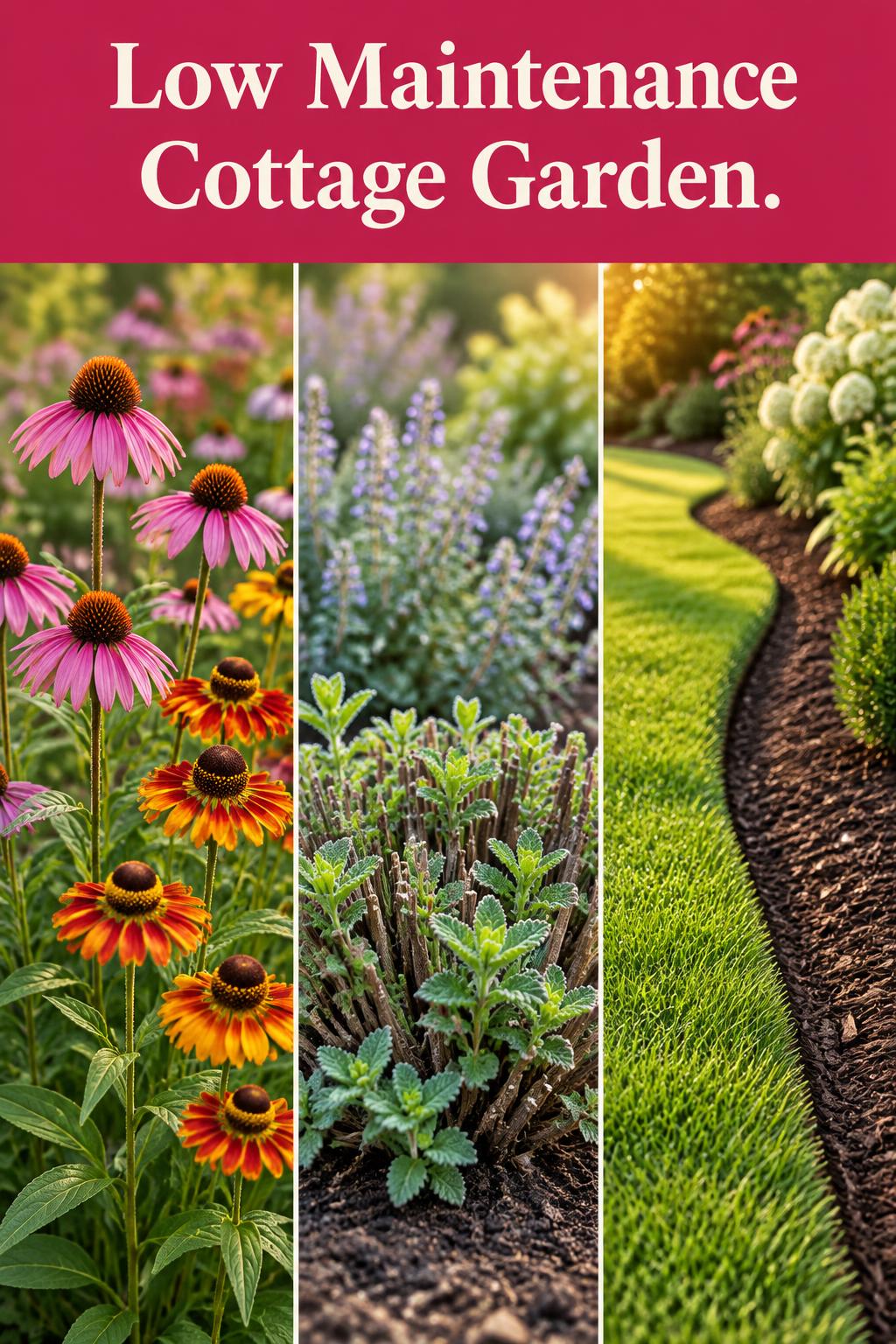

Do one sum before you buy a single plant. Write down the hours you can give the garden in an ordinary July week. Say it is two. From June to the middle of September that is about fifteen weeks, so thirty hours for the whole summer. Now write down what the classic cottage border asks for in that time: tying in delphiniums, deadheading once a week or every other week, weeding, pulling seedlings, watering. Put the two lists side by side and a low maintenance cottage garden sounds like a contradiction.
The common belief is that the loose, crowded look has to be paid for in weekend work. It doesn’t. Tall brittle stems, heavy flower heads and soft growth on rich soil are what make a border need string. Those are planting decisions, and different ones shrink the chores to fit your thirty hours.
TL;DR
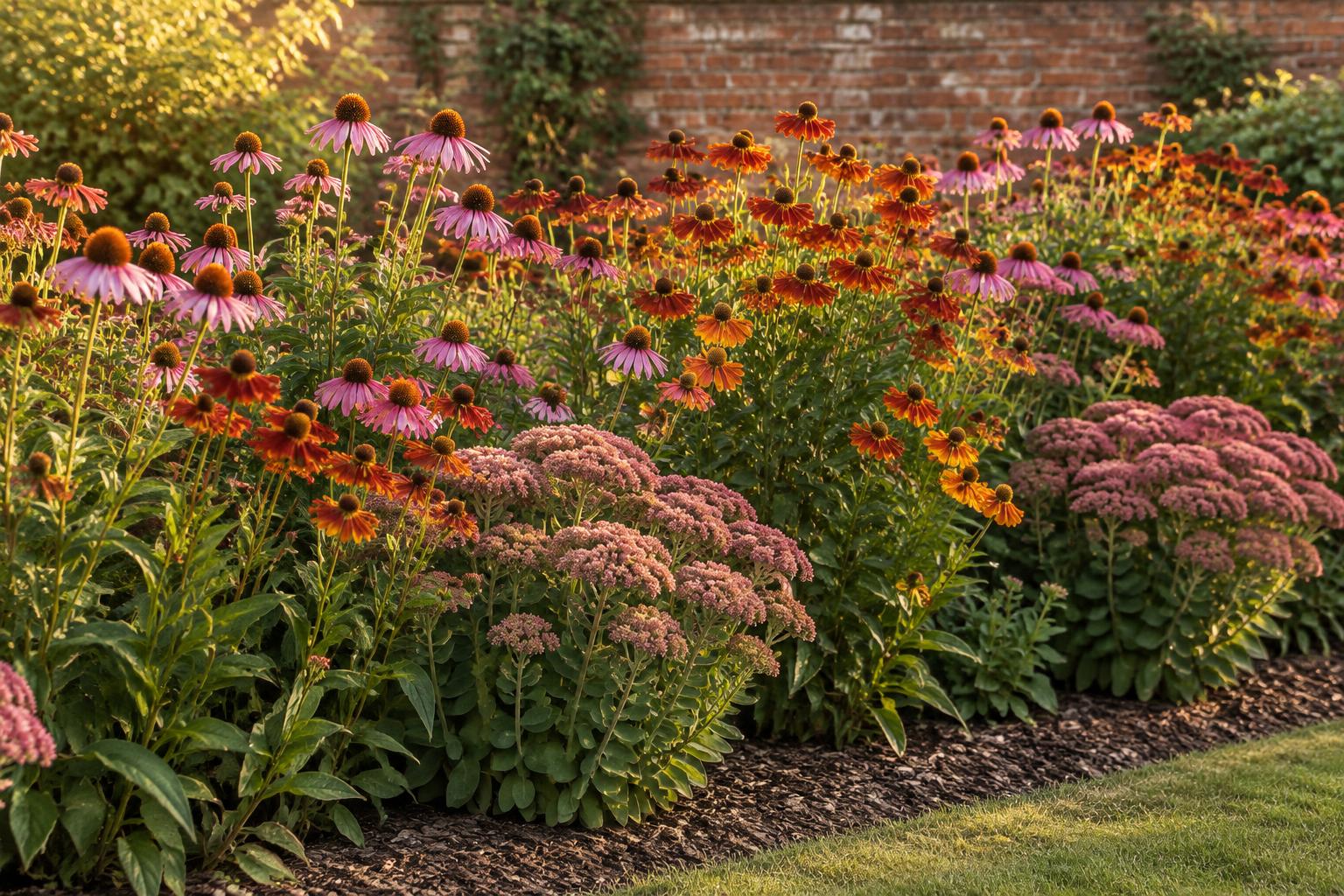
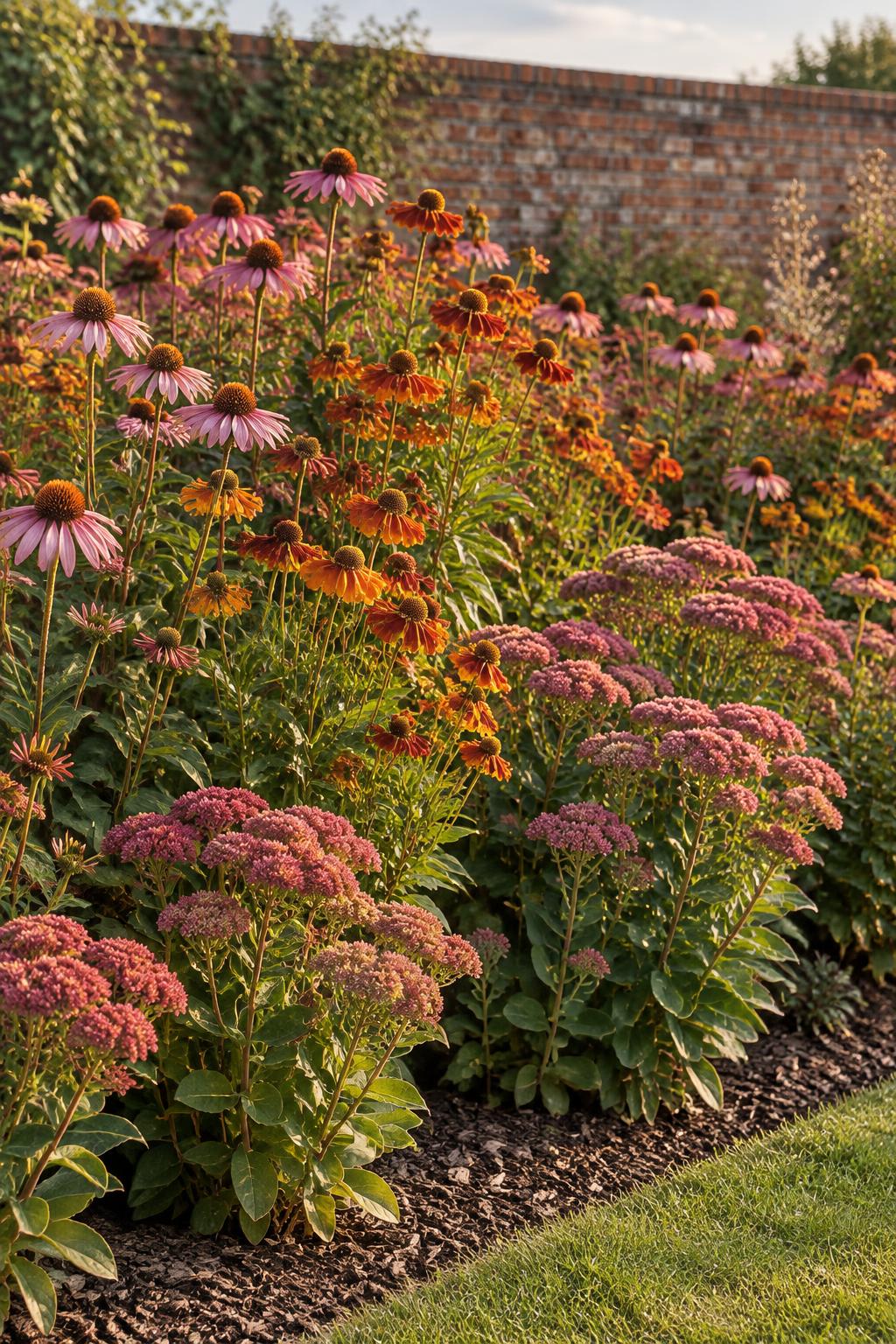
- Plants such as Veronicastrum, Helenium, Echinops and upright sedum stand without stakes in full sun and lean soil; delphinium, peony and tall asters need support.
- One cut replaces weekly deadheading: hardy geraniums, catmint and lady’s mantle flower again if cut close to the ground after the first flush, and a Chelsea chop of a third to a half (late May or early June in Britain) keeps chop-friendly plants shorter.
- Mulch 2 to 3 inches deep once perennials have come up, plant close enough to shade the soil, and cut a bed edge 4 to 6 inches deep and wide that you re-cut once or twice a season.
A Low Maintenance Cottage Garden Starts With the Chores You Will Actually Do
Five jobs make up the work in a cottage bed, and each has a cause you can plant away. Staking comes with tall, top-heavy plants, so choose ones that stand on their own in full sun. Deadheading is for plants that stop unless spent heads come off; pick ones that rebloom after one cut. Bare soil invites weeds, and close planting and mulch cover it. Self-seeders become a chore when every seedling stays, which a rule about which ones you keep prevents. Watering follows exposed, drying soil, and mulch reduces it.
A northern growing season is short, and I would rather spend it looking at a bed than tying it up. That is temperament, but it makes a useful test: before a plant goes on the list, ask which of these five jobs it adds. The order you build the bed in is set out in cottage garden design from the ground up; the question here is which chores you can design away.
Plants That Stand Without Stakes, and the Tall Ones That Never Will
Gardeners’ World names thirteen cottage-look perennials that need no staking. Three of them, Veronicastrum, Helenium and Echinops (or a close relative), turn up as stake-free in a second source, as does upright sedum, which the Gardeners’ World list leaves out. Those four I would plant first.

All of them come with a condition: full sun and lean soil. Fewer than six hours of direct sun makes stems lankier, and heavy feeding gives soft, tall growth that topples.
The second trap is the genus. The RHS still puts yarrow, phlox and Leucanthemum on its list of plants that may need support, while specific cultivars of each are sold and recommended as stake-free. Buy the named cultivar, not the plant family.
| Plant | Stands unaided? | Notes |
|---|---|---|
| Veronicastrum virginicum ‘Fascination’ | Yes | Also named by Cornell and The English Garden |
| Helenium ‘Wyndley’ | Yes | Also named by Cornell; takes a Chelsea chop |
| Echinops ritro (globe thistle) | Yes | A second list names Echinops bannaticus |
| Upright sedum (‘Autumn Joy’, ‘Matrona’) | Yes | Not on the Gardeners’ World list; sturdy stems hold flower heads up in rain and wind |
| Verbena bonariensis | Yes | Gardeners’ World list |
| Salvia nemorosa ‘Caradonna’ | Yes | Often reblooms if cut back |
| Rudbeckia fulgida ‘Goldsturm’ | Yes | Long bloom without deadheading |
| Crocosmia ‘Lucifer’ | Yes | Gardeners’ World list |
| Verbascum phoeniceum ‘Violetta’ | Yes | Gardeners’ World list |
| Allium ‘Globemaster’ | Yes | Gardeners’ World list |
| Actaea pachypoda | Yes | Gardeners’ World list |
| Agastache | Yes | Gardeners’ World list |
| Aconitum napellus ‘Newry Blue’ | Yes | Up to 1 m; all aconitums are highly toxic |
| Achillea ‘Moonshine’ | This cultivar, yes | About 40 cm; does not reseed |
| Leucanthemum ‘Becky’ | This cultivar, yes | 18 to 24 in |
| Phlox paniculata, mildew-resistant cultivars | Cultivar level only | The genus is on the RHS support list |
| Delphinium | No | Brittle stems and heavy spikes are damaged by wind |
| Peony | No | Top-heavy flowers flop |
| Tall, thin-stemmed asters | No | Bushy clumps need grow-through supports |
| Dahlia | No | Top-heavy |
| Oriental poppy | No | Needs a single-stem ring |
If you want delphiniums, you are choosing staking. That is fair for one clump you love and a poor plan for the whole back row. Which plants suit your climate is a separate question, covered in plants suited to your summer.
Repeat Bloomers and the Chelsea Chop: One Shear Instead of Weekly Deadheading
The RHS puts border perennials on a deadheading round of once a week or every other week, and adds that a delay of a few days, or even a week, does little harm. The better move is to choose plants that make it optional.
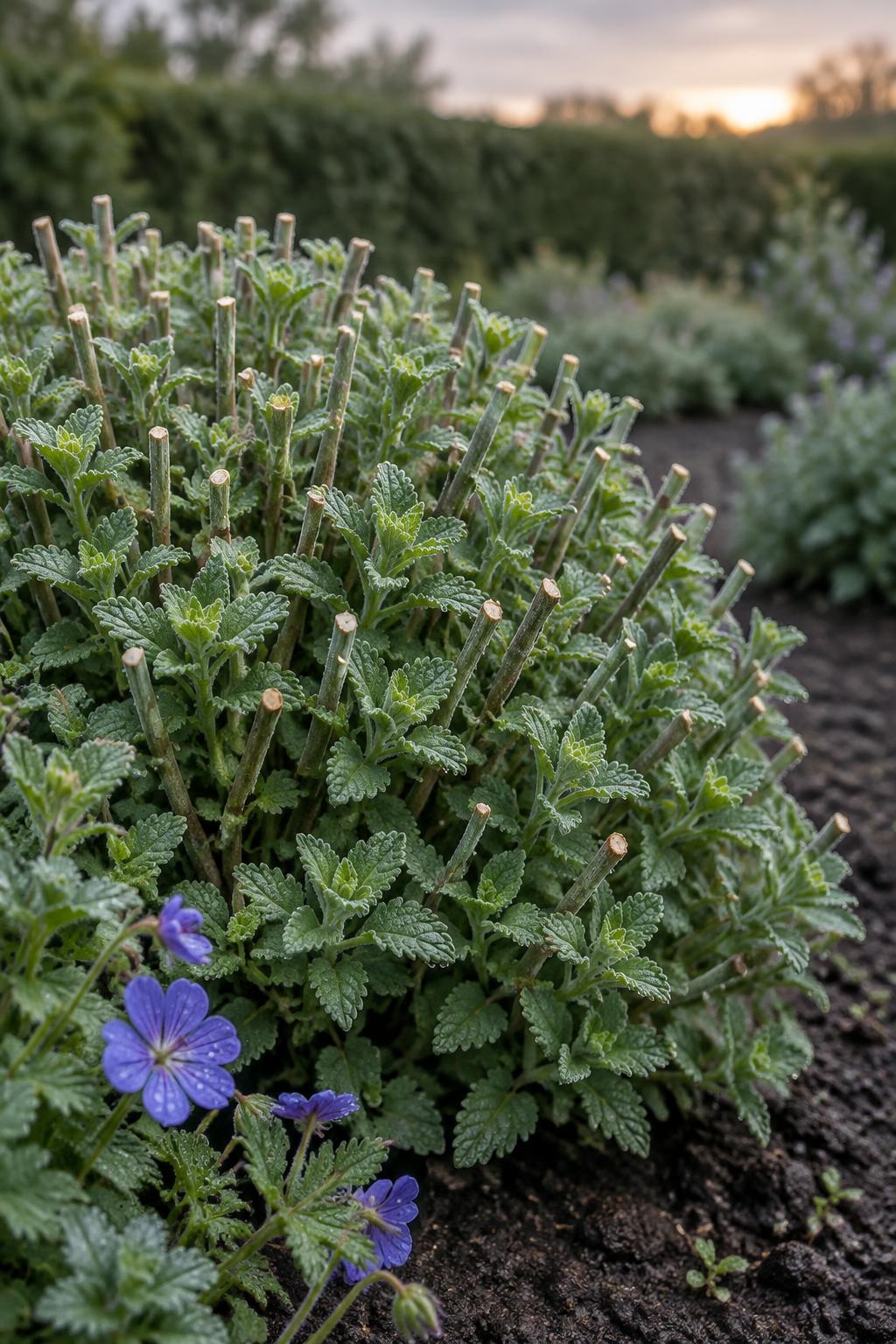
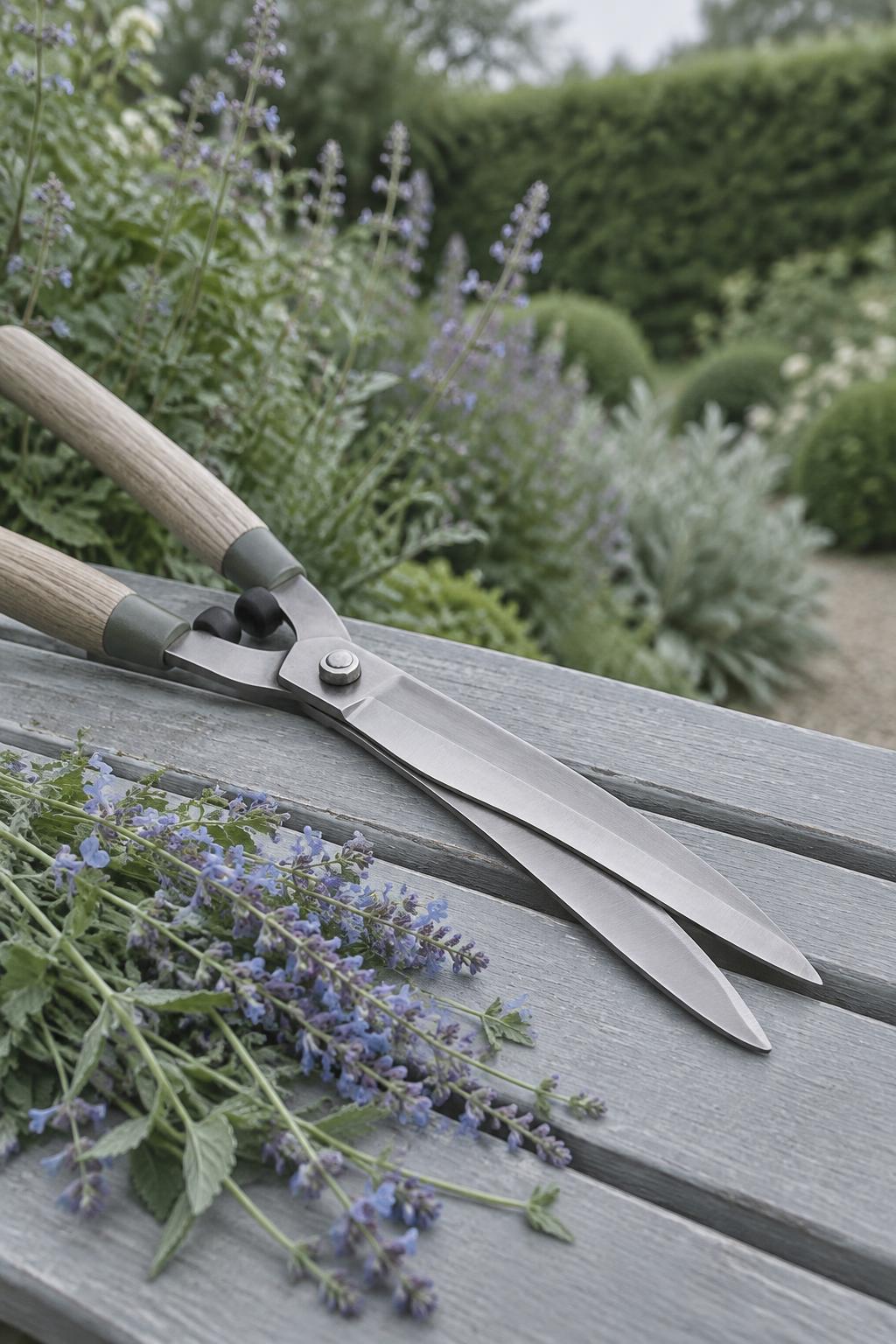
Hardy geraniums, catmint and lady’s mantle all give a second flush of flowers if cut back close to the ground after the first. That is one afternoon with shears in place of a summer of snipping. Geranium ‘Rozanne’ grows to about 60 cm and flowers from early summer to early autumn, and one grower calls it sterile, needing no deadheading at all.
Catmint is the plant I would watch. Iowa State Extension recommends it as an easy perennial that often reblooms after shearing, with ‘Walker’s Low’ a strong performer, and the same extension elsewhere lists catmint among the mints that can turn into a weed problem within a few years. Both are true, so plant it, shear it, and watch where it goes.
The Chelsea chop in one afternoon
The Chelsea chop is the one cut that also cuts down staking. Taking the tops off makes plants branch, so they grow shorter, need less support, and carry smaller but more numerous flowers a little later.
- Pick only plants known to respond: Echinacea purpurea, Helenium, Phlox paniculata, upright sedum, Solidago and Cota tinctoria. Plants off the list may not respond, and you can lose a year of flowers.
- Time it. In Britain the RHS date is late May or early June. In the US there is no single date; extension advice runs from mid-May to early July by plant, with garden phlox in mid-May and New England asters in early to mid-June, or ties it to growth, cutting stems of about a foot back to about 6 inches.
- Cut each clump back by roughly a third to a half with shears.
- To spread flowering, cut only some clumps, or only the front half of the stems in one clump.
Plant Close and Mulch Deep Enough to Let the Garden Do the Weeding
Weeds need bare, lit soil. Planting densely and covering what is left with mulch removes most of their chances, and widely spaced plants leave room for weeds to grow. Close enough that leaves meet is the principle; the actual distances are a budget question, and how close to plant works through the counts for one bed.
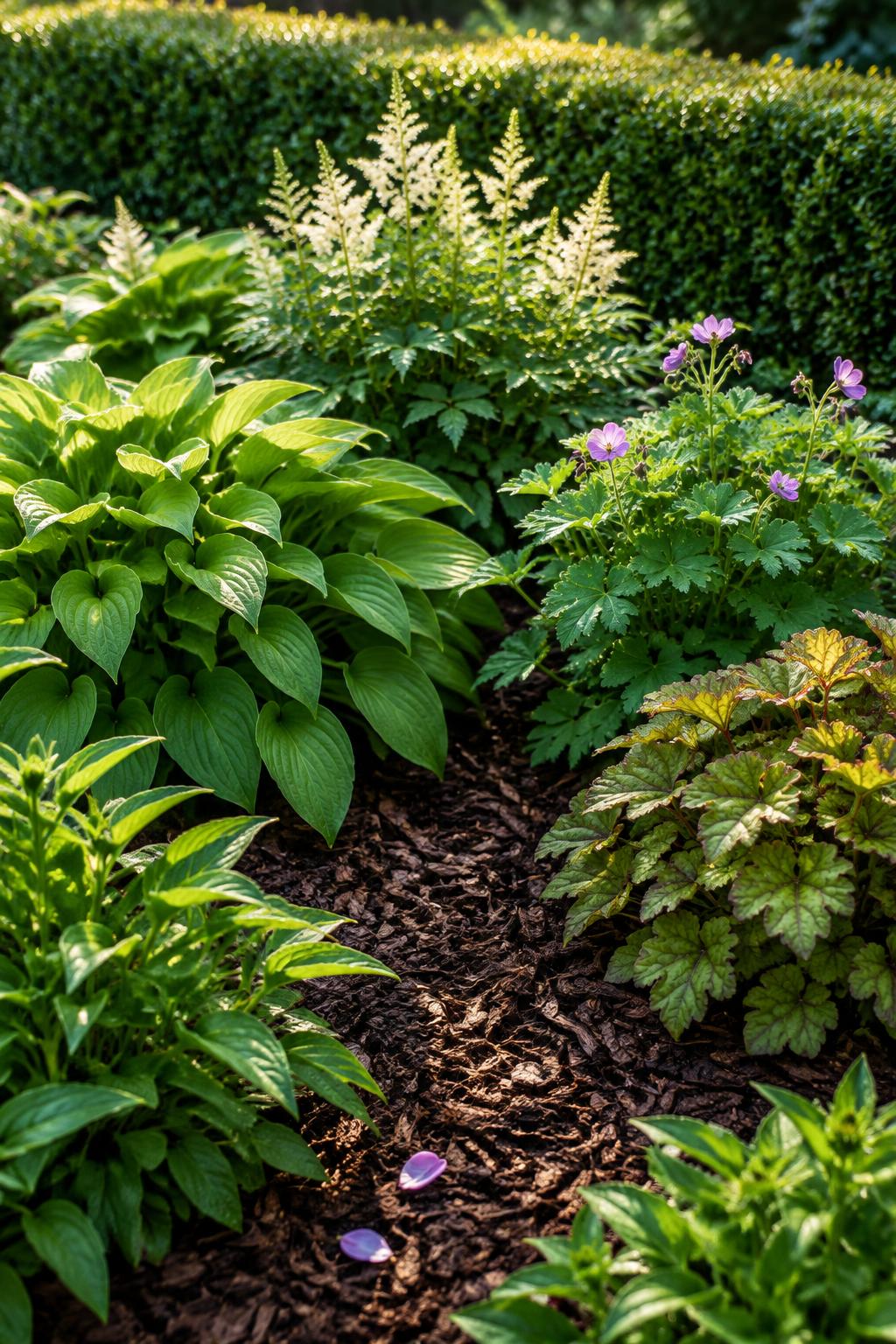
Mulch the rest 2 to 3 inches deep. The RHS figure of 5 to 7.5 cm comes to the same thing, and Iowa State allows up to 4 inches on coarse soil; far deeper can waterlog the ground. Wait until the ground has warmed and the perennials are up, because early mulch slows them. I keep mulch off the crowns themselves, a habit rather than a rule.
I would rather have one good wool blanket than six decorative cushions, and I feel the same about one even layer of mulch.
Mulch also takes most of the watering off the list, since an established perennial bed needs water only in dry periods.
How Many Self-Seeders to Allow, and Where a Hard Edge Ends the Work
How many self-seeders to let in
Self-seeding is one way a charming plant becomes a weed. Pull or hoe seedlings while they are small, and deadhead straight after flowering on any plant whose offspring you don’t want. A label that says “readily reseeds” is a warning.
There is no published number for how many self-seeders a bed can carry. My working rule is two kinds. I let two plants seed that I would have bought anyway, deadhead everything else before it sets seed, and thin the seedlings to the gap I would have planted at. The rule assumes one walk through the bed in late spring, while seedlings still come out with a finger and thumb. Enough is a good word. A self-seeder that gives you a plant where you wanted one is worth its upkeep; one that needs pulling every week is not.
A hard edge or a mown strip
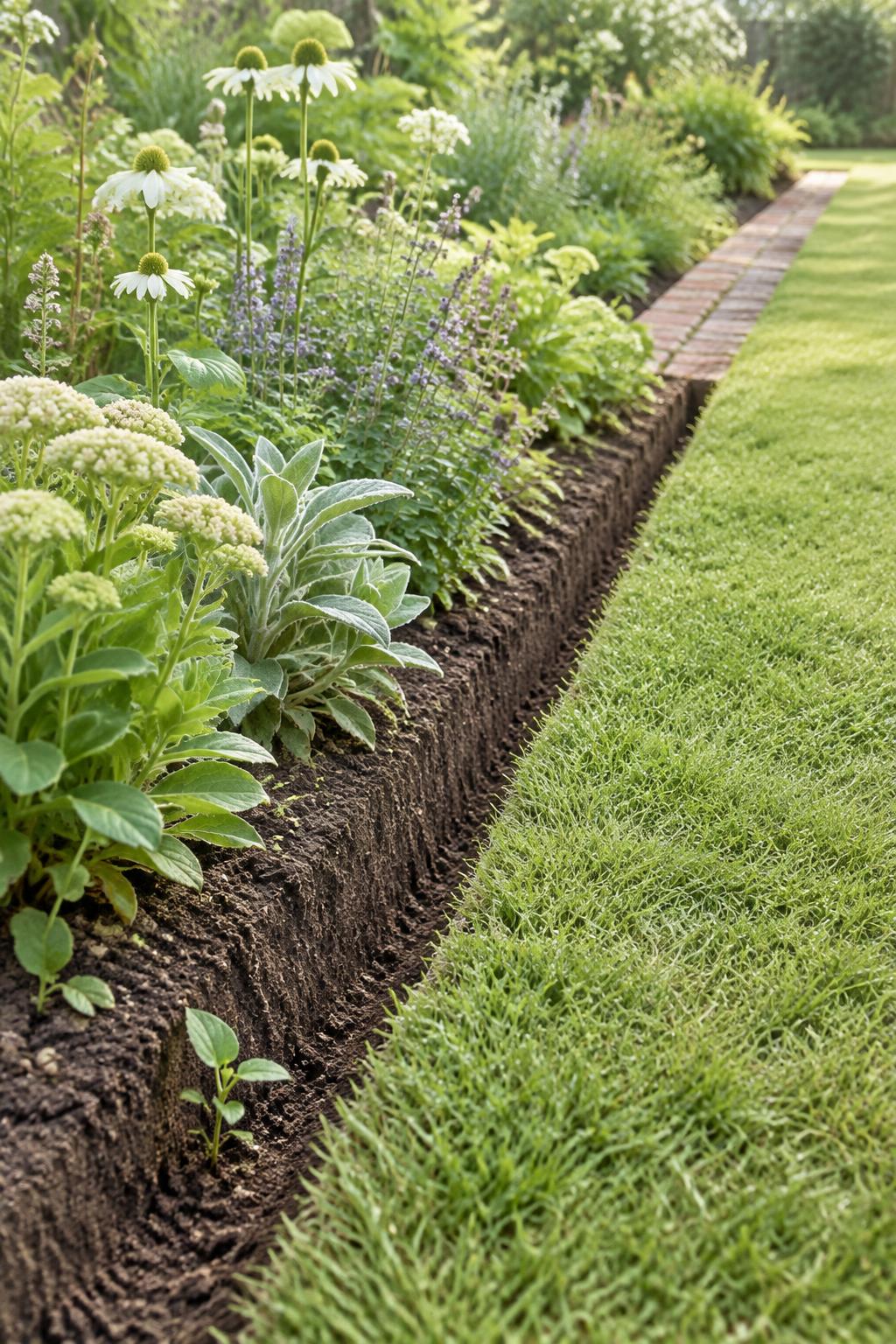
The cheapest edge is cut with a spade. Make a trench or V about 4 to 6 inches deep and wide, angled toward the bed so grass roots can’t easily cross, and re-cut it once or twice in the growing season. With generous mulch behind it, the mower can run along it with no separate trimming.
If you want the edge gone from the chore list altogether, set bricks or pavers flush with the lawn. That makes a mowing strip and keeps the trimmer in the shed. It costs more at the start and little after.
A One-Bed Planting Plan for the Hours You Have
The method for one bed, in order:
- Write down your July hours, the number from the first sum.
- Choose a spot with six or more hours of direct sun, and don’t enrich the soil beyond what the plants need.
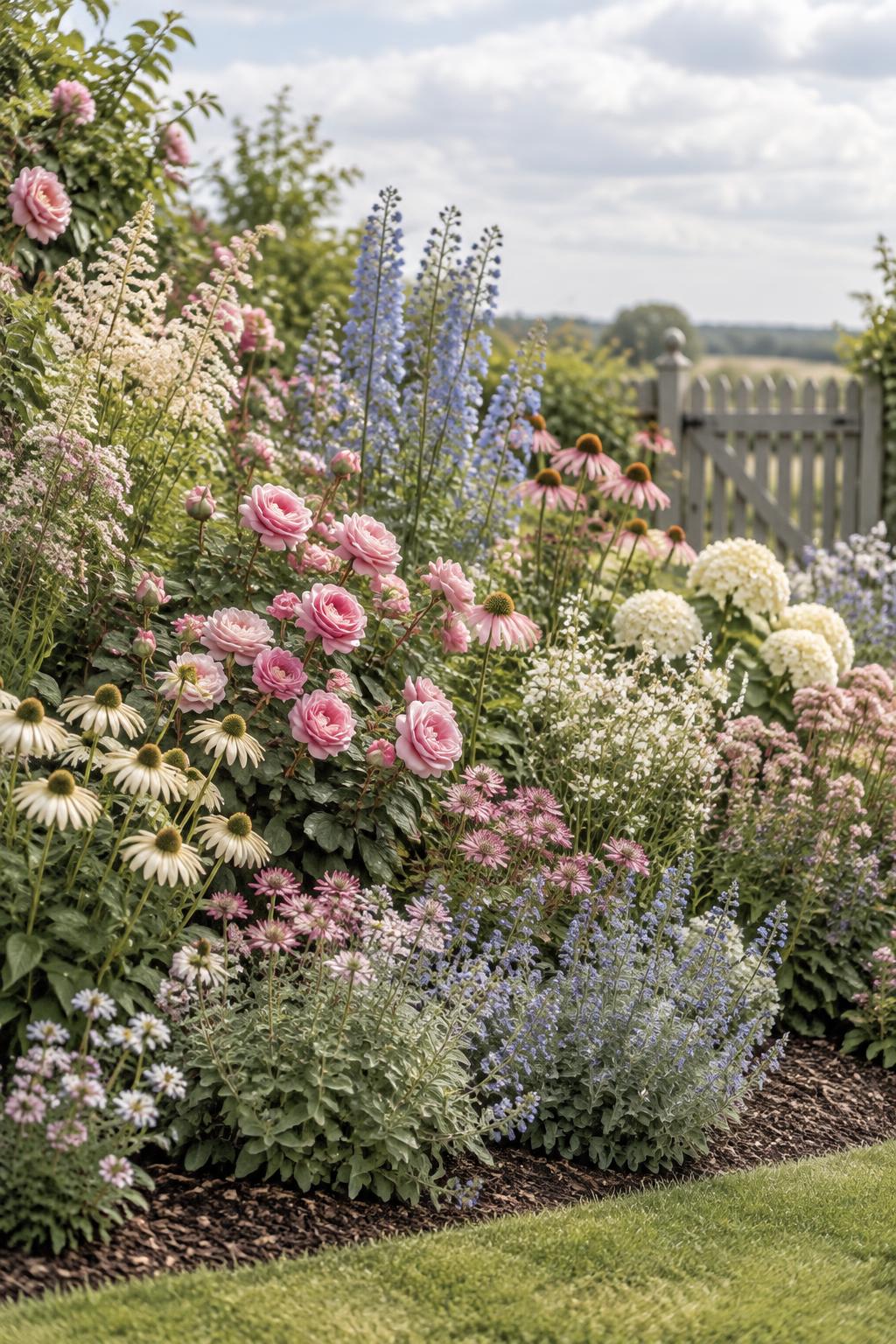
- Plant a base of stake-free plants from the table, cultivars named.
- Add repeat bloomers that need one shear: a hardy geranium, catmint, Salvia nemorosa.
- Plant them close, and mulch 2 to 3 inches deep once they have come up.
- Cut the edge, or lay a brick strip.
Then the year looks like this:
| Season | Job | How often |
|---|---|---|
| Early spring | Supports, only for any plant that needs them | Once |
| Mid to late spring | Mulch, after perennials emerge | Once, topped up in autumn |
| Late spring | Walk the bed and thin seedlings | Once |
| Mid-May to early July, by plant | Chelsea chop on plants that suit it | Once |
| Late June to early July | Shear repeat bloomers after the first flush | Once |
| Summer | Water deeply in dry spells | About weekly, only when dry |
| Growing season | Re-cut the spade edge | Once or twice |
| Autumn or spring | Cut back old stems | Once |
Nobody has measured how long these jobs take in a cottage bed, so the only figure that counts is yours. Time each job once, write the minutes beside the row, and set the summer total against your July hours. If the jobs run over, take out a plant, not a weekend.
The cheapest reversible version is one bed with a spade-cut edge and three or four plants from the stake-free rows. If after one summer the hours don’t fit, stop re-cutting the edge and you have lost very little. If they do fit, you have proved the belief wrong in your own garden: the work was decided by the planting, long before the first weekend in July.
FAQ
Should you cut back a cottage garden in fall or spring?
Either works, and many gardeners wait for spring. Cutting back in autumn tidies the bed but removes winter structure and food for birds and insects, so stems are often left and cleared from March onward. Cut in autumn any plants that had disease or pest problems, and any that spread aggressively by seed.
How often do you need to water a cottage garden?
An established cottage garden needs water only in dry periods, usually a deep watering about once a week. Check the soil first and water when it feels dry an inch or two down, soaking until it is moist 5 or 6 inches deep. Mulch keeps moisture in and cuts how often you need to water.
Do cottage gardens attract slugs and snails?
Some slug and snail feeding is normal in any garden, and they cannot be wiped out. Protect what is vulnerable, mainly seedlings and soft young shoots. Plants with thick, waxy or downy leaves suffer less: lady’s mantle is untroubled, and Japanese anemone is another option. Copper tape showed no reduction in damage in a recent RHS study.