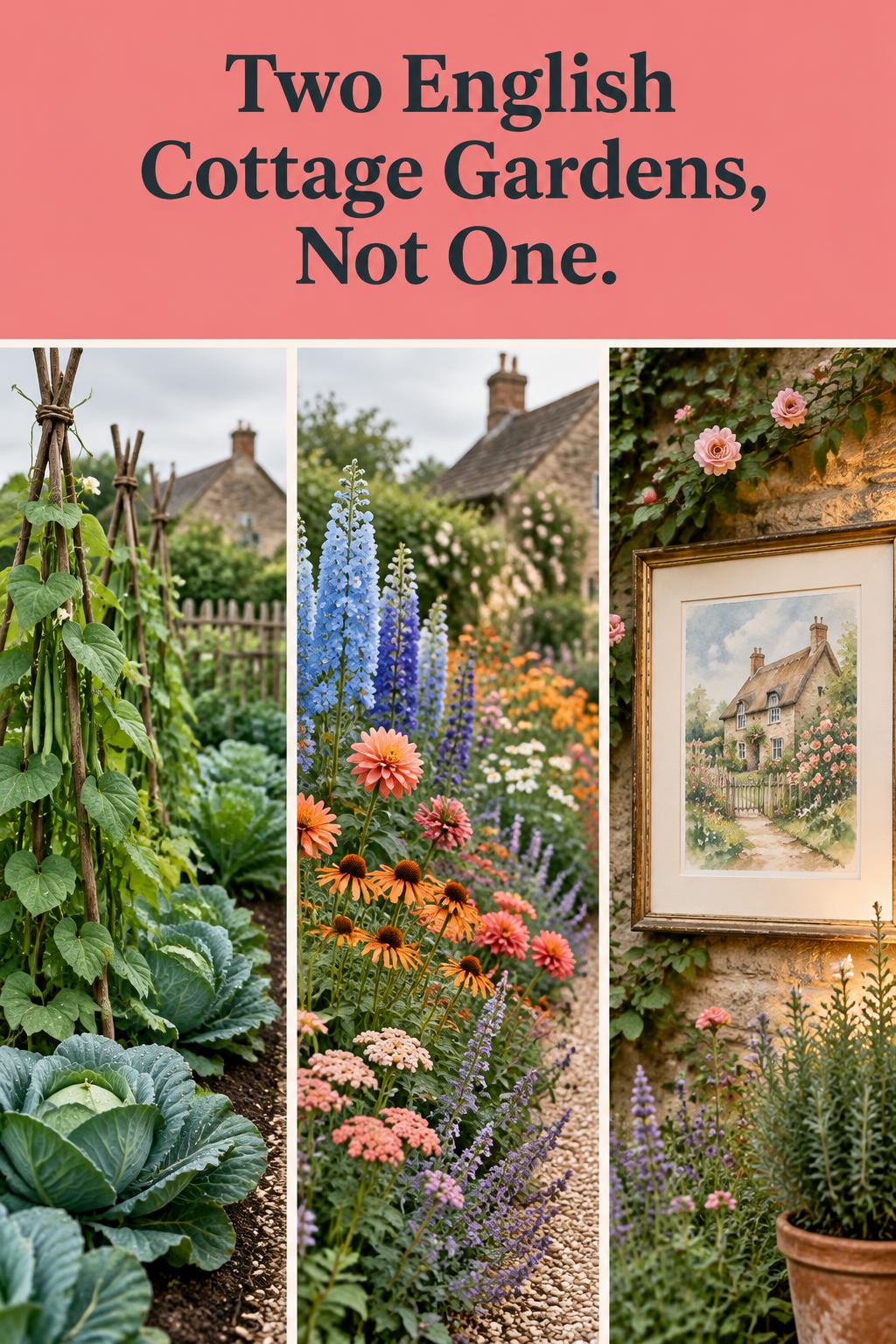

Picture a Helen Allingham watercolor of a Surrey cottage front, the kind reproduced in color in Happy England in 1903. The thatch is worn and furred with moss, the fence leans, the garden spills over the path, and small lattice windows catch the light. Some of those lattice panes were never there; the Art Gallery of New South Wales notes that she “restored” them on cottages that had never had them. I look at a picture like that the way I look at an old door: first for what’s original, then for what somebody added. Most people’s idea of the English cottage garden comes from pictures like it, one tumbling, flower-stuffed look. There were two gardens. The cottagers’ own plots grew food first, and the overflowing border Allingham painted at Munstead Wood was Gertrude Jekyll’s design, kept by a paid gardener.
TL;DR
- There are two English cottage gardens to copy: the cottager’s working plot of vegetables, fruit and herbs, which gained a front flower garden over the nineteenth century, and the Edwardian painterly border that William Robinson argued for in 1883 and Gertrude Jekyll planted at Munstead Wood.
- Jekyll’s main border at Munstead Wood was a picture planned on paper and kept with a paid head gardener, so a modern yard can borrow its long overlapping drifts but not its scale or its labor.
- For most yards, take the border’s layout and the plot’s habits: plant the hedge, fruit and climbers first, grow food in the same ground as the flowers, and write down what you added.
Which English Cottage Garden Belongs in a Modern Yard
My call, for most yards, is to copy the painterly border in layout and the working plot in its habits. The history won’t choose for you; it only shows the two were built for different reasons, which is enough to stop you planting a hybrid that suits neither.
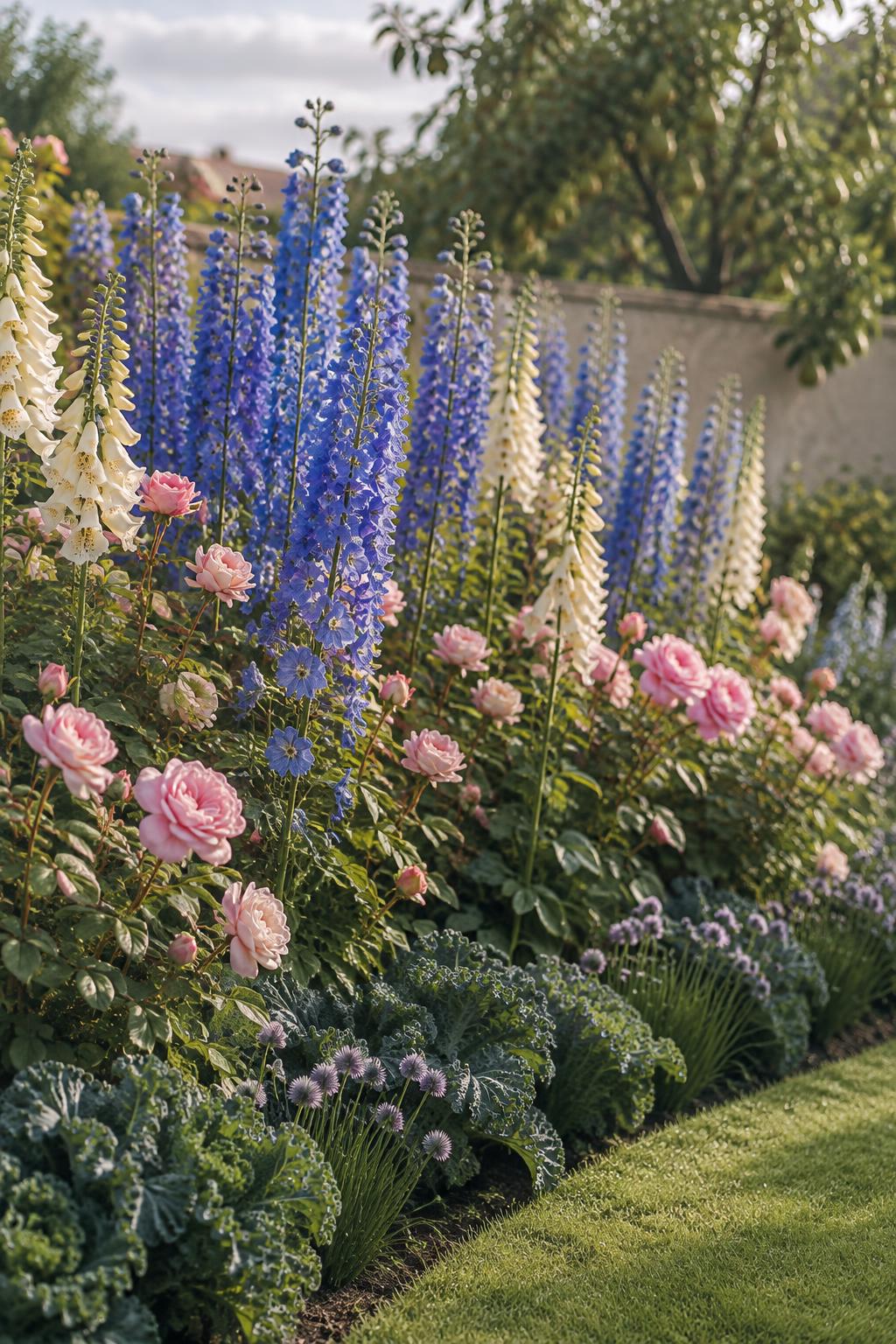
The border is the part a yard can borrow as a shape: long overlapping drifts against a wall or hedge, arranged so the eye travels along them. Its size and its labor can’t come with it. The working plot is the part a yard can borrow as a way of using ground: food and flowers in the same soil, poles cut from the hedge, broken household things put back to work. Nobody needed staff for that.
The trouble is the blend: plant the paintings’ look like a border and expect it to behave like a plot that fed a family, and you get something that wants a gardener’s hours and gives back neither a picture nor a harvest. If you’re designing a cottage-style garden from scratch, decide which of the two you’re after before anything goes in the ground.
The Allingham Paintings Sold Us a Garden the Cottagers Did Not Plant
In 1881 Allingham moved her family to Sandhills, near Witley in Surrey, and gave the rest of her career to cottages and their gardens. The reproductions in Happy England and, in 1909, The Cottage Homes of England carried her pictures far beyond any gallery.
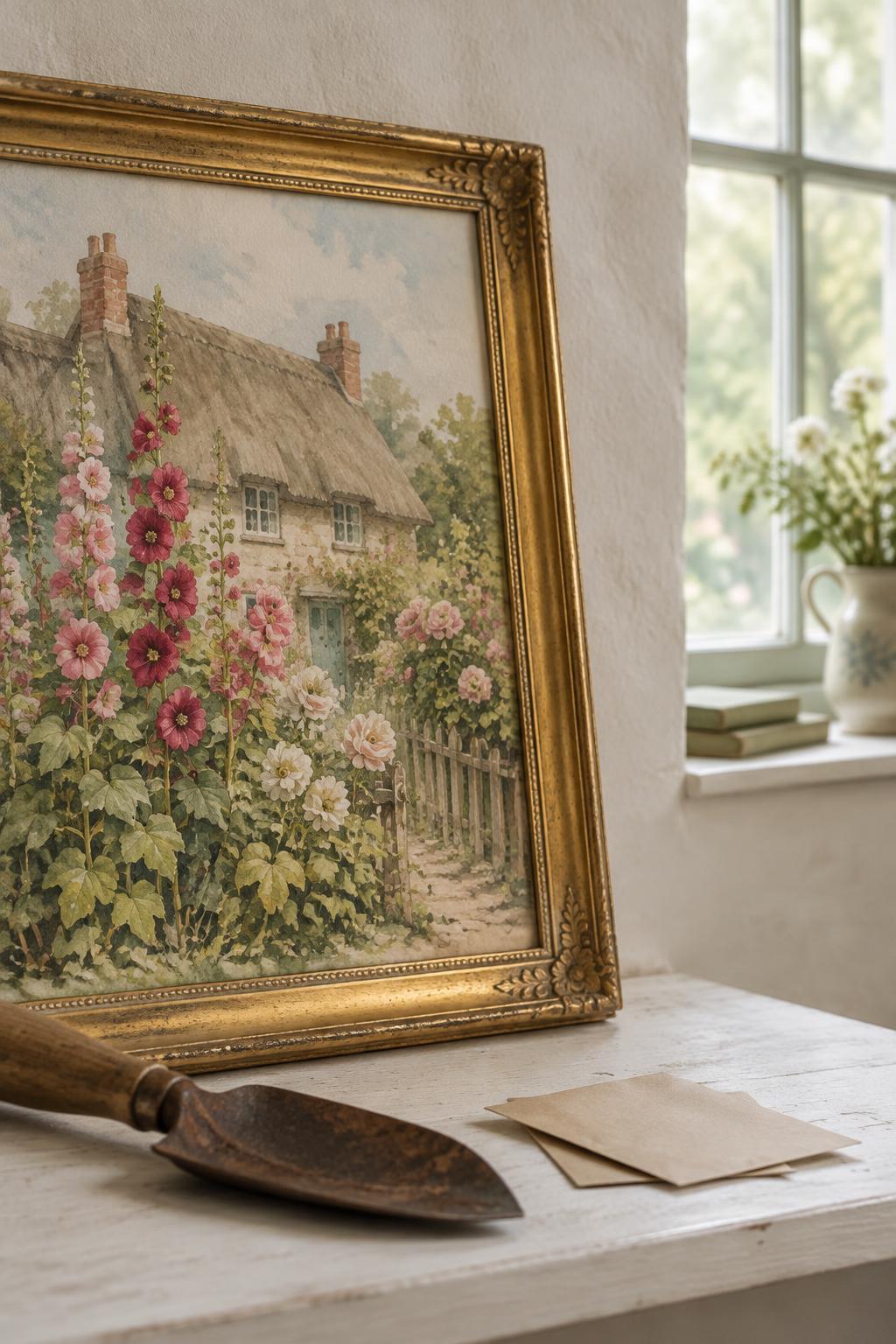
They were idealized, and the museums that hold them say so without fuss. Amy Barker, Keeper of Art at the Laing Art Gallery, describes Allingham seeking out picturesque subjects and “improving” them by playing up their dilapidated charm: worn thatch, mossy roofs, broken fences, overgrown gardens. She painted for buyers who idealized the rural past. Her early influence, Myles Birket Foster, told Tennyson that “no one likes an unbroken line”, which explains a good many leaning fences.
None of that makes her a fraud. One of her Munstead watercolors is accurate enough that nearly every plant in it can be named. But a painting is evidence of what the painter wanted you to see. Old isn’t the same as original.
What stood behind the real cottage door looks different. The V&A’s record for a watercolor of cottage gardens at Dalham, in Suffolk, describes plots given over to fruit, vegetables and herbs, with flowers as an incidental splash of color.
The pictures blended because the painter of the cottage fronts also painted the designed border. Jekyll invited Allingham to paint the South Border at Munstead Wood, and she painted it several times, about 1900. The collections that hold these paintings disagree on how many there are. Even there she idealized. Her watercolor shows massed planting that Jekyll’s own July photograph lacks.
The Cottager’s Plot: Vegetables, Herbs, Fruit and a Few Flowers
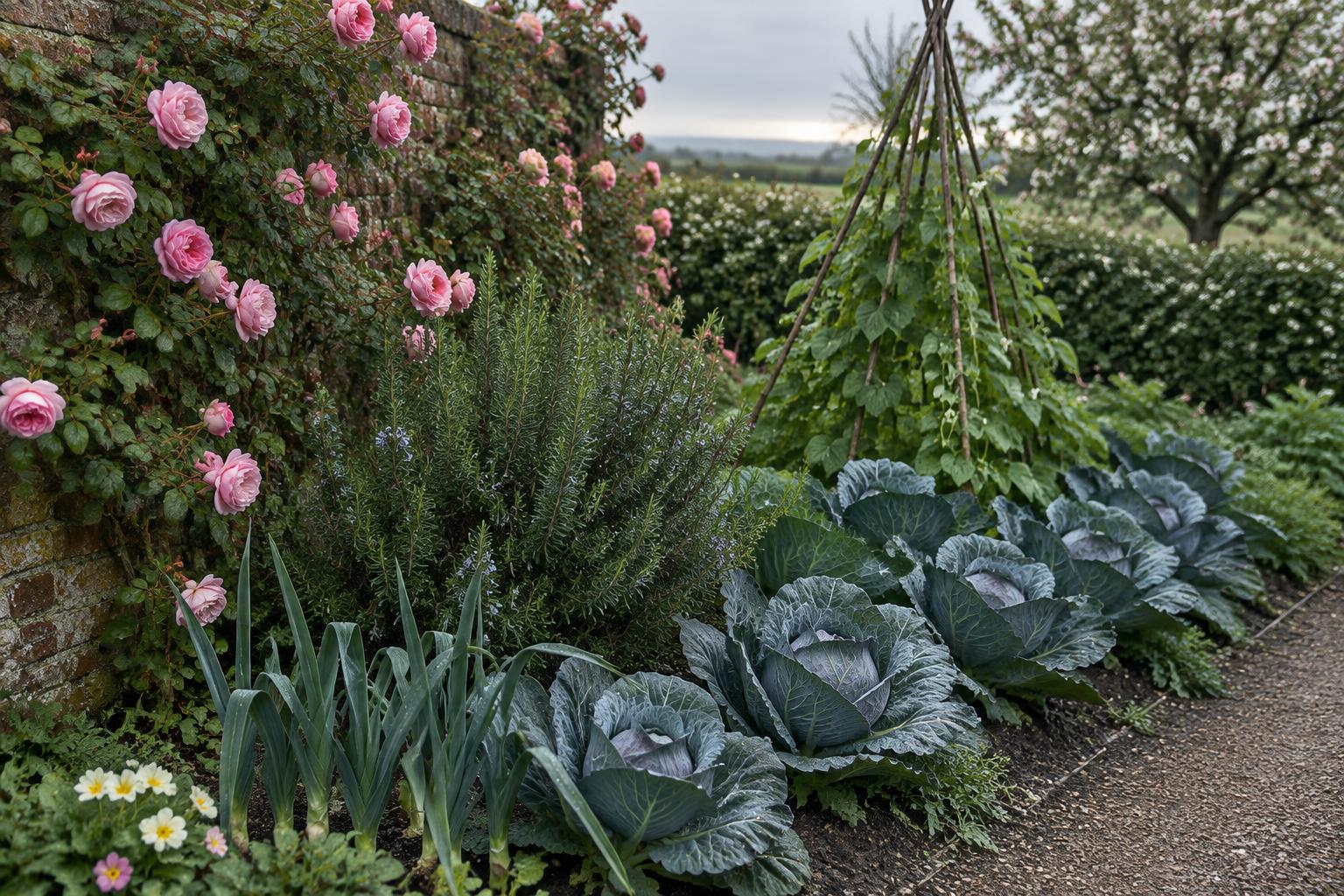
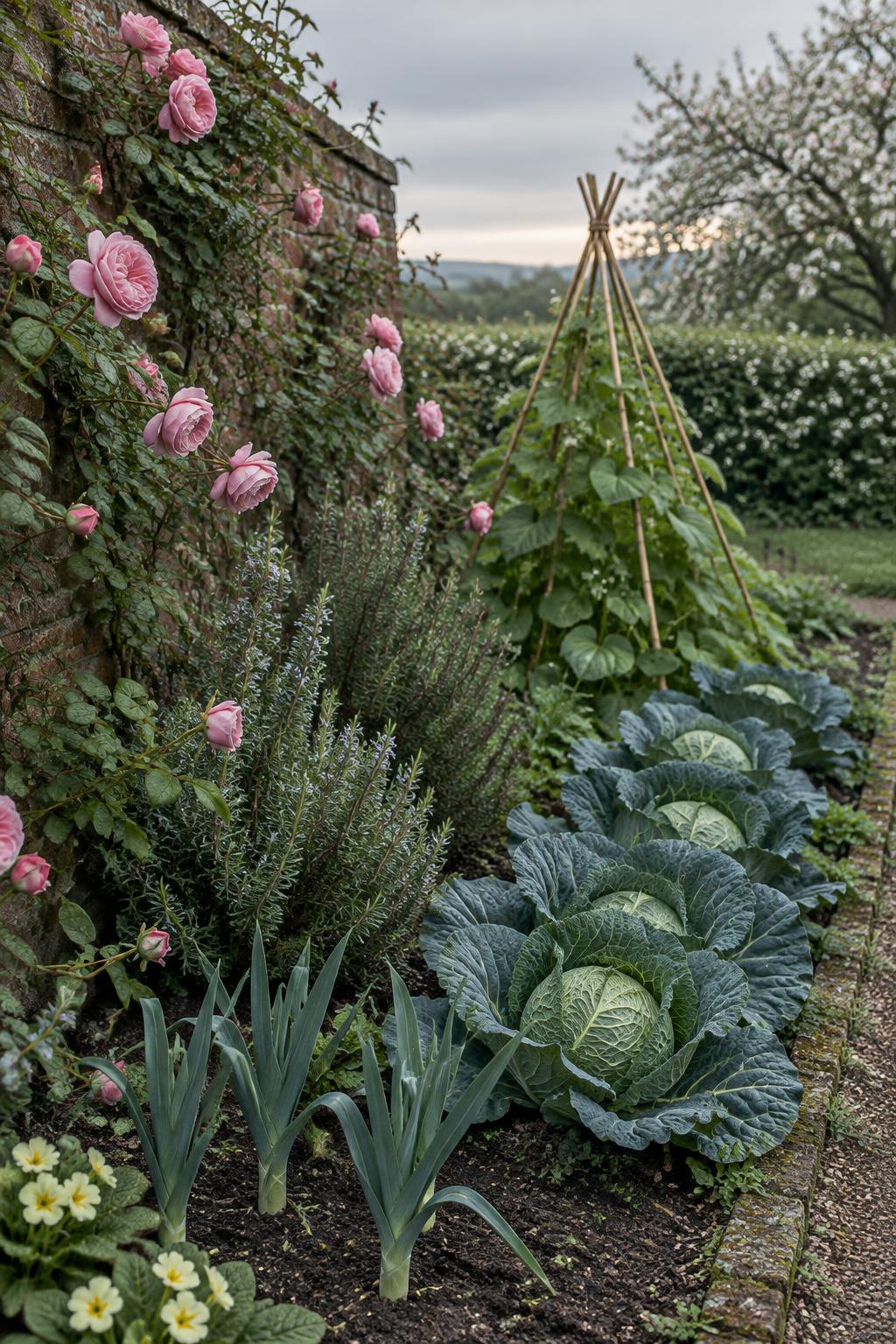
A laborer grew food, all of it in one ground: the greens, roots, peas and beans that went into the pot, fruit trees and bushes, herbs for the kitchen and for medicine. A pig and chickens gave meat, eggs and manure. Poles from the hedge held up the climbing crops and willow hurdles kept the animals off them. Vegetables sat in the ground among everything else.
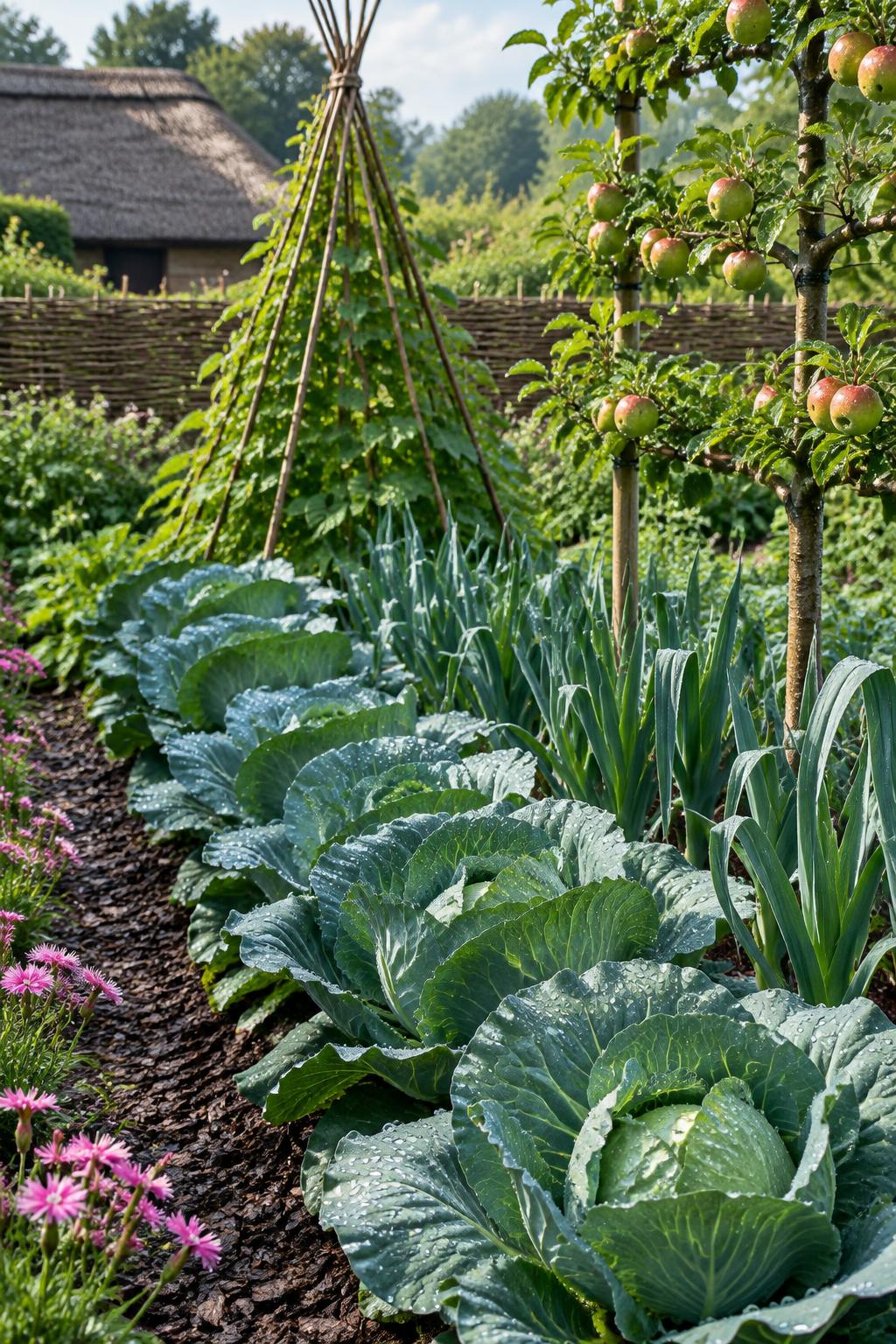
Fruit grew close to the house, where it was easier to pick and preserve and harder to steal. One charity tract describes a single laborer’s rood, enclosed by a cut quickset hedge, holding fifteen apple trees, other fruit trees, soft fruit bushes, vegetables and three beehives. A rood is a quarter acre: 43,560 sq ft divided by four is 10,890 sq ft. Plots ran from that down to a few square yards, and some cottages had no garden at all. If yours is nearer the bottom of that range, the plot’s habits still travel, and a cottage garden in a small yard starts from where you’ll sit rather than from history.
The flowers are where the record splits. The V&A’s view is that they were incidental. Danae Tankard’s study of southern England between about 1830 and 1910 finds flower gardens common, usually at the front, where they showed a household’s respectability. A manual for cottagers was already recommending ornamental flowers in 1851. Both readings hold, at different dates: food came first, and the front flower garden grew into a feature over the nineteenth century.
The Edwardian Border: Robinson, Jekyll and the Painter’s Eye
The second tradition has authors, dates and a printed manifesto.
Robinson’s English Flower Garden, 1883
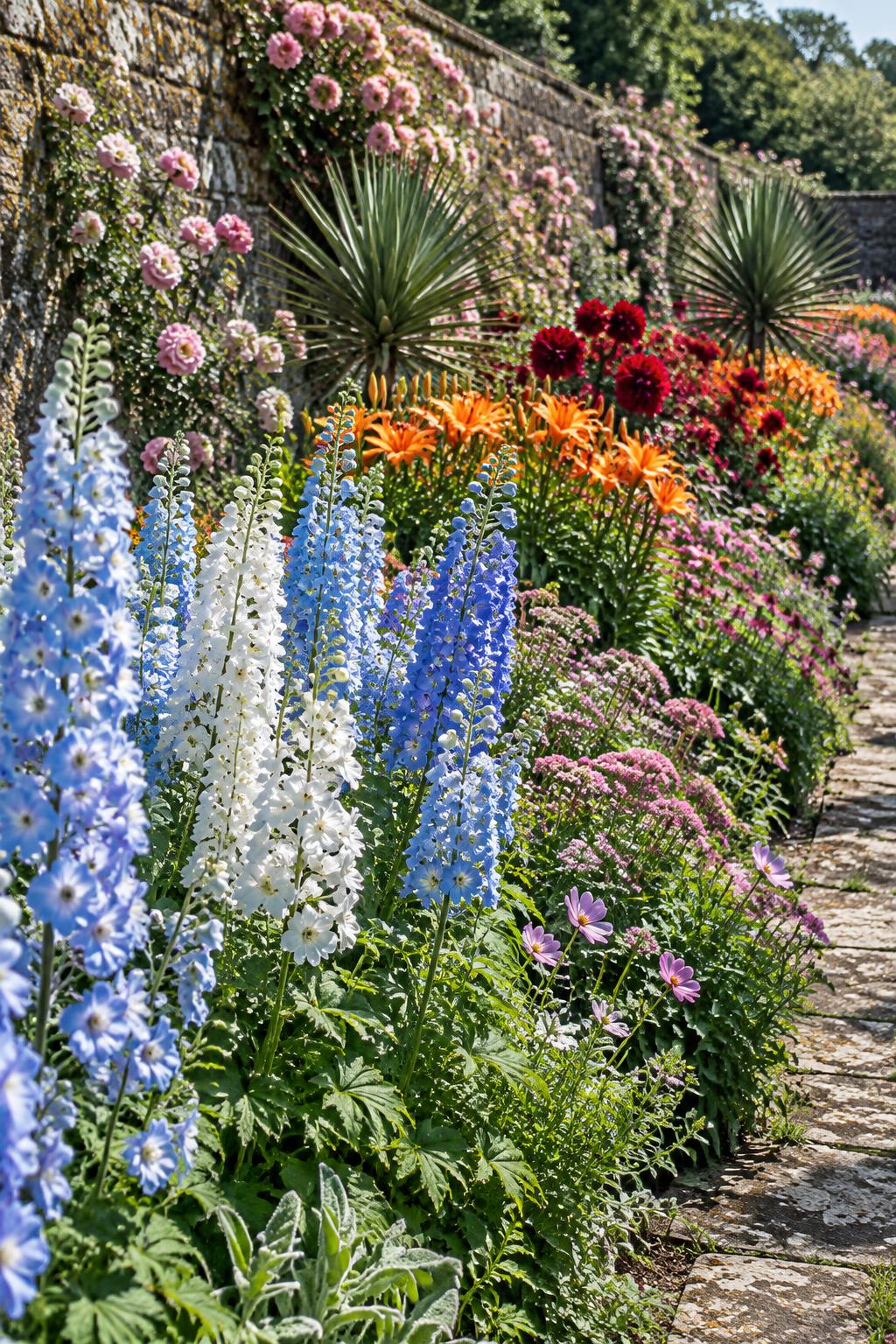
William Robinson published The English Flower Garden in 1883. He threw out statuary, topiary, carpet bedding and waterworks, took the simple cottage garden as his inspiration, and argued for mixed borders, climbers, herbaceous plants and bulbs set densely enough to leave no bare soil. He wanted gardens to be “true pictures”. Here the cottage became a source of plants and looseness for people who were not cottagers.
Jekyll and the graded border
Jekyll trained as a painter and embroiderer and turned to gardens when her eyesight failed. She made Munstead Wood from the 1880s. Her main border ran 200 ft by 14 ft against a stone wall, and from about 1893 a head gardener, Albert Zumbach, helped keep it. It was woven from annuals, biennials, bulbs, herbaceous and tender plants in long, thin, overlapping drifts, graded by color: cool at the ends, strong yellows and oranges toward the middle, the deepest reds at the center, then back down again, so the eye was prepared for each color by the one before. She set the method out in Colour in the Flower Garden in 1908. The National Trust puts it simply: she used plants as a painter would a palette of paints.
That border was drawn on paper and kept by staff. It borrowed cottage plants and cottage looseness, and it was never a cottager’s garden.
The Two English Cottage Gardens Side by Side
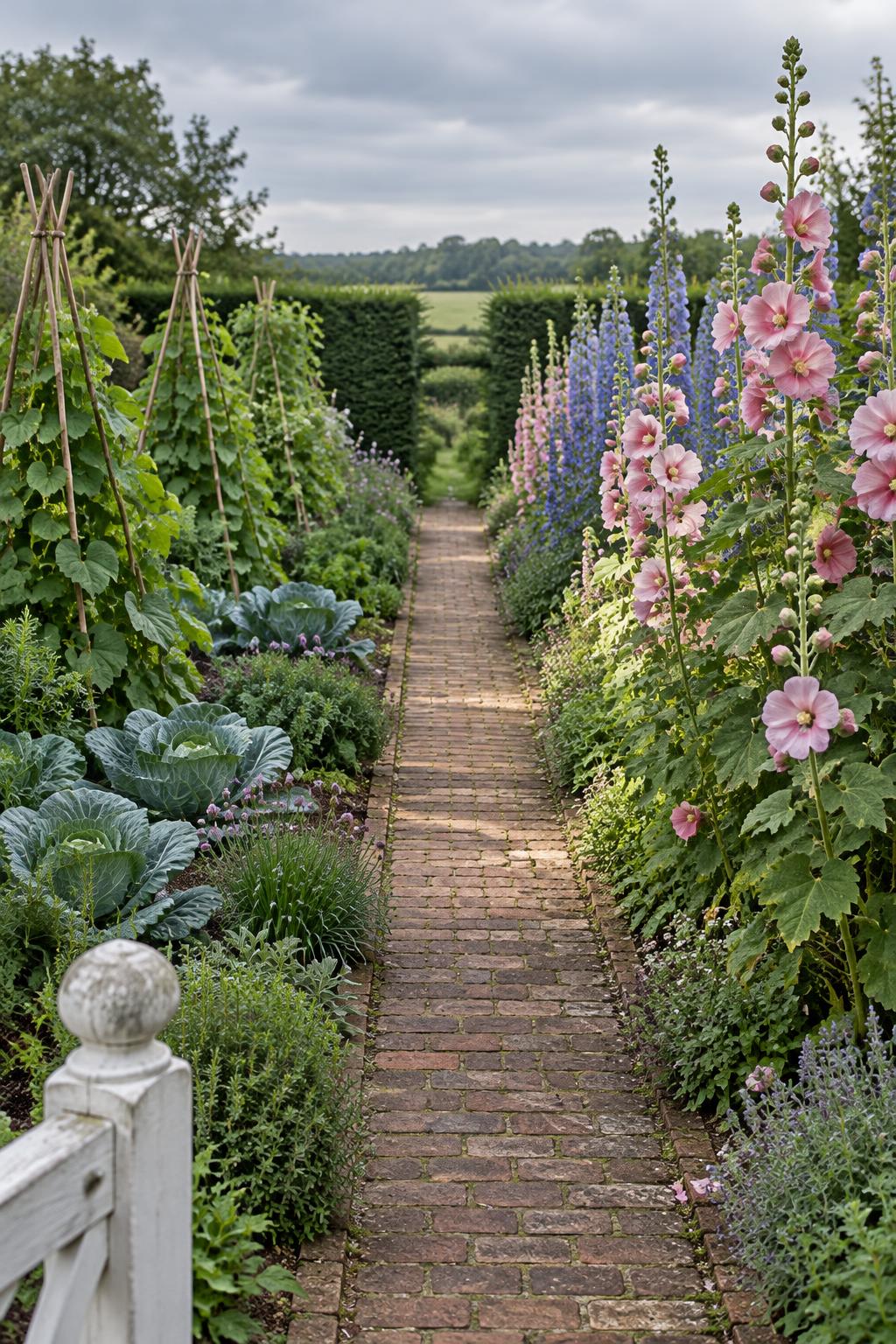
Set side by side, the plot and the border show which list you’ve been buying from.
| The cottager’s working plot | The Edwardian painterly border | |
|---|---|---|
| Purpose | Feed the household | Make a picture |
| Characteristic plants | Kale, cabbages, onions, leeks, turnips, peas and beans; apples, pears, cherries, plums, damsons and wild strawberries; gooseberries and currants; medicinal herbs; a few flowers, often at the front from the nineteenth century | Annuals, biennials, bulbs, herbaceous perennials and tender plants in drifts; rambling roses, gray foliage, white foxgloves, yuccas |
| Layout | Hedged enclosure, fruit near the house, crops in rows, bean poles and hurdles, flowers by the path or at the front | One long, deep border against a wall or hedge, overlapping drifts graded by color, no bare soil |
| Who did the work | The household, with manure from its own pig | The owner with paid staff; Munstead Wood had a head gardener |
| Jobs that came round every year | Sowing and harvest | Replanting annuals, biennials and tender plants; feeding and mulching the roses |
The hours either garden took aren’t recorded, so the honest comparison is who did the work and which jobs came back each year.
Plant Each Version Today, and Say Plainly That It Is New
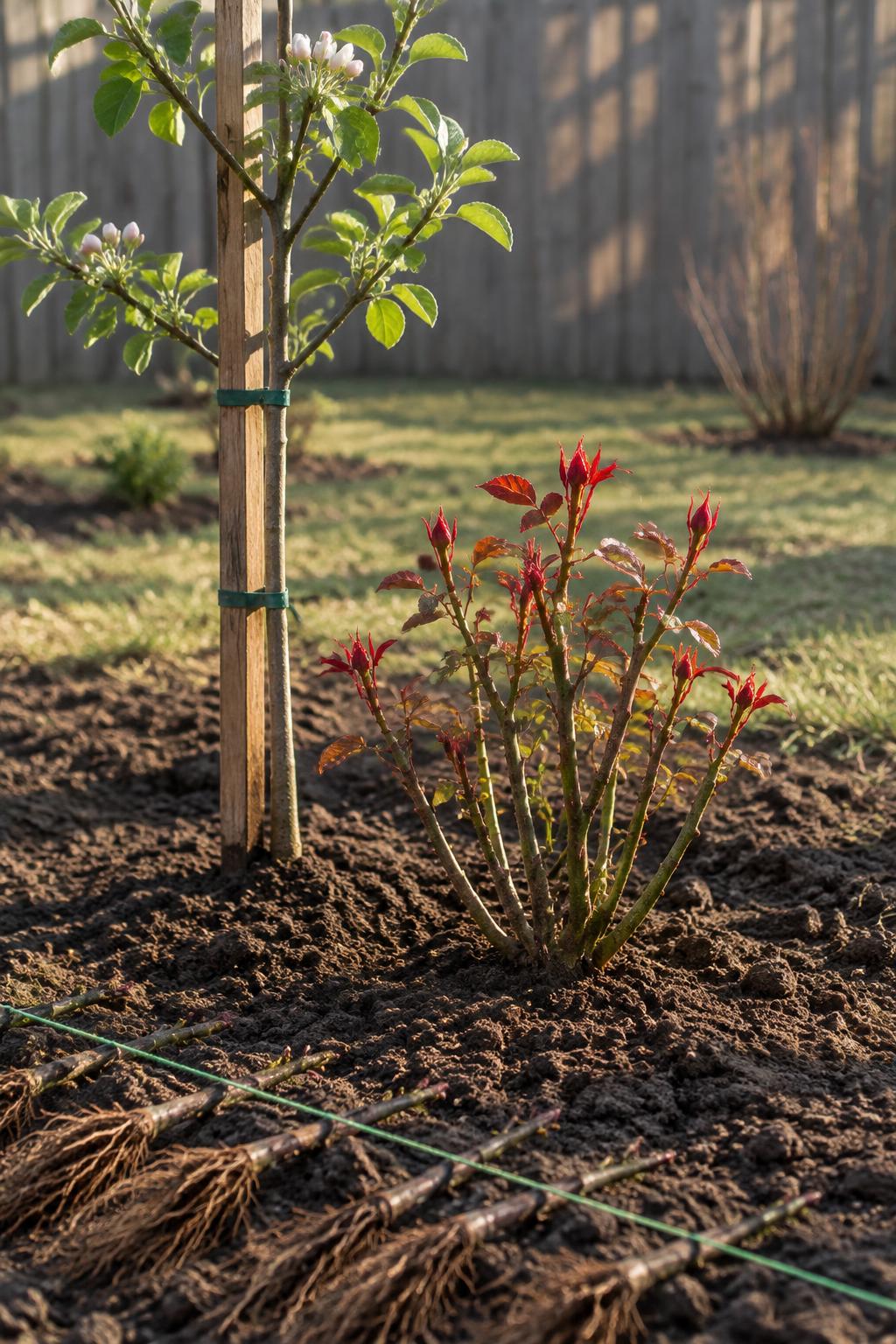
Start with whatever will outlast you. A hedge, fruit trees and climbers outlive every annual you’ll ever sow, so in either version they go in first and the rest is fitted around them.
Planting the working plot
Frame it before anything else, the way that laborer’s rood was framed by its hedge. Put fruit nearest the house, where you’ll actually pick it. Sow vegetables straight into the ground among the herbs and flowers instead of fencing them off in separate beds, and keep the plot’s thrift with poles cut from your own prunings. A flower garden at the front is true to the nineteenth-century plot.
Planting the painterly border
Draw it on paper first, as Jekyll did. Find the longest wall or hedge you have and plant long, thin drifts that overlap along it. Munstead’s length won’t fit most yards, but long overlapping drifts will. Plan for the upkeep: annuals and biennials raised every year, and new perennials kept well watered through their first year, even the ones sold as drought tolerant.
In both, translate the shape and not the species. Your summers may be nothing like Surrey’s, and stand-ins for English classics will serve you better than forcing a plant list from another climate.
So name which garden you’re copying, plant the long-lived things first, and borrow the border’s layout without pretending to its scale. Don’t pass new planting off as old. A good restorer leaves notes for the next one, and a garden deserves the same courtesy: write down which tradition you followed, what year you planted, and what you added that no cottager or Edwardian ever grew. I restore buildings, not gardens; what I bring is the habit of reading old evidence before copying it.
FAQ
Is a cottage garden the same as a country garden?
Not quite. There’s no settled definition of a country garden; it’s a loose term. A cottage garden has a clearer meaning: informal, abundant planting of flowers and herbs, sometimes with fruit and vegetables, built with traditional materials such as hazel wigwams, and it descends from two lineages, the working plot and the painted border.
How long does an English-style cottage garden take to look established?
Usually two to three years of steady attention before a new planting starts to look after itself, by one garden designer’s reckoning. The first year asks the most of you, because new perennials need regular watering even when they’re sold as drought tolerant. Hedges, fruit trees and climbers set a slower pace for the whole garden.
Do English cottage gardens need a lot of watering?
In the first year, yes. Keep new perennials well watered, and water at the base, under the foliage, rather than over the top. After that it depends on what you planted, since some classic cottage plants want free-draining soil and full sun while others want moist, well-drained ground. Your plant list decides it more than the style does.