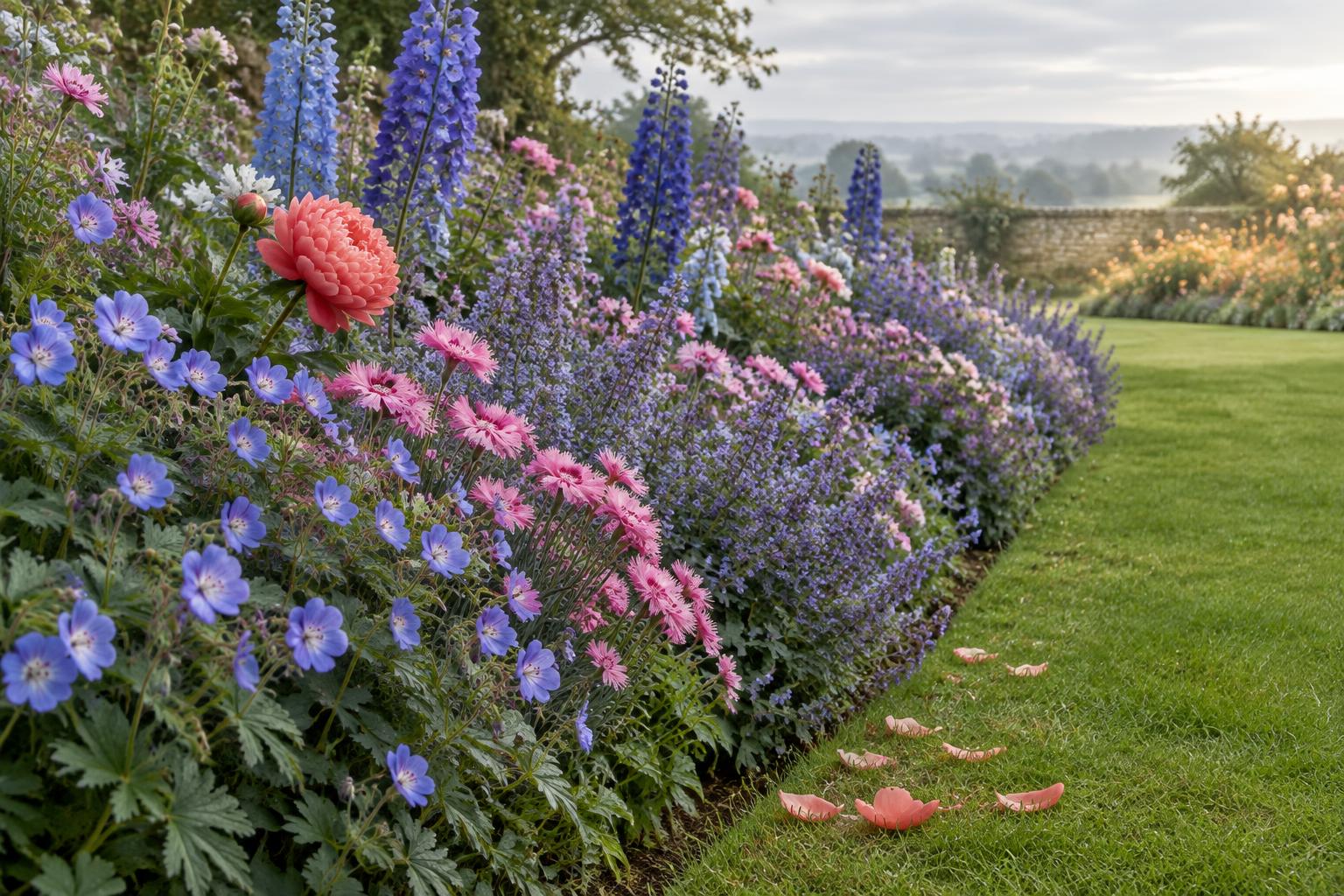

Why does one packed cottage border feel like a party, while the one next door, holding just as many plants, feels like a jumble? Count the colors, not the stems. A cottage garden color scheme fails when every color in the bed shouts at the same volume, and the fix is a short rule you can hold in your head at the nursery: one loose family, a smaller accent that cuts across it, and one plant or one silver leaf that repeats from end to end.
TL;DR
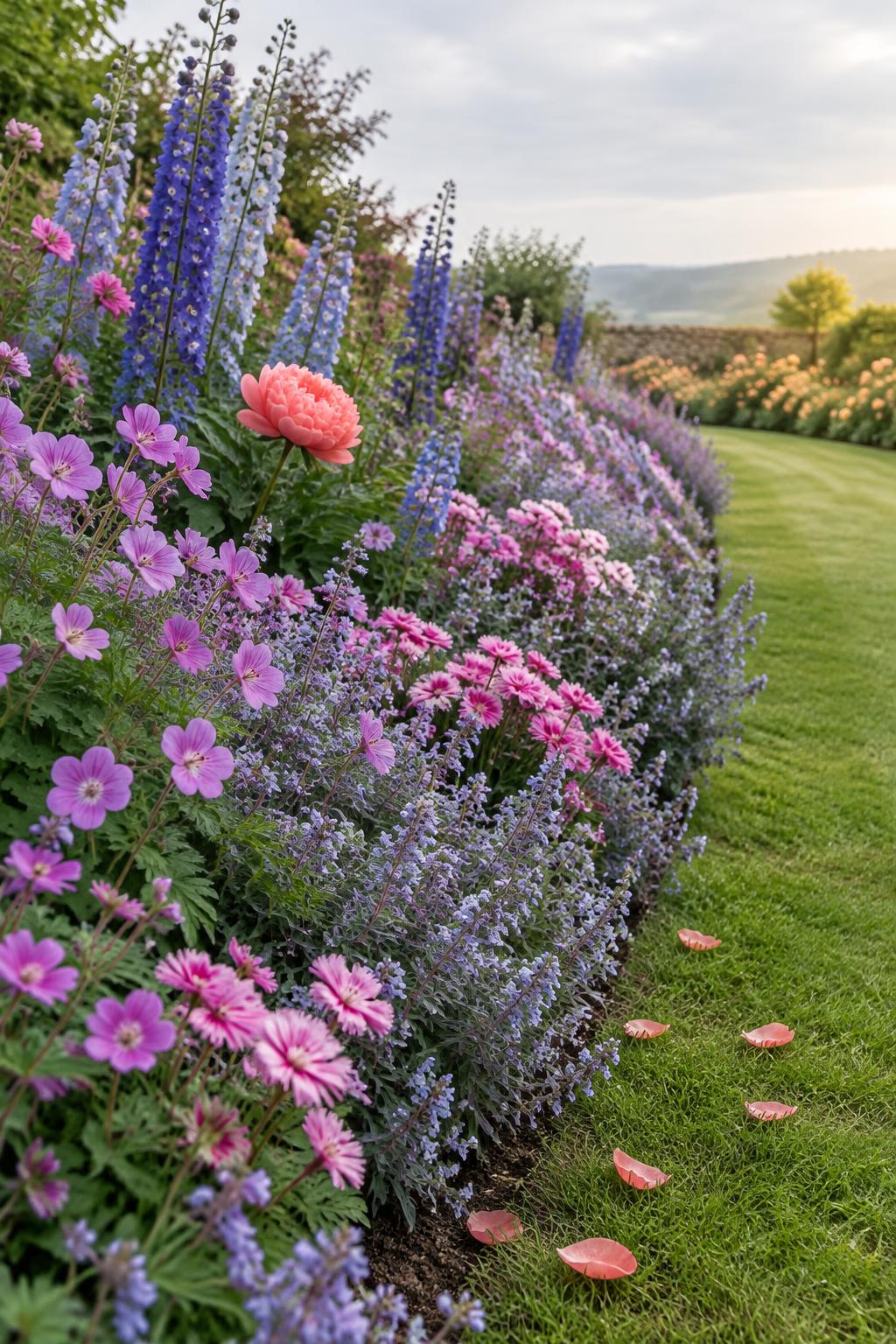
- Choose one loose color family, such as three neighbors on the color wheel like blue, violet and mauve, and let a smaller accent from across the wheel, like a pale yellow yarrow, provide the surprise.
- Tie the bed together by repeating one plant or one color along its length, and use white flowers and gray or silver foliage as the pause between colors that would otherwise fight.
- To fix a bed that already clashes, take out the stray color before adding anything, then put in a single repeater or a silver plant where the eye snags.
Why One Crowded Bed Feels Abundant and the Next Feels Messy
Lively is a good feeling. I have to remind myself of that, since most of my work goes into rooms meant to quiet a mind.
My parents live in the flat below mine, and on Sundays my mother cooks dinner for both floors. Her kitchen is crowded, loud and cluttered. Everyone loves being in it, and it reminds me that calm isn’t the only good feeling a space can have. Design for the feeling the household wants. A cottage border can be that kitchen, generous and a little noisy, and tidying it into restraint misses the point.
So what makes the other bed a mess? Lots of different colors in a small border look chaotic, and a limited palette is generally the pleasing one, the RHS says. Iowa State Extension names the failure well: a “shotgun approach,” one color here and one color there, until nothing in the bed belongs to anything else.
One Loose Family, One Accent: The Cottage Garden Color Scheme Rule
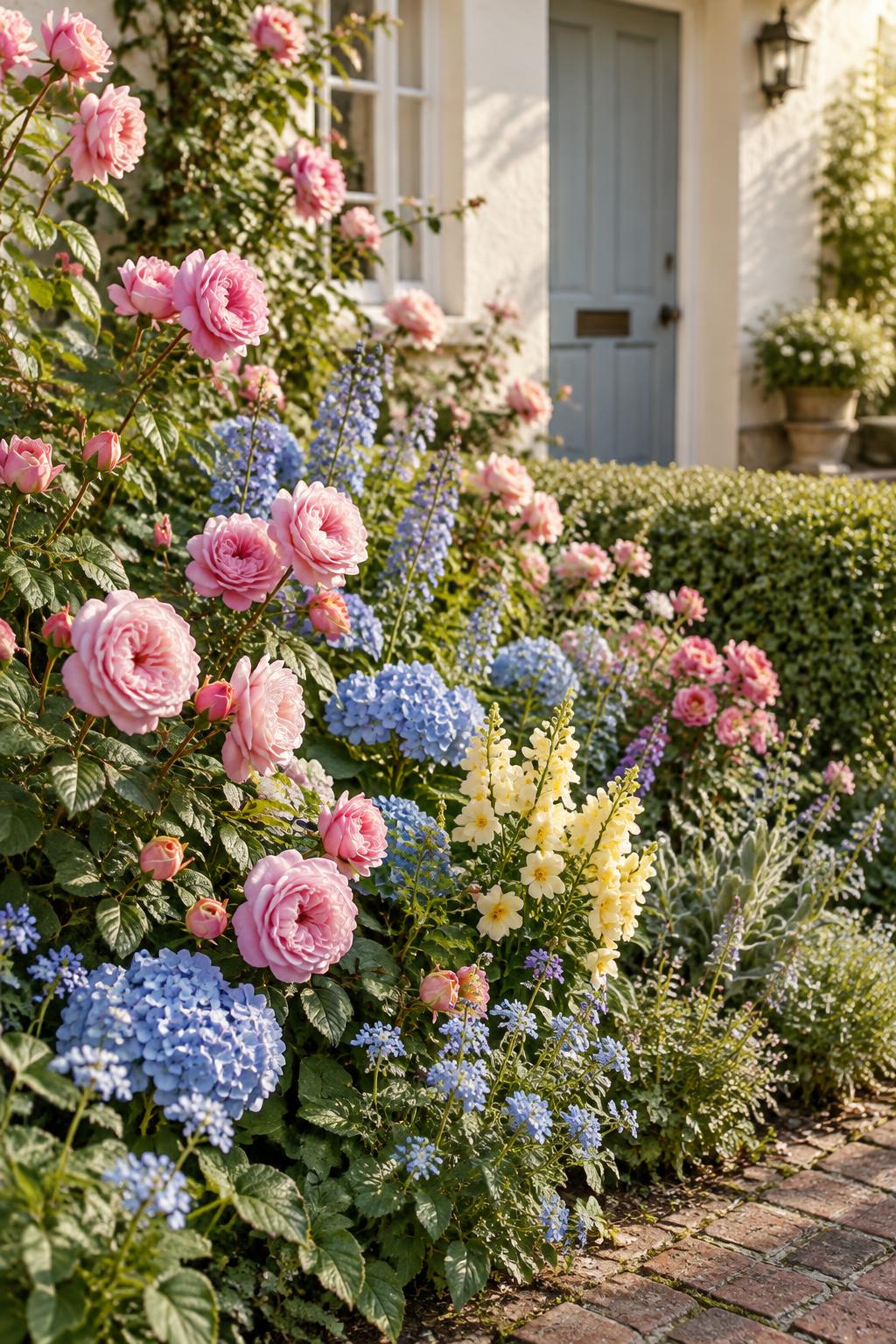
Start with neighbors. An analogous family is a run of colors that sit next to each other on the wheel, and because they share pigment, they blend. The RHS suggests three adjacent colors, such as blue, violet and mauve, or two opposite ones, such as violet and yellow, as combinations that generally work in a small border. Cornell adds a useful refinement for the three-color version: let the middle color carry most of the planting and the two flanking colors play a lesser part.
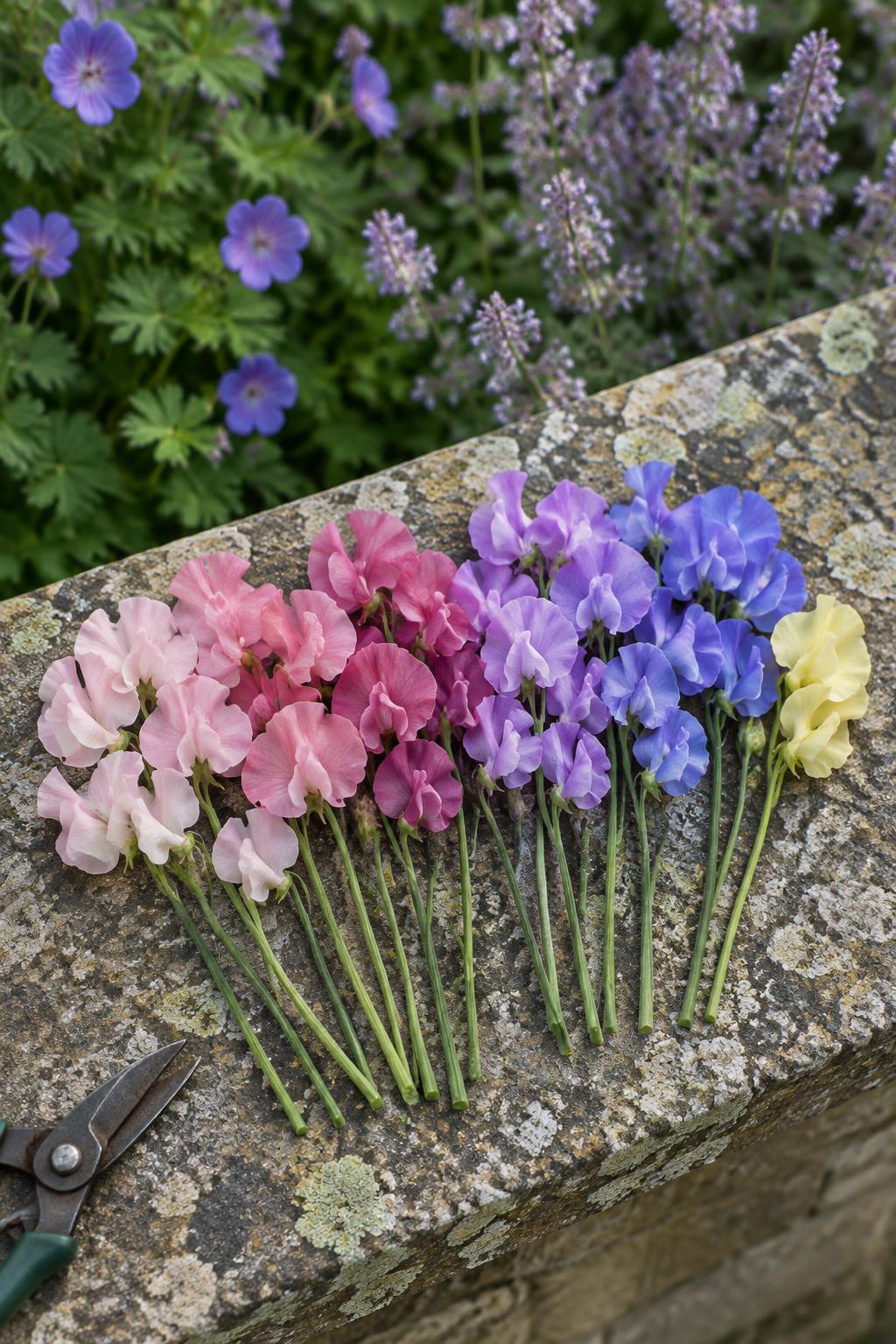
Opposites are the intense option. Complementary pairs make each other look stronger and work best when one color clearly dominates.
My own rule sits on top of that. Pick one loose family to carry the bed, then let one smaller accent cut across it. I give clients the same advice for a living room, and it carries straight over to a border. Matching sets look calm in photos and fussy in life, and a bed of six pinks in exactly one shade is a matching set. Loose means tints and shades of the family, pale and deep, all allowed in. The accent’s job is surprise.
Some colors only work as accents. Deep, pure red clashes with almost anything unless dark green foliage softens it, yet used properly it gives strength and depth. If you love red, make it the accent.
Garden sources give no percentage for any of this, so don’t go looking for one.
Four Cottage Garden Color Palettes and the Plants That Make Them
Each palette is one family with one accent. Pick the one that sounds like your household.
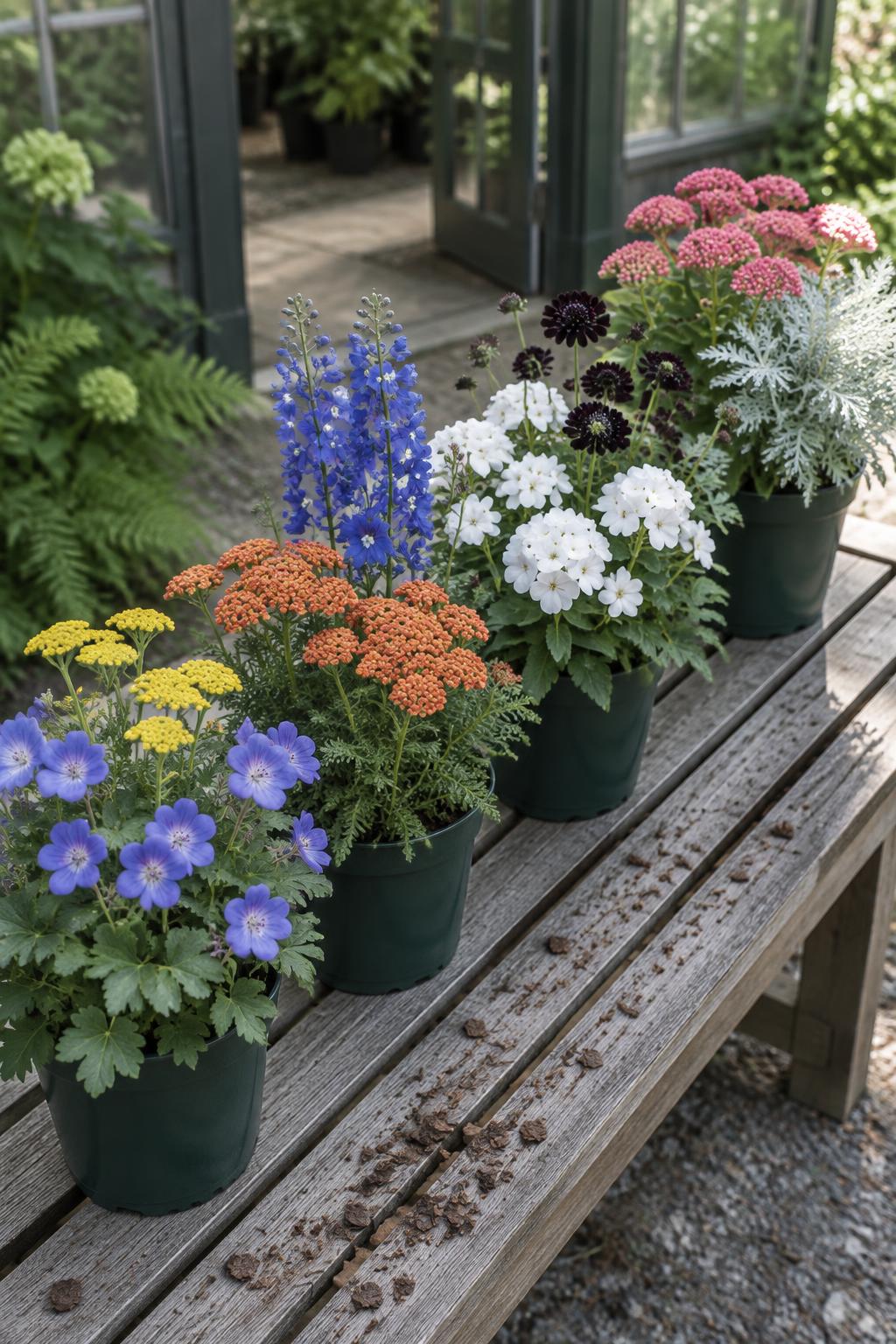
| Palette | Family | Accent | Plants that bloom in these colors | How it feels |
|---|---|---|---|---|
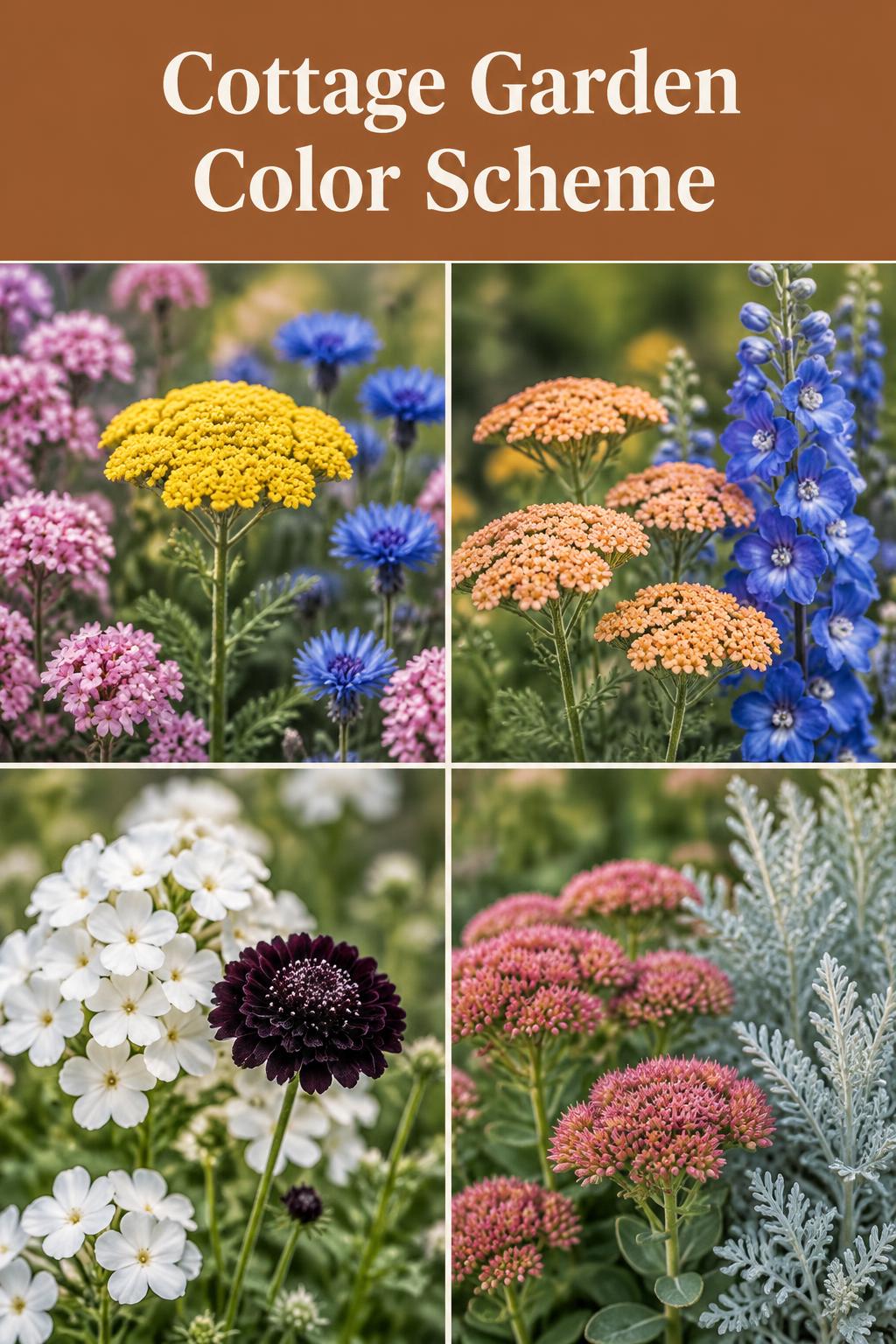
| Cool pinks and blues | Violet-blue, lavender-blue, magenta-pink | Pale sulfur yellow | Geranium ‘Rozanne’, Nepeta ‘Walker’s Low’, Dianthus ‘Firewitch’, Achillea ‘Moonshine’ | Soft and romantic, with a jolt |
| Warm apricots and yellows | Terracotta, apricot, champagne-yellow | Violet-blue | Achillea ‘New Vintage Terracotta’, Digitalis ‘Sutton’s Apricot’, Delphinium ‘Violets Are Blue’ | Warm and cheerful |
| White and green | Pure white flowers, green leaves | Near-black maroon | Phlox paniculata ‘David’, Scabiosa ‘Black Knight’ | Crisp, with one dark note |
| Plum, rose and bronze | Pale pink, dark plum, burgundy and bronze leaves | Silver foliage | Sedum ‘Matrona’, Centaurea ‘Jordy’, Salvia ‘May Night’, Artemisia ‘Powis Castle’ | Deep and grown-up |
Cool pinks and blues, with a pale yellow accent
Geranium ‘Rozanne’ gives you violet-blue saucers with white centers from late spring into mid-fall, and ‘Walker’s Low’ catmint adds a lavender-blue haze over a silvery mound. Dianthus ‘Firewitch’ is the loud cousin, a shocking magenta-pink rather than a soft one, so plant it as the family’s brightest member. Achillea ‘Moonshine’ is the accent, sulfur-yellow heads over blue-gray leaves. It suits anyone who wants romance with a bit of nerve.
Warm apricots and yellows, with a blue accent
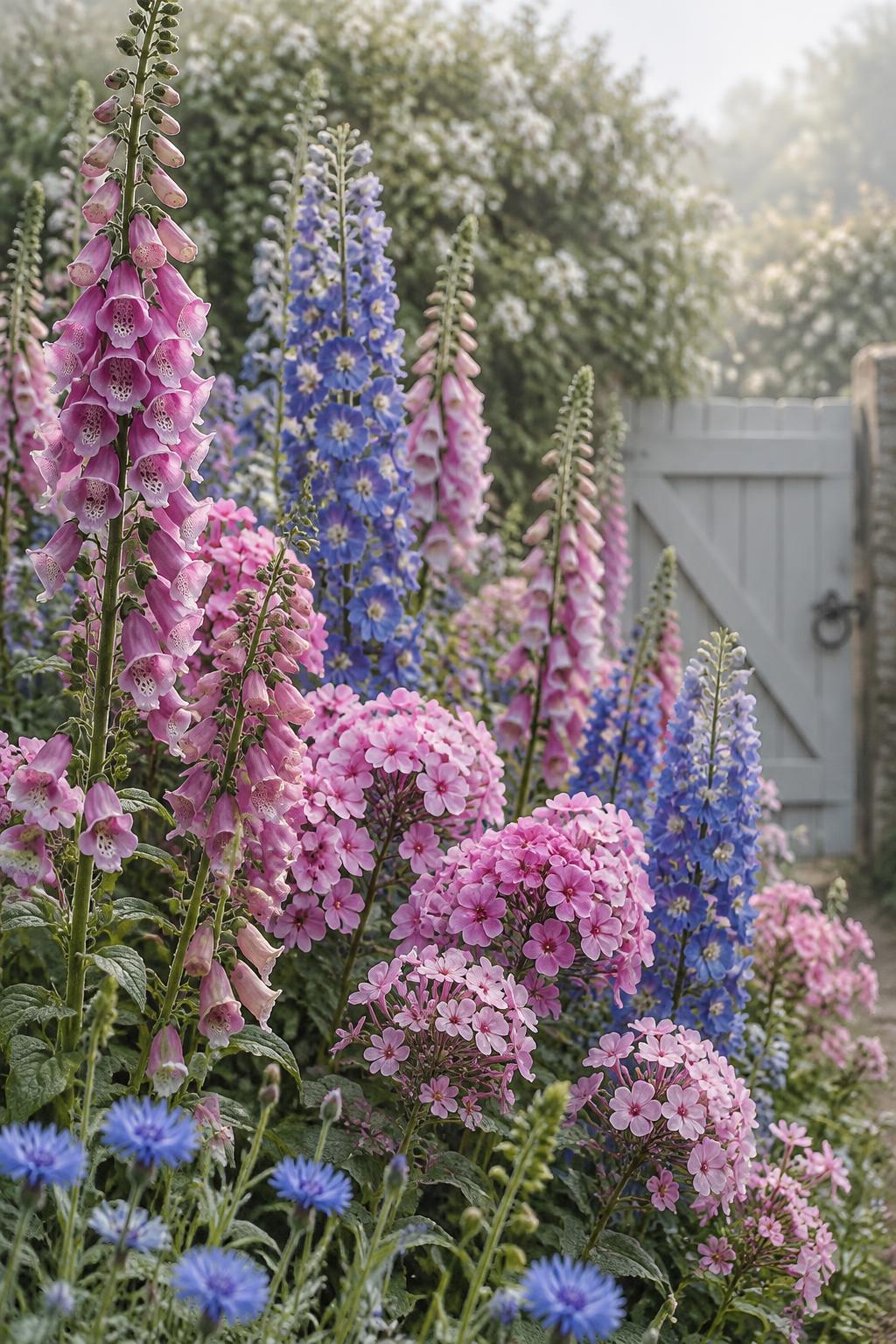
Here the family runs warm. Achillea ‘New Vintage Terracotta’ opens terracotta-orange and ages to a champagne-yellow, so one plant gives you two family members. The foxglove ‘Sutton’s Apricot’ adds pinky-apricot spires in June. For the accent, Delphinium ‘Violets Are Blue’ brings mixed violet, purple and blue tones, a blue that leans purple. Blue looks more striking beside orange, its complement.
White and green, with one dark flower as accent
Phlox ‘David’ carries pure white heads from mid to late summer, longer if you deadhead. The accent is Scabiosa ‘Black Knight’, deep velvety maroon that looks almost black, grown as an annual from seed. White and black can both look like holes in a planting, so keep plenty of green leaf between the whites. White also brightens a darker corner, where pale flowers for shade do the work.
Plum, rose and bronze, with a silver accent
This is my own combination, the one I’d plant if the bed were mine. Garden designer Arne Maynard describes dark plums and rich pinks as an undercoat that brings vivacity to the paler colors that dominate, and the palette borrows that idea. Sedum ‘Matrona’ gives pale pink flower heads on burgundy stems, with leaves that turn bronze in winter. Centaurea ‘Jordy’ adds dark plum-purple, and Salvia ‘May Night’ a deep purple. Artemisia ‘Powis Castle’ is the accent, fine silver-gray foliage that rarely flowers.
The plants in all four palettes don’t flower in the same weeks, so compare bloom times on the tags.
Silver, Green and One Repeating Plant Hold the Border Together
Fine Gardening writer Bonnie Blanchette had a 150-foot border that looked like a hodge-podge of plants. She rescued it by repeating colors and plants through each stretch, purple in most of them and hostas, astilbes and daylilies along the whole length. Gold and silver, she found, carried the eye farthest.
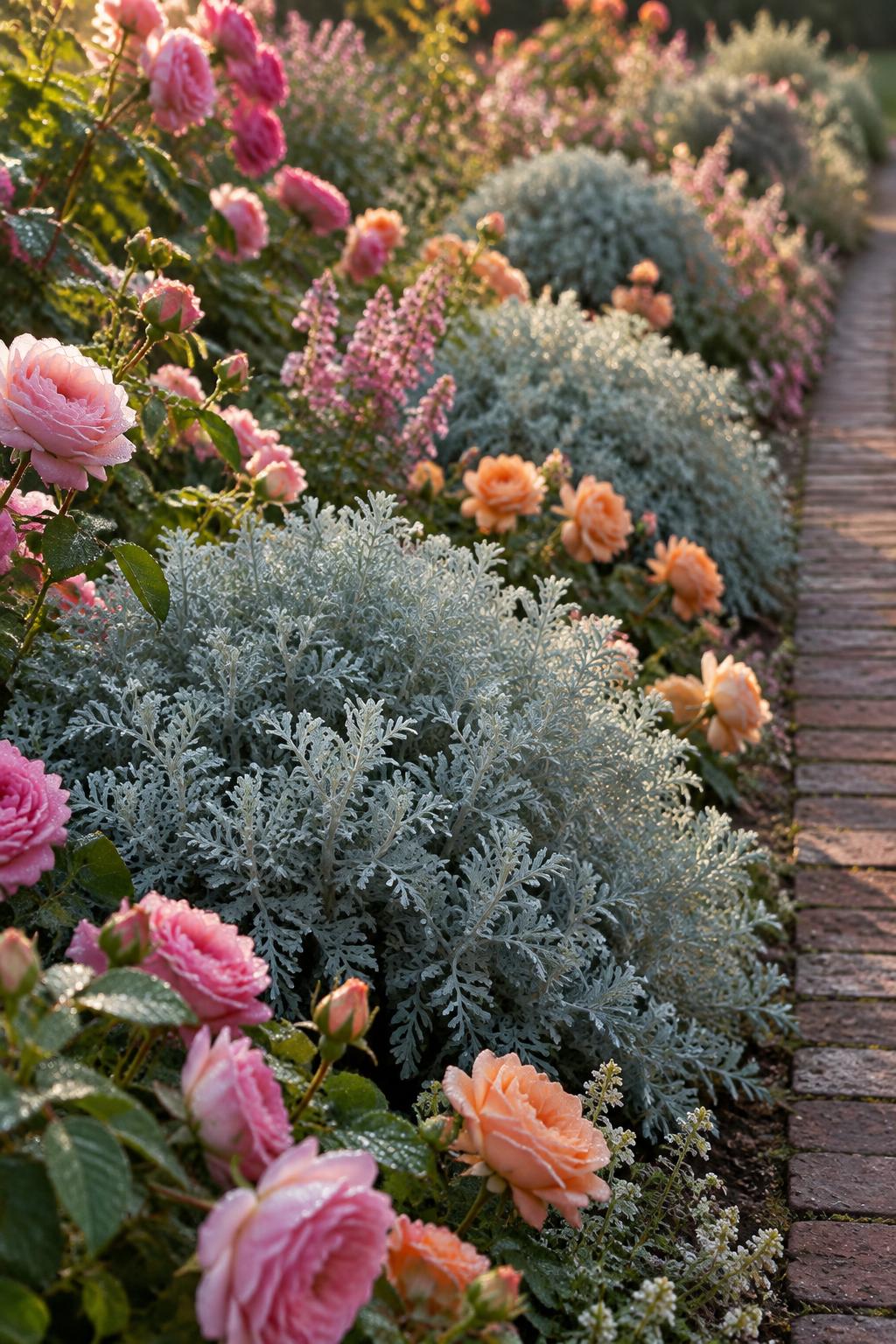
Repetition ties the border together, and silver and white give it somewhere to pause. “White flowers and gray foliage are indispensable as separators of conflicting colors,” says University of New Hampshire Extension, and they work like punctuation between plantings that follow different schemes. A clump of silver between a magenta and an orange stops the argument, and green, which usually dominates a border, links everything.
If the full rule feels like too much, pick one plant color that repeats the length of the border and let everything else vary around it. In a tiny yard, repeating plants in a small bed carries color without looking busy.
Walk your border today and find the one plant you’d happily see again at the far end.
How to Edit a Bed That Already Clashes
What can leave? It’s my first question in a garden as much as a room, and the answer is usually one color.
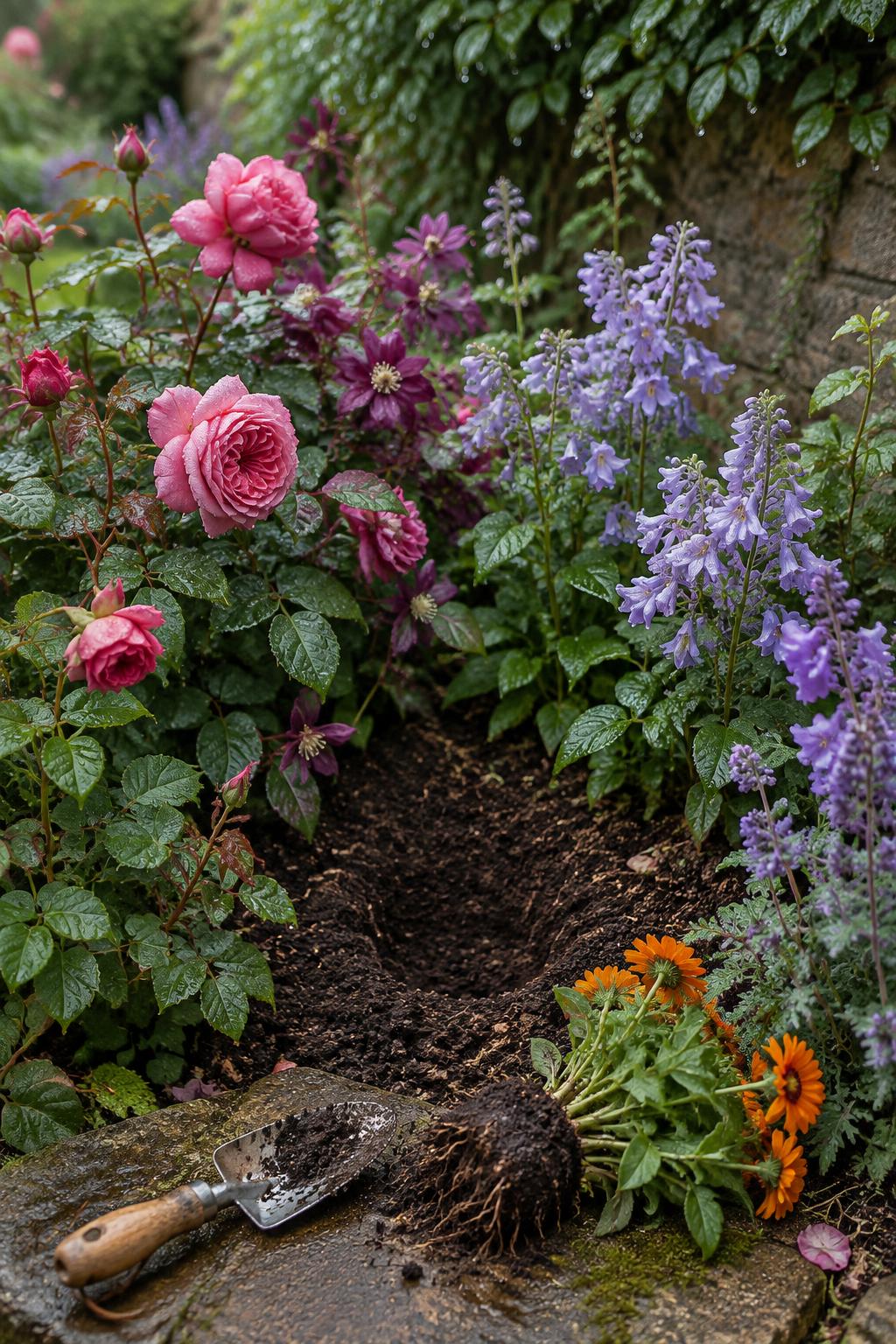
Sit with it for ten minutes before you touch anything. Then photograph the bed in grayscale. Without color you see whether forms and values still read as separate. The Hardy Plant Society’s “Better borders” interview gives one case: orange Welsh poppies peppered through a border made it look spotty and chaotic, while soft, recessive fritillaries scattered the same way ran through it like threads and gave it unity.
What leaves, in my order:
- The one-off color that connects to nothing else in the bed
- Single plants of a strong color dotted around rather than grouped
- A second family that is competing with the first for the lead
Then one thing goes in: repeat your strongest plant in two more places, or set silver foliage or white flowers between two colors that fight. Perennials move easily, so this kind of editing is forgiving.
Self-seeders are a common source of strays. Seedlings from cultivars and hybrids often come up in a different color from the parent, while species generally come true.
Pick Your Family Before the First Nursery Trip
Begin with the feeling. Stand where you’ll see the bed most and ask what you want to feel there. Warm and welcoming points to apricots, romantic to pinks and blues, crisp to white and green.
Then let the site narrow it. Settle light, soil and climate first; a color you love won’t show well on a plant that hates your bed. Pastels fade toward grayish white in bright sun, where strong colors hold up better. Pale colors, yellows and white brighten a shady spot. In a small yard, cool colors make the space feel more open and warm ones pull it closer. For where color sits among the other decisions, see how to plan a cottage garden.
A bed is allowed to be loud, as long as the loud colors come from one family.
Set your nursery pots in the bed, family and accent together, and look at them at a few different times of day before anything goes in the ground.
Not everyone agrees with me. Homes & Gardens tells cottage gardeners to forget strict color schemes altogether and says vibrant and clashing can work. I see it differently, because to my eye the Sunday kitchen I love is loud without being a jumble.
FAQ
Do cottage garden colors need to match the house?
No, though many people plan that way. Picking flowers that accent the exterior, such as red flowers against a tan house with green trim, is a common choice, not a rule. What matters more is that the plants suit the site and that the palette looks right from the spot where you’ll see it most often.
Why do self-sown seedlings come up in a different color from the parent?
Cultivars and hybrids don’t copy themselves. Hollyhocks from seed often flower in different colors from the plants you started with, and perennials grown from seed can vary in leaf, size and habit too. Biennials tend to vary less. Pull the ones that clash, or keep a soft, recessive one if it threads through the bed.
Can a cottage garden with only one color still look like a cottage garden?
Yes, if you give it range. Sissinghurst’s White Garden uses only gray, green and white, and attention shifts to texture, form and shape. A strict single color can turn dull, so add lighter and darker versions of it. Even then, a one-color bed takes considerable skill.