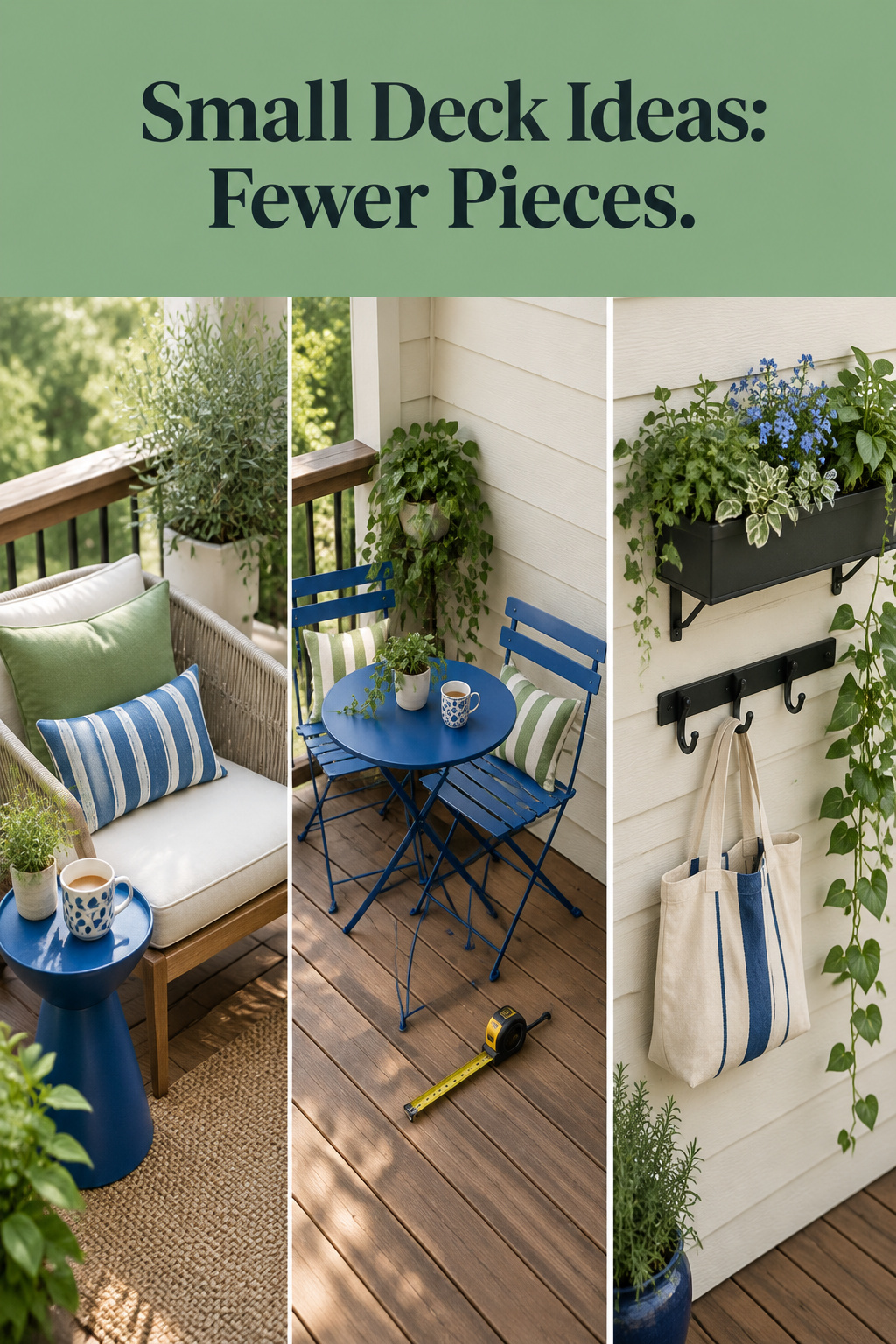
On a first visit to a small deck, I ask to sit out there alone for five minutes. Nobody tells me what is wrong with it yet. I take whatever chair is already there. I listen to the street. I watch where my feet want to go and can’t.
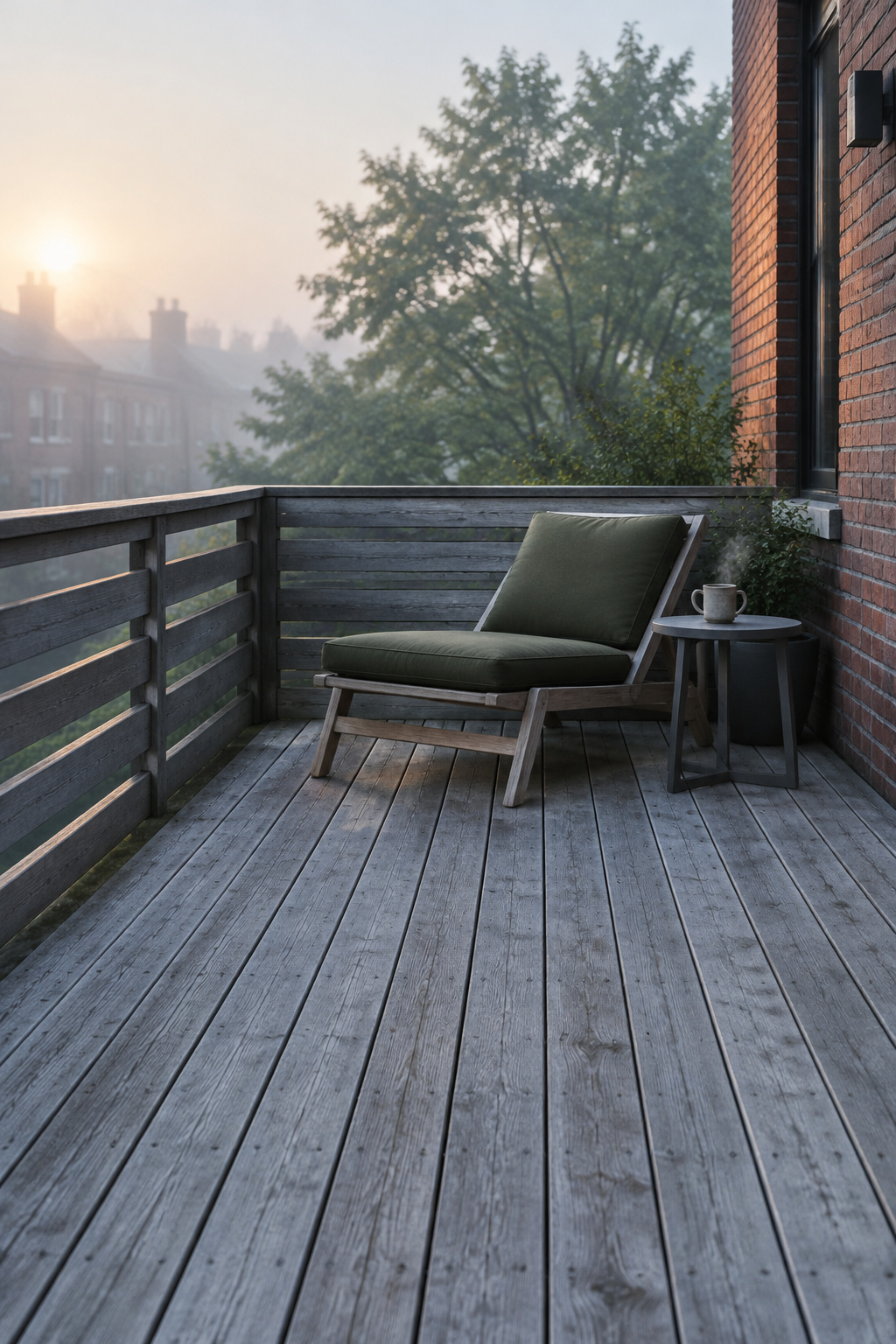
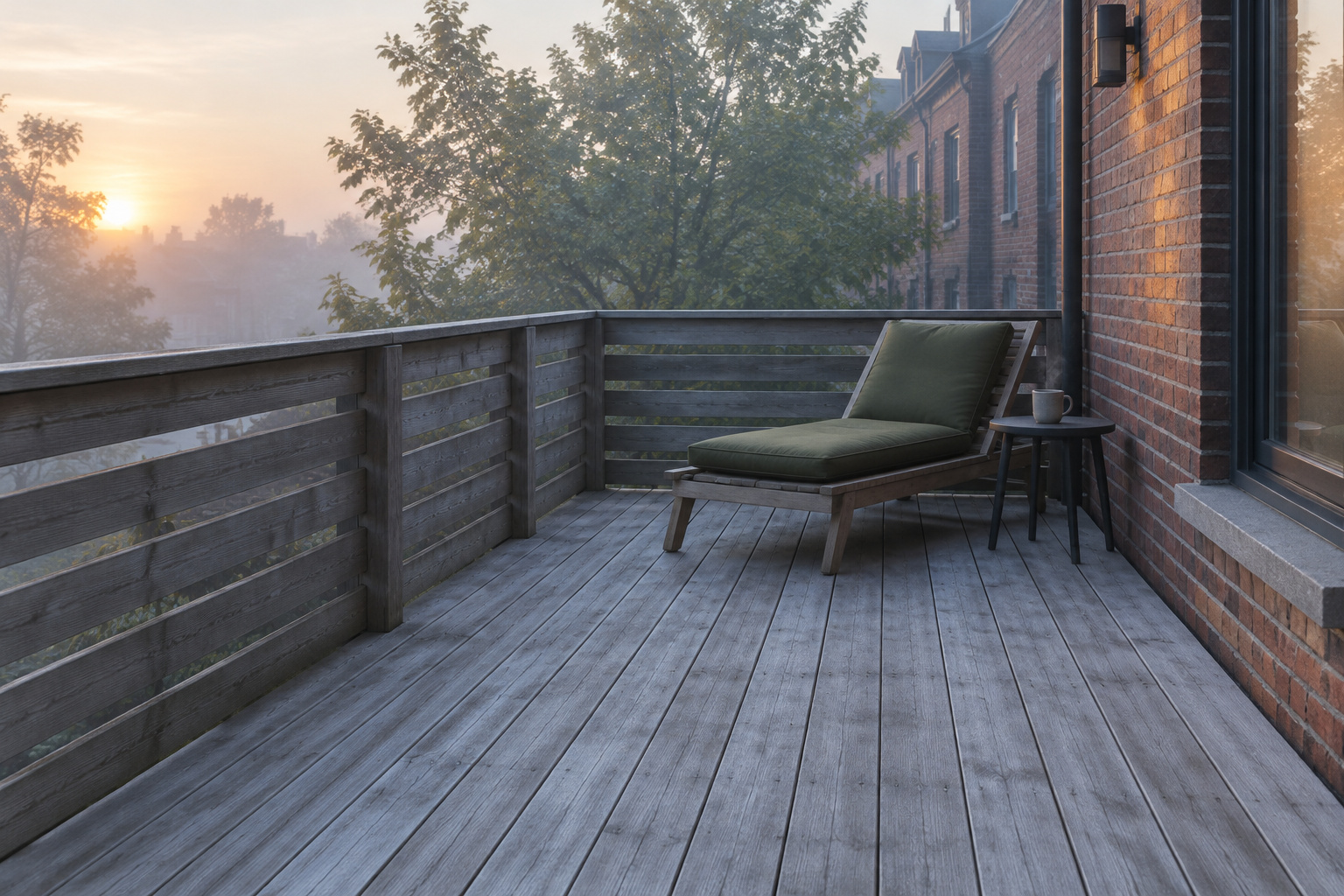
What I usually find is a full patio set, shrunk to fit, with the chairs pushed against the table and nobody sitting in them. The best small deck ideas I know start the other way round: decide the one thing you go out there to do, furnish only that, and leave the rest of the boards alone.
TL;DR
- Name one job for the deck — coffee, reading or two for dinner — and buy only for that; a typical bistro table in retailer listings is 23.5 to 24 in across.
- Leave about a third of the boards bare: on a 6 x 8 ft deck that is 16 sq ft, and a bistro set’s pieces take about 8.75 sq ft.
- Move what you keep off the floor, onto the rail or a wall hook, and add one soft layer and one low light rather than five props.
Small deck ideas start with one sentence: what is this deck for?
Start with the feeling the deck should give you. A deck for morning coffee should feel unhurried and a little private. A reading deck should feel held, with your back against something. A deck for two at dinner should feel close without anyone’s knees knocking.
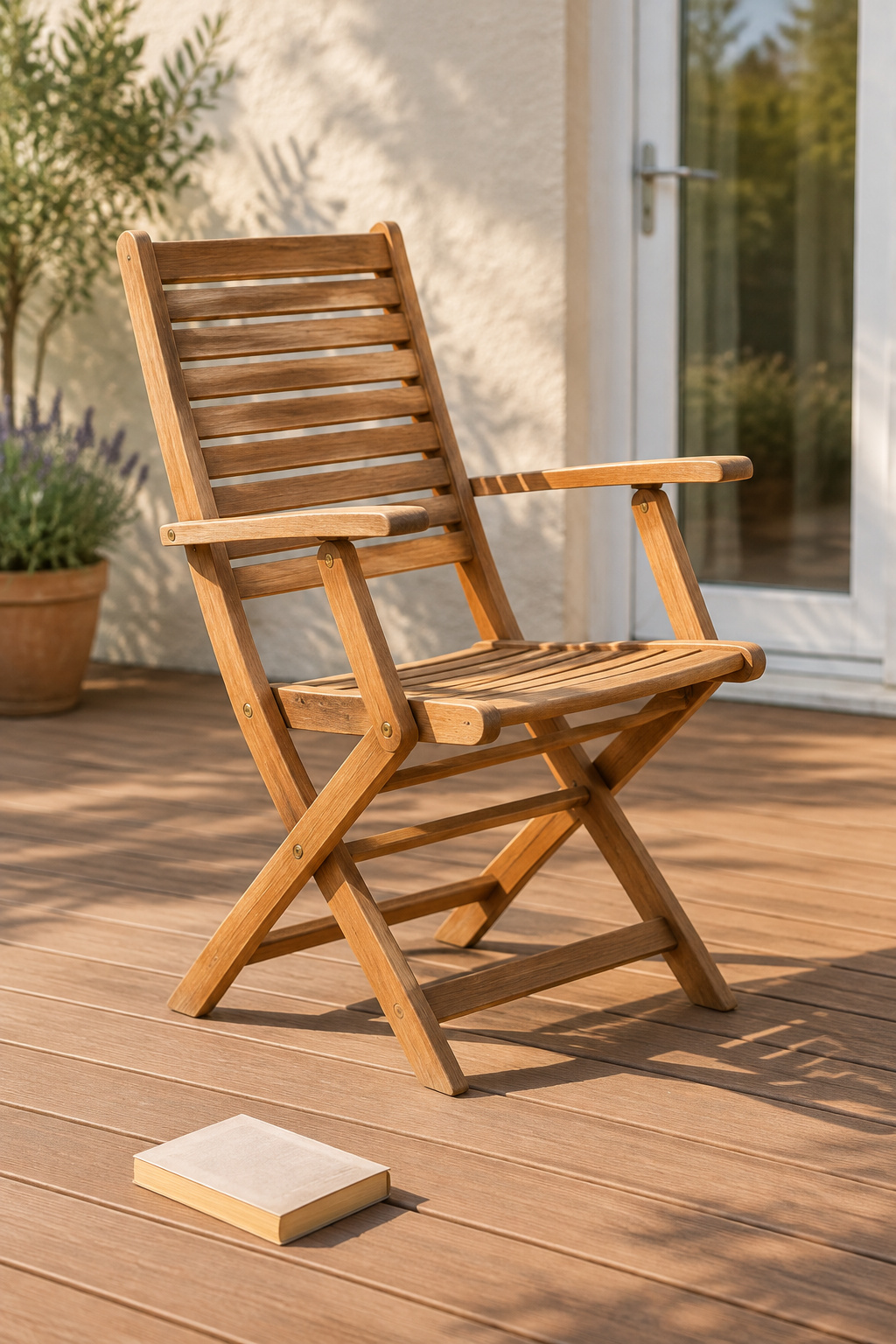
Pick one of those and write it down as a sentence: “This deck is for coffee before work.” That sentence does more planning than any catalog. Better Homes & Gardens makes the same point for tight decks — you may not have room for both dining and conversation, so choose a priority. Designers quoted on small outdoor spaces say much the same; Andi Morse warns that too much furniture can make a deck feel claustrophobic.
So “small” here means something practical: a deck that fits one job well and two jobs badly. That test matters more than the square footage.
I believe a corner done sincerely beats a whole room done for show. A shrunken patio set is a room done for show: four seats, a table, an umbrella stand, and none of it comfortable enough to stay in. One good chair with a place to set a cup is a corner done sincerely.
Write the deck’s one job on a sticky note and put it by the back door.
Scale before style: what actually fits in one spot
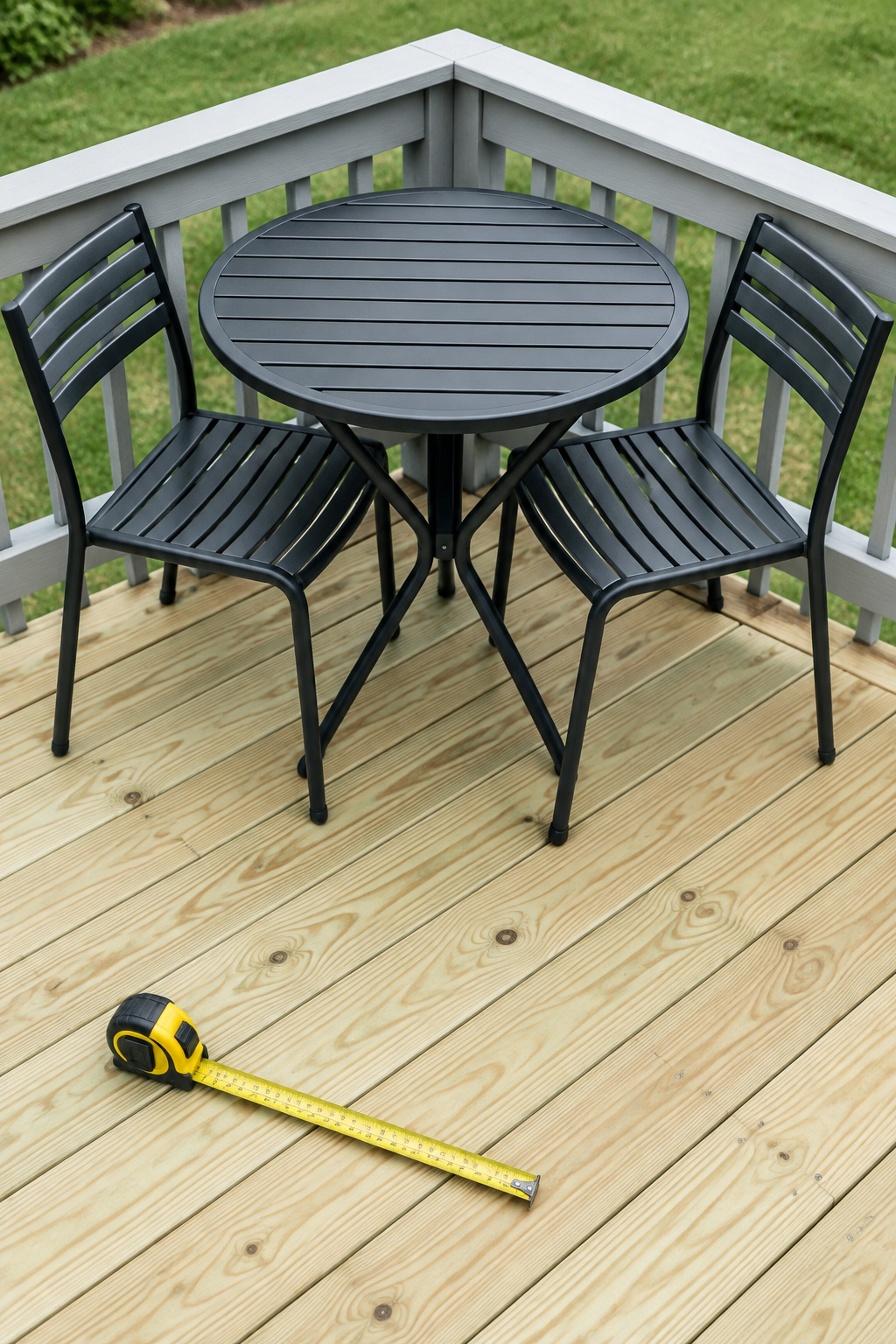
Once the job is named, the furniture choice gets short. Typical retailer listings put the usual candidates at these sizes.
| Piece | Typical footprint in listings | The single job it suits |
|---|---|---|
| Bistro table | 23.5 to 24 in across | Coffee for two, a small dinner |
| Bistro chair | 17.25 to 22.5 in wide, 16 to 21 in deep | Coffee, one person reading |
| Outdoor loveseat | 47 to 58.75 in wide, 24.5 to 33.5 in deep | Reading side by side |
| Fixed bench for two | 36 to 48 in long (18 to 24 in per adult) | Coffee or reading in a corner |
| Folding chair | Folds flat | One seat you can tuck away or hang |
A bistro pair suits coffee and a plate of food. Slim legs, open weaves and armless chairs carry less visual weight. A loveseat is a reading piece, and a deep one swallows a narrow deck quickly. Folding chairs are easy to tuck away or hang on a hook, which matters when the deck has to be clear for other days.
My quiet favorite, when the corner allows it, is a bench along the rail. Better Homes & Gardens notes that a railing bench takes much less room than an outdoor sofa while seating about as many people. Two adults need roughly 36 to 48 in of bench, against 47 to 59 in for a loveseat. How to build one is a builder’s question, not a decorating one.
Leave a third of the boards clear
My rule of thumb is simple: measure the deck, tape the footprint of the piece on the boards, and keep about a third of the floor bare. On a 6 x 8 ft deck, 6 x 8 = 48 sq ft, and a third of that is 16 sq ft. A bistro set’s pieces add up to about 8.75 sq ft — 4.0 for the table and 4.75 for two chairs — or about 18 percent of the deck. A loveseat at 12.9 sq ft takes about 27 percent. Either fits with the bare share intact.
That figure is the footprint of the pieces, not the room you need to pull a chair out, so leave some slack.
Keep the boards visible: the case for leaving the floor bare
Clutter on the floor is louder than clutter on a shelf. A shelf holds things at rest. A floor full of objects keeps asking you to step around them, and on a small deck the floor is most of what you see.
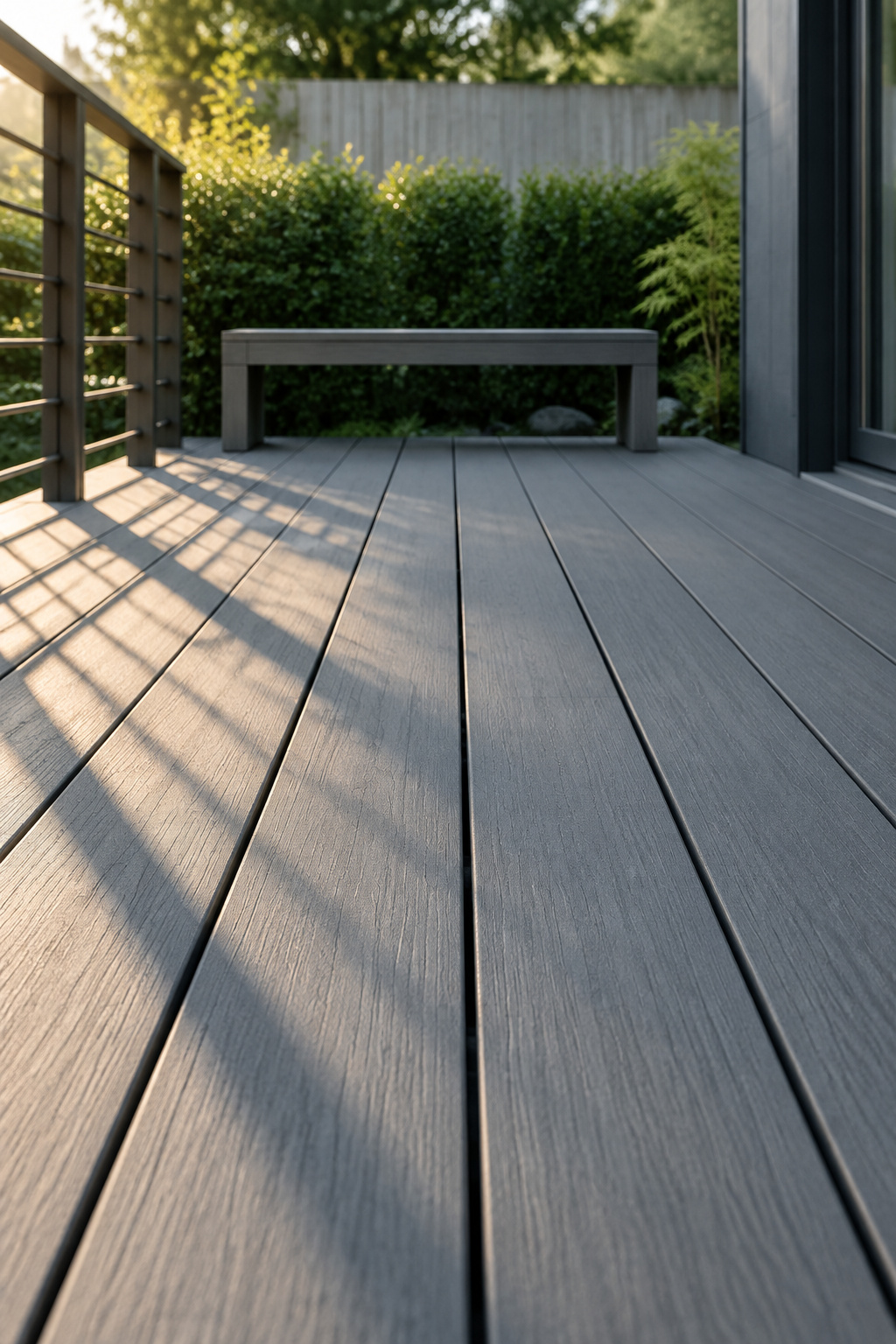
My mother calls my sunroom “the empty room.” She keeps offering to lend me a chair for it. I keep saying no, and I’d give a small deck the same answer. Let it be a little empty.
There is a practical side, too. Pots, trays and mats sitting straight on the boards trap moisture, so raise pots on feet and let air move underneath. Fewer objects also make sweeping the gaps between boards quicker.
Before you add anything, ask: what can leave? These usually go first:
- the third and fourth chairs
- a side table nobody sets anything on
- a cluster of pots in the corner
- a pile of mats by the door
- things waiting to be put away
Because the boards are what you see most, the furniture you keep has to sit easily against them; there is more on choosing furniture colors that suit your deck.
Go up before you go out: rail planters and wall hooks
Height is where the things you can’t give up go to live. A rail planter, a hook, a narrow shelf on the house wall — each one quiets the floor without taking anything away from you.
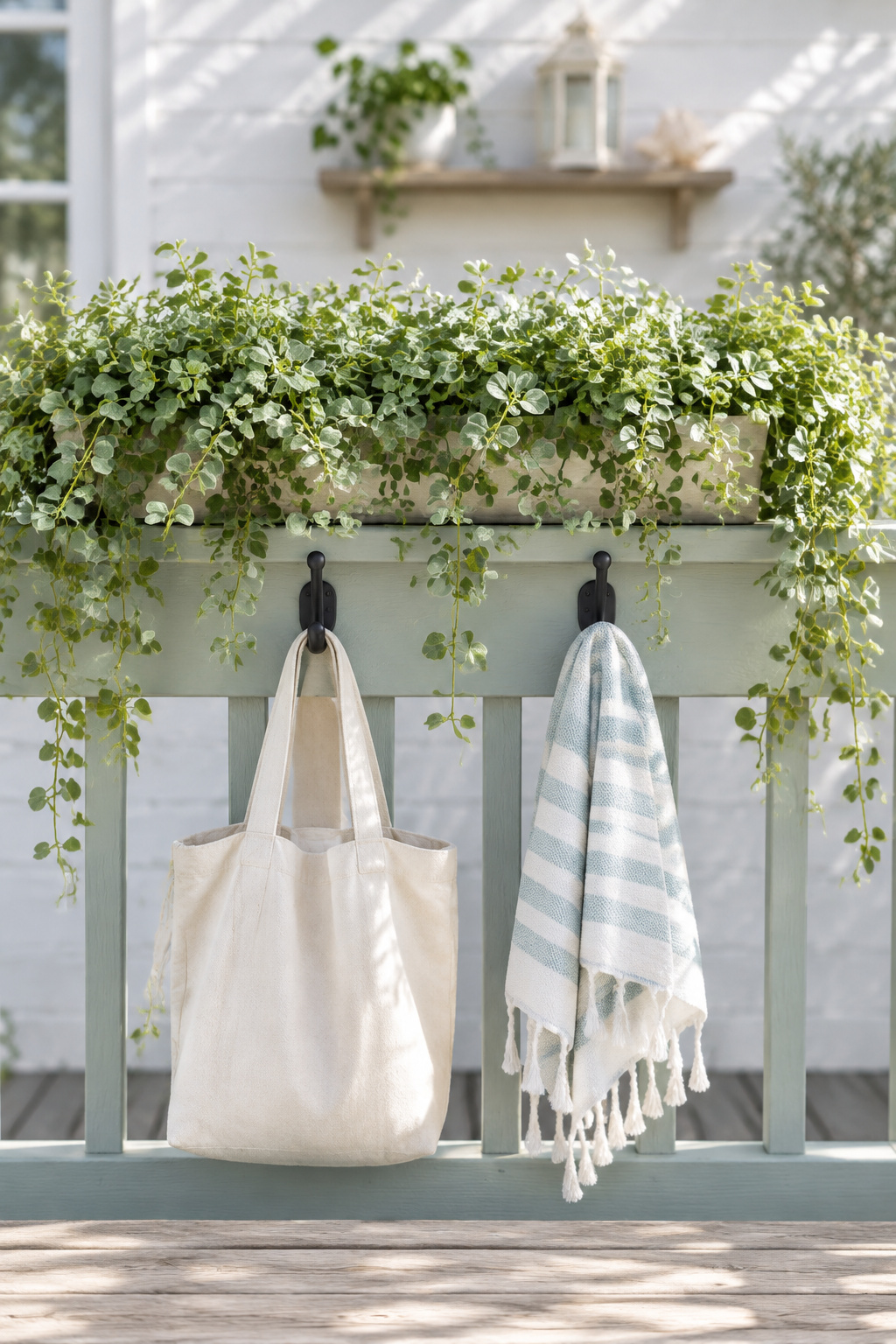
A rail planter keeps a plant off the boards, but its water still has to go somewhere. Bloem, which makes one that straddles a flat rail, says plainly that with the drainage holes open the water drains onto the rail and deck below. Put a tray under it or accept the drip. Have someone check the rail before you hang anything heavy on it; a planter full of wet soil is a load, and the rail decides whether it can carry it.
Hooks are my answer for everything else. A jacket, a towel, a lantern, the folding chair itself — hung on the wall, they stop being floor clutter. Keep it to a few. A wall covered in hooks is just floor clutter at eye level.
One spot I always leave clear is the sill in my sunroom. Dal watches the alley from it every morning, so nothing is ever kept there. A small deck usually has one place like that — the rail where you lean, the step where someone sits — and it should stay empty for the same reason.
One soft layer and one low light make the spot worth staying in
One soft layer settles a small deck better than five props: a single pair of cushions, or a throw over the bench. Better Homes & Gardens suggests choosing one accent color for a small deck and starting with the pillows, which keeps the whole thing from looking busy.
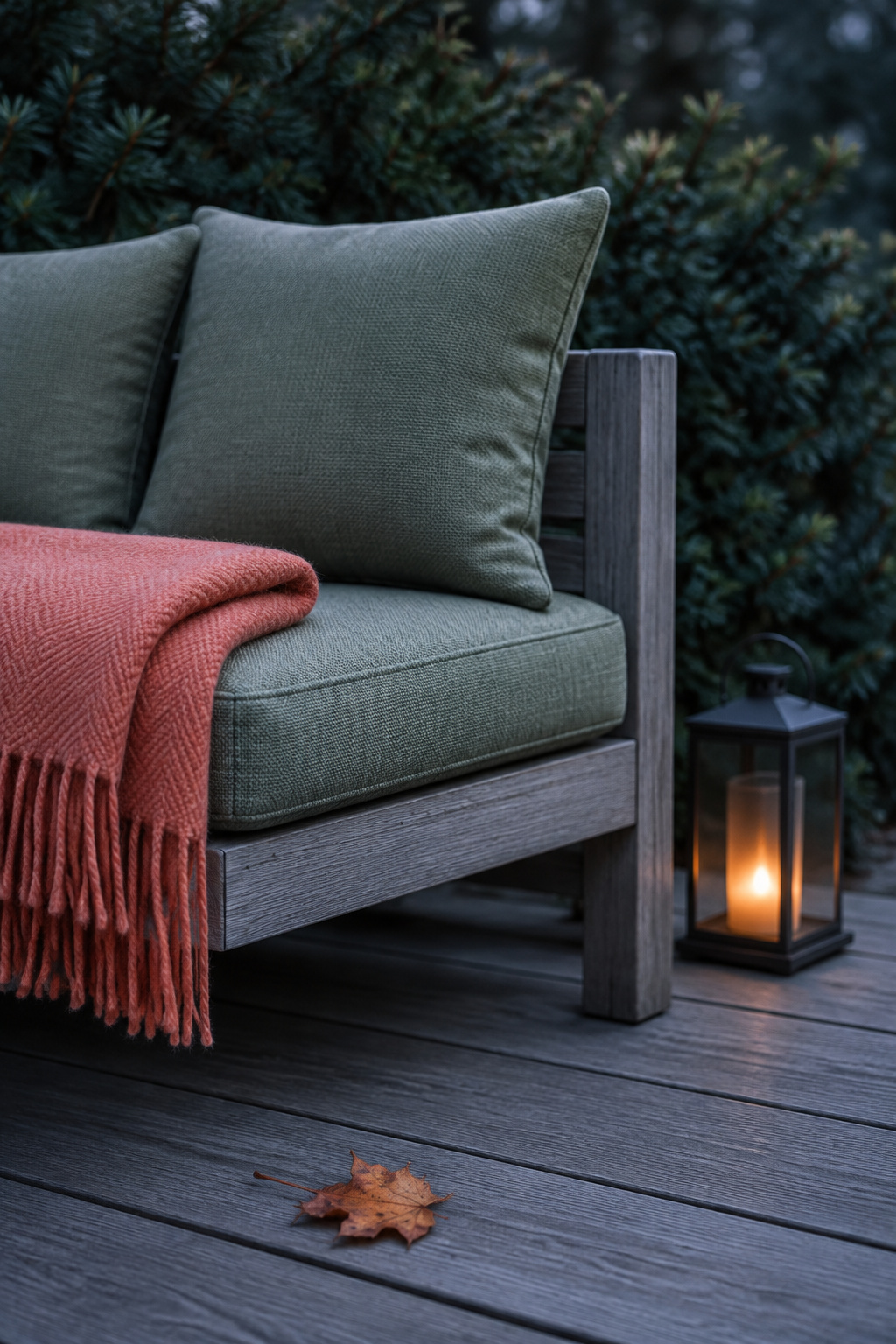
Choose outdoor-grade fabric such as Sunbrella, and bring cushions in when you are not using them. The deck looks calmer without them sitting out in the rain. A rug on deck boards is a bigger decision than it looks, mostly because of its backing, and deserves its own reading before you buy one.
Evening is when a small deck earns its keep, and it needs only one low, warm light near the seat. String lights are optional. For the rest, see lighting a small deck softly.
I used to insist that a meditation space be completely bare. Clients told me a bare room felt like a waiting room, and they were right. Now I keep one meaningful object in the room, and I’d do the same on a deck: bare boards, one soft layer, one low light, and one thing that is there because you love it.
Sit there for ten minutes, then take one more thing away
Go back to the chair. Sit on the deck at the time you would actually use it — before work, after dinner — and stay for ten minutes. Notice where your shoulders go. Notice what you step around, what you move to set down a cup, what you look at and wish you didn’t.
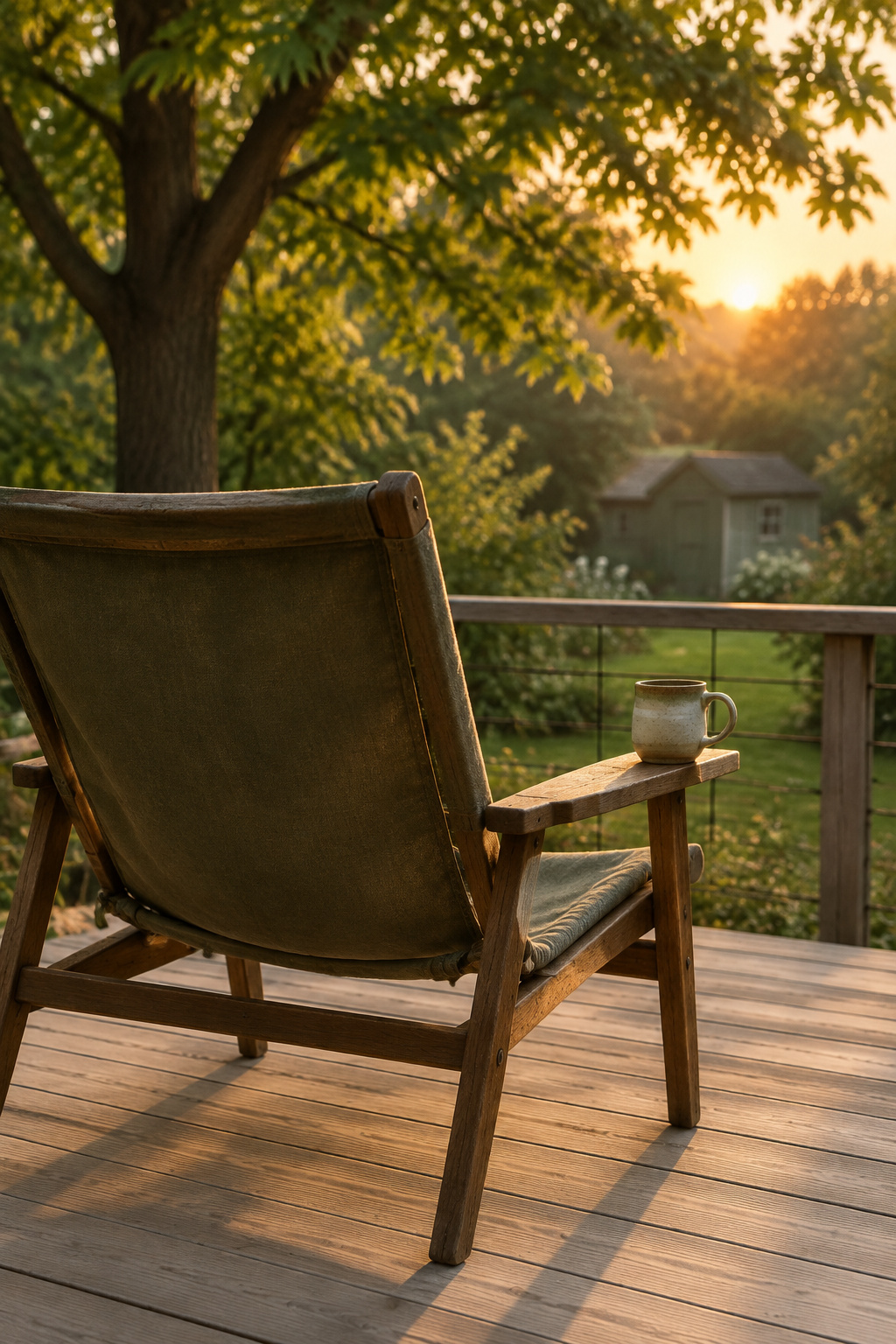
Then take one piece off the boards. Just one. Sit with it for ten minutes again the next day.
A small deck used every morning is worth more than a large one used twice a summer. One chair, a place for the cup and a patch of bare boards are within reach of almost any deck, and they rarely need a purchase to begin. When you are ready for the bigger questions — what sits on the boards, where the routes run — there are more ways to decorate a deck to work through.
Tonight, take out the one chair you would keep, sit in it, and see what else can go.
FAQ
Where do you store cushions and folding chairs when a small deck has no room?
Hang folding chairs on wall hooks, slide them under a table or lean them against the house wall. POLYWOOD advises against stacking folding pieces. Bring cushions indoors when not in use and store them somewhere dry and ventilated off-season. A storage bench can hold cushions and double as seating, as long as it is your one seat.
Can a small deck have a grill and seating?
It can, if the grill maker’s clearances and your local fire rules are met, and the grill is kept well away from walls and railings. On a small deck, though, a grill usually becomes the deck’s one job. If cooking is not what you go out there for, find the grill another place.
How much furniture does a small deck actually need?
Usually one grouping for one job: two chairs and a small table for coffee or dinner, or one bench for reading. Designers warn that too much furniture makes a small outdoor space feel claustrophobic. As a working target, keep about a third of the boards bare and add pieces only when you miss them.