
I read the rain gauge on my fence most mornings before the coffee is done. After a wet night the water sits high in the tube. I tip it out and turn around to look at the deck. The open boards are already drying in pale patches. Under the pot by the steps, and under the mat at the door, they are still dark.
That is where deck decorating ideas ought to start, and the lists rarely do. They show cushions, rugs, lanterns and a dozen styles, and few say what your boards will put up with once those things sit on them through a wet month. Decorate from the boards up instead. Water decides most of it: what sits flat, what traps moisture, what dries underneath. Foot traffic decides the rest. The look comes third, and it is a much easier choice once the first two are settled. Look down before you shop.
What Your Deck Boards Will Tolerate Before You Buy a Thing
The first fork is the board itself. Wood and composite both dislike the same few objects, but they fail differently, and you should know which one you are standing on before anything goes into a cart.
On wood, the trouble is water that cannot leave. A pot, a planter box or a mat set flat on the boards stops the timber underneath from drying out, and over time that patch discolors and can start to rot. On composite, the trouble shows up as marks. Fiberon puts it plainly: items stored directly on the surface, flower pots included, stop water from evaporating and can stain the deck. Some makers also caution against vinyl pots on their boards, Trex on one of its lines.
Then there is the slow problem. Anything left in one spot all summer changes how the boards around it weather. Ecodek and TimberTech both tell owners to rearrange furniture now and then so the fading and weathering stay even. No maker says how long boards stay wet under an object; they skip the clock and tell you to lift it or shift it. I take that as the whole rule. Every object on a deck is either breathing or it is a lid.
There is one forgiving case. On older uncapped composite, Fiberon’s legacy care guide notes that tannin stains under mats, pots and umbrella stands tend to fade on their own once the standing water is gone. That guide covers older uncapped boards, so don’t count on your deck forgiving you.
Here is what each common piece asks of the two surfaces:
| Decor item | On wood | On composite |
|---|---|---|
| Pots and planters | Raise on feet or a stand so the boards underneath can dry | Raise on a stand; flush pots can leave stains and white mineral marks |
| Mats and rugs | Breathable, lifted after rain | Some makers say avoid rubber, vinyl or latex backing |
| Chair and table legs | Pads, and lift rather than drag | Pads from your board maker’s list (TimberTech names plastic, felt or rubber, even on capped boards) |
| Metal furniture left out | Pads under the feet, and lift after rain | Rust residue where feet sit in rain |
| Anything left all summer | Uneven weathering and trapped damp | Uneven fading |
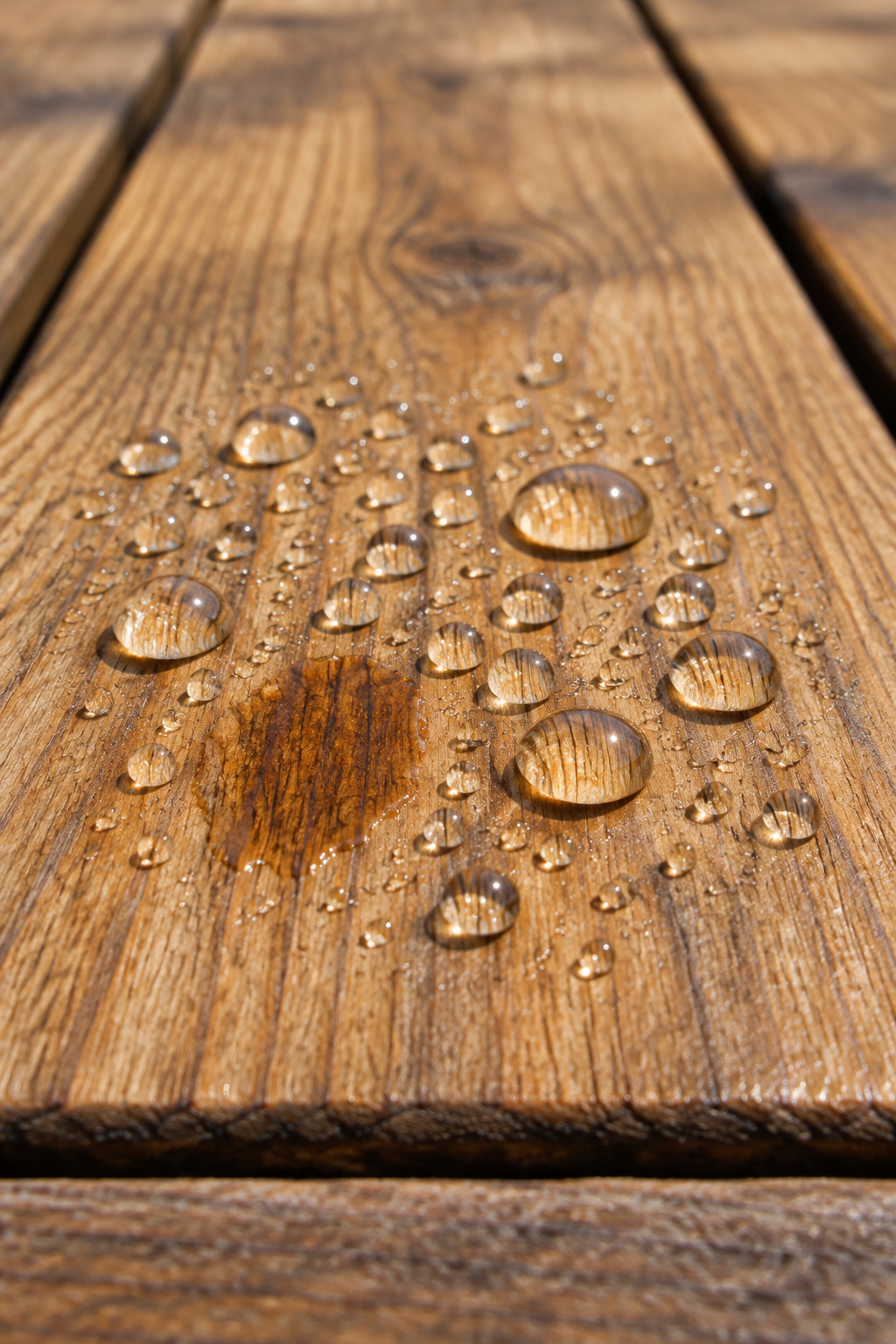
If you have wood and you are not sure what state it is in, sprinkle water on a few sections. If it soaks in and darkens the surface within five seconds, the wood is thirsty and porous. If it beads, the surface is protected for now, though beading alone is no promise of waterproofing. That tells you how hard the boards will take every pot and rug you put on them, which is the only reason I want to know it before decorating. Recoating is a separate job with its own timing, and it belongs with the makeover work, not the decorating.
The maintenance truth sits under all of this. Every spring a deck asks for a sweep, a wash and a look under everything that spent the winter in one place. Whatever you buy, count that time in.
Layout Comes Second: The Path, the Door and the Stairs
Once you know what the boards will tolerate, watch who walks across them. Every deck has a route it cannot give up: from the house door to the stairs, and usually from the kitchen door to wherever the cooking happens. Those lines were drawn by whoever built the deck. Keep them open before a single piece lands, and the furniture has an easier time of it for years.
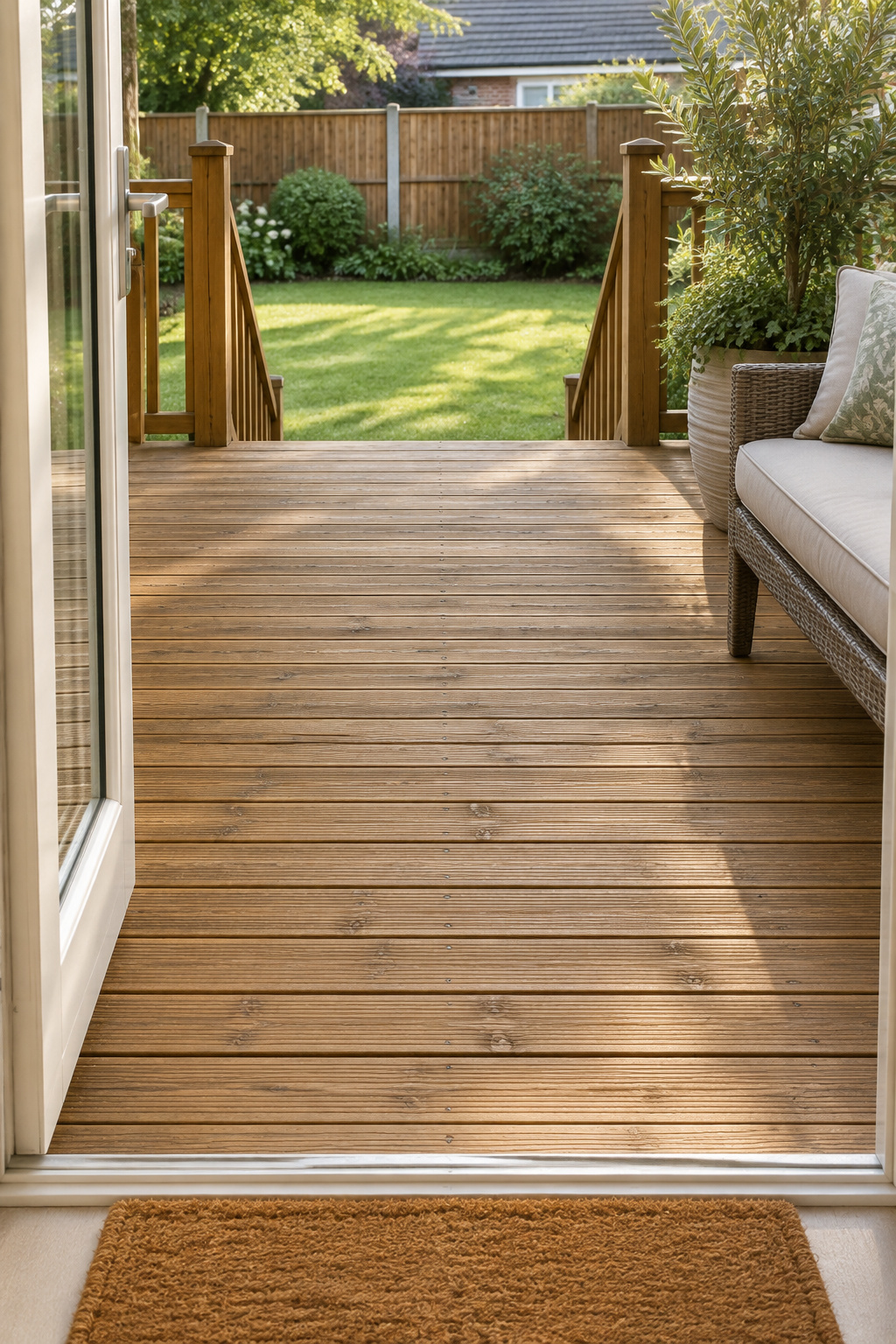
The kitchen door matters most. An outdoor room gets judged by how easily people drift out to it with a glass or a plate, and a chair parked across that line turns every trip into a small obstacle course. When the way out is clear, people wander out without deciding to. When it isn’t, the deck becomes a place you visit on weekends.
Style guides show it without saying so. Describing coastal decks, DecksDirect talks about roomy seating and uncrowded traffic paths to match an open view. Credit the layout for that, more than the cushions. I would sooner walk a plain deck with a clear path than sidle across a beautifully dressed one.
Where the islands go once the routes are clear is the layout article’s subject. If your deck carries more than one use, a dining end and a lounging end, start with how to arrange deck furniture around doors and stairs. If the boards only leave room for one honest spot, work from ideas for a small deck instead, because shrinking a full set to fit is the wrong answer there. Table size and how far chairs pull out are covered in the outdoor dining area ideas article.
There is a link back to the boards here too. A layout that never changes wears the deck unevenly, so I plan a couple of positions for the big pieces, both clear of the route, and swap between them when the seasons turn. You get a slightly different evening out of the deck, and the boards weather together.
Deck Decorating Ideas: Eight Looks Worth Picturing
Now you can choose a look, and it should be one look. Each of these comes with a short note on what it asks of the boards, because a style that needs a rubber-backed rug or a crowd of flush pots will cost you a patch of deck by its second summer.
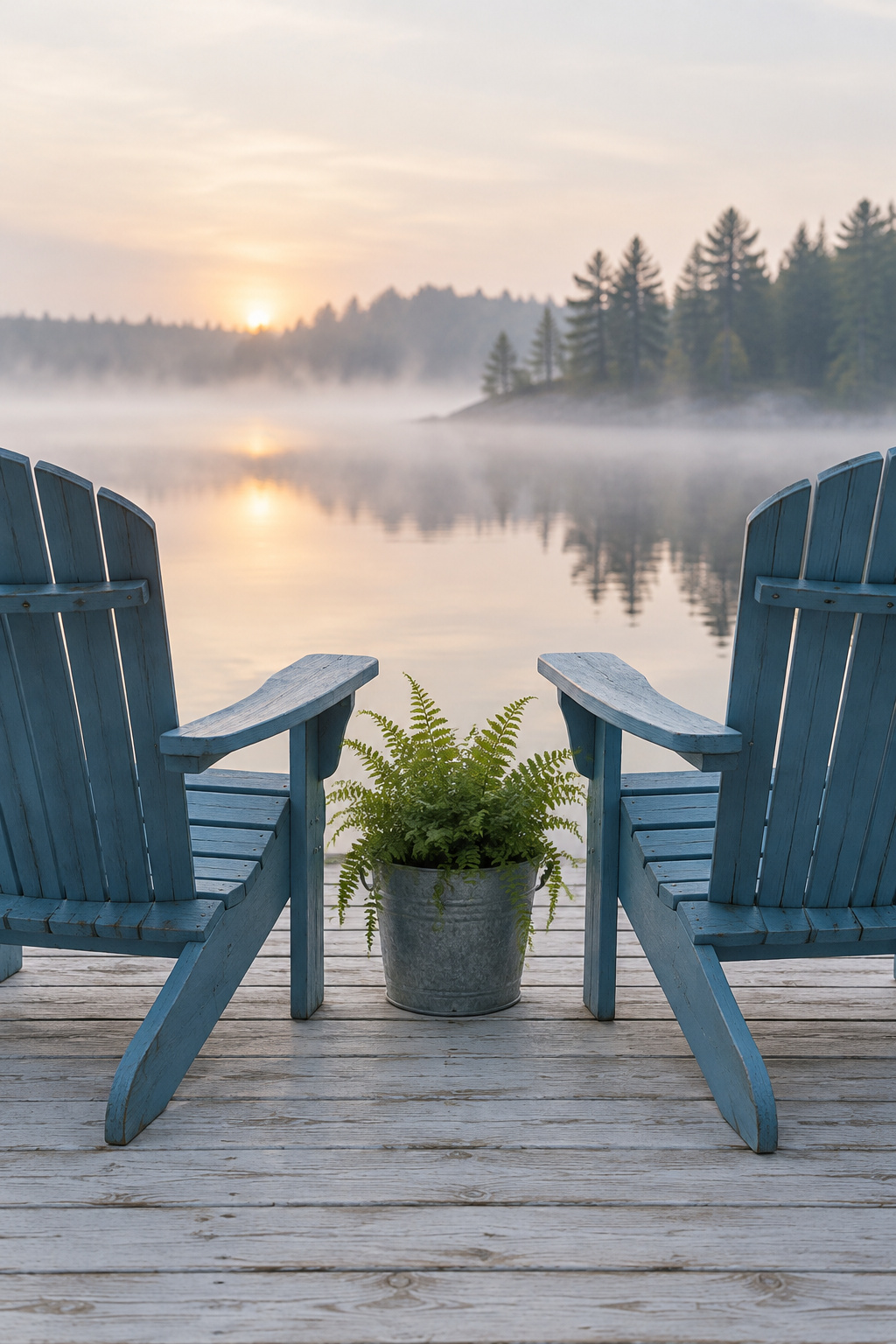
| Look | Palette and pieces | What it asks of the boards |
|---|---|---|
| Scandinavian pale-wood deck | Whites, tans, soft grays and off-whites, rounded shapes, soft cushions, mixed textures | Light boards show every flush-pot ring, so feet under everything |
| Coastal blue-and-white | Crisp white accents with blue or green decor, often on light gray or tan boards | Rugs and mats with a breathable back, lifted after storms |
| Boho floor-cushion deck | Layered pattern and texture, rattan, macrame, trailing plants, cushions on the floor | Floor cushions and layered rugs trap the most damp, so one rug and cushions that come in at night |
| Black-and-cedar modern | Black frames and trim against warm cedar or cedar-toned pieces, greenery left to do the color | Metal feet padded, and an eye out for rust where feet sit in rain |
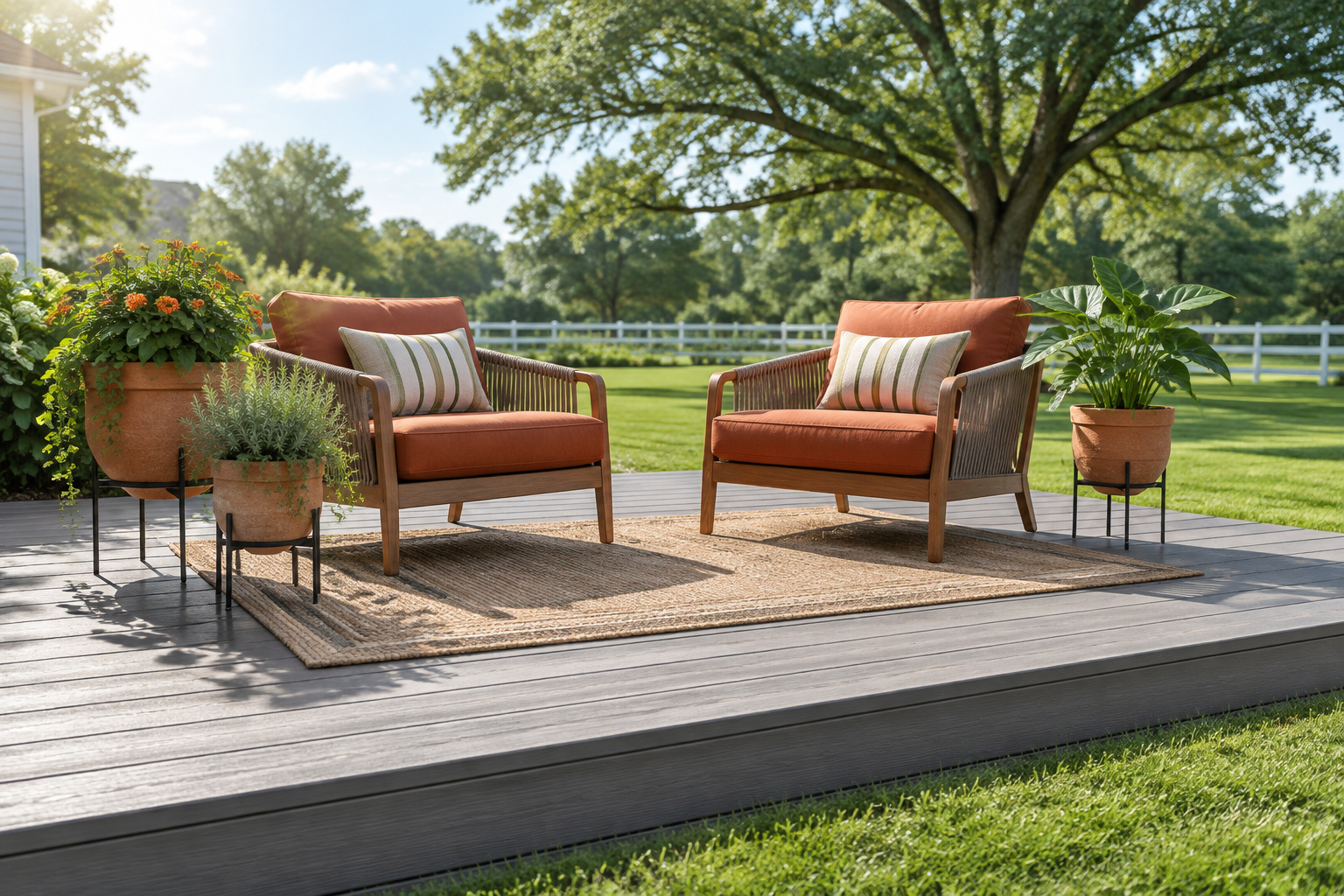
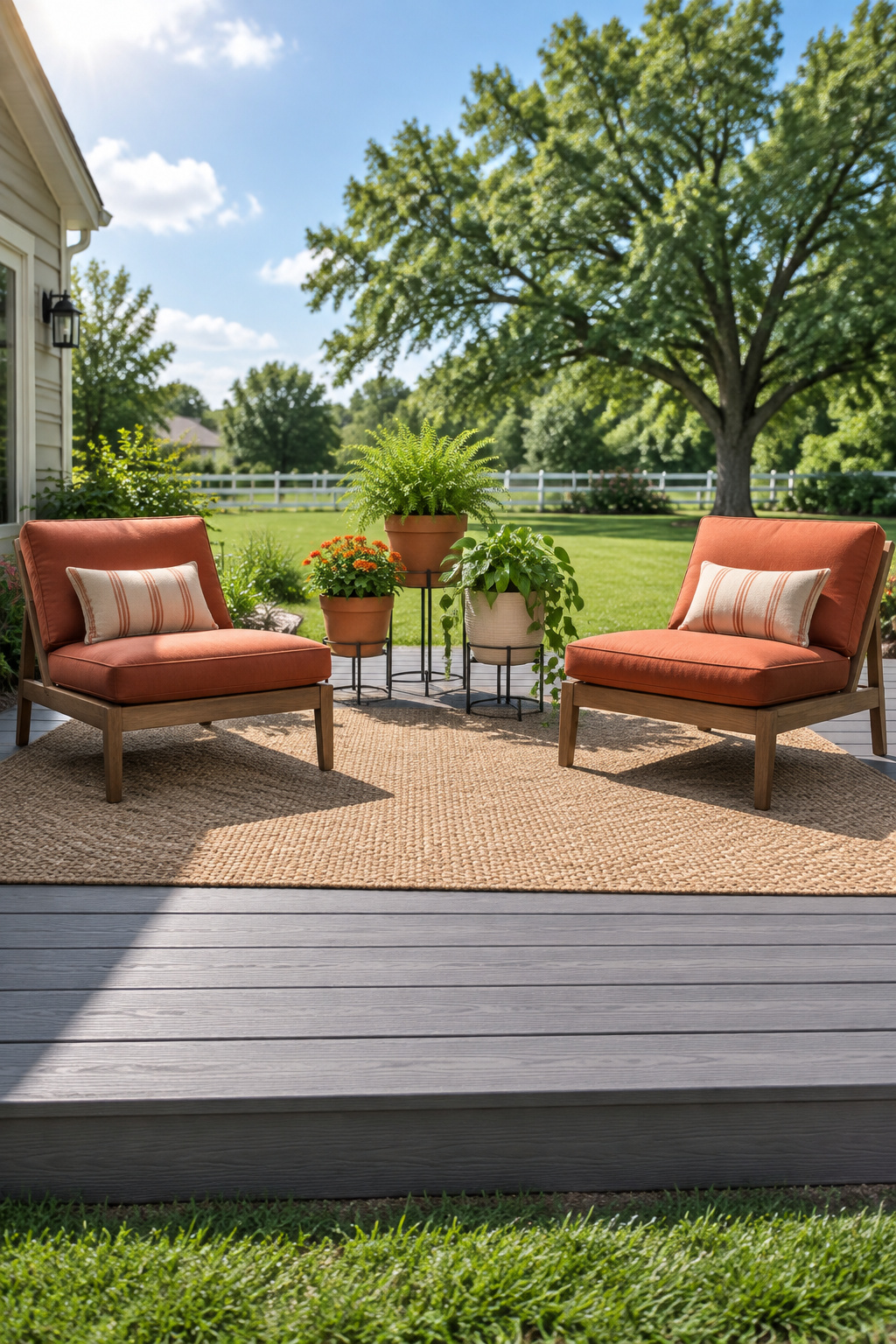
| Cottage deck of pots | A crowd of pots at different heights, flowers spilling over, a painted chair | Every pot on feet or a stand, saucers raised too, and the group shifted now and then |
| Desert terracotta | Neutral wood, cream and wood chairs, terracotta, a few potted cacti | A few pots, each on feet |
| Lake-house Adirondack | Adirondack chairs, potted summer flowers, plain boards | Pads under every chair leg; these chairs tend to stay put all summer |
| Small-deck bistro corner | Two chairs, a small table, one plant, one light | Very little, which is part of its charm |
My own leaning is toward the lake-house deck. The designer Eric J. Smith, quoted in Architectural Digest, likes Adirondack-style chairs for their wide paddle arms, which hold a drink or a plate, and says they work on a small deck too. A chair that holds your plate is a chair you will actually sit in at dinner.
The Scandinavian and coastal decks are the easiest to get right because both start from light boards. DecksDirect builds its Scandinavian look on neutral whites, tans, grays and off-whites, with texture doing the work that color usually does, and its coastal advice is to let light gray or tan boards stay quiet while the blue decor leads. The desert look is a plain slatted-wood floor, wood-and-cream chairs and a few potted cacti, which is about as few objects as a deck can carry and still feel finished.
The boho deck is the one I would push back on hardest in a wet climate. It looks wonderful in photos taken in a dry month. Once the October rain settles in, every cushion on the boards and every layered rug becomes a sponge on top of a floor that needs to dry. Keep the pattern and the plants, take the cushions off the floor and settle on one rug.
The cottage deck of pots is the most honest test of everything in the first section, and the desert look is a close cousin with far fewer pots.
Pick one, then edit it. I have never seen a deck improved by adding a fourth look. I would rather see one look done with conviction than three looks fighting for the same boards. A deck carrying three looks is mostly a deck carrying too many objects, and every extra object is one more thing sitting on wet boards.
The Rug Question: Backing, Drying and Where One Belongs
A rug is the biggest soft thing most people put on a deck, and it covers more board than anything else. That makes it the first place water and style collide.
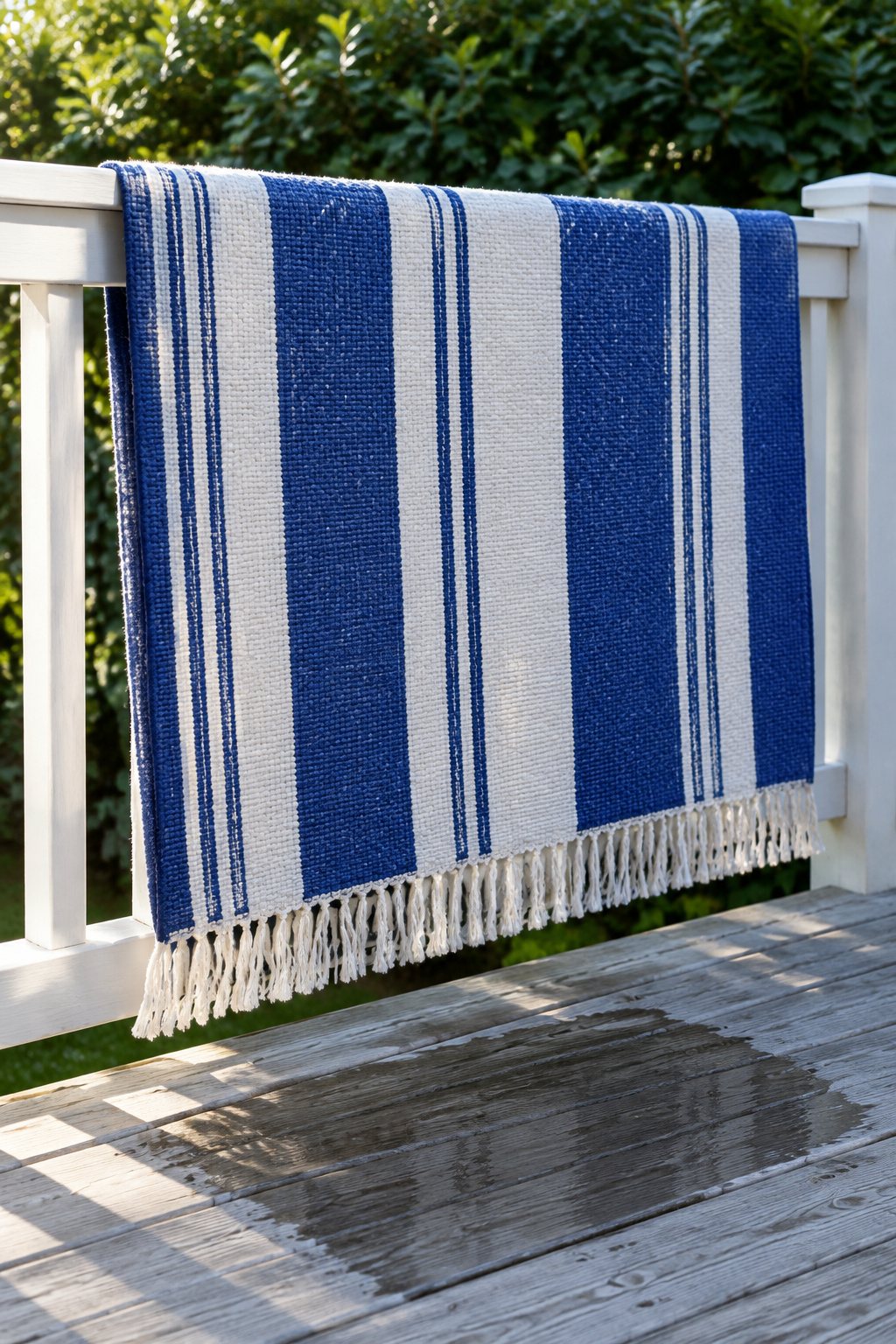
The backing is the decision. On composite, some makers warn that rubber, vinyl or latex backings can mark or discolor the boards. On wood, a rubber back holds moisture against the timber, which is how the rot starts. TimberTech’s line is a fair summary: avoid mats and rugs that trap moisture unless they are rated for outdoor deck use, and shift them periodically. Fiber is where the makers split, and the right answer depends on which boards you own.
Drying is the habit that goes with it. After heavy rain, lift a corner. If the boards are still wet, roll the rug back until they are not. I keep a folded tarp in the truck that has covered more half-finished patios than I like to admit, and it has taught me to distrust anything that lies flat on a deck for long. A rug is a softer tarp. Through the wet months it needs lifting, and in winter it belongs indoors.
Where one belongs is easier, and I’m firm about it. Put a rug under the seating group, where it holds the chairs together, and leave the route bare. A rug in the walkway gets scuffed, kicked and walked wet into the house, and it never dries because someone is always stepping on it. If I had to choose between a deck with no rug and a deck with a rug that never dries, I’d leave the boards bare.
Sizing, cleaning and the fiber argument are worked through properly in choosing an outdoor rug for a deck. If your deck has a roof and you are thinking of screening it in, the screened porch ideas article is the better place to start.
Pots, Plants and Shade Without Marking the Boards
Pots are where water meets boards most often, every time you water them. Shade gets a short word after that, because it decides whether anyone sits out there at all.
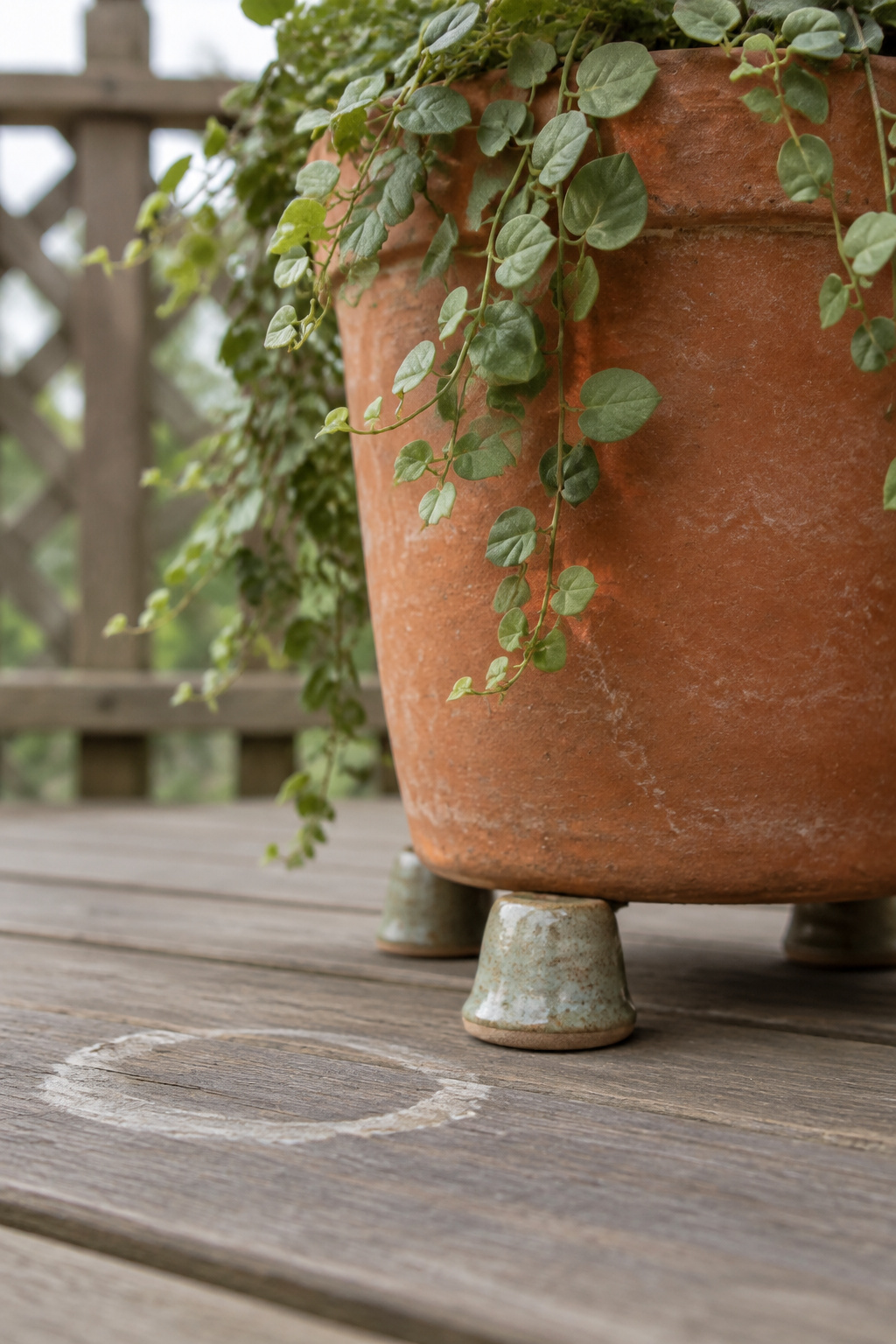
Pot feet, saucers and risers
These are the rules I would tape inside a garden-shed door:
- Lift every pot off the boards on feet, risers or a plant stand, so air moves under it and water can leave.
- Raise the saucer too. A saucer sitting flat on the boards is a puddle with a rim.
- On composite, water that sits under a pot carries minerals and fertilizer, and Fiberon warns it can leave a white discoloration.
- Shift the pots now and then, even raised ones, so the boards don’t keep a shadow of each one.
- Keep metal planter parts off composite, and avoid vinyl pots on boards whose maker cautions against them.
- Sweep up spilled fertilizer and rinse the spot instead of leaving it to soak in.
- On a raised deck, check with a builder before a heavy planter goes on.
What to plant is a bigger subject, and the container garden ideas article covers it.
Umbrella or sail: shade as decor
The only afternoon shade on my patio comes from my neighbor’s fence, and I have said thank you for it, which tells you how much I value an hour out of the sun. I would put the evening seat in that shade before I bought a single chair, cushion or lantern.
On a deck, an umbrella or a shade sail is the decor version of that. A sail can become the focal point of the deck, its angled lines marking out where people sit or eat. Every corner has to tie to a sound structural point, and that is a question for a contractor or engineer when you are unsure; the railing is not one of those points. An umbrella needs the weight its maker specifies and should be closed before wind. For which umbrella size suits a table, see the outdoor dining area ideas article. Anything built overhead, from a pergola to a louvered roof, is covered in the pergola ideas article.
Fire comes up next, usually. I light the first fire of the fall on the first dry evening after a week of rain, whatever day of the week that lands on, and I still would not tell you where your fire belongs from here. Fire pits and fire tables are in the backyard fire pit ideas article, grills in the outdoor kitchen ideas article, and outdoor fireplaces are a project of their own. Check your decking maker’s guidance before any of them goes near the boards.
Light and Color That Suit Your Boards
Light and color come third. They are the fun part, and they go better when the boards and the route are already sorted.
Light for walking, sitting and eating
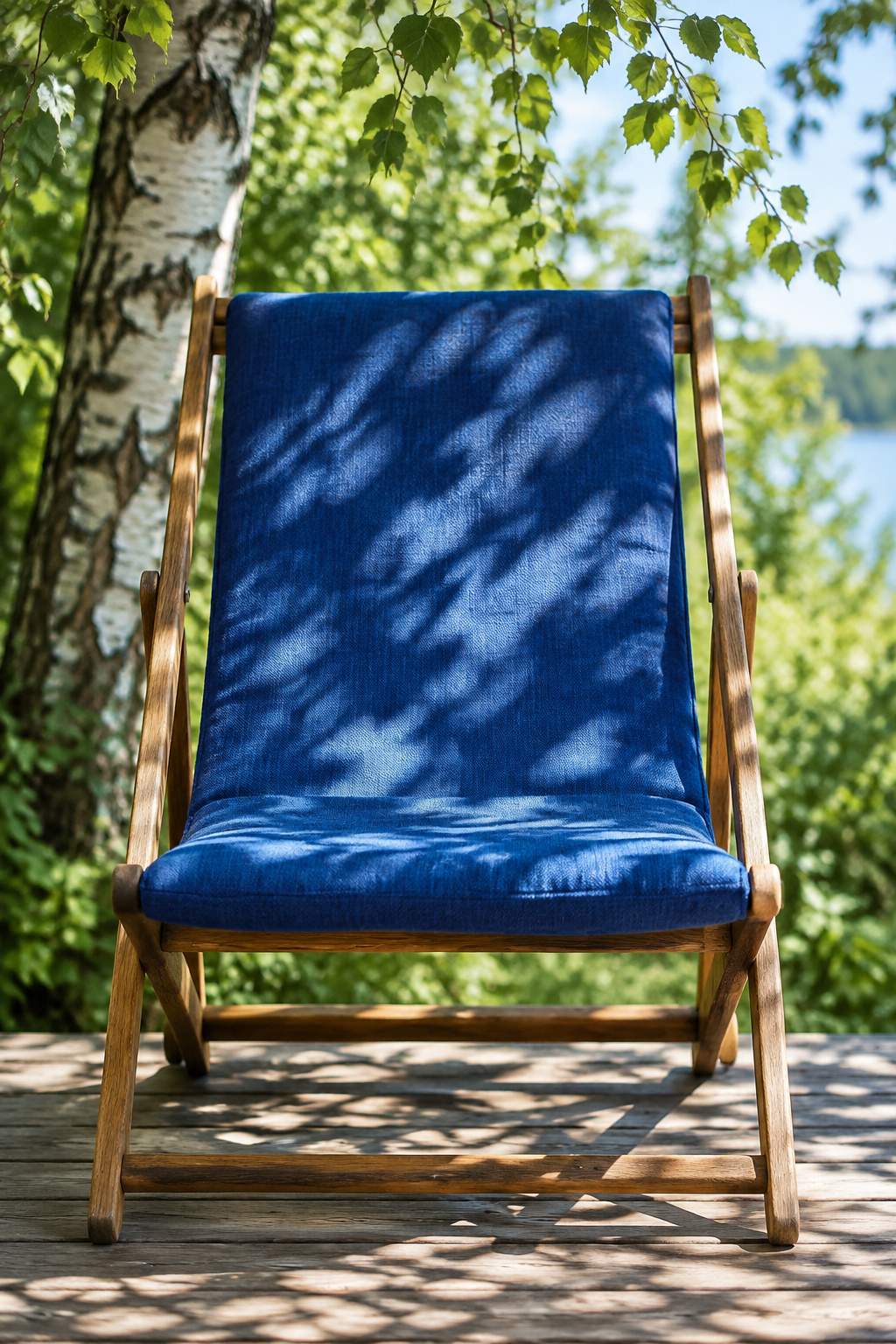
Think about the deck as three activities after dark. Walking needs light low down, at the steps and the edges, so feet find the next tread. DecksDirect pairs its Scandinavian deck with recessed lights in the stair risers, which is the right instinct for any look: light the place people could trip before the place people pose. Sitting wants something soft and low beside the chair. Eating wants a small pool on the table and nothing glaring in anyone’s eyes. Each has its own height, and one bright fixture on the house wall serves none of them well. Stand on the deck at dusk and notice where you stumble, sit and set down a plate; that is your lighting plan before you buy a single fixture. String lights are a subject of their own. Start with the steps, then work through deck lighting ideas for walking, sitting and eating for the fixtures and the power.
Color against the boards you have
The boards are the biggest color on the deck, and they are not changing for your cushions. Trex and TimberTech both advise against painting or staining their composite boards, so the furniture has to suit the deck rather than the other way round. Take a cushion or a swatch outside and lay it on the boards in daylight before you commit. For the pairings, deck furniture colors for gray, brown or cedar decks works through each kind of board.
Lighter boards stay cooler in direct sun than dark ones. I used to recommend dark stains for every deck, until I saw how hot they got in full sun, and now I let the existing boards lead and keep the darker colors to the cushions. How hot a deck gets, and what that means for bare feet, is covered in the kid-friendly deck article.
A privacy screen can finish an exposed side, and that is a project in itself.
Whatever palette you land on, look at it twice: once at noon and once in the last hour of light, when most people actually sit out. I trust the evening look more, because that is the deck you live with.
Spend on the Seat, Save on the Props
Money follows the same order as the decisions. The things that last are the things you sit on and the things that protect the boards, and the props come last because they are the first things you will want to change.
This is the order I would buy in:
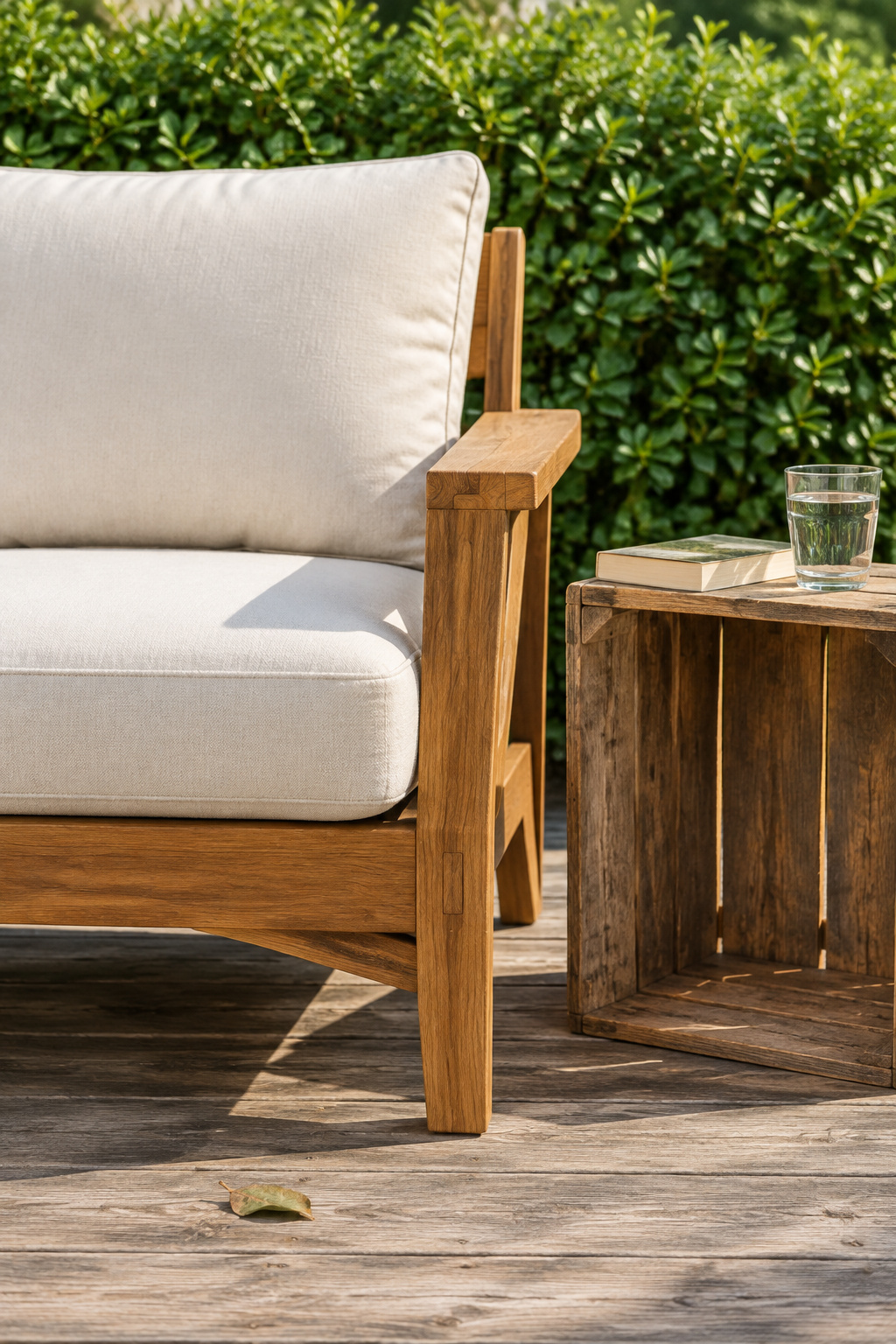
- The seat. One chair or bench comfortable enough to stay in for an hour, in a material that can take your weather.
- The protections: pads under every leg, feet or stands under every pot. Makers recommend these for a reason, and they cost little.
- One rug with a backing your boards tolerate, if you want a rug at all.
- Pots, raised, in the numbers you will water.
- Light for the steps first, then the seat and the table.
- Props: the lantern collection, the extra pillows, the seasonal bits.
Spending this way survives a third summer, and I would spend on the good chair before any prop. A good chair still gets sat in after two years of rain. A pile of cheap props mostly ends up in a bin, and the boards under the ones that sat flat all season show it.
The weather is the other half of the budget. Ask what July does to anything before you buy it: cheap cushions fade and hold water, thin metal rusts where it touches the boards, and a rug that never dries smells by August. Spending more on fewer things is usually the cheaper path over three summers.
If the deck itself looks tired, decor sits on top of that problem rather than solving it. Clean and fix the boards before the first cushion; a deck makeover on a budget costs that work out step by step, along with what the decor adds.
Two Rooms to Hand Off: The Kids’ Deck and the Space Underneath
Two versions of the deck need more room than a few paragraphs can give them.
When children use the deck
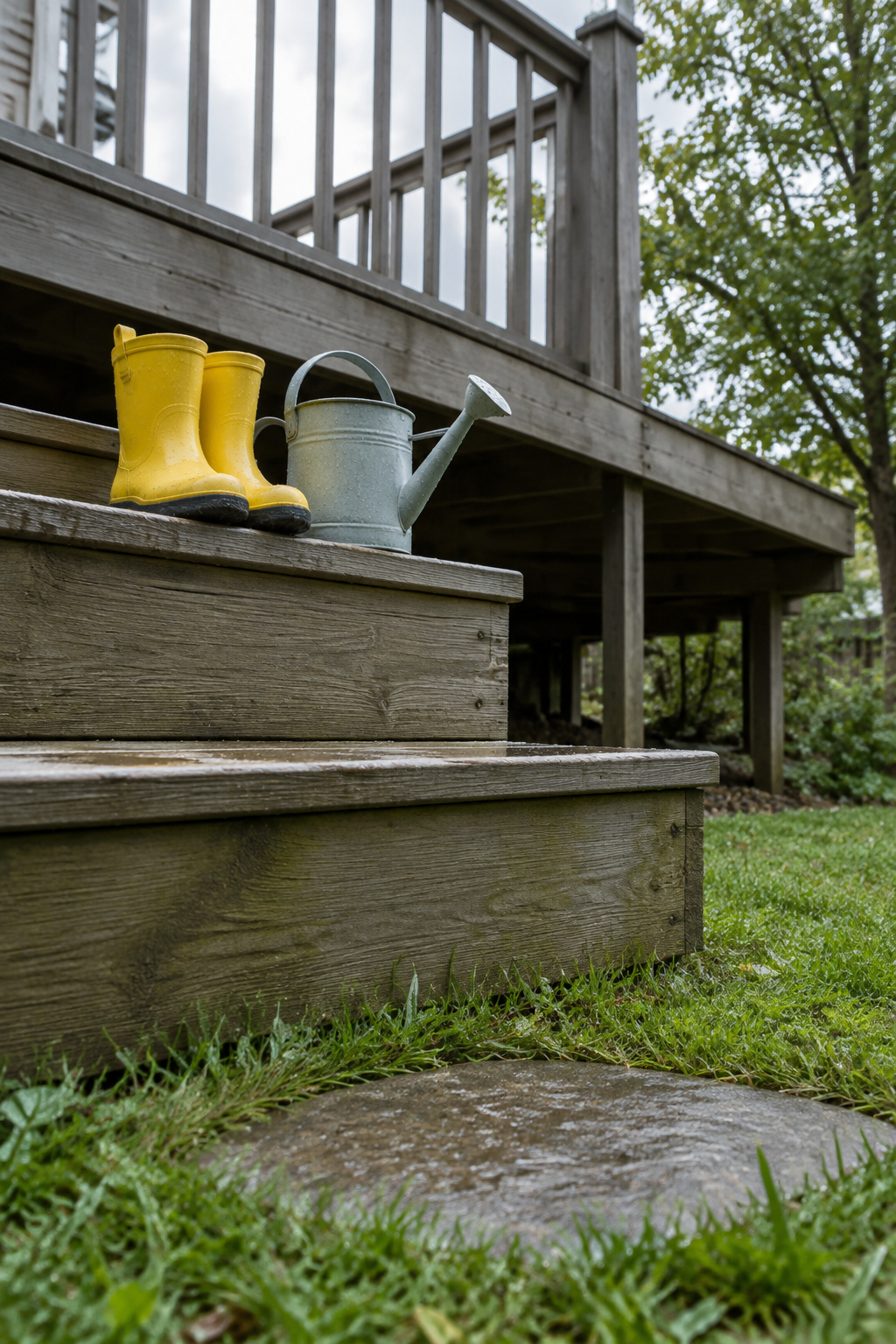
Children change what goes where, and I’d rather plan for that before the first summer than after it. The steps get lit top and bottom before anything else. Hot boards, gates and a corner of their own are all worked through in making a deck kid-friendly. Railing gaps and heights are a building-department question. Children’s outdoor furniture has its own piece in the kid-friendly patio furniture article.
The room beneath a raised deck
If your deck is high enough to stand under, there is a second room down there, and it has a water problem of its own. Rain passes the boards and lands on whatever you put below. Deal with that drip first. Better cushions won’t fix a room that drips. The order of drip, ceiling, light and furniture is set out in ideas for the space under a deck, and the ground surface below is covered in the gravel patio ideas article.
Your deck is closer to a good evening than the idea lists make it seem. Before you buy anything, go out after the next rain and find the one thing on your boards that is still wet when everything around it has dried. Lift it, put feet under it or bring it in. That is your first decision, and it costs nothing.