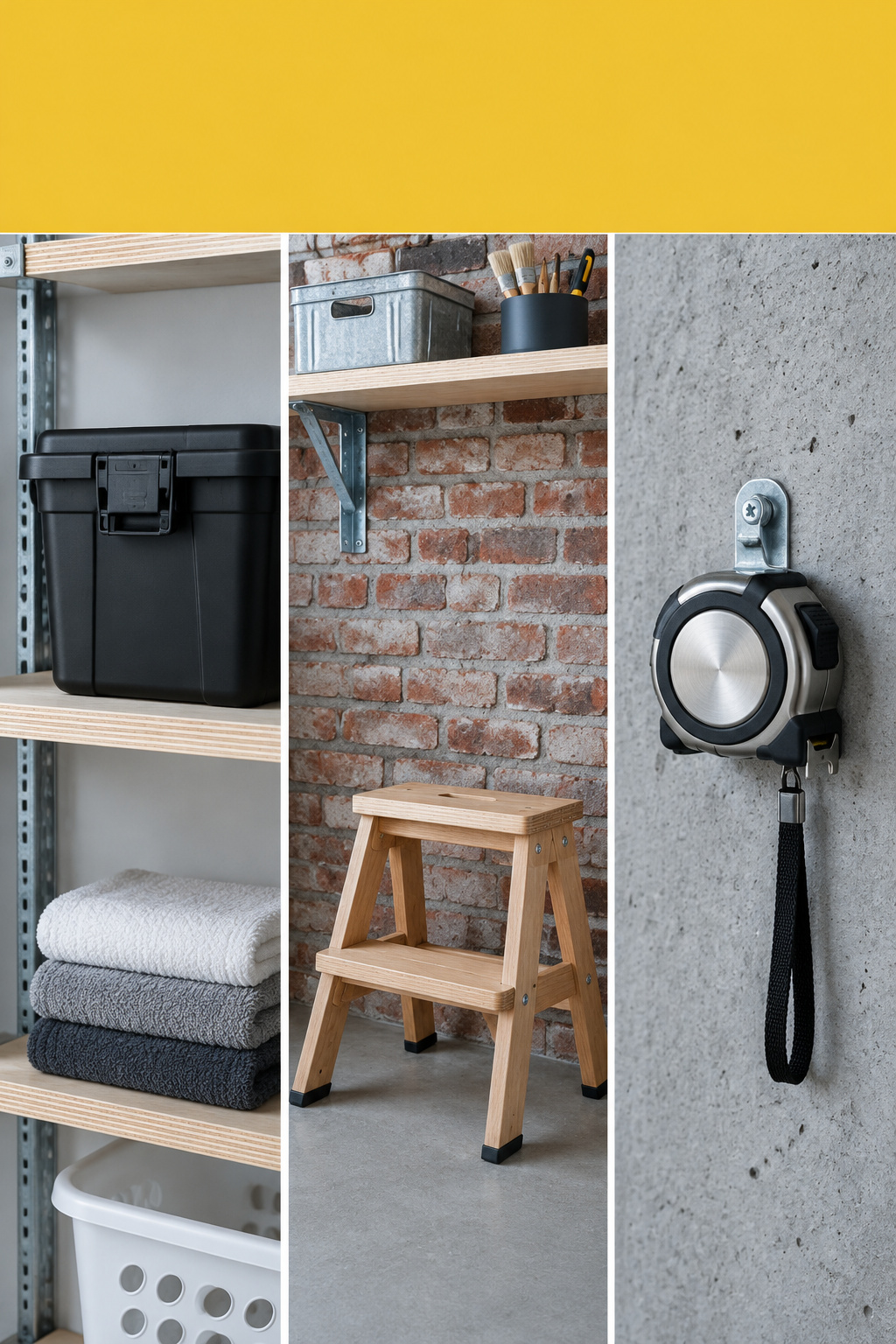
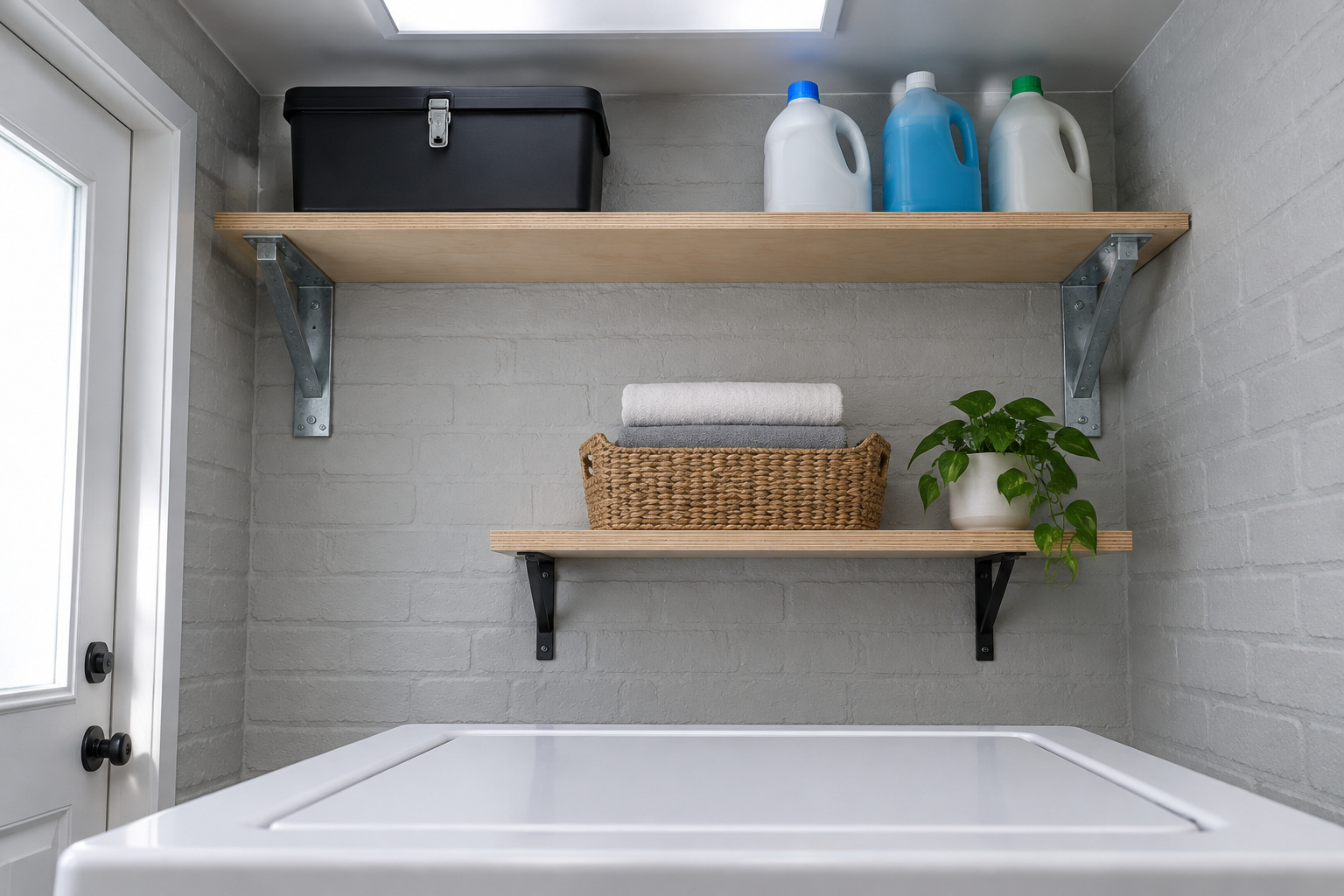
No safety body publishes the number parents with open laundry shelves want most: how high detergent has to sit before a toddler can’t get to it. The Consumer Product Safety Commission, the American Academy of Pediatrics and the poison centers give a different instruction: up, out of sight and, for pods, locked. I think that gap tells you the most about childproof laundry room storage, because out of reach means whatever a child can climb to.
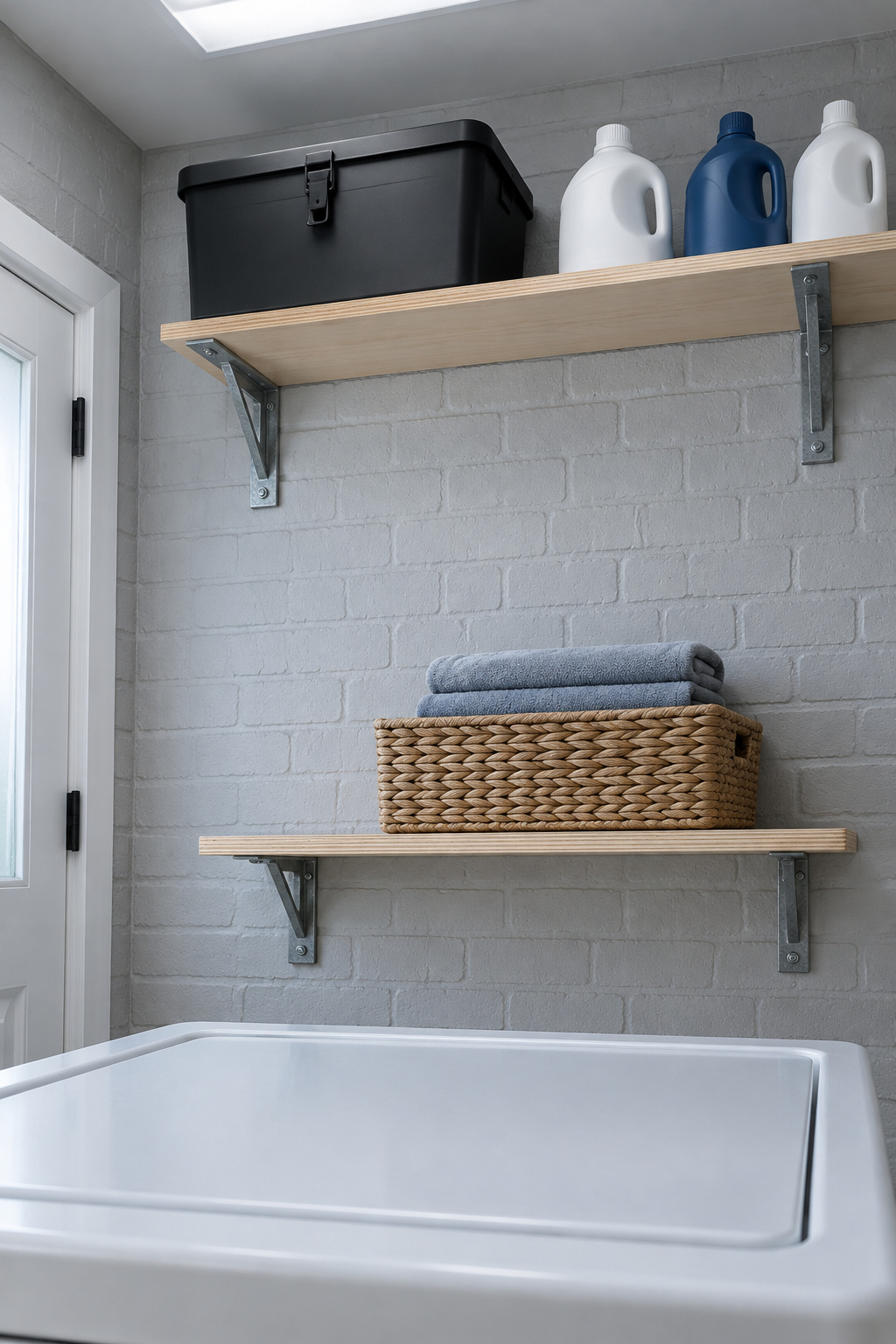
Open shelves and small children can share a wall. Sort the supplies, put a real barrier around the few that can’t stay out, then test the setup the way a toddler would.
TL;DR
- Towels, baskets, dryer balls and folded linens can live on an open shelf. Laundry packets, concentrated bleach, rust removers and spray bottles never do. CPSC says packets stay sealed in their original packaging, locked up and out of a child’s sight and reach.
- Reach is height plus whatever a child can climb onto. The CDC lists climbing on and off a couch or chair without help as an 18-month milestone, so a dryer lid, a stool or an open drawer turns a “high” shelf into a reachable one.
- In a toddler household I’d accept a latched box as the minimum, though CPSC and the AAP say locked. Save Poison Help, 1-800-222-1222, in your phone tonight.
What May Stay on an Open Shelf and What Never Does
My lesson came from a bookshelf. I once set up a forward-facing toddler bookshelf, covers out, exactly like the catalog, and it was beautiful. It was emptied onto the floor every day, because the catalog photo had no toddler in it. Since then I test storage against what a real child will do with it.
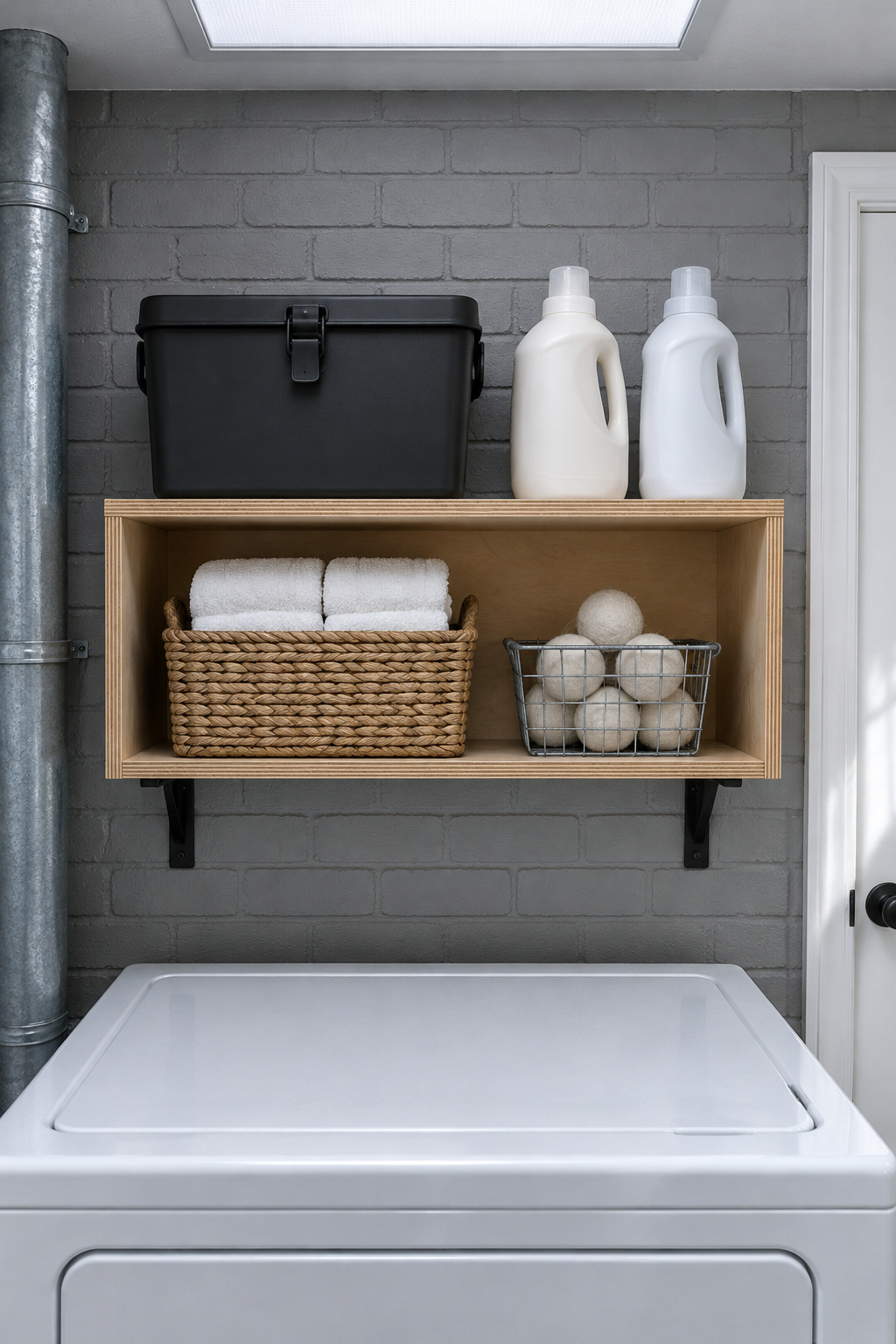
Laundry storage starts with sorting by severity. If every bottle counts as equally dangerous, parents end up frozen or shrugging, and the products aren’t equal. Some irritate. A few have burned or killed.
The sort below follows the poison centers and safety agencies:
| Supply | Where it goes | Why |
|---|---|---|
| Towels, baskets, wool dryer balls, lint rollers, folded linens | Open shelf | No chemical hazard (my sort, not a published rule) |
| Dryer sheets | High, out of sight | Missouri Poison Center rates them low toxicity; the worry is choking and mouthing |
| Liquid or powder detergent, fabric softener | High, original container; open is my judgment call | Poison Control: mouth, skin or eye irritation, serious injury uncommon |
| Regular household bleach | High, original container, never poured into a cup | Small swallows may cause mouth irritation and vomiting |
| Concentrated or commercial bleach | Never open | Newer high-strength bleach can cause serious burns |
| Stain removers, pre-treaters, spray bottles | Never open | HealthyChildren calls spray bottles a common source of unintentional poisoning |
| Rust removers (hydrofluoric acid types) | Never open | Poison Control names them the most dangerous laundry product |
| Laundry packets (pods) | Never open: sealed, original bag, locked | CPSC: locked up and out of a child’s sight and reach |
Take the third row. No authority blesses detergent on an open shelf. Nationwide Children’s says to store all of it “up, away, and out of sight”, and an open shelf is in sight by definition, so high-and-open for liquids and powders is my judgment call, not theirs.
The pods row is no judgment call. Emergency-department data on children 18 and under from 2012 to 2014 show 12.5% of pod cases ending in a hospital admission, against 3.0% for other detergent.
A two-minute test you can run before dinner
Four questions:
- Does an open shelf hold a packet, concentrated bleach, a rust remover or a spray bottle? Move it first.
- Is everything else in its original container, or inside a latched box?
- Could a stool, the dryer lid or a drawer get a child up to it?
- Does the laundry room door close and lock? HealthyChildren advises locking it whenever you leave.
Question one rests on data. In a Pediatrics study of pod exposures, 42.3% of the cases that recorded how the child got hold of the pods (382 of 904) involved pods stored within the child’s sight or always left out.
Out of Reach Isn’t a Height: What a Climbing Child Can Actually Do
A climbing toddler isn’t being naughty. A young body learns how far it can go by climbing, which is why the child who just conquered the couch tries the dryer next. The CDC lists “climbs on and off a couch or chair without help” among its 18-month milestones, and CPSC’s tip-over reports describe toddlers using drawers as climbing aids.
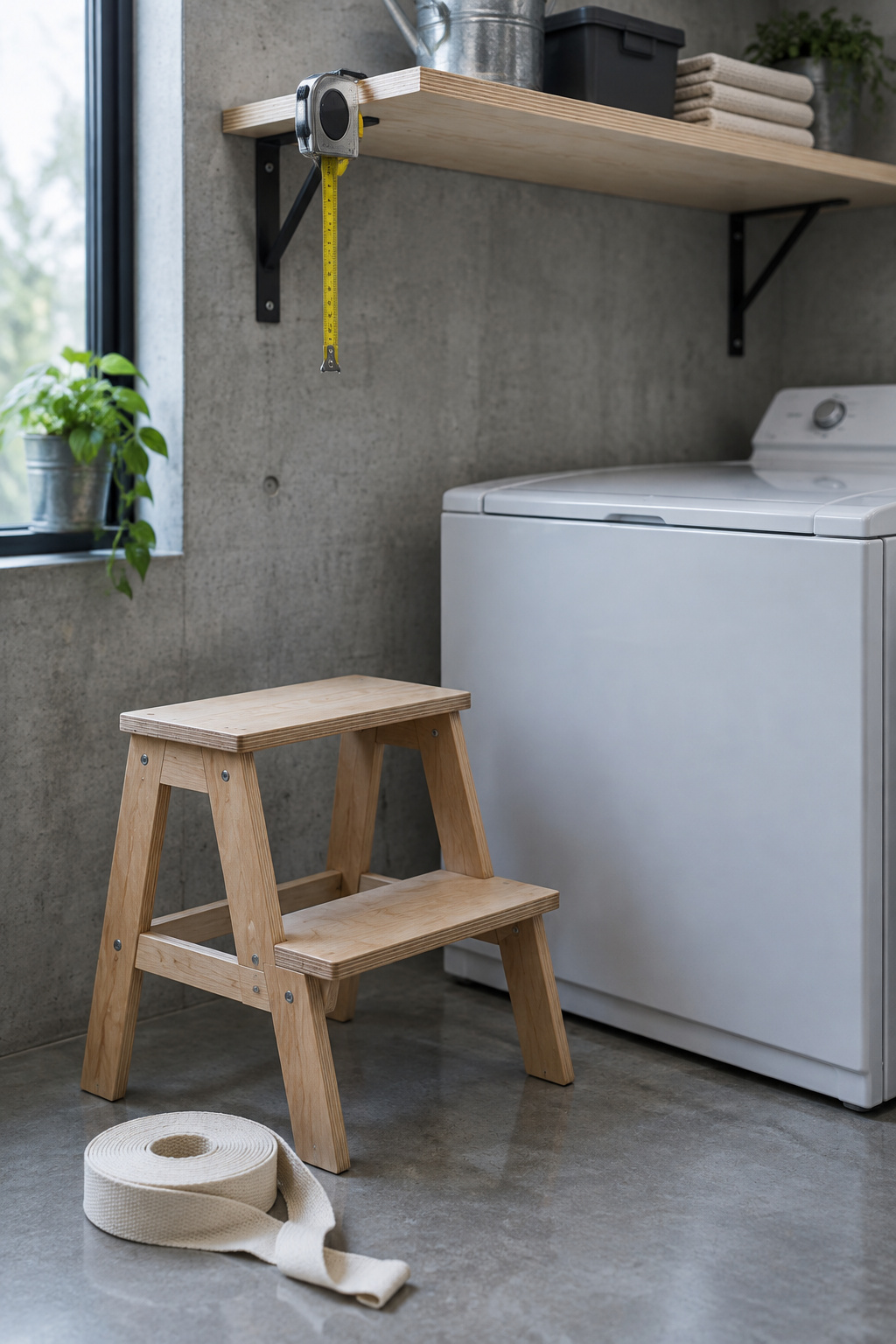
A high shelf only protects against a child standing on the floor. I found no measured overhead reach by age, only average heights and climbing milestones, so read this table as guidance, not measurement:
| Age | Average height (CPSC) | What the child can do | What it means for the shelf |
|---|---|---|---|
| Around 18 months | not given | Walks without holding on; climbs on and off a chair | Anything a stool or the dryer lid reaches is in play |
| 2 to 3.5 years | 36.8 in | Climbs onto furniture; uses drawers as steps | Drawers under machines and baskets against the wall become ladders |
| 3.5 to 4.5 years | 39.9 in | Independent stair climbing usually arrives by 4 | Stools and baskets don’t live in the room |
| 4.5 to 6.5 years | 42.6 to 45.1 in | Still largely inside the under-6 group most poison calls involve | Keep the system up until the youngest is well past it |
One more number helps when read backward. Montessori guidance puts shelves children are meant to use at 12 to 16 inches for under-twos and no higher than 24 inches for toddlers. Those heights mark where a child is invited to reach, never where reaching stops.
Now the scale, calmly. In January and February 2024 alone, America’s Poison Centers logged 1,423 packet exposures in children 5 and under. A Nationwide Children’s study counted 36,279 packet calls over three years, about one every 44 minutes, with 87% involving children under 6. CPSC knows of 11 packet deaths through 2019: two children under 2, six adults with dementia and three adult men. Deaths are rare and exposures are not, which is why the sort matters more than fear.
Childproof Laundry Room Storage for Pods and Liquids: The Latched Container
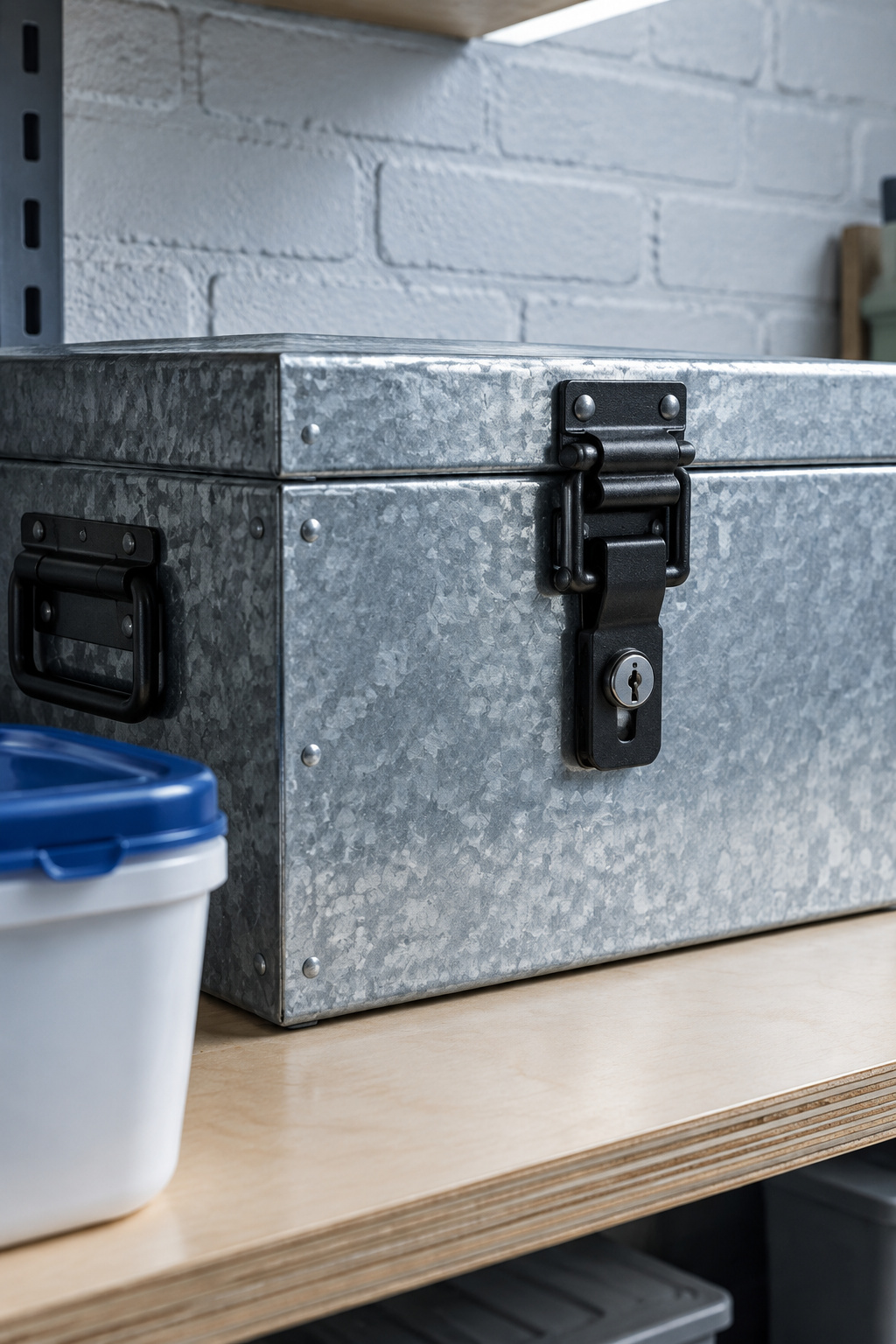
A lid is not a latch. A real barrier takes a deliberate adult move, ideally two, and a press-on lid only buys a delay.
“Child-resistant” promises less than it sounds. Under the Poison Prevention Packaging Act (PPPA) test, a package passes if no more than 20% of 200 test children open it, so 40 may succeed. Utah Poison Control puts it plainly: “Virtually nothing is child-proof when it comes to poisonings.” Laundry packets aren’t even on CPSC’s list of PPPA-regulated substances. They fall under ASTM F3159, a voluntary standard that covers opaque or masking packaging, warning statements and packaging-performance options, and Gary Smith of Nationwide Children’s notes that manufacturers can meet its child-resistant requirement six different ways.
Packaging fails, too. In April 2024 CPSC and Procter & Gamble recalled about 8.2 million bags of Tide, Gain, Ace and Ariel pods whose outer bag could split near the zipper, and the remedy included a free cabinet lock.
So the original bag, with its label and poison-help information, goes inside a latched box. Don’t decant, though a 2024 American Cleaning Institute survey found 12% of people already decant into decorative containers. It needs:
- A latch that needs two deliberate moves, not a snap lid
- Original packaging inside the box, never a jar
- The box on the highest shelf, at the back, away from anything climbable
- Dry hands before you reach in: packets dissolve on contact with water, wet hands or saliva
Is a latch enough? The official answer is no, and I return to that below.
Setting Shelf Heights So the Safe Zone and the Reach Zone Don’t Overlap
Reach is a chain: floor, climbing aid, machine lid, shelf. Raising the shelf lengthens one link, and taking away the stool breaks the chain.
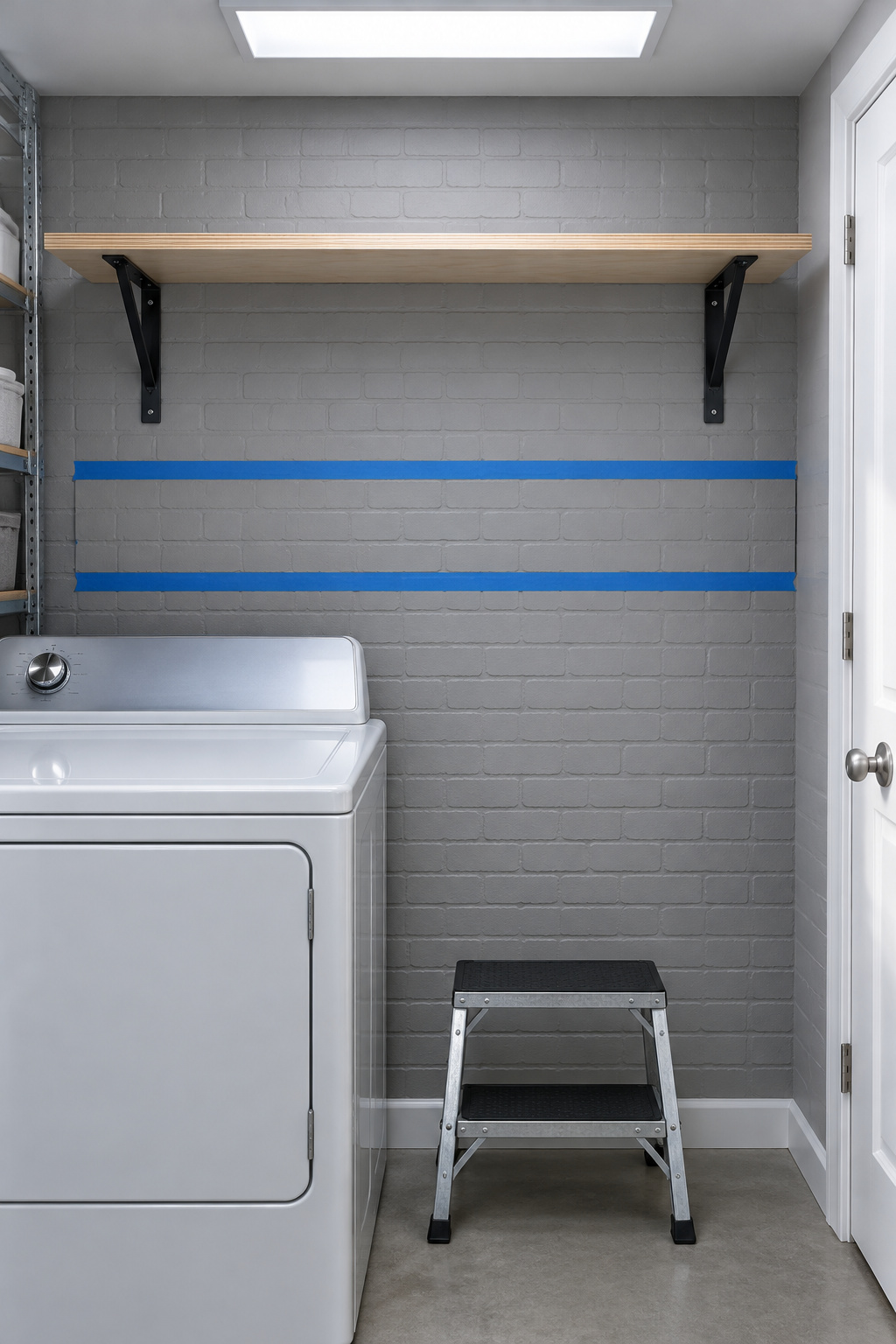
Your machines set the shelf heights, and the guide to how high to hang shelves over the machines works them out from your lid and your arms. I handle the child layer on top. HealthyChildren names three places packets should never sit: on the washer, on the dryer and in a storage drawer beneath the machines. All three are rungs on the chain.
Then run the test no table can. Kneel in the room and look up the wall from your toddler’s eye level, because what a child can see is what a child plans for. Put the stool or a full basket where a toddler would push it, and mark the highest shelf edge a child standing on it could grip with painter’s tape. Soft goods can go below the tape. Anything from the never-open rows of the sorting table goes above it and behind a latch.
Safe Kids Worldwide reported a child who climbed to a bathroom shelf and opened a child-resistant medicine bottle. Medicine, not detergent, but the mechanism carries over: reach plus quiet minutes defeats a lid.
The tape line moves in three years, since independent stair climbing usually arrives by 4. Redo the walk-through with every new climb.
When Open Shelves Aren’t Enough: Households That Need a Door
Some homes outgrow open-shelf-plus-latch fast. A determined climber does it, and so does a shared laundry where another household’s packets land on your shelf.
The third case is the one parents forget: an adult with dementia. CPSC’s fatality records show every adult who died from a laundry packet through 2016 had Alzheimer’s or dementia, and one victim in 2017 thought a packet was candy. Nationwide Children’s recommends that caregivers of children under 6, and of adults with dementia, Alzheimer’s or a developmental disability, use traditional detergent instead of packets.
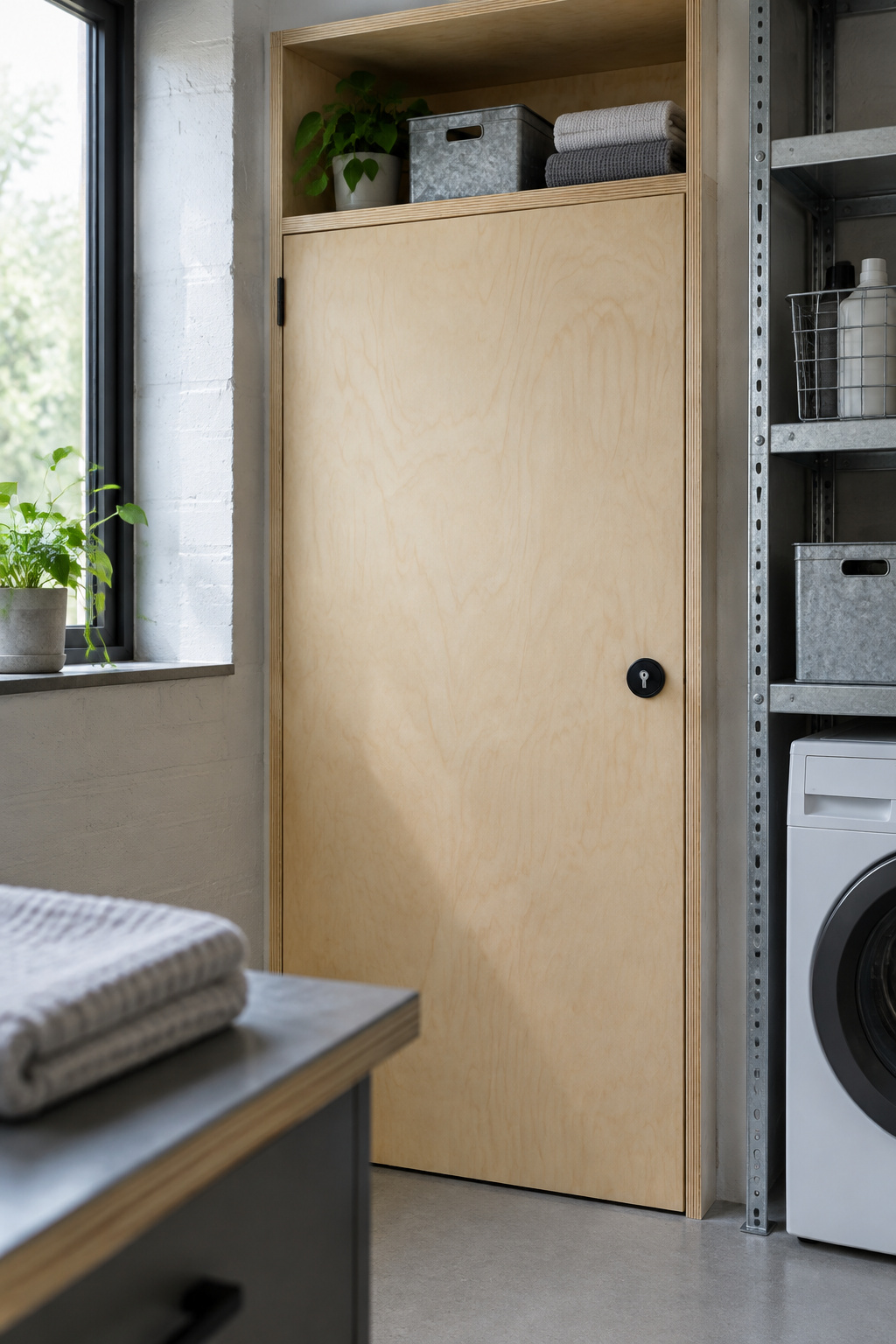
In any of these homes my verdict flips from latch to lock, or to a door. HealthyChildren’s line is “a high, locked cabinet is best”, and a locked cabinet behind an open room door is half a fix. Doors are a bigger decision than safety alone. The guide on whether doors make sense for your household walks through it supply by supply.
Tonight’s Fifteen Minutes: Sort, Latch, Kneel and Look
Treat reach as whatever a child can climb, let the sort decide what stays out, and keep the barrier for the few things that can’t, and open shelves in a laundry room can work with toddlers in the house.
Tonight’s list:
- Move every packet into its original bag, inside a latched box, on the highest shelf
- Pull concentrated bleach, rust remover and spray bottles off the open shelves
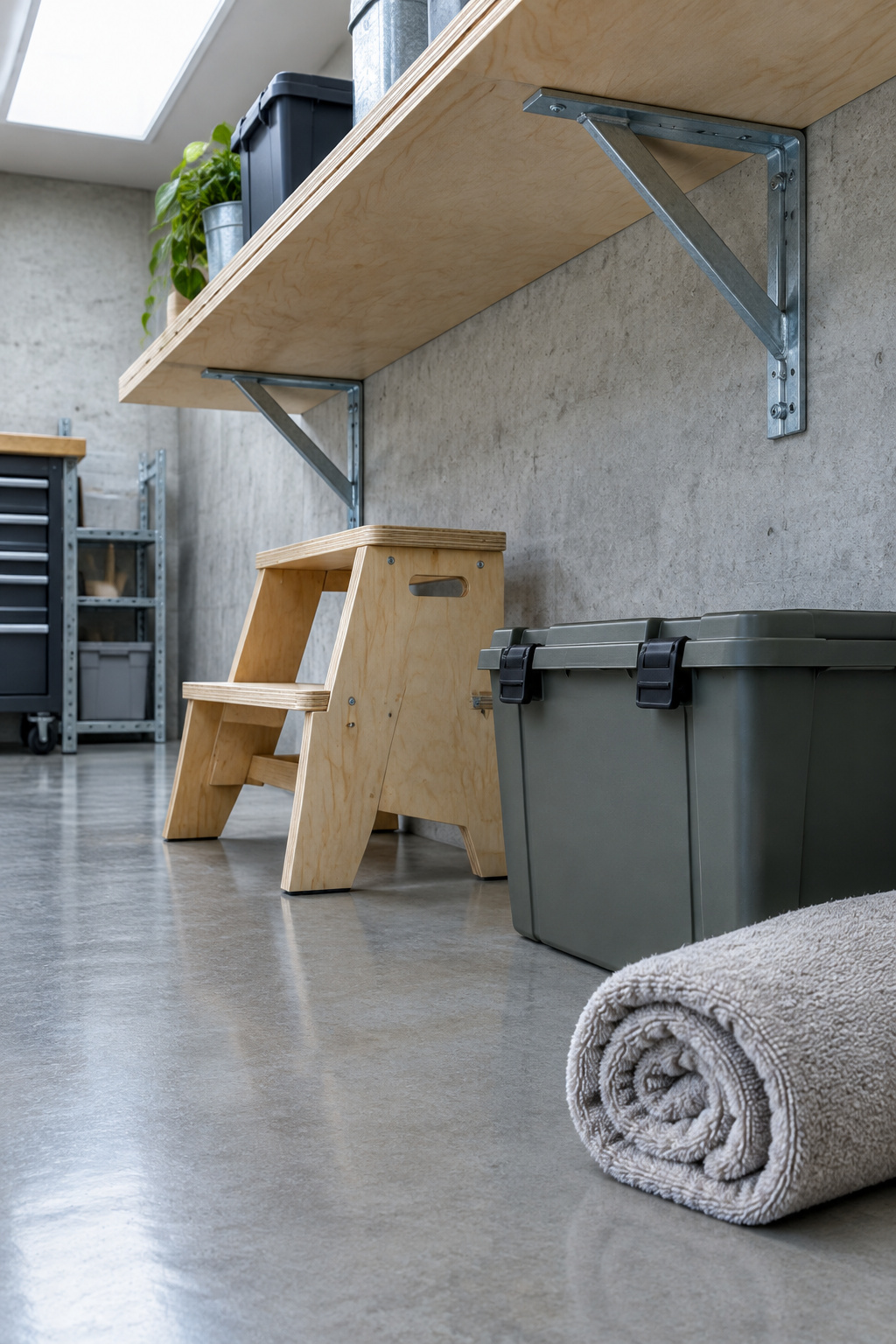
- Take the stool and any drawer contents out of the climb chain
- Kneel, look up, and tape the highest edge a child on a stool could grip
- Save 1-800-222-1222 in every adult’s phone
That leaves the disagreement, and I won’t tidy it away. CPSC and the AAP say locked. I think a two-move latch on a high shelf, with the climb chain broken, is a defensible minimum for most toddler households, because a system a tired parent uses every wash day beats a lock left hanging open. They’re the safety authorities and I’m a designer, so if your child opens everything, side with them and buy the lock.
FAQ
What should I do if my child swallows laundry detergent or gets it in their eyes?
Call Poison Help at 1-800-222-1222 right away. For eyes or skin, flush with running water for at least 15 minutes, then call. If detergent was swallowed, give a small amount of water or milk and call. CPSC’s advice for a swallowed packet, or one in the eyes, is the same: call immediately.
Should I switch from pods to liquid or powder detergent if I have a toddler?
Nationwide Children’s recommends traditional detergent for caregivers of children under 6, and the gap is real: in emergency-department data on children, 12.5% of pod cases were admitted to hospital versus 3.0% for other detergent. Liquid and powder still belong high, in their original containers, out of sight.
Are bleach and fabric softener as risky for children as laundry pods?
No. Poison Control ranks pods and rust removers as the serious laundry products. Regular household bleach usually causes mild mouth irritation or vomiting, though newer concentrated bleach can burn, and fabric softener mainly irritates the mouth, skin or eyes. Both still belong high, in original containers, never poured into a cup.