
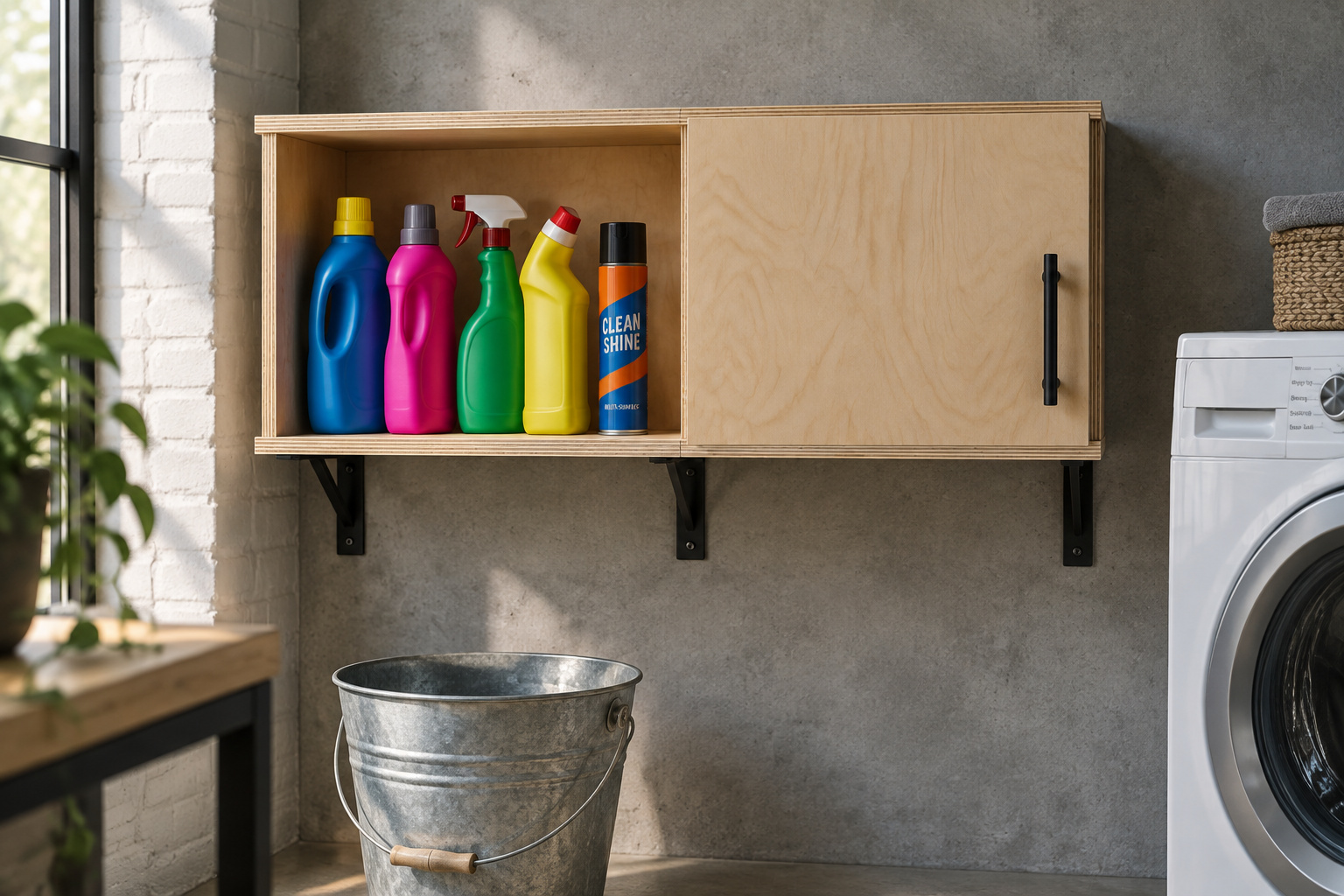

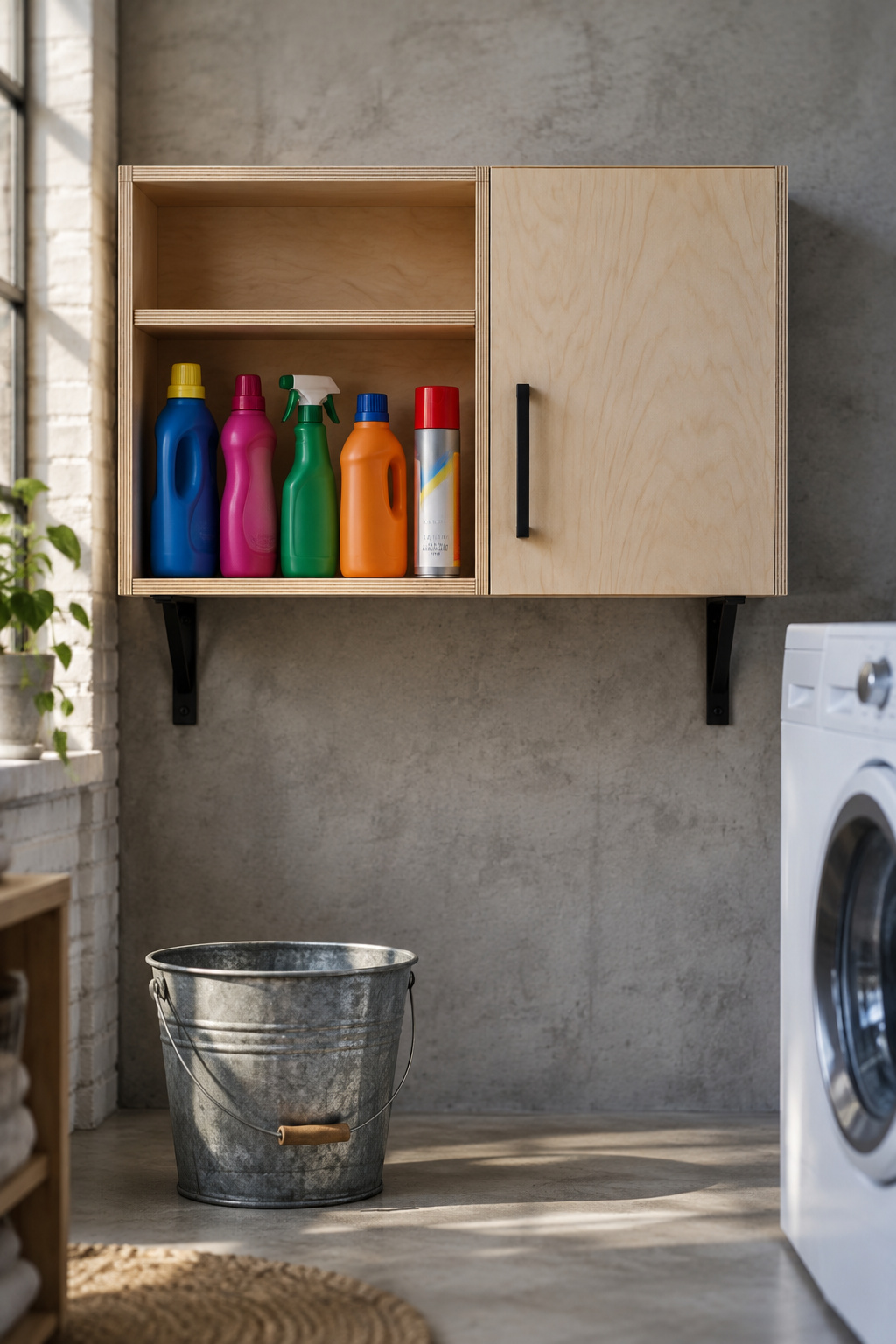
Emily Henderson’s Portland laundry room keeps the everyday detergent on open shelves and the bulk supplies behind doors. Two other designers, Danielle Loven and Melanie Zaelich, were asked about open shelving in kitchens and push the other way. “You’re going to get dust,” Loven says, and Zaelich warns it can quickly look cluttered. Same question, opposite answers. Most advice on open shelving vs cabinets in a laundry room arrives like this, as a rule borrowed from someone else’s room. None of it asks what sits on your shelf, what your dryer breathes into the air, or what your eye meets with your hands in the drum. So, no rule. A test.
TL;DR
- Count your packaging first. Take everything off the shelf and count the branded, mismatched and sticky containers; in my practice a high count points toward doors.
- Run a seven-day dust test on one shelf. No measured laundry interval exists to borrow, so one wiped shelf, read on day seven, sets your rhythm.
- Look from where you work, not from across the room. If one object pulls your eye, remove it; if the whole wall does, close it. Children in the house tip the verdict toward closed for packets, sprays and strong products.
Why one laundry room can’t borrow another room’s answer
Start with how each choice feels. An open shelf keeps every jug and half-used box in view, and each asks a little something of you whenever you walk in. A closed door is quiet. It also hides things, and what hides tends to be forgotten until it leaks.
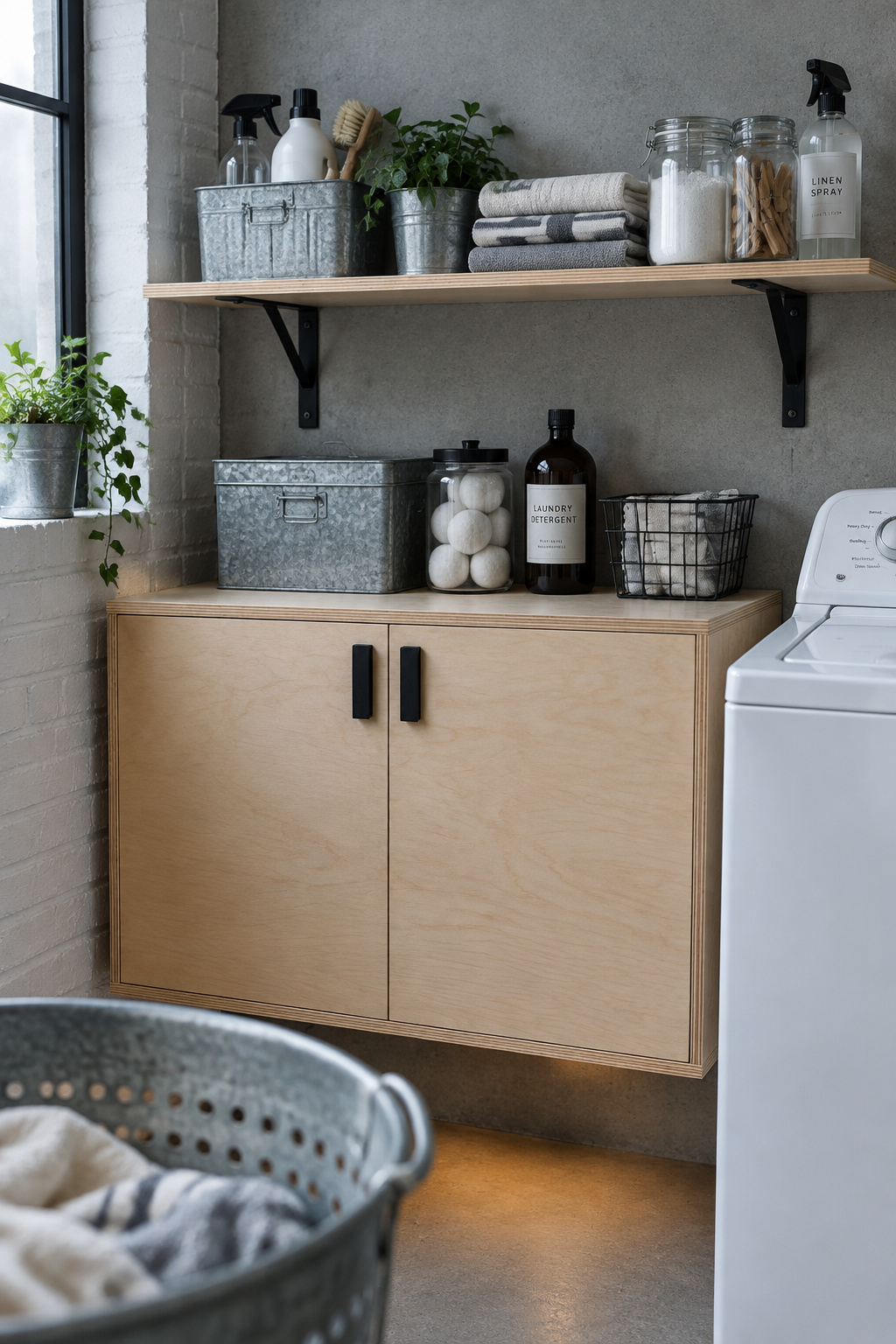
Neither feeling is wrong. A laundry room is a working room that is also looked at, and the rules passed around were formed in rooms with different air, supplies and eyes. Even inside one room the answer shifts. The Kitchn left open shelves undusted for three weeks in a single kitchen. The shelf by the open back door came out dustiest, the shelf above the stove came back “super dusty and also greasy”, and a wine rack across from the stove was only “less-than-medium dusty”. That was a kitchen, not a laundry room, but the lesson travels. Exposure belongs to a shelf, not to a style.
For the general case, including what each side costs, see the cabinets-versus-shelving section in our laundry room storage organization guide. The three readings below are about your room alone.
Before you read on, stand in your laundry room for one quiet minute and notice which shelf you avoid looking at.
Count your packaging: the supplies half of the test
Take everything off. All of it: the jugs, the powder box with the soft corner, the spray with the cracked trigger. Clean Corps starts the same way. Pull everything off, toss what has expired or doesn’t belong, and bring back only what you use.
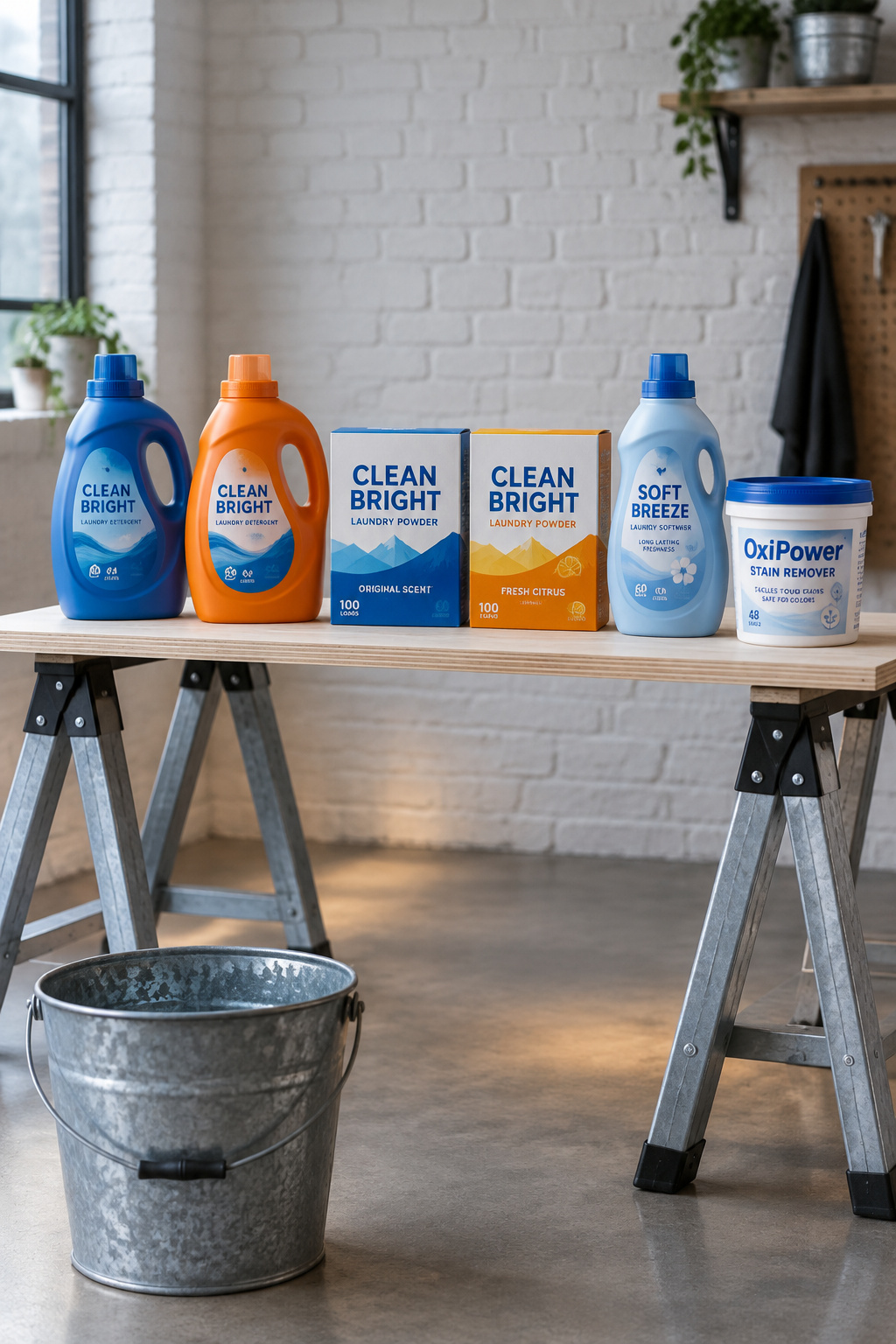
Removal comes before counting, so pull out:
- anything expired, clumped or crusted shut
- anything that belongs in another room
- duplicates and backups of what is already open
- any container that is sticky to the touch
Now count what is left. How many brands, colors and shapes? How many are tacky around the cap? No study hands you a threshold for this number, only a mechanism. In McMains and Kastner’s fMRI work, published in the Journal of Neuroscience, objects visible at the same time competed for representation in the visual cortex and suppressed one another, and grouped objects competed less than scattered ones. Those were simple lab displays, not shelves, so I hold them loosely. They match what my sitting practice taught me: a row of seven mismatched labels keeps the eye moving, and two plain containers let it settle.
So, as my practice and not a measured rule, a high packaging count points closed. A low count, or a shelf of one repeated shape, can stay open without asking much of you.
Write the number down before you put anything back.
Measure lint, steam and spatter: the exposure half of the test
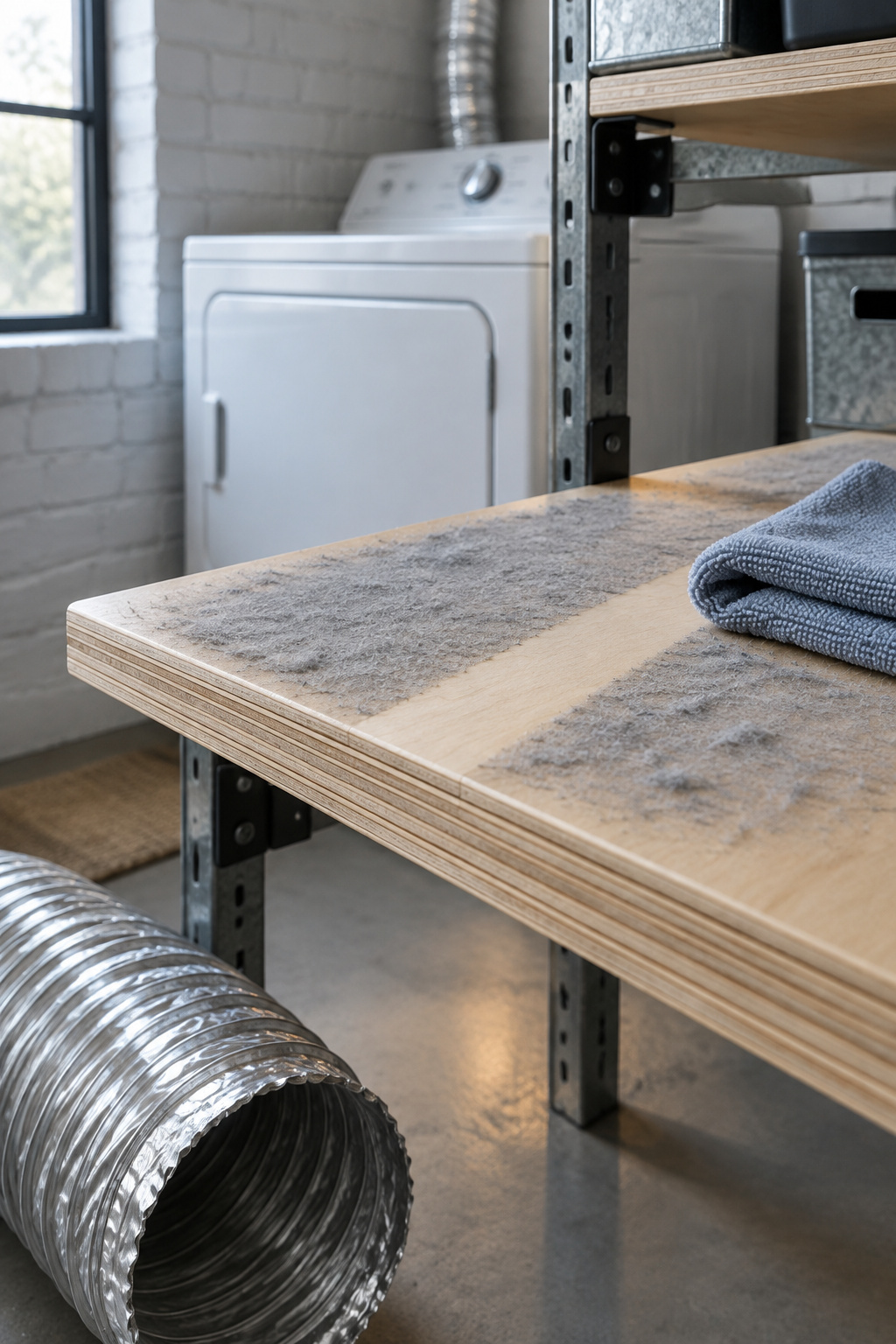
Your dryer is always sending lint somewhere. LG’s dryer manual says that if the dryer is not exhausted outdoors, “some fine lint and large amounts of moisture will be expelled into the laundry area.” Add the washer lid and the splash of a measuring cap, and every shelf sits in slightly different weather.
The EPA gives one number to check with a hardware-store hygrometer. Keep indoor relative humidity below 60 percent, ideally between 30 and 50.
The shelf itself tells you which way it leans:
| Exposure signal | What you see on day seven | Leans | Source context |
|---|---|---|---|
| Dry grey lint film | Wipes off in one pass | Open, if you’ll wipe it | Unvented dryers expel fine lint into the room (LG manual) |
| Tacky film, lint matted in | Drags under your finger | Closed | Liquid detergent leaves sticky spots; softener hardens into a film (Care.com) |
| Damp residue, hygrometer above 60% | Soft cardboard, beading | Closed | EPA: below 60%, ideally 30–50% |
| Heavier film at the end nearest the vent or lid | One end dirtier than the other | Closed for that shelf only | Dust varies shelf by shelf (The Kitchn, a kitchen test) |
| Barely a change | The wiped stripe hardly shows | Open | — |
How to read the dust on one shelf after seven days
Clear the shelf nearest the machines, wipe it with a damp cloth, and write the date on a strip of tape. Then leave it through seven days of ordinary laundry.
On day seven, draw one finger across it. A dry grey film is lint. A film that drags is something else. A professional cleaner quoted by Care.com names the fabric-softener cap as the worst offender: it “seeps into the cabinet, hardens into a film and attracts lint into a mat that must be scraped off.” That mat is the shelf telling you to close it.
Then the catch. Nobody has measured a laundry-room dusting interval. Kitchen sources say a two-minute quick dust weekly plus a deeper damp-cloth clean monthly, laundry cleaners say a damp wipe once a month, and your seven-day shelf decides which of those rhythms you are actually signing up for.
If you are starting from an existing wire shelf, run the test on the items as well as the wire, since dust still settles on whatever sits there.
Wipe the shelf nearest your dryer and write the date beside it.
Look at the wall from where you work: the eye half of the test
I once worked with a client in tech who had a beautiful new meditation room and could not use it. The cause was a wall clock. I took it down, and she could finally sit. A single object had taken the whole room hostage.
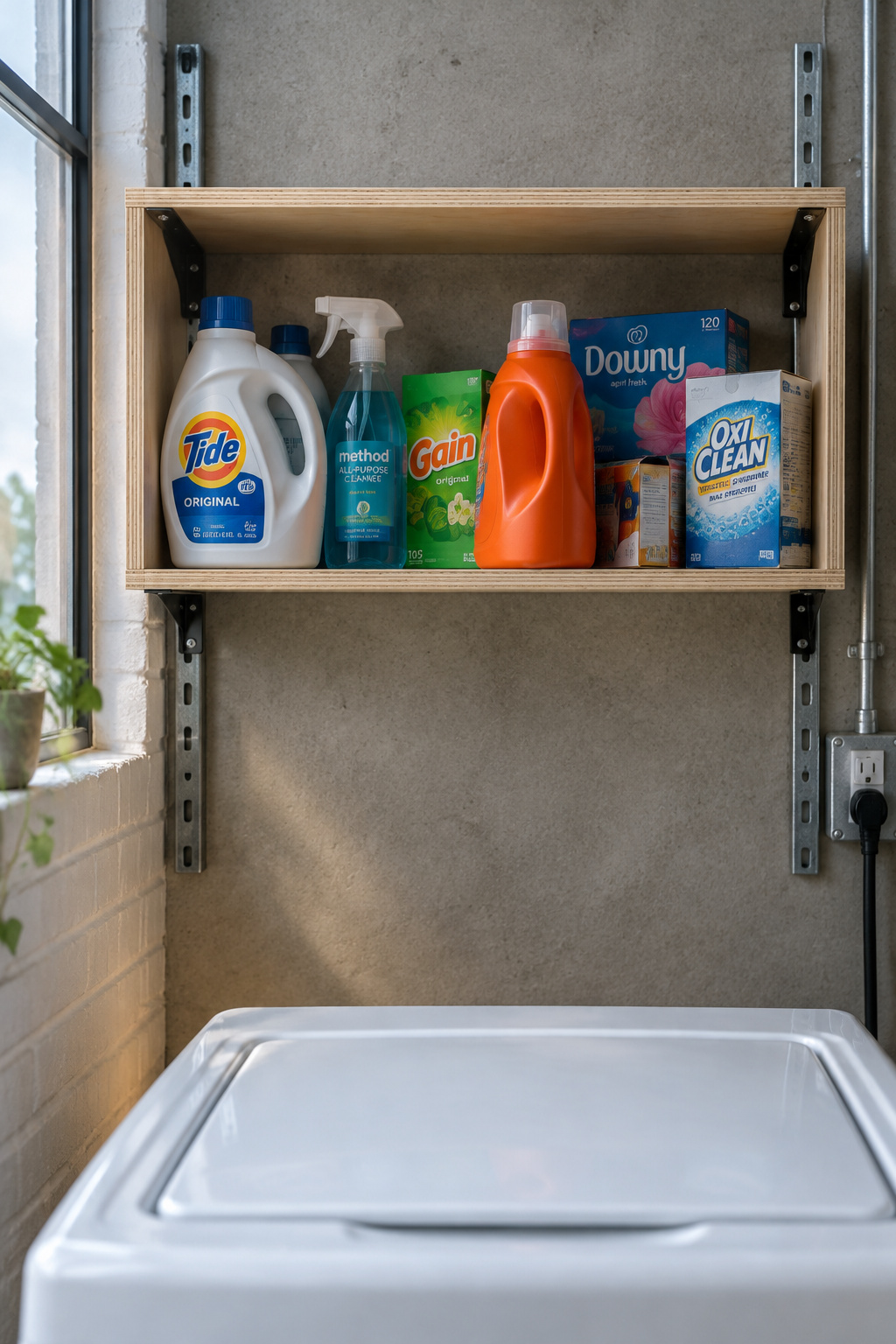
In a laundry room, the hostage-taker is usually a row of loud packaging, or one orange jug breaking the line of a quiet shelf. Scanning the wall won’t find it. You find it from where you actually stand, at the machines with a basket at your hip.
So stand there. Load the washer the way you always do, then lift your eyes without choosing where they go. What do they settle on first? Does it want something from you, such as a wipe, a refill, a read, or a return to its place?
McMains and Kastner put it simply: “the capacity of the visual system to process information about multiple objects at any given moment in time is limited.” An open shelf may spend some of that capacity every time you glance up.
If one object pulls, take it down and look again. If the wall goes quiet, the problem was an object, not open shelving. If the eye catches on something new wherever it lands, the whole wall is asking, and that leans closed however tidy your packaging count.
Remove the single loudest thing on the wall and see whether the room exhales.
Read your three results: open shelving vs cabinets in your laundry room, or a split
You have three readings and need one verdict. Lay them side by side:
| Your results | Verdict | What to do next |
|---|---|---|
| Low packaging count, clean seven-day shelf, quiet wall | Open | Keep the shelf; wipe on the rhythm your test showed |
| Either a high packaging count or a busy wall (not both), with a clean shelf | Split | Put the loud things behind a door or a curtain; leave the quiet ones open |
| Clean count and quiet wall, but a tacky or damp shelf near the source | Split by position | Close the shelf nearest the vent or lid; keep the far one open |
| Two or three results leaning closed | Closed | Cabinets for the working supplies; open storage only for towels and baskets, if anything |
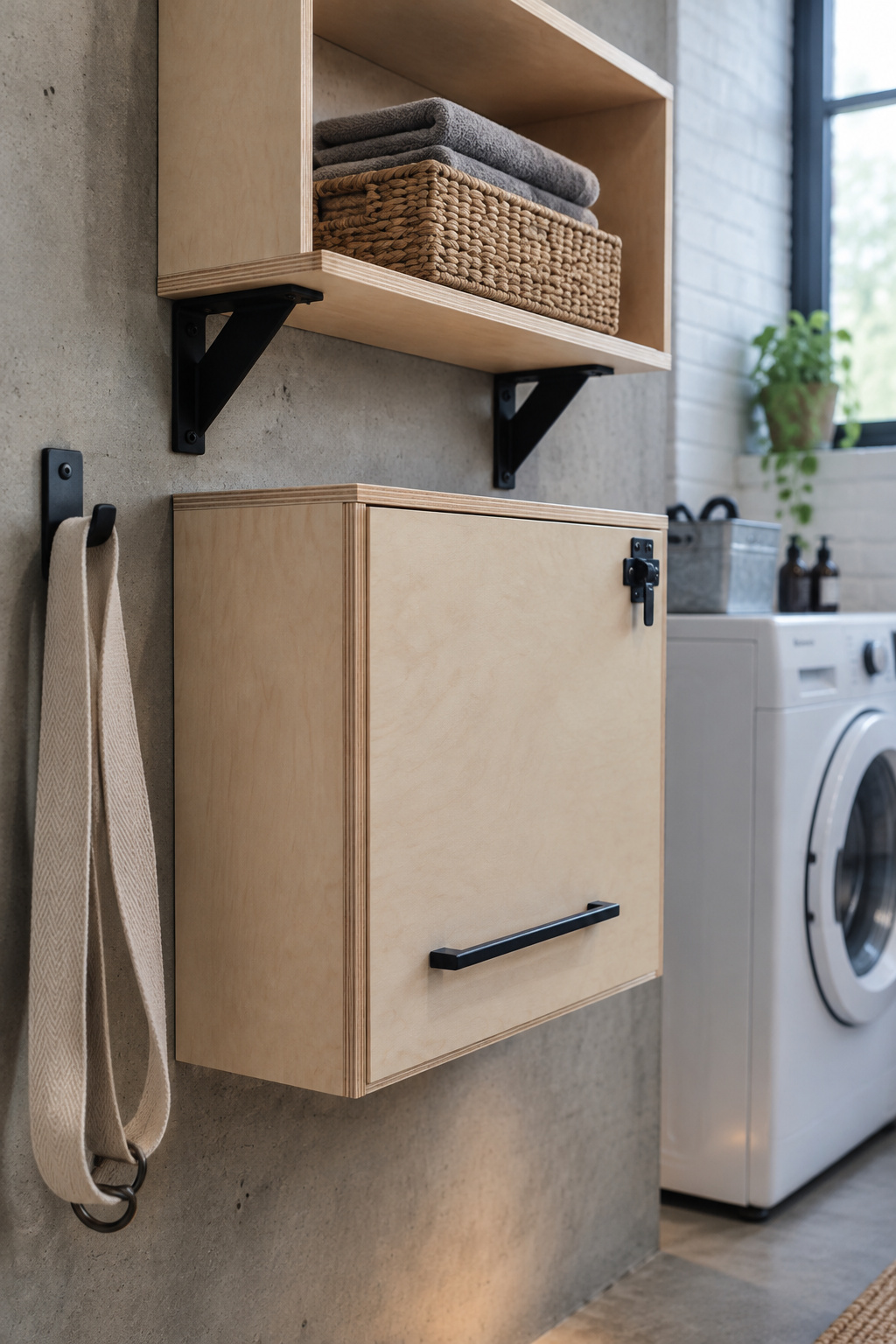
A split here comes from one reading failing while the others pass, and the failing reading tells you which half goes behind a door. A curtain on a rod is the gentlest version of that door.
When children in the house decide it for you
Some households don’t get a vote. Even the organizing advice that favors open shelves frames it for “an adult-only home” and puts pods, strong products and sprays behind a closed door. If a small child can reach the room, the packets, sprays and strong products go behind closed storage that children can’t open, whatever your three readings said. Towels and empty baskets can still live in the open, and that guide sorts the rest.
One wall, one decision: the shelf your test points to
Three readings, one room: a count of what you own, a week of what the air leaves behind, and the first thing your eye meets while your hands are busy. They can’t disagree the way the rules did, because they all describe the same wall.
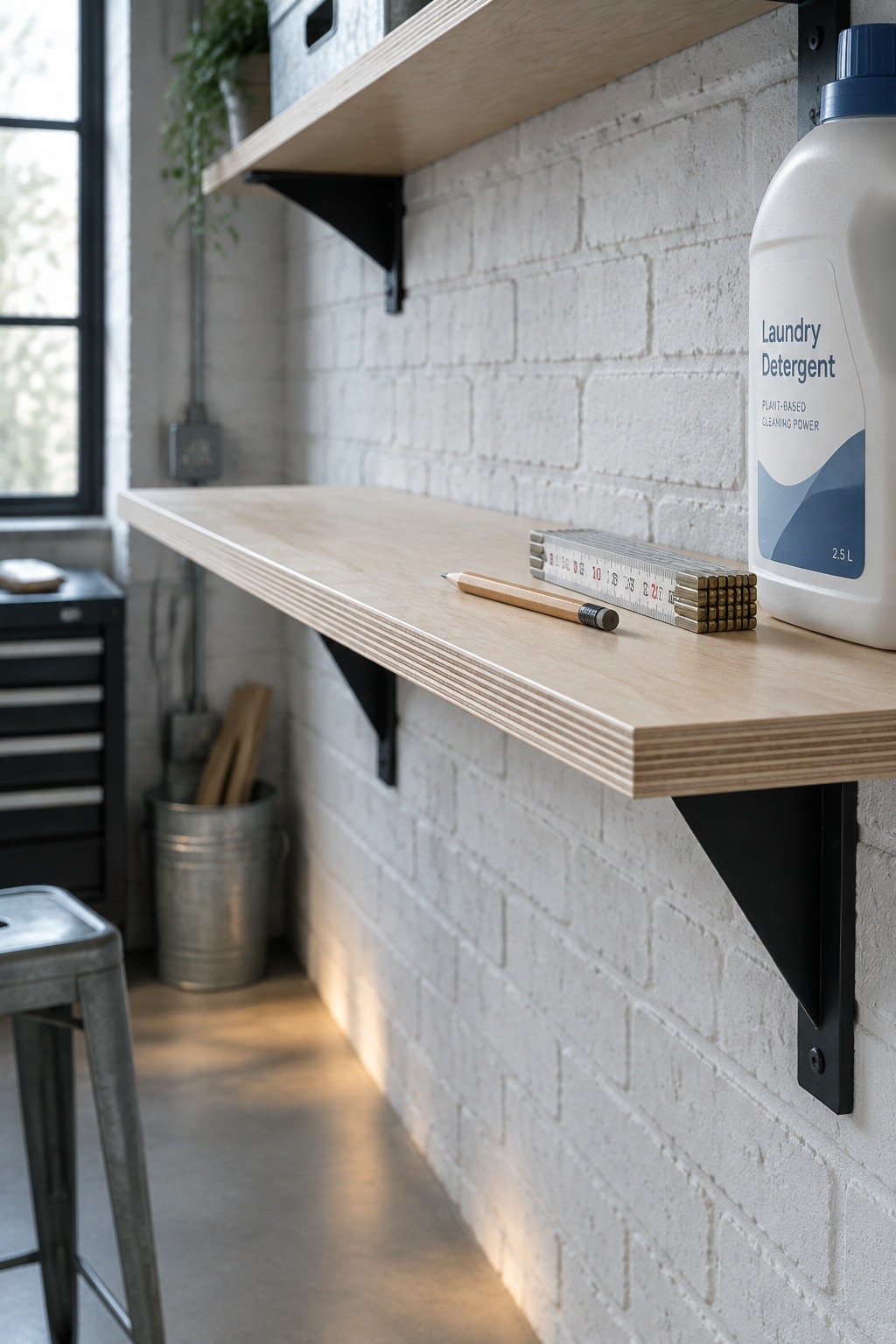
Pick one wall — not the whole room — and make one decision about it: open, closed or split. If the test says open, our open laundry shelving ideas will help you choose the shelf itself, and our laundry shelf decor guide covers arranging what sits on it.
Write your verdict on the same strip of tape that holds your seven-day date, and let the shelf prove you right.
FAQ
Does open shelving in a laundry room get greasy or sticky as well as dusty?
Yes, it can get sticky, though not from cooking grease. Care.com’s checklist notes that liquid detergent leaves sticky spots and powder scatters, and a cleaner it quotes calls the fabric-softener cap the worst offender. Damp air may add to it, since an unvented dryer pushes fine lint and moisture into the room.
Can I mix open shelves and cabinets without the room looking chaotic?
Yes, if the split comes from what failed your test and not from habit. Put the loud or sticky items behind doors and leave only quiet ones open. A large kitchen survey by John Burns Real Estate Consulting found 69% of homeowners wanted all upper storage behind solid doors; that is kitchen data, not laundry.
How often should I wipe laundry room shelves if I keep them open?
Kitchen sources suggest a quick dust weekly plus a deeper clean monthly, and laundry guides from Care.com and Clean Corps suggest a damp wipe monthly. Neither is a laundry measurement, so let the seven-day test decide. Shelves near laundry steam or exhaust collect dust faster, so expect the shorter rhythm there.