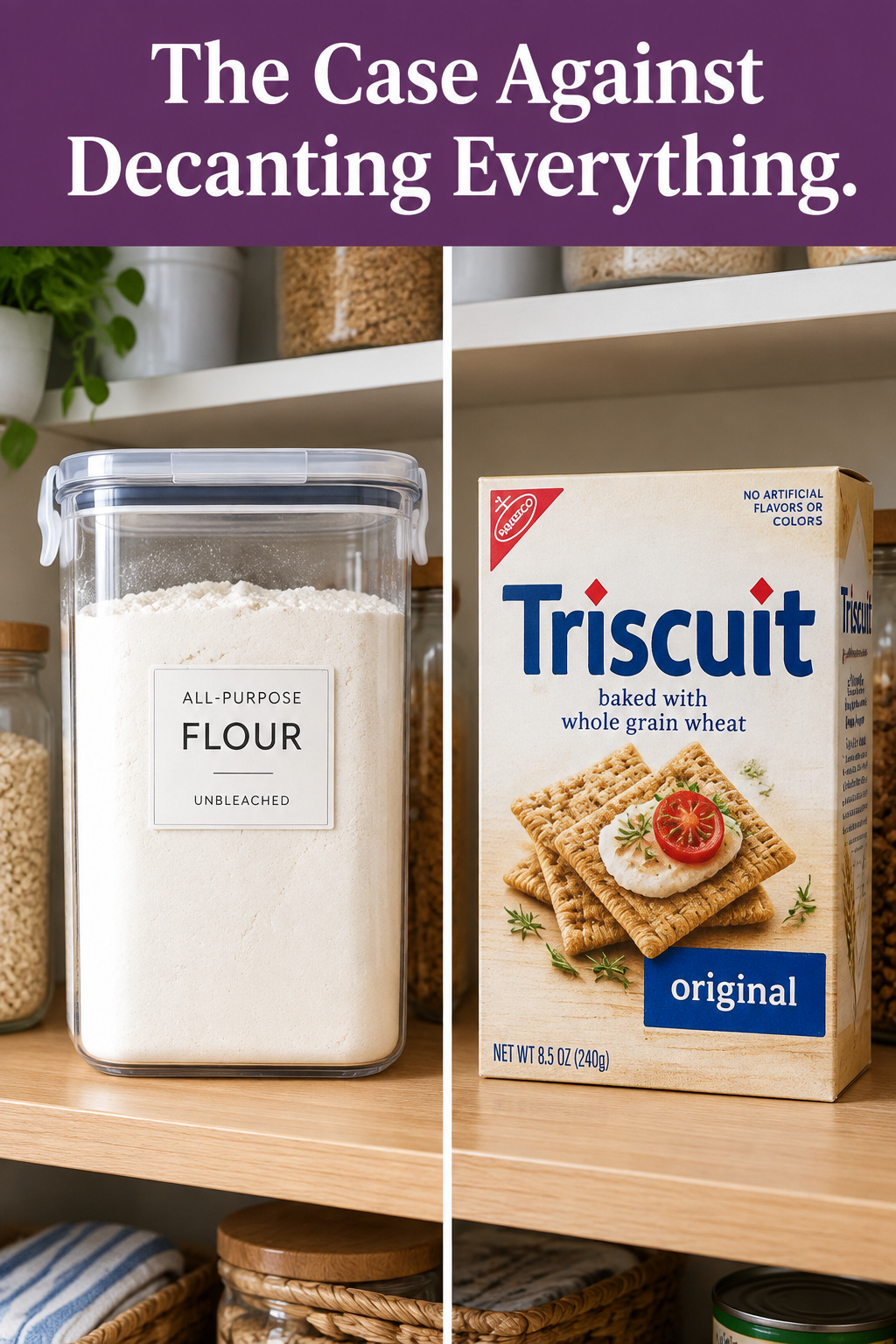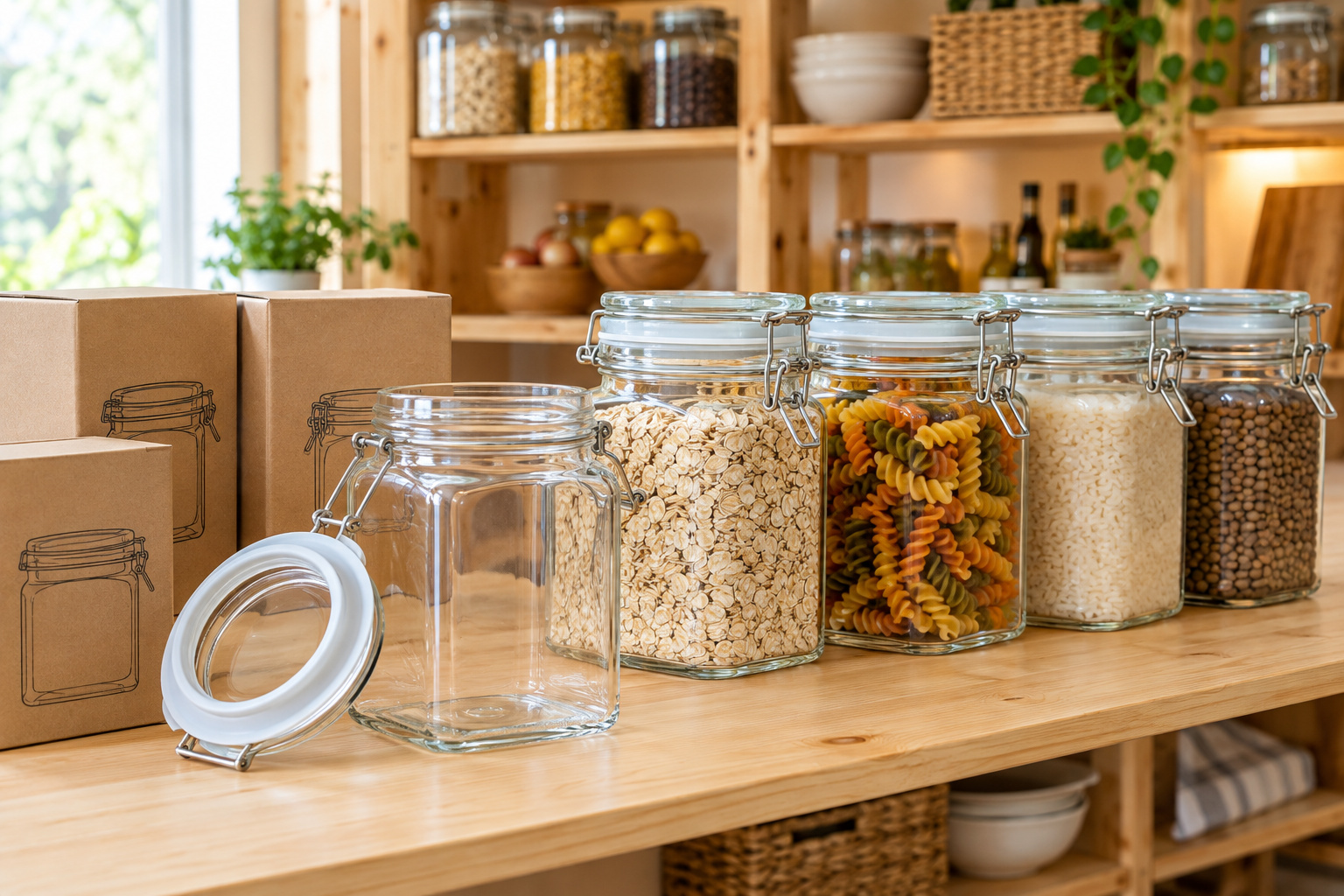
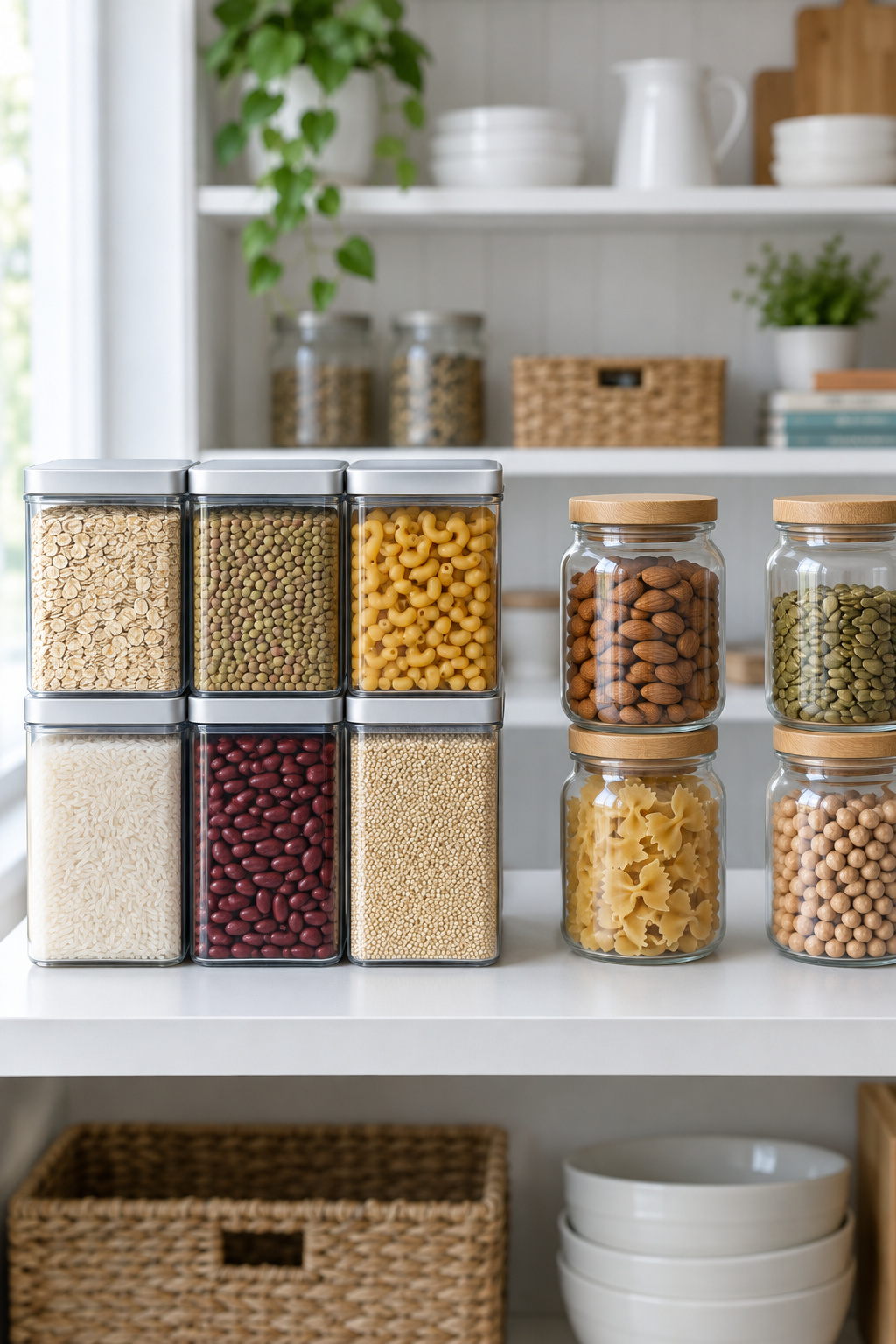
What, exactly, is a canister protecting your rice from? Ask that of the pantry storage containers now sold in sets of twelve, twenty and thirty, and most of the shopping list dissolves. The photographs make a persuasive case for emptying every box into a matching jar, and a row of identical vessels has the calm of a well-kept reading room. But a container is a tool with a job, and the job is narrower than the photographs suggest. My standard is the one I apply to any enclosure: name the threat first, then choose the vessel that answers it. By that standard a short list of foods deserves a sealed jar, a longer list is better off in its box, and the word “airtight” on a label means much less than it should.
TL;DR
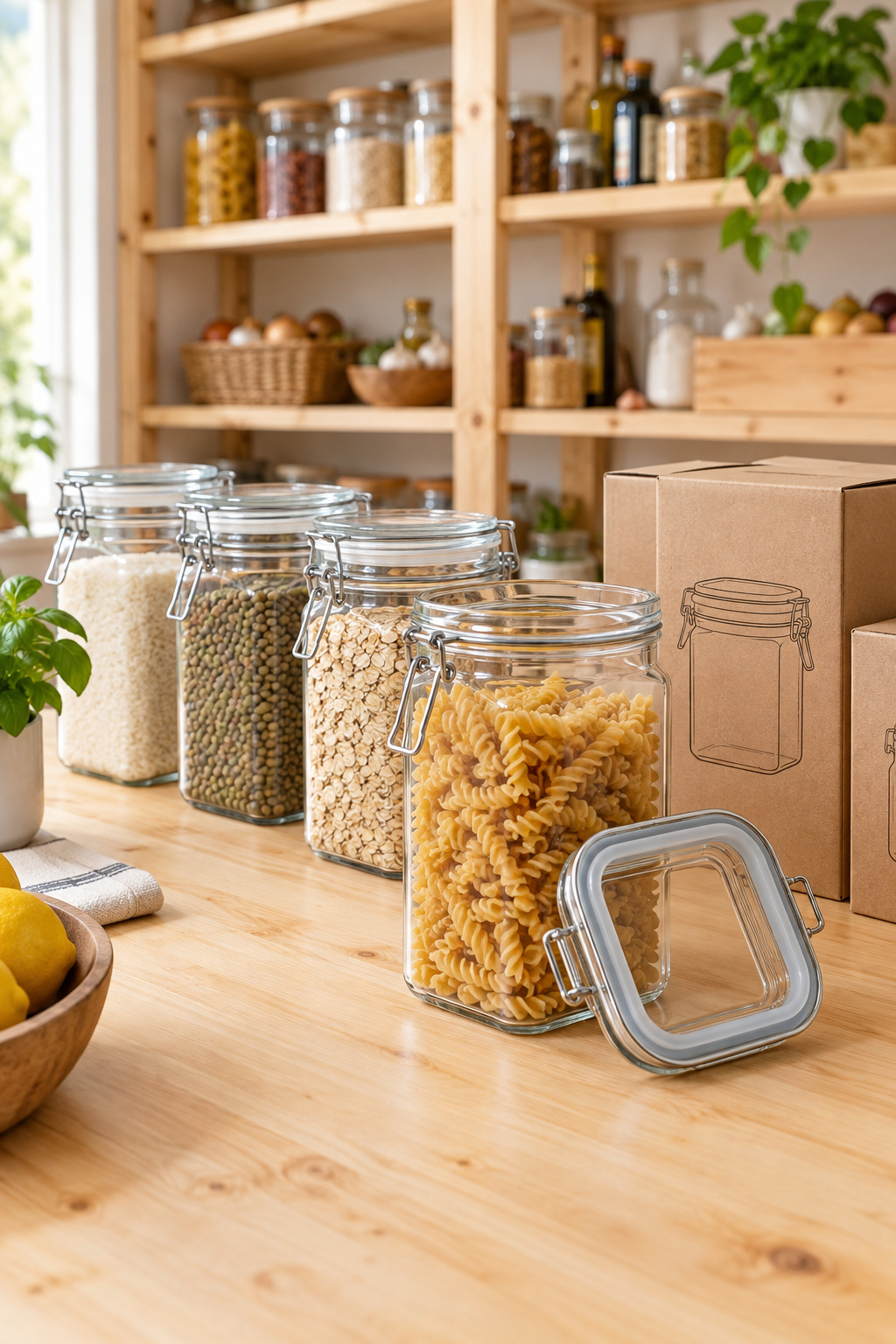
- Decant the pest-prone dry goods (flour, rice, pasta, cereal, crackers, nuts, dried fruit, spices, pet food) and any opened bag whose seal is broken; leave canned, jarred and factory-sealed non-pest-prone goods in their packaging.
- “Airtight” needs two things: a lid that compresses against the rim and a continuous silicone gasket. A snap-fit lid without a gasket is only leak-resistant, however tight it feels.
- Pick square over round for crowded shelves: a round jar uses about 78.5% of its square footprint, so a square one of the same width holds roughly 27% more. Choose glass or Tritan by which failure your shelf can tolerate.
The myth the pantry-makeover photos are selling
The belief goes like this: every box and bag in the house is a candidate for a canister, and a pantry is finished when nothing on the shelf still wears its supermarket clothes. The cost comes in three parts: money spent on jars for food that never needed one, lost information, and a false sense of safety. The printed best-by date, the cooking directions and the lot code all leave the house with the recycling, and USDA FSIS is plain that checking a product against a recall requires the label, lot code, date or establishment number from the original package. As for safety, the unopened bag was never proof. University of Minnesota Extension notes that pantry pests get into unopened paper, thin cardboard and plastic-, foil- or cellophane-wrapped packages by chewing through them or crawling in at folds and seams.
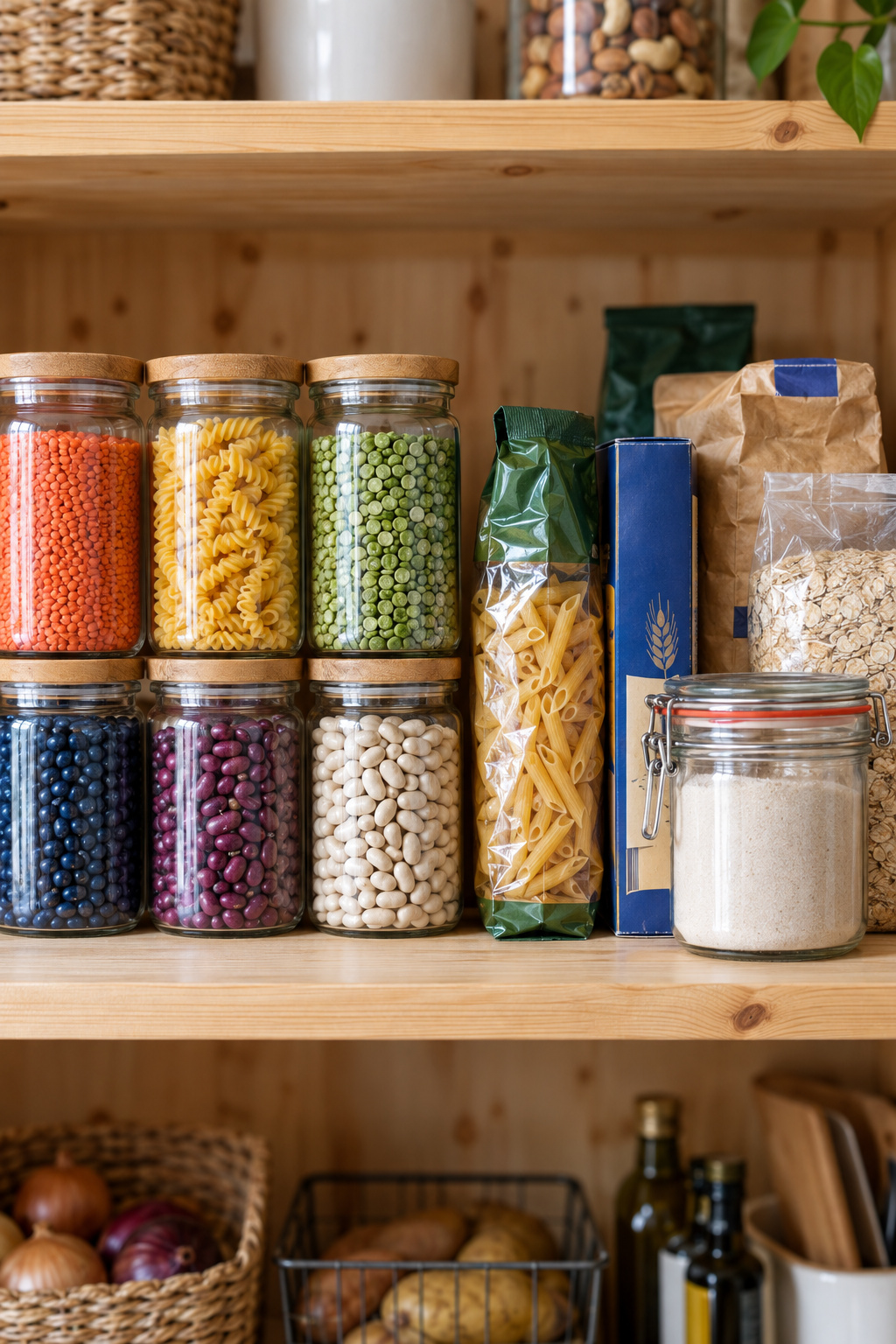
The case for containers is real, just narrower than the photographs make it. A container earns a shelf by solving a problem, pests or a broken seal, whether or not it matches its neighbors. That single rule is one piece of the larger work of kitchen pantry organization, and everything else in that work still applies.
Which foods earn pantry storage containers
Two tests do all the sorting: is the food on the list pests go looking for, and is its own factory seal still doing its job? A food that fails both stays in its box.
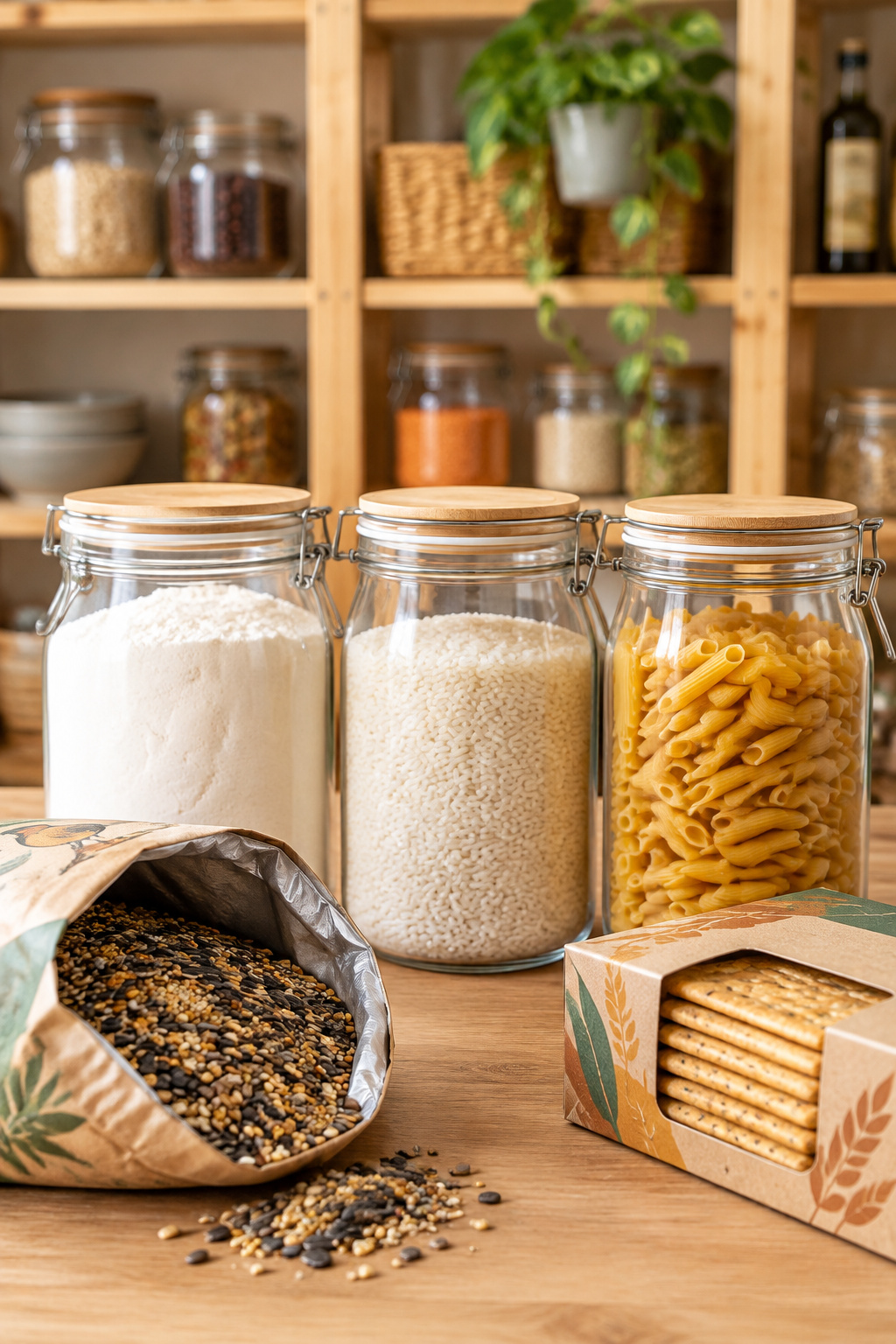
Pest-prone dry goods and opened bags
University of Minnesota Extension names the products most prone to infestation, and it is a longer list than most people expect: cereal products (flour, cake mix, cornmeal, rice, spaghetti, crackers, cookies), dried beans and popcorn, nuts, chocolate, dried fruit, spices, powdered milk, tea, cured meats, birdseed and dry pet food. Its recommended countermeasure is “tightly closed glass, metal or heavy plastic containers,” with the refrigerator or freezer for the highest-risk items, and that phrase justifies decanting better than any styled shelf.
The second test catches anything opened. A bag’s press-seal strip, a twist tie or a folded-over box top was engineered to survive shipping sealed and was never meant to reseal for weeks; opened chips, crackers and cereal go stale fastest once ambient moisture gets in. Re-folding also loosens the very folds and seams pests use to enter. Here the container’s job is to stand in for the broken seal.
Sorted that way, the shelf falls into three short classes:
- Decant flour, rice, pasta, cornmeal, cereal, crackers, nuts, dried fruit, spices, birdseed and dry pet food.
- Decant snack bags, cereal boxes and anything whose resealable strip has given up once they’re opened.
- Leave canned goods, bottled sauces and factory-sealed jars in their packaging, since they already ship in a container built for the job.
What ‘airtight’ requires: the gasket test
During my years in a university special-collections library, the conditions discipline began with a question I still ask of any enclosure: what, precisely, is this box keeping out? A handsome box that let in damp air was worse than none, because everyone stopped checking. A pantry lid fails the same way. “Airtight” printed on a package is a marketing word unless the lid has two things, and heysilo’s product guide spells out both: a compression design that presses the lid against the container walls, and a seal material, usually silicone, filling the micro-gaps between lid and rim. A snap-lock lid without a gasket is only leak-resistant, regardless of how tight it feels under your thumb.
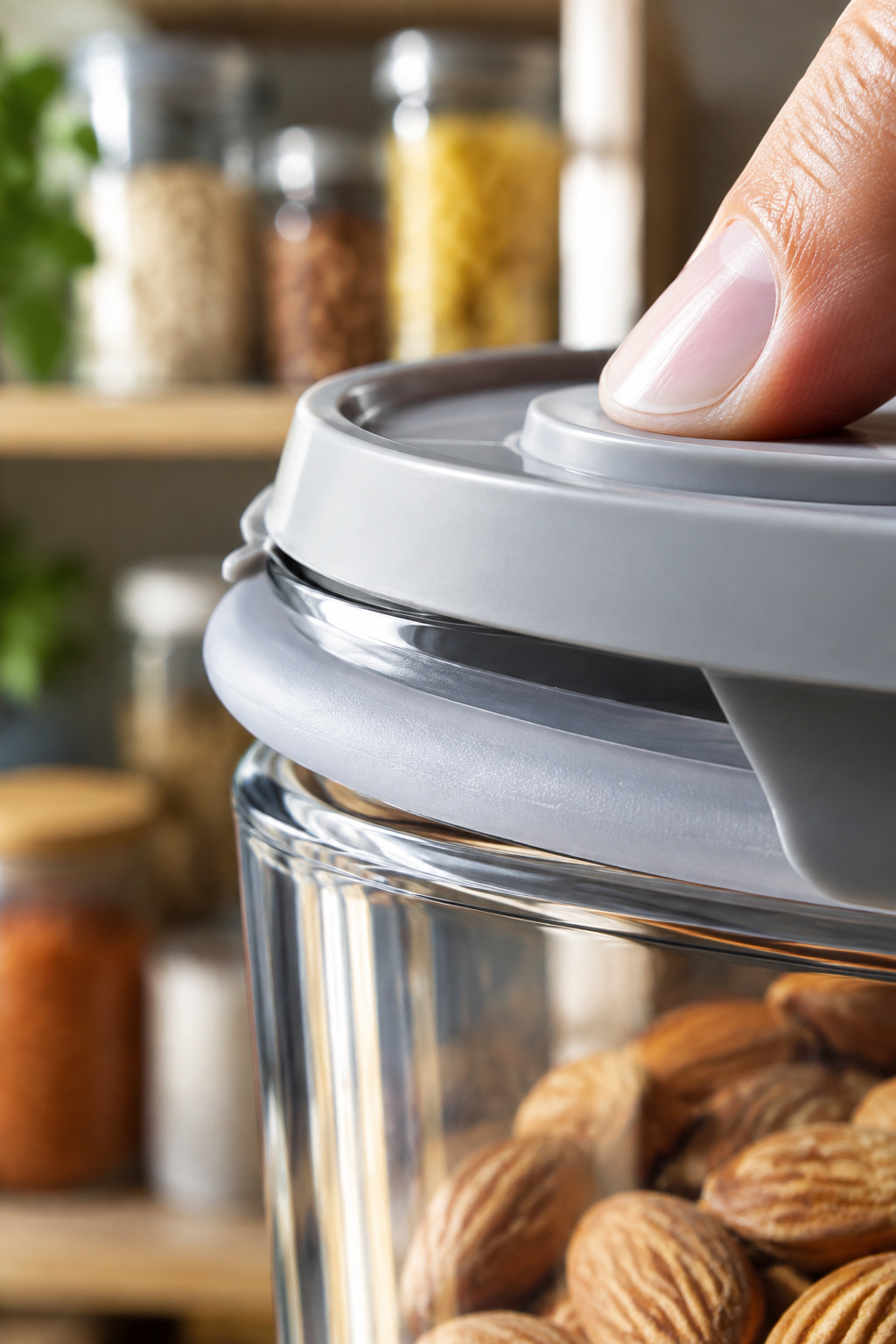
OXO documents how its POP line meets that standard: pressing the button expands an internal “web” that pushes a silicone gasket’s center fin outward against the walls, and its engineers pressurize filled containers with air in production to confirm none escapes. The common lid types sort like this:
| Lid type | Gasket | What it actually does | Source |
|---|---|---|---|
| Snap-fit lid | None | Leak-resistant; not airtight | heysilo |
| Compression lid with silicone gasket | Continuous silicone ring | Airtight: seals the rim’s micro-gaps | heysilo |
| Push-button (OXO POP) | Silicone gasket with center fin | Button drives the gasket outward; seal pressure-tested in production | OXO |
A gasket is the whole reason a sealed canister keeps the moths from ever getting in, which the pest article explains in detail.
How to test a lid’s seal at the store
No standards body publishes an in-store protocol, so these are simple consumer checks I’ve put together myself. Start by looking for a visible gasket ring in the lid. Then press the center of the closed lid: a real seal resists and feels firm rather than flexing. Finally, listen as it locks for a distinct pop, snap or click; a weak or silent close usually means no gasket engaged. The decisive check waits until you are home: fill the container partway, seal it and hold it upside down over the sink. Drips mean it goes back while the receipt is still good.
Glass vs. plastic: which pantry container material wins
Neither wins in the abstract. The right choice depends on which failure your shelf can live with. Glass is chemically inert. The Institute of Food Technologists describes glass and metal as “almost inert to interaction with packaged food,” while common food-contact plastics such as polyethylene and polypropylene have loose amorphous regions where odor and color molecules migrate in and lodge beyond the reach of soap. Tritan copolyester, the clear BPA-free plastic in most premium canister lines, closes much of the durability gap: Plastics Technology reports a notched Izod impact strength of 15.9 ft-lb/in against 14 for polycarbonate, and under strain in repeated dishwasher cycles polycarbonate broke after 2-3 cycles while Tritan passed 250 without crazing. Its stain and odor resistance is the manufacturer’s claim rather than tested data.
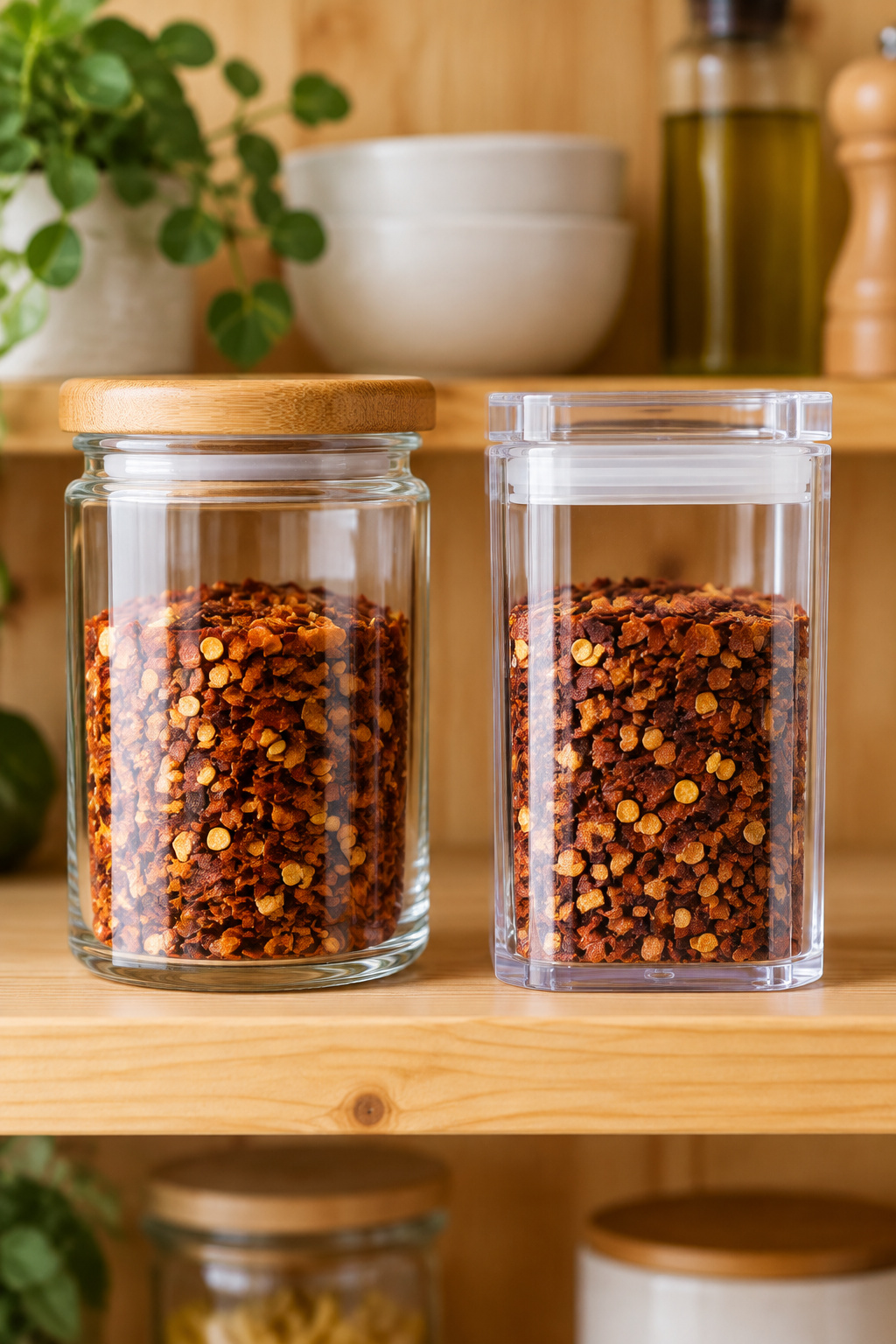
| Material | Odor and stain | Weight | Breakability | Dishwasher | Upfront cost |
|---|---|---|---|---|---|
| Glass | Non-porous; retains neither | Heaviest | Breaks if dropped | Safe; no heat distortion | Higher, but lasts |
| Tritan copolyester | Resists (manufacturer claim) | Light | Does not shatter | Held up best in testing (see FAQ) | Lower than glass |
| Ordinary plastic (PE, PP, polycarbonate) | Absorbs and retains | Light | Does not shatter | Polycarbonate is the most dishwasher-vulnerable of the three (see FAQ) | Lowest |
There is no injury statistic for glass canisters, so breakability stays qualitative, but the practical rule is clear: glass for eye-level shelves and spices that smell, Tritan for high shelves, step-stool reaches and anything a child pulls down. Fiona Mair of Choice puts the priority where it belongs, telling ABC News that “it’s the air tightness and seal of the container that’s the biggest priority,” whichever material you choose.
Fitting container shape and size to your real shelf depth
A retailer, Cook’s Direct, quoted by Chowhound, says square containers take up “a quarter less” shelf space than round ones, and that claim is worth checking before anyone repeats it. The geometry is kinder to the direction of that claim than to its number. Set equal round jars side by side in a simple grid and each circle sits inside a square footprint of its own diameter.
The arithmetic: circle area ÷ square footprint = π(d/2)² ÷ d² = π/4 ≈ 0.785. A round container uses about 78.5% of its footprint, so roughly a fifth of the shelf (21.5%) is lost to corners; inverted, 1 ÷ 0.785 = 1.27, so a square container of the same width holds about 27% more at the same height. This assumes equal heights and an unstaggered grid.
Across a fully loaded pantry those corners add up, so round canisters belong where there is room to spare and square ones where every inch is spoken for.
Size is a measuring job before it is a shopping job. Take the shelf’s real depth and any door-swing clearance with a tape, then choose a footprint to fit, the way a library shelves for the collection it must hold rather than the wall it decorates. Depth and spacing figures live in this series’ shelving article; for containers, measure before you order.
The case against decanting everything
Picture a rice recall on the evening news, and a canister of rice on your shelf with nothing printed on it. That is the price of decanting everything: the box carried the lot code FSIS needs you to check, the best-by date, and the water ratio and cook time that have no standard home on a plain jar. Once the box is recycled, all of it is gone unless you copied it first, which is why the label that came off with the box deserves as much thought as the jar.
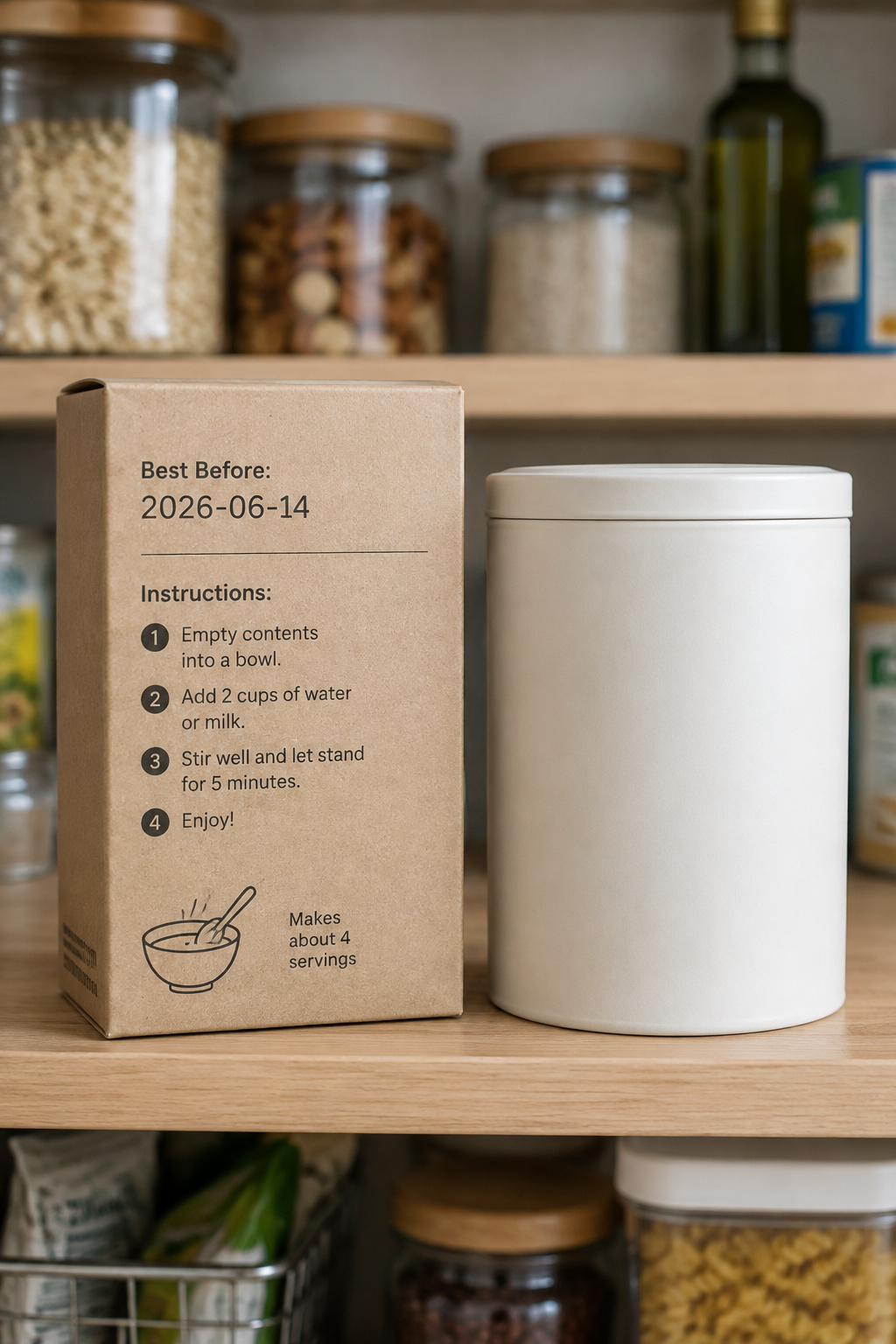
The corrected rule is short enough to keep in your head. Decant what pests seek out and what has already lost its factory seal, in a lid with a compression gasket. Leave sealed, non-pest-prone goods in packaging that still tells you what they are, when they expire and how to cook them. A pantry isn’t finished when the jars match; each container is justified by a threat it answers.
The cheapest reversible version of all this is a single container. Buy one gasket canister for your flour, the most pest-prone opened staple most kitchens hold, run the upside-down water test the day it arrives, and leave everything else exactly where it is for a month. If it proves itself, the next one is for rice; if it drips, it goes back.
FAQ
Do pantry storage containers need to be BPA-free?
Not by regulation, but BPA-free is the easy default. The FDA considers polycarbonate safe, yet polycarbonate food containers have largely left store shelves over public concern. Tritan copolyester is BPA-free and FDA-approved for food contact, and glass and metal carry no BPA question at all, since BPA belongs to polycarbonate and epoxy linings.
Can pantry storage containers go in the dishwasher?
Most can, but material matters. In testing under strain with household detergent, polycarbonate broke after 2-3 residential dishwasher cycles while Tritan passed more than 250 without crazing. Glass is generally dishwasher-safe and does not distort with heat. After washing, check the gasket groove for grit, the most common reason a seal stops working.
How many pantry containers does an average kitchen actually need?
There is no standard number, and any figure would be invented. Count instead: the pest-prone staples you keep, such as flour, rice, pasta, cereal, nuts, dried fruit and spices, plus the opened bags you routinely hold. Buy for that count, not for a matching set sized to look complete on the shelf.