
In 1993, landscape researcher Joan Nassauer showed homeowners near Minneapolis-St. Paul seven simulated front yards and asked which they’d accept on their street. The yard given over roughly half to native prairie and oak savanna finished a close second to conventional turf, because a mown lawn framed it. The framing carried the vote. That is the design brief for an HOA-friendly pollinator garden, and almost nobody builds one that way.
TL;DR
- A mown or hard edge is the cheapest legibility cue there is. It is sometimes a legal requirement too: Chicago’s registry ordinance (Municipal Code 10-32-055) bars gardens from encroaching onto the sidewalk.
- Cluster one species per patch instead of scattering singles, tight near the sidewalk and wider toward the back, and repeat only three to five species total.
- At least ten states limit what an HOA can ban. Only Illinois, Maryland and Washington name native or pollinator planting directly, and none override an association’s maintenance and height rules.
A bed can feed insects and look maintained. Framing decides which end of the acceptability scale it lands on.
The Real Reason an HOA-Friendly Pollinator Garden Gets Torn Out
What neighbors and HOAs actually object to
Nobody files a complaint about a plant list. The complaint comes when a stretch of the street stops looking cared for. Nassauer’s 1995 paper “Messy Ecosystems, Orderly Frames” named the mechanism: North American landscape culture treats a neat yard as a signal of neighborly care, so ecological planting needs its own visible cues to care. The test is whether it looks like someone is taking care of it.
The belief this article corrects
Years ago I worked with a couple who had spent real money on a covered patio: heaters, a roof, furniture they’d waited months for. They used it twice a summer. The build was fine. I moved the seating fifteen feet, into the pocket where the evening sun landed, and by August they were eating out there four nights a week.
A front bed runs on the same logic: placement beats budget. Even where state law protects your right to plant natives, it covers plant choice, not appearance.
What “deliberate” looks like from the sidewalk
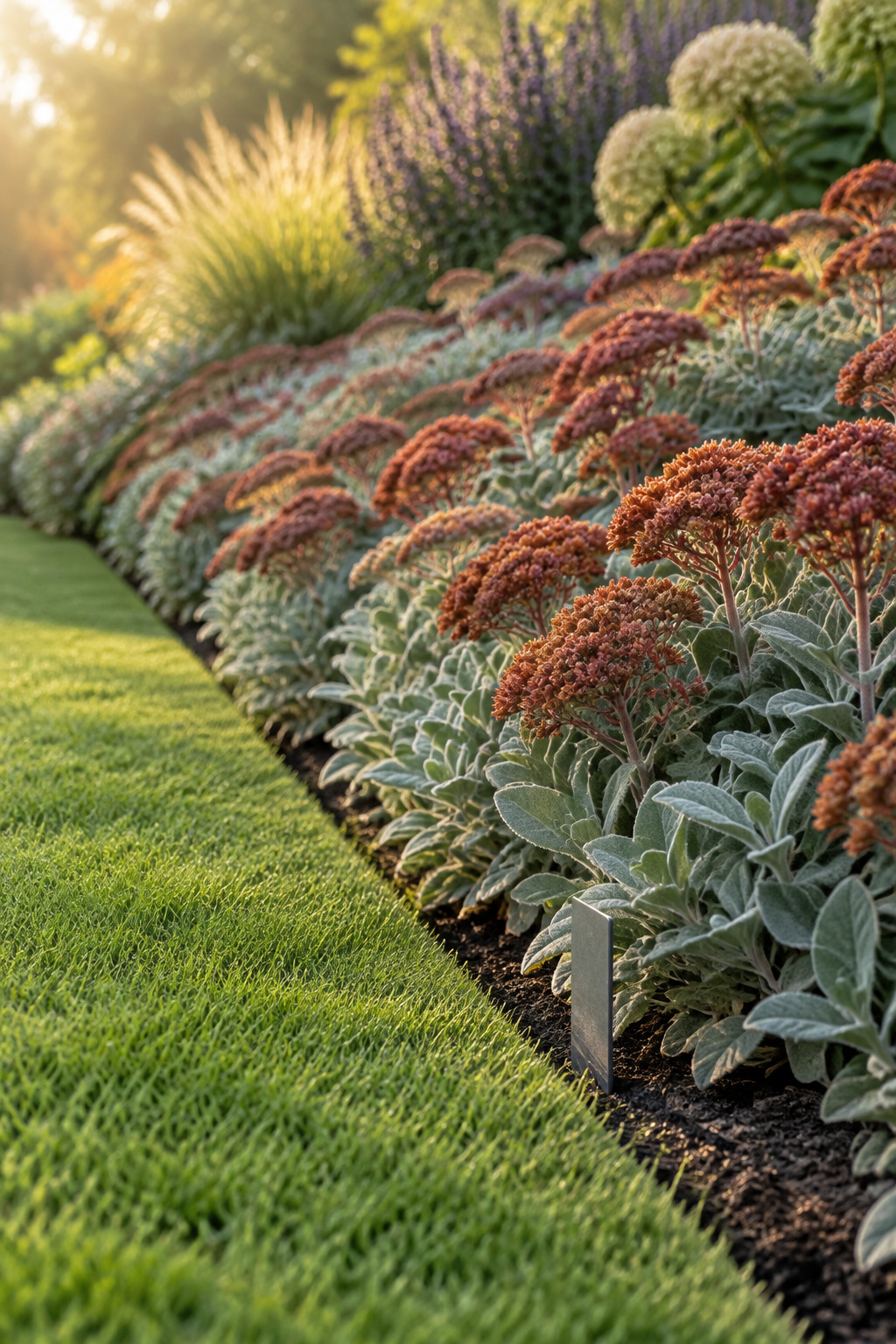
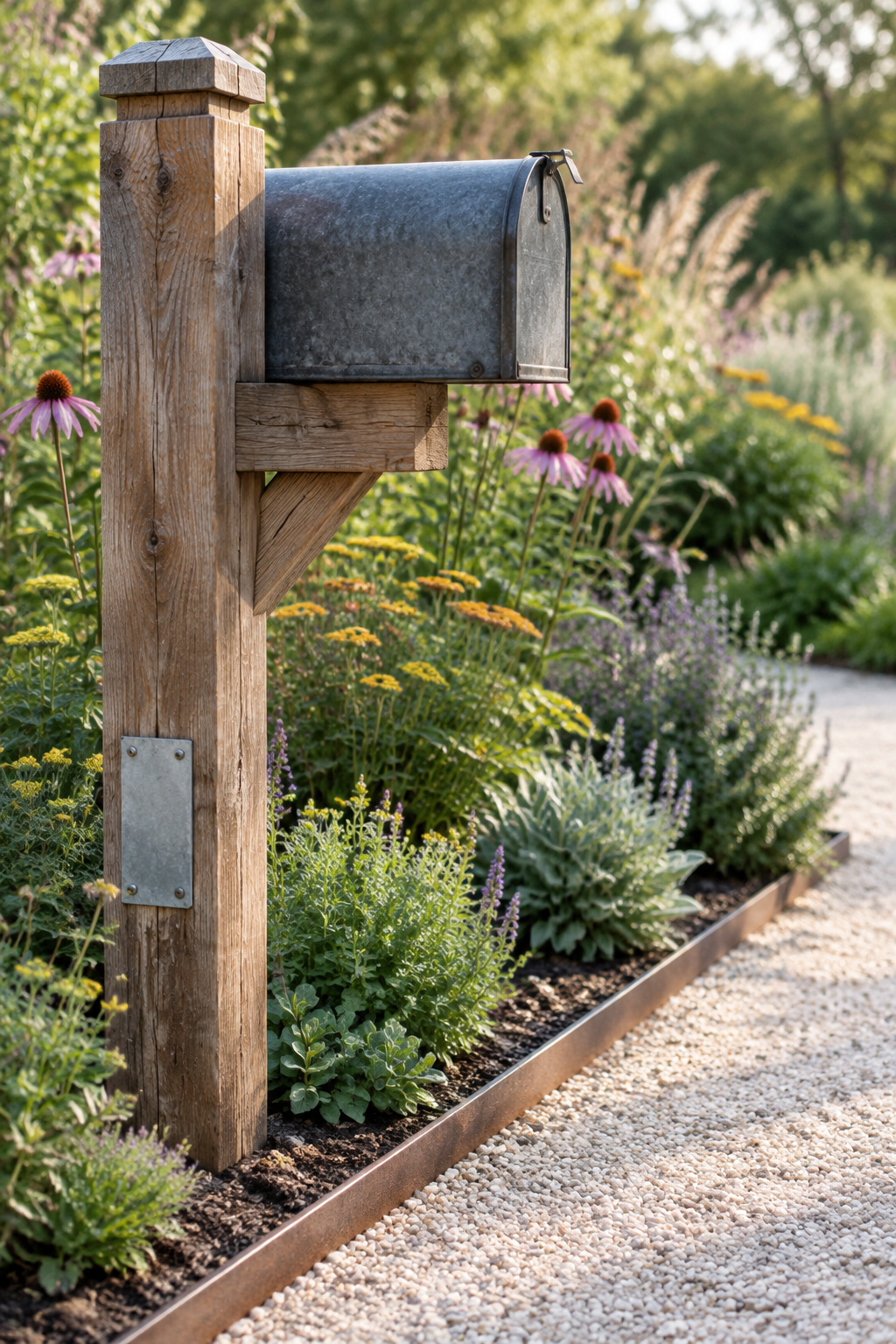
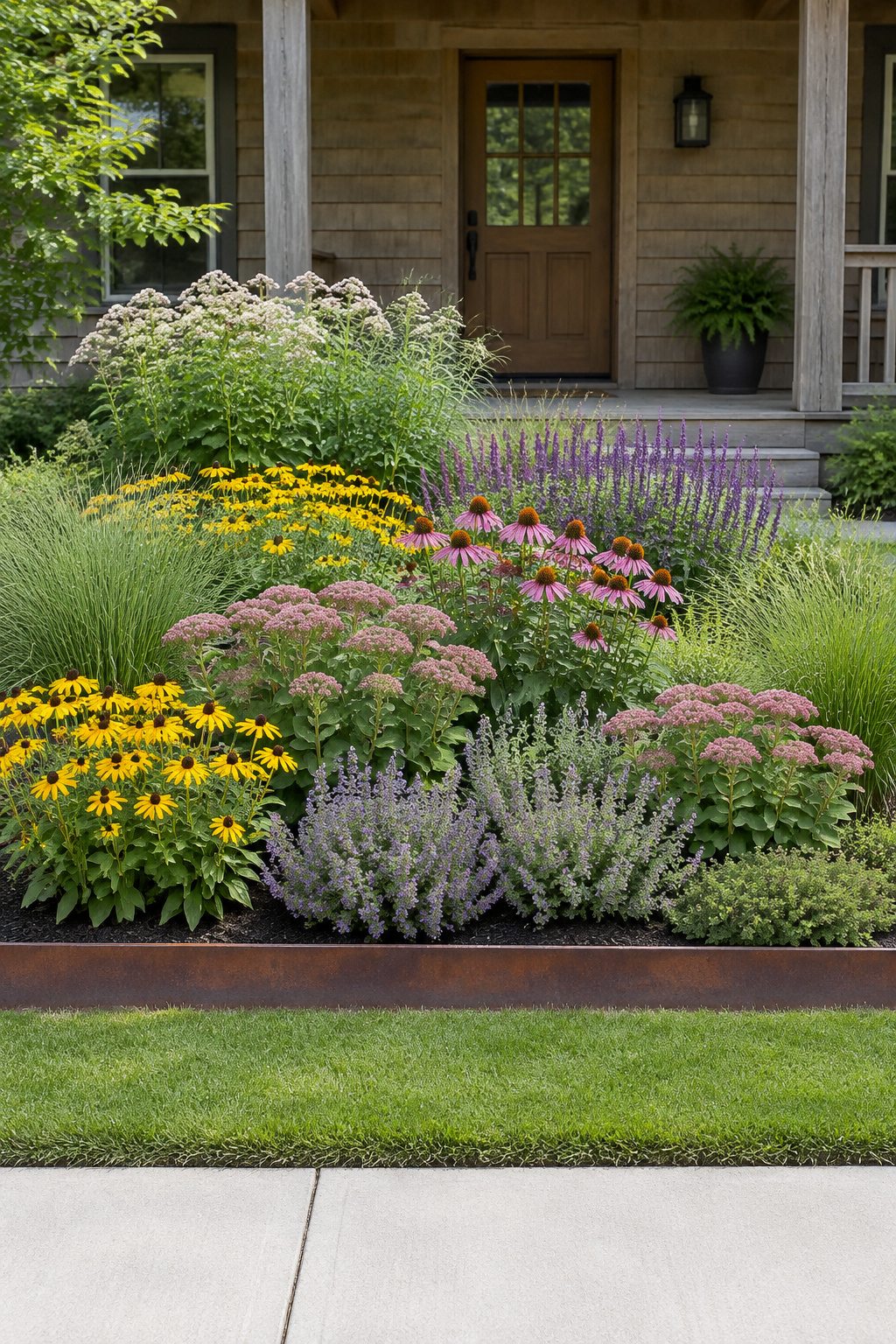
The guidance built on Nassauer’s work is unglamorous and specific. Frame the planting with a mowed edge or setback, a hedge, a fence or a path, and curve the bed lines; curves land better than straight informal edges. Add a signal that a person is involved, a bench or a birdbath. Cluster species into masses and keep the sightline to the door open. Early on, over-weight large, bright blooms, because small native flowers get misidentified as weeds before a bed matures. If bed shape and sun hours are still open, start with how to plan a pollinator bed from scratch.
A Mown or Hard Edge Does More Work Than Any Plant Choice
Why an edge reads as “maintained” instantly
Stand at the far end of your block and look back. You can’t name a species from there, but you can see whether a line has been held. Penn State Extension puts it in enforcement terms: a mowed strip, hedge, fence or path lets code inspectors and neighbors tell an intentional landscape from a neglected lot.
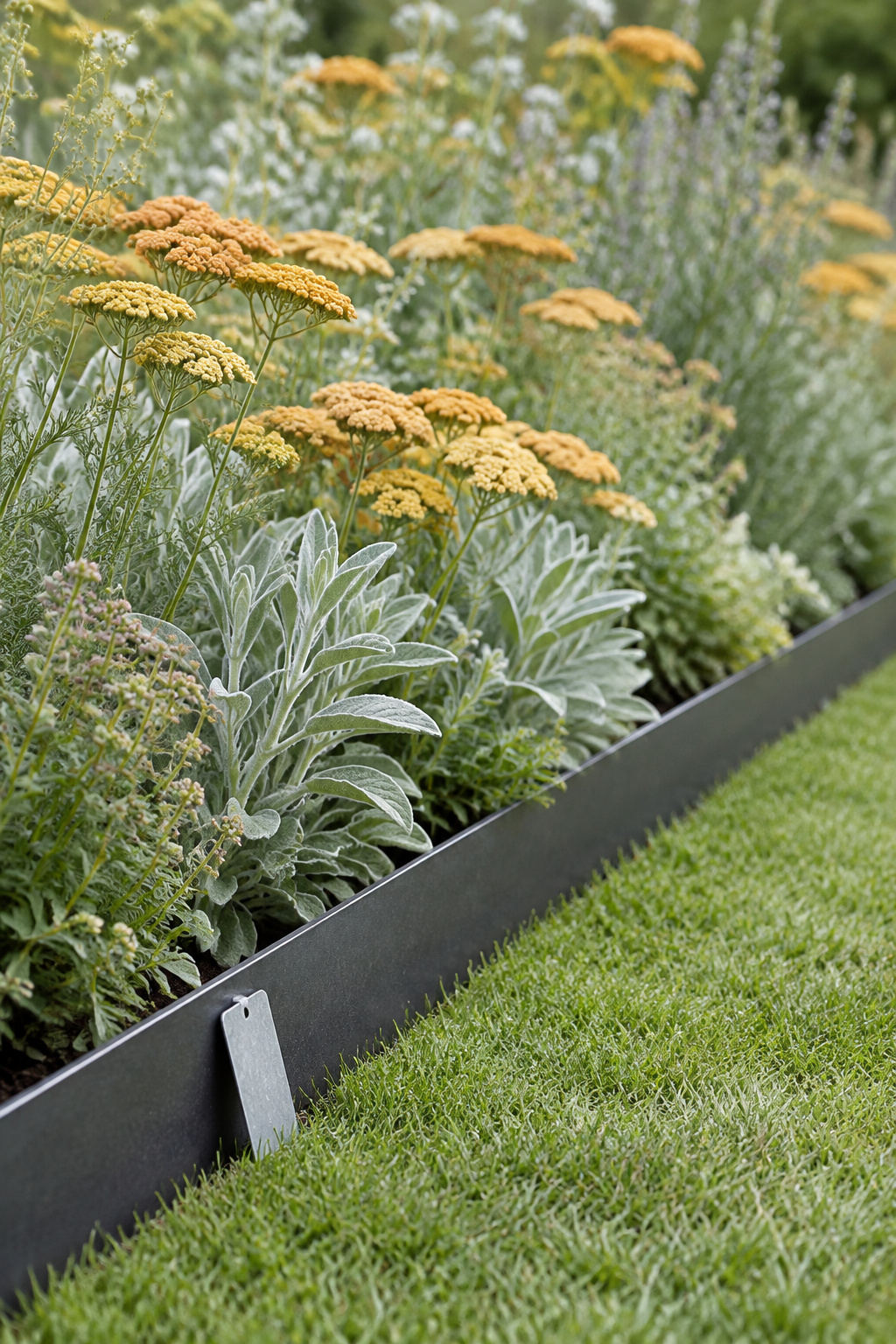
Options: mown strip, steel edging, low stone
Three options do the job, trading up-front money against recurring labor.
| Edge type | Up-front cost | What it asks of you |
|---|---|---|
| Mown grass strip | Lowest | Mowing weekly to biweekly all season |
| Steel or aluminum edging | One-time material and install | Occasional re-seating, little else |
| Low fieldstone or brick | Highest | Essentially none once it’s set |
The edge you won’t maintain is the wrong edge. A mown strip costs nothing to install and gets expensive in July. Steel costs more on day one, then leaves you alone if you re-seat sections that lift over winter.
How wide the edge needs to be to register
The research gives a proportion rather than an inch figure. Nassauer’s study used mown framing across roughly half the yard area, testing ratio, not border width. Aim for a frame that’s obvious from the street.
Repeated Massing Instead of One-of-Everything
Why one-of-everything looks like neglect
One of nine species, nine times over, is the most common way a well-meant front bed goes wrong. Scattered single specimens look unplanned; the same species clustered into a drift looks like a decision. Low plants used as living green mulch, instead of specimens dotted over wood chips, reinforce the effect.
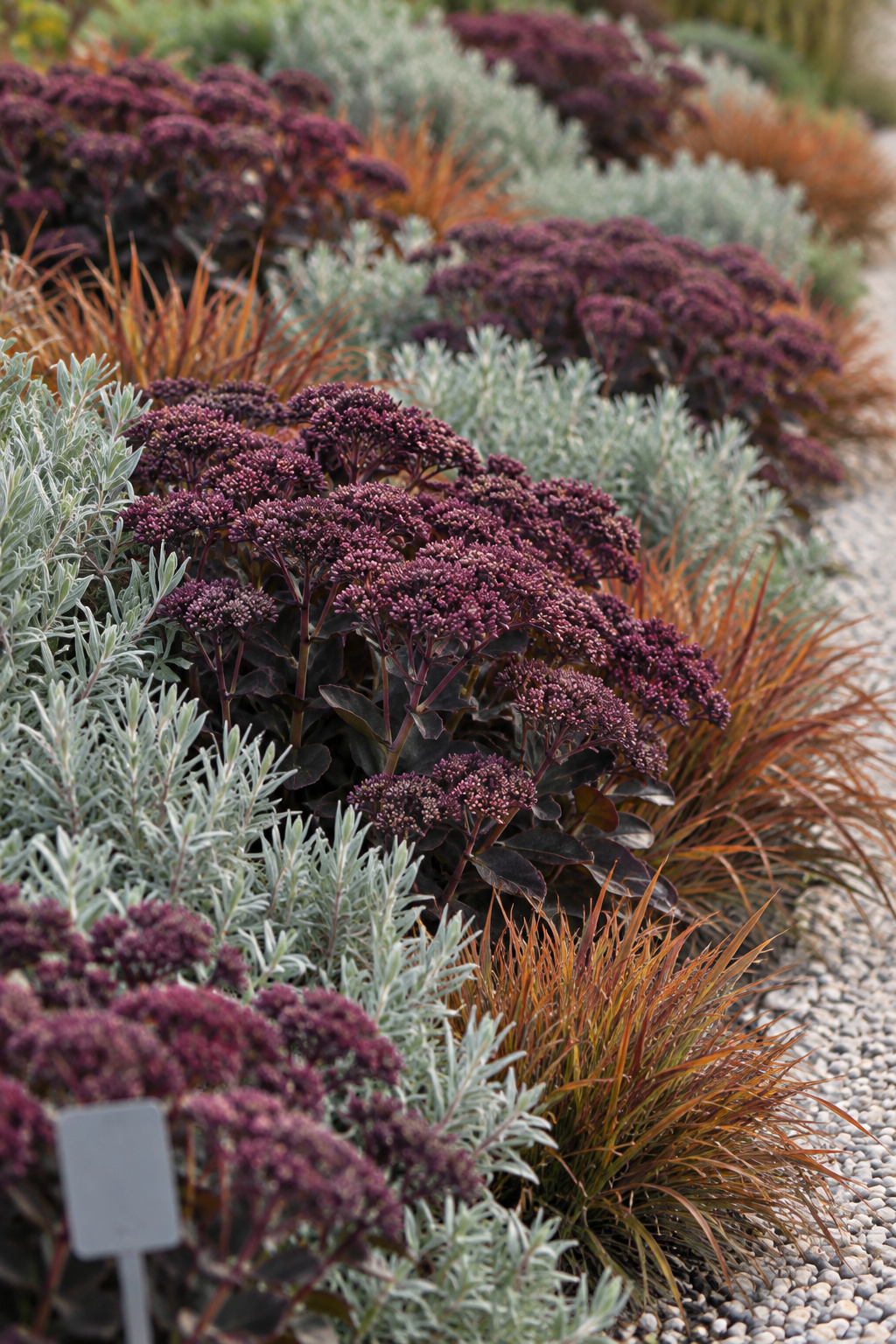
How many of a species to plant together
Cluster, don’t scatter, and keep the scale in proportion to the space a front bed gives you.
- Small, tight clusters near the sidewalk, where there’s little depth to spare.
- Wider clusters only toward the back, where the bed has room to run.
- Keep spacing honest, because clusters packed too tightly grow into each other, spreading disease and stunting growth.
Repeating the same three to five species across the bed
Restraint carries a front bed. Repeat a palette of three to five species instead of planting a variety as singles. For a season or two, weight the mix toward larger, brighter blooms, then dial back once the bed fills in.
A Height Ceiling Near the Entry and Sidewalk
Where height needs to stay low
The height ceiling sits lower than most people expect. Progressive ordinances draw the line at a maintained setback height instead of banning height outright. Extension guidance cites 12 inches, 18 inches or fewer at the setback, with growth behind that line left alone. Sight triangles are a separate, safety-driven rule that applies whatever your covenant says. Aston Township, Pennsylvania caps obstructions at 24 inches within a triangle measured 25 feet along the curb lines from an intersection.
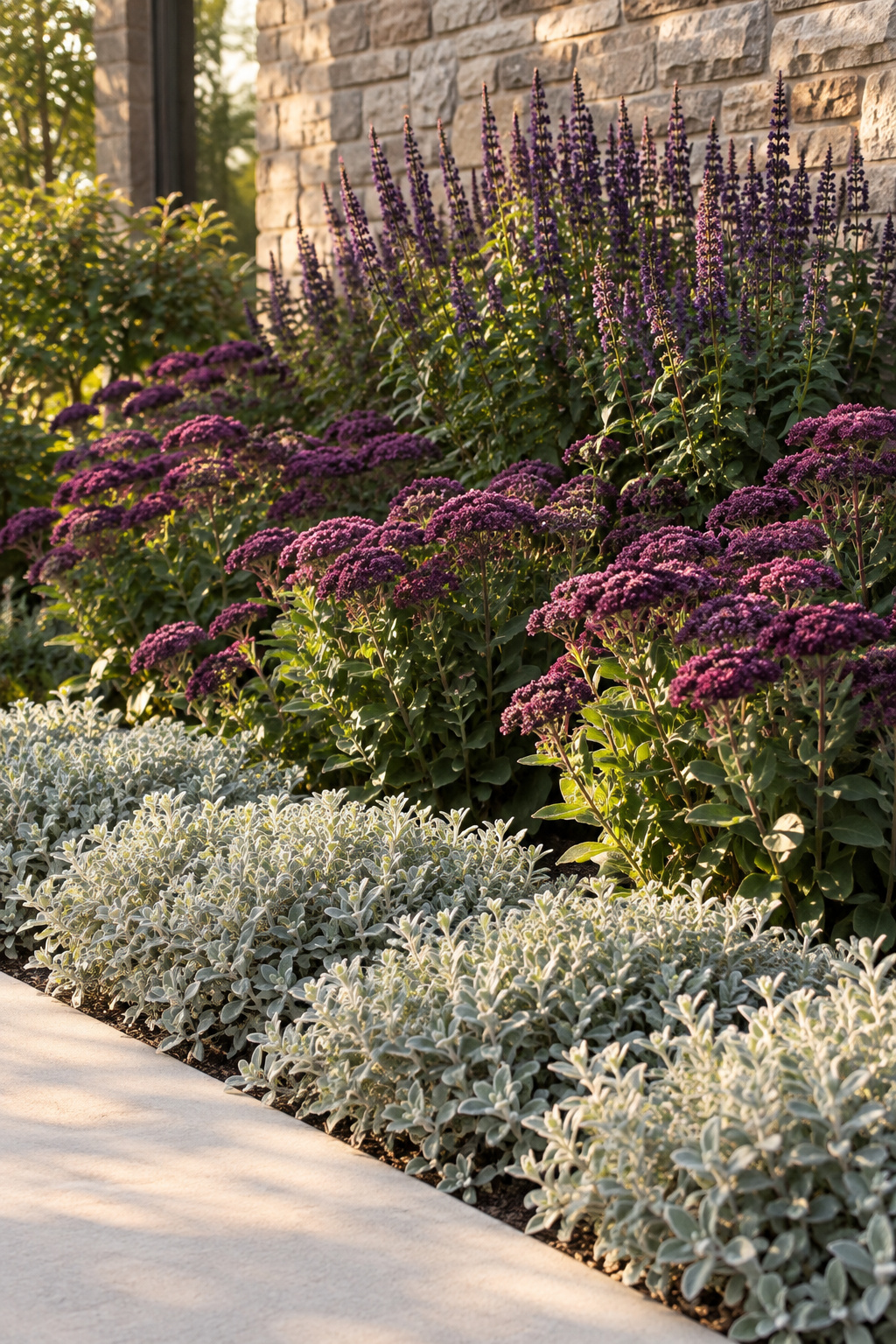
Where it’s fine to let plants go tall
Chicago legislated that logic, then loosened it. The parkway ordinance originally capped plantings other than trees at 10 inches, and in May 2026 the City Council raised the limit to 36 inches for registered gardens. Clear of the setback, height becomes an asset, and the back tier can run taller.
Symmetry cues at the front door
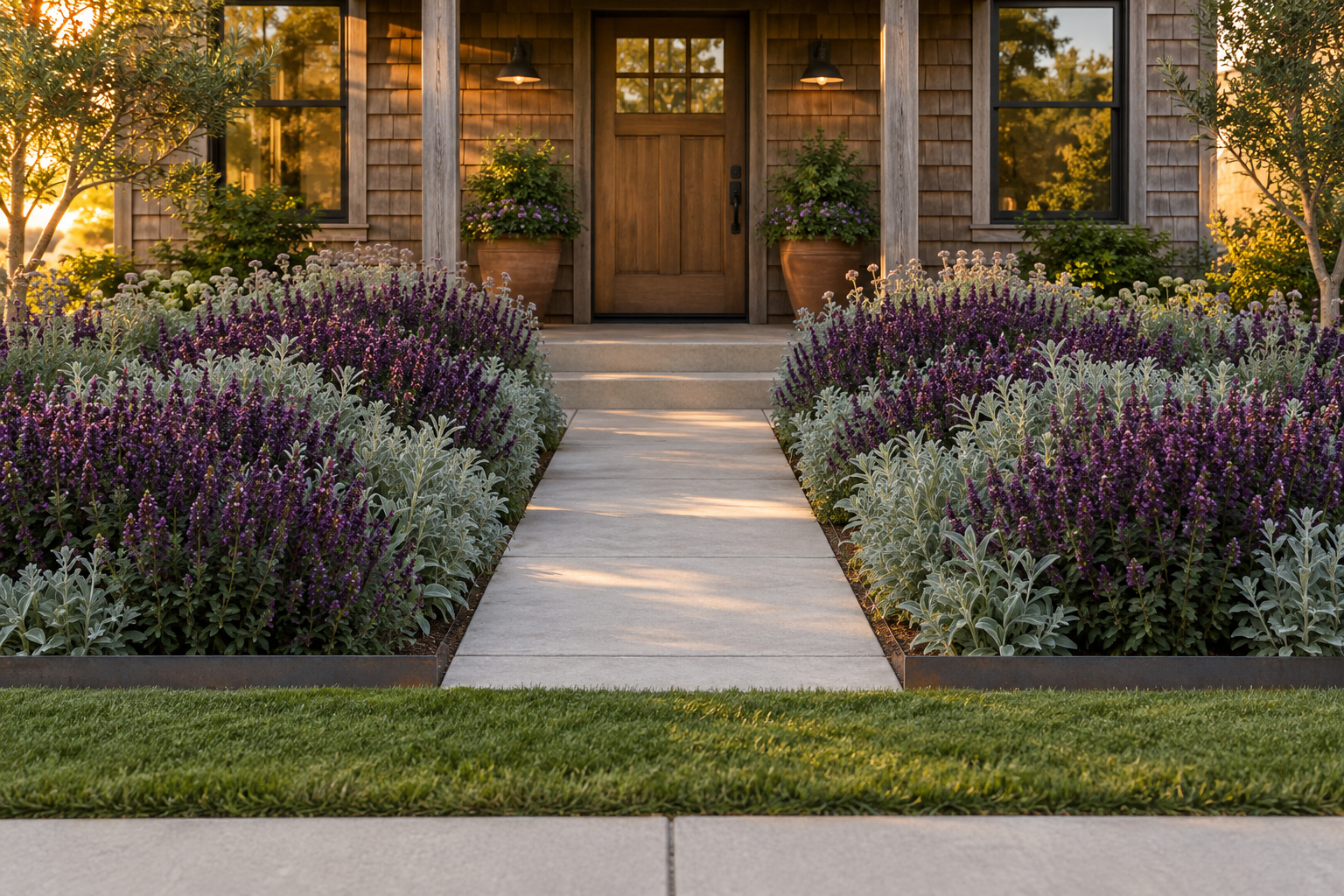
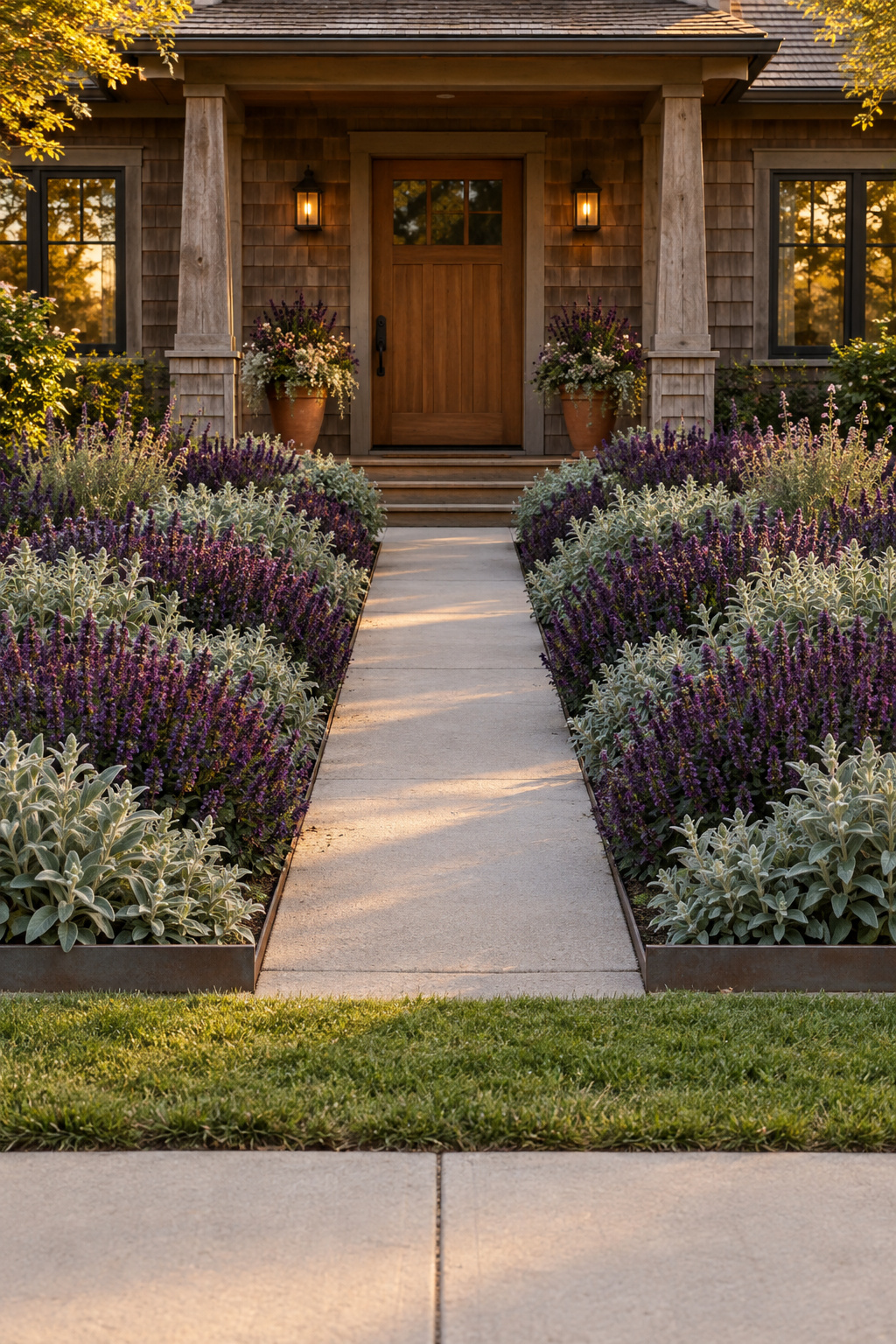
Mirrored planting either side of the walkway is the oldest framing trick there is, and it does the same job as the mown edge. It isn’t in Nassauer’s published findings; it’s that research applied to an entry. Two matched drifts tell a visitor a plan exists.
What Covenants Can and Can’t Actually Enforce
Reading your HOA’s actual planting language
A covenant isn’t automatically enforceable just because it’s written down. Three states name this category directly. Illinois’s Homeowner’s Native Landscaping Act, signed July 19, 2024 (765 ILCS 167), stops associations from banning Illinois-native species on an owner’s lot, while preserving their power to set reasonable maintenance rules. Maryland’s low-impact landscaping law (House Bill 322, 2021, Real Property Section 2-125) bars unreasonable limitations on rain gardens, pollinator gardens and xeriscaping. Washington’s RCW 64.38.057 (2020, amended 2024) says governing documents may not prohibit drought resistant landscaping, pollinator habitat or wildfire ignition resistant landscaping.
The difference between a lawn-alternative ban and a vague nuisance clause
Six more states get cited in the same breath, but they protect something narrower: water conservation, not native or pollinator planting. California Civil Code Section 4735 voids clauses prohibiting low water-using plants as a group. Florida Statute 720.3075(4)(b) protects Florida-Friendly landscaping. Colorado’s SB 23-178 (May 17, 2023) bars HOAs in single-family-detached communities from prohibiting xeriscaping, and Nevada’s NRS 116.330 and Utah’s Section 57-8a-231 use nearly identical drought-tolerant framing. Texas Property Code Section 202.007 covers drought-resistant landscaping, added in 2013 by SB 198. A widely copied line online says 2003; it’s wrong.
Read your own clause against this:
- A ban on a whole category, such as all non-turf ground cover or a blanket height with no setback carve-out, is what these statutes void.
- A maintenance, tidiness or setback-height standard is what every one of them preserves.
- Anything subjective and undefined is where the cues above do the arguing.
When a covenant is unenforceable as written
Where a clause contradicts an applicable statute, such as an outright ban on non-turf ground cover in a state with a water-wise or native-landscaping law, it’s void to that extent, though the association can still enforce maintenance, edge and height standards. Minnesota’s 2023 law, HF0734, does the same to city rules. It supersedes local ordinances that ban native landscaping or cap grass at 8 inches or less, while preserving enforcement against noxious weeds. None of this replaces reading your own covenant and municipal code, because the wording varies enormously.
Wording an Approval Request That Gets a Yes
What to include in a written request
Most requests stall for a dull reason: they arrive incomplete. Committees want the whole package first time: photos of the current site, a plot plan showing where the change goes, plant and material specs. Add a plant list with scientific and common names, a bloom-time and mature-size table, and a maintenance plan. That timing table works twice, because sequencing the bloom across the season is also your evidence the bed won’t go blank.
Photos and precedent that help your case
Precedent beats argument. Photograph similar landscaping already approved elsewhere in your community, so the committee compares it against a precedent it accepted. Then submit early, since most committees meet monthly and one round of revisions can push a planting past its season.
Making the case about looking intentional, not about pollinators
Give a committee something concrete to approve: the edge material, the mowed setback width, the height ceiling near the sidewalk and the maintenance schedule. Ecological benefit gives them nothing to measure against their governing standard, which is appearance and upkeep. Talk to neighbors before installation, and put a sign in before anyone has reason to complain, so a passerby’s first encounter is a stated reason, not an open question. A sign from a recognized habitat program adds credibility, and the certification sign argument covers it in full.
The Order I’d Do This In
Edge first: it costs least, does most, and both your neighbor and a code inspector read it. Massing comes second, in repeated drifts, and the height ceiling third, low at the setback and loose behind it. Paperwork goes last, framed around appearance and upkeep. Two mistakes to skip: assuming a statute protects how your bed looks, and waiting for a complaint instead of posting a sign. Done in that order, the planting that would have been reported as neglect scans as a decision.
FAQ
Can an HOA legally ban a pollinator garden or wildflower lawn?
In at least ten states, no: statutes limit outright bans. Illinois, Maryland and Washington name native or pollinator planting directly, while Texas, California, Florida, Colorado, Nevada and Utah protect water-conservation landscaping instead. Elsewhere, a ban in the governing documents is generally enforceable.
What’s the difference between a meadow garden and a “natural lawn” for covenant purposes?
Maintenance does the legal work. Minnesota’s 2023 law protects a “managed natural landscape”, meaning a planned, intentional, maintained planting, which an unmowed lawn is not. Chicago likewise requires intentionally seeded or transplanted, identifiable species within a height limit. Most covenants define lawn as mown turfgrass, so read your clause.
How do I handle a neighbor complaint before it becomes an HOA violation notice?
Prevention works best: tell neighbors before installation and post an explanatory sign. If a notice arrives anyway, check which rule was cited and the deadline, compare the bed against your governing documents, then respond in writing with photos that document compliance or dispute the citation.