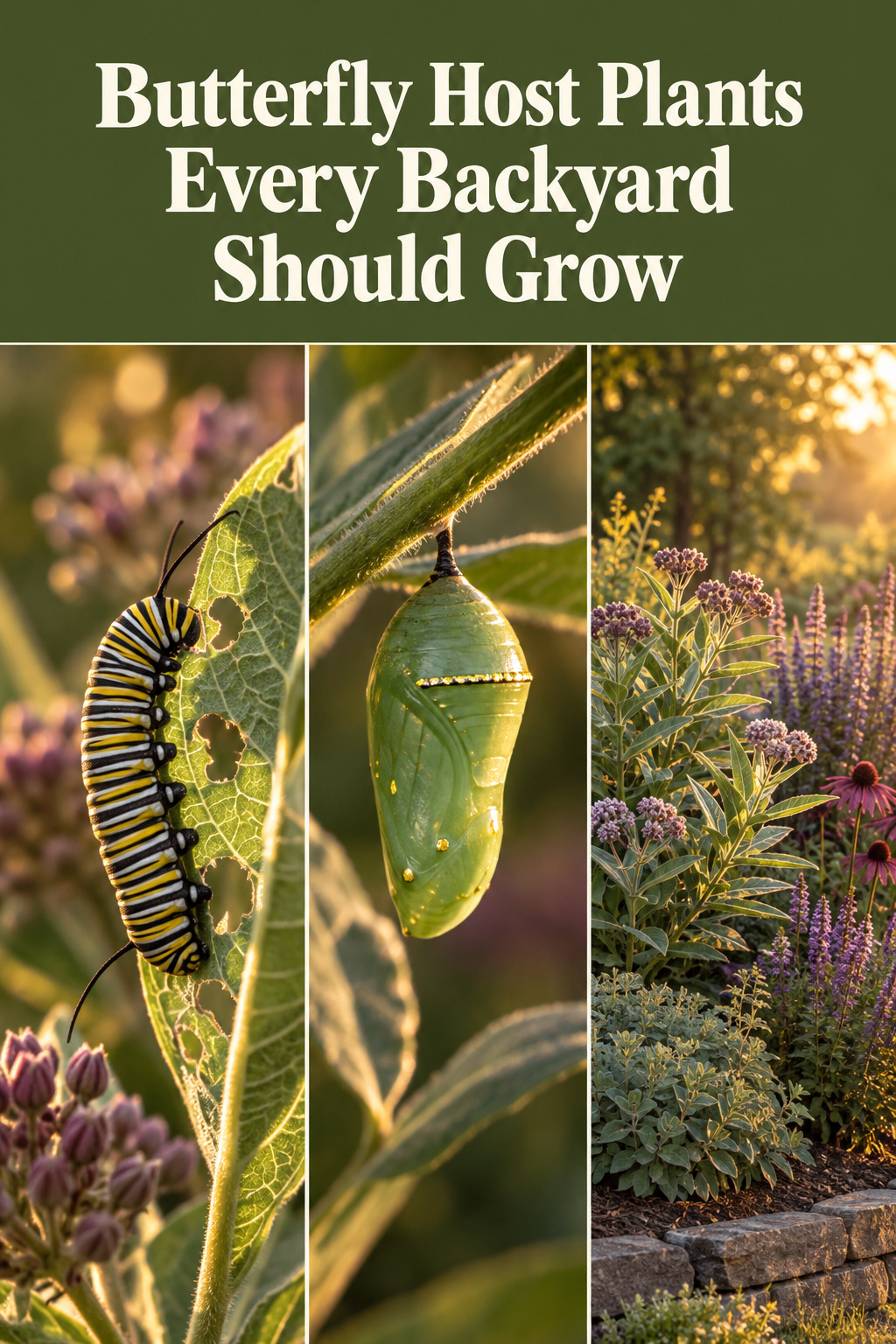
I taught kindergarten in Albuquerque, and one autumn I had a class that would not settle. Behavior charts did nothing. Moving the reading corner worked: better light, lower shelves, a rug the children could claim. We designed the trouble out instead of managing it, and the room started teaching for me. Butterfly host plants work that way outdoors. You don’t deliver this lesson, you plant it, and a child comes back to it alone, daily, unprompted.
TL;DR
- Nectar feeds adults and host plants feed caterpillars. They aren’t interchangeable: monarch larvae eat milkweed (Asclepias species) and nothing else.
- Start with pairings you may already grow. Black swallowtails eat parsley, dill and fennel, and painted ladies eat thistle and hollyhock.
- A monarch runs egg to adult in 25–34 days: egg 3–5 days, five instars over 9–14 days, chrysalis 8–15 days.
The Butterfly Garden Mistake I See in Every Backyard
Nectar plants feed adults, host plants feed caterpillars
Adult butterflies drink nectar from many blooms. Their caterpillars can’t, because each species evolved to digest a narrow set of plants. Adult monarchs nectar happily at zinnia, coneflower or lantana, but none of those can raise a monarch caterpillar. Still planning the bed? These pollinator garden ideas for any size yard settle siting first.
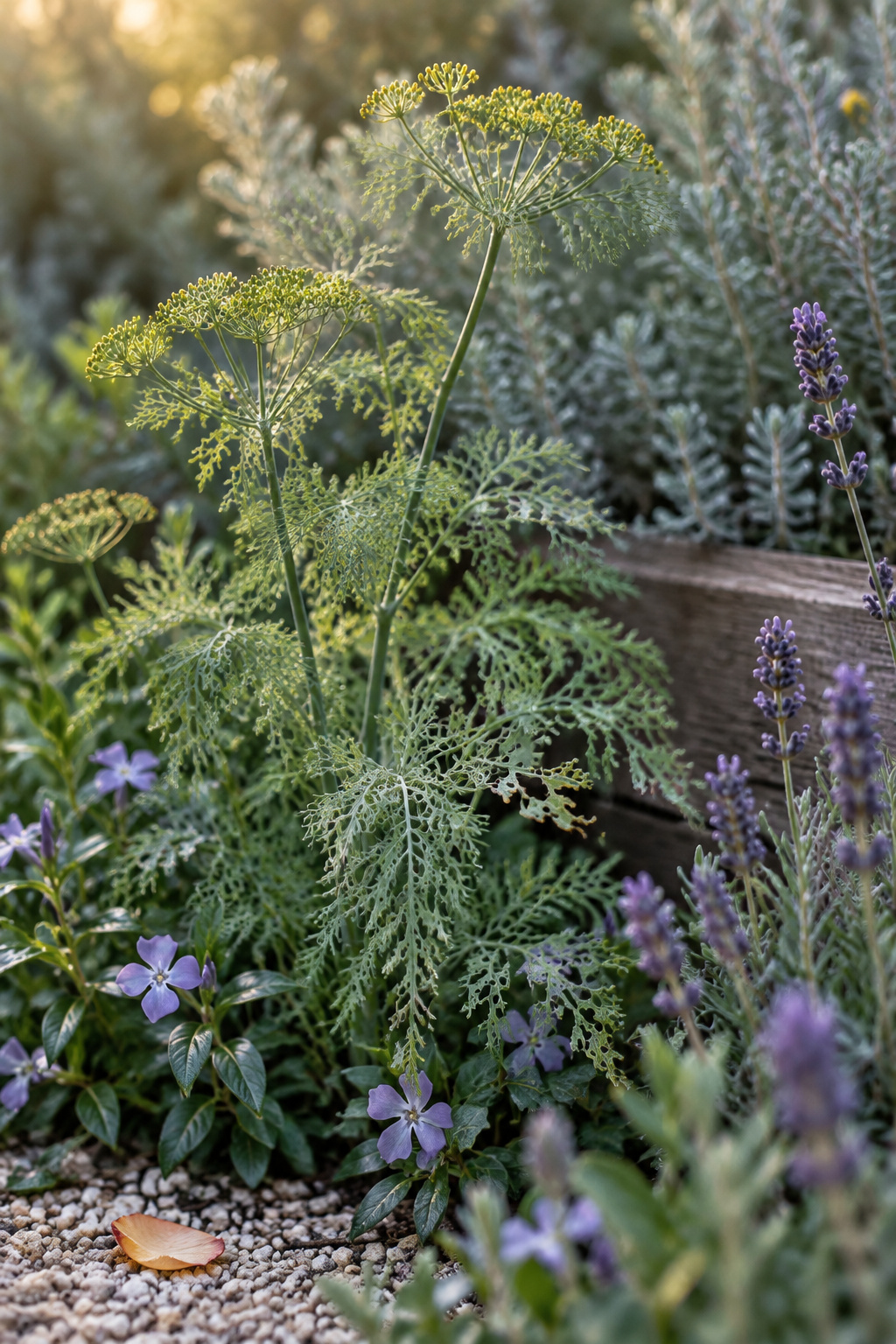
Why a garden with only nectar plants is a restaurant with no nursery
Host specificity is why butterfly numbers track habitat loss so closely. Remove the one plant a species depends on and adults pass through without breeding. Monarch Watch’s Waystation program runs on that logic: it certifies gardens on milkweed presence, not flower count.
What changes once you add host plants
Add a small cluster of the right host plant and the garden changes function. Eggs get laid on site, and larvae develop where you can watch. The Xerces Society, citing the University of Minnesota Monarch Lab, puts it at one mature milkweed plant per caterpillar, hatching to chrysalis. Monarch Watch scales that up to at least 10 milkweed plants, two or more species, 100 square feet and six hours of sun.
What the Chewed Leaves Actually Mean
Reading caterpillar damage as progress, not a pest problem
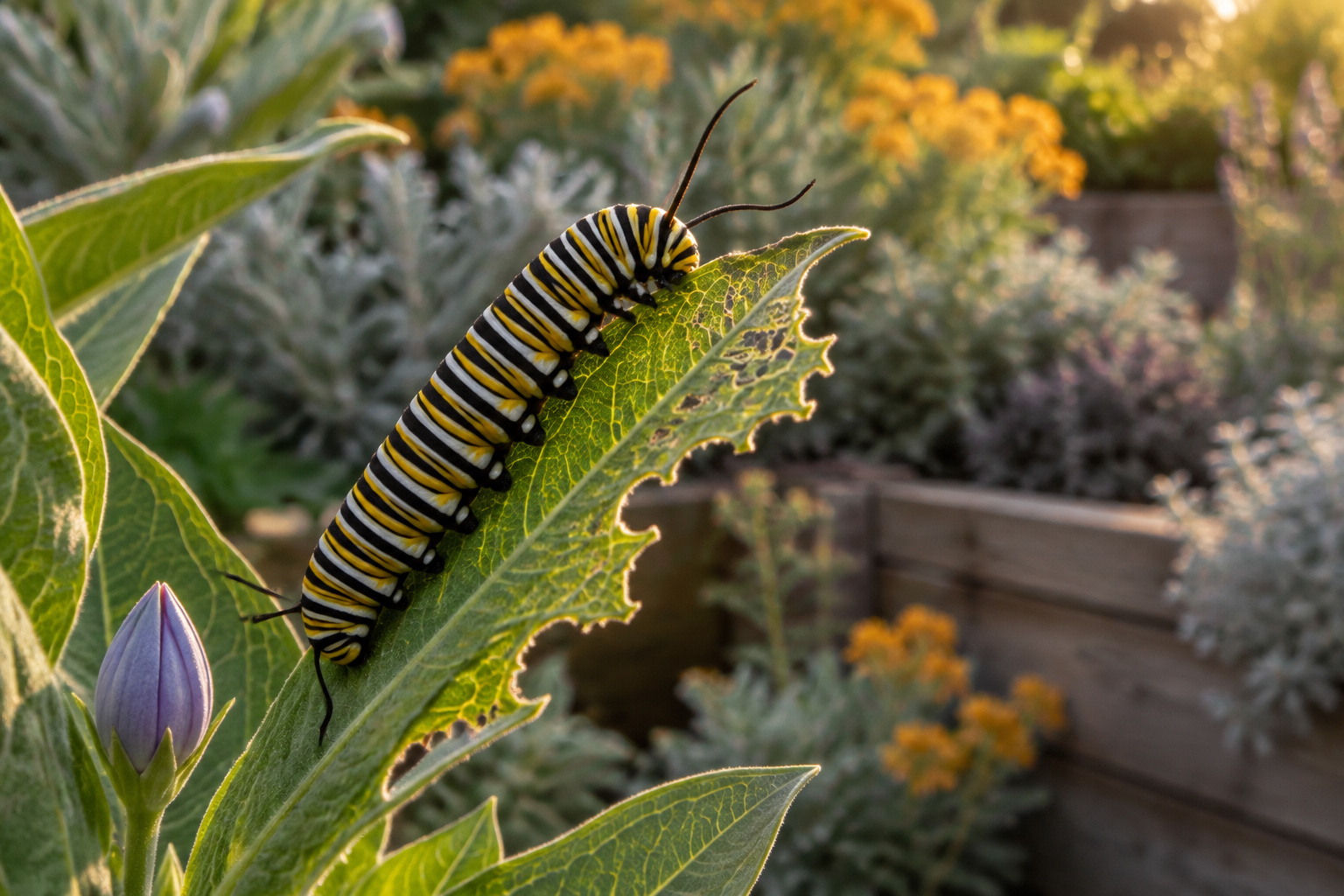
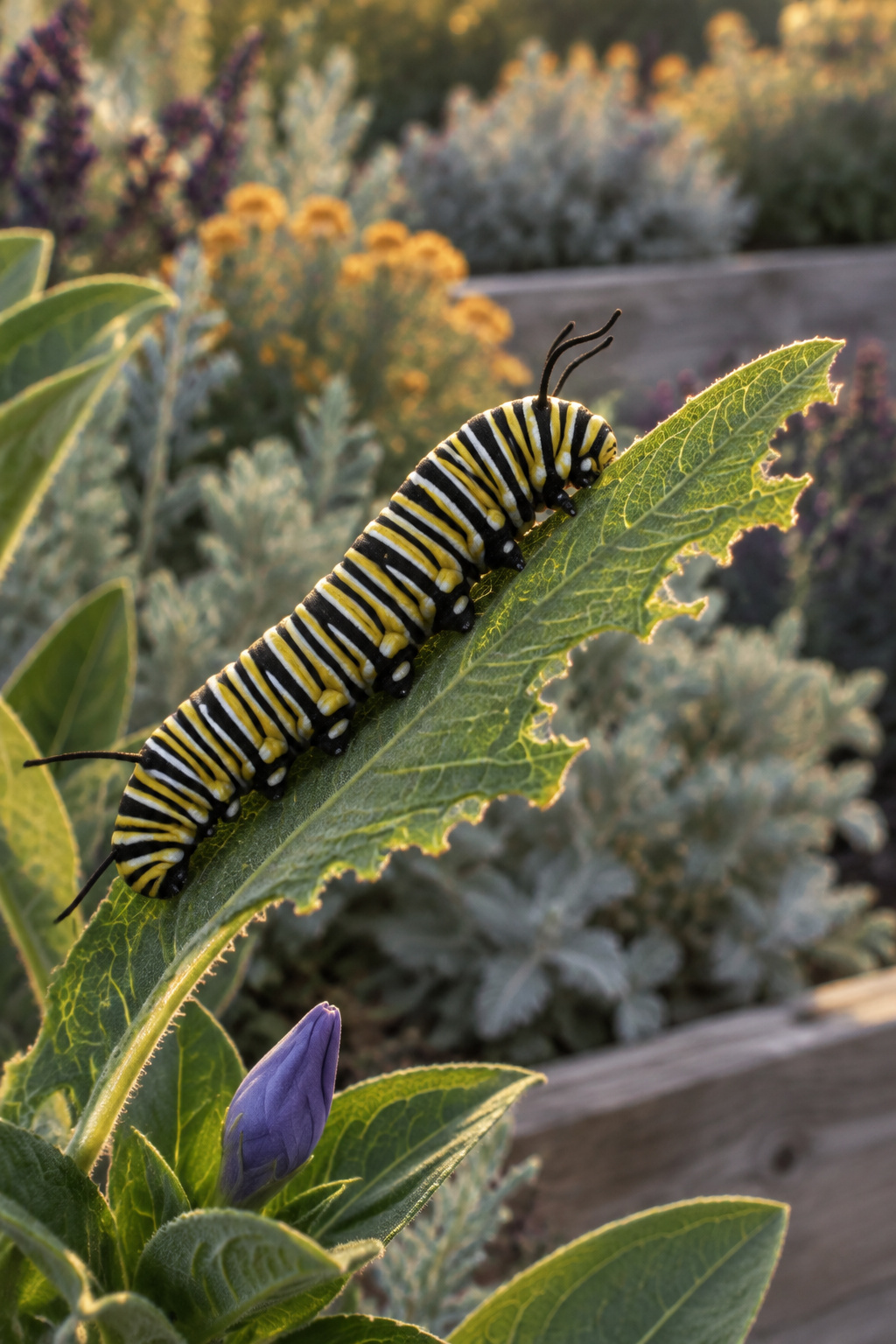
The first instinct is a spray. Resist it. Xerces puts chewed foliage plainly: the damage “may simply indicate that some caterpillars had a nourishing breakfast, and your plant is providing needed habitat.” Their sequence before any treatment is one I say out loud: identify what is eating the plant, judge whether it threatens the plant, fix stress like poor soil or water, then intervene without chemicals only if you must.
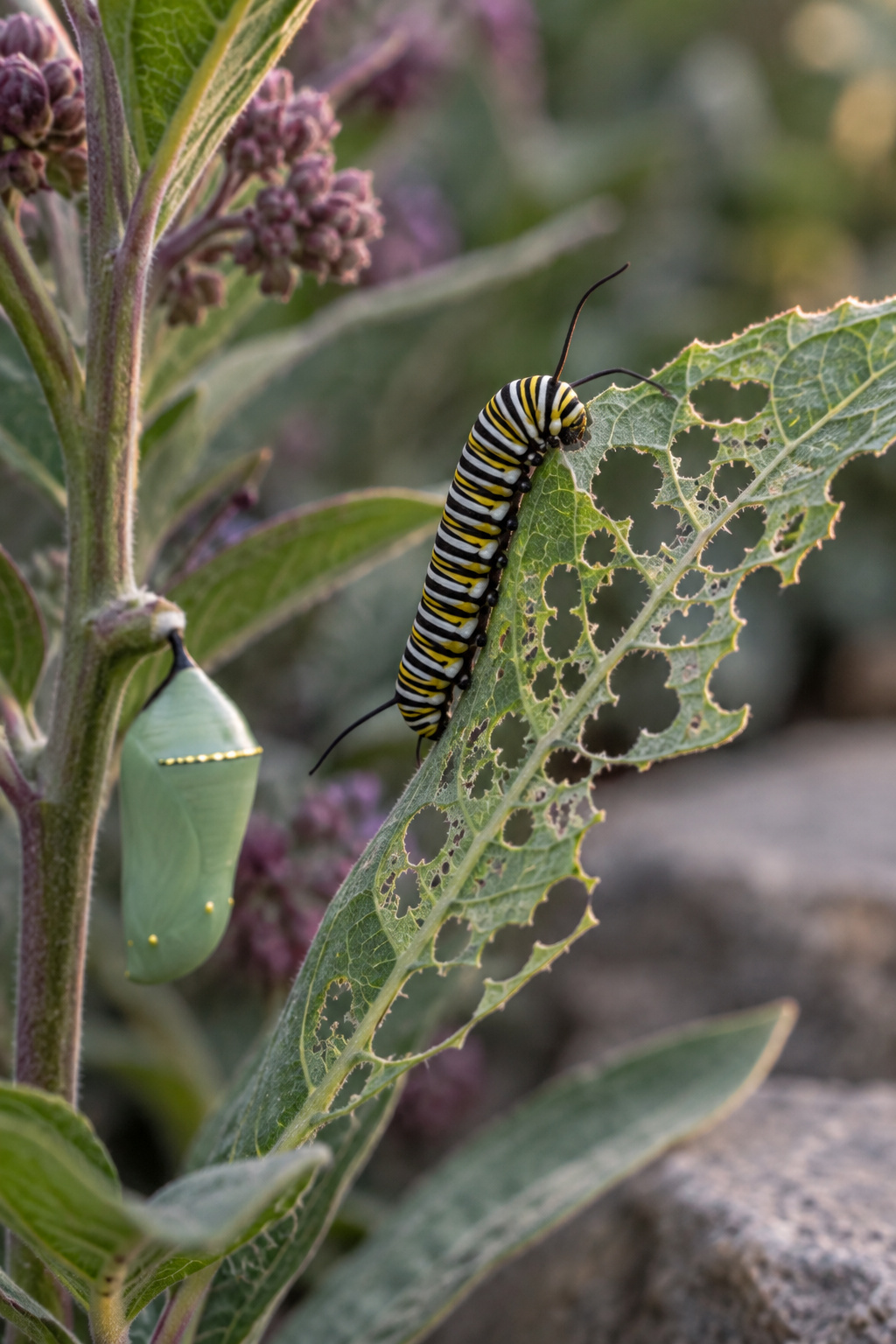
The stages kids can actually watch happen
Three things are visible without equipment: the egg under a leaf, the caterpillar visibly bigger every couple of days, and the chrysalis. Warn them the chrysalis is the long, dull one. Children under seven hear “nothing happened today” as “it failed,” and a week of that loses them before the good part.
When to worry versus when to celebrate
Fast, heavy stripping by a boldly banded caterpillar is the outcome you planted for. Real plant trouble looks different: wilting, disease, aphids, spider mites.
One caution has nothing to do with the butterflies above. A few caterpillars sting. The puss caterpillar (Megalopyge opercularis) is a scrap of fur hiding venomous spines, and the saddleback (Acharia stimulea) is grey with a lime-green saddle. Both become moths, and neither eats any host plant here. The household rule: look, don’t touch, at any fuzzy or spiny caterpillar nobody can name. If one stings, tape-strip the spines out, wash with soap and water, then ice it.
Pairing Common Butterflies With Their Host Plants
Six pairings cover most of what a backyard can raise. Notice how specific each is: a genus or a family, never “flowers.”
| Butterfly | Host plants (what caterpillars eat) | Notes |
|---|---|---|
| Monarch | Milkweed (Asclepias species) only | One mature plant per caterpillar; avoid tropical milkweed in warm winters |
| Black swallowtail | Parsley, dill, fennel, celery, carrot tops, Queen Anne’s lace (Apiaceae) | Already in most herb beds |
| Eastern tiger swallowtail | Tulip tree, wild black cherry, sweetbay magnolia | Trees, not bed plants |
| Spicebush swallowtail | Spicebush, sassafras, sweetbay, tulip tree | Folded-leaf shelter; false eyespots; harmless |
| Painted lady | Thistle and mallow family, including hollyhock | Overlaps a border ornamental |
| Red admiral | Stinging nettle and other Urticaceae | Impractical for family gardens |
Monarchs and milkweed — the one-to-one pairing
Monarch caterpillars feed exclusively on milkweed. No substitute exists.
Species matters. Skip tropical milkweed (Asclepias curassavica) in warm-winter climates. It doesn’t die back seasonally, so it can hold monarchs in breeding mode past the point they should migrate, and its higher cardenolide levels can let adults carrying the OE parasite survive to spread it through migrating populations. The plant sold to save monarchs can quietly work against them. Buy a milkweed native to your region.
Swallowtails and their host families
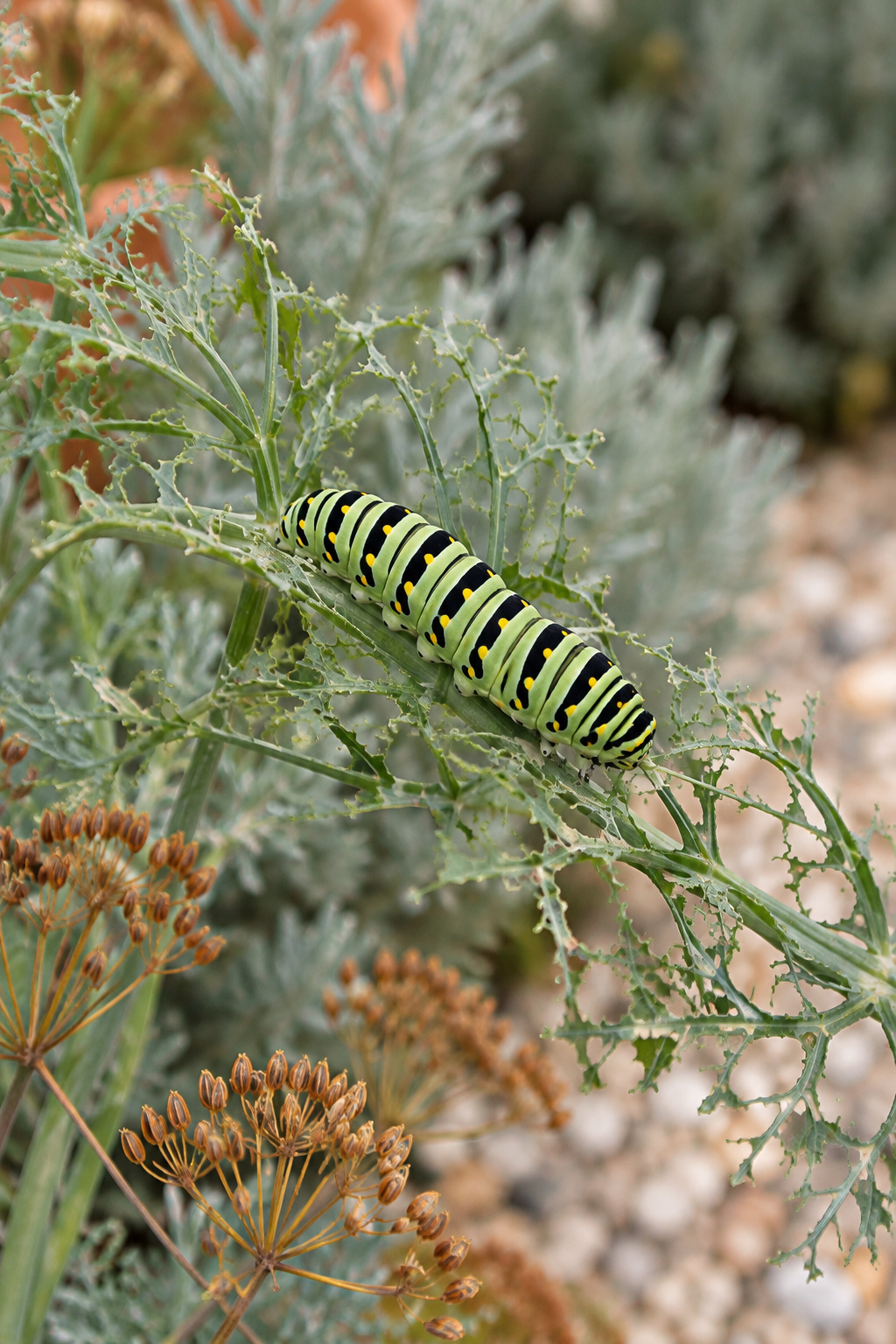
Black swallowtails eat the carrot family: parsley, dill, fennel, celery, carrot tops, Queen Anne’s lace. Most kitchens grow one already, so it’s the cheapest pairing to start. It’s also the one most often destroyed by accident: a striped caterpillar on the parsley looks like a pest.
Eastern tiger swallowtails need trees: tulip tree, wild black cherry, sweetbay magnolia. Spicebush swallowtails host on spicebush, sassafras, sweetbay and tulip tree, and put on the best show. The caterpillar folds a leaf into a silk-lined shelter, then matures into a convincing small snake, false eyespots and all. Harmless, and thrilling to a six-year-old.
Painted ladies, admirals and what they need
Painted lady caterpillars feed on thistle and the mallow family, hollyhock included, the rare host plant that also works as a border ornamental.
Red admirals are the honest problem in that table. Their caterpillars feed almost exclusively on stinging nettle and its Urticaceae relatives. Accurate, and in a garden built around children genuinely impractical. I won’t recommend nettle where the whole point is small hands near the leaves. If you already tolerate a nettle patch, look for rolled leaves, since the caterpillar binds one around itself to feed.
Siting Butterfly Host Plants at Kid Height
Where to plant so caterpillars are eye-level
Kneel at the front edge of the bed before you plant. That’s the sightline you’re designing for. Host plants belong at the front or the edge, never behind the tall nectar planting, because feeding tucked at the back is invisible to a five-year-old. Grouping helps: Monarch Watch asks for milkweed close together but not crowded, which concentrates activity into one patch a child can learn by heart.
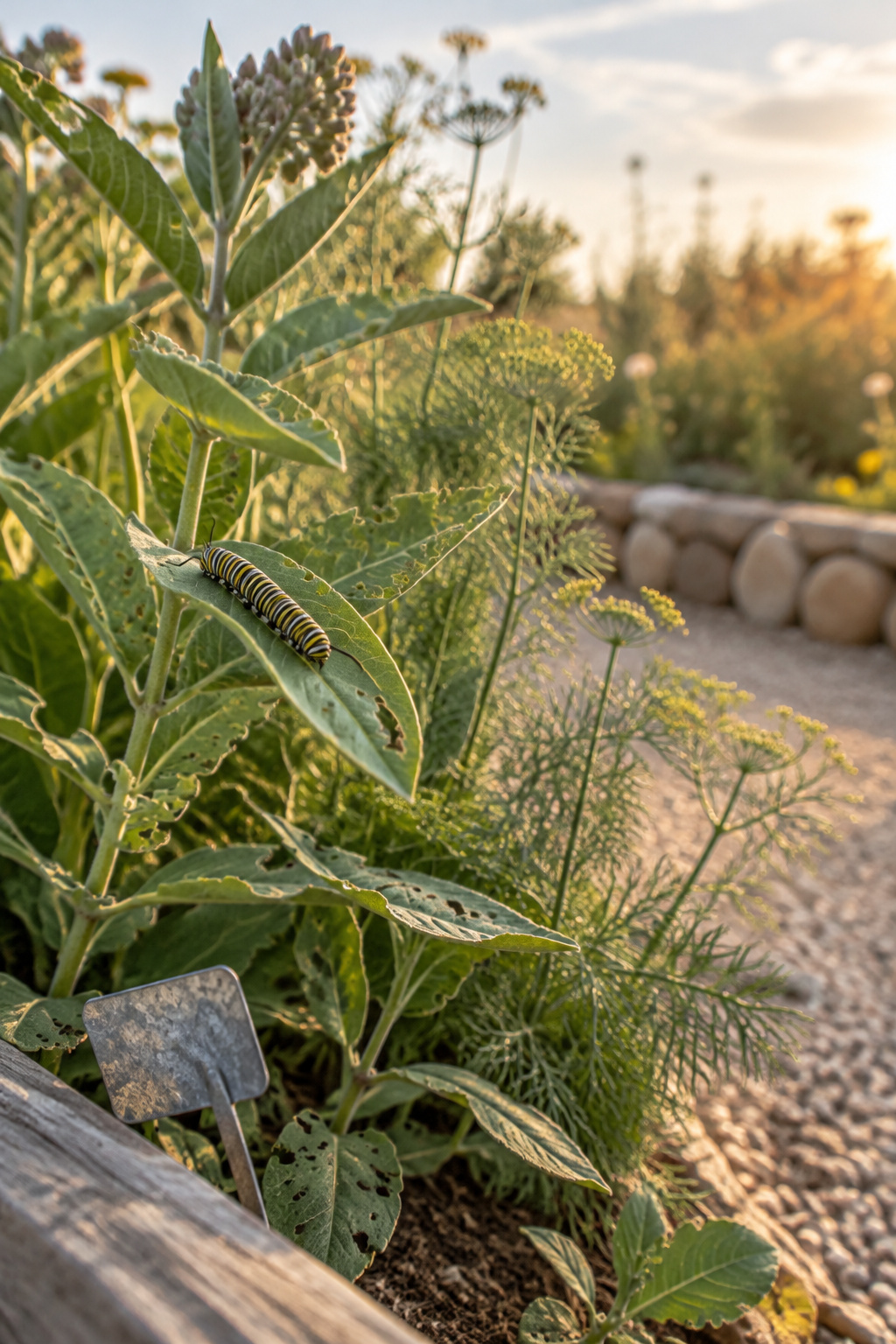
Keeping host plants safe from tidy-up impulses
A chewed host plant looks like a plant that needs cutting back. That’s how these get lost, to a tidy Sunday half-hour rather than pests. Push a marker in: host plant, leave it. It works on visiting grandparents too.
A stripped milkweed isn’t a dead milkweed. It’s a herbaceous perennial that evolved to regrow fast after being eaten rather than to get more toxic. Cutting it down is unnecessary and takes eggs and larvae too.
Involving kids in the watching, not just the planting
Young children follow one object they own far better than a whole garden they’re meant to appreciate. So hand each child a single plant, checked daily and reported at dinner. Saying it out loud is how a child consolidates what they noticed. Start a drawing log for the chrysalis stretch, since one dated sketch a day carries them through the stage where nothing changes.
The Week-by-Week Transformation to Expect
How long does this take? For monarchs, precisely; no comparable day-by-day timing exists for swallowtails or painted ladies. So monarchs are the clock, and the others run similar in shape, not schedule.
- Egg — 3 to 5 days, depending on temperature.
- Caterpillar — 9 to 14 days through five instars; first four 1 to 3 days each, fifth 3 to 5.
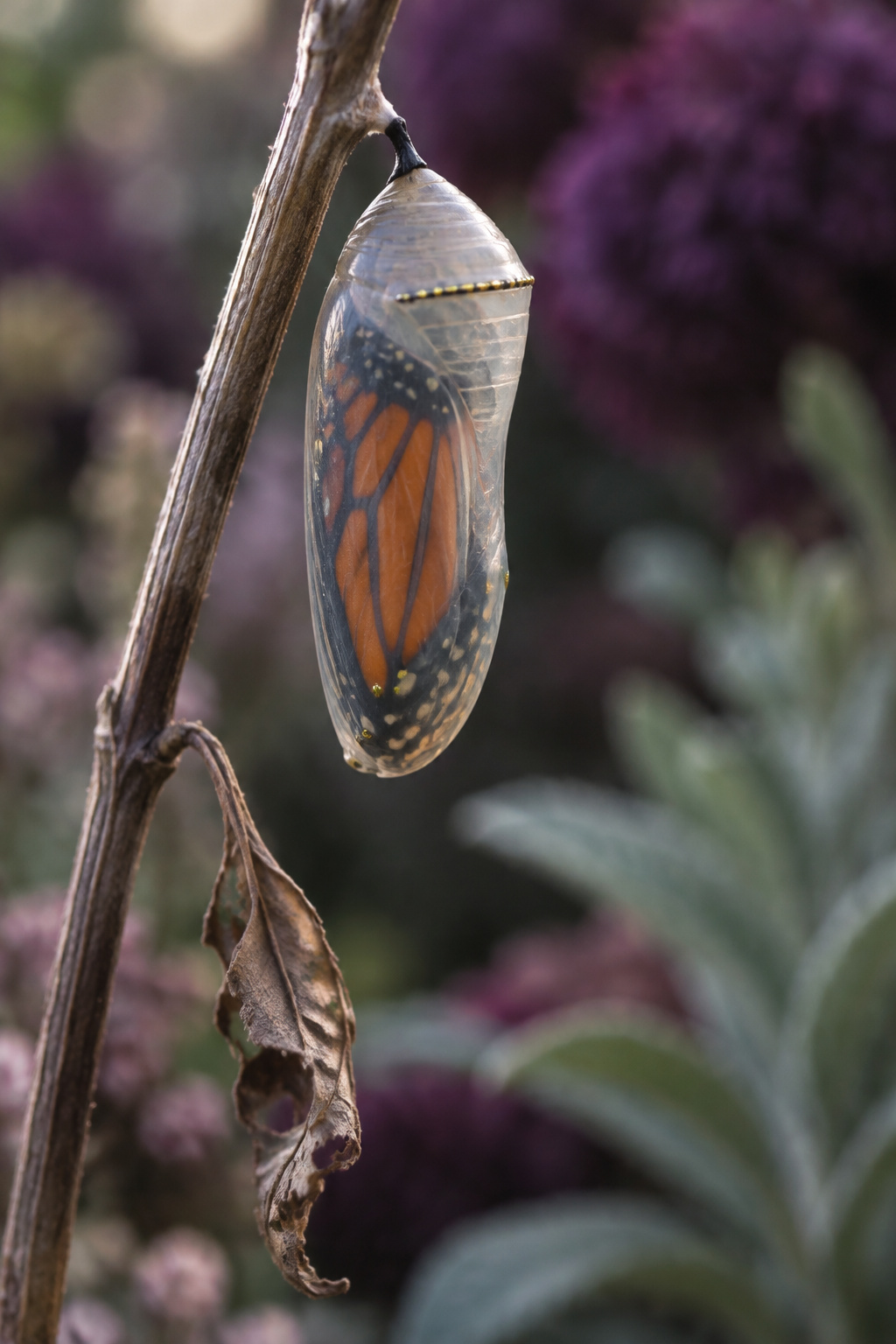
- Chrysalis — 8 to 15 days in a normal summer.
Egg to caterpillar: what to look for
The newly hatched caterpillar eats its own eggshell before it touches a leaf, and that’s the first thing children want to tell someone. The fifth instar does most of the eating and nearly all the damage you notice, then wanders off the plant to pupate. Say so in advance: a caterpillar gone overnight has usually left to make its chrysalis.
Chrysalis: the waiting stage
This is the longest stage and the one with least to see, so flag it before it starts. In the last day or two, the shell clears enough to show the folded orange and black wings inside, the reliable cue that emergence is close.
Emergence and what happens next
Egg to adult runs 25 to 34 days in a normal summer, about a school month. A newly emerged adult then hangs still for one to a few hours while its wings expand and harden. Nobody touches it in that window; rushing it is the one way a family can genuinely ruin the ending.
Sourcing Host Plants That Won’t Poison the Caterpillars
Why treated milkweed kills the caterpillars it attracts
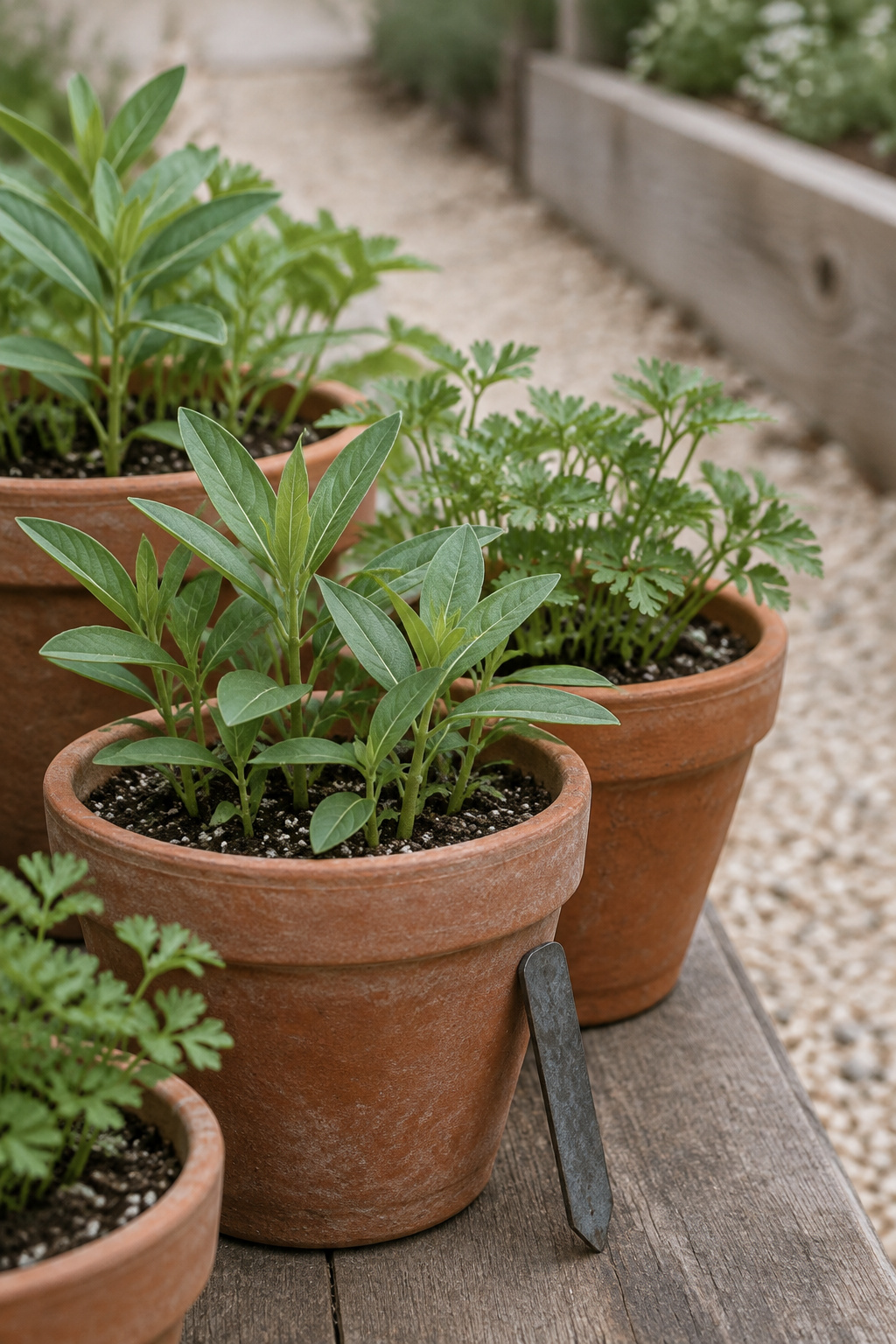
Systemic neonicotinoids (imidacloprid, dinotefuran, clothianidin, thiamethoxam) move into the plant’s own tissue, leaves included. You can’t rinse them off or see them. Field reports describe monarch caterpillars sickened or killed after feeding on nursery-bought milkweed, and one study found contaminated milkweed measurably reduced larval survival.
Home sprays deserve the same suspicion, the organic one included. Per the National Pesticide Information Center, Bt kurstaki isn’t selective within butterflies and moths, so any caterpillar eating treated foliage is affected, not just the pest it was bought for.
Where to buy untreated host plants
Ask the nursery outright whether a plant was treated with a systemic insecticide, and when. That’s the only reliable filter. Henrik Larsson works through where to source untreated host plants in detail.
The moths working the same job after dark
Moths depend on host plants exactly as butterflies do, on a different list and shift. Aisha Patel covers the moths working after dark: what they need, and what opens at dusk.
What Your Summer Looks Like Now
You’re no longer planting flowers and hoping. You’re pairing a butterfly with the one plant its caterpillars can eat, siting it where a child’s eyes land, and leaving the chewed leaves alone, because they’re the receipt. Buy one milkweed, or just stop pulling caterpillars off the parsley. Then mark a date a month out on the calendar: that’s roughly when the first one flies, and the rest happens without you, the point of a space that teaches on its own.
FAQ
Will caterpillars kill my host plants if they eat all the leaves?
Rarely. Milkweed is a herbaceous perennial that evolved to regrow quickly after being stripped rather than to become more toxic, so a bare plant usually resprouts. Annuals like dill and parsley take a heavier hit but usually push a second flush if left alone.
Can I move a caterpillar to a different plant if it runs out of food?
Only onto a fresh plant of the same host species it was already eating. Moved to an unrelated plant it starves rather than switches, because most caterpillars are restricted to one genus or family. Planting a cluster from the start is far more reliable.
Do host plants attract butterflies on their own, or do you need nectar plants too?
Females hunt out host plants to lay eggs on regardless of nearby flowers, so host plants pull butterflies in by themselves. Adults still need nectar to fuel flight and reproduction, so a garden with both draws far more total activity.