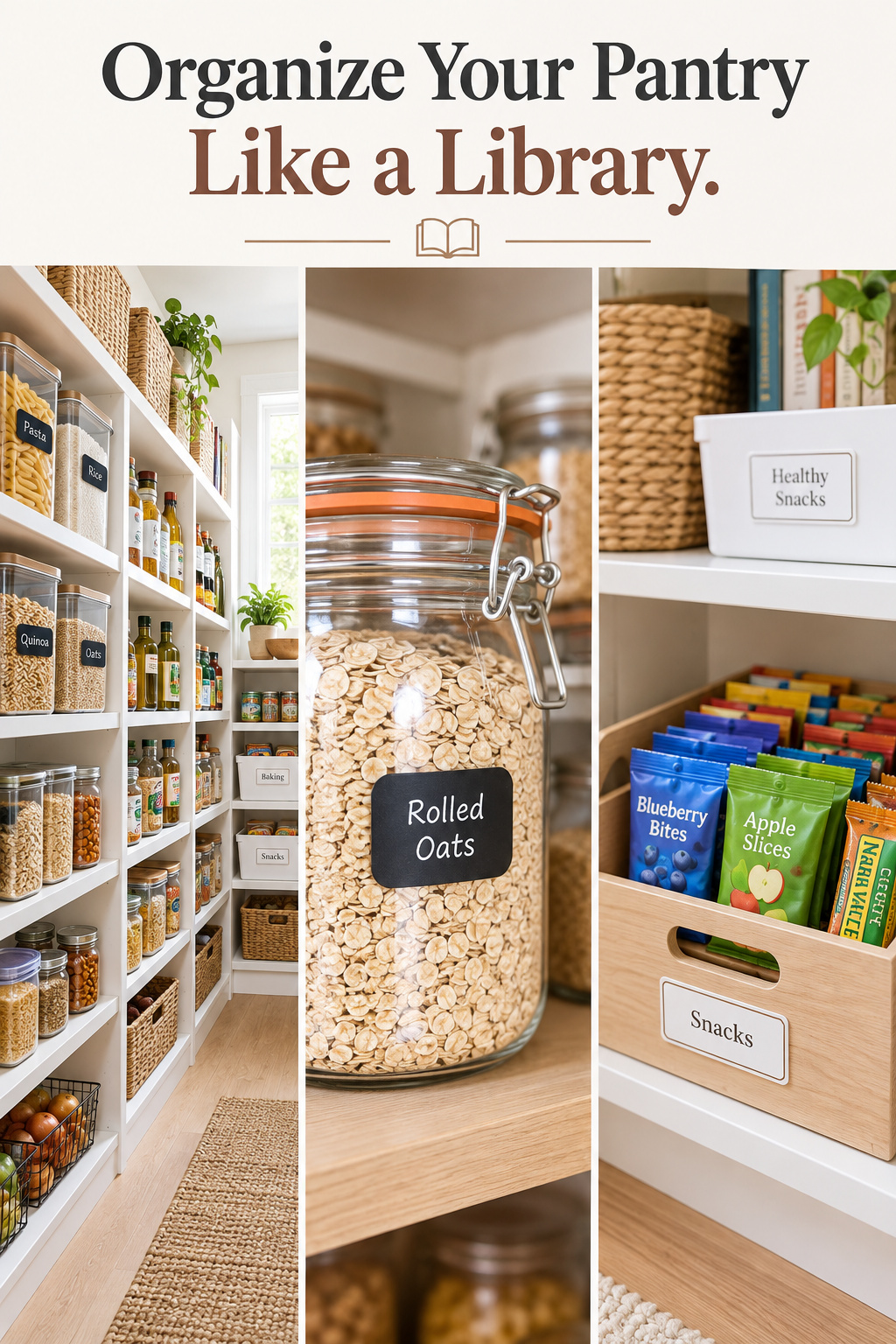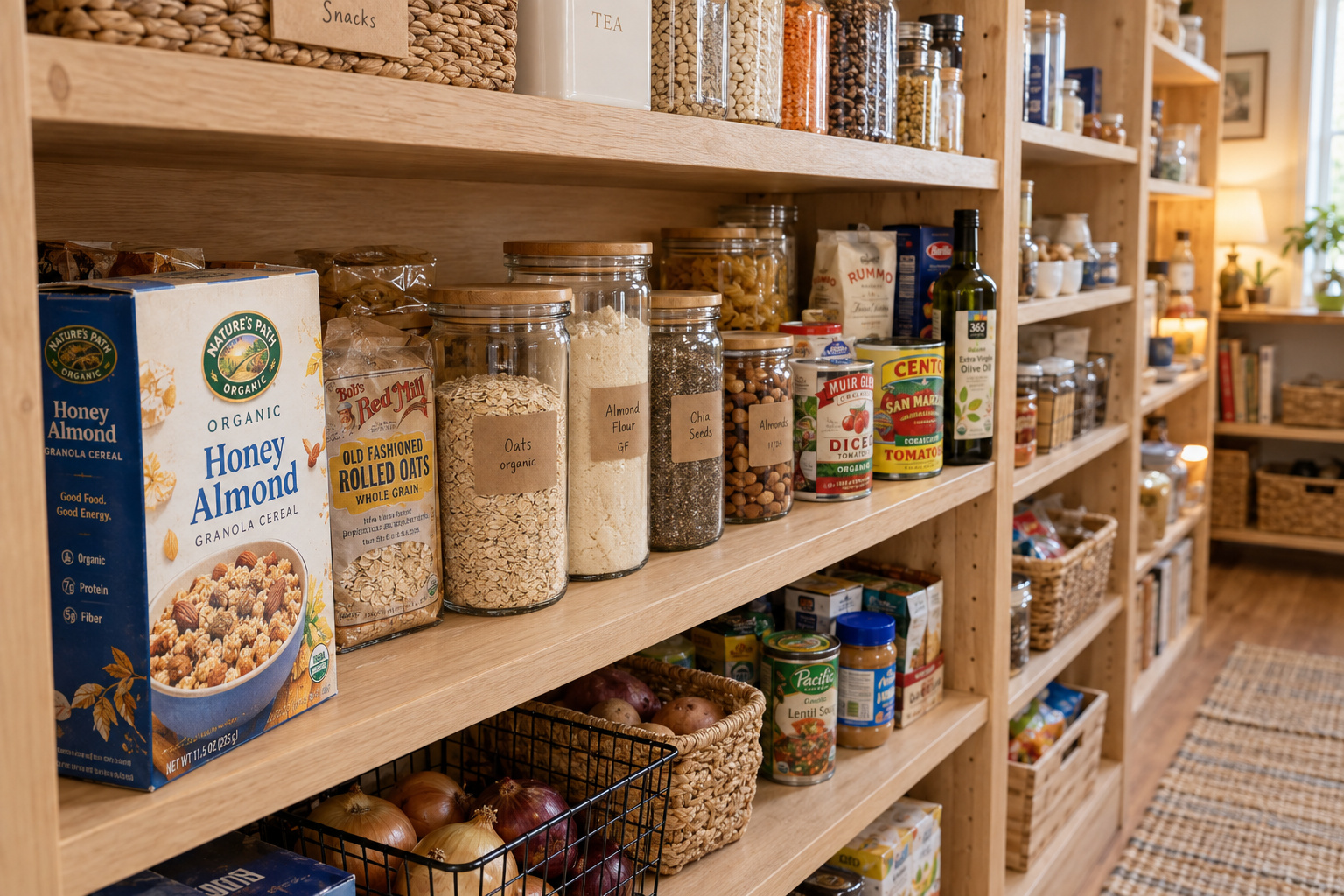
Before you touch a single shelf, try the arithmetic of kitchen pantry organization on your own kitchen. Count the times you have emptied the pantry onto the counter and put it back more neatly in the last year; call that number your resets. Now count the jars of smoked paprika, the bags of lentils, the boxes of the same crackers, and subtract one from each: that remainder is what the pantry bought twice because it could not find the first. Last, count the things that have not moved since the previous reset. If your tally shows several resets, a small pile of doubles and a back row nobody has touched in months, the resets were aimed at the wrong number. The usual approach works on the first count and never on the other two, which is why the doubles and the untouched back row keep coming back.
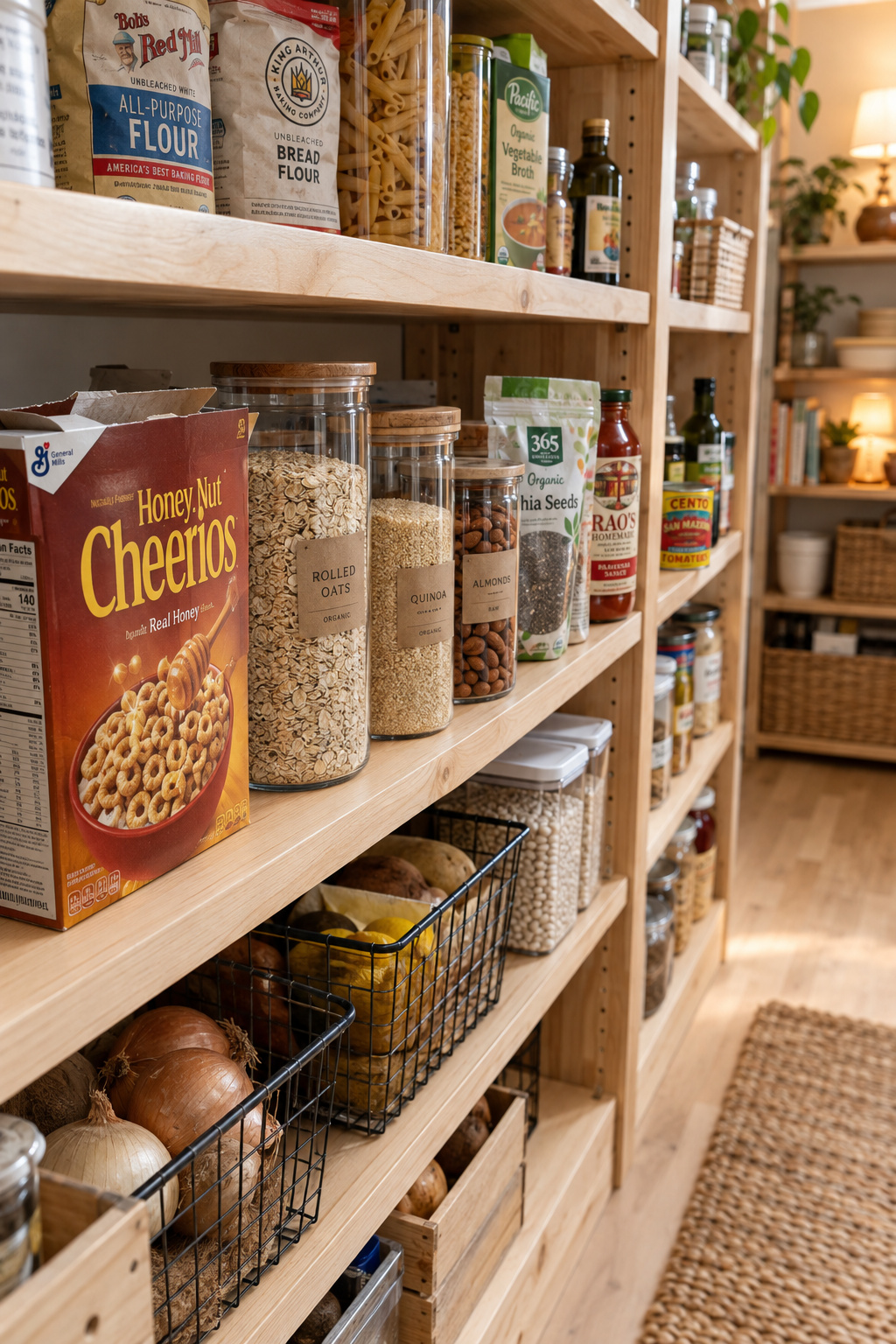
Those three counts are the whole diagnosis. What comes in, what gets used and what never moves are the three motions of any collection, and a pantry stays in order only when all three are handled, including the two a reset skips. The sections below build for the second and third counts: how each kind of pantry space, shelf, container and label either helps stock move or stops it, and the one change to make before you buy anything at all.
Kitchen pantry organization is a collection with circulation
A weekend reset is an act of arrival. Everything comes out, gets wiped, gets grouped and goes back in, and on Sunday evening the shelves look like a finished thing. But a pantry is a small collection with traffic, so it is never finished. Groceries arrive every week, a few items are used every day, and some things are retired, eaten up, thrown out or given away, on a schedule nobody wrote down. A reset handles the first of those motions beautifully and ignores the other two, and so within a month the shelf has drifted back to where it started. That drift comes from a system that never had a place for use or for retirement, more than from any lack of discipline in the household.
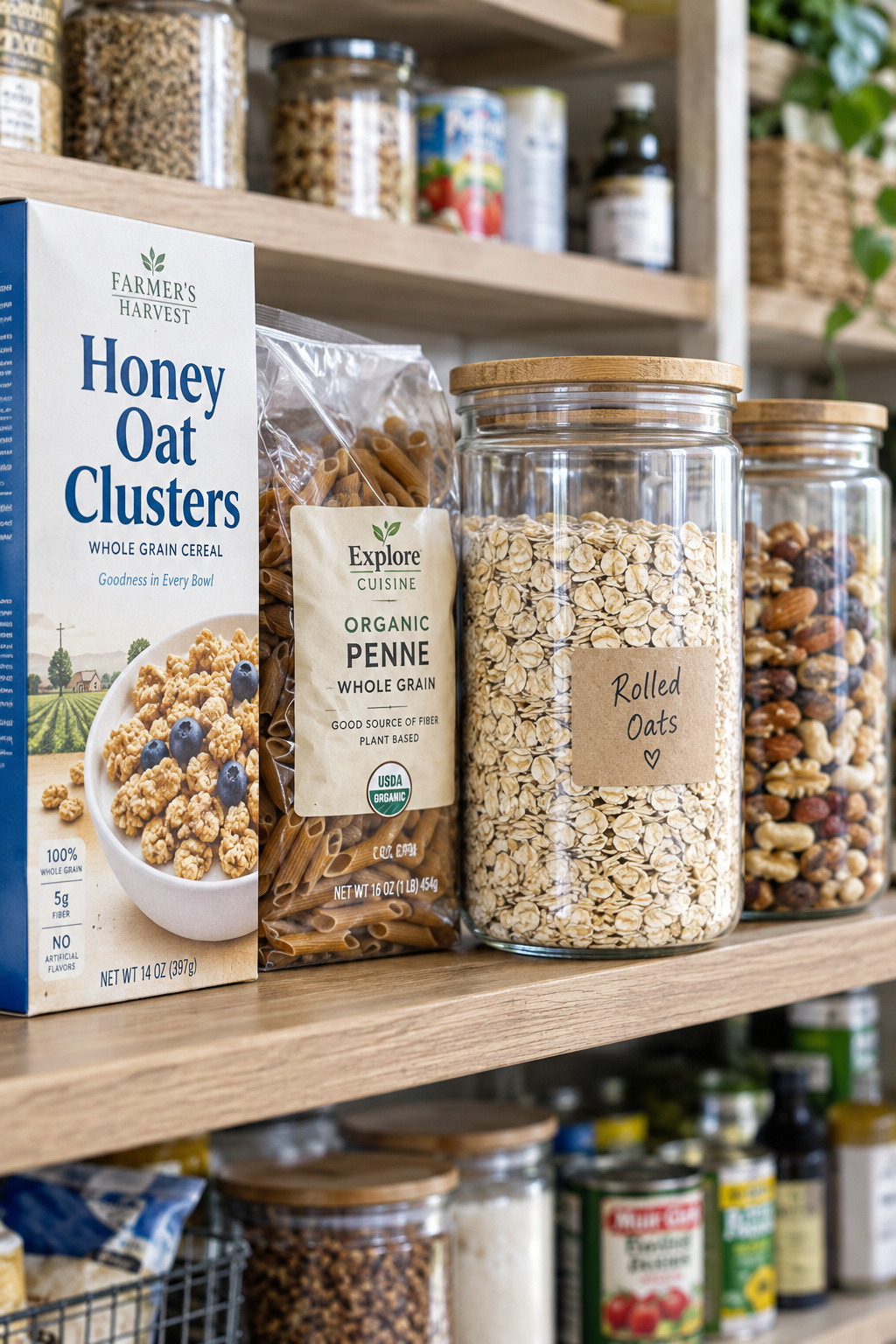
The organizer Shiffy, who runs ClearSpace in South Florida, lists the causes she sees when a pantry won’t stay organized, and almost none of them are about looks. People buy duplicates because the stock they already own is hidden behind other products. They keep expired food, so the tidying ends up organizing clutter instead of removing it. And they treat decanting as a one-time cosmetic project rather than an ongoing refill habit. She sums it up this way: “Maintaining an organized pantry isn’t about having the prettiest containers or the most Pinterest-worthy shelves. It’s about creating systems that actually work for your family’s habits.”
Charleston Crafted describes the same pattern from the other side: a pantry that needs a full reset every few weeks, and drifts back each time, is a sign the system does not match how the household shops and cooks. If you have reorganized more than twice this year, the problem is the circulation you keep leaving out, and restoring the arrangement one more time won’t touch it.
Each part of the pantry gets the same test: does it help stock arrive into a known place, get used in a sensible order, and leave when it should? A shelf, a jar or a label that answers yes earns its place. One that only improves the Sunday-evening view is decoration, and there is nothing wrong with decoration so long as nobody mistakes it for a system.
Match the fix to the space you have
Before any system there is the room, and most people are organizing one of three kinds. Start by knowing which you have, because each comes with its own costs, its own strengths and its own characteristic failure.
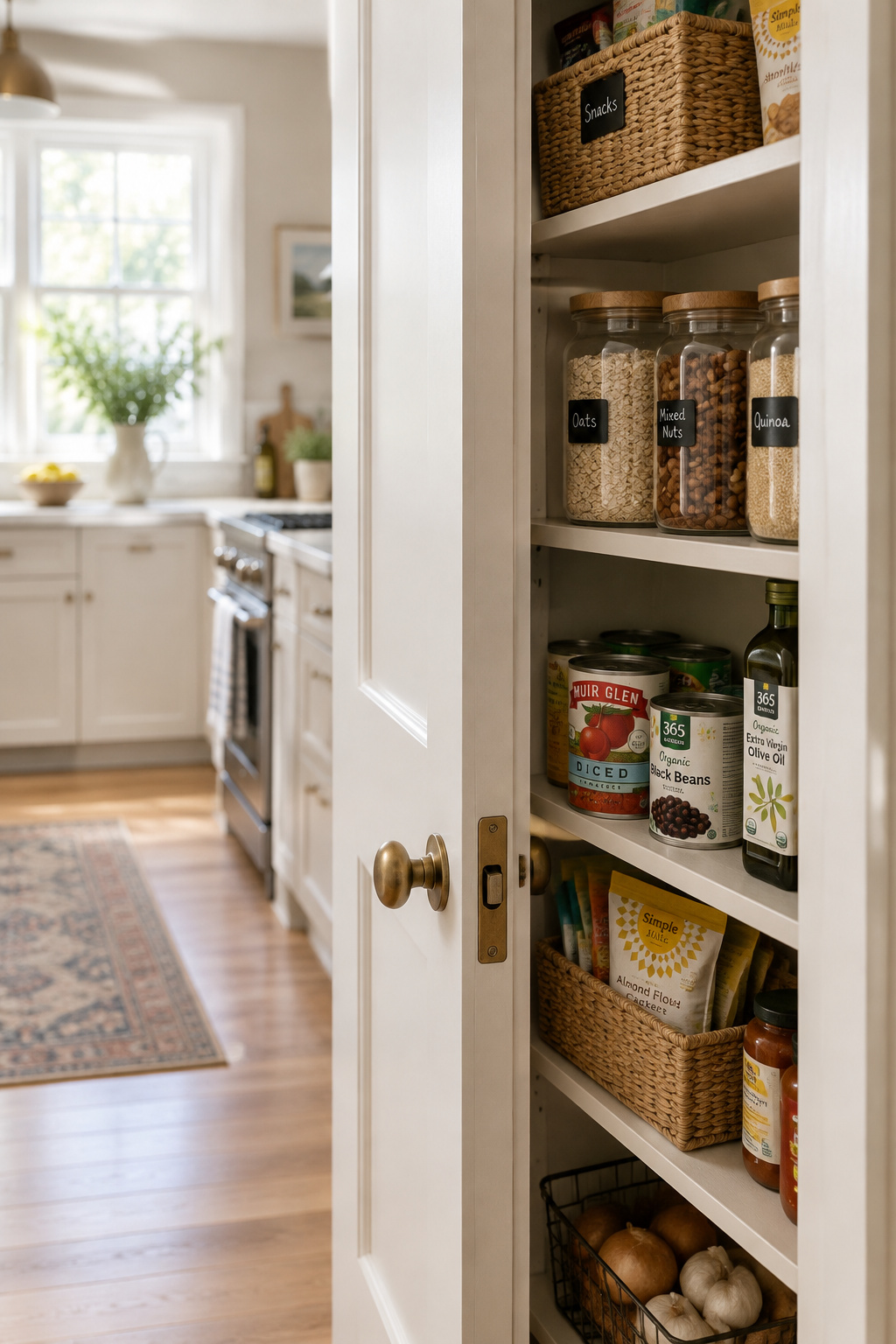
The only build-cost figures I have come from a single source, the home-services aggregator Angi, and I would treat them as one aggregator’s snapshot rather than settled prices. Angi puts the overall average for building a custom pantry at about $2,000, within a range of $250 to $5,000. By type, with the strength and weakness of each:
| Space type | Build cost (Angi, single source) | Main strength | Characteristic failure |
|---|---|---|---|
| Walk-in, small | $750–$2,000 | Whole collection visible on entry | Distance from the cooking zone adds steps |
| Walk-in, large (with extras such as a sink or wine fridge) | $2,000–$3,500 | The same visibility, more room | Easy to fill, hard to keep track of once it is |
| Reach-in or closet conversion | $250–$1,500 | Cheapest; fits a kitchen that can’t spare a room | Items pushed to the back of too-deep shelves |
| Tall or repurposed cabinet | Folded into cabinetry; not in Angi’s pantry figures | Needs no room at all | Least space; depends on pull-out hardware |
Walk-in pantries
A walk-in’s great advantage, as Kitchen Cabinet Kings points out in its comparison of walk-ins and cabinet pantries, is visibility: you step in and see the whole collection at once, which supports circulation directly, since nothing is hiding behind anything else. Its disadvantage is distance. A walk-in set away from the stove adds steps to every meal, and a pantry that is tiresome to reach mid-recipe gets raided in a hurry and restocked carelessly. Getting the footprint, aisle and shape right is its own discipline, covered in walk-in pantry layouts that work.
Small reach-in and closet pantries
A reach-in is worked from one side, so the whole of its circulation happens through a single doorway. That makes it cheap and compact, and it also makes the back of every shelf the place where forgotten stock accumulates and where the duplicate bag of lentils is born. The door, the corners and what you choose to leave out matter far more here than in a walk-in; the details are in organizing a small reach-in pantry.
Cabinets in a kitchen with no pantry
Where there is no pantry space, a tall cabinet or a repurposed piece of furniture takes on the job. Its cost disappears into general cabinetry and never shows up as a pantry line item, which is why Angi does not price it. It has the least floor space of the three and depends most on pull-out hardware to keep its depths reachable; choosing between freestanding and built-in pieces is the subject of pantry cabinets for kitchens without a pantry.
Whichever you have, judge it by how the space will be used on a busy evening as well as by its square footage, because a busy evening is when circulation succeeds or fails.
Shelving built for what you store
What is on the shelf should decide the shelf. A row of cans, a row of cereal boxes and a stack of bulk bags are three different objects, each with its own size and rate of use, and giving them one uniform shelf because it looks tidier is the most common way a pantry starts hiding its own contents. The Kitchn’s guidance on pantry shelving, drawing on ClosetMaid’s product development team, makes the same argument: shelves shallower toward the top, where visibility matters, and deeper lower down, where bulk lives.
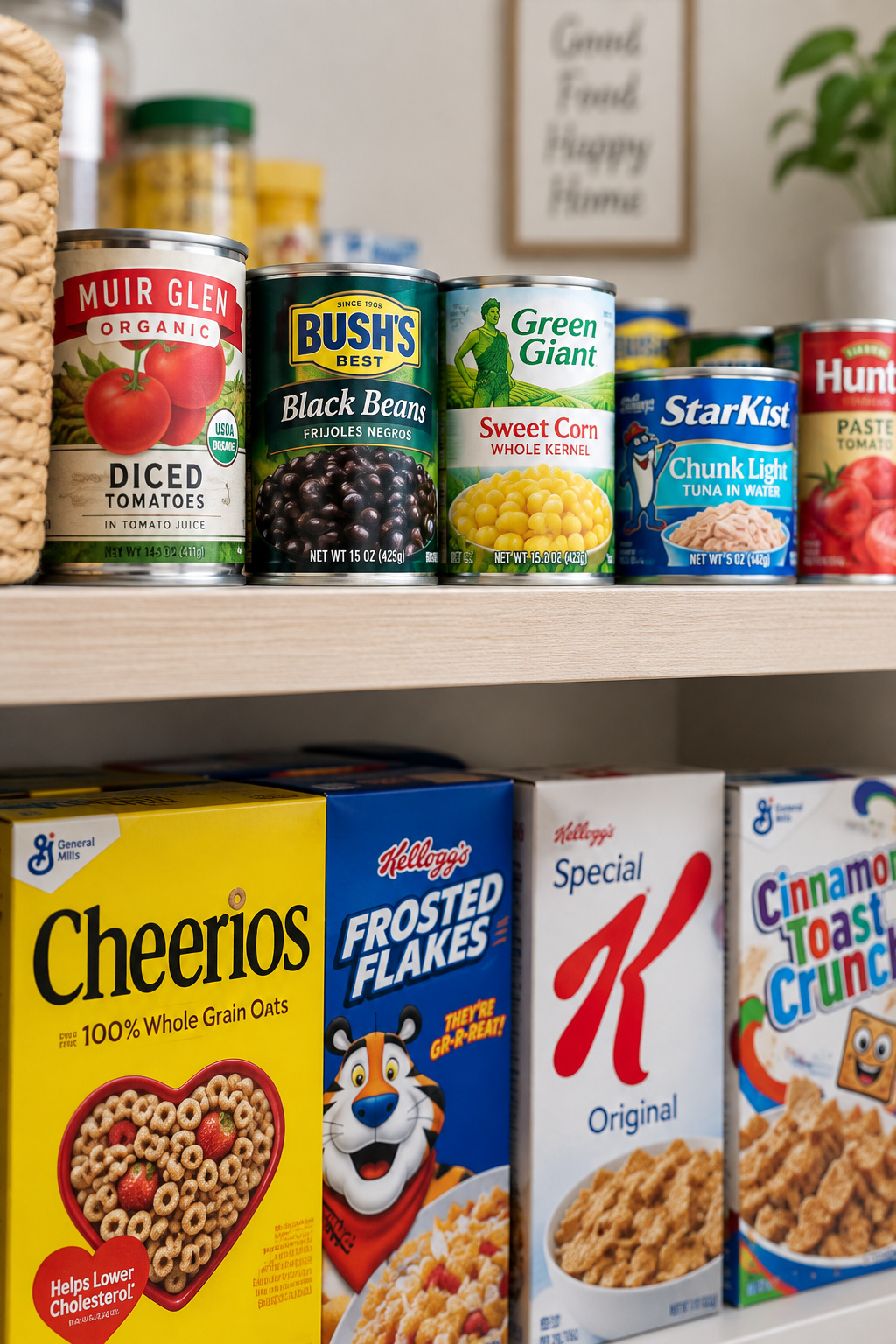
In every collection I have planned, the shelves were drawn after the inventory. A book collection with a thousand paperbacks and forty folios does not get one shelf height, and a pantry with thirty cans and six sacks of flour should not get one shelf depth. In practice, a shelf that keeps swallowing things is telling you something. If items regularly vanish to the back and get forgotten, the shelf has grown deeper than its load justifies. More containers won’t help there; a shelf sized to what the household stores will, because excess depth is how a pantry stockpiles what the family has stopped using. It is circulation failure in its purest form, with stock that arrived, never got used, and was bought again.
Placement matters as much as depth. The Kitchn notes that the shelves between roughly waist and eye height are the easiest to reach, so the things you use most belong there. A frequently used item in a good position tends to go back to the same spot every time. One in an awkward position migrates around the pantry, gets lost, and is duplicated on the next grocery run. So before you buy a single bracket, ask a librarian’s question of your own shelves: what do you reach for daily, what weekly, and what twice a year? The answers sort the pantry into bands, and the bands tell you where depth can grow.
Depth and spacing numbers need to be worked out properly for each zone, so the figures, the materials and the mounting all live in how deep pantry shelves should be.
Containers worth decanting into (and the ones that aren’t)
Decanting is a perfectly reasonable choice. A row of matching clear jars is pleasant to look at, and plenty of households keep one gladly and keep it filled. Whether it serves circulation in your kitchen depends on what decanting does, which is more specific than the photographs suggest.
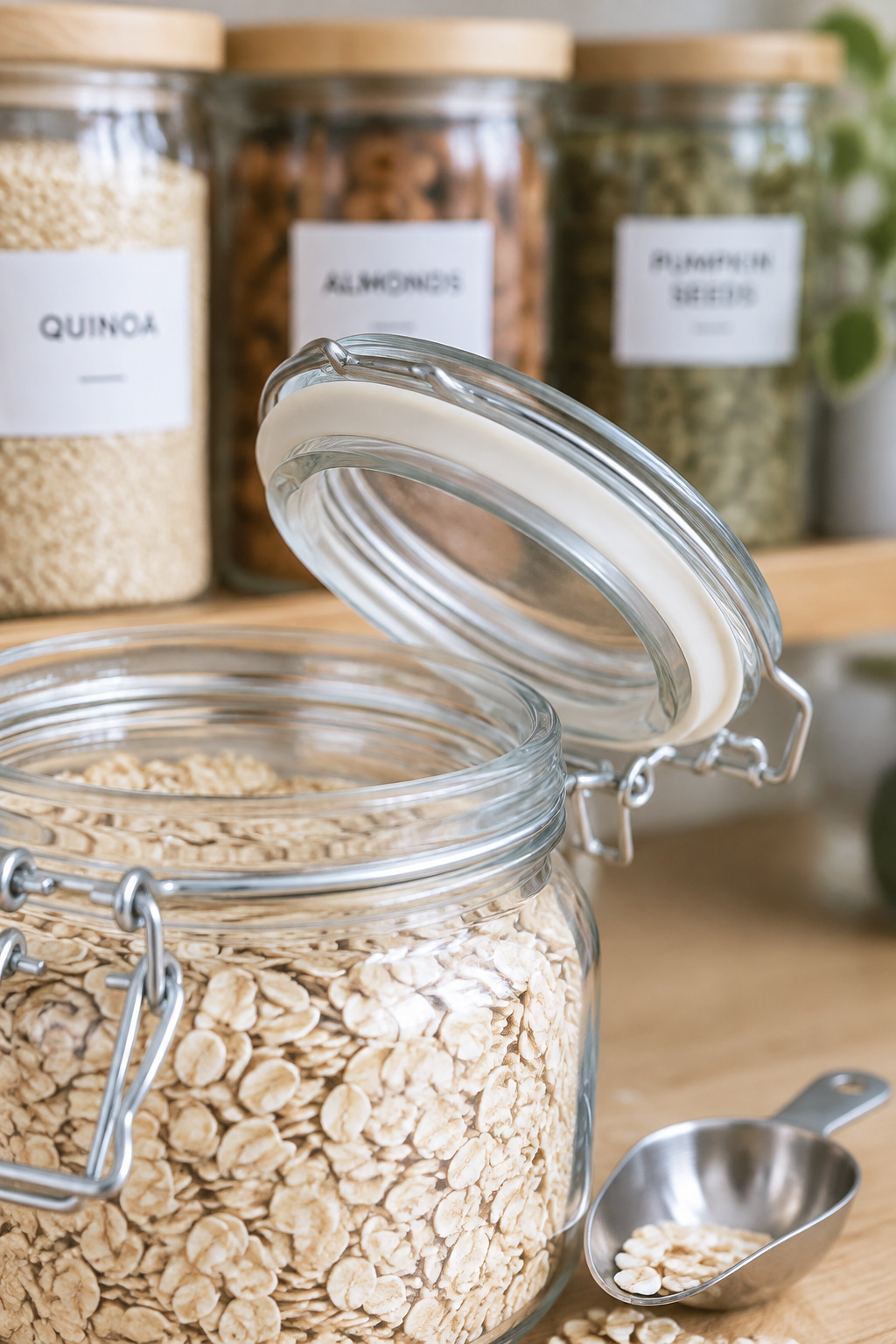
Nancy Vorsanger, an organizing consultant writing for Simplify101, sets out both sides clearly, starting with the benefits:
- Low stock is visible at a glance. Clear sides show what is running out before the last scoop, which is a direct aid to the “used” motion.
- Odd shelf space gets used more efficiently than it does with manufacturers’ boxes of every size.
- A genuinely sealed container can keep pests out of goods that arrived in soft packaging, though whether it does depends entirely on the lid and the material.
And the costs, which never appear in the finished picture:
- Refilling, resealing and washing every container, indefinitely.
- Extra space for the bulk packaging you decant from, which has to live somewhere while it waits.
- The containers themselves, bought up front.
Her summary is fair: decanting looks good and makes low supply visible, but it is more work than it appears. A household that will not keep containers refilled is better served by original packaging in labeled bins, which Charleston Crafted also calls a legitimate, lower-maintenance system. The failure worth avoiding is a container that does not fit the food. Charleston Crafted’s writer describes a cereal container that held only about three-quarters of a standard box, so the box ended up stored beside the container meant to replace it, and one object had become two. That is a single household’s account, not a measurement, but anyone who has bought a canister set before measuring a cereal box will recognize it.
Which foods genuinely benefit from a jar, what “airtight” has to mean before it protects anything, and when the original box is the better vessel are all argued on their own evidence in which foods are worth decanting.
Labels and the rotation habit that sticks
I learned what stock-taking is for in the winter I cataloged my grandfather’s books. He was a working farmer who read every night, and he left behind 2,400 volumes, a collection built over a lifetime by someone else’s hand and someone else’s habits. Cataloging it meant handling every book and writing down what it was, and by spring I understood that a collection carries biography, which no shelf list had told me before. It records what a person reached for, and that is not always what he meant to read. Working through those shelves, I was reading a life in the order he had lived it.
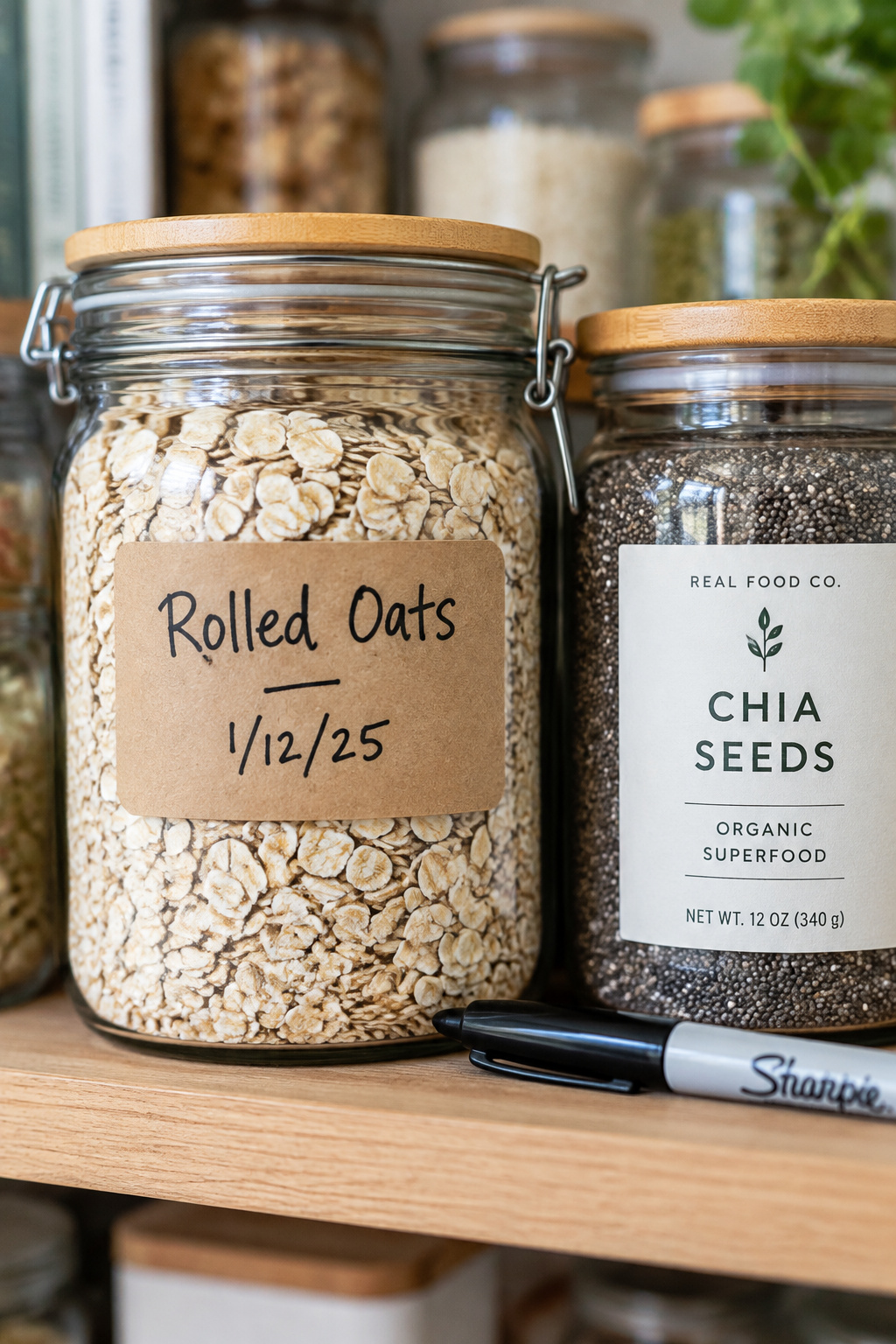
A pantry carries biography too, of a humbler kind. Take stock of yours and it will tell you how the household eats day to day, as opposed to how it planned to eat when it shopped: the wholesome grain bought in January and never opened, the snack restocked twice a week. That record is only legible if things are named and dated, and once they are, the pantry stops being a pile and becomes a collection you can read and therefore use.
The labeling itself has two jobs. A label on the shelf edge names the zone, so that whoever unpacks the groceries puts things back in the same place; that keeps like items, and like-dated stock, together instead of scattered. A label on the container carries what the food is and when it arrived, which is the information rotation depends on.
Rotation, the habit usually called FIFO, is a physical rule: newer purchases go behind or beneath older ones, so reaching for what is already there is the path of least resistance. Salt and Prepper, writing on food rotation, makes the more interesting point about why it fails. Households rarely misunderstand the rule; their storage just isn’t woven into daily cooking, so food bought “for emergencies” gets shelved outside the working rotation and is forgotten until it has expired. By then the household has effectively stopped owning it.
The fix is structural: keep everything you intend to eat inside the zones you cook from, including the reserve, and let the label tell you which item is next. What to write on a label, how large to write it and what the dates on packaging mean are the substance of a pantry labeling system.
Pests and kids, the two problems that undo a system
Even a well-circulating pantry has two ways of coming apart that have nothing to do with tidiness. One arrives with the groceries, and the other lives in the house and cannot yet reach the middle shelf. Both are worth planning for before they happen, because each can undo weeks of good habits in a single afternoon.
Keeping pantry moths out
The Indian meal moth is the pest behind most home pantry problems, and the most useful fact about it is where it comes from. The entomologist Tanya Latty of the University of Sydney, writing for The Conversation, explains that most infestations are carried into the home already present, as eggs or larvae inside dry goods, rather than flying in from outside. The adults do not feed at all; the damage is done by the larvae. That makes prevention a circulation question, because the moment that matters is arrival, when a bag comes out of the shopping and goes onto a shelf. That is why Latty puts sealing food on arrival ahead of any after-the-fact treatment. A pantry where new stock is inspected and put into a proper home as it comes in is far harder for a moth to colonize than one where bags are pushed in wherever they fit.
What to do once they are already there, from identification through cleaning and prevention, is laid out step by step in getting rid of pantry moths.
Letting kids use the pantry without wrecking it
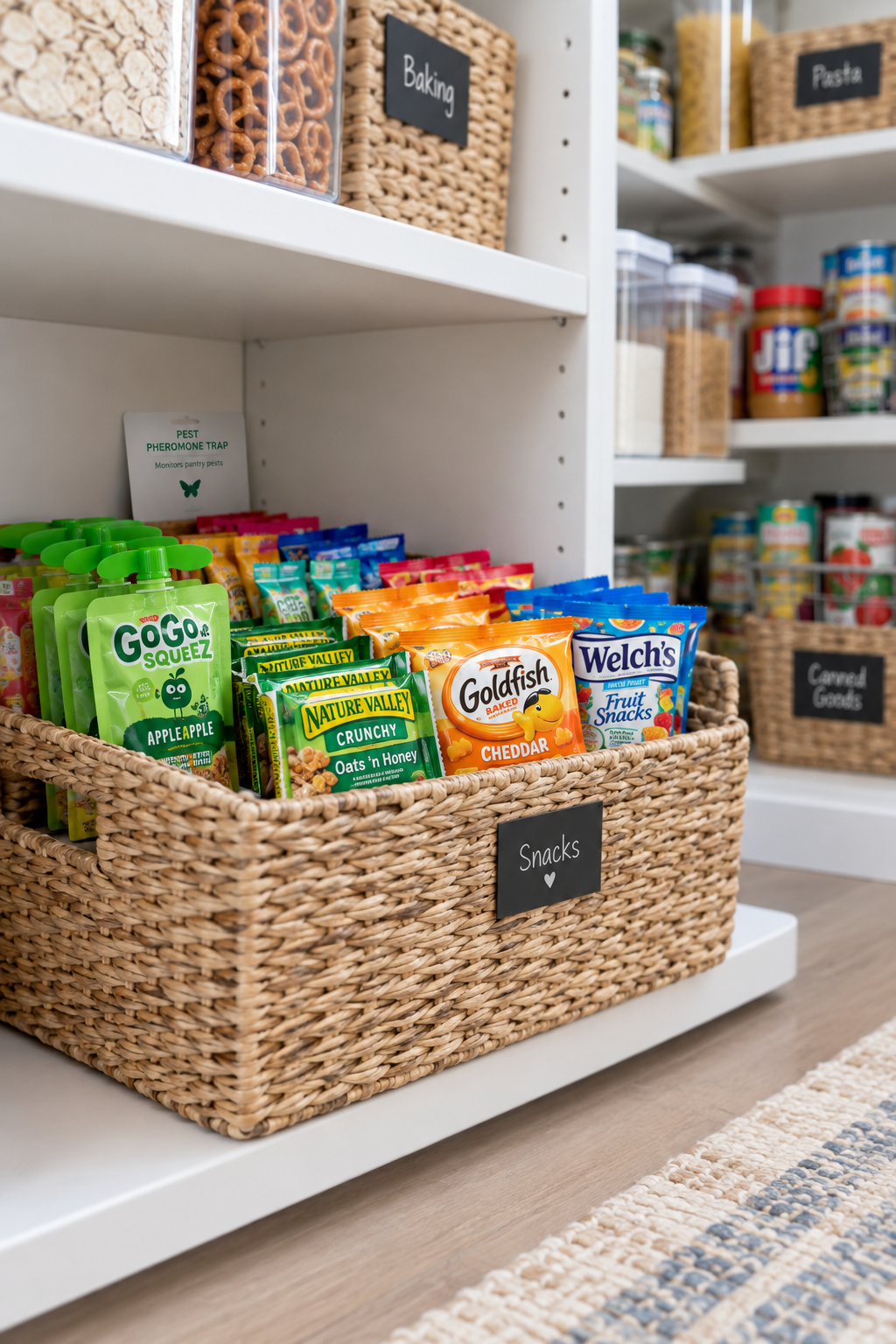
The common mistake is giving children the run of the whole pantry. A child who has to climb, rummage and pull boxes down to find a snack will do exactly that, and the result is the same scattering and double-buying the rest of this guide tries to prevent, only at knee height. The alternative is one low zone of their own, stocked with what they are allowed to take, so that self-service happens in a single, predictable place, which is zoning again, sized for a smaller reader. Setting heights, portions and what stays out of reach is the work of a snack station kids can use themselves.
The one change to make first, and the popular move to skip
Both calls are about order: one thing to do first, and one popular purchase to put off.
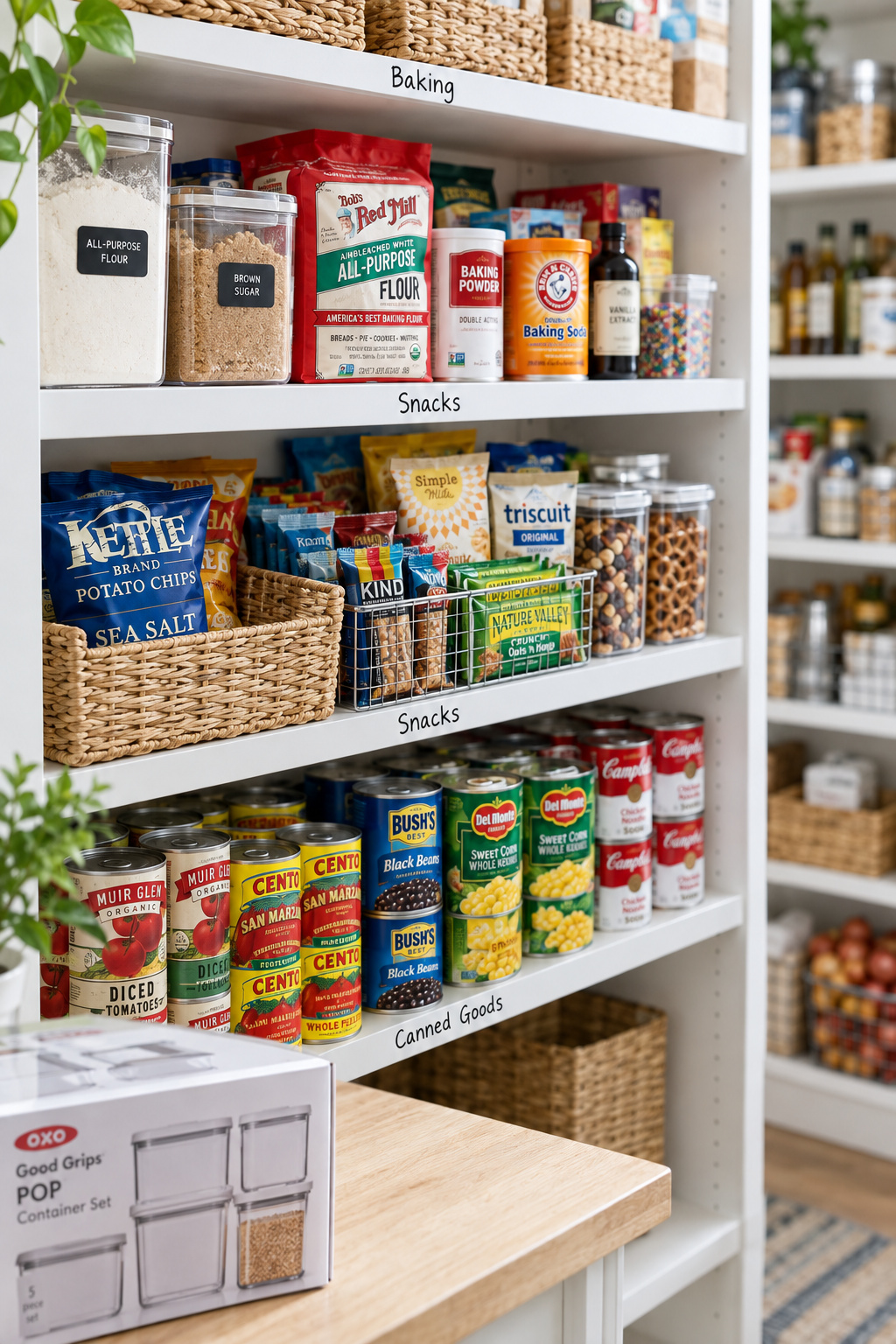
Make zones first. Take everything out, group like with like, and give each group one consistent place before any product enters the pantry, so baking, breakfast, canned goods and snacks each sit together with a home. This is the single change that most improves a cluttered pantry, and it is the one circulation habit that makes the others possible, because stock cannot arrive into a known place until the place exists, and it cannot be used in order until like items sit together.
Skip buying a matching set of containers as your first move. Containers are the last step, chosen once you know your zones and your quantities. Bought early, they solve a problem you have not yet defined and tend to create a new one: the container bought before the box was measured, the canister for something you use twice a year, the set of twelve for a pantry that needed four.
These calls rest on more than my own authority. Four independent, named professional organizers, writing or interviewed in four different publications, put the same sequence first. Nicole Gabai, founder of B. Organized and author of The Art of Organizing, told The Kitchn that “using zones in the kitchen helps prevent clutter and allows the kitchen to function efficiently.” Cynthia Kienzle, known as the Clutter Whisperer of NYC, made the zoning-first case to Apartment Therapy while working in a cramped New York pantry. Sue Spencer, a Master KonMari Consultant, gave Homes & Gardens a zoning tip for the pantry. Kristen Treantos laid out the same order for Camille Styles. Each puts grouping and placement ahead of purchasing, and each warns against buying containers before that work is done.
That evidence is strong practitioner consensus from American home organizers. No controlled study backs it, and I would revisit it if a good source argued the reverse. Still, agreement from four people who do this for a living, arrived at separately, is about as solid as organizing advice gets.
The appeal of starting with containers is easy to understand: buying something feels like progress, and a set of new jars promises the finished look before the work is done. Zoning feels like nothing: an afternoon of sorting that ends with the same packaging on the shelf. But the sorting is the progress, and the finished look can follow once you know what it has to hold.
What keeps a pantry organized after the reset wears off
My training is in library science, and the lesson from it that applies most directly to a kitchen is that no library stays usable through an annual tidy; what keeps it usable is that every item has a known place, new arrivals are processed as they come in, and old stock is reviewed and withdrawn on a schedule. The pantry is the same collection at a smaller scale, with faster turnover and a shorter shelf life.
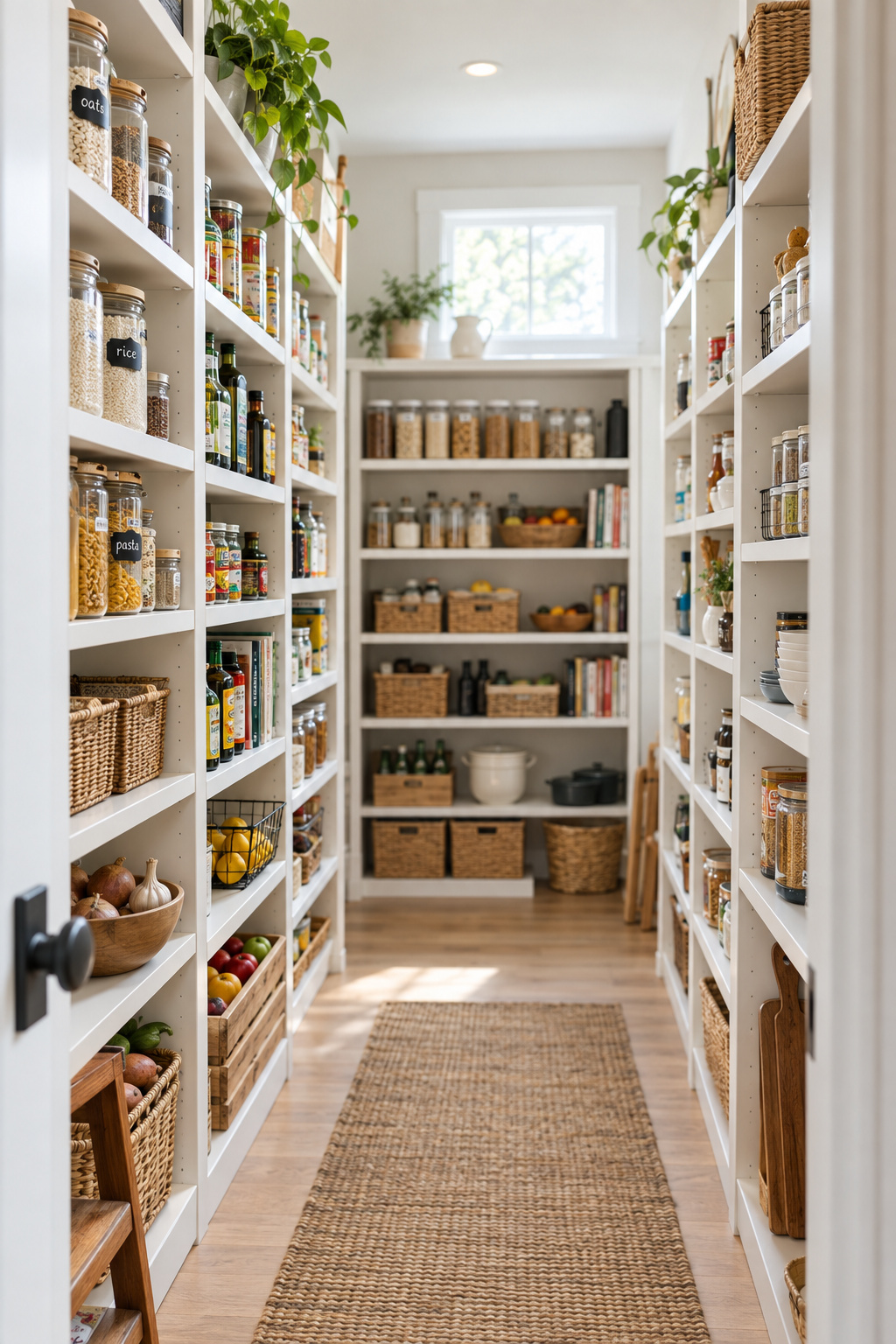
Pulled together, the system has four moving parts: zones that give every category one place, shelves matched to what they hold, a decanting choice that fits how often your household will refill, and a label-and-rotation habit that keeps older stock in front. Of the four, zoning comes first, and skipping it is the likeliest reason the others fail to hold.
Maintenance, then, should be small and regular rather than large and rare. Shiffy recommends a short monthly or seasonal look instead of a periodic full overhaul, because a quick check catches drift before it hardens into clutter. That check is the same three counts from the opening, run in a few minutes: what came in and found its zone, what got used, and what has not moved. Whatever has not moved gets a decision, eaten this week or retired. Once that is a habit, resets become unnecessary, because the circulation is running on its own.
Whatever kind of pantry you have, make one decision tonight: choose the first zone, before the containers, the shelves or the labels. Pull out one category, gather it from wherever it has scattered and give it a single place. Breakfast is a good candidate, because it is used every day and will tell you within a week whether the place is right. Everything else in this guide builds on that one shelf.