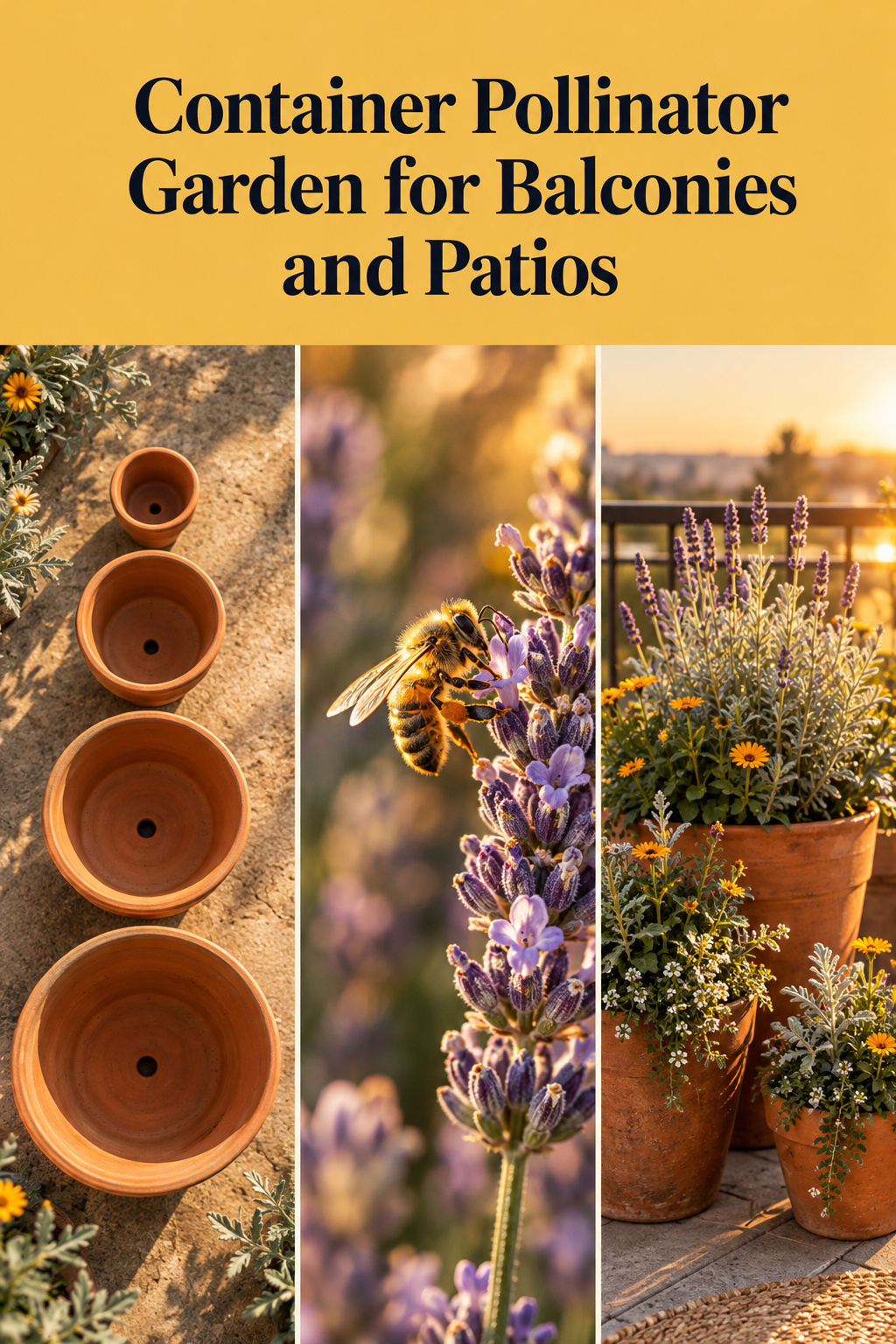
The container pollinator garden that goes wrong on a rented balcony usually starts the same way: one coneflower in a good-looking shallow pot. It looks right in May. By late July the soil has pulled away from the sides, the lower leaves are paper, and the bees have moved to somebody else’s building. The pot held four inches of soil and was asked to do a bed’s job.
TL;DR
- Soil volume matters more than rim size: a 12-inch terracotta pot holds about seven gallons of mix, and a bowl planter with the same rim holds a fraction of that.
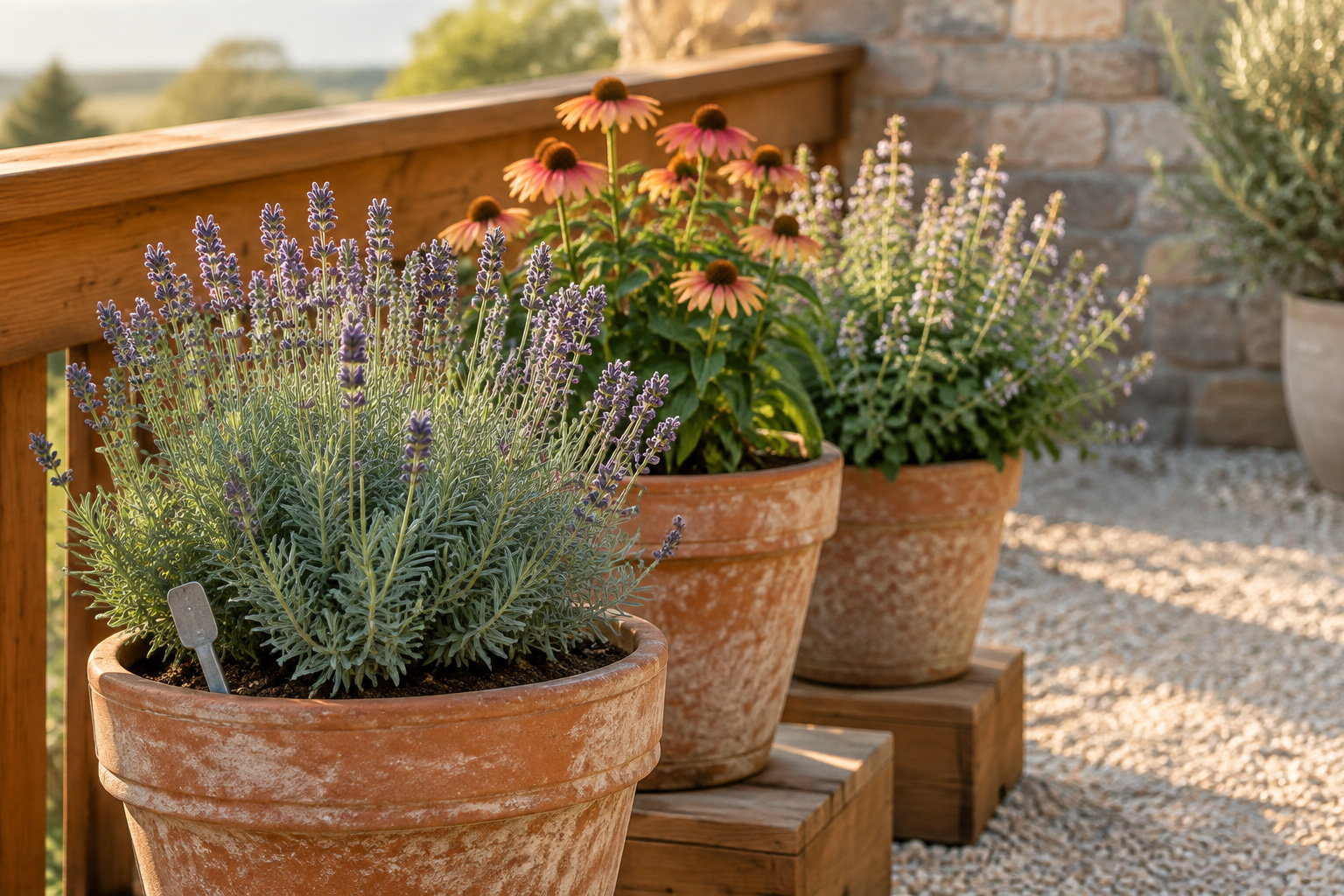
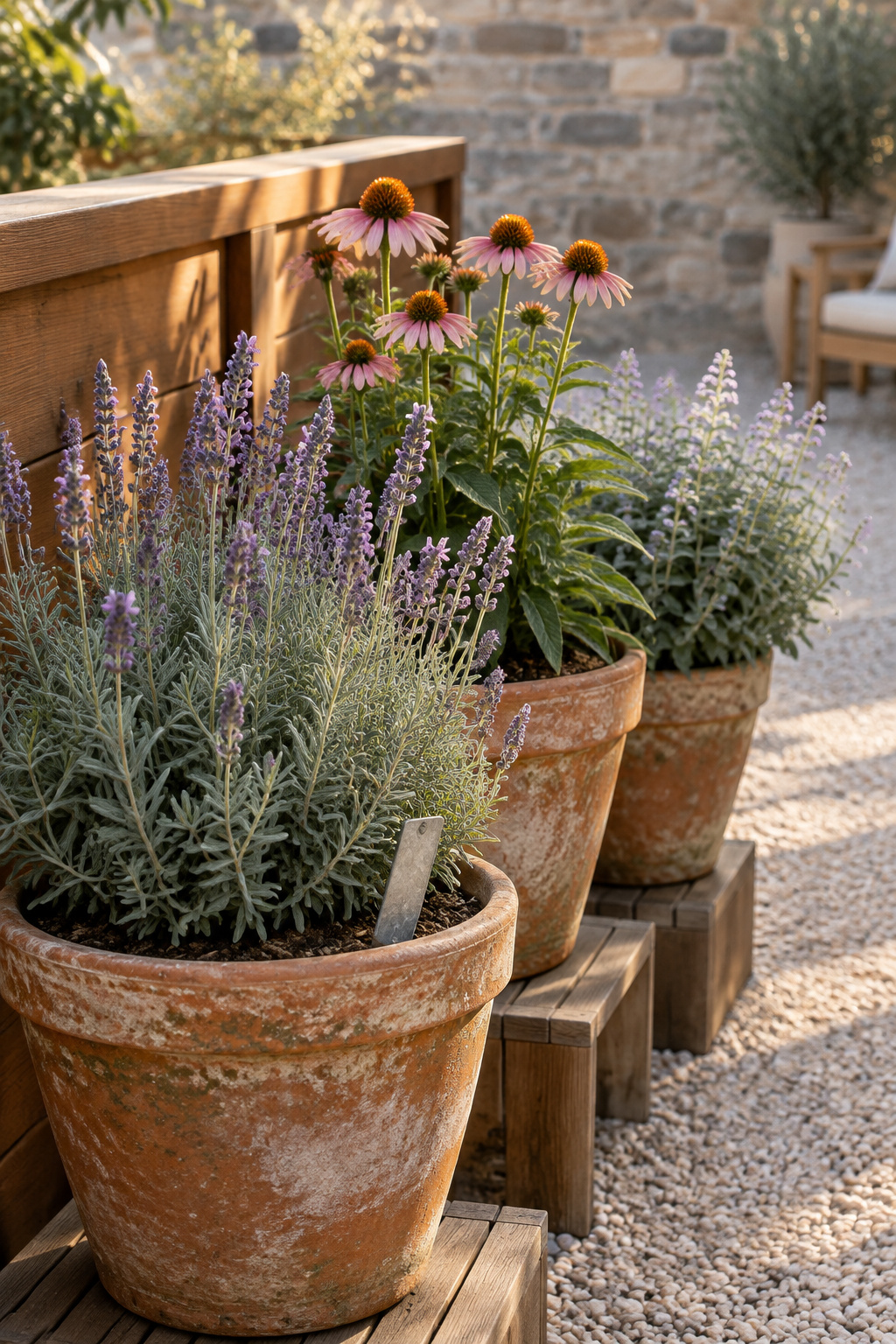
- Three pots at least 15 inches across, one species each, cover May to frost: salvia and lavender early, coneflower midsummer, hummingbird mint into fall, sedum to finish.
- Rate every potted perennial two USDA zones colder than its tag and most will overwinter outside under straw, which saves rebuying them at $8 to $25 each.
What I Learned Building a Container Pollinator Garden With No Ground to Plant In
The first pot that died by July
Two things kill container perennials, and plant choice isn’t either. Watering leaches nutrients straight out the drainage holes, so a pot runs lean faster than a bed. And a perennial keeps growing until its roots fill the soil it has, then goes root-bound and quits. That coneflower managed both inside ten weeks.
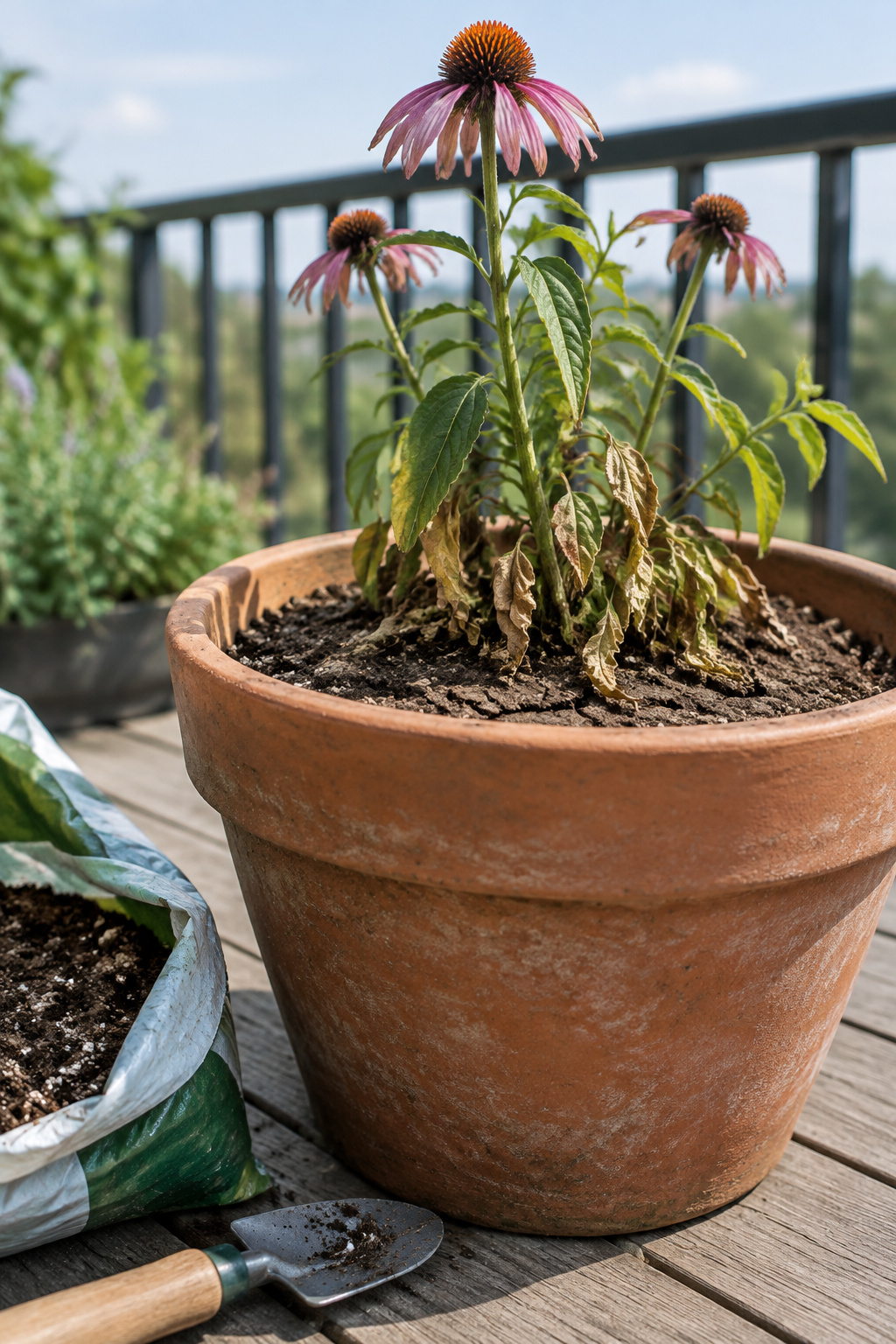
The fix is cheap in July and too late by September. Slide the plant out; if the roots have gone to a solid circling mat, pot up one size in fresh mix instead of watering harder.
Why soil volume beats pot diameter for pollinator plants
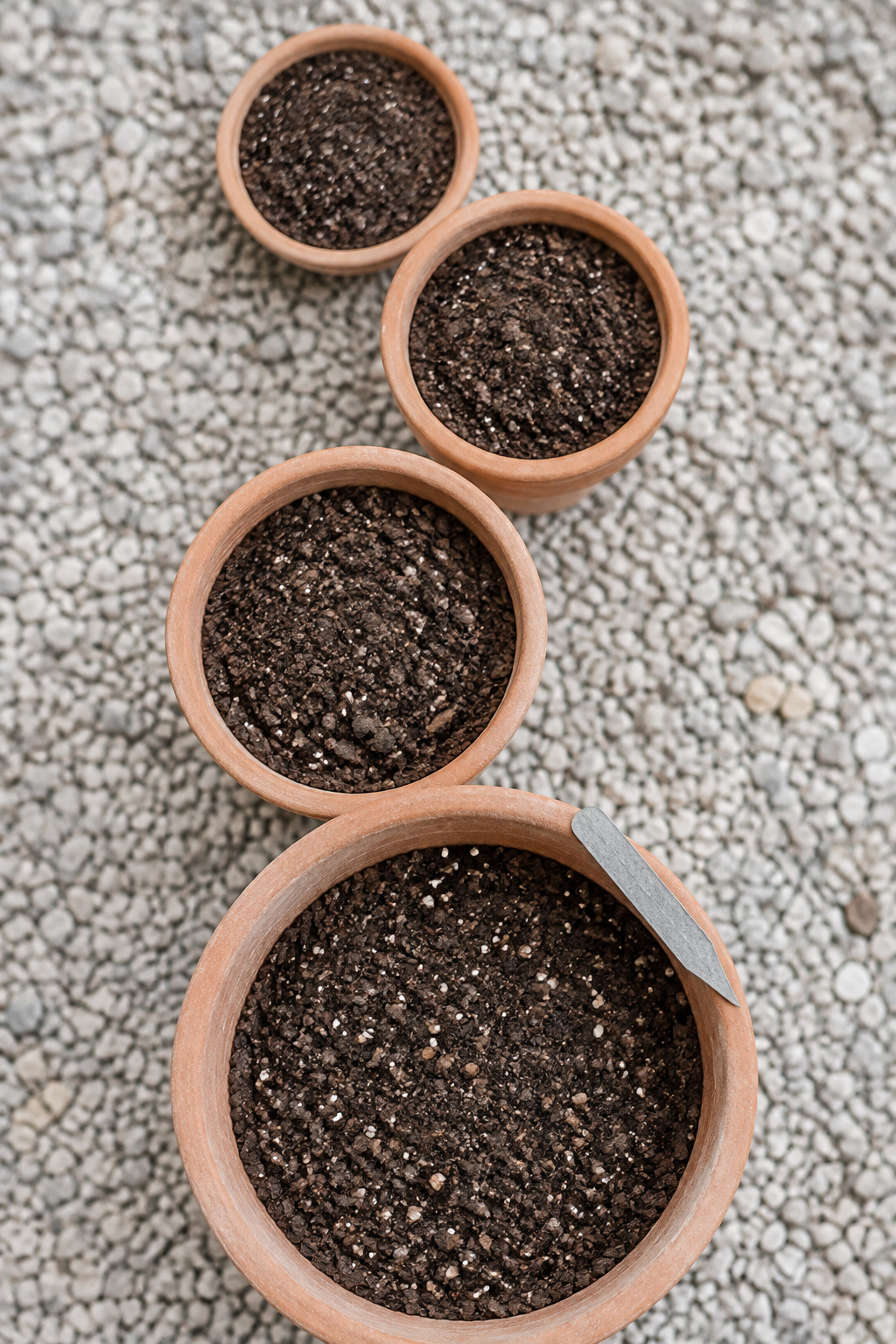
A pot’s printed size describes the rim, not the root zone. A retail 12-inch terracotta pot holds 27 to 28.5 quarts of mix per the manufacturer’s spec sheet, while a bowl planter with the same rim holds a fraction of that. Skip the gravel layer too; it drains worse.
What this build actually costs and takes
A 14-inch unglazed terracotta pot runs about $13.74. A 2-cubic-foot bag of soil costs about $9.83 and fills two or three of them. Nursery perennials run $8 to $25, and a named cultivar such as a Proven Winners coneflower lands nearer $17 to $38. One finished pot comes to about $30 built cheap and $70-plus branded.
Plan an afternoon, plus the drive back for a second bag of mix, because there is always a second bag. Skill level: first build. If you also have ground to plant, the complete guide to planning a pollinator garden covers bed layout and spacing.
Pot Sizing by Soil Volume, Not Diameter
Buy the big plain pot. The handsome one looks better against the brick, and I’m telling you anyway.
The first thing I built alone, at twenty-two, was a bench from two sheets of plywood. It’s ugly, dented, with a low spot in the top, and it has held tools in my garage ever since because I built it thick instead of pretty. Pots work the same way: ugly and strong beats pretty and weak, and the strength is soil volume.
The gallon-per-plant minimum for nectar perennials
The minimums I plant to, per the specialist growers:
| Pot | Usable soil volume | Plant fit |
|---|---|---|
| 8-inch nursery #1 | about 0.7 gallons | salvia and sage starts; bog sage 2 gallons |
| 12-inch tapered, 10 inches deep | about 3.77 gallons | coneflower; 1 gallon is the floor |
| 12-inch straight-sided terracotta | 27 to 28.5 quarts (~7 gallons) | lavender minimum; hummingbird mint, gritty mix |
| 16 inches and deeper | 5 to 10 gallons | bee balm; lavandin 20 to 24 inches |
Of three same-age coneflowers, the one in a 4-inch starter stayed stunted while the 3-gallon plant grew largest.
Why shallow bowl planters starve roots by August
A working mix needs air and water porosity of at least 50% of total volume. That is the UC ANR threshold behind every warning to use potting mix rather than garden soil, and a shallow bowl can’t reach it even filled to the rim. Drainage compounds it. Coneflower wants several large holes, and lavender won’t survive without them.
Matching pot size to plant type
Nominal sizing is off in both directions. A #1 nursery pot, the black one your plant comes home in, holds about 0.7 gallons, not one. Measure the depth or find the spec sheet.
Building a Three-Pot Grouping That Blooms May to Frost
Why three pots instead of one big planter? Each gets a job, easier to track than a mixed pot where everything competes.
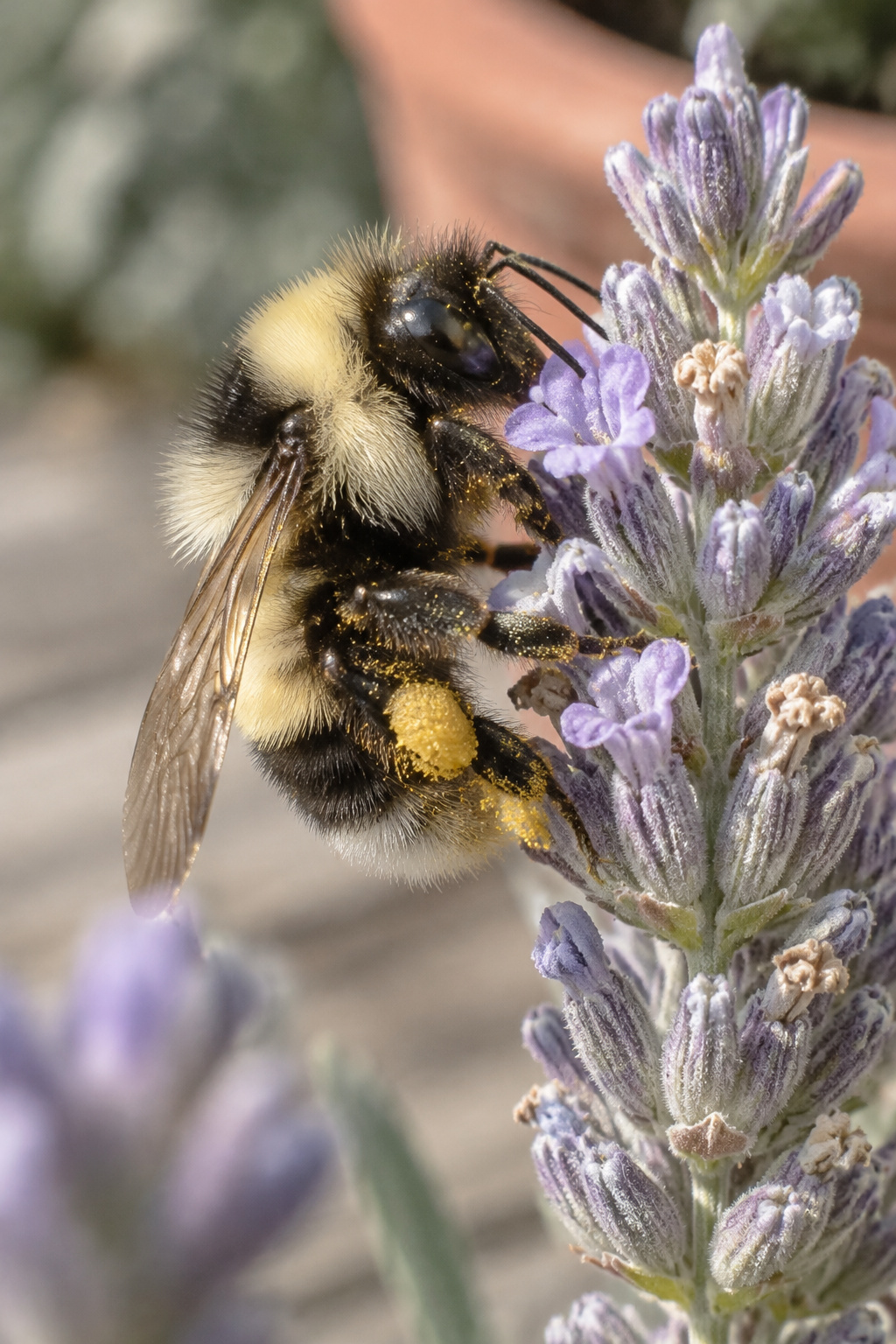
What each of the three pots needs to do
The UC Davis Arboretum puts the floor at 15 inches across the top and recommends several plants per pot rather than one. Its thriller-filler-spiller logic (upright focal plant, filler, low cascading edge) normally runs inside one container. On a balcony, spread it across the grouping: one tall pot, one mid, one trailing. Match sun preference across all three, because a part-shade plant in a full-sun cluster undercuts both.
Staggering bloom windows across the grouping
The 3x3x3 method, three plants of one species within a three-foot area, translates neatly to pots. Give each pot one species, three of it, instead of one of everything. When each pot has a different bloom window, the grouping never goes blank. For month-by-month sequencing, Owen Gallagher’s guide to which pollinator plants stagger the bloom windows does the calendar properly.
A starter plant list for three seasons
Five plants cover the span, each with its pot:
- Salvia/sage, early to mid season, 1 to 2 gallons.
- Lavender, early to mid summer, 12 to 16 inches.
- Coneflower, mid to late summer, 1 to 3 gallons.
- Hummingbird mint, summer into fall, 12 to 16 inches, gritty mix.
- Sedum ‘Autumn Joy’, early autumn, hardy to -11°F.
Overwintering Perennials in Containers Instead of Buying New Every Year
Sedum ‘Autumn Joy’ takes -11°F, Sedum spectabile ‘Brilliant’ takes -6°F, and yarrow ‘Coronation Gold’ holds to 8°F. Those numbers are why I stopped treating potted perennials as annuals.
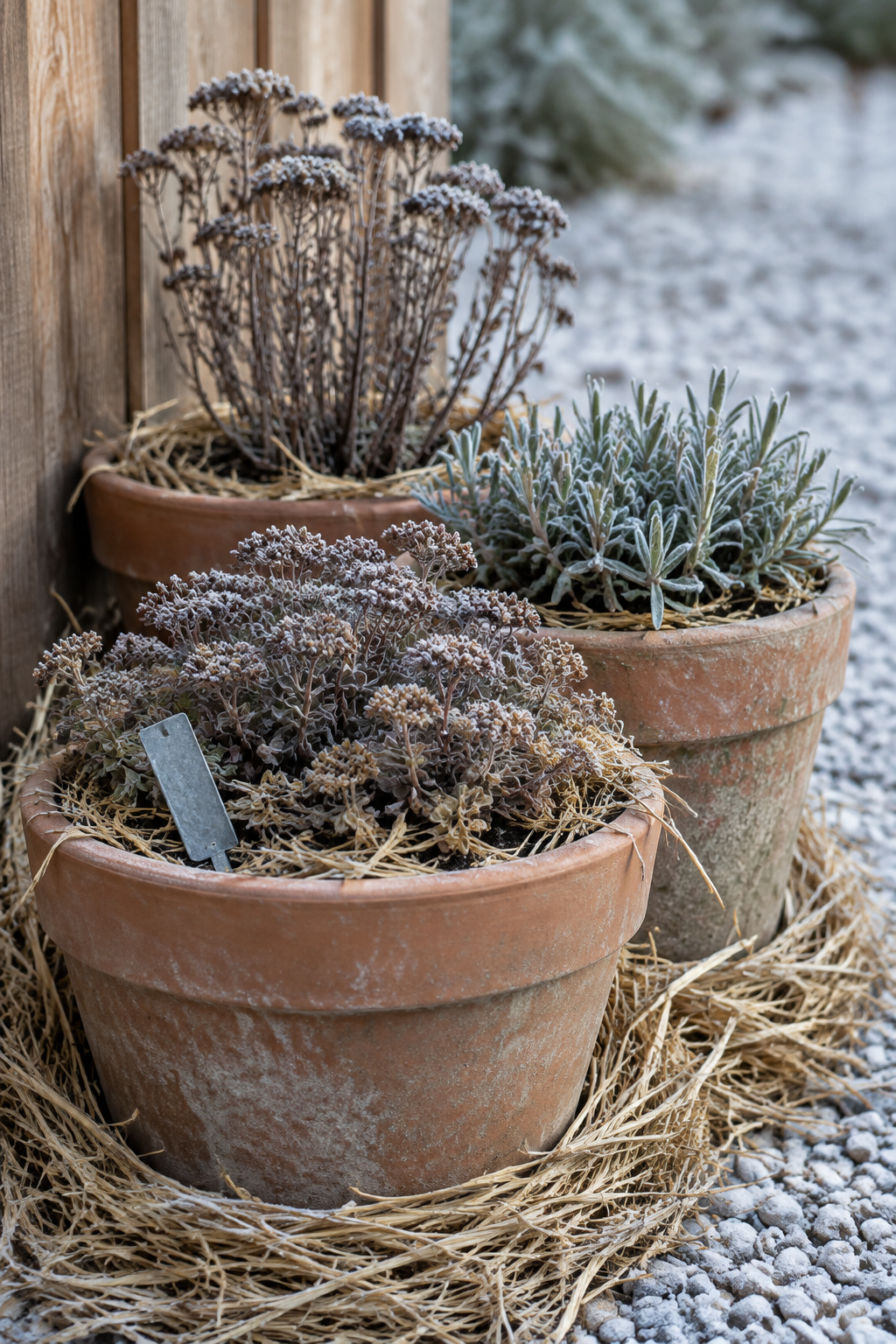
Which perennials actually survive a container winter
Sedum and yarrow are the reliable ones, and Illinois Extension names coral bells for overwintering mixes on the strength of its foliage. Tender species sit at the other end. Hibiscus moscheutos wants to stay above 38°F, and Digitalis x mertonensis below 24°F.
Insulating pots without moving them indoors
Push the pots together in a protected corner and cover them with straw, shredded leaves, bark mulch or evergreen boughs. Burying a pot in a mound of mulch works better still, since the roots borrow the soil’s insulation. Larger pots also buffer temperature swings, a second argument for the big plain pot. Wood and concrete planters winter outside fine. Clay and glazed pots crack through freeze-thaw, so wrap those or bring them in.
When a plant genuinely needs to come inside
Penn State Extension advises treating container perennials as if planted two USDA zones colder than their rating, because pot walls insulate far less than surrounding soil. Illinois Extension gives the same rule. An unprotected root ball can approach air temperature, so anything with a threshold above roughly 20 to 38°F goes into an unheated garage, shed or cold frame.
Renter-Friendly Weight, Drainage and Move-Day Realities
The mistake here is clustering all three heavy pots against the same rail, in the same corner, over the same two joists. Spread them.
Weight limits your landlord (and the floor below) care about
Nobody prints this on the pot, so work it out. A 12-inch terracotta pot weighs 9.6 lbs empty and holds roughly 0.9 cubic feet of mix. Dry mix runs about 20 lbs per cubic foot, and saturated soil can weigh twice that. So one watered 12-inch pot lands near 45 to 50 lbs, and three of them come to well over 130 lbs on one patch of decking.
Against code that isn’t alarming. A 100-square-foot balcony built to the common 60 psf standard carries about 6,000 lbs spread evenly, which the 2003 IBC’s Table 1607.1 allows for one- and two-family residences under 100 square feet. Concentration is the worry, not the total.
Drainage that won’t annoy the downstairs unit
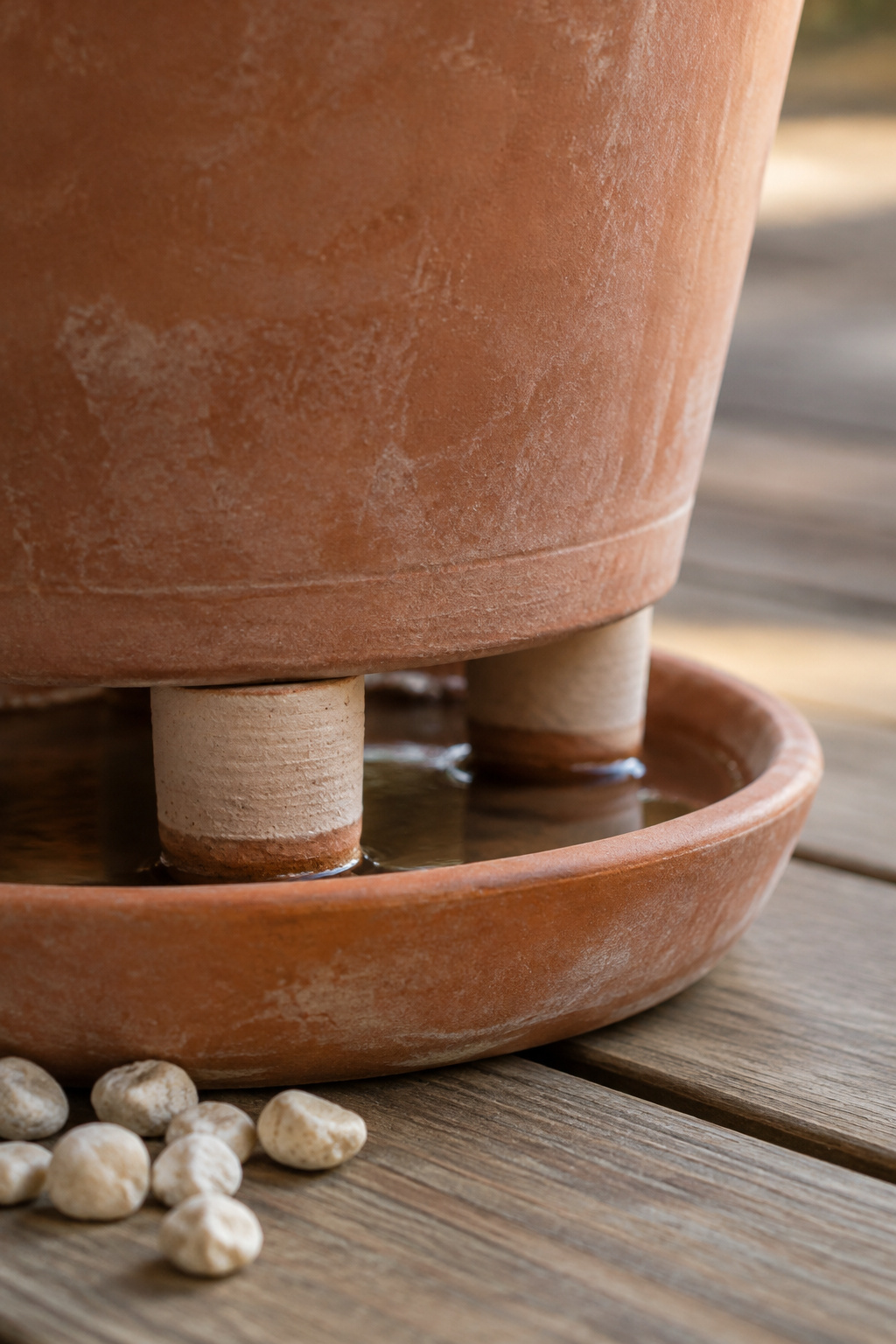
A mosquito completes its whole life cycle, egg to adult, in standing water in under a week, so a saucer left full over a long weekend is already a problem. Empty or flush it weekly, remove it, or fill it with fine aquarium gravel. Then raise the pot on feet, the standard fix for runoff dripping onto the balcony below.
What to do with the whole setup when you move
No extension service publishes a moving-day protocol, so this is how I do it:
- Water lightly the day before and never the morning of, since saturated pots are the heavy ones.
- Move pots one at a time, whatever the hand truck suggests.
- Check the new balcony’s weight and drainage limits before regrouping.
- Rebuild the grouping last, once you know where the sun lands.
Buying Plants and Soil You Won’t Regret
Every plant in this build is bought, not grown, and that changes what you check at the counter.
Reading a nursery tag before you buy
Some states now require nursery labelling around pollinator-safe status, Minnesota’s law being one example, and at least one major retailer mandates an extra tag on plants treated with neonicotinoid insecticides. Read the tag before the plant goes in the cart.
Why sourcing matters even more when every plant is purchased, not grown
An in-ground gardener can sidestep treated stock by starting a flat from untreated seed. A container gardener can’t, because everything comes off a nursery bench. Provenance is a bigger risk here than anywhere else, and Henrik Larsson’s guide to buying untreated native plants covers the question in full.
Potting mix that holds water without drowning roots
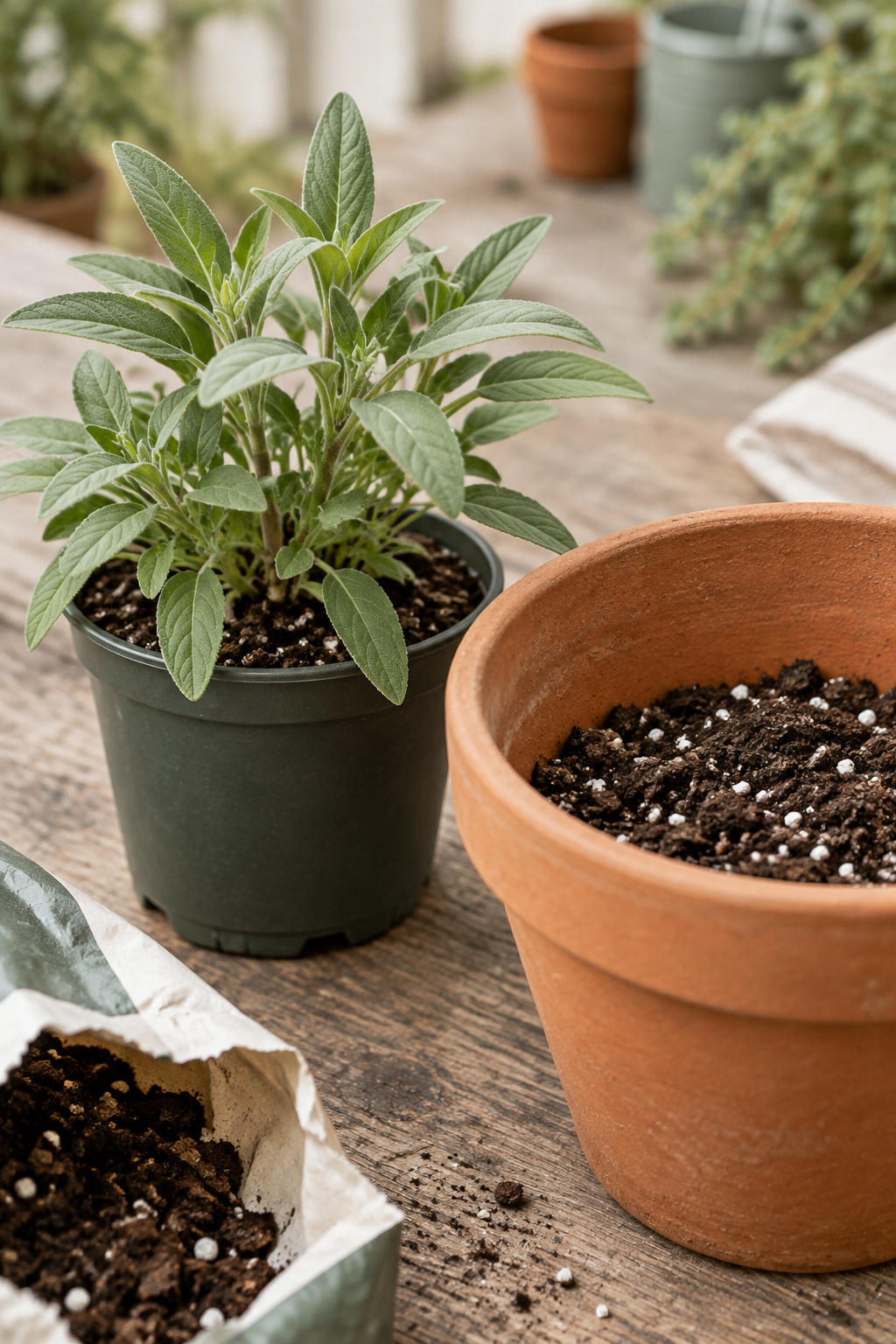
A container mix has three jobs: drainage from bark, aeration from perlite or vermiculite, water retention from peat moss or coco coir. Garden soil does none of them well, which is why it sets like a brick by August. To mix your own, a university-tested soilless recipe combines equal parts compost, peat moss and vermiculite.
The build is three pots at least 15 inches across, sized by gallons instead of printed inches, one species each, bloom windows staggered, mulched in place over winter. Start with one: the biggest plain pot you can carry, a bag of real potting mix and one coneflower, planted this weekend.
FAQ
Do pollinator plants in containers need as much sun as an in-ground bed?
Yes. Sun-loving pollinator plants such as yarrow, coneflower, salvia and sunflower still want at least six hours of morning or afternoon sun daily, exactly as they would in a bed. Pot size affects watering, not light. Evaporation and nutrient exhaustion rise as planter size drops, so a small pot dries out fastest.
Can you mix vegetables and pollinator flowers in the same pot?
Yes. Cool-season vegetables like lettuce and spinach go with alyssum, nasturtiums, petunias or violas. Warm-season crops like peppers, beans and cucumbers go with celosia, verbena, sweet potato vine or vinca. Combination pots still need six hours of sun, and the flowers draw pollinators that benefit the vegetables sharing the soil.
How long do potted pollinator plants live compared to garden-grown ones?
To stay vigorous, container perennials need repotting into fresh soil every one to two years and dividing every two to three years, a faster renewal cycle than in-ground plants require. Long-lived garden perennials can persist 20 years or more with good care. A potted specimen matches that only with continued repotting and dividing.