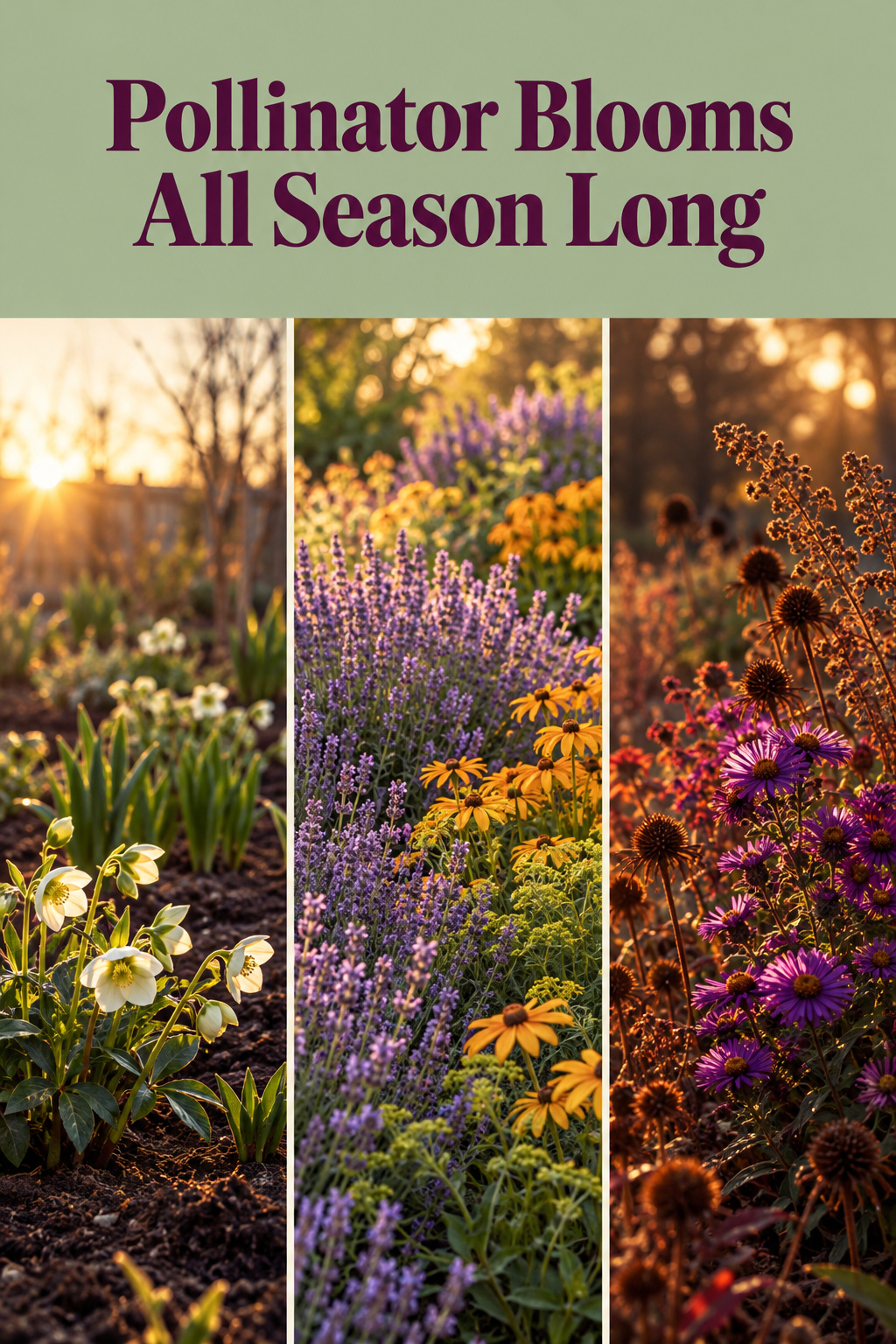
The bed gets bought on one Saturday in May. Everything on the cart is flowering, the trolley looks generous, and by mid-June the whole bed goes at once, then shuts down quietly for the rest of the year. I keep meeting the same belief: a full cart of blooming plants equals a full season of them. It doesn’t. Pollinator plants that bloom all season are a scheduling decision and not a shopping one, and nobody sells you the schedule.
TL;DR
- Plan three bloom windows, not one purchase: Penn State Extension’s habitat certification asks for at least 3 native perennial species flowering in each of March–April, June–August and September–October, 5 plants per species.
- The shoulders carry the load. Early spring feeds newly emerged bumblebee queens and specialist mining bees; aster and goldenrod (August–October, zones 4a–8b) are the last fuel before frost.
- Sequence inside a window too: butterfly weed opens May–August, coneflower June–August, bergamot June–September, spreading the peak instead of stacking it.
The May Weekend That Ruins Most Pollinator Beds
Why “everything in flower” at purchase time backfires
Nursery inventory is timed to sell plants while they look their best, so whatever is showy that week fills the benches. Shop once and you buy one moment in the growing year, repeated eleven times. The standards written to counter that habit agree: pick species from separate bloom windows, not one peak. Penn State Extension’s habitat certification asks for at least three native herbaceous perennial species blooming in each of March–April, June–August and September–October, five plants per species minimum. If you’re still deciding where the bed goes, the full set of pollinator garden ideas covers siting and layout before this timing work starts.
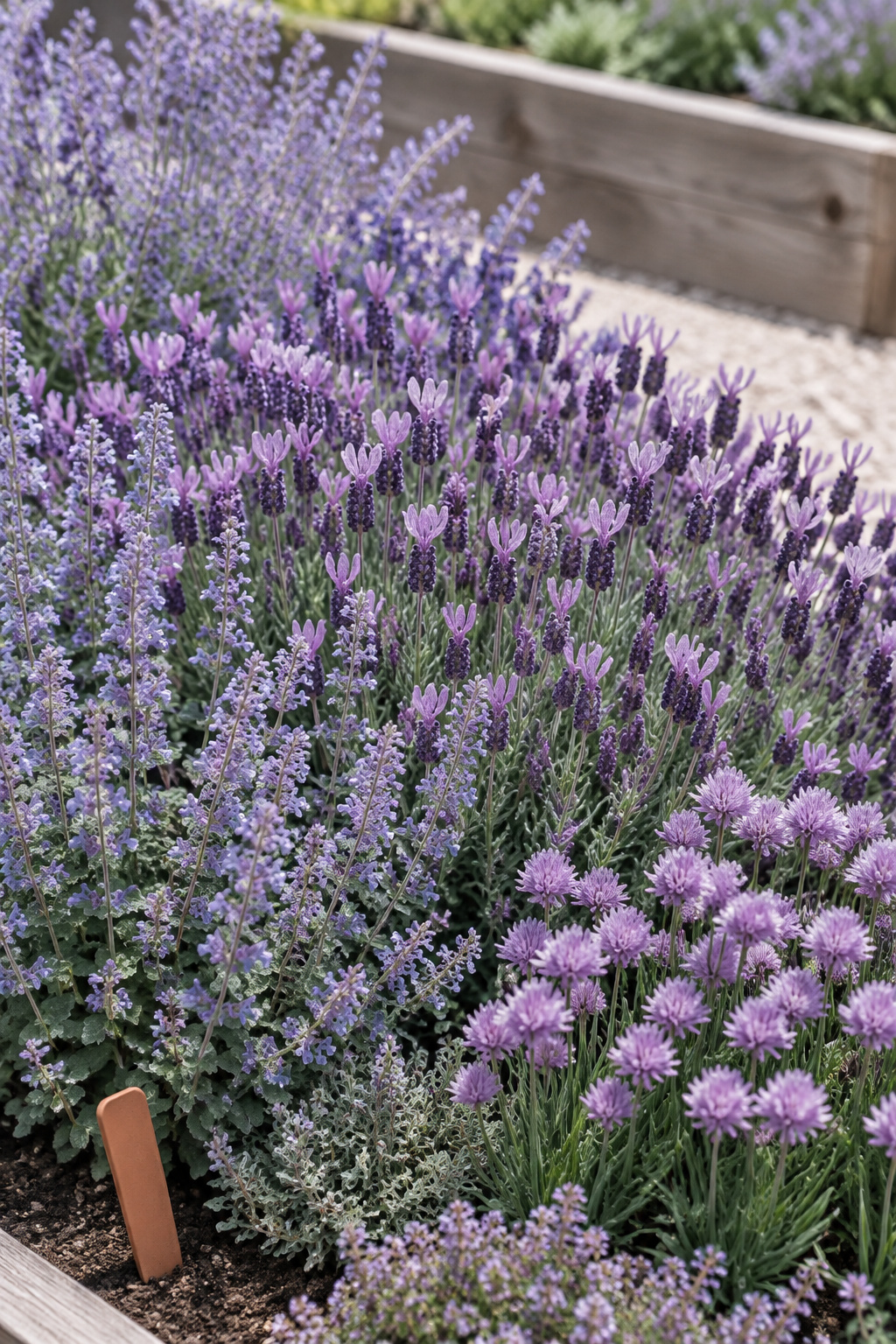
What a bloom gap actually costs the garden
An empty August is more than a dull view. Illinois Extension calls late-season floral resources “incredibly important” and often scarce in home gardens, which is exactly when bumblebee queens provision for winter and monarchs need migration fuel. The spring end fails the same way. Early pollinators may need nectar to migrate, mate, or complete the change into their adult phase, per the U.S. Fish & Wildlife Service, so missing that window costs a life stage, not a photo. Mt. Cuba Center’s Pollinator Watch Team also found plant diversity tracks with the diversity of visiting insects. One big bloom pulse draws a narrower crowd than the same footage spread across the calendar.
How this calendar fixes it
I built a cedar deck with my uncle the summer I turned sixteen, and I’ve re-oiled it every spring since. The deck was never the Saturday we screwed it down. It was the standing March appointment afterwards. A bloom calendar works the same way. You keep a rhythm instead of buying a bed: three windows, three species anchoring each, added over several visits. Cornell Cooperative Extension sets that minimum independently, at least 3 plants from at least 3 perennial species per season, spring, summer and fall, for 27 plants total.
Early Spring: The Shoulder Season Almost Nothing Else Covers
What’s flying and hungry in March and April
Two groups dominate the cold end of the year: newly emerged queen bumblebees, and Andrena mining bees. Mining bees make this window unforgiving. Many are strict specialists collecting nectar and pollen from one group of closely related plants, so a generic flower won’t substitute. The monarch migration’s leading edge is already moving north, females laying as many as 300 eggs each, with milkweed breaking bloom as early as March in Texas, Oklahoma and California.
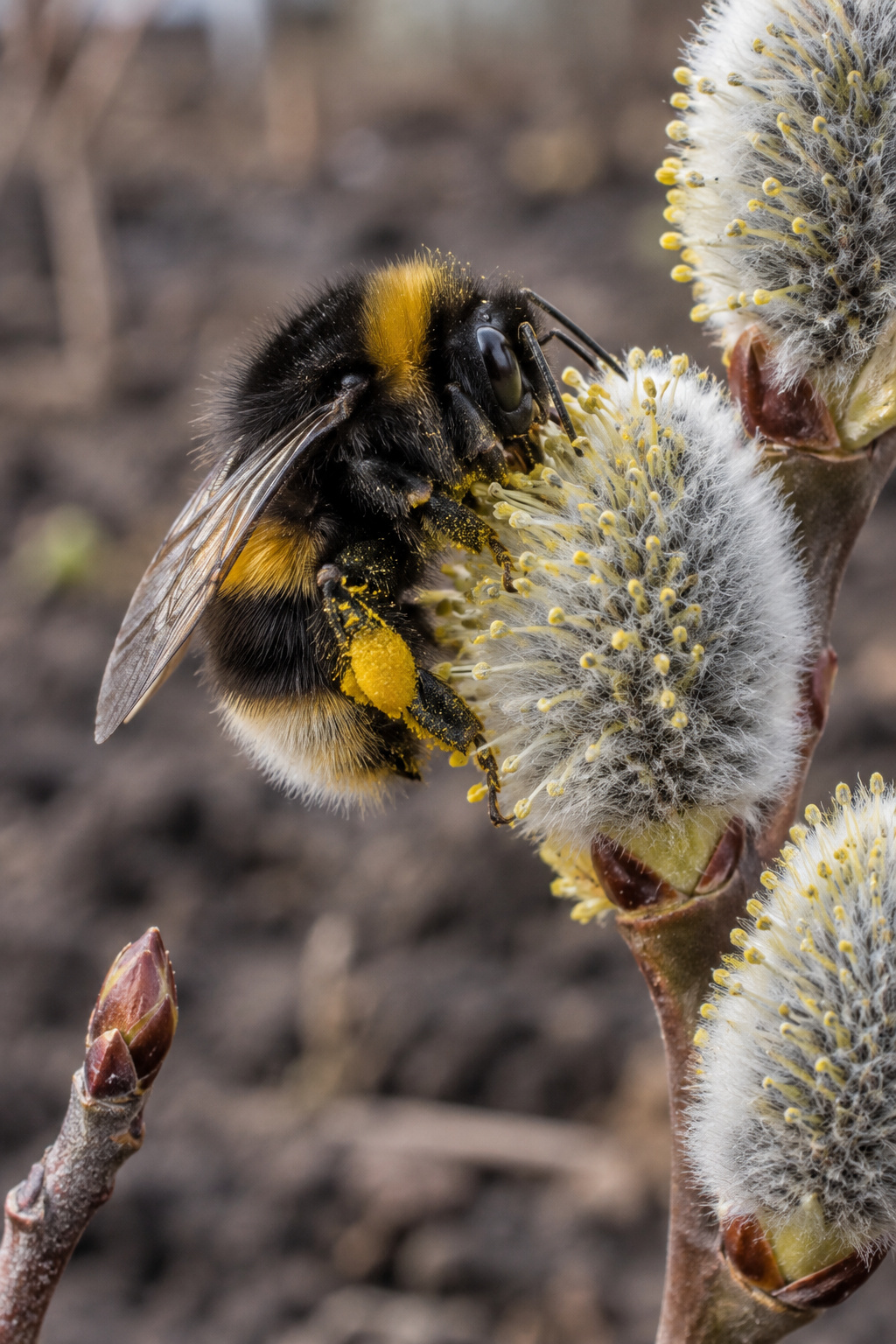
Plants that open before the big spring rush
Native willows carry this window better than anything else I know. Salix species, pussy willow (Salix discolor) included, flower in late winter and feed queen bumblebees and mining bees before most perennials break dormancy. Serviceberry and maple do similar early work, alongside woodland ephemerals such as trout lily, bellwort and spring beauty, which flower before the canopy leafs out. Among perennials, woodland phlox (Phlox divaricata) and Virginia bluebells (Mertensia virginica) are named April–May bloomers, and the Xerces Society’s Northeast list adds spiderwort, wild geranium and highbush blueberry. Golden Alexanders (Zizia aurea) belongs here for spring nectar; its caterpillar duties are the host-plant article’s business.
How many early bloomers you actually need
Three species, five plants each, per the certification standard: a small ask for the window carrying the most weight.
Peak Summer: Avoiding the Wall-of-Color Trap
Why peak season is the easiest part to get right
Nobody struggles with summer, because the nursery trade is built around it. The risk here is redundancy, not scarcity: three plants that all start the same fortnight, sold as succession.
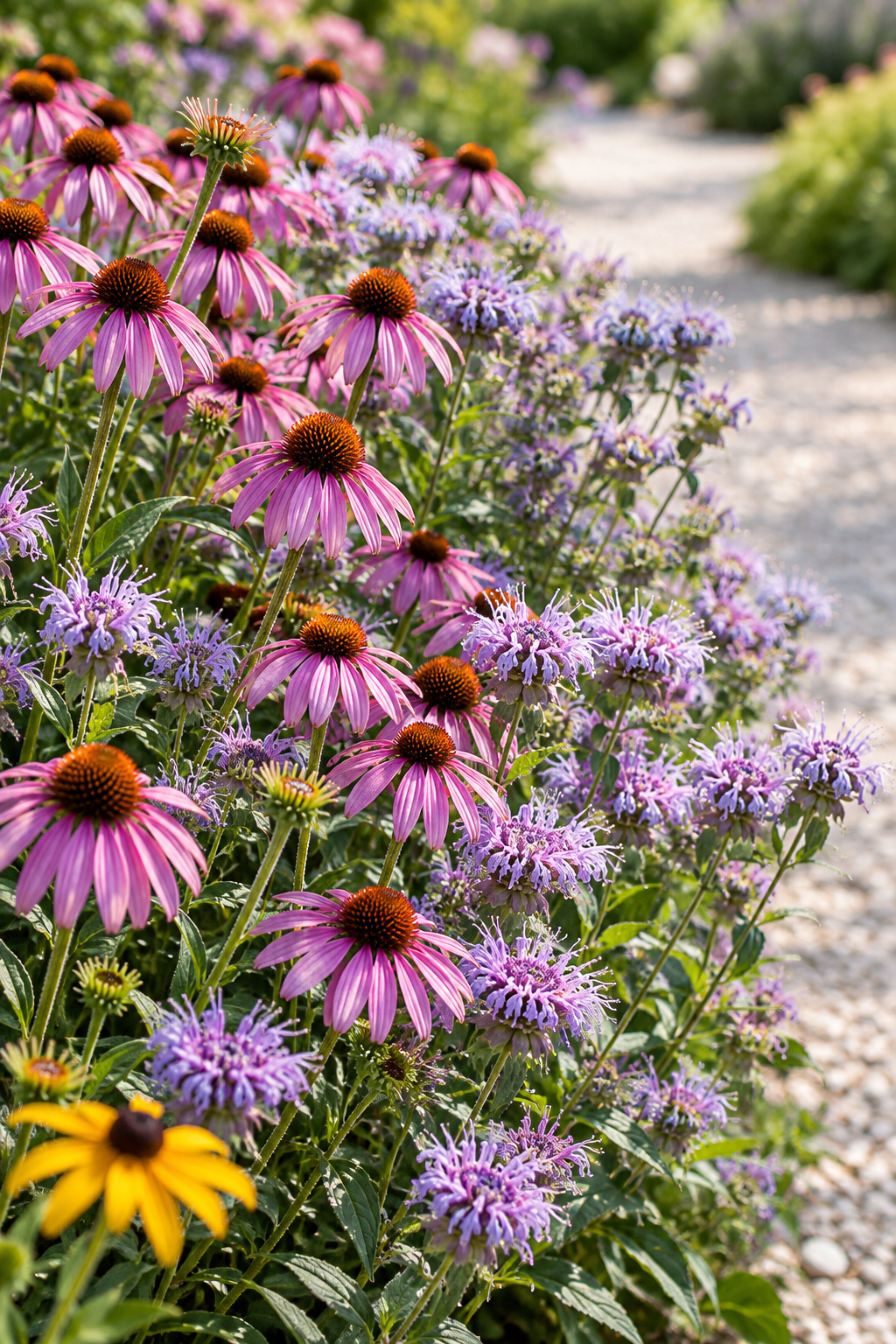
Sequencing bloom within the peak instead of dumping it all at once
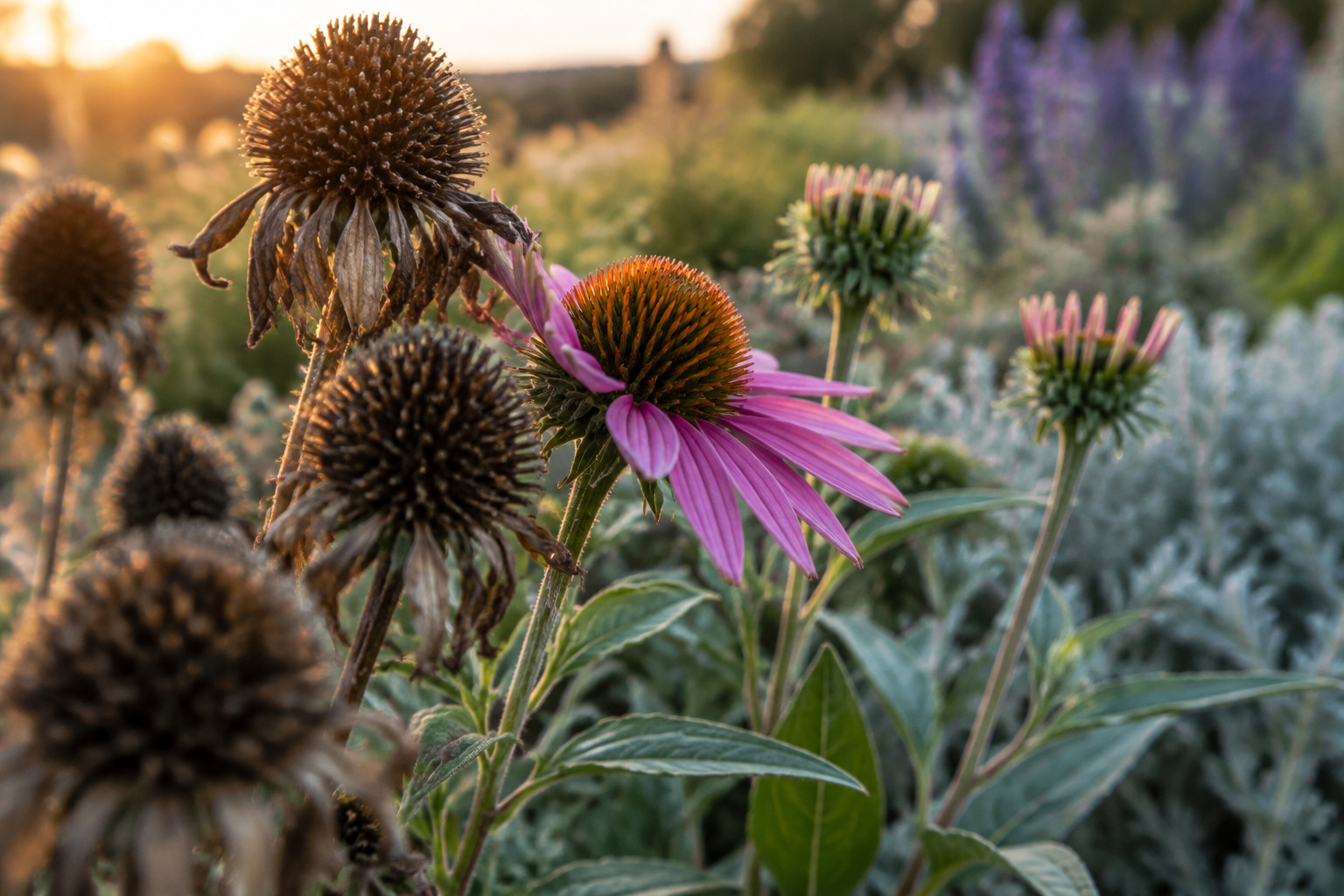
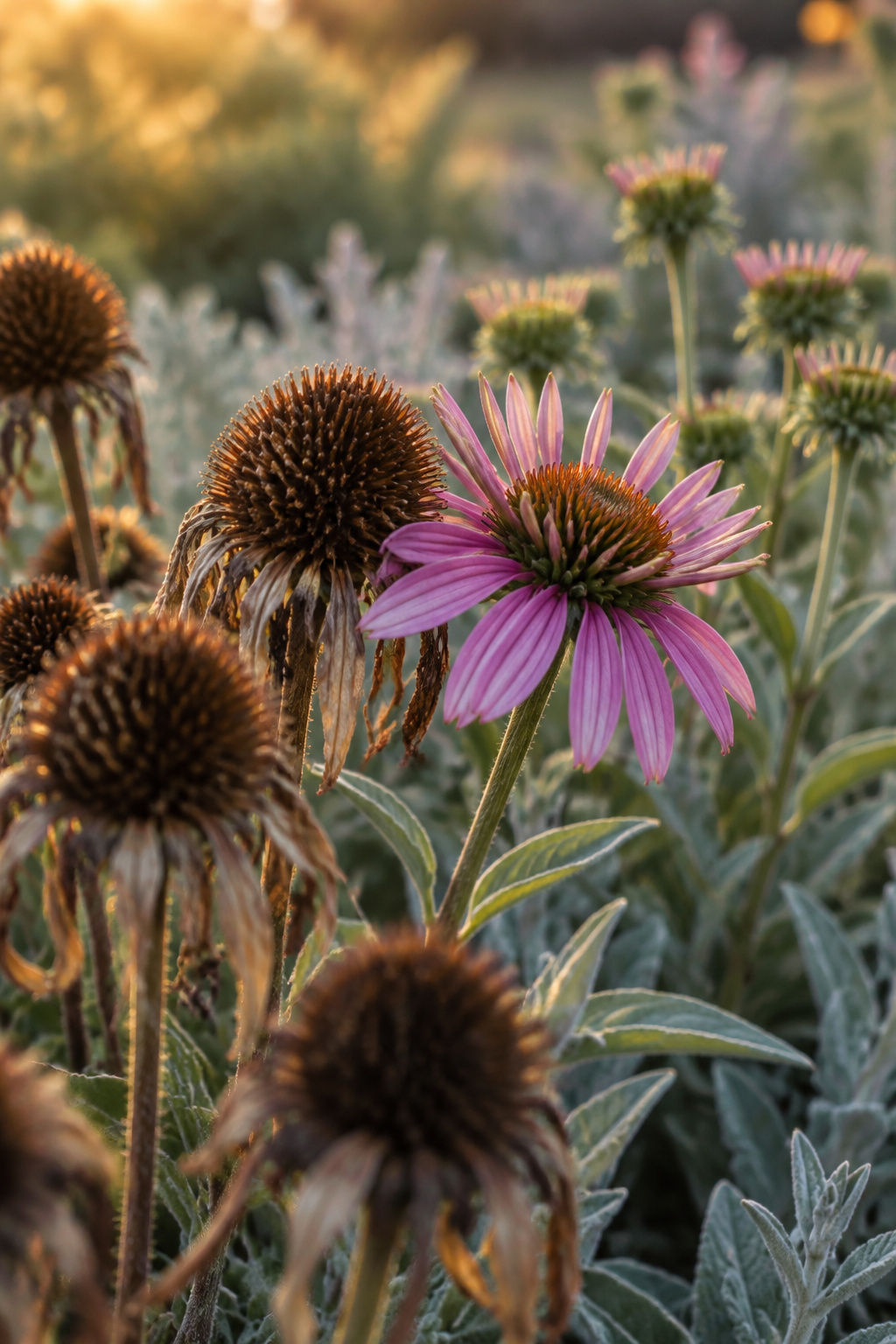
Read the start months, not the season. Butterfly weed (Asclepias tuberosa) opens May–August, zones 3a–9b, bridging back to the spring shoulder. Purple coneflower (Echinacea purpurea) runs June–August, zones 3a–8b, and joins as butterfly weed fades. Wild bergamot (Monarda fistulosa) goes June–September, zones 3a–9b, then hands off to autumn. Chosen by start date and not colour, those three spread the peak across roughly sixteen weeks. A zone 8 gardener sees each open ahead of a zone 5 gardener growing the same species, so the zone range matters as much as the months.
| Bloom window | Species | Notes |
|---|---|---|
| May–Aug | Butterfly weed (Asclepias tuberosa) | Zones 3a–9b; counted here as adult nectar only |
| June–Aug | Purple coneflower (Echinacea purpurea) | Zones 3a–8b; joins mid-window |
| June–Sept | Wild bergamot (Monarda fistulosa) | Zones 3a–9b; longest summer run, bees and hummingbirds |
The species that carry June through August
Those three are the spine. For a fourth, Mt. Cuba Center’s trials found Phlox paniculata ‘Jeana’ was by far the favourite for butterflies among the phlox tested, likely because its dense flower clusters make feeding easier. That is a documented visitation preference, the most-visited option in a real trial, not a nectar measurement. Nobody publishes nectar by the milligram, so take visitation as the evidence it is.
Late Autumn: The Shoulder Everyone Forgets
Why late bloomers matter more than people think
September flowers get cut down for looking untidy, and that is the costliest tidy-up of the garden year. Illinois Extension puts it plainly: it’s the pollinators’ “last chance to stock up before a long winter’s rest, and many bumblebee species overwinter as a solitary queen.” Goldenrod takes blame it shouldn’t: it’s insect-pollinated, and the wind-blown pollen making people sneeze is something else.
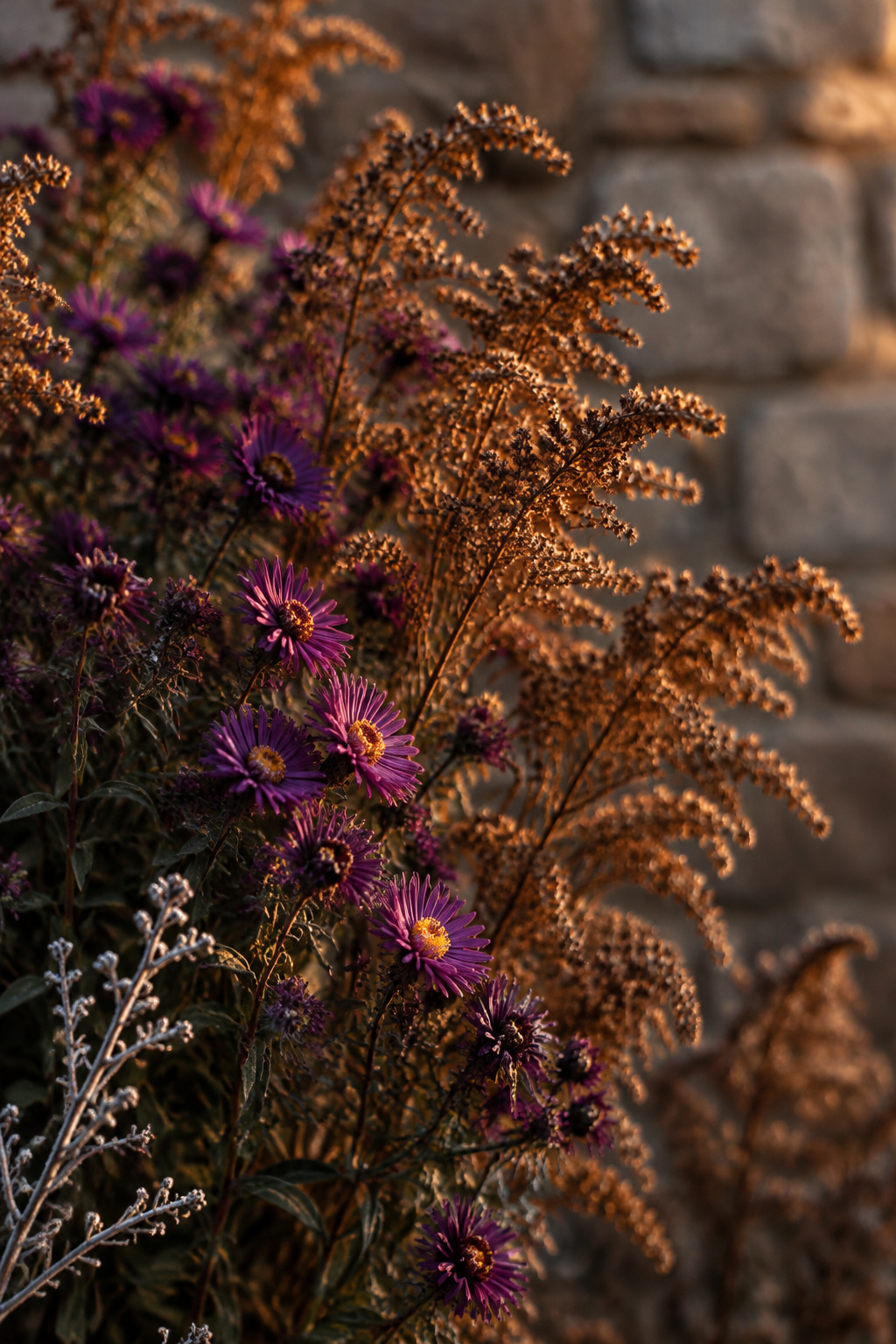
Asters, goldenrod and the last nectar before frost
New England aster (Symphyotrichum novae-angliae) blooms August–October in zones 4a–8b, and wrinkleleaf goldenrod (Solidago rugosa) matches it exactly. Aromatic aster starts so late it runs into frost, which makes it the final nectar many beds have. Across the genus, goldenrods collectively flower May through December, and Mt. Cuba’s observers rate them a bumblebee favourite that draws a tremendous diversity of other pollinators. Regional extension charts add calico aster and rough-stemmed goldenrod for September–October, plus sneezeweed from August.
Overlapping autumn bloom with summer’s tail end
Two bridge species stop a gap opening in late August. New York ironweed and pink turtlehead both run July–September and tie summer’s end into the aster window. Bergamot’s June–September run already reaches the earliest asters, so that handoff is often built from plants you were growing anyway, with no separate autumn planting.
Building a Calendar of Pollinator Plants That Bloom All Season
Counting species per window instead of just plants
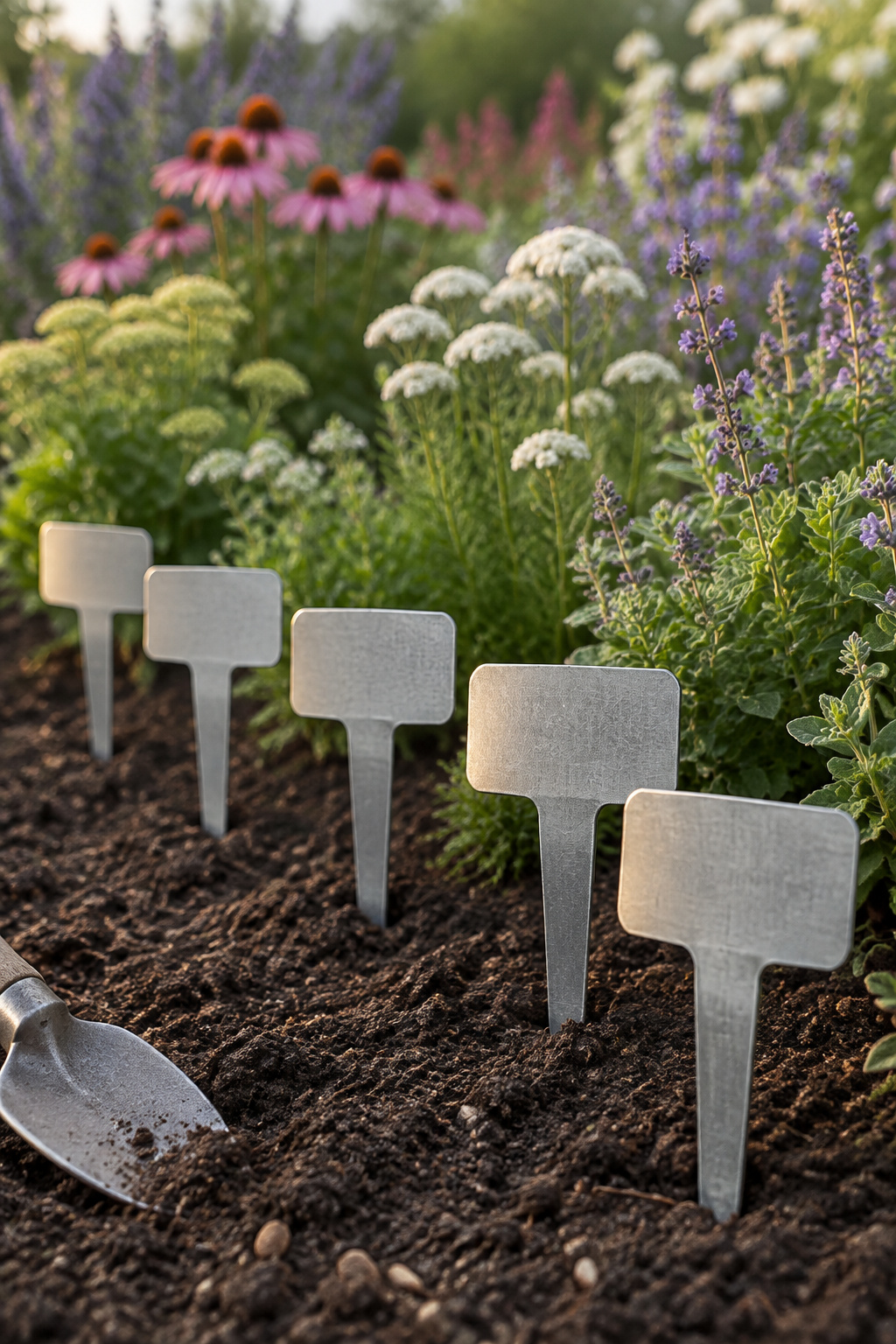
How many plants? Wrong question. Count species per window, not plants in the trolley. Two institutions reached the same minimum independently: Penn State’s certification standard (3 species per window, 5 plants each, 45 plants total) and Cornell Cooperative Extension’s design guidance (3 species per season, 27 plants). Two extension programmes converging on one figure without borrowing it is as close to a settled specification as this subject gets. The 3x3x3 beginner system, with 9 species, 27 plants and 32 square feet, is the floor for a first bed. Penn State’s 45 does real habitat work.
A simple month-by-month worksheet
- List every species you grow or intend to buy, with its bloom start and end month.
- Write its USDA zone range beside it, then shift the printed months earlier or later to suit your own zone.
- Sort the list into three windows: March–April, June–August, September–October.
- Count distinct species per window and mark any window holding fewer than three.
- Fill the thin windows first, from the plants named above — willow and woodland phlox for spring, ironweed or turtlehead for the summer-to-autumn bridge, calico aster or sneezeweed for the end.
Adjusting the calendar for your last frost date
Printed bloom months are a national average, and nobody gardens in a national average. The USDA Plant Hardiness Zone Map covers cold-hardiness, but placing the spring shoulder takes frost probability, not one date. University climate offices publish last-frost dates at three confidence levels: a 50% average date, a 10% date so late that only 1 year in 10 sees frost fall after it, and a 90% date. Those have trended earlier in recent warm years, so check a current local station and not the old chart in the shed.
Scaling the Calendar to Pots or a Front Yard
The same plan in containers
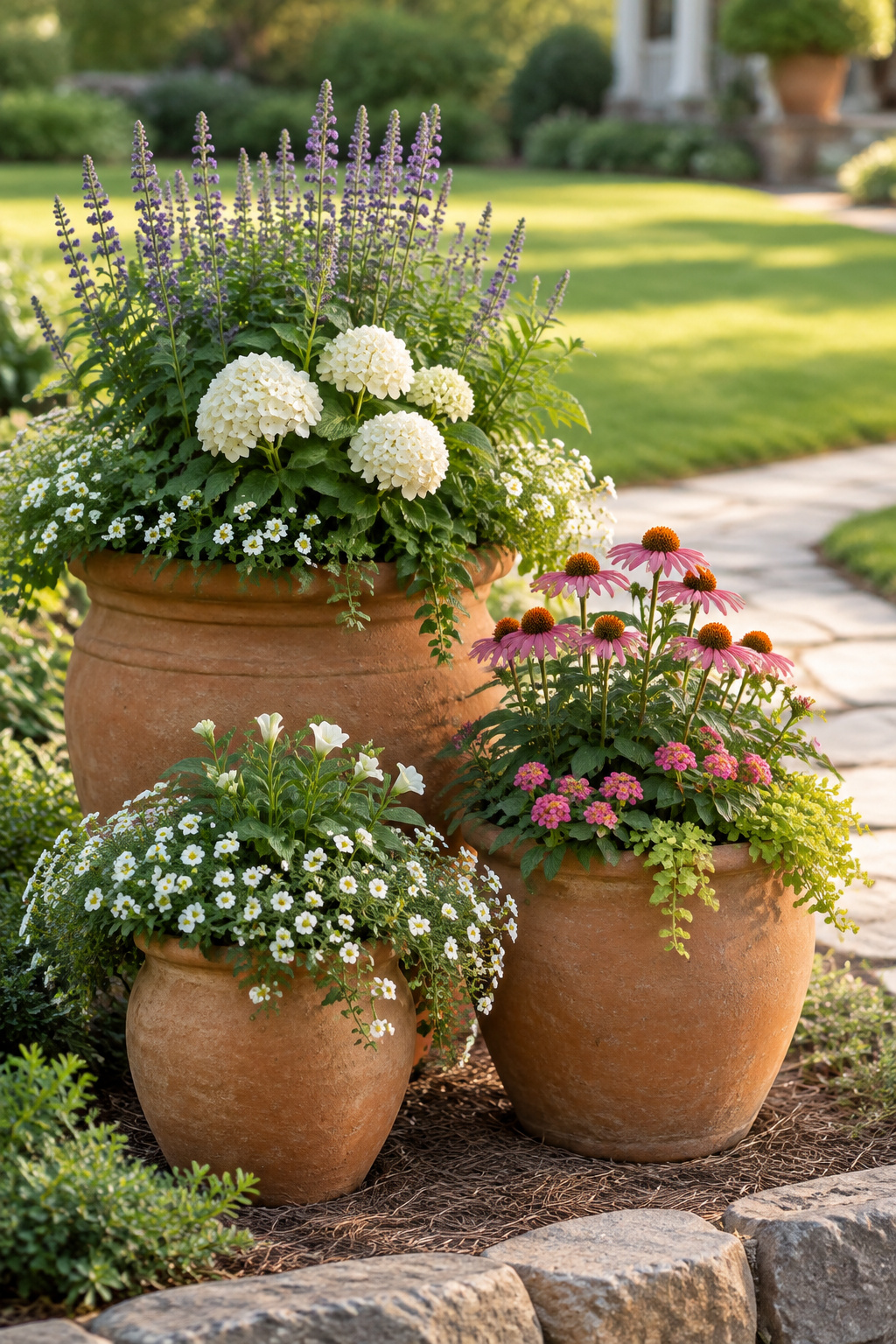
Three windows with three species each: the structure holds when the soil sits in a pot. What changes is soil volume, the limiting factor for keeping a perennial alive through August and then through winter. Tess Carver runs the same plan in containers, with pot sizing, grouping and overwintering covered properly.
Keeping a long-season bed looking deliberate
A bed engineered never to go blank is also the one most likely to look unruly from the pavement, since it never settles into a uniform look. That is a solvable problem of massing and edges, covered in full in the guide to keeping a long-season bed looking deliberate in a front yard.
What changes and what doesn’t
The species-per-window count holds in all three settings. Pots vary in soil volume and drainage; the street varies in edge definition, height and repeated massing.
Pick the window your garden currently loses. For most beds it’s September, sometimes March; one season of paying attention tells you which. Buy three species for that window, five plants of each, one trip and one window done properly, then repeat next spring for the next gap. That is the difference between a bed that photographs well in June and one still feeding something in October.
FAQ
Do I need different plants for each season, or can one plant bloom all summer?
Some perennials do run for months inside one window; wild bergamot flowers June through September across zones 3a–9b. But no single species spans spring, summer and autumn. Genuine season-long coverage needs species drawn from each of the three windows, which is why the certification standard sets a minimum of three species per window.
What’s the difference between deadheading for more flowers and true succession planting?
Deadheading removes spent flowers so one plant reblooms; Chicago Botanic Garden notes some perennials, such as tickseed, need daily deadheading to keep going. Succession planting is a different strategy. It adds distinct species timed to different bloom windows, so coverage comes from overlapping plants, not from stretching one plant’s flowering.
How many total plant species does a small pollinator bed need for year-round bloom?
Nine species is the working answer for a small bed. The 3x3x3 beginner system reaches season-long coverage with 9 species, 3 per season, and 27 plants in about 32 square feet. Penn State Extension’s fuller standard keeps the 9 species but raises the count to 45 plants, at five per species.