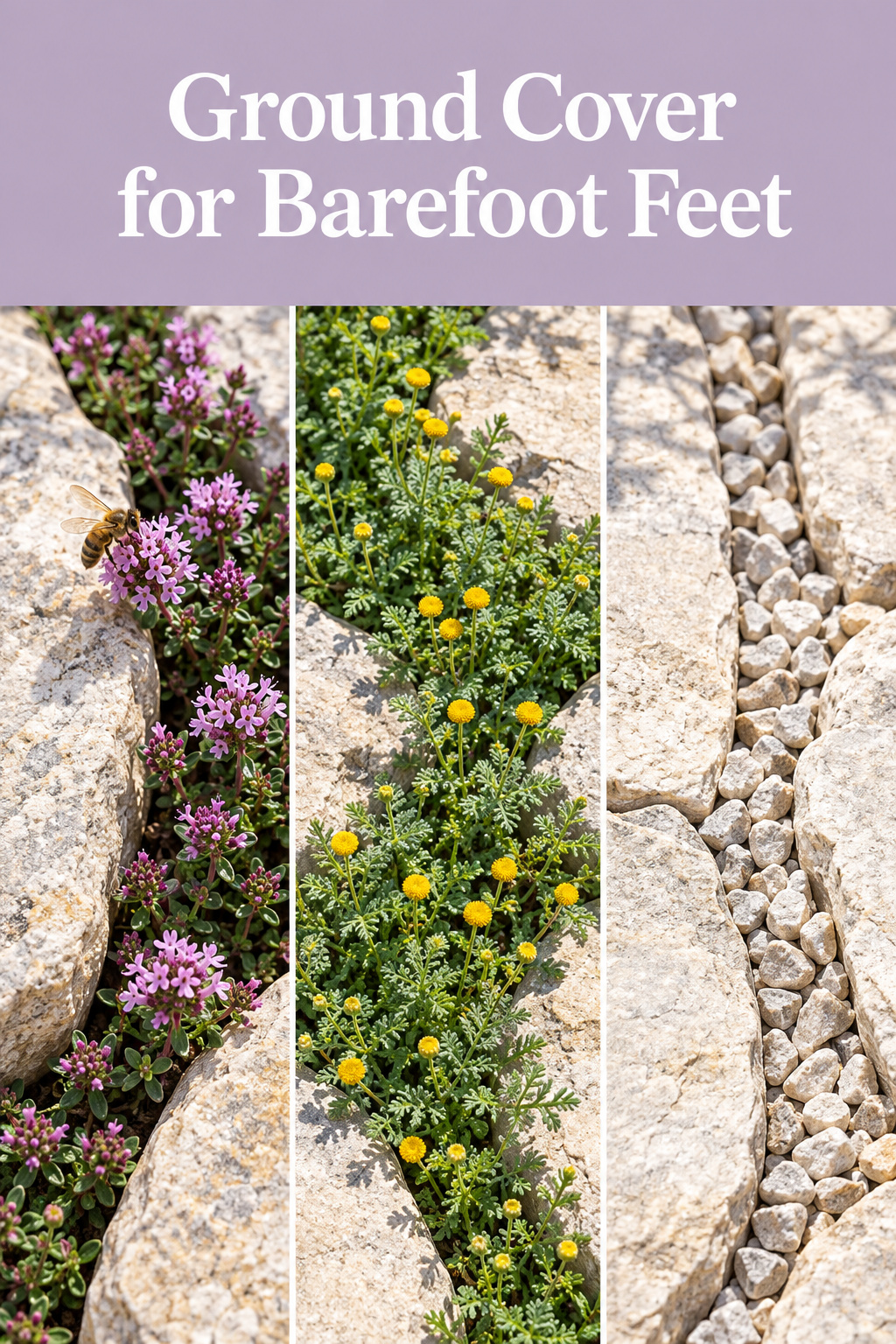
Every walkable ground cover for a hot, dry yard flowers. The one exception, Treneague chamomile, is a non-flowering clone that hasn’t been shown to take a desert summer.
That matters the moment you choose ground cover between stepping stones on a path your kids cross barefoot. Flowers bring bees, and the gap between two stones is exactly where a small heel comes down. You can do without a bloomless plant if you know how often each gap gets stepped on, how wide it is, and which flowers you can live with at ankle height.
TL;DR
- Creeping thyme and white clover are the most-recommended walkable ground covers, and both are busy bee plants, so move them off the barefoot route to the bed edges.
- A plant needs a gap of about 1.5 to 3 inches between stone edges, with plugs set 4 to 6 inches apart and the crown half an inch to an inch below the stone surface.
- Gaps stepped on every day, or narrower than about 1.5 inches, do better filled with fine gravel or mulch than with any plant.
The Plants Everyone Recommends Put Bees Exactly Where Bare Feet Land
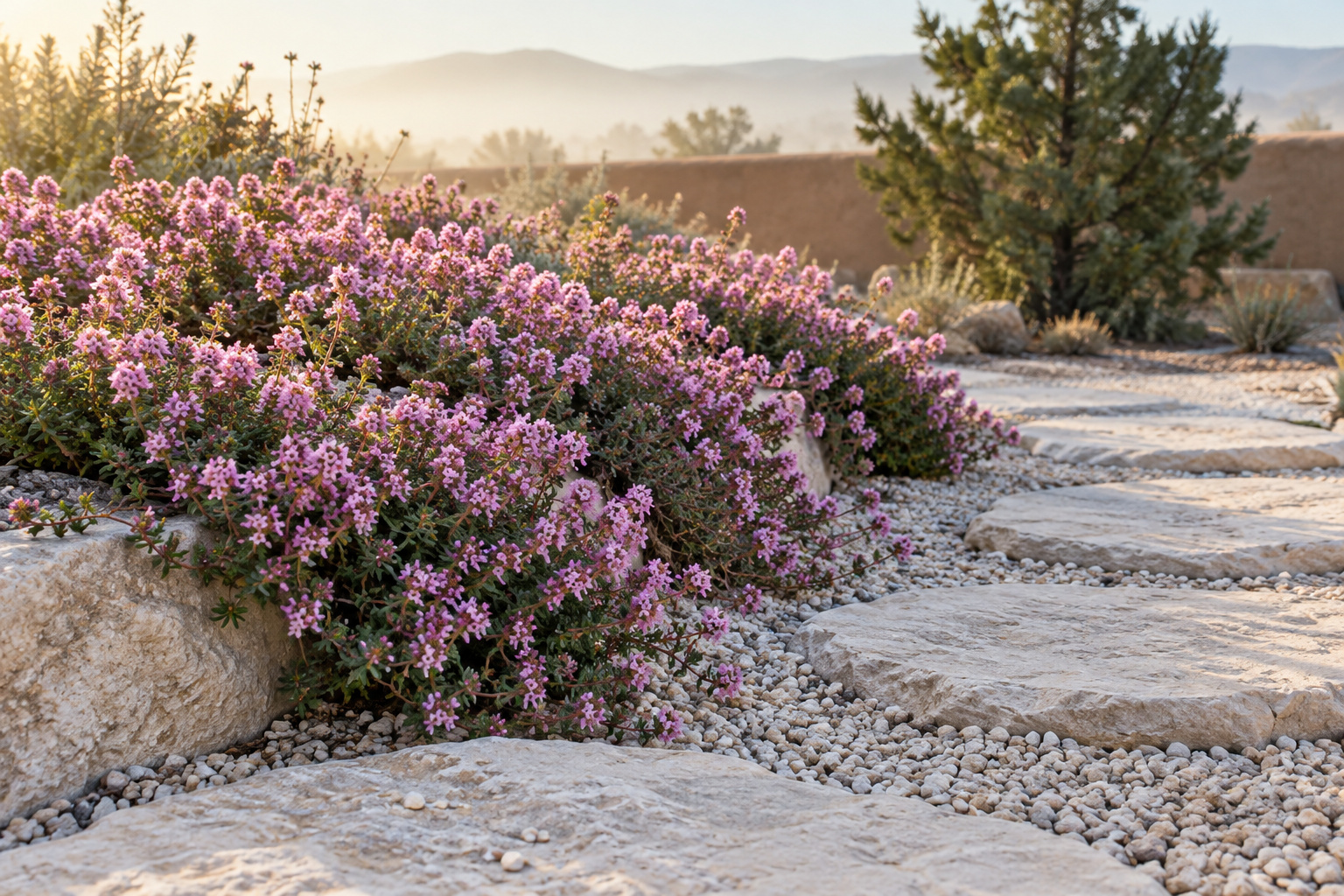
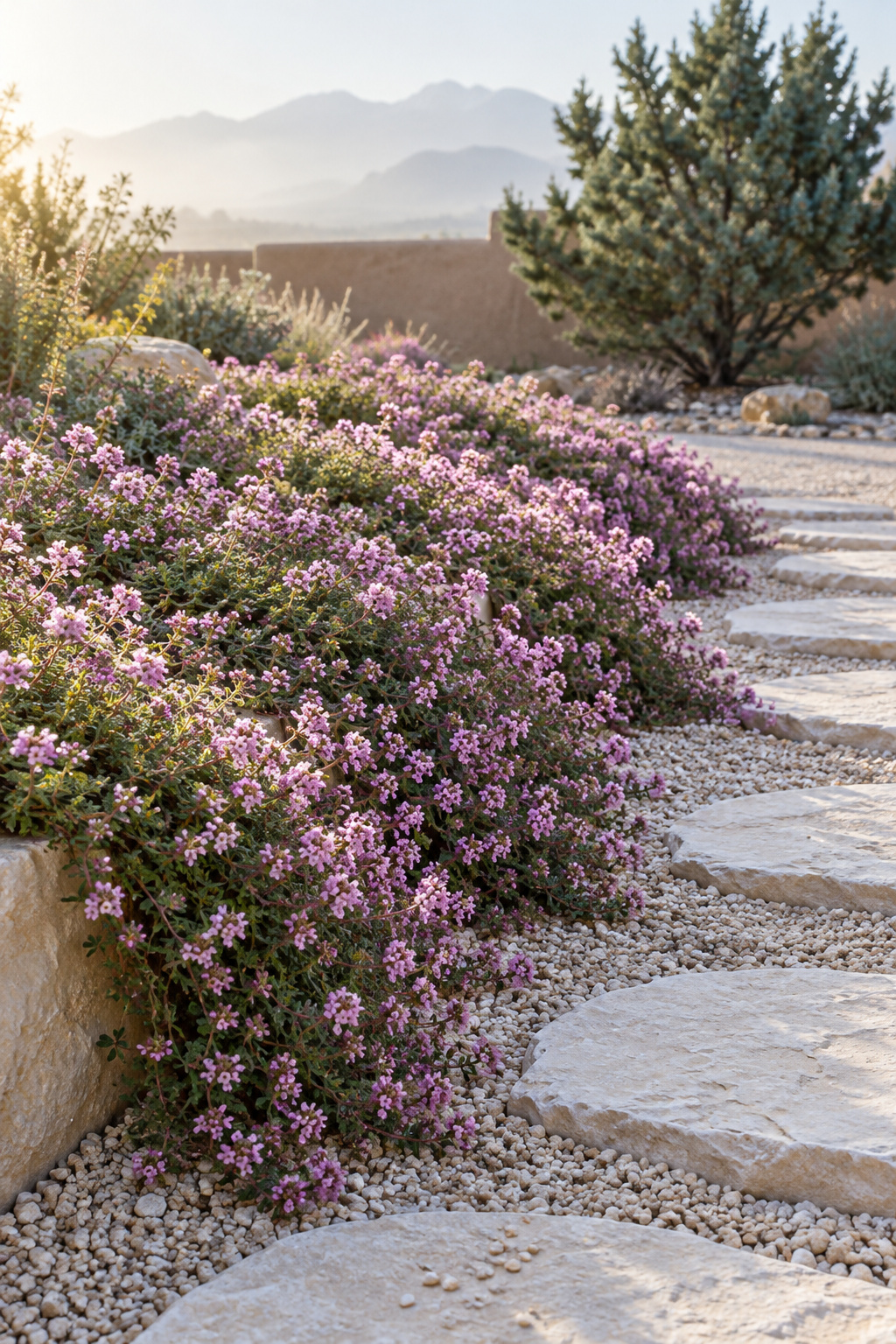
Look up walkable ground cover and the same two plants come first: creeping thyme and white clover. Both are tough and pretty, and both feed bees.
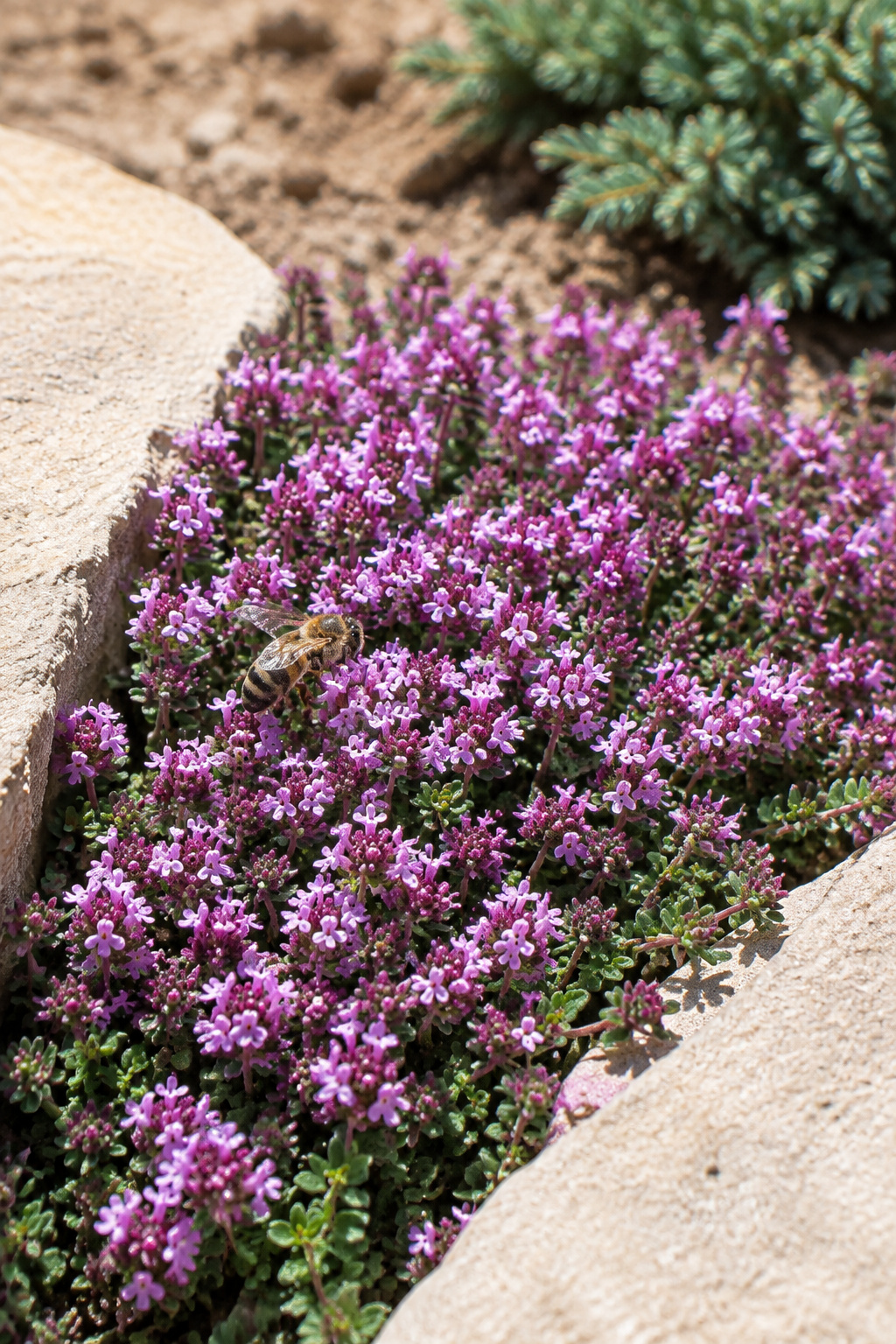
University of Minnesota researchers surveying Minneapolis lawns counted 56 bee species on white clover, with the honey bee the most common visitor. Creeping thyme carries tiny pink to purple flowers from June through September, and bees and butterflies come for the nectar.
The same Minnesota turf team puts the chance of a sting on a bee lawn at “not zero” but unlikely, and their advice is simple: skip bare feet at peak bloom, and mow shortly before a party to knock the flowers back. A stepping-stone path is the way across, so every trip puts a foot beside the flowers. In Albuquerque, blooming gaps hum in July.
So before looks or hardiness, ask who walks here, with what on their feet, and how often.
Ground Cover Between Stepping Stones: Count the Footfalls Before You Choose
Walk the path and give every gap one of three labels. Daily gaps are by the back door and on the way to the bins. Weekly gaps are on the garden wander. Rare gaps are the edges and corners where no foot actually lands.
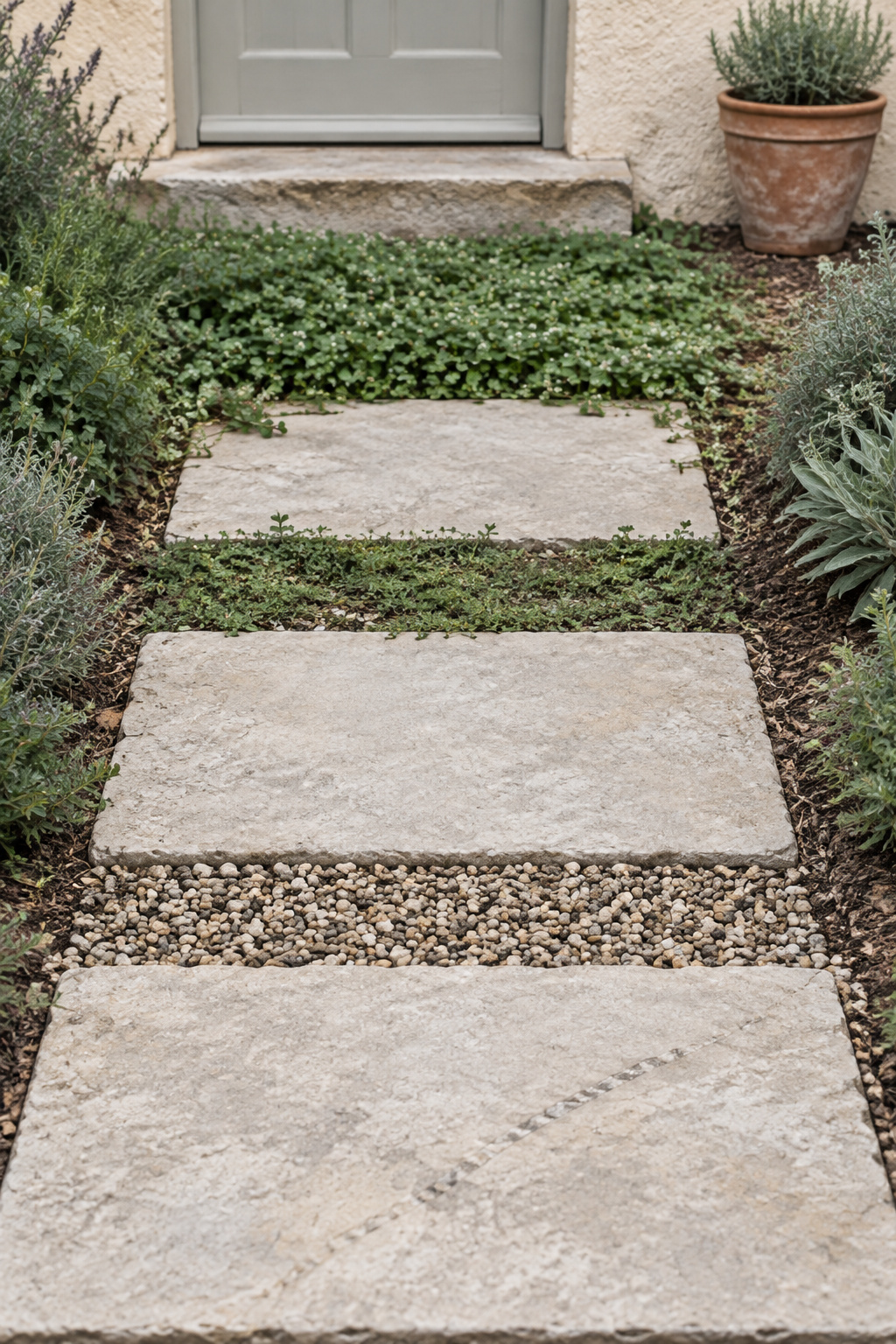
That sorting is my rule; nobody has counted the footsteps at which a gap plant gives up. What the plant guides agree on is that the traffic ratings run low, from very light to moderate, and Colorado State University Extension says plainly that most ground covers won’t tolerate excessive foot traffic.
Children push the count higher than you’d guess. They run across a gap, kneel on it to watch a beetle, and sit on it to pull off a shoe, so the plant gets handled far more than an adult’s footfall suggests.
And the busiest gaps are rarely where you planned. A playroom is often less used than the kitchen floor, and outside works the same way: kids play where the family already is, on the path by the back door, not at the designed spot at the far end. Get down to their height and watch where they go before you buy a single plug. If the route isn’t settled yet, start with planning the route your family actually walks.
Plants a Child Can’t Hurt and That Can’t Hurt a Child
| Plant | Flowers and bees | Foot traffic | Heat and water |
|---|---|---|---|
| Irish or Scotch moss | Tiny white flowers, 4 to 5 mm (about 0.16 to 0.2 in) across | Light to moderate | Does poorly in intense heat or drought |
| Brass buttons | Small gold buttons that blend into the leaves | Very light | Not drought tolerant; part shade in hot climates |
| Treneague chamomile | Non-flowering clone | Occasional and light | Full sun; water in dry spells |
| Corsican mint | Small purple summer flowers | Mild | Needs even moisture; intolerant of summer drought |
| Dymondia | Yellow daisies about 1 in across, year-round; feeds honeybees | Light | Drought tolerant once established; zones 9 to 11 |
| Elfin thyme | Tiny lavender-pink summer flowers; a pollinator plant | Light | Drought tolerant with good drainage |
| Creeping thyme | Pink to purple, June to September; bees and butterflies | Withstands foot traffic | Drought tolerant |
| White clover | Heavily visited; 56 bee species counted in one survey | Handles it poorly | Not very drought tolerant |
Nothing on that list is perfect for a barefoot route in a hot yard. The two quietest bloomers are the two that hate heat.
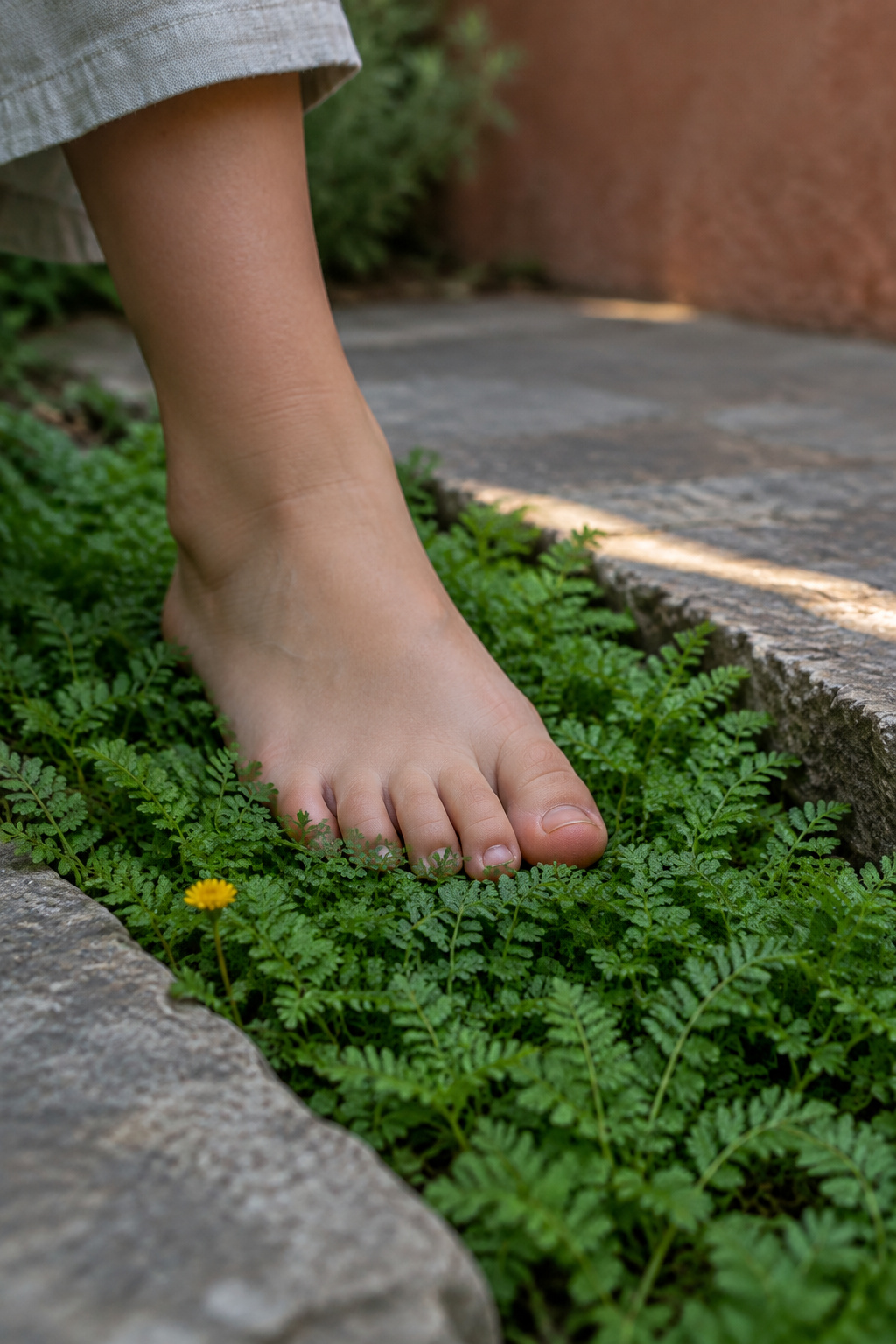
Low-bloom covers that take bare feet
Irish moss and brass buttons have the least showy flowers of the group. Irish moss’s ground-cover form can flower profusely, so tiny isn’t the same as none. Brass buttons carries petal-less gold buttons that disappear into the foliage. Neither has a bee count behind it, and both struggle in strong heat.
Dymondia is where descriptions split. One nursery calls its flowers minute and half hidden; South Africa’s national biodiversity institute describes inch-wide yellow daisies, open year-round, that feed honeybees. On a children’s route I treat it as a bee plant. Elfin thyme looks like the safe little thyme, but it’s tagged as a pollinator plant too.
That leaves Treneague chamomile, the only true non-flowerer here. The Royal Horticultural Society says it takes only occasional light traffic and needs water in dry spells. Where you can water it, it’s the closest thing to what parents want.
Thyme and clover: lovely, and busy with bees
I like creeping thyme: it’s drought tolerant, copes with feet, and suits a dry yard. It’s just the wrong plant for the gap where a four-year-old hops from stone to stone with no shoes on, all summer. It doesn’t stay small, either: some bee-lawn programs are thinking about dropping it partly because it spreads aggressively once mature.
Clover is a weak gap plant anyway. It handles foot traffic poorly and leaves stains that are hard to wash out of play clothes. Put both at the bed edges, beside the path rather than in it, where bees can work without a foot coming down on them.
How Wide a Gap Must Be Before Anything Lives in It
A lot of paths leave less room than a plant needs. A ground cover wants about 1.5 to 3 inches between the edges of the stones, and at least 1.5 inches if you’re spot-digging into an existing path.
That edge-to-edge gap is its own measurement, separate from where each stone sits along the walk, so if you’re still laying the path, settle how far apart to set the stones first. Wherever three stones meet, or along an edge that rarely gets stepped on, leave the gap wider. Those pockets are your best planting spots.
Planting plugs in the gap, step by step
- In late spring or early fall, pull perennial weeds roots and all, and take out the top 1 to 2 inches of old filler.
- Loosen what’s underneath and refill with a sandy soil mix. Skip landscape fabric; the plants need to root and spread.
- Set plugs 4 to 6 inches apart, about 6 for woolly and Pink Chintz thyme, about 4 for Scotch moss and Roman chamomile. That’s 2 or 3 plugs per foot of gap.
- Keep each crown half an inch to an inch below the stone surface, so shoes pass over it instead of crushing it.
- Water daily for the first 3 or 4 days, then every other day for a few weeks.
- Keep feet off. No one has set a keep-off time for gap plants, so borrow the 12 weeks asked of a new chamomile lawn.
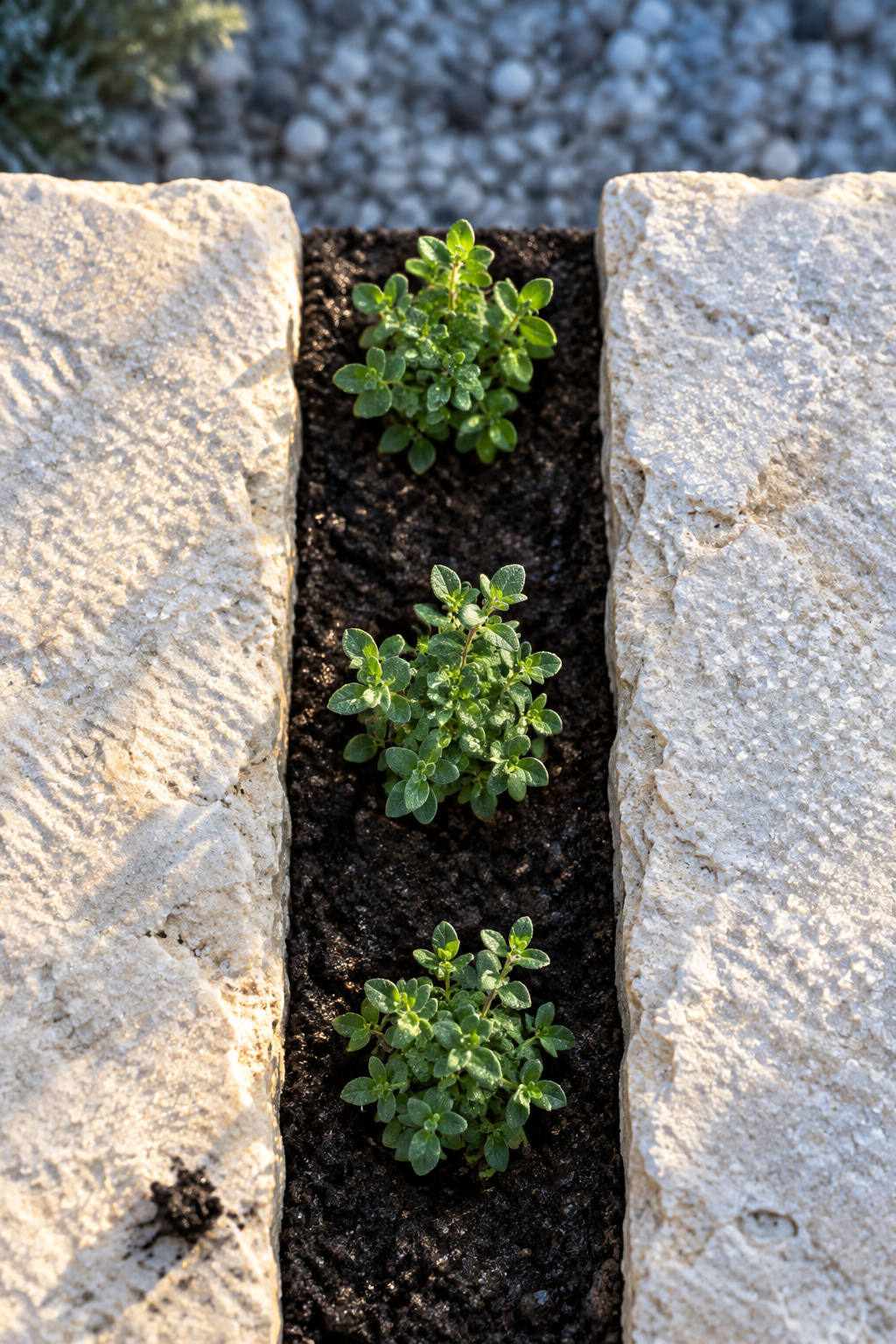
Twelve weeks is a long time to ask a six-year-old to touch only stones. Plant the weekly gaps first and make “stones only” a game rather than a rule.
Keeping it alive in a hot, dry summer
Albuquerque gets 8 to 12 inches of precipitation a year, and the gaps feel it. Drought-tolerant plants need two, preferably three, full growing seasons of regular watering before they live up to the label.
The stone adds heat, too. Paving soaks up sun and radiates it into the plants beside it, with stress peaking around 2 to 5 p.m. even in moist soil.
Irish moss, Corsican mint and brass buttons need steady water and shade from the hottest sun, and on a sunny, dry path they die. If a gap gets afternoon sun and you can’t water it reliably for two or three seasons, it’s a gravel gap.
Some Gaps Should Stay Gravel or Mulch
Sometimes the best thing between two stones is no plant at all. Albuquerque’s water utility tells residents to hard-pave high-traffic walkways and use fine crushed gravel on secondary paths, and the RHS says frequent access calls for stones or slabs rather than planted joints. So a daily gap, a gap under about 1.5 inches, or a sun-baked gap you can’t water belongs to gravel or mulch.
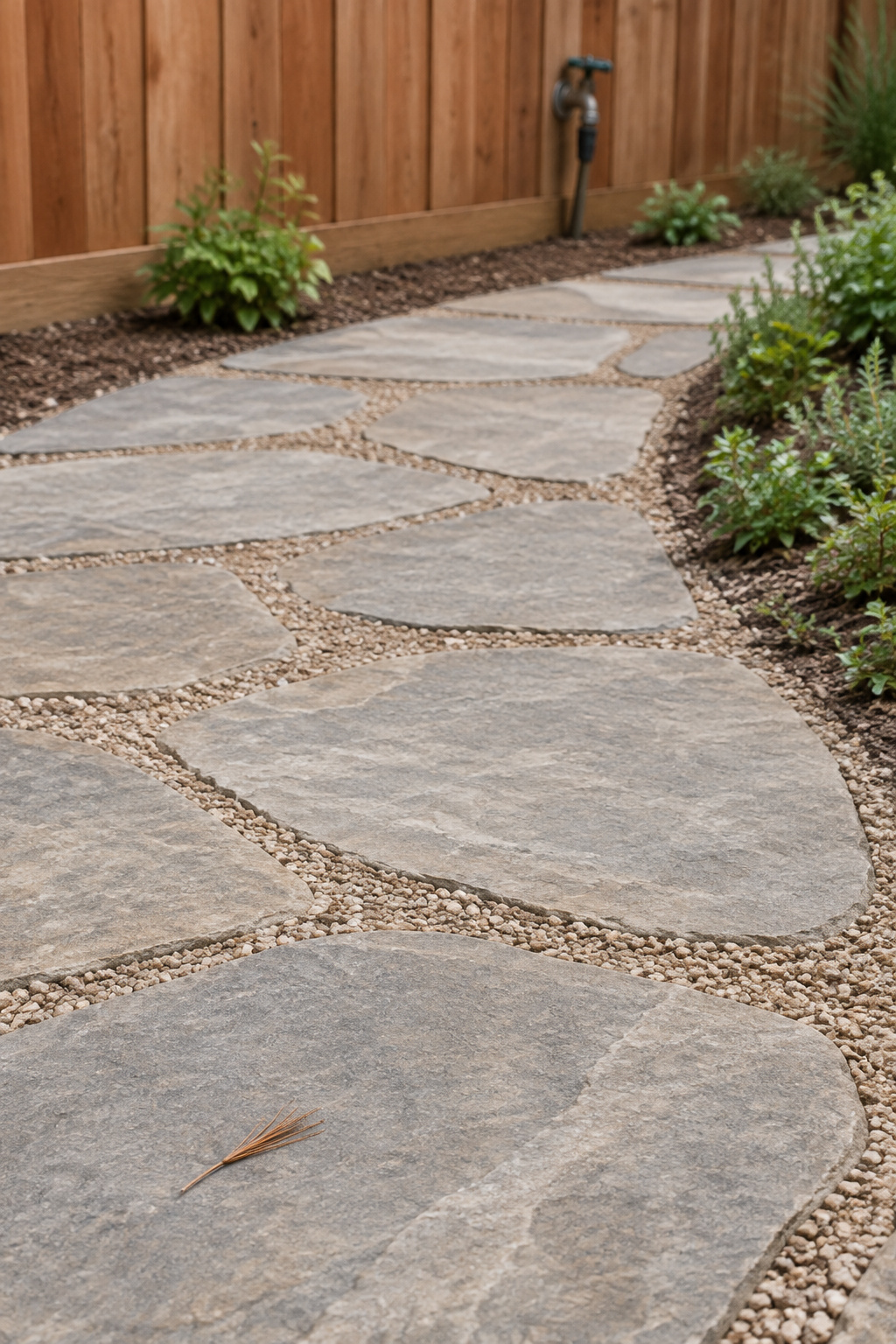
Fine gravel is my pick for back-door gaps. It drains at once, a running kid can’t wear it out, and beside thyme at the bed edge it beats bark, which holds moisture against the crown and invites rot. Mulch suits the forgotten shady corners, kept to about an inch around any plants. Which gravel to buy and how deep to lay it is covered in the gravel patio ideas articles, and the wider set of garden walkway ideas sorts whole-path surfaces by the trip each one makes.
Your Gap, Your Feet: What Goes Where
Creeping thyme is a lovely plant in the wrong spot, so I sort the gaps by feet instead.
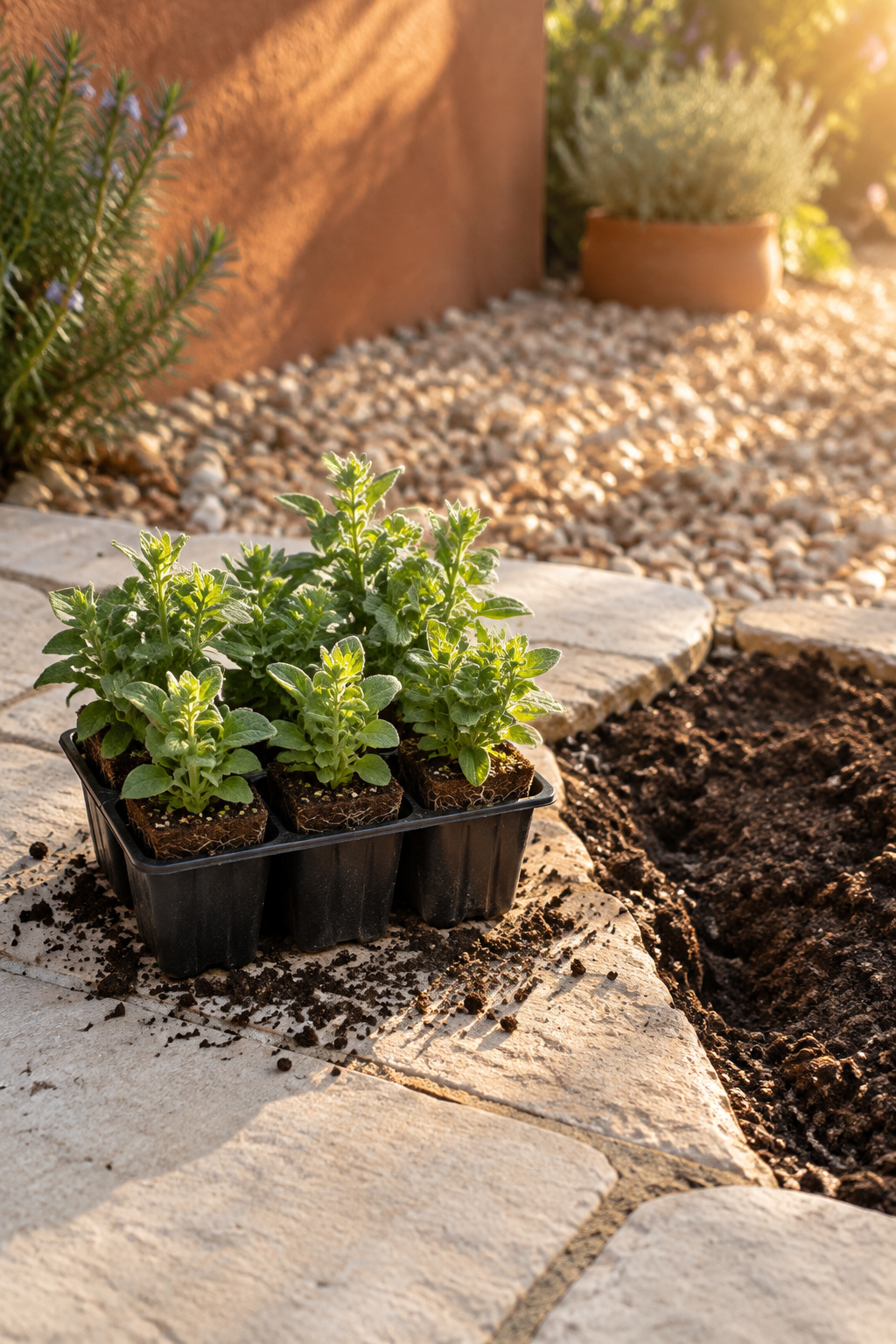
A gap stepped on every day, or narrower than about 1.5 inches, gets fine gravel or mulch. A weekly gap on a barefoot route gets the lowest-flowering cover your climate allows: brass buttons where there’s shade and water, Treneague chamomile where there’s sun and water, a small thyme where winters are cold and dry if you accept some bees and shear it after bloom, and Dymondia only where winters are mild, and expect honeybees. A gap that’s rarely stepped on can take all the thyme and clover you like.
The choice shifts as children grow. The gap a toddler sits in becomes the gap an older kid sprints over in sneakers. I’d let a weekly gap drift toward thyme as the kids get steadier around a bee, and keep the daily gaps gravel for good.
Hand the flowering covers to the bed edges, where planting for bees belongs and the pollinator garden ideas articles take over.
FAQ
How do I deal with weeds in the gaps before the ground cover fills in?
Pull them by hand while they’re young and the soil is slightly moist, before they set seed. A thin mulch slows seedling weeds but won’t stop perennial roots. Plugs can knit together in three to six months, though full establishment can take one to two growing seasons.
Will ground cover between stepping stones survive snow and hard freezes?
Most will if you match the plant to your winter. Creeping thyme is rated for zones 4 to 9, Elfin thyme and Irish moss for 4 to 8, Corsican mint for 6 to 9, and Dymondia only for 9 to 11. Woolly thyme may freeze back in a high-desert winter, and fall plantings may need mulch against frost heaving.
Can I plant ground cover between pavers that sit on a sand or concrete base?
Not the way they’re usually laid. Standard interlocking pavers go down with sand-filled joints of 1/16 to 3/16 inch, far too tight for roots. You’d need to widen the joints to about 1.5 to 3 inches and fill them with soil, not builder’s sand. Over poured concrete there’s no soil to root in.