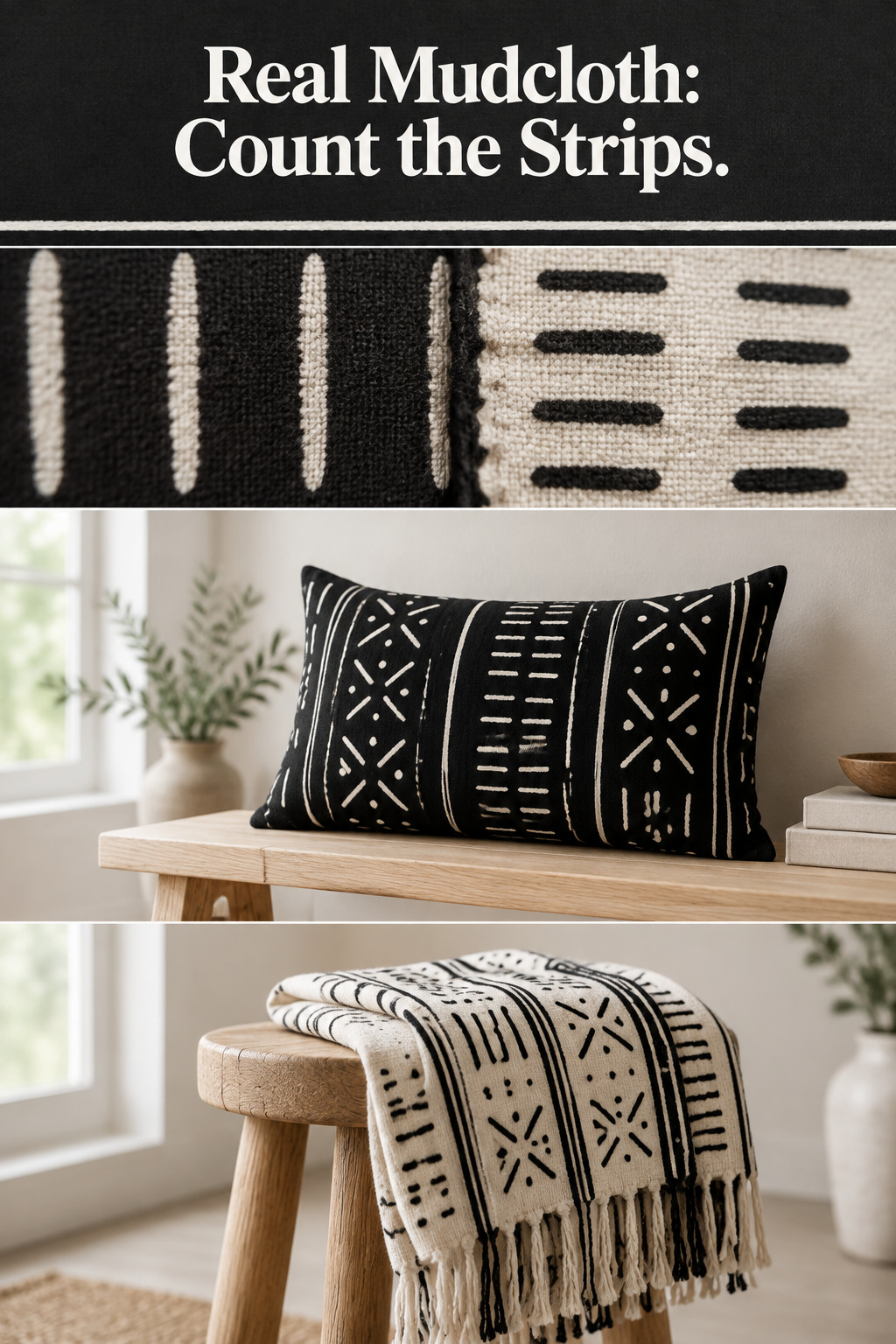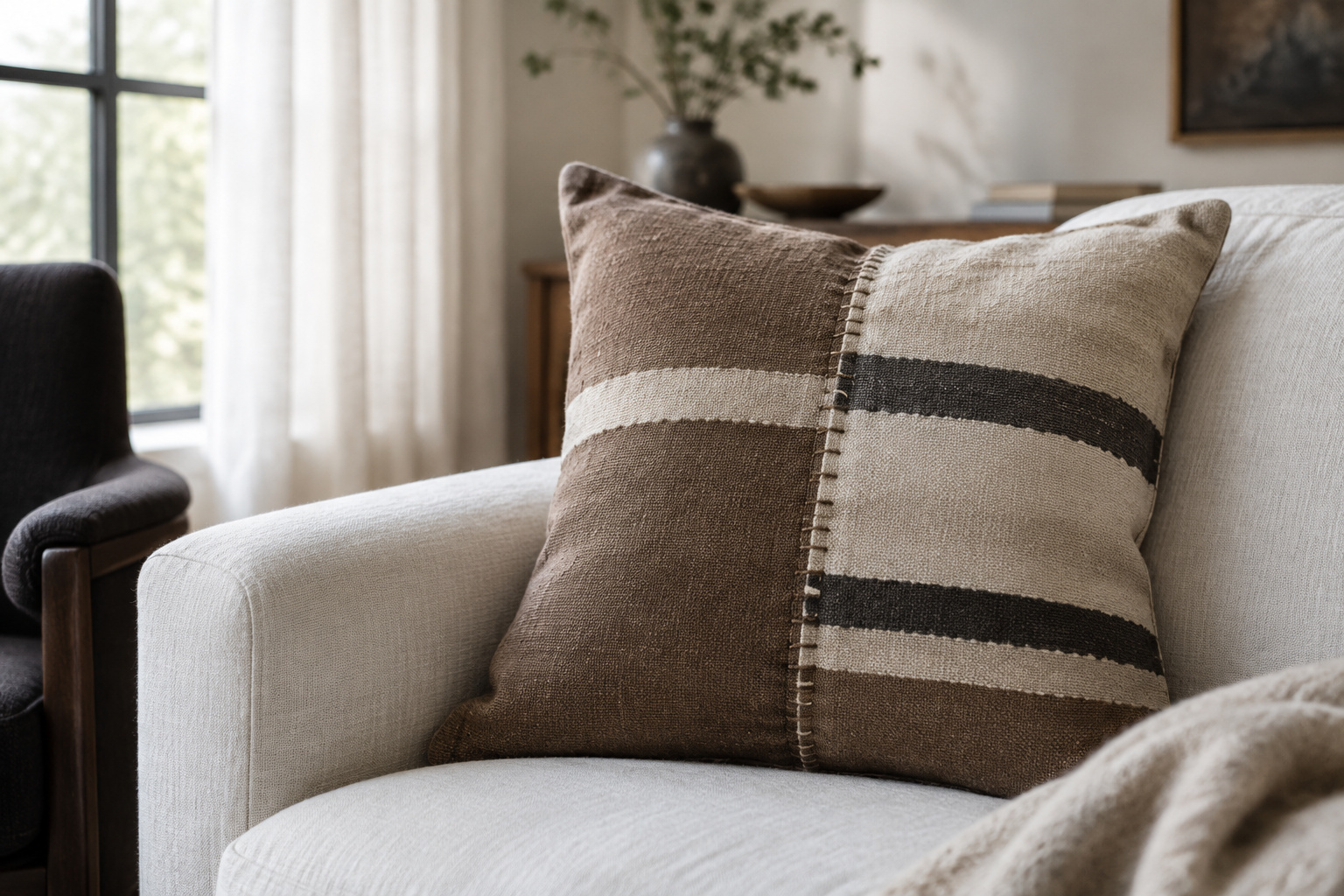
You have the listing open on your phone, two fingers spreading the photo wider. The pillow sits on somebody else’s sofa, cream and dark brown, zigzags and dots. You are trying to count something. Keep counting.
Count the strips before you read the pattern. Real mudcloth pillows are cut from bògòlanfini, a cloth woven in narrow cotton strips, sewn edge to edge and painted by hand. The seams, the wobble in the painted line and the depth of the dye, read together, tell you far more than the motif or the word on the label. No one of them settles it alone.
TL;DR
- Handmade mudcloth is built from narrow handwoven strips, so an 18 in pillow cut along them shows roughly two seams; read seams, line wobble and dye depth together.
- A trustworthy listing names the maker, the town or region and how the pattern went on; ask for a close photo of a seam.
- Sellers disagree on washing, from gentle machine cycles to dry clean only; the cautious route is a hidden-corner color test, a cold hand wash alone and drying flat in shade.
Mudcloth Is a Construction, Not a Pattern: Strips, Mud and Leaf Dye
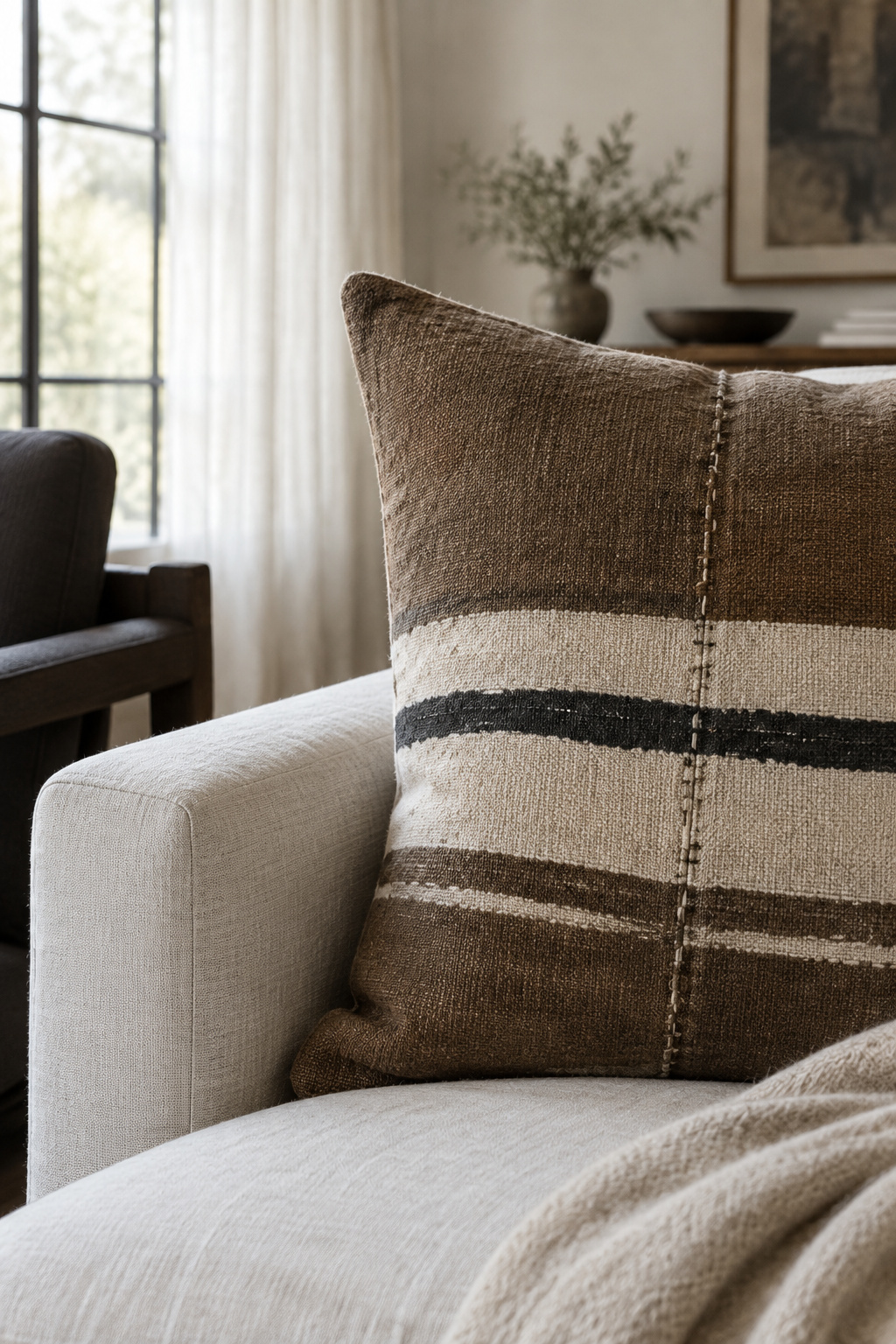
Let’s see what it’s made of. Bògòlanfini is a Bamana cloth from Mali; bogo is mud or earth, fini is cloth. Traditionally men weave the cotton into long narrow strips, which are cut and sewn together selvedge to selvedge into a cloth roughly 1 m wide and 1.5 m long. Women then soak it in a leaf bath that dyes it yellow and lets the mud bind. The mud comes from riverbeds and ferments in clay jars for up to a year. It is painted on, washed off and painted again, at least twice for a rich dark color, and a caustic wash finally clears the yellow so the pale ground comes back.
The details vary. Men now do much of the dyeing and painting too, and Cooper Hewitt describes mud covering the background around the motifs where the British Museum record has it laid on as the design. I wouldn’t trust anyone who tells you there is one recipe.
The British Museum holds a Bamana piece from the early twentieth century made of 6 handwoven strips across 84 cm. That is what a handmade pillow is cut from. The pattern is the last thing the process produces, which makes it the weakest evidence of all.
Count the Strips: Checking a Mudcloth Pillow in Your Hands
A dealer once told me a table was rock solid while he held it still with his hip. I think of him whenever a seller calls a cloth authentic and offers nothing else. Put your own hands on the piece, in this order.
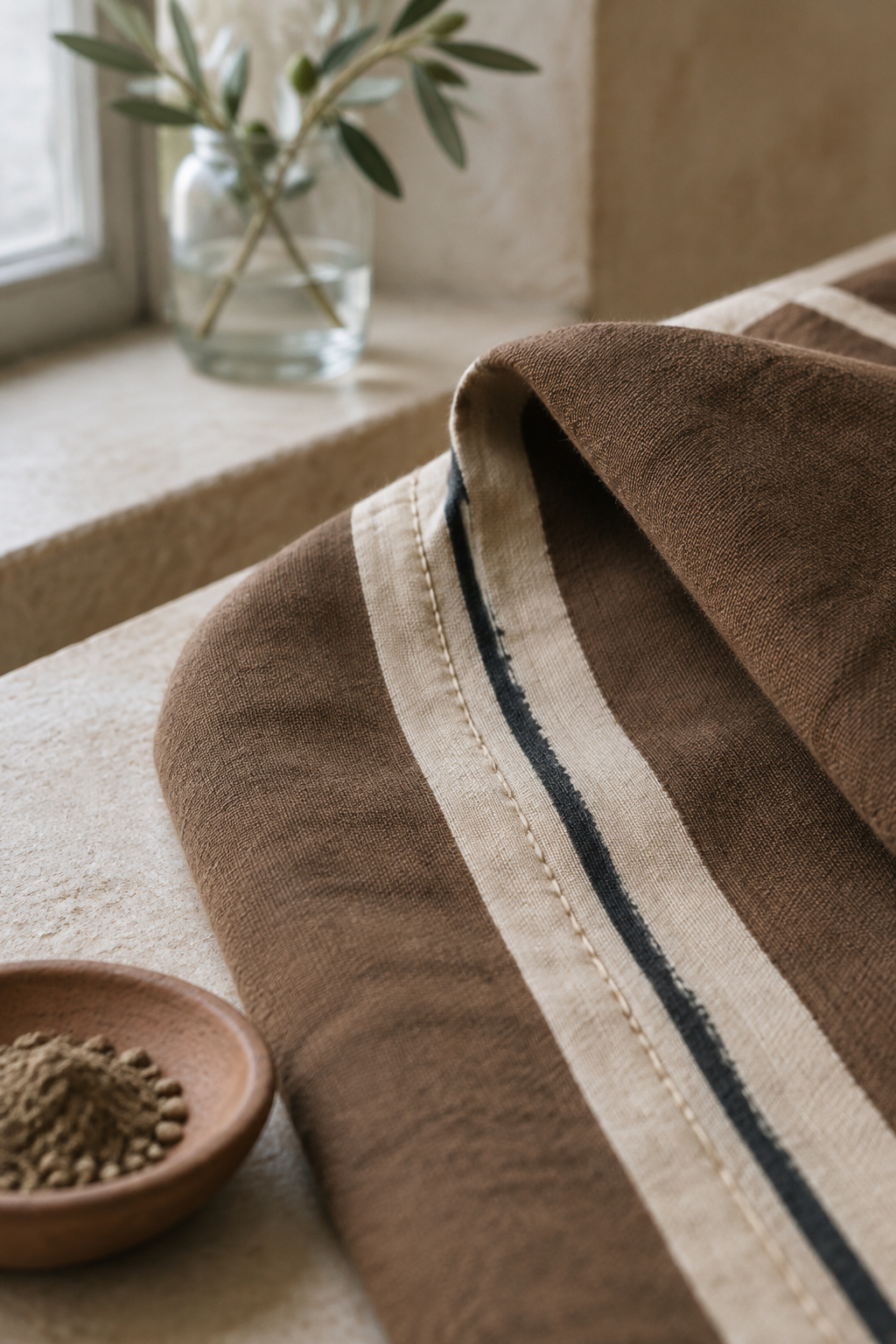
- Find the seams. Feel for straight stitched joins where two woven edges meet. Hand-woven strips run about 10 to 15 cm wide, depending on the loom and the thread, so an 18 in (45 cm) pillow cut along the strips spans about three of them: 45 ÷ 15 = 3 strips, which means two seams. A cover cut across the cloth turns the seams the other way, so look for any join, not a fixed count.
- Read the line. Hand-painted motifs wander. Repeated shapes differ in size, edges bleed slightly, and tone shifts from dot to dot. A perfectly regular repeat points to a screen or a stencil.
- Judge the dye. Coat after coat of mud leaves an uneven dark that sits down in the weave. A synthetic sheen or a stiff hand is a warning. The reverse is a hint at most, since the mud goes on one face.
Why all three? Factories have long printed imitations of strip cloth, and a sewing machine can join strips as narrow as 1 in within minutes. Check that a seam joins two woven edges and that the line beside it wobbles. Seams, line and dye together make a case; any one alone is a guess.
Measure one strip while you’re at it. My pickup’s door pocket has held a tape measure, a folding rule and a small magnet for years. The folding rule is what I’d lay across a strip. Measure it twice.
Before You Buy Mudcloth Pillows Online: What the Listing Should Show
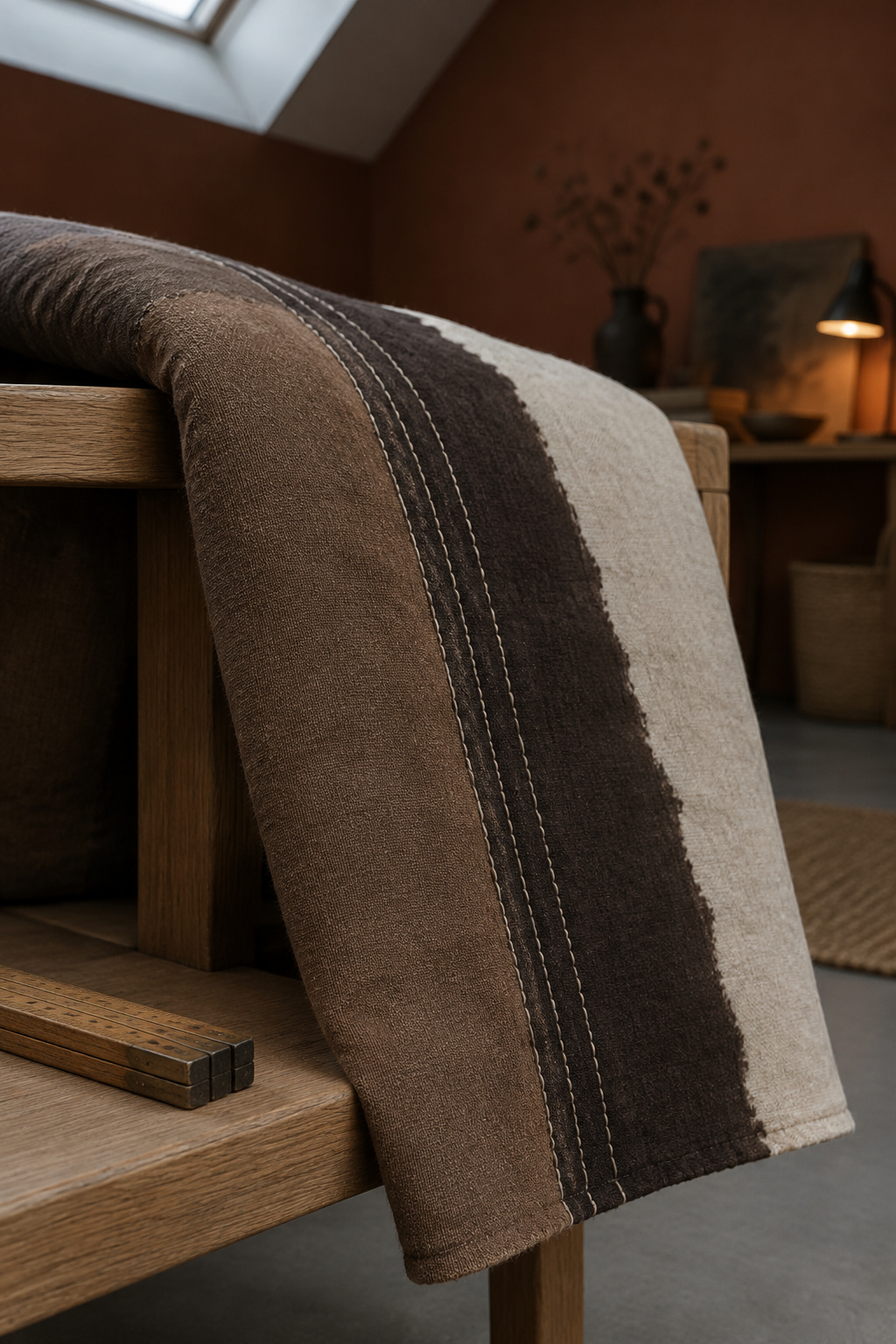
Listings that say “island height” without giving a number annoy me, and mudcloth has its own version: “handwoven,” and no strip width anywhere. Sellers don’t state it; the best give a count, such as a vintage Mali cloth sold as “8 narrow woven panels.” So read the photos yourself and ask for what they leave out.
Read a listing the way you would read the cloth:
| What to check | A handmade listing shows | A print listing shows |
|---|---|---|
| Seams | Lengthwise joins visible in close photos | No joins, or a seam line in the print |
| Maker | A named cooperative, workshop or family | “Artisans,” or nobody |
| Place | A town or region, such as the Ségou region of Mali | A country, a style word, or nothing |
| Method | Woven strips, leaf bath, fermented mud, painted by hand | “Print,” “inspired by,” a fiber blend |
| Pattern repeat | Shapes that vary from one to the next | An exact repeat across the cover |
| Price | Costs more than a print, as hand weaving and repeated dyeing should | Too low for the labor the method takes |
Prices and fair places to buy are a subject of their own, covered in what handmade mudcloth costs and where to buy it.
Three Questions to Send the Seller
Send these before you pay:
- Who made it, and where? You want a named weaver, dyer, cooperative or workshop, and a town or region rather than only a country.
- How did the pattern go on: painted by hand with fermented mud, stenciled, or printed? “Stenciled” turns up on handmade and mass-produced cloth alike, so ask who applied the mud.
- Can you send a close photo of a strip seam with a hand or a ruler beside it?
What a Fair Label for a Print Looks Like
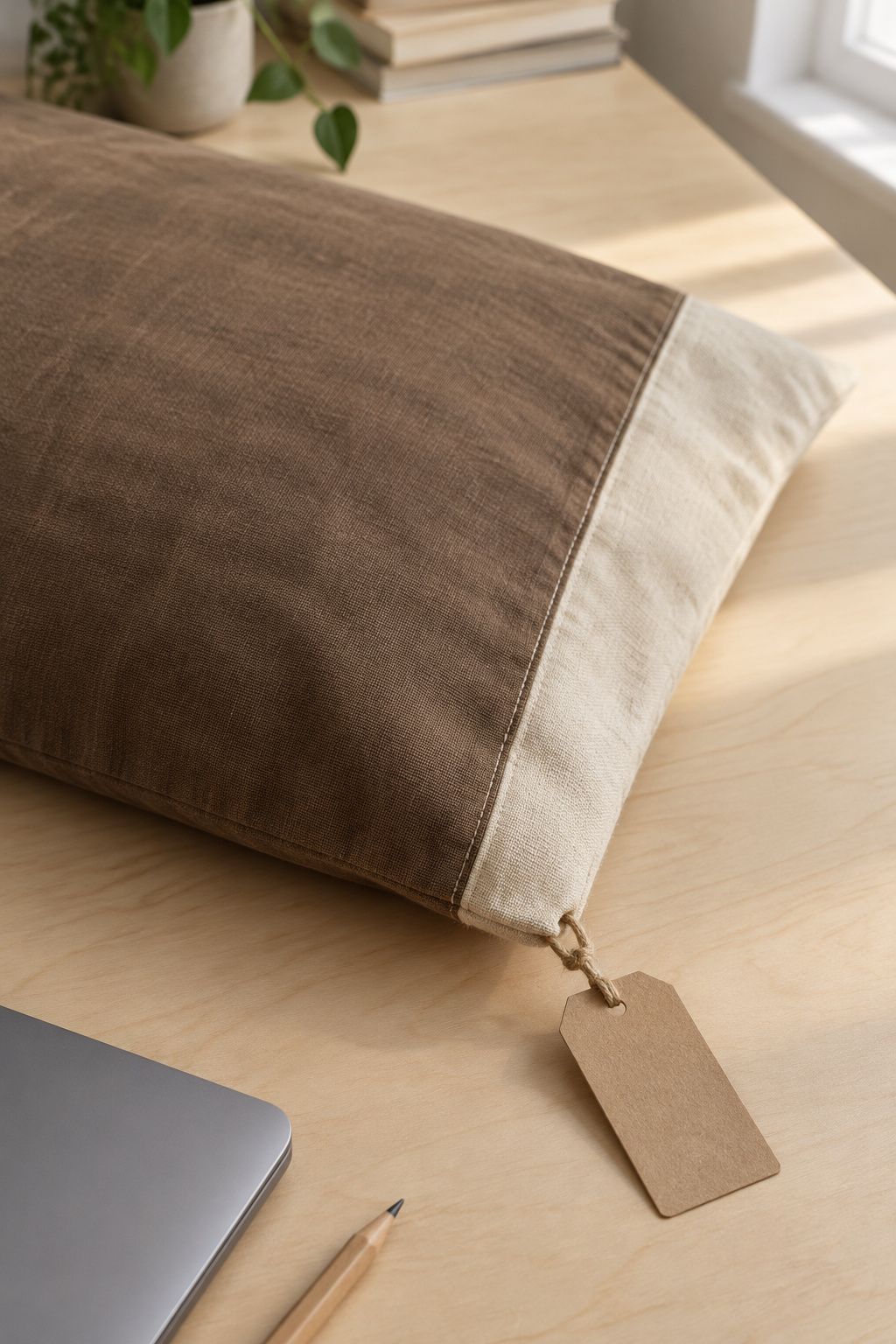
A fair print label puts “print” or “inspired by” in the title and states the fiber, whether heavyweight cotton, a 50/50 cotton-polyester blend or faux linen. One printed faux-linen cover is titled simply “African Mudcloth Pillow,” which gets it wrong. Call a print a print, and notice when a listing won’t.
Printed Mudcloth Is Fine When It Is Called Printed
Demand brought imitators: screen printing in place of hand painting, and since about 2000 a great deal of cloth for tourist and export markets has been mass-produced with stencils, about six to seven times faster. In Mali some people wear factory imitations and others wear handmade, and both are real objects.
My quarrel is with the label, not the print. Most “farmhouse” style is a modern invention dressed up as tradition, and a printed cover sold with handmade language does the same thing: it borrows a history. Old isn’t the same as original, and printed isn’t the same as fake. New work should be honest about being new, and a screen-printed cover that says so is honest work.
Prints cost less. I’d also expect a printed cotton cover to forgive the washing machine and a sunny window better than mud-dyed cloth, though that is my view, not a promise.
If you want indigo instead of mud, look at adire: Yoruba resist-dyed cotton from south-western Nigeria, blue and white, though some adire today is stenciled or block-printed too.
On the Sofa: One Real Throw or Four Printed Pillows
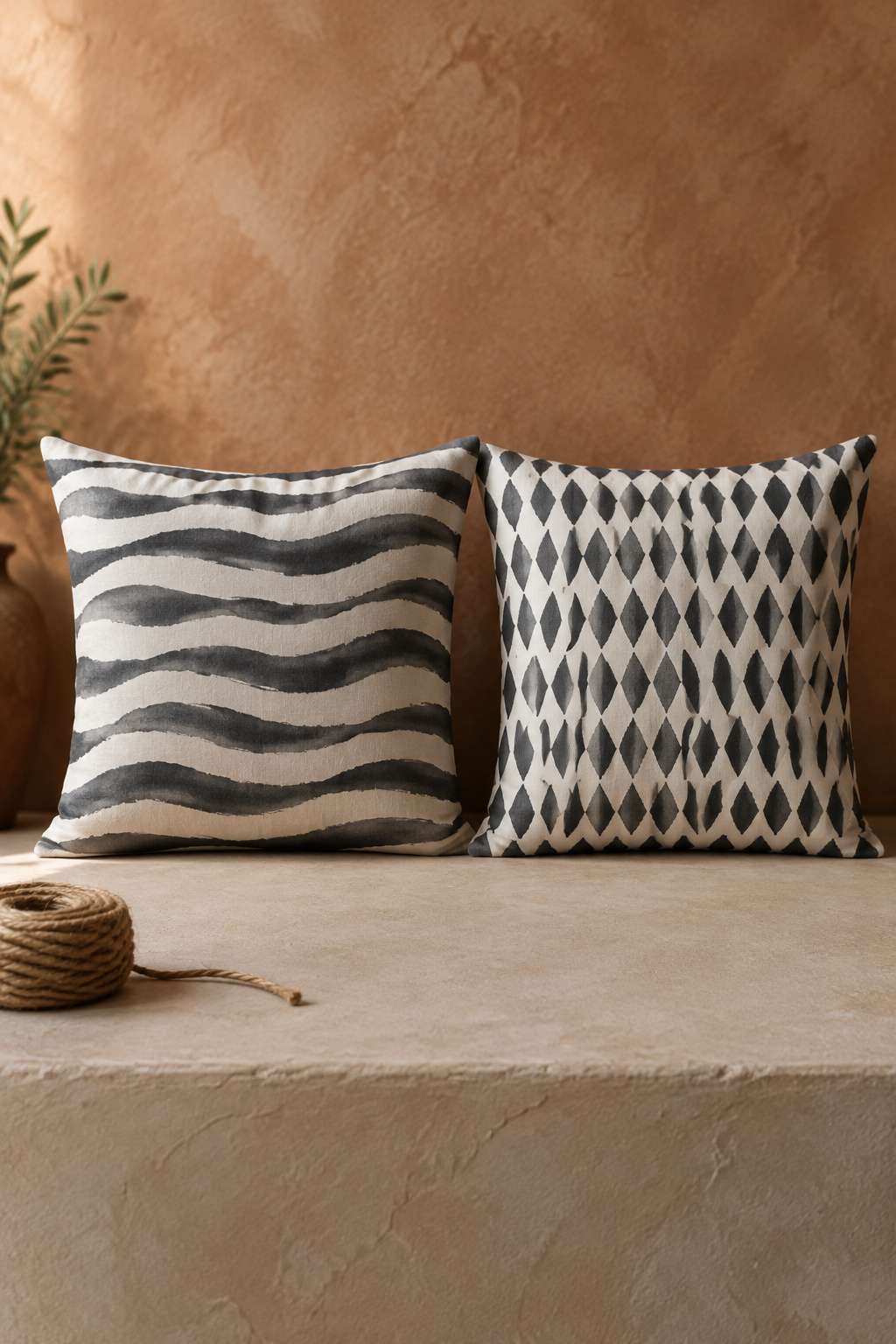
A handwoven cloth is about throw size, and sellers offer the same piece as a blanket, a throw or a wall display. So I would put one real throw over the back or arm of a sofa before I’d buy four printed pillows to line up along the cushions. A throw shows the whole construction: 1 m of width carries six or seven strips (100 ÷ 15 ≈ 6.7), every seam on view. My guess is a draped throw also wears more gently than a pillow that gets slept on.
How many pieces does a sofa want? There’s no rule. I’d stop at one or two real pieces with plain linen or wool beside them, so the cloth carries the seat. In an afrohemian living room it is one of the few named pieces with a maker and a place behind it, and it doesn’t need a crowd of lookalikes. The cloth was traditionally worn, by women at life’s milestones and by hunters, so a sofa is a newer job for it, and a fair one.
If yours turns out too good to sit on, read up on mounting a cloth on the wall without damaging it before anything sharp goes near it.

Washing and Sun: How Mudcloth Fades and Bleeds and How to Slow It
What I hear in shops about any wobble is “It’s been like that for a hundred years.” My answer is that nobody leaned on it to knead bread for a hundred years. Use wears things out, not age, and with cloth that use is washing and sun.
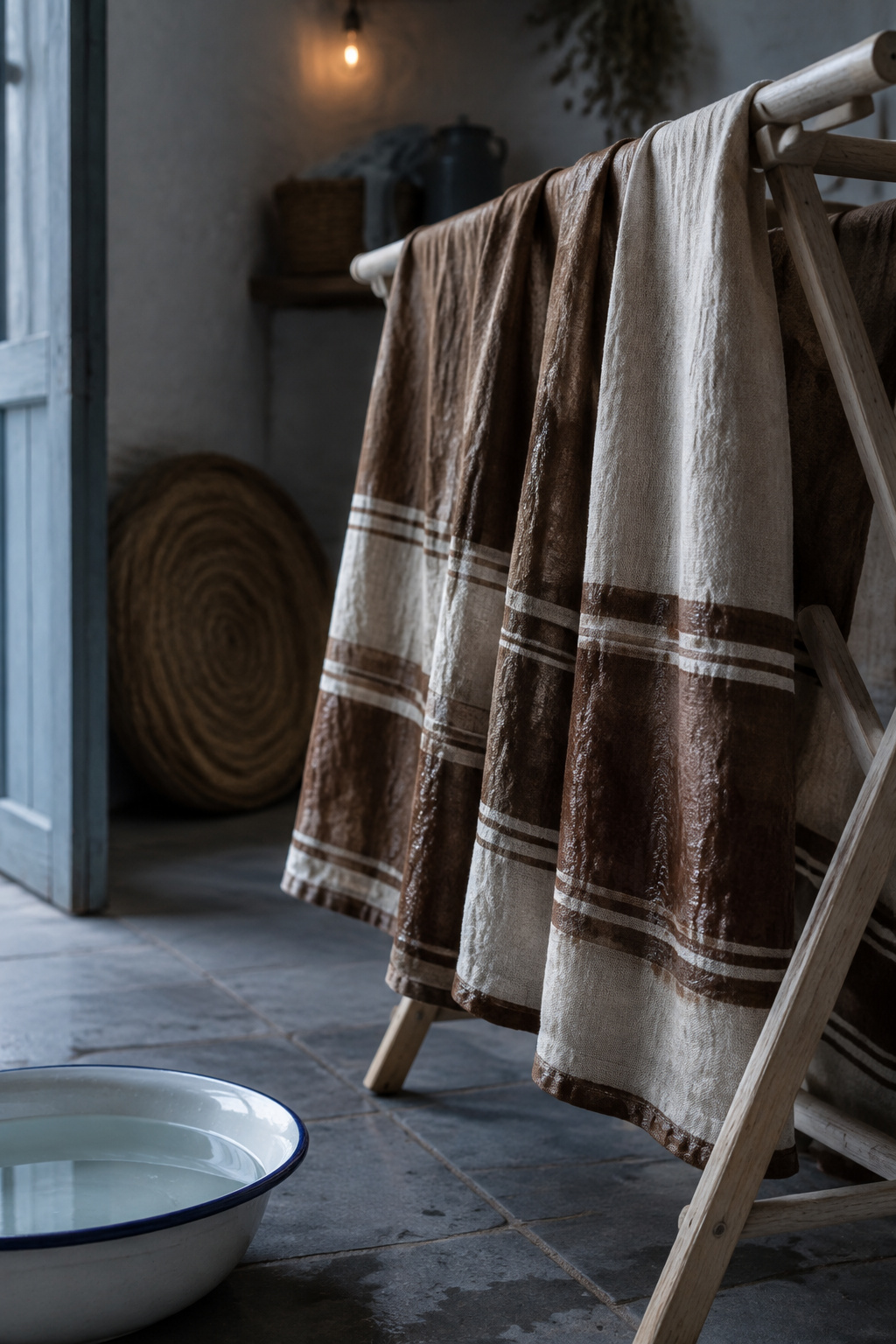
Sellers do not agree on care: one says a gentle cold machine cycle in a mesh bag is fine, another says never machine wash, a third says dry clean only. No museum publishes a washing method for bògòlanfini. The routine I’d follow is the cautious one, from general textile conservation and the makers who say hand wash:
- Test first. Press a damp white cloth on a hidden corner and wait. If color moves onto it, don’t wash; spot clean instead.
- Wash it alone, by hand, in cold water with a mild soap. Expect the water to darken, and some fading the first time.
- Skip bleach, strong stain removers, hot water and long soaks.
- Press out the water, lay it flat in the shade and let it dry without heat. No tumble dryer, no radiator.
Washing can’t be undone, so I write down what I did and keep the note with the cloth.
Sun is the slower damage. Light damage adds up and can’t be reversed, and natural dyes fade easily, so keep the cloth out of direct sun. The maker’s last step is caustic and a week in the sun; your job is keeping the light off the finished cloth. Damp is the other risk, because wet cloth bleeds and molds. For textiles that cope with steam, see the boho bathroom ideas on bathroom textiles.
Go back to that listing photo. Count the strips, read the line and the dye, and only then the label. If all three agree and the seller names a maker and a town, you have a good case; if not, treat it as a print until the seller shows otherwise. No single sign proves handmade, and I trust none of them alone. Read together, they usually tell you enough.
FAQ
What is the difference between mudcloth and adire?
Mudcloth, or bògòlanfini, is Bamana cotton from Mali: narrow strips woven by men, sewn together, dyed with leaves and painted with fermented mud in browns and blacks on a pale ground. Adire is indigo-dyed cotton made by Yoruba women in south-western Nigeria with resist methods such as raffia ties, stitching and cassava-starch paste, giving blue and white patterns.
Why is traditional mudcloth brown and cream when so many pillows are black and white?
Mud on leaf-dyed cotton makes the browns, and the maker then discharges the yellow so the ground returns close to the cotton’s natural color. Black and white isn’t proof of a print, though. Fermented mud can turn black, and the V&A records a handmade cloth with an all-over black and white design. Color alone proves nothing either way.
Can mudcloth pillows go in a bathroom or other humid room?
I’d keep a handmade one out. Nobody has tested mudcloth in a bathroom, but wet textiles risk dye bleed and mold, makers warn the dye can bleed when damp, and humidity encourages mildew in stored cloth. Store it folded in breathable cotton rather than plastic, and choose a sturdier textile for a steamy room.