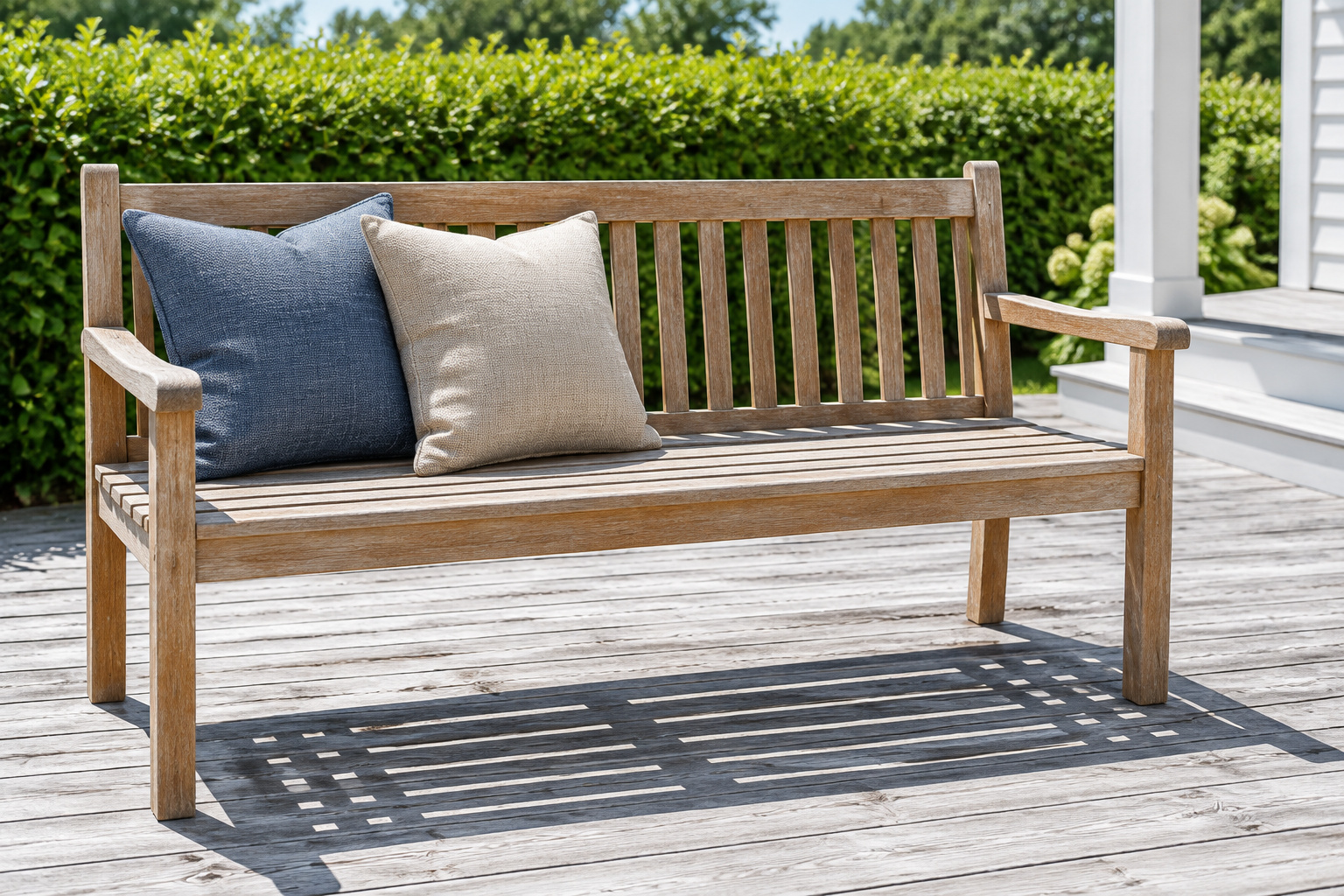

I oil our breakfast table on the first warm weekend of spring, with the windows open. The cloth goes on pale and comes off brown. By the end the wood has gone warmer than I remember it from the winter. Nothing else in the kitchen changed, and yet the mug on it suddenly looked like it belonged to another table.
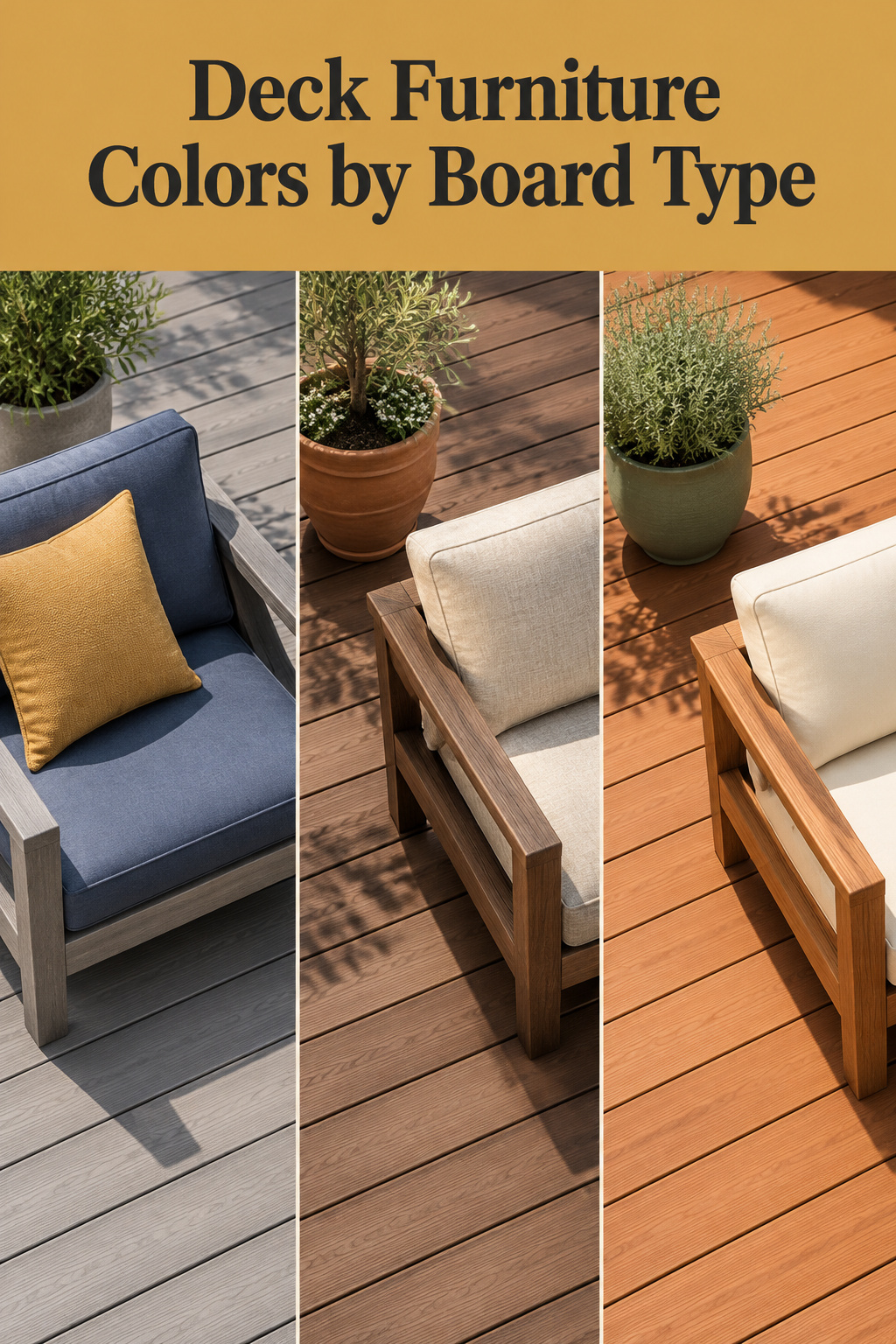
Your deck does the same thing to whatever you put on it. Choosing deck furniture colors starts with the boards, because a gray or brown deck is not the neutral backdrop the catalogs treat it as. Every board leans cool or warm. Read which way yours leans, then buy cushions, a rug and pots that lean the same way.
TL;DR
- Hold a sheet of pure white paper against your boards in daylight: if they look slightly blue or silver they are cool, if slightly brown or tan they are warm.
- On cool gray composite, keep cushions in charcoal, slate, navy or soft white and add one warm piece such as an ochre lumbar pillow or a teak side table.
- On brown composite and fresh cedar, use oatmeal, sand, rust, olive and terracotta, and choose solution-dyed acrylic so the color runs through the fiber instead of sitting on the surface.
The neutral-deck myth: your boards have a temperature, and cushions show it
Gray is neutral and brown is neutral, the thinking goes, so the deck will take whatever palette is in fashion this year. Then the cushions arrive, and in the afternoon sun they look faintly wrong, as if they came from a different house.
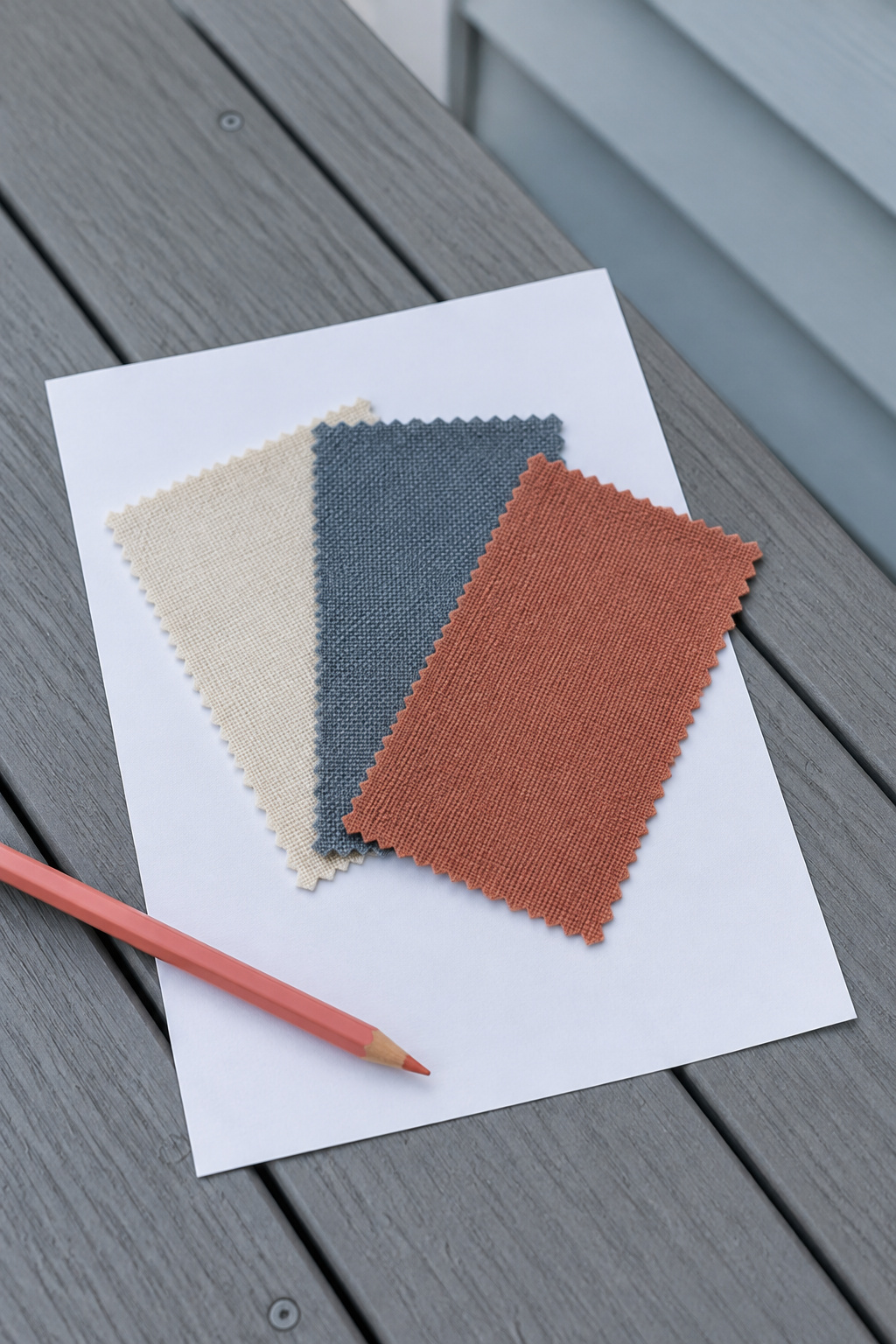
The reason is undertone. Warm colors carry red, orange or yellow underneath; cool colors carry blue, green or gray. A gray board can lean silver-blue or it can lean toward tan, which the trade calls greige. Two browns can fight too, if one is red-based and the other green-based. Put mixed temperatures side by side and each piece looks fine alone while the whole thing feels off.
I learned this indoors first. I used to recommend all-white kitchens to everyone. Then a winter in Minnesota showed me how cold they look in north light, and I stopped. Boards are the same: the color on the sample card is only half of what you see.
So read the board, not the name on the sample. Lay a sheet of plain white printer paper on the deck in daylight and look at where the two meet. Cool boards shift toward blue or silver against it; warm boards shift toward brown or tan. Check it in sun and in shade, since shade looks bluer.
The rule that follows is simple: share the board’s temperature. Keep roughly 60% of what you see in one temperature, boards included, and the tension goes away.
Deck furniture colors compared: gray, brown, cedar and weathered silver boards
If you have been asking what color furniture goes with a gray deck, or which colors go with a cedar deck, the answer starts in the left column. The makers’ own descriptions are a fair first guess, but they are written at family level and one brand has called the same brown cool-toned on one page and warm on another. The paper decides.
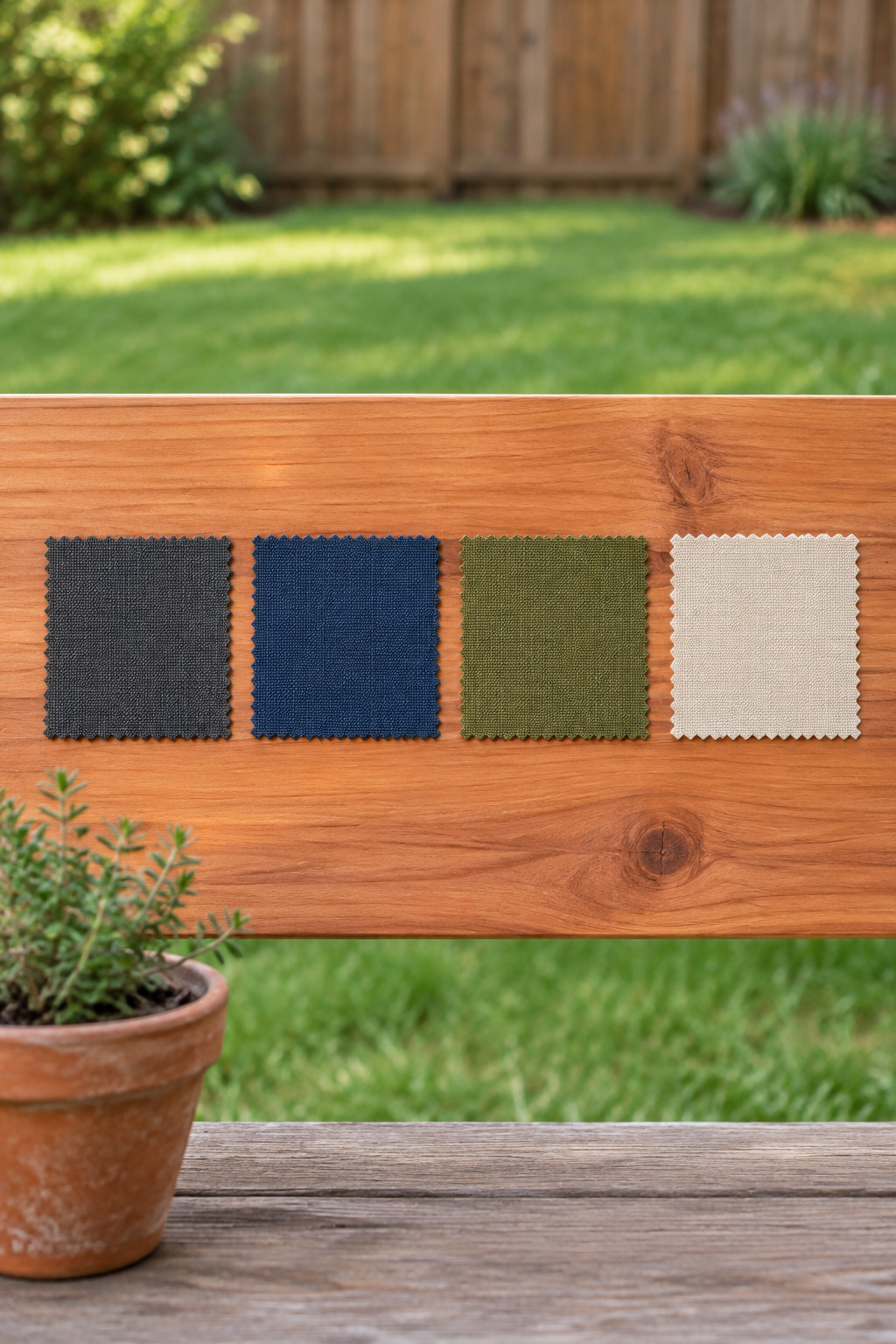
| Your boards | How makers describe them | Colors that share it | Colors that fight it |
|---|---|---|---|
| Cool gray composite | Trex Island Mist, “a cool medley of calming silver tones”; TimberTech’s gray family, “cool gray tones” | Charcoal, black, navy, slate, soft white | Grays that nearly match the boards |
| Brown composite | Trex Havana Gold, “caramel and honey hues”; Whiskey Barrel, “a warm, rich brown” | Oatmeal, sand, terracotta, olive, rust | Blue-leaning gray |
| Fresh cedar | Original warm color, before weathering | Natural linen, sage, cream, black metal | Too much orange on orange |
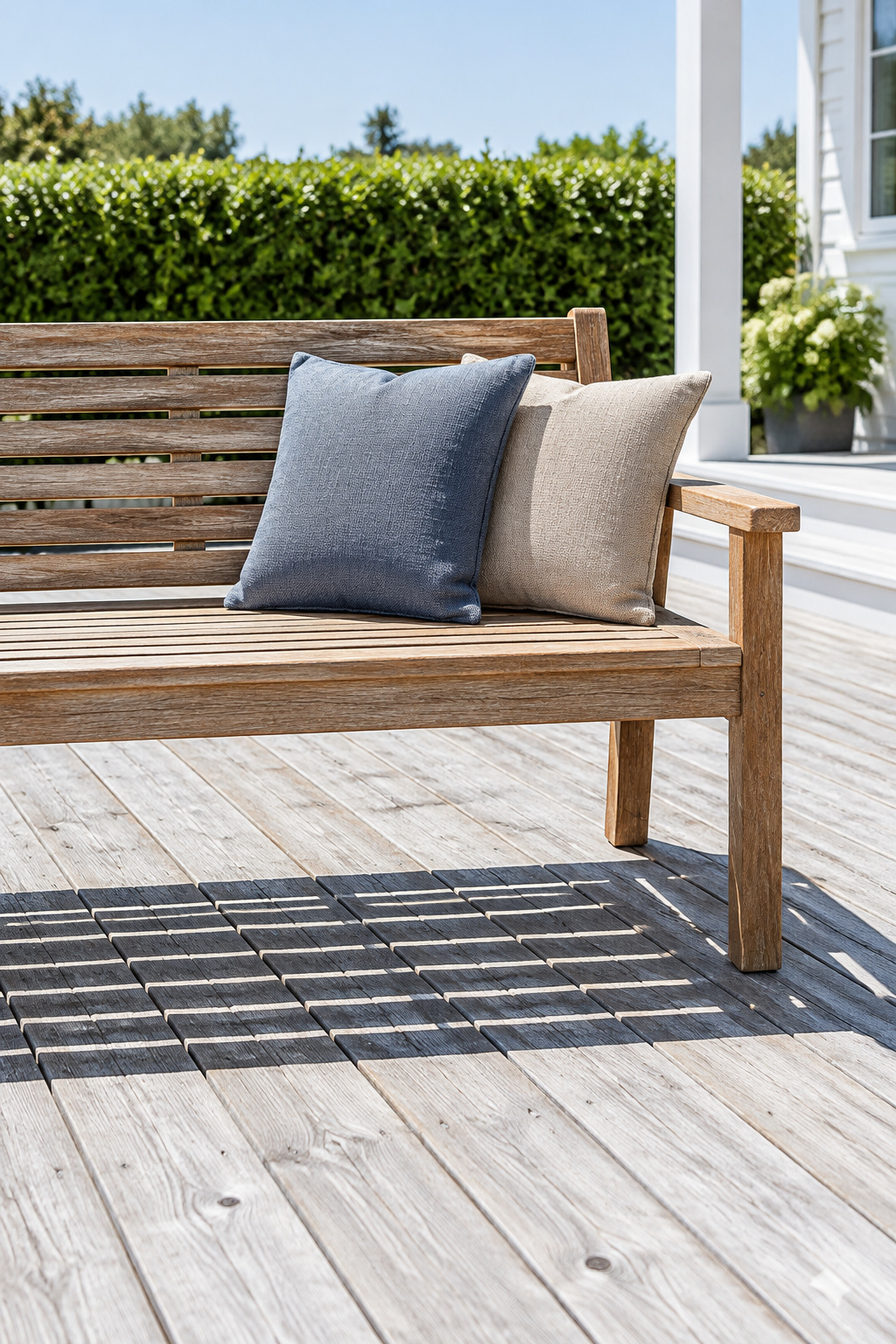
| Weathered silver wood | Silver in dry climates, uneven gray or brownish elsewhere | Neutral frames, one warm-leaning textile, plain pots | Cool-only cushions bought for a silver that never comes |
If I had to commit to one choice per row: slate cushions on cool gray, oatmeal on brown, natural linen on fresh cedar, and on weathered wood a plain frame with a warm-leaning throw. Every other cell is a variation on those four.
Cool gray composite: keep the cushions cool and add one warm piece
Cool gray is the easiest board to get right. Charcoal, black or navy frames and cushions agree with it. So does soft white, and green plants in white planters.
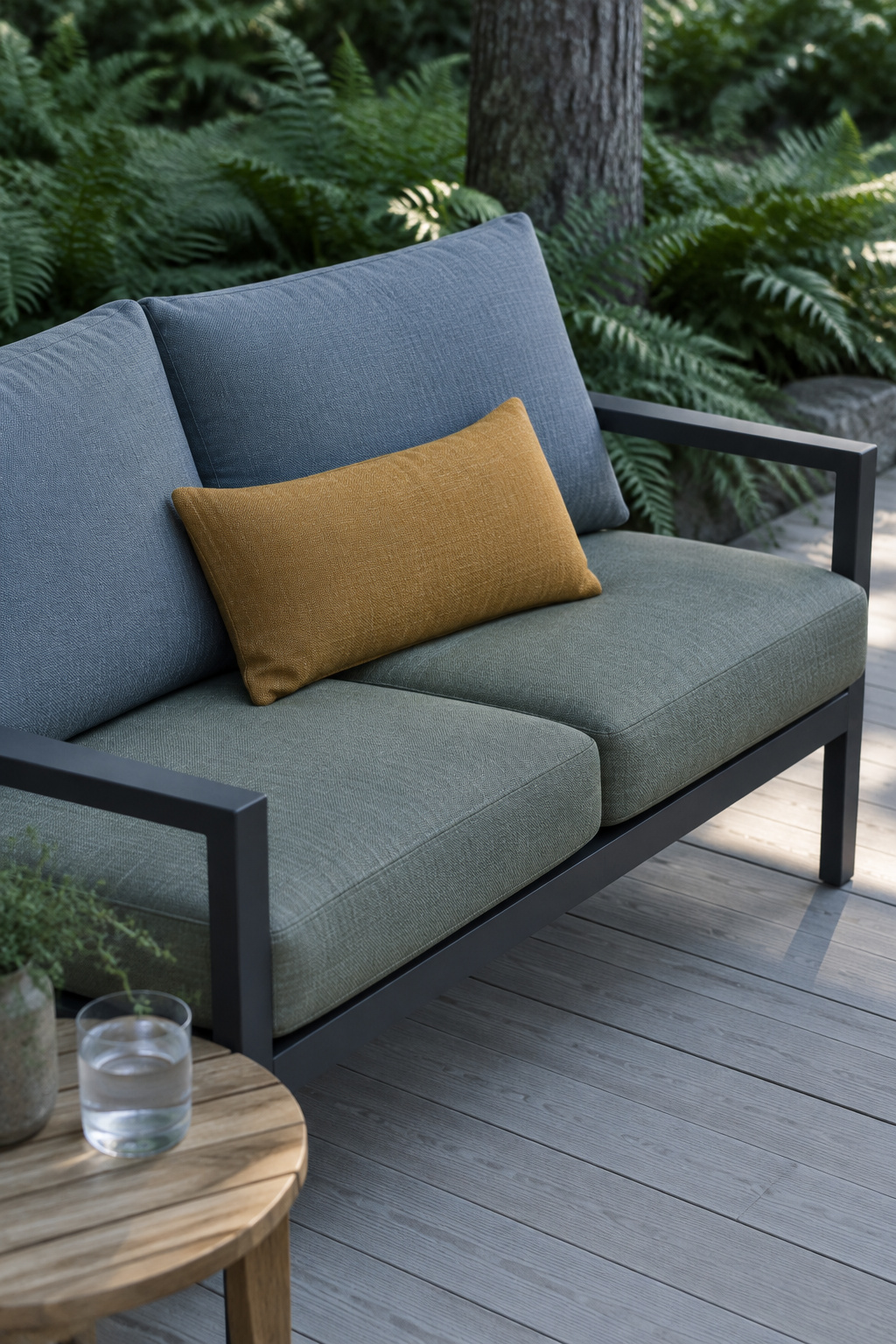
Watch the grays against each other. Two grays that nearly match look like a mistake; a pale dove cushion on a charcoal frame looks planned. Bright optical white right next to gray can make the boards look dingy, and a cream or natural canvas softens that contrast.
Then add one warm thing, as decking vendors and design blogs tend to suggest. Ochre sits opposite blue-leaning gray on the color wheel, so it warms cool frames without shouting. One lumbar pillow and one throw are enough, or a teak side table beside the largest block of gray. I would allow one warm move per 6 to 8 feet of seating.
The rug is the biggest piece of color after the boards, so give it the same temperature as the cushions and keep it quieter than them. What it is made of and what sits under it matter more to the boards than its color does; choosing a rug by its backing is where to start.
Warm boards: brown composite, fresh cedar and weathered silver wood
Brown composite and fresh cedar: warm boards, warm cushions
Brown boards and new cedar sit in the warm family, and fresh cedar runs close to orange-brown. Keep the cushions warm and the frames plain. Oatmeal, sand, natural canvas or soft white on the seats, with accents in terracotta, olive or rust. Cedar with sage planters and linen cushions is a pairing that rarely fails.
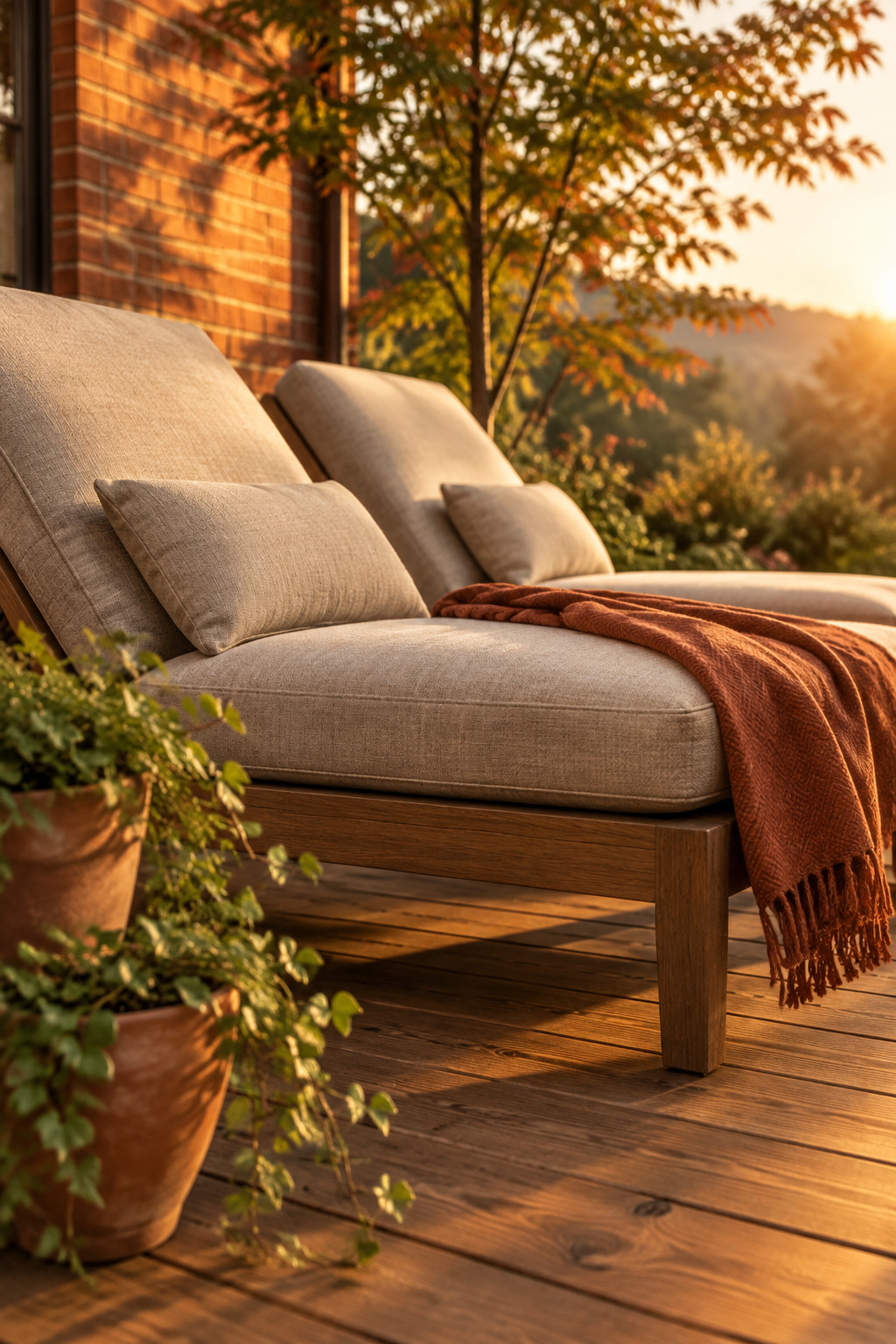
Two cautions. Too much orange on orange looks dusty rather than relaxed, so let the boards be the orange and keep the textiles a step paler. And count your woods. Boards, a teak table and an acacia bench are already three wood tones, which is the most I would put on one deck, and they should share one undertone.
Weathered silver wood: the board that changes
Unfinished cedar does not stay put. In very dry climates it goes silvery gray. Almost everywhere else it weathers unevenly, dark and blotchy, and sometimes takes a brownish tint. South- and west-facing boards gray faster than sheltered ones. So the deck you buy cushions for in June may not be the deck you sit on later.
Choose pieces that survive the change. A neutral frame, plain pots, and one textile that leans warm will work whether the boards drift cooler or browner. I would rather have one good wool blanket over the back of a chair than six decorative cushions. It agrees with silver and brown alike.
The house is the second fixed color, and the sun fades the rest
My wife has one shelf in our living room that I am not allowed to edit. I have learned to furnish around it. The outside of your house works the same way: the siding, trim, roof and any brick are already decided, and the deck furniture has to live with them.
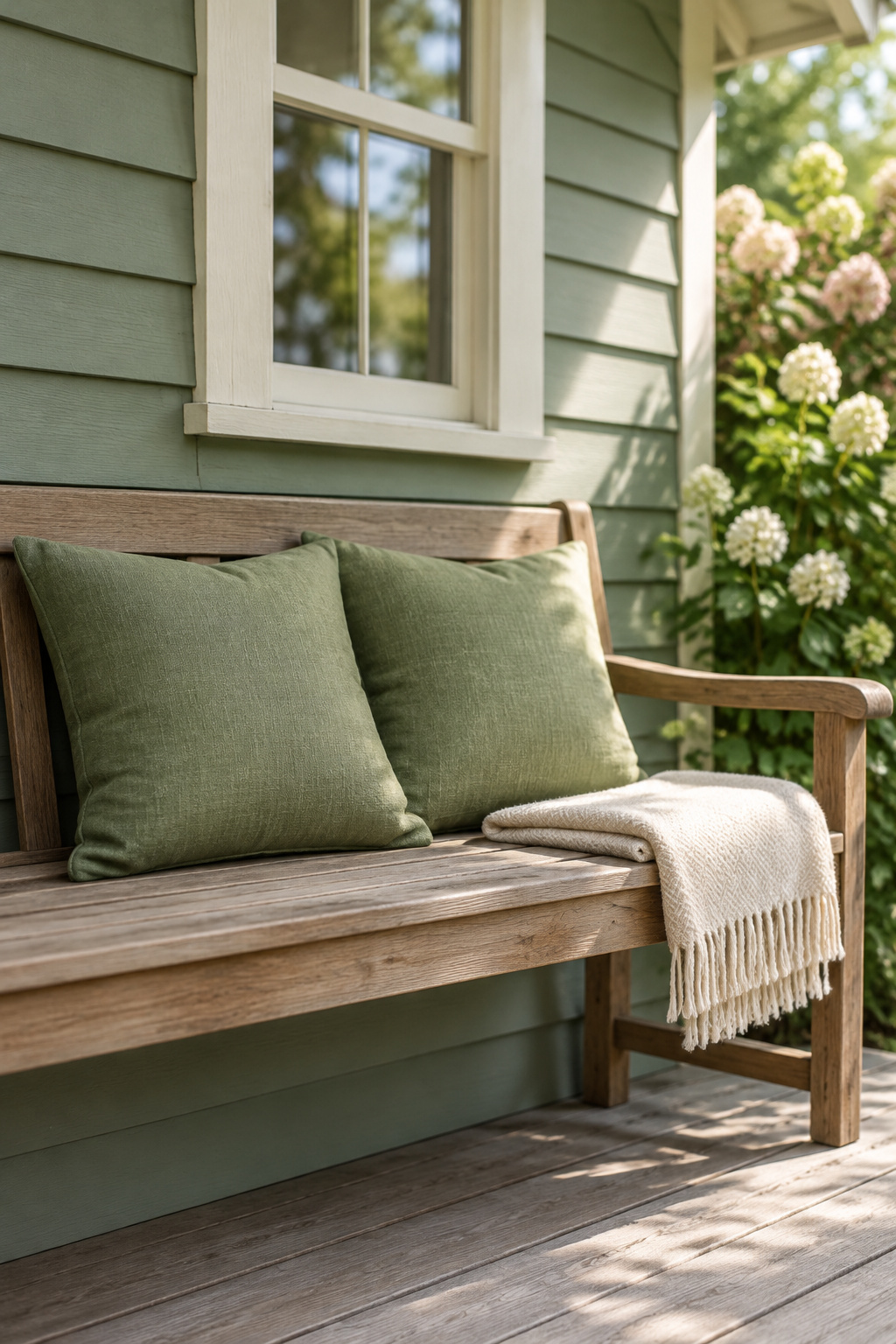
Read the siding the way you read the boards. Cream, tan or red brick is warm; blue-gray, charcoal or white with a blue cast is cool. When the boards are ambiguous, let the house set the temperature. Pull from it rather than copy it, because cushions in the exact siding color simply disappear against the wall. The designer Christopher Boutlier starts outdoor rooms from the architecture and mirrors it in the furniture, which is the right order.
Keep the palette small. The Swedish word lagom means about the right amount, not too much and not too little. On a deck that means two colors plus wood. Fewer pieces make each one count, which is why furnishing a small deck is mostly an exercise in leaving things out. I use the same mug every day and have stopped apologizing to guests for not having a set; a deck can be that settled too.
Then the sun goes to work. Solution-dyed acrylic, the kind Sunbrella makes, has its color put into the fiber before it is spun, so the color runs all the way through. Printed fabrics carry the color mostly on the face and rely on a UV finish that does not last the life of the fabric. Dark and vibrant colors fade fastest; beige, tan, pastels and white fade least. All fabric fades eventually in strong sun, so spend on the big cushions and put the brighter color on small pillows you can replace. Lighter tones also run cooler underfoot, though how hot boards get is its own subject.
Choose in afternoon sun: a one-evening swatch test before you buy
From October I leave one lamp on in the kitchen window so the house looks occupied when I ski back up the road. Seen from outside in the blue dusk, that warm square tells me more about color than any showroom has. Judge deck colors the same way, outside, in the light you will sit in.
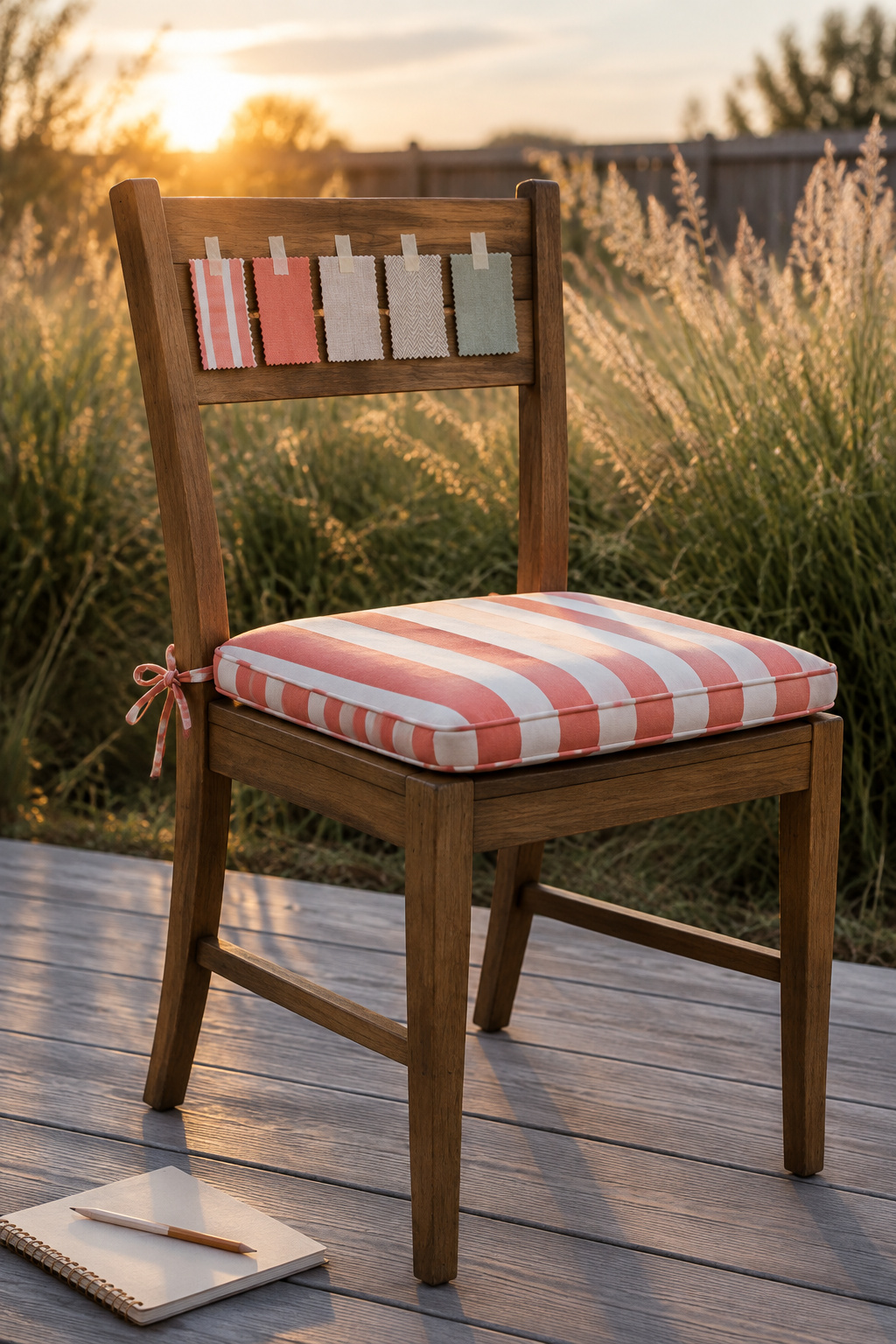
- Gather swatches, or one cushion from the shop, and your white sheet of paper.
- Carry them onto the deck in the afternoon and lay them on the boards and against the siding, on more than one board.
- Look from 2 feet, then from 10 feet. Look again an hour before sunset. A gray that is perfect at noon can turn blue or purple at dusk; if it does, return it.
- Leave the samples out for two or three days if you can.
- Keep two colors plus wood, and buy one piece first.
It costs a few swatches and an evening, and you can undo every step of it. Rugs, lighting and everything else beyond color are in the wider guide to deck decorating ideas. Start with the paper. Put it on your boards and look at which way they lean.
FAQ
Are white cushions a bad idea on a deck?
Not for fading, since white and pale colors fade least in sun. The trouble is dirt and glare: pure white shows pollen, sunscreen and muddy paws, and next to gray boards it can make them look dingy. Oatmeal, sand or a light gray hide everyday mess better and still keep the deck feeling light.
Will black furniture look too heavy on a gray deck?
No, black or charcoal frames on cool gray boards usually look clean and deliberate. What makes it work is a light-dark split, so put pale stone or oatmeal cushions on the dark frames. On a small deck or on dark charcoal boards, go easy on black, because too much deep color can make the space feel cramped.
Can I mix wood-tone and painted furniture on one deck?
Yes, as long as one is the calm base and the other brings the character. Keep wood tones, boards included, to three at most and let them share one undertone. Painted or metal pieces then pick up one of your two colors. A teak table with black metal accents on brown boards works well.