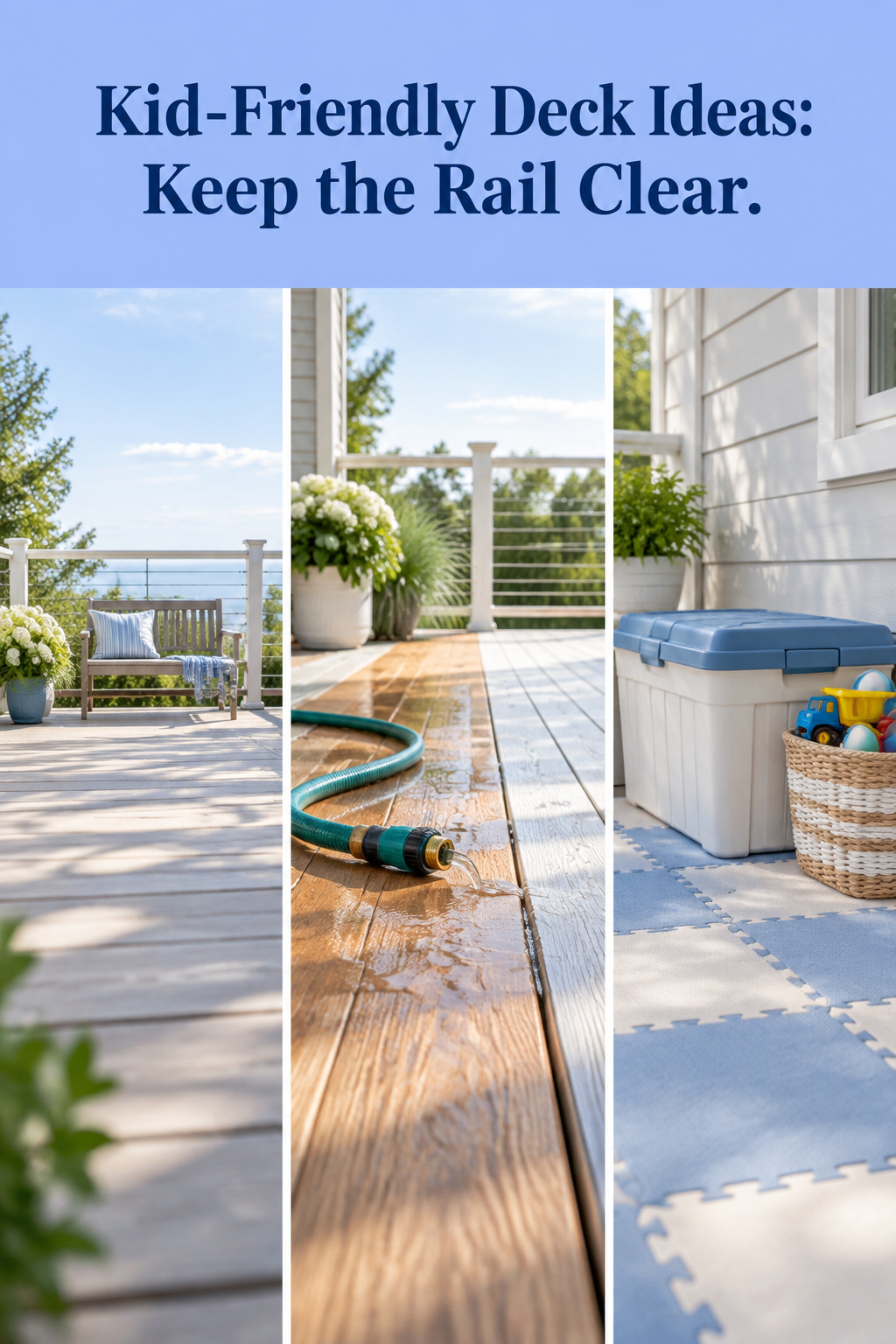
You carry the big planter out and set it down against the rail. You step back. It looks good there.
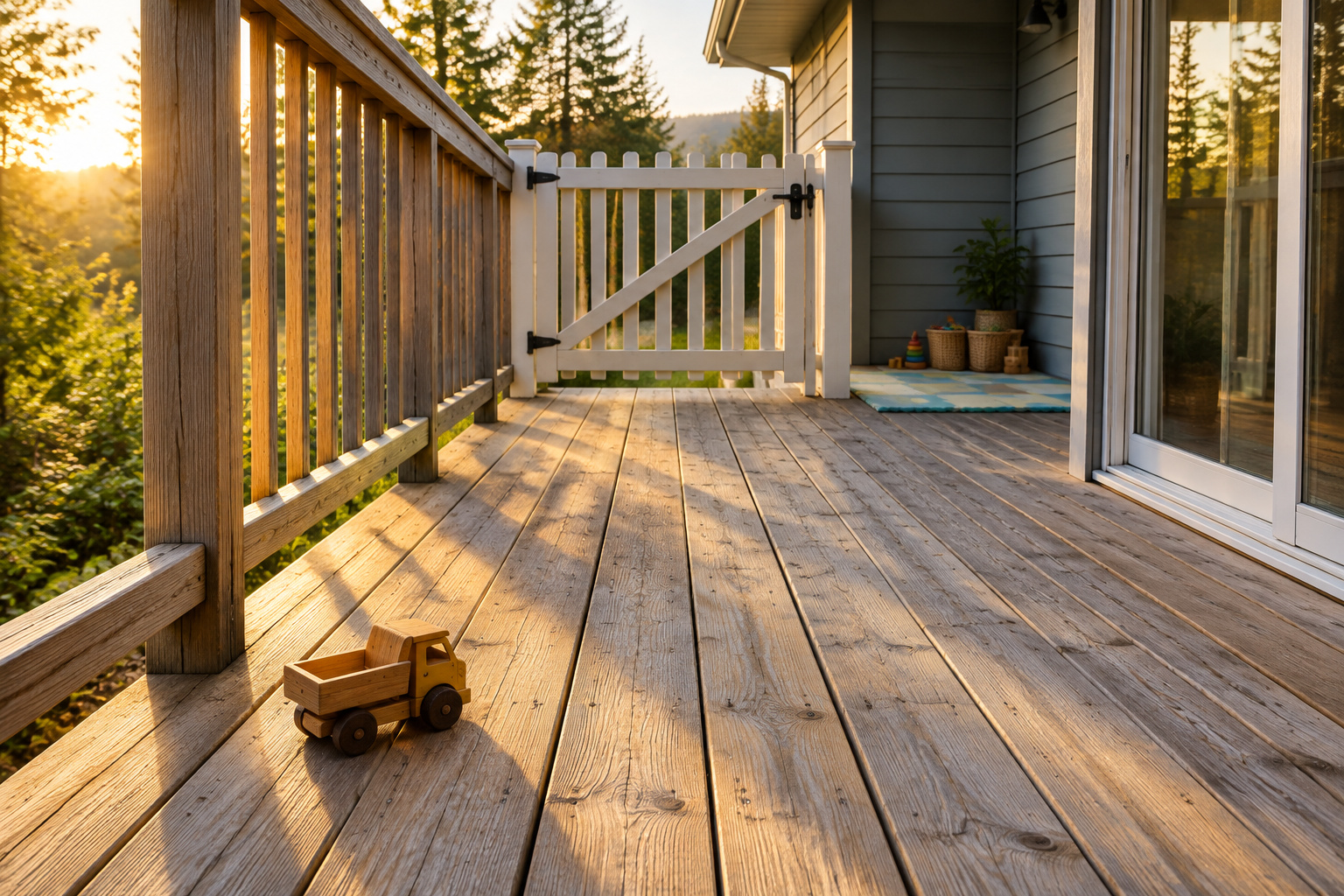
Now look at it the way a three-year-old will. It is a step. The bench beside it is a second step, and the rail is right above both. Most kid friendly deck ideas start with things you would have to build. The part you can change this weekend is what you put on the deck: keep anything climbable away from the rail, and keep bare feet off boards that have been baking all afternoon.
TL;DR
- Move benches, planters, deck boxes, chairs and toy boxes away from the rail; Queensland child-safety guidance asks for a 900 mm (about 35 in) clear arc on decks more than a meter up.
- Deck boards in summer sun reach about 140 to 170 F, and color and finish drive it, so shade the play area, hose it down and keep shoes handy.
- At the top of deck stairs use only a gate that screws in place, never a pressure or pet gate, and keep everything that could boost a child over it well clear.
Kid-Friendly Deck Ideas Start at the Rail
A child’s eye line sits around 3 ft 6 in, about 2 ft below yours. From there, a rail is not a view. It is a climbing frame with a handhold at the top, and everything parked against it is the ladder.
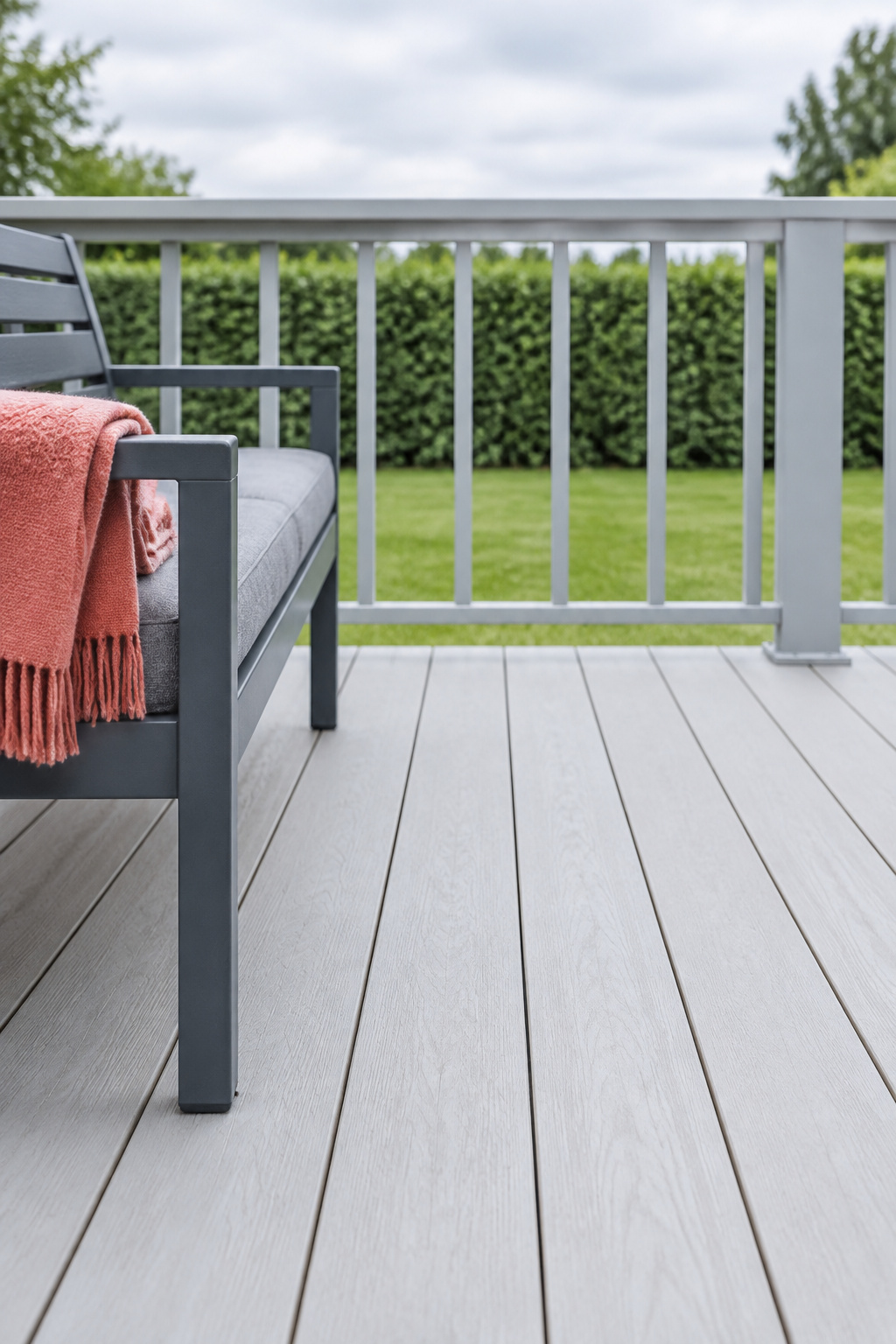
Climbing is a big part of how toddlers develop, which is why scolding does so little and moving the furniture does so much. In Queensland, injury data counts climbing on deck furniture among the most common reasons children fall from decks and balconies. Their guideline says that on a deck more than a meter above the ground, nothing climbable should sit near the rail at all, and it recommends a 900 mm (about 35 in) clear arc out from the top of the rail. That is Queensland best practice, not a building-code requirement, and I still think it is the right number to measure with.
Do a rail check before anything else:
- Benches and deck boxes pulled off the rail and into the middle or against the house wall
- Planters moved away from the rail, not lined up along it
- Chairs and side tables kept out of the clear arc
- Toy boxes and storage bins nowhere near the edge
- The door to the deck locked when no adult is outside
Weight matters too. Royal Children’s Hospital Melbourne advises heavy furniture rather than light plastic pieces, because a toddler can drag a light chair to the rail by herself. I get why people buy the light set. It’s easy to move, and that is the whole problem.
Kids’ furniture itself has its own piece on kid-friendly patio furniture; for everything else, there is the wider guide to dressing a deck.
Every Step Lit, Every Gate Latched
The top step and the gate
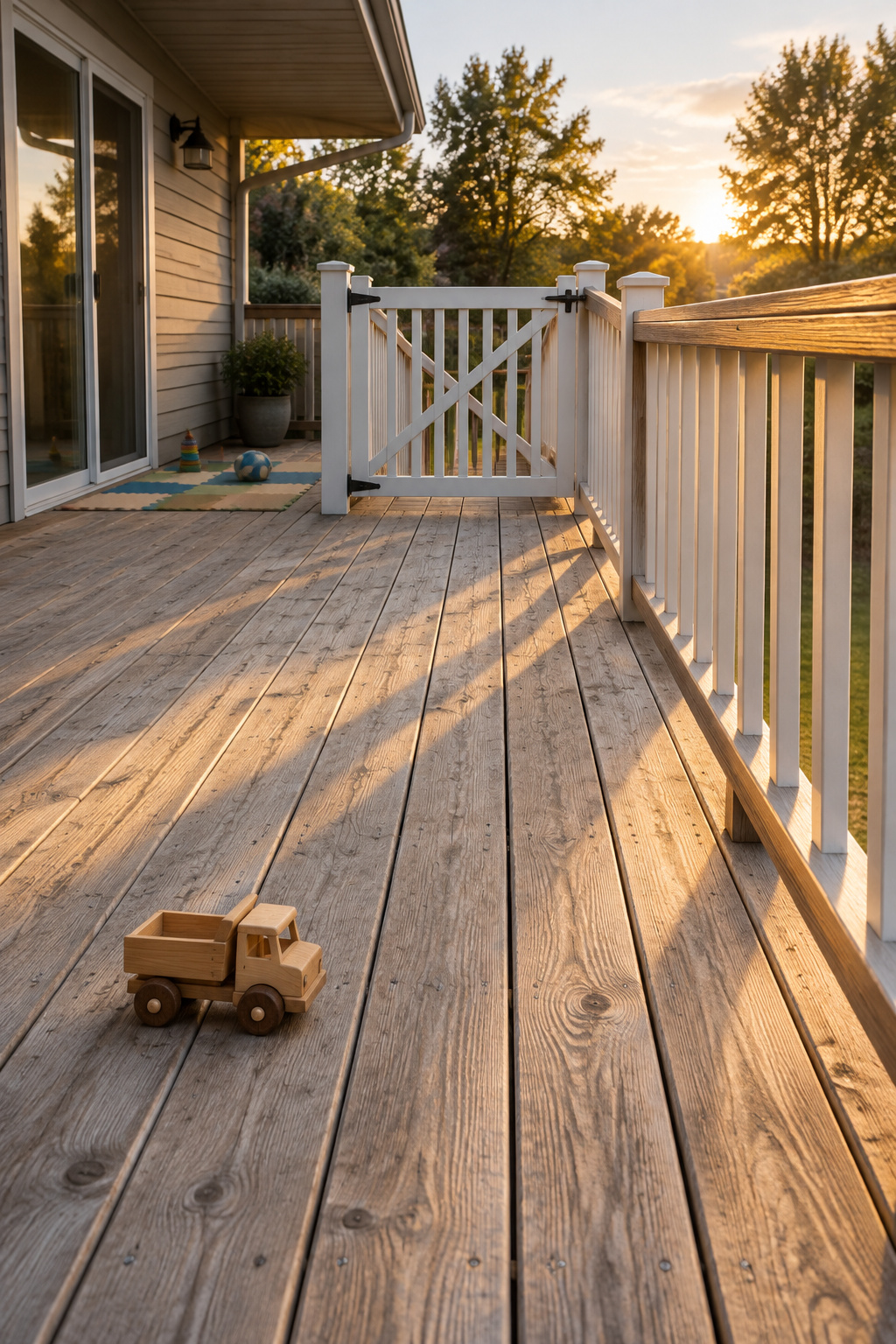
The CPSC is blunt about the top of a staircase: only use a gate that screws to the wall, and never use a pet gate as a child safety gate. A pressure-mounted gate can be pushed over by a child who cannot even walk yet, and a gate that swings out over the stairs does not belong at the top at all.
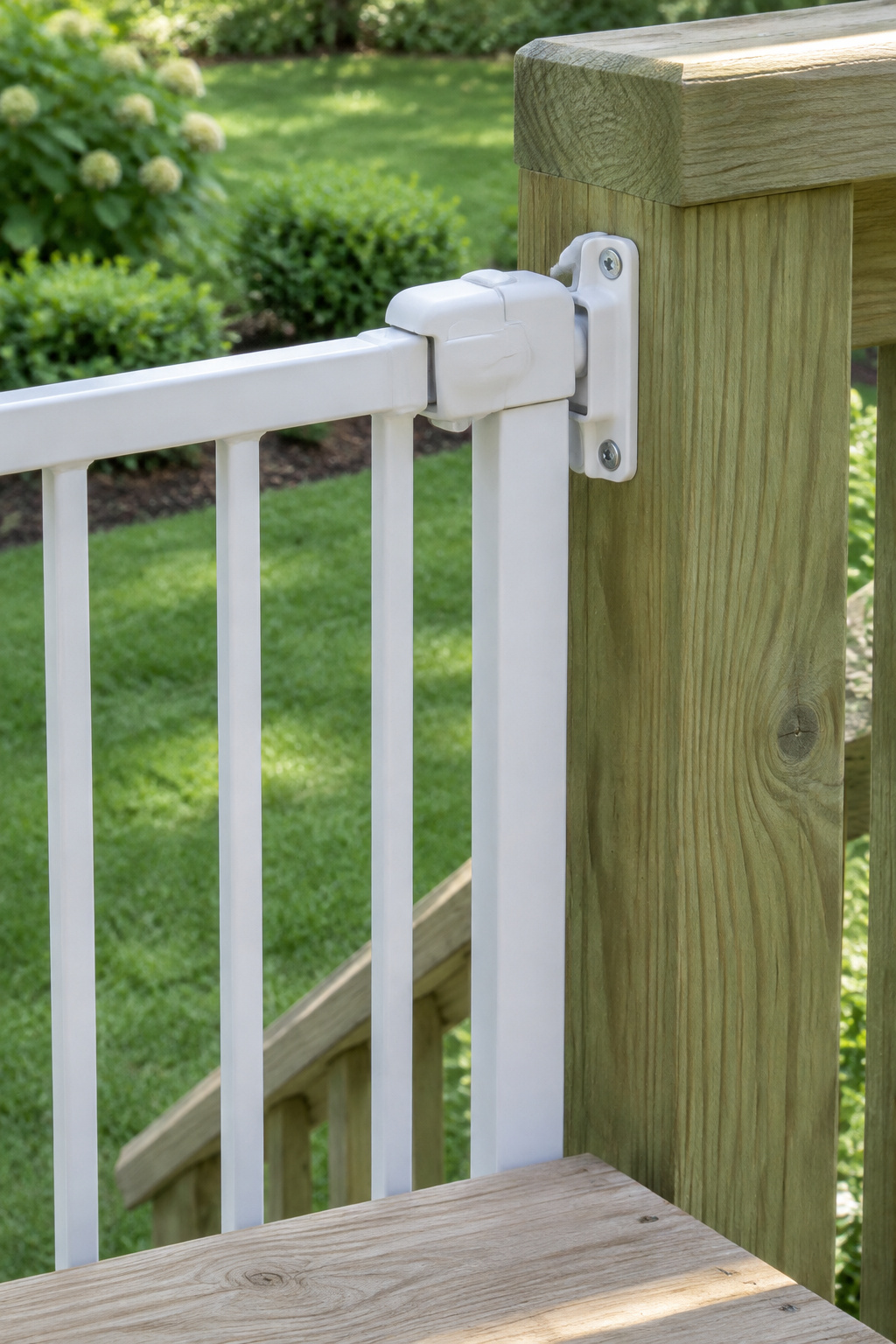
A deck makes this awkward. The top of most deck stairs is posts and rail, not a wall, and no safety guidance covers mounting a gate to deck posts. That is a question for the gate maker or a builder, before you drill.
Then look at what stands beside the gate. A good latch is worth nothing if a planter next to it gives a boost over the top. Keep big toys and furniture clear of the gate for the same reason you keep them off the rail. And close it every time, because a gate left open “just for a second” is all it takes.
Lighting the steps
The first safety light on a deck is the step. Light every step, top and bottom first. I test a night-light by lying in my child’s bed with the door open the way they like it, and I’d check deck steps the same way: from where the person using them will actually be, at dusk, carrying something. Fixtures, brightness and spacing are their own subject, covered in lighting deck steps.
Bare Feet Decide the Finish: Hot Boards and Splinters
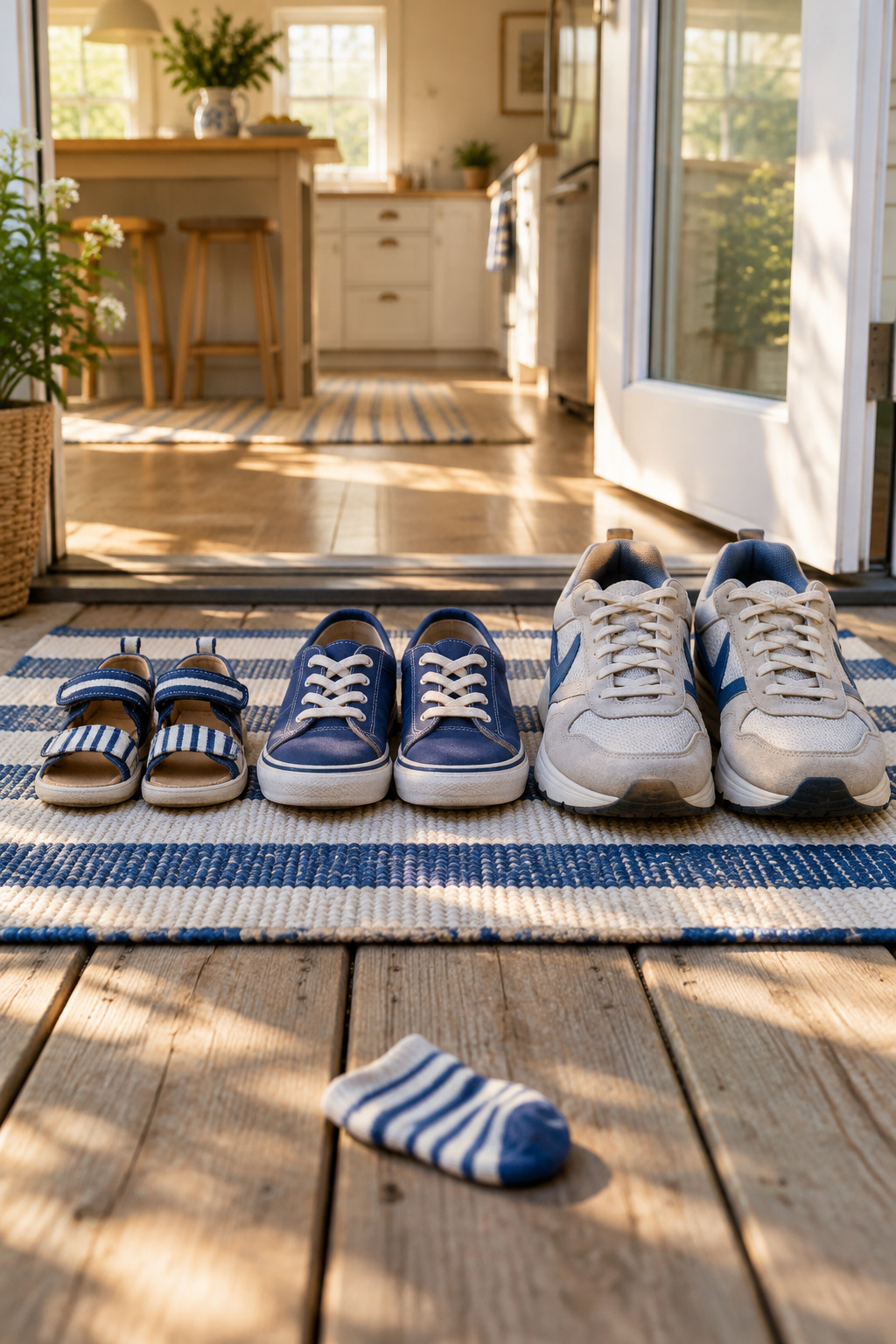
Most mornings in our house one shoe is missing, and it is usually under the kitchen table. On a summer deck that missing shoe stops being a joke by mid-afternoon.
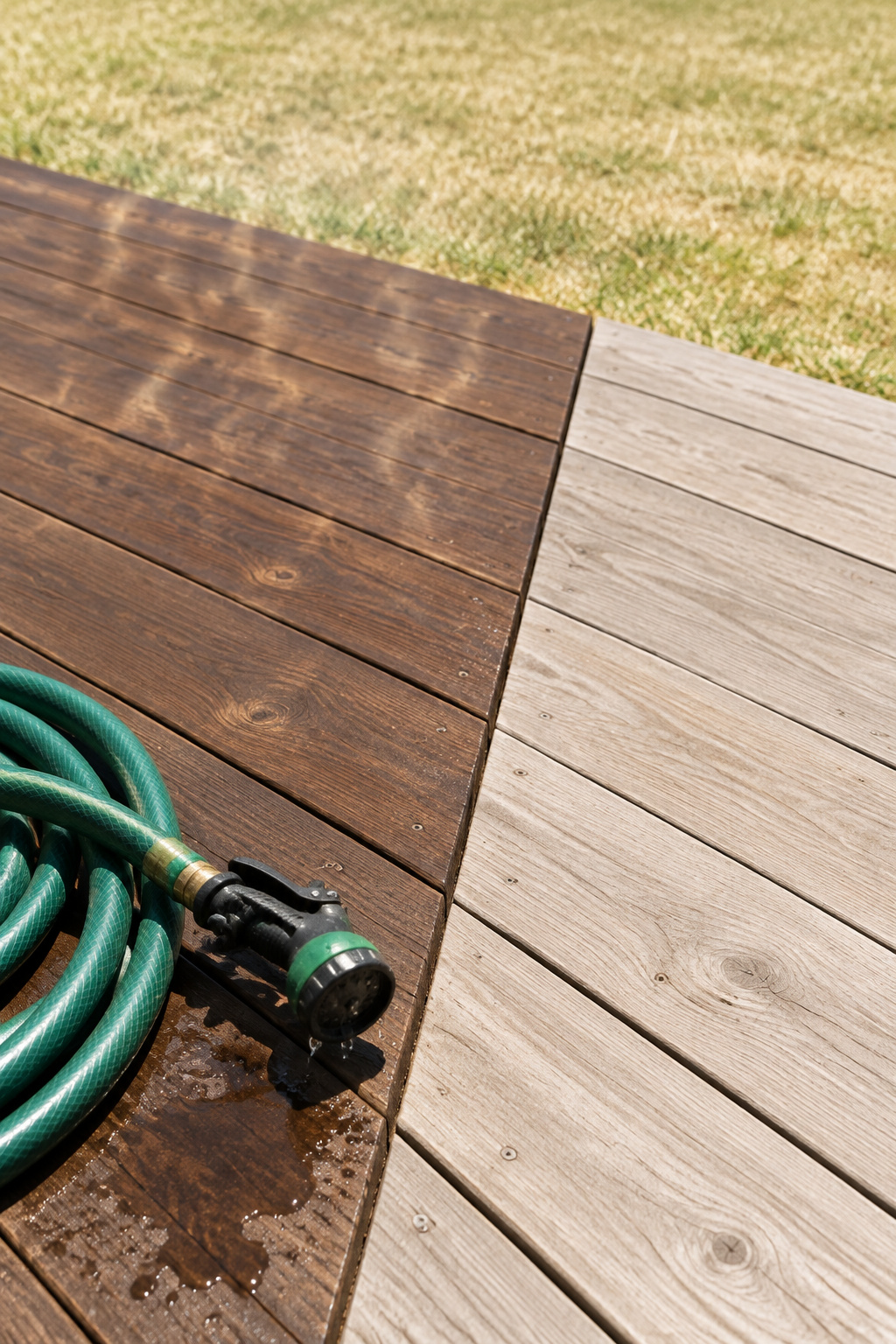
Deck boards in direct summer sun reach roughly 140 to 170 F in the tests decking makers and contractors have run. Those tests disagree about whether wood or composite runs hotter, so ignore anyone who tells you one material is safe. What they agree on is color and finish: darker boards, and boards freshly oiled or painted, run hotter. Young children tend to freeze on a hot surface instead of jumping off it, which is why the deck needs a plan before they are out there barefoot. Nobody publishes how long a bare foot takes to burn on dry boards, so trust your palm.
Before you let them out, press your palm flat on the boards in mid-afternoon sun. If you want to snatch it back, the boards are too hot for bare feet.
| Surface | Heat in sun | Splinter risk | What to do now |
|---|---|---|---|
| Dark or freshly oiled or painted boards | Hottest | Low while the finish holds | Shade the play area, rug over a path, shoes on |
| Lighter boards, wood or composite | Still hot in full sun | Wood rises as sealer wears | Hose down before play |
| Wood with worn sealer | Varies with color | High | Sand minor splinters along the grain, then re-seal |
| Pressure-treated boards built before 2004 (not cedar or redwood) | Varies with color | High | Do not sand or power-wash; seal with penetrating stain |
Shade is the lasting fix. A garden hose run over the boards for several minutes cools them right away, but the heat comes back as they dry, so treat it as a just-before-play trick.
Splinters follow worn sealer. When water stops beading on a wood deck, the sealer has gone, and minor splinters can be sanded out by hand along the grain with 80-grit paper. Check the age of the deck first. The CPSC says a deck built before 2004 that isn’t cedar or redwood was most likely treated with CCA, and it should not be sanded or power-washed. A regular penetrating stain or sealer may reduce exposure instead.
A Corner of Their Own With Soft Flooring and Toys That Close
Give the children one corner and let the rest of the deck stay an adult room. It’s a room, not a museum, but it doesn’t have to be a playroom from rail to door either. The corner goes against the house wall, as far from the rail as the deck allows.
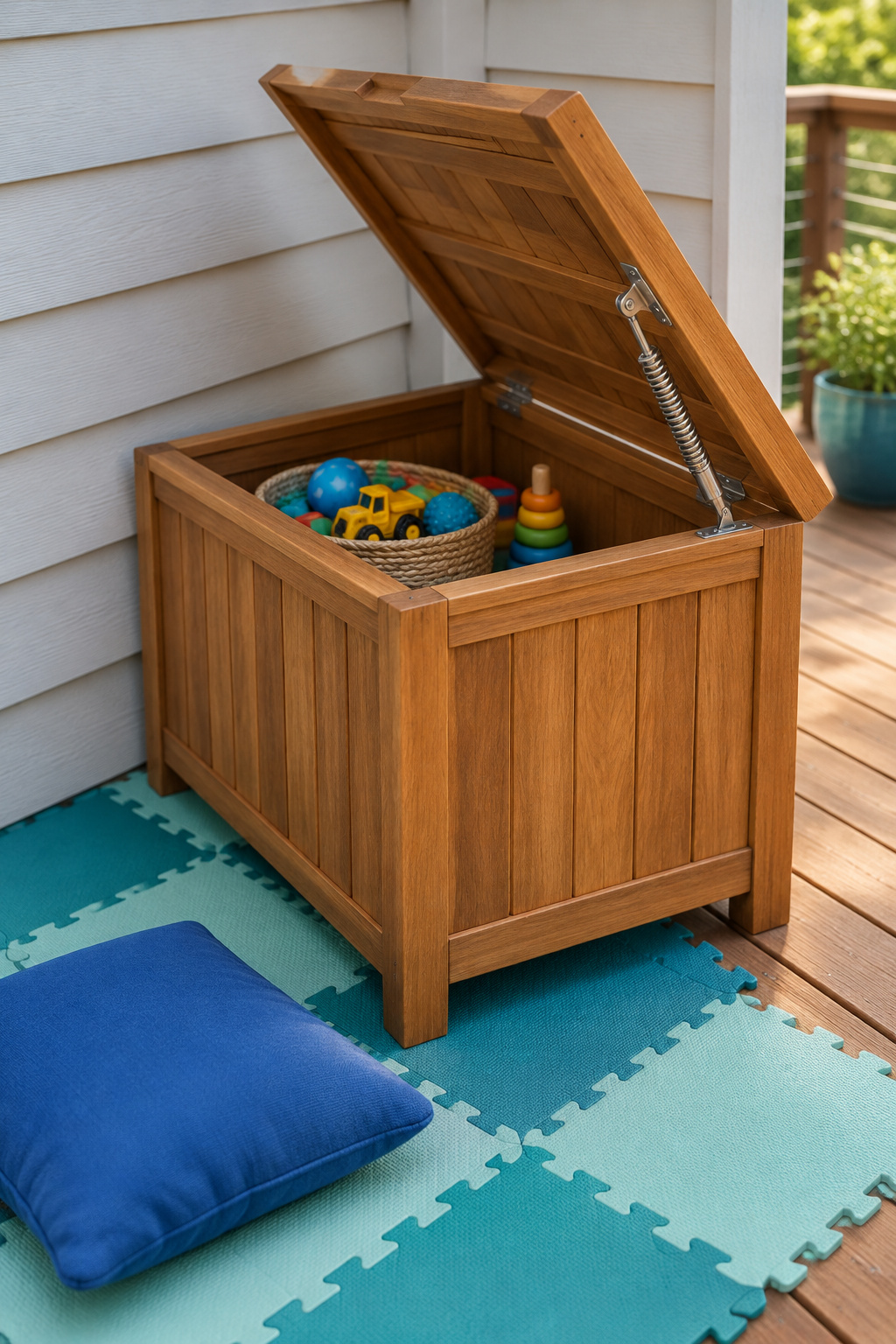
How far a child falls matters, and so does what they land on, so the corner gets something softer than bare boards. Nobody has rated foam or rubber tiles for falls on an outdoor deck, so I’d go pale and shaded rather than dark rubber in full sun, given how color drives heat. Most families end up with a soft rug for a play corner, and that is a fine answer.
Then storage. I’m not a fan of toy boxes. A lidded chest by the rail is two hazards at once: a step, and a lid. If you already own one, the CPSC wants a lid support that holds the lid open in any position (or a spring-loaded replacement), any automatic latch removed, and ventilation holes that stay clear of the wall and floor.
My test for any storage is simple. Can a tired kid do it? Open baskets and a low shelf pass. A heavy lid fails. I still catch myself saying “find it a home” from my classroom days, and a home only works if a cranky five-year-old can reach it. Each of my kids has a hook by the back door at their own shoulder height, and those hooks have moved up twice. A low hook does more for tidiness than any organizer I have bought, on a deck or anywhere.
Keep fewer toys out, too. In one University of Toledo study, toddlers given 4 toys instead of 16 played 108% longer each time they played.
Plants Worth Having Within Reach of Small Hands
Toddlers taste the garden. Plants rarely make a curious child seriously ill, but a few are worth keeping well out of reach, and the low pots by the play corner should hold the gentle ones.
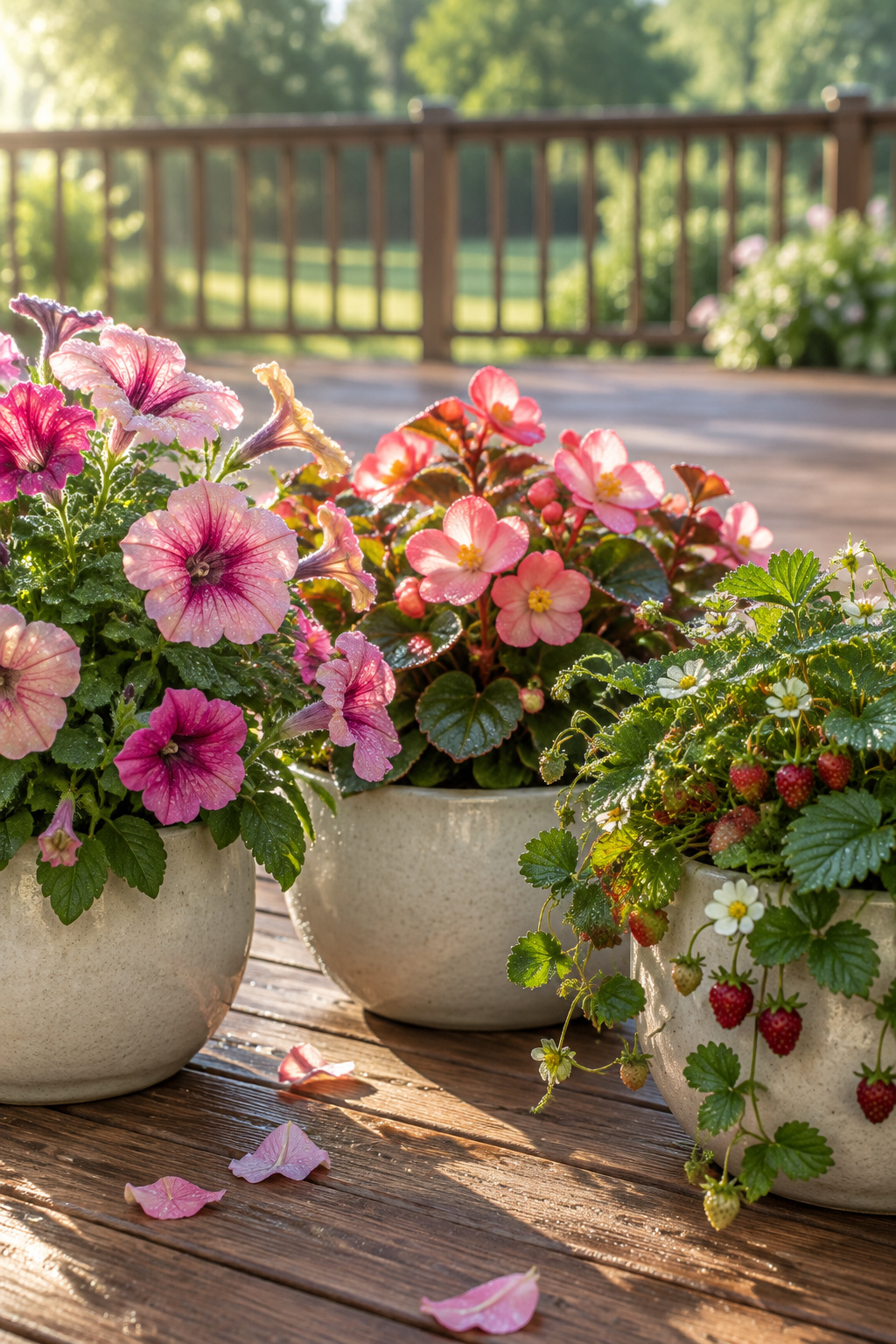
- Keep out of reach: foxglove, lily-of-the-valley, oleander, hydrangea, azalea and rhododendron
- On America’s Poison Centers’ non-poisonous list: petunia, begonia, rose, African violet and wild strawberry
- Irritants, so not on the safe list: marigold and geranium
Even a non-poisonous plant can choke a child, so learn the name of everything in your pots; poison help depends on knowing exactly what was eaten. Save Poison Help, 1-800-222-1222, in your phone. And whatever you plant, the pot still goes away from the rail. What to grow in containers is its own subject, covered in the container garden ideas.
Design for the Stage After Next: Your Deck at Two, Five and Ten
A deck that was safe last summer may not be this summer. Reach grows faster than parents re-check, and “out of reach” is never permanent.
| Age | What the child can reach or do | Deck change |
|---|---|---|
| Two | Climbs anything; can open or climb a gate around now; high reach about 36 in by three or four | Gate at the top step until they can beat it, rail clear, every pot and chair off the edge |
| Five | High reach about 40 in from five to eight; can drag light chairs | Gate gone; heavier furniture, toy hooks raised |
| Ten | High reach about 44 in from nine to twelve | Rail still clear; deck boards still hot; a shelf of their own |
When my older daughter outgrew the low shelves, she asked for one high shelf her younger sister couldn’t reach. That’s the older-child row in one request.
Stand at the rail and ask what a small foot would use as a step. If anything is, move it. Then cool, soften and light the rest. One limit on what I know: I can tell you what a child will climb, but whether the rail, its gaps and its height are right is the building department’s call, not mine.
FAQ
Is it safe to leave a wading pool or water table on the deck?
Only while an adult is within arm’s length. A child can drown in as little as 2 inches of water, quickly and silently, so empty a wading pool or water table every time play ends and check it after rain refills it. How much weight a full pool puts on your deck is a builder’s question.
How do I keep a toddler from opening the door to the deck?
Lock it with a high latch or a knob cover that an adult can still open fast in an emergency, and add a self-closing device where it suits the door. No device is fully childproof; determined toddlers do beat them. A deck a child cannot reach alone is far less likely to see a fall.
Is a pressure-treated wood deck safe for children to play on?
Yes, with precautions on older decks. CCA wood stopped being made for homes at the end of 2003. On an older deck, wash hands after play, skip snacks on the boards, keep children out of the soil underneath, and re-seal with a penetrating stain or sealer regularly. Never sand or power-wash it.