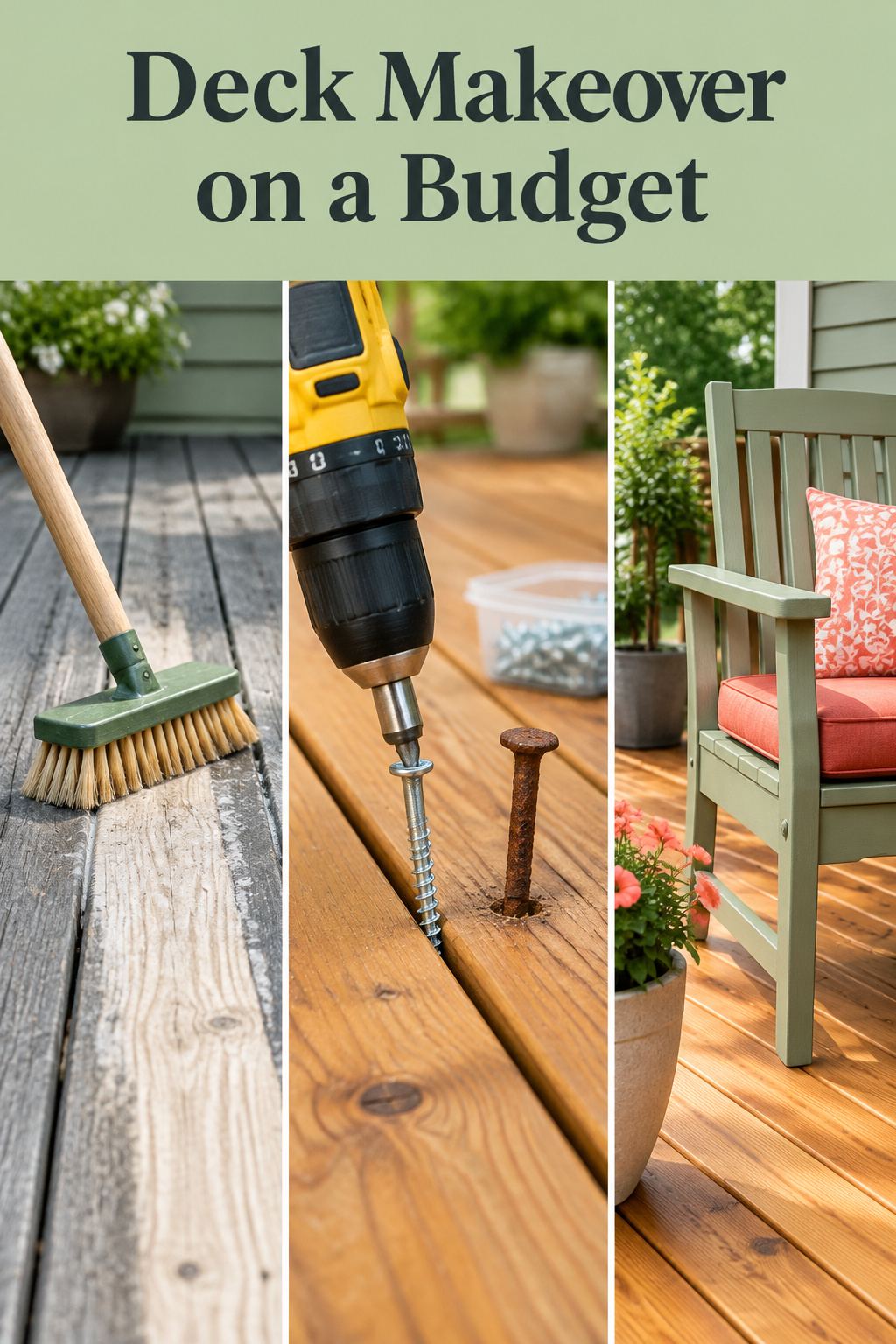

I once skipped a primer coat to save a day. Two weeks later I was repainting the whole wall. I think about that wall every time someone plans a deck makeover on a budget that starts with a cart full of cushions.
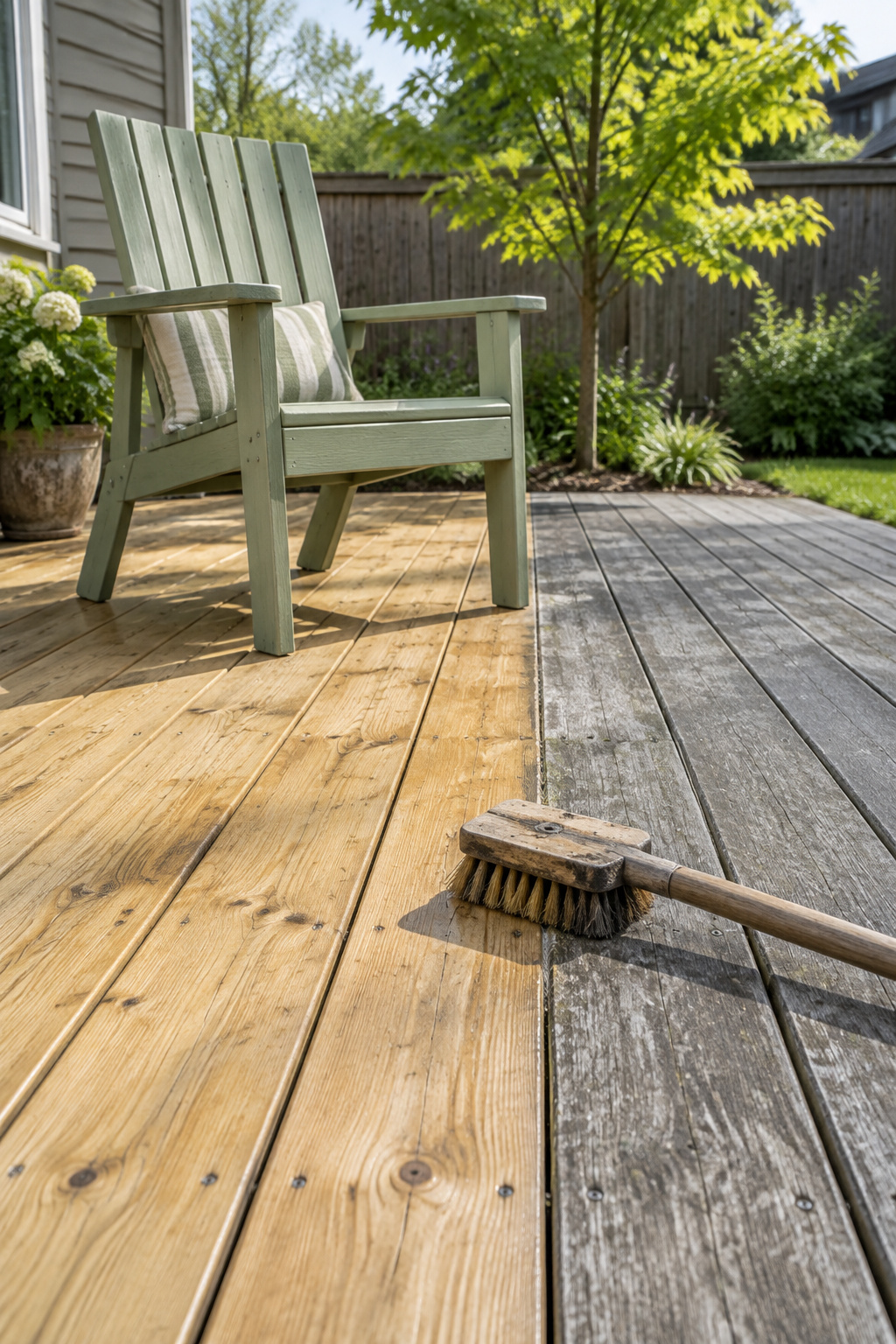
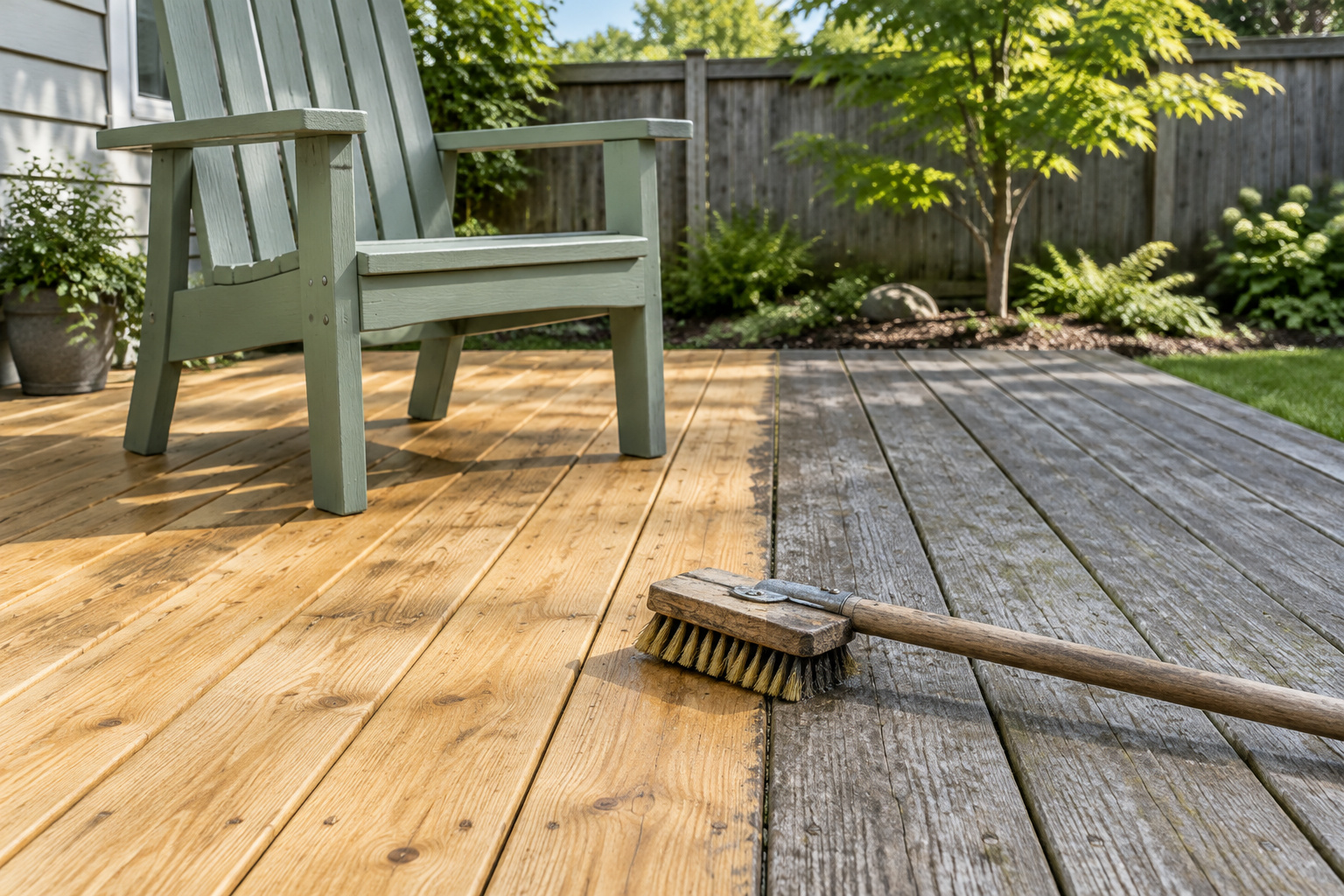
New cushions on gray, splintered boards still look tired. The cheap version of this job is the right order of work: clean the boards, fix what the cleaning shows you, re-coat them or leave them, and only then decorate.
TL;DR
- Spend the first money on the boards: a gallon of deck cleaner, a stiff synthetic brush and a box of deck screws came to $29.08 on November 22, 2026.
- Follow your board maker on pressure: composite makers range from 1,500 to 3,100 psi, so a wide fan tip held well back at low pressure is the safe default.
- On an assumed 10 x 12 ft deck, prep plus two cushions, a 5 x 7 rug and two cans of spray paint totals $164.06, or $254.02 with a two-gallon re-coat.
A deck makeover on a budget spends its first dollars on the boards
The usual advice is a rug, cushions and a few lights. Try that on a tired deck and here’s what you’ll see: the colors pop for a week, then the boards around them make everything look borrowed from a yard sale.
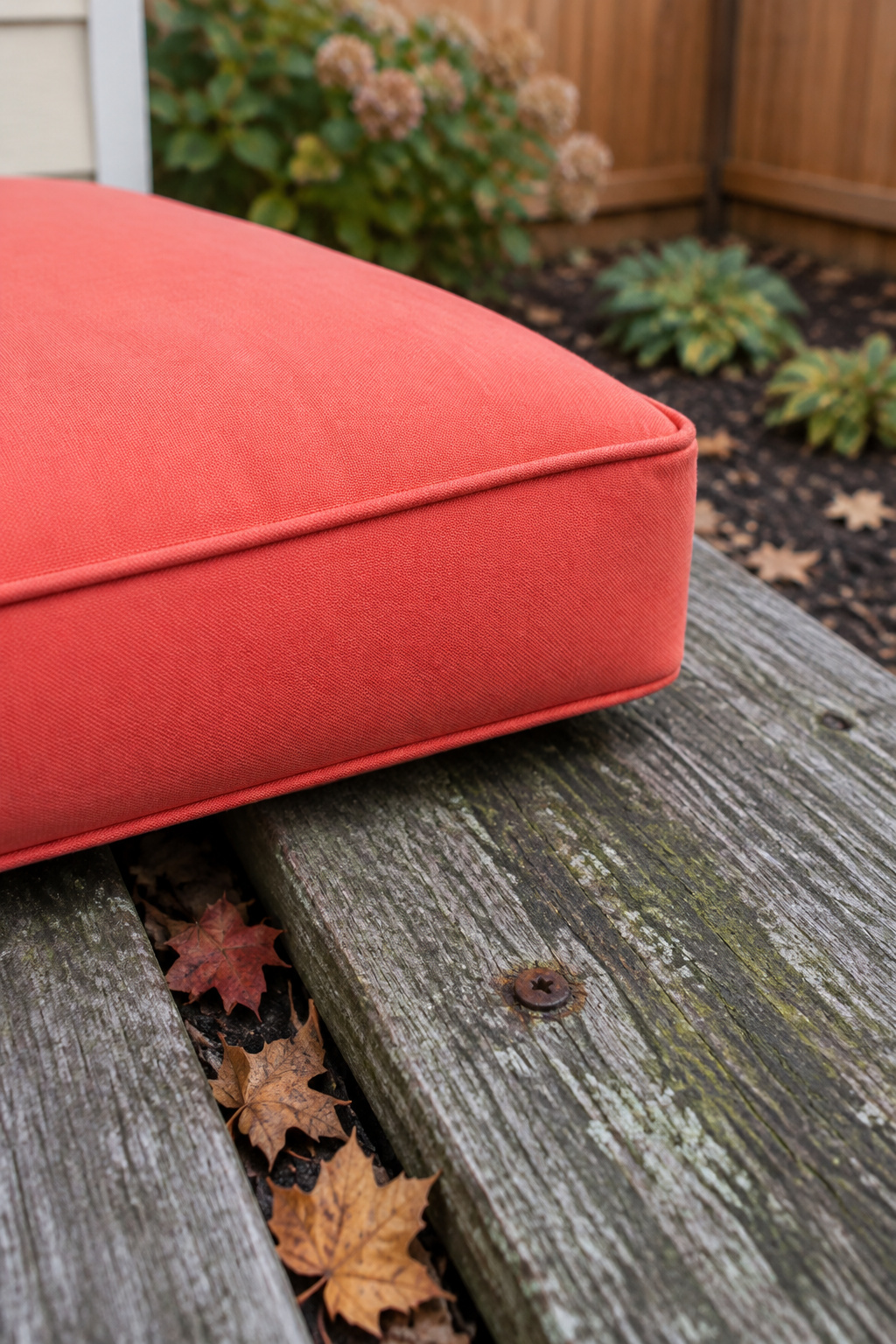
Decks without maintenance crack, check and grow mildew, and most are retired for cracks that timely finishing would mostly have prevented. Decor can only sit on top of that.
So the money follows the work. Picture an older pressure-treated pine deck, 10 x 12 ft, or 120 sq ft of boards, with one seat and a few years of weather on it. That’s the deck I’ll cost all the way through. Yours will differ in size, but the order holds, and once the boards are sorted the wider range of ideas for decorating your deck opens up properly.
Clean it: cleaner, scrub brush and a gentle pressure wash
Cleaning is the cheapest step with the biggest visible change. A gallon of Behr All-In-One Wood and Deck Cleaner runs $11.48 and covers the sample deck with plenty left over; a Libman deck scrub brush is $11.98.
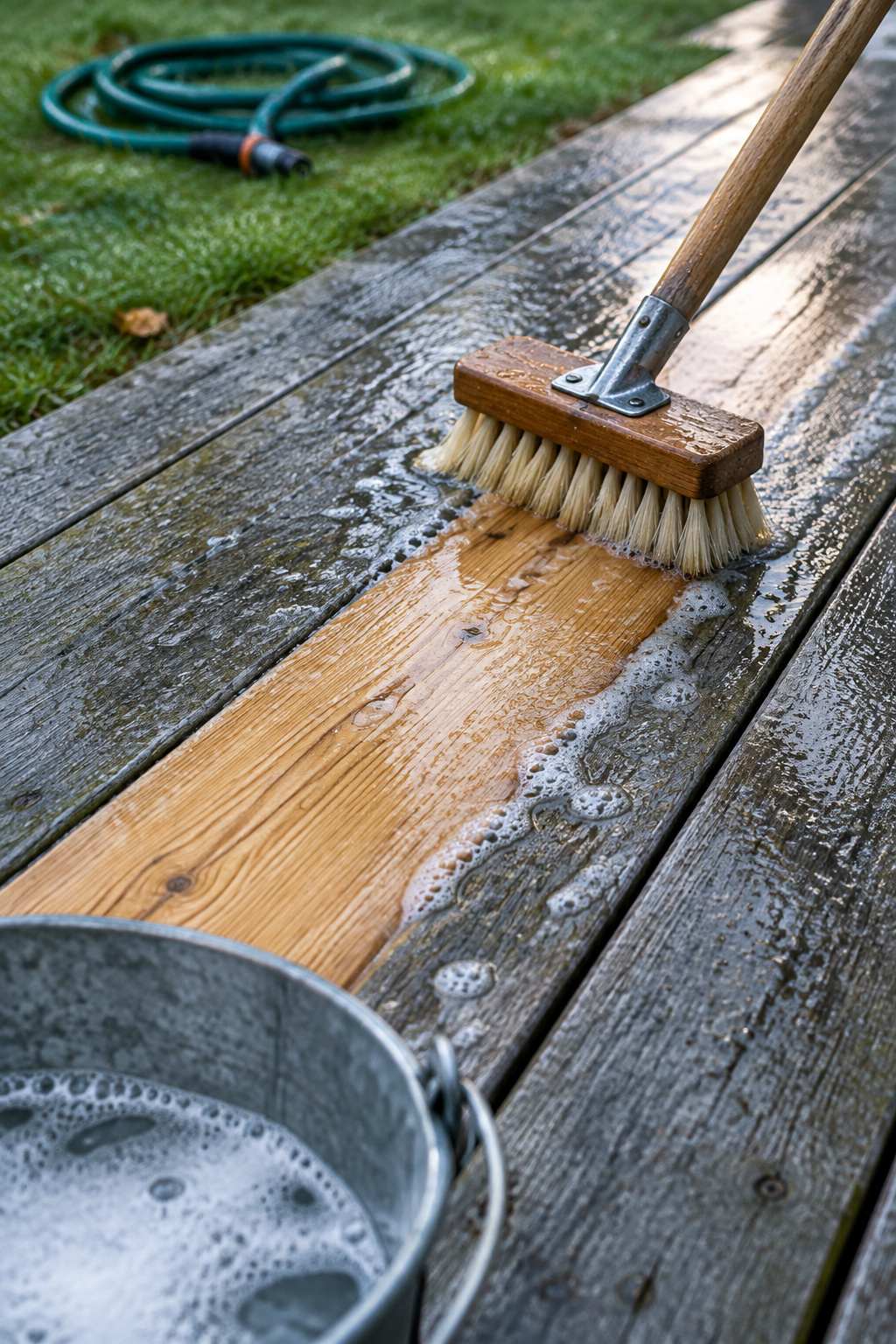
- Sweep and clear the gaps.
- Apply cleaner in small sections with a roller or pump sprayer.
- Mist it with the hose if it starts to dry; dried cleaner can fuzz the grain.
- Scrub along the grain with a stiff synthetic-bristle brush.
- Rinse thoroughly with the hose or a pressure washer.
- Wait for the boards to dry.
Step six is the boring one, and nobody agrees on the clock. Advice runs from 24 to 48 hours up to the Forest Products Laboratory’s two warm, windy days. Test the wood instead: a moisture meter should read 15% or less.
The top of a board dries first and looks ready by lunch while the ends are still wet. Coat it then and the finish suffers. Check the cut ends too.
No pressure washer? A small electric one rents for about $33 for four hours, gas for more; ask your store, or use the hose.
Wood and composite are cleaned differently
On wood, the pressure washer is a better hose, and too much pressure strips soft boards. Stain makers’ advice for pine differs by more than double, so stay at the low end.
Composite makers disagree too, and your maker’s page wins:
- Trex (newer capped lines): up to 3,100 psi with a fan tip no closer than 8 in. Early-generation Trex gets no pressure washer at all.
- TimberTech: 1,500 psi maximum, for rinsing only, sprayed along the grain.
- Fiberon: under 3,000 psi at 12 in, and never while mold is present, because the spray drives it deeper.
Don’t know your board maker? Use a wide fan tip, hold it well back and start at the lowest pressure that rinses. I’d rather rinse a board twice than gouge it once.
Fix it: popped nails, loose boards and splinters, and what goes to a pro
I knock along a wall with my knuckles before I get any tool out, because walls lie, and a dirty deck lies the same way. Washed, it shows every proud nail and lifted board.
What you can fix in a weekend
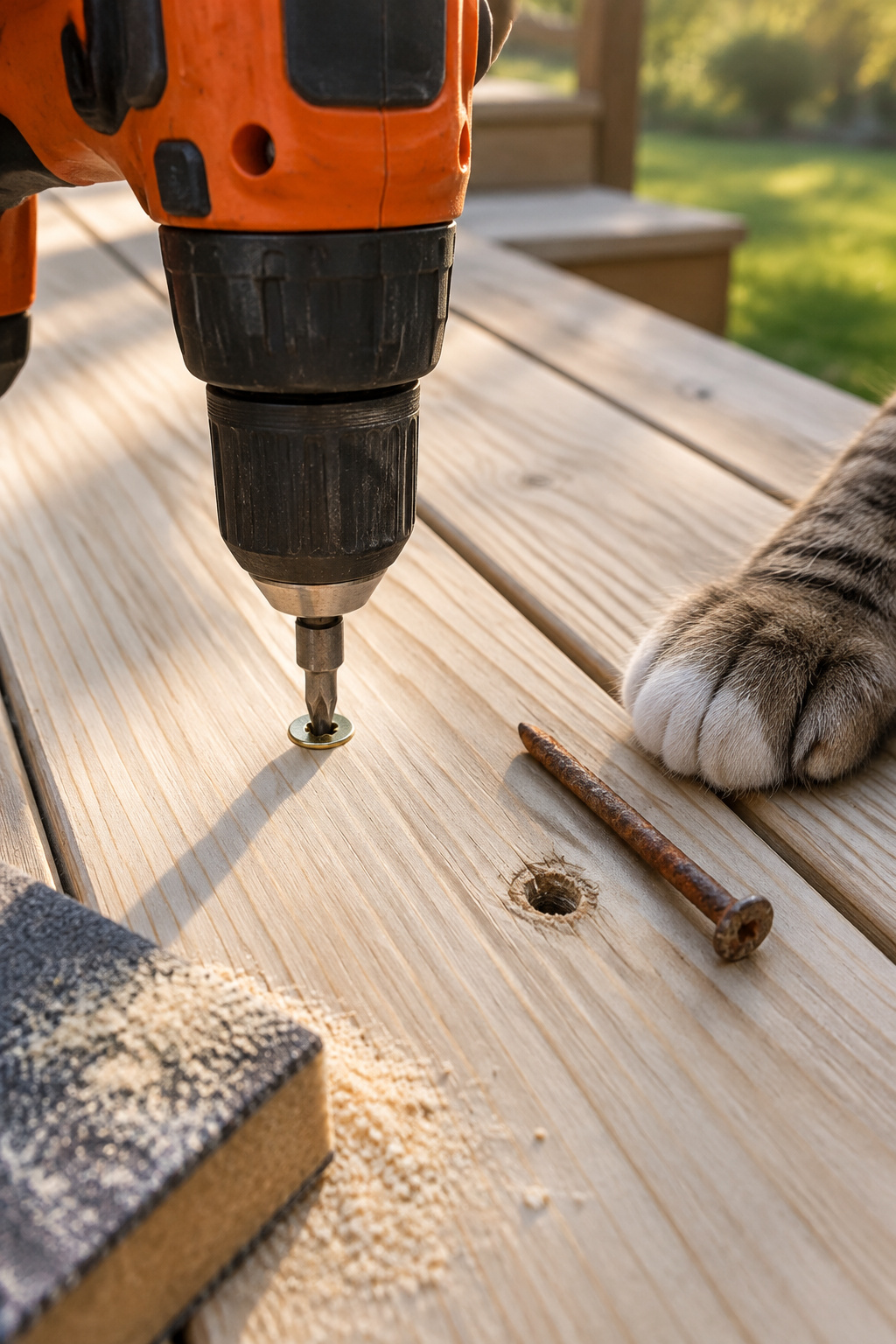
Popped nails get two answers. NADRA’s homeowner checklist says to pound them back in. BRANZ, a New Zealand building research body, says a re-hammered nail will most likely pop again as the wood moves, so pull it and drive a deck screw beside the old hole into the joist. I’m with the screws. Hammering buys you the same job next summer.
Every screw I take out of a wall goes into a coffee can until the job is done. Do the same with the nails you pull, so none end up in a bare foot.
- Popped nails (first build): a drill-driver with the torque set low, or borrow one. Coated screws in pressure-treated wood, stainless in cedar.
- A damaged board (some builds): if the damage is only on top, flip it. If deeper, cut the bad section out beside a joist with a circular saw, or a handsaw and patience, and add a 2×4 nailer block.
- Splinters (first build): 80-grit on a belt sander, or a sanding block by hand for a few boards. Set raised nail heads first, and go no finer, because finer paper closes the pores.
Before sanding an older pressure-treated deck, check the age of the boards; the kid-friendly deck article explains why.
What goes to a pro
Probe any board that looks dark or soft with a screwdriver. If it sinks, that board is done, and no finish on earth will save it.
An estimated 90% of deck collapses come from failed ledger connections, and a ledger held on by nails alone needs inspecting immediately. Spongy framing, a deck that sways, a loose rail or a run of loose boards along one joist all mean the same thing. Anything structural is a pro job. Railing gaps and heights are a question for your building department.
Re-coat or leave it: the decision that moves the whole budget
This is the biggest single line in the basket, so it gets its own decision. You can stop after cleaning and fixing. If the clean boards look even and you can live with the color, leave them, and put the re-coat on next year’s list.
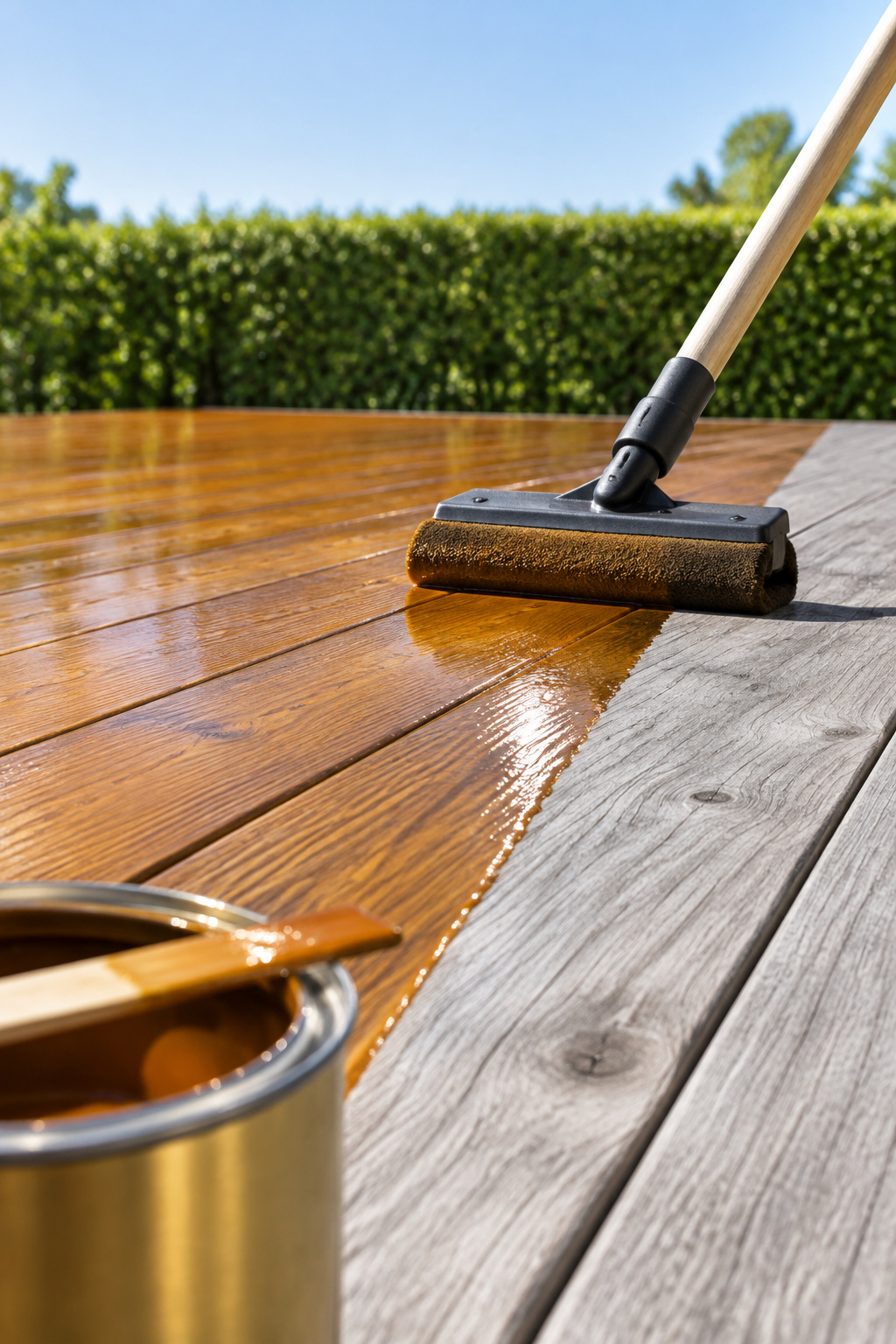
If you do re-coat, treat it as maintenance in the same color. Penetrating finishes perform better on wood decks and are easier to reapply than film-forming ones such as paint or solid stain, which wear badly where people walk.
Read your can before the weekend. Defy Extreme Wood Stain’s data sheet is typical: if a few drops of water don’t soak in within seconds, don’t apply it; put two coats on pressure-treated wood, the second 10 to 15 minutes after the first; and work between 45 F and 95 F, out of direct sun, with no rain expected for 12 hours.
Furniture-back time is where the cans split. Defy says 24 hours before using the deck. Benjamin Moore’s Woodluxe and Wolman’s DuraStain both say 48 hours before furniture goes back. Go by the can you bought.
For pricing, I used Behr Premium Advanced DeckOver at $44.98 a gallon. It covers about 75 sq ft in two coats, so the sample deck needs 1.6 gallons: buy two, $89.96. Know what it is: a film-forming coating, the kind the Forest Products Laboratory advises against on wood decks.
Always buy 10% more material than the plan says. On the sample deck that’s 132 sq ft of coverage instead of 120. Running out halfway means a second trip and a lap mark. I keep hardware-store receipts in my truck’s sun visor, because something is always going back, and a sealed spare can is the best candidate.
A weekend makeover, costed: where the money goes, in order
The sample deck, priced in buying order. The boards come first because they set the ceiling on everything else. Prices are single listings from November 22, 2026; the cushions were out of stock that day and the spray paint looked high, so treat those two as ceilings.
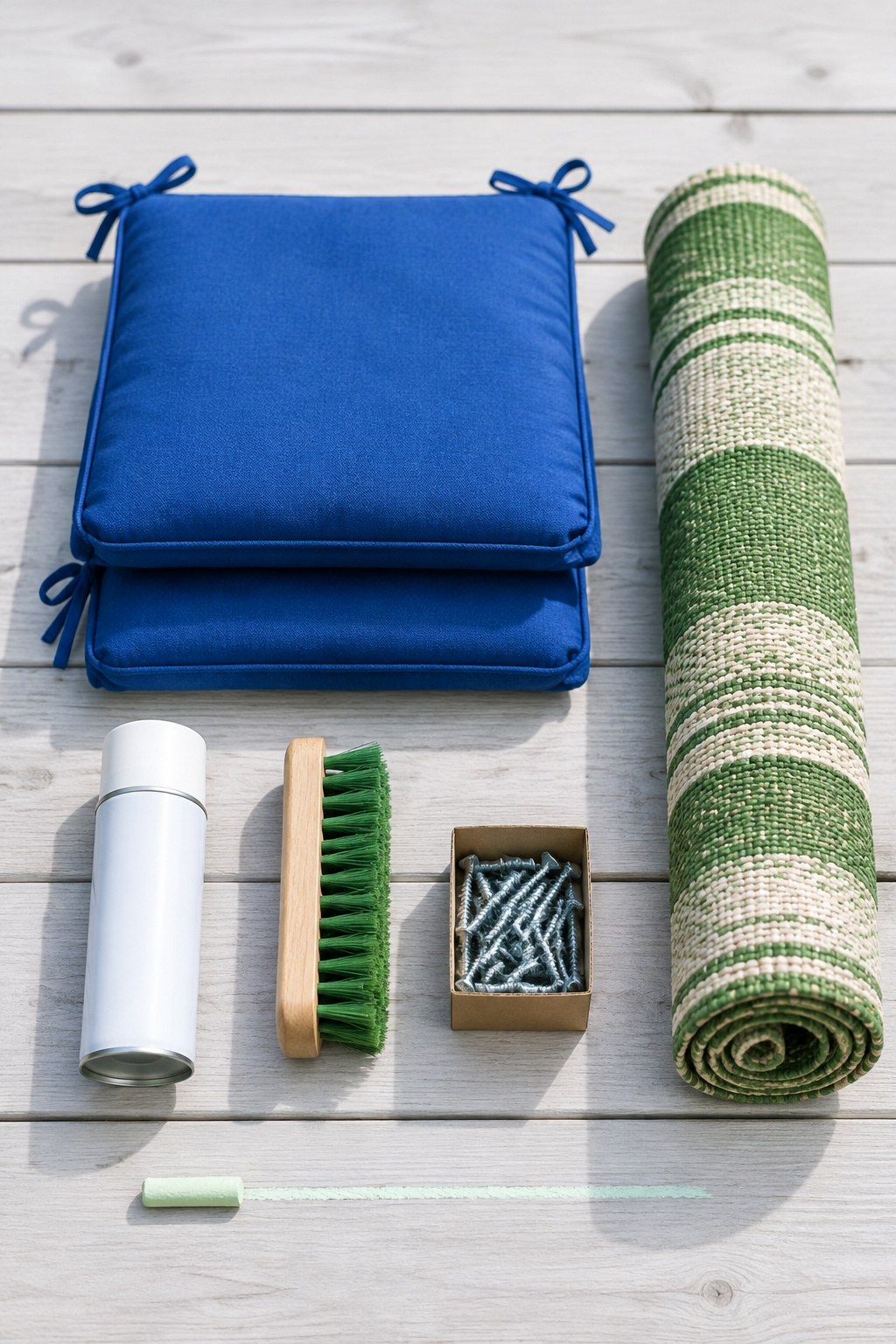
| Item | What it does | Price (Nov 22, 2026) | Buy order |
|---|---|---|---|
| Deck cleaner, 1 gal | Lifts dirt and gray before anything else | $11.48 | 1 |
| Deck scrub brush | Does the scrubbing the washer shouldn’t | $11.98 | 1 |
| Deck screws, 1 lb box | Replaces popped nails | $5.62 | 1 |
| Prep subtotal | $29.08 | ||
| Spray paint, 2 cans | Refreshes one thrifted chair | $31.98 | 2 |
| Seat cushions, 2 | Makes the one seat worth sitting in | $40.00 | 3 |
| Outdoor rug, 5 x 7 ft | Anchors the seat; the listing has a latex back, so read the rug article before buying | $63.00 | 4 |
| Decor subtotal | $134.98 | ||
| Pots and solar path lights | Last layer, bought as money allows | Not priced here | 5 |
| Total, no re-coat | $164.06 | ||
| Optional re-coat, 2 gal | Same-color maintenance coat | $89.96 | after prep |
| Total with re-coat | $254.02 | ||
| Total with re-coat and washer rental | $287.02 |
The chair paint comes before the cushions because the chair is the biggest object out there, and its color decides the cushions. Color is the cheapest change in the basket, so it’s worth picking cushion colors for your deck before you order. Solar path lights come cheaply in multipacks; buy them last.
I put every project together once with no glue and walk away for the length of a coffee. Do the same here before buying any decor: furniture out, nothing new, then come back and look. Half the list usually crosses itself off.
What to skip on a budget deck, and the one board to start with
Skip decor before cleaning. Dirt and pollen feed mold, and anything set on a dirty deck sits in it.
Skip the rug until you know what’s on its back. The wrong backing can mark the boards it was meant to dress up, so read up on outdoor rug backings that won’t harm the deck first.
Skip new furniture while the old frames are sound. A thrifted metal chair needs washing, a wire brush, primer, then light coats of exterior spray. Older pieces can carry lead paint, so don’t sand them without a NIOSH-approved respirator. And don’t skip the primer. You know how that one goes.
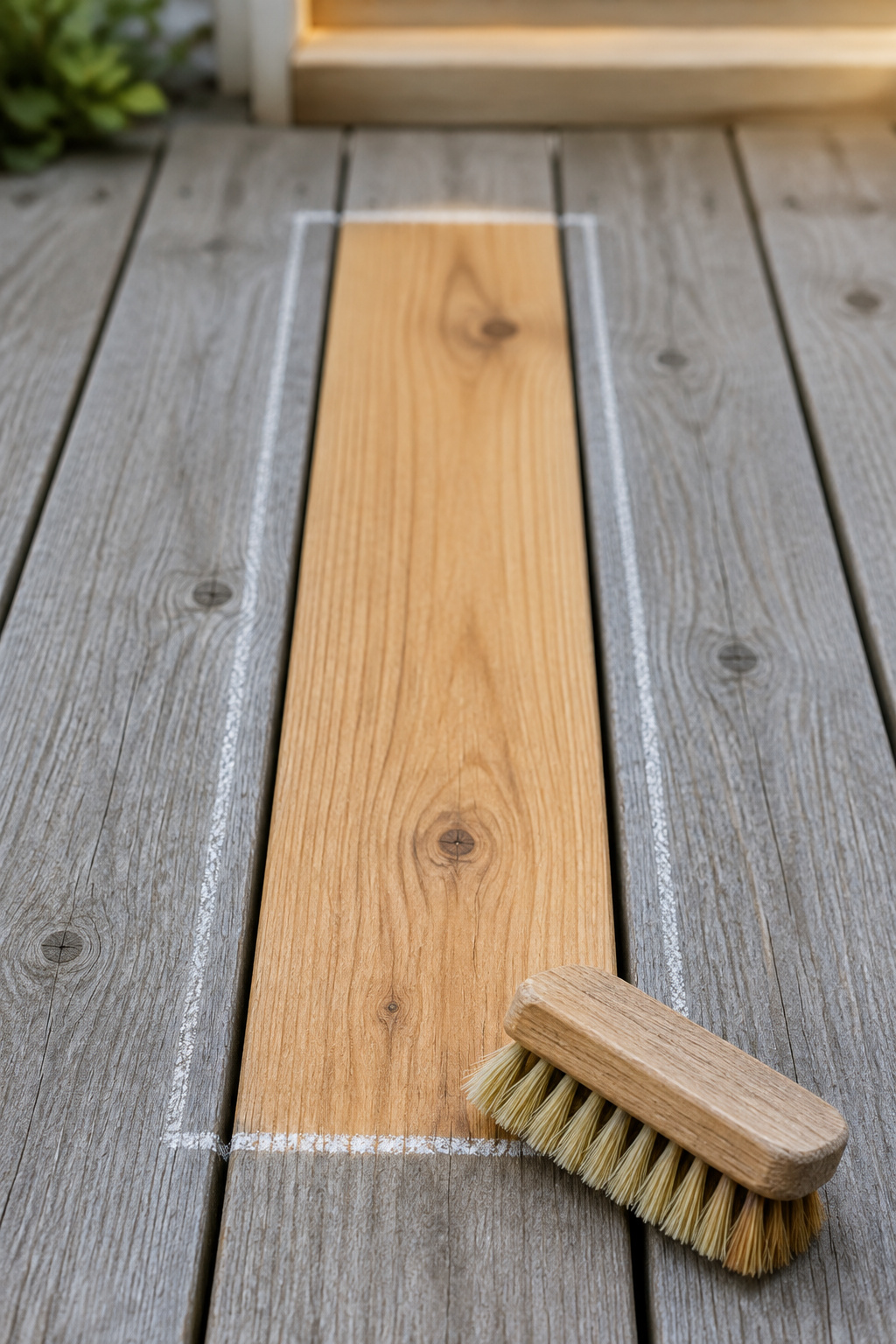
Here’s where to start. Scrub one board with cleaner and a brush. Rinse it, let it dry, and stand back. If it makes its neighbors look tired, you have your answer. My assumed 10 x 12 ft deck came to $164.06 before any re-coat; cost yours the same way, boards first and decor last. Cushions are the cheapest thing to change later, and boards are harder to fix once furniture sits on them.
FAQ
How often should a budget deck be cleaned to keep a makeover looking new?
Clean composite decking at least twice a year, in spring and fall, which is what Trex and Fiberon recommend to keep mold from feeding on pollen and debris. Wood is porous and needs more attention, so depending on climate and sun a wood deck may need it several times a year. Warm soapy water and a soft brush handle routine cleaning.
What paint is safe for thrifted metal or wood deck furniture?
For metal, use an exterior enamel spray over primer, after degreasing and wire-brushing loose paint and rust. Spray in mild, dry weather; Rust-Oleum’s Painter’s Touch 2X wants humidity under 65%, and a second coat within an hour or a long wait. For wood, Benjamin Moore lists its Woodluxe deck stain for furniture as well as decks.
Can I refresh a deck in cool or damp weather?
Only within the limits on your can, and those are tighter than people expect. Most deck stains set a temperature floor between 40 F and 50 F, and McCloskey won’t go on if it may dip below that for the next two days. Several want a full day without rain. Slightly damp boards suit some stains; wet ones suit none.