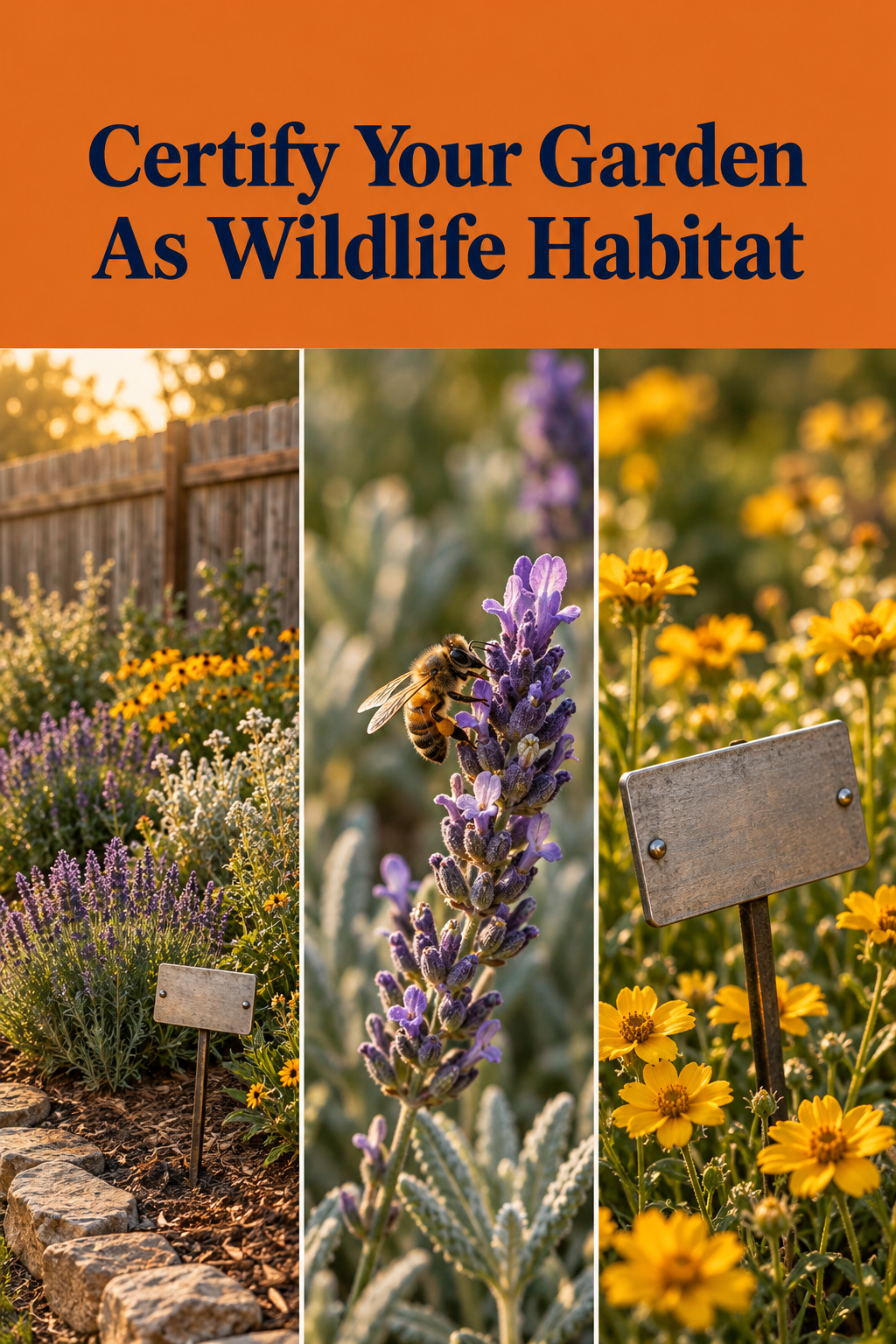
Eighteen dollars, twenty-five dollars, or nothing at all. That’s the whole price spread for registering a finished bed as a certified wildlife habitat garden, so money is the easy part. The three programs ask for different evidence, though: a milkweed count, a four-category checklist, or simply your word. I opened the applications expecting bureaucracy and found something closer to a design brief.
TL;DR
- Monarch Watch’s Waystation costs $18 and wants at least 10 milkweed plants across two or more species, several season-long nectar plants and 6+ hours of sun. The certificate arrives in 10–14 business days.
- The National Wildlife Federation charges $25 (free for schools), takes any size site and includes a year of membership. It wants 3 food, 1 water, 2 cover and 2 places-to-raise-young sources, plus 3 sustainable practices.
- The Xerces pledge is free and asks for four commitments rather than plant counts, but it issues no certificate or ID number. Fees checked July 2026.
Three Ways to Turn a Finished Bed Into a Certified Wildlife Habitat Garden
Why certify at all — the case beyond the sign
Certification documents the bed without improving it. Monarch Watch issues a certificate carrying a unique Waystation ID, and the NWF sends a personalized certificate, a year of federation membership and National Wildlife. Neither asks for proof of maintenance afterwards, so it’s one application and no recurring audit. If the planting is still notional, start with our pollinator planting guide instead.
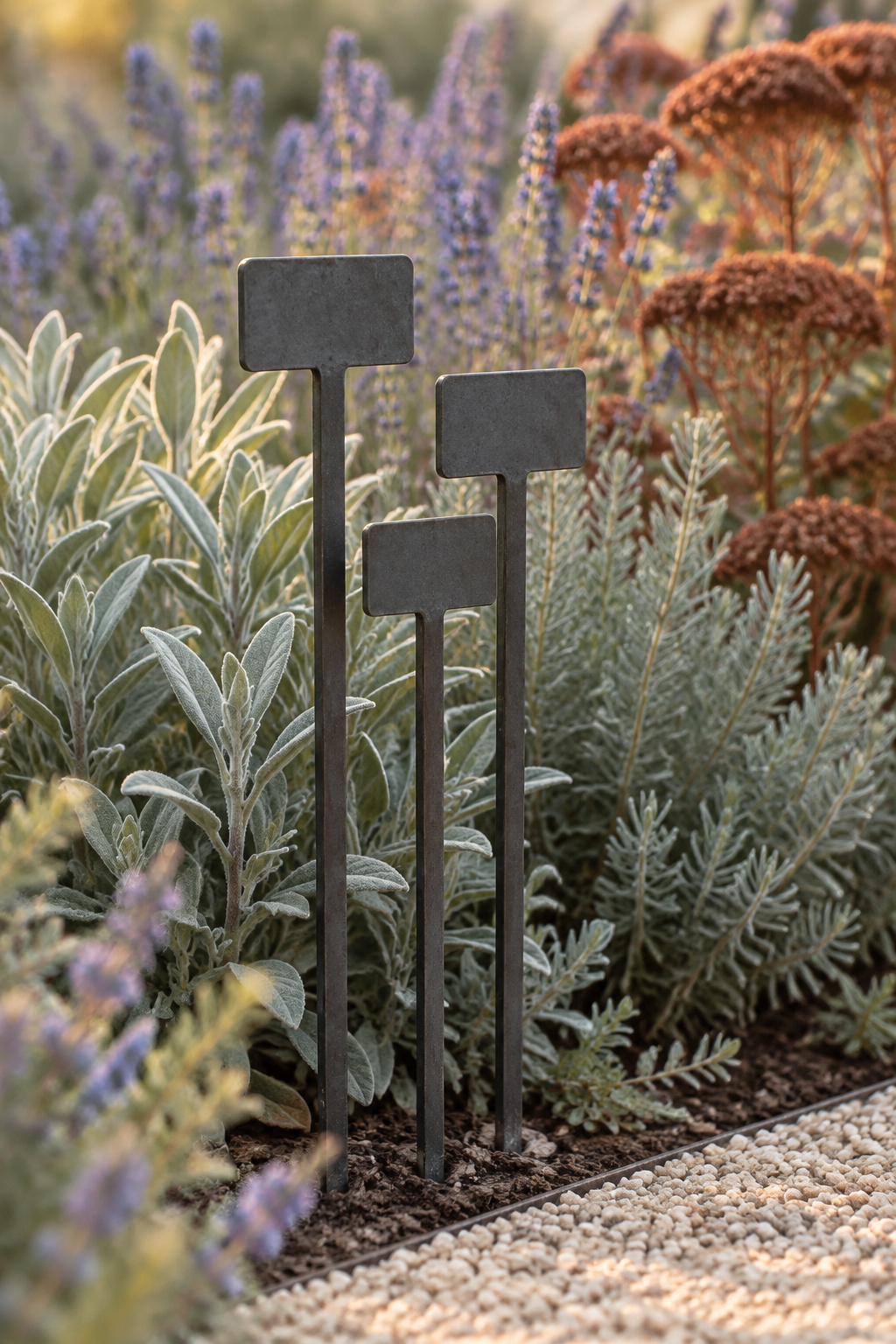
The three programs this guide compares
Monarch Watch, run out of the University of Kansas, certifies Monarch Waystations, which are habitats planted to carry monarchs through breeding and migration. The NWF certifies any outdoor space, at any size, that supplies food, water, cover and places to raise young. The Xerces Society’s Pollinator Protection Pledge is a free, signature-only commitment to four practices, with no application or review. There is no fourth route for a household: state federations run the NWF program under their own branding, and Bee City USA certifies towns and campuses, not yards.
How to pick between them before you apply
Cheapest first: Xerces, then the $18 Waystation, then NWF at $25 before any sign. Narrowest first: monarchs and milkweed, then all pollinators judged on practice, then all wildlife judged on habitat. No application asks whether you already hold another certification, so the three stack.
Monarch Watch’s Monarch Waystation
What actually counts toward the requirements
Sun disqualifies more beds than any other line on the form. A Waystation needs six hours a day, which rules out plenty of beds under a maturing tree. Milkweed is the second gate: 10 or more plants across two or more species, or more than 10 of one. Several annual, biennial or perennial nectar plants come next, chosen so blooms overlap through the season instead of stacking into one fortnight. And 100 square feet is guidance, not a minimum. A waystation “functions best” at that size, and smaller plantings combine toward it. A short management plan closes the file: no insecticides, invasives removed, plants close enough to shelter without crowding.
Cost and paperwork
Registration is $18, non-refundable, filed by mail or through the Monarch Watch Shop, and nobody comes to look. Processing runs 10–14 business days. International shipping of materials adds $19.95, while U.S. shipping is included. Every figure here was checked against the programs’ pages in July 2026; fees drift.
What you get back
Your site joins the public registry, more than 55,000 habitats so far, and the certificate carries your registered name and ID number. The weatherproof metal sign costs a separate $25.95. Here is how the three compare.
| Program | What it asks for | Cost | What you get |
|---|---|---|---|
| Monarch Waystation | 10+ milkweed plants, 2+ species; season-long nectar; 6+ hrs sun; 100 sq ft guidance, no hard minimum | $18 non-refundable; sign $25.95; international shipping $19.95 | Registry listing, certificate with a Waystation ID, 10–14 business days |
| NWF Certified Wildlife Habitat | 3 food, 1 water, 2 cover, 2 places-to-raise-young sources; 3 sustainable practices; 70% native, neonicotinoid-free goal; any size site | $25 individuals, free for schools; signs $35–$99 | Certificate, 1 year NWF membership and magazine; never expires unless you move |
| Xerces Pollinator Protection Pledge | Four commitments: pollinator-friendly flowers, nest sites and shelter, no pesticides, spread the word | Free; optional habitat sign $70 | A public pledge among 19,000+ signatories; no certificate, no ID |
Read that across, not down: the free program has the dearest sign.
The National Wildlife Federation’s Certified Wildlife Habitat
The four elements every application needs
Four categories, counted separately: at least 3 food sources drawn mainly from native plants, 1 water source, 2 cover sources against weather and predators, and 2 places to raise young. Add 3 sustainable practices for soil, air and water. The 70% native, neonicotinoid-free figure is a goal for the habitat overall, not a pass mark, and the softest line on the form. The trap is double-counting: one feeder is one food source, not also cover.

Cost and how the review works
The fee is $25 for individuals and nothing for schools, and it includes a year of federation membership and National Wildlife. Certification runs through an online questionnaire. No inspector appears anywhere in NWF’s own materials, an absence rather than a stated policy, so treat it as a self-reported checklist. Once granted, it lasts indefinitely; moving house is the only trigger for a fresh one. Size isn’t a criterion, which is what people misjudge. The most useful thing I’ve built outdoors is my own June kitchen: a grill, a salvaged prep table and string lights under a pergola that took three weekends. I measure fancier projects against it, because it gets used. Habitat scores the same way: a balcony of containers with a water dish and a host plant clears the same four categories half an acre does.
Sign options and recognition
Four styles, orderable only after certification since ordering needs your certification number: Classic Sign $35, Garden Flag $35, Wall Plaque $89, Garden Plaque $99. Ground shipping is free. On materials, I’ll be blunt: the polyester flag is a two-season item in full sun, while cast aluminum stays legible after a decade of freeze-thaw.
The Xerces Pesticide-Free Pledge
What the pledge actually commits you to
Signing takes a minute, and the pledge asks four things: grow pollinator-friendly flowers, provide nest sites and shelter, avoid pesticides, spread the word. There’s no fee, no application and no plant inventory, and nobody asks what you grow. More than nineteen thousand have signed.
Why it’s the lightest-weight of the three
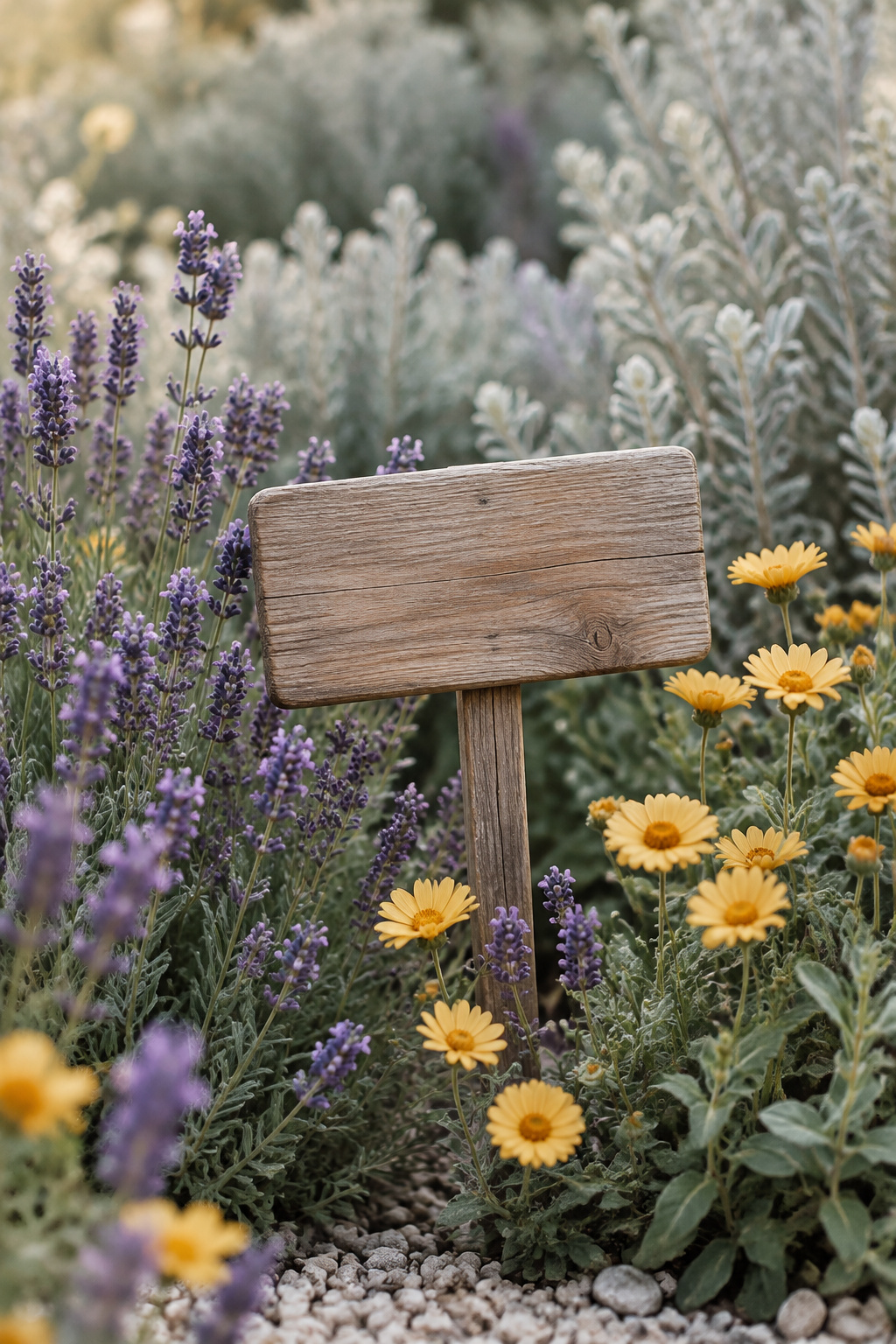
Nothing arrives in the post. Signing produces no certificate or ID number; the follow-up is a thank-you, a share prompt and a newsletter sign-up. The pledge page suggests a habitat sign as an optional next step. Xerces sells one for $70, separate from the pledge and not required by it. The light format isn’t light weight: Xerces is the invertebrate-conservation nonprofit behind much of the pesticide research the other two lean on.
Who it suits best
It fits a bed that already avoids pesticides and offers shelter but can’t reach the other two programs’ plant counts. It fits renters, since no address-bound registration follows you, and it suits nobody who wants a certificate to point at.
What Every Program Actually Checks For
The nesting requirement every checklist shares
Strip the three applications down and all three make the same demand, phrased differently.
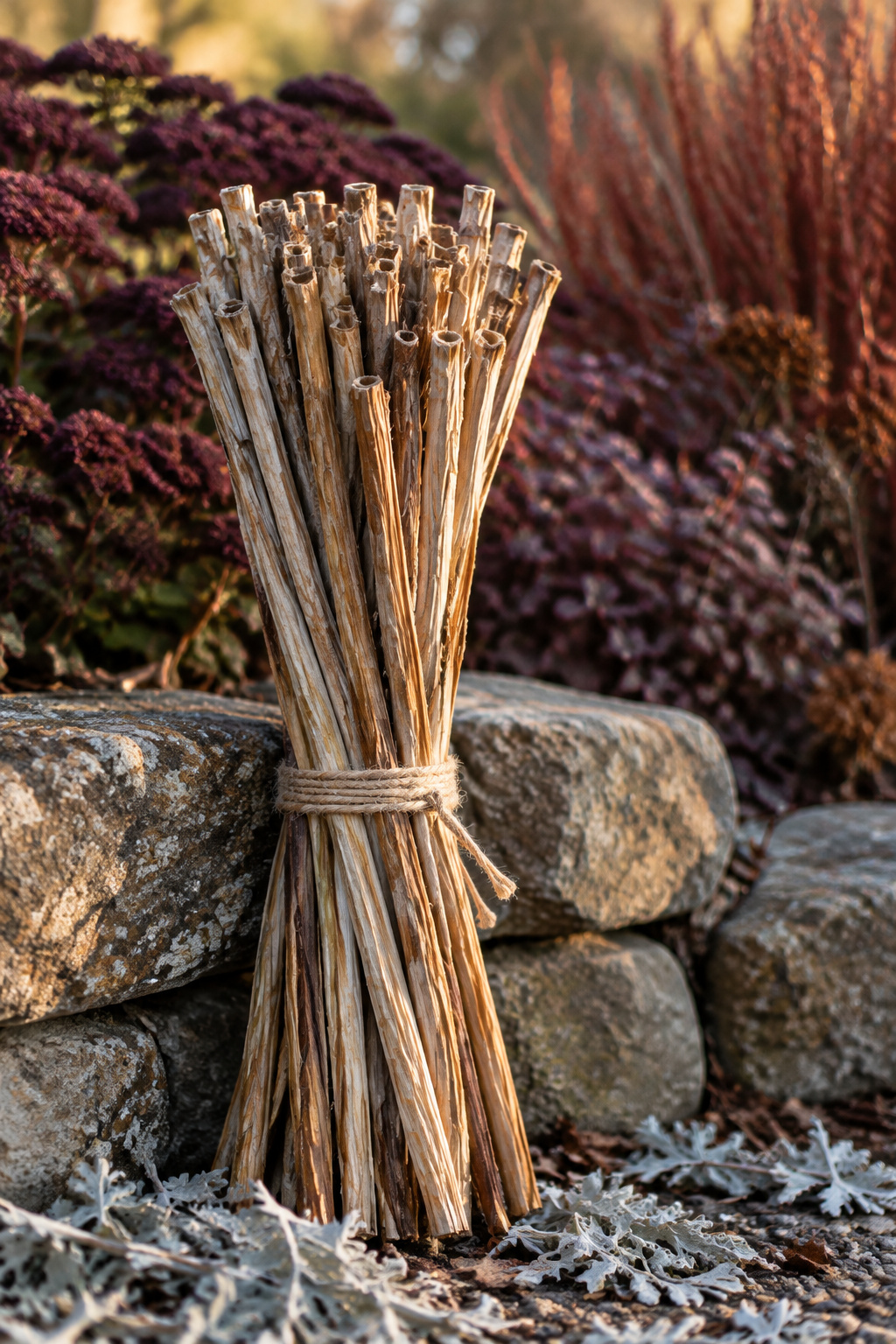
- NWF: 2 places to raise young at minimum (nesting boxes, host plants, dense thicket, snags), scored separately from food and cover.
- Monarch Watch: a management plan positioning plants close enough to shelter insects from predators and weather, the Waystation’s shelter requirement in all but name.
- Xerces: “provide nest sites and shelter” as one of the four commitments, level with growing flowers.
The bare soil, standing stems and leaf litter that satisfy this belong to Tess Carver’s guide to the nesting requirement. For your form the point is narrower: reviewers treat shelter as a line item, not a bonus.
Water and shelter, not just flowers
Water has the lowest bar on the NWF form, one source, and a shallow dish satisfies it as readily as a rain garden, but it’s still mandatory. Across all three, the question is how the insect fares after it feeds, not how many blooms you have.
The application mistake that gets you rejected
The usual shortfall is a generous nectar bed and nothing under places to raise young: no host plants, no nesting box, no undisturbed corner. Food and water clear easily, then the four-category minimum fails on the line that needed deciding months ago. You can’t add a thicket the week you fill in the form.
The Underrated Argument for the Sign
Why a sign changes how neighbors read a wild bed
I have no study to hand you here, and I looked for one. Take this as a designer’s judgment: a marker at the front of a bed turns an open question into a stated answer. Someone passing an unmown drift in September decides in about a second whether they see neglect or intent. A sign settles that before anyone knocks, which matters far more for front-yard beds under neighbourhood pressure than behind a fence.
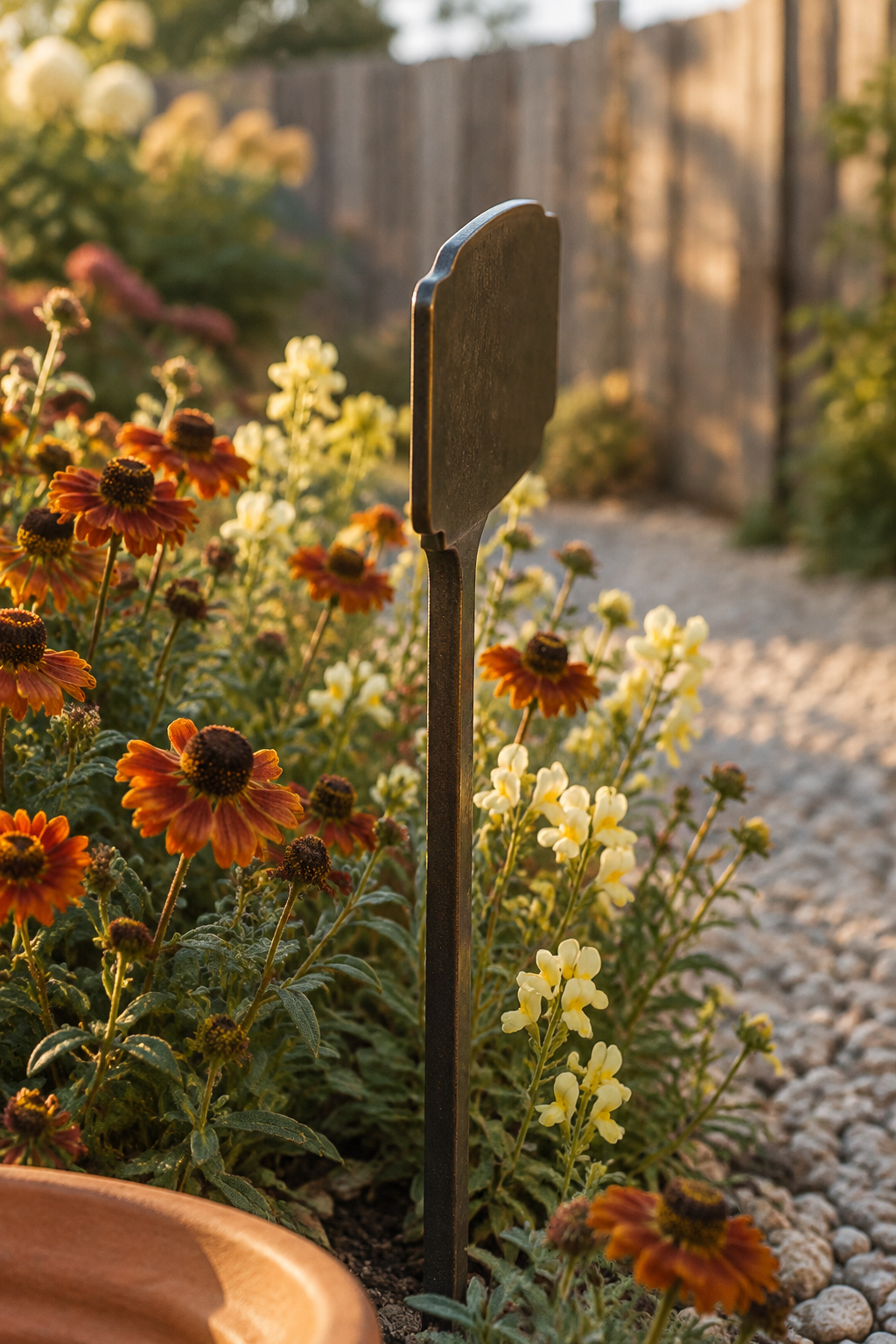
The cheapest hardware in the whole project
The ladder runs $25.95 for the Monarch Waystation sign, $35 for the NWF Classic Sign or Garden Flag, $70 for the Xerces Pollinator Habitat Sign, $89 for the NWF Wall Plaque and $99 for the NWF Garden Plaque. Against a season of plants and soil even the dearest is a rounding error, and every program treats it as optional. Price buys size, not standing.
Deciding if certification is worth it for your bed
My rule is unglamorous. Certify a front-facing bed, particularly one under covenant or social pressure, because the certificate and sign are the fastest route from wild to deliberate in a skeptical passerby’s mind. Skip it for a private backyard with nobody to convince, since registration changes the paperwork, not the ecology. The limits are real, too: certification does not verify maintenance, inspect anything, or promise a single bee turns up.
So pick by what you want back, not by prestige. Milkweed-heavy bed in full sun, and you want a registry number? The $18 Waystation. Broadest recognition and a certificate that never expires? NWF at $25. The practice without the paperwork? The Xerces pledge, this afternoon, for nothing. Avoid two mistakes, a flower-only bed with no shelter counted and a belief that the priciest sign buys stronger certification, then put the sign where the pavement sees it.
FAQ
Does certifying my garden mean an inspector visits my home?
No. None of these programs involves a home visit. NWF certification is completed through an online questionnaire, with no inspection step mentioned in its own materials. Monarch Watch reviews a written application and mails a certificate 10–14 business days later; the Xerces pledge is an online signature with no verification.
Can I get certified with a small yard or container garden only?
Yes. NWF states that any outdoor site qualifies regardless of size, small yards, balconies and container-only setups included. Monarch Watch sets no minimum area either, though it notes a Waystation functions best at 100 square feet or more, with smaller plantings combined toward that total. The pledge has no size threshold.
Do I have to recertify a wildlife habitat garden every year?
None of the three has an annual renewal. NWF certifications last indefinitely, and moving to a new address is the only trigger for recertifying. The Monarch Waystation is a one-time registration tied to your ID number, with no recertification cycle in its own documents. The Xerces pledge is signed once.