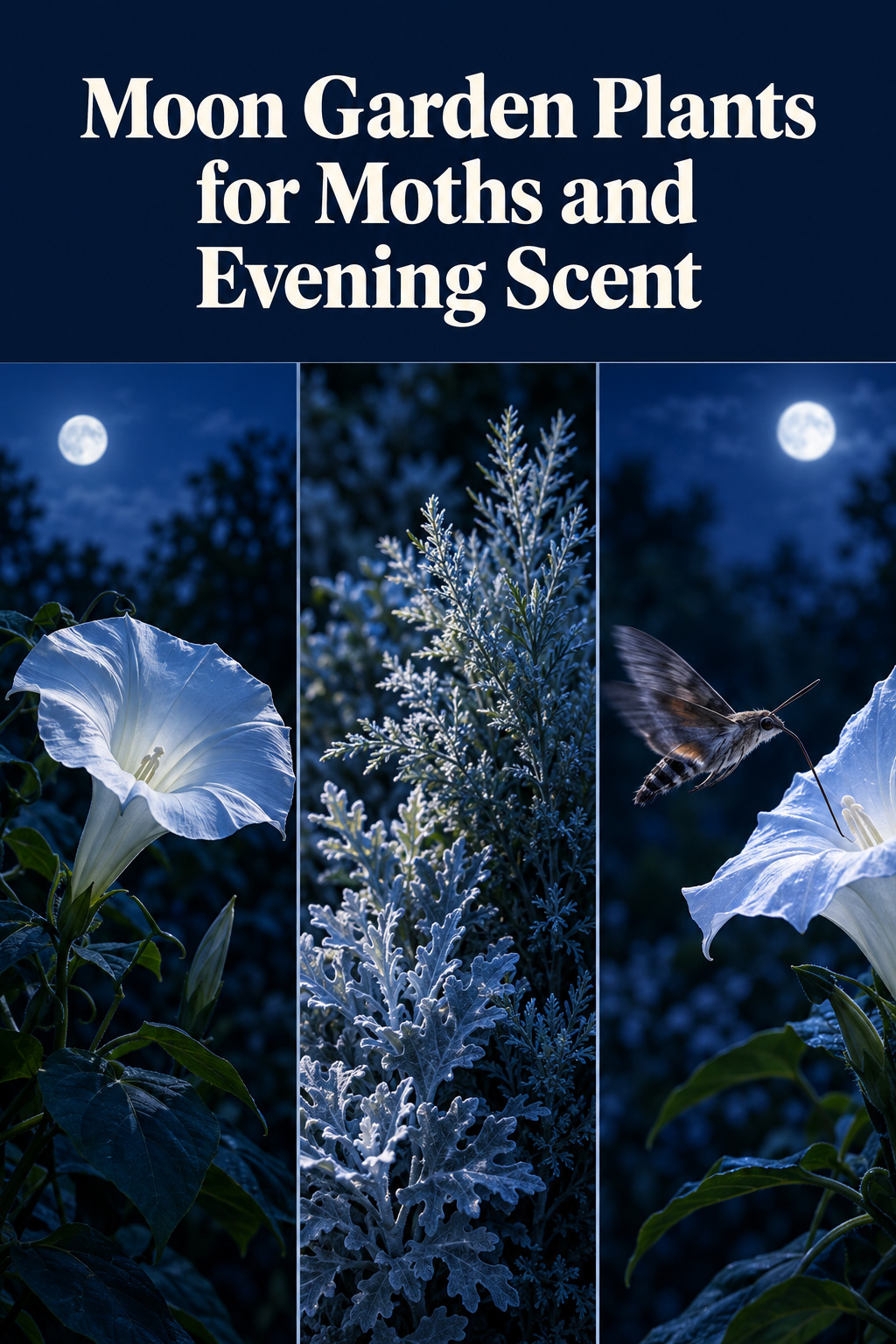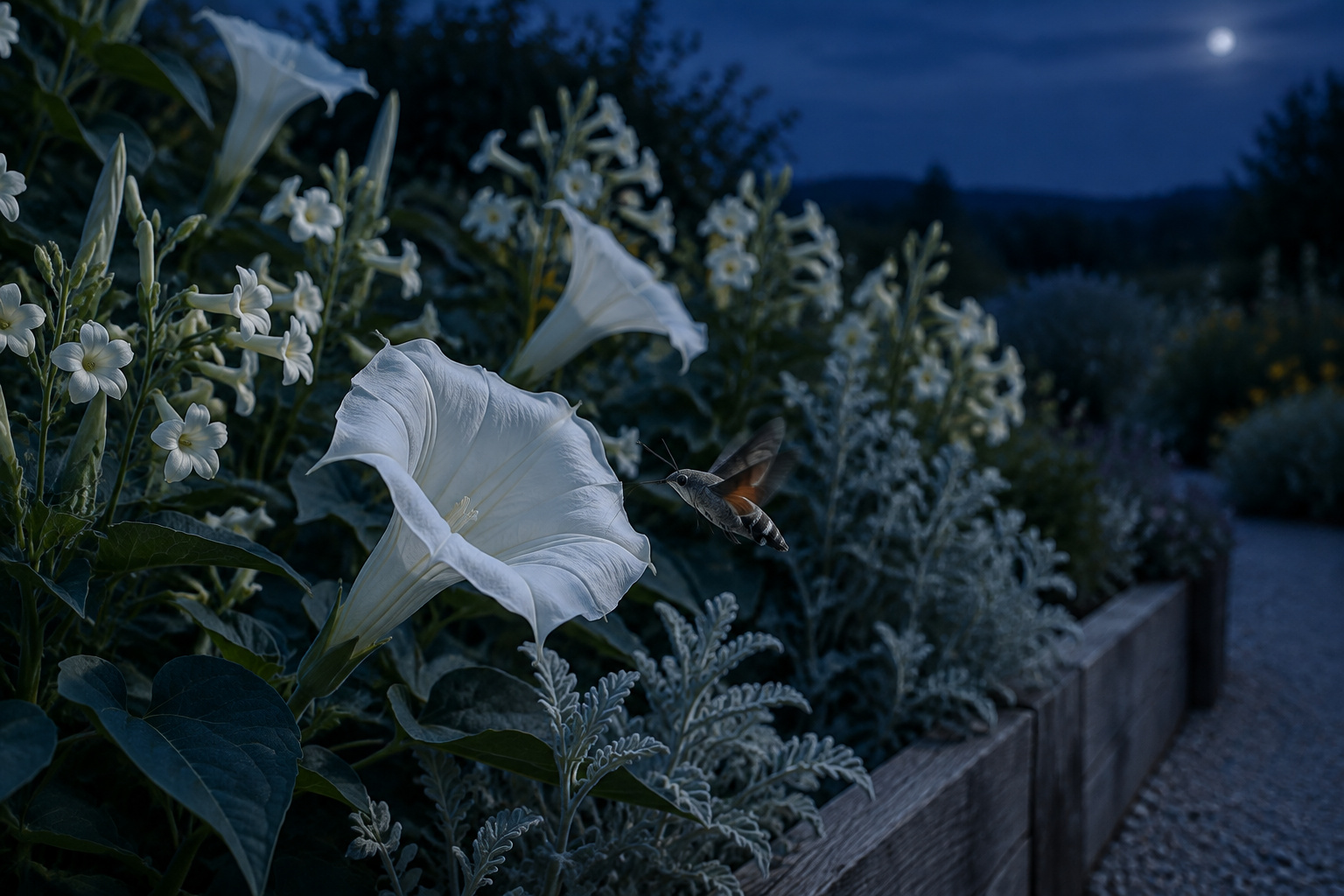
Step outside at nine on a July evening and most gardens have nothing left to give. The border you spent April on has gone flat and grey. You smell cut grass, hear the road, see almost nothing. Now imagine one corner still awake — chalk-white trumpets holding the last of the sky, a sweetness that was not there at six, the dry hum of something hovering. That corner is a planting decision. Moon garden plants are pale, night-opening and scented, and they put the hours after sunset back to work.
TL;DR
- Artificial light at night cut nocturnal pollinator visits by 62% in a controlled field study, and daytime insects did not make up the loss, and fruit set on the study plant fell 13%.
- Plant for brightness rather than hue: white, cream and pale yellow blooms, plus silver foliage like dusty miller for the nights nothing is flowering.
- Choose one strong night-scent plant instead of three, and site it downwind of where you actually sit.
What a Garden Does After the Light Goes
The hour most gardens go quiet
Watch a garden at dusk and you can almost feel it switch off. Colour drains, the eye gives up, and the planting stops asking for attention just as you finally have some to give. The insects carry on. When Eva Knop’s team at the University of Bern lit meadows artificially, nocturnal visits to flowers fell 62% against dark plots, and daytime insects could not compensate next morning. Fruit set on the study plant, cabbage thistle, dropped 13% — a light left on, traced to seed.
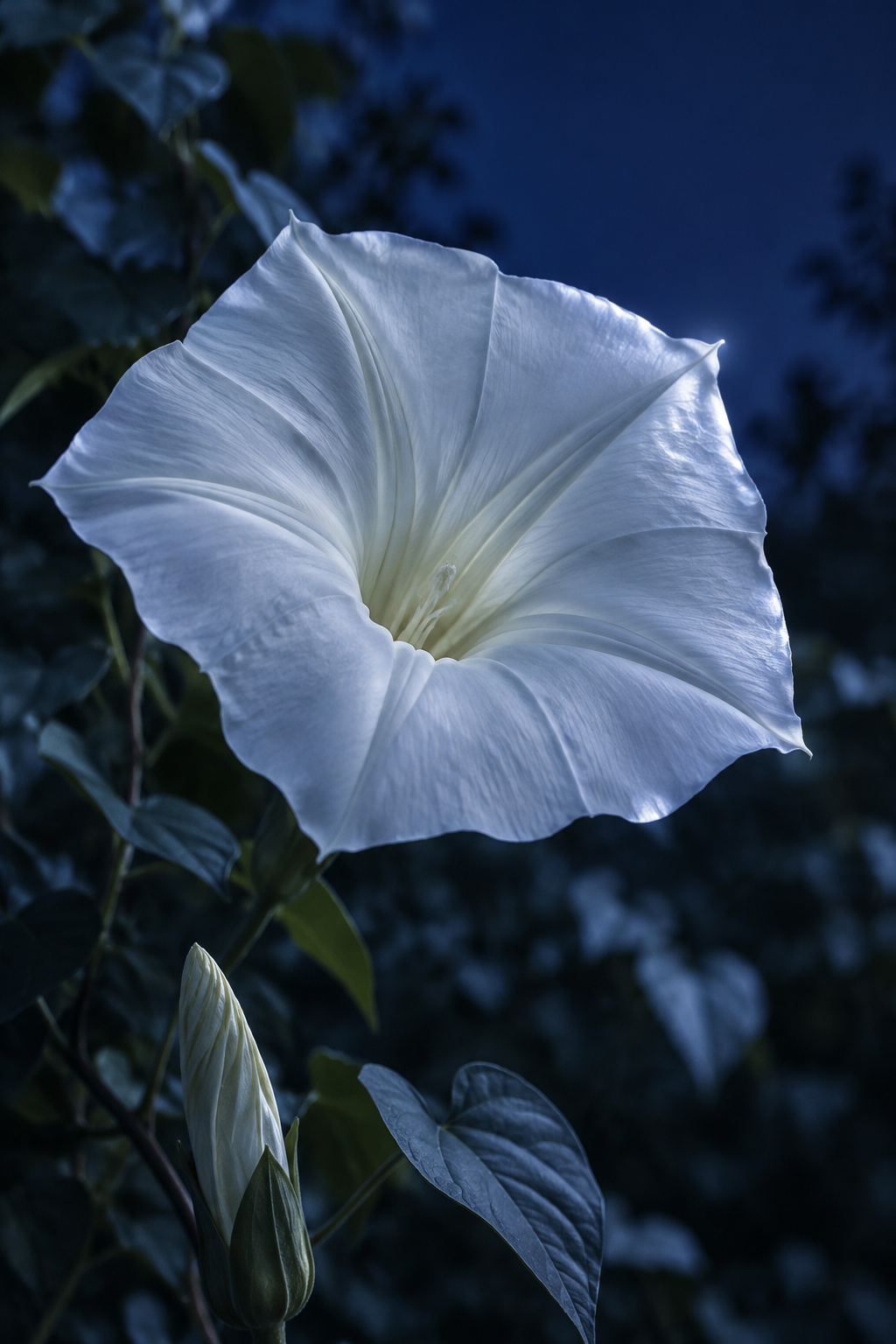
What night-flying moths are doing instead
Moths are usually a footnote in pollinator planting, and the swab data disagrees. A 2020 study sampled 838 moths and found 381, or 45.5%, carrying pollen from 47 plant species. Daytime pollinators in the same landscape managed 45 to 46. Seven of those plants were rarely visited by bees, hoverflies or butterflies. Most of the pollen, 57%, sat on the ventral thorax, the underside of the chest, moved by a body brushing past a flower.
What this corner is for
US Fish & Wildlife guidance frames a moon garden as habitat for night-active pollinators, meaning moths and, in some regions, nectar-feeding bats. Site it where people already gather, not tucked out of the way. If the bones of the garden are still open, begin with designing a garden for pollinators and treat this as one late shift added to it. Tonight, go out at dusk and notice where you already stand.
White, Pale and Silvery: Moon Garden Plants That Glow at Dusk
Why pale color reads in low light
About 0.0001 candela per square metre is dim starlight. That is the intensity at which the hawkmoth Deilephila elpenor was still telling colours apart in Almut Kelber’s trials in Nature, far below where human colour vision quits. Nocturnal hawkmoths favour white, cream and bright yellow because of brightness contrast, not hue: those flowers stand out hardest against dark foliage. Keep the scope narrow, though. That finding covers hawkmoths, not every moth.
Plants that hold their color after sunset
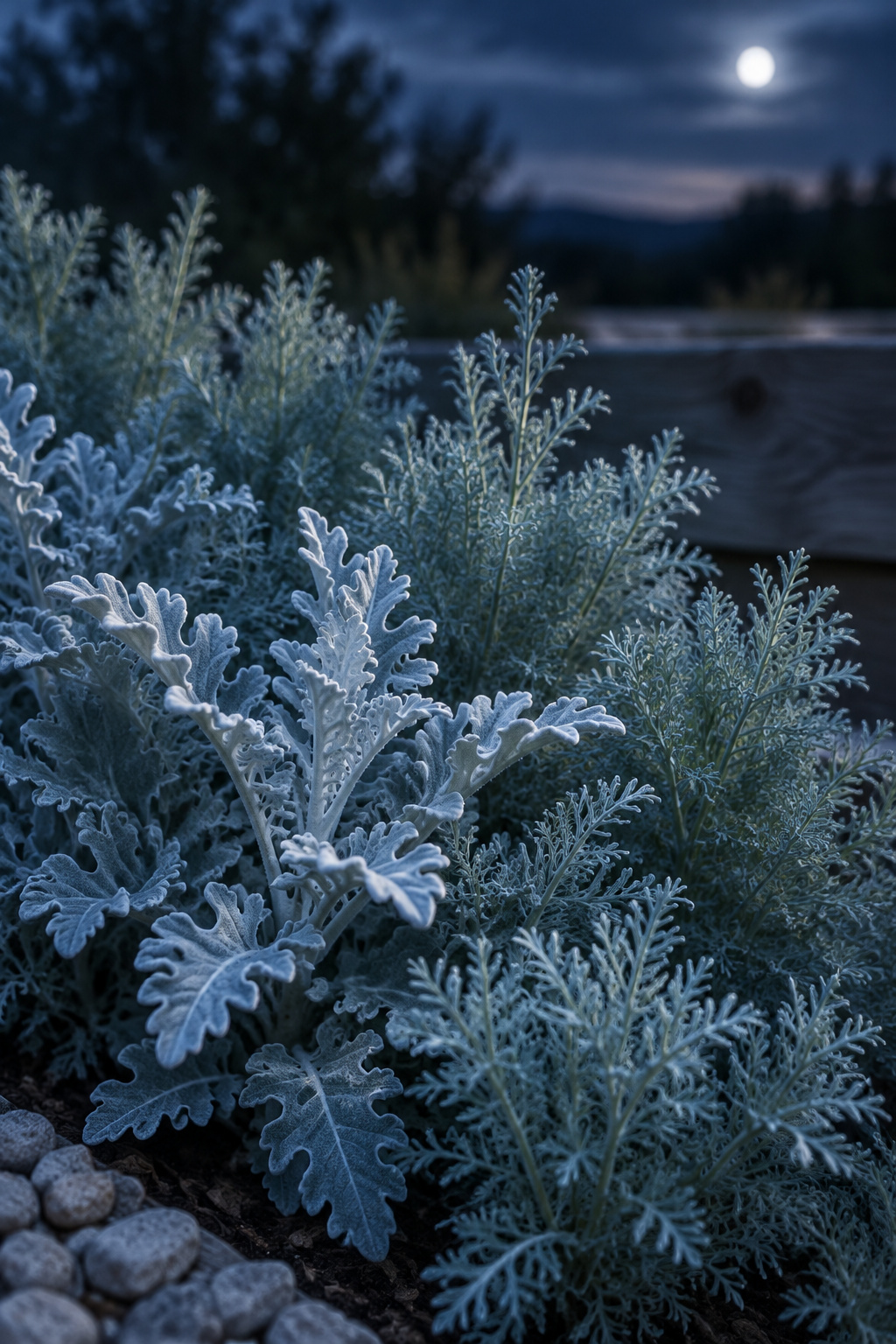
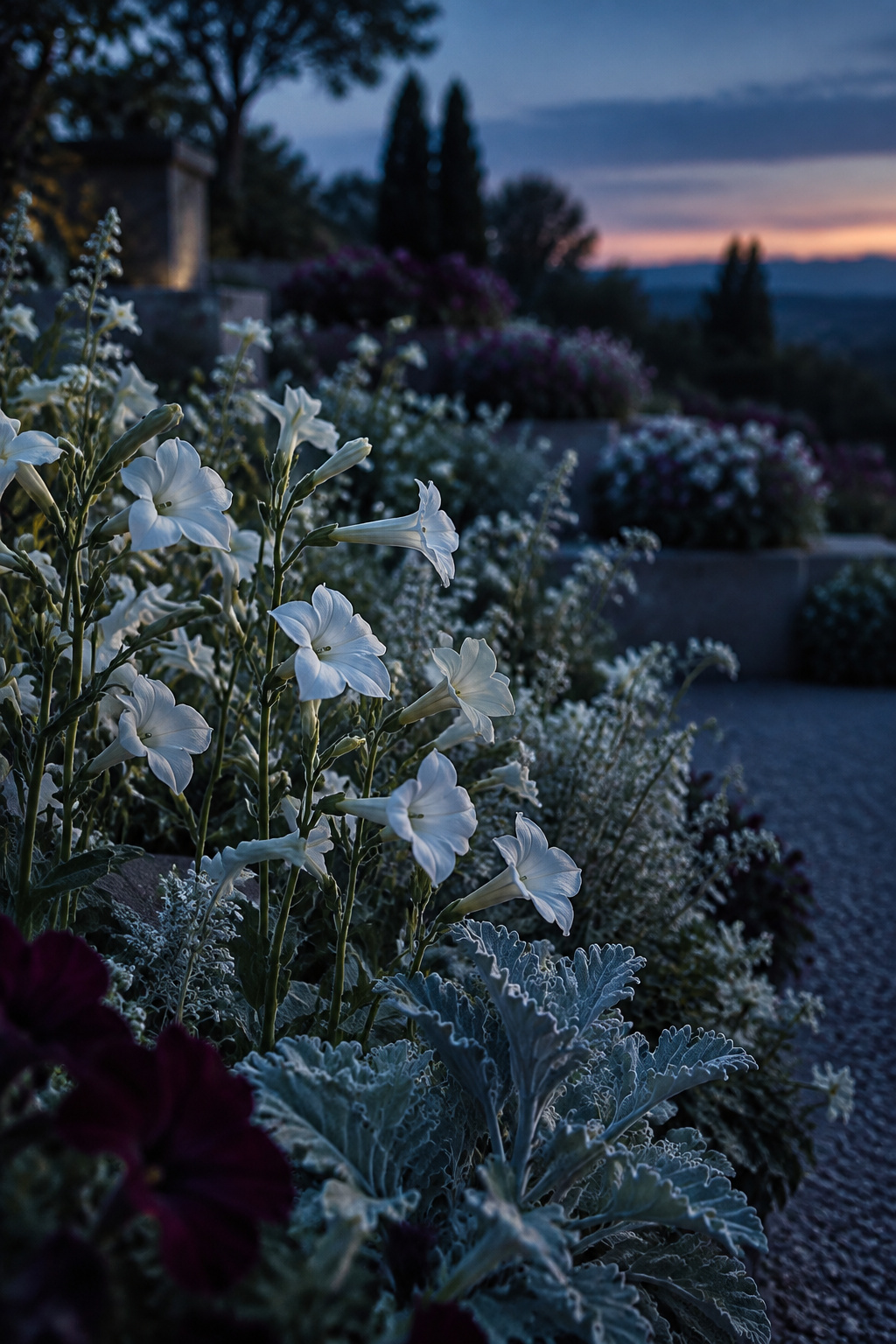
Chicago Botanic Garden puts the mechanism simply: at dusk, vivid daytime colours fade while white blossoms and silver-splashed foliage begin to glow. Its sun-loving picks include jasmine-scented tobacco (Nicotiana sylvestris), moonflower vine (Ipomoea alba) and white Japanese anemone. Fish & Wildlife widen the palette toward natives: evening primrose, yucca, agave and silvery regional grasses.
Foliage that glows without a single bloom
Flowers come and go, but leaves stay. Dusty miller (Senecio cineraria) holds the corner with silvery, fern-cut foliage that catches whatever moonlight there is, and the wormwoods (Artemisia) do the same in a feathery, small-scale texture. University of Florida horticulturists recommend white and silver foliage for exactly this reason, since it is most striking when natural light is lowest. Plant enough and the bed works on nights nothing is in flower.
Scent That Waits for Dark to Open
Flowers that release fragrance only after sundown
A night-scented plant isn’t reacting to darkness; it runs a clock, which is why the fragrance arrives on schedule. These are the reliable emitters:
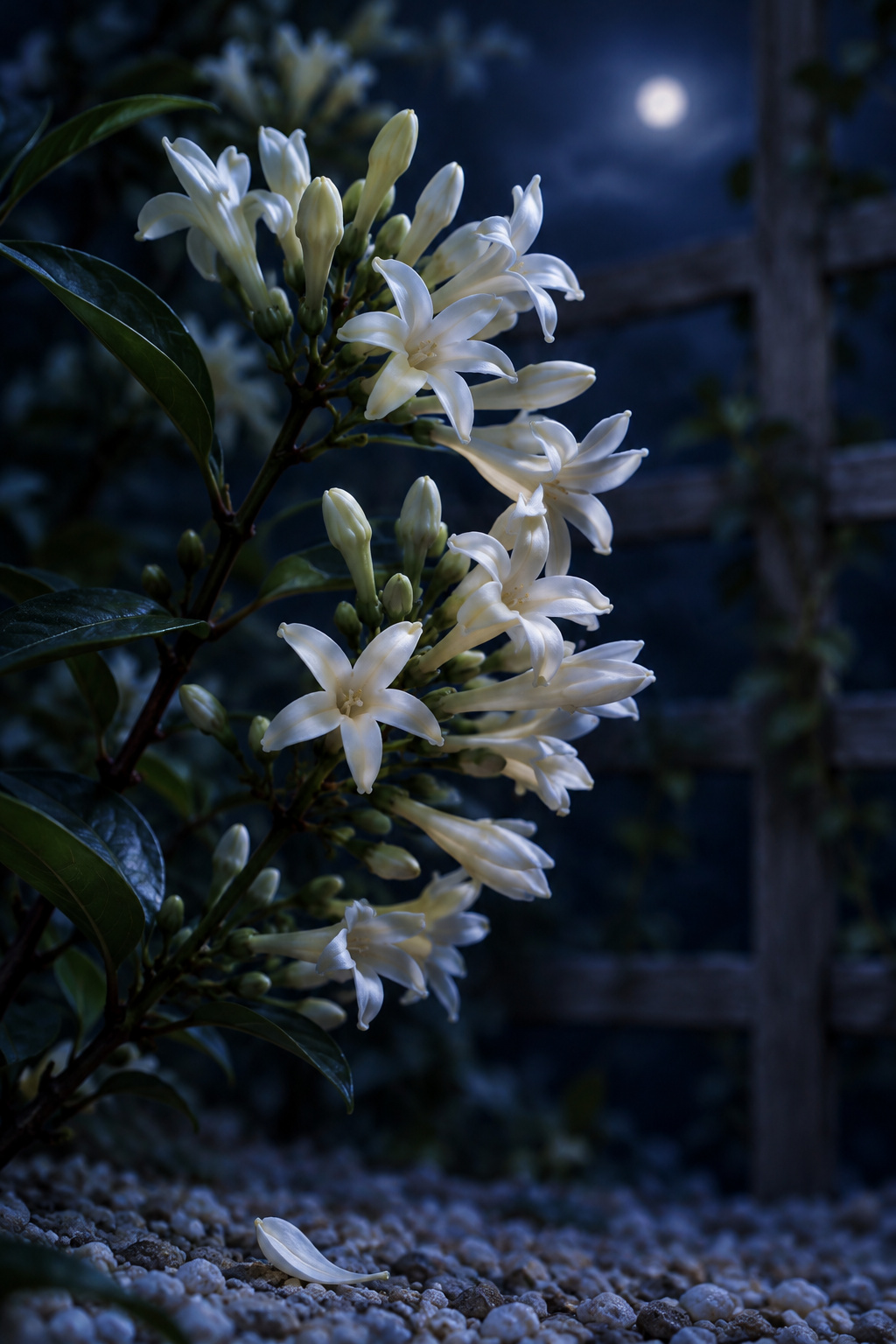
- Night-scented tobacco (Nicotiana alata): tubular flowers that open only after dark.
- Night-blooming jasmine (Cestrum nocturnum): the strongest emitter here; its oil runs 27% phenylethyl alcohol, 12% benzyl alcohol.
- Moonflower (Ipomoea alba): opens over a few minutes in late afternoon, closes at dawn.
- Evening primrose (Oenothera biennis): opens near dusk, holds all night, shuts by midday.
- Evening-scented stock (Matthiola longipetala) and night phlox (Zaluzianskya capensis): low, honey-scented fillers for the bed edge.
Datura, tuberose and four o’clocks suit warmer climates.
Placing scent where the evening air carries it
The clock is literal. Research on night-blooming jasmine recorded a 24-hour scent rhythm that held even under constant conditions. In petunia, the clock gene LATE ELONGATED HYPOCOTYL represses scent production through the day and releases it toward evening. What the plant then releases — methyl benzoate, benzyl alcohol, linalool — travels: a moth can track a strong emitter over 900 yards. Air that generous needs steering, so site the heaviest emitter downwind of the seat, never behind it.
Restraint — one or two scents, not a wall of them
Scent is a design material equal to colour, and like colour it can be overloaded. These plants share one circadian schedule and each carries a long way, so three strong emitters don’t layer; they compete, and the corner goes muddy and faintly medicinal. Chicago Botanic Garden’s list shows the restraint: two scent plants among many chosen for glow. Walk the bed at dusk and stop planting while you can still name what you smell.
Where to Sit So It Reaches You
Distance and wind direction from the bed
Where do you actually sit after dark? Most people answer with wherever the furniture already is, and that is the right instinct. Fish & Wildlife guidance sites the bed where people congregate, whether a patio, an entry or a path edge. The Victorians trained moonflower vines along porches so the blooms opened beside a chair. No source gives a distance figure, and I would distrust one that did. My practice is a bloom within a few steps, downwind, with nothing solid between bed and seat.
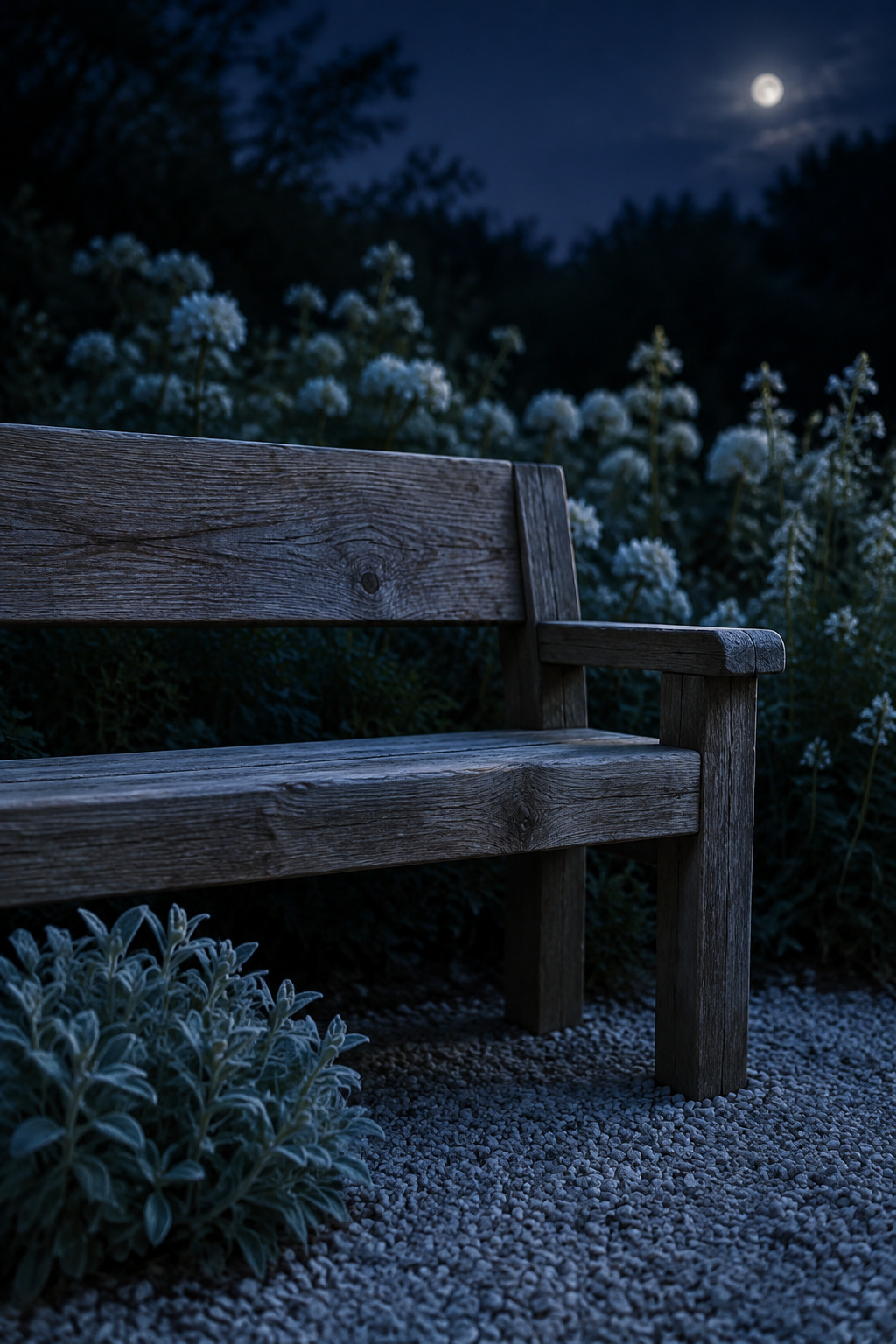
A seat that asks nothing of you
The seat has one job: to require nothing before you use it. Cushions you carry out, a chair that needs wiping, a throw kept indoors: each is an errand between you and sitting down, and errands win. Remove those first. What remains can be plain, a wood bench holding a little of the day’s warmth.
Leaving the corner unlit on purpose
Years ago a client in tech built herself a beautiful meditation room and then couldn’t use it. Every choice in it was considered, yet she left after four minutes each morning. Neither of us could say why until I stood in the doorway and looked where she was looking: a wall clock, ticking, quietly running the room. I took it down. One object had held the whole room hostage.
A security light does the same to an evening garden, and so does a lantern hung with good intentions. The Knop numbers make the case: 62% fewer visits, no daytime rescue. A University of York street-lighting study adds a kinder detail. Full-night lighting disrupted a night-pollinated plant most, while part-night lighting, switched off at midnight, barely differed from darkness. A few genuinely dark hours count. Tonight, switch off whatever lights that corner and give your eyes ten minutes.
What Moths Do for This Garden That Bees Never Will
Night pollination at a scale daylight planting ignores
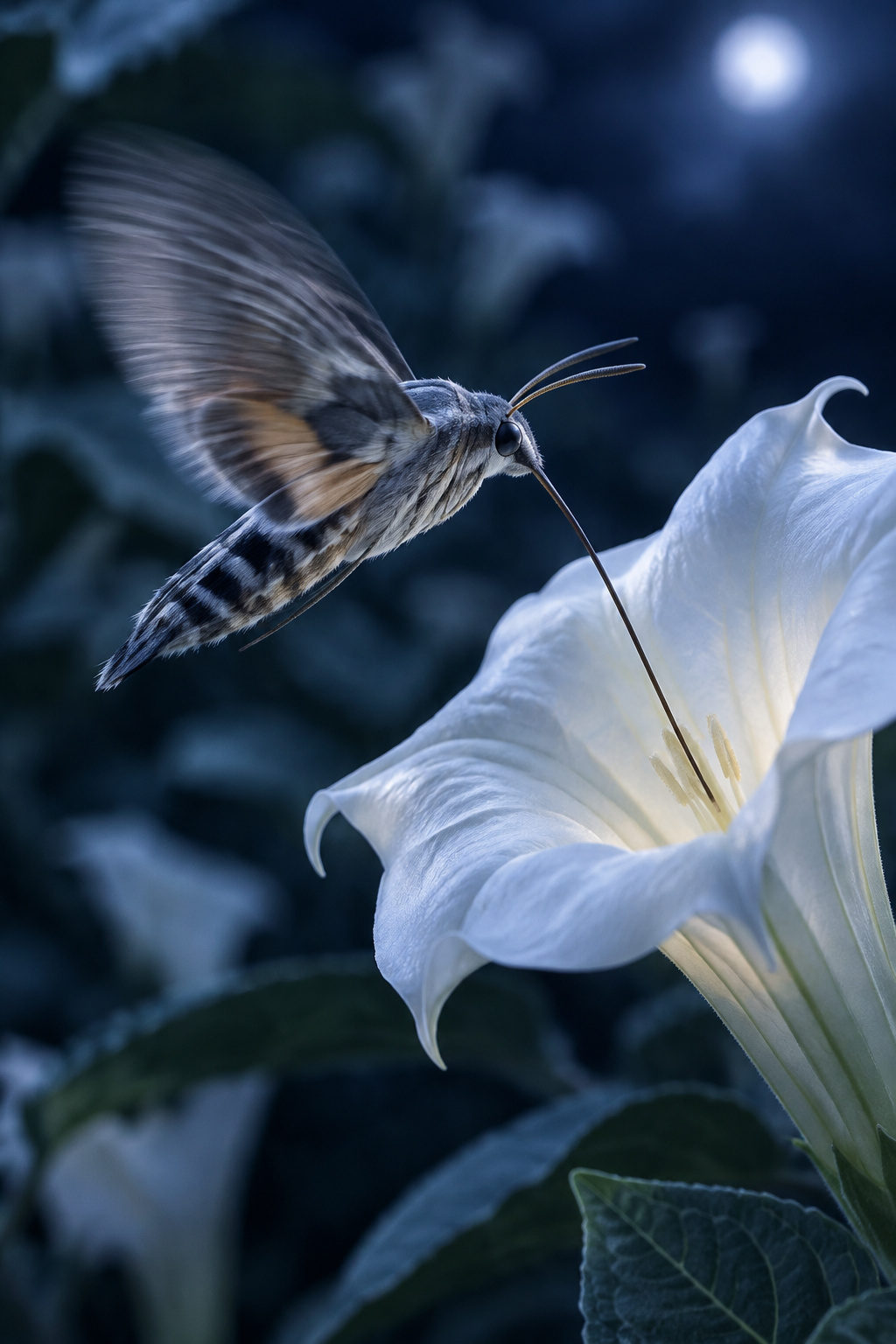
The common mistake is treating moths as symbolic, a nice thought at the edge of a real pollinator bed. Yet the 47 plant species carried on moth bodies matched or beat the 45 to 46 recorded from all daytime pollinators in the same landscape. Seven or more were plants the day shift barely touched, and left to daylight alone they largely go unpollinated.
The plants that depend on moths specifically
Some of these relationships go well beyond preference. Three to know before you plant:
| Plant | What the night shift does for it |
|---|---|
| Yucca and Joshua tree | Yucca moths (Tegeticula) are its only pollinator, and the plant their only larval host; style and ovipositor lengths co-evolved. |
| Evening primrose (Oenothera biennis) | Sole larval host of the Primrose Flower Moth, one of 19 recorded moth and butterfly species on it. |
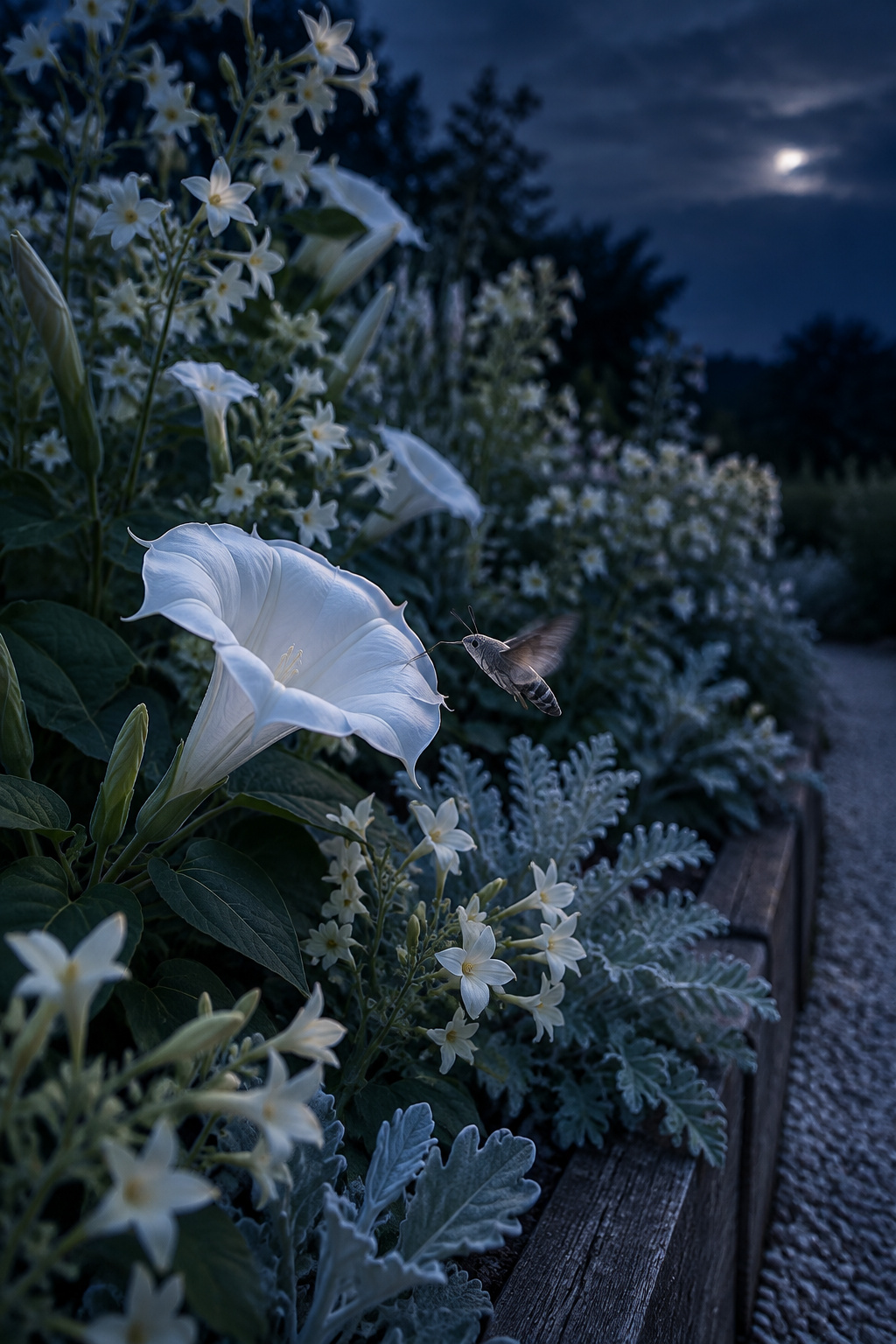
| Moonflower and datura | Deep, narrow tubes shaped for a long proboscis; hawkmoths feed from mid-hover rather than landing. |
The yucca pairing is the one to hold on to: neither partner reproduces without the other.
Coexisting with the daytime bed
None of this costs the bees anything. Fish & Wildlife note that several moon-garden plants, saguaro among them, take early-morning visitors before their flowers close, so one planting serves two shifts on two schedules.
Fitting the Evening Bed Into the Rest of the Garden
The daytime pairings this bed still needs
Nectar feeds the adult, but caterpillars need leaves, and moths depend on host plants as much as their daytime relatives do, just on different species. Sofia Martinez-Chen covers that ground in her guide to host plants for butterflies, moth hosts included.
Sequencing evening bloomers against the daytime calendar
Moonflower and nicotiana each hold a narrow flowering window, so an evening bed planted in isolation goes blank for weeks. Owen Gallagher’s month-by-month work on fitting evening bloomers into the calendar is the place to sort that out.
One small corner is enough
Every source agrees a moon garden need not be large, but none gives a minimum square footage or plant count, unlike the daytime benchmarks elsewhere in this garden. I would rather say so than invent a number. A corner done sincerely beats a whole border done for show, and plant choice is the lever anyway.
Which returns you to that nine o’clock walk. A few pale plants, one scent, a plain seat, and a light you deliberately leave off make the whole build. Plant it this season and the hours you were writing off start giving something back.
FAQ
Do moon gardens only work in warm climates?
No. Climate changes which plants you use, not whether the idea works. Evening primrose is a widely distributed North American native rather than a warm-climate specialty. Tender favourites like moonflower and four o’clocks are grown as annuals in colder regions, replanted each spring instead of overwintered.
Are moon garden plants safe if I also want to attract bees during the day?
Yes. The two groups work the same plantings on different schedules. Fish & Wildlife guidance notes that several moon-garden plants, saguaro included, receive daytime visitors in the early morning before their flowers close. Nothing in the sources reviewed suggests these species pose any risk to daytime bee activity.
How big does a moon garden need to be for the scent to be noticeable?
Sources agree it need not be large, but none gives a minimum square footage, and that gap is real, not an oversight. The practical lever is plant choice, not bed size. A single strong emitter like night-blooming jasmine carries well beyond the bed, since moths track scent over hundreds of yards.