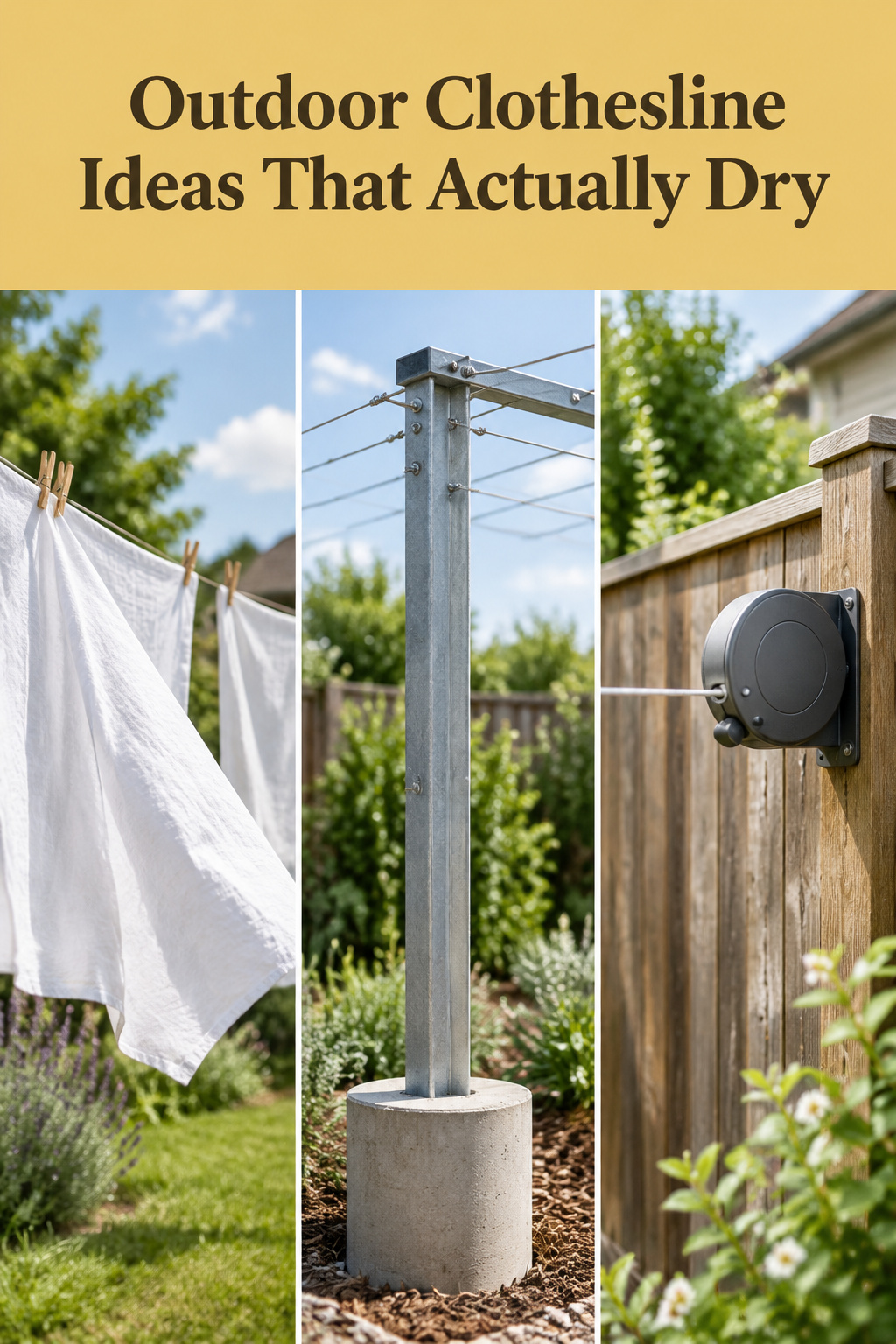
“Where does the line go?” Somebody always asks it at the back door, a full basket on one hip.
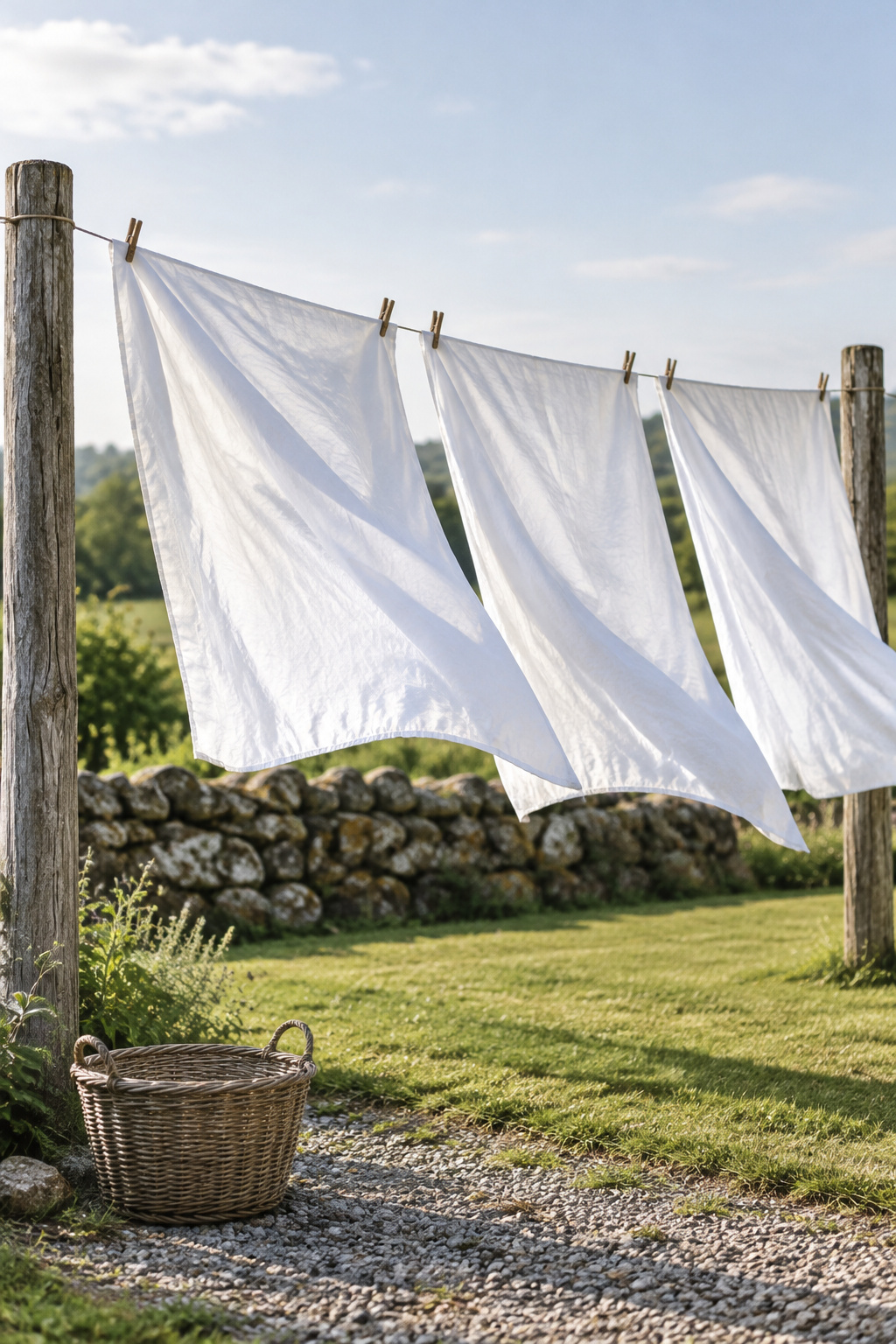
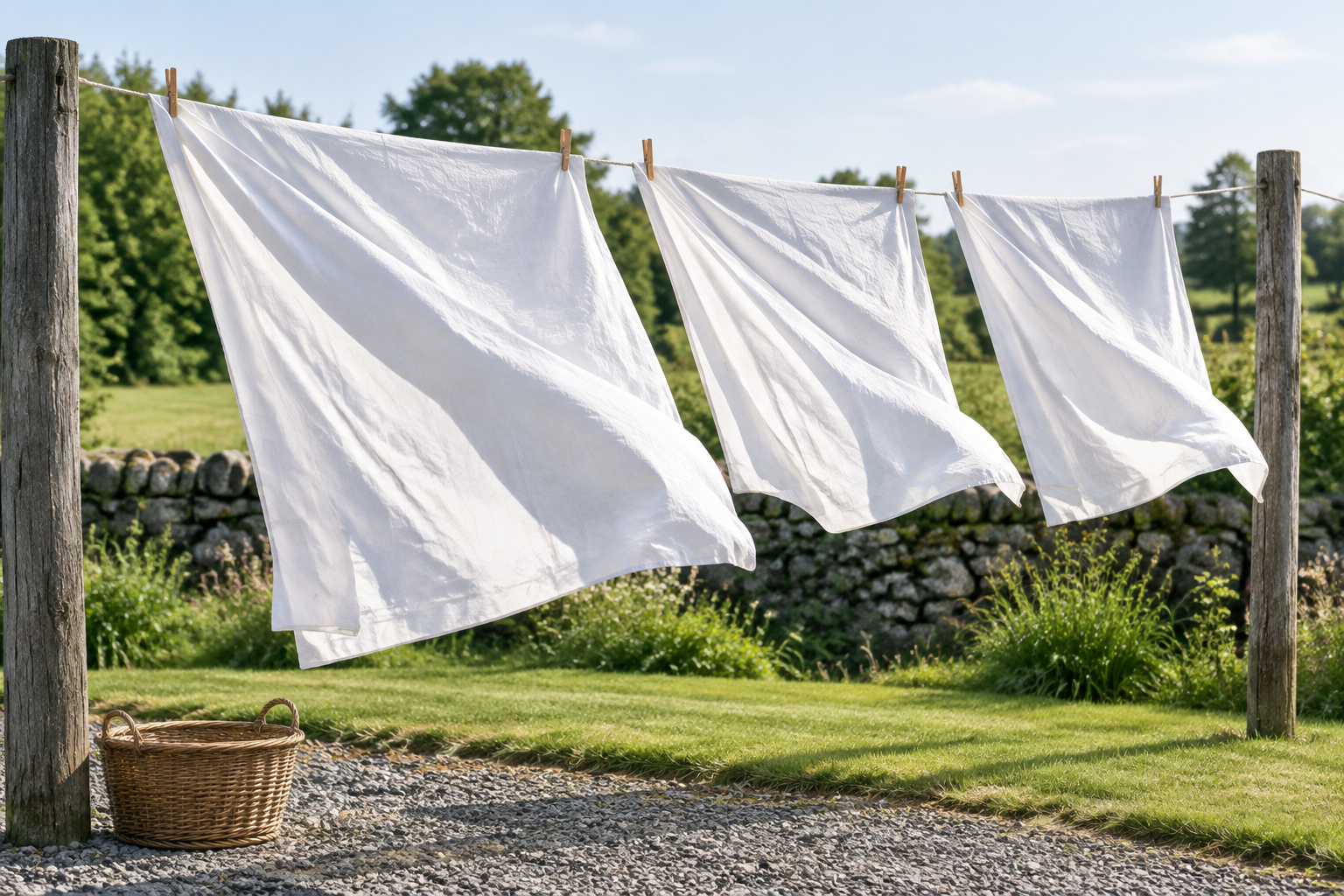
The usual answer is wherever nobody will see the washing: a tight corner behind the garage, out of the wind, shaded by a hedge. Sheets hung there stay damp until dinner, and by August the line is holding up a bird feeder. That is how good outdoor clothesline ideas end. Put the line where the wind and the sun from mid-morning to early afternoon actually reach. Then choose a type your yard can live with, and set the posts for a wet load.
TL;DR
- Site the line for airflow and the 10am–2pm sun, and get the washing out in the morning; a breezy spot with a few hours of light beats a sunny corner where fences and hedges stop the air.
- A fixed line between two posts handles heavy bedding and lasts longest; a retractable suits a small yard or a strict HOA; a rotary needs a clear circle a good deal wider than its head.
- For a post standing 6.5 ft above ground, dig a 3.75 ft hole (a third of the post’s total length plus 6 in of gravel), and give standard concrete at least 7 days before a heavy wet load.
Site it where it dries: sun and wind beat the type of line
Stand in the yard at nine on an ordinary washing morning, not a perfect one, and feel where the air moves. Forecasters name the drying factors plainly: rain stops everything, sunshine matters next, low humidity dries faster, and wind carries damp air away and brings in fresh.
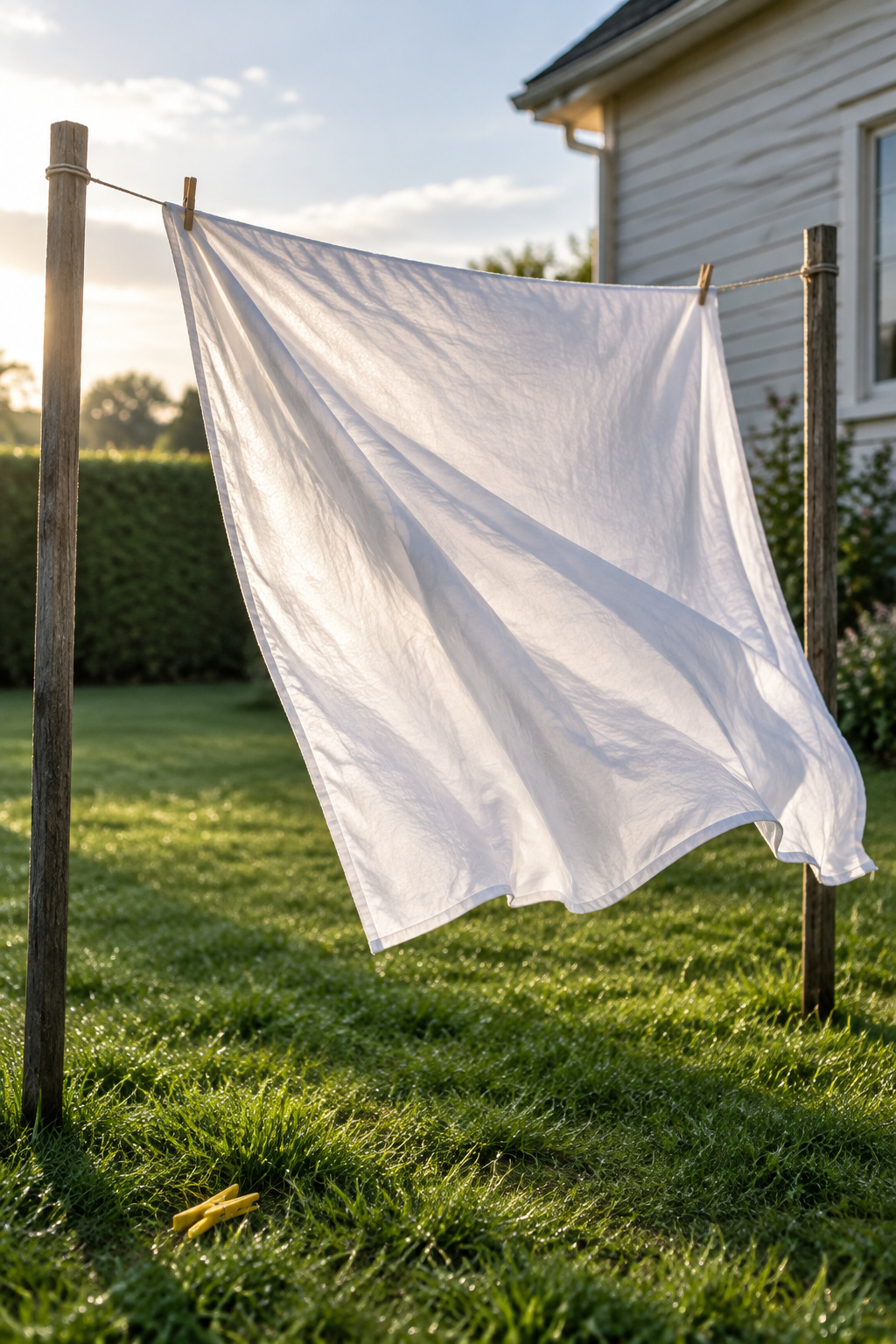
The sun that matters peaks between about 10am and 2pm, so the washing goes out in the morning to catch it, and a spot that only gets light late in the day is a poor one.
Wind is the half people skip. Before I commit to anything in a yard, I tie a strip of flagging tape to a stake and leave it for a week. One calm afternoon tells you nothing; a week shows where the air comes from and which corners it never visits. Tight corners between buildings and the lee of a dense hedge are dead air.
I know of no test that races a T-post against a rotary, and this part is my reading, not a study: every factor the weather services list belongs to the air and light at the spot, not to the hardware. So rank your yard’s spots first, then shop.
Outdoor clothesline ideas by type: T-post, pulley, retractable and rotary
Once you know where the air moves, the shape of the space mostly picks the type, and here is how the four compare. Costs are rough bands for basic kits; heavy-duty specialist lines run from a few hundred dollars to over a thousand.
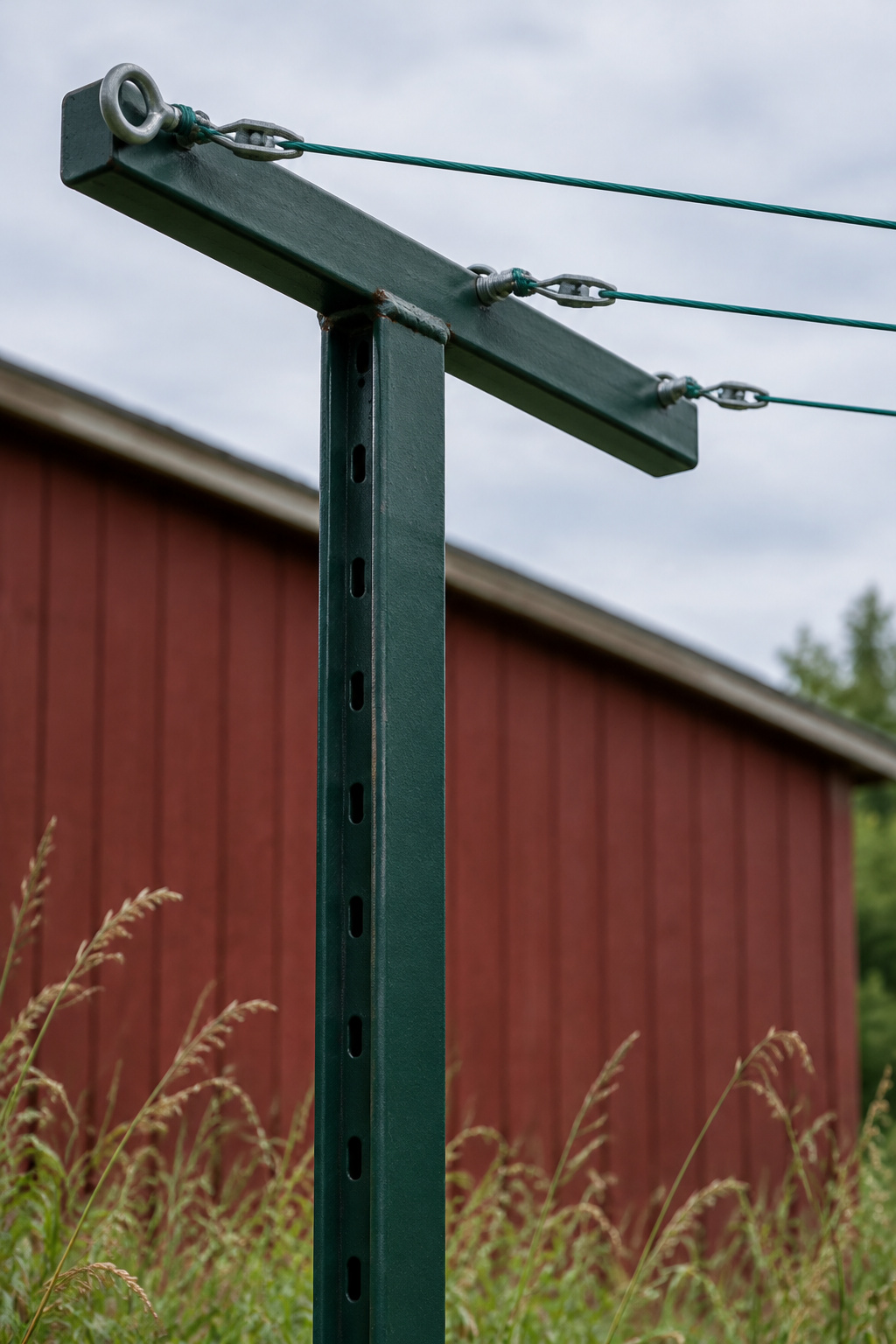
| Type | Footprint | Rough cost band | Set-up effort | Best yard |
|---|---|---|---|---|
| Fixed T-post line | A long run between two posts | $20–$80 | Two footings to dig and cure | Long, open yard; heavy bedding |
| Pulley line | A run from a house wall or deck to one post | Like a fixed line, plus pulleys | One footing and a solid wall mount | A wall or deck at one end |
| Retractable | Almost none when stowed | $30–$120 | Two strong anchor points | Small yard, shared views, HOA rules |
| Rotary or umbrella | A clear circle around one pole | $80–$250 | One center footing | Square yard with room all round |
Retractables carry less and sag on long pulls; that is the trade for vanishing on a Tuesday. Rotaries are where the arithmetic goes wrong. One rule of thumb says leave 8–12 ft of clearance; an Australian retailer says a 4.0 m (13.1 ft) head needs a 5.0 m (16.4 ft) clear square. Measure the head you are buying and add room so sheets miss the fence.
Height decides who can help. A fixed line around 1.8 m (about 5 ft 11 in) above the paving suits the main user and can be a collision hazard for everyone else. Hanging towels is a good first outdoor task when you are giving kids a laundry job, and a rotary that winds down, or a lower second line, lets a shorter person do it. A load needs about 35 feet of line; much longer and a fixed line sags. Packing every cord tight end to end can slow drying, so spread the load along the line. If nothing fits, take the type your yard can live with all year; in a small or overlooked yard that is a retractable or a fold-down.
Posts set for a wet load: depth, footing and line tension
Post depth and footing
A line of wet sheets in a gust is a real load, and the failure to plan for is slow: a post that leans a little each season until the line sits in the grass. There is no clothesline-specific post standard, so borrow the general rule from concrete makers and fence builders. Bury a third of the post’s total length, add 6 in of gravel underneath, and make the hole three times the post’s width.
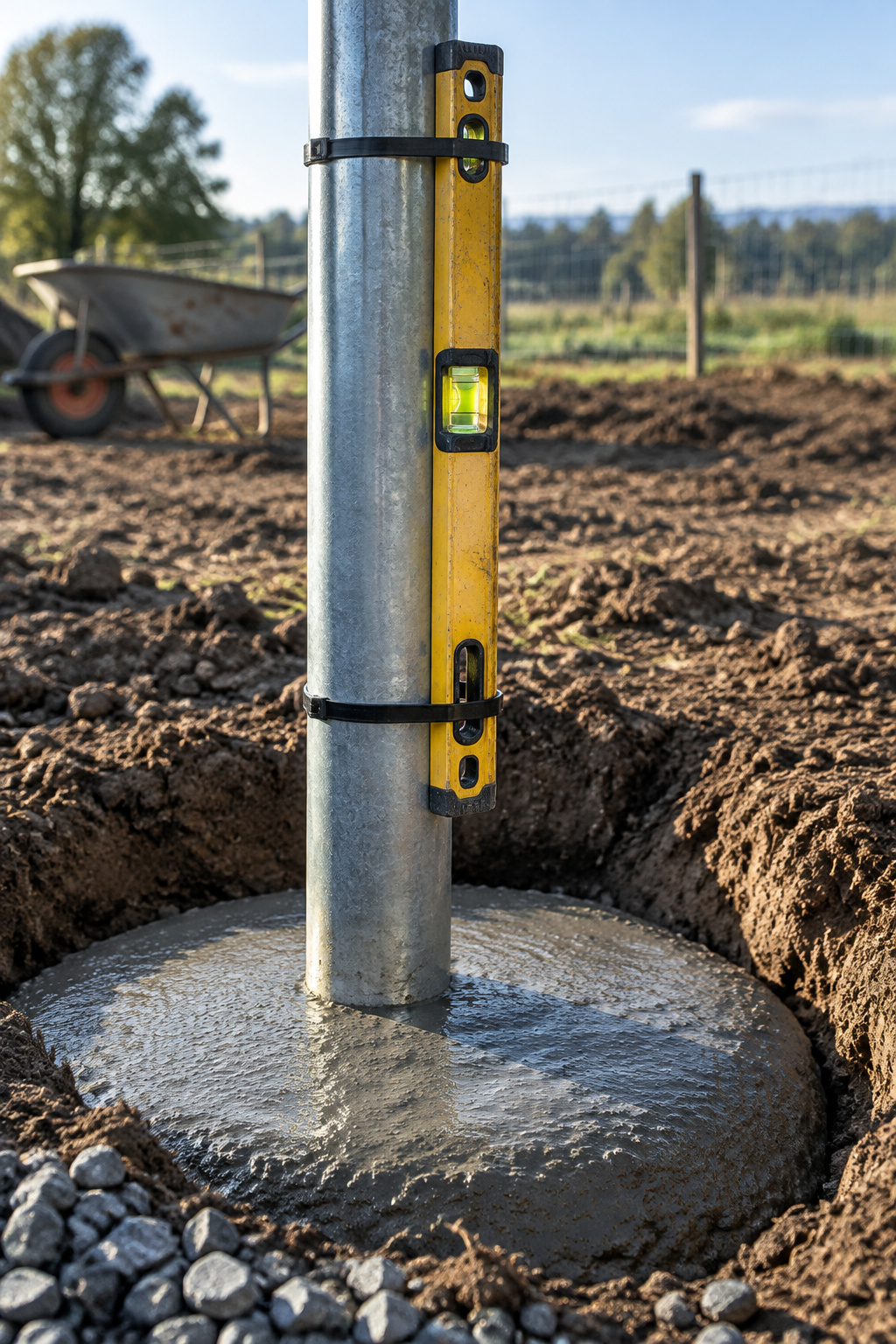
Worked through for a post standing 6.5 ft above ground: the visible part is two-thirds of the post, so the whole post is 9.75 ft, 3.25 ft of it goes in the ground, and with gravel the hole is 3.75 ft deep. In frost country, go at least 6 in below the local frost line.
Where does the water go? I find out by walking the yard in a downpour, in the boots I keep by the back door for exactly that. If water pools where you plan a footing, the gravel matters, and clay backfill with rocks in it lets freeze and thaw jack the post up.
- Call the utility locator and read your covenant before you dig.
- Dig each hole, tamp the gravel into the bottom, and stand the post plumb.
- Fill with concrete and brace the post.
- Leave standard concrete 24–48 hours before you put any force on it.
- Wait at least 7 days before the first heavy wet load, a concrete maker’s figure for clothesline footings.
If rain comes while the concrete is green, cover it. The folded tarp in my truck has covered more half-finished patios than I like to admit.
Line material and tension
Here the advice splits. One camp says buy a steel-core line and a turnbuckle, never rope. The Old Farmer’s Almanac tested lines and picked plain cotton, at about $7–$8 per 100 ft, because pins grip it. Cotton grips best and stretches most; coated steel sags least.
| Line | What July does to it | Spring maintenance |
|---|---|---|
| Cotton | Stretches for good once wet; mildews if it stays damp | Re-tension every two to three weeks in use; replace when it frays or greys |
| PVC-coated steel core | Barely stretches | Take up slack at the turnbuckle after the first wet load; check the coating |
| Galvanized stranded wire | Shrugs off UV | Retighten several times in the first weeks, then check each spring |
On a long run, stretch is what drops the middle into the grass. Fit a turnbuckle at one end and leave it mostly open at install, so you have thread to take up slack after the first wet load.
Whatever you choose, the spring job is the same: walk the line, tighten it, and replace anything gone soft.
Making the line part of the yard: screening, planting and a path to it
A clothesline is a design decision, and it deserves the same thought as the patio. Treat it as an afterthought and it gets exiled to the dead corner, the worst drying spot you own.
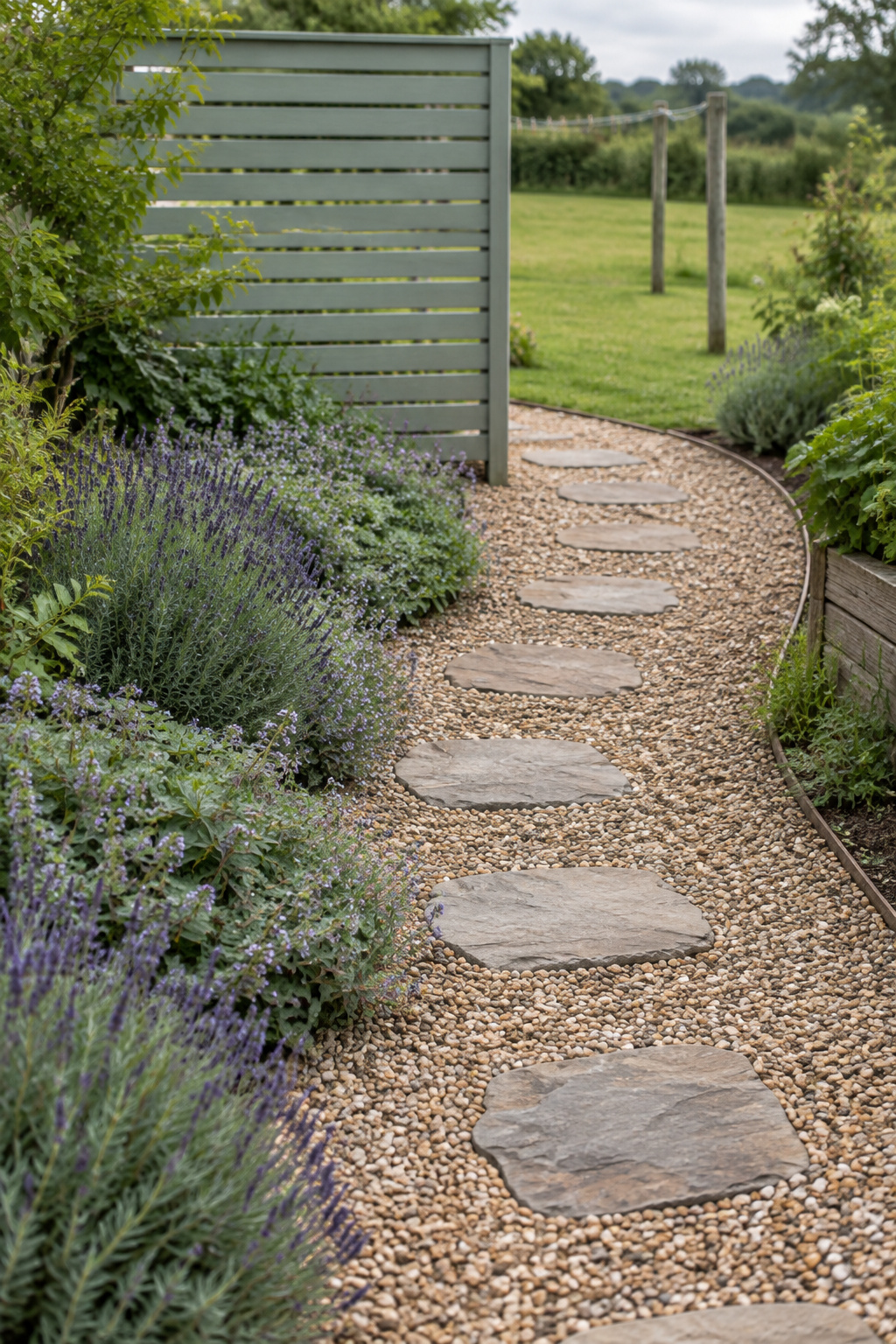
Screening is where good intentions kill the airflow. Leave the windward side open, put any screen on the side the street sees, keep it clear of a rotary’s swing, and choose something open: a slatted panel, a trellis, tall grasses that move. An open-sided roof over part of the line keeps rain off while the air keeps flowing.
My neighbor’s fence throws the only afternoon shade my patio gets, and I have thanked the neighbor for it. I would never hang washing in that shadow. Shade belongs where people sit; the line wants the light.
The route from the laundry door strongly shapes how often the line gets used. Make it direct and level, with no steps or narrow gates, and firm enough that wet hems never meet mud. Gravel is underrated, but compact and edge it, because loose gravel under a heavy basket is a turned ankle.
Keep the gear by the back door so going out is one move: pins in their bag on a peg rail for the clothespin bag, the basket beneath. A good line, like any outdoor room, is one people drift out to without being asked.
Right-to-dry laws and HOA rules before you dig
If you live under a homeowners’ association, read the covenant before you buy posts. Many ban outdoor lines or allow them only out of street view.
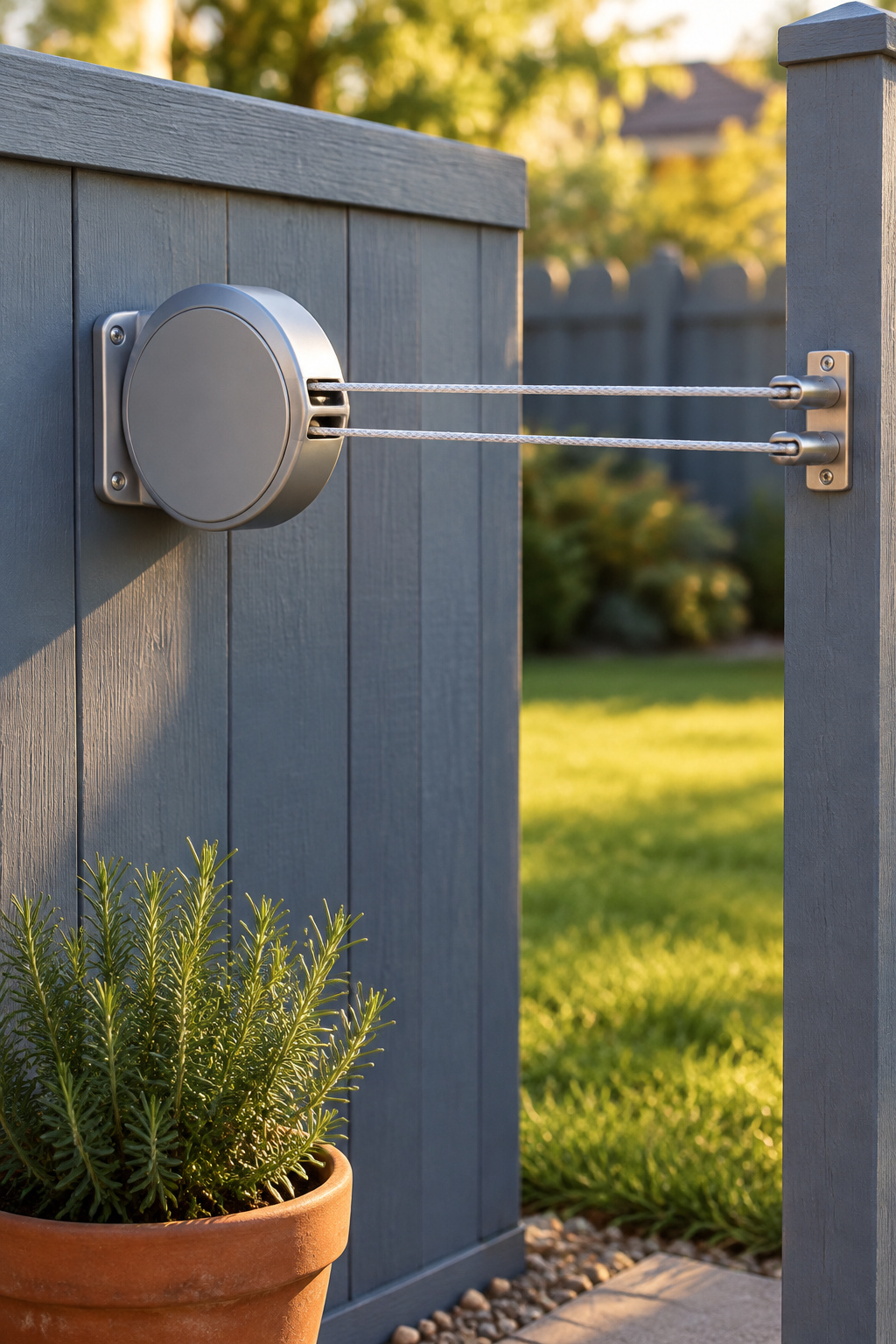
Some states push back. Hawaii’s law says no covenant or deed may stop an owner putting up a clothesline on a single-family home or townhouse, while letting associations reasonably restrict placement. Colorado bars an association from effectively prohibiting a retractable line. California, Florida, Maine, Maryland, Michigan and Vermont have their own versions, each with rules on which properties qualify. You will see a confident count of right-to-dry states quoted online; ignore it and look up your own state’s statute.
I’m not a lawyer, and none of this is legal advice. Nearly every one of those laws still allows “reasonable” limits, so the practical route is a design the board can live with, a retractable or fold-down line out of the street’s view, and a short written request.
Choose your line by your worst month, then hang the first load
Every line looks good in July. Pick yours for the month you will be tempted to stop using it. I read the rain gauge on my fence most mornings before a drying day, and I started keeping it to settle arguments about how wet a summer really is. Measure your own climate: cold and dry is still a drying day, wet and humid is not.
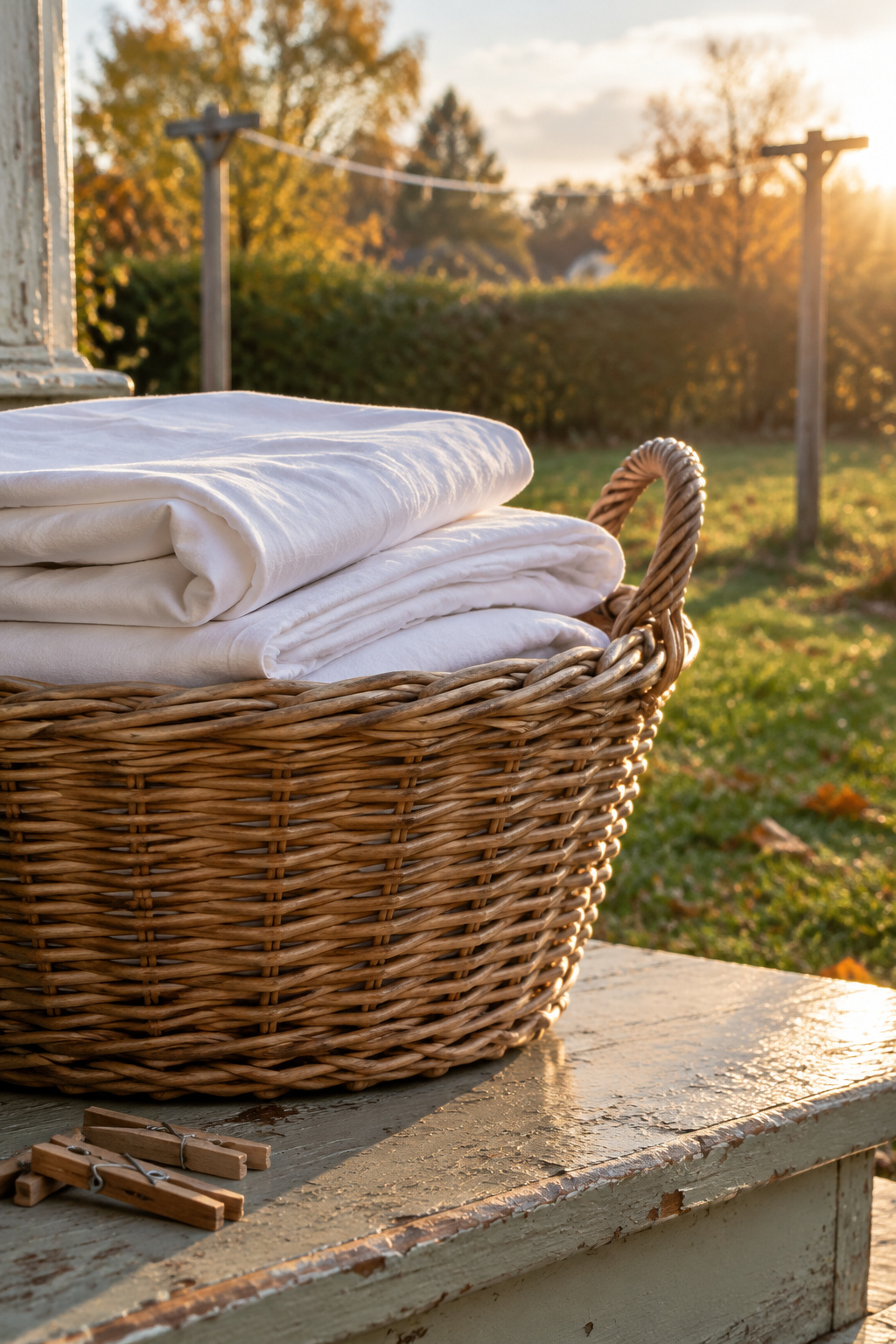
On the days nothing will dry, the basket comes back to a country laundry room inside the house, and our Scandinavian drying rack ideas take it from there.
The one argument I will not settle for you is the line itself. I think coated steel on a turnbuckle is the only sensible choice for a permanent span; the cotton camp answers that the pins grip it, and the Almanac’s testers agree. I would hang the first load on either, at the spot the wind picked, in your worst month, and let your weather tell you which of us is right.
FAQ
Does hanging laundry outside fade colors or leave towels stiff?
It can do both, and both have fixes. Sun fades colored clothes and can yellow whites with brighteners, so dry those in shade, turn them inside out and bring them in once dry. Towels stiffen because still air lets the cotton fibers bond; snap each one three or four times before hanging, or finish with a short tumble.
Can you dry laundry outside in cold or humid weather?
Cold, yes; humid, not well. Clothes dry faster on a cold dry day than a warm muggy one, and even below 32 F water slowly leaves frozen cloth, though it can take too long to bother. Humidity and rain are the real limits. Bring washing in overnight before dew or frost settles, and use an open-sided cover for showery days.
How do you keep pollen, bird droppings or smoke off line-dried laundry?
Mostly by timing and placement. Skip the line while trees are shedding heavy pollen, which is what a Florida extension horticulturist advises. Keep the line out from under branches. On smoky days I leave the basket inside, because washing takes on whatever is in the air.