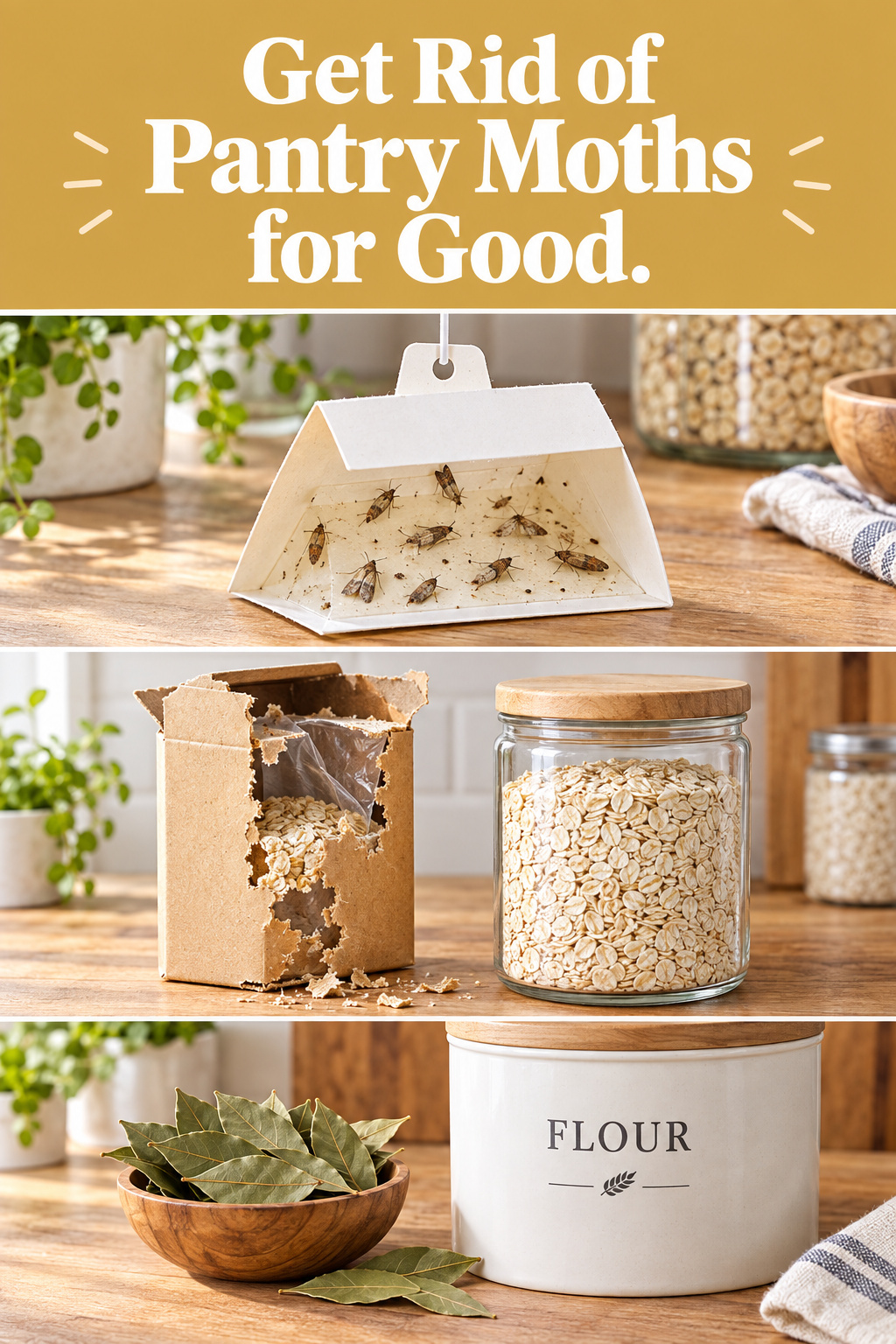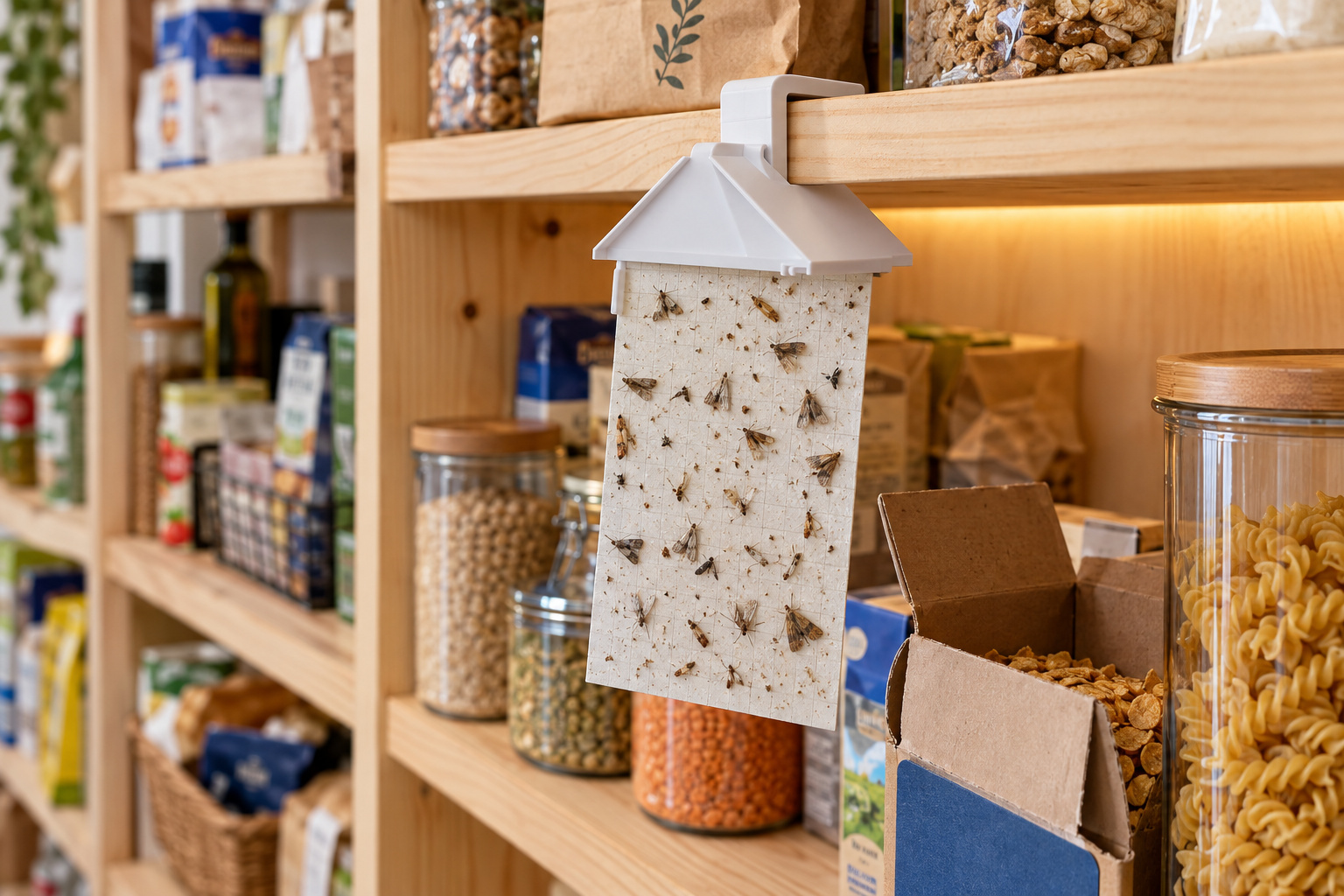

The most common mistake with pantry moths is a small, fragrant one: a bay leaf pressed into the flour bin, the lid closed, the problem considered handled. It feels like old kitchen wisdom. Meanwhile the eggs already inside the bag hatch, the larvae spin their silk, and the next generation flies out of a box you thought was clean. Getting rid of them takes five stages in order: identify, remove, clean, monitor, prevent. Below is how to run each one yourself, and why the leaf can’t finish the job on its own.
TL;DR
- Bay leaves are not a moth control. The only peer-reviewed repellency study tested beetles, not Indian meal moths, and a leaf does nothing to eggs or larvae already inside a package.
- Freeze at 0°F for a time scaled to the package. Small packages need 2-3 days; larger quantities need up to 7-10 days. Heat at 130-150°F for 15-30 minutes also kills every life stage.
- Pheromone traps catch males, so they’re a monitoring tool and won’t cure an infestation. What clears one is removal, cleaning and rigid, tightly sealed containers, because larvae chew through thin cardboard and light plastic.
Why bay leaves don’t stop pantry moths
The bay leaf’s reputation rests on a study of different insects. The only peer-reviewed test of bay compounds as a stored-product repellent, published by Obeng-Ofori and colleagues in the Journal of Stored Products Research in 1997, examined the red flour beetle and the sawtoothed grain beetle. It did not test the Indian meal moth, the pest behind almost every home pantry moth problem, so the evidence says something modest about beetles and nothing about moths.

Even on its own terms, the leaf is weak. Its compounds, eugenol and cineole, can make a scent trail harder for some pests to follow. Zachary Smith of Smith’s Pest Management puts the ceiling plainly: these natural remedies “serve as minor repellents of pests. They are not going to be toxic to pests, nor will they eliminate a severe pest problem.” At best a leaf repels. It does nothing to eggs or larvae already established inside a food package, and its scent fades within days.
An Ask Extension entomologist answering a reader’s question said control “relies mostly on sanitation (no need to use bay leaves or vinegar).” My verdict: keep the bay leaves for the soup. The moths need the sequence below, and once it’s done, the full pantry organization guide covers setting the shelves back up so they stay easy to inspect.
Identifying a pantry moth infestation before it spreads
Moths seem to appear out of nowhere because by the time you see one, the colony has usually been working for weeks. Oklahoma State University Extension puts the Indian meal moth’s life cycle, egg to adult, at about 6 to 8 weeks under favorable conditions, so the moth on the ceiling is late news.
Signs to check for in dry goods
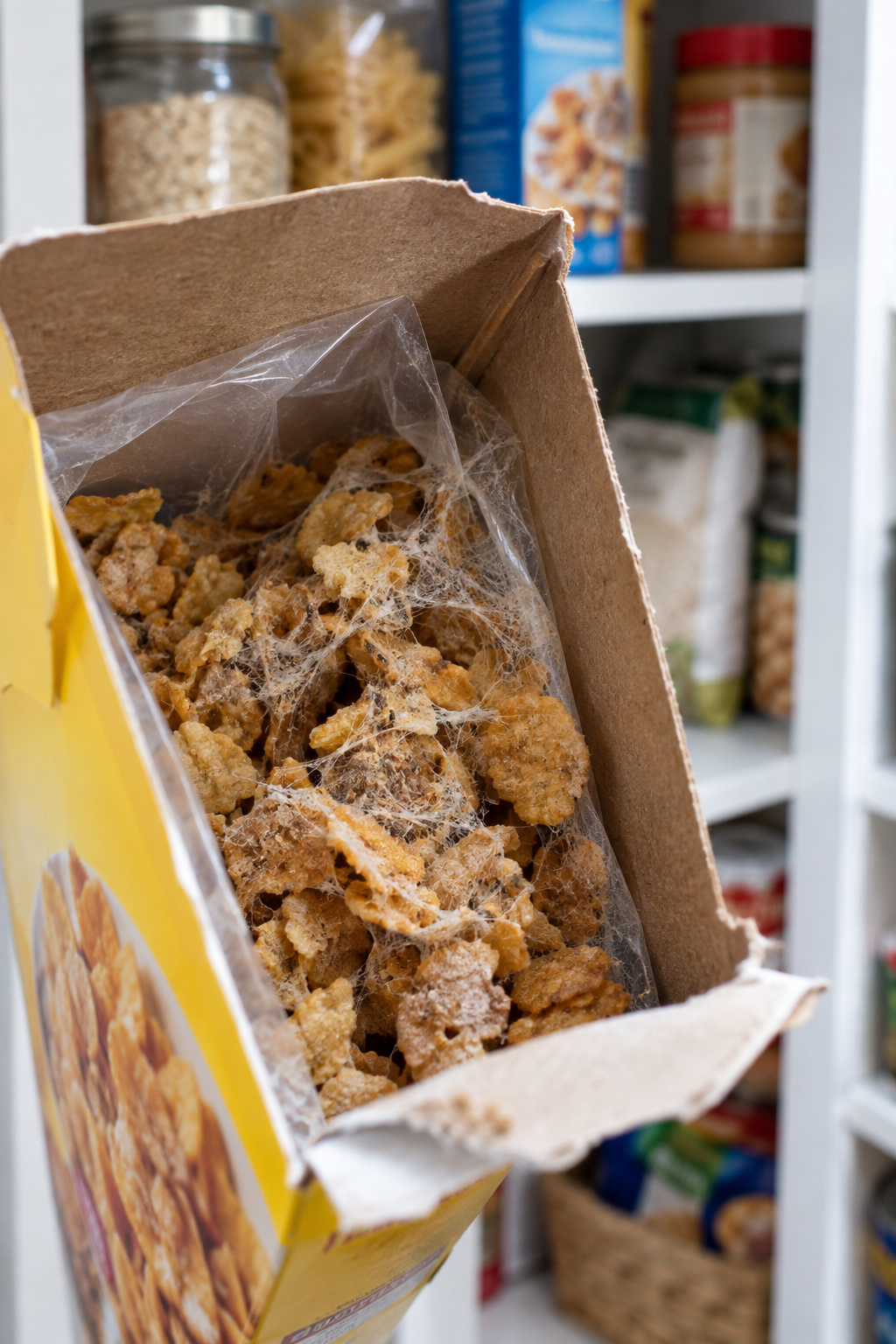
In collections work, integrated pest management starts with a systematic inspection of every item, and a pantry deserves the same discipline. Take everything to a counter and look for these:
- Adult moths are small, 3/8 to 1/2 inch long, with bronze- or copper-tipped wings spanning about 3/4 inch when open (Colorado State University).
- Webbing is the clearest sign. Larvae spin silk that mats cereal, grain and flour into visible clumps.
- The larvae themselves are dull white and reach about 1/2 inch at maturity.
- Mature larvae often wander off the food to pupate, so check cracks, corners, under shelf paper and the folds of any towels or linens stored nearby (Oklahoma State University Extension).
Check more than the flour, too. The National Pesticide Information Center lists cereal, grains, beans, nuts, flour, dried fruit, birdseed, pet food, spices, tea, chocolate and candy. The Indian meal moth is a generalist. I tilt a flashlight low across each shelf the way I would across a cabinet in a collection, because a low, raking beam picks out a thread of silk that a straight-on light washes flat.
The full cleanout: removing and cleaning every trace
Throwing away the one box with visible webbing and wiping the shelf it sat on leaves eggs in the neighboring packages, the shelf-paper folds and the cracks, and the infestation comes straight back. Extension guidance treats the cleanout as an ordered process:
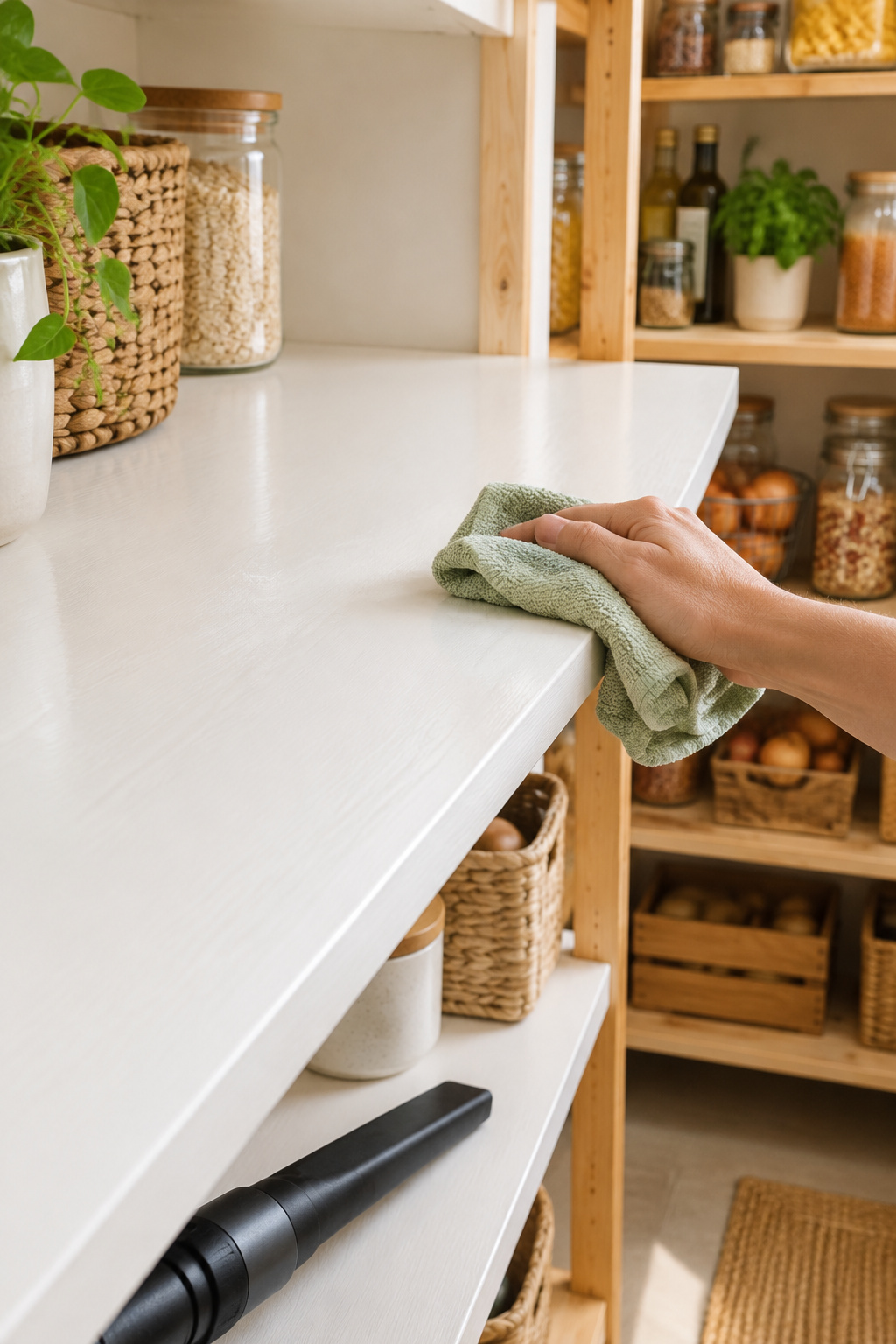
- Discard every item with webbing, clumped grain, larvae or cocoons. All of it goes in the trash (National Pesticide Information Center).
- Clear the whole shelf, unopened boxes included. University of Wisconsin Extension notes larvae can chew through thin cardboard and light-weight plastic, so an intact-looking package is not automatically clean.
- Vacuum with a crevice attachment, then wash with warm, soapy water. Search shelf-paper folds and drawer corners specifically for cocoons.
- Seal cracks and crevices with wood putty or silicone caulk. Kansas State University Extension names this step because those gaps collect food and shelter the population.
- Hold survivors in one clear, sealed tote for a few weeks before restocking, so anything you missed shows itself in a single container instead of the whole pantry.
- Repeat the inspection and cleaning at 2- to 4-week intervals. Kansas State notes this may be necessary to catch larvae hatching from eggs hidden on the first pass.
Step 4 is where an old pantry needs the most attention: the gap where a shelf board meets the wall holds crumbs for decades. If you’re replacing shelves anyway, choose shelving that’s actually easy to wipe down.
Which packaging keeps pantry moth larvae out
Most infestations restart from one assumption, that an unopened box is safe. Texas A&M’s urban entomology program says larvae chew through thin cardboard and small, loose plastic packages, so a factory seal is not a barrier.
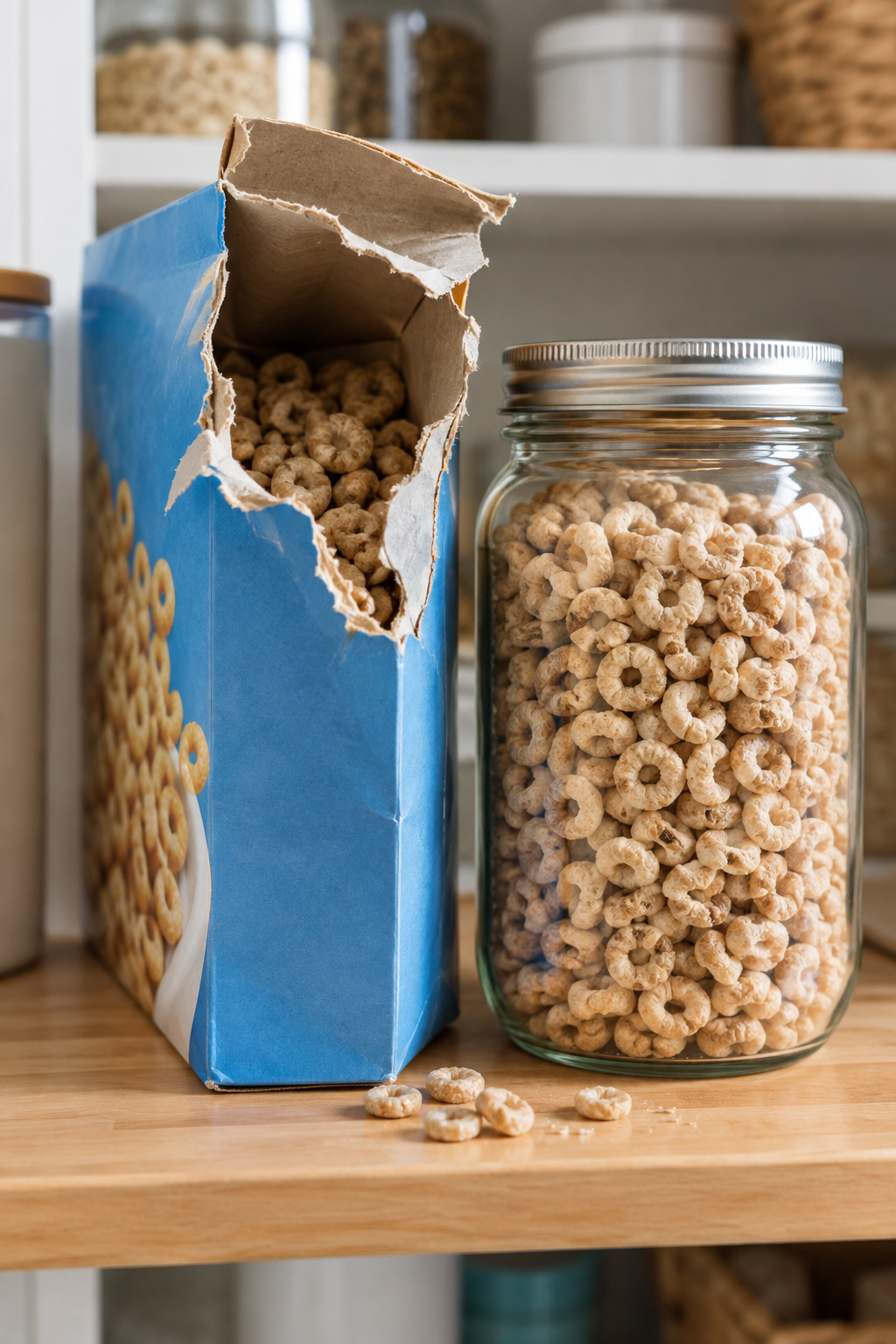
Packaging larvae can chew through
The extension sources rank packaging by whether a chewing larva gets through it:
| Packaging | Stops larvae? | Basis |
|---|---|---|
| Thin cardboard box, sealed or not | No | Texas A&M; University of Wisconsin Extension |
| Small, loose or resealable plastic bag | No | University of Wisconsin Extension |
| Standard paper bag | Likely not | Grouped with thin cardboard by the same logic; no source names paper bags specifically |
| Glass jar or heavy plastic with a tight, screw-on lid | Yes | Kansas State University Extension |
Wisconsin is blunt about the resealable bag: “Indian meal moth larvae can easily chew through light-weight plastics, so be cautious about storing products in re-sealable bags.” The paper-bag row is a reasonable inference rather than a tested finding, so treat it as a caution. The same rigid container that keeps larvae out also keeps them in: food already carrying eggs, stored in a hard container with a tight lid, confines the hatch to that one container.
Freezing, traps and monitoring: what each one does
Two tools kill what’s already inside the food, and one tells you whether you’ve won. Confusing them is how people end up with a trap full of moths and a pantry still full of larvae.
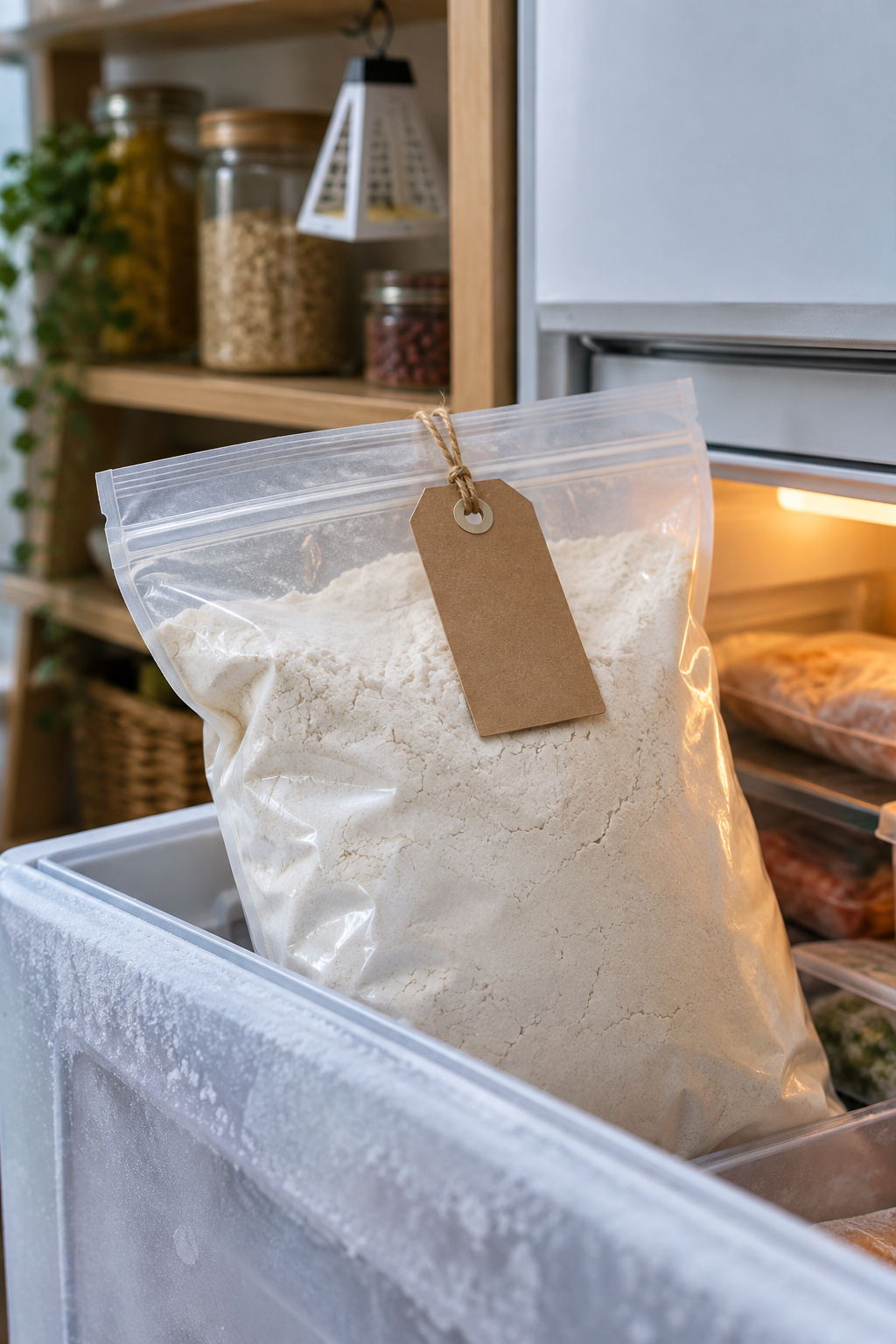
Freezing time and temperature that works
Five land-grant extensions set the same target: 0°F, the coldest setting of a standard home freezer. Durations differ because each extension scales its own numbers by package size, so there’s nothing to average:
| Treatment | Temperature | Duration | Source |
|---|---|---|---|
| Freeze, small unopened packages | 0°F | 2-3 days | University of Wisconsin Extension; Colorado State University |
| Freeze, smaller packages | 0°F | 3-4 days | Kansas State; Oklahoma State (same guidance, scaled by size) |
| Freeze, larger quantities | 0°F | up to 7-10 days | Kansas State; Oklahoma State (same guidance, scaled by size) |
| Heat, shallow pan in the oven | 130-150°F | 15-30 minutes | Oklahoma State and other extensions |
A bulk sack of rice needs the long end of the range; a small box of tea can come out sooner. Heat is faster but can degrade some foods. Neither method removes the silk, cocoons, cast skins or droppings, so sift treated food afterward. Freezing is also the one step here I use on collections as well as in kitchens.
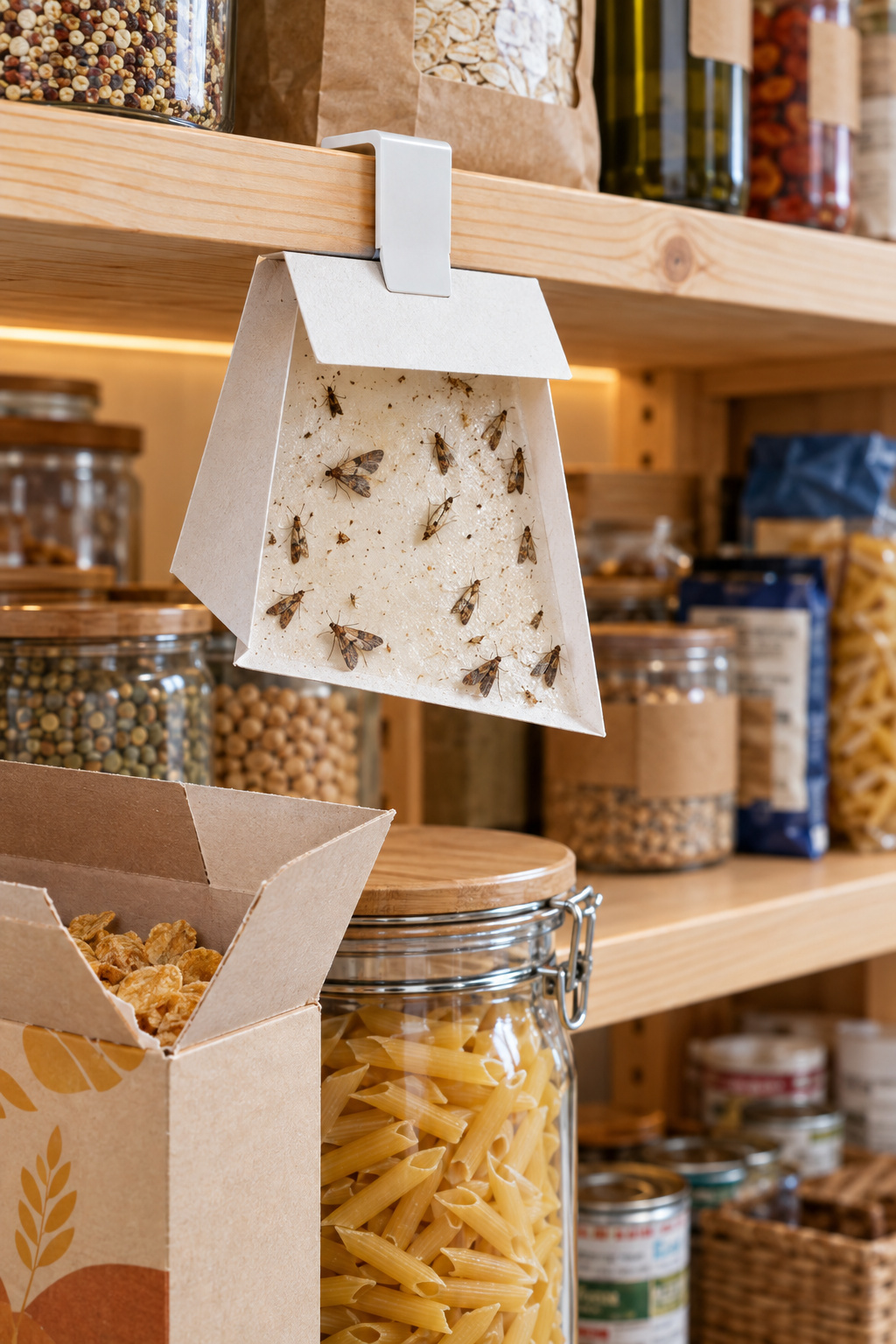
Pheromone traps are for monitoring
The National Park Service’s Conserve-O-Gram on sticky traps says it without hedging: “Traps are strictly a monitoring tool and do nothing to prevent or control an infestation.” Most traps use a female sex pheromone, so they catch males only. The females keep laying eggs regardless, which is why a full trap is a signal to inspect again and can’t show that the problem is cured.
Ethan Estabrook, a board-certified entomologist writing for the Museum Pests working group, describes the museum approach: a trap is a data source (location, species, life stage, catch count over time), and the control action is sanitation and exclusion. Place traps in corners and dark spots, date them, and watch the trend rather than any single moth. A moth or two for a few weeks after a good cleanout isn’t failure, since adults can live up to a month.
Preventing the next pantry moth infestation
Prevention comes down to one rule, and you can start on it today: nothing new touches the shelf until it’s inspected and sealed. Take the next bag of flour, rice or pet food you bring home and transfer it into a container with a seal that actually holds before it goes on the shelf.

Kansas State adds a detail at the point of purchase: examine a package before you pour it out, because adult insects often sit on the surface and disappear once the contents are mixed. University of Wisconsin Extension says to use older packages first and to finish susceptible goods kept in their original packaging within two to three weeks, moving anything longer-lived into a sealed container. Kansas State also suggests heat- or cold-treating dry goods you’ll store for more than 60 days, especially in late summer and fall. Apply the rule to birdseed, pet food and spices as well as flour; the moth doesn’t distinguish between them.
That’s the whole sequence: find the silk, clear and wash every shelf, freeze what you keep at 0°F for as long as its size demands, let the traps report, and seal everything new. A note on where this comes from: the monitor, isolate and freeze method is conservation practice, which I use on collections; the moth biology comes from extension entomologists such as Howard Russell at Michigan State University.
FAQ
Can pantry moths get into sealed plastic bags?
Yes, if the bag is thin or light-weight. University of Wisconsin Extension warns that Indian meal moth larvae easily chew through light plastics, resealable bags included. What stops them is a rigid glass or heavy plastic container with an airtight, screw-on lid. Thickness and rigidity matter more than whether the closure is technically sealed.
How long does it take to get rid of pantry moths completely?
Expect it to take at least one full life cycle, which runs about 6 to 8 weeks from egg to adult. Adults can also live up to a month, so a stray moth for a few weeks after a thorough cleanout is normal. If numbers don’t taper off, re-inspect for a missed source.
Is it safe to eat food that had pantry moths in it before you noticed?
Trace insect matter is treated as a quality problem, not a poison. For cornmeal, a comparable grain product, the FDA’s action level is an average of 25 or more insect fragments per 25 grams, classed as an aesthetic defect. Still, discard anything showing webbing, larvae or clumped grain rather than salvaging it.