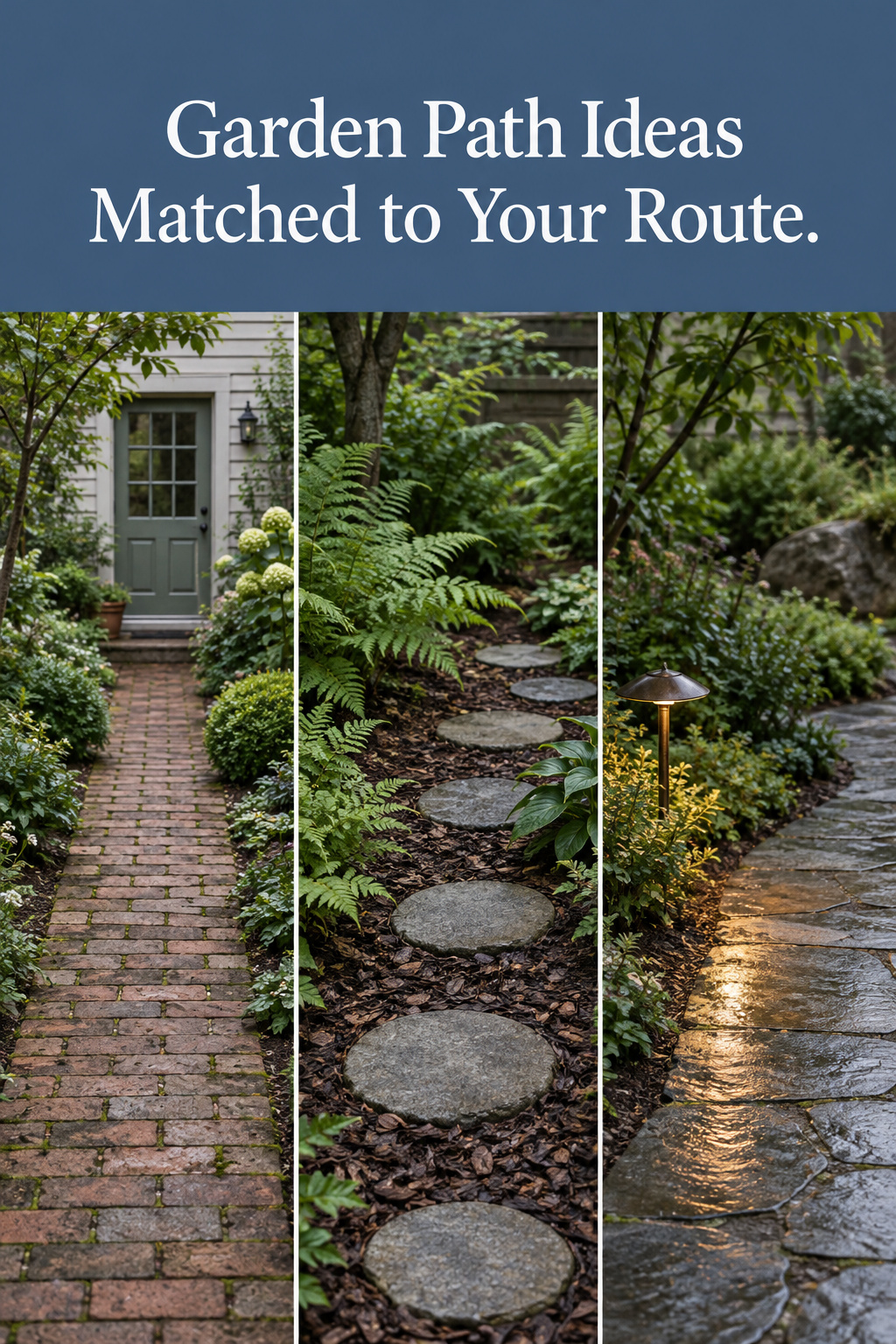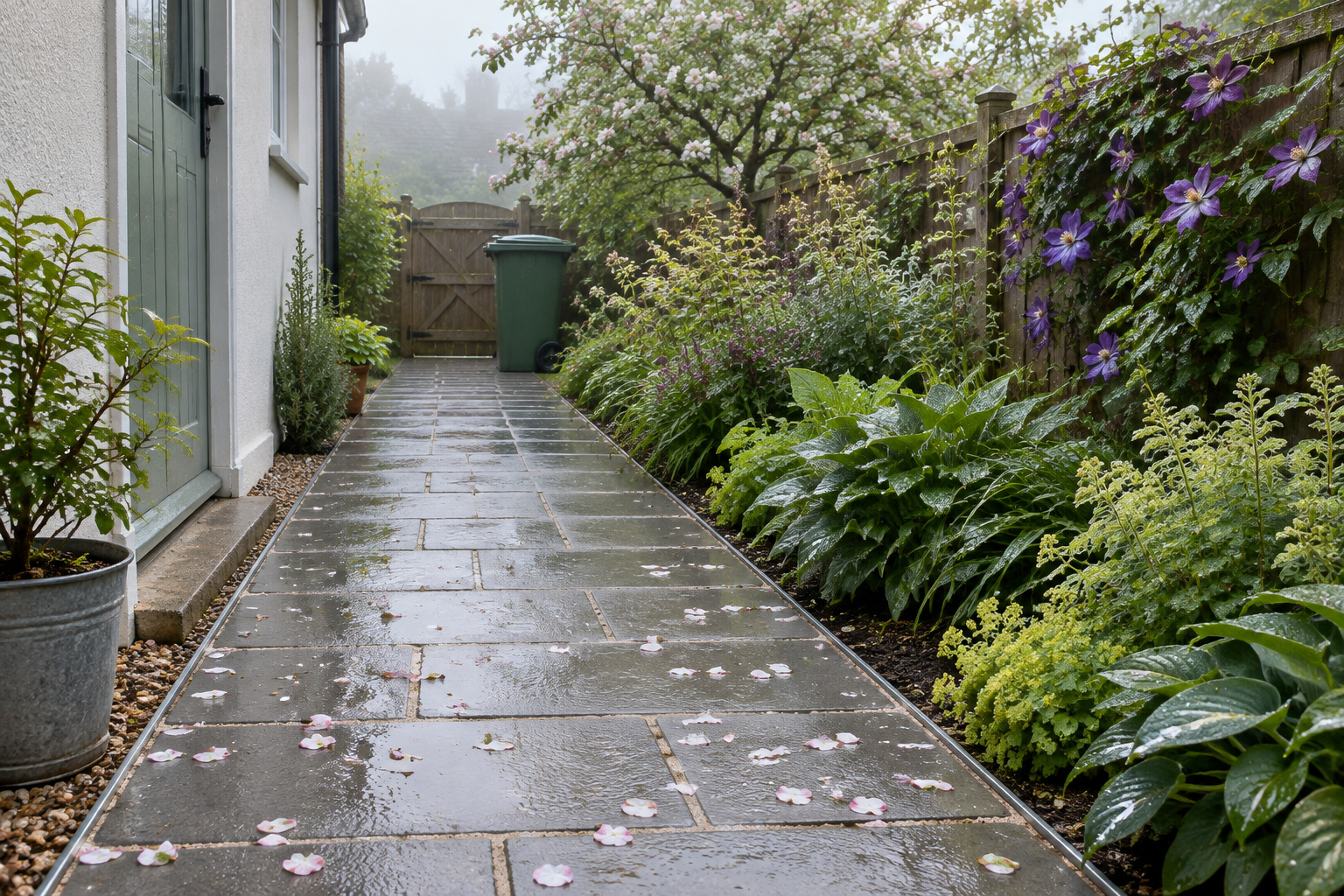

Look closely at a rolling trash bin. Two hard plastic wheels, no tread to speak of, a handle at the top and a full week of kitchen scraps pressing down on that narrow axle. Every week someone drags it from the side of the house to the curb and back, usually in the dark, often in the rain. All it cares about is whether the ground under its wheels stays put, which makes it the toughest critic a garden path will ever have.
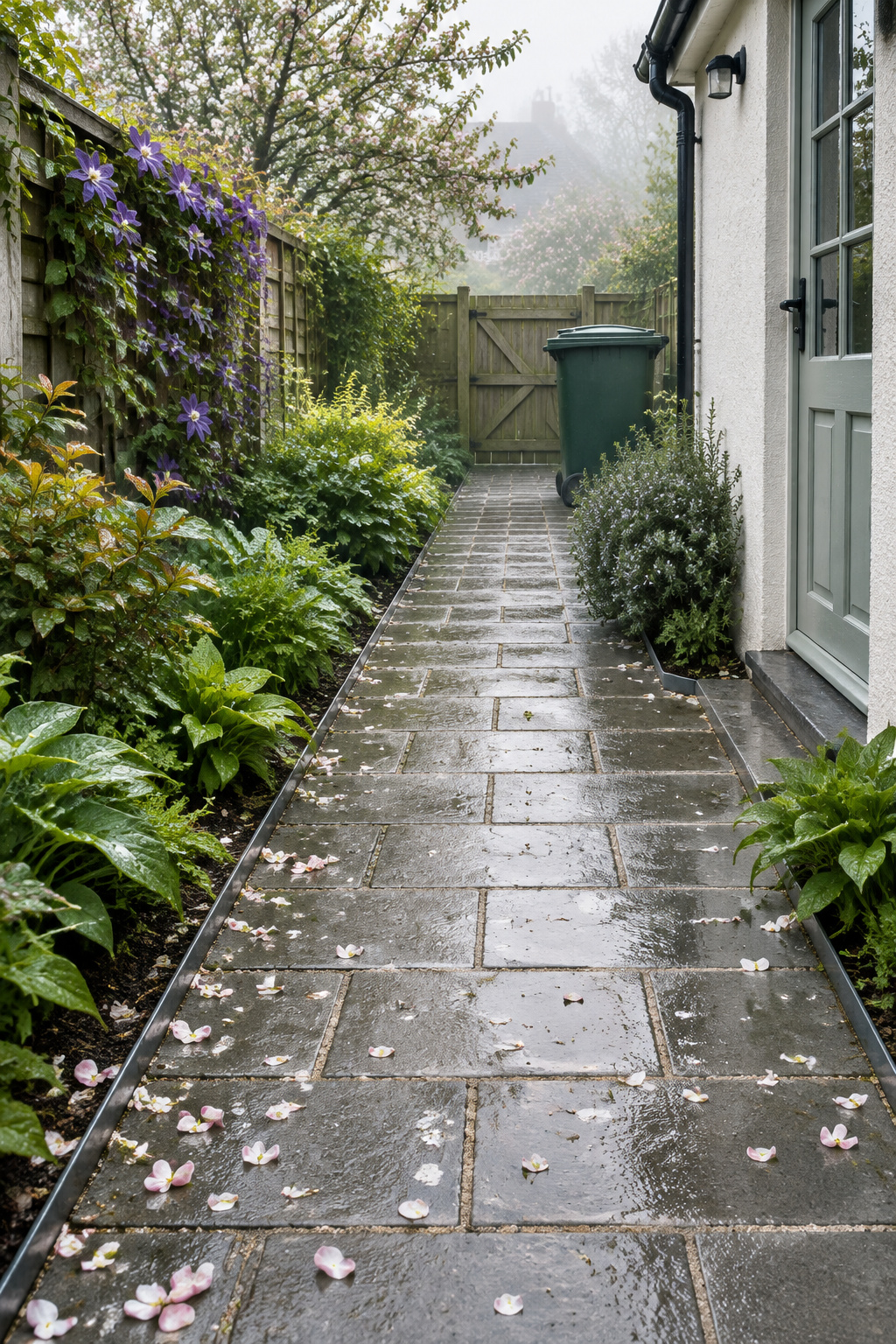
Most garden path ideas never ask it. They’re sorted by looks: a curl of stepping stones through moss, a crunchy gravel walk under a rose arch, a brick path that looks a century old. Little of that says how often the path gets walked or what rolls along it. So people pick from the picture, and the soggy path I get called to fix is nearly always the same mistake: a daily route built like a weekend stroll.
I sort them the other way round: name the trip first, then look at the ground the trip crosses, and only then pick the surface. Every path in a garden falls into a handful of jobs, and once you know which job yours is doing, most of the gallery falls away.
The daily route to the bins needs a firm surface, and a dry one
This is the path that fails most often, and it’s the least glamorous one in the yard. Back door to the bins, the shed, the garage, the gate. It gets walked every day and rolled over every week, by people carrying things and not looking down. It needs a firm, continuous surface, and it needs to be dry underneath.
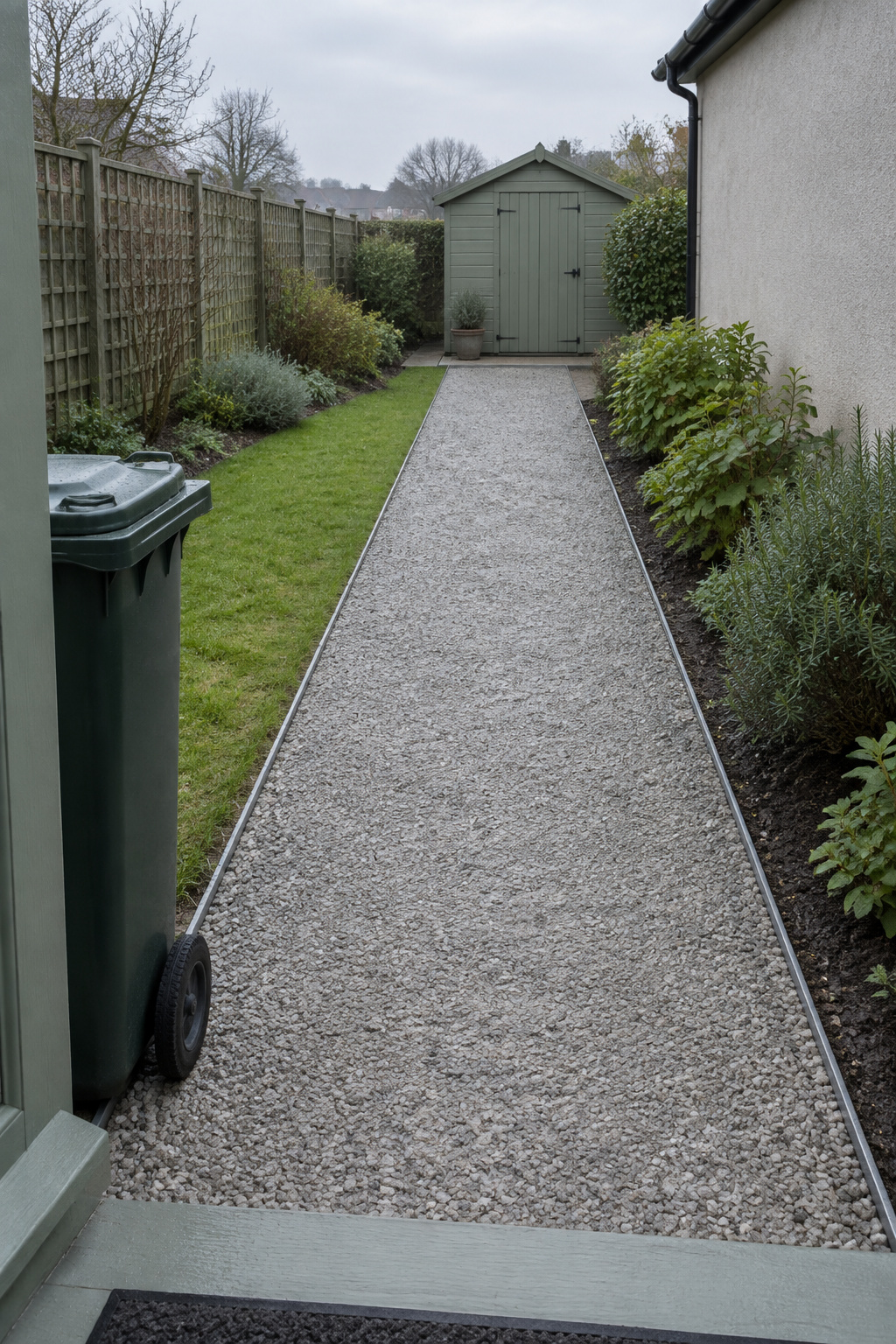
Fix where the water sits before you pick the surface
I drive a pickup that usually has a bag of gravel in the back. That bag is there because a soggy path is the call I get more than any other, and those calls have taught me to fix the ground first. A topping laid over a wet spot is just a more expensive way of standing in mud.
Start with how the soil under a busy route behaves. Colorado State’s extension service notes, for landscape soil in general, that a moist soil can reach about 75% of its maximum compaction the first time it’s stepped on, and about 90% by the fourth. Wet soils compact more readily than dry ones, and compaction squeezes out the large pores that carry water down. So the strip of ground you cross to the bins all winter is slowly turning into something closer to a pan than a sponge. Michigan State’s extension service names the visible sign: water that collects on the surface after a heavy rain instead of soaking in, most often on clay and loam.
That’s why re-topping rarely works. When a path stays soft, the water is coming from somewhere, whether a high water table, a spring, water arriving from elsewhere, or a layer packed hard by the house builders years ago, and the question is where it can go. One trade test I like for a working lane: it should still feel firm a day or two after an ordinary rain. If the edges rut, the stone wanders into the planting or a wheel sinks near the border, the surface isn’t the failure. The base, the drainage or the edge support is.
Here in the Northwest most of the year is the wet month, yet plenty of paths are laid in a dry August and judged only then. Walk the route the morning after a long rain and watch where the water sits and where it runs off. Where it sits is where the work starts.
Which surfaces take a daily barrow and bins
Hardened surfaces win here: concrete, pavers, paving brick, large flagstone laid tight. For a sense of the bar, the US Access Board’s guidance on ground surfaces asks for ground that is firm, stable and slip resistant, and says most loose materials, gravel included, won’t qualify unless they’re compacted, bound or held in a grid, and even then they need repeated maintenance. That’s a benchmark written for public places, not a rule for your backyard. It’s still a useful line between a surface that holds a wheel and one that swallows it.
Gravel is underrated, and I’ll argue for it on most of a garden. But “gravel” covers two materials that behave in opposite ways under a wheel. Rounded pea gravel rolls over itself like ball bearings; one school-garden guide compares walking on it to walking on marbles. Crushed stone with broken faces and plenty of fines does the reverse. Compact it with a plate or a roller and it locks into something close to a trail surface. Decomposed granite laid that way, ideally stabilized, is the gravel that takes a loaded barrow. It does have limits: it can turn muddy in wet shade, and it may not suit ground that freezes and thaws all winter. Loose gravel of any kind doesn’t belong on the daily wheeled route. Rounded gravel by the back door also rides into the kitchen in your boot treads. Gravel types, depth and edging are covered in the gravel patio articles on this site.
For something harder and more permanent, pavers on a tamped base with a fixed edge are the workhorse. Clay brick laid in herringbone grips well and copes with a barrow, as long as it’s brick made for paving, not house brick. Before you buy a pile of old stock, read up on brick garden path patterns and bricks.
The working path: wide enough for the barrow, simple enough to repair
The working path runs from the shed to the beds and the compost, and its job is carrying weight. A full barrow puts its whole load through one narrow wheel, and the wheel tends to drift toward a soft edge. Each pass pushes that edge out a little further, worst where you turn, stop or roll off the hard surface onto the lawn. A firm path with collapsing shoulders behaves like a narrower one.
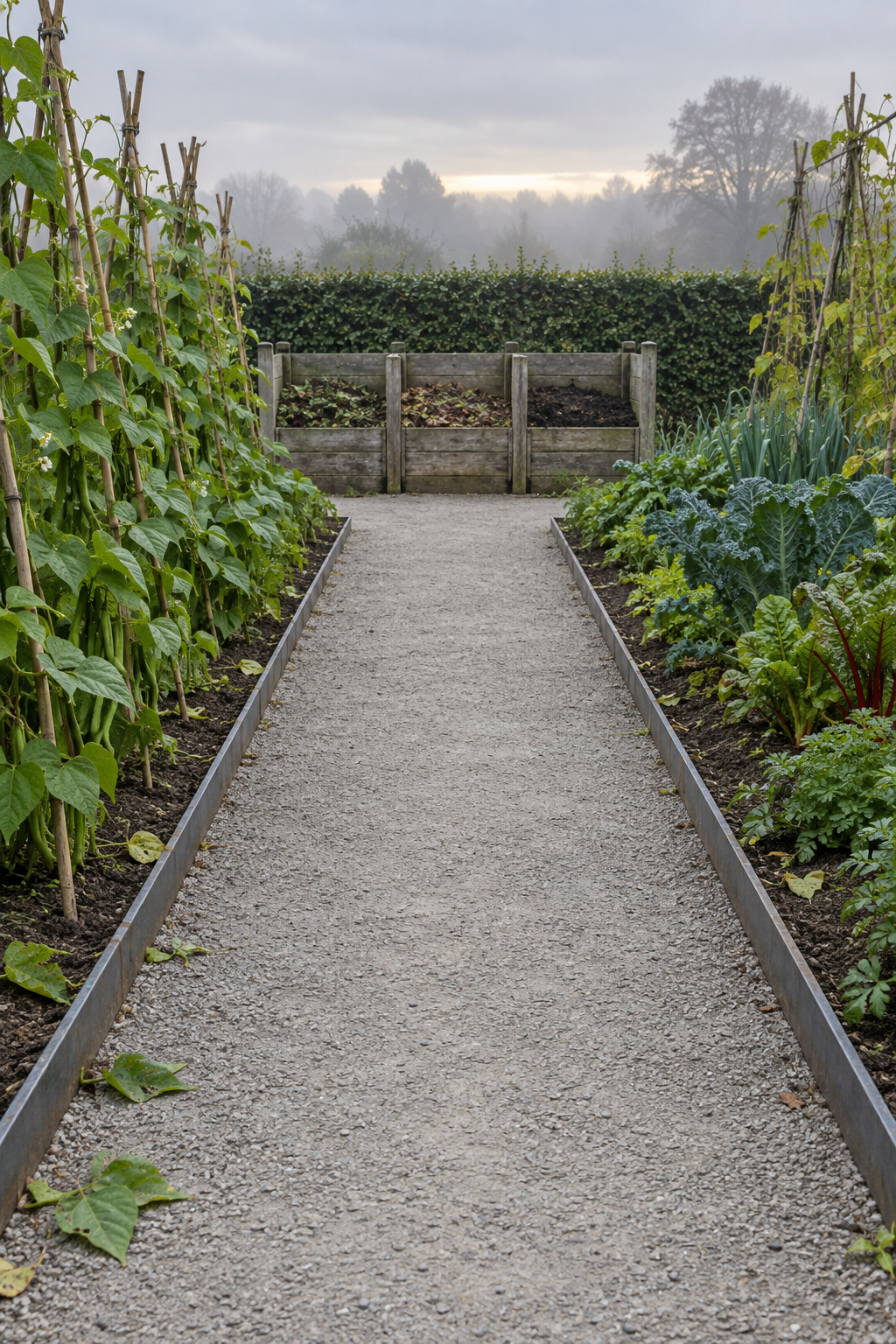
So width and straight lines matter more here than looks. Size the path to whatever rolls down it every week, and measure the actual barrow rather than guessing; how wide a garden path should be depends on exactly that. Keep the route straight, or give it long sweeping curves instead of tight corners that make you slow down, twist and tip. Where it meets a patio or drive, make the join flush so the wheel doesn’t drop off a lip. A half-inch drop at the edge is the early warning. By the time the lip is an inch or two, a loaded barrow already feels rough over it.
Edges are where the money and the effort go. Pavers creep sideways and lose their bedding sand without a fixed restraint along the sides; the paving industry’s own homeowner guide calls edge restraint essential. Steel edging is rated to outlast treated timber edging, which matters on a path you’ll be pushing loads along for years.
What does the wet month do to a working path? It shows you every soft spot at once. Ruts appear where the barrow tracks, the shoulder slumps, and loose stone spreads into the beds. On a firm surface, though, the spring job is repair, not rebuilding: rake the stray stone back, lift and reset a sunken run, firm up the edge. On a loose surface the same job comes round again and again.
The wander: where stepping stones and bark belong
The path you take on a Sunday morning, coffee in hand, out past the borders to see what’s flowered, carries no load and no hurry, maybe once or twice a week. This is the other half of the rule, and here the soft, loose surfaces finally come into their own.
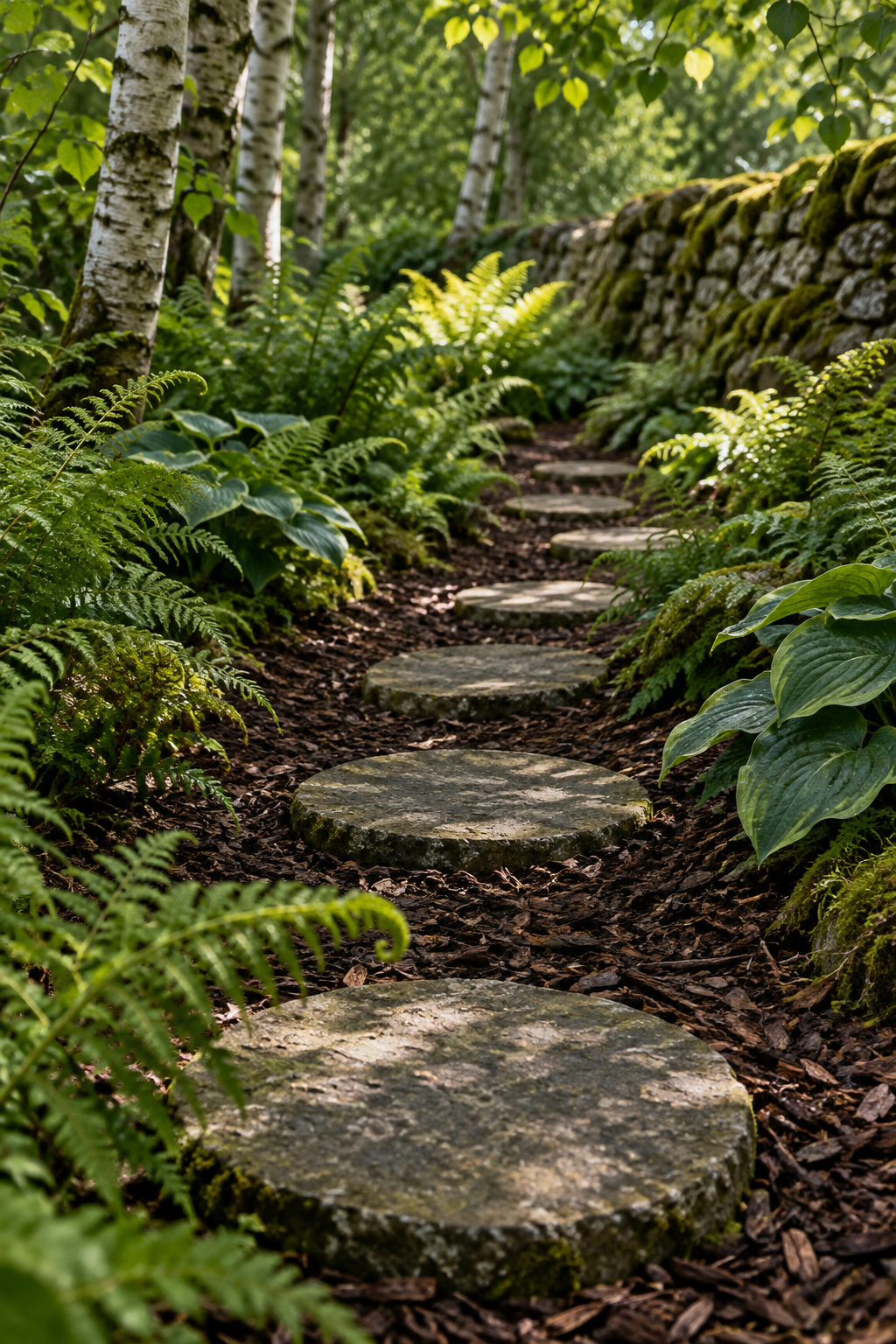
Stepping stones on a path walked weekly
Stepping stones are at their best on exactly this kind of trip. They’re light to handle, cheap, and they put a firm footing in the grass or the bed where the wear actually happens. Their weakness is that they’re islands. A barrow, a bike or a mower bumps over every one unless they’re set flush and close, and small stones wobble and need resetting more often than big ones. They’re also hard to shovel clear in winter. That’s why I keep them off the bin route. Get the stride right and they disappear underfoot, and laying a stepping stone path to your household’s real step is the part worth doing slowly.
The spaces between can be planted, which softens the whole path and holds the soil. Choose by how often each gap is actually stepped on, and before you plant anything, read up on ground cover between stepping stones.
Bark and wood chip, and the top-up they ask for
Bark is the softest, quietest path there is. It’s springy underfoot, and it suits a route through a shady corner or under trees. It’s also hopeless as a main route. In shade it breaks down into a greasy mush that gets slippery, and on the Access Board’s surface tests wood chips came out only moderately firm, acceptable for limited distances. It needs an edge, or it scatters into the lawn, rides indoors on shoes and paws, and floats off in a storm.
And it goes away. Bark breaks down and needs regular topping up; how often depends on the material, the climate and who you ask. Budget for that, because a bark path keeps asking for work long after it’s laid.
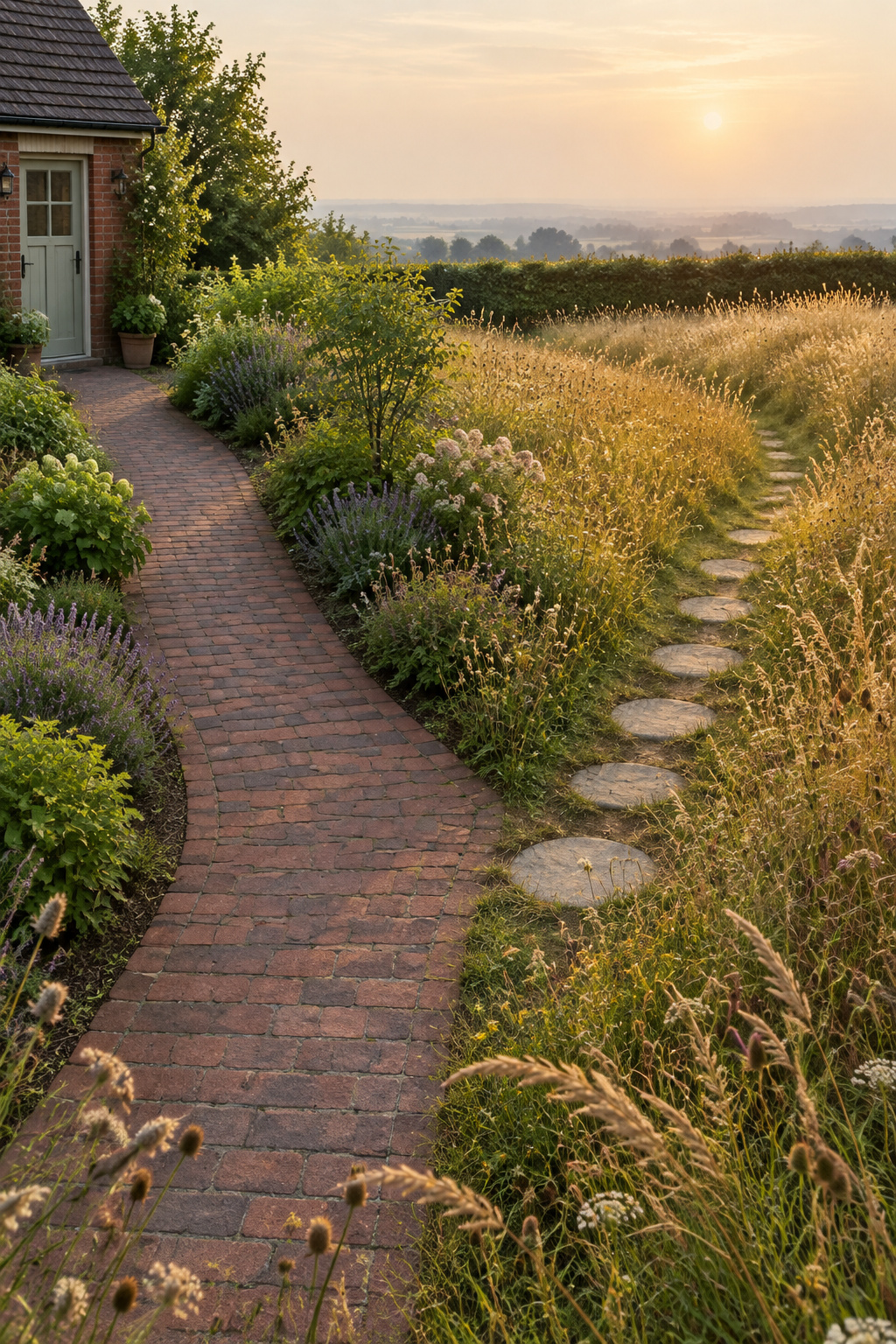
If you want a style, let the trip choose it. A cottage garden path suits angular gravel held by a firm edge; a formal one suits clay brick pavers in a tight pattern. Mown grass, kept short, is one of the cheapest wanders there is, as long as nobody pushes a barrow down it every day.
Paths that climb: when a slope changes the answer
On a slope, the path has a second job it never asked for. Rain runs downhill along the lowest, firmest line it can find, and on a hillside that line is usually your path. Gullies start wherever the surface is loose, so on a hillside what stays put matters more than how the path feels to walk.
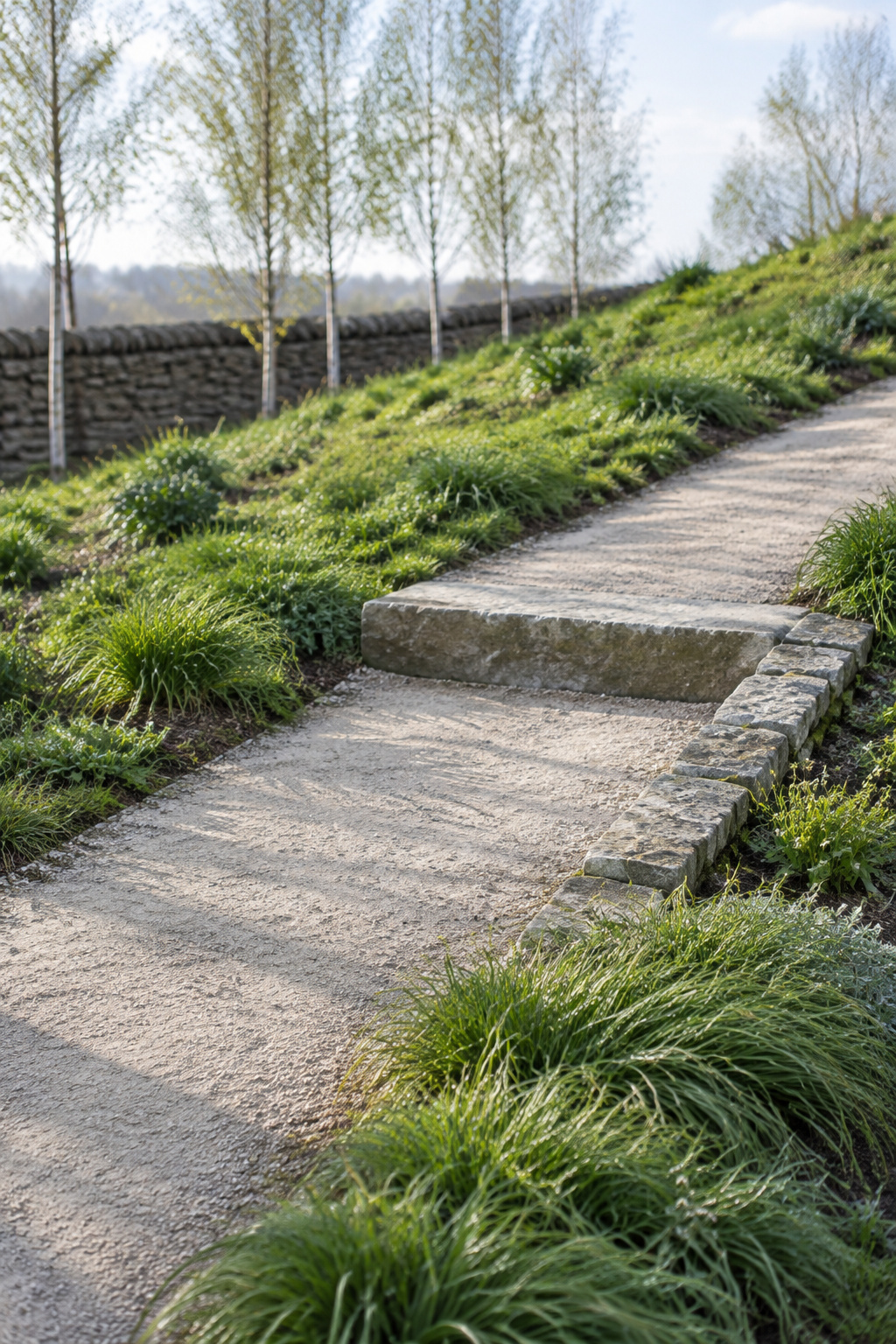
That moves the loose surfaces even further down the list. Gravel on a steep run is the first thing a heavy rain carries off, and bark goes with it. A daily route that climbs needs a firm surface and a planned way for the water to leave it, and the climb itself may need to become steps, a ramp or a path that zigzags across the bank. Pavers will sit on a fair incline but don’t make good steps; stone, concrete or timber do that job better.
The order matters more here than anywhere else in the yard. Settle how the water gets off the path before you settle the surface, and only then work out the climb. Everything from the rise of each step to where the runoff exits is covered in building a path on a slope, and I’d read it before buying a single riser.
Paths after dark: light the turns, not the whole route
Think about the walk you actually make after dark. Out to the bins on a winter evening, back from the gate with the shopping, to the shed for something you forgot. Nobody strolls the wander at night in January. The after-dark trip is almost always the daily route, which is one more reason to get that route right.
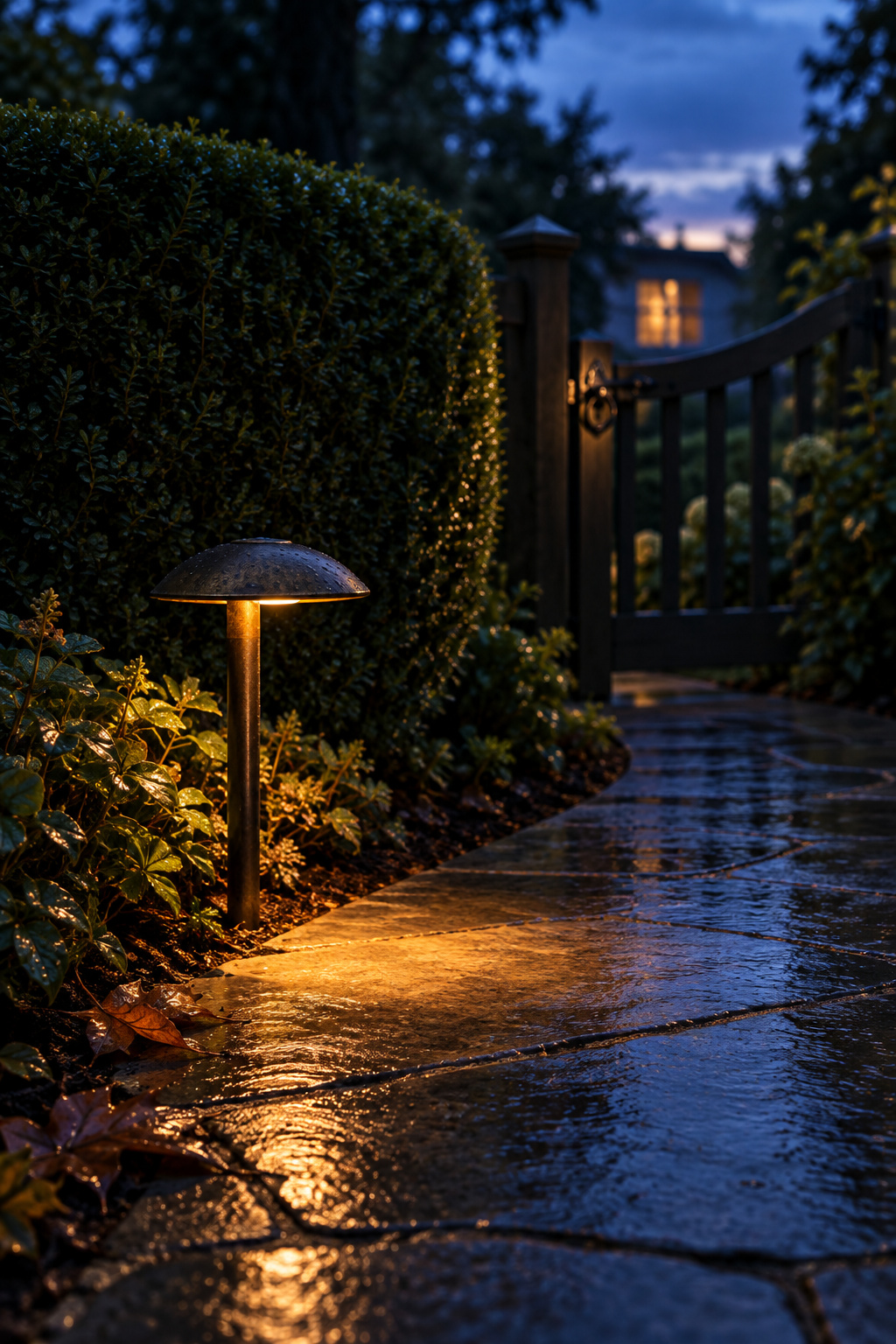
Put light where footing changes: the step down from the back door, every change of level, the turns and the gate. A straight, even stretch between them usually needs far less. The dark-sky lighting principles put it in three words worth borrowing: useful, targeted, low. Each light should have a job, be shielded and aimed down so the light stays where it’s needed, and be no brighter than the job requires. Step lights especially should face down. Aimed out at eye level, they throw glare across the very edge you’re trying to see.
Warm, low light at those few points beats a row of stakes down both sides. How many, how bright and how warm is covered in lighting a garden path.
Garden path ideas compared: each surface against the job it does best
Here’s every common surface side by side, judged by the trip it suits. Cost bands include edging and base.
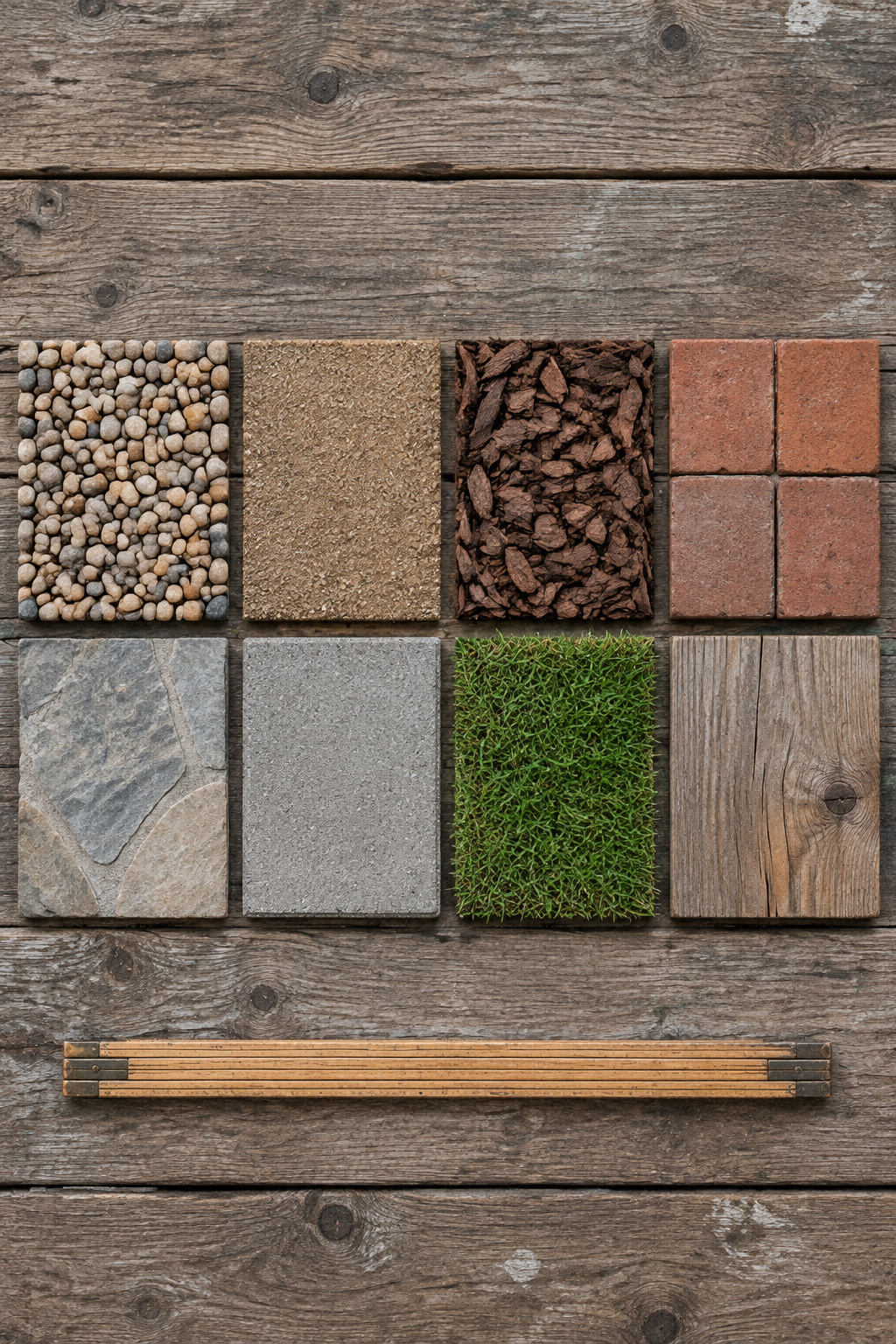
| Surface | Feel underfoot | Wheel-friendly | Upkeep | DIY difficulty | Cost band |
|---|---|---|---|---|---|
| Stepping stones | Firm, one stride at a time | Poor, bumps at every stone | Reset wobbly stones; algae in shade | Easy but slow, each stone fitted | Low |
| Loose gravel (pea gravel, crushed stone) | Crunchy, shifts underfoot | Poor, wheels sink and drag | Rake back; top up now and then | Easy, heavy shovel work | Mid |
| Compacted decomposed granite | Firm, like a trail | Good once compacted, best stabilized | Top-dress as it wears; muddy in wet shade | Moderate, needs a plate compactor | Mid |
| Bark or wood chip | Soft, quiet, springy | Poor, weak under a barrow | Regular top-ups; needs edging | Easiest, no base | Low |
| Brick (paving grade) | Firm, good grip | Very good, especially herringbone | Re-sand joints; weed | Slow, many units and a base | High if bought used |
| Flagstone | Firm and natural, uneven if irregular | Fair if large and tight, poor if rough | Clear moss and algae; re-level | Moderate on sand; pro work in mortar | High |
| Concrete pavers | Smooth and firm | Very good | Sweep; re-sand joints | Hard, not a novice job | Mid |
| Mown grass | Soft and cool | Fair when dry, mud when wet | Mow through the season | Easiest, just mow it | Low |
| Boardwalk | Firm, warm | Good if boards are close-set | Clean off algae; boards wear out | Moderate carpentry | Mid to high |
Read it by trip. A daily route with wheels on it belongs on the firm rows: compacted decomposed granite in a dry, well-drained spot, pavers, paving brick, close-set boardwalk or large flagstone laid tight. A weekly wander can take anything on the list, and the soft, cheap rows are often the better choice there.
Two of those bands are softer than the rest. Flagstone and boardwalk sit where the trade usually ranks them, so treat their cells as a rough guide. And a low band doesn’t mean a cheap path for life. Bark’s place near the bottom depends on edging, and on a narrow path the edging costs more than the gravel on it. If you want the actual dollars, foot by foot and year by year, see cheap walkway ideas priced per foot.
Who can lay it in a weekend, and what it asks of you each spring
Bark, mown grass and stepping stones are fair weekend jobs. Loose gravel is mostly shovel and barrow work, heavy but simple. Decomposed granite adds a rented plate compactor. Pavers and brick are where weekends turn into months: the paving industry’s homeowner guide puts the subgrade and base at up to 70% of the labor on a paver job, and the surface you see is the quick part at the end. Flagstone set on sand is surprisingly manageable if your back can handle heavy pieces. Set in mortar on concrete, it’s work for a professional.
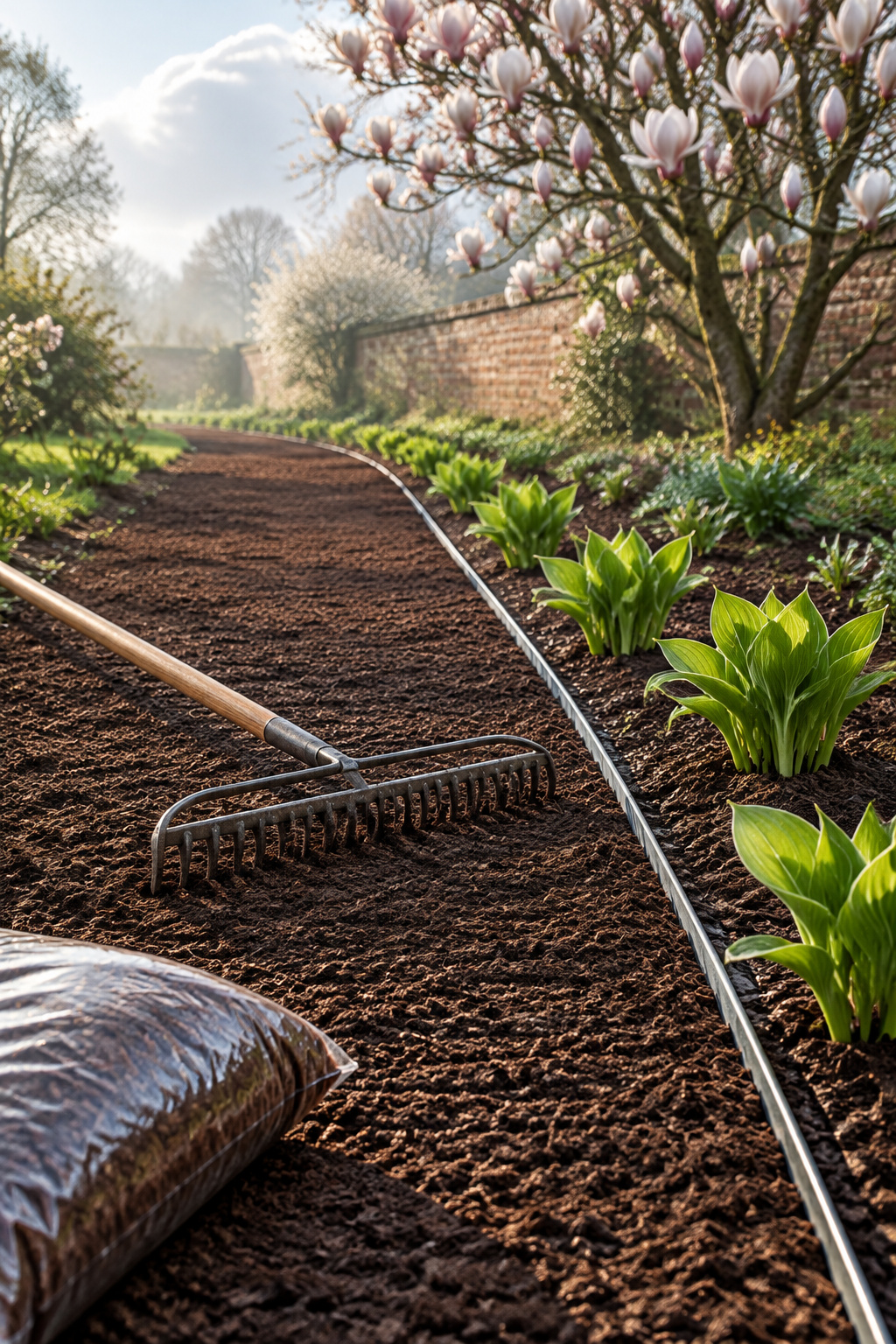
Then there’s what each surface asks of you every spring, before it gives you the summer.
- Loose surfaces get raked back into line and topped up. Bark goes thin and soft; gravel drifts to the edges and into the beds.
- Hard surfaces get swept, weeded, and given fresh joint sand. Walk them after the thaw and look for frost heave, a sunken run or an edge that has crept.
- Timber and shaded stone get scraped clean of algae, which is the real slip risk on both.
Every spring I re-oil the cedar deck my uncle and I built, and I still go round to look at it. Upkeep you’ll actually do belongs in the design from the start. If you know you won’t top up bark every season, don’t lay bark on a route you need.
The rule to take out to the yard, and the mistakes to skip
Sort every path by the trip it makes. Check the ground that trip crosses. Then choose the surface. The daily route, the one with the bins and the barrow and the dark winter evenings on it, gets a firm, continuous surface on dry, well-drained ground. The weekly wander can be bark, stepping stones, mown grass or loose gravel, and often should be, because those surfaces are cheaper, softer and nicer to walk on a Sunday. A soggy path on the flat is a ground problem before it’s a surface problem.
The mistakes I see most are variations on one theme:
- Stepping stones or rounded pea gravel on the route to the bins.
- Topping up a soft path every spring without asking where the water is coming from.
- Bark laid with no edge, then raked out of the lawn for years.
- House brick used as paving because the pile was free.
- Choosing every path by how it will look from the house, rather than by how the household will actually walk it.
The bin is still the fairest test. If it rolls to the curb the morning after a long rain without a wheel sinking, the route has the surface it needs. If it doesn’t, the trip is telling you what the path should have been, and everything else in the garden can wait.