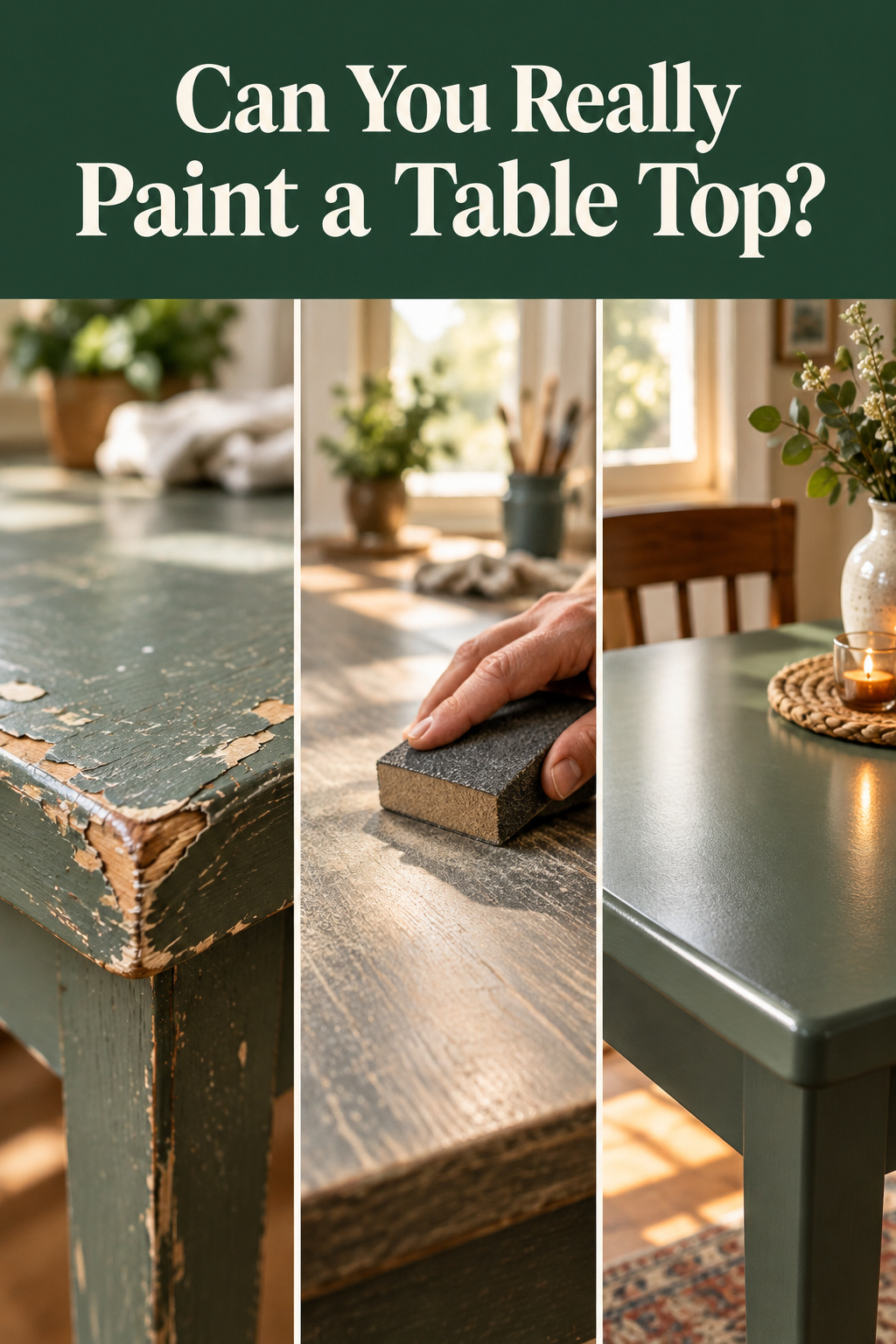
Read enough about painting a dining table top and the sources start arguing with each other. The forums say never. Paint the base if you must, they say, but the top will chip and everyone knows it. Then you open Benjamin Moore’s data sheet for its Advance enamel and find an instruction about when to return “shelves/tabletops to service.” General Finishes recommends one of its topcoats for “high-use surfaces like kitchen cabinets and table tops.” Manufacturers don’t write service instructions for a use they think is impossible. One camp is repeating a rule; the other is describing a process.
TL;DR
- The rule is really “don’t paint the top casually.” Documented failures trace to three skipped steps (paint put into service before it cures, wax or no topcoat, no scuff-sand over the old finish). Paint as a material isn’t the cause.
- Dry is not cured. Benjamin Moore Advance is dry to the touch in 4–6 hours, shouldn’t return to tabletop service for at least 5–7 days, and takes up to 30 days to reach full hardness.
- Painting the top is the right call when the wood cannot be refinished again, most concretely a damaged veneer top, where sanding is the risk and no help as a fix.
The Rule Everyone Repeats About Painting a Dining Table Top
“Never paint the top” gets delivered as though it were physics. On the DoItYourself and Woodworking Talk threads, though, the question comes in near-identical form every time: can you paint a table top, and will it chip? The askers treat it as open. Only the answerers treat it as closed.
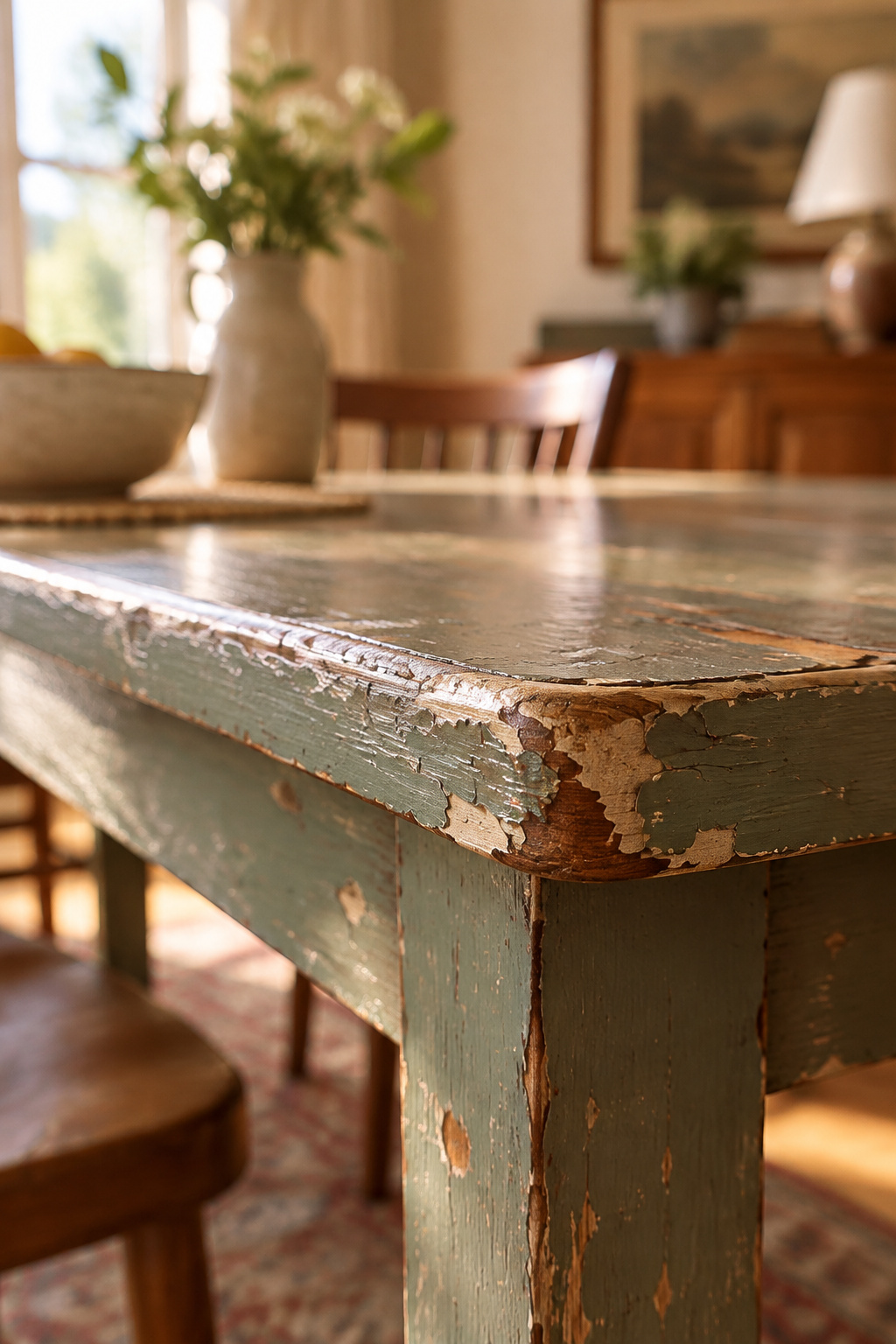
The rule has a working past. A wood top can be scrubbed, sanded and re-oiled, so it forgives. Paint forgives less, and the caution made sense. Somewhere along the way “paint needs more care on a top” hardened into “paint fails on a top,” and the evidence doesn’t support the second claim. If you are still deciding which half gets the color, the difference matters. It turns the top from a forbidden option into a demanding one.
Melange Paints’ adhesion-troubleshooting guide lists what sits behind peeling, lifting and chipping on furniture: contamination (wax, polish, cooking residue, body oils), inadequate sanding or deglossing, too little dry or cure time before handling, and incompatible products layered on each other. Not one item is “it was paint.” Painting the Past, a furniture-painting supplier, is blunter: the issue “is rarely the final coat. It usually starts with what happened before you painted.”
Why Most Painted Table Tops Actually Fail
Three causes recur across every source I could find. Each is a decision someone made rather than a property of the tin:
- The top went back into service before the paint cured. Dry to the touch and cured are different states, and a table put to work at the first takes impressions from plates, elbows and hot mugs.
- The topcoat was wax, or nothing. General Finishes says wax is fine for a decorative piece that sees light traffic and “absolutely not strong enough for tables, kitchen cabinets, or other surfaces that will see frequent use.”
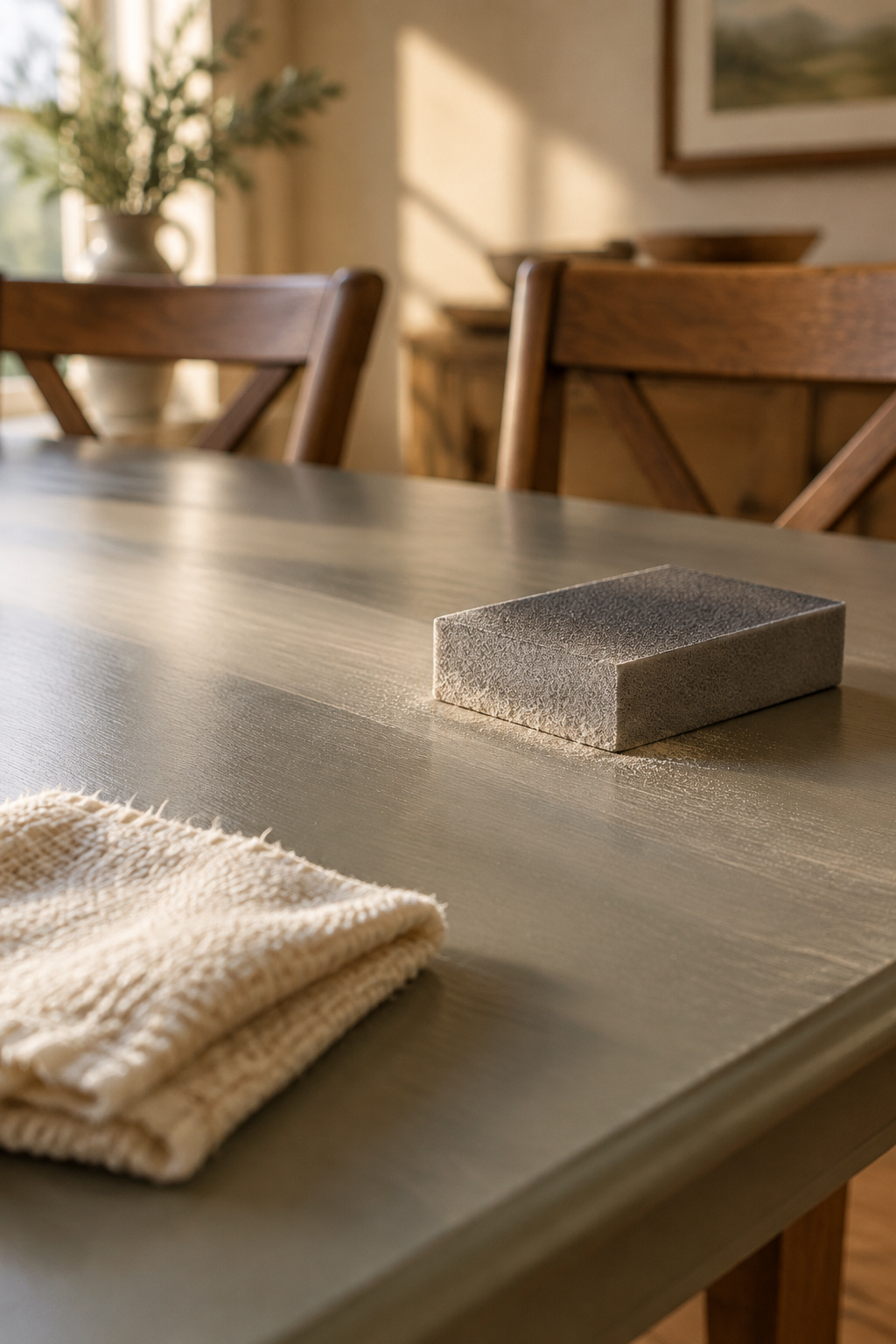
- The old finish was never scuffed. Paint over a sound, glossy finish needs mechanical grip. A professional refinisher’s sanding guide is plain that painting over a sound existing finish never requires stripping to bare wood. One scuff pass to dull the sheen gives the paint what it holds on to.
The third cause cuts against the myth from the other side. People who fear paint on a top often strip everything first, which risks the wood more and grips no better than dulling the sheen properly.
Cure Time: The Step Everyone Skips
The mechanism is simple. Waterborne and alkyd enamels keep hardening for weeks after they stop feeling wet. The film looks finished but is still soft enough to print. On my bench the tell is the faint drag a thumbnail leaves in enamel that is dry but not cured, and a dinner plate leaves the same mark.
The manufacturers publish the windows, and they run longer than most people wait:
| Paint | Dry / recoat | Before tabletop use | Full cure | Source |
|---|---|---|---|---|
| Benjamin Moore Advance (waterborne alkyd enamel) | Dry to touch 4–6 hr; recoat 16 hr | At least 5–7 days before tabletop service | Up to 30 days to full hardness | Benjamin Moore technical data sheet |
| Dixie Belle Chalk Mineral Paint / Silk All-In-One | Dry to handle about 24 hr | Gentle use only: no hot or wet objects, no dragging | About 21–30 days | Dixie Belle Paint Company |
| CeCe Caldwell’s furniture paint | Not stated here | Up to 6 thin coats advised for tabletops | About 4 weeks (30 days) | CeCe Caldwell’s Paints |
I would plan around Benjamin Moore’s figures. They come from the maker’s data sheet, and independent painters mostly land inside them. One painter’s review of Advance separates the two states cleanly (“curing is different from drying… a fully cured paint means you won’t be able to easily scratch it”) and waits at least 7 days before heavy use even though the can allows up to 30 for maximum hardness. Some users report longer. Treat that as a caution about application and not as the figure to plan around.
The Weathered Door, a furniture painter writing about Advance over several years, describes a piece that “came off too easily” and dinged without much use. She traces it to thin coats and too little cure, because the next piece, painted with more patience, held up. Same paint, different waiting.
The Paints and Topcoats That Genuinely Hold Up
What separates a paint that survives a table from one that doesn’t? Mostly the hardness of the film, and the coatings industry has had a named way of measuring that for many years. ASTM D3363, the pencil hardness test, scratches a coated panel with graded leads from 6B (softest) to 9H (hardest); the hardest lead that fails to mark the film is the coating’s rating. ASTM describes it as useful for “relative rankings for a series of coatings that exhibit significant differences in film hardness,” and that is the comparison a table calls for.
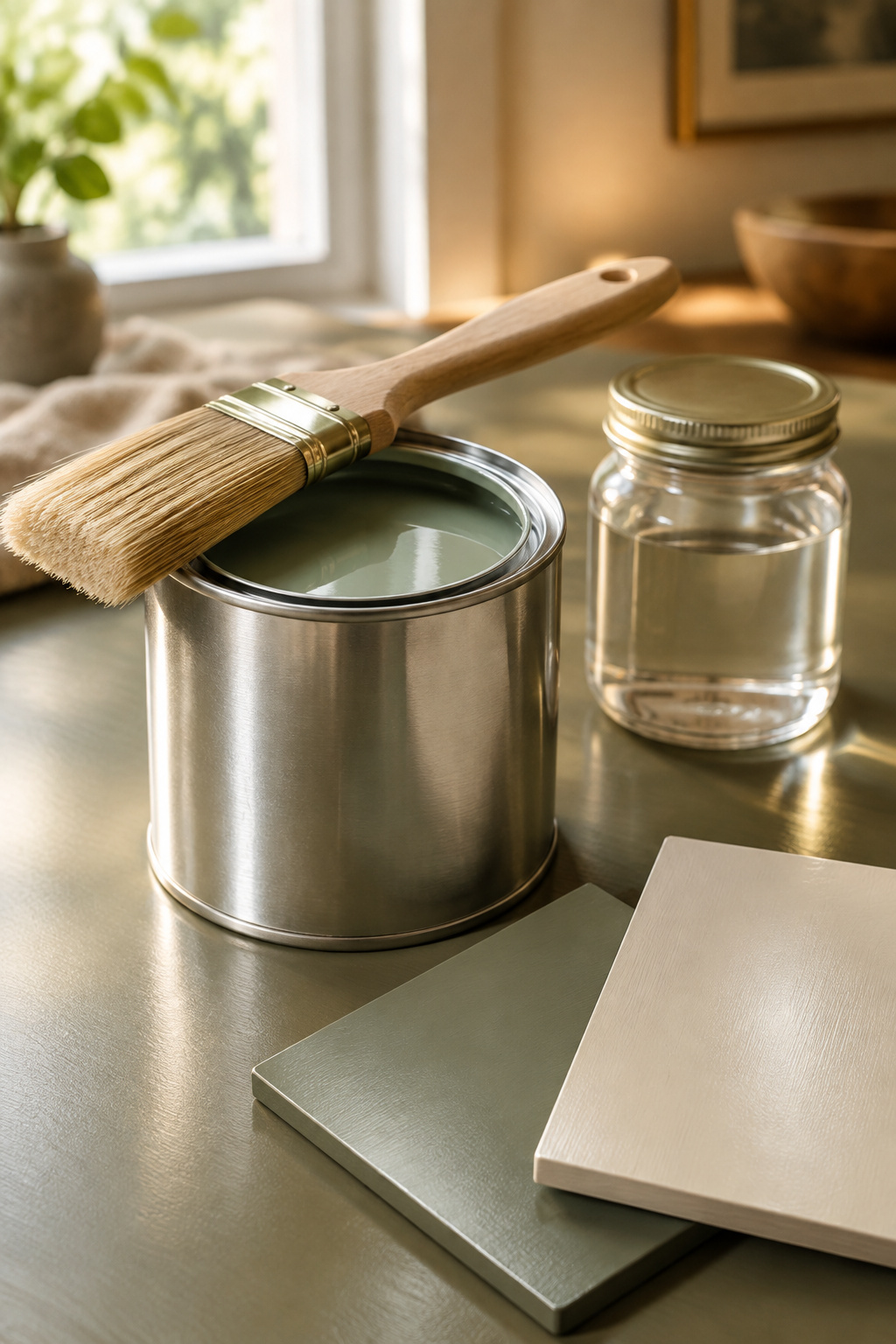
Wall paint rules itself out here. Leftover dining room wall color is a poor choice for a table top.
Reference: Paint and Topcoat Standards for a Painted Surface
The published figures, with their sources:
| Paint or topcoat over paint | Durability standard | Source context |
|---|---|---|
| Latex enamel wall paint | About 2B–HB pencil hardness; “suitable for interior walls but not surfaces subject to heavy use” | Coatings-industry summary (EAH Industrial) of ASTM D3363 ratings |
| Oil-based trim and cabinet paint | About HB–2H pencil hardness | Same summary |
| Industrial enamels | About 3H–4H pencil hardness; 4H or higher named as the target for a high-traffic surface such as a countertop | Same summary |
| Benjamin Moore Advance | “Cures to a hard, furniture-quality finish”; no pencil figure published here | Manufacturer product page |
| General Finishes High Performance (water-based topcoat) | Koenig pendulum hardness 59; Taber abrasion 34.40 mg loss; rated “High” | Manufacturer’s published test figures; recommended for “kitchen cabinets and table tops” |
| Furniture wax as the only protection | “Absolutely not strong enough for tables” | General Finishes FAQ |
| Post-catalyzed 2K conversion varnish | Rated by its maker for tabletops and bar tops | General Finishes; spray-only, separate catalyst, roughly 6-hour pot life, sold to professional finishers |
General Finishes rates its Enduro Clear Poly slightly more durable than High Performance. It still recommends High Performance for table tops because that one can be brushed, and a finish you can apply well beats a harder one you can’t. The 2K conversion varnish marks the ceiling, and it belongs to a spray booth and a professional.
One absence, stated plainly: no source I found tests paint durability on a tabletop specifically. Benjamin Moore and General Finishes class cabinets, furniture and table tops together as one high-use group. The grouping is reasonable, but it isn’t a tabletop test.
When Painting the Top Is Actually the Right Call
My trade leans toward keeping original surfaces, yet I will sometimes argue for paint on a top, and the argument rests on reversibility. A solid top can be sanded back, again and again, for as long as anyone wants to keep doing it. A top that cannot survive another sanding has already lost that option. Paint is then the gentler intervention, since it adds a layer instead of taking one away.
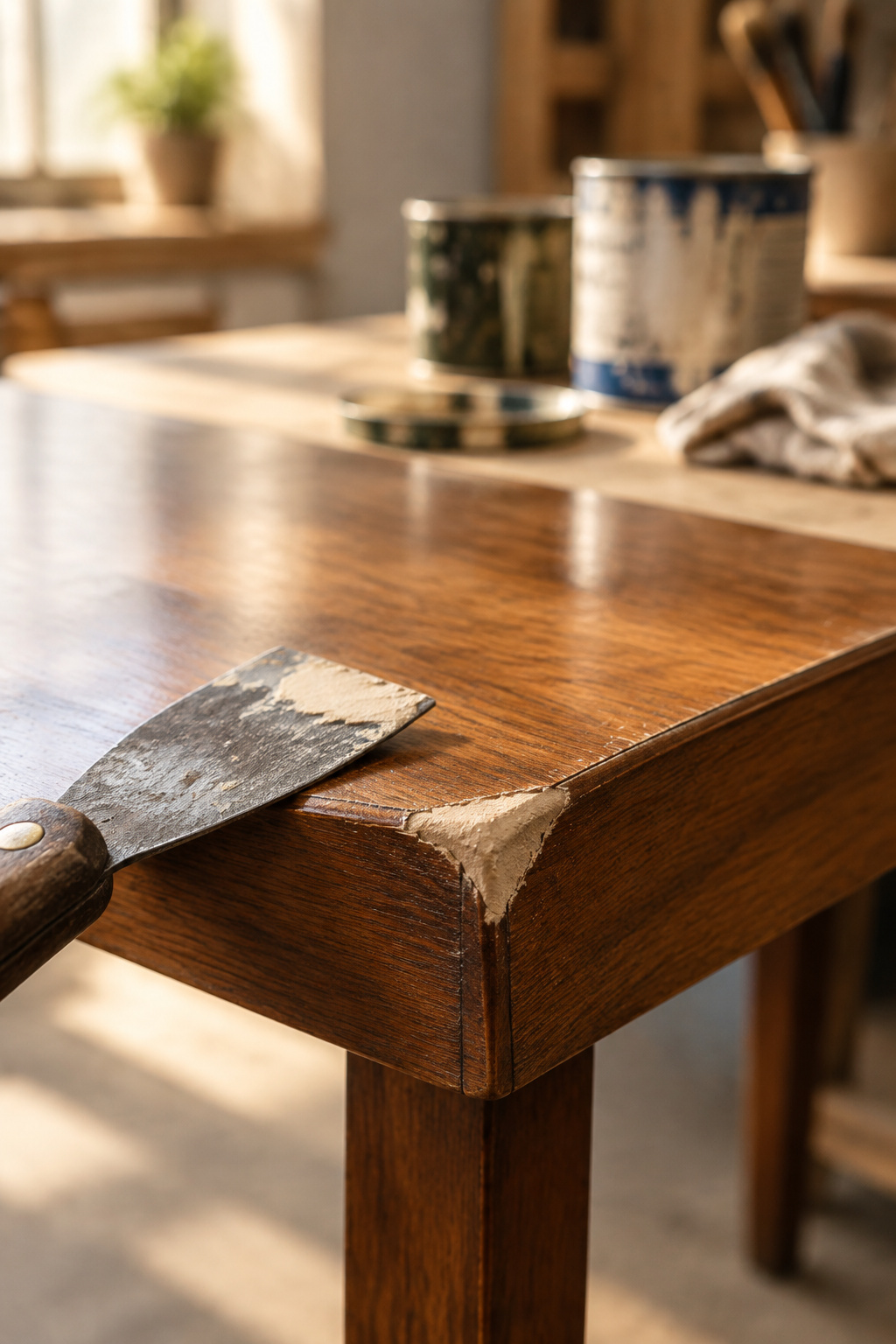
The clearest case is a damaged veneer top. A refinisher at 100Things2Do, who documented work on two veneered tables, states the rule plainly: “once wood veneer is damaged it generally stays damaged,” and she usually suggests paint “as the easiest way to give old pieces new life.” Kray Custom Refinish reaches the same verdict from the repair side. Once chips and cracks are filled, the patched veneer won’t take stain evenly, while paint hides the repair completely. How to tell veneer from solid wood, and how to refinish a veneer top that is still sound, are covered in the articles on identifying veneer and on refinishing a veneer table.
Painting such a top treats it with care, because it leaves the most for the next person.
If You Decide to Keep the Top Wood Instead
Suppose your top is the other kind: solid wood, sound, no filled repairs on the surface. The case for paint weakens considerably there, because solid wood can be sanded back safely in a way a thin face layer cannot.
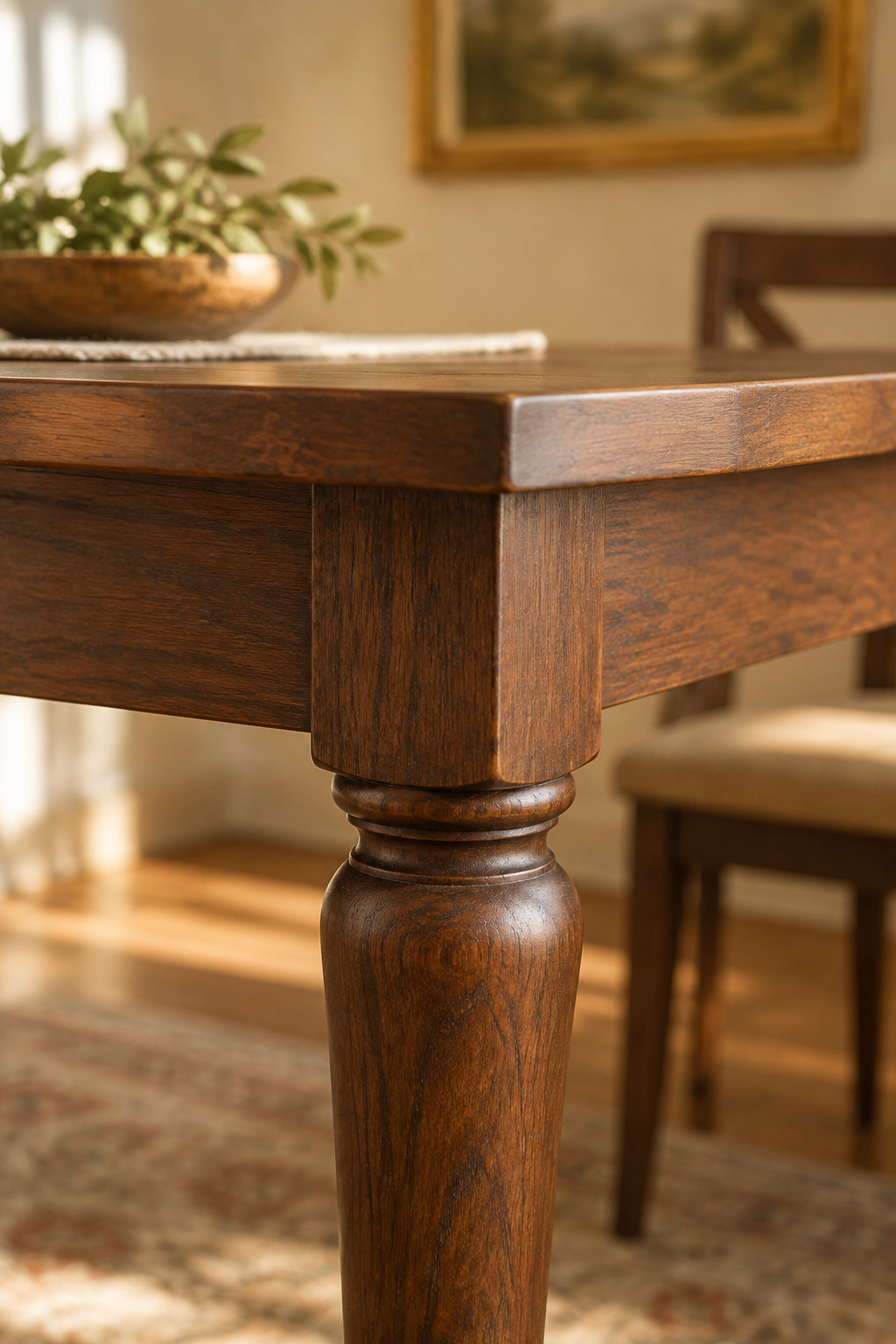
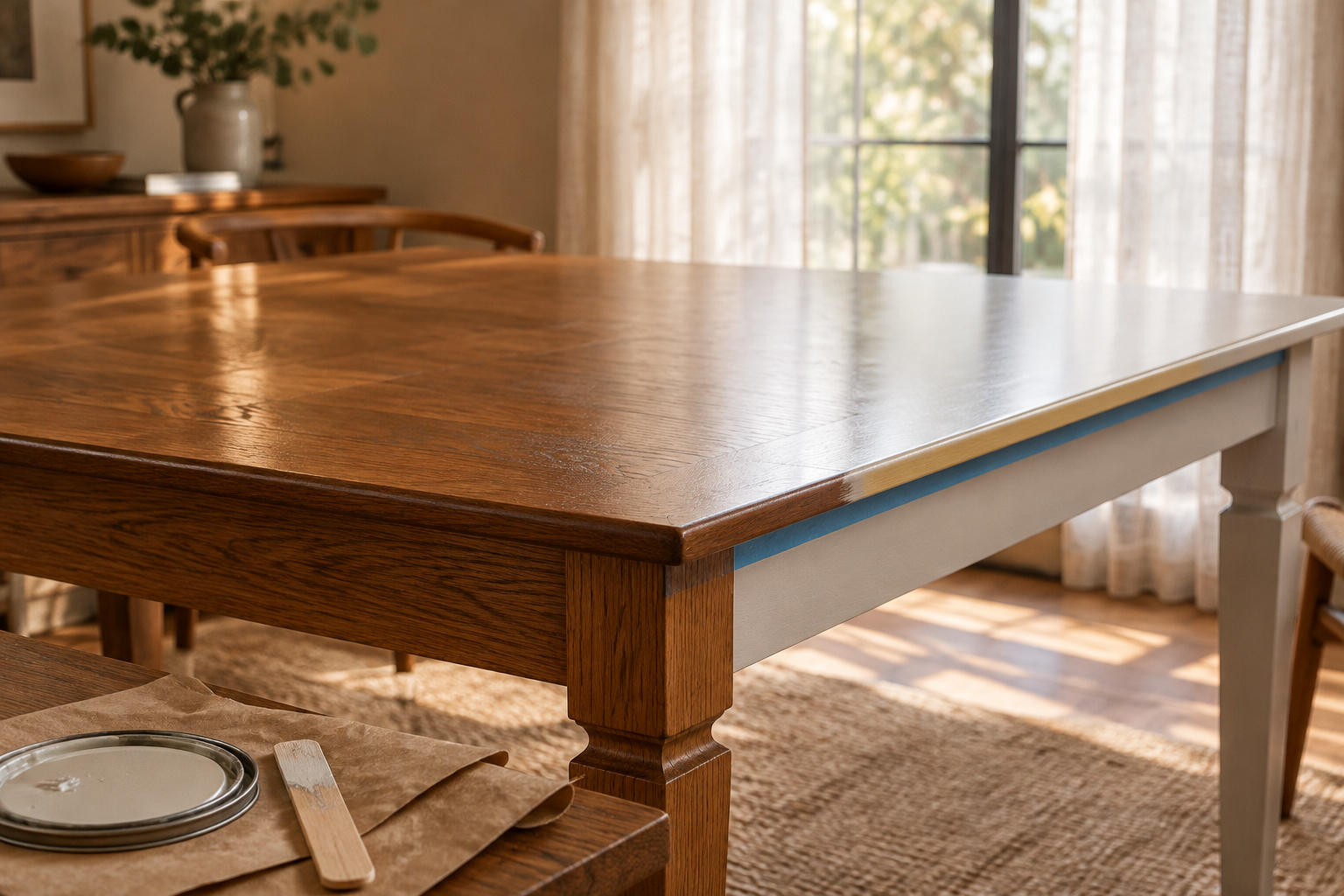
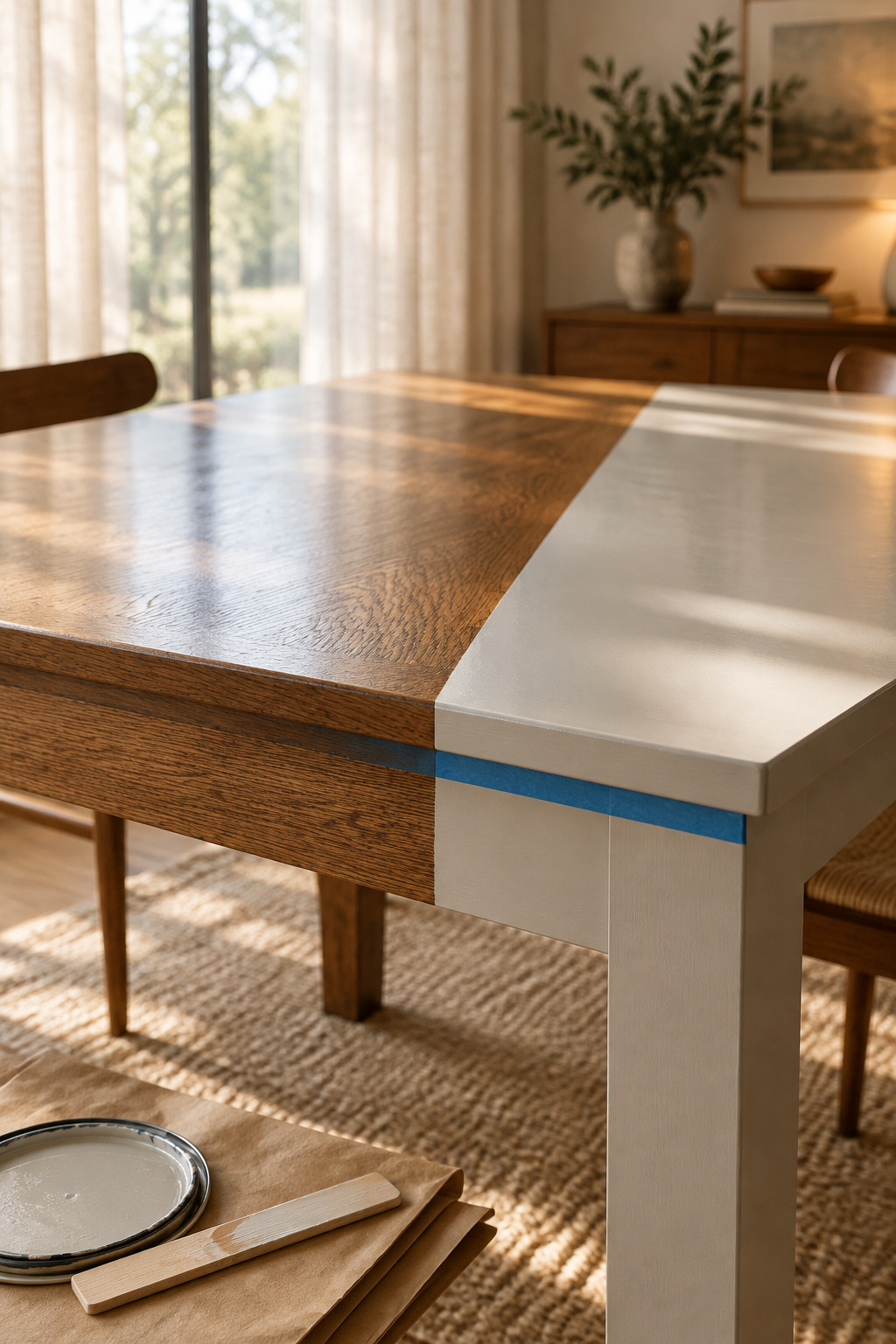
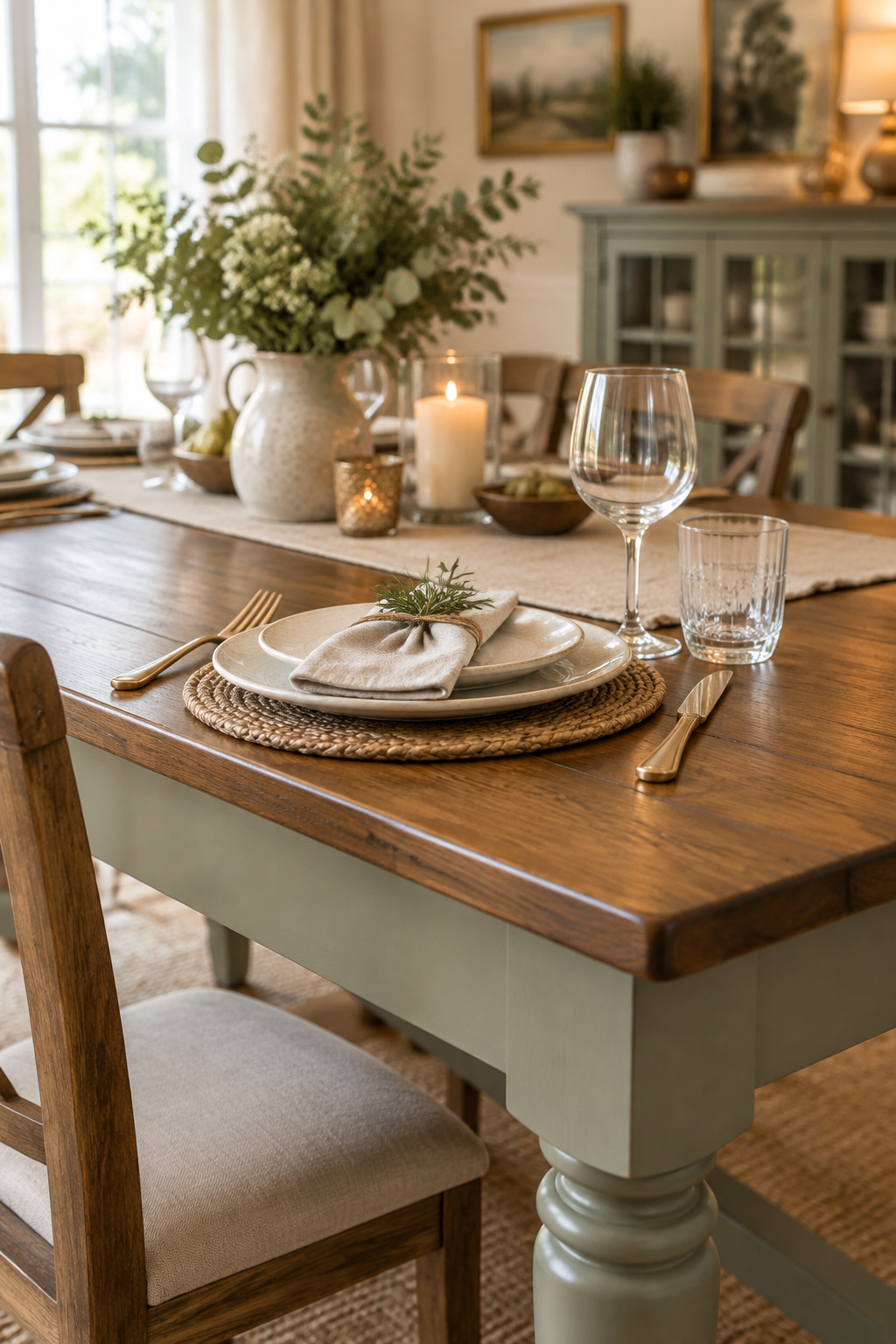
For that table, the answer is the classic two-tone: color where the shoes and chair legs hit, wood where the plates go. The sanding, the stain, the tape line and the waiting are set out in the paint-the-base, stain-the-top method. Painting the top is possible, but a top that can still be refinished is worth keeping refinishable.
The Professional’s Position on Painting a Table Top
So, is “never paint the top” true? No. It’s a sound caution promoted to a law. The corrected version is that paint holds up on a dining table top under specific conditions, and every documented failure I found skipped at least one. These are the rules I would give anyone standing over a table with a brush:
- Use a paint made for furniture or cabinets, not wall paint.
- Scuff-sand or degloss the existing finish for grip. Stripping to bare wood is not required over a sound finish.
- Finish with a hard topcoat, not wax, on anything eaten at daily.
- Wait out the full cure window, not the dry-to-touch one. For Benjamin Moore Advance that means 5–7 days before light service and up to 30 days to full hardness, and the mineral paints take weeks rather than days.
If you would rather protect the wood than cover it, read how the clear coats for a protected wood top compare first.
Still unsure? The cheapest reversible version needs no test board at all. Paint the base now, live with the wood top through a season, and paint the top later only if you still want to. You can always go from wood to painted top next year. Going the other way, sanding a rushed paint job back off, is not a step you can count on, so the order costs you nothing but patience.
FAQ
Can you paint a table top that people eat on every day?
Yes, if the paint is a furniture or cabinet-grade product rather than wall paint, the old finish is scuff-sanded or deglossed first, and a hard topcoat goes on instead of wax. General Finishes recommends its High Performance topcoat for table tops. Above all, give the paint its full cure time before daily use.
Do you need a topcoat over paint on a table top?
In most cases, yes. General Finishes says wax is not strong enough for tables that see frequent use, and that a topcoat gives greater durability over time. A few paints, such as General Finishes Milk Paint, are marketed as self-sealing, though the same maker notes a topcoat still improves durability and cleanability on high-use pieces.
How long does painted furniture need to cure before use?
Weeks, not hours, though it varies by product. Benjamin Moore Advance needs at least 5–7 days before tabletop service and up to 30 days for full hardness. Dixie Belle cites about 21–30 days for full cure, and CeCe Caldwell’s about four weeks. Treat dry to the touch as the start of the wait, not the end of it.