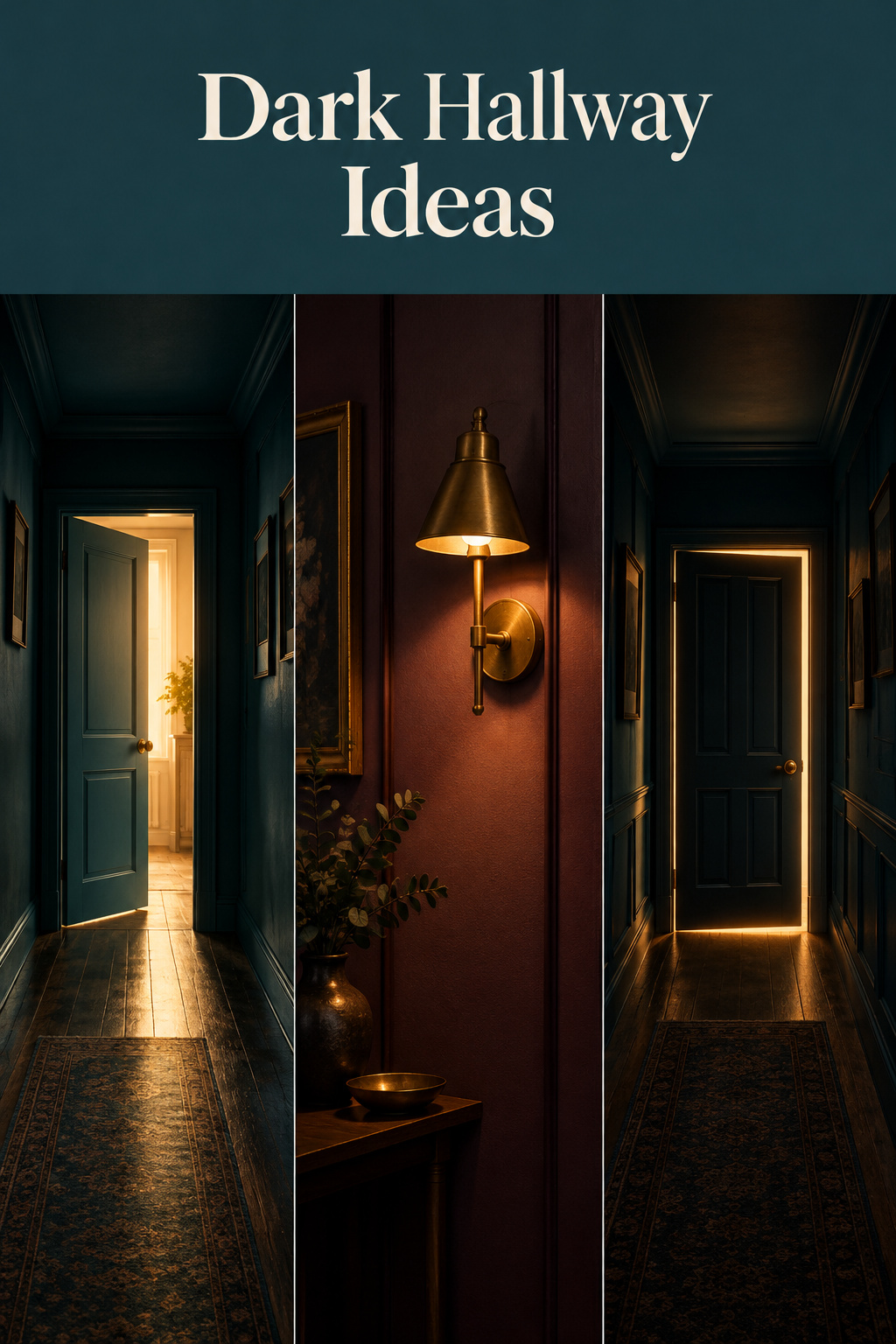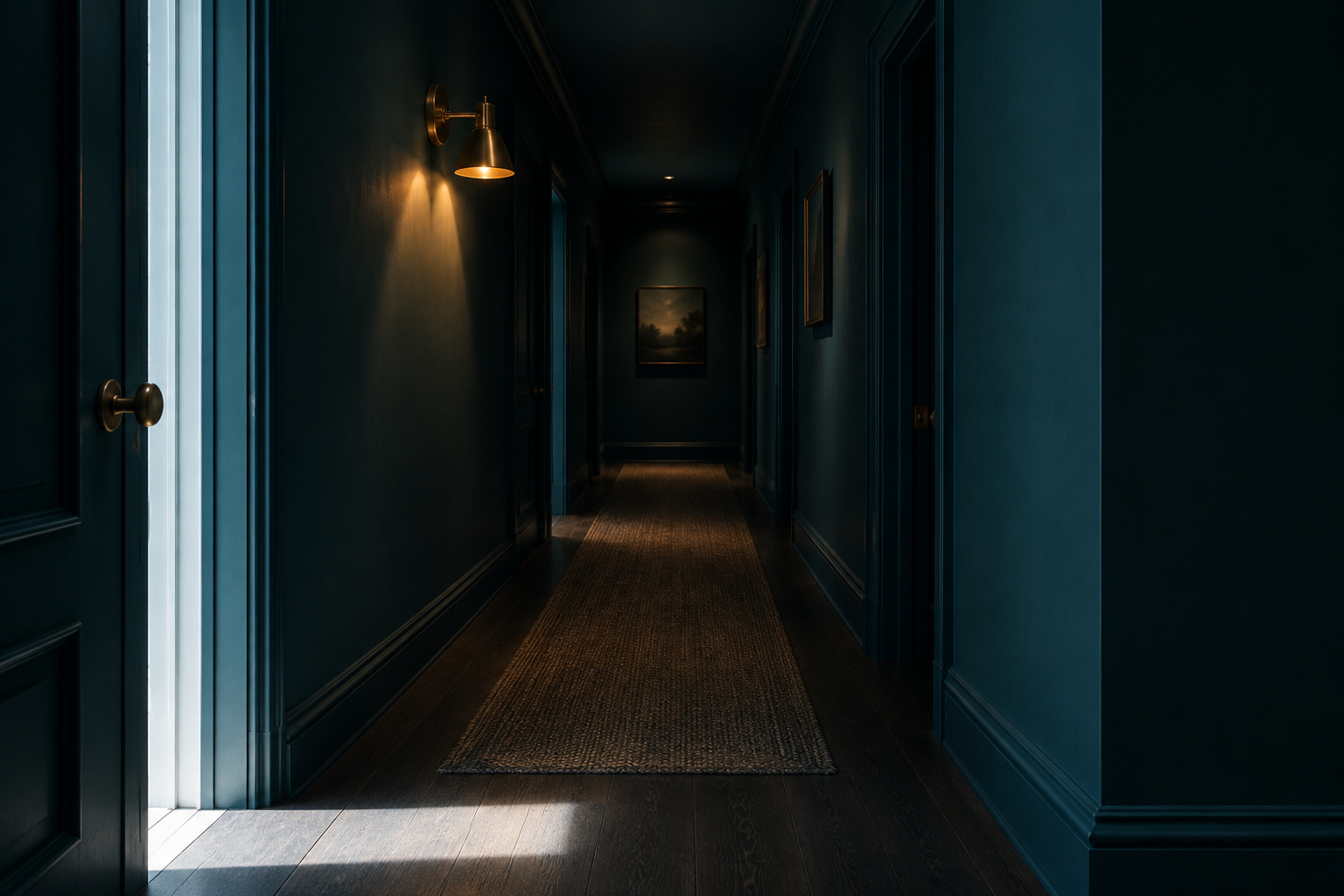

Most dark hallway ideas get chosen standing still, judged like a wall instead of walked like a route. Here’s the version that works: you’re already partway down the passage, shadow pressing in on both sides, when one warm pool of light catches you a few strides ahead. By the time you reach it your eyes have caught up, and the shadow is far less dark than it looked from where you started. A hall can hold you for a beat on the way somewhere, and it will, once you stop treating the passage as leftover space between rooms.
TL;DR
- Your eyes adapt at two speeds. Cone vision settles largely within about 3 minutes, while rod vision keeps recovering for about half an hour. Those are lab figures, so read them as direction. They still explain why the first steps into a dark hall feel darker than the hall is.
- Color follows traffic. Carry the entry’s color and sheen down the passage by default. If you break it, break at an inside corner or a door’s swing line, never mid-wall.
- Light in pools, not a wash, then test. By convention, sconces sit centered at 60 inches (60-66 on 8-foot ceilings), 6-8 feet apart, projecting under about 4 inches. Walk the hall in daylight, at night and at 2 a.m. before you commit to any of it.
Walking From the Door Into the Dark: What Your Eyes Actually Do
The cones at the center of your vision finish most of their dark adaptation in roughly three minutes, across about a 100-to-1 range of light. The rods, which carry you through low light, are slower and cover far more ground, about 10,000 to 1, and take around 30 minutes to be practically done. After a near-total bleach, controlled measurements show no rod response at all for roughly the first five minutes, with half recovery arriving somewhere between 13 and 17. Rafael Caruso of the National Eye Institute puts the whole process at 20 to 30 minutes to reach its maximum.
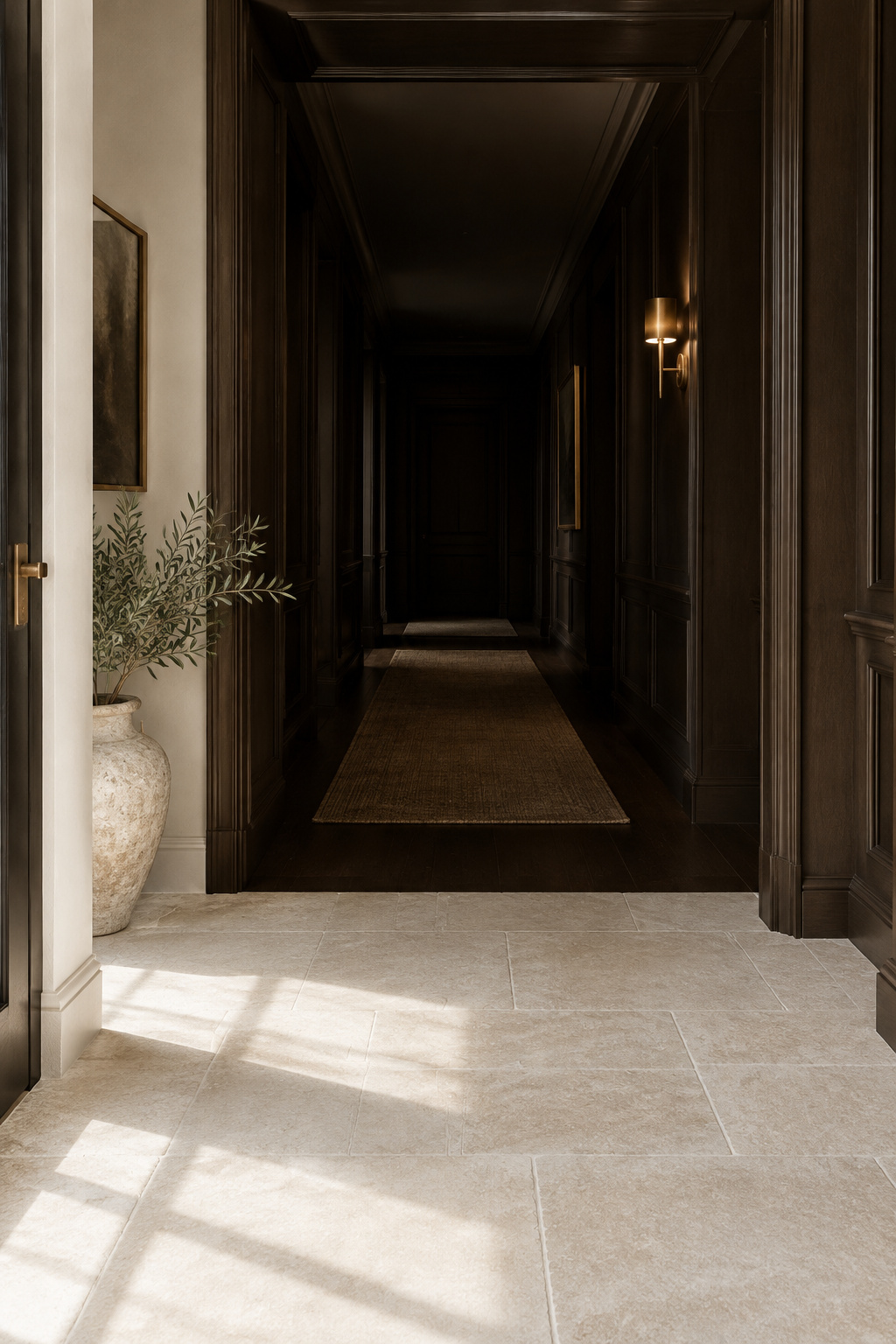
Those numbers come with a catch. They were taken from eyes flooded with light, then recovered in controlled darkness. Nobody has timed a walk from a sunny entry into a dim hallway, and I’m not going to tell you your hall takes 13 minutes to see. What carries over is the direction: a fast cone response first, then a slower rod recovery still running behind it. The first few strides past the door are therefore the darkest the passage will ever feel, and a hall designed for that moment feels intentional instead of gloomy.
Theaters build for exactly this. The American Society of Theatre Consultants describes a sound and light lock: a vestibule between lobby and auditorium, sometimes with two doors in series, dim enough that light doesn’t leak into the house and bright enough to find your way, so your eyes adjust while you keep moving. Your hallway can do the same job without doors or budget.
Going dark is one choice among several. If you’d rather the hall got brighter, How to Brighten a Dark Hallway covers mirrors, lumens and reflective sheens. This article is for the reader who wants the opposite.
Carrying the Entry’s Color Down the Hall, or Deliberately Breaking It
The usual failure goes like this: someone paints the entry deep green, loses nerve at the hallway, and stops halfway along a flat wall, where it looks like the paint ran out. A dark painted hallway starts wherever the entry ends, and how the entry sets up the passage beyond decides what the hall is answering.
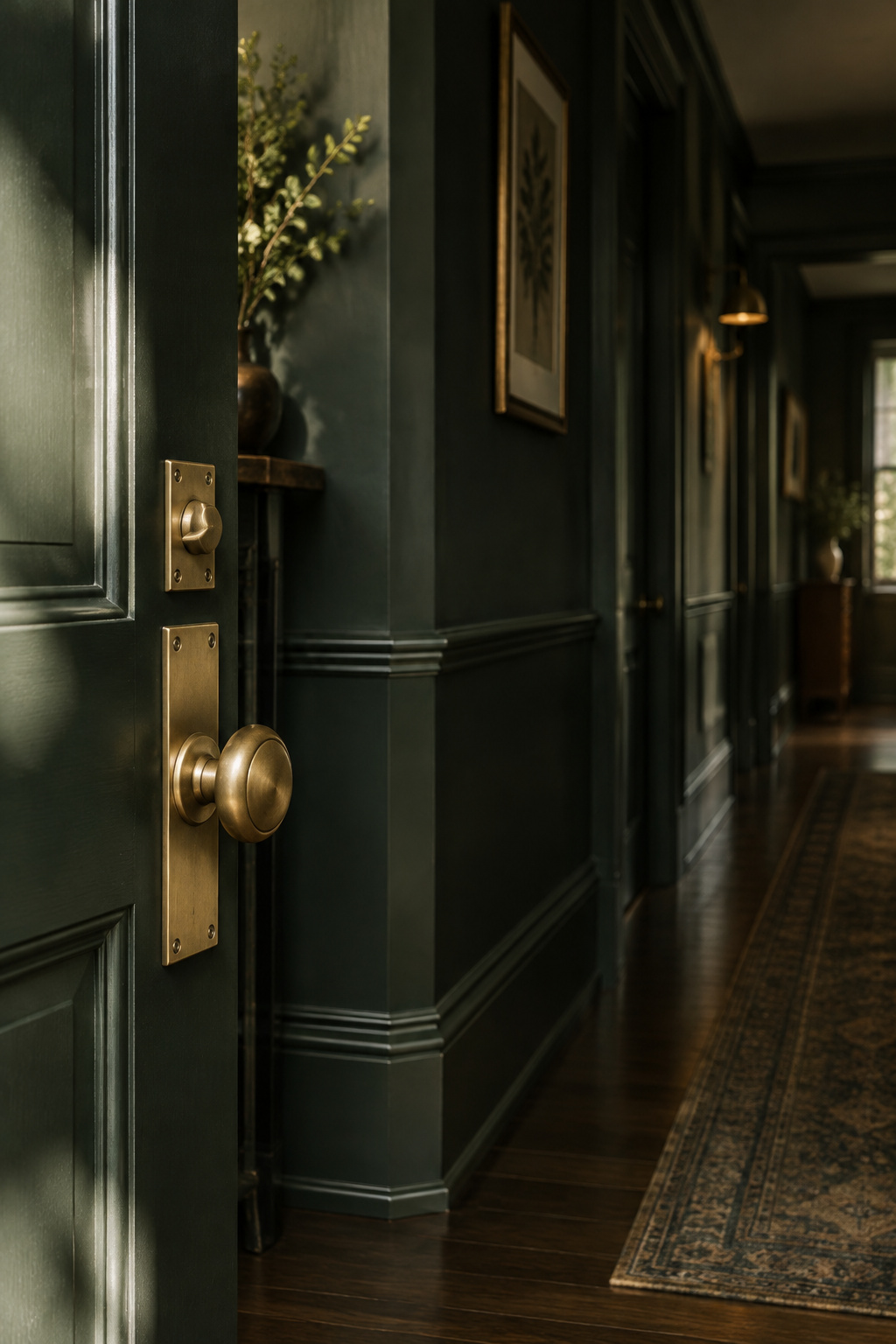
Color consultant Lori Sawaya’s rule settles most of it: “the flow of color always follows the flow of traffic starting from the front of the house to the back.” Where two colors meet at a threshold, the opening takes the color of the room you’re entering, or follows the door’s swing. It’s a painter’s rule, and a good one. Because the hallway sits deeper in the house than the entry, the traffic-flow default is to continue the entry’s exact color and sheen. The choice sorts out like this:
- Continue the color, sheen, trim and doors unchanged when the only place to stop is a flat, unbroken run of wall. Without a seam there is no break.
- Break to a related but distinct tone when a genuine seam gives you somewhere to land: an inside corner, which interior designer Annaliesse Kelly prefers to an outside one because it gives the change a real architectural line, or the swing line of a door.
- Never half-drench. Paint the walls and leave the trim in the old color, and the leftover boundary shows more, not less. A full drench removes the contrast lines; a partial one draws them in.
If I had to choose blind, I’d continue. A break is a second decision you then defend at every corner.
Where the Light Should Fall in a Dark Hallway, and What Stays Unlit
What if the dim stretch is the point? Light control beats brightness in every room I design, and a passage is no exception. Lighting a dark corridor evenly end to end gives you an office corridor that happens to be painted brown. Build a sequence instead: pools of warm light you walk into and out of.
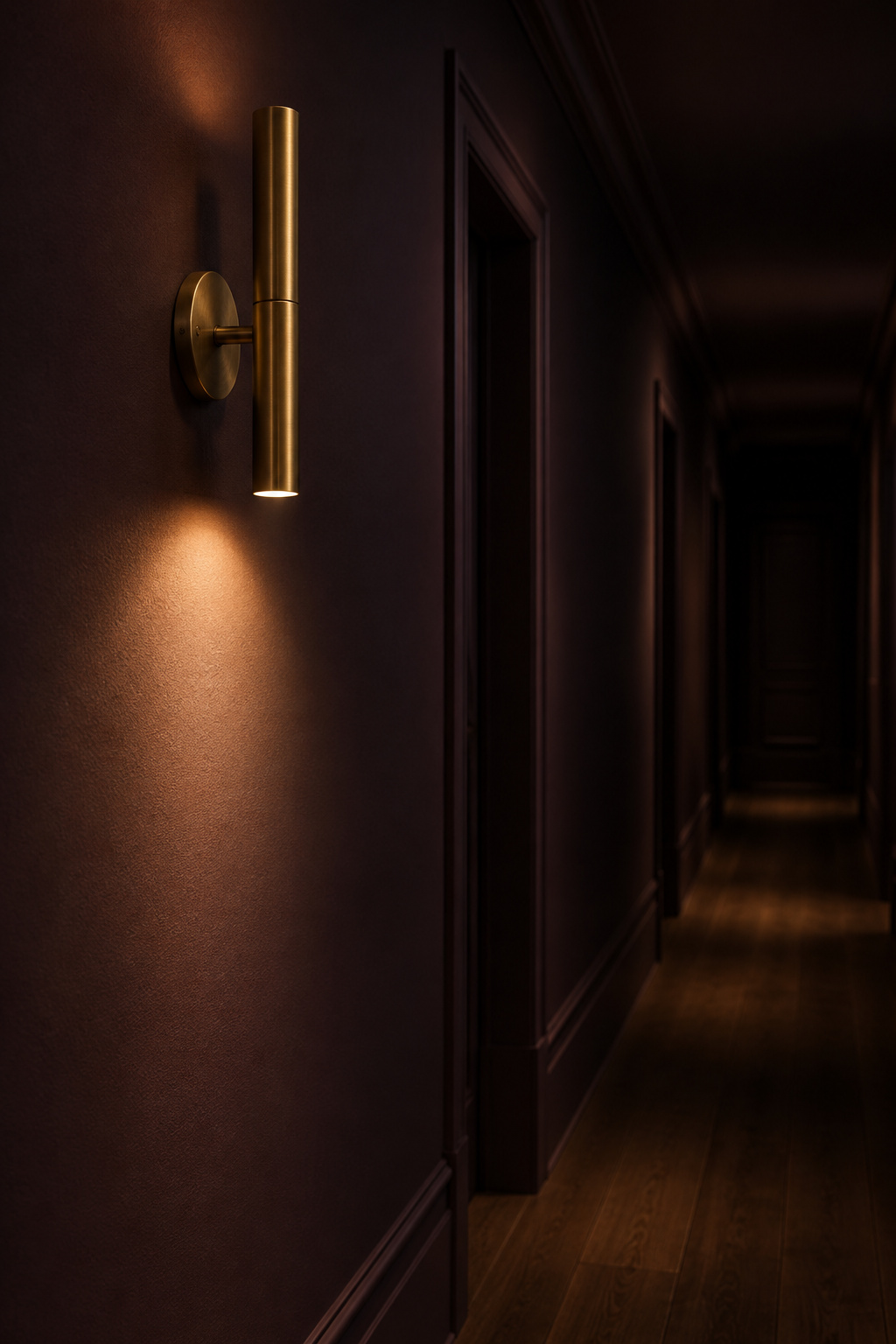
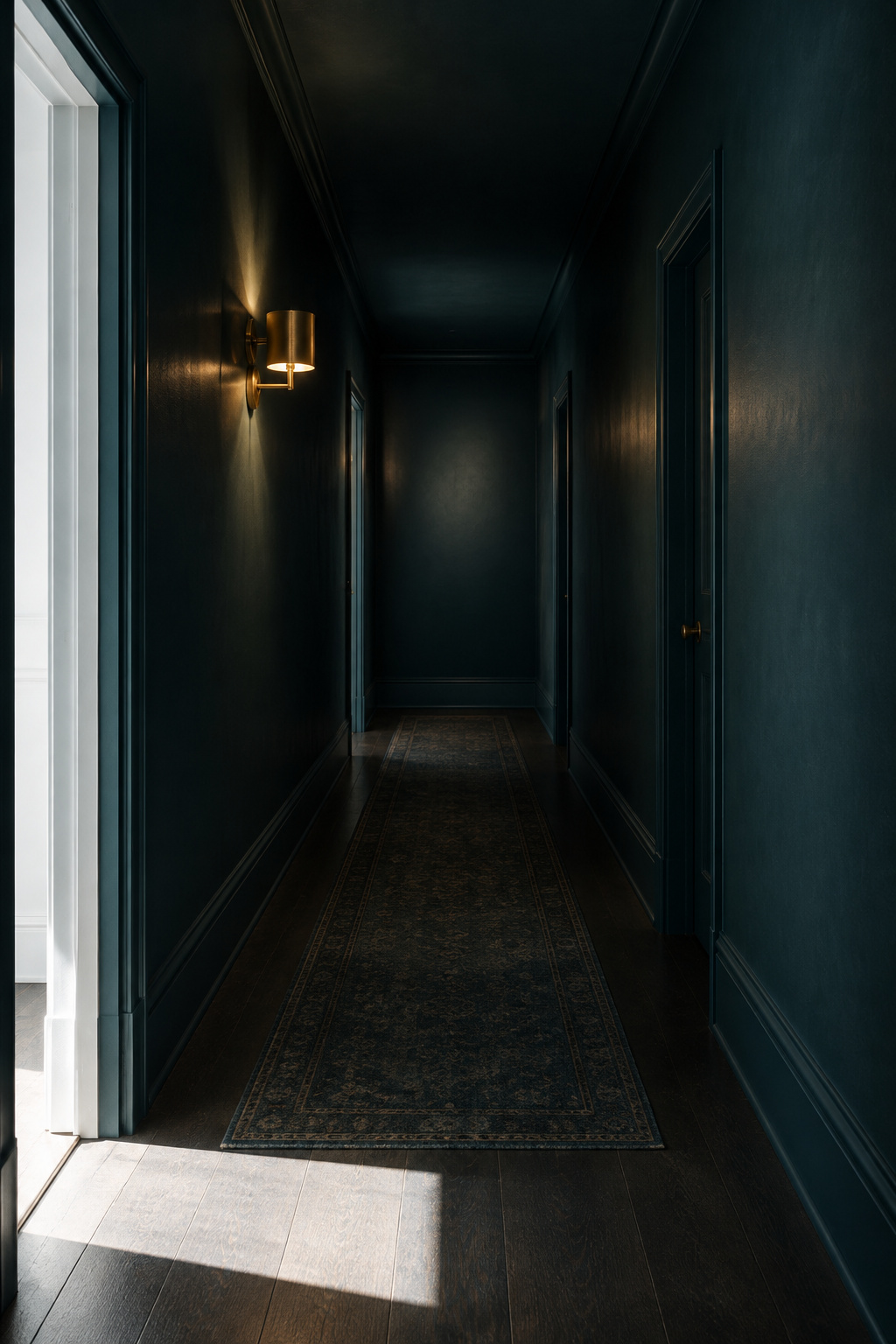
The conventional figures do most of the work. Hallway sconces are centered 60 inches off the floor, with 60-66 inches accepted on 8-foot ceilings and the low 70s at 9 feet. Spacing runs 6-8 feet apart by convention, which lights the mid-wall zone a ceiling fixture misses, and a projection under about 4 inches keeps the walkway clear in a narrow hall. None of it is code. The spacing and projection figures are trade convention rather than a published standard, so treat them as a starting grid.
On any passage longer than 8 feet, that spacing gives you pools of light with dimmer stretches between them instead of one flat wash. Keep the bulbs warm white, 2700-3000K; 4000K and above feels clinical in a confined passage against dark paint. The dim stretches cost you nothing, because by the time you reach one, part of your adaptation has already happened. That’s my reasoning from the physiology above, not a measured result.
The End Wall: The Destination the Passage Is Walking Toward
Stand at the head of your hallway and walk it slowly. The side walls slide past at an angle, glimpsed and gone, while the end wall stays dead ahead the whole way and gets bigger with every step.
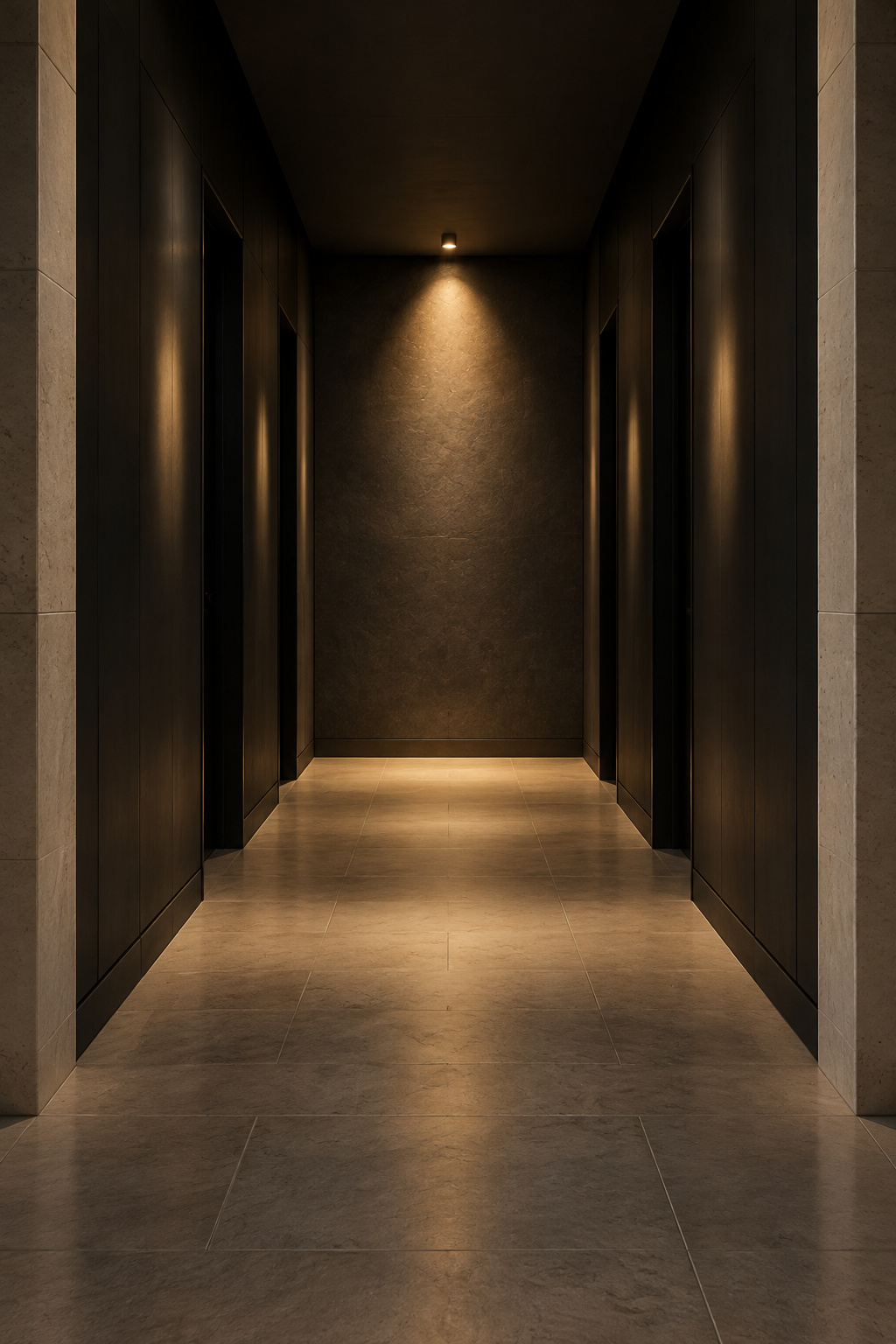
That sustained sightline lets the end wall carry more weight than anything along the sides, whether it’s one strong object, a change of finish or a deliberate pool of light. A theater room gives its screen wall the design attention because every seat faces it. In a hall, every step faces the end wall.
Don’t spread attention evenly down both sides and leave the destination blank. Give the end wall its own light. Choosing what goes there is a separate decision, and what actually goes on the end wall and in the pools of light along the way is where objects get handled.
Doors Along the Run: What Happens at Each Threshold
Every door you pass is a decision, made on purpose or left to chance. In a drenched hallway, a brown wood door left in its original finish becomes a seam, the same visible boundary a half-committed drench creates. Homedit advises painting everything in a bold, deep hallway the same color, trim and doors included, so the doors don’t look choppy against the walls. That’s one design source’s preference, not a rule, but I agree with it for any hall you’ve committed to going dark.
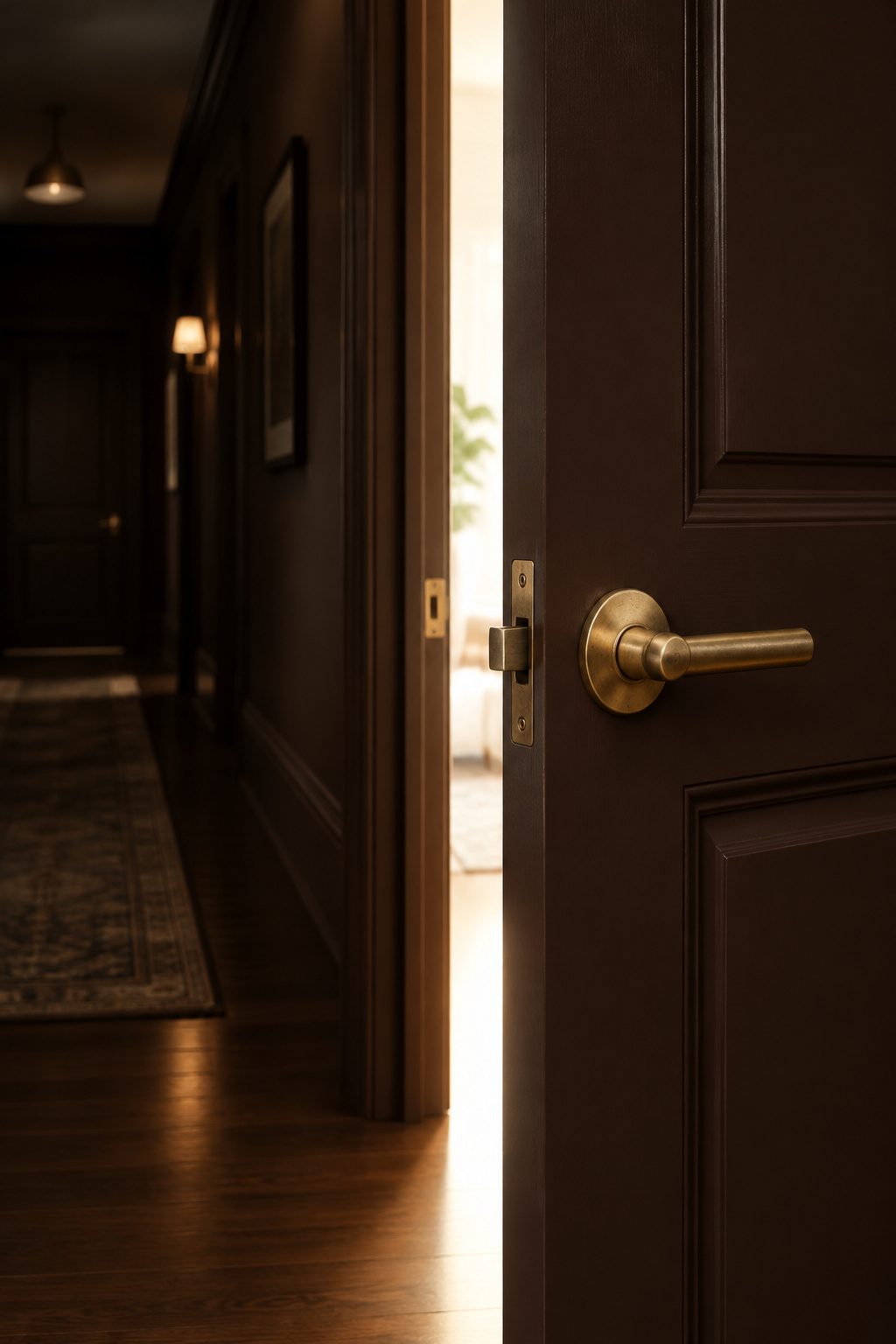
The mechanics of carrying a drench recipe across every door along the hallway belong to the paint side. What matters here is the moment a door opens. Painted to match the passage, a closed door disappears. Open it onto a brighter room and the doorway becomes a bright rectangle in the dark, a deliberate visual event rather than a flaw to correct. Leave it alone: it shows you where the rooms are. (The floor, rug included, is a separate question.)
Three Test Walks: Daylight Arrival, Night Arrival, and the 2 a.m. Walk
Every room I finish gets the same test, three scenes, always the same: a quiet dialogue scene, a bass-heavy action sequence and a dark night scene. Each catches something the other two let through, and I tell everyone to build their own. A hallway deserves one too, and its three scenes are the three times you actually walk it.
Paint testing already works this way. Cobb Brothers advises leaving a sample up for at least three days and checking it at 8 a.m., noon, 4 p.m. and under evening light, because a color changes with the light on it. Give the whole passage the same treatment, painted or taped out, before you commit:
| Walk | What it exposes | Likely fix |
|---|---|---|
| Daylight arrival | Whether the step from the lit entry feels like intentional shadow or an abrupt drop-off | A light pool nearer the door, not a repaint |
| Night arrival, entry lit | Whether the sconces feel warm and sufficient alone, and whether gaps between pools go flat black instead of dim | A low secondary source, not a brighter main fixture |
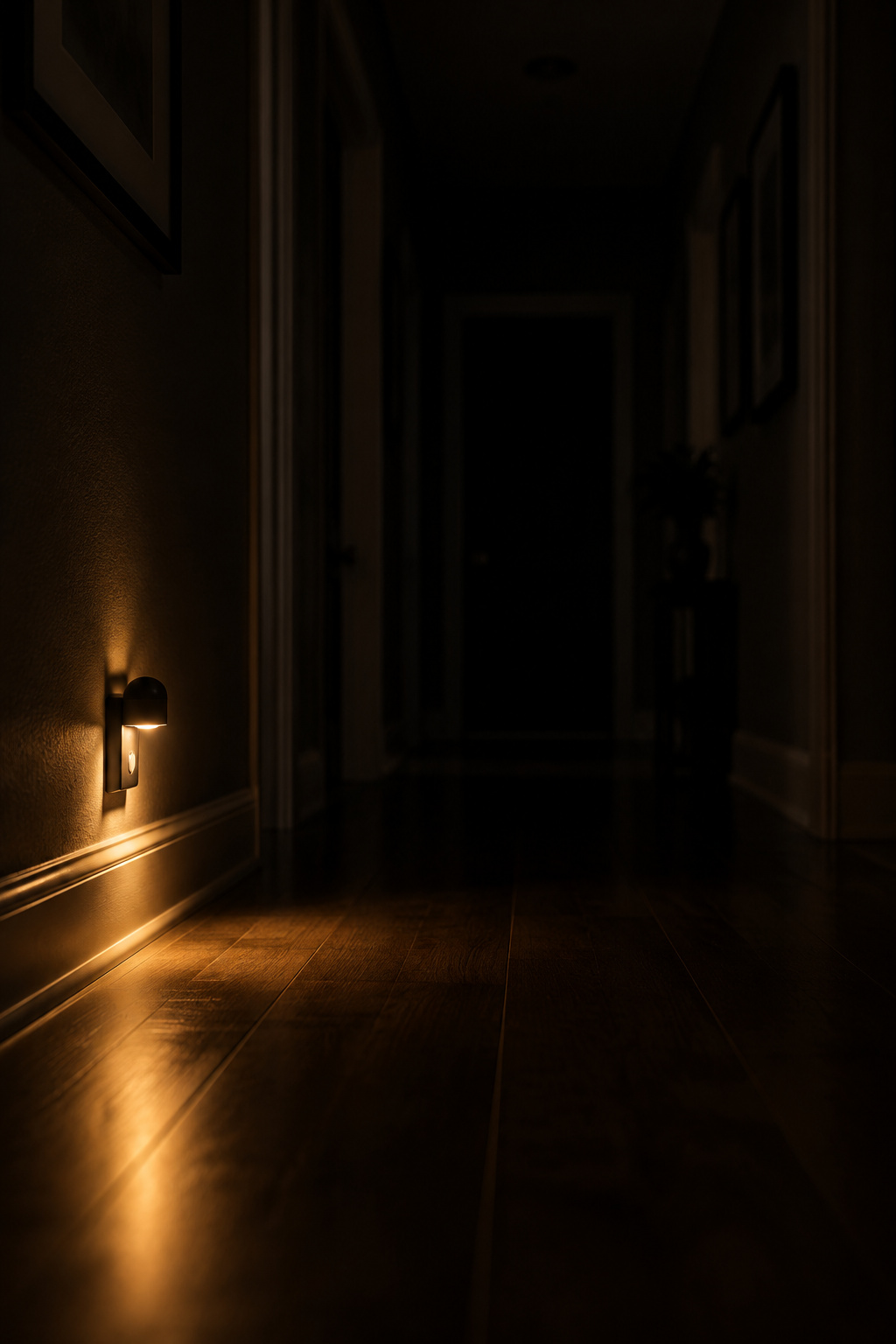
| The 2 a.m. walk | Navigation, not mood: can you get through safely without waking the house | One low-lumen path light, a plug-in nightlight or a sconce dimmed and scheduled |
People skip the 2 a.m. walk, and it’s the only one that tests navigation instead of mood.
One boundary, stated plainly: the eye science here is cited, the color rule is a painter’s rule, and the link between a theater’s light lock and your hallway is mine, a room designer’s reading rather than a finding. No study has walked your passage. Your three walks will.
FAQ
How dark is too dark for a hallway that has no windows at all?
No code or standard sets a minimum brightness for a residential hallway, so “too dark” is a design judgment, not a threshold you can fail. A windowless hall that leans dark works when it has a real light sequence (warm sconces roughly every 6-8 feet at 60-66 inches) and passes the daylight, night and 2 a.m. walks.
Is a dark hallway safe to walk at night?
Yes, once the passage has its own night lighting. What keeps you safe is a light sequence you can navigate by, whatever the paint looks like in daylight. Take your own 2 a.m. walk. If you can’t find your way without waking the house, add one low-lumen path light, either a nightlight or a sconce dimmed and scheduled.
What color should the doors along a dark hallway be painted?
Homedit recommends the hallway’s own color on walls, trim and door faces, or a creamy white if the hall isn’t drenched, because a bare wood or off-tone door becomes a visible seam. Treat that as one source’s design preference rather than a rule. Sheen and paint product are separate decisions, and the door face is yours to decide.