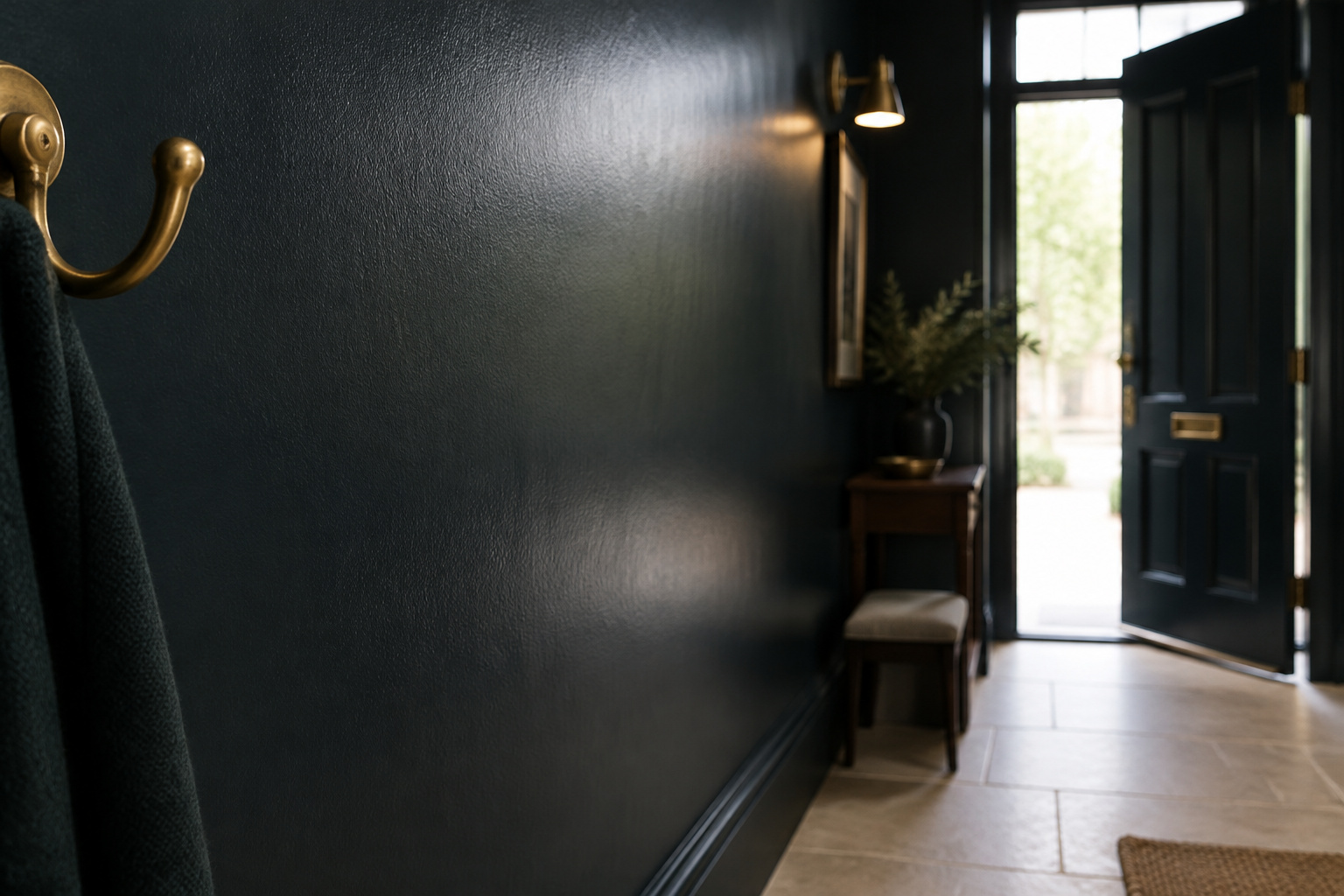

Read enough paint advice and you’ll find two opposite claims in the same paragraph: dark walls hide imperfections, and dark walls show every speck of dust and fingerprint. Ask about black entryway ideas and you usually get “dark hides dirt” on its own, as if it were settled. Both claims are true. They describe two different kinds of mark, and an entry collects both every day.
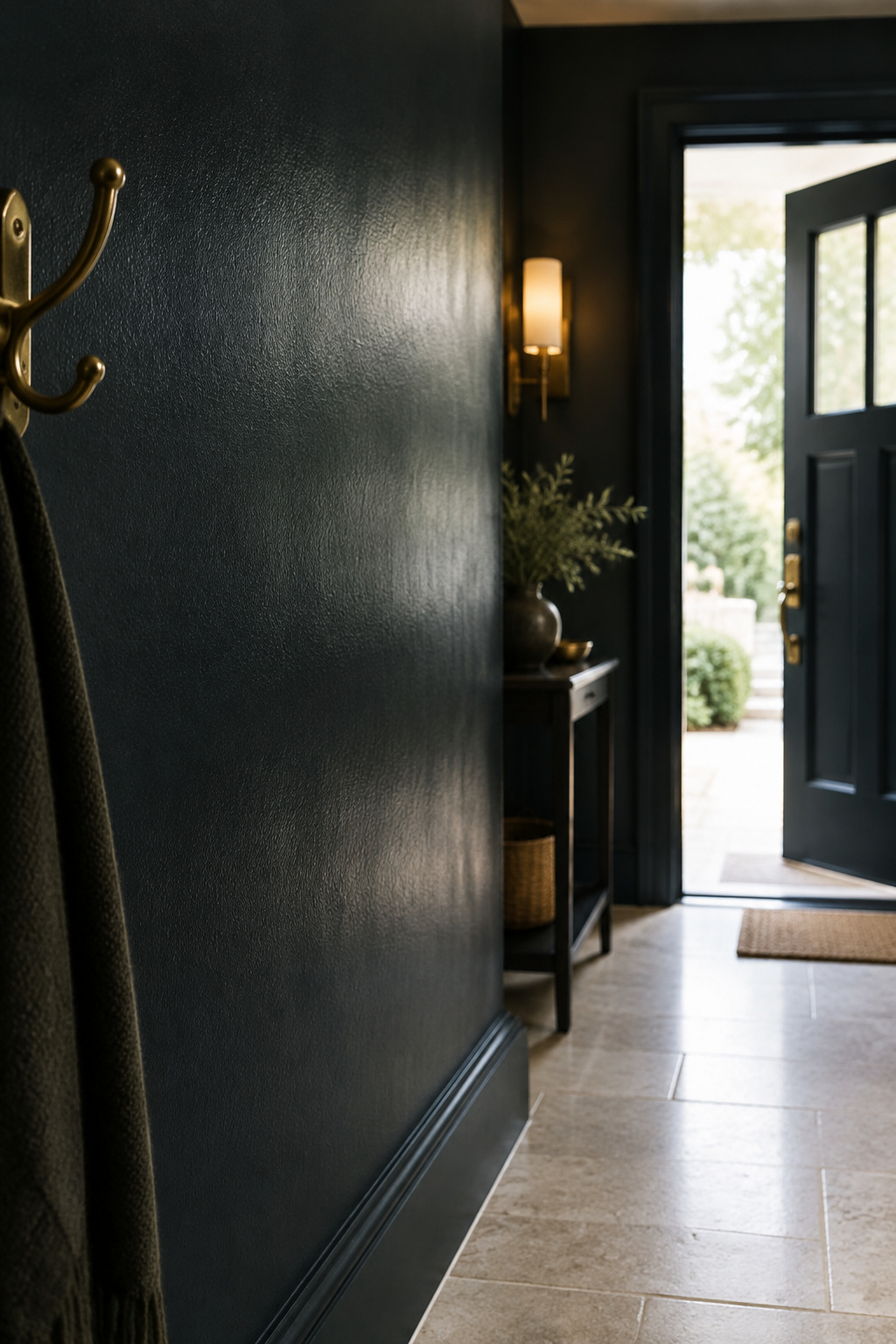
TL;DR
- Black hides damage, not debris: dark, low-sheen paint conceals dents, scratches and dark grime, but shows dust, lint, pale rubber scuffs and hand oil more than a mid-tone wall would. The “dark hides dirt” line is incomplete, not false.
- Pick the black by undertone, not darkness: the named blacks sit close together (Benjamin Moore Onyx at about 4.99, Wrought Iron at 8.17), so the real choice is warm, blue or green-black, judged against your brass and your daylight.
- Zone the sheen: eggshell or satin where hands, bags and boots hit, semi-gloss on trim, and flat or matte only above the touch line, if at all. Entry walls need to be scrubbable.
The Claim: Does Black Really Hide Scuffs and Dirt?
The belief is that an entry takes a beating and black, the darkest color there is, hides it. That’s half right.
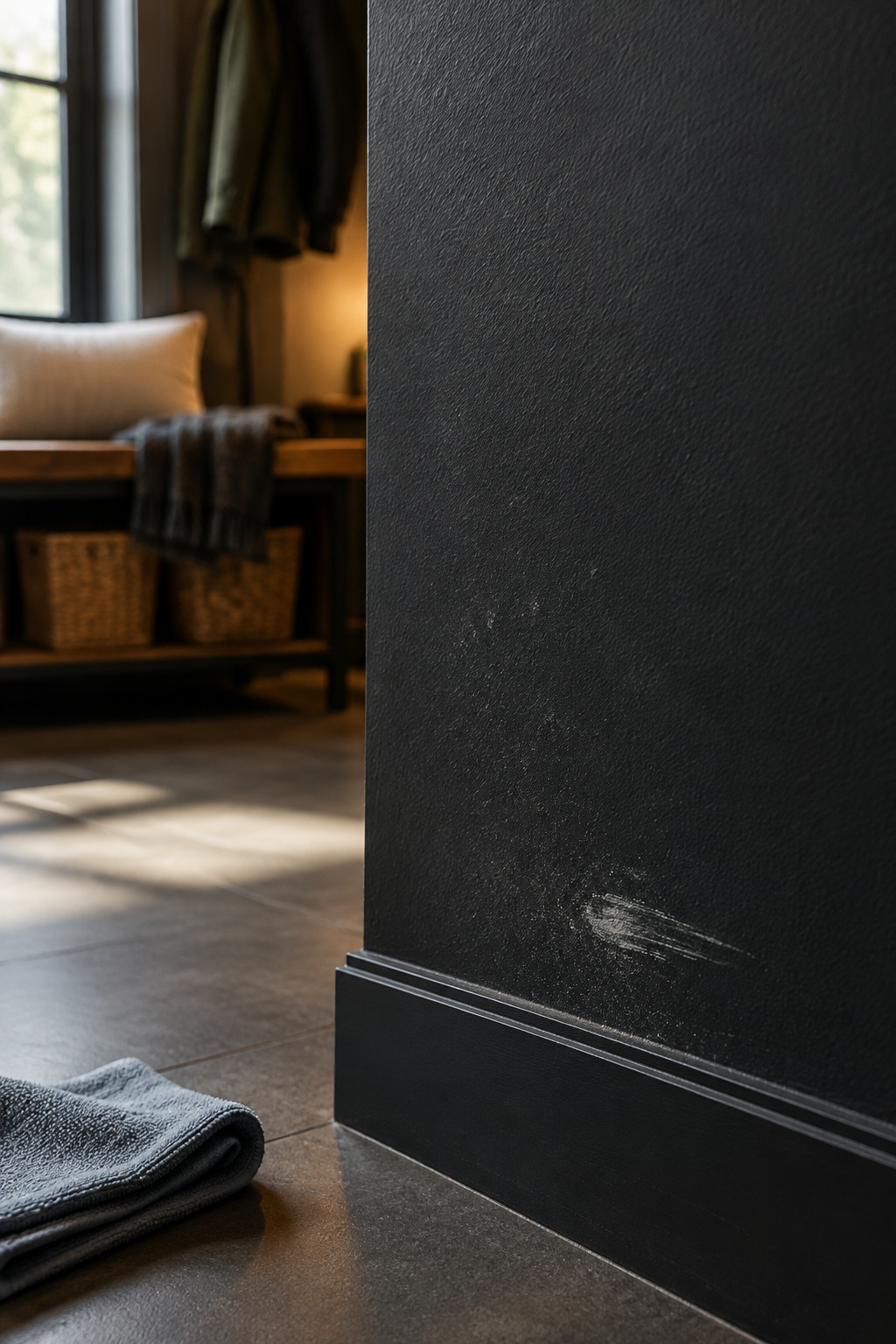
The evidence splits “dirt” into two jobs. Homes & Gardens, writing about painted furniture, says darker, low-sheen paint hides dents and scratches better than pale paint but shows dust and fingerprints more. Lost and Found Decor, also writing about furniture, calls black the color that shows the most dust, dirt and fingerprints. Those are furniture findings, not wall tests. I’m carrying them to a wall because the mechanism is the same on a dresser top and a hallway: a mark shows when its value differs from the surface, or when it breaks the way the surface reflects light.
One limit: nobody has run an entry-specific study of black paint and scuffs. What exists is general paint and finish evidence, and I’m applying it to the most-touched room in the house. By the end you’ll know what black hides, what it shows, and which black and sheen to pick because of it.
Which Black Is Actually Black: Warm, Blue and Green-Blacks
At the paint counter every black on the fan deck looks the same. They aren’t. By light reflectance value the named blacks crowd into a narrow band, so darkness isn’t what separates them. Undertone is, and Sherwin-Williams makes the useful point that undertone only shows by comparison. Alone on a chip, you can’t see it. Next to brass hardware and daylight from the open door, you can’t miss it.
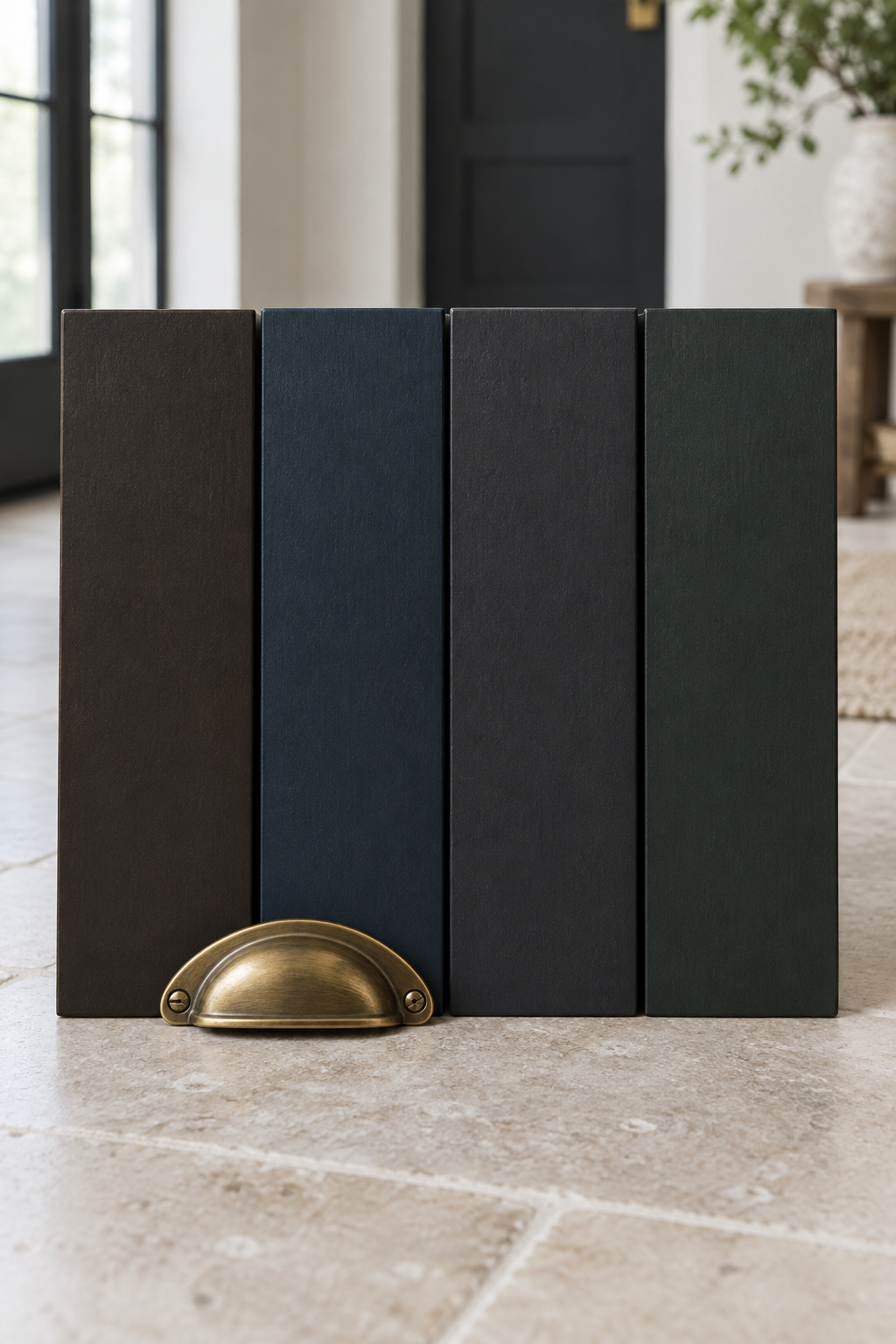
The short list worth sampling:
| Paint | Family | LRV | How it behaves |
|---|---|---|---|
| Farrow & Ball Off-Black No. 57 | Warm black | About 6 (third-party measurement, approximate) | Soft black without the blue base; kinder to the colors around it |
| Farrow & Ball Railings No. 31 | Blue-black | About 6 (third-party measurement, approximate) | Dark graphite that drifts toward navy in cooler light |
| Benjamin Moore Wrought Iron 2124-10 | Cool soft black | 8.17 | Blue base, but stays fairly neutral indoors |
| Benjamin Moore Onyx 2133-10 | Neutral near-black | About 4.99 | Little to no undertone; the darkest version of charcoal, a touch less stark than a cool black |
| Benjamin Moore Black Beauty 2128-10 | Neutral near-black | About 4 | Neutral undertone; the lowest LRV on this list |
| Benjamin Moore Black Forest Green HC-187 | Green-black | Not printed here | Reads black most of the day; green or teal shows only in strong light |
Benjamin Moore publishes its own figures. The Farrow & Ball numbers are independent measurements, and third-party figures for that brand disagree often enough that I treat them as “about”.
The mistake is choosing on darkness. A few points of LRV won’t decide whether your black fights your brass; the undertone will. Match the family to what’s staying: warm black for warm brass, blue-black or Wrought Iron for cool fittings, and Black Forest Green if you like a color that only admits it’s green when the sun hits it.
Black Walls With Contrast Trim vs. Tone-on-Tone
Trim decides where the room keeps its hard edges.
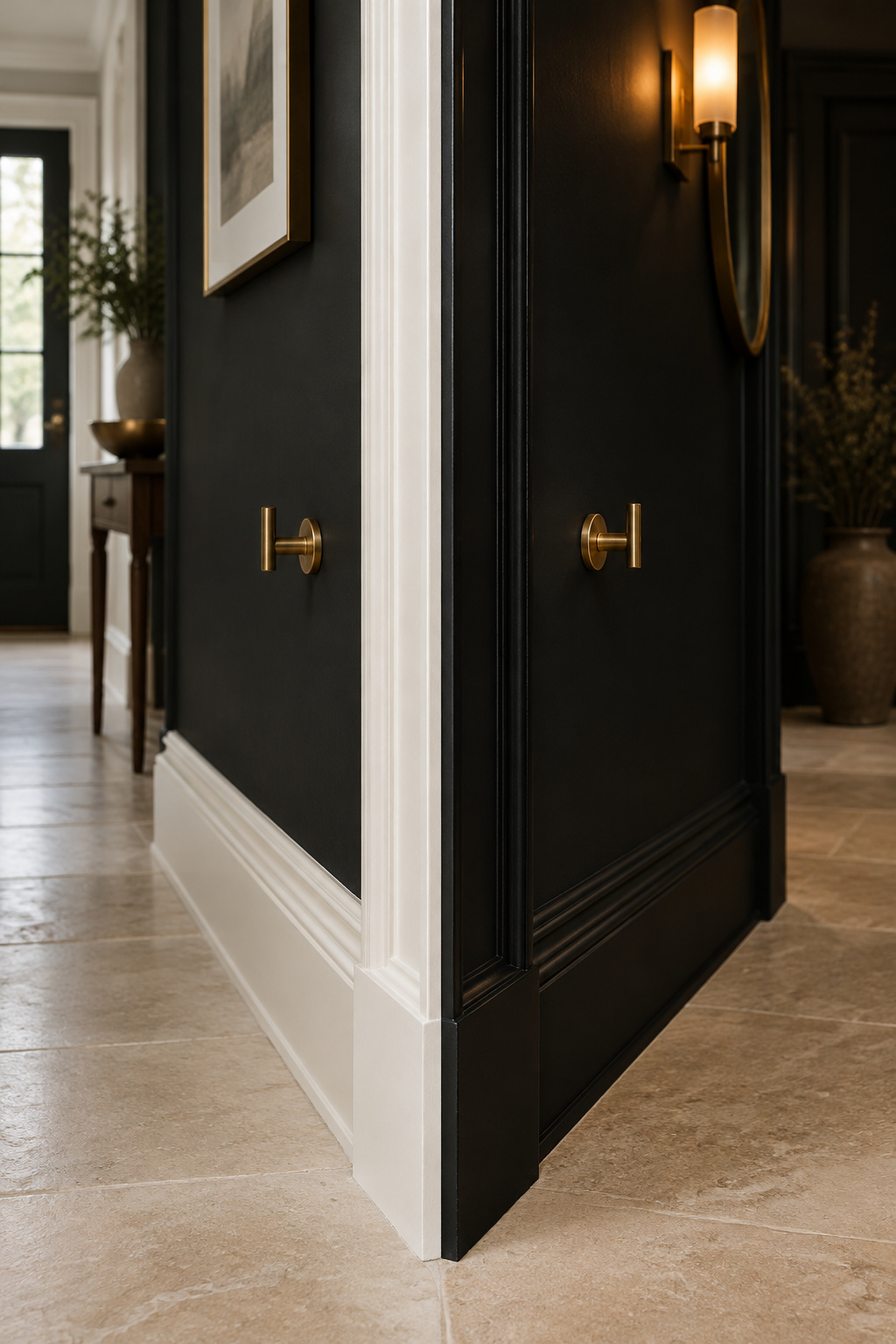
Sherwin-Williams and Benjamin Moore, separately, land on the same split: lower sheen on walls, semi-gloss on trim and doors. White trim against black draws a crisp line around every opening, right where hands and bag straps hit. That line is the drama, and it’s also a scoreboard for every chip.
Sherwin-Williams calls the tone-on-tone version one color, two sheens: trim in the wall’s black, in semi-gloss, so the profile still catches light but no pale edge sets off a ding. The same logic scales up to a full drench of walls, ceiling and trim, and that technique gets its own guide, run as a full room drench.
The trade-off: contrast trim concentrates wear on the surface that’s both the most touched and the shiniest. Tone-on-tone spreads it across a field where a scuff has nowhere to stand out. To give the damage a dedicated place to land, a dark lower wall built specifically to take the scuffs is its own decision, and the paneling piece owns it.
Running the Scuff Test: What Actually Shows on a Black Entryway Wall
“The scuff test” is my name for looking at a wall honestly after a winter of coats, boots and grocery bags, then checking what I see against what the finish sources measured. I’ve touched up a lot of hallway walls.
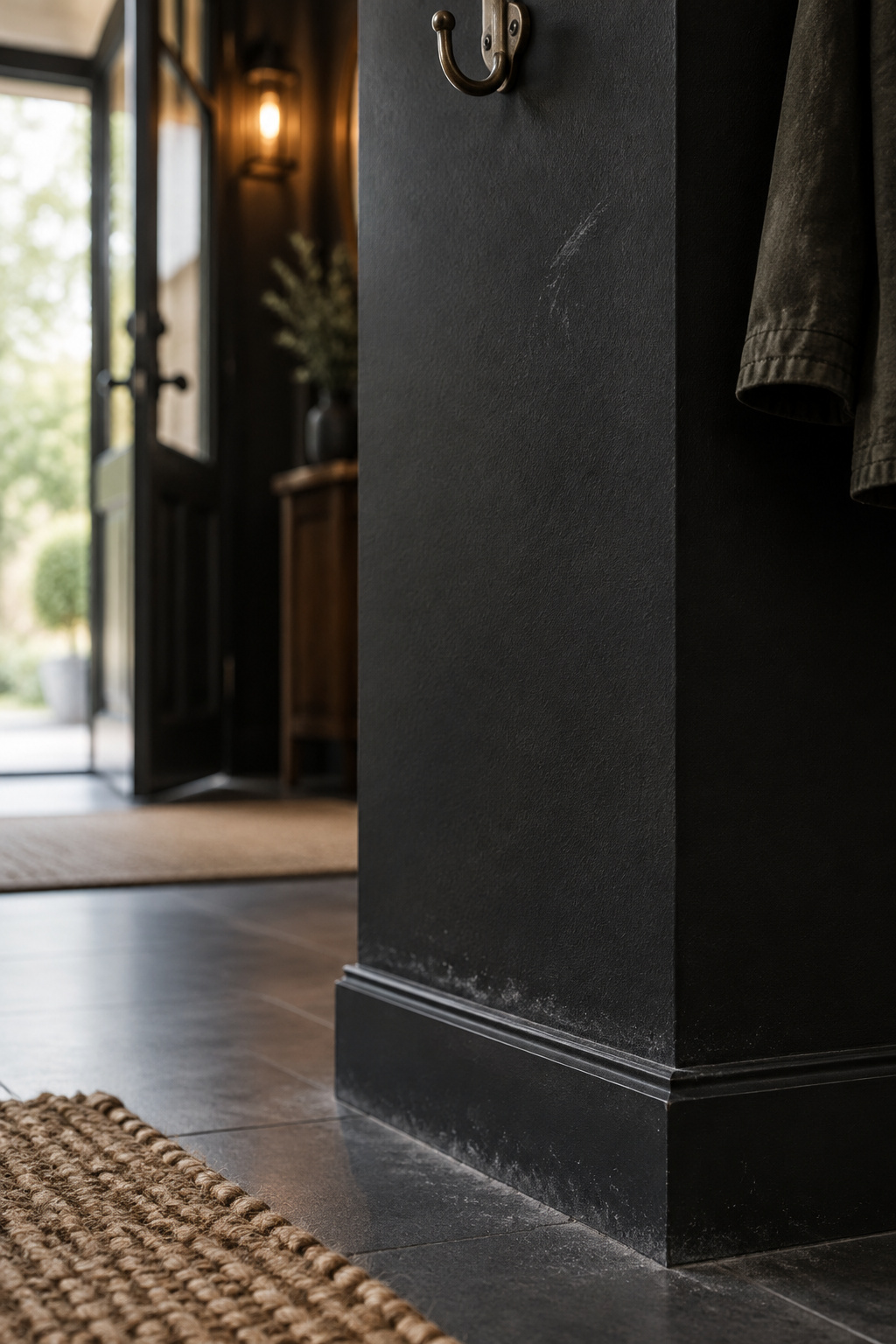
What black hides: dents, scratches, everyday wear
Damage is where black earns its reputation. A scratch on a dark, low-sheen wall has no pale substrate showing through it, and the light is already scattered. Senmit’s finish analysis explains the matte half: with no single sharp reflection line to break, small defects disappear. Hispaint sums it up in one line. A flat black wall “feels calm and hides imperfections,” while the same wall in a shiny sheen “will shout look at me and show every little scratch or bump.” Same color, and the only variable is sheen.
What black shows worse: dust, salt rings, pale scuffs and scratches
Anything lighter than the wall shouts louder on black than on a mid-tone: dust on the baseboard, lint, pet hair, the pale streak a rubber sole leaves at ankle height. Senmit adds the one that catches people off guard. On dark matte, skin oil shows as cloudy patches, right around the light switch and the door edge.
Road salt goes here with a caveat: no source I found tests dried salt on painted walls. I’m reasoning from the value-contrast mechanism documented for dust on dark surfaces. Dried salt is pale and the wall is black, so the ring will show. That’s reasoning, not a finding.
The rule of thumb:
- Black hides: dents, scratches, dark grime and general wear in the paint film
- Black shows: dust, lint, pet hair, pale rubber scuffs and, by the same mechanism, dried salt
- Matte black adds: cloudy patches from hand oil at switches and door edges
- Gloss black adds: every mark as a bright line against the dark
ASTM D2486, the scrub-resistance test method for wall paints, doesn’t answer this question. It counts the scrub cycles a paint film survives and says nothing about how visible a mark is.
My first solo build, at twenty-two, was a workbench from two sheets of plywood. It’s still in my garage, dented all over and still carrying weight. Nobody minds the dents, because it never pretended to be perfect. A black wall strikes the opposite deal: it forgives the dent, then shows you every speck of dust sitting in it.
Sheen and Durability by Zone
Most sheen advice gives one answer for the whole wall, but an entry doesn’t wear that way.
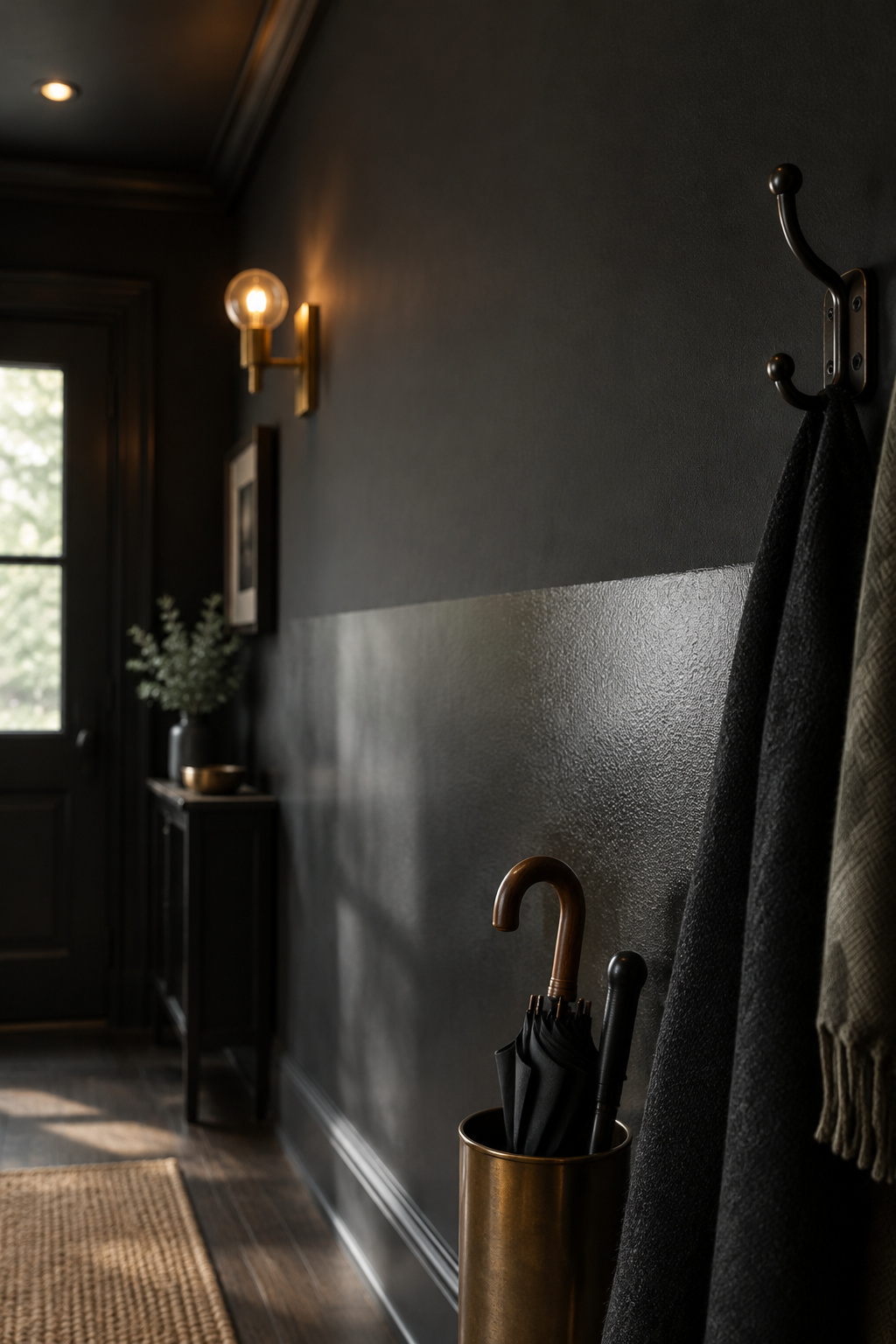
For high-traffic entries and hallways, the professional standard is eggshell or satin on the walls and semi-gloss at minimum on trim. Flat and matte are out, because flat absorbs moisture, marks easily and can’t be scrubbed clean. That last point settles it. The band from roughly waist to shoulder by the door, where hands, bags, coats and pets brush past, gets washed more than any wall in the house.
The catch: a higher sheen has a harder, denser film that stands up to contact, but it makes marks more visible on black. Eggshell reflects roughly 10 to 25 percent of light against 0 to 5 percent for flat. So the touch zone needs cleanability most and is also where sheen costs you most. That’s a real trade-off.
The way out is to zone the sheen instead of settling on one compromise:
- Use eggshell or satin anywhere hands, bags and boots actually reach.
- Put semi-gloss on trim and door casing, which take the hardest knocks.
- Above the touch line, go deeper matte if you want the velvet look, knowing it’s decorative up there rather than durable.
If you’d rather mark that line with a physical rail or paneling than a change in sheen, that’s the dark lower wall I pointed to above.
The mistake, because there’s always one: people pick matte for the whole wall because it looks richest on the sample, then meet the first cloudy handprint by the switch and find out what “can’t be scrubbed clean” means. If that’s you already, stop scrubbing and repaint that stretch corner to corner in eggshell.
Your First Move: Picking a Black and a Sheen You Won’t Regret
You came in believing black would hide the mess. The truth is narrower: black hides damage and shows debris, and sheen moves the result as much as color does. Don’t buy a gallon yet.
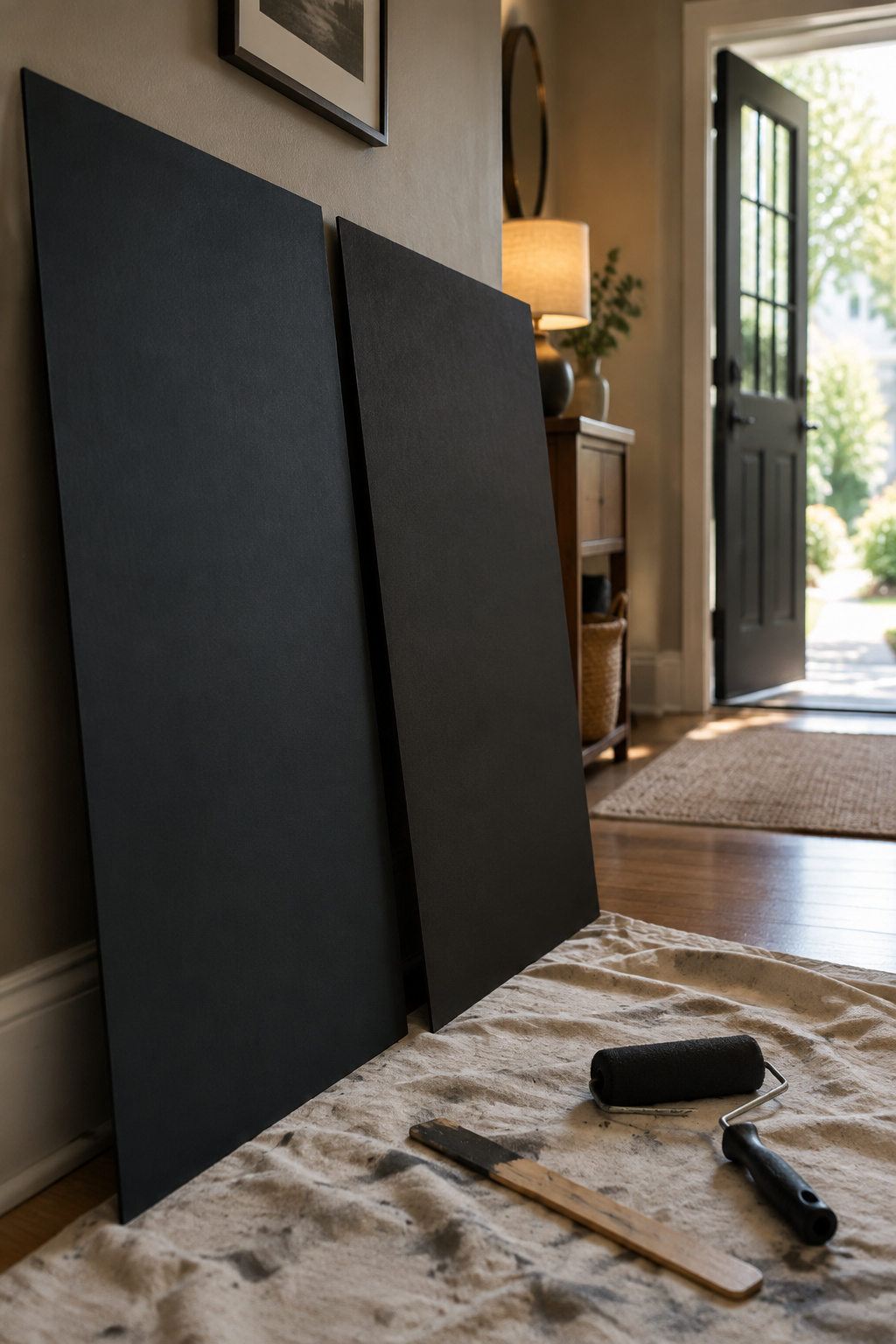
Buy two samples, both in eggshell: one black from the family that matches your hardware and one from the family next to it. Then run the door-open sample test from the guide to dark entryway paint colors, since an entry’s hardest light comes the moment the door swings open. If both blacks feel heavy then, look at the other dark hue families if black turns out to be too much.
The sheen plan travels with the black: eggshell or satin in the touch zone, semi-gloss on trim, matte only above the line. The bigger picture, how the wall fits the light and the rooms beyond, is in designing a dark moody entryway.
This weekend’s job is small: get the two samples, put them up by the door, and look at them with your coat still on.
FAQ
Is black paint harder to touch up than other colors?
Not for the reason people expect. A dark, low-sheen wall already hides small dents and scratches, so everyday wear rarely calls for a touch-up. What shows is a sheen mismatch: paint brushed over a cured spot catches the light differently from the surrounding field, and that seam stands out more on saturated black than on a pale wall. Use leftover paint from the same can and feather the edges instead of dabbing one spot.
What’s the best sheen for a black entryway wall?
The professional standard for high-traffic entries is eggshell or satin on the wall and semi-gloss on the trim. Flat and matte aren’t recommended because they absorb moisture and can’t be scrubbed. On black, eggshell also looks slightly lighter than matte, so sample the sheen you’ll actually use as well as the color.
Can you paint a black entryway wall yourself, or is it a two-person job?
One person can do it. I’d rate it “some builds”: not hard, just slow. Going from pale to black takes more coats and more drying time than a normal repaint, so don’t plan a same-day finish. A second pair of hands helps with moving things and cutting in, but you can manage without.