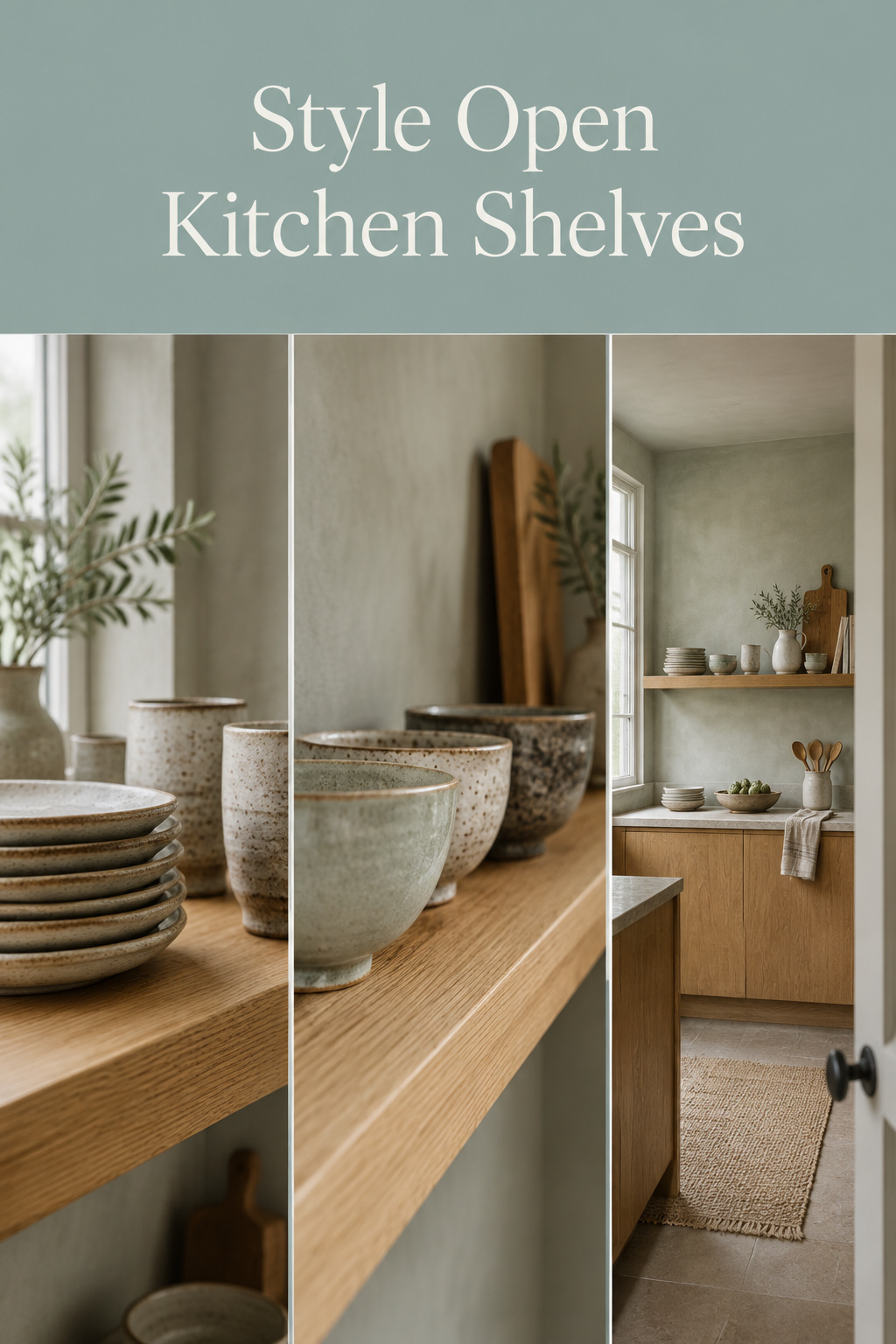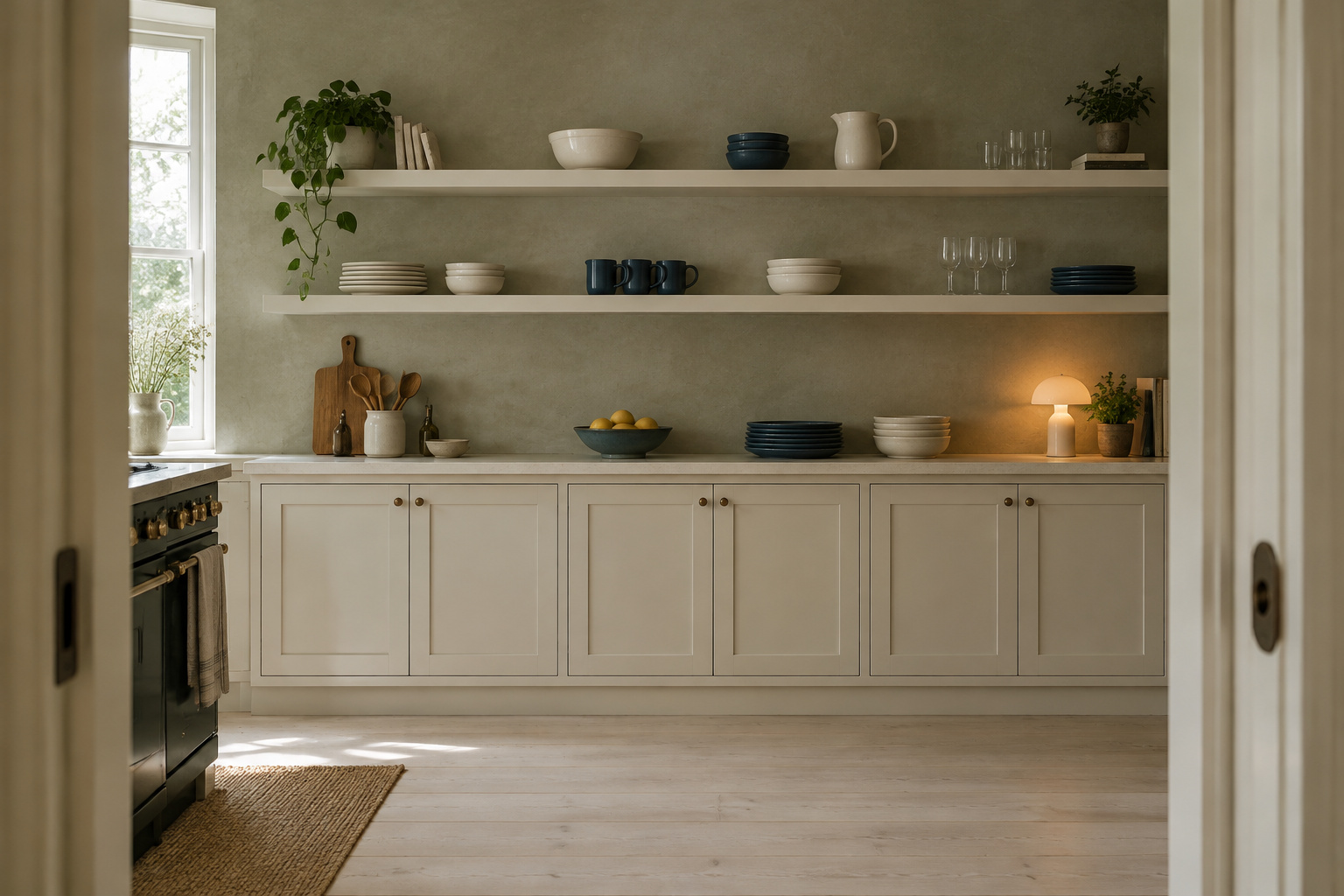
Why does a wall of shelves you chose so carefully make the whole kitchen feel louder? You picked the boards, you put up the brackets, and now the wall hums at you every time you walk in. Usually nothing on it is ugly. There is just too much of it, and too much of it wants your attention. Learning how to style open kitchen shelves is mostly learning what to take away, then letting the things you actually use carry the wall. A working shelf can look composed. It has to be edited first.
TL;DR
- Edit before you arrange. Plastic tubs, small appliances, cleaning supplies and pantry goods in printed packaging go behind a door, while the plates, bowls and glasses you reach for daily can stay out.
- Group by task rather than by set, and keep the palette tight so mismatched pieces look like one family.
- Leave about a third to 40% of each board empty as a starting proportion, then judge the whole wall from the kitchen entrance.
Begin With What Stays Behind a Door
A kitchen shelf should feel like an exhale: a few things you trust, within reach, with air around them. That feeling starts with what leaves.
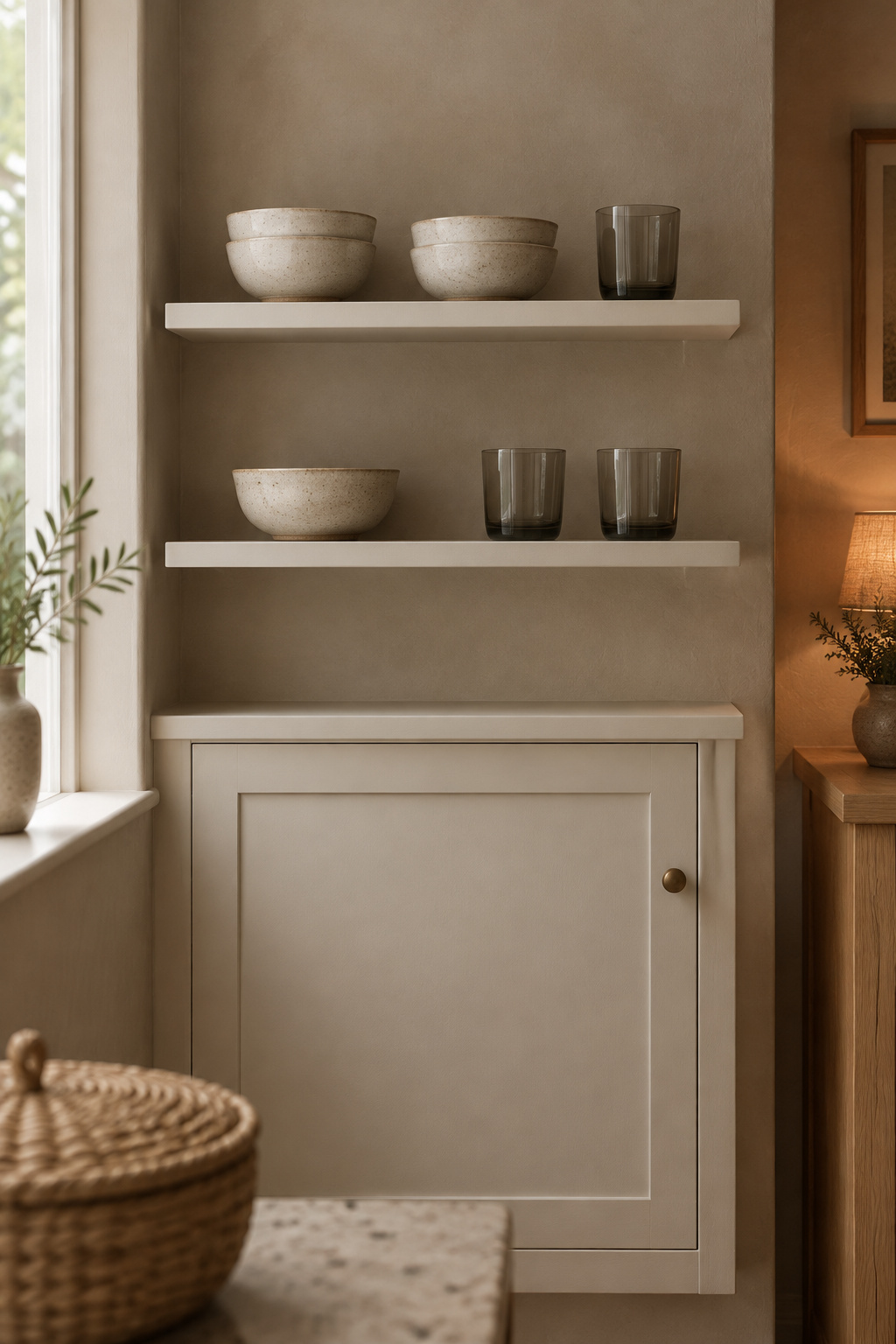
The list of what goes is short, and designers mostly agree on it. Plastic food containers, bulky small appliances, cleaning supplies and pantry goods still in their printed boxes all go behind doors. So does the chipped mug collection, and so does the old bread maker. Designer Nicole Forina’s rule is the plainest version I know: nothing on open shelving that is “purely functional or creates visual noise.” Ashley Jacobs of Cook Design House wants the open space to feel “intentional and edited, not like overflow storage,” and that phrase is worth keeping in your head while you sort.
| What | Where it goes | Why |
|---|---|---|
| Plastic food containers | Behind a door | Stained lids and odd shapes are visual noise |
| Small appliances | Behind a door | Bulky, and used in bursts rather than daily |
| Cleaning supplies | Behind a door | Their labels pull the eye |
| Pantry goods in original packaging | Behind a door | Printed boxes compete with everything near them |
| Chipped or novelty mugs | Behind a door | One loud piece outweighs a row of quiet ones |
| Everyday plates, bowls and glasses | Open shelf | In constant use, so they rarely sit still |
| A few tins or jars, cutting boards | Open shelf | Useful, and quiet to look at |
| The one pot you cook with daily | Open shelf | Used and washed too often for anything to settle on it |
The sorting only works if your cupboards can take what comes off the shelf, so measure your closed storage before anything moves. If you are still deciding whether to have open shelves in the kitchen at all, that measurement is a good place to begin.
You’ll notice the everyday plates sit on the open side of that table. Not every designer agrees about leaving plates out.
Take one thing you haven’t touched this week off the shelf and close a door on it.
How to Style Open Kitchen Shelves: Group Dishes by How You Use Them
Watch your hands for one ordinary morning. The mug goes from shelf to coffee machine and back. The plates go from dishwasher to board to table. A shelf grouped by how you move fits the day, and one grouped by set sends you across the room for a bowl.
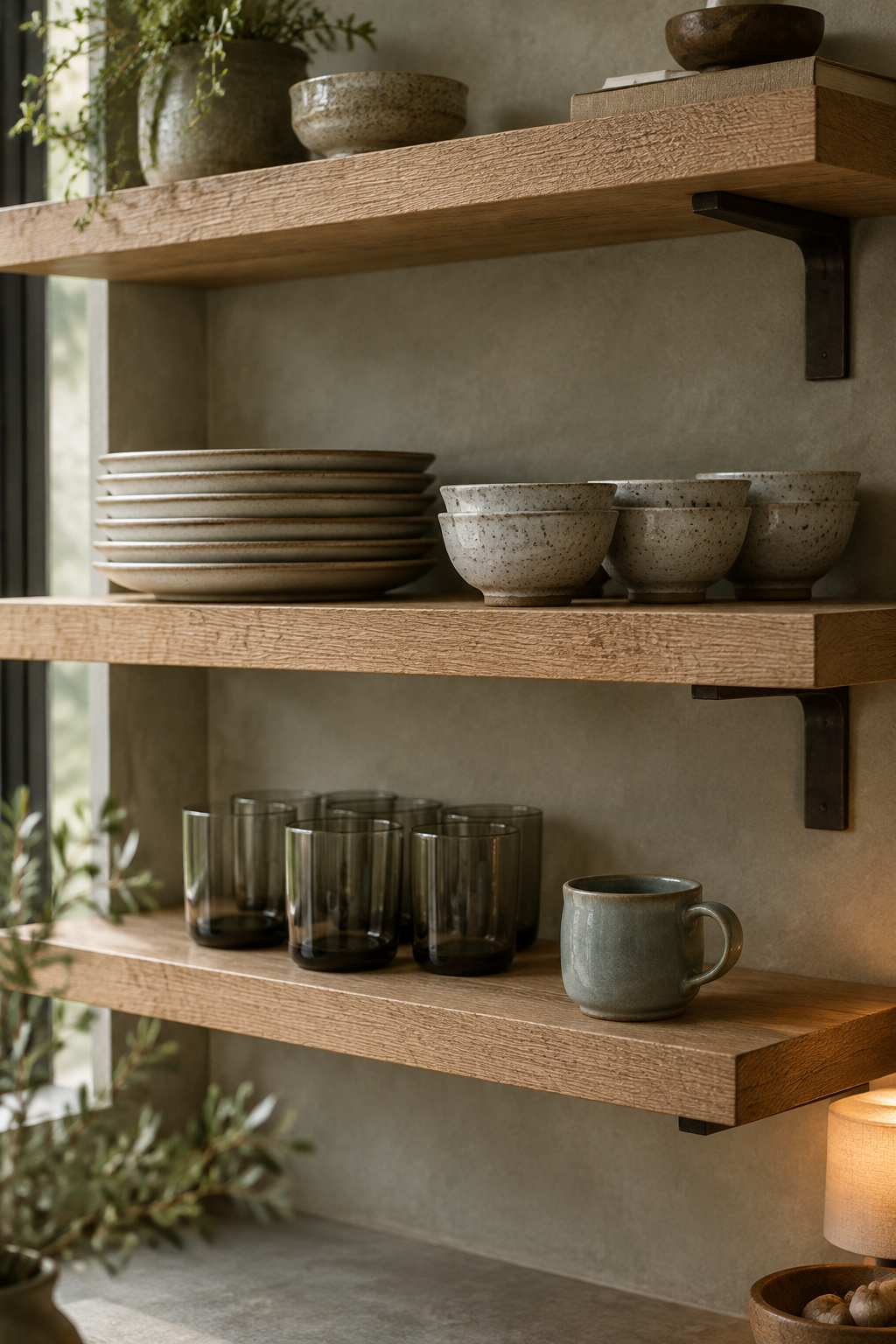
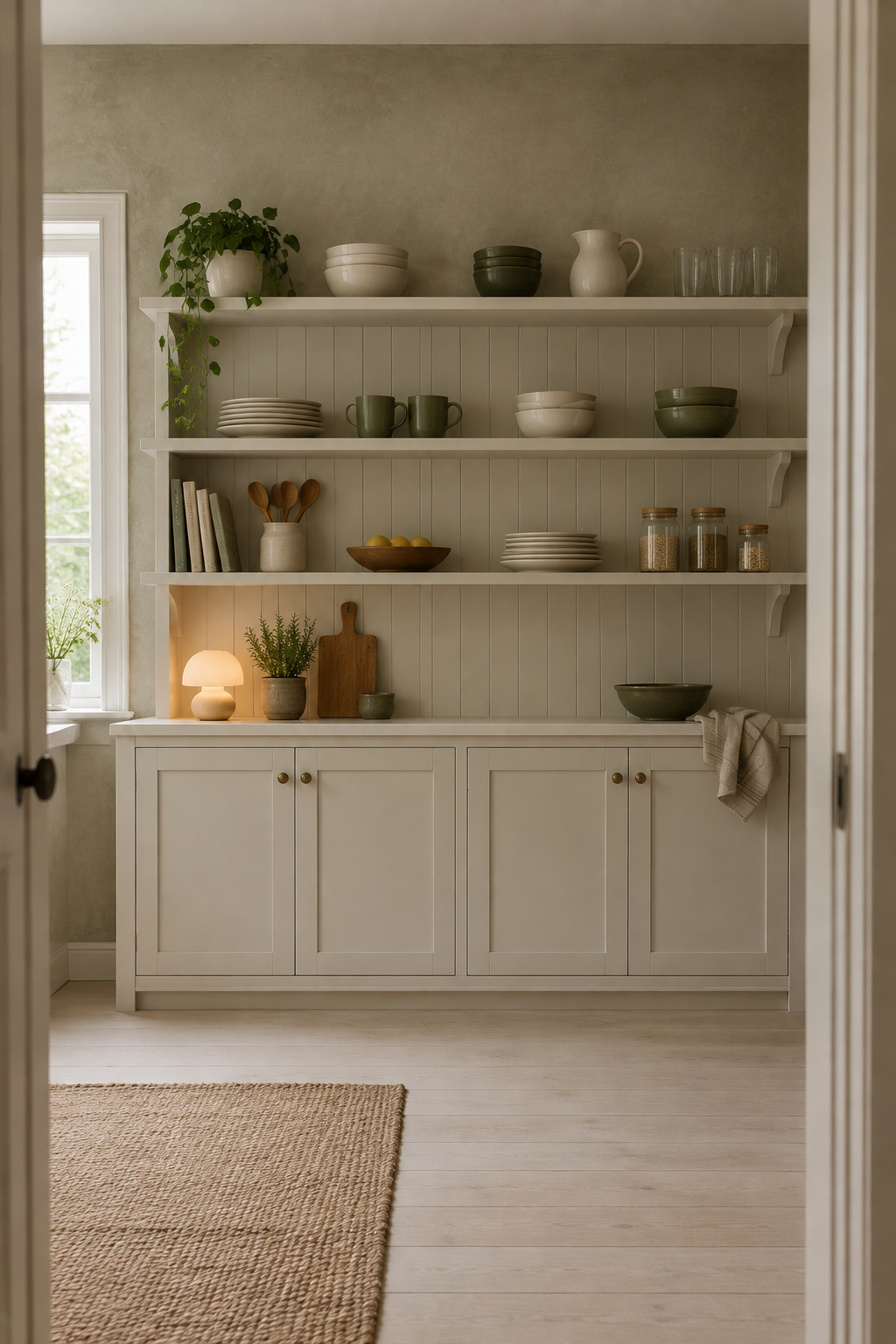
So group by task. Dinner plates in one stack, bowls in another, glasses in their own run, and dry food kept apart from the dishes if one shelf does both jobs. Mugs belong at the end nearest the coffee, and plates and bowls at the end nearest where you plate food. If you still get to choose where the shelves go, near the sink or above the dishwasher makes putting away easy. The everyday stack belongs at the most reachable shelf height, and the numbers for that are set out there.
Keep the stacks modest. One built too high means knocking something off when you reach for the bottom plate. Small groups help the eye, too. Work in threes, or let four plates with a small plant on top make five; odd counts tend to look finished.
Mismatched pieces that still belong together
You don’t need a set. I’d go further: matching sets look calm in photos and fussy in life. A loose family of pieces is easier to live with, and easier to add to when something breaks.
The family does need something in common. Emily Henderson’s test is that mismatched pieces should share a quality, all old or all stoneware, and she warns that vintage and new plates mixed in one stack look messy, “like a thrift store.” John Derian mixes white ironstone platters with earthenware bowls and arranges by color, which also helps him grab the right piece. A thrown bowl, a smooth glass and a wooden board look collected where a perfect set looks flat, as long as the palette stays tight.
Let Two or Three Colors Carry the Wall
Color on a shelf usually arrives by accident. One green bowl was in the cupboard, so it went up, and now it sits at the end of a white shelf pulling your eye to that corner every time you pass. The stager Marcia Socas took green bowls out of one arrangement for exactly that reason: “too much color.”
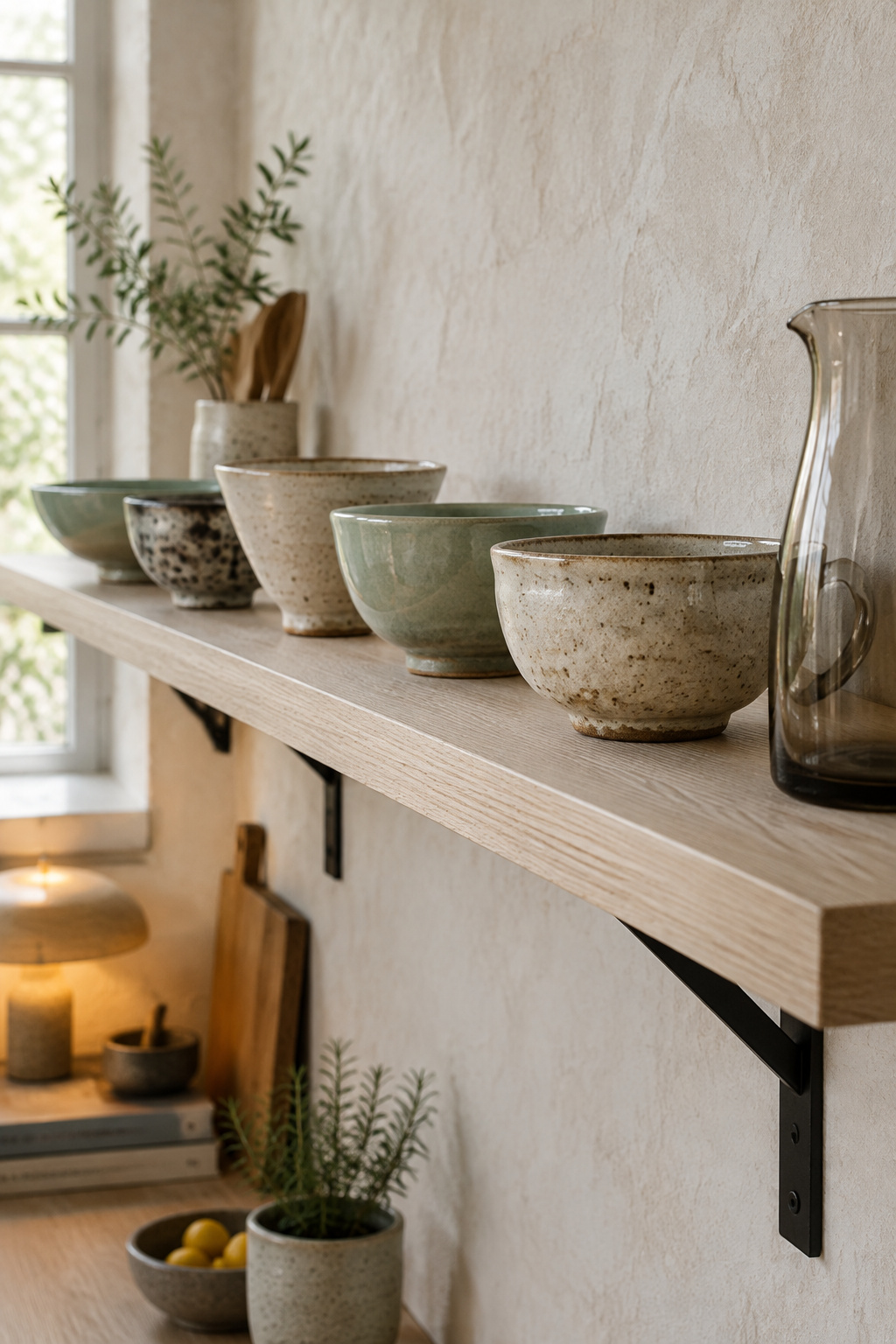
Two or three colors is the usual convention, passed around styling blogs and shop pages rather than set by anyone in particular. Designer Mohammad Ahmed is stricter. Pick one or two color schemes, stick with them, and let neutral tones be the backdrop. I treat three as a ceiling, not a target. A ceramicist’s kitchen in Brooklyn, described as warm white, earthy brown and cobalt blue, shows how much three colors can hold.
Where a color sits matters as much as how many there are. Scatter an accent across the shelves, a little here and a little there, rather than gathering it in one spot. Repeat a glaze across the shelves and it does the grouping for you, turning a mismatched shelf of stoneware into a family.
Count the colors on your shelves; if one appears only once, give it a partner or put it away.
Leave Empty Surface on Every Shelf
The bare board is part of the design, not leftover space. Most stylists who give a number land between about a third and 40% of each shelf left empty, and Tina Frey Designs calls a third “a starting proportion rather than a measurement,” which is the right spirit to take it in.
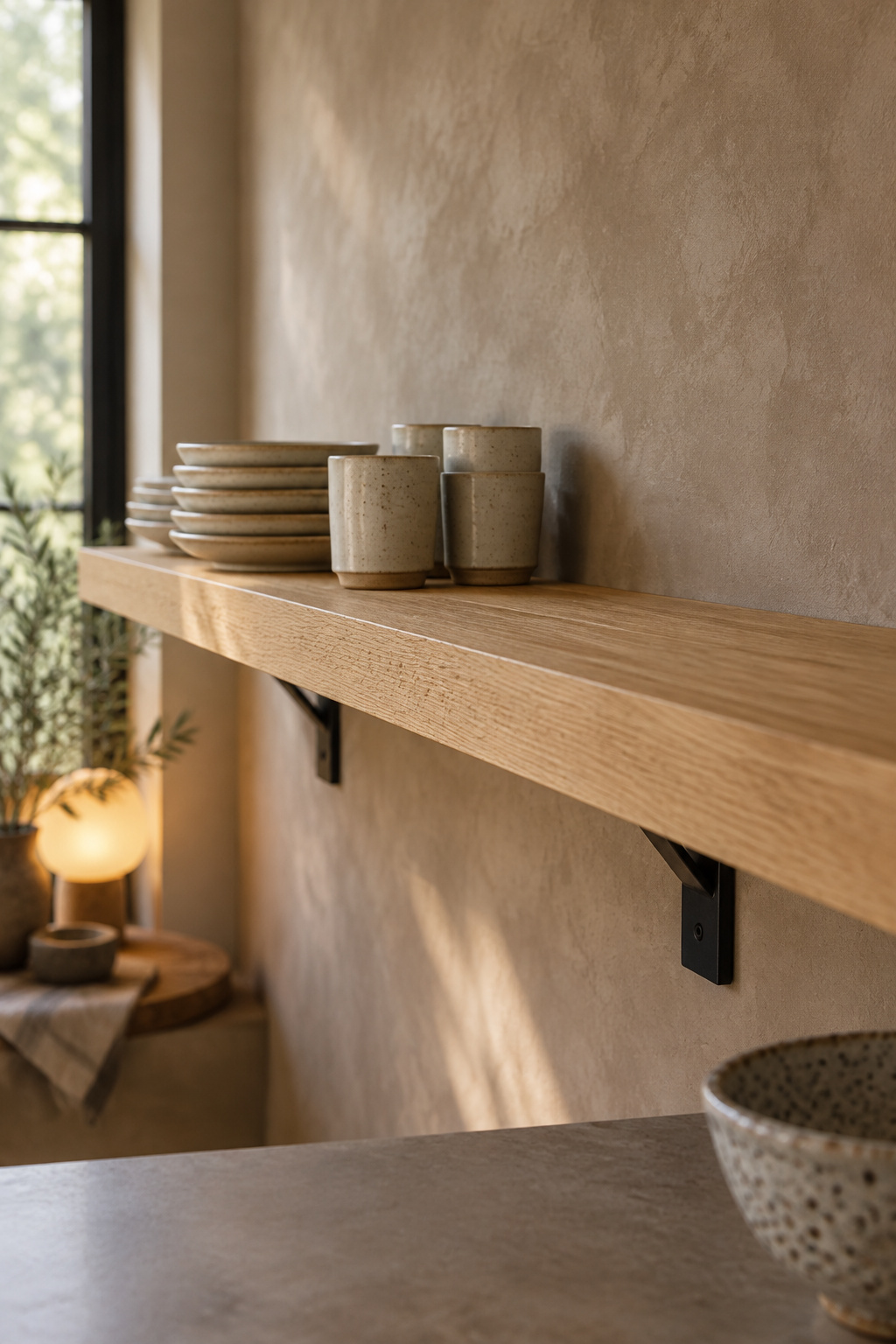
None of those numbers was worked out on shelves holding dishes people eat from, and that matters. A working shelf empties and fills through the day. So I lean toward the generous end. Some of those gaps are where the bowls come back to after dinner, and the bare wood around them is where the eye can rest.
How you place the emptiness matters as much as how much there is. Spread it evenly and it turns into another pattern. Leave real gaps beside the heaviest or tallest piece instead, and let other shelves sit fuller. Even a couple of inches between items opens a crowded shelf up.
Near the Range, Only Hard-Working Pieces Stay Out
A shelf beside the cooktop lives through steam, smoke and the fine spit of a hot pan, and over time dust, grease and food residue build up on whatever sits there. So that board keeps different company: cast iron, wooden spoons, the pot you reach for every day. Things used and washed too often for anything to settle on them.
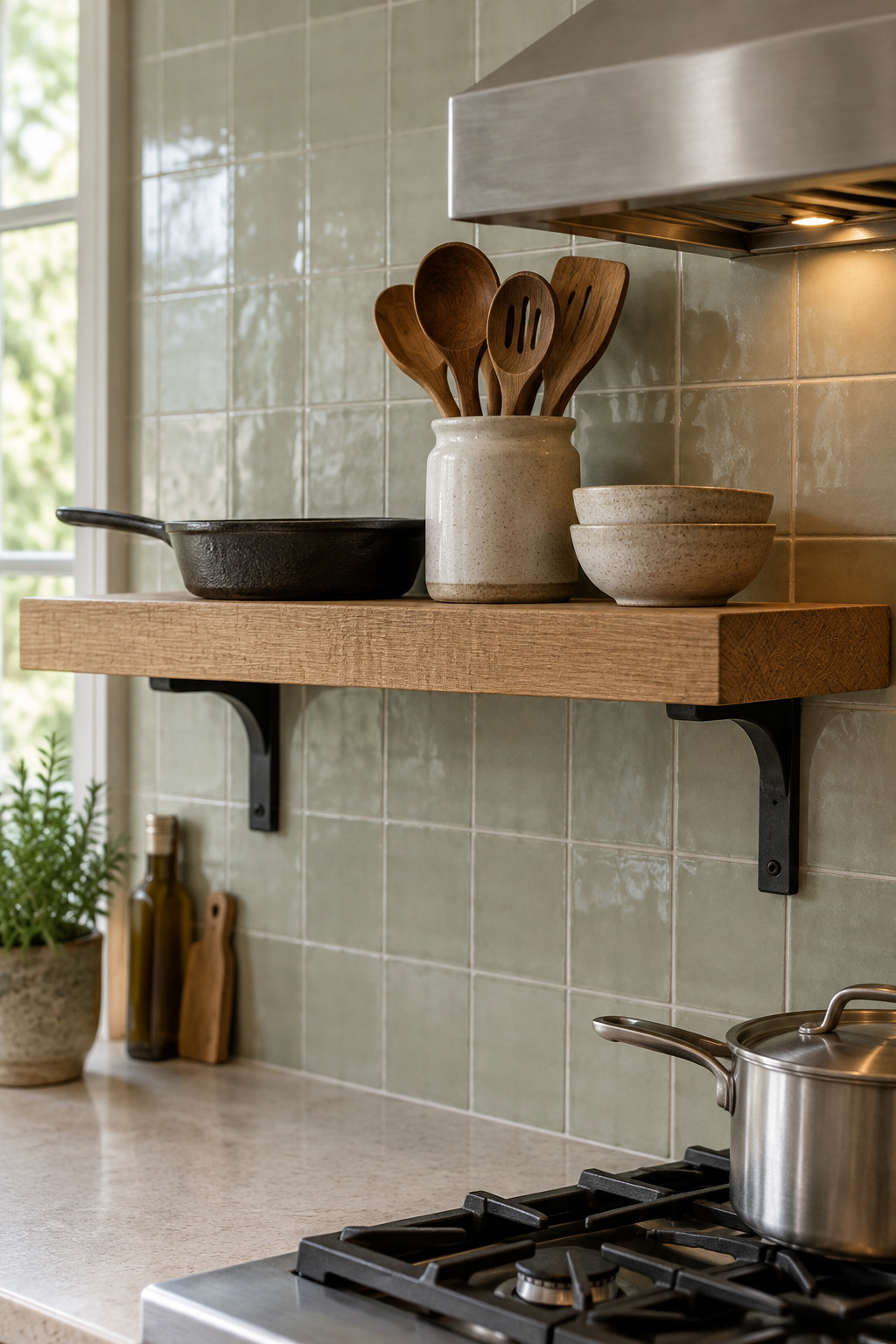
I keep a cast-iron kettle on my own stove, mostly for the sound it makes. Iron suits the heat, and that is the kind of piece I’d put near it.
Books, plants and the delicate bowl you love belong somewhere else. Cookbooks suit open shelves only away from the stove, sink and dishwasher, where heat, spills and moisture can’t reach them. For distances and finishes, read up on what belongs on a shelf beside the range.
Judge the Wall From the Kitchen Entrance
You arrange shelves at arm’s length. You live with them from across the room, so most shelves get judged from the wrong place.
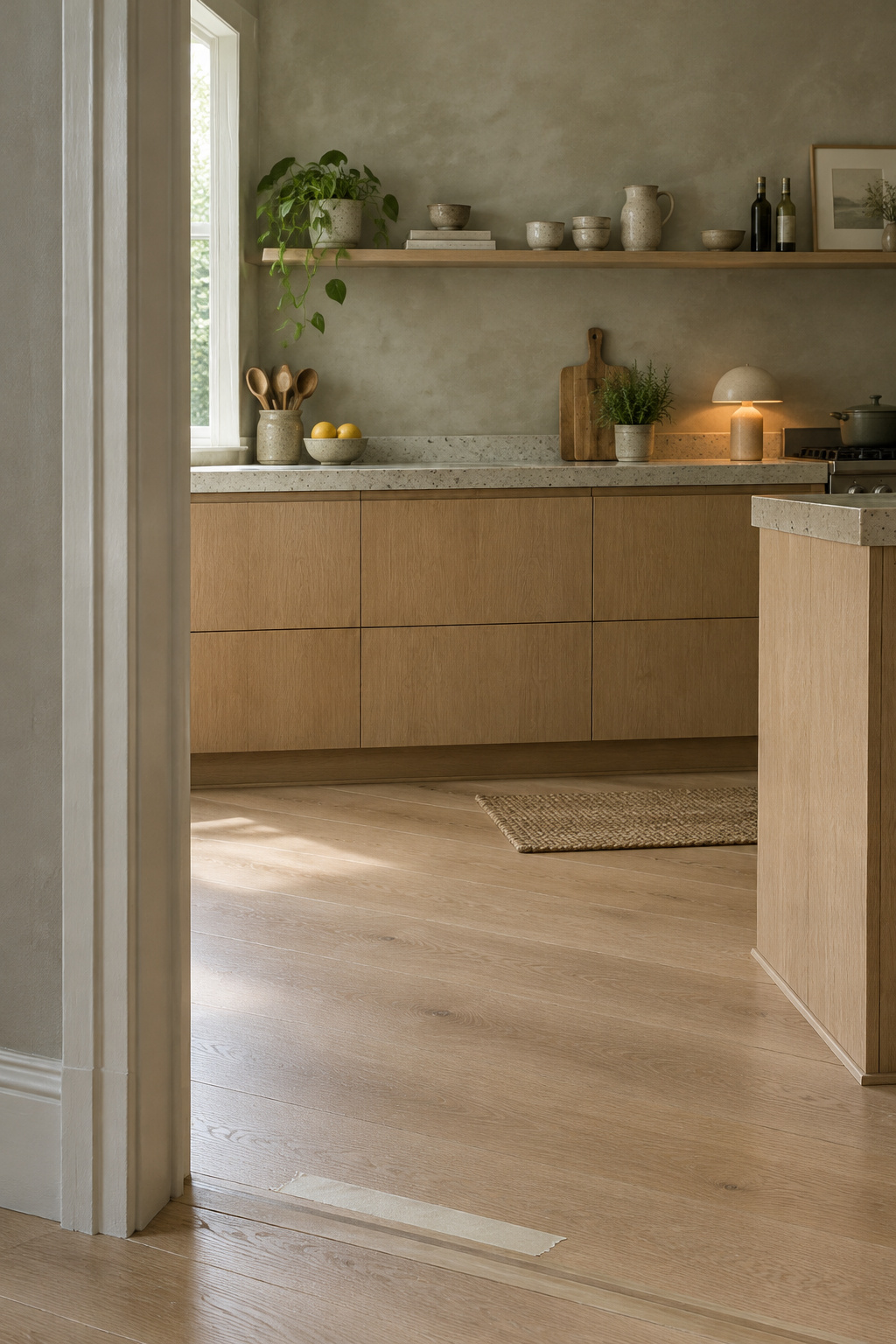
John Derian says stepping back now and then helps with perspective, “as does squinting.” Tina Frey Designs checks the whole unit from across the room, because the eye reads the grid before it reads any one object. A photograph does something similar. The camera shows up a crooked stack or a lonely color that your eye has learned to skip.
Go to the kitchen entrance and look at the wall as someone walking in would. Wherever your eye lands first is your next edit, and nothing new goes up until it lands on bare wood or on something you’re glad to see.
That leaves the bigger question: should everyday dishes be on open shelves at all? Designers split on it. Ellie Christopher, quoted in Good Housekeeping, says open shelves “collect dust much faster than people realize,” and she doesn’t want to wash a mug or plate before every meal. Some remodelers would keep open shelves for decorative pieces and leave the dinnerware out of it altogether. On the other side, Emily Henderson’s own advice starts with everyday glasses, plates and bowls, and her readers report that their dishes stay clean because they are always in rotation.
I learned my side of this in my own galley kitchen. I rearranged one open shelf eleven times, and it only felt calm once it held what I used every day.
So my position is that the plates you use daily are the ones that belong out. The shelf that gathers dust is the one nobody touches, which is why a display-only shelf turns into a dust trap. Each time you unload the dishwasher, put things back in the order you’ll want them, and the shelf keeps turning over on its own.
But if you cook rarely, or your only open boards sit close to the range, Christopher’s caution may suit your kitchen better than my reasoning does. I see it differently, and I’ve said why. My vote stays with the bowls in the open; hers stays with the door. Both kitchens can be calm.
FAQ
Are plants a good idea on open kitchen shelves?
Yes, with some care. Trailing plants such as String of Hearts or pothos suit open shelves, and their leaves want a wipe with a damp cloth. Keep them away from the oven and from the warm air off the fridge and dishwasher. Choose a plant you will actually water, though; a dead one on a shelf is worse than none.
Is it okay to put cookbooks on open kitchen shelves?
Yes, as long as the shelf is away from the cooking. Heat and oil splashes from the cooktop damage books over time, and the sink and dishwasher bring moisture, so a higher shelf away from the hob is the safer spot. Sue Jones of OKA likes favorite cookbooks paired with mugs and patterned bowls for a pop of color.
How do you style open kitchen shelves when you own very few dishes?
Let the few pieces carry the shelf and leave wide gaps around them. John Derian puts the focus on one, two or three special items rather than twenty. A cast-iron pan or a good wooden chopping board can stand beside the plates. Leaving a third to 40% of a shelf empty is normal anyway, so a sparse shelf looks intended.