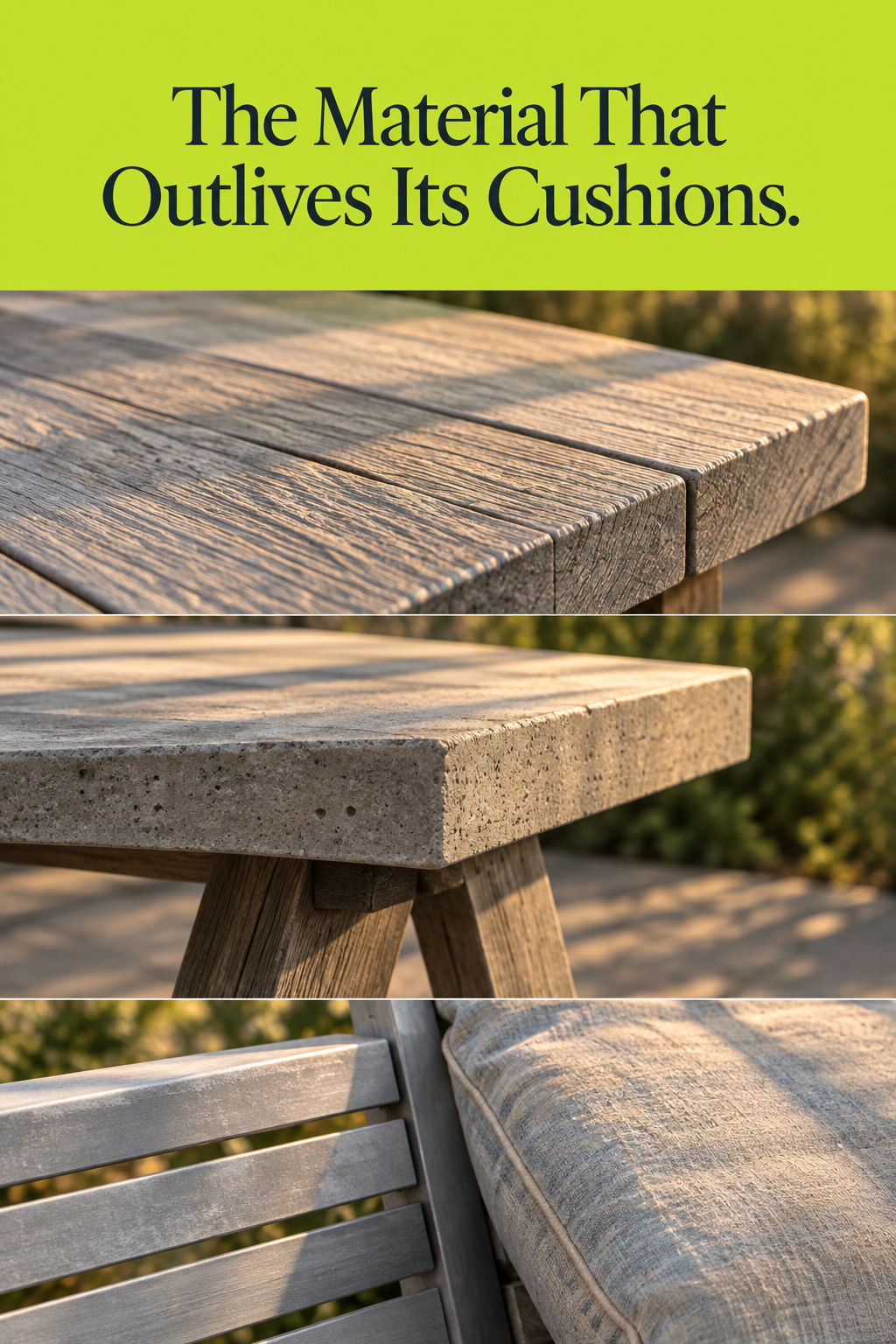
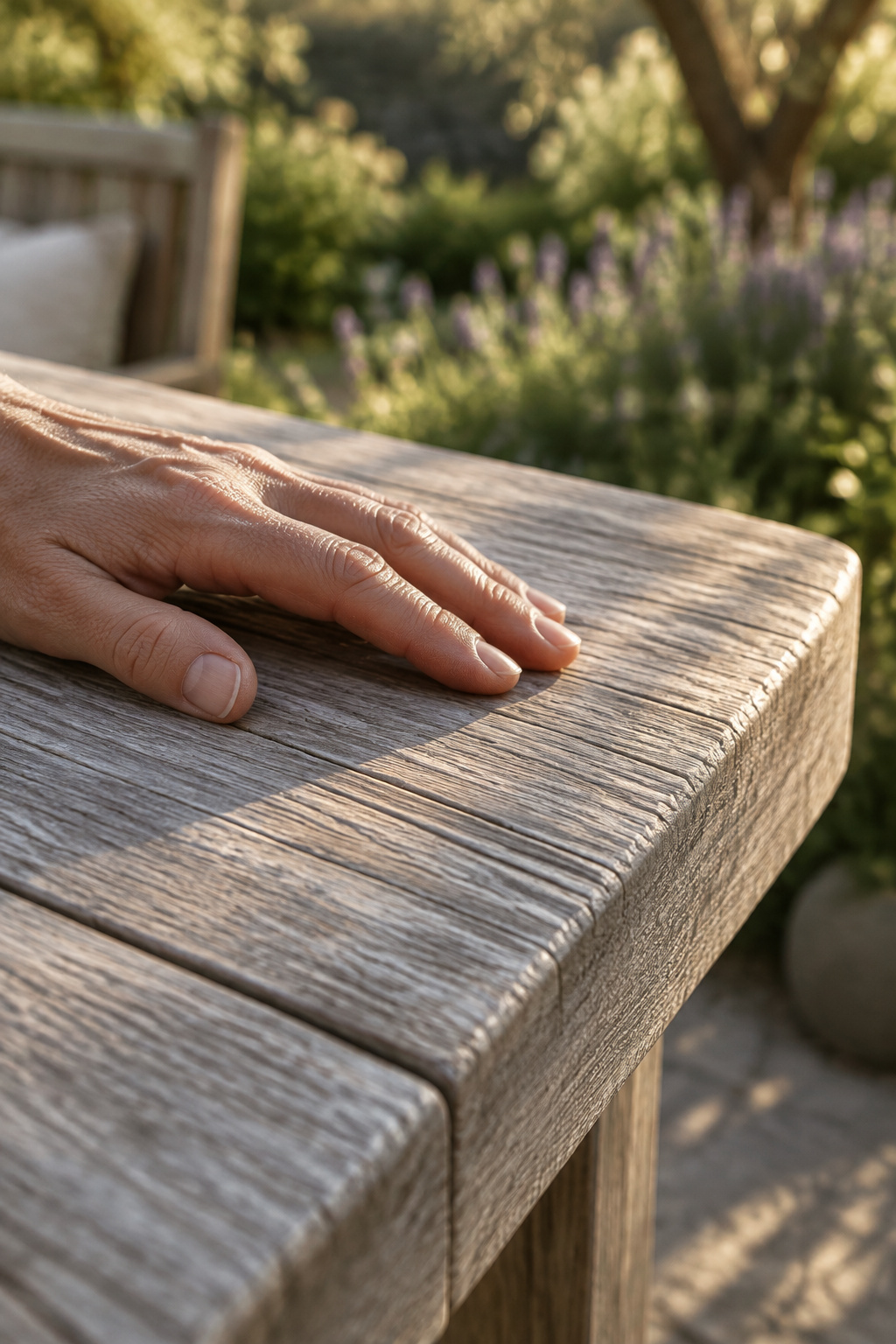
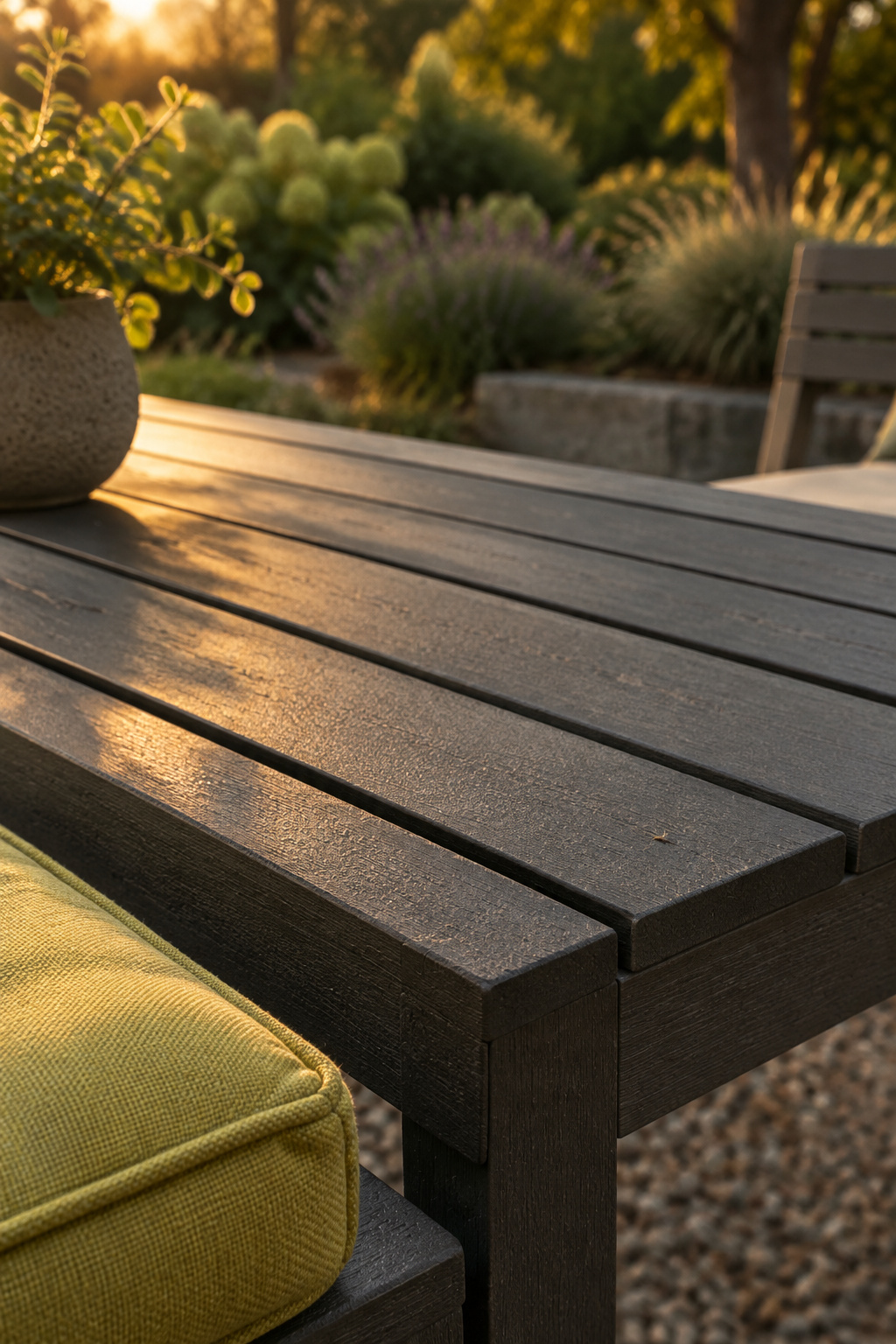
The tabletop was the color of driftwood, the grain risen enough to read like corduroy under low light. Ten summers in the sun, never oiled and never covered, and not one joint had opened. The chairs around it were on their second set of cushions, and losing.
People searching for the best material for outdoor dining table are usually asking something narrower: which part of the set fails first, and when? Few comparisons answer that honestly, since each one comes from a company selling exactly one of the materials compared.
TL;DR
- The frame is rarely what fails. Trade service-life estimates put mature teak and ipe at 30–50 years, extruded aluminum and HDPE poly lumber at 15–25, and powder-coated steel at 8–15. These are ceilings set by build quality, not guarantees.
- The cushions set your real replacement schedule. Solution-dyed acrylic holds color for 7–10 years of direct sun, polyester for 4–6, olefin for 3–5, and the foam inside any of them softens in 5–7.
- Surface heat follows color, not material. In one field test, white powder-coated aluminum read 133.5°F in full sun while weathered cedar hit 170.2°F. The metal was the cooler seat.
What You’re Actually Choosing When You Choose a Material
Two clocks run inside every outdoor dining set, and most buying guides collapse them into one. The frame runs 15 to 50 years, depending on species and alloy. The fabric over it runs 3 to 10 years, whichever frame you bolted it to. When a catalog answers “how long will this last,” it answers for whichever clock flatters the thing it sells.
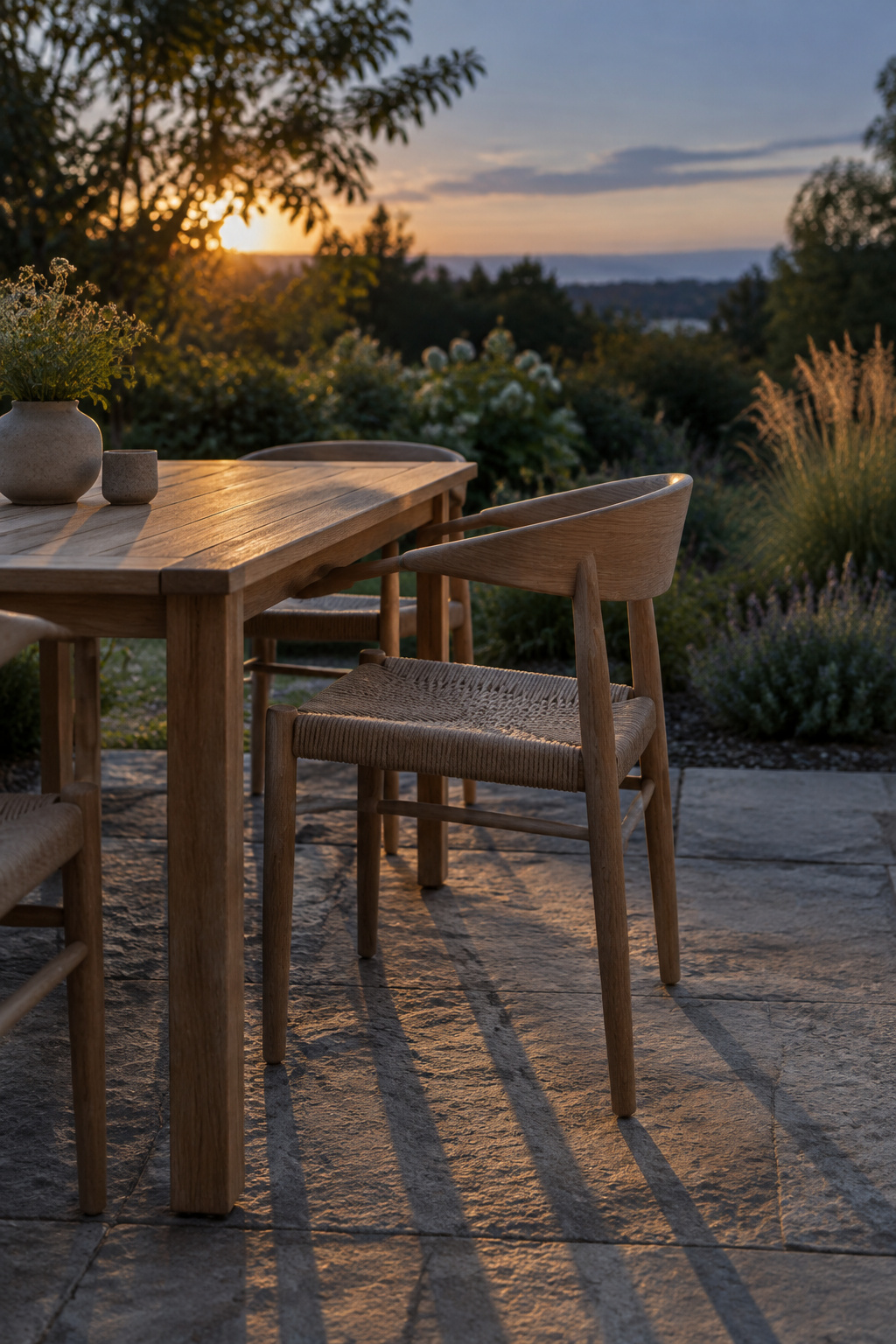
The useful question is what this table has to survive: your rainfall, your winters, your hours of unshaded sun and your honest appetite for looking after it. Answer that and six materials collapse to two.
This article covers only what the table, frame and cushions are made of. The other decisions (placement, shade, seating) are mapped out in our guide to outdoor dining area ideas.
Best Material for Outdoor Dining Table: The Ten-Year Comparison
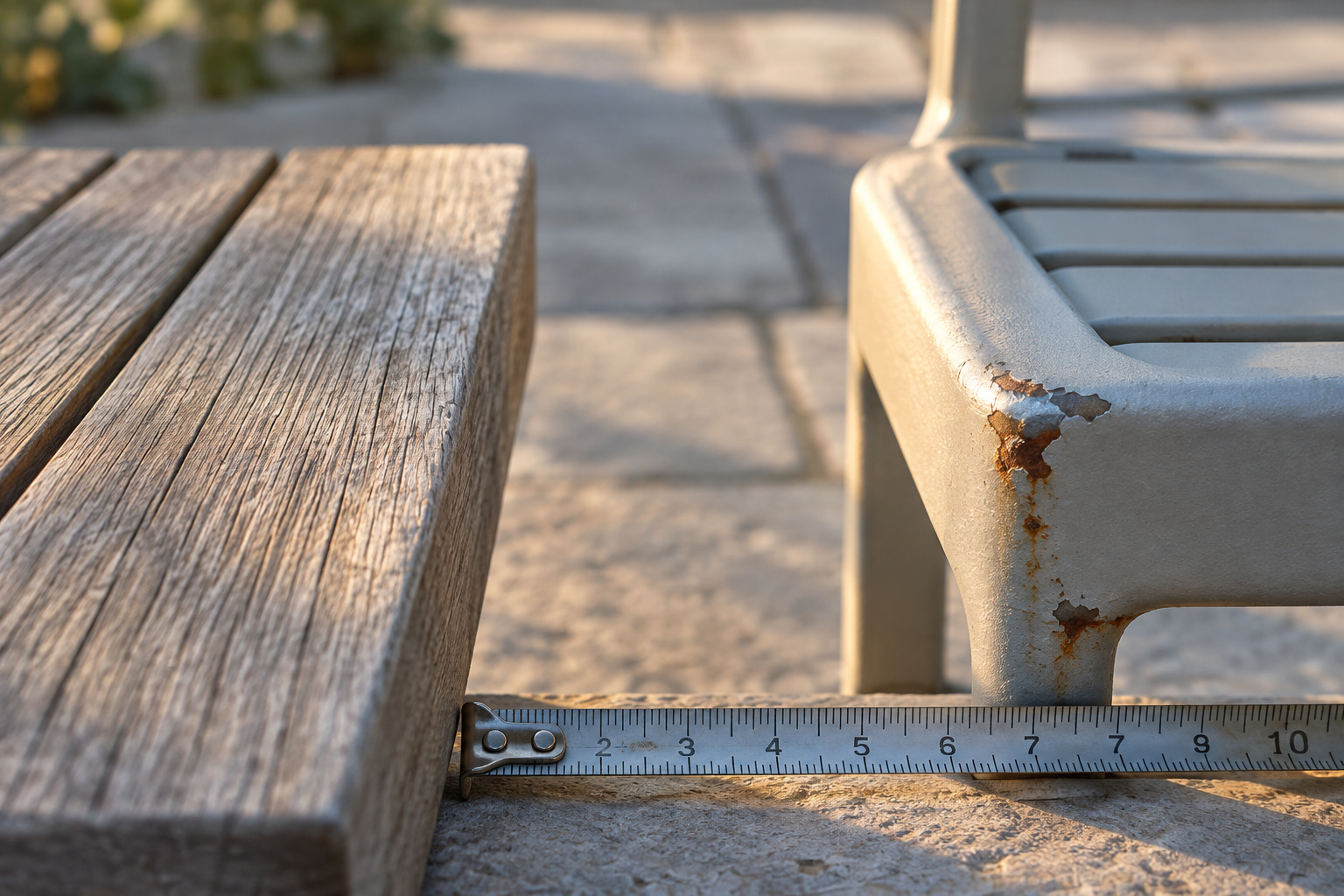
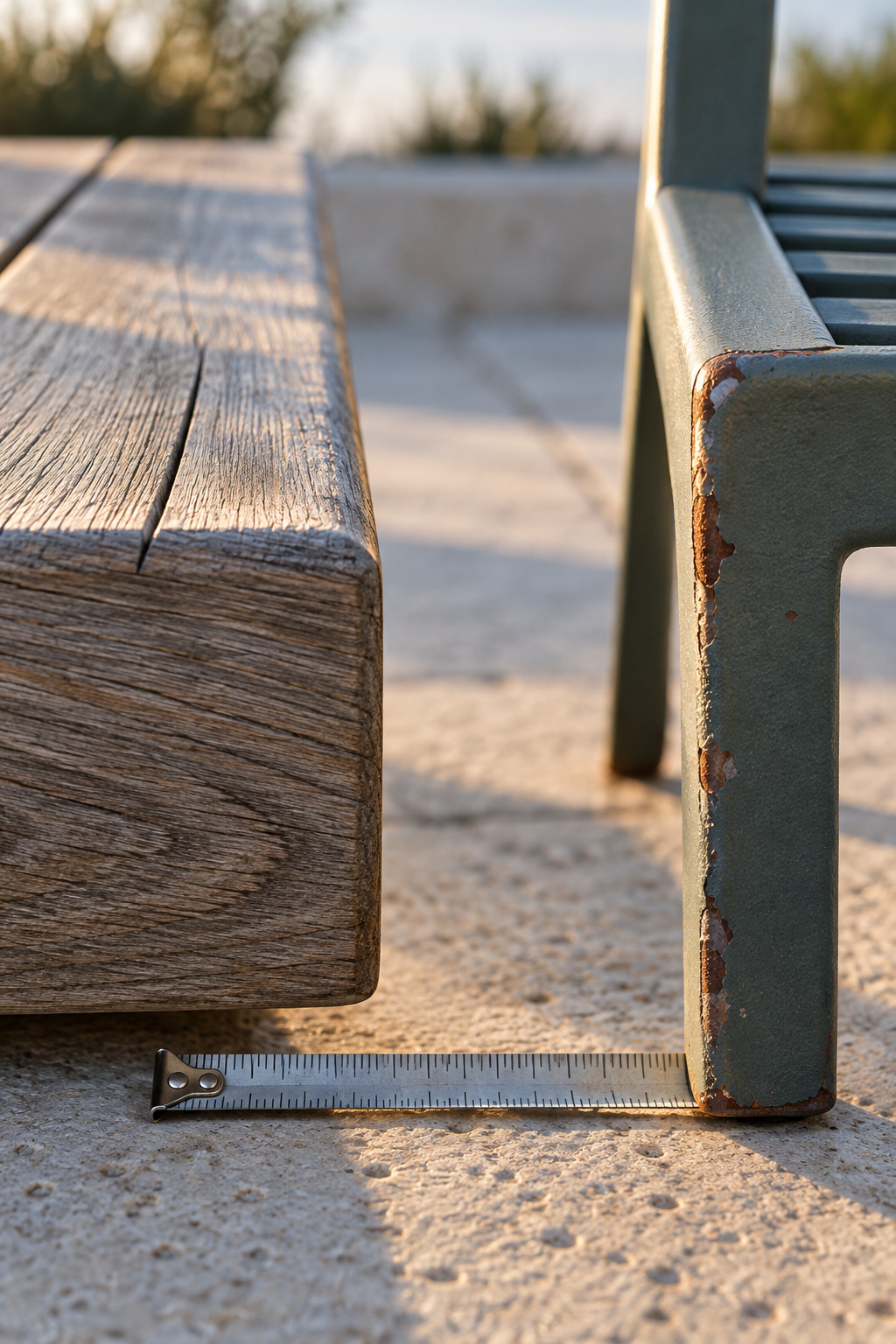
My clearest lesson in outdoor materials came from a powder-coated steel chair frame someone had scuffed against a step. Under my thumb the paint around the chip had lifted into a blister the width of a coin. The rust beneath had already traveled an inch in both directions, under coating still flawless from three feet away. Steel does not fail where you can see it. So the comparison below rests on what a material does after its surface is breached, not on how it looks new.
| Material | Realistic service life | Weather behavior | Relative upkeep |
|---|---|---|---|
| Mature teak / ipe hardwood | 30–50 yr (trade estimate) | Decay resistance from heartwood extractives; durability class varies with tree age and origin | Highest, if you want the color kept |
| Extruded aluminum, powder-coated | 15–25 yr (trade estimate) | Self-passivating substrate; coating life set by its AAMA 2604/2605 tier | Low |
| HDPE poly lumber | 15–25 yr; 20-yr warranties | No water absorption, no insects; color fades and fading is excluded from warranty | Lowest |
| Powder-coated steel | 8–15 yr (single trade source) | Rust can start within days of a coating breach in humid air, spreading under the paint | Low until breached, then urgent |
| Synthetic resin wicker | 7–15+ yr (single trade source) | Fails by UV embrittlement and fading, not by moisture | Low |
| Poured concrete / stone | No independent figure published | Hairline cracking over time; GFRC tested to the ASTM C666 freeze-thaw standard | Resealing cycle stands in: roughly annual for plain concrete, 3–5 yr for GFRC |
Trust the aluminum row more than the others, because it is the only service life here with a published test protocol behind it. AAMA 2605, the top tier, requires ten years of real outdoor exposure at a South Florida test site (“no shortcuts or accelerated alternatives”), with no more than 5 Delta-E of color change and at least 50% gloss retention. AAMA 2604, one tier down, asks five years and 30%. Under the coating, aluminum self-passivates: moisture forms an oxide skin that protects the metal instead of consuming it. Steel has no second line, which is why that chip mattered.
Two rows carry caveats. The steel and resin-weave figures each rest on a single trade blog that I could not corroborate. For a poured-concrete or stone tabletop, no retailer, trade body or standards source publishes a years-to-failure figure at all. What exists is a resealing cycle, a maintenance interval standing in for a lifespan: about annual for plain concrete, every three to five years for the less porous glass-fiber-reinforced version.
Where Teak’s Reputation Comes From, and Where It’s Marketing
Teak’s reputation is earned and oversold at once. CIRAD, the French tropical-forestry research center, classifies teak heartwood under the European durability standards NF EN 350 and NF EN 335 as Class 1 to 3 (very durable to moderately durable, by the tree’s age and origin) and only Class M against termites. A 2023 study in BioResources found the same gradient inside the species. Five-year plantation teak tested merely “resistant,” twenty-year heartwood “very resistant,” and its authors reserve mature heartwood for outdoor use.
Nearly all teak sold today is plantation-grown, so the flat numbers in furniture copy (twenty-five years, fifty years, Class 1) have a provenance problem. They trace to retailer marketing pages, not to forestry or standards sources, and I found no independent study behind them. The durability is real; the single number is not.
The Cushion Fabric That Fails Long Before the Frame
Now the claim in the title, at the strength the evidence supports. Frames are 15-to-50-year items, solution-dyed acrylic cushion fabric is a 7-to-10-year item, and the foam inside it is a 5-to-7-year item. Three independent trade sources converge on those ranges with no numeric conflict. That makes this a converged trade consensus, not a controlled lab comparison, and since no such study exists I won’t dress the consensus up as one.
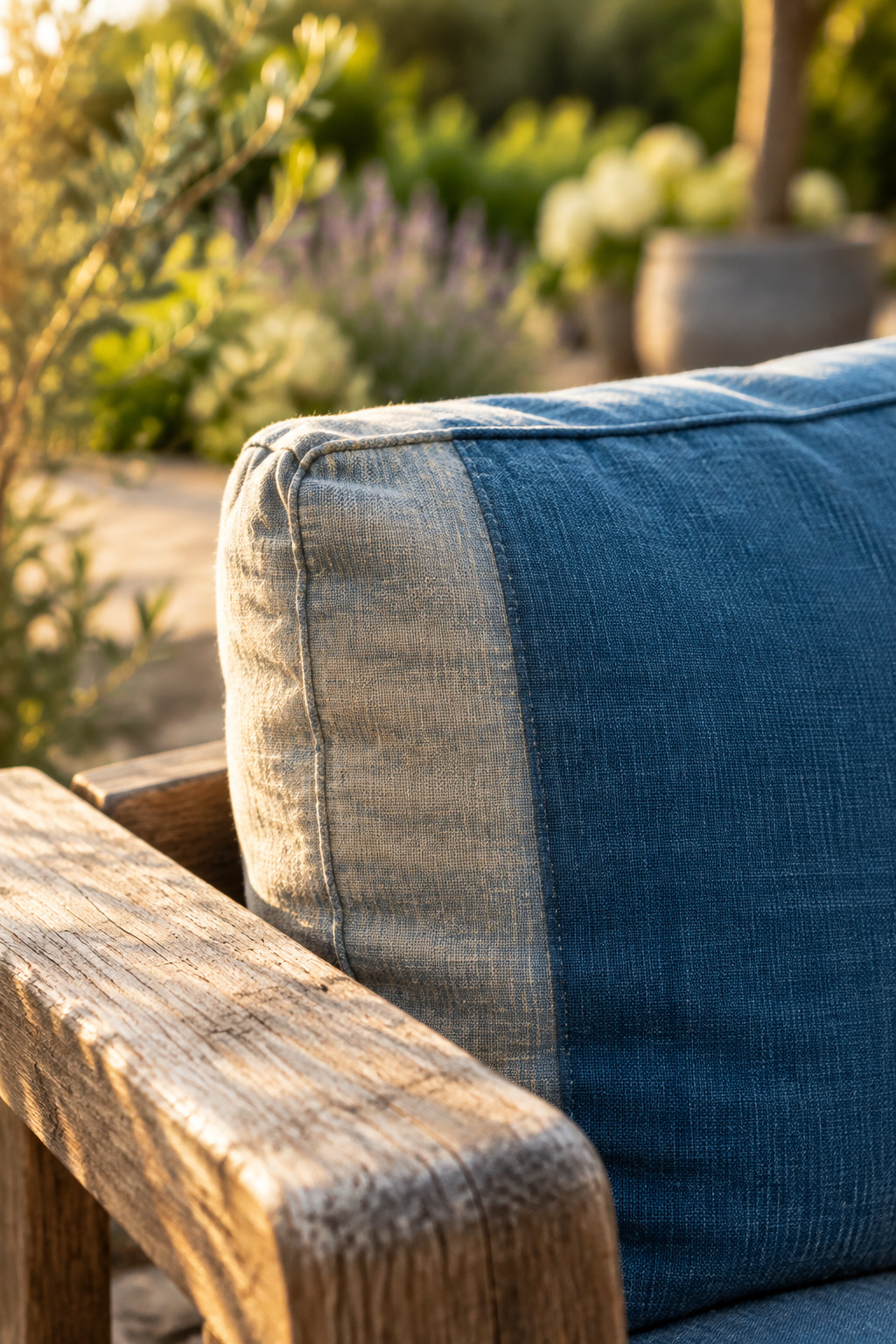
Take it at face value and the buy-it-for-life decision changes shape. You are not buying a set for twenty years. You are buying a frame for twenty years and fabric three to six times.
Solution-Dyed Acrylic vs. Olefin vs. Polyester
- Solution-dyed acrylic, 7 to 8 out of 8 on the AATCC lightfastness scale, 7 to 10 years of direct sun, with fade warranties of 5 years at upholstery grade and 10 at awning grade.
- Solution-dyed polyester, 5 to 6 out of 8, an estimated 4 to 6 years, typically a 1-to-3-year fade warranty.
- Olefin, or polypropylene, 5 to 6 out of 8, an estimated 3 to 5 years, 2 to 3 years of warranty, and the best stain and water resistance of the three because the fiber itself is hydrophobic.
They do not rank cleanly from best to worst, because olefin trades UV life for water behavior. The test underneath every number above is AATCC 16, or ISO 105-B02 internationally: hours under a xenon-arc lamp, where 1,500-plus hours corresponds to three to five years or more of real color retention.
None of it rescues the foam. Even a cushion in first-rate acrylic can go dead underneath in five to seven years, because cover and core degrade on different clocks. A cushion that feels tired but still looks new is the foam telling you first.
Surface Heat, Wicker and Resin Weave, and the One Thing This Article Won’t Decide
Everyone knows metal gets hot and wood doesn’t, and the measurements disagree. In June 2012, a Denver-area deck builder ran an infrared thermometer across materials in 86.5°F air. Off-white and white powder-coated aluminum read 131.5°F and 133.5°F, the coolest tested, while weathered cedar read 170.2°F. By my arithmetic, 170.2 − 133.5 = 36.7°F, so the gray wood ran nearly forty degrees hotter than the white metal.
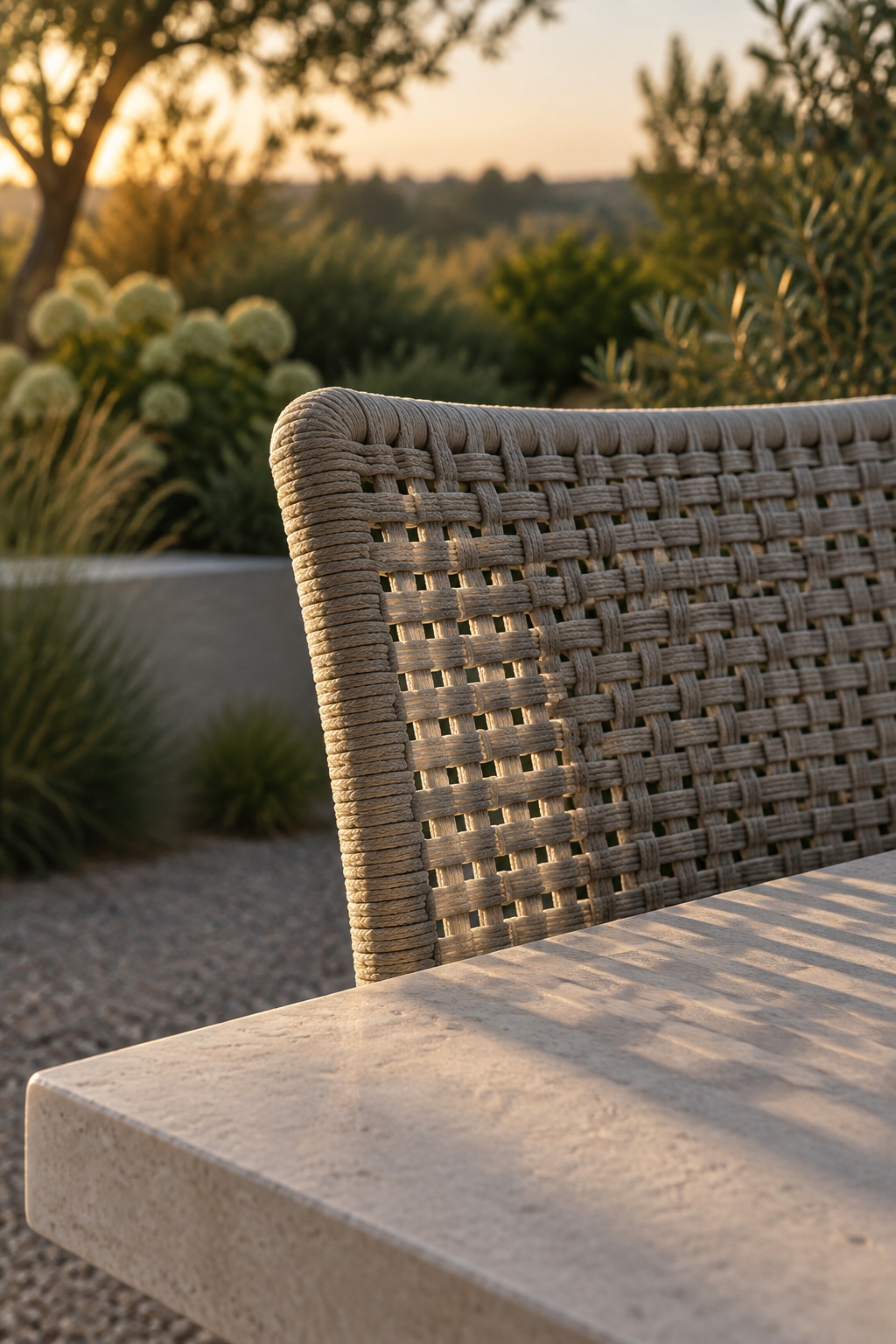
One non-peer-reviewed field test of decking, not tabletops, is no law of physics. A peer-reviewed 2025 study in Scientific Reports, measuring park surfaces in Guilin, points the same way: light-painted metal peaked at 45.8°C against 65.3°C for dark-coated wood (converted by my arithmetic: 45.8 × 9/5 + 32 = 114.4°F; 65.3 × 9/5 + 32 = 149.5°F). Color and finish decide what a surface does to a bare forearm in August. The base material barely enters into it.
Resin weave deserves the same honesty. Synthetic wicker is estimated at 7 to 15-plus years outdoors, against 1 to 5 for natural rattan left in weather, on one trade source I could not corroborate. The failure modes matter more than the numbers. Natural wicker dies of wetting and drying; synthetic wicker dies when UV turns it brittle. A tempered-glass tabletop raises a question about children at the table that I have written about separately, so one clause is all I will spend on it here.
Matching the Material to Your Climate and Your Patience for Upkeep
Climate leaves the service lives above alone and changes which one you reach. Humid, coastal air pressures coatings and feeds the fungi that decay wood, dry high-UV air goes after pigment and fiber, and freeze-thaw cycling goes after anything porous. Find the stress your weather applies hardest, then pick the material that gives it the least purchase.
When HDPE Beats Real Wood, and When It Doesn’t
In humid and salt-air conditions HDPE poly lumber wins on a technicality that matters: it absorbs no water, hosts no insects and never needs refinishing. Three major brands warranty it for twenty years, each independently, a better signal than any single brand’s claim. In freeze-prone climates it wins again, since it is chemically indifferent to temperature swings.
It will not stay the color you bought. Trex’s own warranty terms say so (“upon exposure to the sun, all colors will fade to some degree”), and every one of those twenty-year warranties excludes fading. Where wood beats HDPE is aging and repair. It ages into something people want and can be repaired: a gouge in teak sands out, while a gouge in poly lumber is permanent.
Every material here asks for some annual attention, and teak and plain concrete ask for the most. I have given lifespans without methods on purpose; what each material asks of you afterwards is where that belongs.
The Verdict: What Ten Years Actually Looks Like
The row I trust most and the row I would buy are not the same row. Aluminum carries the only figure here with a test protocol behind it. I would still buy the wood.
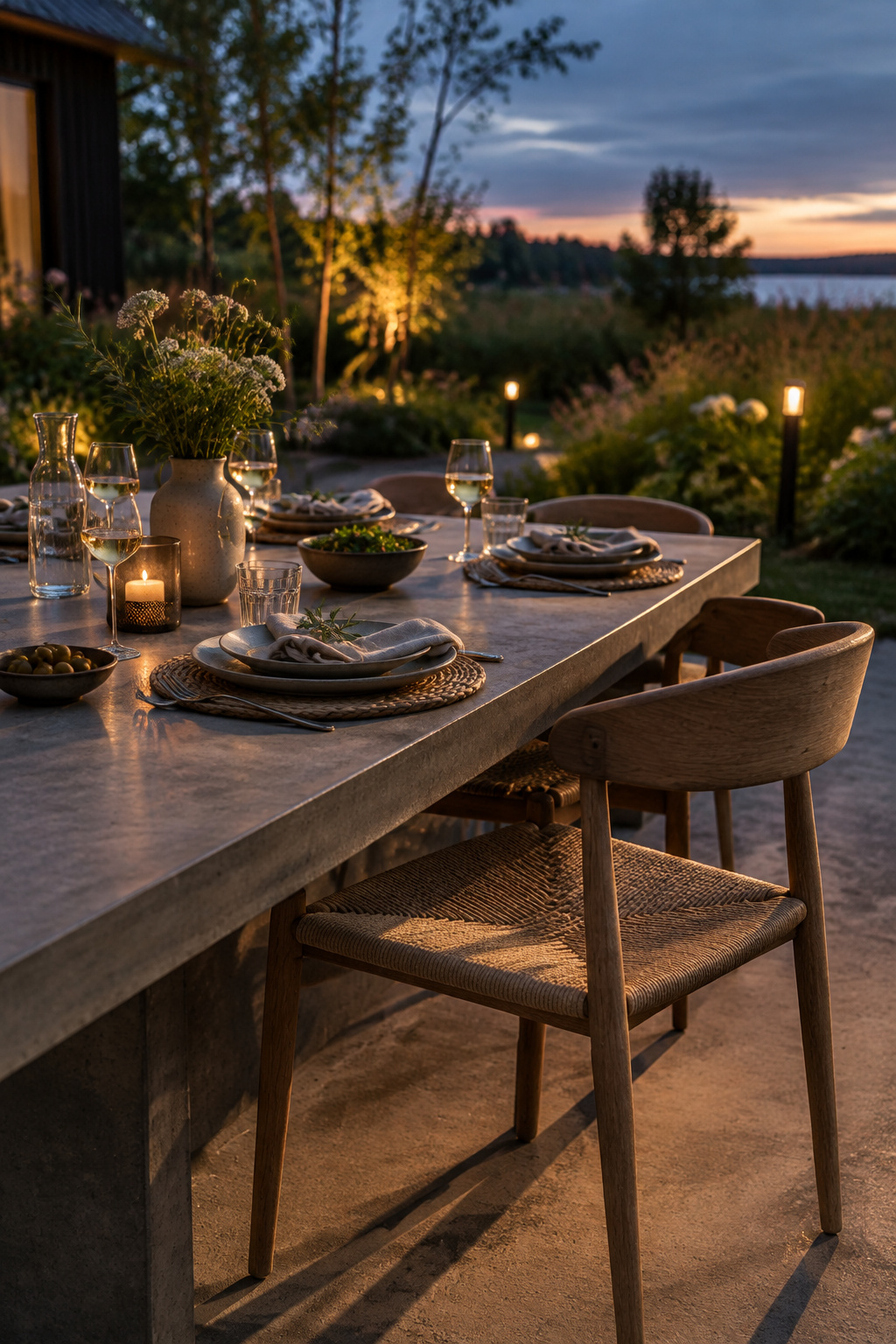
One recommendation: a single mature-heartwood teak table, bought once, with solution-dyed acrylic cushions you plan from the start to replace twice. Swedish has a word for that logic: lagom, the right amount rather than the most. One good frame, honest fabric, nothing bought expecting to want something else next season. If mature teak is out of reach, powder-coated aluminum certified to AAMA 2605 is the same decision in another material, and which materials a given budget reaches is worth settling first.
Ten years out, the table is the driftwood-colored one this article opened on, joints tight, color long gone and no worse for it. The cushions are the third set. Choosing what the thing is made of ends with this sentence. Keeping it alive, and putting it away in November, begins in the care article next door.
FAQ
How long does a teak outdoor dining table actually last without regular oiling?
Considerably longer than its color does. Teak’s decay resistance comes from oil-like extractives inside the heartwood itself, not from an applied finish, so an unoiled table weathers to silver-gray without meaningfully speeding up structural decay. Mature heartwood realistically runs for decades. The flat fifty-year figure traces only to retailer marketing.
Is HDPE poly lumber as durable as real wood for an outdoor table?
Against weather, yes, and arguably more so: POLYWOOD, Trex and Berlin Gardens each warranty HDPE for twenty years against rot and structural defects. Hardwood wins on dent resistance, measured by Janka hardness. That is a surface-hardness number, though, and it says nothing about rot or UV, so never argue lifespan from it.
Do outdoor cushions need to be brought inside for the winter?
Sustained moisture is the real threat, not cold: mold and mildew grow in a damp foam core long before the outer fabric gives out. Fabric and foam also run on different clocks, roughly seven to ten years against five to seven. Covers, storage and drying are their own subject, and I have handed them over below.