I keep one drawer that is allowed to be a mess. Clients who assume I have none are surprised to hear it.
That drawer is the reason the rest of my home stays clear. The mess has a place, so it stops looking for one. Most living rooms have the opposite problem: the throw slides off the sofa arm, the shoes stop wherever the feet stopped, the magazines drift to the floor, and the baskets bought to make the room look warm sit in the corner holding nothing. Learning how to use baskets in a living room starts there. A Bolga basket earns its place by holding something. Give each one a job and the room gets calmer as well as warmer.
TL;DR
- Count what actually lands on your floor and sofa in a normal week, then buy one basket per job; a basket bought to look nice empty becomes more clutter.
- For throws, roll them and stand them on end in a straight or flared basket with 3–4 in of headroom; a 12–13 in basket holds about two rolled throws comfortably, though sizing guides disagree, so roll your own and measure.
- Keep a grass basket dry day to day, out of long direct sun, and reshape a crushed one by dipping it in cool water for a minute or two with the leather handle kept out.
A Bolga basket is a working basket: where it comes from and what it can carry
These baskets are woven by hand by weavers around Bolgatanga, in the Upper East Region of northern Ghana, and most of the weavers are women. Older writing calls them Frafra; newer scholarship uses Gurene or Gurune.
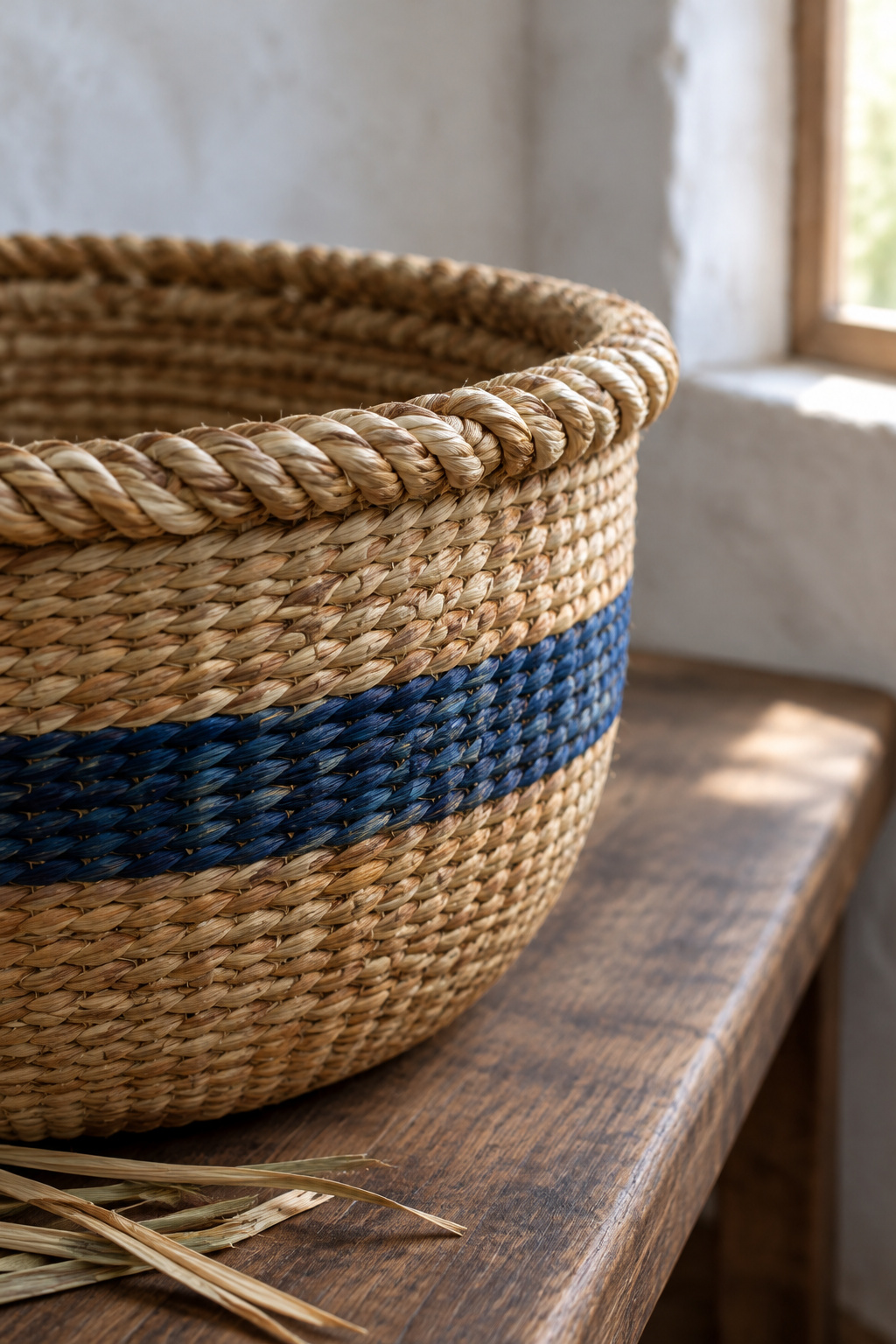
The material is a grass the trade calls elephant grass. Academic studies name vetiver and guinea grass instead, so I’d treat the trade name as a name, not a botanical claim. Each strand is split lengthwise and twisted tight by rolling, which is where the strength comes from, then dyed or left natural and woven from the base up. Many carry goatskin leather handles.
There is no frame inside. The weave and the braided rim hold the shape. Overfill a basket and the rim splays, and a rim held open for months doesn’t fully spring back.
Many are sold through fair-trade organizations and cooperatives, among other channels. Fair trade belongs to the seller, though, not to the basket. Once you know what the basket can carry, it sits comfortably with the rest of the Afrohemian look, as one named piece among a few.
How to use baskets in a living room: start with what lands on your floor
On a first visit I ask to sit in the room alone for five minutes before anyone tells me what is wrong with it. What I notice, almost every time, is the floor. Books on a shelf are quiet; the same books by the sofa leg pull at you every time you pass. That’s my view and I hold it firmly: clutter on the floor is louder than clutter on a shelf, because the floor is where your eye goes to check the room is safe to cross.
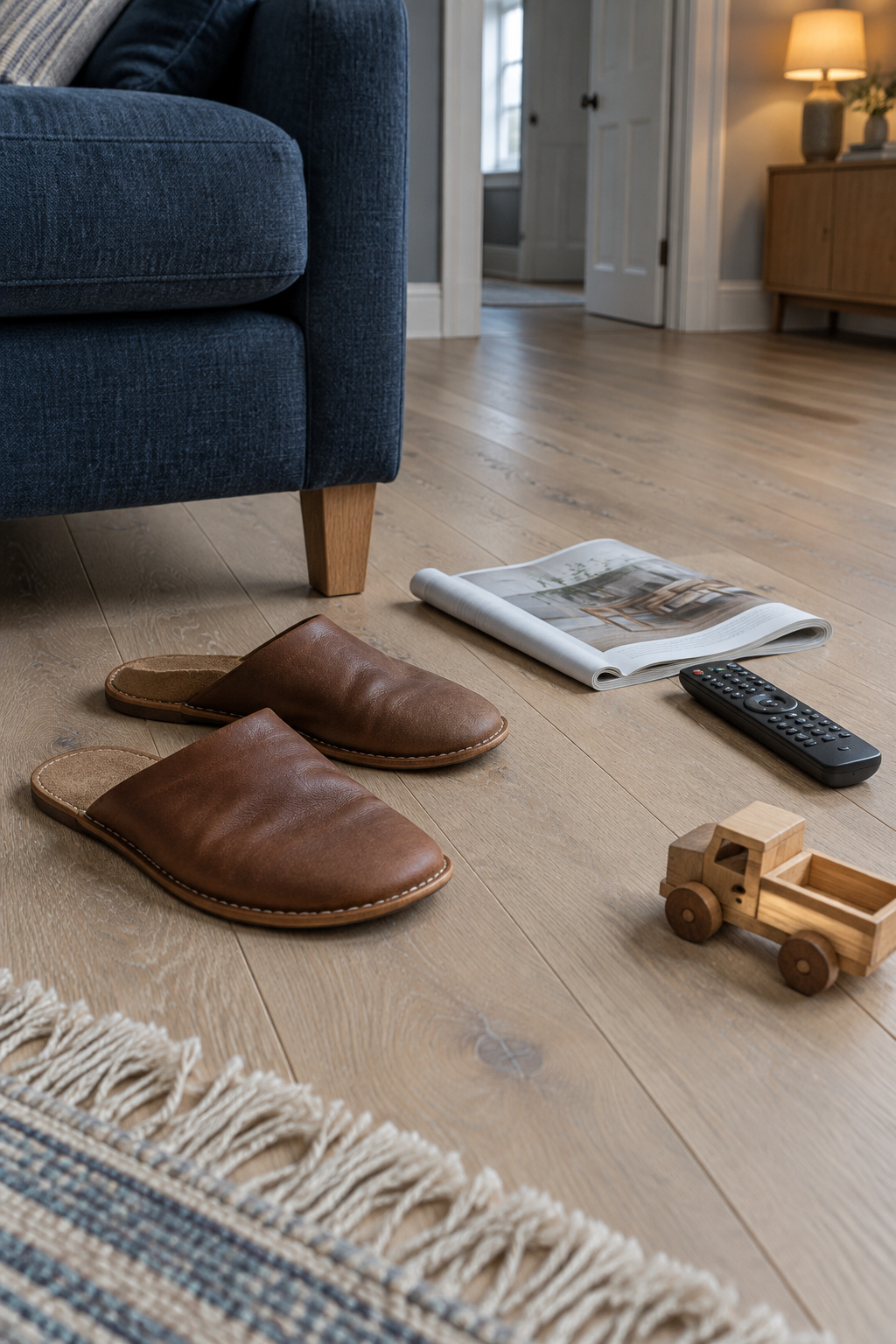
So before you buy a basket, ask what can leave. Take these off the floor and sofa for good:
- throws that live in the closet most of the year
- magazines you’ve finished
- the second and third remote, if one does the job
- toys from a stage the household has outgrown
Then count what’s left by what’s in circulation, not what you own.
My cat, Dal, claims any cushion I lay down within an hour. Now I put one cushion out for Dal on purpose, and the rest of the room stays clear. A household habit given a place stops spreading, and a basket is the same trick for people: the throw gets tossed somewhere, so make the somewhere a basket.
Keep main walkways 30–36 in clear while you place them.
Tonight, before bed, write down what’s on the floor.
Beside the sofa: the baskets for throws, magazines, remotes and toys
The space beside the sofa should feel tidy and close at hand, with every item easy to reach.
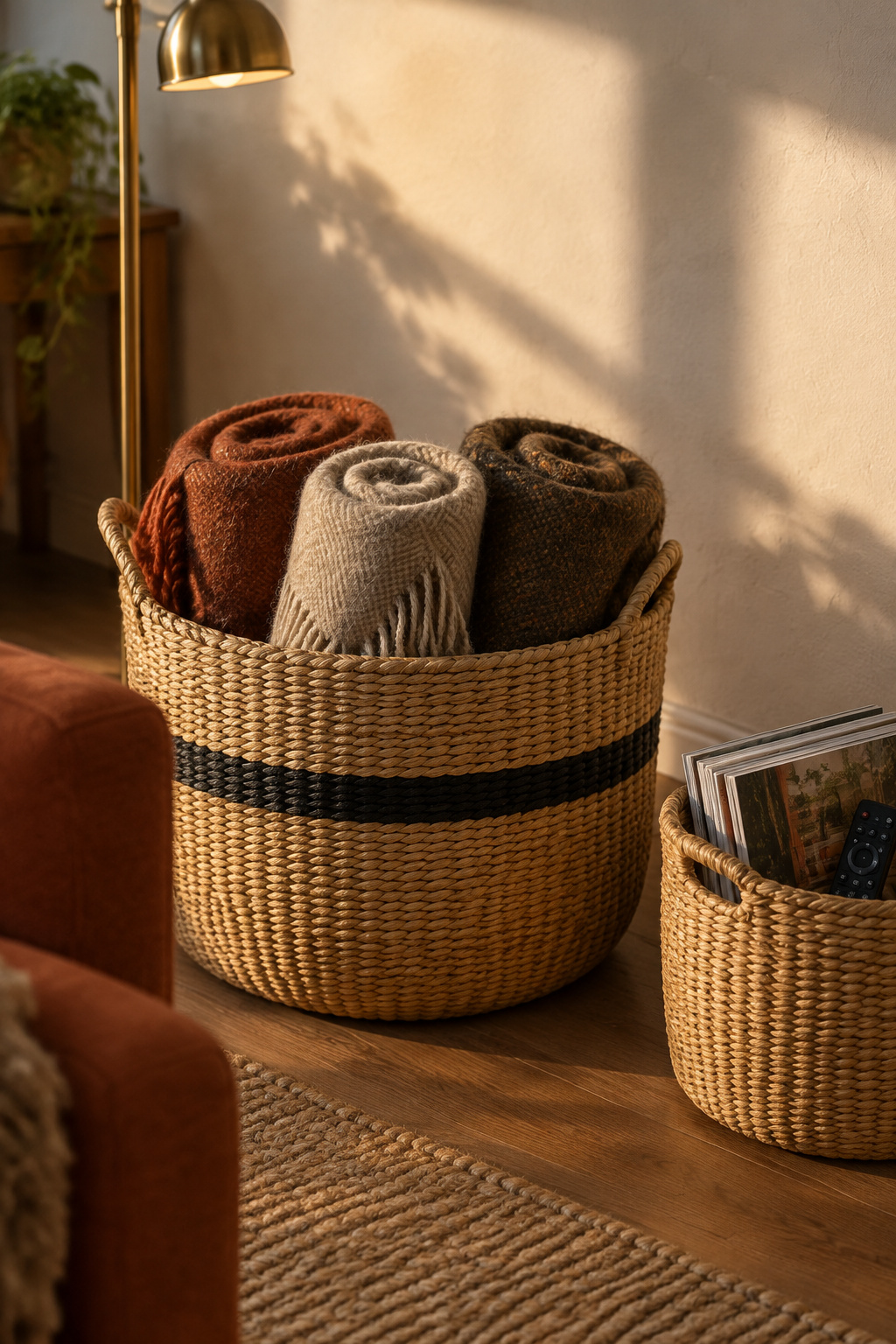
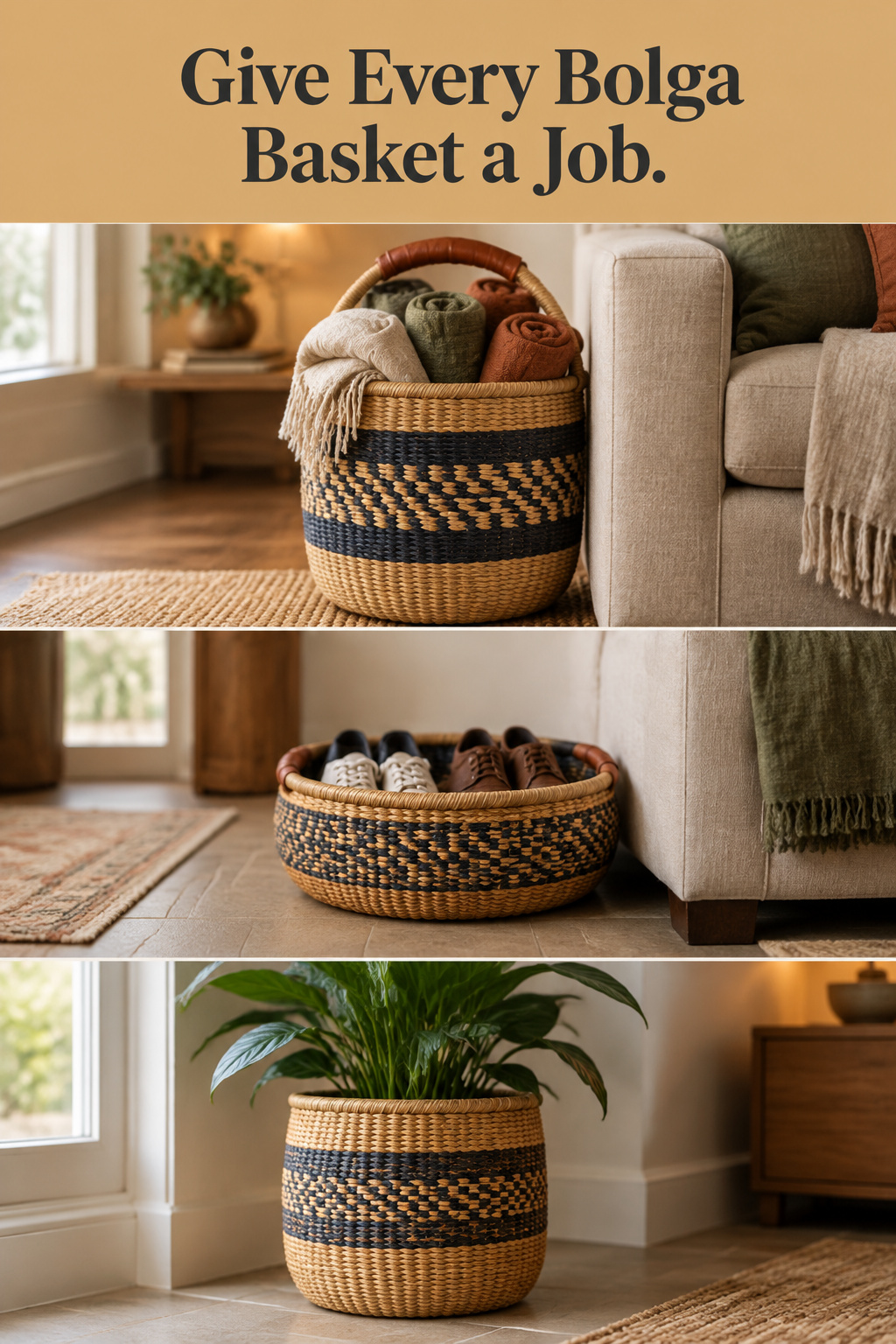
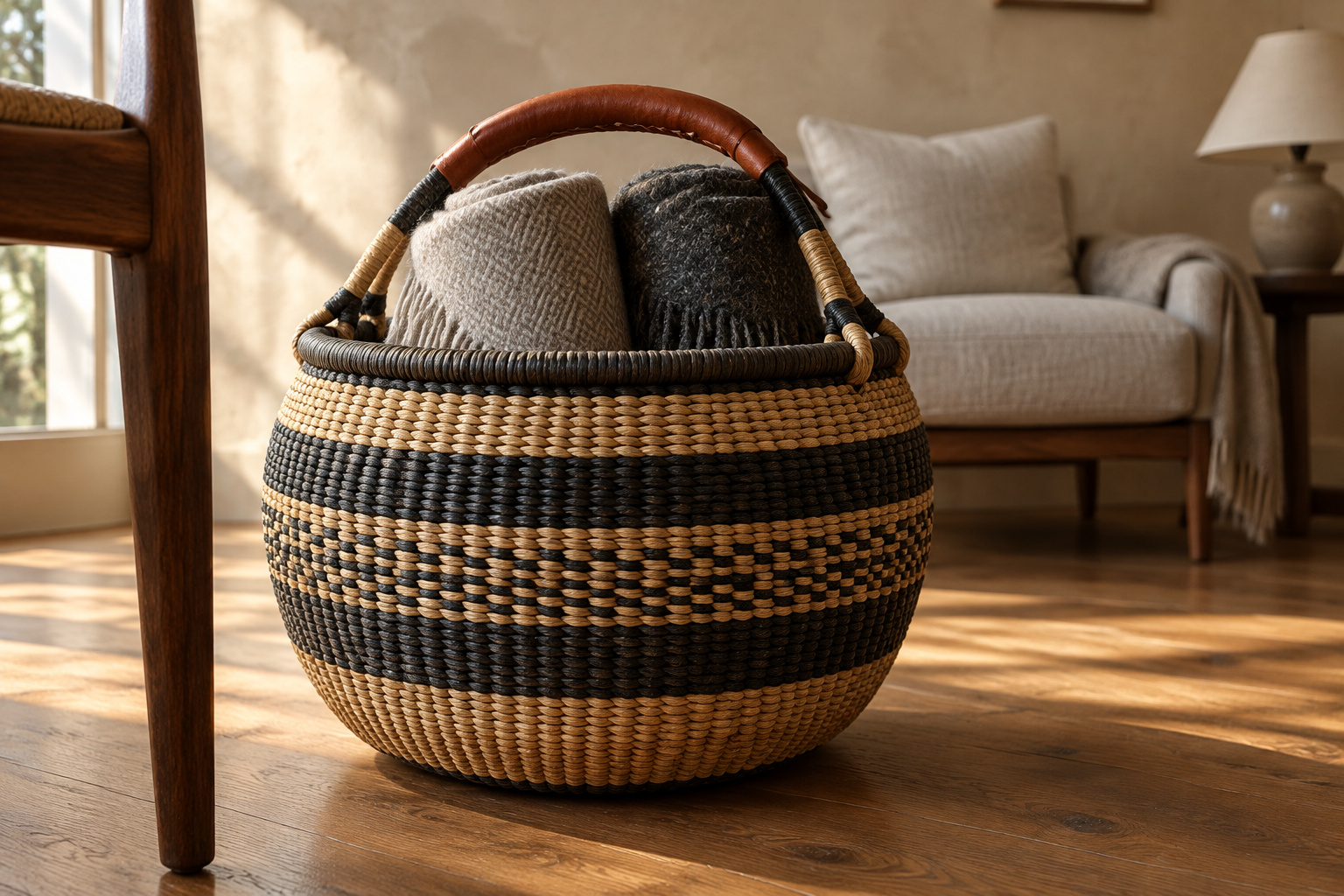
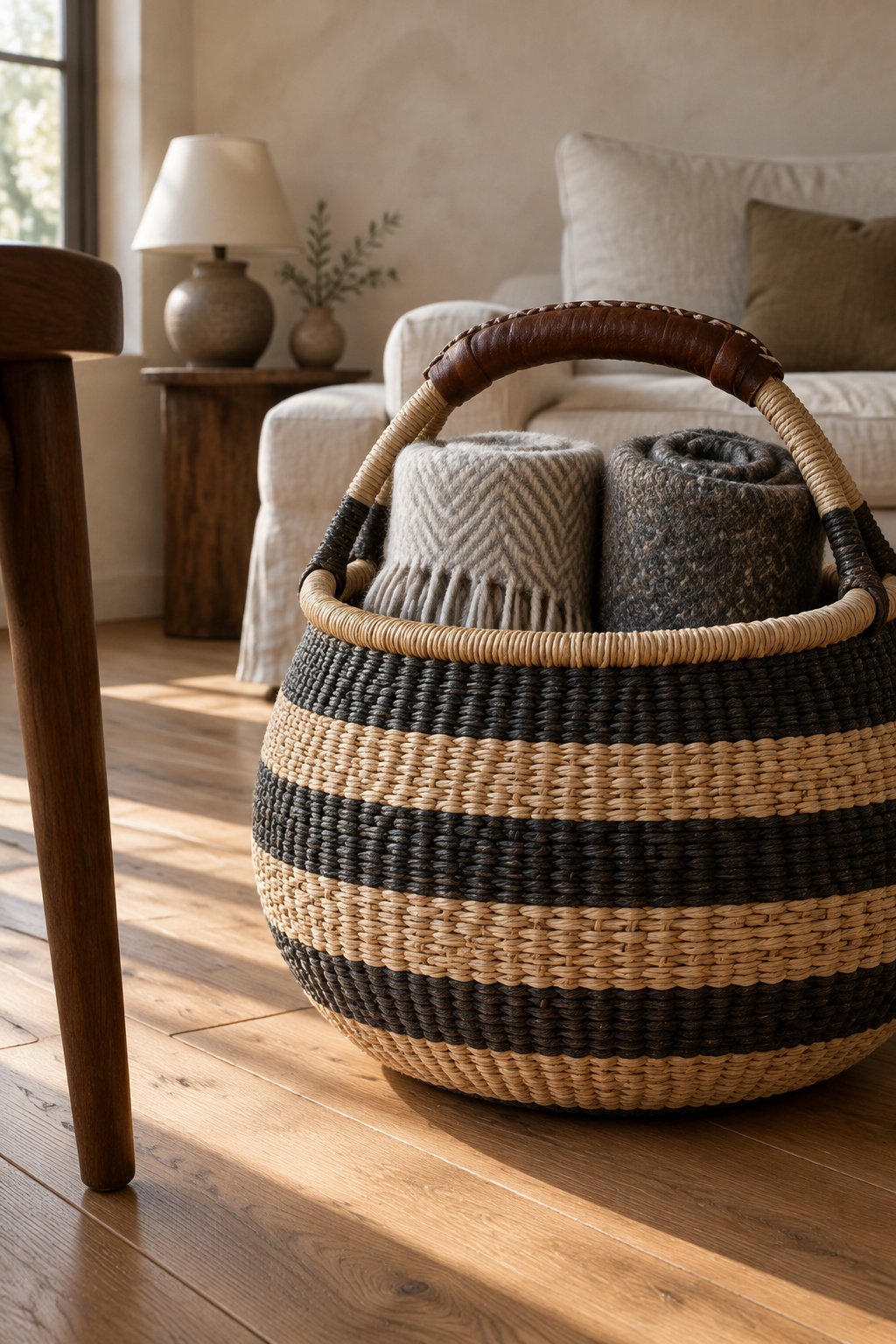
The throw basket does the most work here. Roll the throws instead of folding them. A rolled throw stands on end like a bottle in a crate and lifts out without disturbing its neighbors, while folded rectangles waste the corners of a round basket. Choose a straight or gently flared basket whose mouth is its widest point; a belly that narrows to a small opening suits dried stems. Leave 3–4 in empty at the top. Let it be a little empty. If you have to compress a blanket to get it in, it doesn’t go in: take the next size up or a second basket.
Measure the gap beside the arm before you choose. It’s typically 14–18 in, and the basket wants 2 in to spare on each side, so a 16 in gap takes a basket no wider than 12 in. When the gap is tight, go taller rather than wider; living-room throw baskets usually run 15–20 in high.
Magazines and remotes need a small, shallow basket, wide enough for a flat stack, low enough that you can see what’s in it. Toys want the opposite: deep and wide, so the whole floor goes in with one sweep of the arm at the end of the day. Size both to what you counted.
At the edges of the room: plant cover-pots, shoes by the sofa and pet bedding
These are the baskets that meet the floor, and they should make the edges of the room quiet.
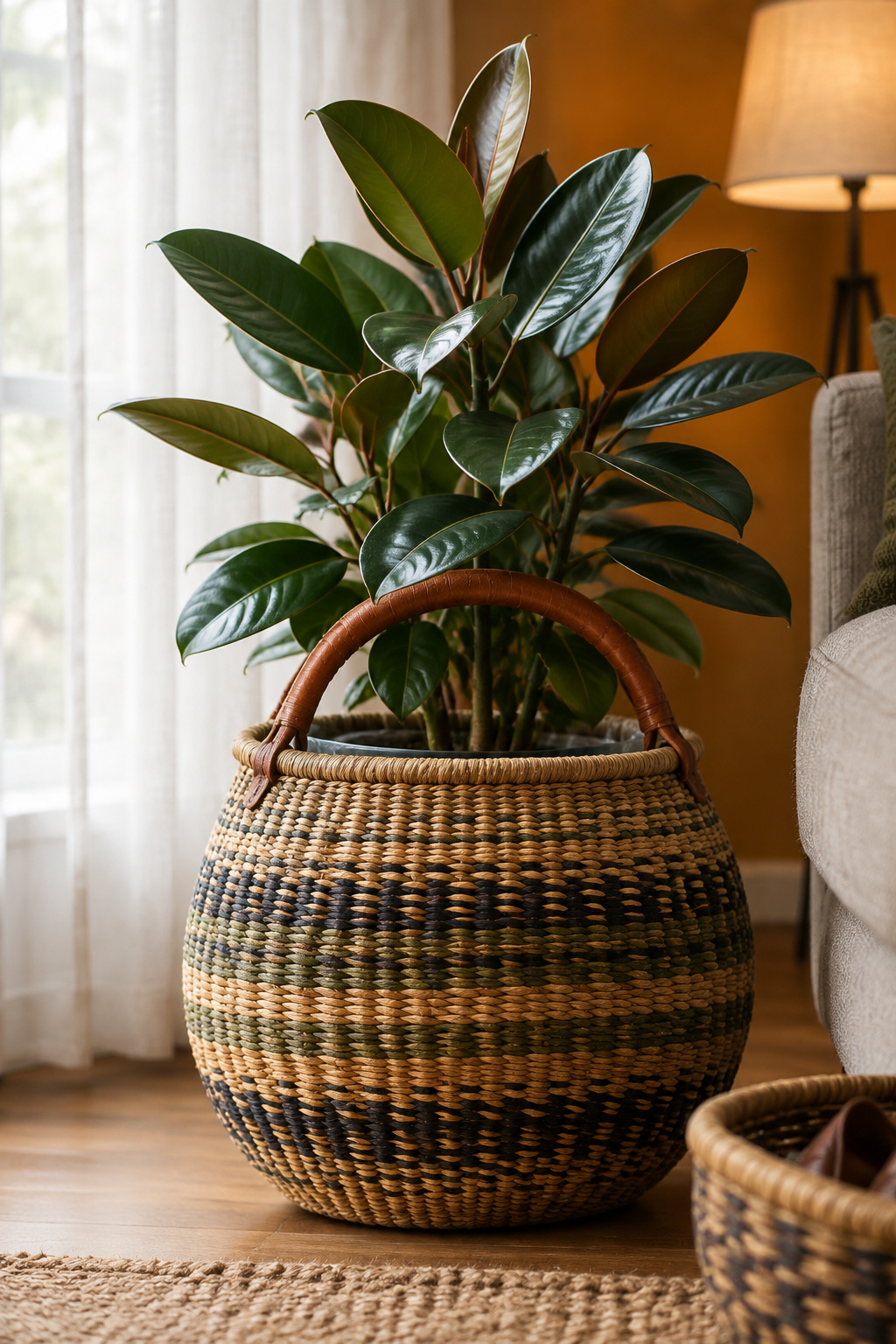
A Bolga basket makes a good cover-pot, as long as the plant never touches it. Keep the plant in its plastic nursery pot, set a waterproof liner or saucer in the base of the basket, and sit the pot just below the rim. Choose one 1–2 in wider than the pot. Water the pot in the sink, let it drain fully, then put it back. A close weave is not waterproof; dried grass breaks down when it stays wet, and in a humid room watch for white fuzz or a damp smell. Raising it on a carved stool as a plant stand keeps it out of the way of mops and feet.
I take my shoes off at a client’s door before I’m asked, and I learn a lot from where there is to put them. Usually nowhere. A low, wide basket by the sofa, where shoes come off in the evening, gives them a place and keeps the pairs together. Size it to the shoes your household actually wears, boots included.
A basket for a pet bed should be sized to the animal, with room to turn. Line it with fabric you can take out and wash, and keep it in a dry spot.
Sizing a basket to its job, and keeping grass baskets dry, out of the sun and in shape
Match the size and the handle to the job
The throw sizes come from sellers’ guides, and those guides disagree: one measures a rolled throw at 5–6 in across, another at 8–9 in. Roll one of your own throws and measure it before you trust any row. The other rows are how I size them.
| Job | Size and shape | Lid or handle | Where it sits |
|---|---|---|---|
| One or two light throws, rolled | 10–13 in across and tall, straight or flared | Open top, leather handles help | Beside the sofa arm |
| Three or four throws | 14–18 in across, 15–20 in tall | Open top; one listing shows a lidded basket of about 18 in by 20 in, which suits throws that rest for a season | Beside the sofa |
| Magazines and remotes | Small, shallow, wide enough for a flat stack | Open top | On the floor at the sofa end |
| Toys | Deep and wide | Open top, so it clears in one sweep | Where the play happens |
| Plant cover-pot | 1–2 in wider than the nursery pot | Liner or saucer inside; don’t lift by the handle | On a stool or the floor by a window |
| Shoes | Low and wide | Open top | Where shoes come off |
| Pet bedding | Sized to the animal | Removable fabric lining | A dry, quiet corner |
Keep a grass basket dry, out of the sun and in shape
Every day, keep it dry. A damp basket in a damp room grows mold and changes color, and dyed grass fades in long direct sun, so keep it away from the sunniest window.
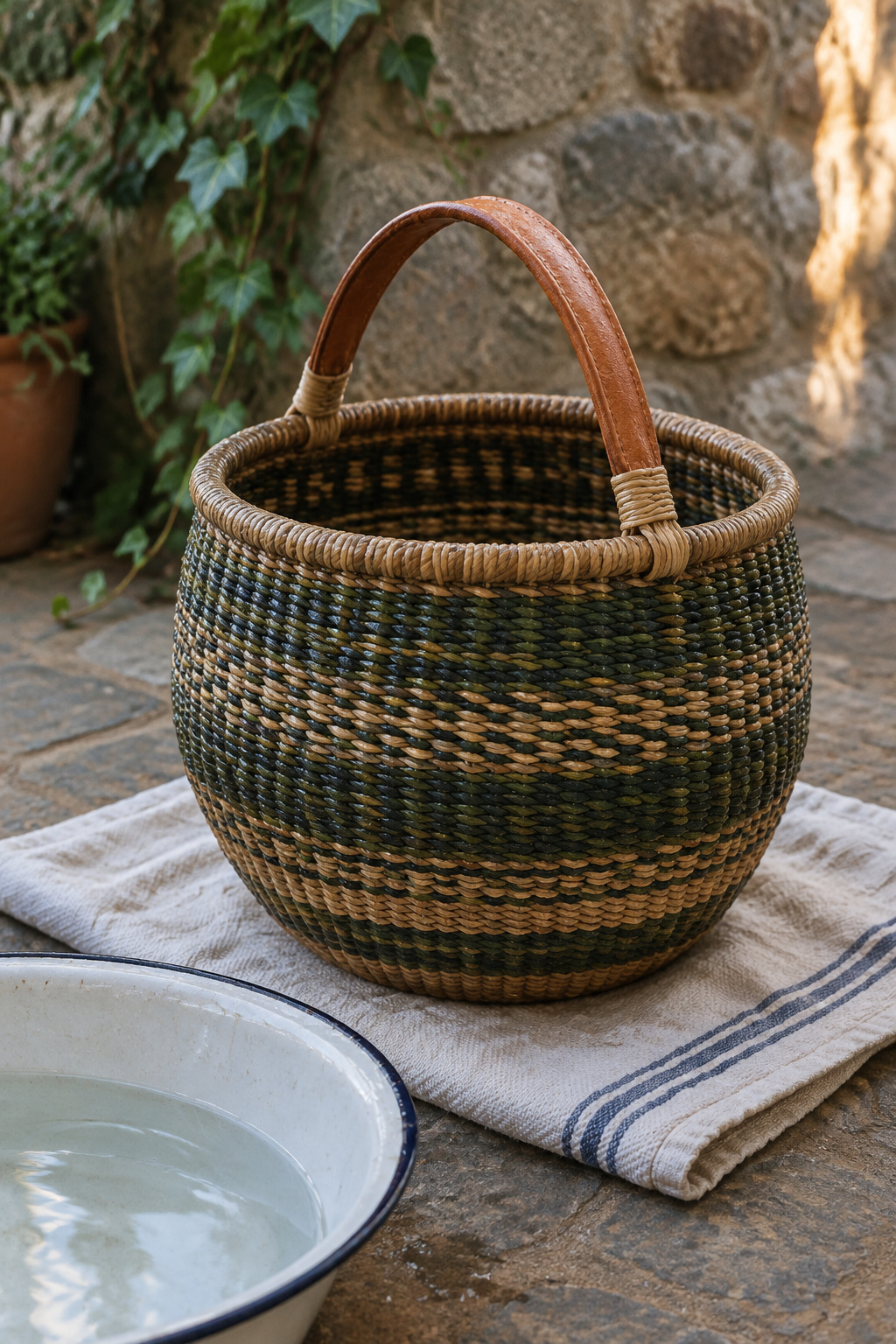
When one gets crushed, reshape it with water. Push the base out from the inside while it’s still dry, since wet fibers are weaker. Dip the basket in cool water to just above the rim for about a minute, or up to two, with the leather handle kept out. Shape it by hand and leave it undisturbed. Some solid-color baskets shed dye when wet, so do this in a sink or outside. Makers disagree on where it should dry, some saying shade and one saying sun. I’d dry mine in shade, somewhere airy. Buff the leather now and then with clear boot polish or a leather conditioner.
A flat basket with no job can still go up, and hanging flat baskets on the wall is a craft of its own.
The room at evening, with every basket doing its job
At dusk I turn the lamps on one at a time, and I stop at the first moment the room feels finished. In a room where the baskets work, that moment comes early.
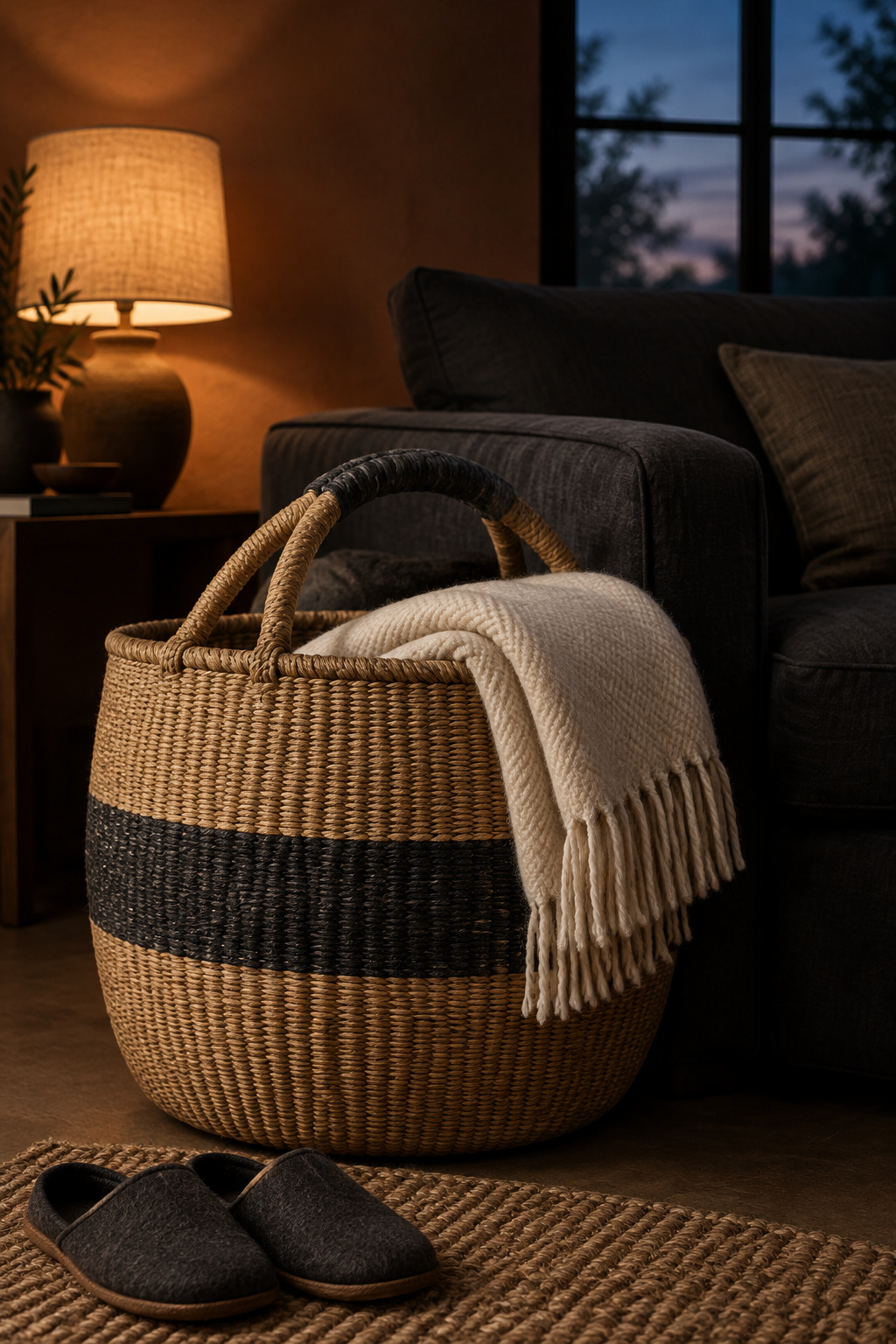
The throw is rolled in its basket by the sofa arm. The shoes are together in the low one. The plant sits in its cover-pot, with the plastic hidden and the grass dry. The floor is clear enough to walk across in the half-light without looking down. Nothing is louder than it needs to be. The baskets are still the warm part of the room, and now they’re also the reason it’s quiet.
Notice where your shoulders go when you walk in.
You don’t need to buy the whole room at once. Look at your own floor this week and decide which one thing lands there most often, and give that one thing a basket first.
FAQ
How many baskets are too many in a living room?
A basket is one too many when it has no job or when it narrows a main walkway below 30 in. There’s no standard number. Count what your household drops on the floor and sofa, give each of those things one basket, and stop. An empty basket bought for looks only adds to what the eye has to sort.
How do you clean a dusty or stained Bolga basket?
Take it outside and shake it, then wipe it with a soft damp cloth. For a mark, scrub gently with a fine-bristled brush, a little warm water and mild soap, then dry it somewhere airy and out of the sun. Skip harsh chemicals and abrasive cleaners, and don’t soak it just to clean it.
What is the difference between a Bolga basket and a seagrass or wicker storage basket?
A Bolga basket is hand-woven around Bolgatanga in Ghana from split, twisted grass, with a braided rim and often leather handles. It is soft enough to reshape by soaking in water, which a rigid wicker basket is not. That softness is why it suits throws and folds back into shape after a crush.