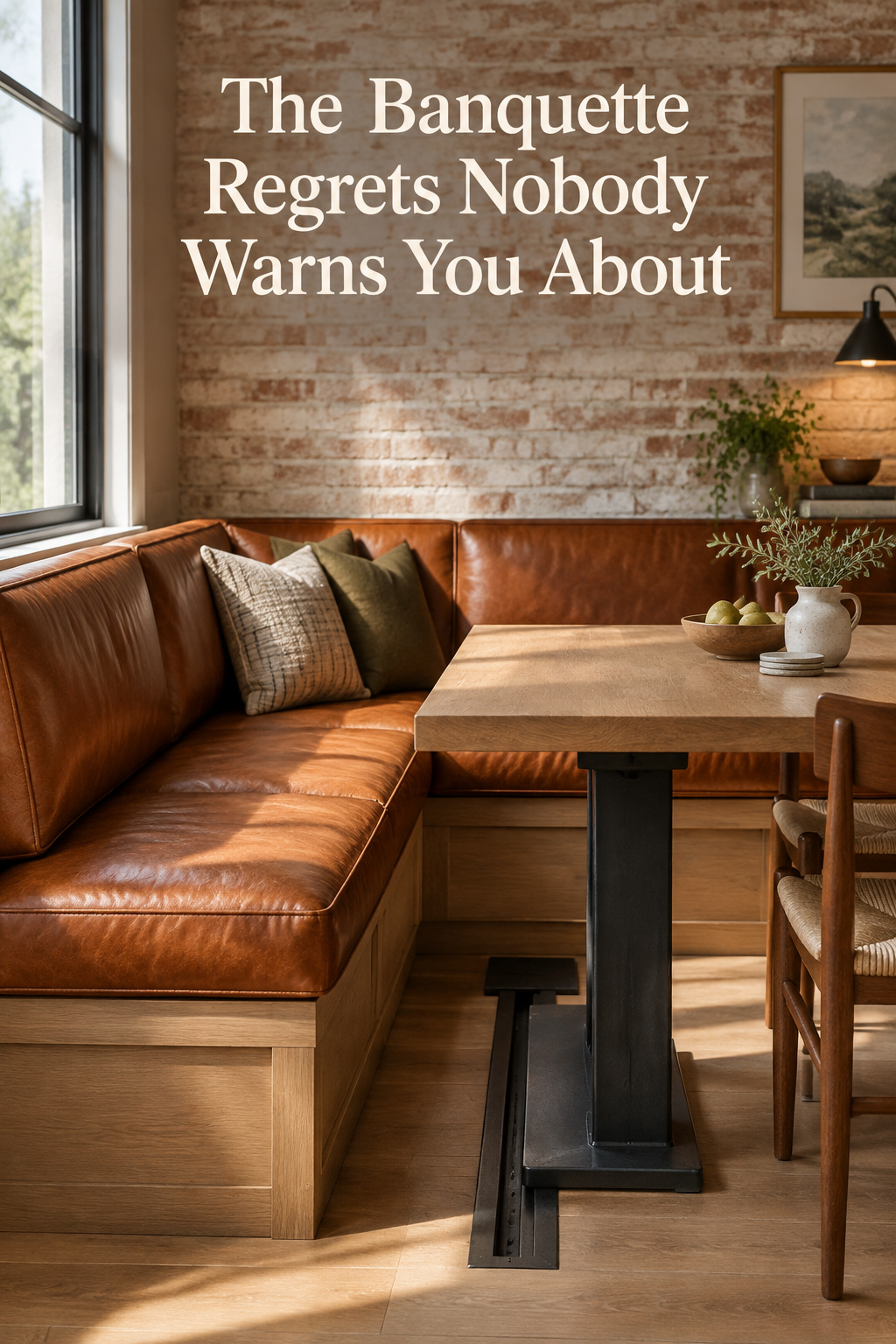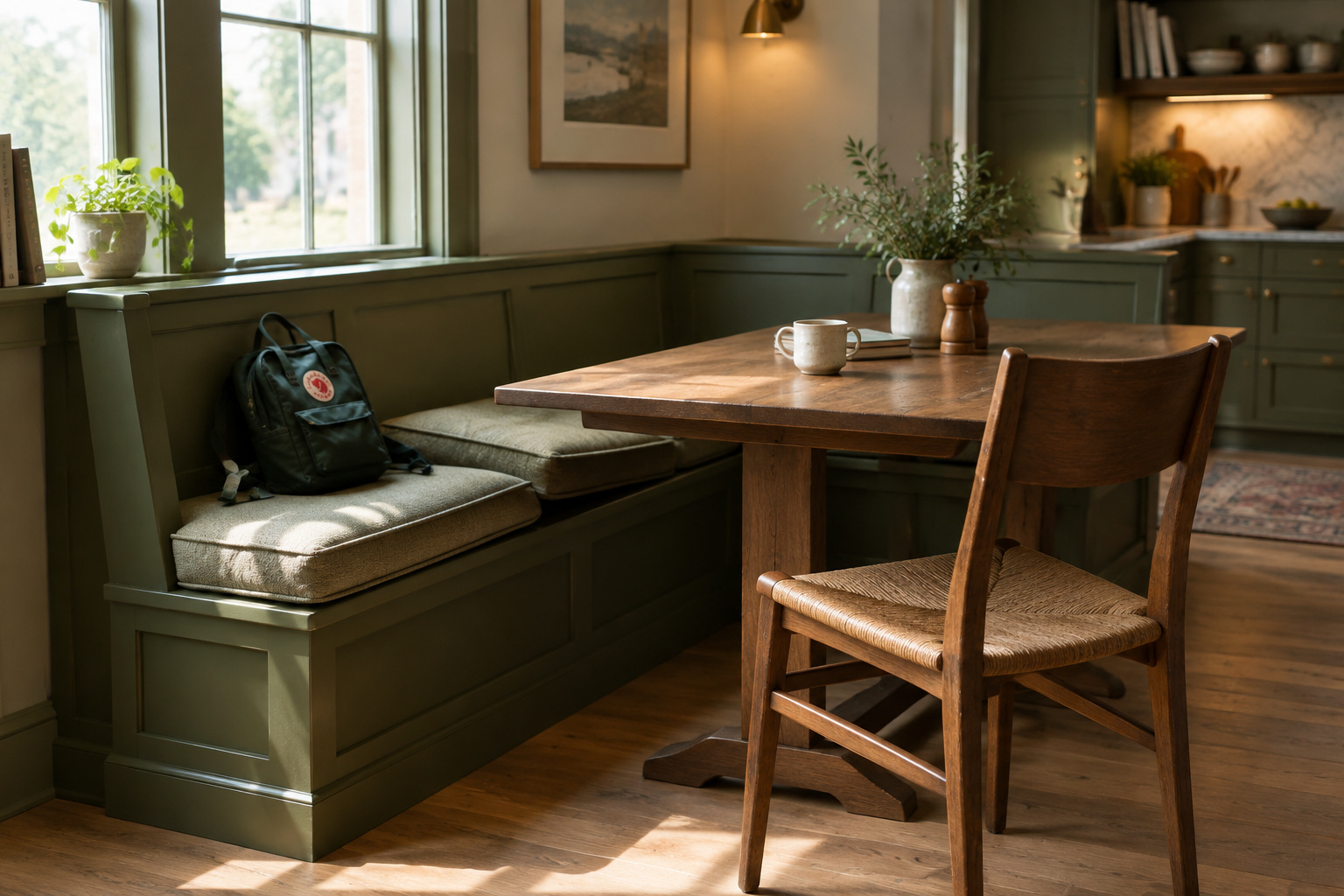

The bench went in ten years ago, and the problem with it never left: a 5’3″ homeowner who still cannot get her feet flat on the floor while she eats, knees riding too high against a seat built for a different body. Nothing about it is ugly. Nobody warned her. She finally said so on Houzz.
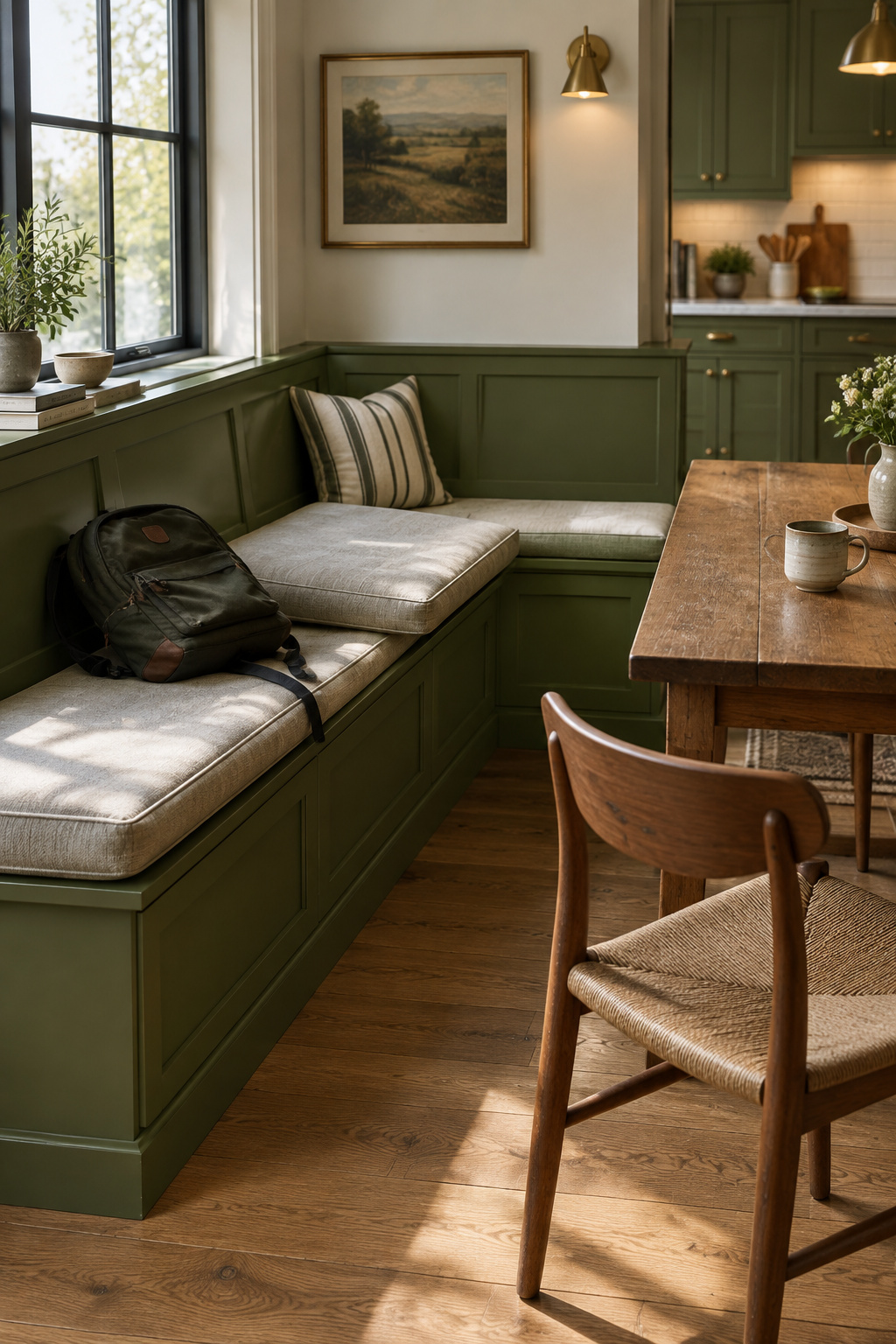
Published lists of banquette seating mistakes run eight unrelated regrets in a row. Those eight compress into four: a dimension, a material, a route through the room, and a household that does not behave like the photograph. All four are settled long before anyone picks a cushion.
TL;DR
- Nearly every banquette regret traces to one of four planning-stage causes: a wrong dimension, a fabric chosen off a style board, a route nobody walked, or a household that lives differently from the photo.
- The best-corroborated complaint is the corner seat: whoever sits deepest cannot leave until everyone else stands up, described independently by Architectural Digest, a Homes & Gardens round-table and Houzz posters.
- A banquette is the wrong fit for some households: a very large one, one with a mobility need, one that rearranges constantly, or a renter.
Where banquette seating mistakes start
Livingetc’s designer-sourced roundup sorts its own eight mistakes into seat dimensions, fabric choice and table-base problems. Homes & Gardens ran a round-table on the same question and landed in three matching buckets: access and layout, storage that does not match how people use it, and material durability.
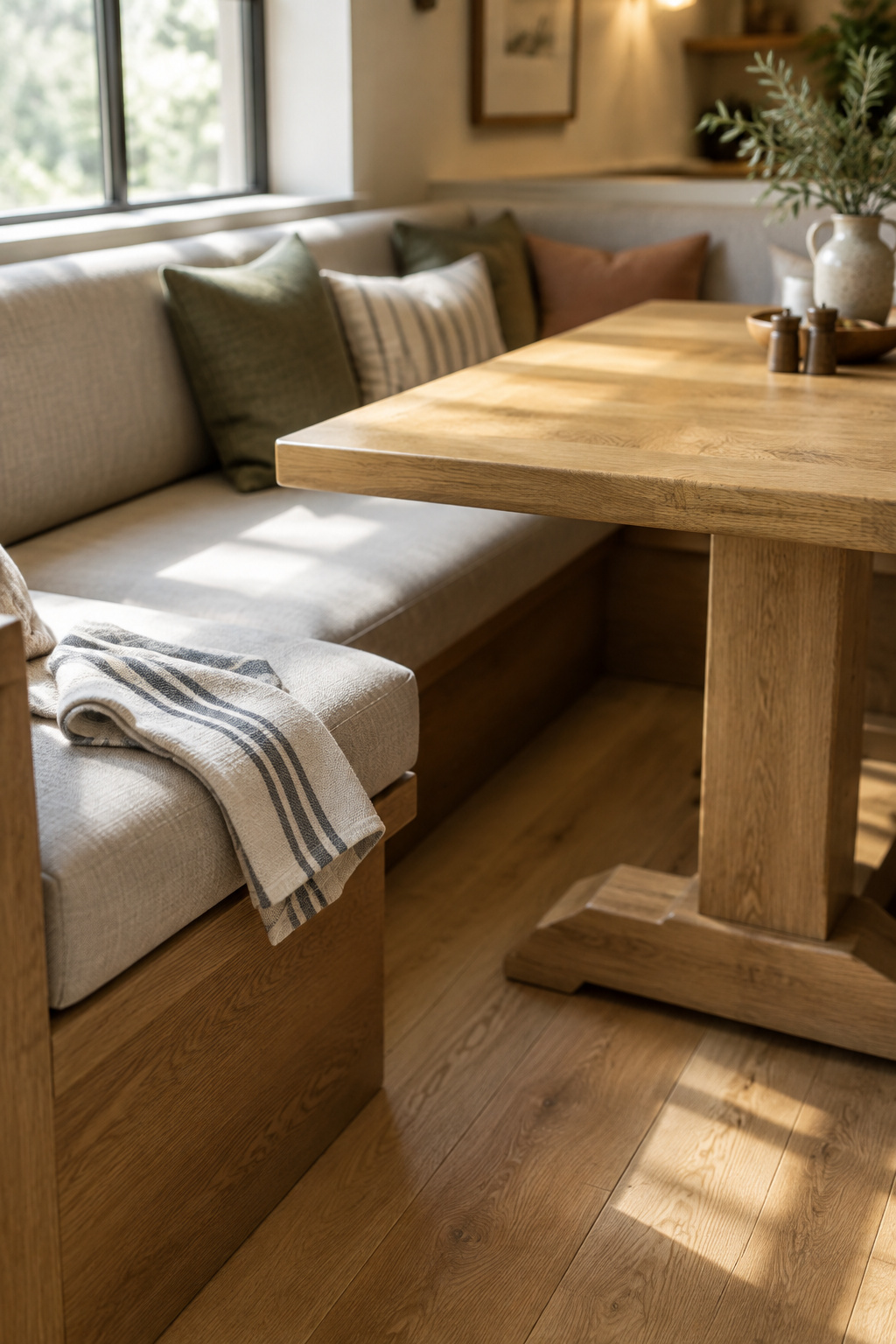
The fourth cause is the one none of them isolates. What a household does to a bench over five years appears in those articles, but scattered: a storage regret here, a cleaning regret later, never named as its own kind of failure. It is the one I care most about, because it is the only cause you cannot catch on paper.
All four are avoidable in the right sequence, which is why the planning order that avoids most of this matters more than eight tips and good luck.
The dimension that ruins everything else
The seat depth that traps a diner against the table
When someone says their banquette is uncomfortable, two numbers can produce the same complaint.

Beth Dadswell of Imperfect Interiors names seat depth. Too shallow, and thighs run out of support, so a diner perches forward and their knees drift toward the table edge. Her working minimum climbs when cushions are loose instead of fixed backs, because a loose cushion eats the depth the drawing promised.
Gemma Tucker of Balance Interior Design names something else: the gap between the seat surface and the underside of the tabletop. Set that tight and a seat of exactly the right depth still pins the person in it.
That decade-old bench was built 16 inches deep, one inch under the floor our dimensions guide says never to cross, and set high enough that her feet never reached. She was told to rebuild. A dimension mistake is the only one of the four that no cushion or fabric ever walks back.
The material that looks right and isn’t
The fabric everyone regrets by year two
Marina Hanisch names the material mistake plainly: materials chosen for looks over durability. She specifies good vinyls and faux leathers for one practical reason: in a kitchen, you will be wiping them.
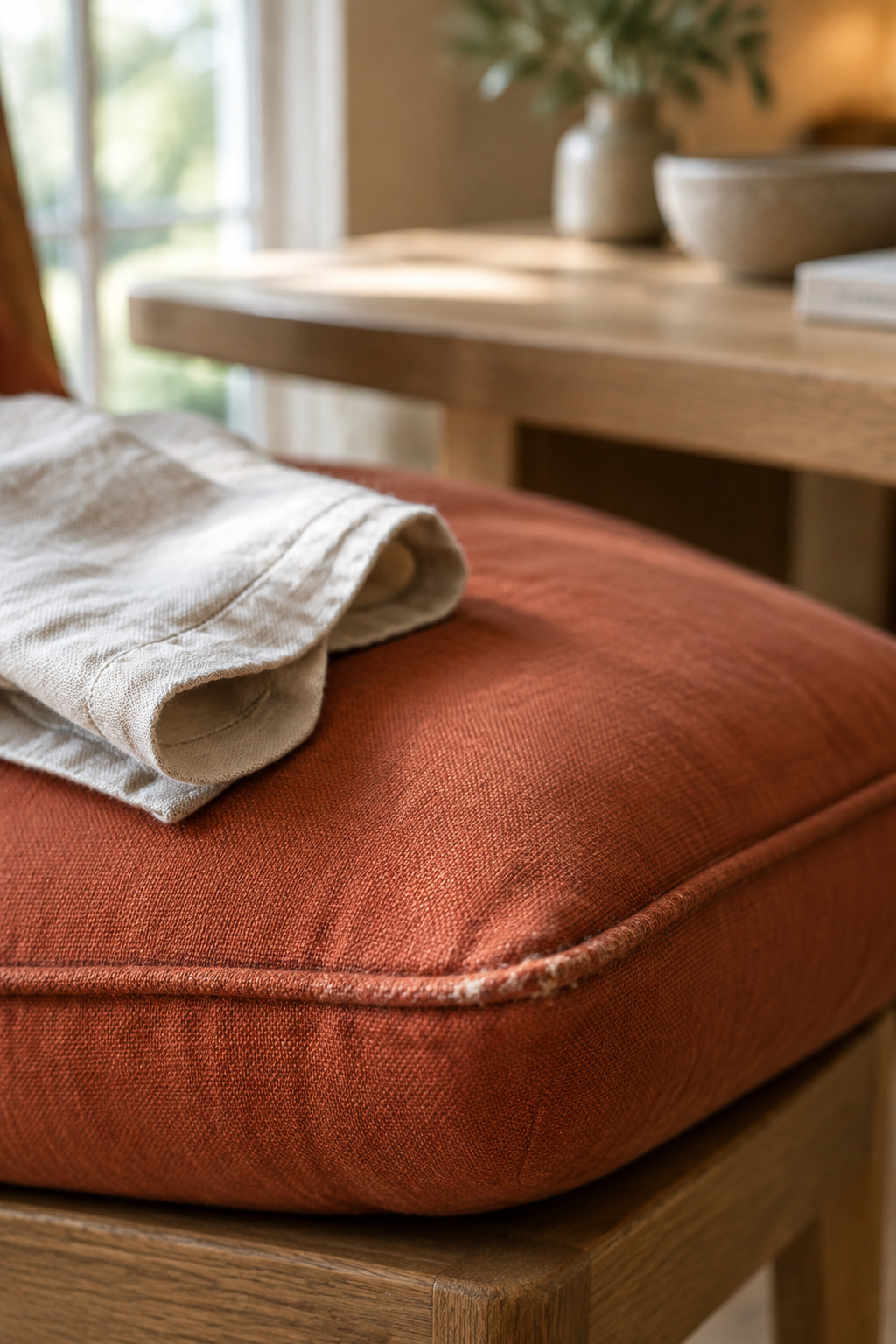
Cath Beckett of Yellow London arrives from the other side, recommending performance fabrics or treated naturals and, more usefully, loose covers, so a household washes or replaces them instead of paying to reupholster. Melissa Hutley of Hutley & Humm says the same about family homes: spills and wear arrive on a schedule.
Three designers at three studios, with no sign any of them read the others.
Still, the mechanism is more useful than the warning. The sit edge and the front seam go first, because that is where clothing drags across the cloth on every entry and exit, for years. A swatch held against a paint chip tells you nothing about that. The fabric and foam that survive a kitchen is a testable property, not a taste.
The route through the room nobody tested
The table base that blocks the slide-in
Watch someone sit down at a banquette paired with the wrong table and you see a small choreography: push the table out, slide in, pull the table back. Furniture designer Joshua Jones of JJones Design Co. admits to doing it himself, and calls it a recurring hassle people live with meal after meal. Nobody tears out a table over this. They just do the dance for years.
Gemma Tucker names the culprit: bulky corner legs, sitting precisely where a body has to pass. Povison’s buying guide supplies the check almost nobody runs: look at the base from the bench side and the entry side, because a built-in bench cannot shift out of a leg’s way the way a chair can. That is a base problem, and how table base choice avoids this is worked out in full there.
The corner seat with no second exit
This is the best-documented complaint here, and comfort is beside the point.
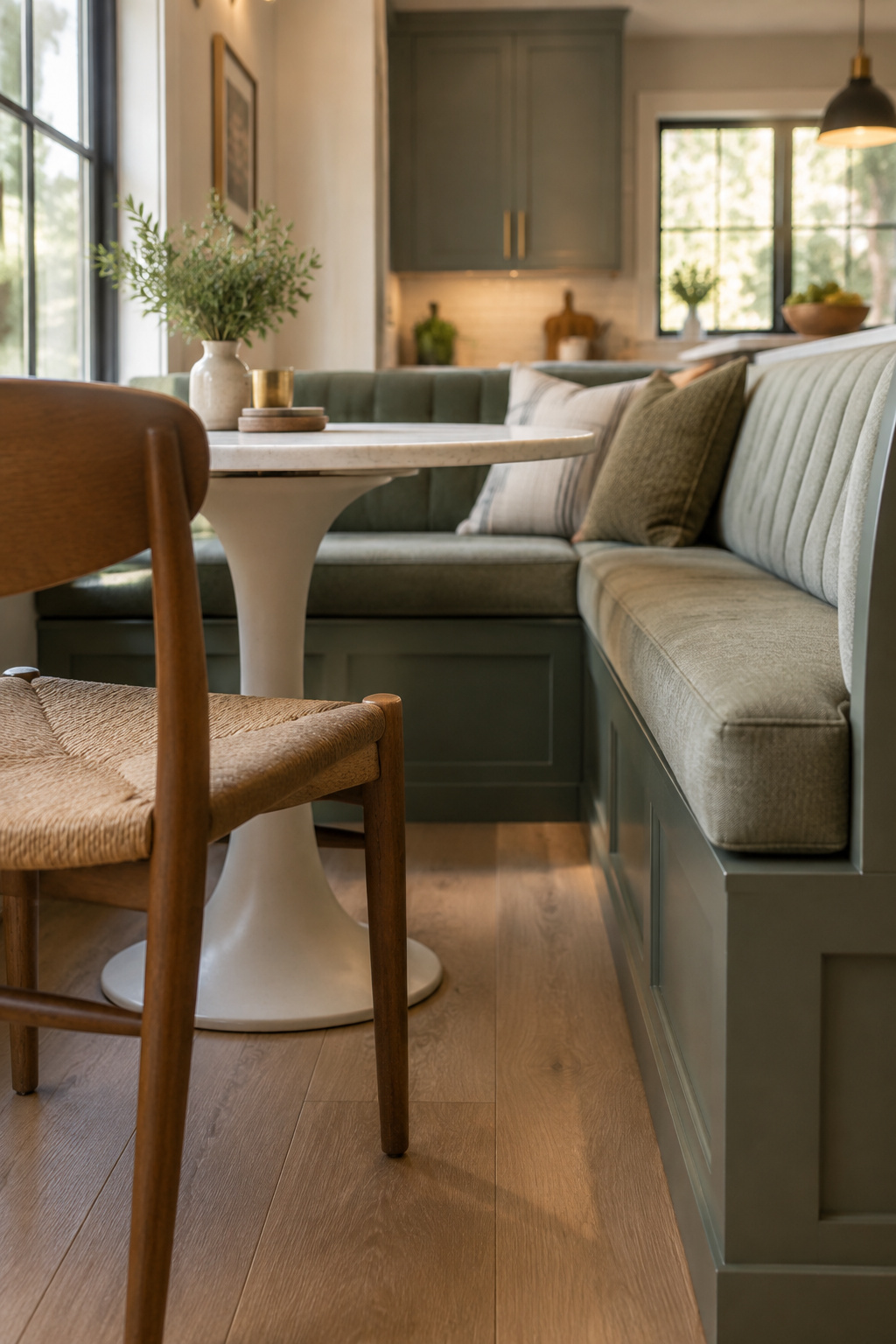
Melissa Morgan, arguing the “don’t” side of an Architectural Digest debate, is blunt: L-shaped banquettes often seat only two, “unless someone volunteers to be trapped in the middle.” Sophie Pringle of Pringle & Pringle, in Homes & Gardens, independently flags access for “anyone seated in the middle who may need others to move to get out.” Designer Allison Lind, in the same piece, gives the planning version: exit points on two sides. And in home-renovation forums, homeowners nobody asked about exits volunteer it anyway: someone always gets trapped on the inside, and you have to get up to let people out.
Not one of them says “second exit.” That is my shorthand for what four separate accounts describe in four vocabularies. The remedy differs from the table-base fix: a pedestal base makes every seat easier at once, but only the seat count, the seating assignment, or a real second way in helps the person in the corner. Povison’s workaround is the least romantic and the most useful: give the open-side chairs to whoever leaves most or carries food, and the deep seats to people who stay put.
The household that doesn’t behave like the photo
What a bench looks like after five years of kids
Under-seat storage is the feature banquette marketing sells hardest, and Nicola Harding will not design it at all. Her reason is behavioral: things get stashed there and never seen again.
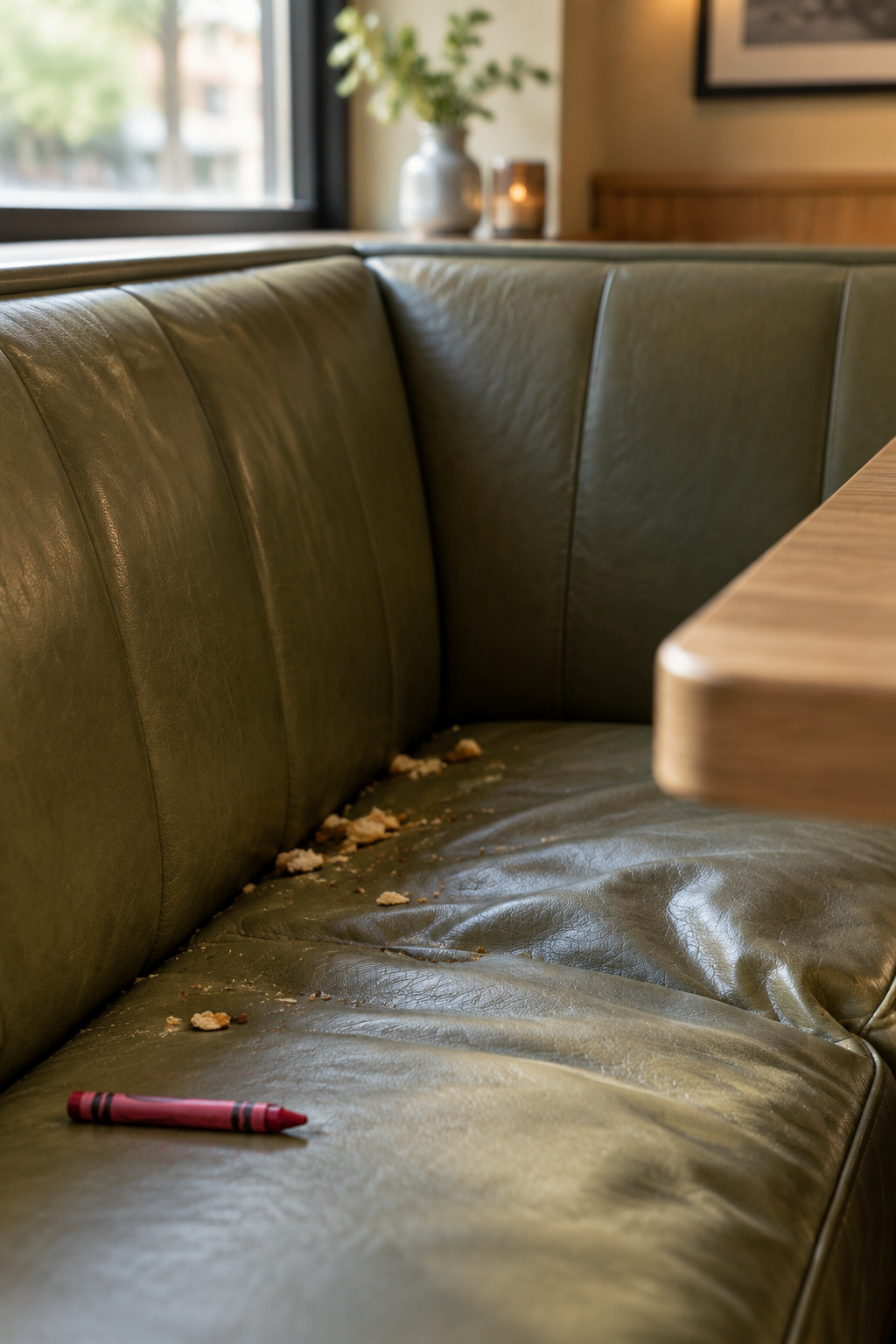
I believe her, because the same thing happened at home. My own two kids are four years apart and shared one small bedroom for years, which is a long enough experiment to see what storage a tired child actually uses. Children use the storage they can open in one motion; anything that takes two becomes the place things go to die, and tired adults are no better. Under a banquette seat, one motion means clearing the table, lifting the cushion and lifting the lid. That is three.
Nobody publishes a figure for how long under-seat storage keeps getting used before it stops. There is no failure rate, only a drift, and I would rather say so than invent an interval.
Seat count drifts too. A designer writing for Bob Vila will not recommend a banquette for a very large family, because a fixed bench turns every “let me out” into a group negotiation every day. And there is the grime you cannot reach: back corners, tucked seams. One fix is a table on casters, so the bench can be cleaned behind.
Who should skip a banquette entirely
Some households should not build one. Here it is with names attached.
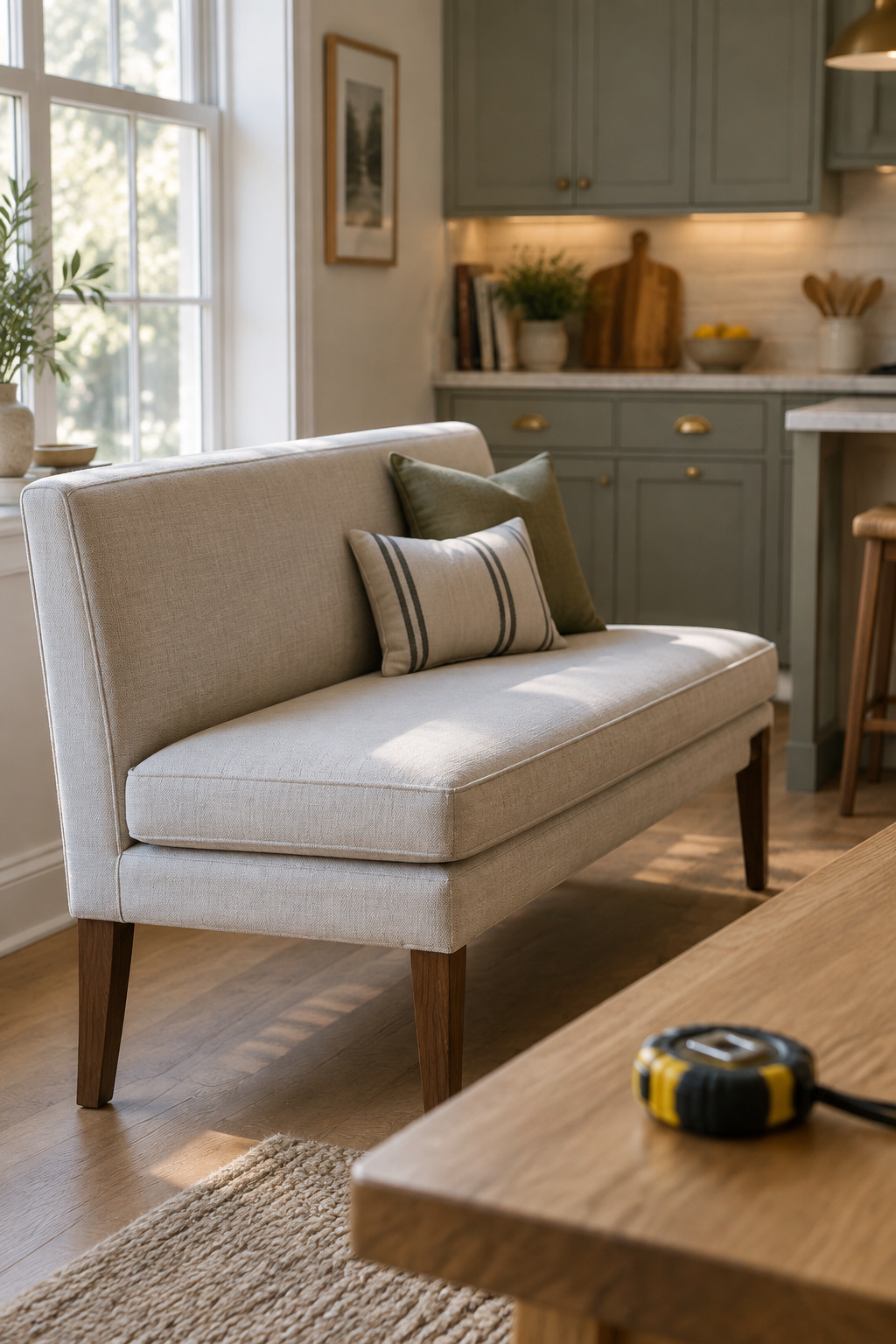
If someone in your household uses a wheelchair or a walker, or simply does not move easily, a fixed bench is the wrong seat. House Digest says a banquette can make a comfortable meal nearly impossible, and Realtor.com’s design columnist Arlyn Vazquez independently calls entry and exit “cumbersome and often just not feasible for some bodies.” Her positive test is the cleanest I found: banquettes suit families with kids or teens who can slide in and out easily.
If your household is large, that daily renegotiation compounds. If you rearrange your space more often than you sit still in it, listen to Alexis Ryder of Robert A.M. Stern Architects, who would skip one in her own kitchen: “Fixed seating has its place; I just don’t want it fixing the way I live.”
If you rent, build a freestanding bench with removable cushions instead. I will be straight about the evidence: nobody argues reversibility as a headline claim. What you find is practitioners routing around it, one designer building her own dining corner so it could move house with her.
And one claim I will not sell you at full strength. That a very tall or larger-bodied adult cannot clear a fixed banquette table is the thinnest thing on this page. I found no source on knee clearance under a banquette table for tall adults, and no residential seat-width guidance for larger-bodied diners at all: only one homeowner’s remark that her bench would not suit her larger friends, and the plain fact that a bench offers no adjustment once built. Not enough to tell you to skip. Enough to make you sit in a mock-up (the actual adults, at the actual height) before anyone orders millwork.
You do not owe anyone a banquette. If two of those paragraphs describe your household, the right number to build is zero. If none of them do, you know which of the four causes to check first. Either way you get the same thing: a corner that fits the people in it instead of the people in the photograph.
FAQ
Can a built-in banquette be removed or reversed later?
Not straightforwardly. A built-in banquette is carpentry, typically fastened mechanically to the structure the way fixed seating is anchored in commercial installations, so removing one means demolition and patching, not unscrewing legs. That is why designers keep steering renters toward a freestanding bench with removable cushions.
Is banquette seating comfortable for long dinners?
Contested, and the split follows use pattern more than taste. One homeowner calls her custom bench comfy enough for half an hour of eating but not for long stretches, and Architectural Digest’s two debating designers divide the same way. Angling the backrest slightly, instead of building it vertical, is what designers credit for longer sits.
Do banquettes make a kitchen feel smaller?
Both answers are true, because they measure different things. On floor area, a corner banquette occupies less square footage than a table and chairs, as our dimensions guide works out. On visual bulk, House Digest is right that a solid skirted base blocks sightlines and looks heavier. Visible legs fix that without touching the floor-area math.