Thirty-six inches is the top of the U.S. Access Board’s advisory reach range for a three- or four-year-old, and it is lower than the shelf where most of us keep the crackers. So the afternoon goes the way it always goes: “Can I have a snack?” “Which one?” “I can’t see.” You walk over, you open the box, you negotiate. A kids snack station breaks that loop by moving the snacks to the height of the person eating them. Build it once, and the question changes from “Can I have one?” to “I got one.”
TL;DR
- Set the shelf height by the child’s reach. The Access Board’s advisory reach ranges run 20 to 36 in for ages 3-4, 18 to 40 in for ages 5-8 and 16 to 44 in for ages 9-12, borrowed from guidance written for lockers and coat hooks.
- Portion before you stock. Grab-and-go single servings in low bins cut both the spills and the box-rooting, and a plain daily rule (how many, when) keeps independence from turning into a buffet.
- Keep two things up high: choking-hazard foods on the USDA WIC and CDC list, and any allergen a young sibling can’t have. That way the only shelf a small child can reach alone is a safe one.
Why the snack fight is a design problem
In the afternoon snack standoff, the pantry is the difficult one.
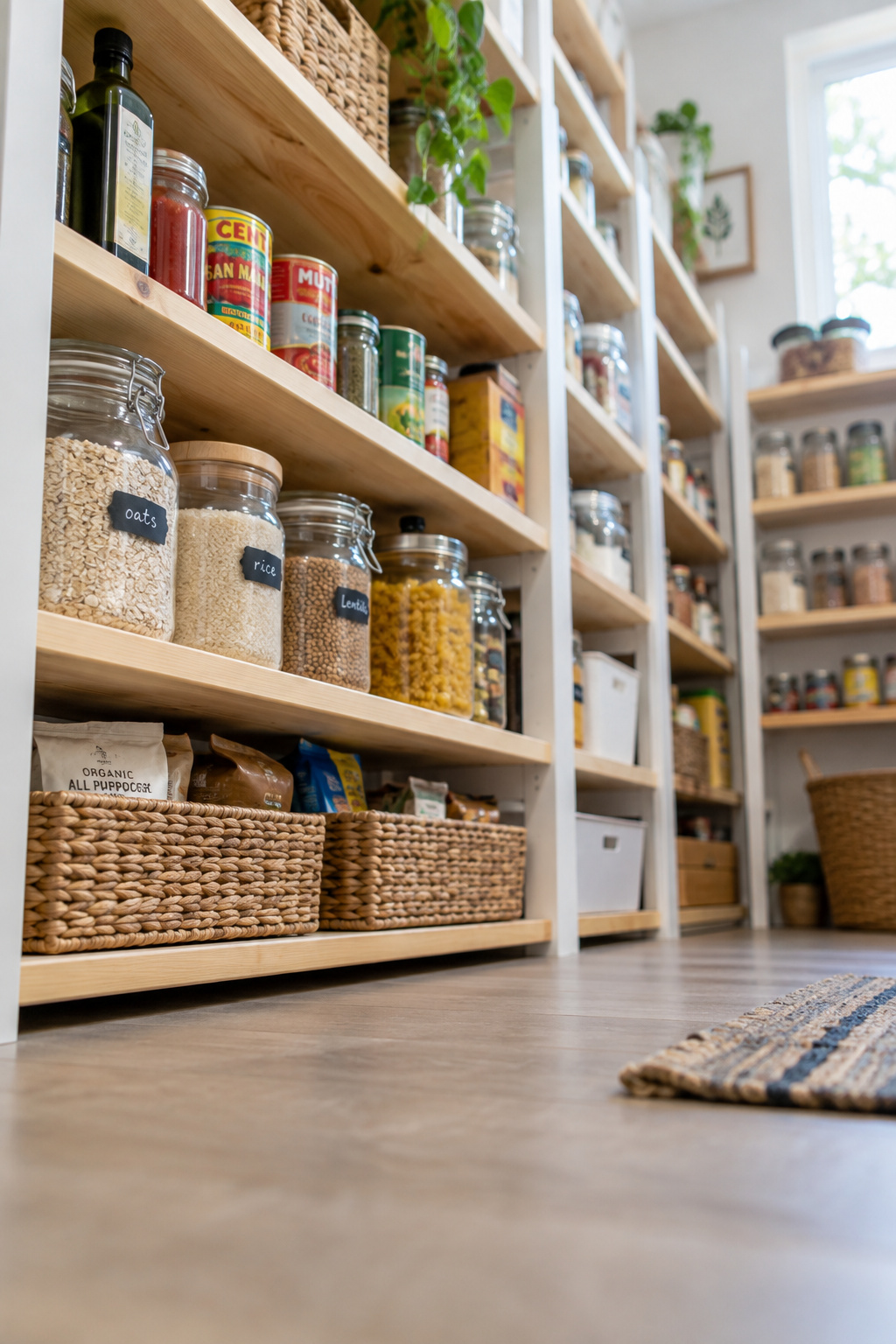
Standard storage is built for grown bodies, sized to a comfortable adult reach zone. That’s sensible for you and works like a locked door for a preschooler.
Research points to placement as the thing that changes behavior. In a day-care study of children aged 3.4 to 11, kids ate more of whatever snack sat closer to them. A school lunchroom that moved its fruit into new bowls in a better-lit, more convenient spot doubled fruit sales for under $50 in changes, selling the same fruit from a new spot.
Young children run on what they can see and reach, and developmentally they badly want to do it “by myself.” A shelf at adult height turns that drive into whining, while a shelf at their height turns it into a skill. This is the child-sized corner of kitchen pantry organization, and it pays you back every afternoon.
Kids snack station reach heights by age
No authority publishes a snack-station standard for what “their height” means. The closest is the U.S. Access Board’s Advisory 308.1 on children’s reach, written for things kids use unassisted, like lockers and coat hooks. I’m borrowing it, and saying so. In the same rulemaking, parents reported their children’s measured top reach. Those averages are a separate figure from the advisory ceilings: a ceiling has to work for most children in a band, an average only describes the middle.
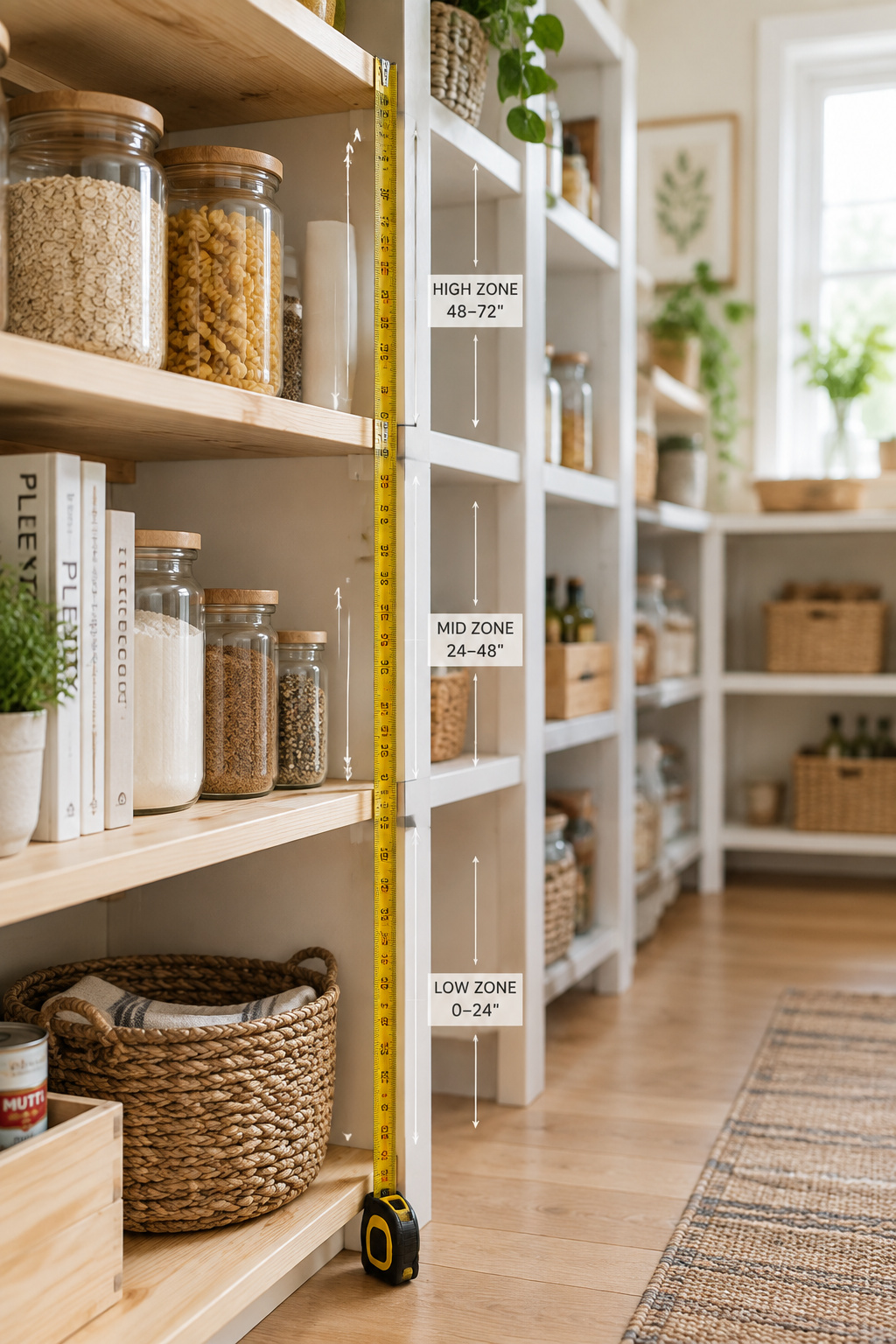
| Age band | Advisory reach range (floor to top) | Parent-measured average top reach | What the station holds |
|---|---|---|---|
| 3-4 (measured group: 2-4) | 20-36 in | 33 in | One low shelf of portioned bins; nothing to open or pour |
| 5-8 | 18-40 in | 41 in | Two shelves; more free-choice bins, simple lids |
| 9-12 | 16-44 in | 44 in | Most of the lower pantry; small prep tasks added |
The bottom of the range matters too. Even the youngest band starts at 20 in, roughly a low pantry shelf or a bottom drawer, so a toddler’s station still belongs on a shelf, up off the floor.
Kneel down and look around the pantry from where your child stands. Whatever you can’t see from down there, your child doesn’t know exists.
Setting up the bin system so kids can serve themselves
The most common mistake is skipping straight to the cute bins. Settle the rule before you shop for bins, and work in this order:
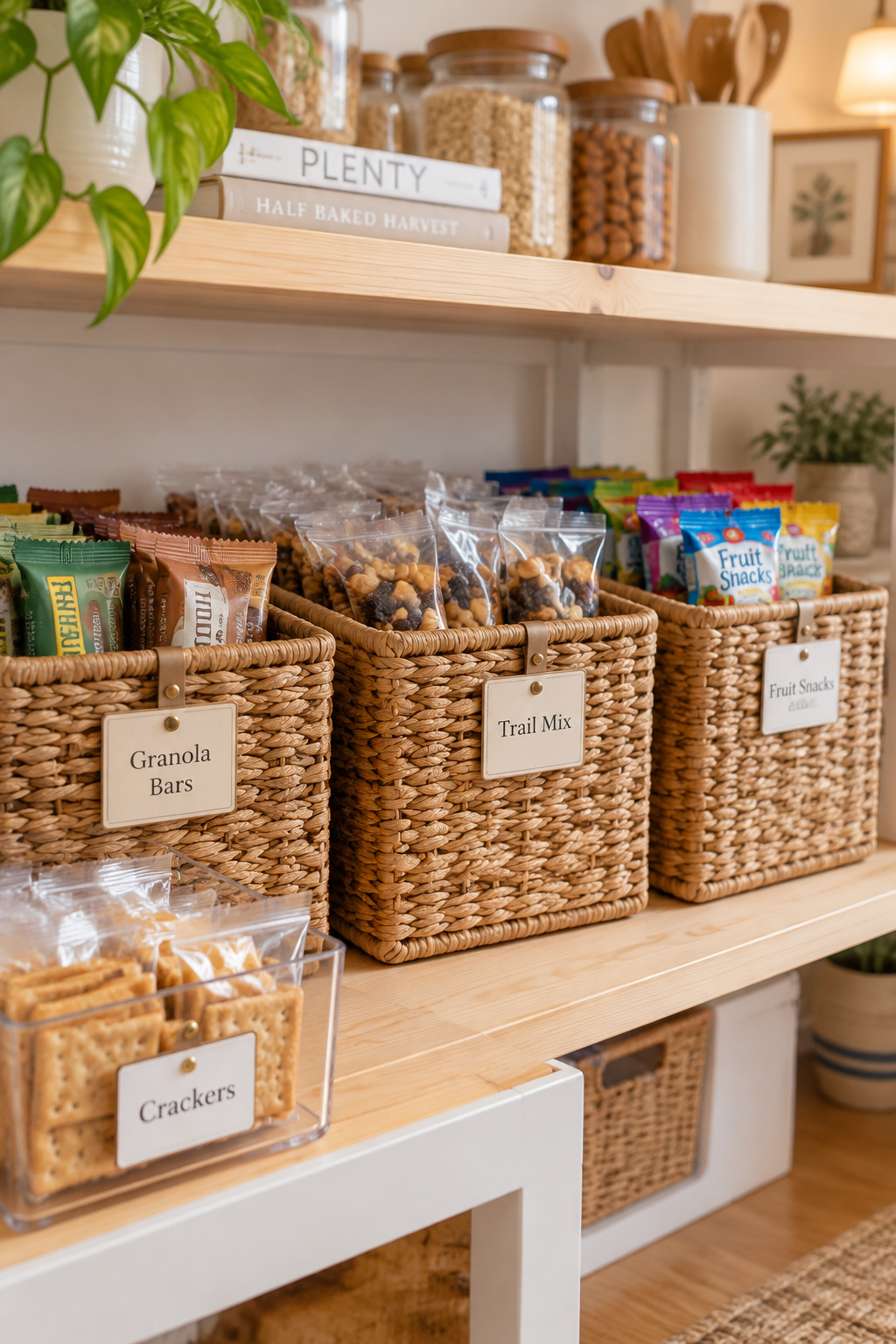
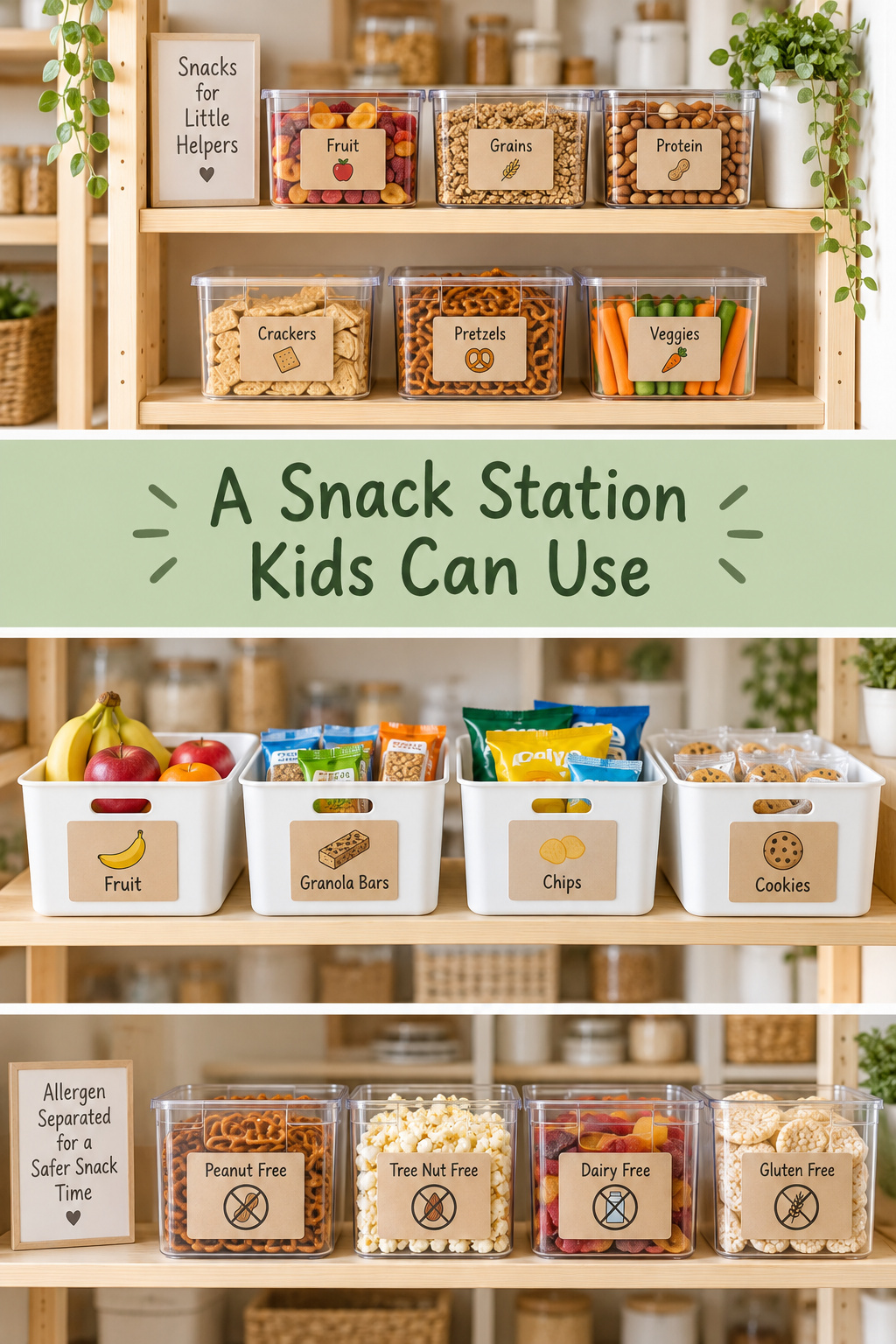
- Split dry from cold. Dry snacks go in a low pantry bin; cold ones go in a clear bin at the front of a low fridge shelf. One system per zone is easier to learn than one mixed shelf.
- Set the boundary before opening day: how many snacks, at what times, and which bins are always free choice versus “ask first.”
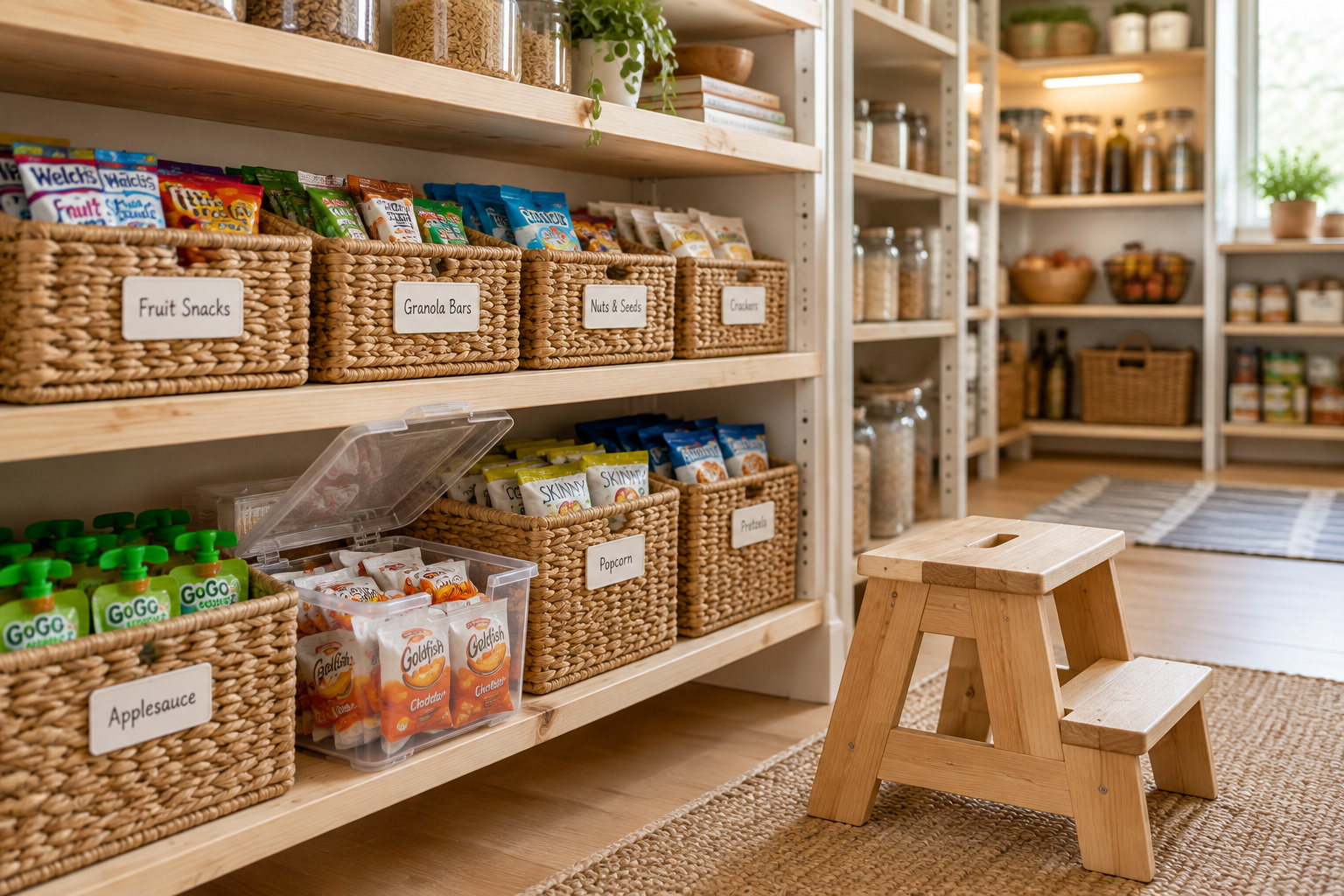
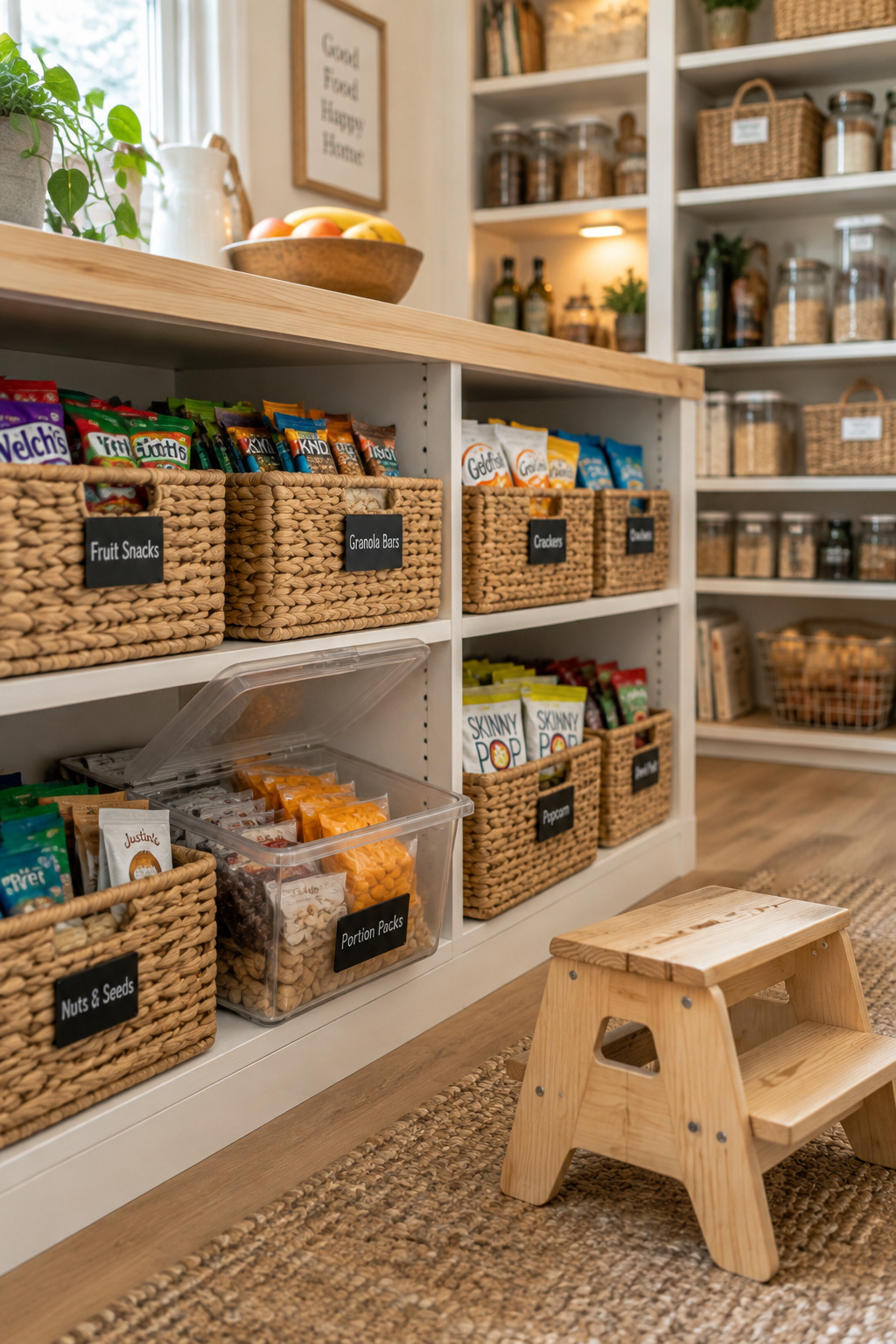
- Portion into grab-and-go servings. Small bags or mini bins inside the big bin mean nobody digs through a family-size box to find an amount they can manage.
- Label for a child who can’t read yet. Use picture labels so kids can find bins before they can read, and the station works from the first day.
- Test it against a tired six-year-old. If they can’t open it, carry it and put it back one-handed at 4pm, simplify.
For the youngest band, open-top bins beat lidded ones, since a lid is one more step between wanting and having. Keep bins shallow enough to show everything from above and light enough to slide out without a crash. Fewer, wider bins beat many narrow ones; every extra bin is one more thing to put back.
What goes up high, out of reach
Some foods stay on the adult shelf however grown-up your child feels. The USDA WIC choking-hazard list, which the CDC’s infant and toddler guidance adopts, flags whole or chopped nuts and seeds, spoonfuls of nut or seed butter, hot dogs and sausages, large chunks of cheese (string cheese especially), whole grapes, berries and cherries, hard candy, popcorn and chips. These stay up high until your pediatrician or dentist clears them. Sort by one rule every time: choking risks and allergens up, everything else down. Let the shelf be the safety system, because your memory in a busy moment can’t be.
How a reading corner fixed a classroom
When I taught kindergarten in Albuquerque, I had a whole term of behavior problems. No new rule or sticker chart ended it. I rearranged the reading corner, and the term’s trouble went with it.
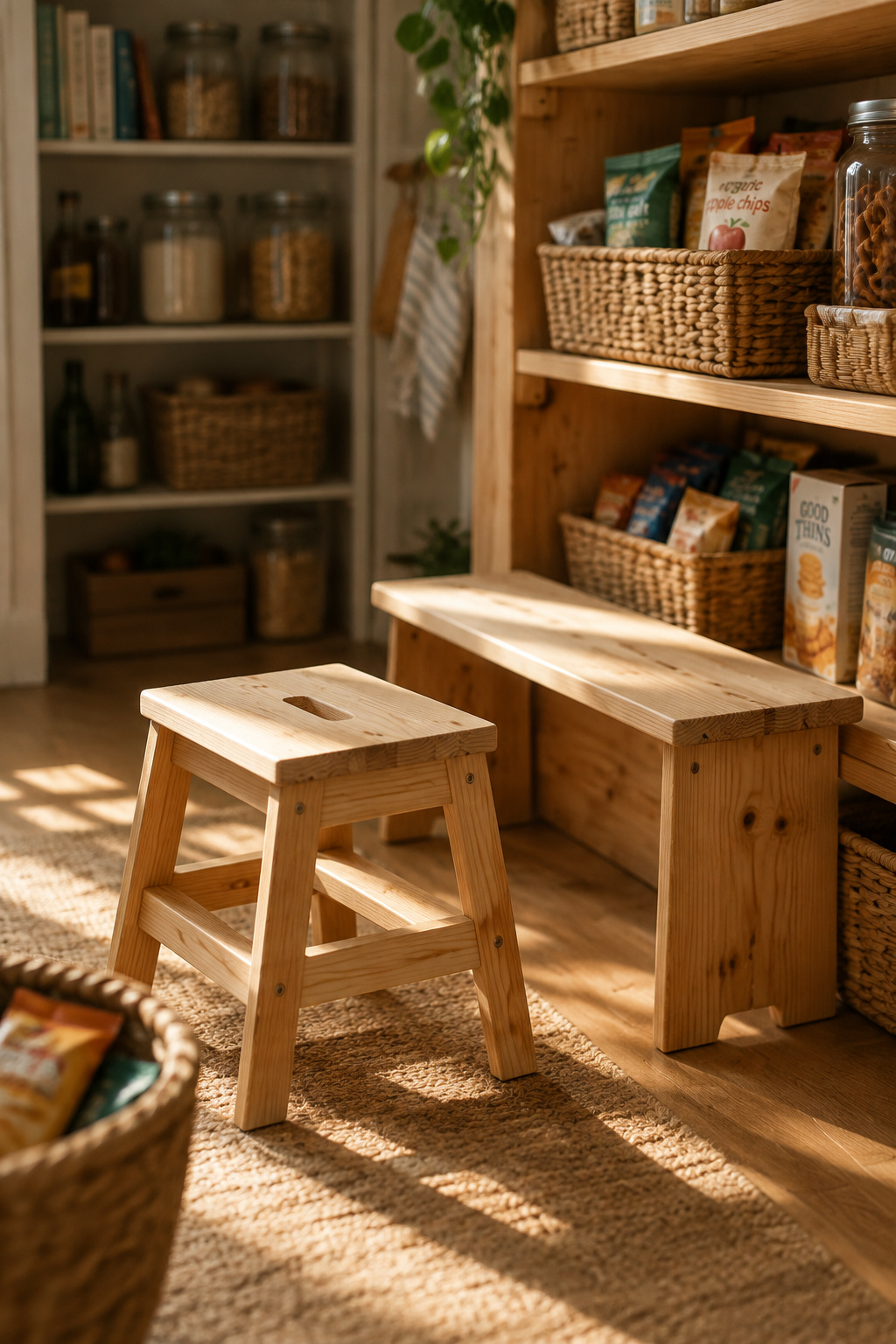
That term is where I learned that a room’s setup teaches children something, and a badly set one teaches frustration. Maria Montessori called the good version the prepared environment, a space scaled to the child’s size and stage so they can act alone. In that thinking, when a child keeps asking for help, the environment is still asking too much of them.
Your snack negotiation is my reading corner again: kids can’t operate a food system that was never built for them. In an 18-classroom preschool study, changing the set-up was enough. A picture-cued plate raised the vegetables each child took and ate after only a five-minute introduction.
Allergen separation without a second pantry
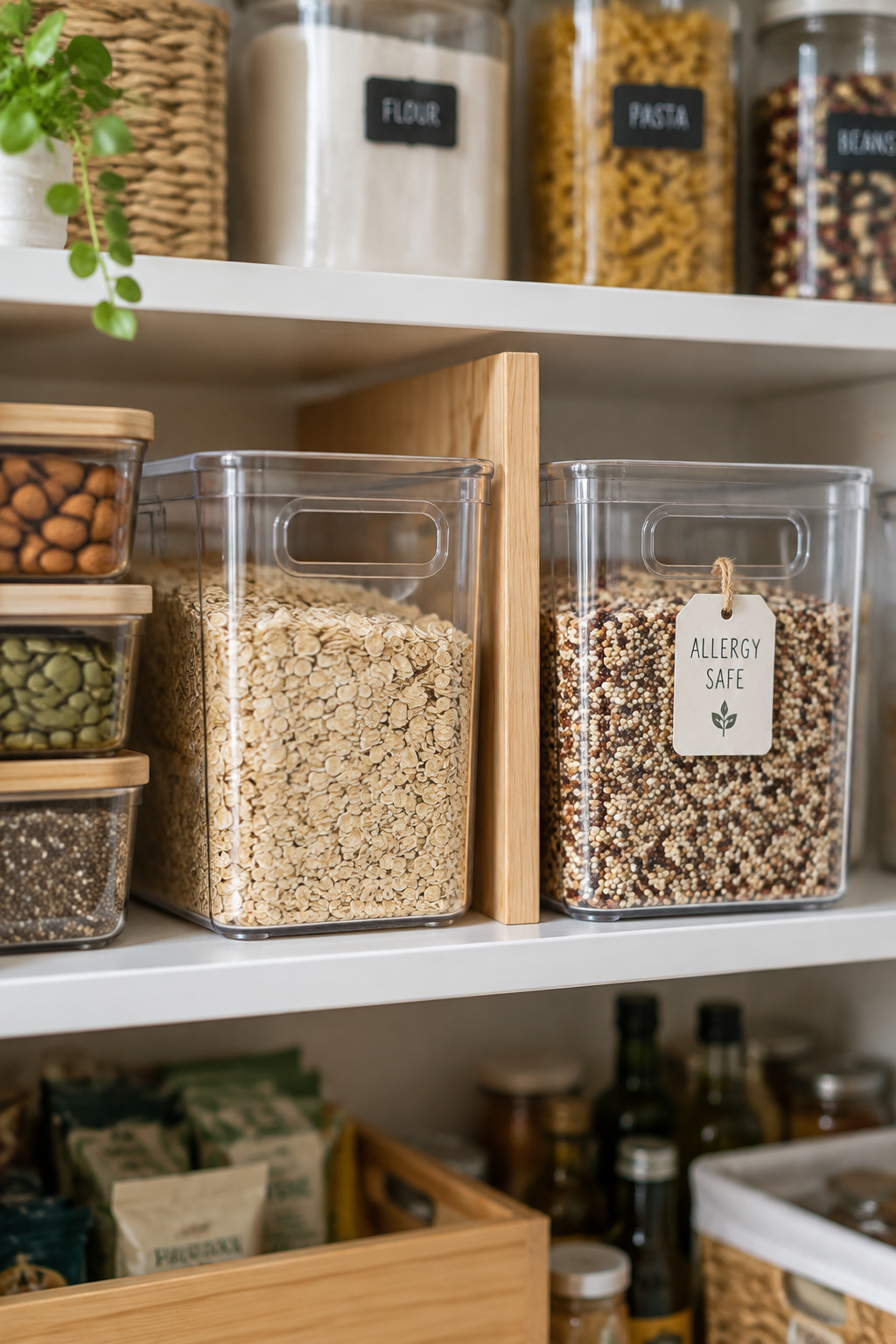
To keep a shared station safe for an allergic child, FARE (Food Allergy Research & Education) recommends assigning separate shelves to safe and unsafe foods, keeping everything in sealed containers, and labeling whichever group is smaller so the rule is quick to check. Cross-contact, an allergen protein moving from one food or surface to another, is invisible and can cause a reaction at trace levels. FARE also recommends fixed seating at meals so a younger sibling can’t share a taste; the station version is making the allergen-free zone the only zone a young child can reach without asking, so the shelf screens allergens and a small child never has to.
Growing the station with your child
The Access Board’s reach bands step up at five and nine, so use those ages as your checkpoints for re-measuring instead of waiting for visible stooping or climbing.
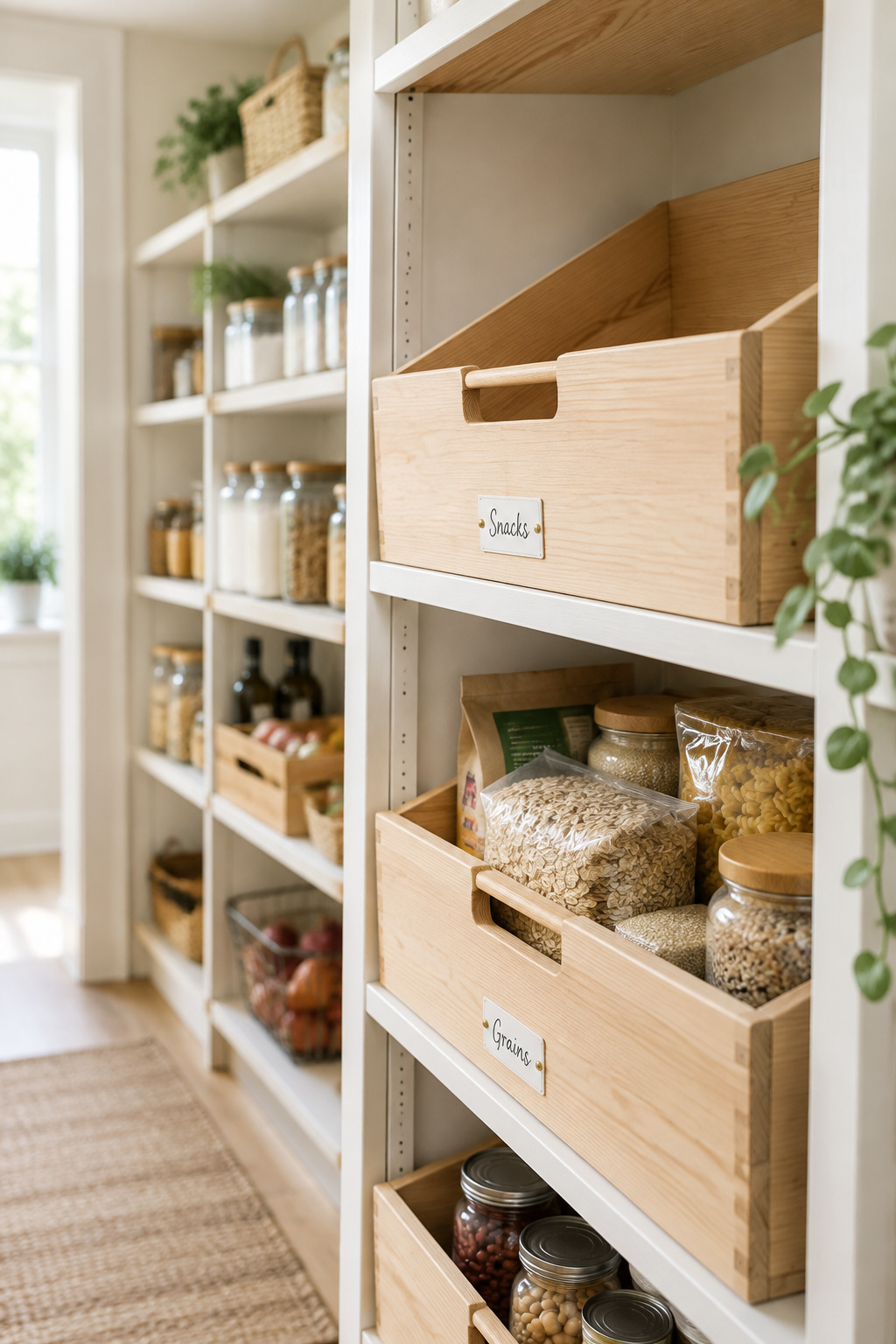
Each reset has three moves. The lowest shelf empties upward, the boundary widens to more free-choice bins and fewer “ask first” ones, and simple prep such as opening a container or pouring a portion joins retrieval. Buy bins for the stage after next. Because you are re-sorting shelves you already own, the project usually comes down to fitting the station into a small reach-in pantry rather than finding new space.
To start, kneel in front of the pantry, find the lowest shelf between 20 and 36 in, and clear it.
One question I can’t settle for you is how early to hand over the choice itself. The reach data says a three-year-old can use a well-set shelf, and Montessori practice starts self-serve around that age by adjusting the environment first. Family-organization guidance waits until a child reliably follows the station’s boundaries, framed loosely as preschool and up. No source sets an age, so I’ll leave that disagreement standing instead of inventing one. You know whether your child is ready for the whole shelf, or one bin.
FAQ
What age can a child use a snack station independently?
There is no certified age. The Access Board’s advisory reach range for ages 3-4 is 20 to 36 in, so children that young can reach a well-set low shelf. Most family guidance ties real independence to following the station’s rules (how many, when), usually from preschool age, rather than to a birthday.
Should a kids snack station be in the pantry or a separate cabinet?
Either works. Use whichever low, easily reached spot you already have: a low pantry shelf, a bottom cabinet, or a front fridge shelf for cold snacks. In a small reach-in pantry, the station is usually one existing low shelf reset for your child, not a new cabinet you need to buy.
How do you keep a snack station from becoming a mess?
Pre-portion. Grab-and-go bags or small bins inside a larger bin are the single change most cited for cutting spills and rummaging. Add a plain boundary before opening day (how many snacks, at what times) and a regular restocking routine so bins neither run empty nor overflow into the pantry.