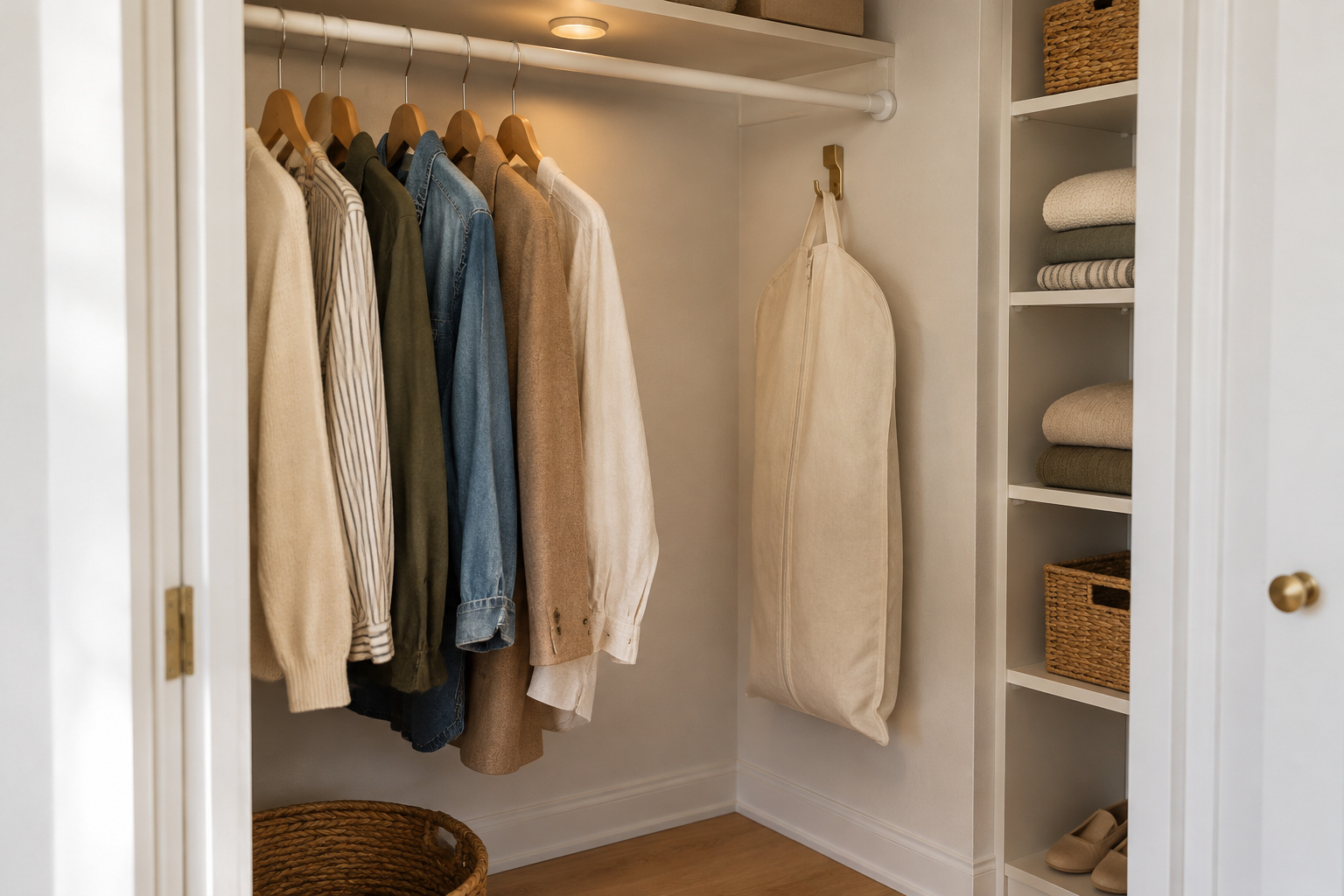

At nineteen I stripped an oak chest with the wrong solvent. The finish lifted, and a century of color the wood had earned came away with it. Before touching anything I don’t own, I ask whether I can undo it. That is the whole of renter-friendly closet storage ideas. The lease says don’t drill, the deposit says prove it, and the closet still has to hold your clothes.
TL;DR
- Tension rods cost $5–$15 and rate 5–20 lb, but they hold about 15 lb per linear foot as a shelf support, so use them as dividers.
- Derate adhesive by wall texture: a strip holding 16 lb on smooth drywall holds about 8 lb on light texture and 4 on orange peel.
- For real weight, go freestanding. Wire shelving rates to 70 lb per shelf because the load lands on the floor.
The Same Rule I Use on a 100-Year-Old Built-In, Applied to a Rental
To me a rented closet and a hundred-year-old built-in are the same object: in my care for now, and belonging to someone else’s future. I am a temporary steward of both.
What ‘leaves no trace’ actually means in practice
HUD’s Special Claims Processing Guide already draws the line. Normal wear and tear is deterioration from ordinary use, even with care, and covers small nail holes and scuff marks a landlord cannot charge you to repair. Damage is the other category: gaping holes, broken fixtures, structural changes. Two questions decide it. Does it need a fastener into the wall or the closet’s hardware, and does removal leave a mark? A yes to either disqualifies it, so the order below runs lightest first, like closet organization tips for any budget.
What I’d never install in a rental, full stop
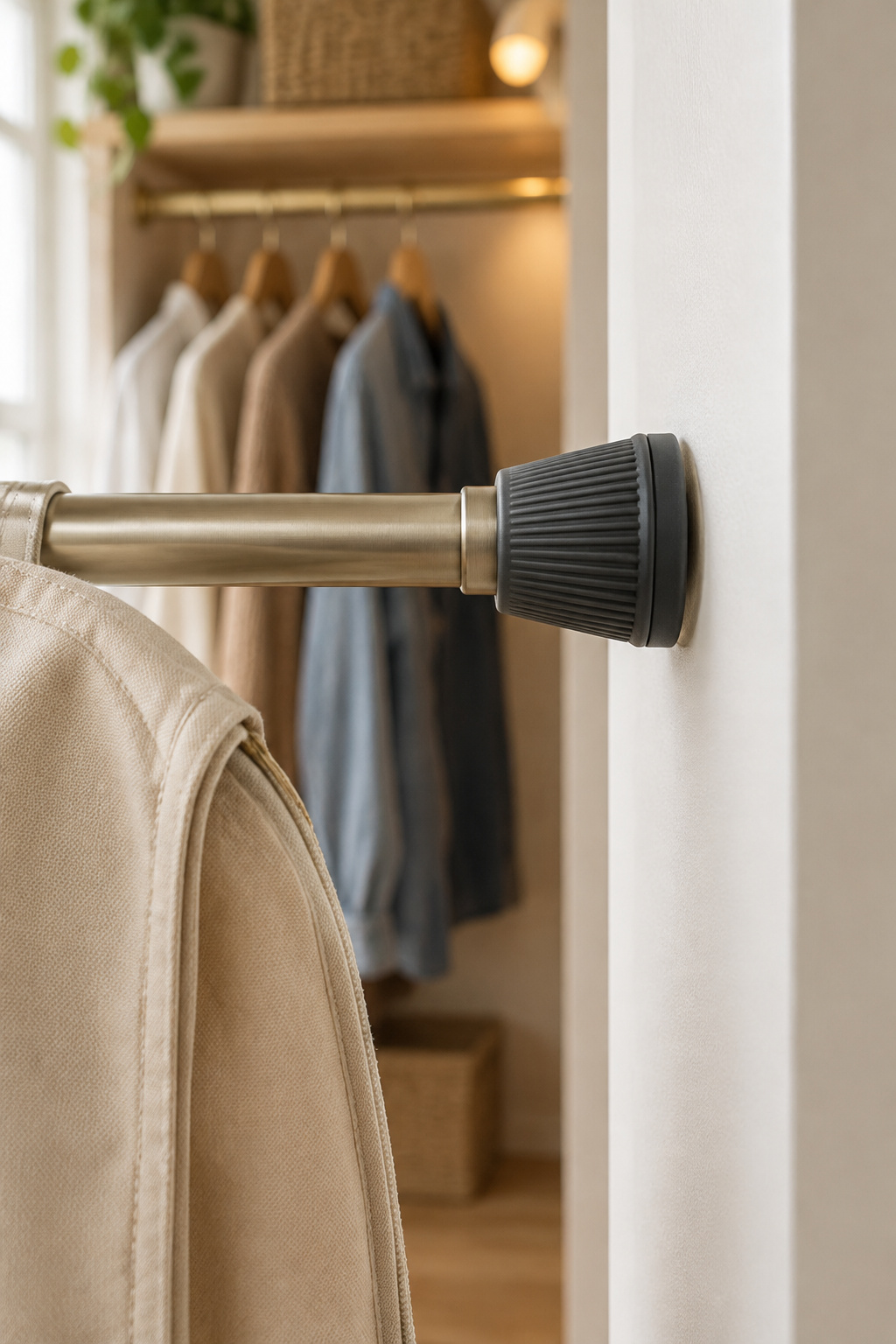
Never use drilled anchors, adhesive rated for light use but sold for heavier work, or anything that alters the rod, brackets or trim. Tension rods and clip-on extenders are safe by design: they hold by pressure.
Tension Rods: Where They Hold and Where They Don’t
A standard no-drill rod prints a range of five to twenty pounds, and heavy-duty versions go up to 26. Some full-width rods from specific manufacturers list as high as 25 to 30 pounds, but that is the ceiling for a strong model, not the baseline for an average one. The number you need is a different one.
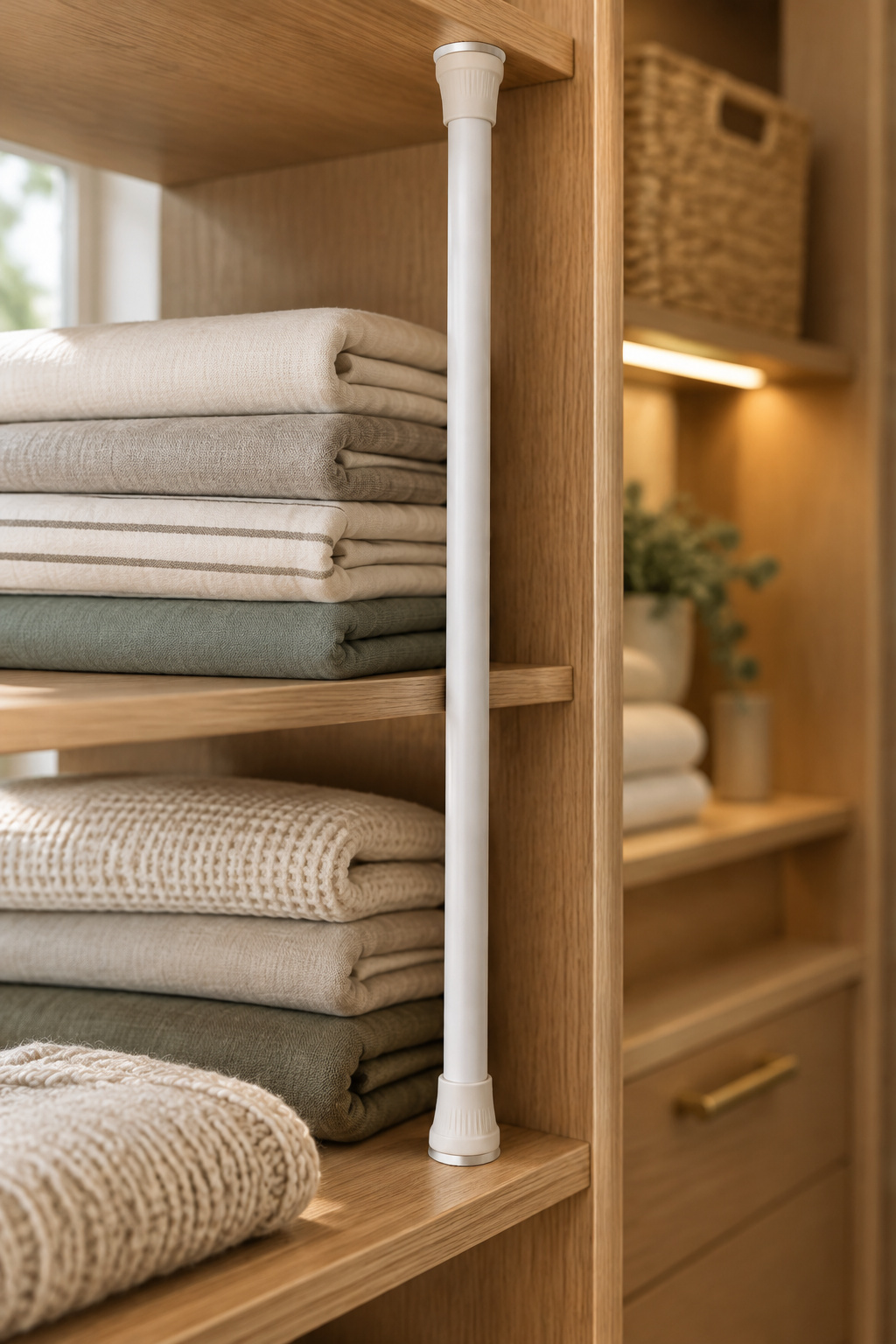
| Rod, by use | Capacity | Honest job |
|---|---|---|
| Standard rod | 5–20 lb | Scarves, belts, light fabric |
| Heavy-duty, to 10 ft | Up to 26 lb | A small zone for delicates |
| Shelf support | ~15 lb per linear ft | Divide a shelf, not hold one |
Weight limits, honestly stated
Those ratings assume curtains. If the rod carries a shelf, capacity falls to about 15 lb per linear foot. Tighten it until a gentle pull on the center produces no slip. Rods fail on slick or curved surfaces such as tile, laminate or a rounded corner, where rubber caps find no friction.
Best uses: dividing space, hanging light items
Measure the opening at its narrowest point and twist the rod to fit, with no tools and no marks. For $5 to $15 it divides a shelf into compartments or carries scarves and belts.
Adhesive Hooks Rated for Real Closet Weight
The most common adhesive failure is a wall wiped with household spray cleaner, which leaves a film the adhesive never bonds through.
Reading the rated weight before you trust it
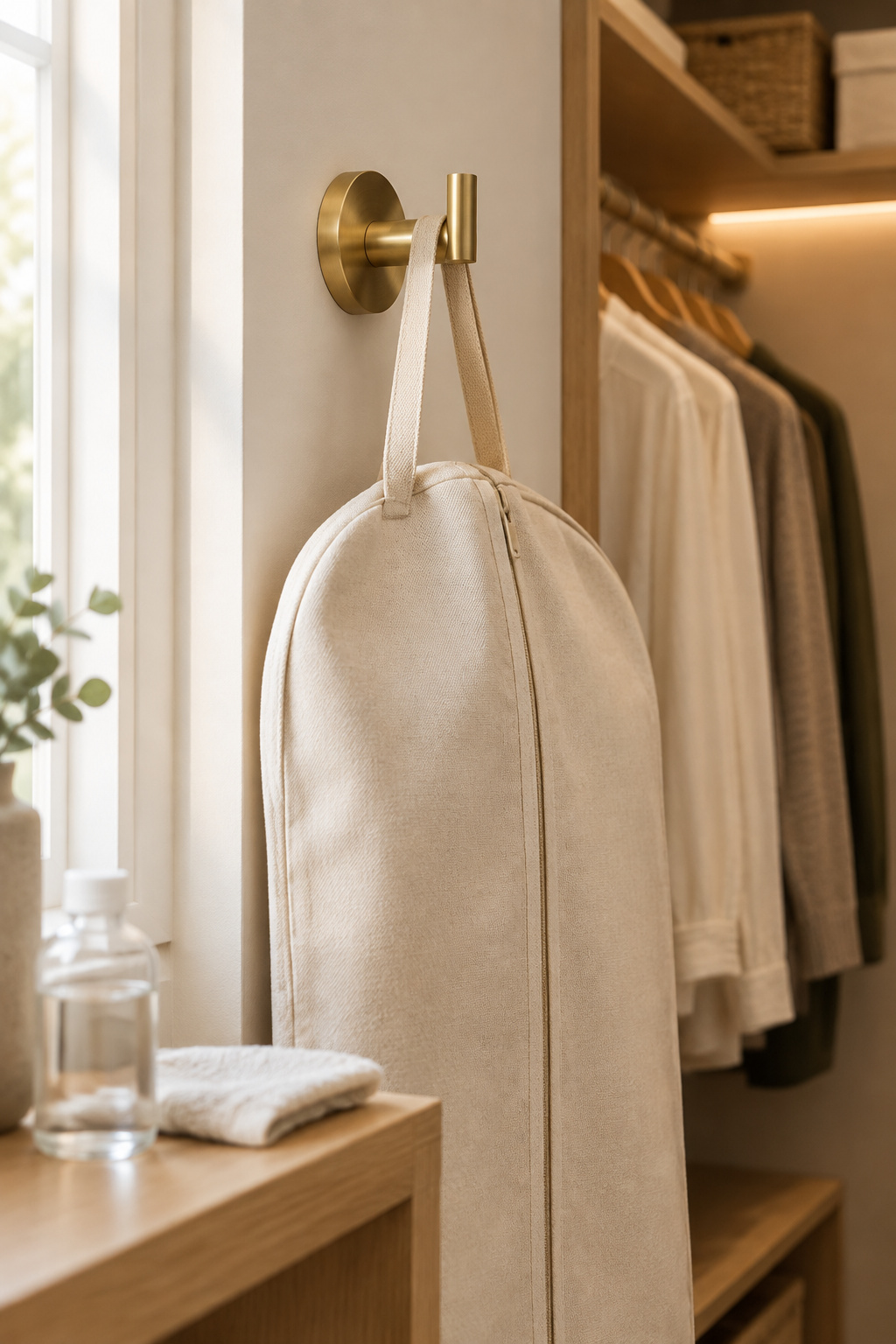
Command publishes exact figures. Strip pairs rate at 1 lb small, 3 medium, 4 large and 5 XL, and the hook sets its own ceiling: 7.5 lb for the clothes hanger, 2 for the medium wire hook. Then derate for the wall. A strip holding 16 lb on smooth drywall holds roughly 8 on light texture and 4 on orange peel.
Surface prep that makes or breaks the hold
Clean with isopropyl rubbing alcohol and let it dry. Press the strip 30 seconds, press the hook onto it 30 seconds, then wait an hour before hanging anything. Stick to smooth surfaces, never popcorn ceiling, concrete or unpainted wood.
Renter-Friendly Closet Storage Ideas That Never Touch the Wall
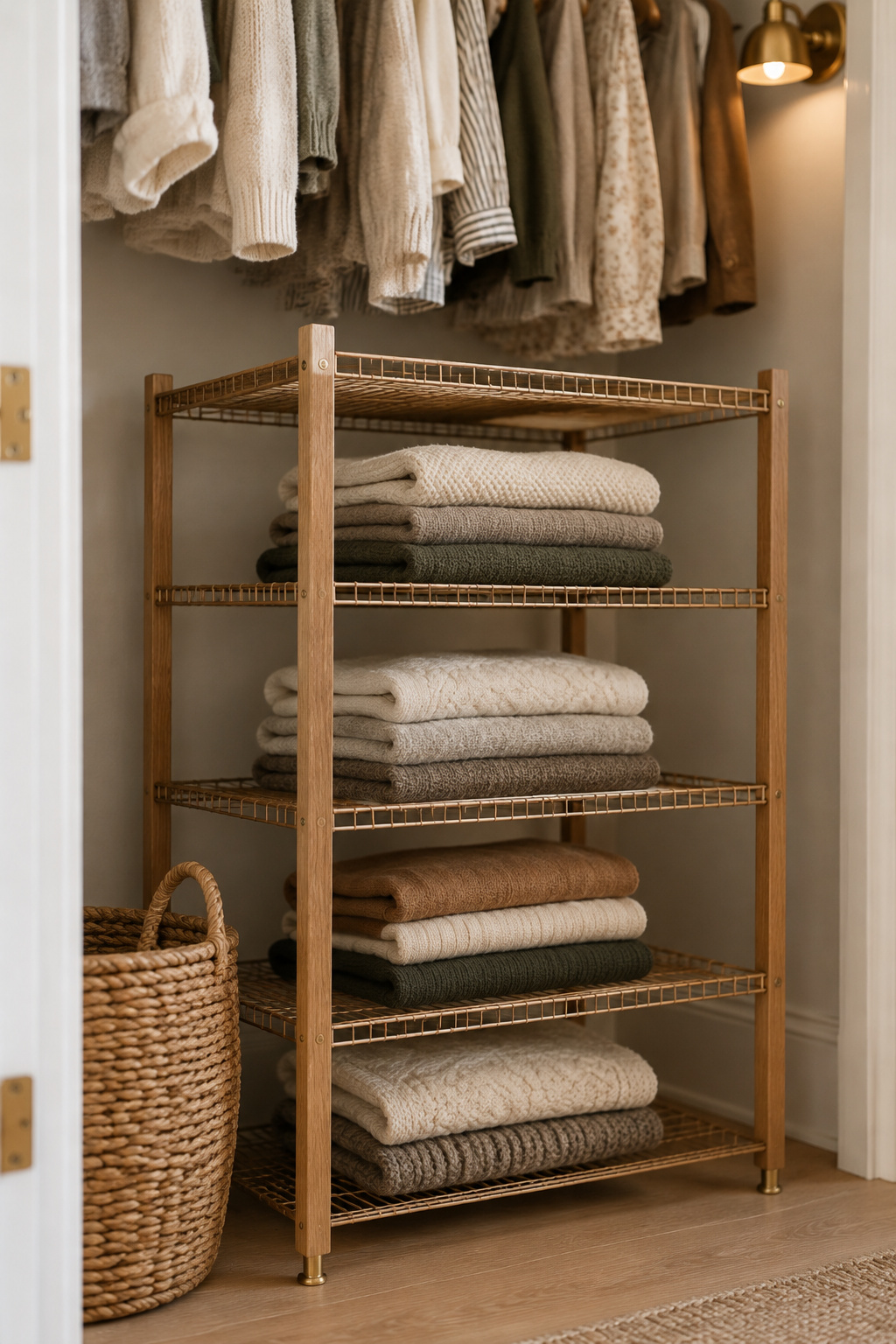
A winter’s worth of sweaters belongs on whatever answers to gravity instead of adhesive.
Shelving units that don’t need the wall at all
Freestanding wire shelving is rated up to 70 lb per shelf, and that figure is close to what you get, since the load goes to the floor rather than through a bond or a friction fit. A tower in the floor space beneath a single hang rod adds storage without costing any hanging. Check depth against the door swing.
Rolling racks for overflow
A chrome rolling rack with two shelves carries roughly 25 lb and attaches to nothing. Give it what the closet can’t absorb, such as bulky coats and off-season pieces, and expect dust.
Removable Rod Extenders and Double-Hang Add-Ons
With the walls ruled out, the capacity left unclaimed is the rod itself.

What clips onto the existing rod
An adjustable doubler hooks over the existing rod and adds a second rod beneath it, roughly doubling hanging capacity with nothing fastened to the wall. Doublers cost $14 to $20 and adjust in width and drop, so the lower rod takes shirts and skirts.
What to skip because it strains the original rod
Here is the honest gap: retailers publish dimensions for doublers, not load ratings. The ceiling is the rod itself, roughly 20 lb per linear foot, a canonical figure owned by this silo’s DIY closet organizer guide, not one I’ve sourced here. A doubler’s load hangs from the original brackets, so a rod already full of winter coats gains nothing safe from a second tier. Skip any extender needing the end caps pulled off, since that is modification, not a clip-on.
What to Undo Before You Move Out
Five minutes, in this order, before you hand back the keys.
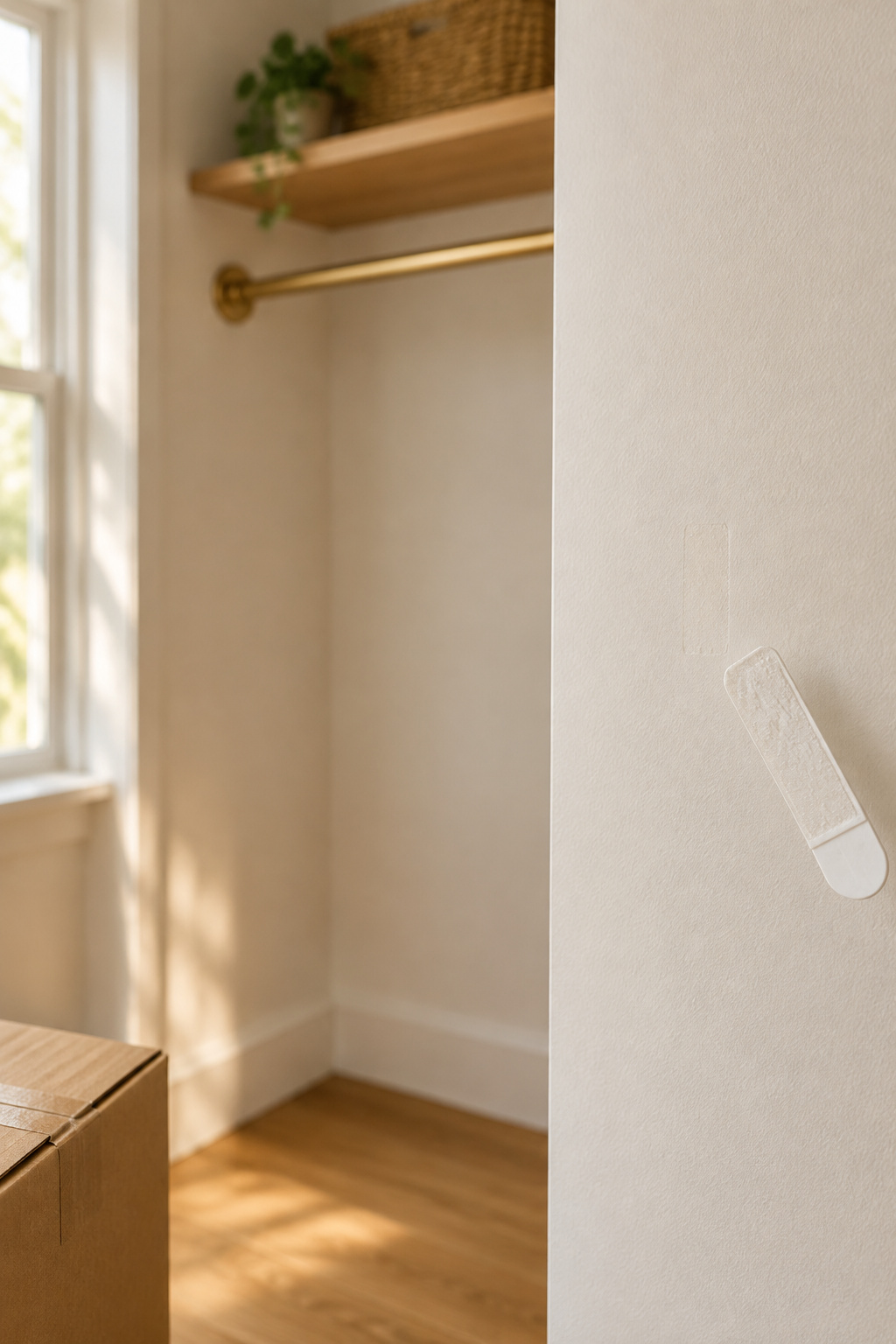
The five-minute walkthrough that gets your deposit back
- Pull each strip slowly straight down, stretching it at least 12 inches, and never outward toward the wall.
- Check the paint for residue; work any film off with rubbing alcohol.
- Release tension rods by twisting them shorter, not by yanking them free.
- Unclip doublers and extenders, then confirm the original brackets and end caps are as found.
- Walk it with a landlord’s eye. Scuffs and small nail holes are non-chargeable wear, while residue, gouges and a loose bracket are not.
Step four is the one that vanishes in a moving-day rush.
No Closet in Your Rental At All? Different Problem, Different Fix
What if there’s no closet to work with in the first place?
When furniture, not closet hacks, is the real answer
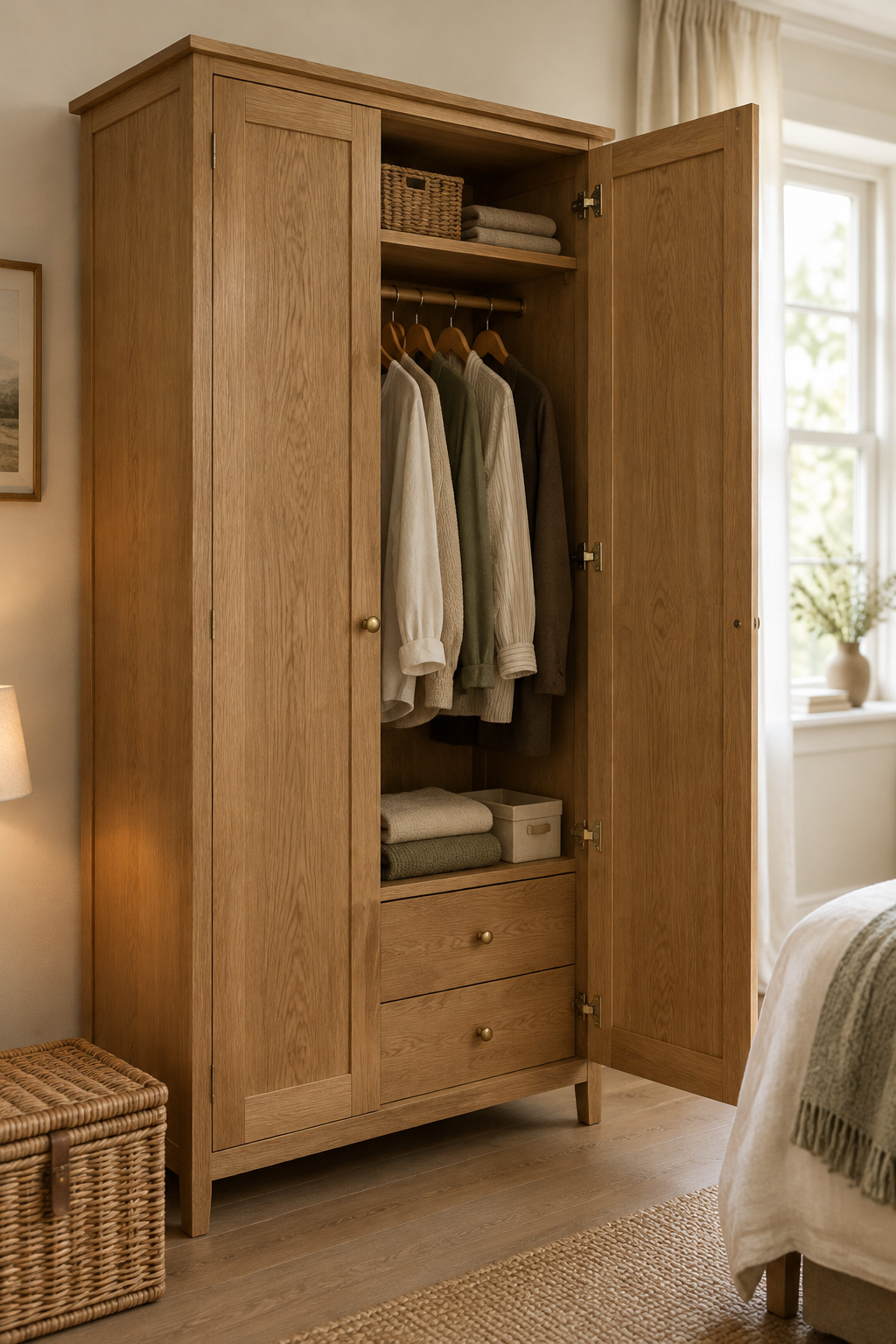
Then none of this applies, and forcing it wastes money, because a tension rod needs an opening to brace against and a doubler needs a rod to clip onto. Older housing stock and many apartment conversions genuinely lack a closet opening, a different problem from a closet you can’t modify. That reader needs a freestanding wardrobe sized to the room, so start with storage ideas when there’s no closet at all instead. If you’ve added every no-drill product here and the closet still overflows, try paring down instead of adding storage, which makes the rod lighter rather than busier.
Start cheap. Buy one tension rod this week, fit it to a shelf you can’t currently use, and see what it lifts off the floor. Everything here comes out in an afternoon, and the closet you hand back looks as you received it.
FAQ
Do adhesive hooks really hold clothes without damaging paint?
Yes, within limits. Clean the wall with isopropyl rubbing alcohol, not a household spray, load the hook inside its printed rating, and wait the full hour after pressing. On humid or textured walls, derate by 25–50%. Remove by stretching the strip straight down.
Can a landlord charge you for tension rod marks or scuffs?
Generally no. HUD’s normal-wear-and-tear standard lists small scuff marks as wear a landlord cannot charge for, and a correctly tensioned rod with intact rubber end caps falls inside it. Chargeable damage is a matter of scale: gouges, torn paint, a structural change.
What’s the single best renter-friendly closet product to start with?
A tension rod, at roughly $5 to $15. It needs no tools, leaves no mark, and divides a shelf or adds a light hanging zone before you spend on anything more involved. When something must hold real weight, step up to a rated adhesive hook.