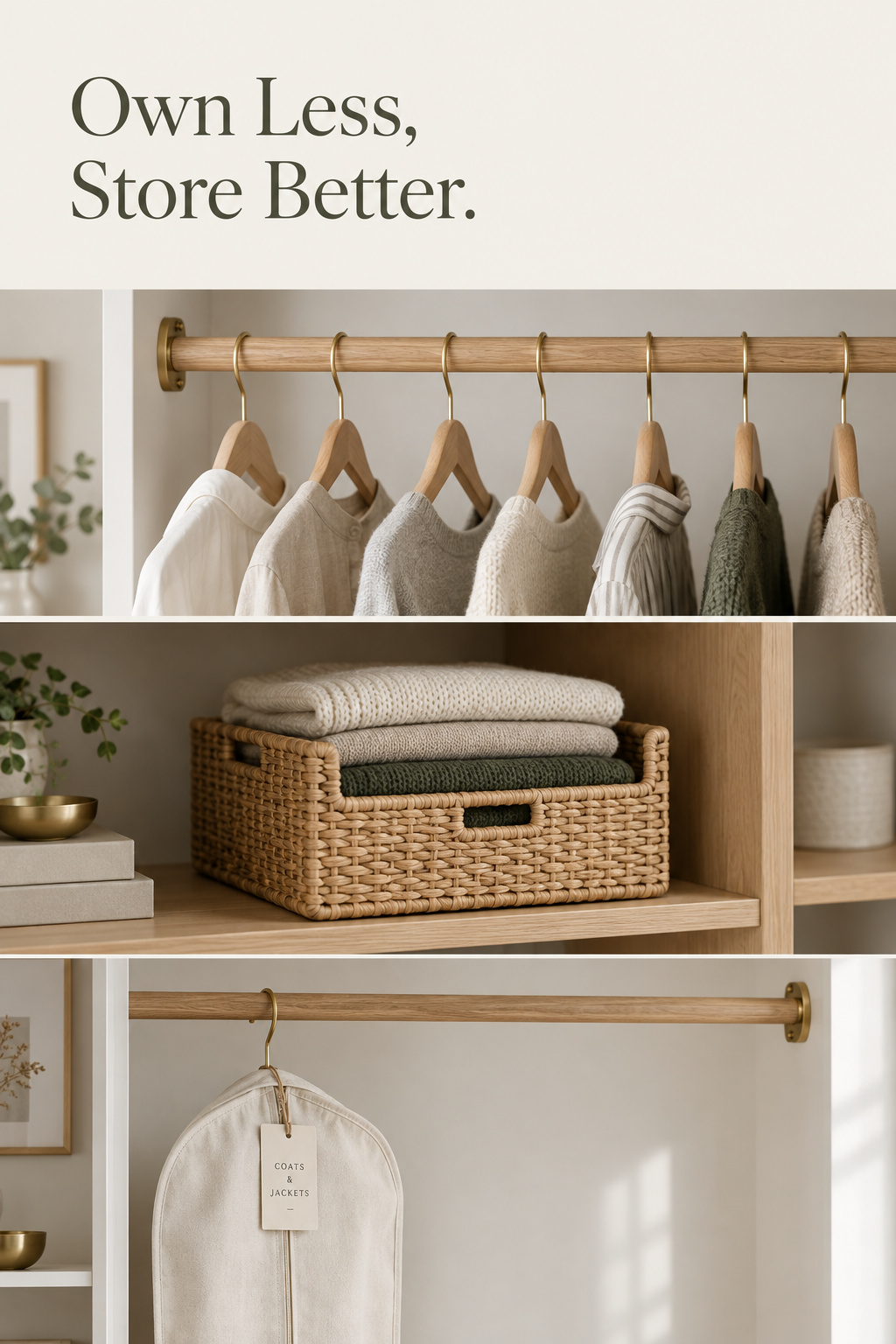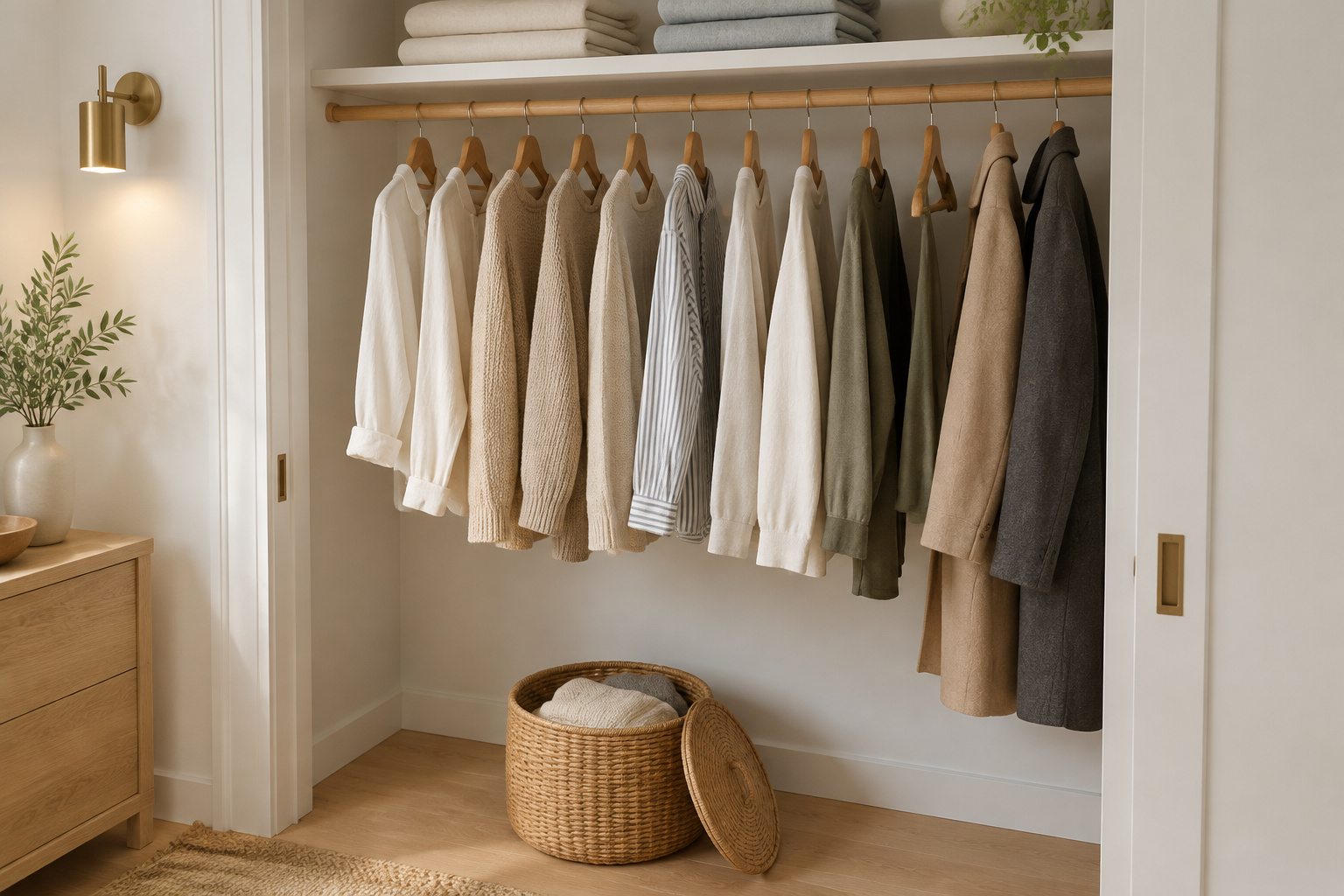
What is a closet for? Mostly for the ninety seconds you spend in front of it each morning, half awake, deciding what to wear. A capsule wardrobe closet is designed for those ninety seconds, so it begins with subtraction. Most of the fixes we try add capacity: another bin, another rack, another rod. The closet was never short of capacity. It held more than it could show you.
TL;DR
- Work to 30 to 40 items, a range and not a rule. Project 333 counts 33 for three months and excludes underwear and workout clothes, while Un-Fancy’s Caroline Rector runs 37.
- One in, one out is maintenance rather than decluttering: it holds a closet steady once you have reduced it. Give each outgoing item a staging spot and a seven-day deadline.
- A smaller wardrobe changes the hardware, with one rod in place of a double-hang and one off-season bin in place of a dresser.
Storage That Requires Discipline Is Failed Design
Why buying more bins never actually solves a full closet
A bin adds capacity and removes no decisions. Psychologist Barry Schwartz built a career on that distinction: more options demand more effort and produce decision fatigue instead of satisfaction. Sixty shirts on one rod means a decision made before coffee. A crowded closet is a documented source of morning stress, and the untidy look is the lesser part of it.
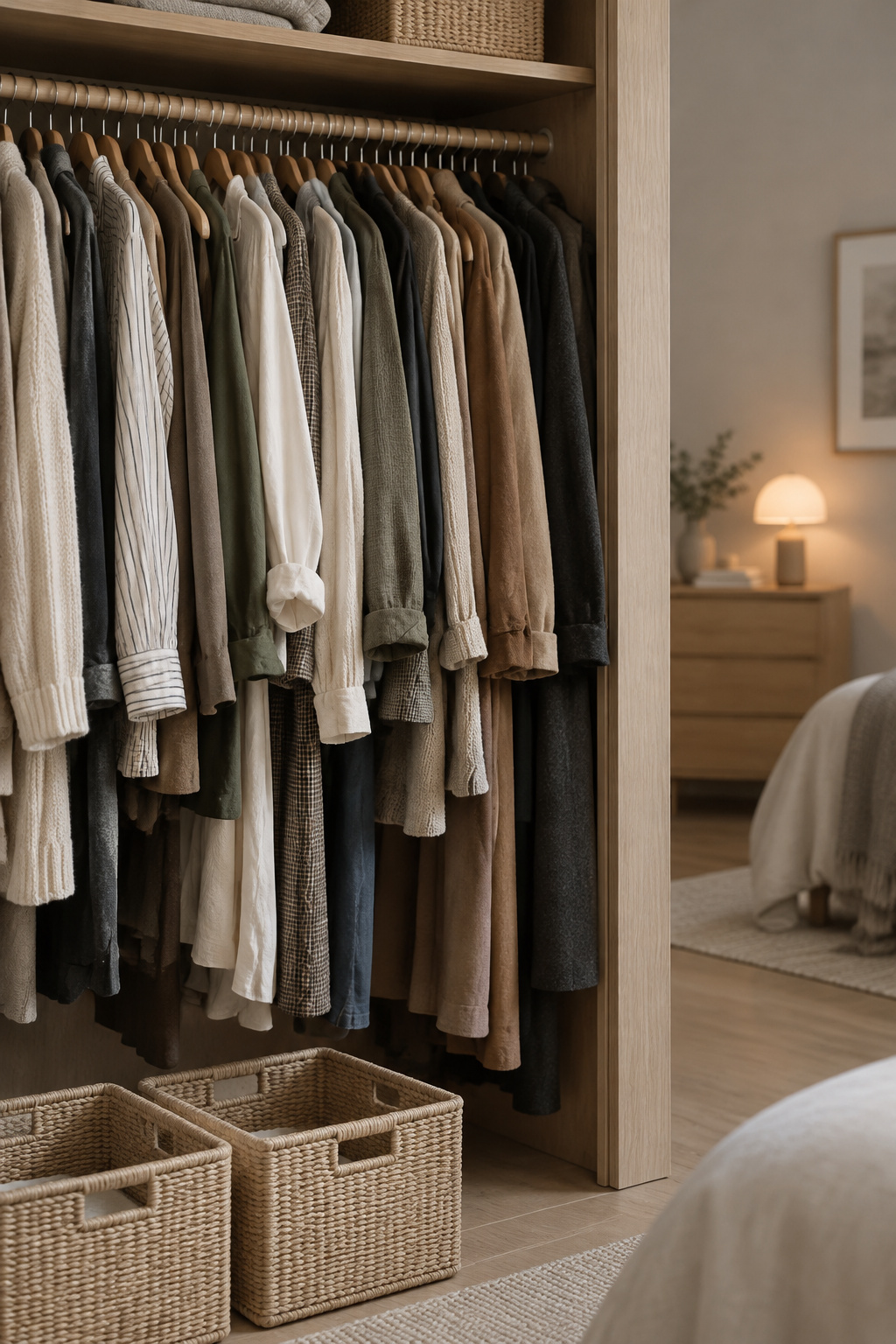
Adding storage to a wardrobe you have not edited is the most expensive way to stay where you are. Professional organizer Lauren Saltman works in the opposite order: try things on, keep what you love, donate the rest, then store what survived. The wider map is closet organization, simplified.
The question to ask before adding a single organizer
Marie Kondo asks whether an item sparks joy. Other methods ask only whether you have worn it in two years. The tests differ but the sequence stays the same. I go with a third, Saltman’s interchangeability test: a piece belongs on the rod when it works with several others, a top with several bottoms, a jacket dressed up or down.
How Many Pieces a Capsule Wardrobe Closet Actually Holds
Where the 30-to-40 range comes from, and why it’s a range, not a rule
Caroline Rector’s golden number at Un-Fancy is thirty-seven items, adjusted by season. Courtney Carver’s Project 333 says 33, worn for three months, with underwear, sleepwear, loungewear and workout clothes excluded. Who What Wear targets 30. That makes three named practitioners and three counts, and no two of them count the same things.
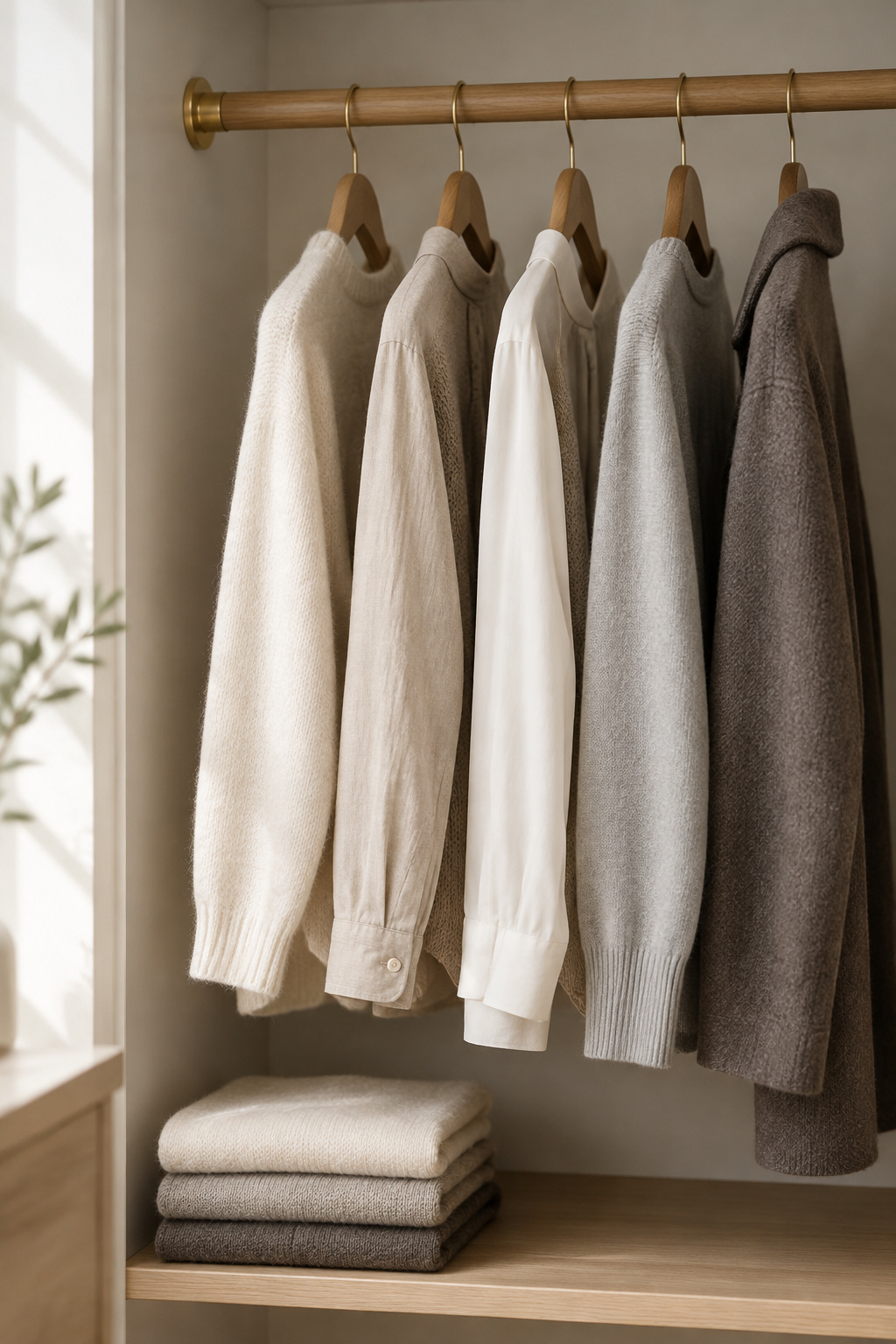
So 30 to 40 is the honest figure to work from, the band where independently built systems keep landing for different reasons. Susie Faux, who revived the term in 1970s London, published no number at all and specified a structure by category instead. The range is the answer, and the number inside it is yours.
Building yours around how you actually dress
Donna Karan showed the logic at its smallest scale in 1985, when Seven Easy Pieces turned seven interchangeable work pieces into dozens of outfits. A narrow, coordinated palette does the same job at home, since pieces that share a palette combine instead of sitting alone. The count follows from what mixes. Carver insists this is not a project in suffering: replace a piece that no longer fits rather than forcing a smaller number to work.
One In, One Out: A System That Doesn’t Need Willpower
How the rule works in practice
I lived for six years in 38 square meters in Malmö, where the dining table doubled as my desk and my workbench. That apartment enforced one in, one out for me. With nowhere to absorb a mistake, a new coat meant an old coat left that week, or the new one sat visibly on a chair. What kept me honest was a constraint, which is far more reliable than discipline.
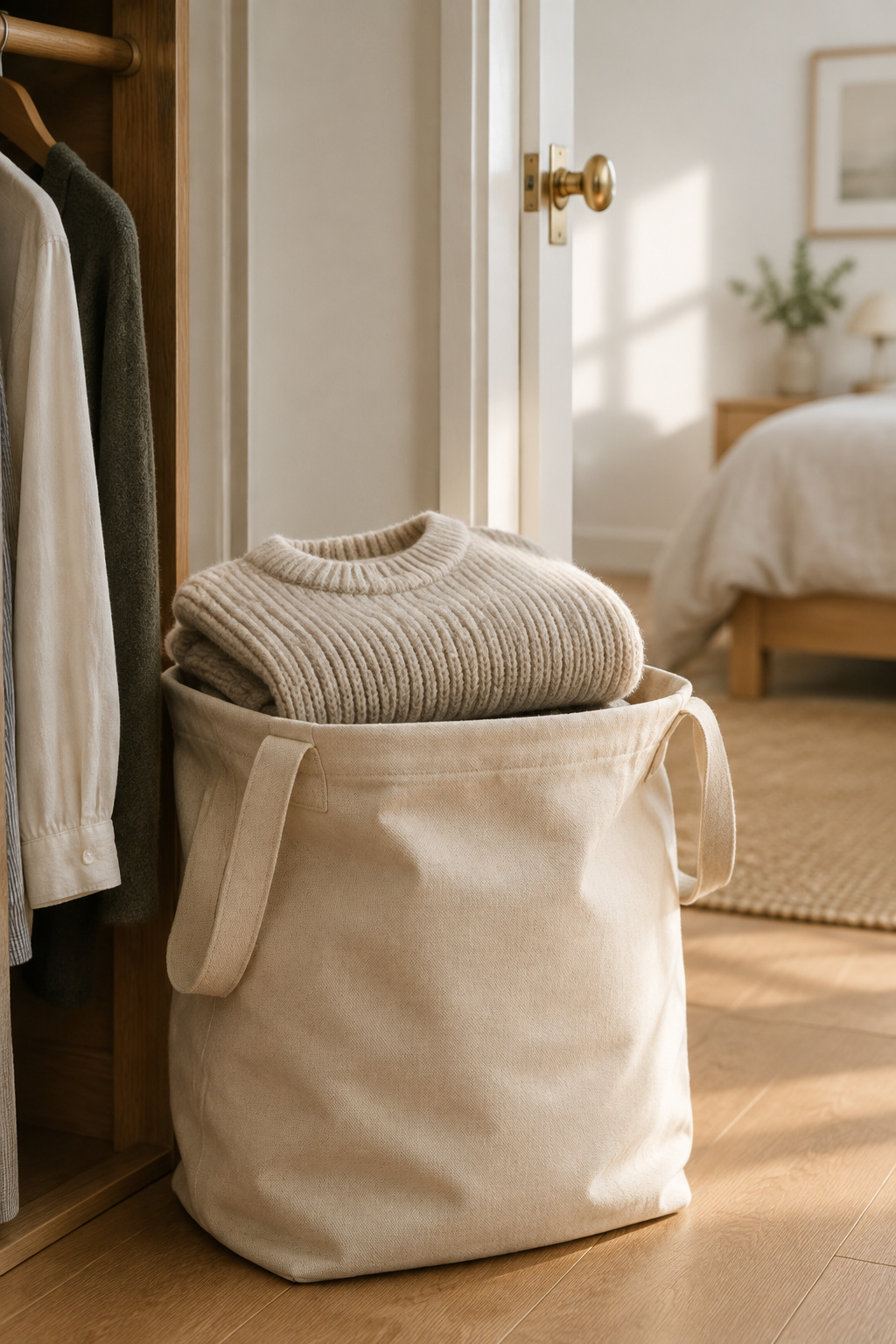
The rule is plain: when something new arrives, something comparable leaves, like for like. Certified KonMari consultant Amélie Saint-Jacques calls it a must for maintaining a capsule closet. The word that matters is maintaining. Used on a closet that is still overstuffed, the rule locks that state in as the new normal.
What to do the day it breaks down
The rule breaks down as “I’ll deal with it later.” The outgoing item never leaves, and within weeks the closet has refilled. The fix is unglamorous: a staging spot and a deadline, commonly seven days, after which the bag goes to the car regardless. A subtler failure is treating the rule as a permission slip to buy, which raises churn without lowering size.
Rotating by Season Without Owning Two Wardrobes
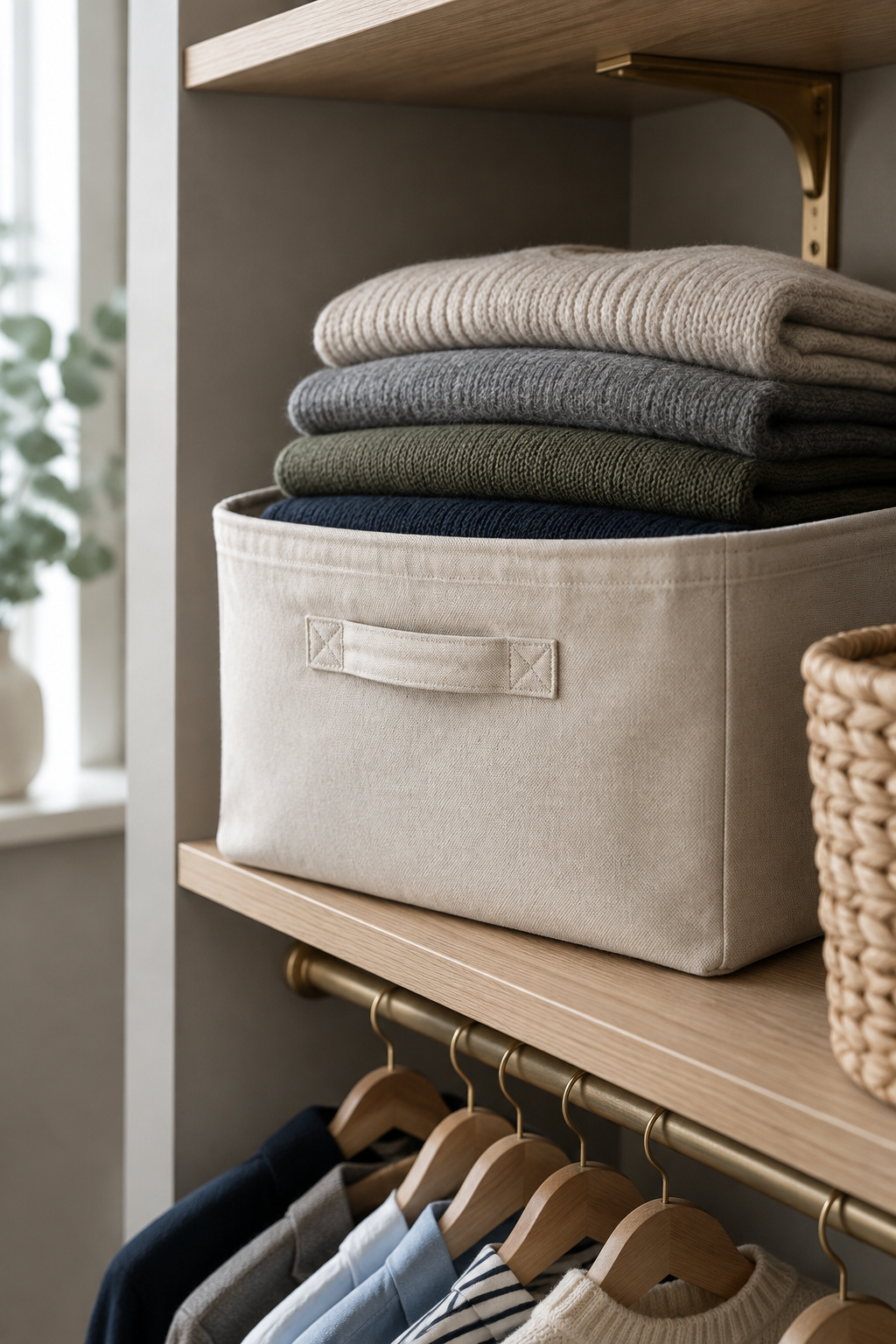
The usual mistake is to box up out-of-season clothes before deciding what stays, so storage preserves the clutter and hands it back in spring.
What stays in the closet year-round
Minimalist-wardrobe coach Ema Hidlebaugh separates two structures:
| Year-round capsule | Seasonal capsule | |
|---|---|---|
| In the closet | Every season at once | Current season only |
| Cold handled by | Layering | Stored pieces |
| Needs | Rod space year-round | Less closet, dry storage |
| Swap | None | Twice a year |
| Reassessment | Scheduled, 3–6 months | Built into each swap |
For most reach-in closets, take the seasonal version. Hidlebaugh’s argument settles it: a list for three months is achievable in an evening, and a list for life is not.
The off-season swap, done simply
The sequence stays the same every time, and the order is what makes it work:
- Declutter before anything gets boxed. Storage should hold what you are keeping and nothing you should have let go of.
- Clean and fully dry everything before it goes into a container, since stains set and pests find what you leave them.
- Label each container by season and contents, so the swap takes five minutes instead of a hunt.
- Store containers somewhere cool, dark and dry. Sunlight fades fabric, and damp breeds mildew over a multi-month storage window.
- Keep a few pieces from both seasons within reach through the transitional weeks, because the season turns gradually and the swap follows it.
What a Smaller Wardrobe Changes About the Closet Itself
Reduce the wardrobe and the hardware list shrinks behind it.
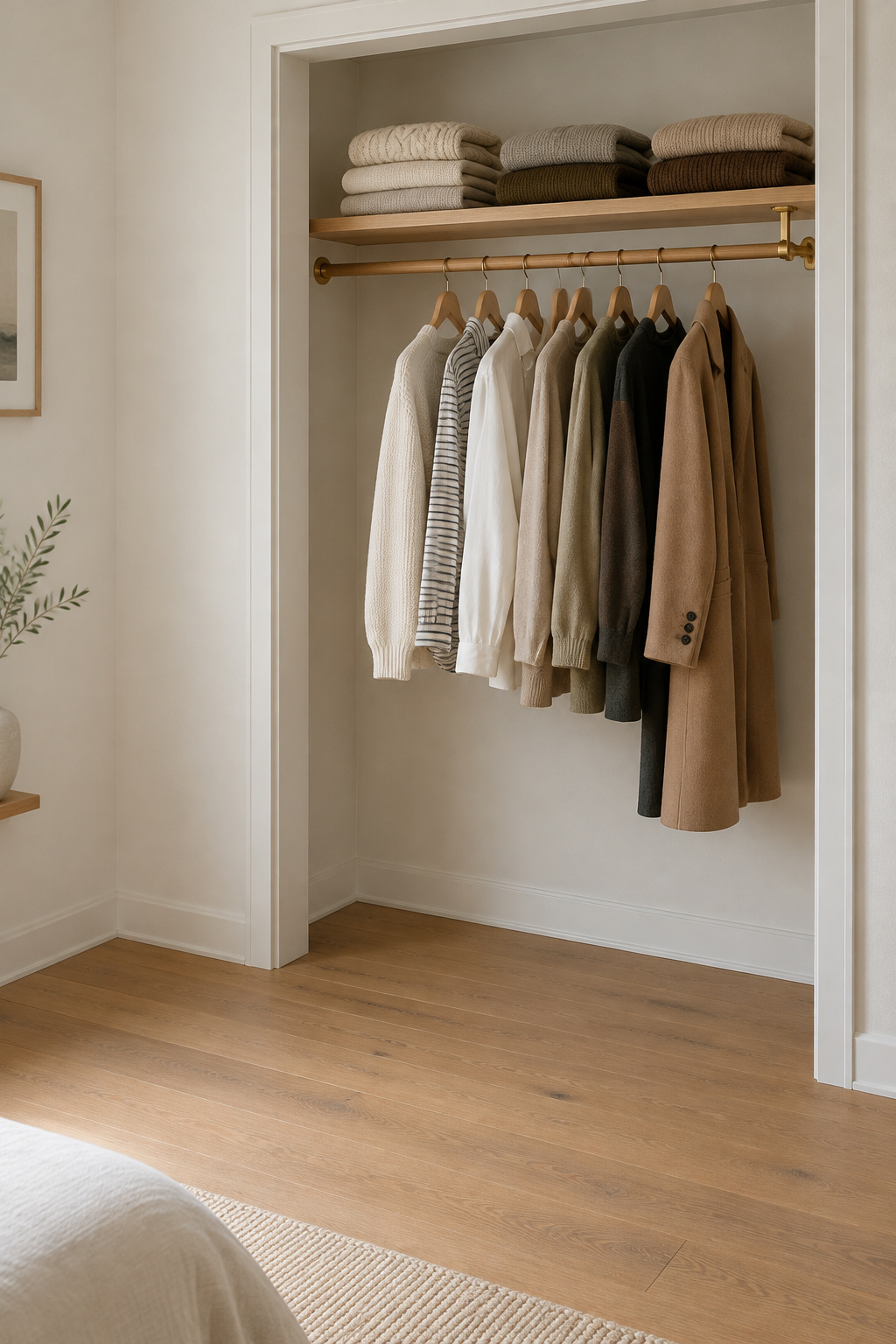
Storage you no longer need
A dresser is an overflow valve for a closet, and no closet needs it. Julie Hage of Filling the Jars has lived without one for years and reports that a reach-in as narrow as 42 inches held her whole pared-down wardrobe. That is one practitioner’s long-running account, and I would not hand it to every reader as a rule. Floor area returns to the bedroom, and a flat surface that collected clutter goes with it.
What’s worth keeping room for instead
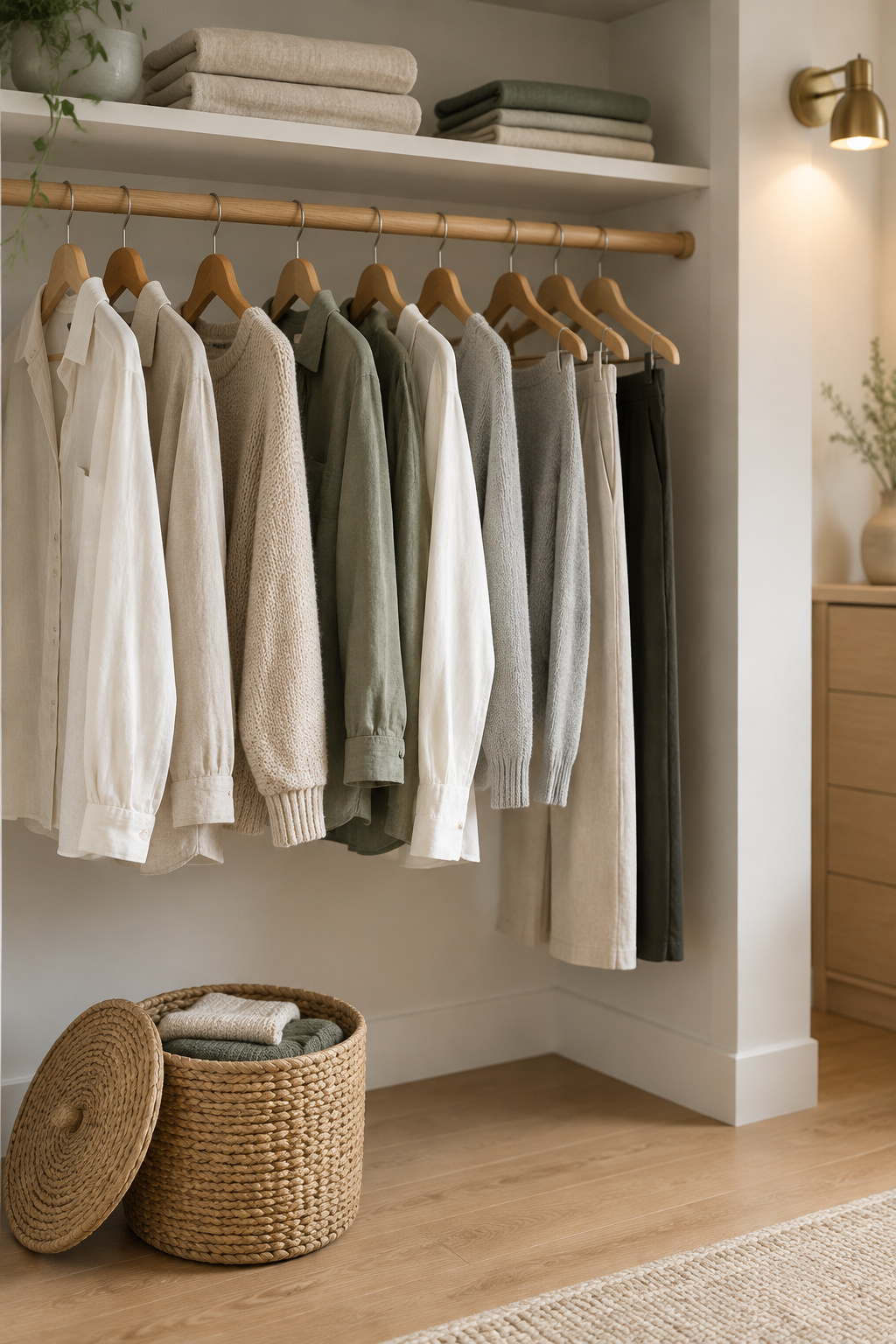
A single rod becomes realistic again. Double-hanging exists to fit more onto the same wall, and the rod-height split that governs it belongs to the walk-in layout article. A smaller wardrobe makes the simpler option viable.
Spend the reclaimed space on purpose: one labeled off-season container, and open shelving for the folded pieces in rotation, because a small wardrobe kept in view is one you keep wearing. Lagom is the Swedish word for exactly enough. In a closet it looks like fewer organizers by garment type.
Where a Pared-Down Wardrobe Still Needs Real Structure
So what does a capsule-sized wardrobe still need built for it? Less than you would expect, though not nothing.
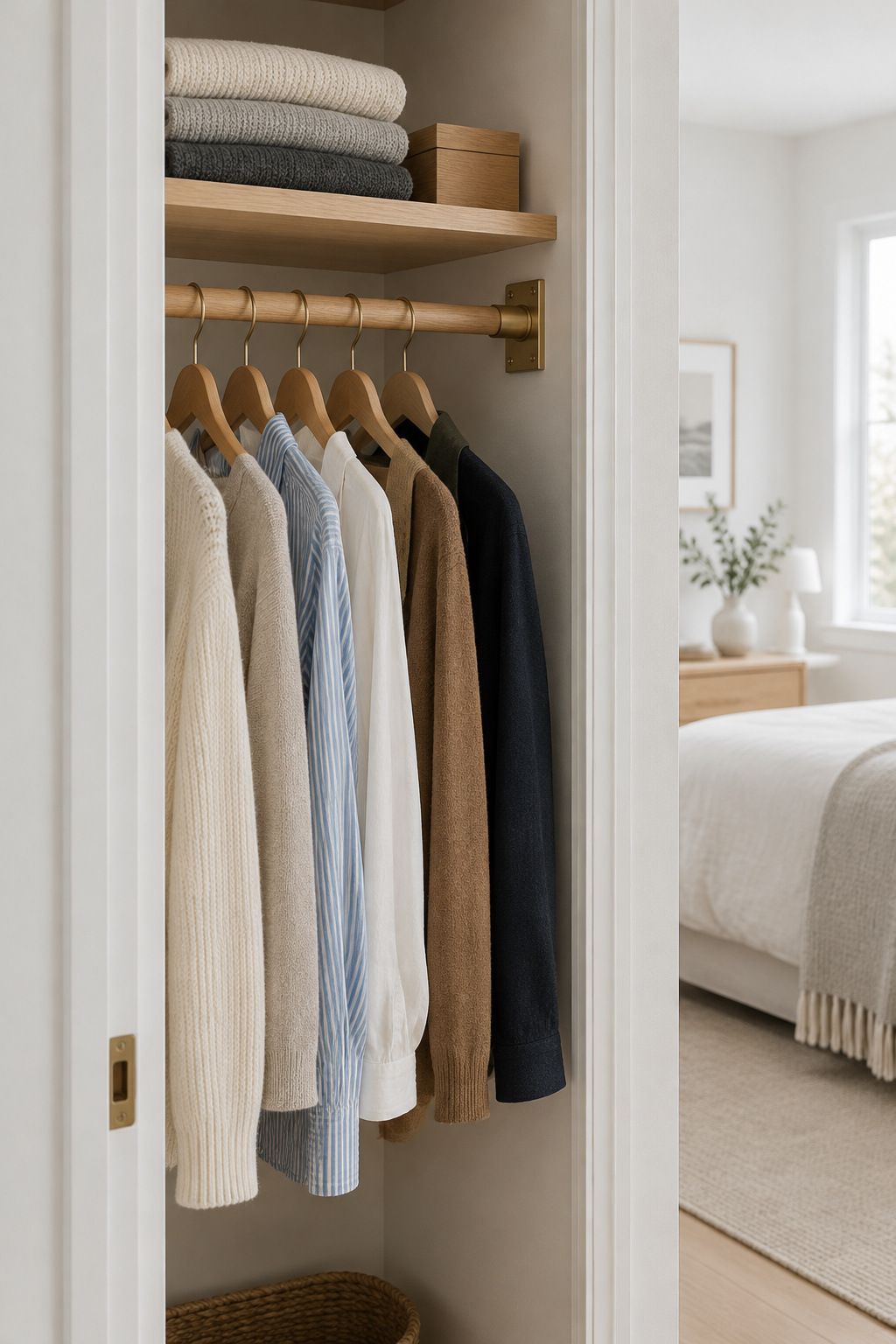
Fitting a capsule into a planned walk-in
Generous closets fill up whatever you owned on installation day, because capacity finds contents. Capping volume first keeps a zone plan intact a year later: hanging by category, a folded-goods wall, an accessory run. Start with planning a walk-in around a smaller wardrobe.
Fitting a capsule into a genuinely small closet
In a narrow reach-in, reducing what must be stored is faster and cheaper than adding capacity, because space-saving hardware runs out of room long before a wardrobe does. At capsule size, single-rod hanging is enough by itself. For the tactics after that, see the small-closet case for owning less.
What Those Ninety Seconds Feel Like Afterwards
Go back to the morning we started with. A capsule closet will not make you a more organized person. It removes the conditions that made organizing necessary. The system is thirty to forty pieces that combine, one in and one out to hold the line, a staging bag with a deadline, and one labeled bin for the season still to come. None of it needs willpower on a bad week. This weekend, count what hangs on your rod and see how far you sit from that band.
FAQ
How many hangers does a capsule wardrobe actually need?
Hanger count follows item count, with no separate rule. A wardrobe in the 30-to-40-item range needs roughly that many hangers, minus whatever you fold. Capsule guides recommend matching slim hangers, velvet-flocked or slimline wood, because uniform width makes a small wardrobe look edited, not sparse.
Does a capsule wardrobe work for a family closet, not just one person?
Yes, and kids’ capsules are an independently practiced variant. One parent applied Project 333 to her children’s clothes after noticing they wore the same five outfits no matter how full the drawers were. The logic holds: fewer choices, easier tidying, less laundry backlog. Children’s counts do get reset far more often, since sizes keep changing.
How often should I reassess a capsule wardrobe?
A seasonal structure builds the review in. Project 333 resets every three months, and the swap is the checkpoint for what still gets worn. A year-round capsule has no natural swap point, so schedule a comparable review, commonly every three to six months, or the count drifts upward unnoticed.