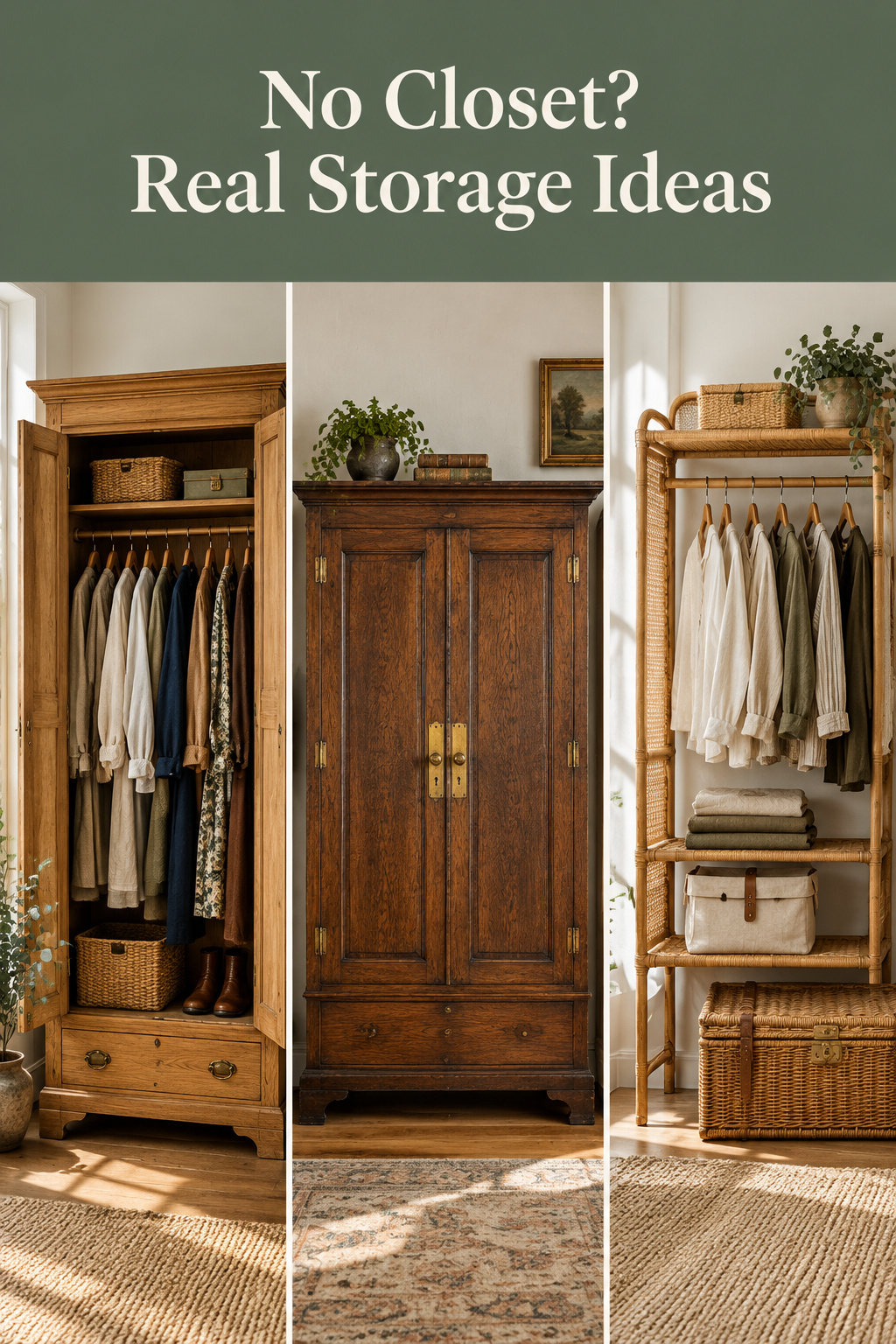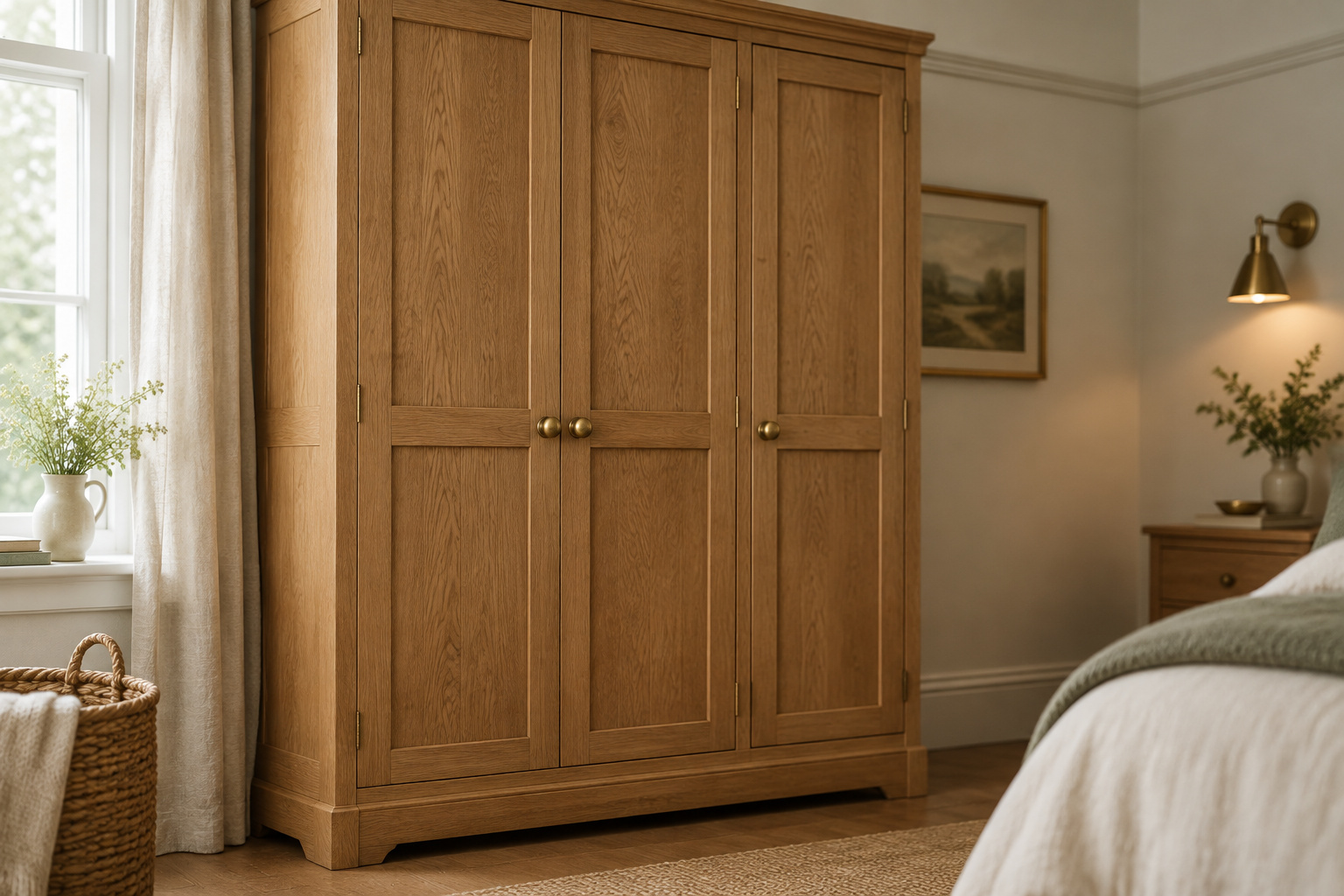

A Victorian household owned a fraction of the clothing yours does, and kept nearly all of it folded. Textile curator Alden O’Brien describes the practice plainly: garments went into a chest, a clothespress or a chest of drawers not onto hangers, which only came into common use after the Civil War. An 1885 bedroom lacks a closet for the same reason it lacks a bedside outlet: nobody needed one yet. That is a building-era fact, not a defect, so good no closet bedroom storage ideas start with furniture, not a framing crew.
TL;DR
- Buy to the room: freestanding pieces run 22–24 inches deep, 28 for coats, and a hinged door needs 24–30 inches of clear floor.
- Salvage usually wins: hand-cut dovetails were standard until about 1870, machine-cut from the 1890s on, and anything past 100 years should be preserved, not refinished.
- Add breathable off-season storage. Under-bed clearance runs about 6 inches on a platform bed, 12-plus with a box spring.
One boundary first: this covers bedroom clothing storage. Coats and everyday entry gear belong to the entryway.
Older Homes Weren’t Built With Closets — That Doesn’t Mean No Storage
The closet-tax story is folklore: no such levy appears in the records of any of the thirteen original colonies. The real explanation is duller.
Why pre-war and Victorian houses often skipped built-in closets
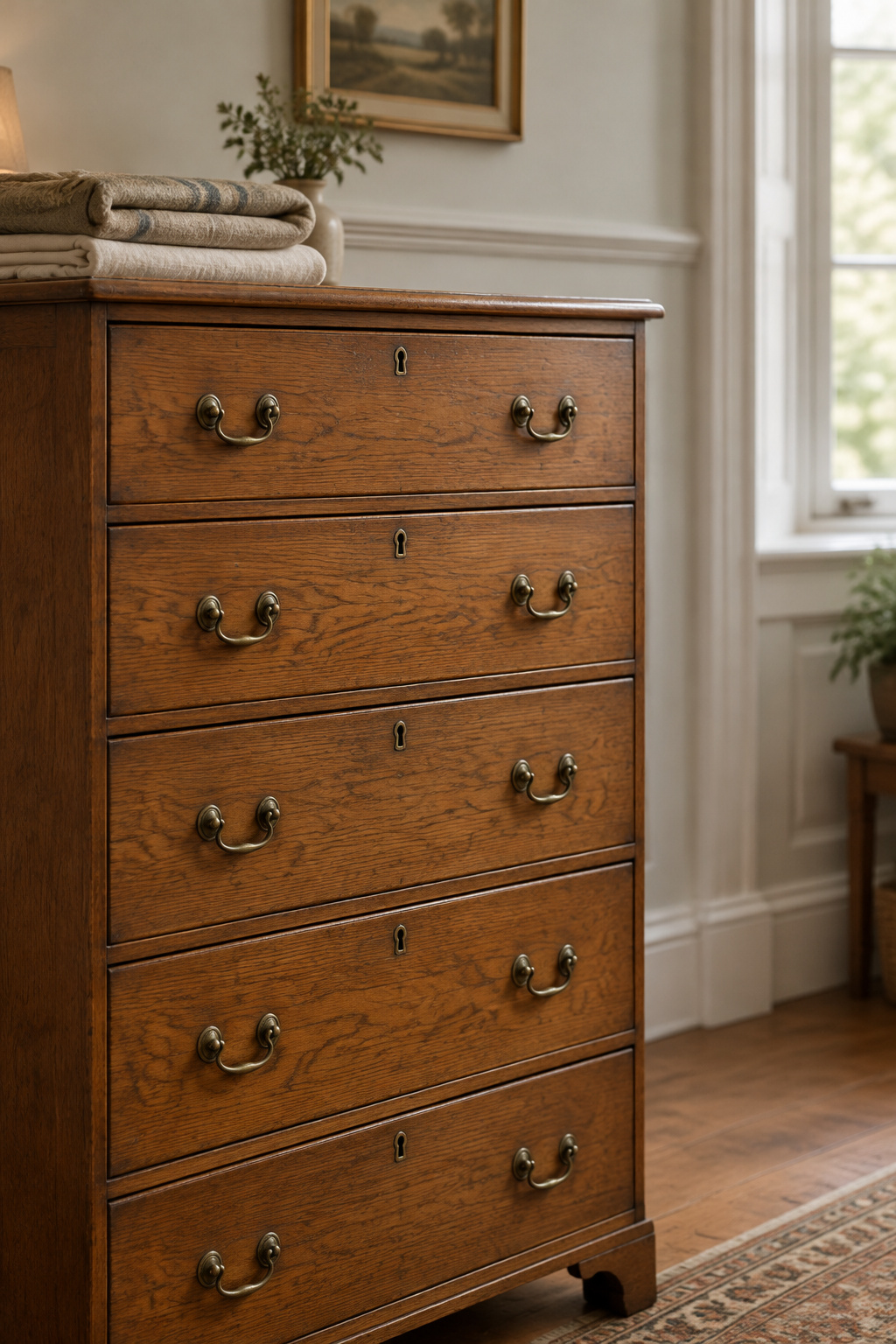
Colonial houses often did have closets, usually flanking a fireplace, but those held household goods, not clothing. Victorian households owned less, since clothing and case furniture were both expensive. Storage lived in movable furniture, which came with you.
What that means for how you solve it now
The code agrees. The International Residential Code asks a bedroom for two means of egress, 70 square feet and 7 feet in every direction, with no closet on the list. The real friction is market perception. Agents report buyers still expect one per bedroom, which troubles a listing more than a morning. For the rooms that do have one, closet organization ideas for every room covers the rest.
Sizing a Wardrobe or Armoire to the Room, Not Just the Wardrobe You Want
Twenty-four to thirty inches: the clear floor a hinged wardrobe door needs, and the measurement buying guides skip most often.
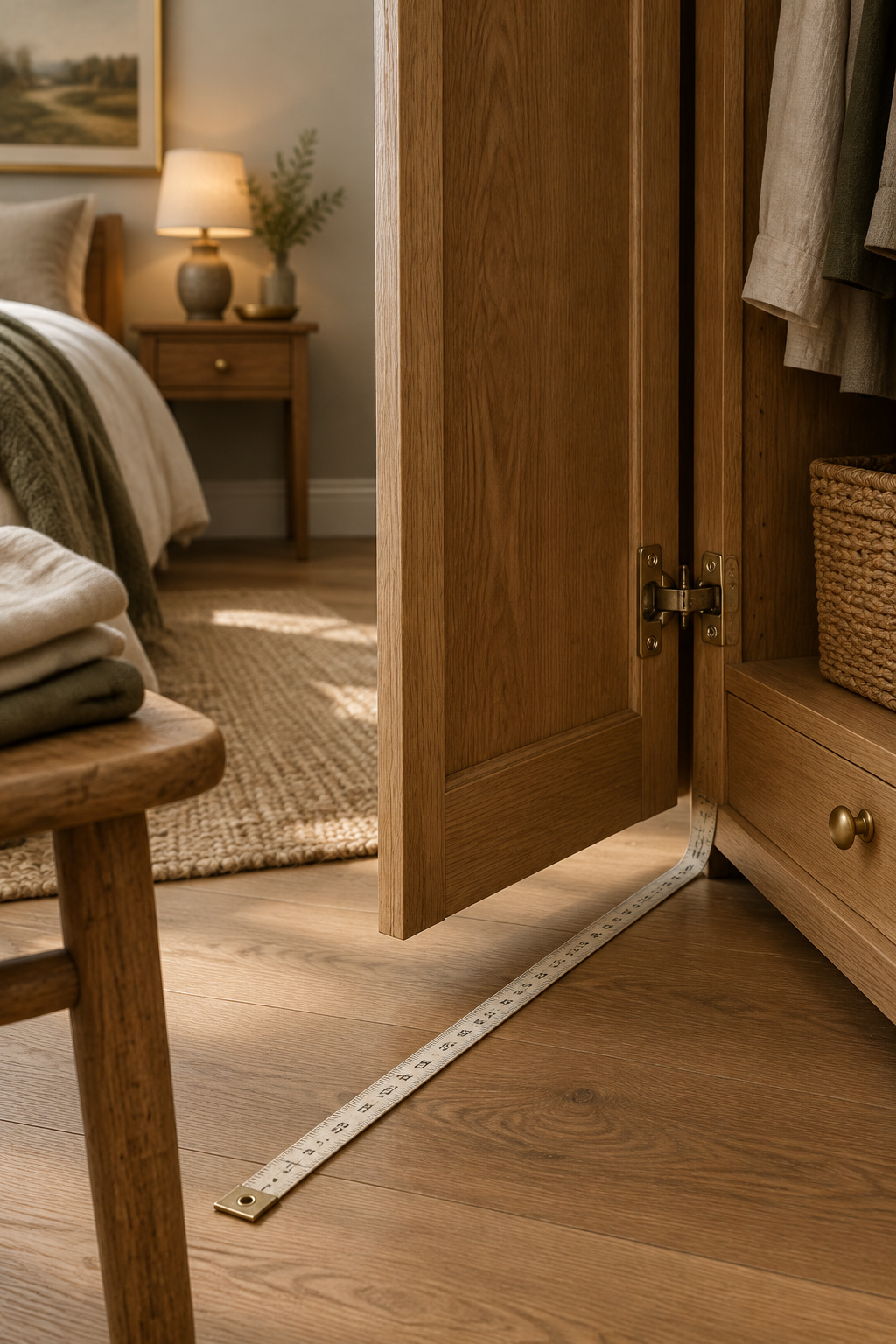
A simple room-to-piece sizing framework
| Tier | Height | Width | Depth |
|---|---|---|---|
| Small | 48–60 in | 24–36 in | 15–20 in |
| Narrow | 60–72 in | 18–24 in | 15–20 in |
| Large | 72–84 in | 40–60 in | 20–28 in |
| Tall | 84–96 in | 36–48 in | 20–28 in |
Measure the whole room, not just the wall: a piece that fits on paper can still crowd a window casing in the flesh. High ceilings are the one condition that justifies the tall tier.
Depth, height and door-swing clearance
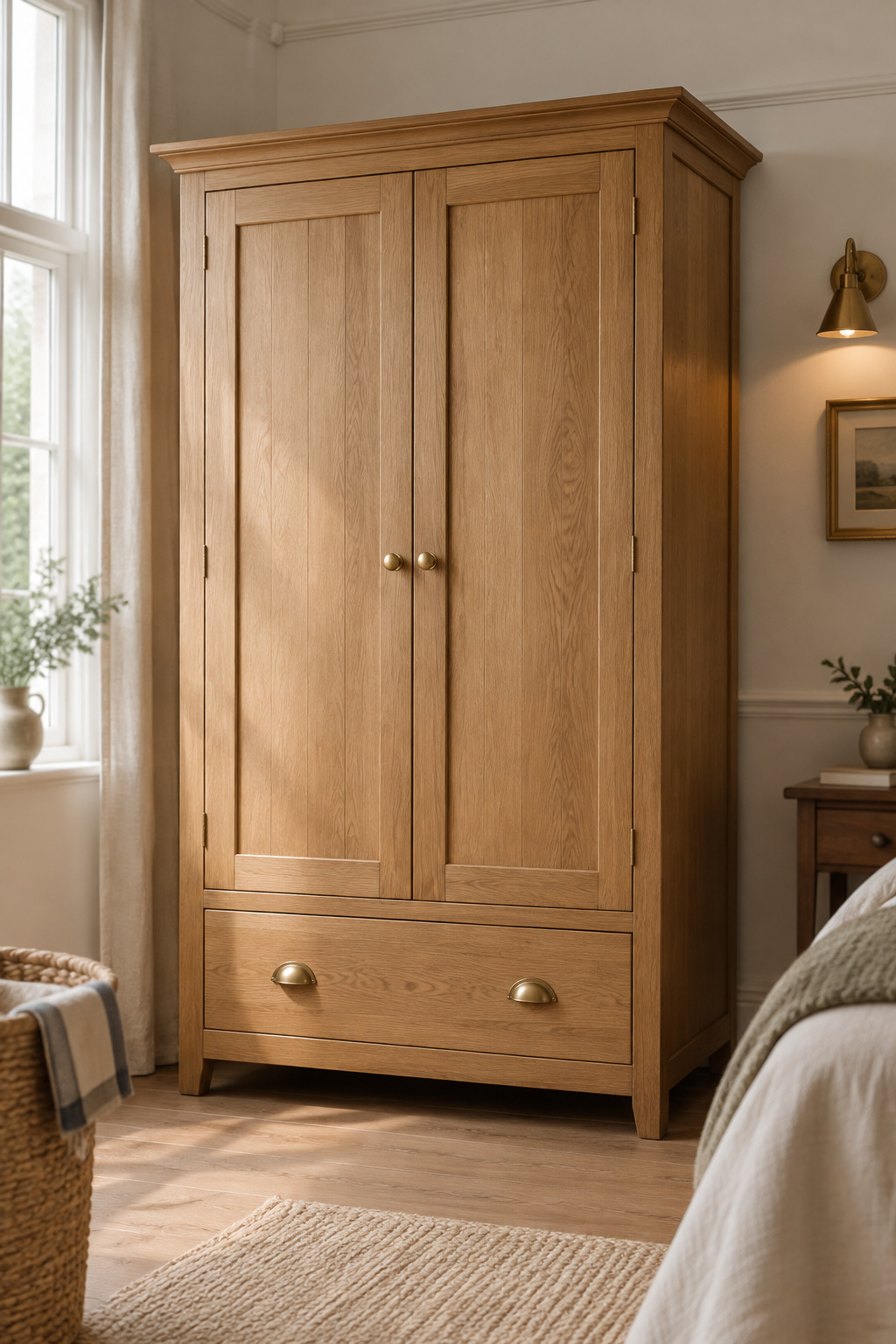
Standard depth runs 22 to 24 inches, 28 for bulky coats. Antiques are shallower, roughly 16 to 18 against 20 to 22 for a modern piece, so plan folded storage for heavy garments. In a narrow bedroom, sliding doors remove the swing problem.
Salvaged and Antique Pieces Are Often the Better Buy
My stock comes off the road: barn demolitions and estate sales across three counties, usually in the rain. Tall wardrobes go cheap there because nobody wants to move a tall oak case, so the best-built piece on the floor is often the least wanted.
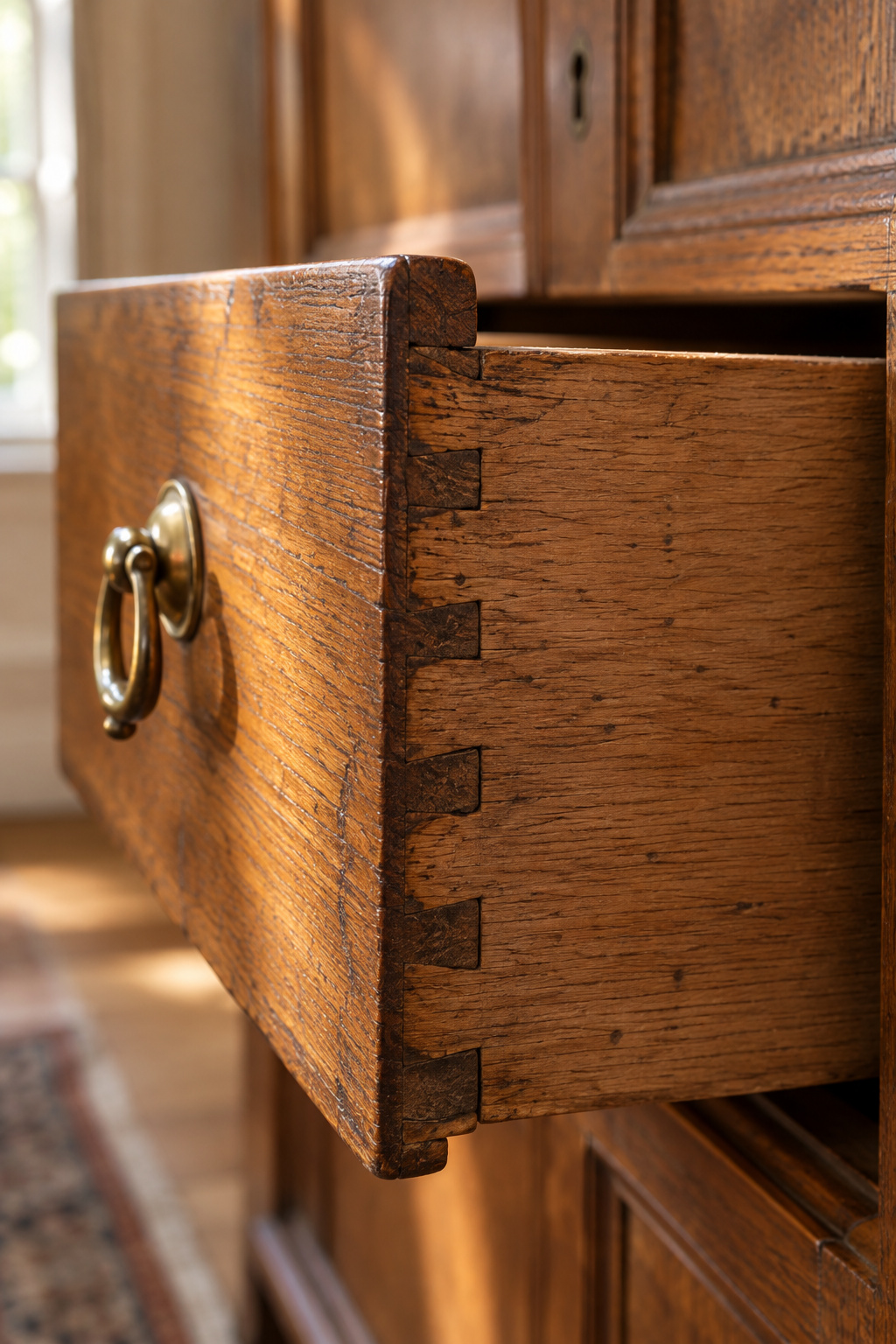
What to check before buying an old wardrobe
I pull a drawer before anything else. Even gaps and a smooth glide mean stable storage. Cupping and uneven shrinkage mean humidity swings, and that movement continues in your house. Furniture past 100 years is a true antique, and refinishing strips the original surface along with much of the value. Leave that one alone and restore a later factory piece instead.
Joinery tells that predict how it’ll hold up
| Era | Dovetail tell | What it means |
|---|---|---|
| Until ~1870 | Hand-cut, irregular pins | Pre-industrial, chisel and saw |
| 1870s–1890s | Jig-cut round “pin and cove” | Transitional; dates it to a decade |
| 1890s on | Machine-cut, identical pins | Factory work or reproduction |
Dating is the smaller half. A dovetailed drawer box resists racking for decades longer than a stapled one, and a wardrobe back in daily service needs that more than a date.
Open Racks as an Alternative, or a Supplement
Does an open rack earn its wall? Only where the wardrobe on it is genuinely edited, since everything hanging there is on display all day.
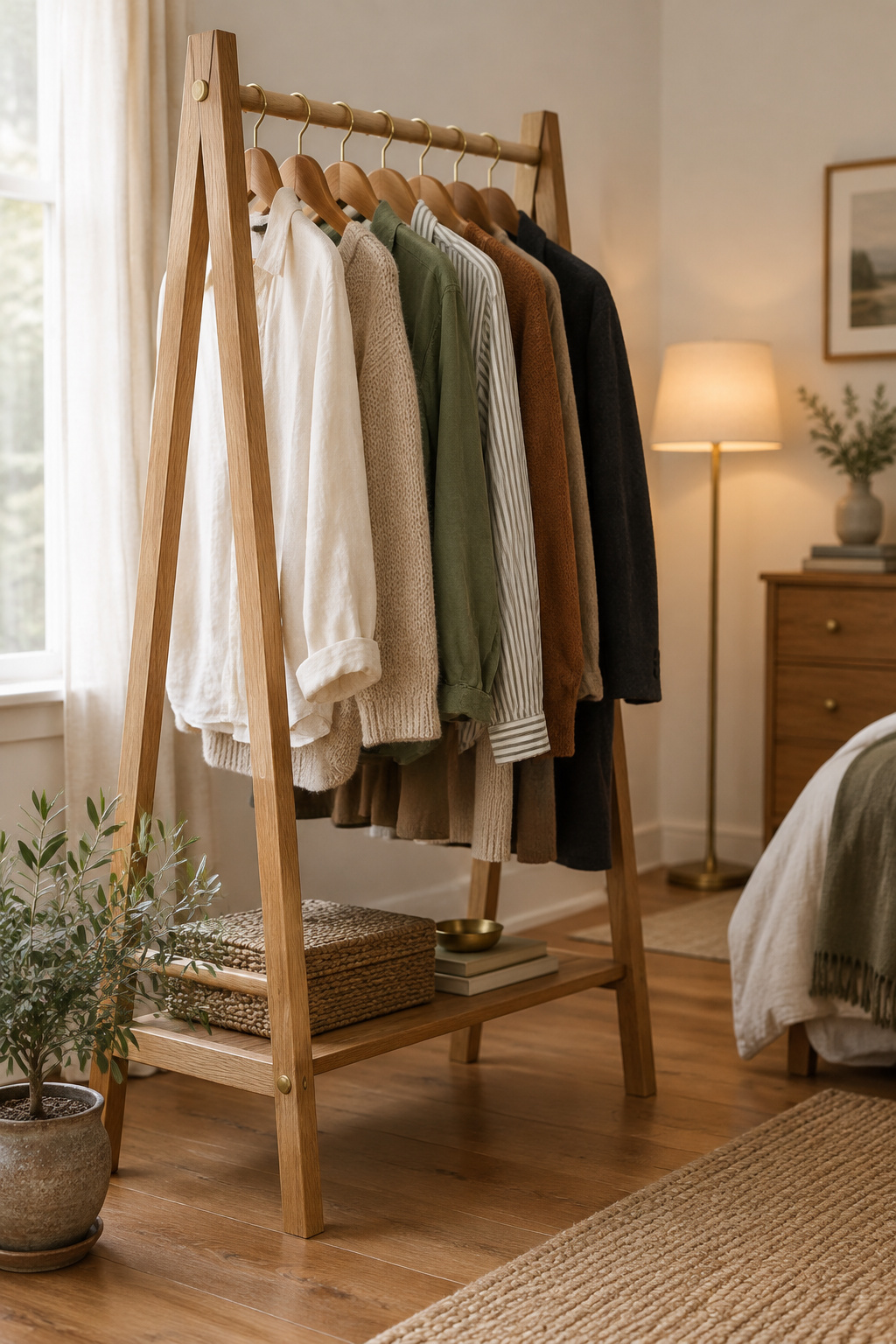
When open storage actually works
Nothing hides behind a door, so an open rack makes you own fewer things and choose them with care. A rolling rack is the cheapest way in, and it works best as a supplement: this month’s rotation on the rack, the rest behind doors.
Keeping it from looking like a garment rack in a shop
Matching hangers do more than editing ever will. A uniform run of wood or velvet looks deliberate, while mixed wire and plastic read as clutter. Ladder racks feel residential, and a pipe rack under a floating shelf adds folded storage overhead.
The Seasonal-Rotation Piece That Covers the Rest
The fastest way to ruin a winter coat is to seal it in an airtight tote for months on end. No wardrobe was meant to hold a whole year at once.
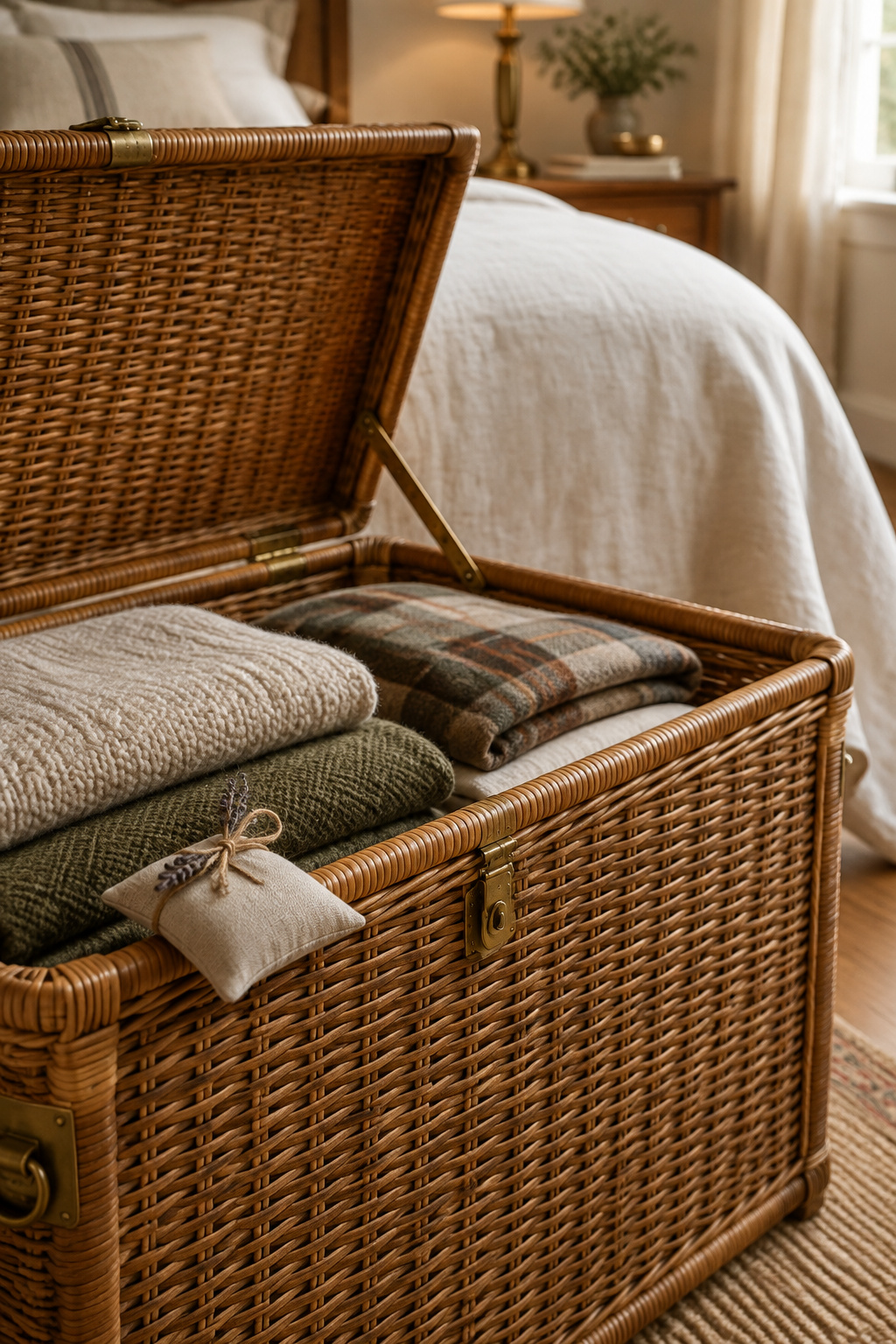
A trunk or under-bed box for off-season clothes
Breathable fabric or vented bins control moisture better than sealed plastic, which traps humidity without a dehumidifier packet. Cedar with a lavender sachet handles pests and odor, and a sealed container without them is exactly the environment moths prefer.
What never needs to leave the main piece
Current-season hanging clothes, everyday shoes and weekly accessories stay put year-round. The trunk takes what the season made inactive, and nothing that merely failed to fit. One exception from my trade: antique and vintage textiles, such as a quilt past 100 years or anything from 1930 to 1965, want acid-free archival boxes, away from plastic and cedar off-gassing.
No Closet Bedroom Storage Ideas That Don’t Cut Into a Wall
I would rather see a room furnished than framed.
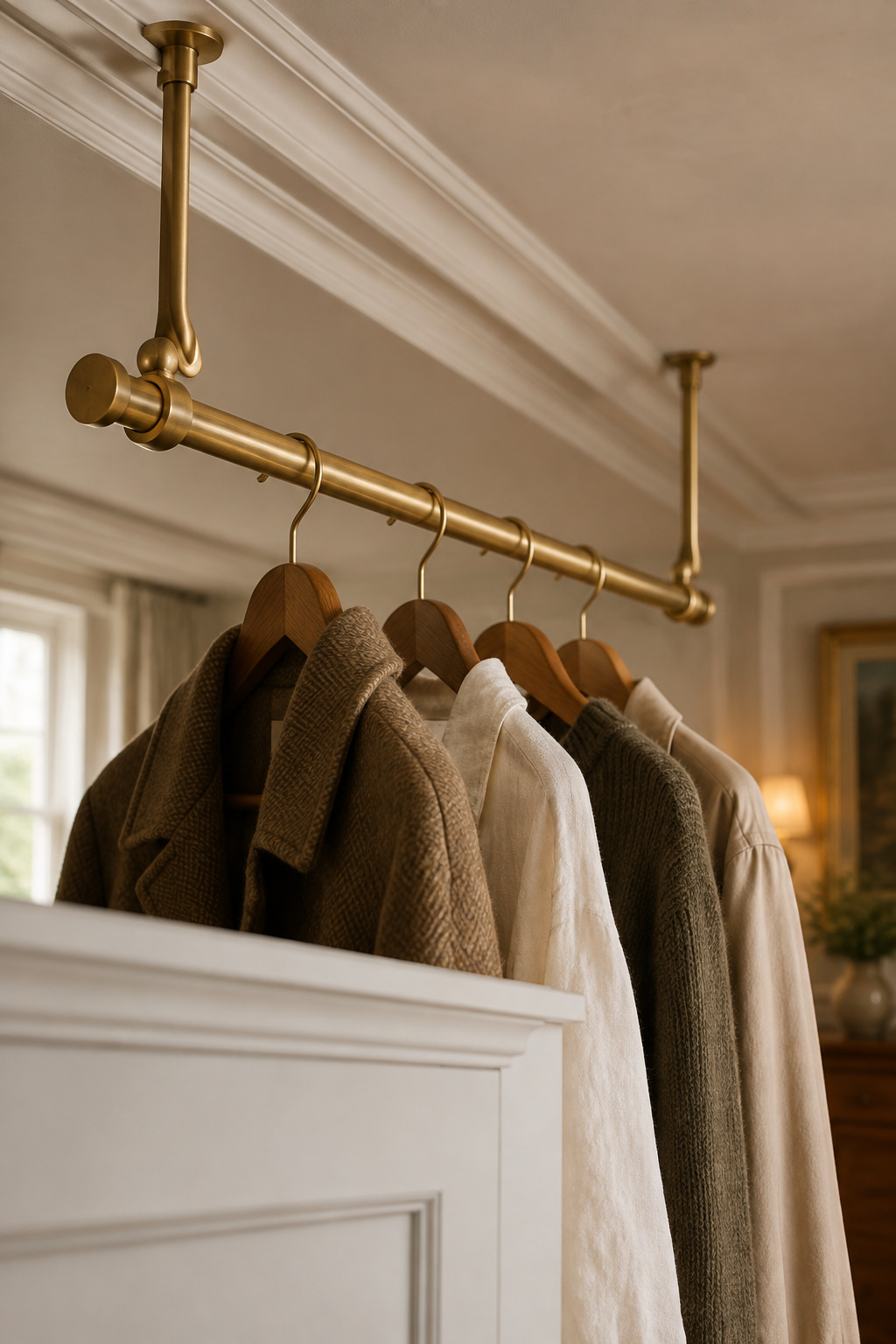
Why I avoid carving new closets into period rooms
The National Trust for Historic Preservation asks that modern needs be met with care and caution: non-intrusive changes, nothing that destroys or covers significant features. Cutting a closet into a period wall costs original plaster and trim, sometimes framing never designed to carry it. That is the one change here the next owner can’t undo. The code never asked for that closet. Habit did.
Surface-mounted and freestanding options that respect the structure
Victorian and Edwardian picture rails sit 300–500mm (12 to 20 inches) below the ceiling, built to carry hooks. Hanging a light garment rod from that system extends the hardware’s original job. That is not a rated load spec, so test the rail and keep the load modest. Where you must mount, anchor into a stud and pick a rail or hook over a cabinet, as both are patchable and reversible. For a built surround, building a wardrobe surround covers tools and cuts.
How Much Wardrobe You Actually Need
Buying a bigger wardrobe to chase capacity is the mistake underneath most of the others.
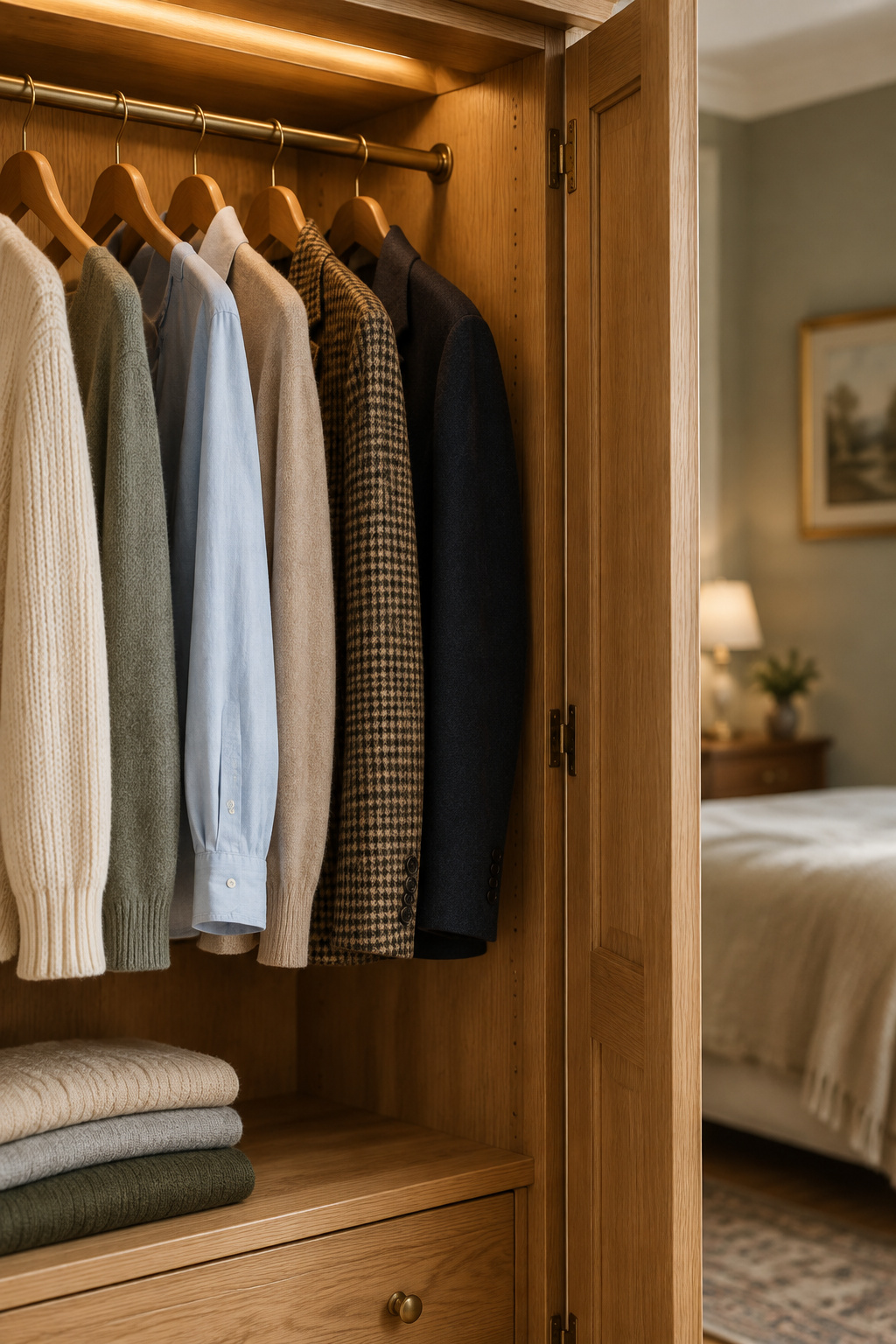
Why a smaller wardrobe makes any single piece of furniture work harder
Capsule guidance clusters around a working seasonal wardrobe of roughly 30 to 40 pieces, a canonical value owned by spoke-8 with the reasoning behind it. One large-tier piece, 40 to 60 inches wide, holds that comfortably and leaves the trunk for coats. See fitting a capsule wardrobe into a single piece of furniture for how far it goes.
A missing closet is period-accurate, legally irrelevant and solved with furniture. Size the piece to the floor and the door swing before you fall for it, buy old where you can, and give the off-season somewhere breathable to wait. Then leave the walls alone, because a freestanding answer outlasts your ownership of the house.
FAQ
Can you legally add a closet to a bedroom that doesn’t have one?
You aren’t required to. The International Residential Code asks a bedroom for two means of egress, 70 square feet and 7 feet of clearance in every direction, and no closet. You may generally add one, subject to local code and the room’s structure, though historic guidance prefers reversible work.
What’s the difference between a wardrobe and an armoire?
A wardrobe traces to medieval England, where the word meant a room for storing clothing, and modern wardrobes still emphasize hanging space. An armoire takes its name from the French for cupboard and began as ornate furniture for nobility, so it usually adds shelves and drawers to the hanging.
How do I stop a freestanding wardrobe from looking bulky in a small bedroom?
Drop a tier. A narrow piece at 60–72 inches tall and 18–24 wide, or a small one at 48–60 by 24–36, sits far more quietly than a large tier. Choose sliding doors to reclaim the 24–30 inch swing, plus lighter wood on visible legs.