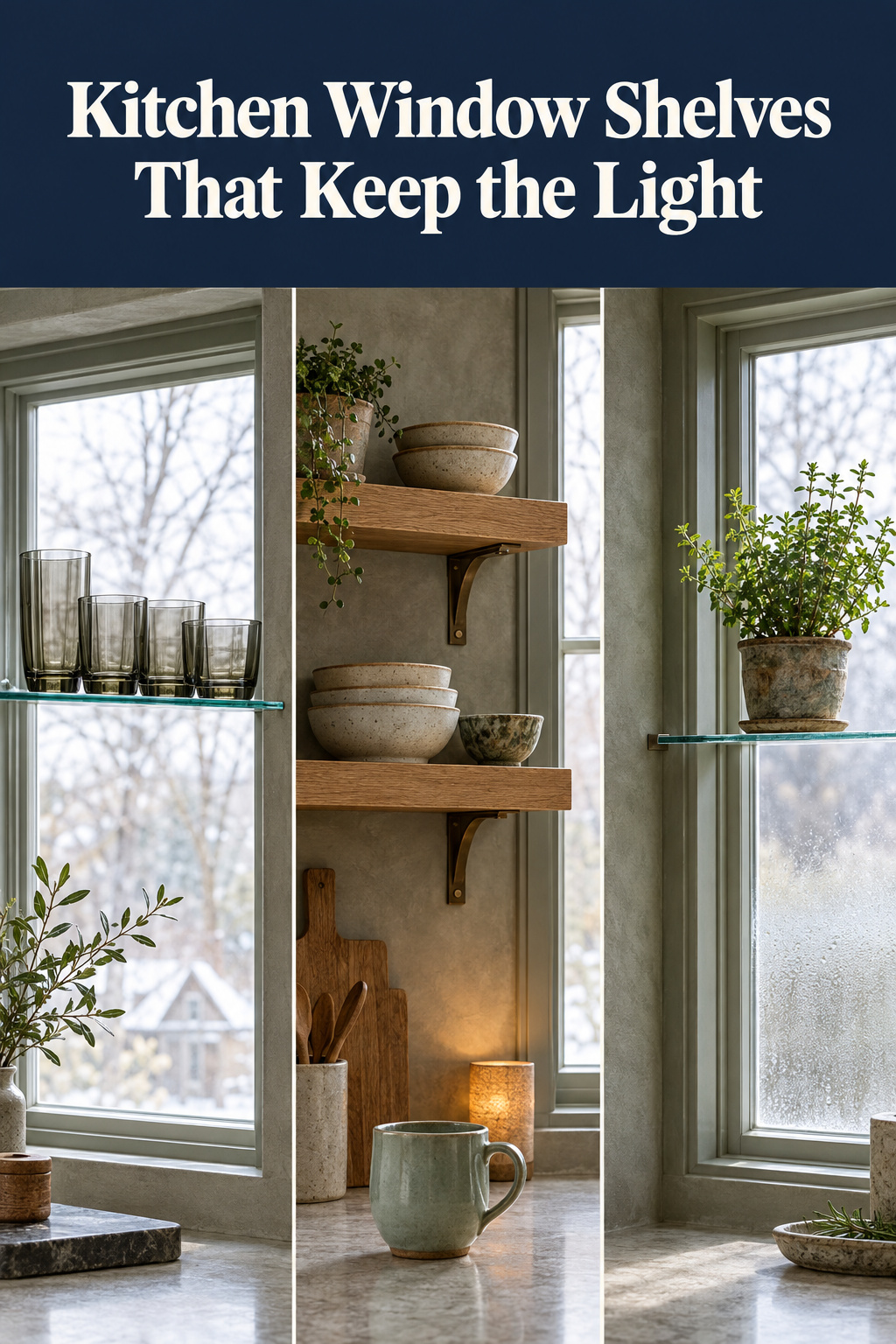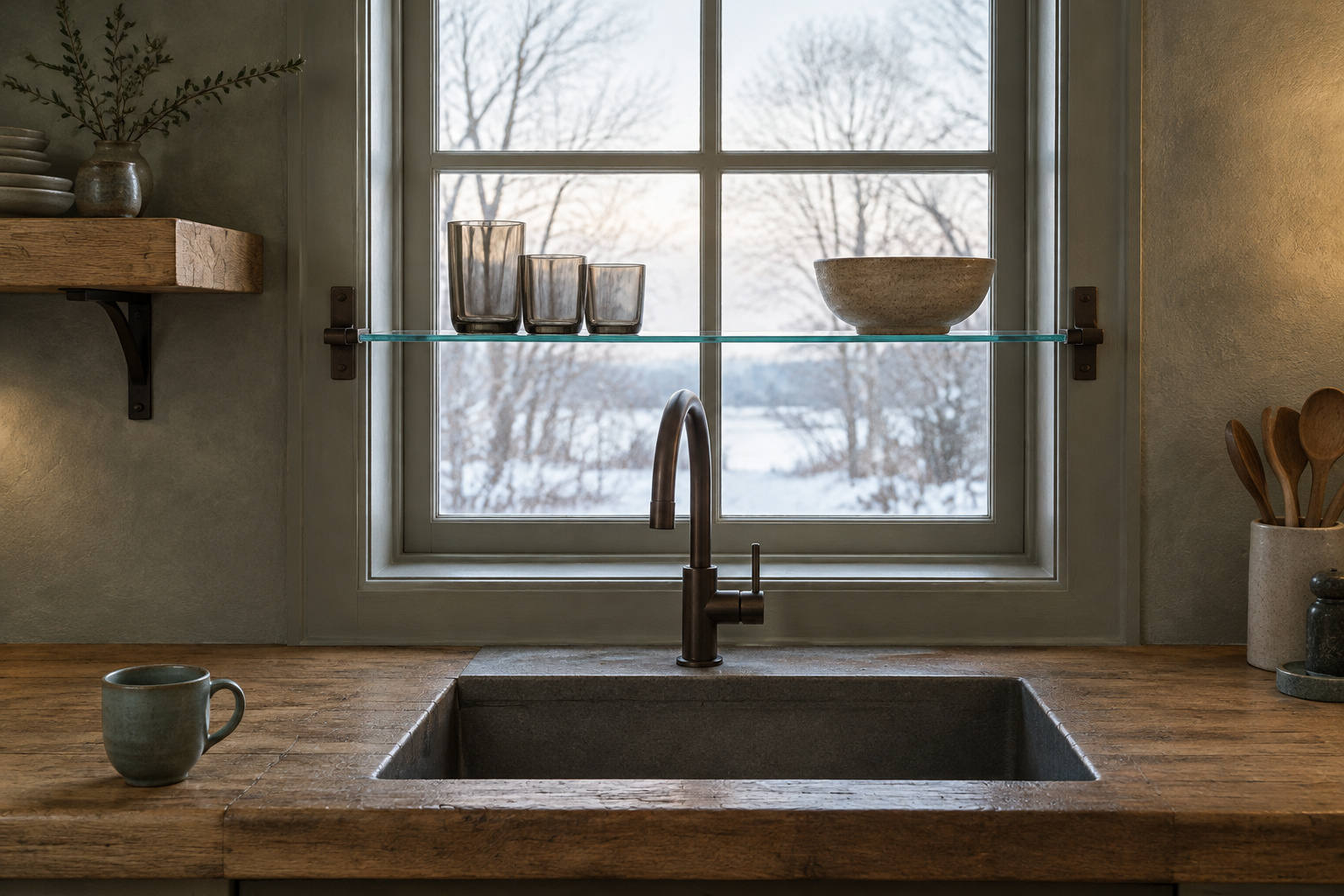
No window maker, building code or design standard gives a depth, or a distance from the sash for a shelf in front of a window. There are plenty of lovely photographs of kitchen window shelves, and not one tells you what the shelf took from the daylight. So you will have to judge your own window. I would rather you judged it in winter.
TL;DR
- Cross the glass only with a shelf that lets light through. Clear 3/8 in glass passes about 87% of visible light; a wood board passes none, so solid shelves go on the wall beside the window.
- Keep a crossing shelf shallow, about 6 in, and fix its brackets to the wall, never to the window. Seller advice runs from 4 to 12 in of depth, with no standard behind any of it.
- Glass is the coldest surface in a winter kitchen. A sealed double-glazed window starts to fog at about 47 to 50% indoor humidity when it is 20°F outside, and a deep recess or a covering that slows the air at the pane lowers that point.
Cross the Window or Flank It
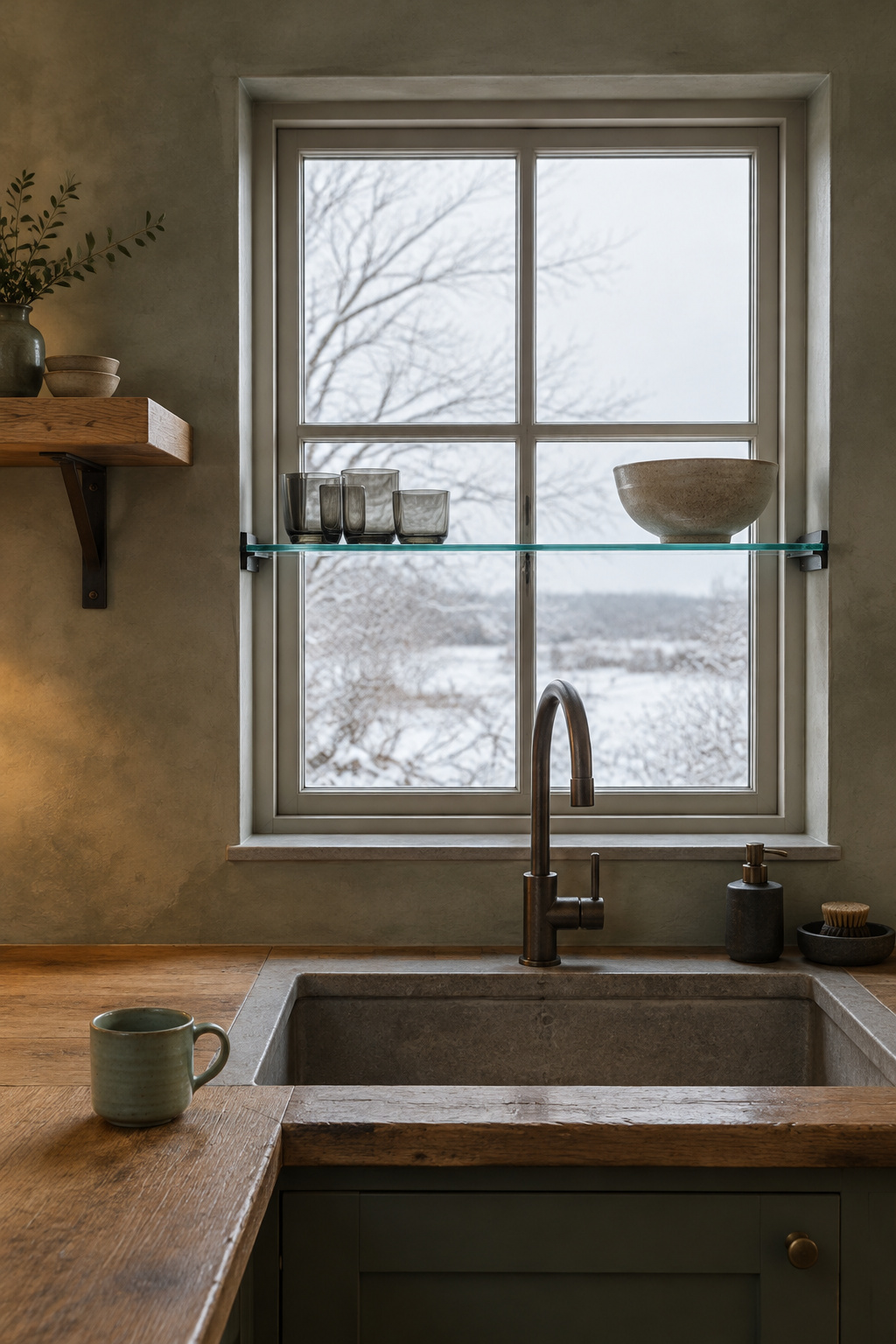
Light is the first material of a kitchen, and the window is the one wall you don’t fill. So I hold to a simple rule: a shelf may cross the glass only if it passes light. Anything solid goes on the wall beside it.
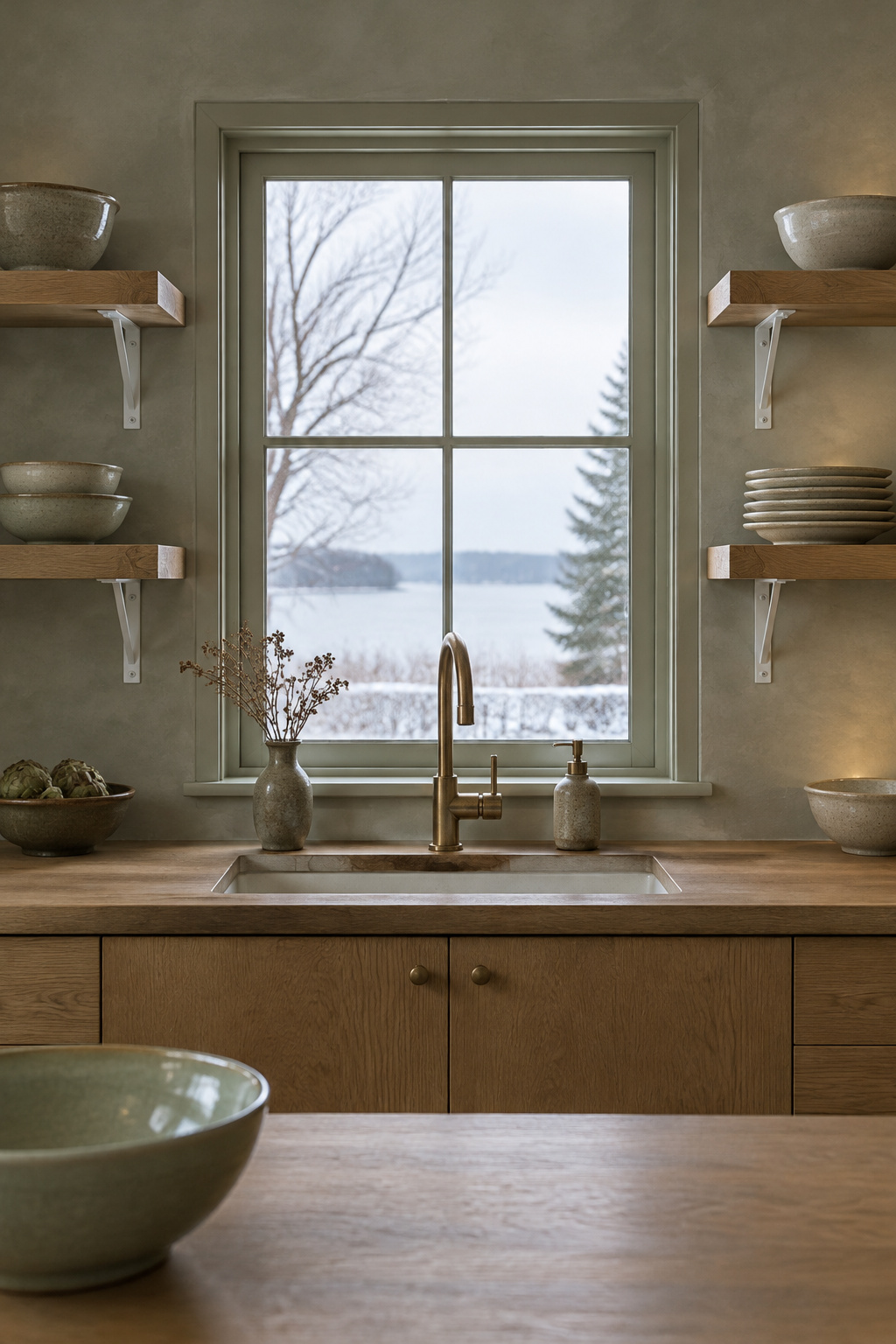
Erin Napier has shown her kitchen with a glass shelf in each window above the sink, holding tomatoes. What the same shelf does at your window depends on which way it faces and how it opens. Until you have tried it at your own glass, that’s a shelf for a photograph.
Designer Lisa Staton, who has put shelves at windows in several projects, gives the honest version. Crossing the glass buys sunlight, air and glasses within reach. It costs the view, and every sunbeam shows the dust. Her own sink window is the better lesson. She planned shelves across the middle pane, found that crossing kept them much shallower than she wanted, and at final carpentry moved to deeper shelves on either side of the sink instead.
One designer argues the other way: where the alternative is giving the window up to upper cabinets, shelves in front of the glass can be the better answer, because you keep the light and the view. I agree, on that condition.
General shelf heights, and the plan for kitchen open shelving on the other walls, don’t change at a window. Depth, light and the glass itself do.
What a Shelf Takes From the Daylight
Daylight drops off fast inside a room. A few feet from the glass it can fall from 1,000 foot-candles to 100, so whatever sits at the sill is taken from the brightest spot you have. A south window generally gives the most light, a north window the least, east and west somewhere between. Winter cuts all of it.
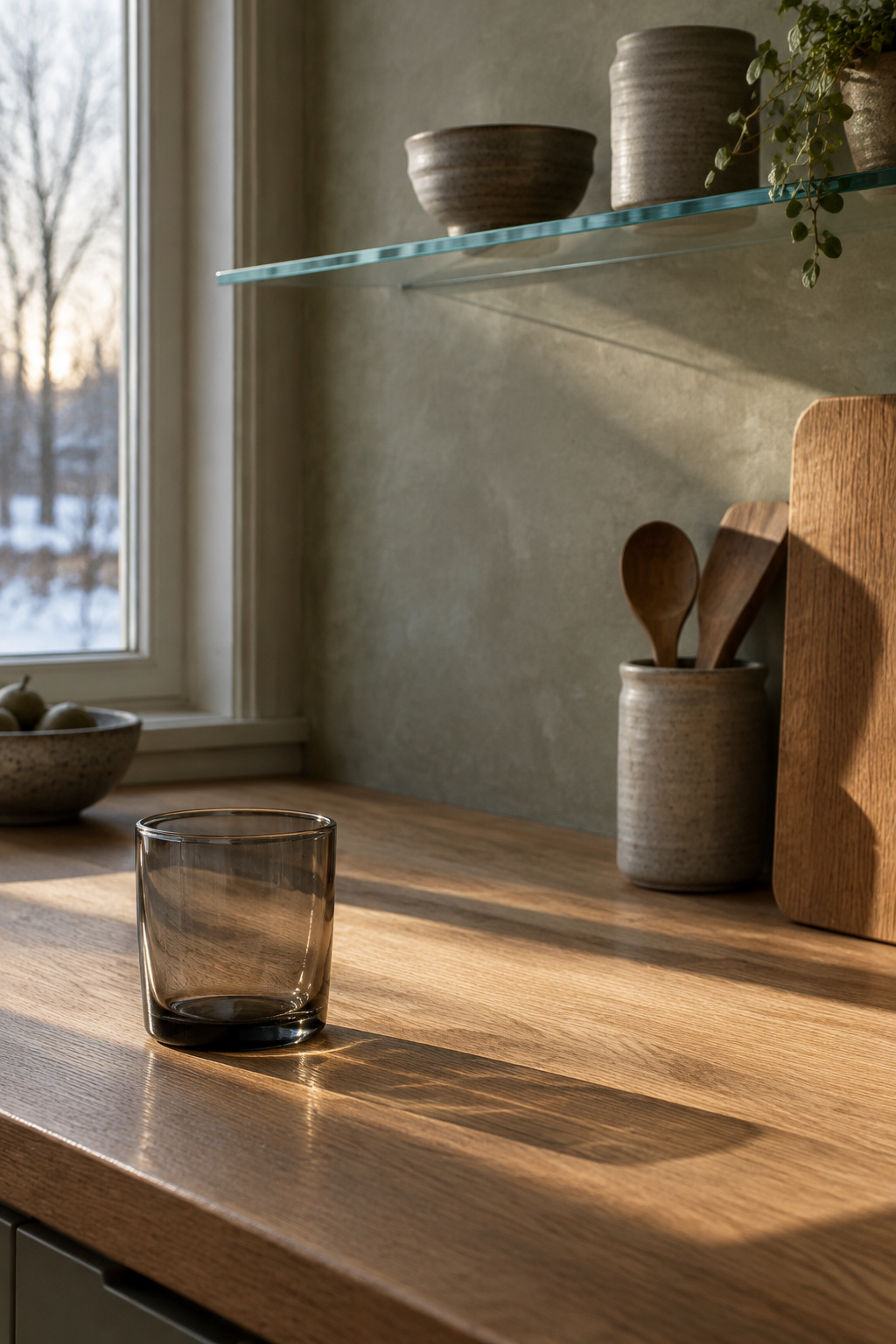
I learned this with a chair, not a shelf. My first winter in Minnesota I underestimated how early it gets dark and put my reading chair in what I thought was the best corner. From November on it was the darkest. I moved it three times before February. Place things for the winter light, and a shelf at a window is no different. Try it in February.
My own kitchen faces north, so the thin winter light is the one I design a window shelf for.
Then weigh what each shelf takes:
- A wood or metal board passes nothing. What you lose is its shadow across the pane.
- Clear float glass passes 89% of visible light at 1/4 in thick, 87% at 3/8 in and 85% at 1/2 in, and reflects about 8% off its surface.
- Two 3/8 in glass shelves in the same window pass about 76% straight on (0.87 × 0.87). Light arriving at a slant reflects more, so take that as the most you’ll get.
Never cross a north window with a solid board. On a very sunny aspect the case turns a little: Livingetc editor Hugh Metcalf suggests a white or reflective shelf under the window can bounce light deeper into the room and cut glare. It’s a fair idea for bright south glass. At a north window I wouldn’t try it. White goes grey and cold in north light.
Why Kitchen Window Shelves Should Be Glass, and Shallow
Glass and shallowness solve one problem from two sides. Glass takes little light; a shallow shelf takes little room in front of the sash.
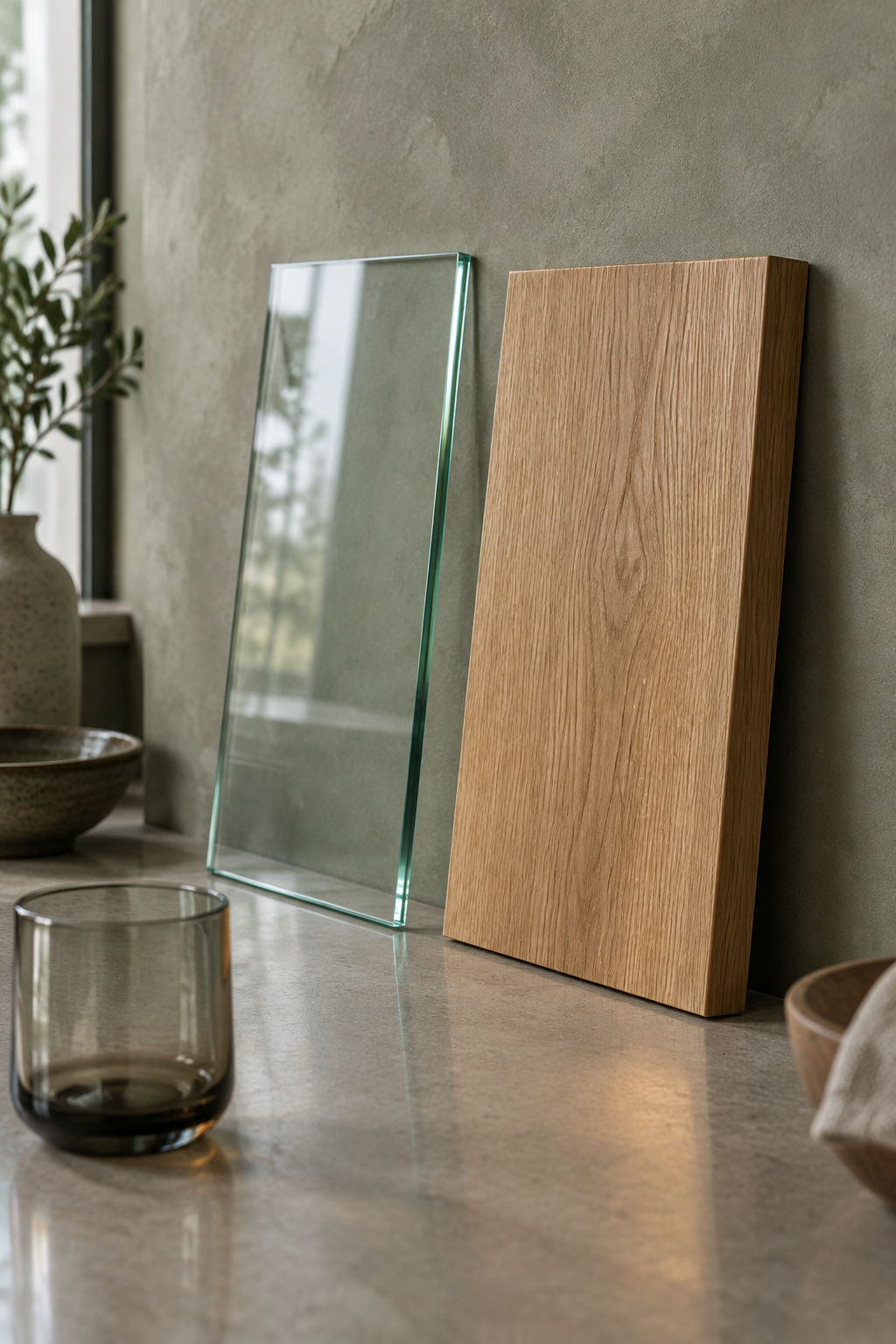
| Clear tempered glass | Sealed hardwood board | |
|---|---|---|
| Light passed | About 87% at 3/8 in | None under the board |
| Typical build | About 6 in deep, sometimes 6 to 8 in | A thin 1.5 to 2 in profile blocks least |
| Best use | Light glasses, a few small pots | Beside the window, for plates and everyday dishes |
Choose glass for anything that crosses the pane.
Use tempered glass. One glass fabricator recommends it for all shelving, even though code doesn’t technically require it for a shelf. It is cut to order and tempered after cutting, so there is no trimming it at home. Measure first and order the size with polished edges.
Don’t borrow anyone’s weight figure. One fabricator rates 3/8 in glass across a 36 in span at up to 140 lb; a display-system maker gives 70 for the same thickness with supports 3 ft apart. Those are different support systems, not a range to average. Use the rating for the glass and supports you actually buy, and keep the load light.
Against daylight, everything on the shelf becomes a silhouette; styling glassware on an open shelf deals with that.
Clearance to the Sash and the Casing
Sellers agree on the direction and little else. Their depth suggestions run from 4 to 12 in, and one adds a gap of at least 2 to 3 in between the back of the shelf and the glass so you can clean it. Those are habits of the trade, not tested figures.
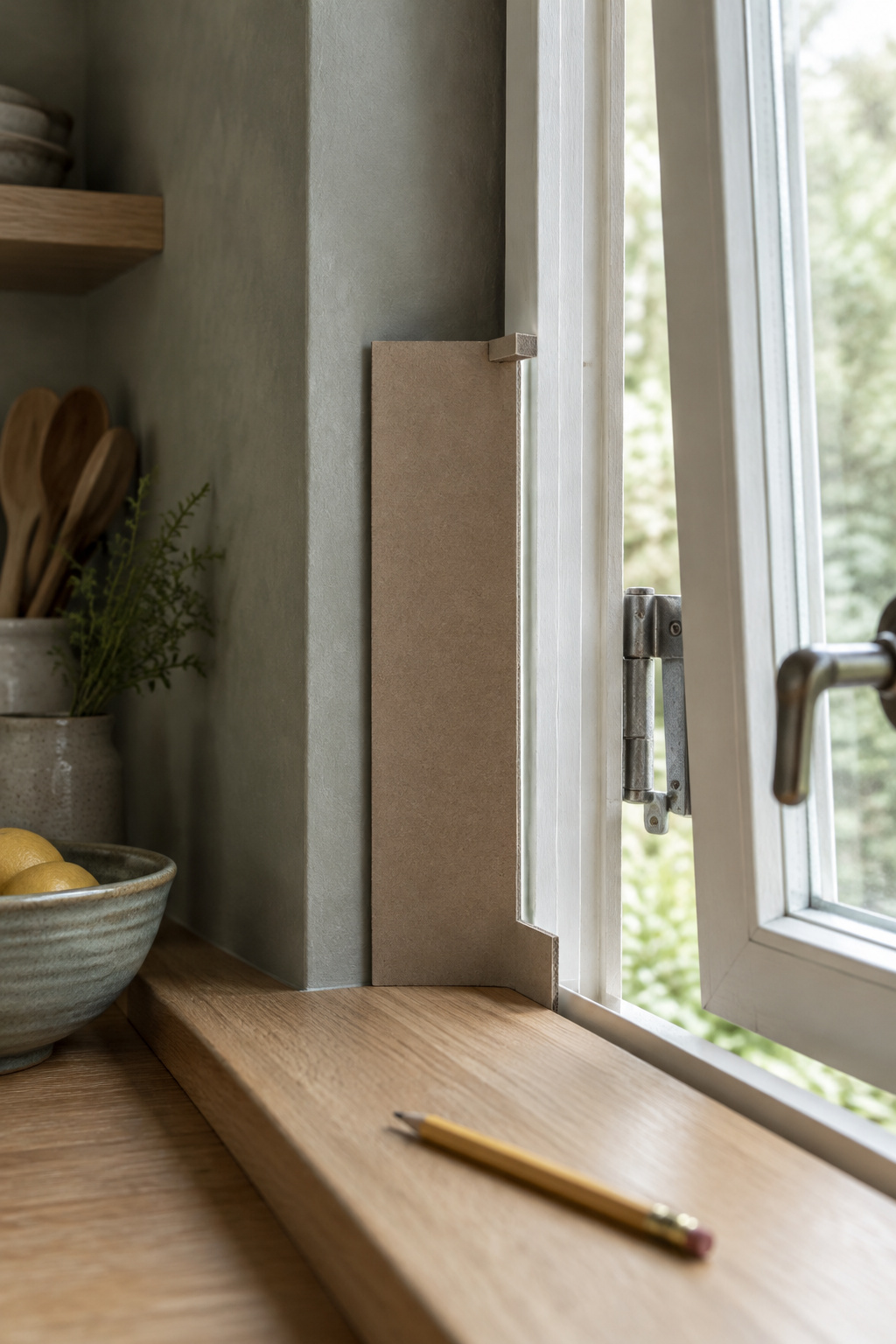
I would build a crossing shelf about 6 in deep and no deeper. That holds a row of glasses and leaves room for the hand that cleans the pane.
Your window sets the real limits. Before you buy anything, open it, tilt it and latch it with a tape measure in your hand:
- The sash. A casement swings open on a crank. Many double-hung sashes tilt in for cleaning, and Jeld-Wen’s guide has you raise the sash 6 in or more to release it. Andersen’s wash-assist tabs need the bottom sash open about 2 in. Run each motion with the shelf position marked in tape.
- The latch and crank. A shelf across the lower part of the window can block both.
- The casing. Note how far it stands out from the wall. Brackets go into the wall beside the window, into studs or blocking, never into the casing or jamb.
Some DIY guides mount glass-shelf brackets on the jamb or frame. Andersen’s care guide says to attach nothing to its windows except products made for them, and a careless mount can void a window warranty. I side with the window makers. Finding the studs belongs with choosing kitchen shelf brackets that carry a full stack of plates, which is its own subject.
Cold Glass and Condensation at the Window
In winter the glass is the coldest surface in the kitchen, and it sets how much humidity the room can carry before water forms on it. Window stools slow the air at the bottom of the pane and chill it further.
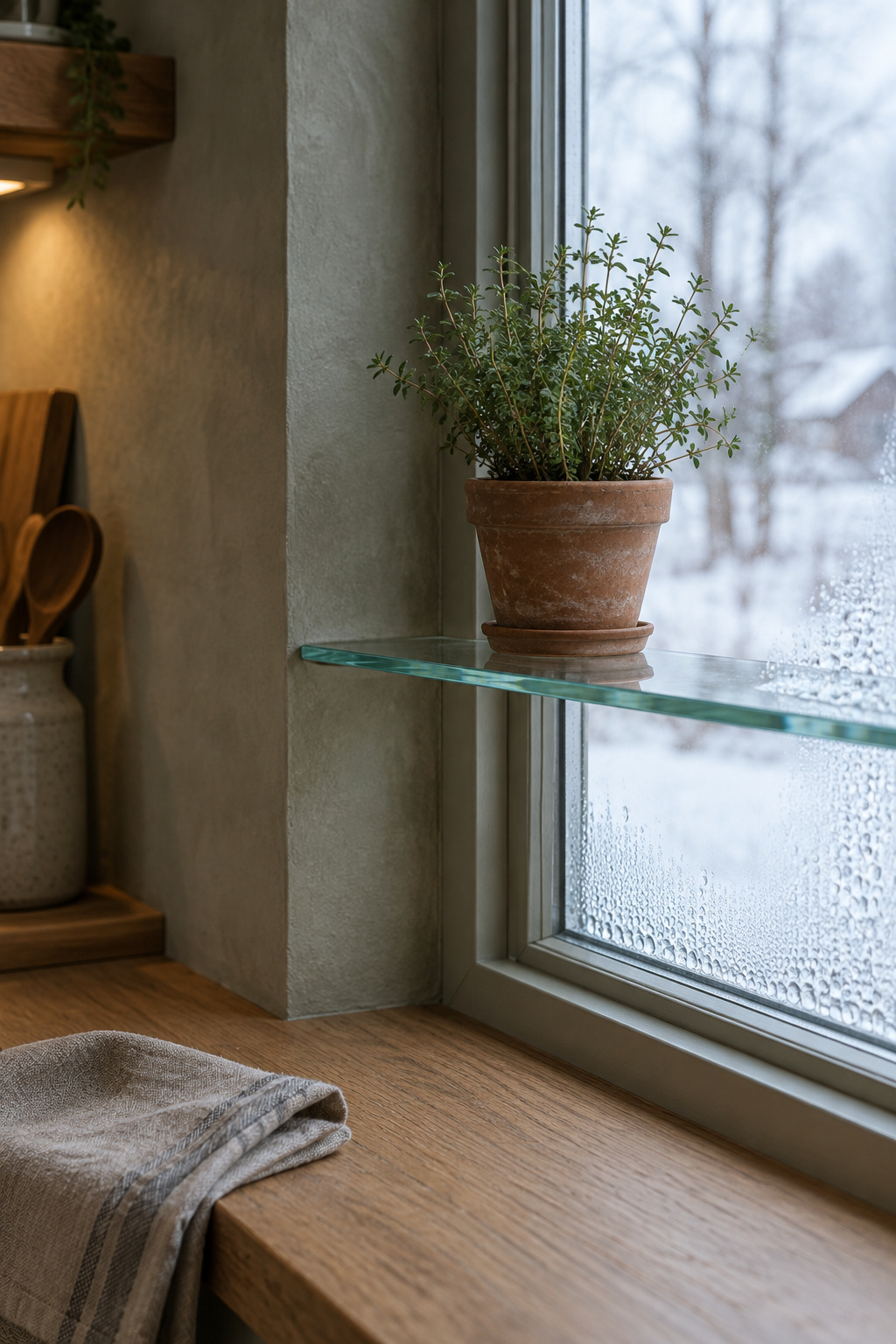
With 70°F inside and 20°F outside, single glazing fogs at about 24% relative humidity, sealed double glazing at 47 to 50%, and a window with a tight storm sash at 58%. A deeply recessed window, or one covered in a way that blocks the air, fogs at lower humidity still. A shelf in front of the glass slows the air at the pane the way a stool or a blind does, so I expect it to push the window the same way.
Condensation does slow damage: peeling paint, swollen wood, sill rot, staining and mold. Keep indoor humidity between 30 and 50%, lower in very cold weather. Glass and sealed wood shrug off the damp. Unsealed wood, paper and anything dyed belong off the shelf nearest the pane.
The shallow glass shelf that passes the most light also leaves the most room for air at the glass, so one choice answers both problems. Read your window in its dimmest season, cross it only with a shelf that passes light, and flank it otherwise. A window wall has no uppers to lose, but the open-versus-closed decision for the other walls is still yours to make.
FAQ
Can I put a shelf above a kitchen window instead of across it?
Yes, and it costs less light, because a shelf above the frame sits outside the daylight path. One seller suggests 2 to 4 in above the frame, for decorative pieces only, since it is harder to reach. Another lines its bottom up with the top of the trim or the underside of nearby cabinets.
Will afternoon sun damage things stored on a window shelf?
Some things, yes. Light-sensitive colors can fade within hours of direct sun, while ceramics don’t fade at all. Clear 3/8 in glass still passes about 58% of ultraviolet, so a glass shelf won’t shield whatever sits under it. Stoneware and glassware are fine there; keep dyed linens, paper cookbooks, spices and oils somewhere else.
Can plants live on a kitchen window shelf?
Yes, and they get the best light in the house, especially at a south window. Keep the leaves off the glass in freezing weather, because some tropical plants are injured below 40°F. Move a plant into brighter light gradually, too. A sudden move into direct sun can bleach or burn its leaves.