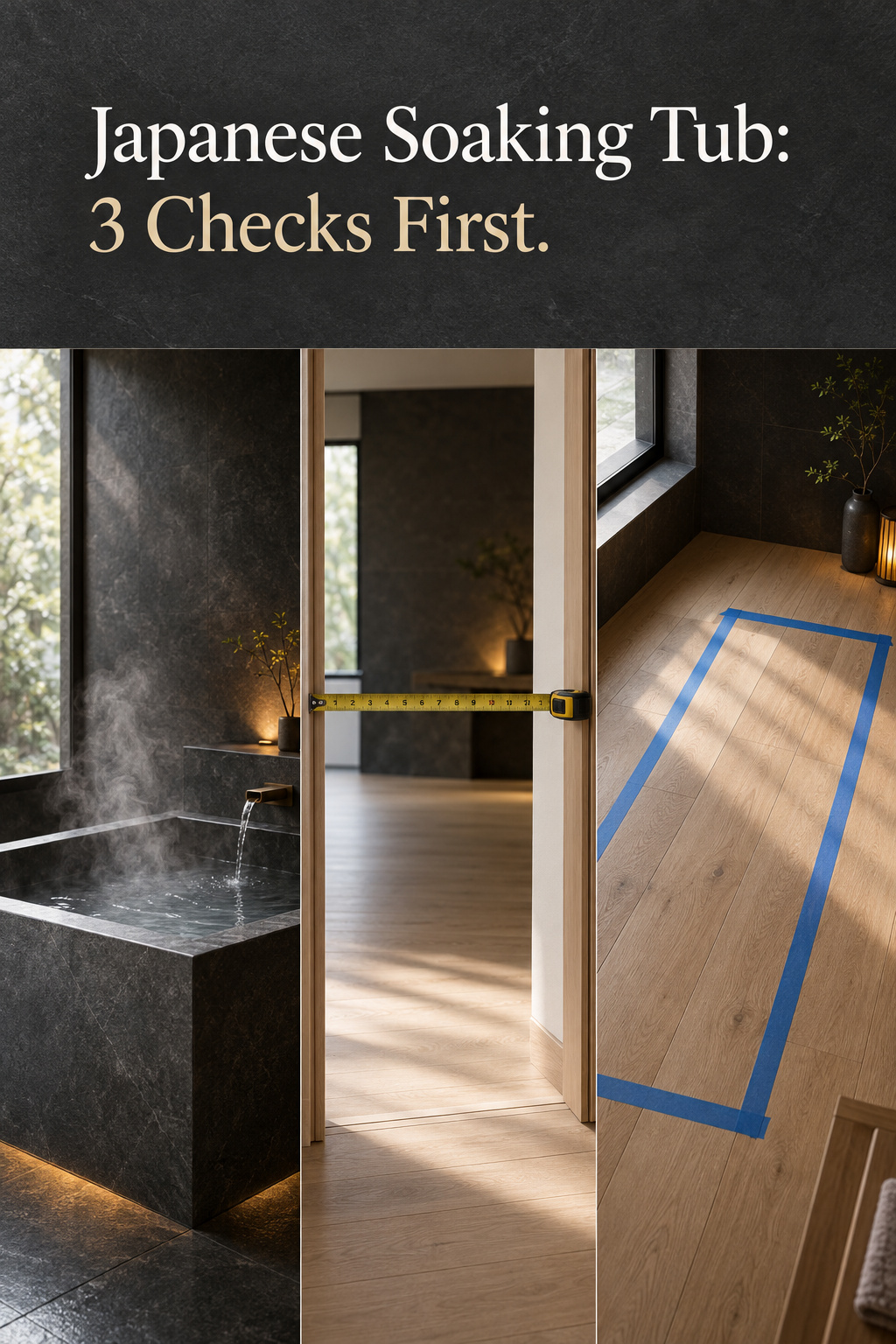

Get a pencil and the spec sheet for the Japanese soaking tub you’ve been eyeing. Multiply the gallons by 8.34 and add the tub’s own weight. For the Aquatica True Ofuro Nano, one of the narrow ones, that’s 525 pounds of water on top of 282 pounds of tub: 807 pounds on 10.6 square feet of floor, before anyone climbs in.
For all that weight you get a seated soak with water to your shoulders, in a footprint shorter than a standard tub. In return it needs a floor, a water heater and a doorway that can take it. The showroom sells the depth and skips the rest, which is how a tub ends up returned, lukewarm, or crated in the hall. In the Saturday beginners’ class I teach at a community workshop, we measure before we buy anything, and a tub is where that rule pays off most.
TL;DR
- A full compact soaking tub puts 64 to 82 pounds per square foot on its footprint, up to 94 with a bather, against a 40 psf uniform design load, so have an engineer check the joists.
- About 70% of a tank arrives hot in one fill, so the 63-gallon Nano needs roughly a 65-gallon tank.
- It won’t save water: compact ofuro tubs hold 63 to 78 gallons against 48 to 68 for 60-inch alcove tubs, unless the household shares one fill.
Japanese Soaking Tub Sizes: How Deep, How Long and How Many Gallons
An ofuro-style tub is short and deep. You sit upright, knees bent, water to the shoulders. These tubs run about 40 to 60 inches long with 20 to 30-plus inches of water at the overflow, against 12 to 16 inches in a 60-inch alcove tub. Read depth to overflow on the sheet, not exterior height: the overflow sits below the rim, so a 24-inch-tall tub may hold only about 17 inches of water.
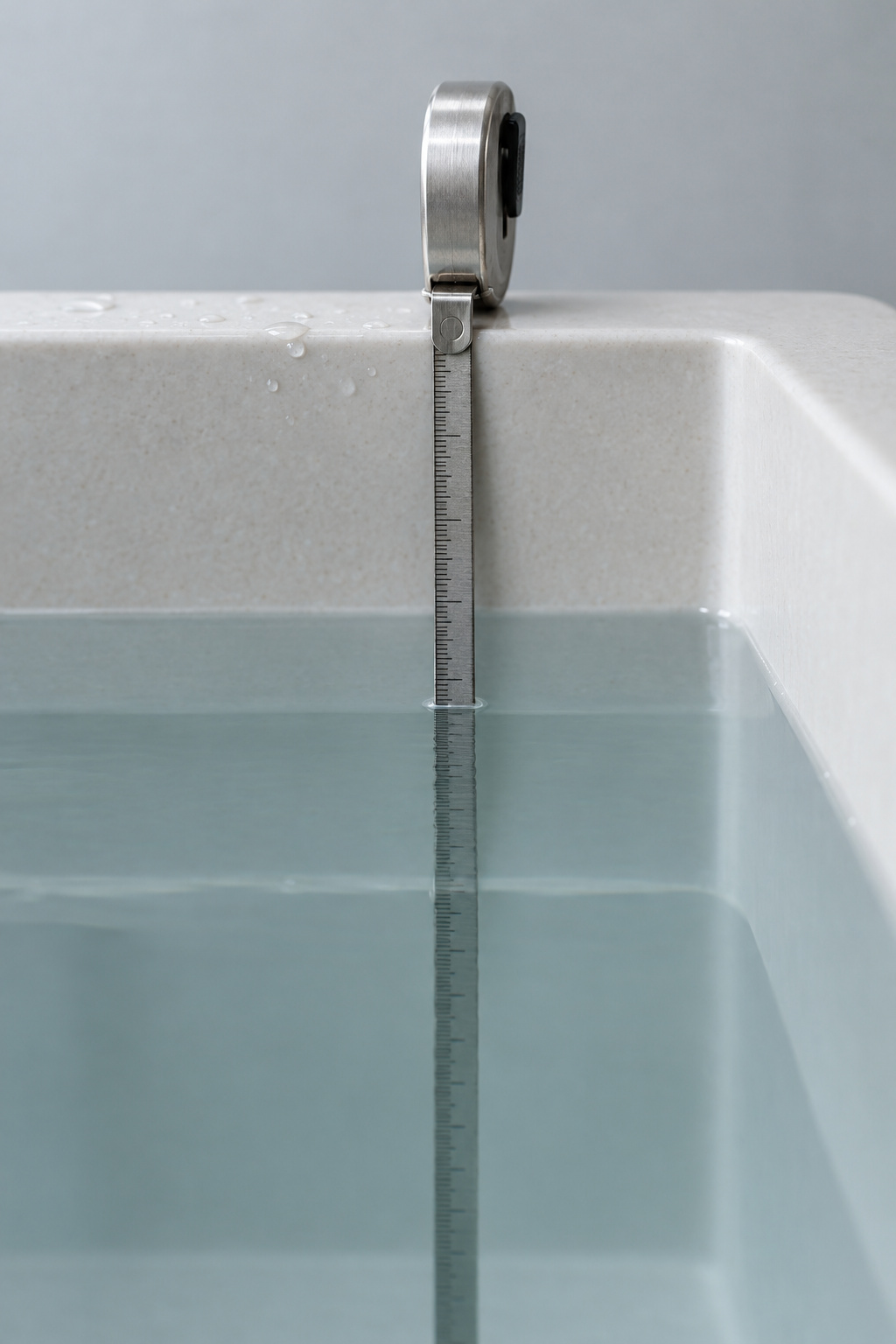
Four compact models, from their makers’ sheets:
| Model | Exterior size | Depth to overflow | Gallons | Dry weight |
|---|---|---|---|---|
| Aquatica True Ofuro Nano | 48.75 x 31.25 in | 24.25 in | 63 | 282 lb |
| Aquatica True Ofuro Mini | 43 x 43 in | 26 in | 76 | 269 lb |
| Malibu Banzai Round | 42 x 42 in | not listed | 78 | 135 lb |
| Kohler Stillness Soak | 46 x 46 in | 23-5/8 in | 111.5 | 275 lb |
In every tub on that list, the water outweighs the tub. Footprint is a poor guide to volume, too: the Nano and the Stillness differ by 4 square feet of floor and 48.5 gallons of water.
The sheets list no seat heights, so sit in one before you buy if you can. Clawfoot and slipper tubs are a separate decision. Where the tub goes, near the wash area and away from wood that can’t stay wet, belongs to the wider plan for japandi bathroom design.
Check One: What the Floor Carries When a Soaking Tub Is Full
House floors are designed for a uniform live load of 40 pounds per square foot in rooms other than bedrooms, and a bathroom is one of those rooms. That 40 is a design value spread across a room. It is not a capacity, and a tub is not a uniform load.
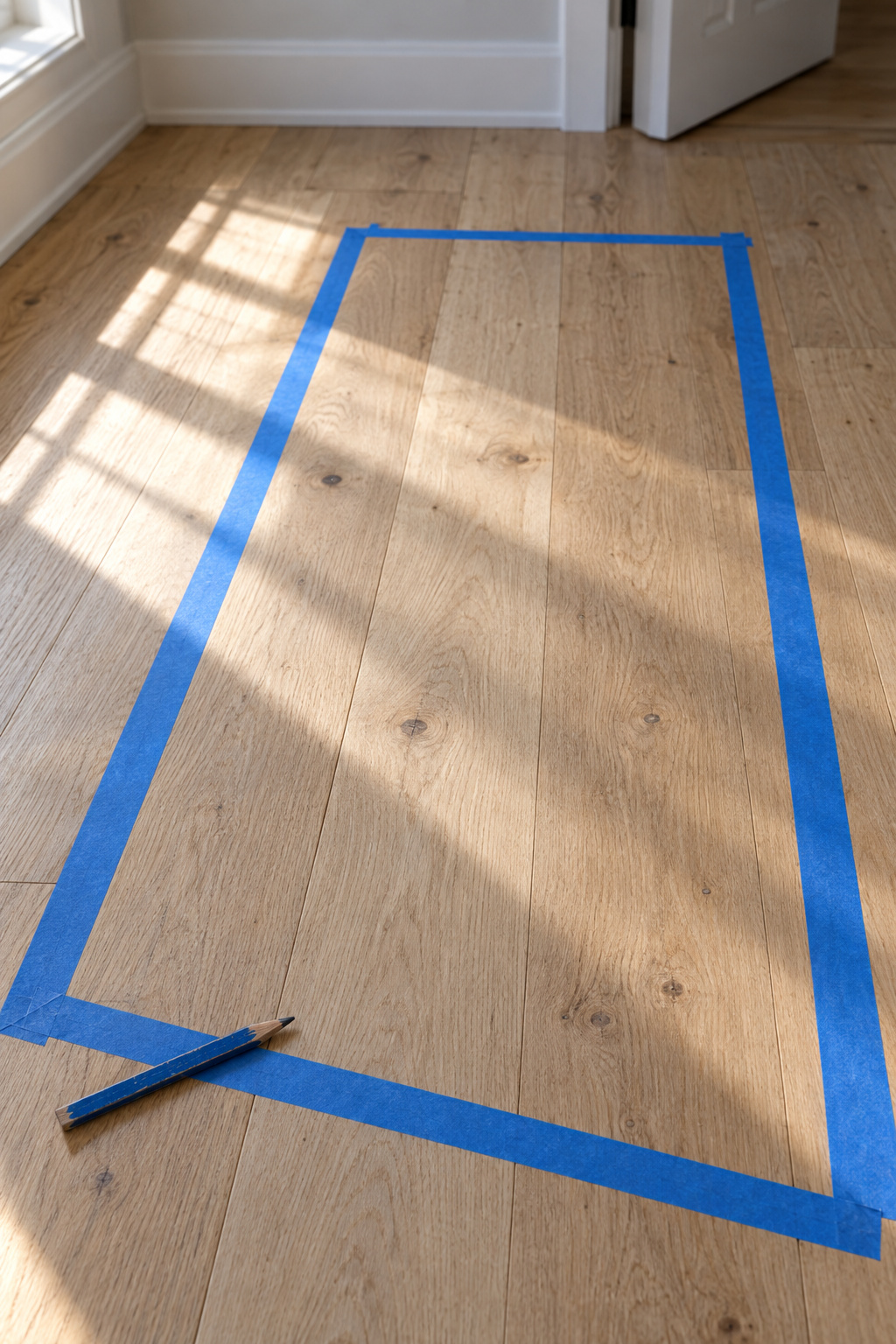
Full weight over footprint, then with a 180 lb adult as a stand-in bather:
- Nano: 76 psf full, 93 with the bather.
- Mini: 70 psf, 84 with the bather. Aquatica’s own page also lists it at 209 lb instead of 269; on that figure it’s 66.
- Malibu Banzai: 64 psf, 79 with the bather.
- Kohler Stillness: 82 psf, exactly the minimum floor load Kohler prints on its sheet.
Kohler prints that figure on its ordinary 60-inch alcove tubs too: 45 to 56 psf. Every tub is over 40 on its own footprint. Boise Cascade’s engineering note says that when a filled tub weighs more than the 40 psf load over its footprint, the joists or beams should be designed for it.
The mistake is reading 76 against 40 and either panicking or shrugging. What decides it is the framing: joist size, spacing and span, and whether a second-floor bath was built to the 30 psf bedroom figure, as some are.
I’ll run that arithmetic all day. I won’t tell you your joists can carry it. That’s a structural engineer’s call, or the span tables’ if you know exactly what’s under the floor.
Check Two: Can Your Water Heater Fill a Deep Tub Hot?
Kohler’s installation note says the hot water supply should be at least 70% of the bath’s capacity, and a tank gives about 70% of its nameplate hot in one draw. Five minutes at the data plate:
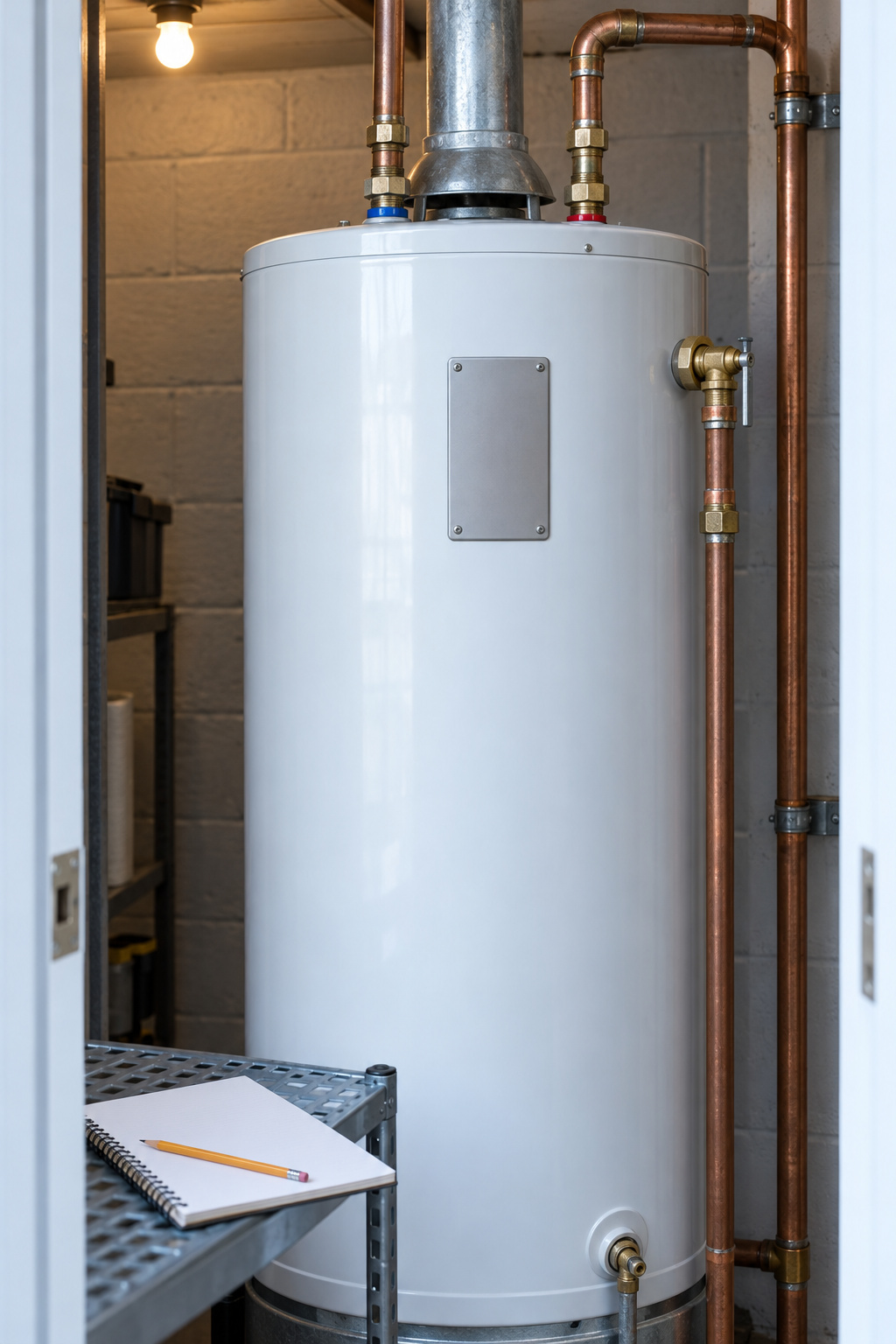
- Multiply the tank size by 0.7. A 50-gallon tank gives about 35 hot gallons.
- Multiply the tub’s gallons by two-thirds, because a comfortable bath is about two parts hot to one cold. The Nano’s 63 gallons need about 42 hot.
- Divide the hot gallons by 0.7 for the tank you need. The Nano comes to 60 to 63 gallons, so buy a 65. The Mini wants a 75 or 80. The Stillness needs 106 to 111 gallons, more than a normal residential tank: go tankless, run two tanks, or fill it partway.
- Ignore the first-hour rating. It counts water the heater makes while you use it, and a 10 to 15 minute fill outruns recovery.
- On a tankless unit, check the flow with winter water. A tub spout runs 4 to 6 gallons a minute, and an 8 GPM unit may manage only about 4 when the inlet is cold.
Fall short and you’ll feel it at your shoulders. The fix is a smaller tub or a bigger heater, about $1,500 to $3,000 installed for gas.
If the job involves gas or the main panel, call a pro. Gas means venting and line sizing, and an electric tankless unit can need more amperage than an older panel has.
The Less-Water Claim, Tested Against a 60-Inch Alcove Tub
One design blog says Japanese tubs hold 40 to 50 gallons against 60 to 80 for a big Western tub. The spec sheets say otherwise: compact ofuro tubs hold 63 to 78 gallons to the overflow, and 60-inch alcove tubs hold 48 to 68.
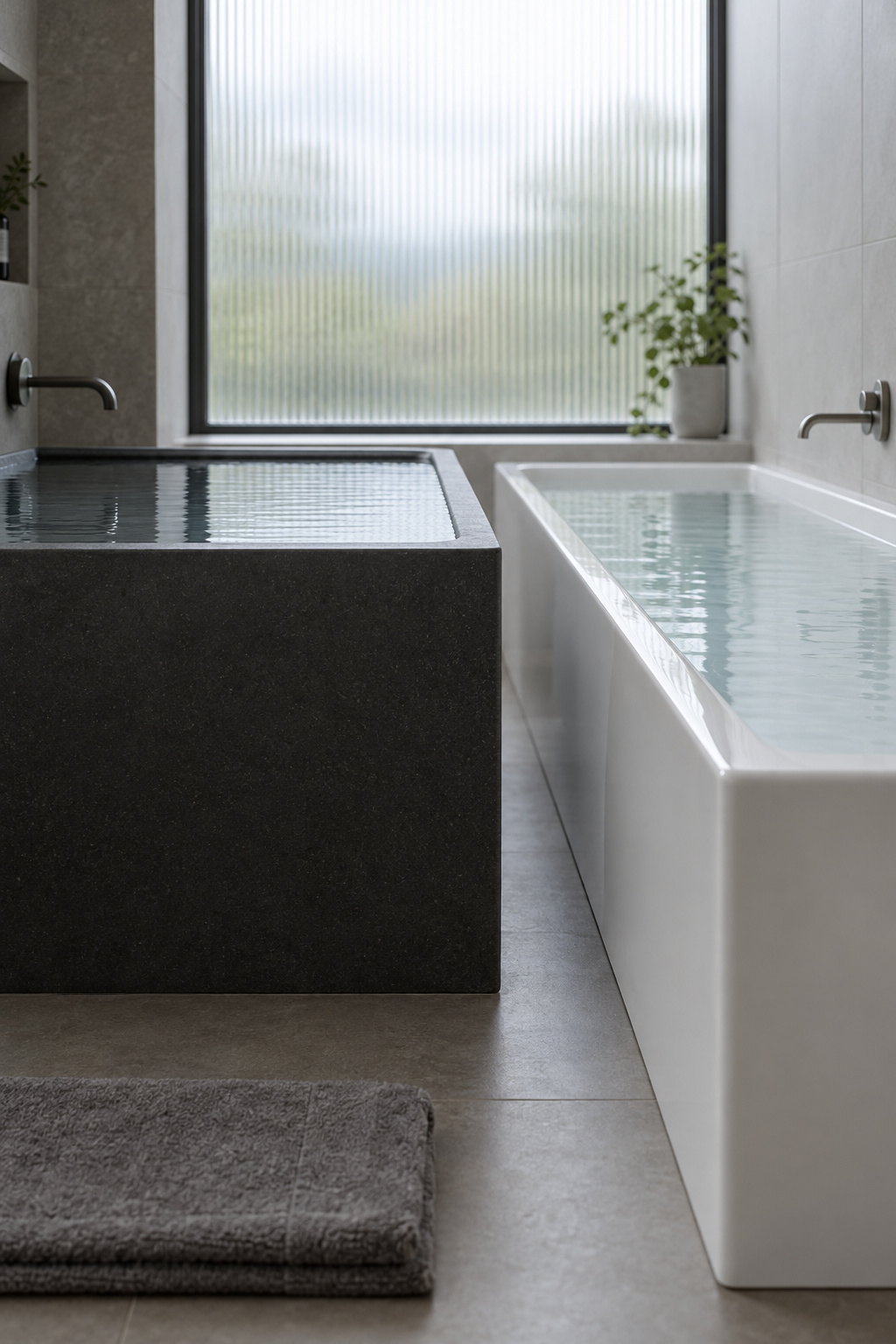
The Nano, the smallest deep tub here, holds 5 gallons less than Kohler’s deep Underscore, 6 more than the Kohler Archer and 15 more than a basic American Standard Studio. The Mini runs 8 to 28 gallons over all of them.
You lose a foot or so of length, but the water stands 23 to 26 inches deep instead of 12 to 15.5, and the extra depth adds more than the shorter length took away.
A soaking tub saves length, not water. The one real saving is a habit: share one fill, and 63 gallons split three ways is 21 each. That only works with washing before you get in, so the water stays clean for the next person. If nobody shares, count the full fill every time.
Check Three: Will It Get Through the Door, and Will the Plumbing Meet It?
The Nano ships at 538 pounds in its crate, and the porch is a bad place to learn your hall has a tight turn.
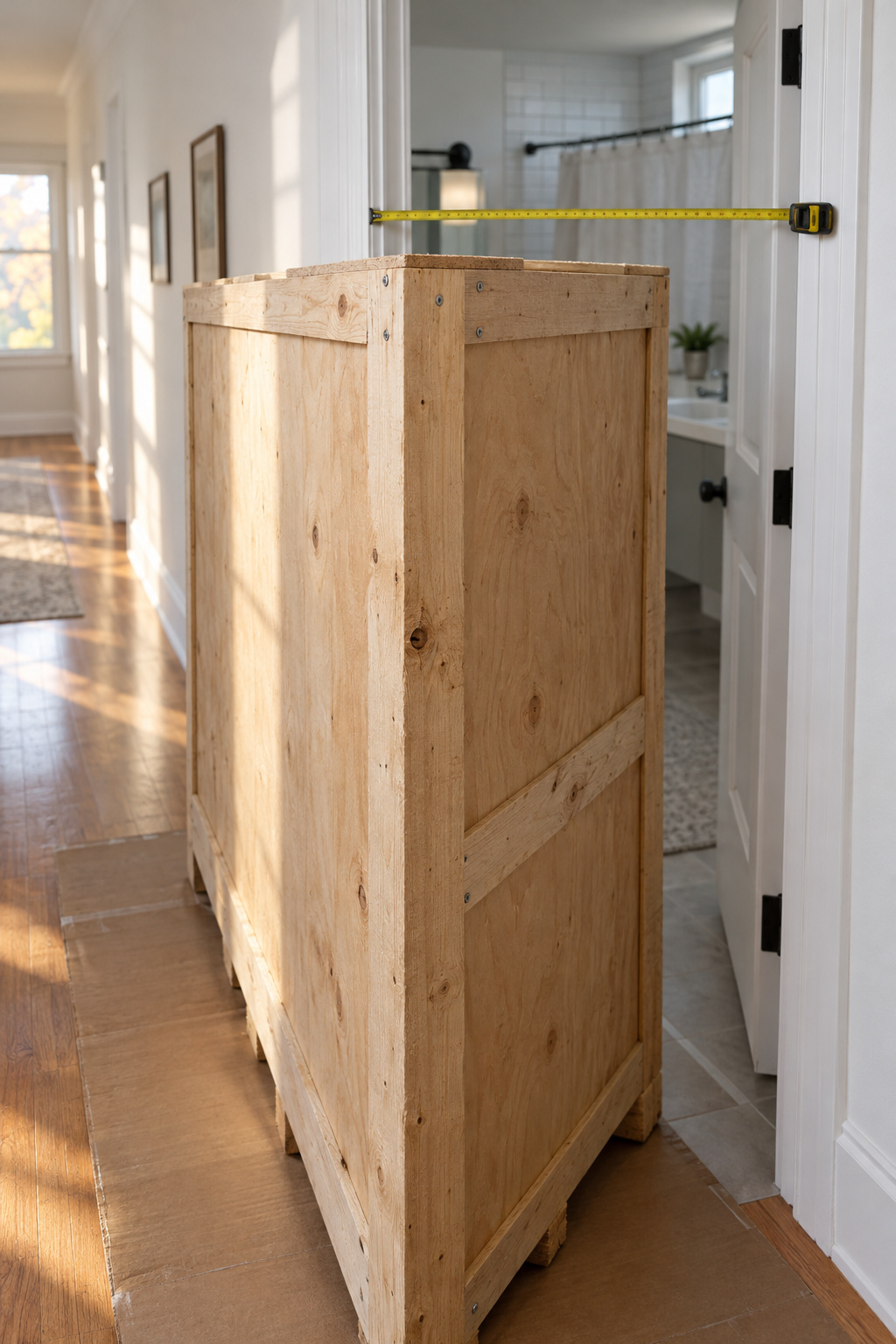
Measure the delivery path before you pay
Walk the route from the curb with a tape and write down:
- The clear width of every doorway with the door open. The NKBA recommends a 32-inch clear opening into a bathroom; that’s a planning guideline, not code.
- Clear height, every corner and every stair landing.
- The diagonal: a 43 x 43 inch tub is 60.8 inches corner to corner.
- Crate and bare tub, separately. The Mini’s own page gives two package sizes, so ask for the crate drawing.
Carry a cardboard template of the footprint through, or tape the outline on the floor at each doorway. If it won’t pass, uncrate it outside, or take the door off and pull the stops for about 1-3/4 inches more. Otherwise buy the Nano, built for a 32-inch door.
What the drain and supply need at the tub
Drain and overflow heights vary by model, so your tub’s own rough-in sheet rules. Where the existing drain sits is the biggest lever on cost. Moving it runs about $500 to $1,500 over open wood framing and $1,000 to $5,000 or more through a slab. Leave at least 21 inches of clear floor in front of the tub; that’s code.
Hooking up where drain and supply already land is near weekend territory. Moving a drain, often with a permit, is a pro job.
Wood, Acrylic or Stone: What You Will Maintain, and What It Costs Installed
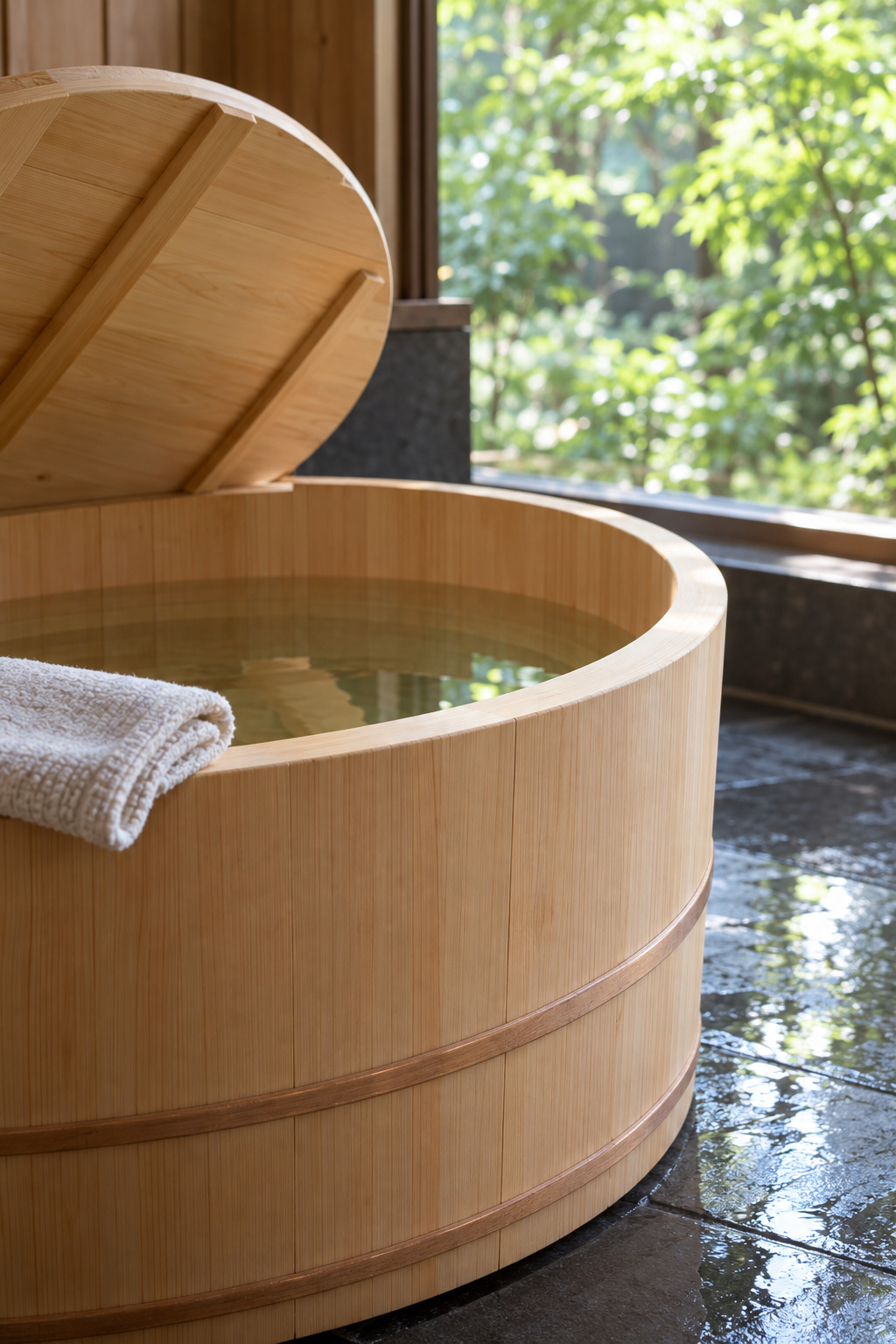
A material name won’t tell you the weight: Kohler’s acrylic Stillness weighs about what the solid-surface Nano does, so take weights from the model’s sheet. The material sets price and upkeep. One buyer’s guide gives these ranges:
| Material | Tub price | Upkeep | Typical life |
|---|---|---|---|
| Acrylic | $800–$2,500 | Low | 10–15 years |
| Stone resin | $1,500–$4,000 | Low | 20+ years |
| Solid surface | $3,000–$6,000 | Low | 20+ years |
| Cedar | $3,000–$8,000 | Moderate | 15–20 years |
| Hinoki | $6,000–$40,000+ | High | 15–25 years |
There’s no surveyed installed price for these tubs, so keep tub and labor apart. A swap-in with good access runs about $1,200 to $3,000 in labor in two guides; a third says $200 to $1,000 for a like-for-like hookup. On the higher band an acrylic tub comes to $2,000 to $5,500 before floor work ($300 to $1,200 if your engineer asks for it) or a drain move.
Hinoki: Drain It, Dry It, Reseal It
Hinoki’s boring step happens every day. Drain it after every bath, since standing hot water leaves a film. Wipe it dry and let the room ventilate, your main defense against mold. Keep it out of direct sun, which cracks it. Away over two weeks? Leave a bucket of water in it, lid on.
The protective coating wears off, and makers disagree on how fast. Japanese wooden-bath makers say reapply every six months to a year; Badeloft says every one to three years. Plan on the shorter interval until your tub shows you otherwise.
Your three numbers pick the tub. A sound floor, a 75 or 80-gallon tank and a 32-inch door put the Mini in reach. A 50-gallon tank and a tight hall point to the Nano and a bigger tank. The Stillness wants a winter-sized tankless unit and an engineer’s sign-off. Keep part of the clear floor for a stool and a wooden mat beside the tub.
Tonight, tape the footprint on the floor, read the heater’s data plate and measure your narrowest door open. Write the three numbers on the spec sheet before you look at the price.
FAQ
Can two adults share a Japanese soaking tub?
Mostly no. Compact models like the Nano, at 48.75 x 31.25 inches, or the 43-inch-square Mini are built for one seated bather. Two-person versions exist, but Aquatica’s Duo holds about 157 gallons: 1,309 pounds of water alone, and around 105 hot gallons per fill, which is more than any residential tank delivers.
How long does water stay hot in a deep soaking tub?
I know of no measured cooling times for these tubs. One buyer’s guide ranks stone resin and solid surface best at holding heat, hinoki and cedar good, and acrylic middling. If long soaks matter, weigh that against price and upkeep.
Is a Japanese soaking tub practical for someone with bad knees or limited mobility?
Usually not. It saves floor space, but exterior heights run about 34 to 37 inches, against a 19-inch step-over on Kohler’s Underscore alcove tub, so you climb 15 to 18 inches higher and then sit low inside. The Mini offers a wood step and built-in seat; for real limits, look at walk-in tubs.