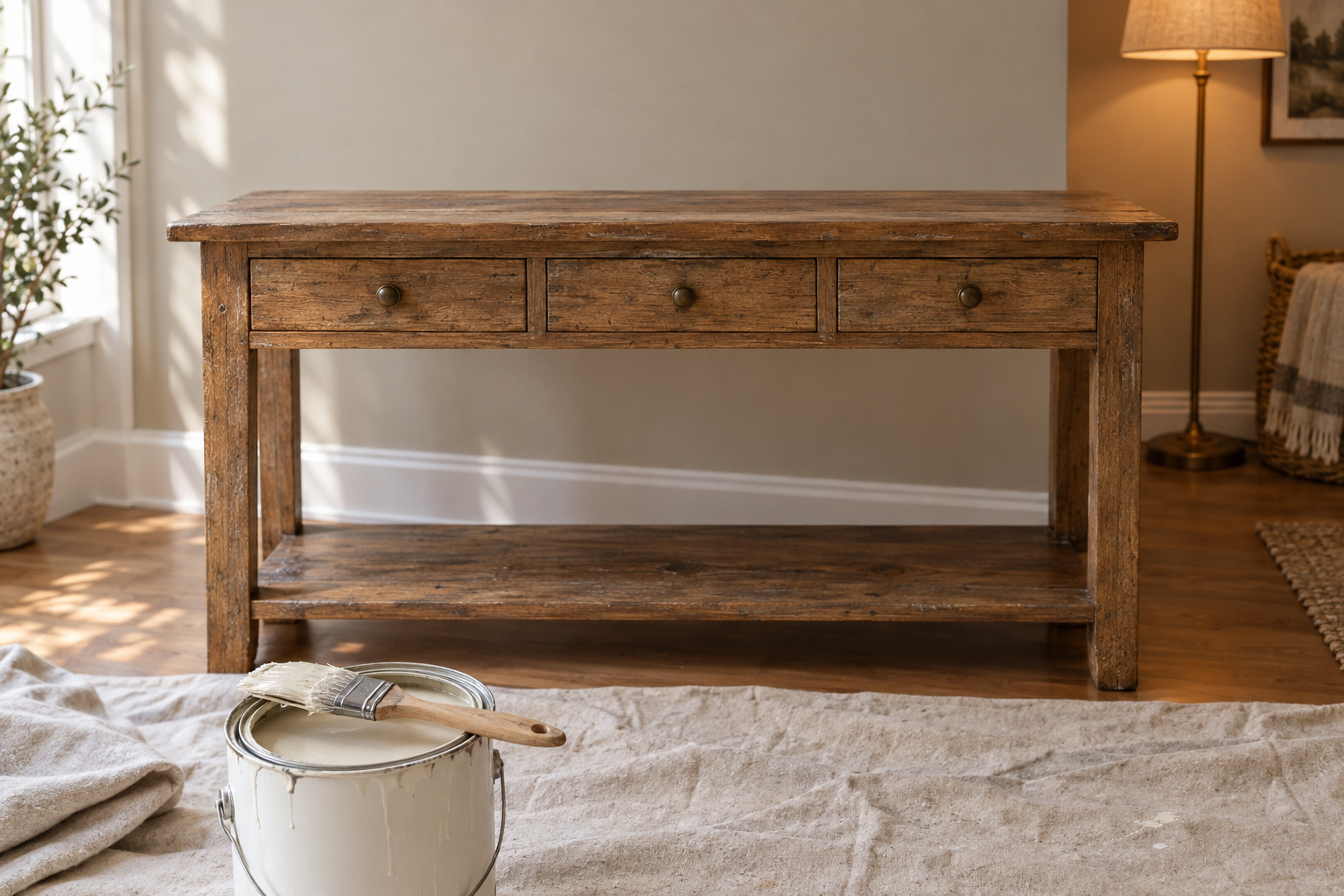

A farmhouse living room on a budget is about forty decisions, and most people start with the most expensive one. Here they are in three tiers, in spending order, arithmetic showing. A paint-only weekend costs $150. A room that reads finished costs $500–$2,000 and takes three or four weekends, counting the trips back to the store.
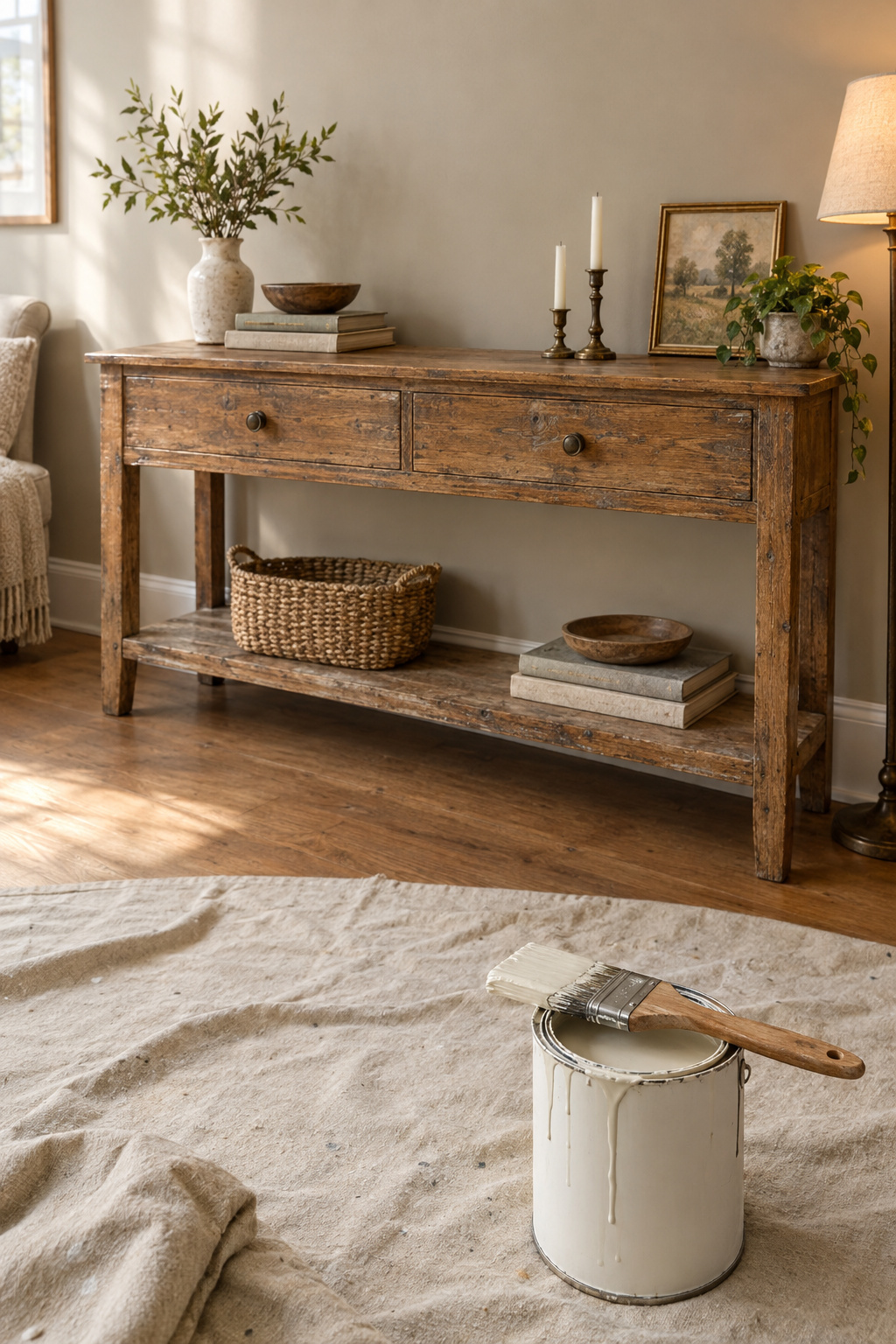
TL;DR
- Paint first: about 3 gallons for a modest room, $105–$285 in mainstream materials, changing every visible surface at once.
- One real piece next: fabric sofas average $500–$1,200 and leather $1,200–$2,500, while a DIY paneled wall competes for the same slot at $160–$1,050 in materials.
- Thrift the rest: used furniture typically resells at 20–50% of retail, though a genuinely wanted brand can hold nearer 70%.
What to Spend and Skip First
What this project costs and how long it takes
Start with the honest gap. I looked for the whole-room number the way anyone would, one figure for refreshing a farmhouse living room you already live in, and found none. Every total that exists prices a room furnished from empty. For scale:
| What the total actually prices | Figure |
|---|---|
| Designer Alyssa Wray’s itemized big-ticket furnishing, one living room | $13,696 |
| Budget-tier full furnishing: paint, sofa, tables, rug, art, accessories | $4,325 |
| Mid-cost full makeover, professional paint and quality furniture | $29,650 |
| K. Peterson Design’s tiers — economy / mid-range / high-end | ~$10,000 / ~$26,500 / ~$50,000 |
Borrow one of those totals and you budget for a rug you were never buying. A weekend covers one wall’s paint including dry time, or sourcing one secondhand piece, but not both.
The tiering logic
The principle is K. Peterson Design’s: put the money into higher-end fabrics and finishes on the larger items so they last, and value-engineer the smaller things that get swapped anyway. It holds at a tenth of the money.
Paint sits outside it. A room’s walls cost a few hundred dollars in materials whatever tier you buy, so spending more barely moves the total. Paint leads because it is the cheapest thing in the room to get right.
Farmhouse Living Room on a Budget, Tier by Tier
Read this table as arithmetic, not as a citation. Every line is built from a per-item figure sourced separately, so added together they make a derivation you can check, not a published benchmark. If a number is wrong for your region, change it.
| Tier | What it buys | DIY materials | Hired out |
|---|---|---|---|
| 1. Paint | Every wall, 3 gallons | $105–$285 mainstream; $141–$327 Benjamin Moore Aura; $360–$525 heritage | Add $2–$7/sq ft labour, roughly $1,000 for a 200 sq ft room |
| 2. One real piece | A sofa, or the wall as the feature | Sofa $500–$1,200 fabric, $1,200–$2,500 leather; paneled wall $160–$1,050; peel-and-stick wallpaper $1–$4/sq ft, about $200–$400 for a small wall | Paneled wall $240–$1,700; wallpaper $2–$6/sq ft |
| 3. Salvage, thrift and build | Side tables, lamps, rug, throw | Budget 5×7 or 5×8 rug $39–$99; used pieces at 20–50% of original retail | — |
Paint tier
A modest living room has roughly 350–400 sq ft of wall, and a gallon covers 350–400 sq ft, so two coats want two gallons in theory. Buy three. The third covers cutting in and month-two touch-ups, and an unopened gallon returns more easily than a repaint. Holding the brush yourself moves the cost more than the tin does.
One or two real pieces
Most US buyers land at $1,000–$1,999 for a sofa, and only about 19% plan on $2,000 or more. The wall is the other claim on that slot. Pick one: doing both in a season is how a budget becomes a renovation.
Salvage, thrift and build tier
Cheap is genuinely fine in this tier. A $99 rug and a $600 rug photograph the same, and the difference shows in wear.
Why Paint Wins the Arithmetic Every Time
Coverage and cost per gallon
Benjamin Moore’s Aura brochure puts coverage at 350–400 sq ft per gallon in matte, eggshell and satin, and 400–450 in semi-gloss. General interior paint covers 350–400 per coat too, so coverage does not scale with price. Money buys hide and durability, not square footage.
| Paint line | Per gallon | 3 gallons, materials only |
|---|---|---|
| Mainstream mid-to-premium (Benjamin Moore, Sherwin-Williams, Behr) | $35–$95, topping out near $110 | $105–$285 |
| Benjamin Moore Aura, per Benjamin Moore’s own listing | $46.99–$108.99 by sheen | $141–$327 |
| Heritage line, e.g. Farrow & Ball | $120–$175 | $360–$525 |
Heritage paint is a real but modest premium, well short of the three-to-five-times multiple people repeat. Aura is also cheaper than the figure in circulation. I found a $95–$125 estimate first, checked it against Benjamin Moore’s own listing, and it was wrong. Check the manufacturer before the cost guide.
The scrub-resistance false economy
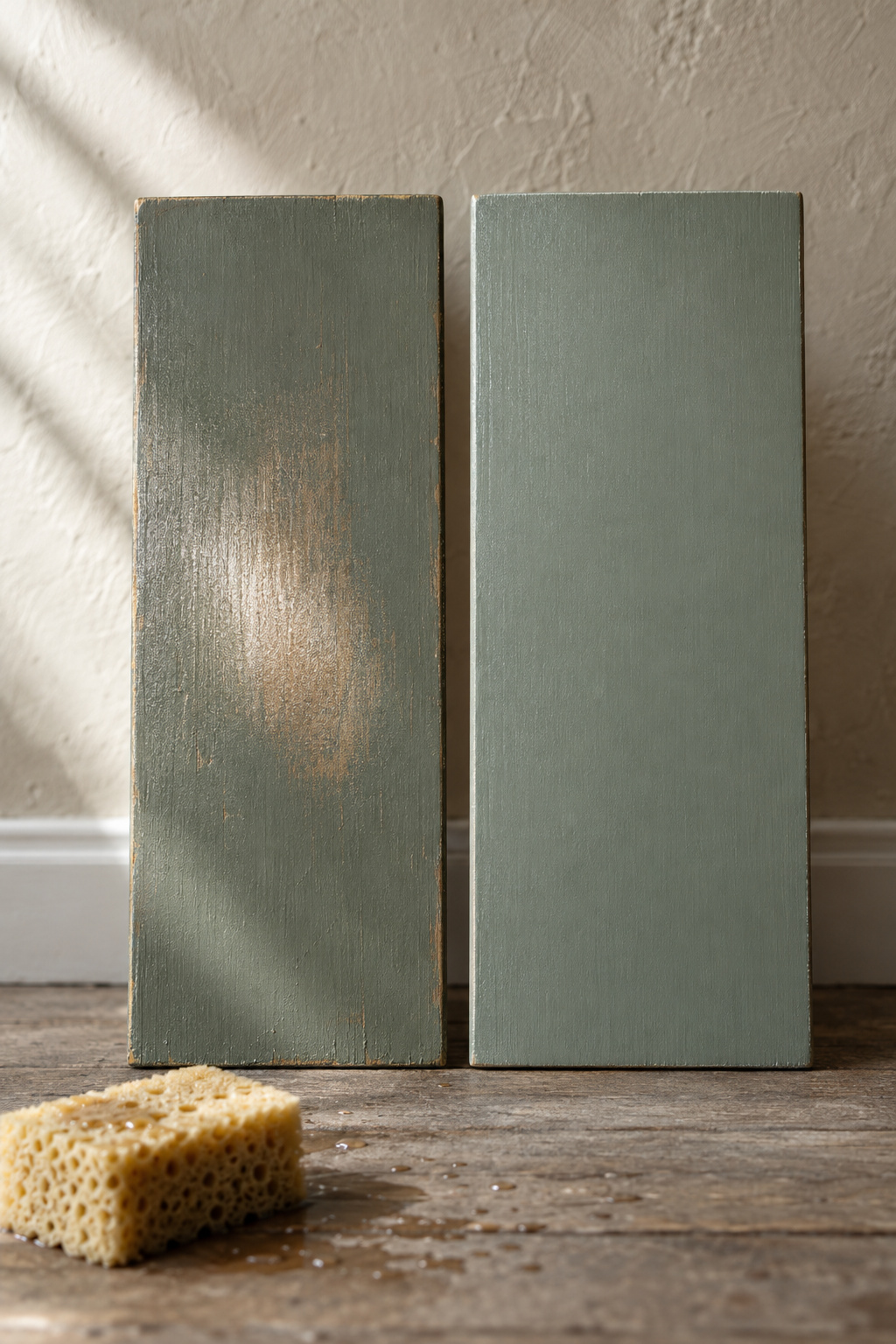
The cheapest can stops saving anything here. ASTM D2486 washes a painted panel with a damp cellulose sponge under a 454-gram load and counts the cycles to break-through.
| Rating | Cycles survived |
|---|---|
| Class 1 | 1,000+ |
| Class 2 | 300–500 |
| Unrated contractor flat or budget matte | Often under 400, sometimes one hard wipe |
A $25 flat and a $95 eggshell cover the same wall with the same number of cans, and only one passes that test. The saving is real on day one and gone the first time a sofa gets shoved against the wall. The fix is a rated finish, eggshell or satin, Class 1 or 2, sold at every price tier.
The One or Two Pieces Worth Real Money
Sofa material and cost by budget
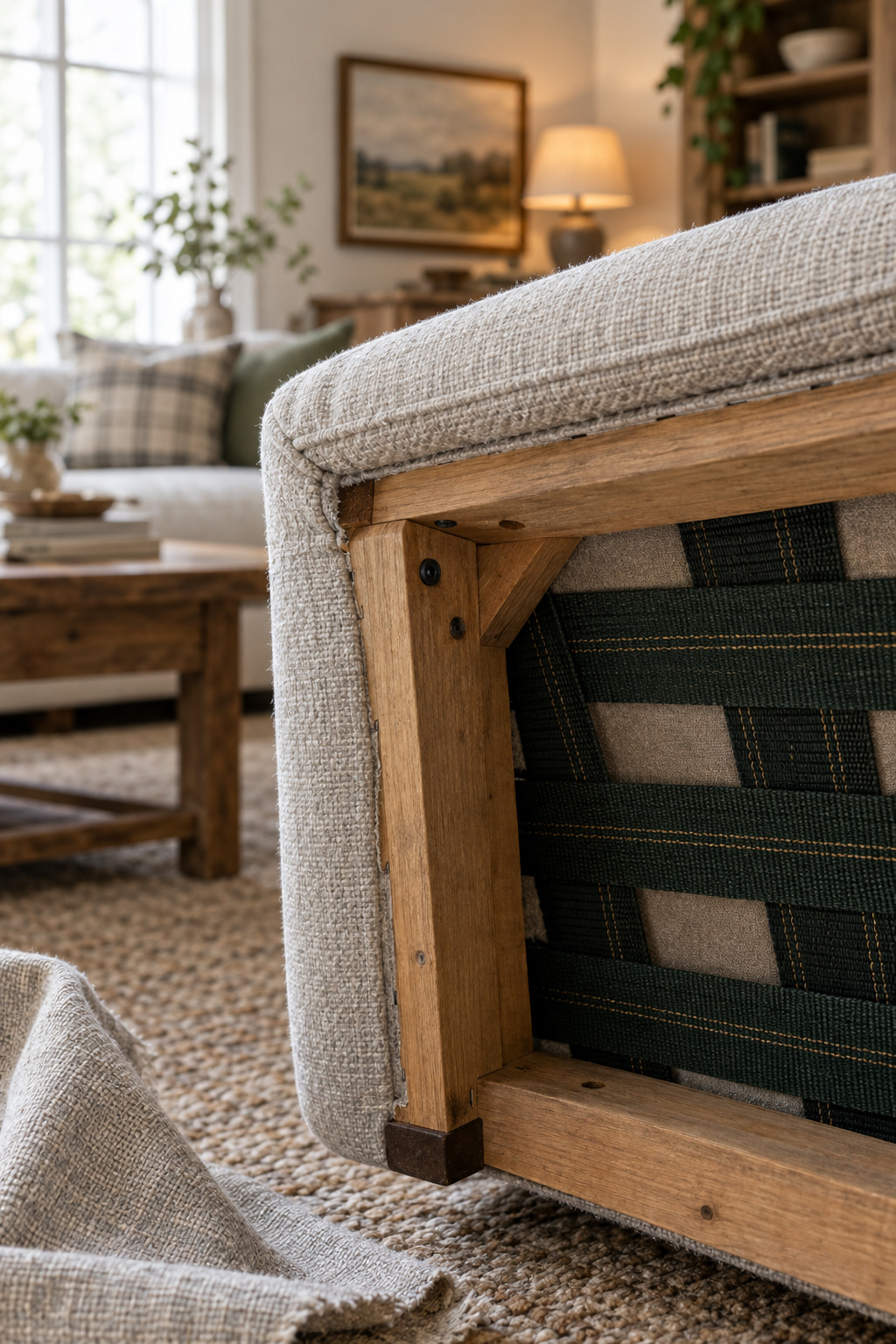
What separates a sofa that lasts fifteen years from one that sags in four? It is not the fabric you touch in the showroom. Three things decide it, all checkable before you pay:
| Check | What to insist on | What fails early |
|---|---|---|
| Frame | Kiln-dried hardwood — tip the piece and look | Particleboard or thin MDF |
| Springs | Eight-way hand-tied, or sinuous in 8–9 gauge wire with metal clips | Elastic webbing, plastic clips |
| Foam and fabric | 1.8 lb/ft³ or better; 15,000 double rubs minimum, 20,000–30,000 with kids or a dog | Foam under 1.5 lb/ft³ |
Fabric averages $500–$1,200 and leather $1,200–$2,500, but a cheap frame under good leather still fails at the joints first.
What a paneled wall adds to the bill
The wall competes for the same slot, and the number belongs to the article that sourced it. A single accent wall of 80–150 sq ft runs $240–$1,700 installed or $160–$1,050 in DIY materials only. A third independent guide puts a typical wall higher at $1,000–$3,000, about $4–$12 per square foot installed. The spread is real and comes from region and DIY-versus-pro labour, not material. For the breakdown, see what a paneled wall adds to the bill.
A DIY wall at $160 undercuts almost any new sofa; a pro-installed one at the top beats a leather one.
Salvage, Thrift and the False Economies to Skip
Rugs and throws at the cheap end
Budget dark area rugs in 5×7 or 5×8, machine-made polypropylene or polyester, run $39–$99. Rugs are a whole other article, so they get one line. I will not price throws: no figure here is worth trusting, and an invented one is worse than none. Carry them as a line without a number.
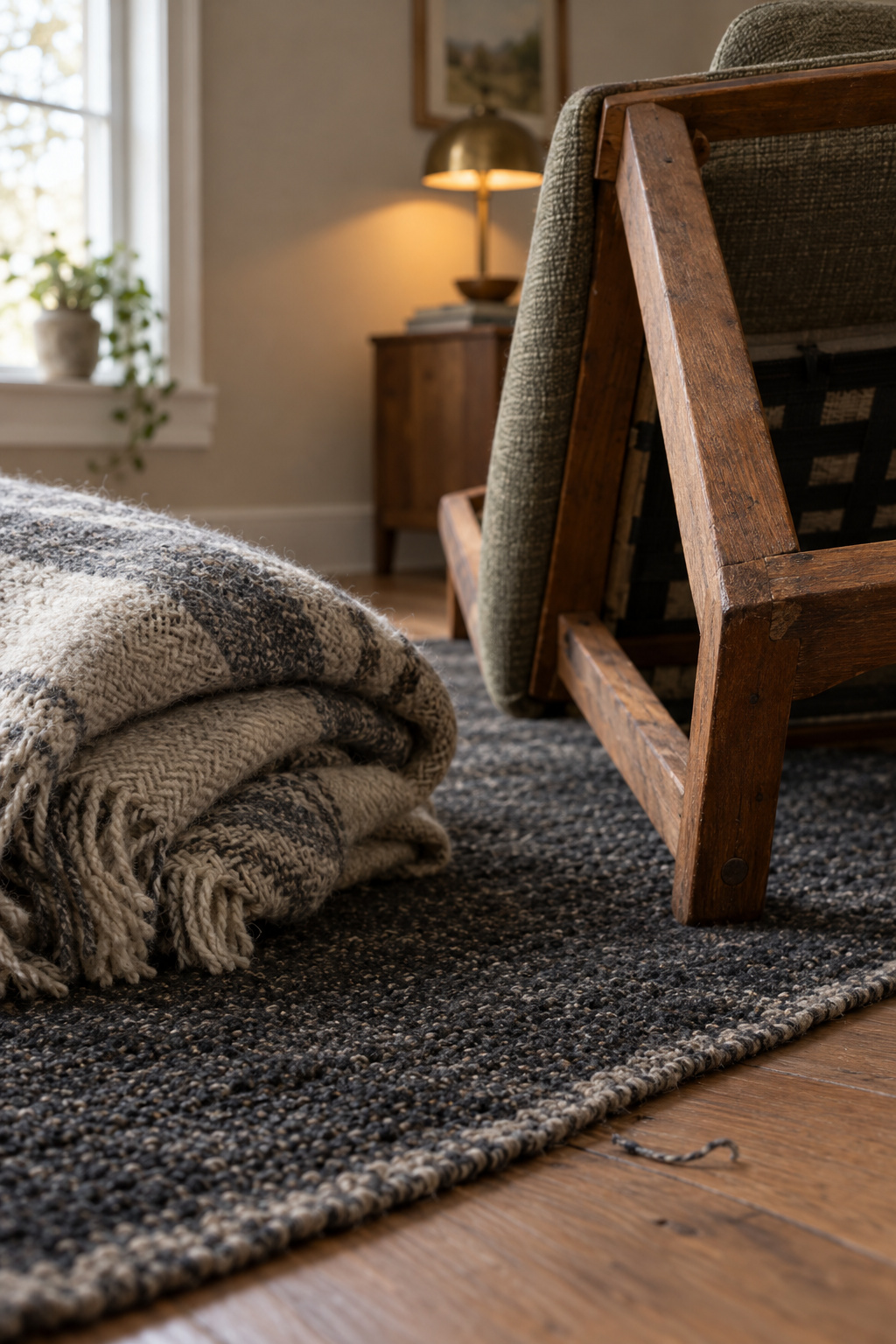
Secondhand is where the real money is, and the discount varies.
| Condition or brand | Share of original retail retained |
|---|---|
| Excellent | 40–50% |
| Good | 25–35% |
| Fair | 15–25% |
| A brand people actively want (Vox reported West Elm reselling at only about a 30% discount) | ~70% |
Both ends hold; which you meet depends on whose sofa you are looking at.
Where cheap actually costs more
My most-used tool cost $40, and nobody I worked with respected it. It was an oscillating multi-tool, ugly and loud, and it saved every install where a jamb needed undercutting. The expensive kit stayed in the truck. Price does not tell you what does the work. In spending order:
| Spend on | Skip or salvage |
|---|---|
| A rated paint finish over an unrated flat | The heritage paint line, unless the colour is the reason |
| The sofa frame, springs and foam | The sofa’s fabric grade beyond 15,000 double rubs |
| One large wall piece | Several small cheap ones adding up to more |
| — | Rugs, lamps and side tables at full retail when used is sound |
A sofa on particleboard, elastic webbing and foam under 1.5 lb/ft³ sags within 3–5 years, against 10–15-plus for the hardwood-and-springs version. Replacing the cheap one once costs more than buying the good one once. Used does not exempt you from the check: a worn-out cheap sofa bought secondhand is still a worn-out cheap sofa.
One Good Piece Instead of Several Cheap Ones
Why the wall is where a tight budget shows first
A wall is the largest single surface in the room, and a bare one shows from the doorway even when everything below it is right. So paint and one wall-level decision are tiers one and two, and the cushions come later. Several small cheap pieces cost more in total than one larger piece and deliver less.
Where the full wall-decor argument lives
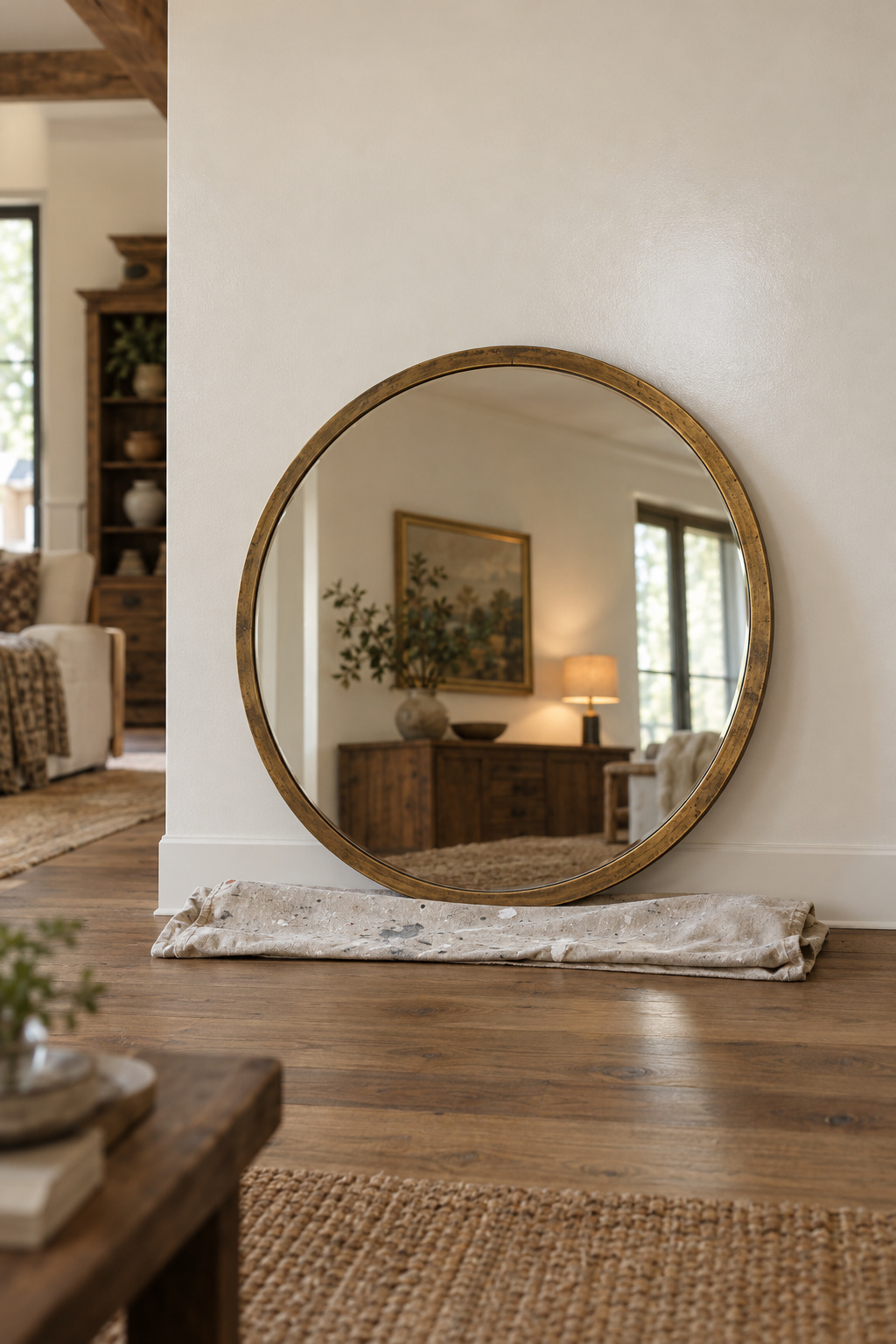
Which piece, how big and how high off the floor is not my department, because I hold the money. Marcus Thompson makes the case for one good piece instead of several cheap ones.
The order is paint, then one real piece, then the thrift run. If you keep one line, keep this one: paint is the cheapest lever in the room and the cheapest mistake to fix. A colour that fails costs another can and a Saturday. A sofa or a paneled wall bought first and regretted is a loss you look at for years. Buy the paint this week and order nothing else until you have seen it in evening light. For where it sits inside everything this style asks a room for, start with the wider plan.
FAQ
Is it cheaper to DIY or hire a painter for a full living room?
DIY is cheaper, and the saving comes from the labour line, not the paint. Materials for a modest room run $105–$285 mainstream, $141–$327 for Benjamin Moore Aura, or $360–$525 heritage. Hiring adds $2–$7 per square foot, roughly $1,000 for a 200 sq ft room, which is more than any of the paint costs.
What’s the single best first purchase on a tight budget?
Paint. A gallon covers 350–400 sq ft, so a few hundred dollars changes 100% of the room’s visible surface, where the same money buys one object. It is also the cheapest mistake to fix: a colour that fails costs another can and a weekend, not a return delivery.
Are secondhand sofas worth buying for a farmhouse living room?
Yes, if the bones check out. Look past fabric and colour to the foundation: sturdy joints, no soft spots, foam that recovers after a firm press, a hardwood frame and proper springs. Used furniture typically resells at 20–50% of retail, so a sound mid-range sofa is a genuine discount.