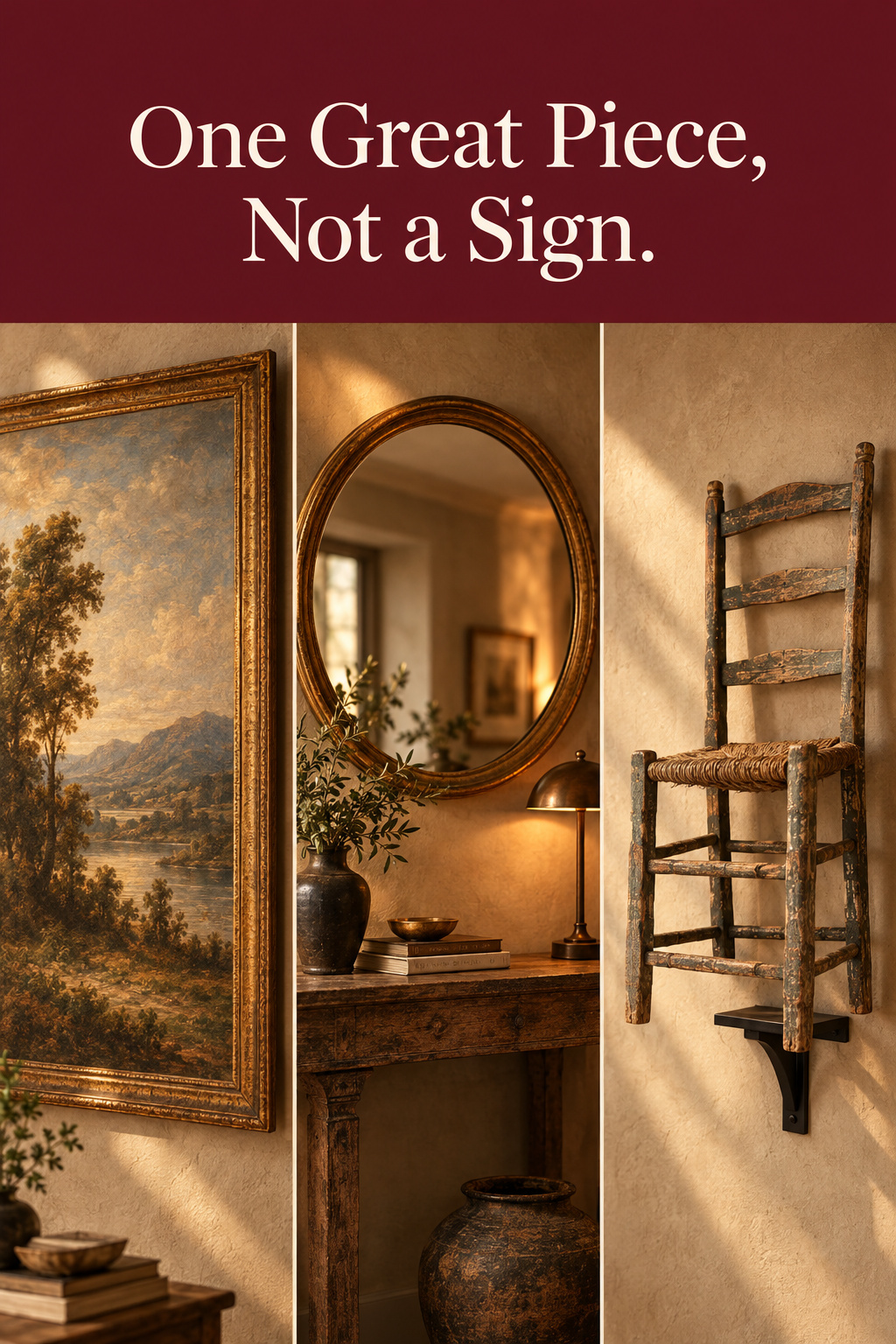
Somewhere around 2016 the walls of American houses started talking. Modern farmhouse wall decor became lettering (Gather, Home, Unwind), and a surface turned into a caption. A caption says what a room is meant to be. An object says what it has done.
TL;DR
- Size one large piece at two-thirds the width of the furniture beneath it, 50–75% workable.
- The 57-inch centre height is a trade rule of thumb, not a museum standard. Seated viewing wants 54–57 in, and above furniture the 6–8 in clearance overrides it.
- Light damage cannot be undone: most collection materials take 50–150 lux for three to four months before fading shows, and textiles, photographs and prints less.
Why the Modern Farmhouse Wall Decor Story Started Talking
Word signs as the most-cited dated element of 2026
Ask designers what they would take down first in 2026 and word art comes up early. Brittny Button of Button Atelier lists it among the pieces she wants replaced, and her line is the keeper: “I didn’t realize this was a home, thank you for telling me!”
That is strong, repeated designer consensus, not a measurement. Nobody has counted signs, and I have no statistic. The answerable question is what replaces them.
What a wall with a real history looks like instead
My grandfather farmed, and he read every night of his adult life. When he died I inherited 2,400 of his books and catalogued them over one winter at a kitchen table. What came out was a biography: the Hardy he bought twice because he forgot he owned it, the seed catalogues shelved with the poetry because to him they were one subject. None of it announced itself, and all of it said something.
A sign performs a sentiment, while an object carries a history. Designer Lauren Ramirez got there commercially when she commissioned a handwoven tapestry for a farmhouse living room, to honour the owner’s attachment to the landscape outside. It is the same instinct as a farmer’s bookshelf.
One Large Piece Instead of Several Small Ones
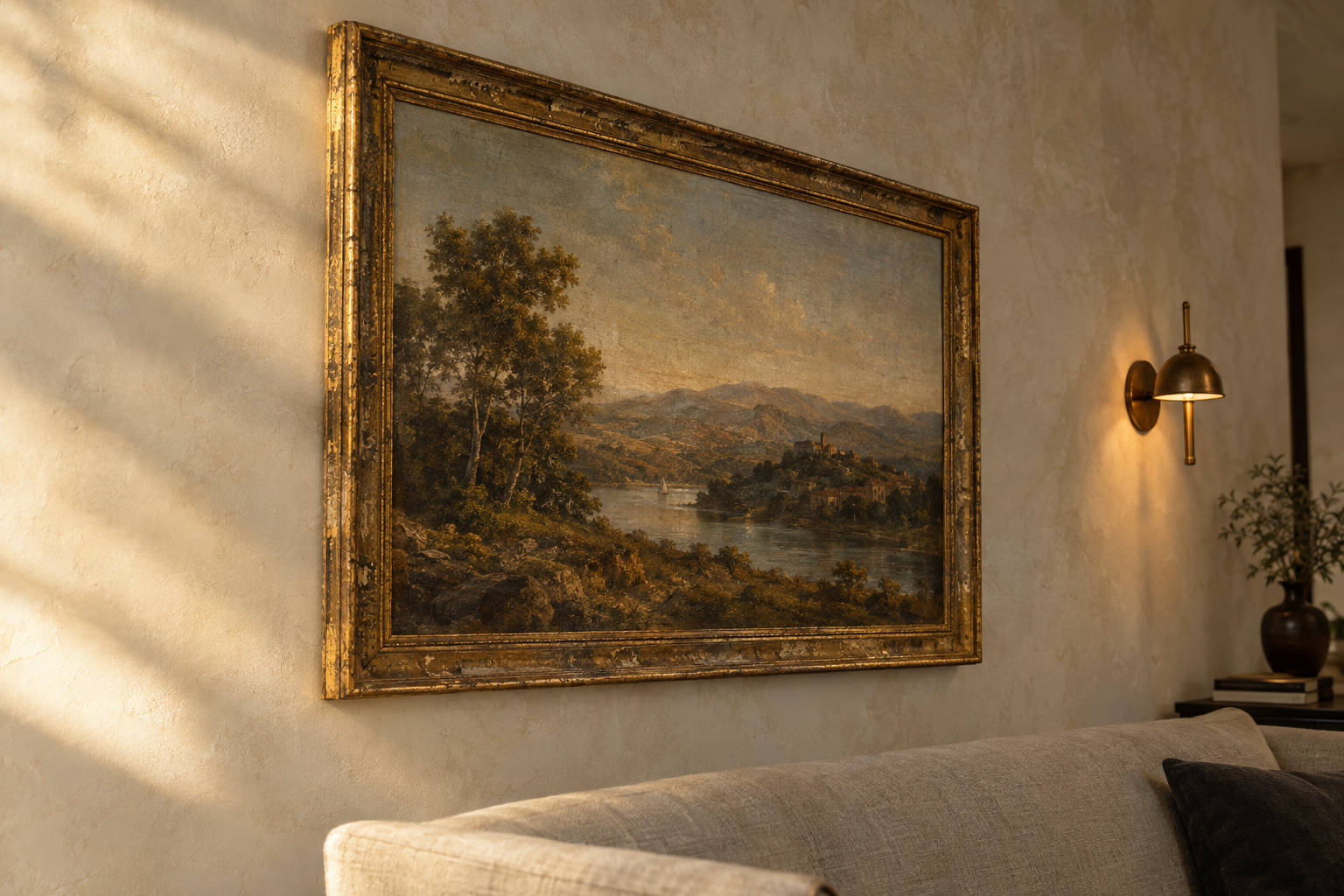
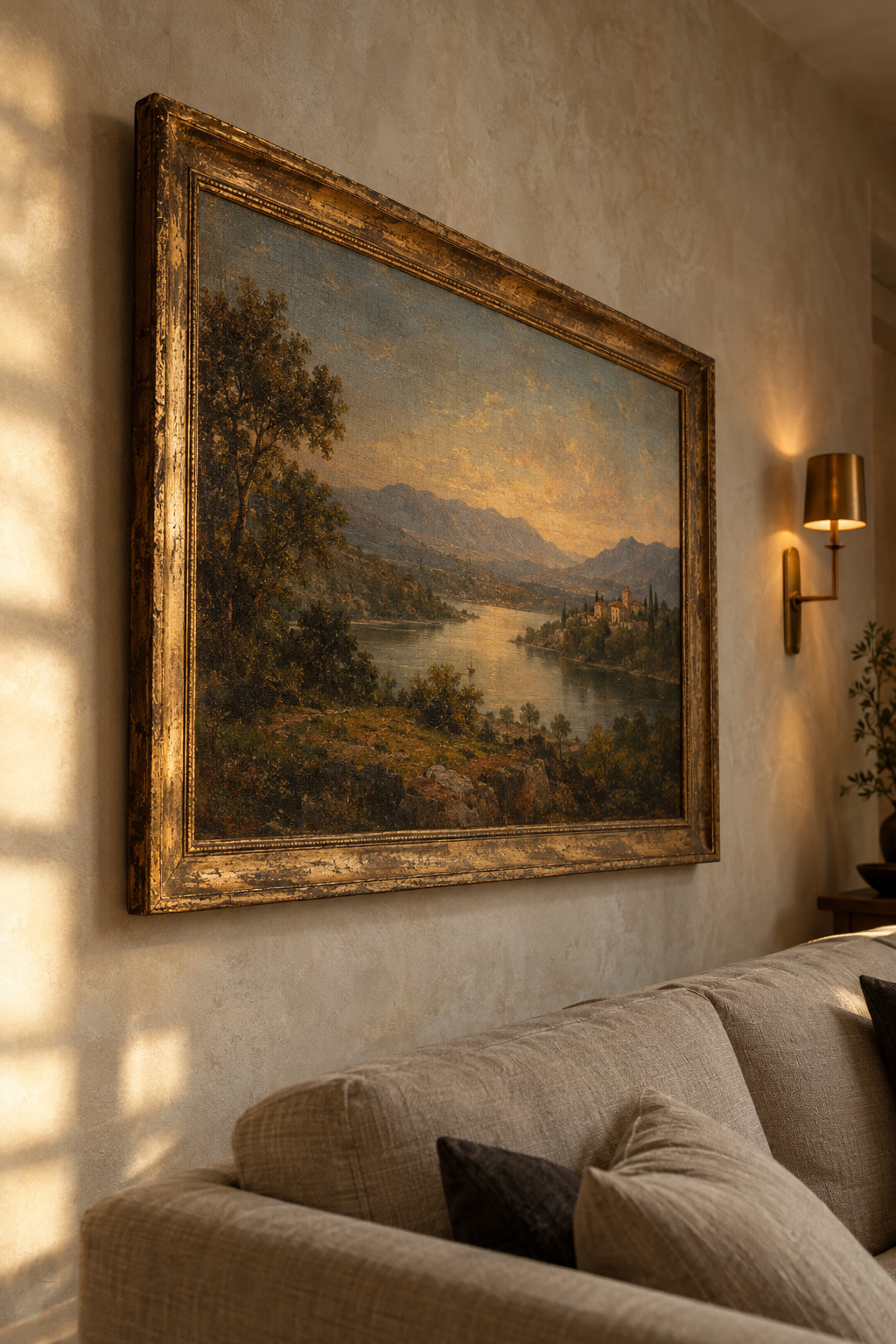
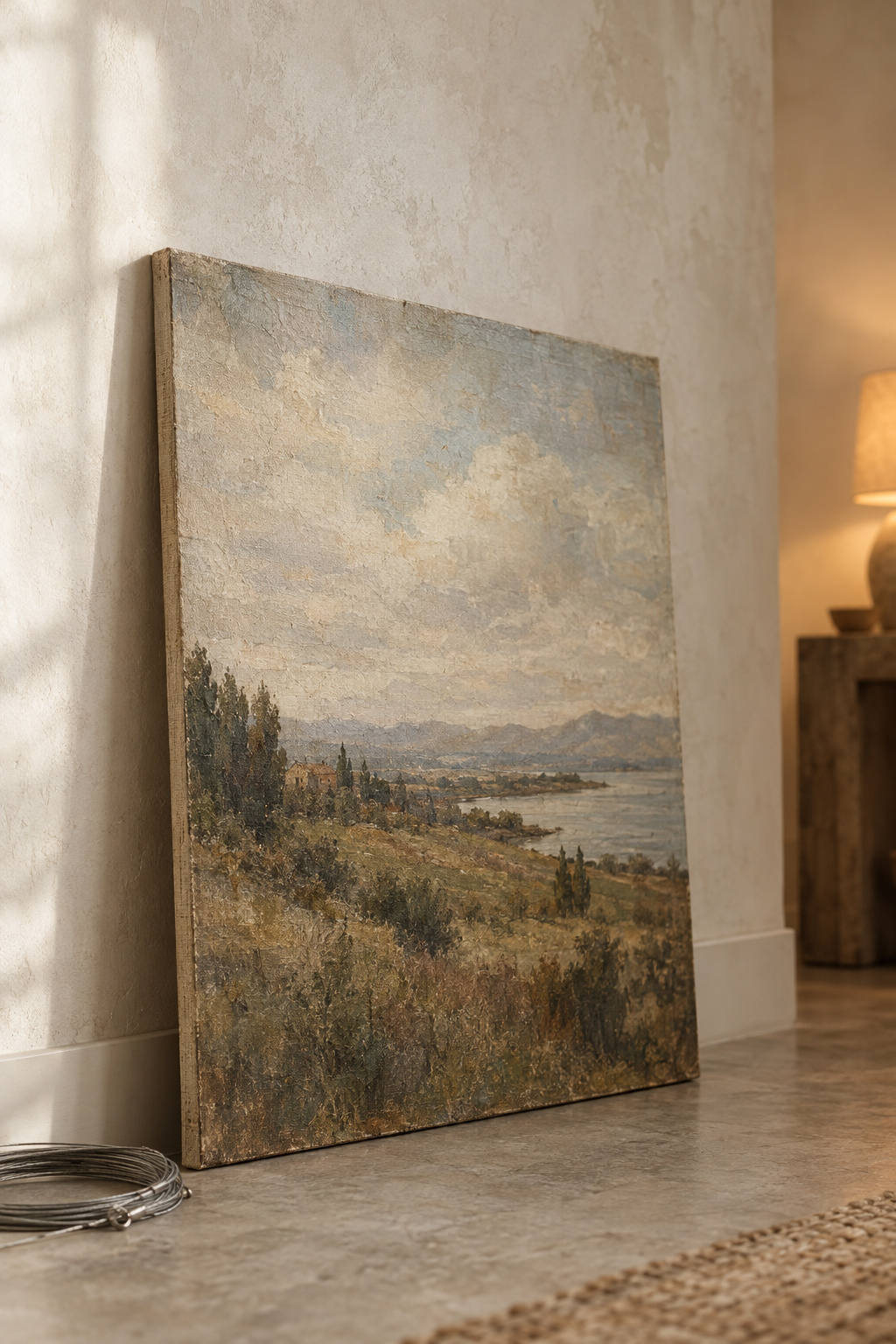
An oversized landscape
One large canvas suits a calm room and makes a modest wall feel larger, for roughly what several small frames cost. A limewashed or planked wall already has plenty of incident, so whatever competes with it should be one object, sized to win.
A round mirror
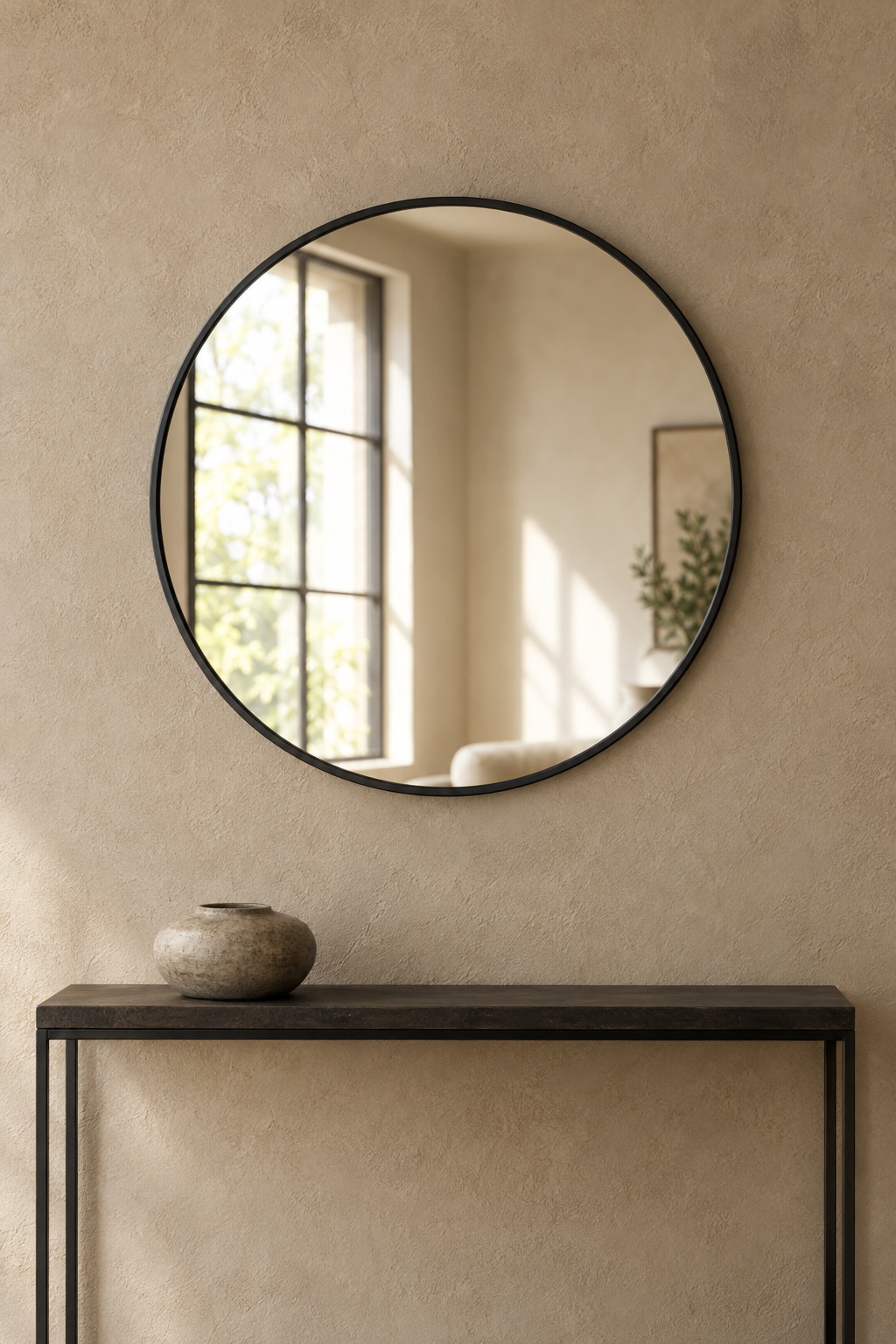
A mirror makes sense when the wall itself is the best thing in the room. Jessica Bennett of Alice Lane Interior Design chose a plain round one over artwork so a stone wall stayed the focal point. The other reason needs no percentage: a mirror opposite the main light source returns the window to the room.
A genuinely old object with a use history
Some of the best pieces were never art. Houzz’s guidance on old tools is one line, and correct: hang one large antique tool with a lot of space around it, because a patinated object needs a plain field before its wear can be read. Six salvaged things are a shop display, and one is a room.
Sizing and Hanging It Correctly
The two-thirds proportion rule
Above a sofa, console or bench, a piece should be roughly two-thirds the width of the furniture beneath it, with 50% to 75% workable. Magdalena Gierasinska of Barker and Stonehouse and Lucy Mather of Arighi Bianchi each state it independently, close to consensus as proportion rules go.
| What you are sizing | The rule |
|---|---|
| Width above a sofa, console or bench | ~two-thirds the furniture width (50–75% workable) |
| Bottom edge above a sofa back or arm | 6–8 in |
| Bottom edge above a console or sideboard, artwork | 6–10 in |
| Bottom edge above a console or sideboard, mirror | 4–6 in |
Caught between two sizes, go up. An undersized object on a big plane looks like an accident.
Hanging height for a seated viewer
Picture-hanging hardware companies sell the 57-inch rule as “the same reference museums and galleries use.” The page making that claim names no museum. So I went looking for one, a reflex from years in a university special-collections library, where any number governing an object is written down by somebody accountable for it.
There is nothing to find. The American Alliance of Museums publishes no numeric hanging height, and its exhibition standards state plainly that they are not prescriptive, existing to allow purposeful, and often brilliant, deviation. The Smithsonian plans installations per artwork, on forms. The 57-inch figure is a trade rule of thumb from picture hanging, in an institution’s coat, and a good one, which is why it never needed the coat.
Used honestly it comes in three variants, each counting something different:
| Variant | What it assumes |
|---|---|
| 54–57 in centre height | A living room, viewed mostly seated — the correct one here |
| 57–60 in centre height | General residential use, standing eye level |
| 60 in centre height | Rooms with ceilings of 10 ft and above |
One precedence rule prevents the commonest mistake. Where a piece hangs above furniture, the clearance in the first table supersedes the centre height. Apply one or the other, never both.
Modern Farmhouse Wall Decor That Isn’t a Word Sign
Objects that carry a use history
Hang something genuinely old and you take on a conservation problem. A mass-produced sign has nothing to lose. The Northeast Document Conservation Center measures light damage in lux-hours. Most collection materials tolerate 50 to 150 lux for three to four months of exhibition without visible fading, and watercolours, photographs, leather and textiles tolerate less.
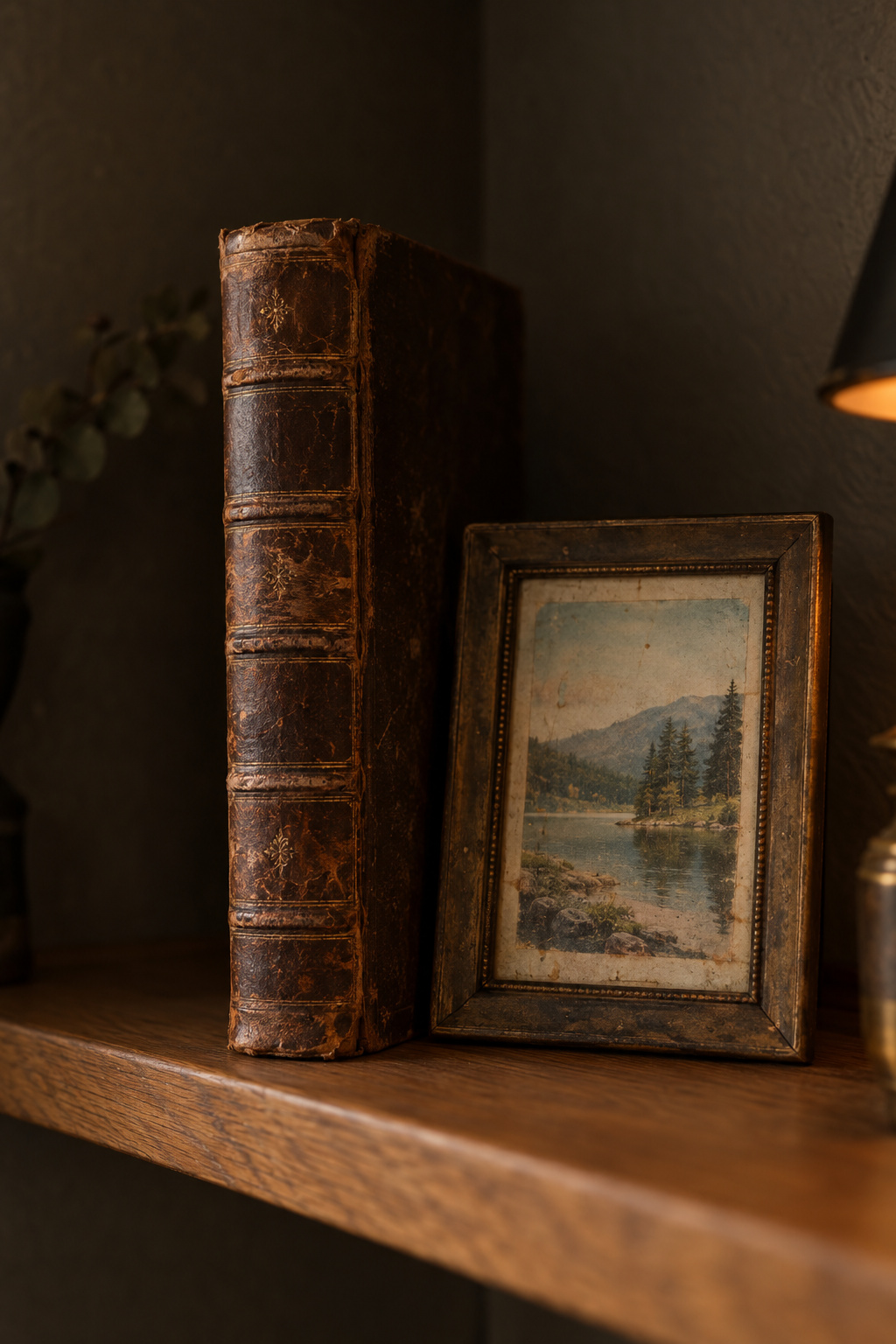
The next point should decide where the hook goes: fading does not reverse. A faded piece taken out of the light will not return to its original appearance. Evening lamplight sits near 50 lux, office lighting near 400 and direct sun around 30,000, so a textile on a sunlit wall is being spent daily, at a rate you can calculate.
Frame anything with real material in it on board passed for the Photographic Activity Test, and treat the fireplace wall with suspicion, since restorers document soot embedding in varnish and heat cycling cracking canvas and frame. Documented but unquantified is reason enough to hang the irreplaceable piece elsewhere.
Why a collection reads as biography, not clutter
Cataloguing that winter taught me that coherence comes from exclusion. A special-collections shelf holds together because of what was left off it. Emma Deterding of Kelling Designs describes the same discipline: group by shared material, pattern or colour, and vary shape and size. Julia Dempster caps a display at three tones.
What holds a display together is a unifying thread, whether material, era or the person the objects came from, plus the willingness to leave out whatever falls outside it. That is why I buy once and hang once.
Fixing It to a Textured Wall
Why adhesive hangers fail on limewash or planked walls
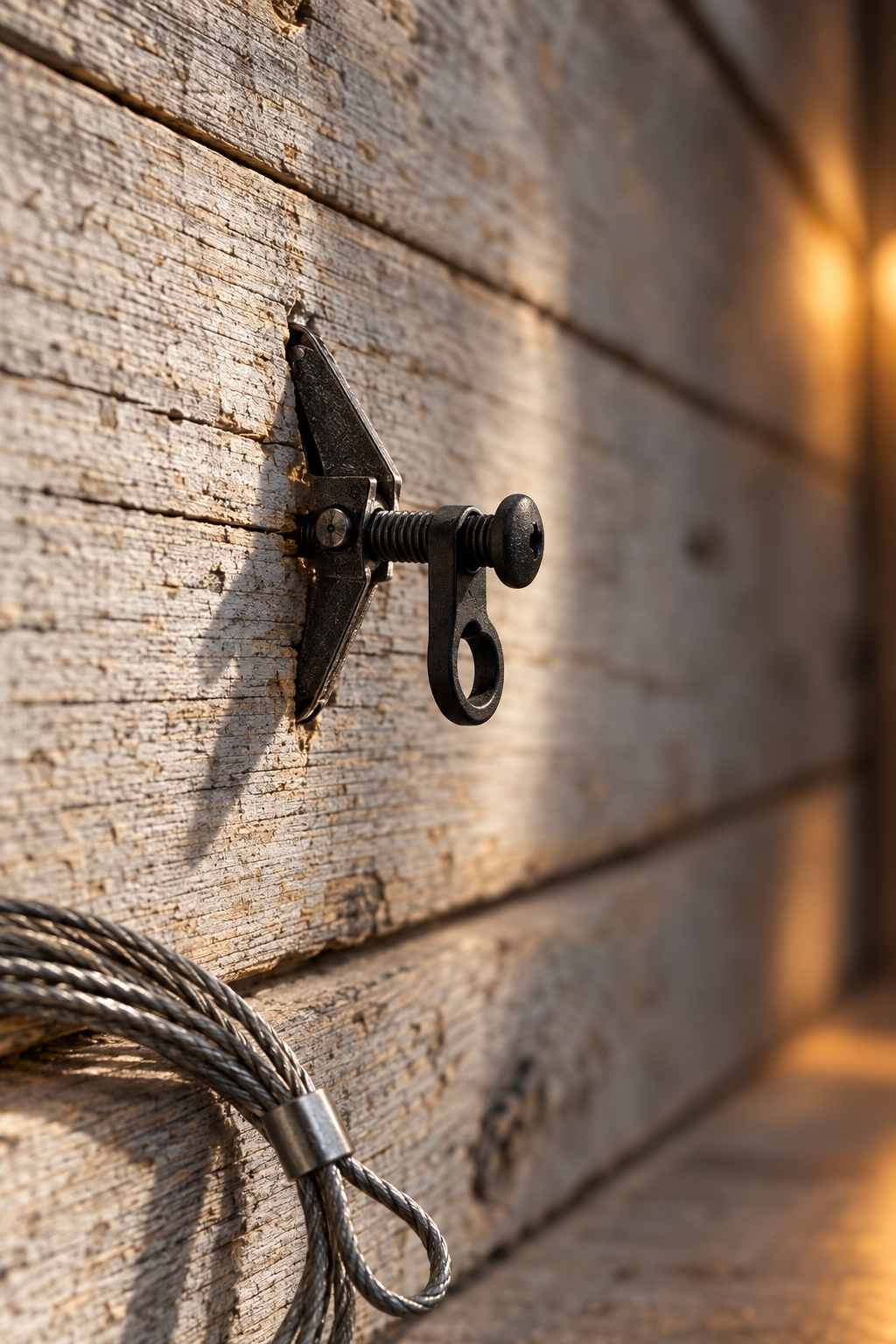
This style has an irony built in. The textures that make a farmhouse wall worth looking at are the ones adhesive hangers cannot hold: Command’s own figures halve a strip’s capacity with each step up in texture, and limewash and planking are heavy texture by definition.
Stud mounts, toggle bolts and picture rail
So fix it mechanically and overspecify. The trade habit is hardware rated to twice the object’s weight.
| Fixing | Rated for |
|---|---|
| Adhesive strip, smooth painted drywall | 16 lb |
| The same strip, light texture / heavy texture | ~8 lb / ~4 lb |
| Toggle bolts into drywall | 50–100 lb, the practical standard |
| French cleat | A genuinely heavy frame |
| Picture rail, standard / heavy-duty | 55 lb / 99 lb per metre |
A rail is the answer if you expect to rotate pieces, since it costs no new holes. Victorian and Edwardian rails, set 300–500mm below the ceiling, existed for that reason. Hanging was a system with a structure behind it before it became a habit.
The Wall Colour Behind It
Why a single large piece needs a wall colour that recedes
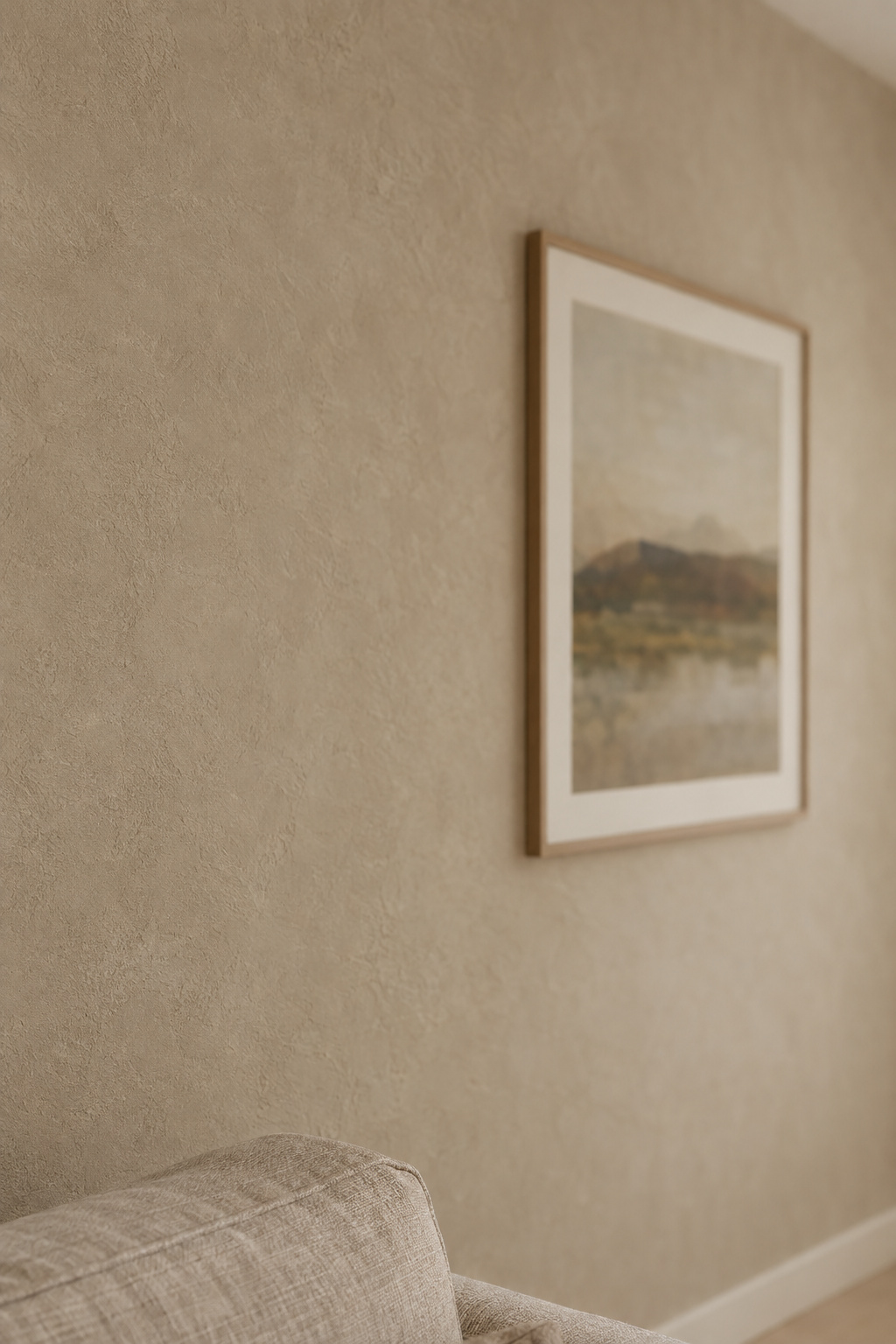
One object changes what the paint has to do. With less to compete against, a low-contrast warm neutral leaves a frame’s gilding or an old tool’s wear as the only event in the plane. Aisha Patel takes apart how colour behaves under your own light in the wall colour behind it, and that decision comes first.
Sourcing it without overspending
Repainting one wall is the cheapest lever before you buy anything large, and Tess Carver’s guide to sourcing it without overspending holds those figures.
One object, two-thirds the width of the furniture beneath it, at 54–57 inches unless the furniture rule takes precedence, fixed to something structural, kept out of direct sun if it has any age. Not five things, and nothing announcing what the room is for. The room this wall belongs to follows the same order, but the wall is where to start: subtraction first, one decision second.
FAQ
What size mirror works above a farmhouse sofa?
Aim for roughly two-thirds the sofa’s width, with 50–75% workable, and set the bottom edge 6–8 inches above the sofa back or arm. Two named trade professionals give the two-thirds figure independently. On a large wall, caught between two sizes, take the bigger one.
Is it okay to hang art directly above a fireplace mantel instead of on the chimney breast?
Yes, with caution. Curator Kate MacDonald of Rise Art suggests roughly two-thirds the width of the mantel and surround, deliberately not matching it. Restorers document soot embedding in varnish and heat cycling cracking canvas, but no source publishes a safe clearance or temperature, so hang anything valuable elsewhere.
How do you keep a collection of objects from looking cluttered?
Group by one shared thread (material, colour or era) instead of displaying everything at once. Emma Deterding advises grouping similar items for unity while varying shape and size; Julia Dempster caps the palette at three tones and varies height. No professional source publishes a maximum object count, so exclusion does that work.