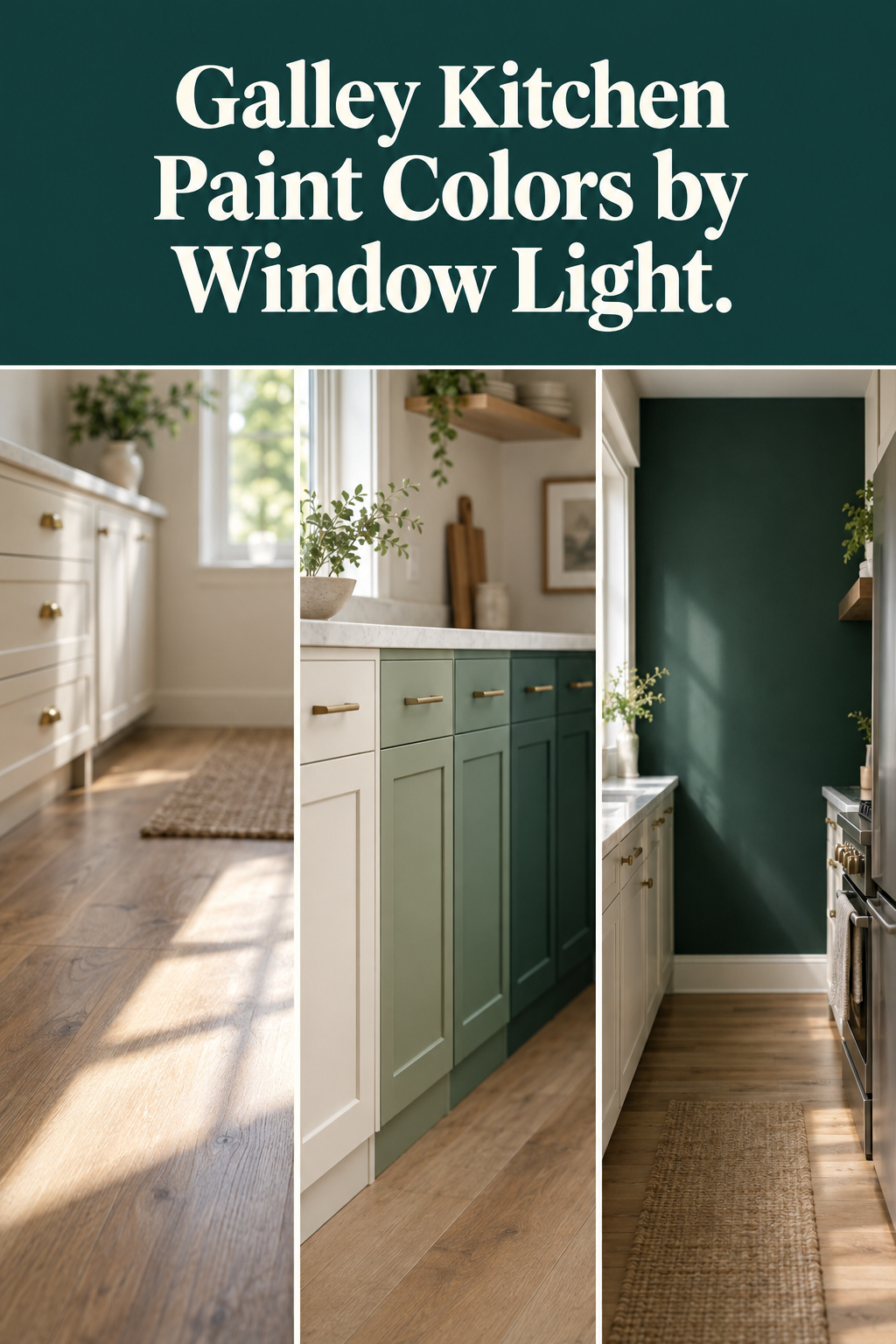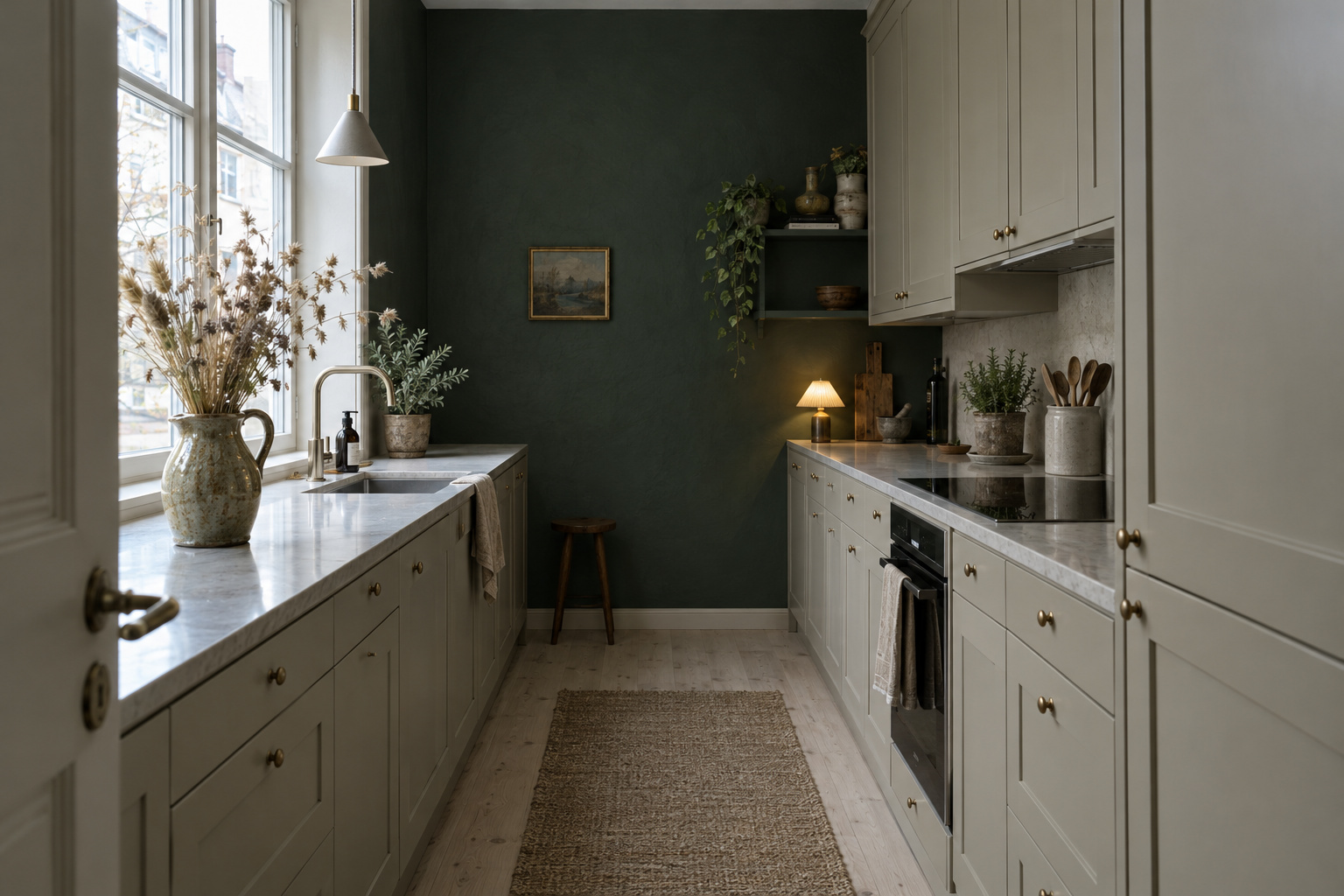

For years I told anyone with a narrow kitchen to paint it white. Walls, cabinets, ceiling, all of it. A winter in Minnesota showed me how cold that reads in north light. I was right about the ceiling and not much else.
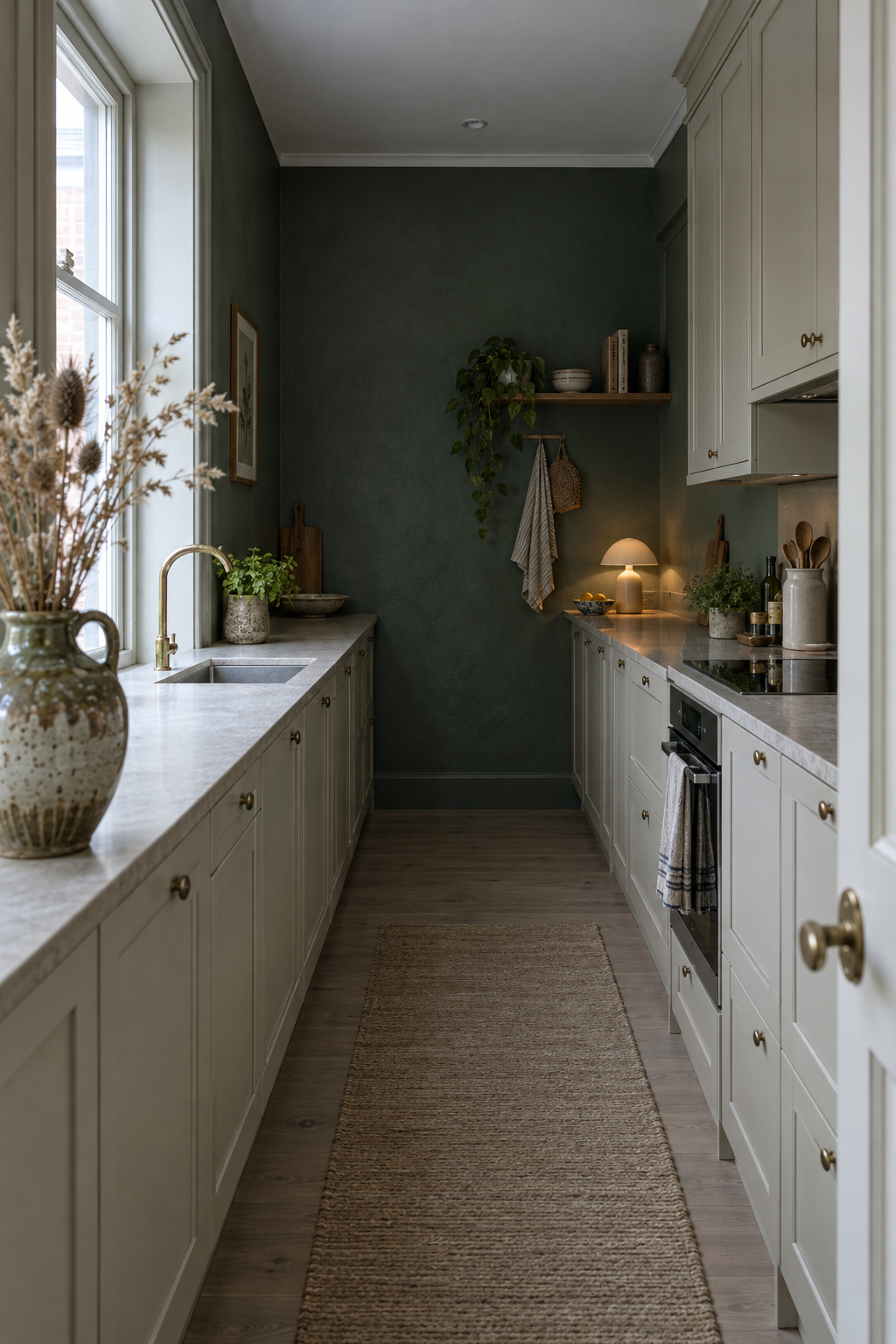
That changed how I choose galley kitchen paint colors. No study shows that white makes a narrow room look wider. Each stretch of a galley should take its color from how far the daylight reaches: lightest at the window, deepest at the far end, a step between.
TL;DR
- Window light carries roughly 1.5 to 2 times the height of the window’s top edge into a room, so most galleys have a lit end and a dim end, and one color cannot suit both.
- The only study on wall lightness and room size (Oberfeld and Hecht, 2011) found light walls and ceilings make a room look slightly taller; nobody has tested whether white makes a narrow kitchen look wider.
- Grade the walls in three steps of LRV: a warm white at the window, a mid-tone between 35 and 55 in the middle, and a deep color on the far end wall.
Find Where Your Galley’s Daylight Gives Out
Light from a window does not fill a room. It reaches a certain depth and lets go, and past that point the room runs on bounce and lamps. In a galley, which is almost all depth, that handover happens somewhere along the counter.
The planning rule from daylighting guidance is that a side window lights a room to about 1.5 to 2 times the height of its top edge, measured from the floor. It was written for offices rather than kitchens, so treat it as a rough line. A low window lights less, and a long room outruns its window.
A window in the end wall sends its light down the length of the galley. A window in a long wall lights the width and only the nearest part of the length.
Direction changes the color of that light, cool from the north and warm from the south, and the site’s guide to the best white paint for cabinets covers it.
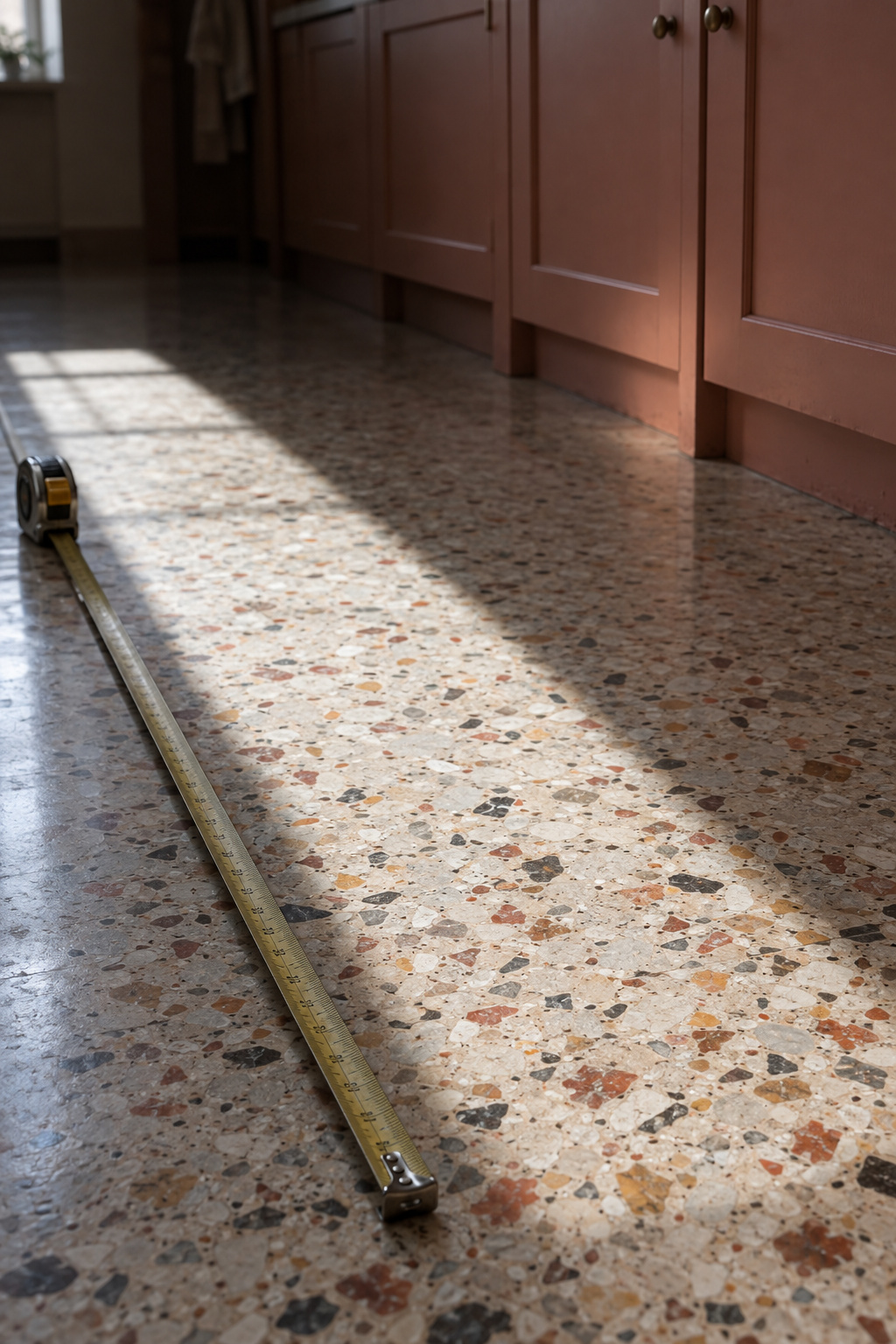
Map your own room before you open a paint can. Walk the aisle from the window on an ordinary afternoon until the counter stops looking lit, and put a strip of tape on the floor there. Every other choice in this room hangs on that spot.
LRV, Explained Once
I read furniture catalogs from the back, where the dimensions and materials are. Paint chips deserve the same habit. Light Reflectance Value tells you how much light a color sends back, on a scale from 0 for black to 100 for white, and Sherwin-Williams prints it on the back of every chip.
People call roughly LRV 2 to 10 “dark”, but that is a design habit, not part of the standard. Diamond Vogel draws its line at 50, below which a color takes in more light than it returns. I use the number and ignore the labels.
Putting the White-Paint Rule to the Test in a Narrow Kitchen
Paint it white and the room gets bigger. The rule is old enough that nobody asks where it came from.
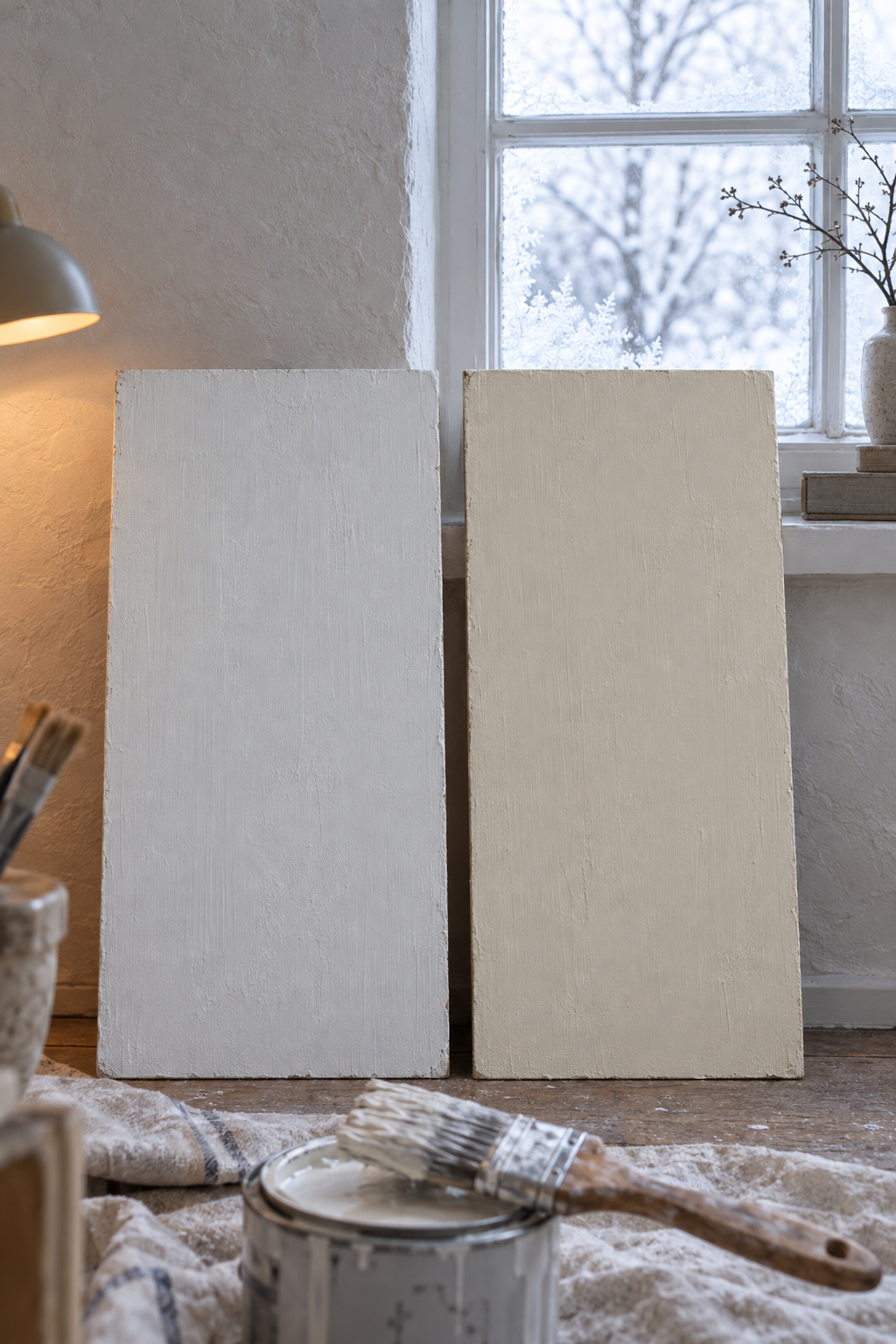
When two perception researchers at the University of Mainz, Daniel Oberfeld and Heiko Hecht, looked, they found that advice on room color was “not grounded on empirical psychological studies.” So they ran some. In virtual rooms, light walls and light ceilings made the room look a little taller. In their test of width, wall lightness was held at a medium value and never changed, and how an end wall affects apparent depth was left for later work. White and width remain untested.
That would be academic if white were harmless. White walls are not neutral in a north-facing room. They go grey and cold, and a cool white goes colder still. My own kitchen faces north, so I have watched it happen. If you want white, I pick a warm one, an off-white with some yellow in it.
White still works where light arrives to bounce off it, at the window end and on the ceiling. For wall colors that sit well beside white cabinets, see the site’s guide to paint colors for kitchens with white cabinets. And if the larger goal is making a narrow kitchen feel less closed in, paint is one move among several.
Galley Kitchen Paint Colors, Graded From the Window to the Far End
Ask what each stretch of the room is for before you ask what color it should be. The window end is where daylight does the work. The middle is a handover. The far end is lit by lamps most of the year, so it can take a color with some depth.
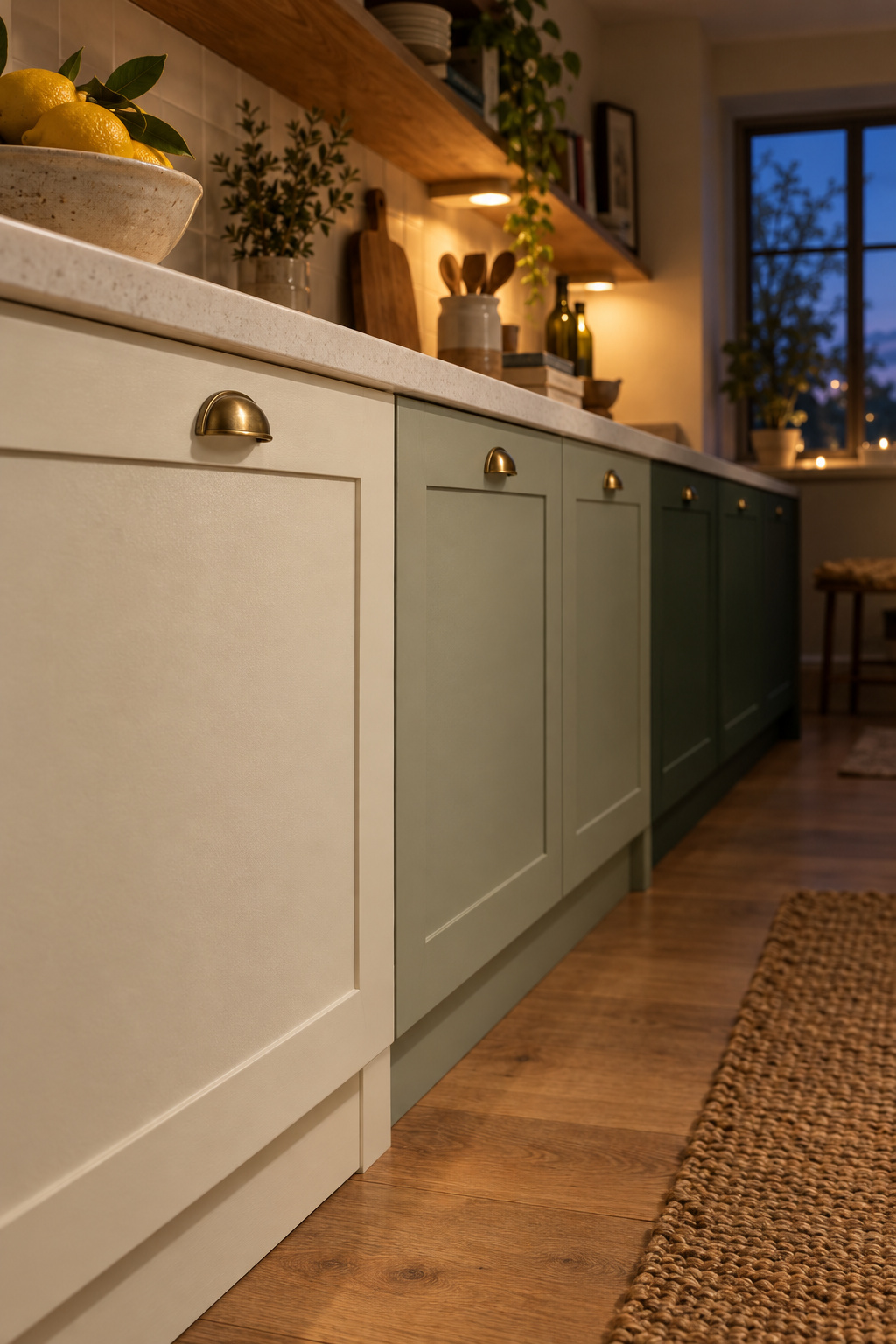
That gives three colors instead of one, chosen in this order:
- Check the tape at the hour you usually cook, and move it if the light fades sooner.
- Window stretch: a warm white, such as Sherwin-Williams Egret White at LRV 69.6.
- Far end wall: a deep color, such as Farrow & Ball Green Smoke at LRV 19.
- Middle stretch: halfway between. (70 + 19) ÷ 2 is about 45, so look for a mid-tone between 35 and 55.
- Paint sample boards, A2 or larger, two coats on a white backing, and let them cure for 24 hours. Move them between walls and look at them morning and night.
- Keep the ceiling the lightest surface in the room.
When someone asks me for the best color for a narrow kitchen, I give them three, and the galley kitchen wall color changes as you walk. Luke Ellis of Joyn Kitchen puts it plainly: “save the darkest shade for the furthest point of the room.” He also warns against going too dark on the side walls, which tightens the corridor.
Judge the boards at night too, under task lighting along both counters, because that is the light the far end lives in.
Walls first, then cabinets
Paint the walls first, then choose the cabinet fronts by the stretch of room they stand in. Painters work ceiling, walls, then woodwork and trim, so the cutting-in stays clean; cabinet doors count as woodwork. A big jump in color needs three coats, or a primer tinted about halfway toward the topcoat to bring it back to two.
A Darker End Wall Where the Daylight Stops
Walk into a galley and your eye runs straight down the aisle to the far end. It is the one surface everyone sees and the one the window reaches least, so it takes the deepest value in the room.
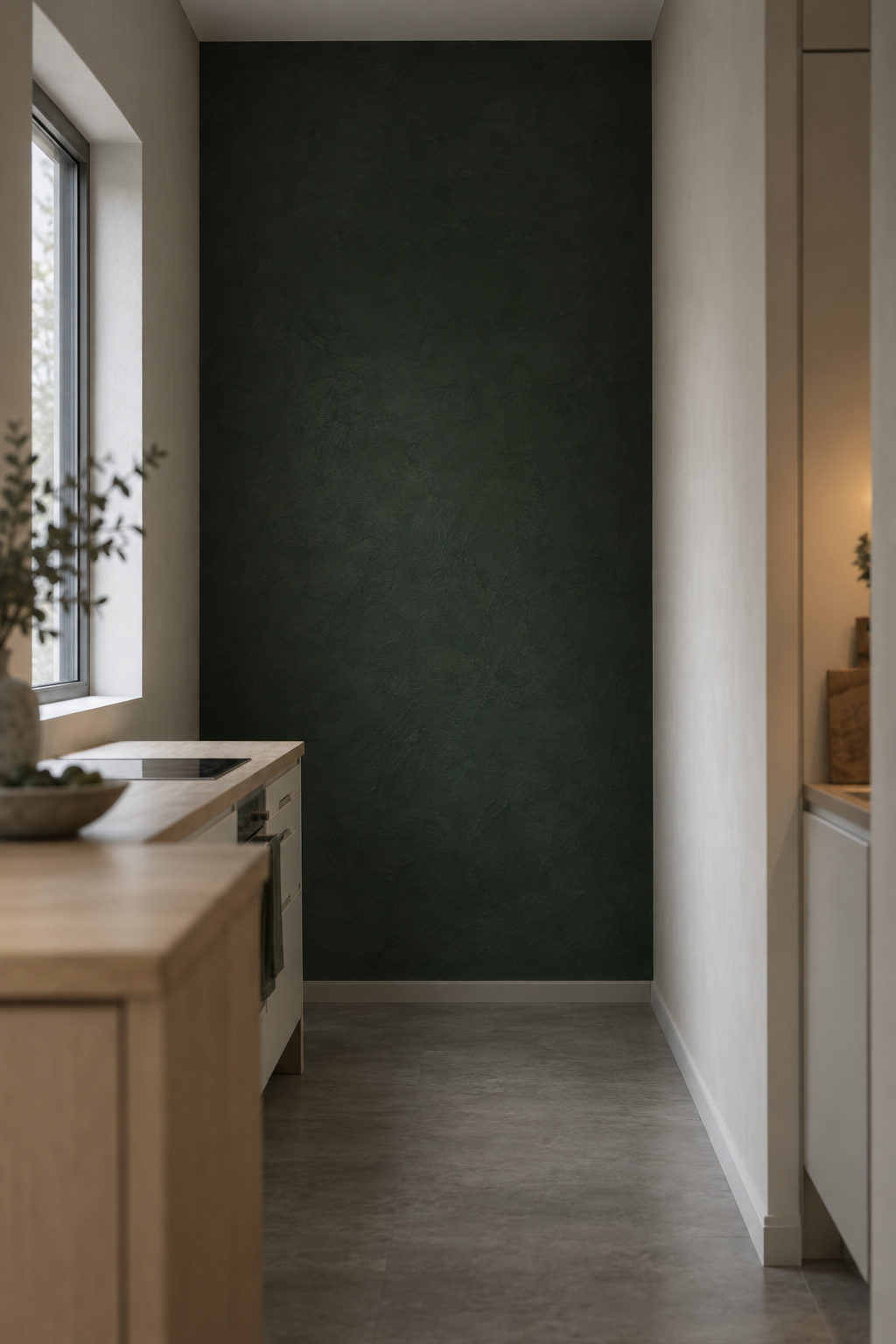
Designers and paint makers agree on where the dark goes: on the short end wall, with the long walls kept lighter. They split on what it does. Some say a dark end wall makes the room feel longer; others say it shortens the room and squares it up. No study has tested it. I paint the end wall deep because the window’s light gives out before it gets there, so a pale color has nothing to bounce.
One wall is plenty. In a small, dim galley, deep color spread past the end wall can feel suffocating, and a deep wall needs lamps to back it up. Deep colors also show every surface flaw, so the end wall takes a flat or low-sheen finish.
If the window is in the end wall, turn the plan around. Keep that wall light so the window is not a bright hole in a dark frame, and let the grade deepen back toward the door. Objects and art are another subject, and dressing the far wall once it is painted picks it up there.
Sheen Shapes How a Wall Returns Light
LRV sets how much light a wall returns. Sheen mostly decides how it comes back: as a soft, even wash from a matte wall, or as bright reflections from a glossy one. Sheen is measured in gloss units, a reading of mirror-like reflection at a set angle, and the names are not standardized, so one brand’s satin can be another’s eggshell.
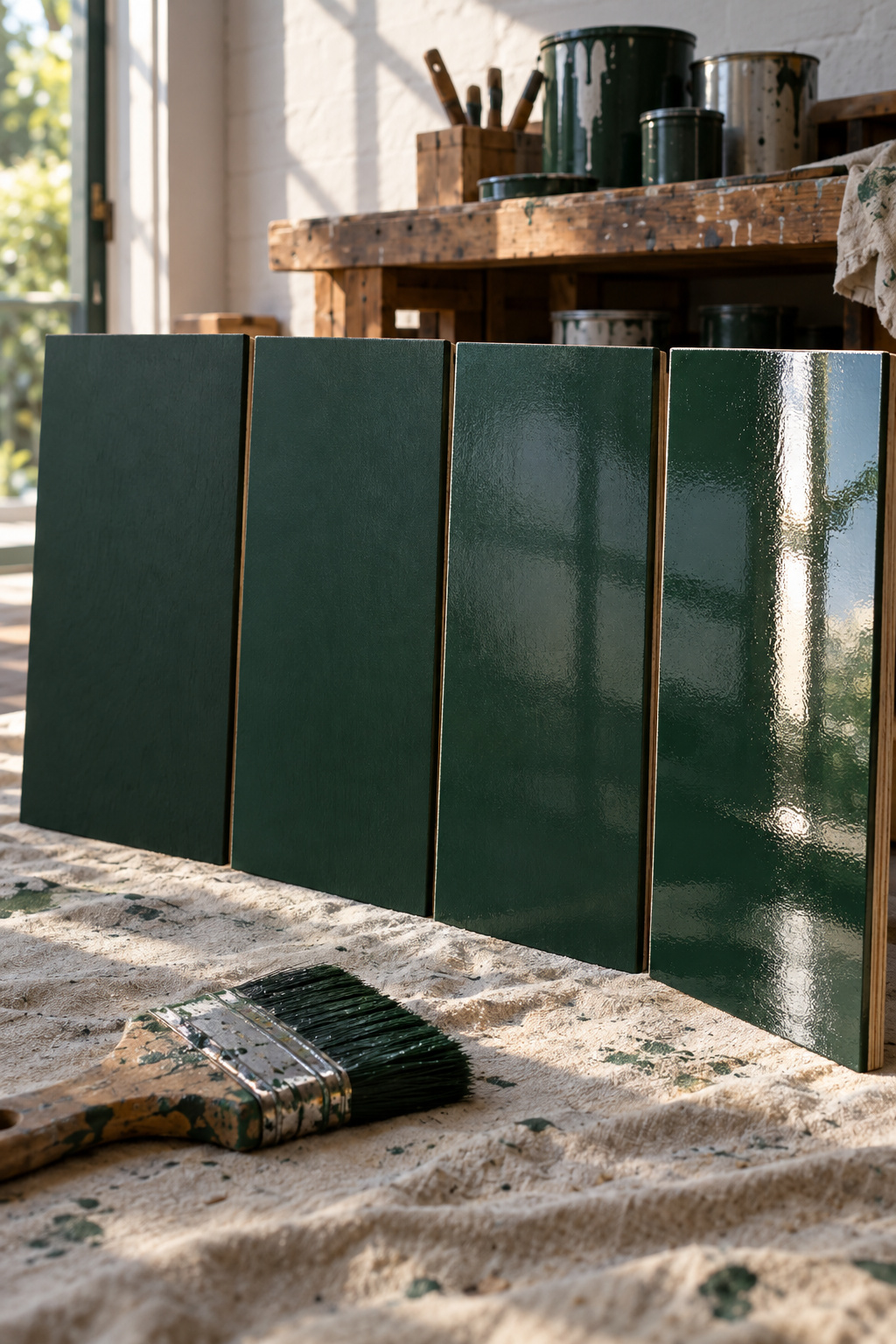
| Sheen | Gloss units (approx.) | Where it goes in a galley |
|---|---|---|
| Flat or matte | 0–5 | Ceiling, deep end wall |
| Eggshell | 10–25 | Long walls |
| Satin | 25–35 | Cabinets, trim |
| Semi-gloss | 35–70 | Splash zone, baseboards |
Paint the long walls eggshell. It gives back a little more glow than matte, and a shinier sheen looks less shiny in a dim room than in a bright one, so going higher buys you little at the far end.
On the first warm weekend of spring I oil our breakfast table with the windows open. What I want from it afterwards is a low glow, not a shine, and that is roughly what eggshell gives a wall. Cabinets and trim want something harder; paint makers list satin and up for them, never flat.
One Run Dark, One Run Light, and a Last Test in February
Some designers turn the grade sideways. Fiona Ginnett of Holte suggests a darker color on one side of the kitchen and a lighter one on the other, which she says draws the eye across the space. Others warn against dark side walls. I side with the warning for most galleys, because a dark long wall soaks up exactly the light the room is short of. If yours has a big window and good light, try it on walls only: a mid-tone on the wall of the run without the window, and the opposite run kept pale.
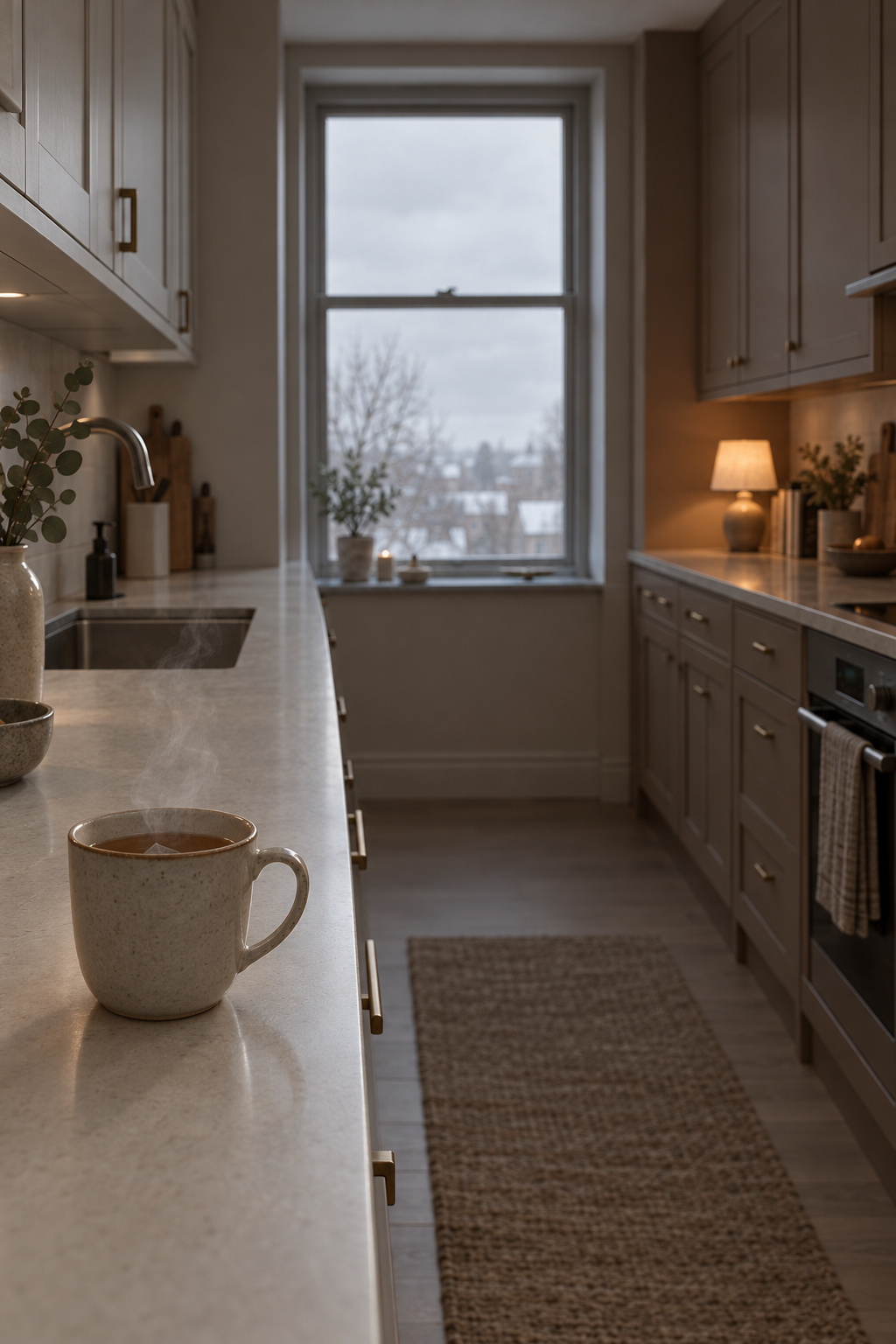
Then test what you choose at the worst time of year. North rooms get the least light, and it is cool and diffuse; strong colors hold up and pale ones go dull. Try it in February.
I drink my second coffee from a thermos on the back step, in most weather. It keeps me honest about how little light a winter morning has.
If the top of your window sits 7 ft off the floor, its light carries roughly 10.5 to 14 ft down the room. In a 16 ft galley the last few feet belong to the lamps, and that is where the deep color goes; a lower window moves the line closer.
FAQ
Should the ceiling be painted the same color as the walls in a galley kitchen?
It depends on how deep the wall color is. With pale walls, matching the ceiling lets the edges disappear in a small kitchen. With a mid or deep tone, a same-color ceiling closes the room down. My default is a white ceiling, the lightest surface in the room, since a light ceiling makes a room look slightly taller.
What paint color works best in a galley kitchen with no window?
A light, warm color with a high LRV, chosen under the bulbs you will actually use. Lighter, yellow-tinted paints help bounce what light there is, and white trim helps too. With no window there is no daylight to grade by, so grade by the lamps instead: lightest where they fall, deeper where they don’t.
Should trim and baseboards match the wall color in a narrow kitchen?
Either works, and matching usually suits a narrow kitchen better. One color on walls and trim blurs the edges, so the room looks less chopped up. Give the trim a harder sheen, satin or semi-gloss, as paint makers list for trim. Matte walls with shinier trim in the same color still read as one tone.