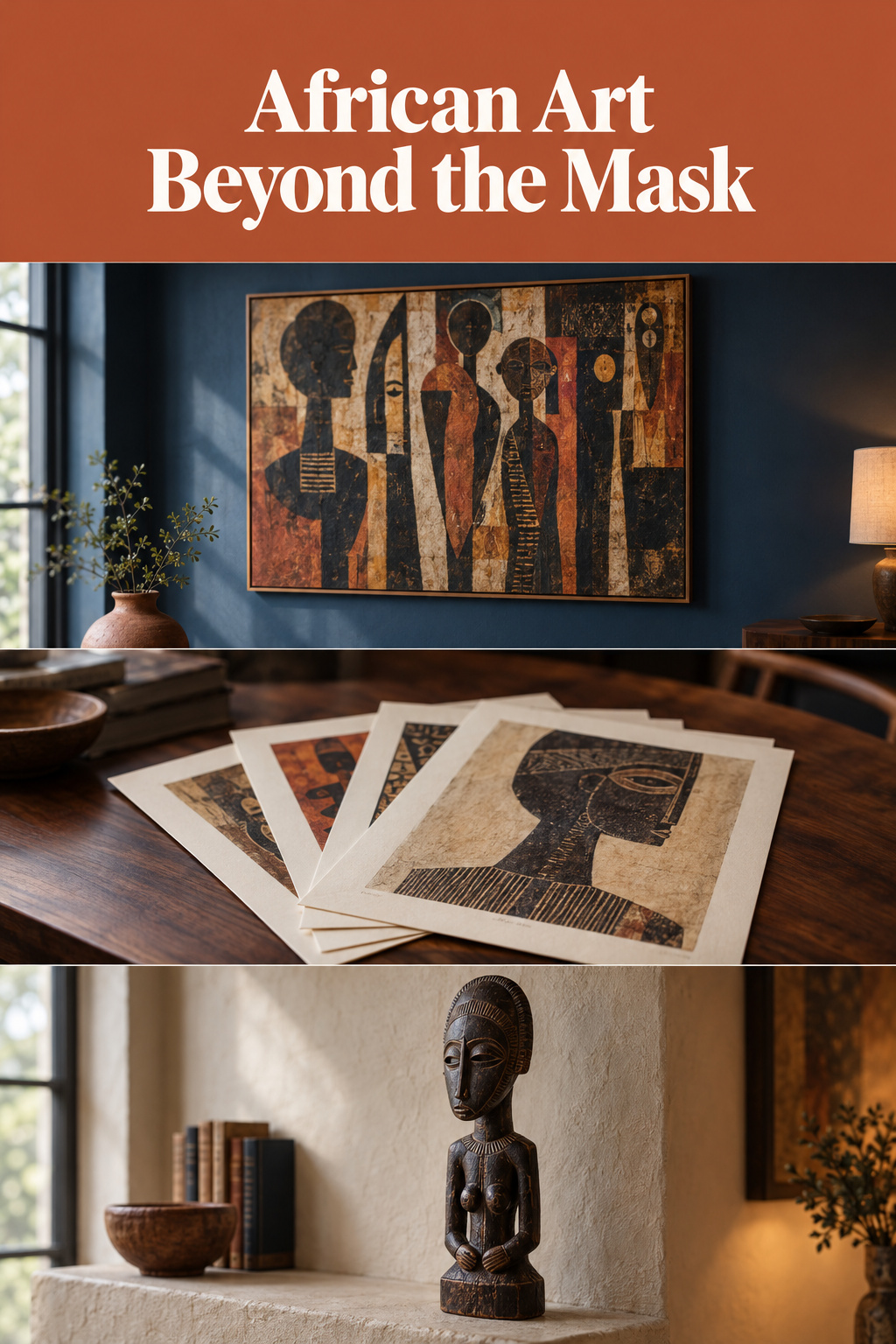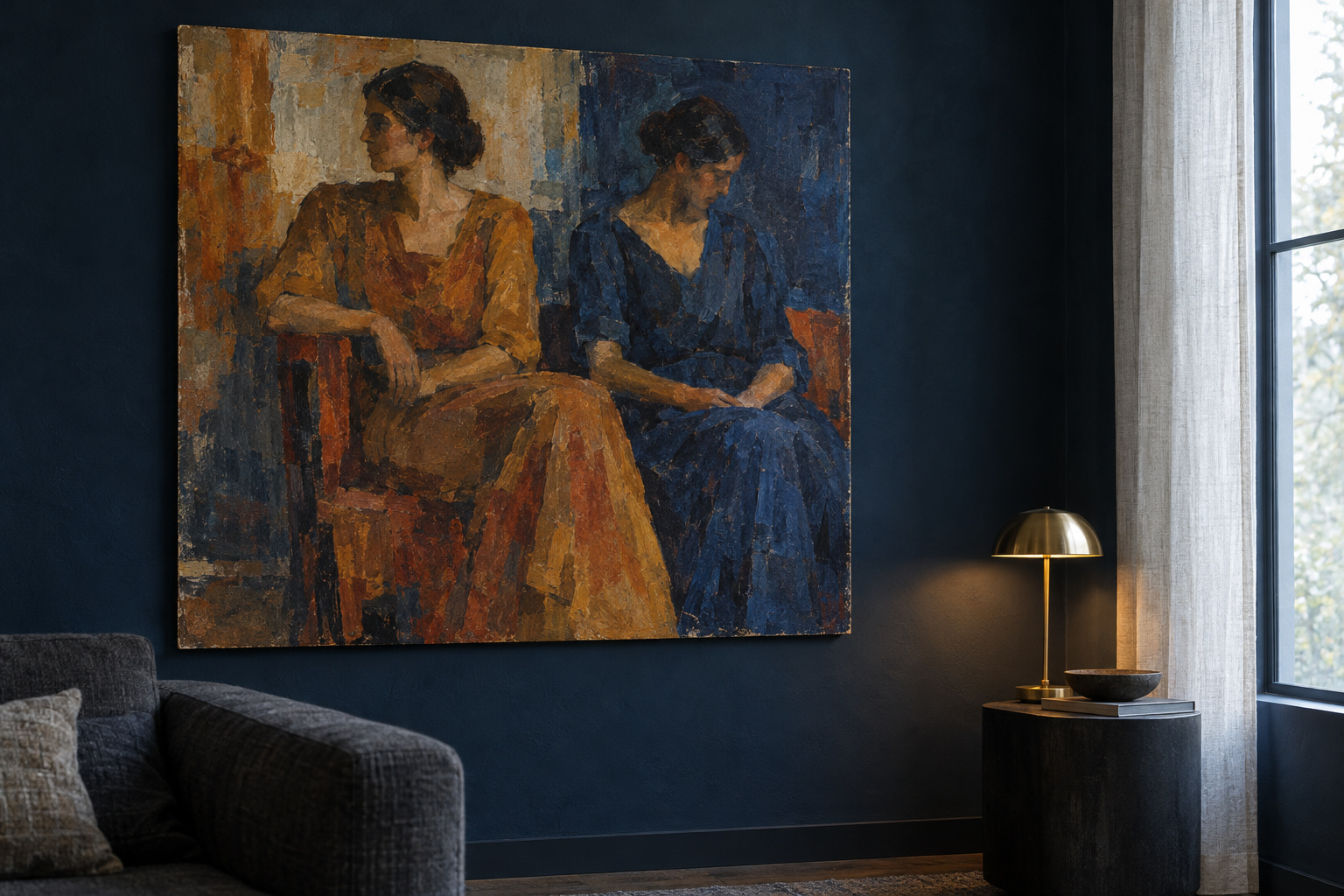
For years I cleared every sitting space down to the floor before I let anyone use it. No pictures went up. No shelf stayed. Then clients started telling me the bare room felt like a waiting room. They were right, and now I keep one meaningful object in a room and choose it slowly.
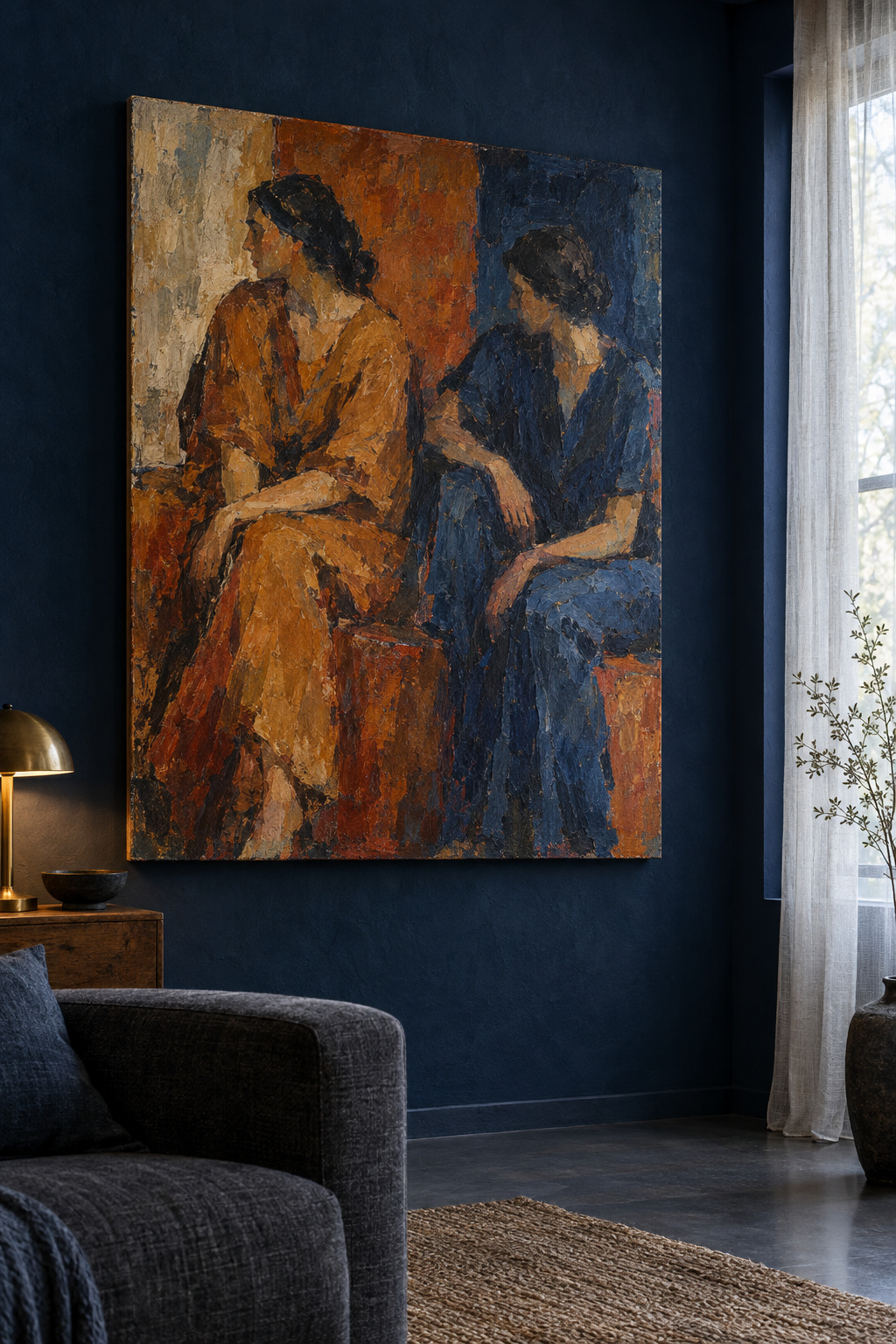
That habit is most of what I’d say about African art in a living room. The usual trend list tells you to buy a vintage mask, or three, and fill the gap above the sofa. I’d hang one strong piece by a living African painter, photographer or carver instead. It gives the wall presence, and when you buy it from the artist or the gallery that represents them, the money reaches the people the style borrows from. A ceremonial mask you can’t explain stays in the shop.
TL;DR
- Choose one piece by a named living artist: photographers such as Doudou Mbemba in Kinshasa sell signed edition prints at the entry tier, a few hundred dollars, while Prince Gyasi’s work now sits mid-tier and rising.
- The money reaches the maker when you buy from the artist or the gallery that represents them; a museum-shop edition can be a fundraiser for the institution, so ask who gets what.
- Leave a mask in the shop if you can’t say what it was for, who made it and how it came to be sold; Baule Goli and Yoruba Gelede were public performance, while Senufo poro arts were hidden from the uninitiated in some communities.
One strong piece on one wall changes a living room more than a shelf of souvenirs
Picture one large photograph on a plain wall, a lamp beside it, a low chair turned toward it. Nothing else up there. The room settles around that one thing — you know where to look when you walk in, and so does everyone else.
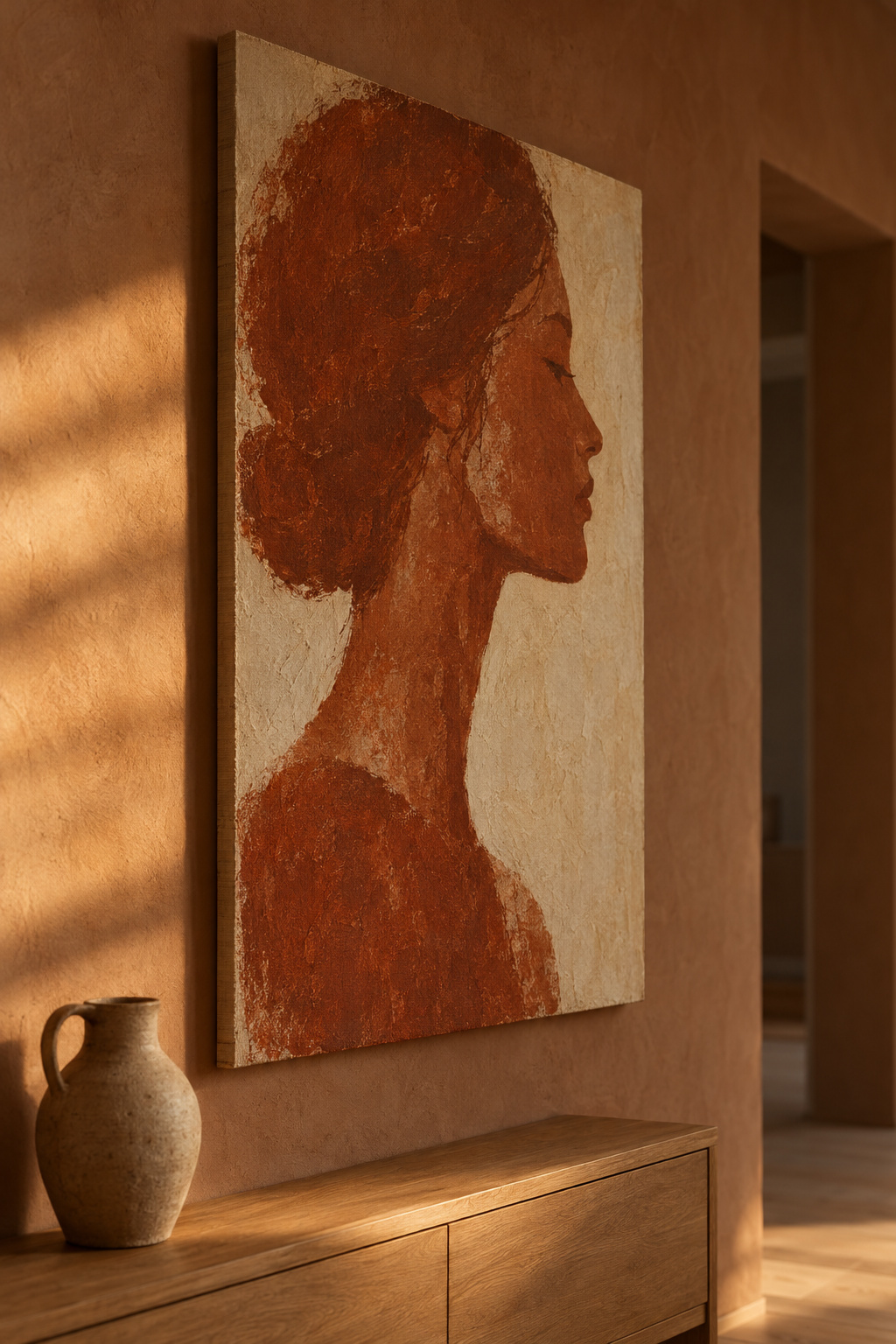
Now picture the same wall with five carved masks, a woven fan and a shelf of small figures. Together they all ask for attention at once, and the eye never lands. That’s the souvenir-shelf version most trend lists send you toward.
My mother calls my sunroom “the empty room” and keeps offering to lend me a chair for it. I take the teasing, because the emptiness is doing work. A single object with a name attached — a print by a photographer in Accra, a stone carving signed on its base — holds more than a wall of things nobody can tell you about.
The South African designer Sindiso Khumalo, speaking of an Ikea collection made with African designers, said they didn’t want to put out the “curio version” of Africa. I think of that phrase whenever I see masks sold in matching threes. For the wider picture of what makes a living room Afrohemian, start with the base and the textiles. For the wall, start with a person whose name you can say.
African art for the living room: painters, printmakers and photographers you can hang this year
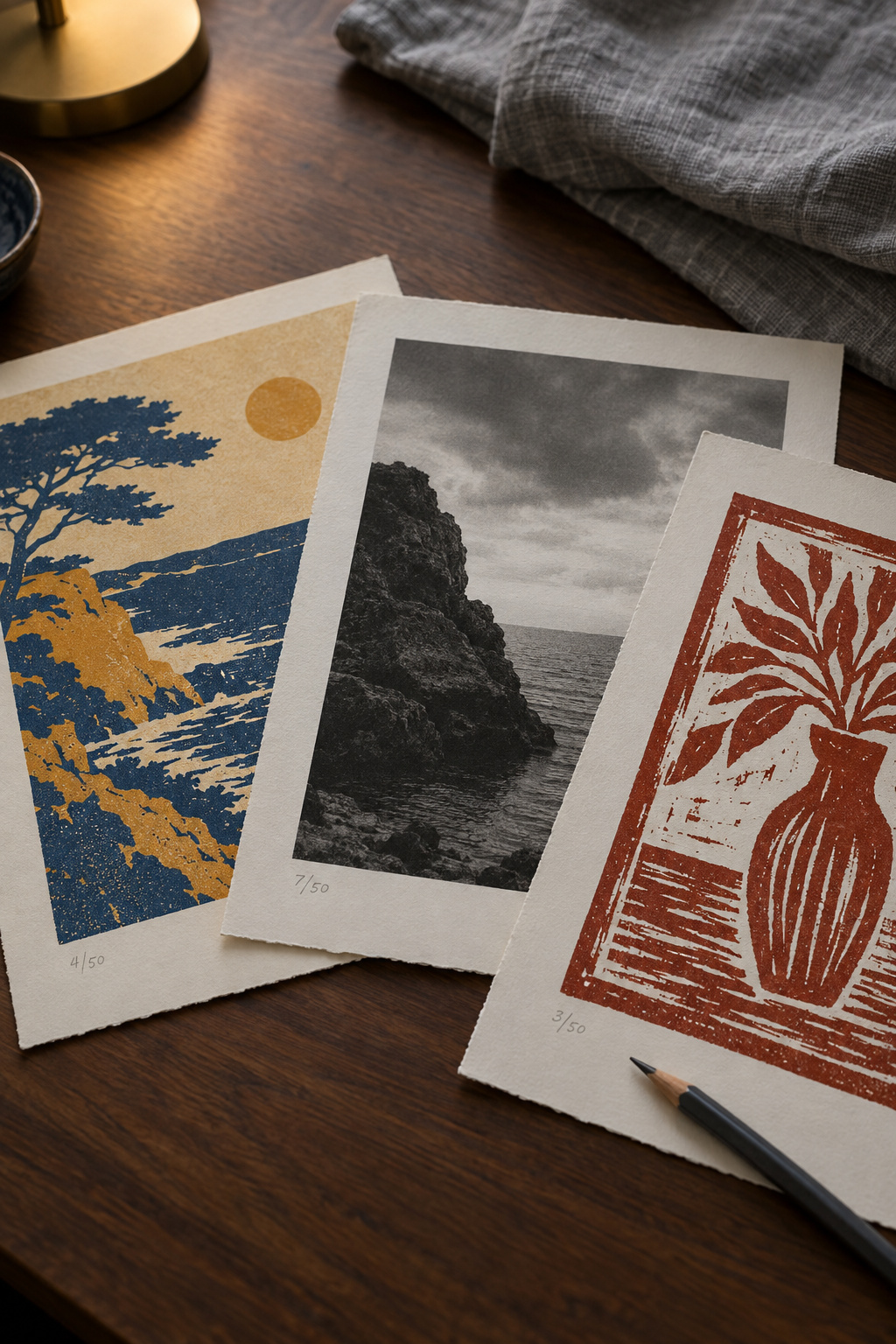
Here are living artists and galleries worth writing to. Tiers move, so ask for a current price.
| Artist or gallery | Medium | Where they work | Tier |
|---|---|---|---|
| Doudou Mbemba | Photography, signed edition prints | Kinshasa, DR Congo | Entry: a few hundred dollars |
| Nkem Okwechime | Screen prints, numbered editions | Scottish-Nigerian artist | Entry: a few hundred dollars |
| Zohra Opoku | Limited-edition digital print on silk | Accra, Ghana | Entry to low |
| Carlos Idun-Tawiah | Photography, signed editions | Accra, Ghana | Low four figures |
| Justin Ebanda | Painting, also photography | Douala and Paris | Low to mid four figures |
| Prince Gyasi | Photography | Accra, Ghana | Mid tier and rising |
| Ghizlane Agzenai | Painted laser-cut wood totems | Casablanca, Morocco | Upper-mid, a considered purchase |
| Zanele Muholi | Photography | South Africa; shown by Stevenson, Cape Town | Top tier |
| Circle Art Gallery | Modern and contemporary East African art | Nairobi, Kenya | Ask the gallery |
| Addis Fine Art | Ethiopian artists, including Girma Berta and Tizita Berhanu | Addis Ababa and London | Ask the gallery |
For a first purchase, start at the top of the table. Mbemba’s signed edition and Okwechime’s numbered one sit at the entry tier. Gyasi is a different conversation now: his recent auction sales have run well past his earlier gallery prices, so treat him as a name to save for, not a starter.
If the point is paying the artist, buy from the artist or the gallery that represents them. An institutional shop is another arrangement. Autograph made its Muholi edition as a fundraiser for its own work, and the Tate shop page doesn’t say how Opoku’s proceeds are split.
Before you pay, ask for an invoice naming the artist, title, date, medium and dimensions, and a certificate signed by the artist where there is one. Get the full price, taxes and shipping in writing before you commit.
Placing the piece: what it sits against, how much wall it needs and what to take down first
A wall should feel like somewhere your eyes can rest. Find that feeling first; the piece comes second.
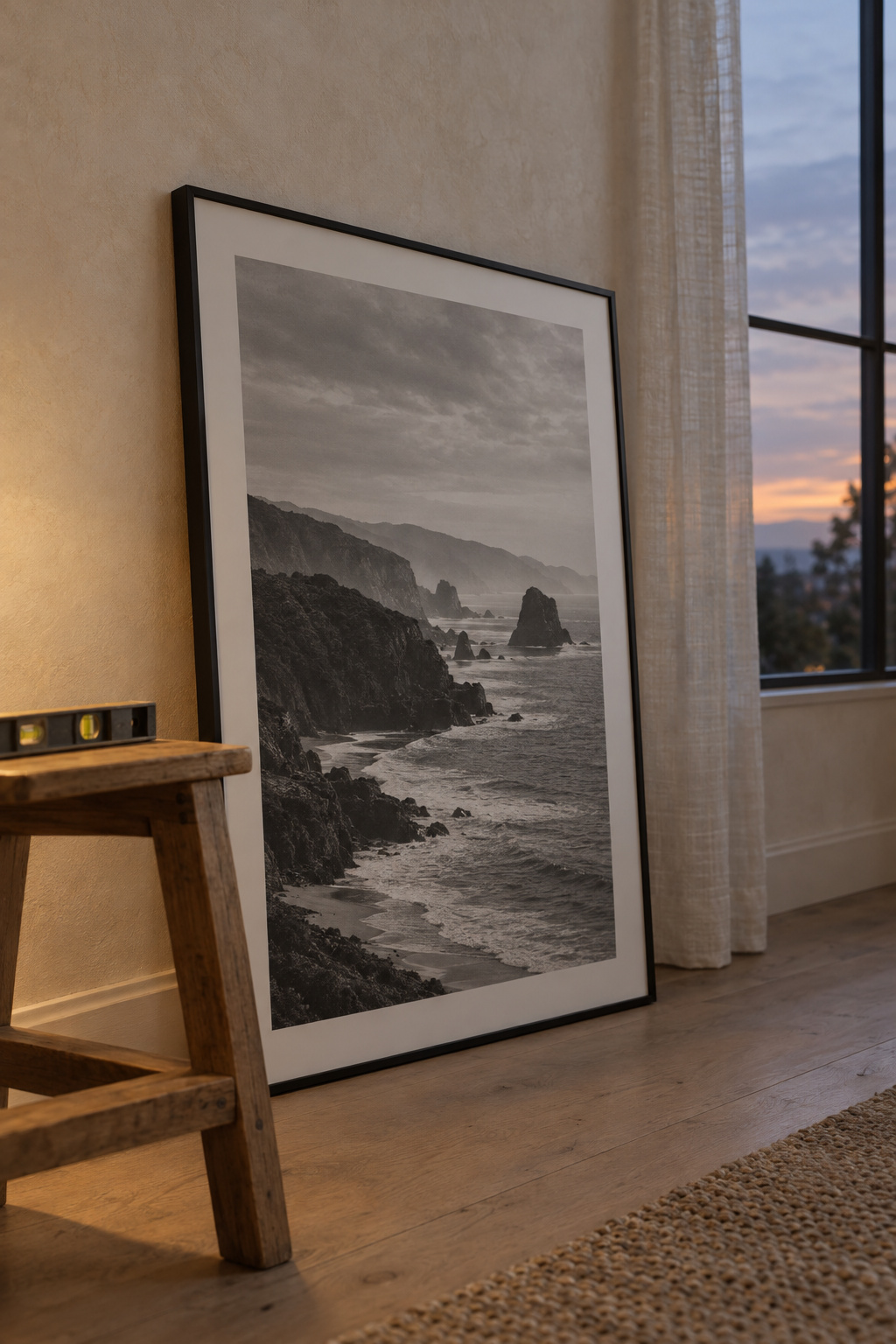
Before anything goes up, look at the wall from your usual seat. I notice a refrigerator’s hum before I notice a wall color, and I usually mention it first, because it tells me how quiet the room really is. Then decide what comes down first.
From one wall, it’s usually:
- the second and third frames
- the shelf of small things nobody dusts
- the clock that matches nothing
- anything that came as a set
I see matching sets differently from the photos that sell them, and here’s why: they look calm on a screen and fussy in life, because every piece asks to be lined up with the others. A loose color family is calmer. Let the one piece set two or three colors, and let cushions and wood answer it loosely.
Light is the obstacle people forget. Keep paintings, prints and photographs out of direct sun, and out of indirect sun where you can; works on paper want glazing that filters ultraviolet. Hang on an interior wall, away from vents, fireplaces and radiators. My sunroom radiator knocks all winter, and I wouldn’t put anything on paper above it.
Judge scale from the doorway: the piece should hold the wall without crowding the furniture under it. Height and spacing have their own measurements, which you’ll find with our living room gallery wall ideas. A cloth is a different job again; hanging a textile as the main piece needs a proper mount, not a nail.
Take one thing off that wall and leave the gap open for a week.
Carvings and sculpture made for sale by living carvers, and what to ask before you buy one
Good carving gives a room weight; it holds a corner the way a painting holds a wall.
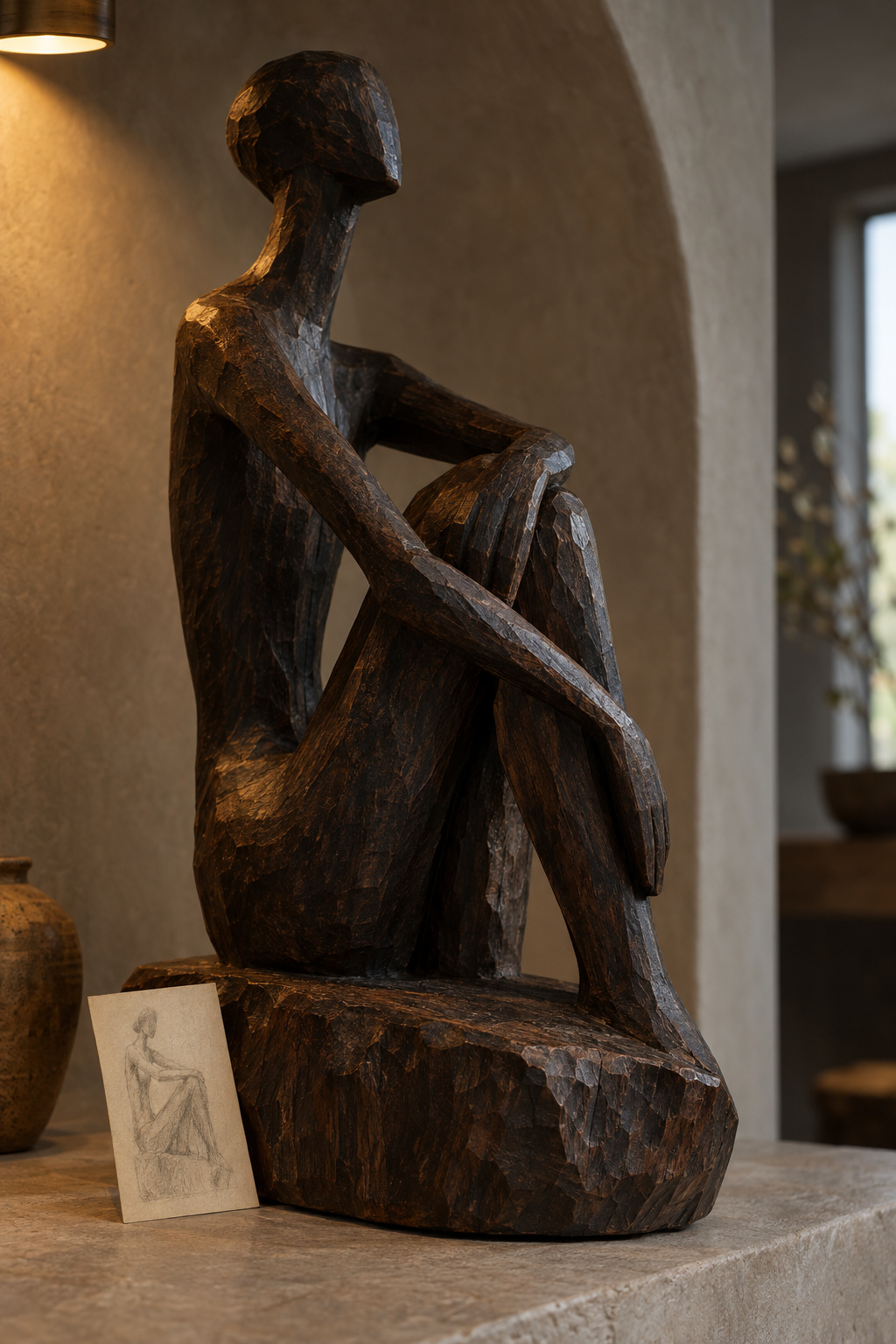
Made for sale is not the same as lesser. “The artists have specifically made the sculptures for foreigners since the form came into being in the 1960s,” says Bill Dewey, a University of Tennessee art historian, of Zimbabwean stone sculpture. Its sculptors sign their work and would rather be called simply artists; Patrick Sephani and Letwin Mugavasi are two names to look for. Whether a piece was made to sell matters less than who carved it.
A workshop name won’t answer that. Workshops can carve in any style on request; one Senufo carver near Abidjan said he could copy any sculpture from four photographs. Ask the seller for the carver’s name, the date, the stone or wood and any signature, and get an invoice that names the maker. I trust a signed base more than a story about where something came from.
Shelf or wall? Small, heavy stone belongs on a shelf or plinth where the light can move across it. Flat, light carvings can go up. If you’re weighing feathered pieces against carved ones, juju hats on the wall are their own craft with their own hanging method.
Are African masks OK to display? What they were made for, and the rule for leaving one in the shop
A mask carries a held breath into a room. It came from somewhere and was meant to do something.
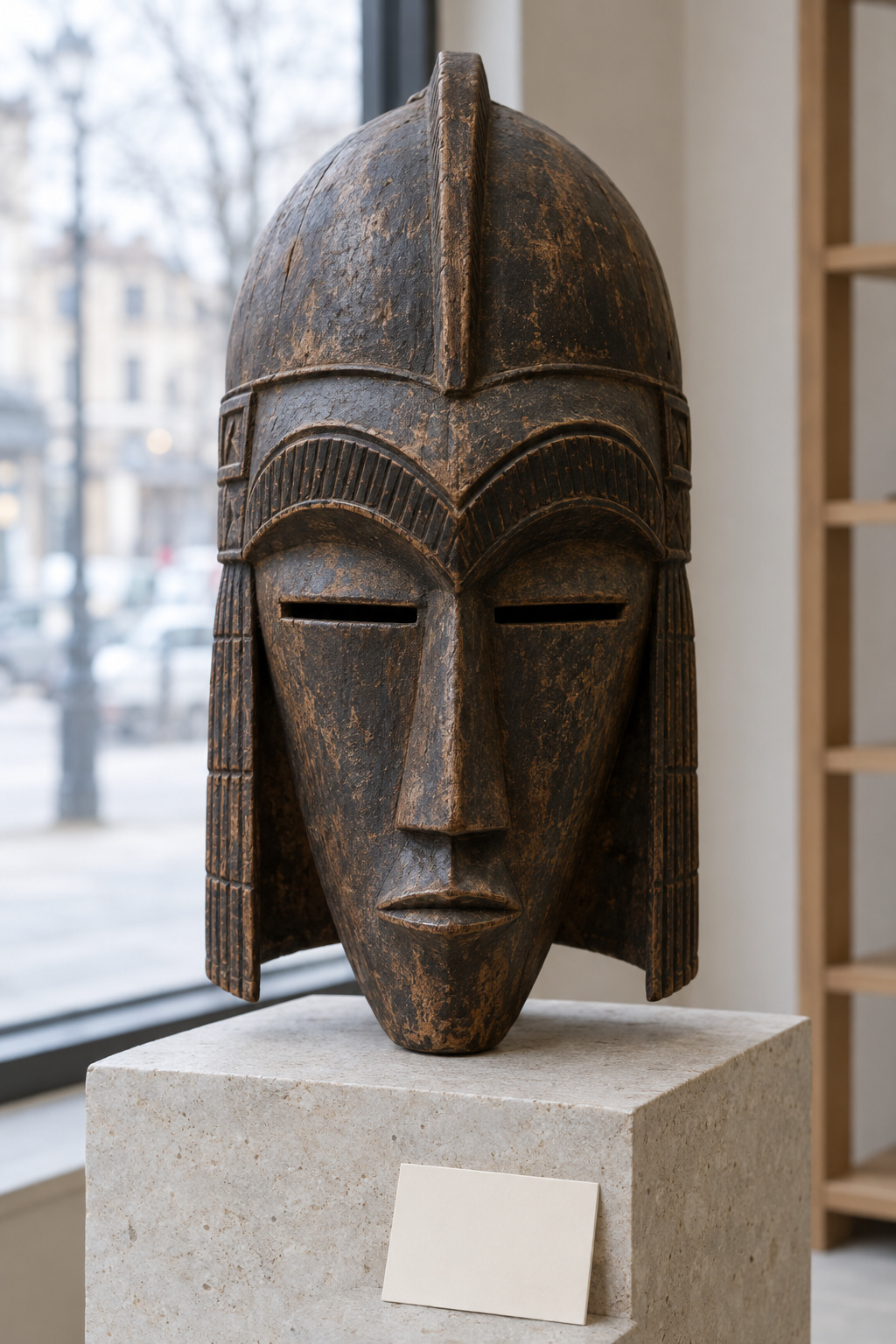
Many masks were made for performance, not walls. Among the Senufo of northern Côte d’Ivoire, the Met notes, “in some communities, poro initiates prohibited uninitiated men, women, and children from seeing their impressive arts.” Other traditions differ. The Baule Goli mask was performed at the funerals of important men or as pure entertainment, and Yoruba Gelede is a public masquerade that entertains and honors the power of women. No single sentence covers every mask, and I won’t pretend one does.
The market muddies it further. Making masklike objects for travelers and traders “is as old as contact itself,” writes the scholar Silvia Forni, and in many African cities an imitation of almost any mask can be commissioned. Many masks on sale were made to sell. A “vintage” label won’t tell you which kind you’re holding.
So here’s the rule I hold to: if you can’t say what a mask was for, who made it and how it came to be sold, it stays in the shop. I feel the same about mass-made Buddhas and singing bowls nobody plays. Spiritual objects worn as costume make a room louder, not calmer. A client once gave me a large scented candle as a thank-you, and it’s in my hall closet, unlit, a kind gift my room didn’t ask for. A mask with a ritual history deserves at least that much restraint.
If you want a mask on your wall, look to living artists who make them as art. Romuald Hazoumè cuts plastic jerrycans into “mask-cans” that draw on his Yoruba heritage and Gelede, and museums hold them. The maker is known, and so is the reason.
Ask of any mask you’re drawn to: could I tell a guest what it was for?
Sit with your wall for ten minutes, then write to one artist
I used to think a calm room had to be bare; you may have thought African art meant a vintage mask. Both mistake an object for the feeling. What does the work is one signed piece, bought so the money reaches the artist, and hung where the sun can’t reach it.
Start small, and in this order. Sit with it for ten minutes: the bare wall, at the hour you use the room, on whatever chair is there. Decide what the piece has to do — quiet the room, warm it, give the eye somewhere to land. Then pick one artist or gallery from the table and write to them. Ask what’s available, how the work was made and what paperwork comes with it. One email, not ten.
If the reply takes a week, good. The wall can wait.
Write that one email today.
FAQ
Is it cultural appropriation to decorate with African art?
In my view, not when you know where a piece came from and the maker is paid. Appropriation usually means taking up a culture’s symbols as your own, with no connection to it, and misusing them. Buying a named living artist’s work from them or their gallery is close to the opposite. Save your caution for ceremonial objects some communities kept from outsiders.
How do I protect a painting or photograph from sun fading in a living room?
Keep it out of direct and indirect sun, draw curtains or blinds in the brightest hours, and hang it on an interior wall away from radiators. Put works on paper behind glazing that filters ultraviolet. Color photographs fade faster than black-and-white fiber prints, so for a precious one, display a copy and keep the original safe.
Can I mix African art with art I already own?
Yes, as long as one piece leads. I hang the new work first and live with it for a few weeks before adding anything. If the room still wants more, choose pieces that share a loose color family with it rather than a matching set. Layout and spacing for a mixed wall are their own subject.