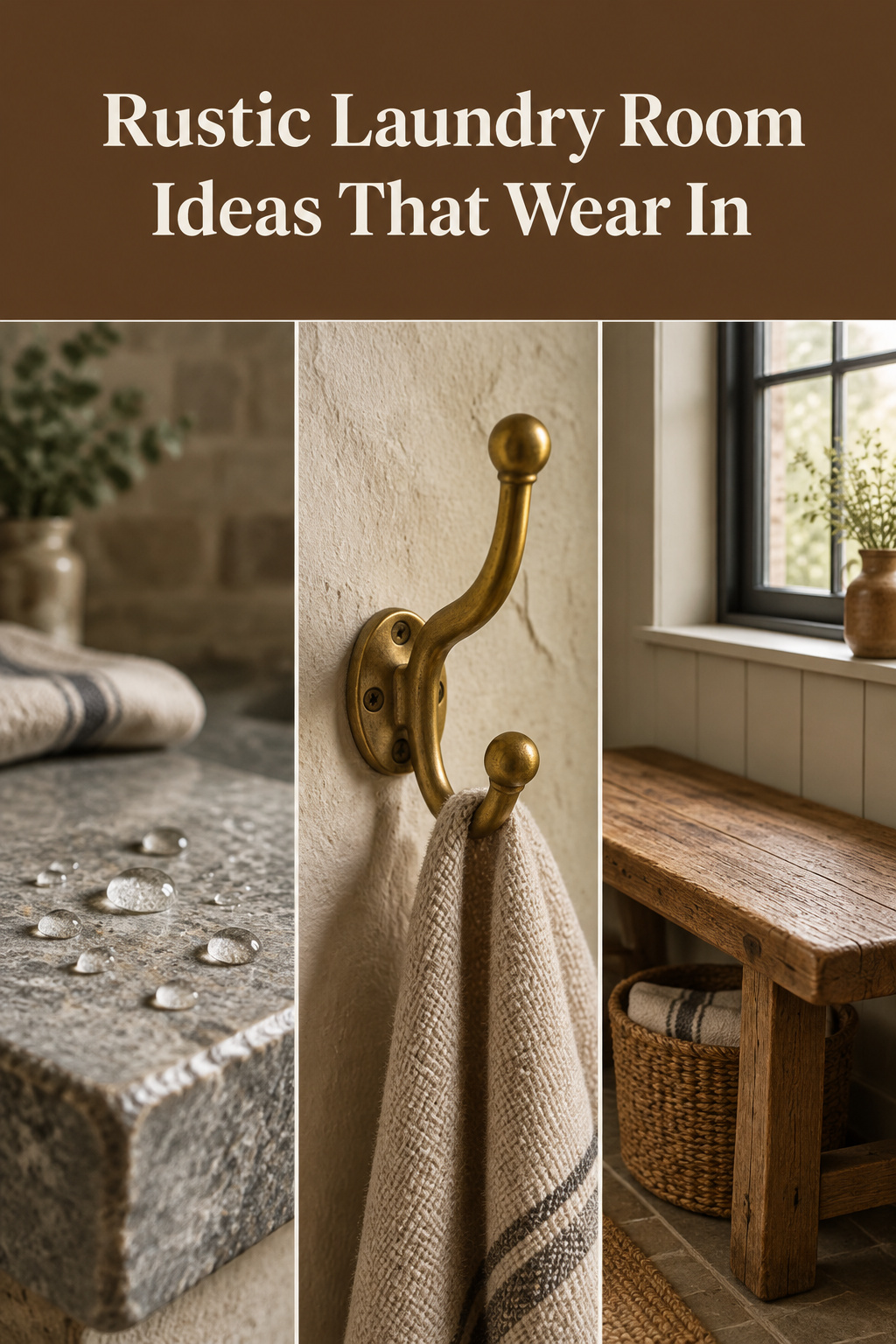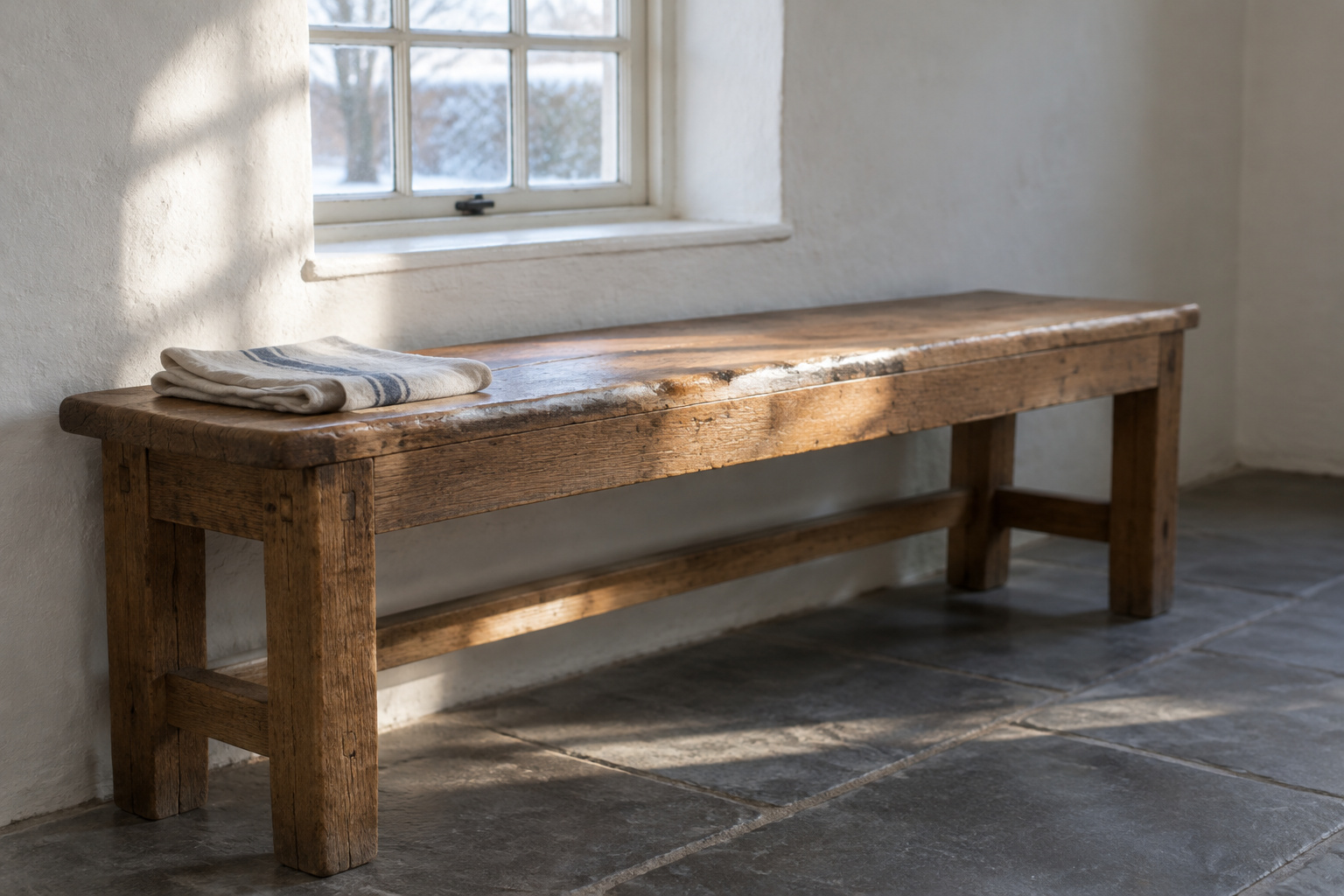

I push sideways on every table in a shop before I look at the price tag. Most dealers have stopped being offended. A table that racks under one hand has a history I want to hear first.
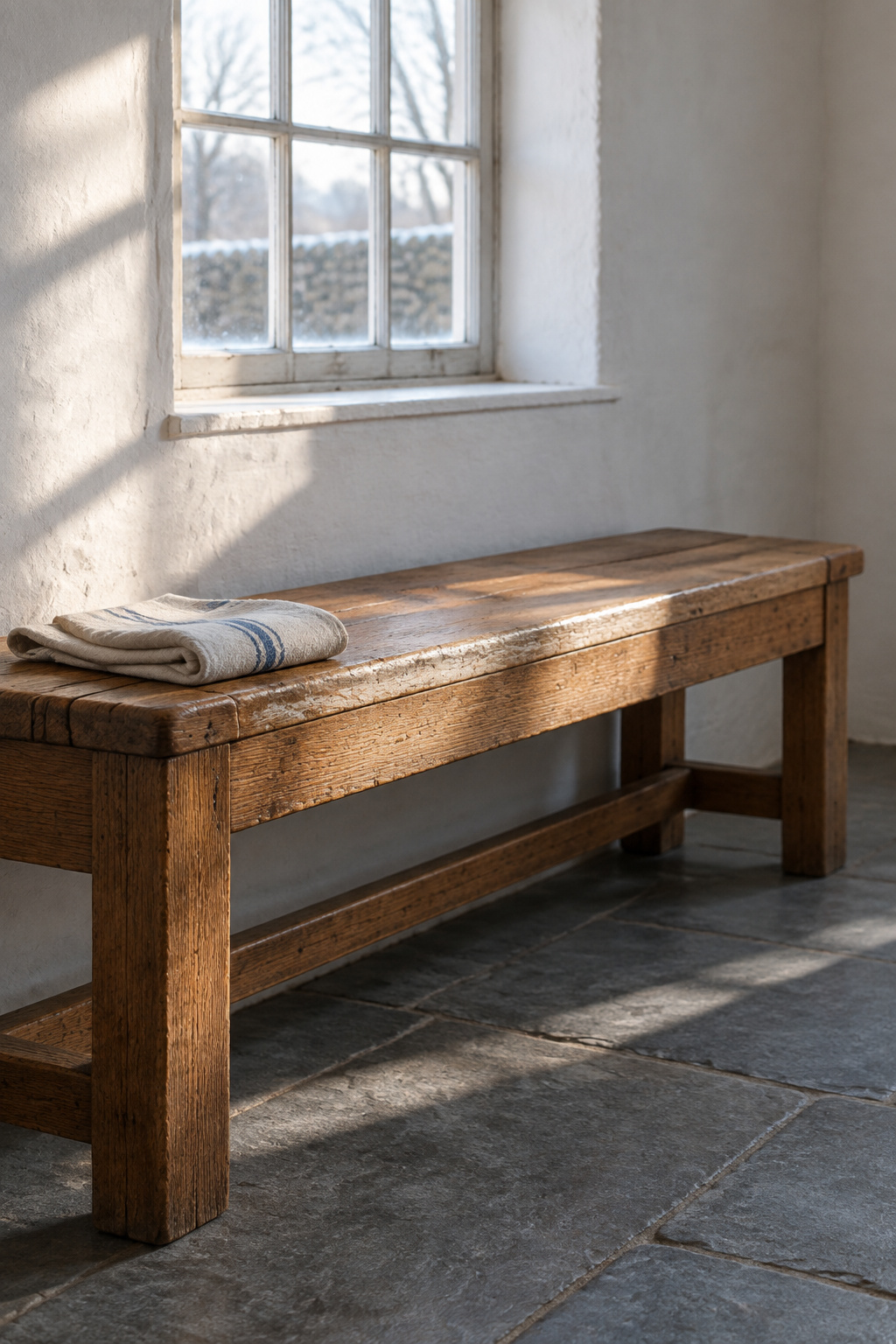
That push is where good rustic laundry room ideas start. The room needs one honest old piece that passes it, with plain, hard-wearing surfaces around it: soapstone and unlacquered brass where water reaches, and oiled oak only where hands touch it and someone wipes it dry.
TL;DR
- Choose one old piece that stands still when you push it, keep it an arm’s length from the tap, and let a painted lower wall and a hard floor do the rest.
- Put soapstone and unlacquered brass where water lands: soapstone is non-porous and needs no sealer, and brass warms to honey with use and goes green only where water sits.
- Keep oiled oak where it is handled and wiped dry, because hardwax oils mark under standing water; one maker says marks can appear after more than about 15 hours.
Rustic Laundry Room Ideas Start With One Old Piece, Not a Room Full of Them
My workshop is a converted carriage house behind my house. It is cold in January and smells of linseed oil all year, and the only age it has came from use.
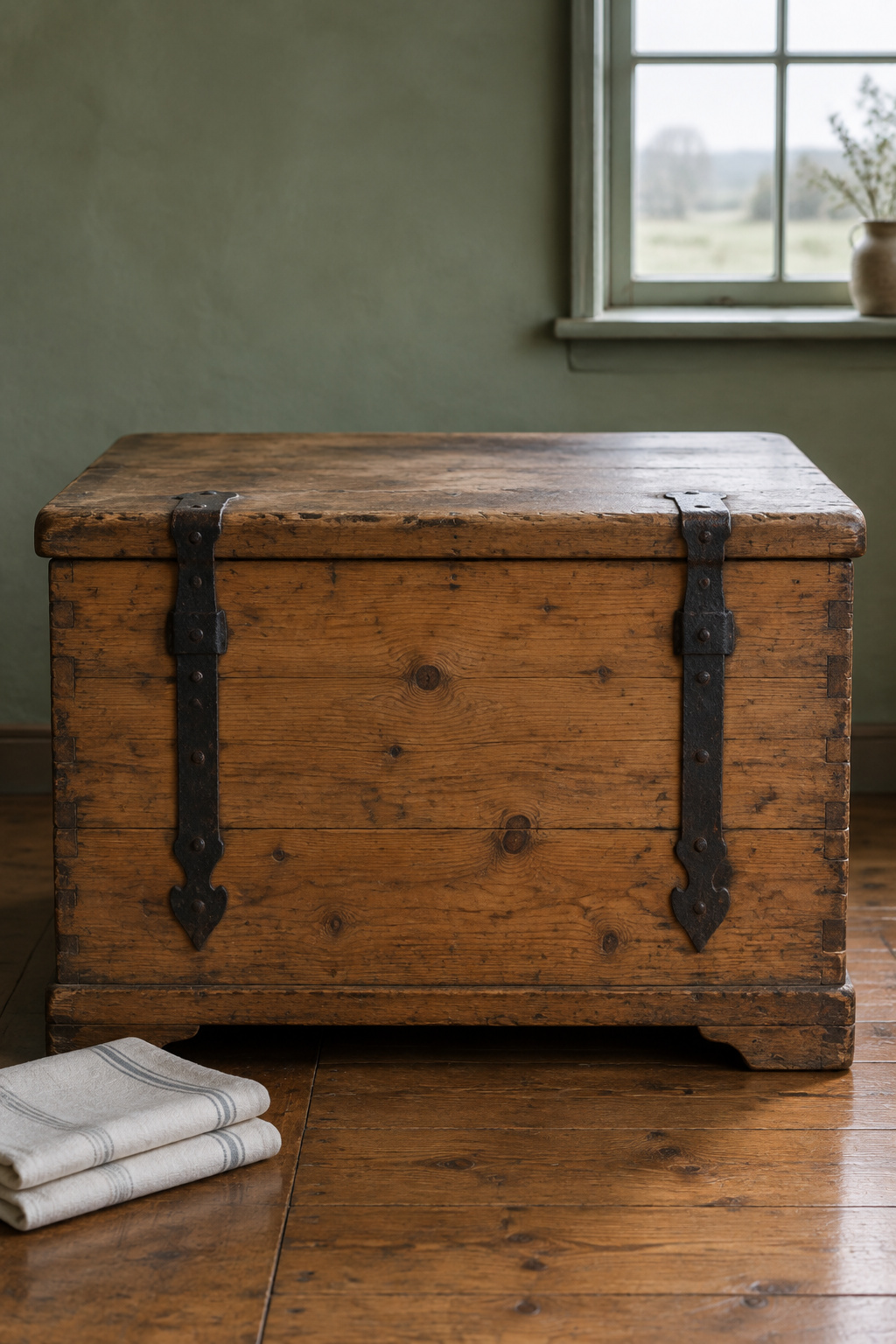
The room most people picture under the word rustic is clad in rough wood, walls and shelves alike. I think that room wears badly, because every surface is the same open material sitting in the splash it handles worst, and factory distressing only fakes the age it has not earned. When everything is a little bit old, nothing is.
Better a room that looks like it works. One piece carries the age, a scrubbed table or an oak bench, and around it go surfaces chosen for how they behave under water and hands. Brass, soapstone and uncoated iron are living finishes: air, water and use change them, and the change is the finish. Conservators at The Henry Ford say a dark, stable surface on old iron may be considered a patina, and warn that altering an original surface may reduce an object’s historical value. Old isn’t the same as original, but when a piece is both, leave its surface alone.
Enamelware, baskets and signs belong to our farmhouse laundry room decor guide; here the subject is what the room is made of.
Soapstone Takes Water and Detergent Without a Sealer
Soapstone has done this job before. An 1894 government survey of the stone listed laundry tubs among its products and observed that “the readiness with which all dirt and impurities are removed make it popular with housekeepers.” Original pieces still turn up at architectural salvage, because the stone is strong and easy to refinish.
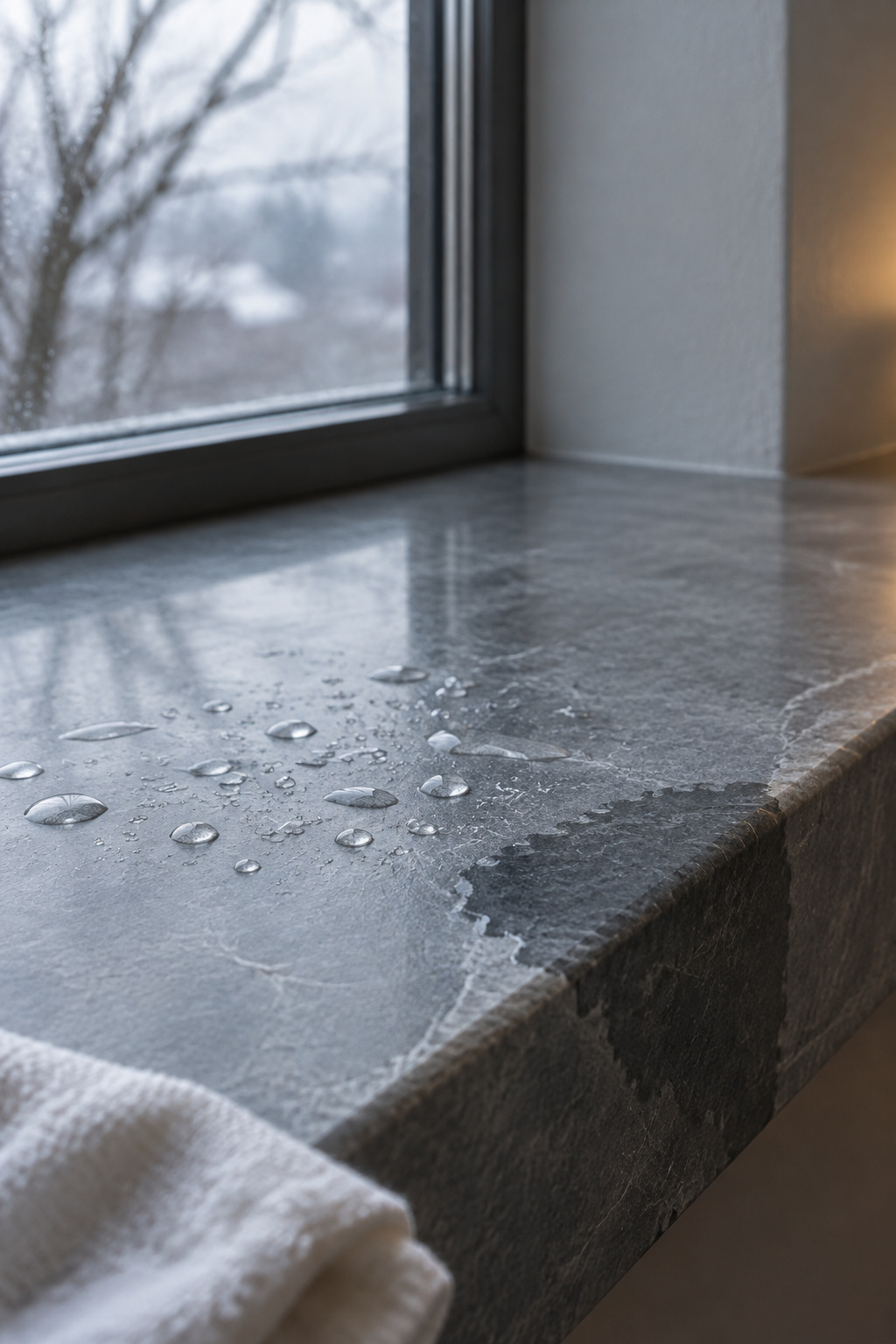
The reason it lasts is density. Soapstone is non-porous, so water and detergent stay on the surface and wash off with soap and water. Makers say it needs no sealer, and Vermont Soapstone puts it bluntly: the mineral oil people rub on it is “not a protectant nor does the stone need to be protected.” Oil only evens the darkening, which happens anyway, most where hands go.
The price is softness. Soapstone rates 1 to 4 on the Mohs scale, against 6 to 7 for most granites, so it scratches. Light scratches fade under oil or wax; deeper ones sand out like wood. I would rather own a surface I can repair with sandpaper than one I can only replace.
Use it where water lands and nothing heavy gets dragged: a windowsill, a ledge behind the tap, a splash, a shelf slab under the detergent bottle. The makers say acid cleaners do no harm; a stone fabricator’s care sheet says keep vinegar off it. Soap and water makes the argument moot for a laundry room.
Oiled Oak and Unlacquered Brass Show Their Use, and That Is the Point
Oak and brass answer water differently, and that decides where each goes. Water beads on hardwax oil, which fools people into trusting it. Leave the water standing and it marks: in maker and independent tests, most products hazed somewhere between 90 minutes and a day, and Osmo, which makes one of the best-known hardwax oils, says marks can appear after more than about 15 hours for its own. So oiled oak belongs where hands touch it and someone wipes it dry: the rail of a bench, a hook board, a wooden peg rail that wears in. Not the ledge behind the tap. Keep oak that might get wet away from plain steel, too: its tannin turns blue-black against wet iron, a stain that is miserable to remove. That stain is best documented on exterior siding, and dry indoor wood does not stain, so it is a risk only in a damp corner.
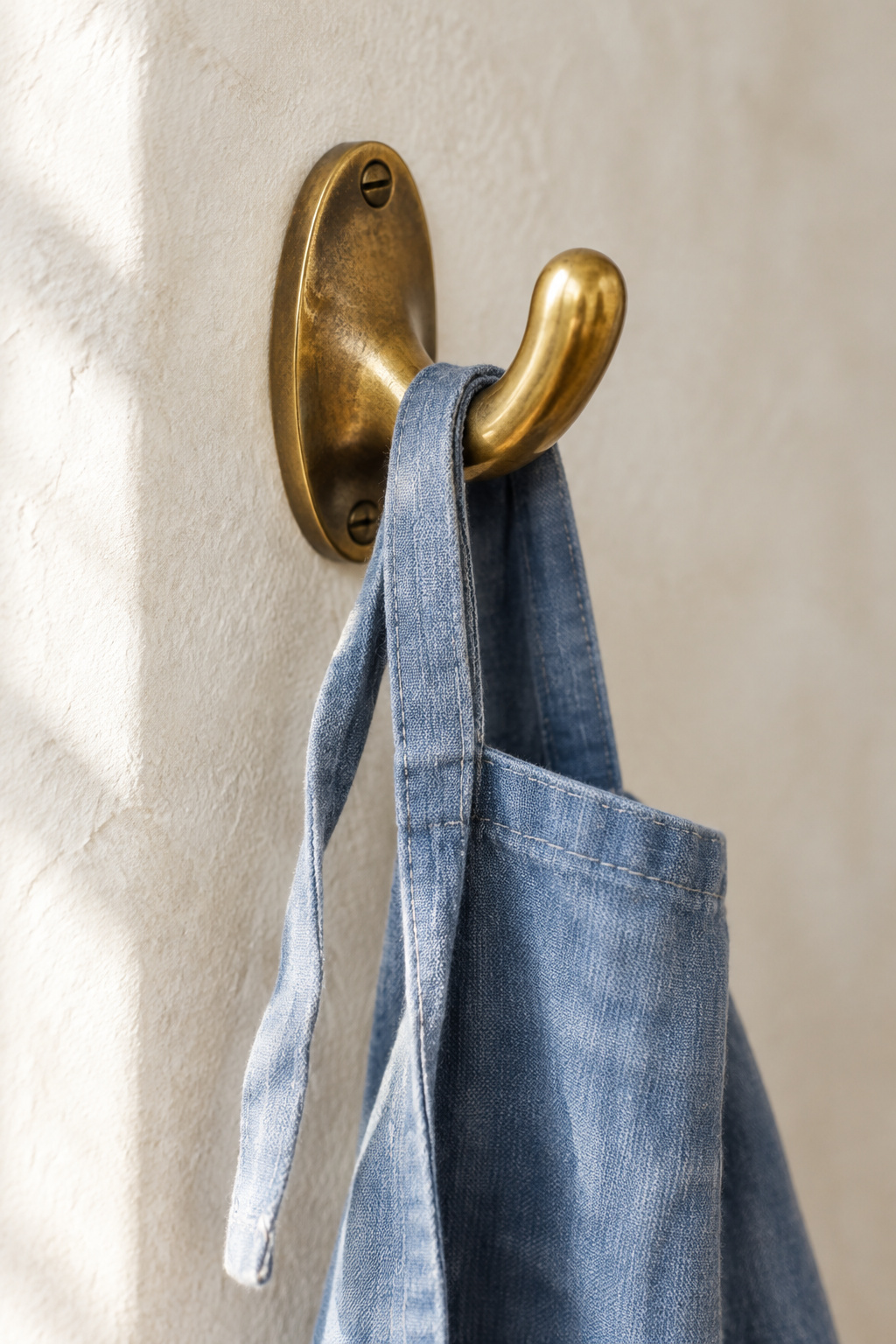
Brass is the forgiving one. Brief wetting and drying warms it by oxidation, a hand keeps the touched spots bright, and the whole moves from bright to honey to amber to a deep antique bronze. It goes green only where water is left to sit, and a wipe with a towel prevents that. Bleach, ammonia and vinegar damage it, which matters in a room where two of them live on the shelf. Bradford Hardware’s showroom manager put the limit well: “Unlacquered brass forgives almost everything. Steel wool isn’t one of them.”
Old houses show a worse habit: original brass hardware brushed over with paint because it looks tidier. Painting over original hardware is worse than replacing it: a replacement at least says what it is, while painted brass is the old metal buried. If an old piece arrives with painted pulls, get the paint off before deciding anything else.
Re-Oil, Sand Out, Polish: What Each Material Asks for Over the Years
Each material has a repair that stops short of replacing it.
| Material | What wash day does | What to do | Never use |
|---|---|---|---|
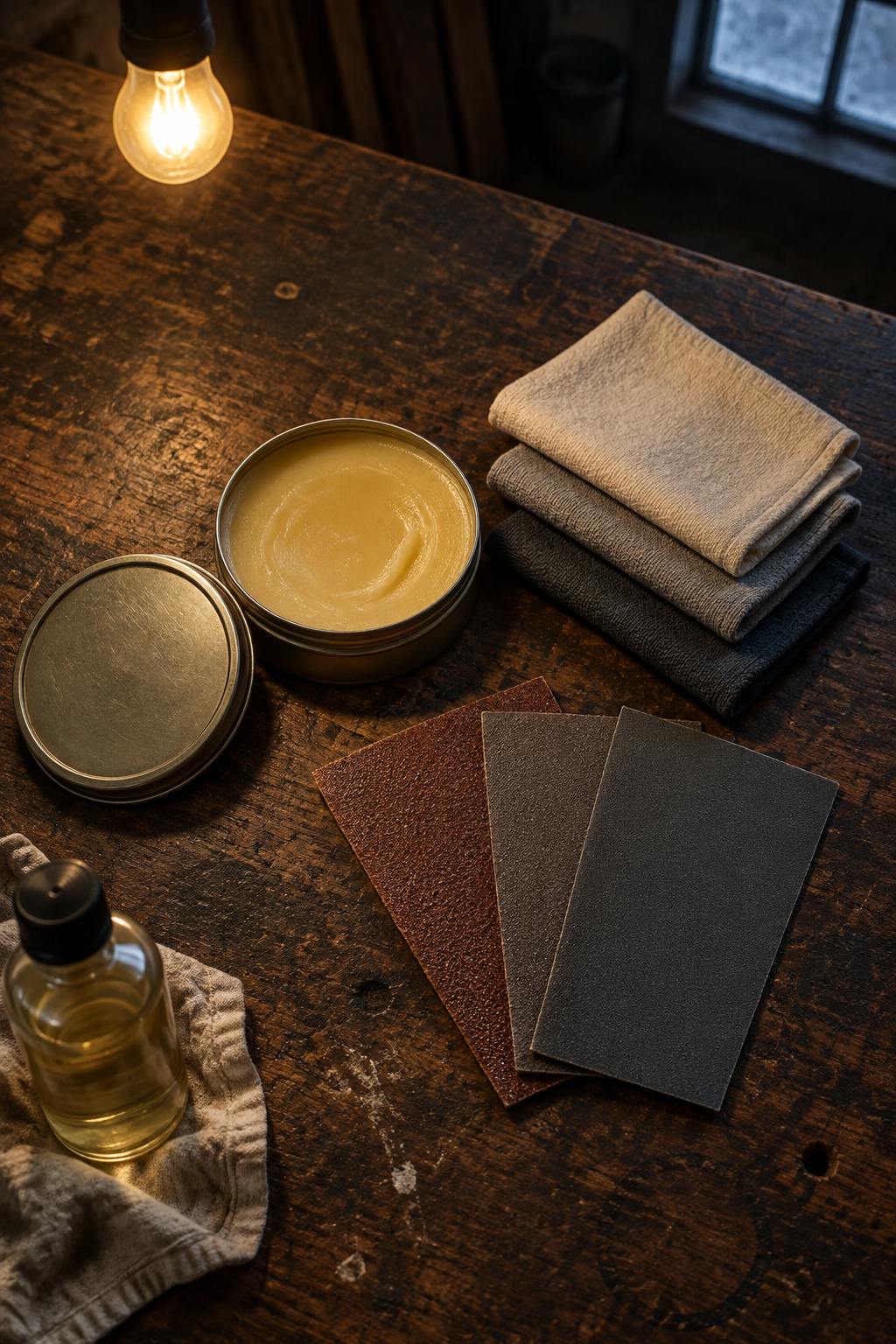
| Soapstone | Nothing to the stone; water and detergent sit on top. It darkens and scratches. | Soap and water. Re-oil when water stops beading. Sand deep scratches with 80, then 120, then 200 grit, and re-oil. | Sealers; strong solvents that strip the oil |
| Hardwax-oiled oak | Beads splashes; marks under standing water | Wipe dry. Use an oil-based cleaner. Sand a damaged patch (about 80, then 120 grit) and apply two coats. | All-purpose, alcohol, alkaline or disinfectant cleaners; acetone |
| Unlacquered brass | Warms to honey with use and wet-dry cycles; green where water sits | Mild soap and water, dried at once. Paste wax twice a year to slow the patina, or an ammonia-free polish to bring it back to bright. | Steel wool, scouring pads, bleach, ammonia, vinegar |
| Iron | Stays a stable dark color when dry; rusts when left damp | Dry cloth. A light coat of microcrystalline or white paste wax, rubbed in and wiped off. | Heavy water; leaving it wet after cleaning |
Advice on re-oiling runs from twice a year to every three or four years, depending on who wrote it and how hard the surface works. I let water decide, not the calendar: if a few drops soak in within 30 seconds, oil that day. Go gently on a thin old top, because every sanding takes wood with it. The iron advice comes from museum conservators, and their main point carries over to a hook by the dryer: wax fails in a damp room, so dry the room first.
Choose the One Old Piece: Salvage That Passes the Laundry Test
The salvage test: stable, finished, away from the tap
Salvage piles up fast: my pickup usually has a salvaged door or two in the back, and the hard part is stopping at one. Do your own pushing, then check the rest:
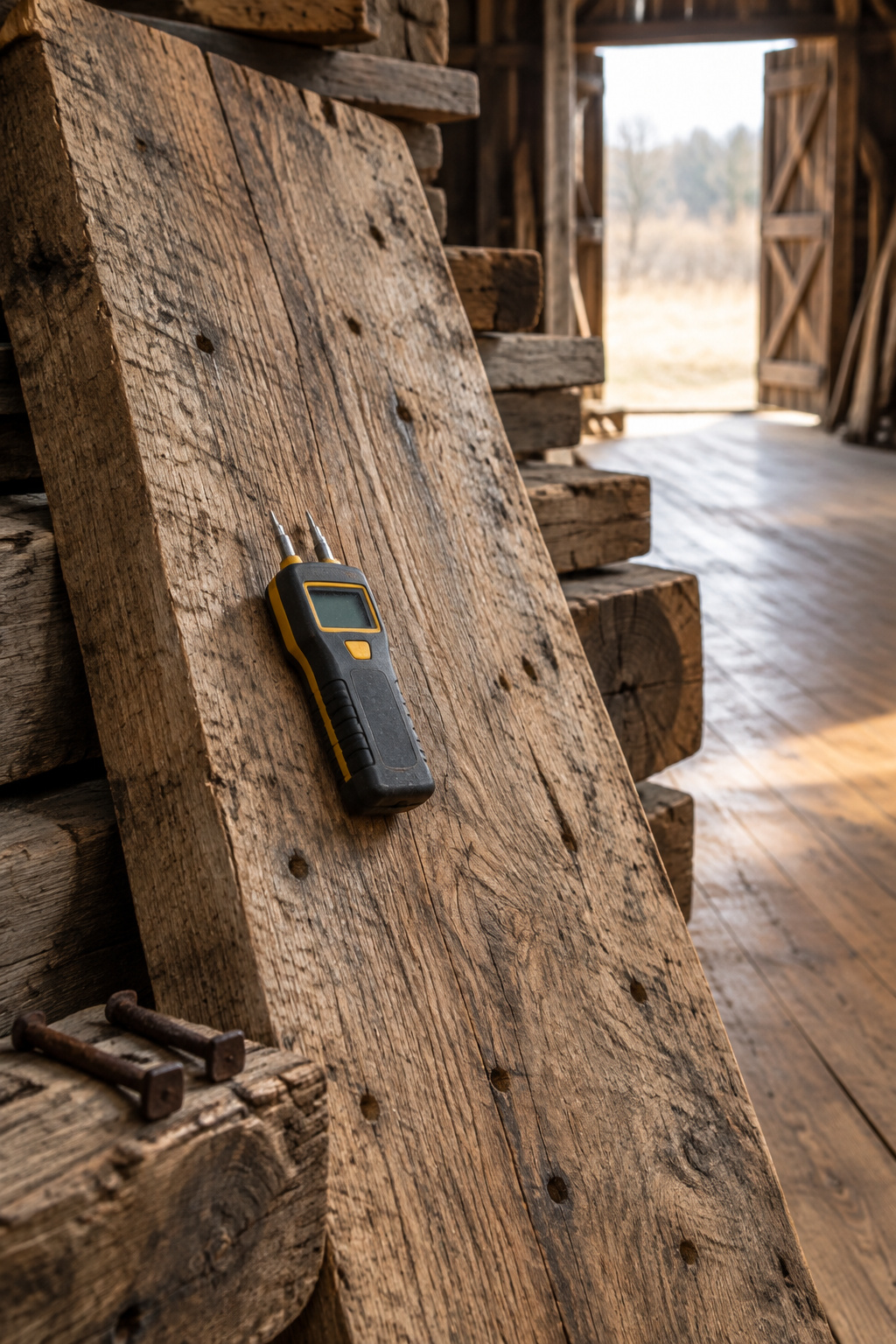
- It is dry. Use a moisture meter, never your eye. The usual interior target is 8 to 12 percent; one reclaimed-lumber dealer wants 6 to 8 for furniture. Let it sit in the room a few days before you work on it.
- It is safe indoors. Painted pieces from before 1978 get a lead test before anyone sands them, and a green tint or oily surface means treated timber.
- It has a finish. Powderpost beetles lay eggs only on bare wood, so an old finish is protection as well as looks.
- It lives away from the tap.
Nobody publishes a distance, so here is my rule of thumb: an arm’s length from the tap and out of the wet basket’s path, where nobody sets a dripping thing down. Raw wood stays off the wettest spot altogether. When a joint needs regluing, I use hide glue, warmed in an old baby-bottle warmer in the carriage house, because it holds the right heat and nobody minds the smell out there. I want whoever owns the piece next to be able to take that joint apart again.
Plain beside old: the wall and floor around the piece
Painted beadboard on the lower wall takes knocks and a damp cloth and gives the piece a quiet field to stand against. The floor should be hard; our laundry room flooring guide covers the choices, and our wood laundry room ideas cover wood in steam. Keep to one rustic material per surface. If the old piece is oak, the shelf above it should not be.
Brass wants the same restraint. Hang unlacquered pieces together so they age together, keep lacquered pieces out of the mix, and if you polish one, polish them all. Washboards, galvanized tubs and the room’s other old objects belong to our vintage laundry room decor guide.
The Rustic Laundry Room You Can Build From One Piece
Go back to the table in the shop. A dealer once told me one was rock solid while he held it still with his hip. A table that stands still under a push on its own, with a sound finish, is enough to make the room. When you’re ready to fit it into planning the whole farmhouse laundry room, the order of decisions there shows what to settle before it comes through the door.
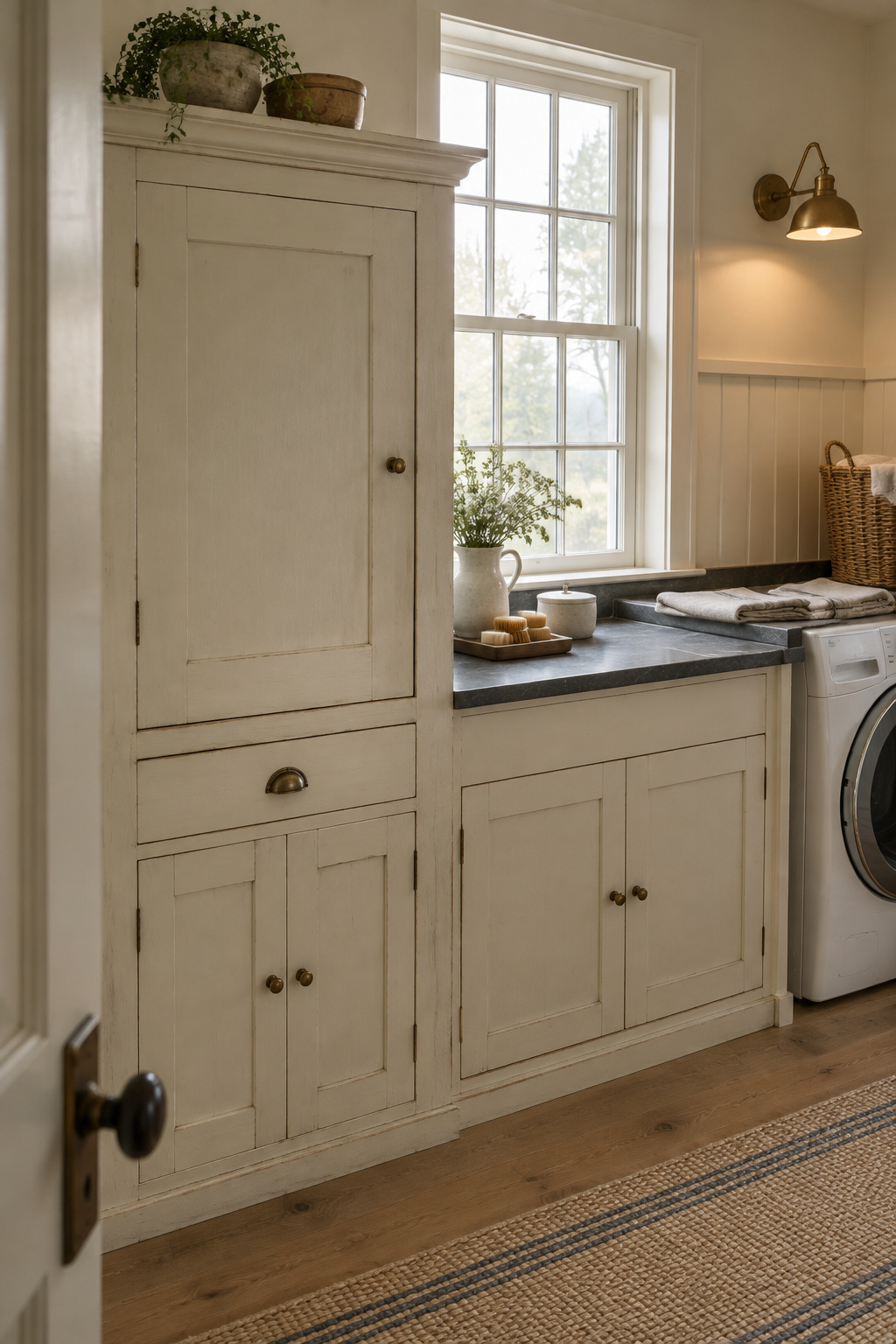
The room that follows is plain: the table against a painted lower wall, an arm’s length from the tap, a soapstone slab on the sill where the wet things land, unlacquered brass hooks going honey, and a rail and a cloth beside the oak.
FAQ
Does a rustic laundry room need an old house to look right?
No. The age comes from the one old piece and from materials that take on age as you use them. New soapstone darkens to its permanent color around the sixth to eighth month of oiling, and unlacquered brass stays bright where it is held and darkens everywhere else. In a new house, the one salvaged piece brings its own age.
How do you clean unlacquered brass without stripping its patina?
Dust it with a soft dry cloth, and when it is dirty wash it with a teaspoon of pH-neutral dish soap in a gallon of warm water, then rinse and dry it at once. Keep steel wool, bleach, ammonia and vinegar away from it. A green spot lifts with an ammonia-free brass polish, wiped dry afterward.
Is reclaimed wood safe to bring into a laundry room?
Yes, once it passes a few checks. Skip anything with a green tint or an oily surface, because that is treated timber meant for outdoors. Fresh, flour-like dust around bore holes means the beetles are active; heating wood to 135 degrees for 30 minutes kills both eggs and insects. Test old paint for lead before anyone sands it.