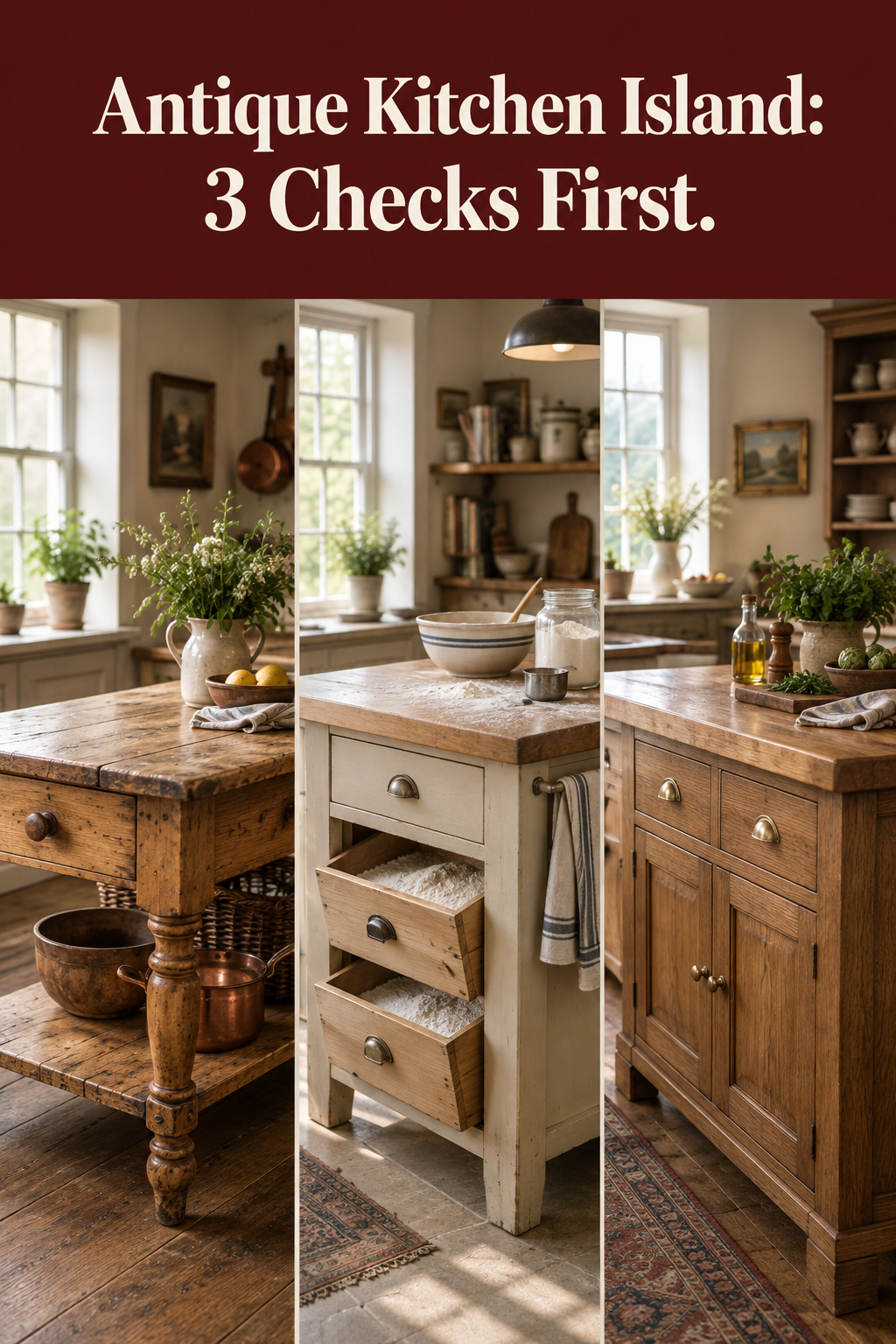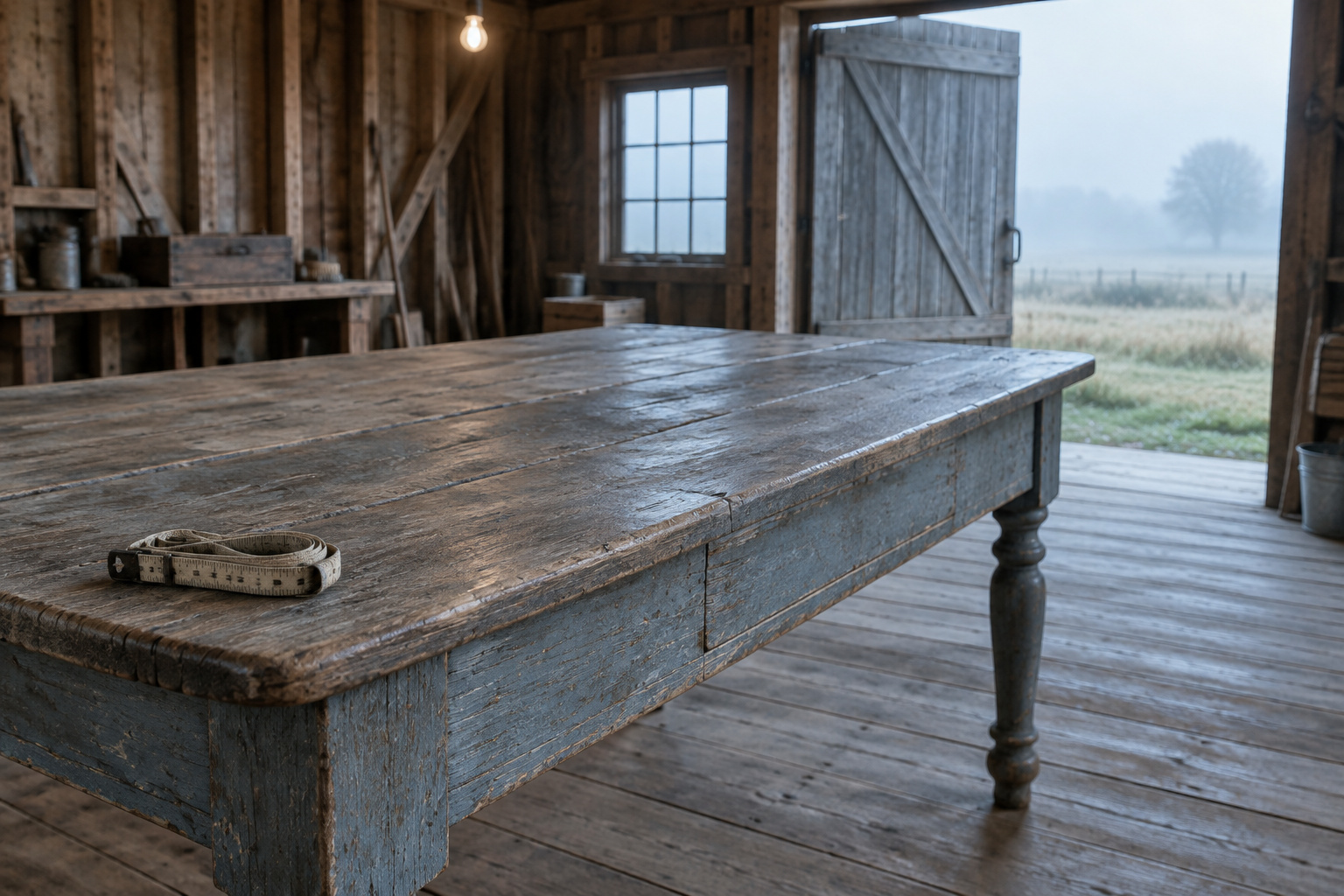

Most old farm tables are the wrong height to be an antique kitchen island, and the makeover photographs never show you the farm table that stayed at dining height, the frame that swayed the first time someone leaned on it to roll pastry, or the green paint on the top that nobody tested before the bread board went down.
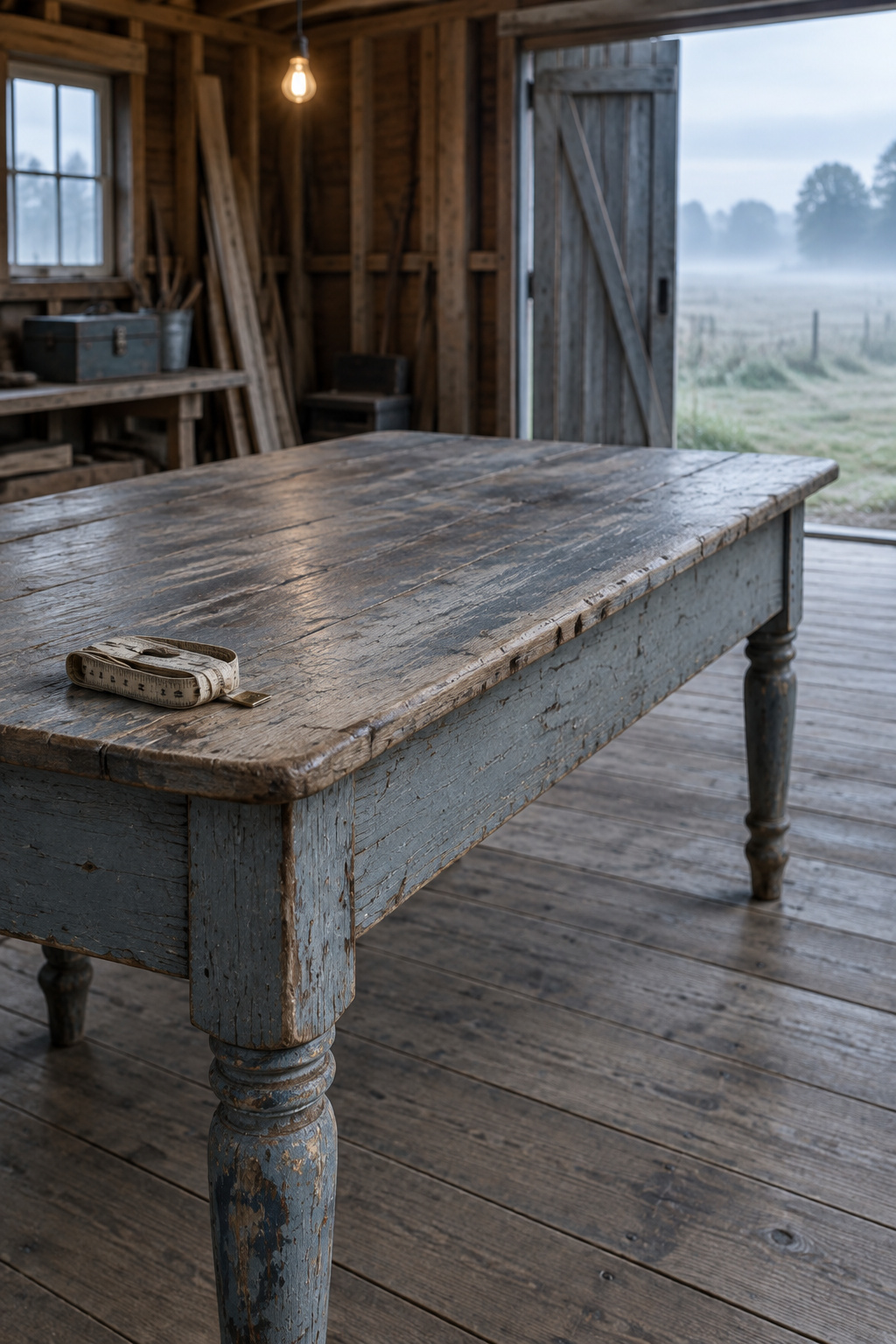
Those three failures decide whether an old piece survives as a working island, and you can find all three in a shop aisle in a few minutes. Anything that passes, or fails in a way you can undo, is worth carrying home.
TL;DR
- Measure the gap to your own counter first. On one dealer’s page, 19 of 25 old farm and work tables stood 28 to 31 in high, with a median of 30.13 in, so most need raising about 6 in.
- Push the piece sideways at counter height. If the top shifts against the legs, the joints are loose, which is usually a repair with braces or glue blocks, not a reason to walk.
- Treat any painted top from before 1978 as lead until a swab says otherwise, never sand it, and cover it with a separate food-safe top instead of stripping it.
An Antique Kitchen Island Starts as a Working Table, Not a Showpiece
A baker’s table in the Museum London collection in Ontario has two big pull-out flour bins, two utensil drawers and deep wooden aprons. The museum’s label says those aprons show it was purely a work surface, and pieces like that get my first look.
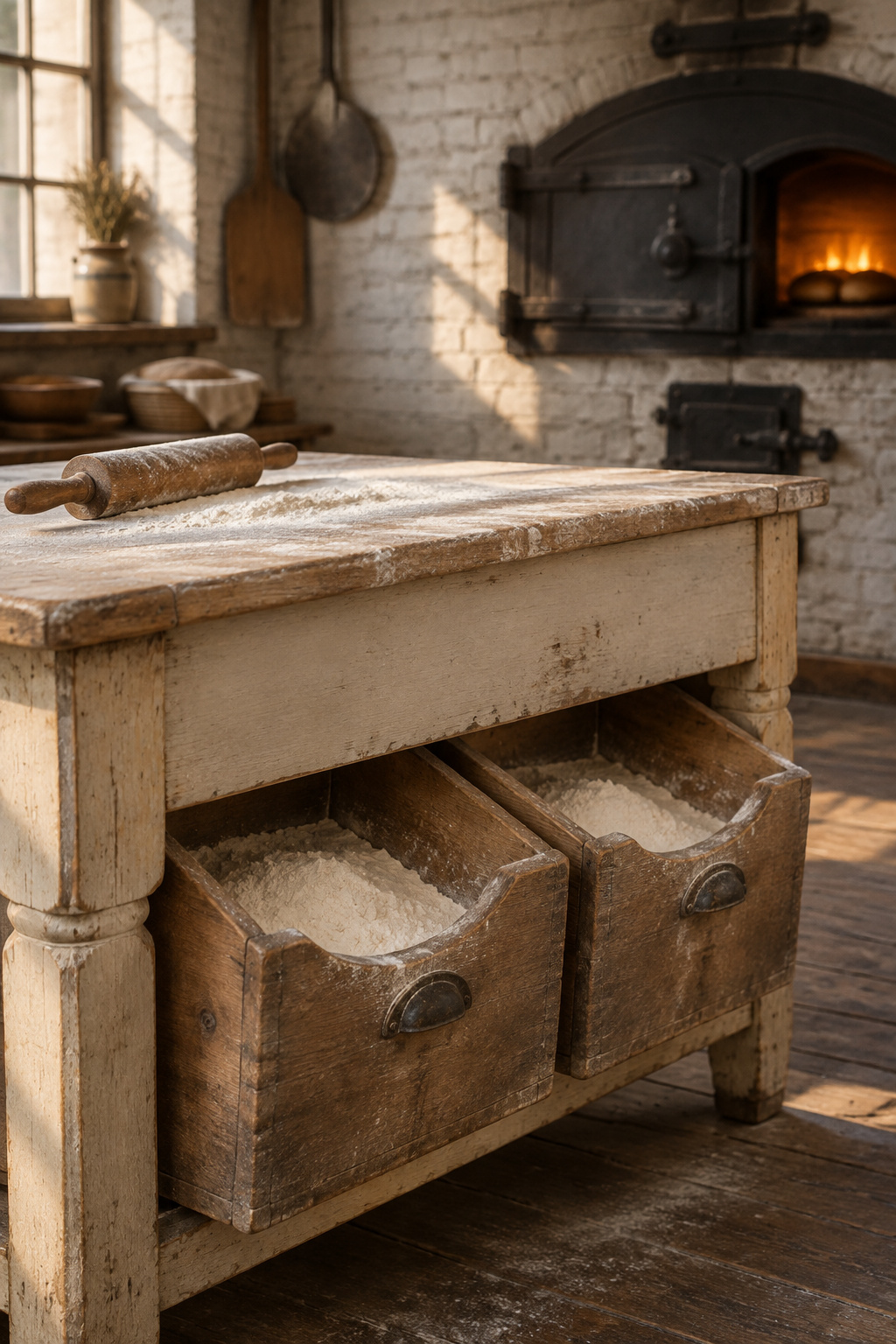
The Welsh dresser has a similar past: its lower cupboards were for preparing food long before it became a stand for crockery. Dealers now list baker’s tables, butcher’s blocks and farm tables by name as kitchen islands, so the farm table as kitchen island is already a trade category. Don’t assume a trade table stands tall, though. A scrub-top baker’s table sold at auction this April stood just 20.5 in.
Pass by delicate dining tables and veneered pieces. A piece over 100 years old in its original finish is worth more left alone, while solid-wood factory furniture from the 1850s to the 1960s can take careful refinishing. Old isn’t the same as original, and a reversible fix is how you keep the original. For the bigger picture of what makes an island read as farmhouse, legs and an open base count for as much as the age of the wood.
Three Checks to Run in the Shop
Bring a tape measure, a lead swab kit and a magnet. Leave the romance in the car.
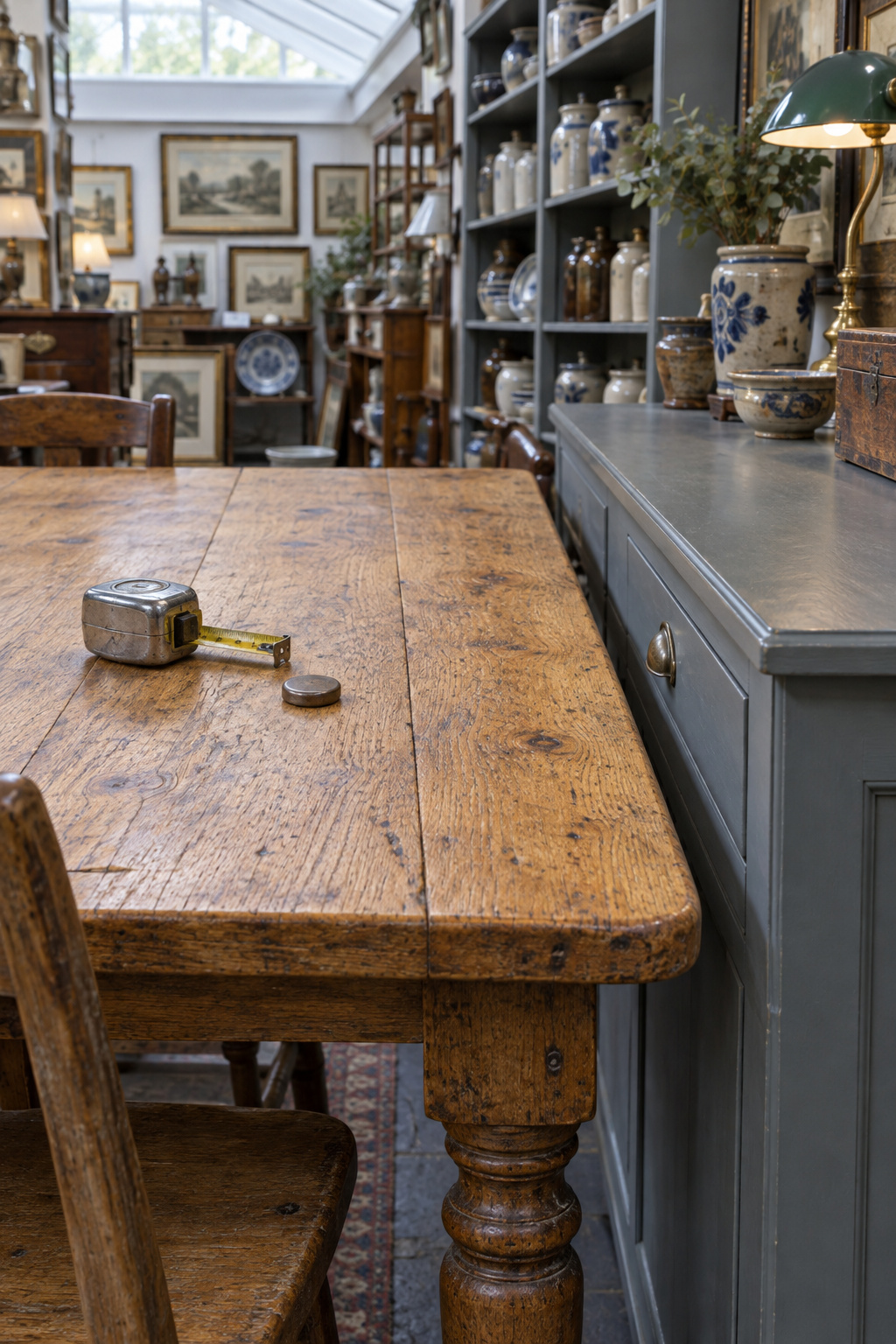
Height comes first, measured as the gap to your own counter. On one specialist dealer’s farm-table page, 19 of 25 tables stood 28 to 31 in high, the median was 30.13 in, and none reached counter height. Against a standard 36-inch counter, that median leaves a gap of about 6 in. Purpose-built work tables run higher, at 32 to 34 in, so they need a smaller raise or none.
Then try to rack it. A table that rocks on a flat floor has a short leg. A table whose top shifts when you push it from the side has loose joints or too little bracing between the legs, and that is the one that matters at an island. As Robert W. Lang put it, table legs make excellent levers if nothing supports them near the bottom, and a counter-height push is a longer lever than any diner ever used. Nobody publishes a push force or a pass mark for an old table, so lean on it the way you would over a cutting board and watch whether the top moves against the legs.
Last, the paint. Assume any painted piece made before 1978 contains lead until a test says otherwise; that is when lead paint was banned on new furniture. Cut a small notch through every layer to bare wood before you swab, because testing only the top coat is the usual cause of a false all-clear. The magnet is my own habit, a quick way to tell whether a metal edge band is ferrous.
| Check | What you do | Pass | Fix or walk |
|---|---|---|---|
| Height | Measure floor to top, subtract from your own counter | A gap risers can close (1 to 6 in) | Bigger gap: plinth, or keep it at table height with chairs |
| Racking | Push the top sideways at counter height | Top stays put against the legs | Sway: tighten braces, add glue blocks, reglue. Skewed frame you can’t square: walk |
| Paint | Notch through every layer, swab for 30 seconds | No pink or red | Pink or red: don’t sand, cover it. Won’t cover it: walk |
Steady It, Then Raise It, Without Doing Anything the Next Owner Can’t Undo
Steady first, then raise. Height lifts the center of gravity and puts more leverage on the leg joints, so a loose frame only gets looser.
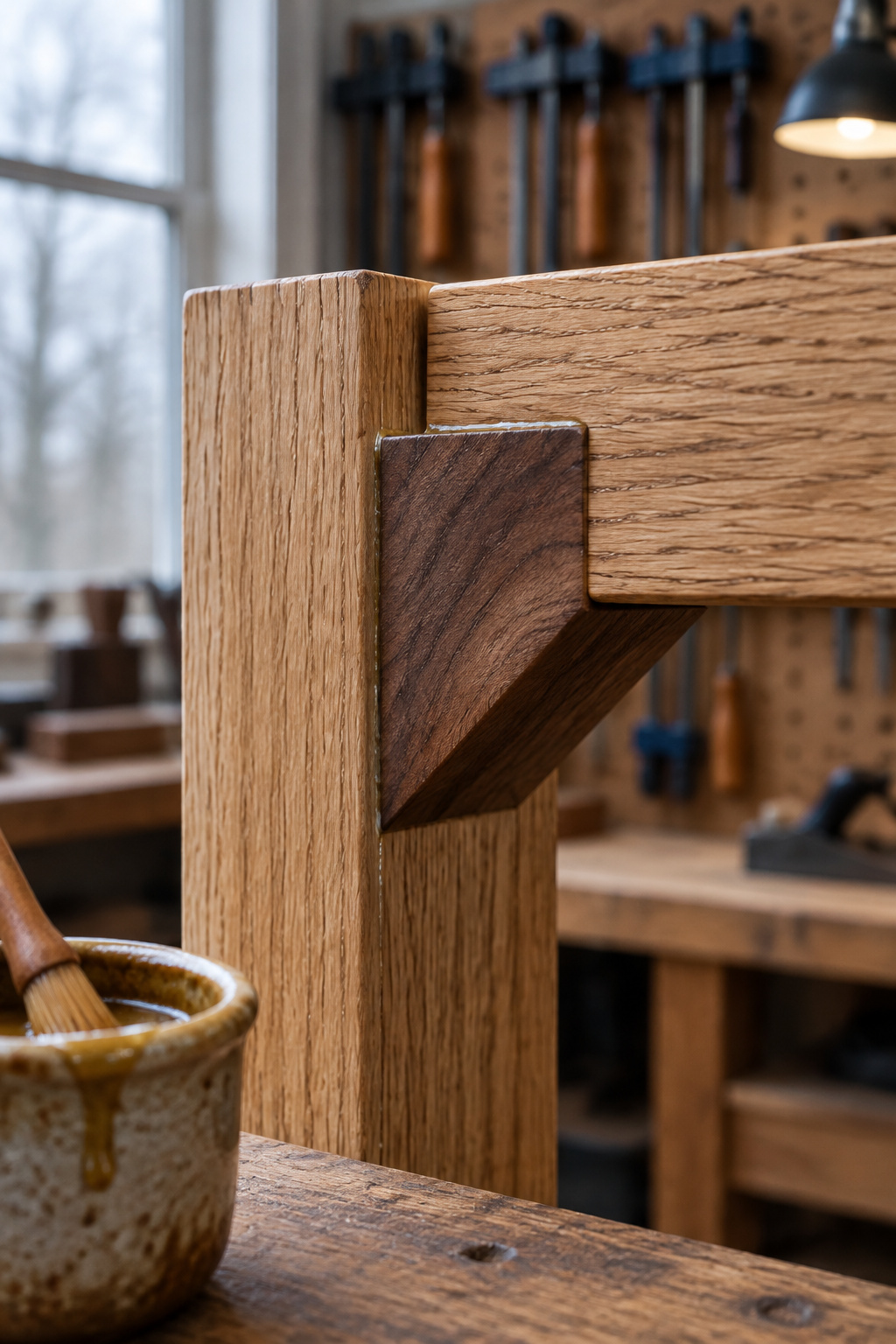
Raising a low piece without cutting it
Cup-style risers that hold the foot of each leg will lift a table one to six inches, and because the leg is untouched they come off whenever you like. Check the label’s rating. A 2 in riser set costs $14.99 for four, but it isn’t made for an antique leg, and 6 in less 2 in still leaves 4 in missing. A plinth, a low wooden frame the legs stand in, closes part of the gap and touches nothing. Bun feet have to be drilled into the leg, so they don’t count.
You can also leave it alone. A table kept at dining height takes ordinary chairs, which suit homework and long meals. Chairs, stools and knee room are worked out in detail under seating at a table-height island.
Steadying a loose frame, and why you repair before you reject
A client of mine was once quoted for vinyl replacement windows. I reglazed and weatherstripped one sash as a test, and the client kept all twelve originals. A loose frame is a repair until it proves otherwise.
Start with the least invasive fix. Many tables have diagonal braces across the inside corners, held by a bolt or two screws. Tighten them and the legs often pull back against the apron. If a joint can be drawn tight but not taken apart, glue blocks into the corners with hide glue, much as the original maker would have. Hide glue is the reversible choice, because heat and water undo it, though the same heat and moisture can mark a finish, so go gently near paint you want to keep.
I won’t drive a screw through an apron to stop movement, which can split old timber, or inject epoxy, which leaves a joint nobody can take apart again. Tape a slip of paper inside the apron instead, saying what you glued and when.
Keep the Old Paint, Cover It With a Food-Safe Top
New work should be honest about being new, and the top of an old painted island is where you can prove it.
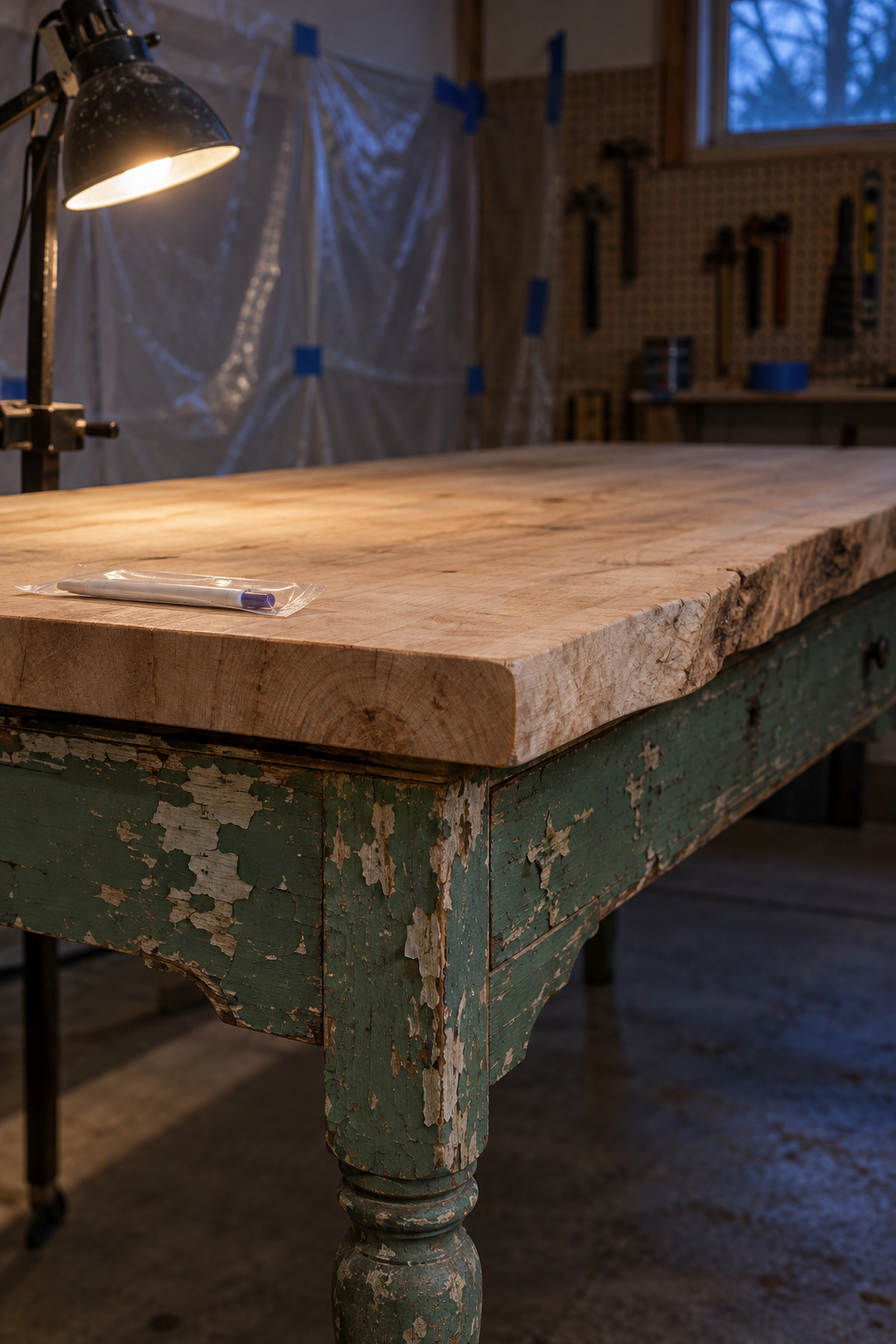
Test the paint before you sand or scrape
Intact lead paint that isn’t on a friction surface is usually not a hazard, according to the booklet EPA, CPSC and HUD publish together. A worktop is a friction surface every day, which is the case for covering the paint rather than stripping it. Stripping can push lead deeper into the wood. Wrap an untested piece in plastic sheeting for the drive home.
A swab tells you whether lead is there, not how much. EPA’s lead-safe practices for do-it-yourself owners make a sensible guide for any work you do on it: no open flame, no unshrouded power sanding and no heat gun above 1100°F.
Put a separate top over what is left
My preference is a separate top, a wood slab that rests on the old one or is fastened so it can move. Food and knives never meet the paint, and lift the slab off and the piece is as you found it. Don’t make that slab look old. A plain new board on a worn base looks right, and sanding through fresh paint to fake wear is a costume.
Fix a solid top so it can move with the seasons. Wood shifts about 3/16 in for every foot of width, so a 24 in wide top moves about 3/8 in, and one screwed down tight can crack. Z-clips allow for it, at the cost of small screws into the apron, the one mark you will leave behind.
Any film-forming finish chosen for durability is fine on a top you don’t cut on. The usual guideline is 30 days of cure before food goes on it; the 24 or 48 hours on the can is about hardness. Skip olive and vegetable oil, which go rancid. If the top you are dealing with is veneer that needs refinishing rather than covering, decorfull’s guide to refinishing a veneer dining table walks through it.
Where to Find an Antique Island Piece, and What It Should Cost
Island pieces turn up in two markets, specialist dealers and regional auctions.
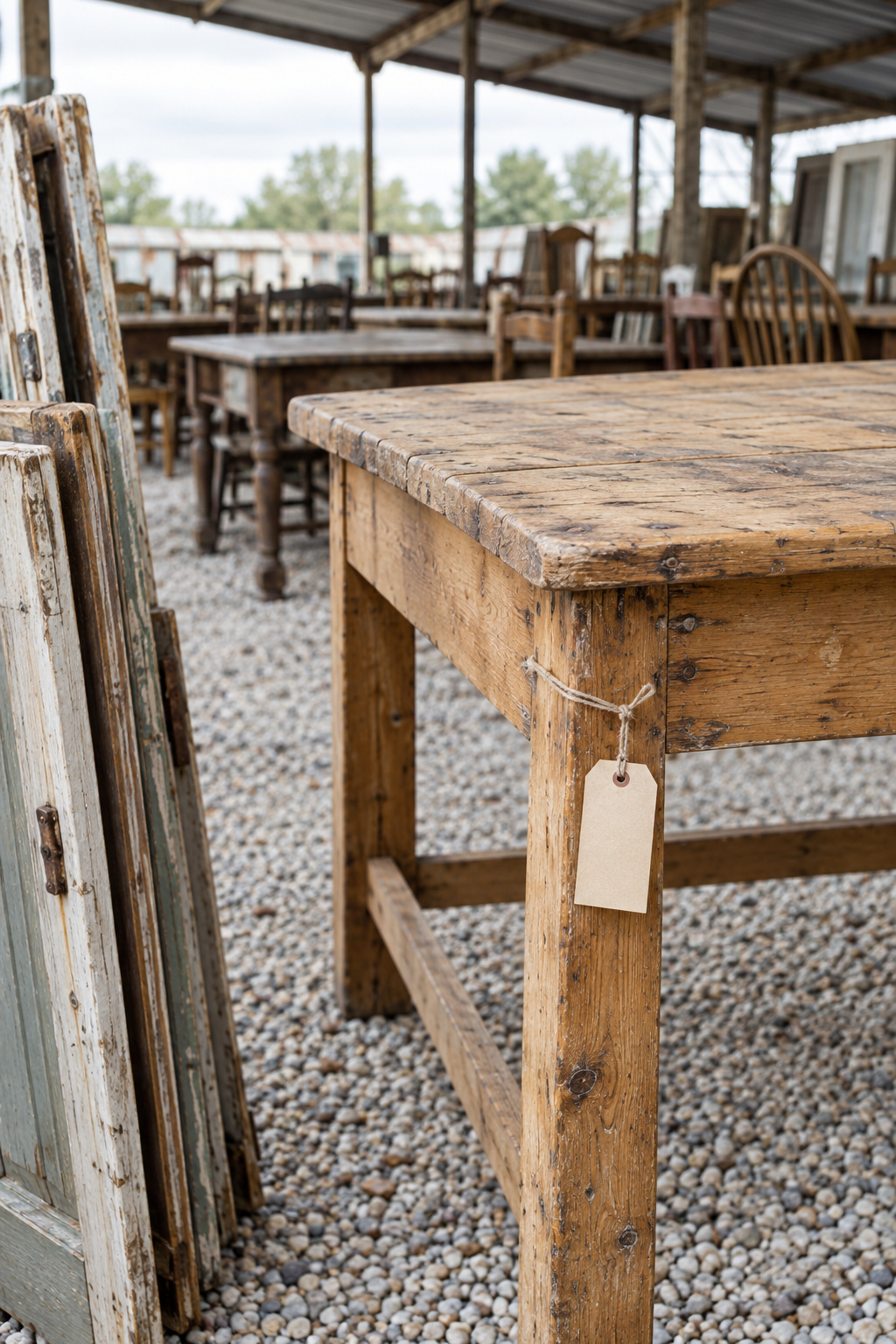
On one specialist dealer’s page of 25 farm and work tables, the middle half ran from $4,995 to $8,500. Regional auctions in 2026 sold plain pine tables for $320 to $2,000, as-is, with your own pickup and a buyer’s premium that varies by house, 21% at one.
Dressers and salvage-yard pieces have no reliable price survey, so budget from the figures below, and count the pickup, the raise and the top as well as the piece.
| Source | Price | What to expect |
|---|---|---|
| Specialist dealer, farm or work table | $3,500 to $25,000 (median $5,885) | Dimensions listed, dealer’s margin included |
| Dealer, purpose-built work piece | $4,250 to $9,800 | 32 to 34 in high; the $9,800 one has eight drawers |
| Regional auction, plain pine table | $320 to $2,000 | Sold as-is, buyer’s premium varies, your own pickup |
| Dealer, buffet | $1,995 (one dated listing) | French oak, about 32 in high |
| Riser set, 2 in | $14.99 for four | Closes 2 in of the gap |
A plain worktable has no drawers. If you need storage, look into adding drawers to an island before you pay a premium for a piece that already has them.
Take Home an Antique Kitchen Island You Can Still Undo
In the aisle, the checks sort a piece like this:
- Yes: a gap risers can close, no sway when you push, and paint that swabs clean or a top you will cover.
- Yes, with fixes: sway you can steady with braces or glue blocks, or a gap big enough to need a plinth.
- Walk away: a base whose diagonals don’t match and won’t come square, a painted top you won’t cover, or an original-finish antique the fix would change for good.
The most reversible version is a plain pine table from a regional auction, risers or a plinth, and a loose board laid on top. Every part of it lifts off, and the table’s next steward gets back exactly what you bought. Push it, swab it, and wrap it in plastic before it goes in the truck.
FAQ
Does turning an antique into a kitchen island ruin its value?
Not if you can undo it. Painting a genuine antique destroys value; in one example a piece fell from $1,250 to $50. Risers, a plinth and a loose top leave the original surface alone. Bob Flexner argues that careful refinishing rarely hurts value, but on a piece over 100 years old in original finish, I’d still leave it.
Should you bolt an antique kitchen island to the floor?
I leave a heavy table without drawers freestanding, because a movable piece should be stable on its own. A dresser is different: loaded drawers shift its weight. CPSC counted 234 clothing-storage tip-over deaths from 2000 to April 2022, 199 of them children, and antiques predate the newer tip-over rule. I’d fix a dresser with a reversible cleat or L-brackets.
How do you get a heavy antique table through a narrow kitchen doorway?
Take it apart. Measure the piece, its diagonal and the doorway’s clear width. Lift the door off its hinge pins, which gains an inch or two by some movers’ counts and two to three inches by others. Remove the top, legs and drawers, bag the hardware with the piece, and tilt it through on the diagonal.