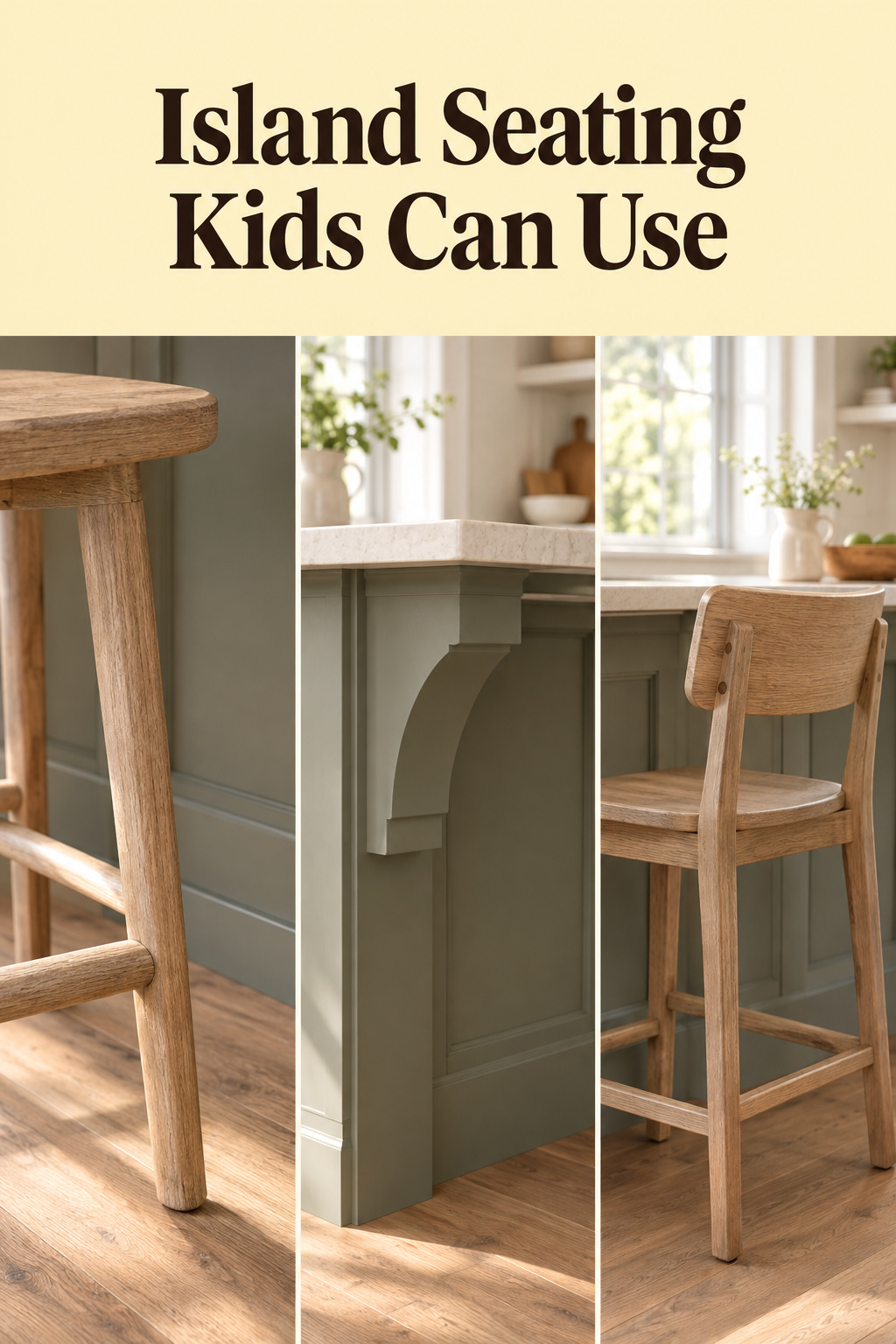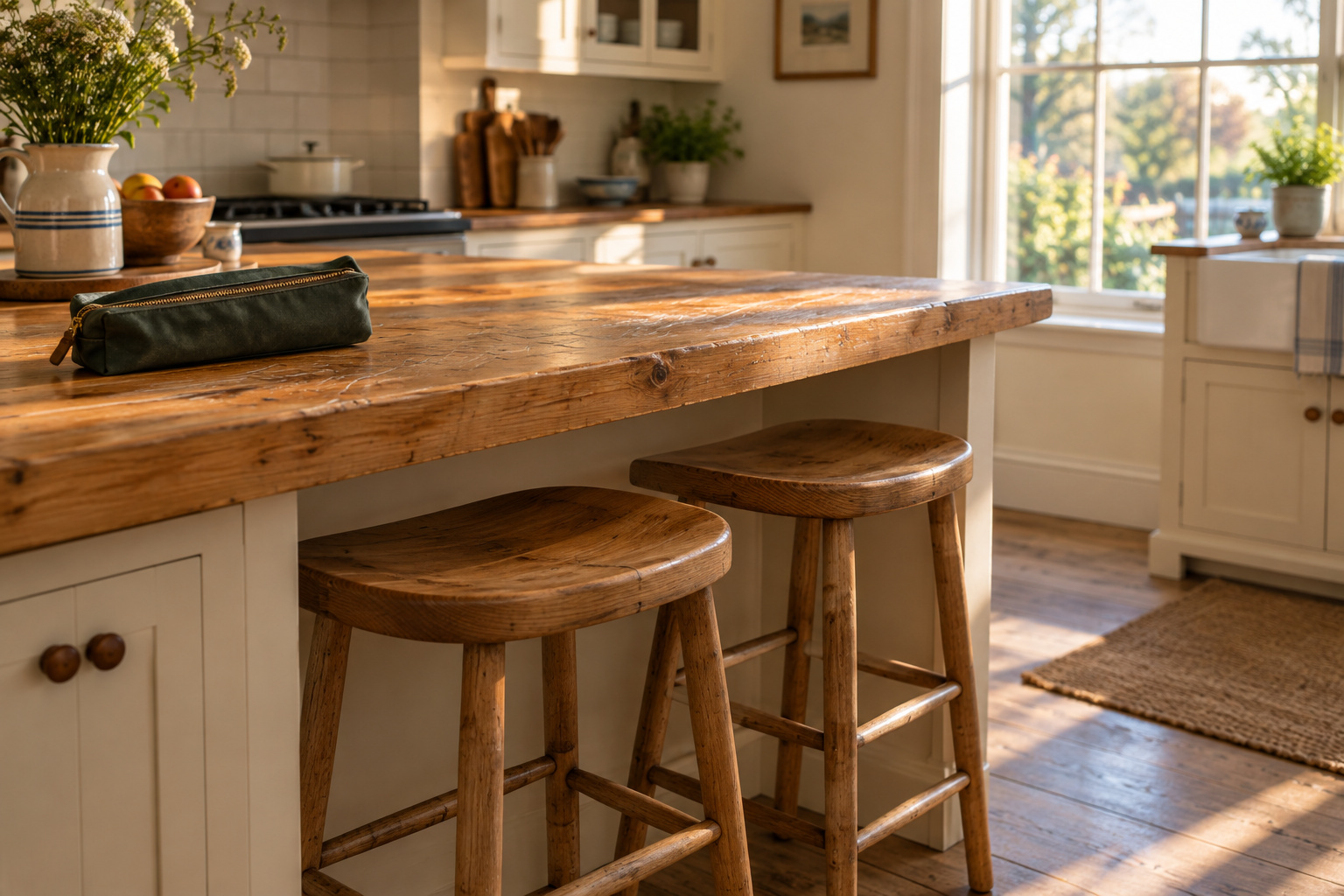
Watch from the floor. A small sneaker scuffs down the stool leg, hunting for something to push against. It finds the footrest ring, which sits too high, slips off the cold metal, and swings in the air. Two hands grip the seat edge. A knee lands on the cushion, then the other one, and now your kid is kneeling at the counter with a pencil, rocking a little every time she reaches for the eraser.
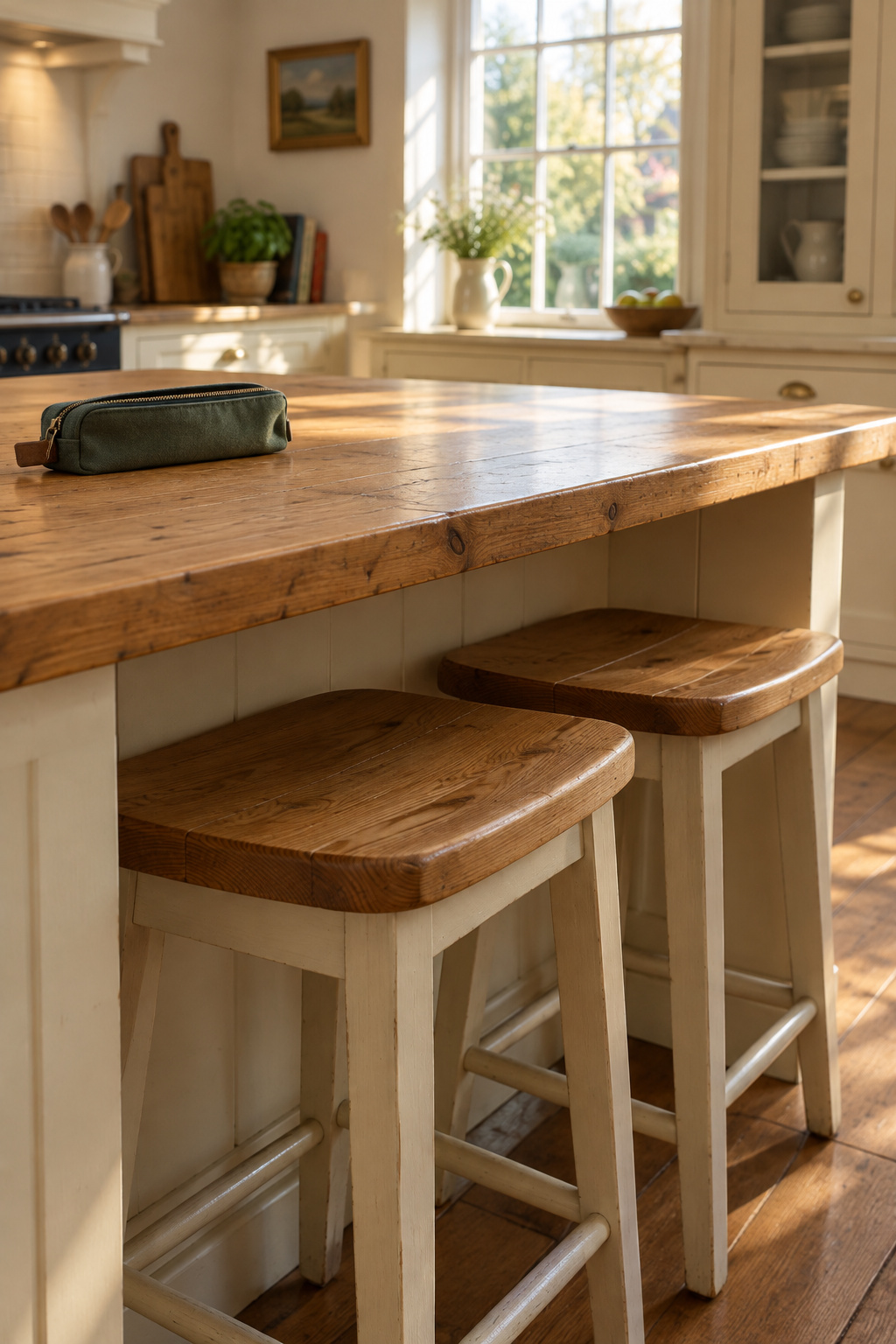
That’s a kitchen island with seating seen from a child’s height. The island has the right number of seats on paper, but the stools were sized for an adult, and the child who climbs up with a worksheet slides off, kneels or wanders away.
Plan the seats from the child’s foot up instead: how many the knee space allows, what holds the overhang, which height, and which stool.
TL;DR
- Count seats from knee space: NKBA asks for 24 in of width and 15 in of knee depth per person at a 36 in counter, so a 96 in seating side holds four seats at 24 in each and three at a roomier 30 in.
- A 15 in overhang is longer than stone can safely carry on its own (10 in for 3 cm natural stone, 12 or 15 in for quartz depending on the fabricator), so plan corbels, brackets or legs under it.
- Choose a counter-height stool (24–26 in seat) with a back that reaches the mid-back and a heavy footrest about 9–11 in off the floor, so a child’s knees sit near a right angle.
Start With the Child’s Foot: Why Island Stools Fail Kids
A child whose feet dangle is spending her attention on staying upright. With nothing under her feet, her base of support shrinks, and the effort that should go into the worksheet goes into holding posture. So she wriggles, kneels, or leaves.
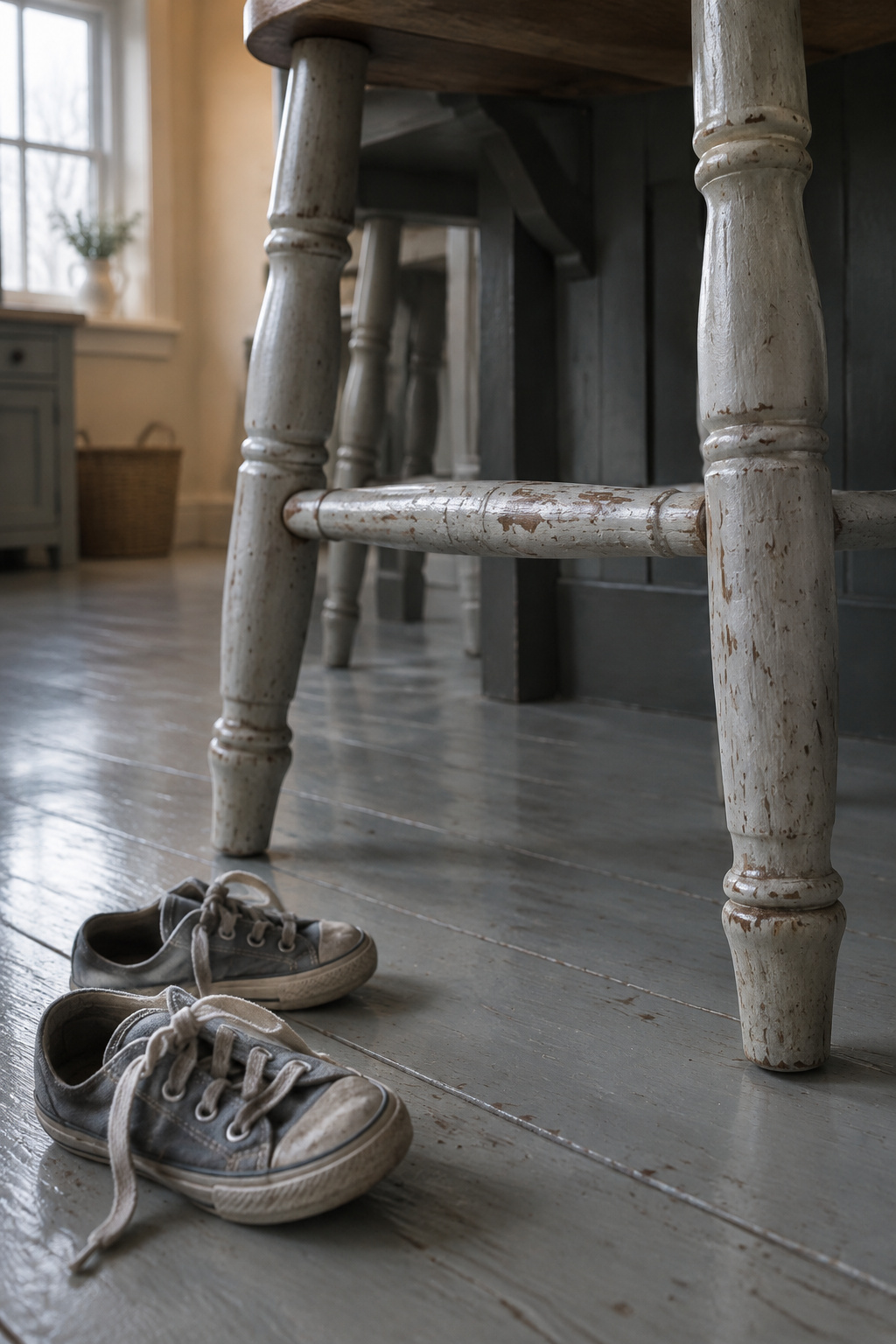
A small Cornell study of toddlers at an adult-height table found the same thing from the other side. With a footrest, they fidgeted far less (1.6 movements in three minutes against 4.4 without) and reached about 3.8 in further. Nobody has tested whether a footrest or a back keeps a child on an island stool, and nobody counts injuries from island stools as their own category.
The nearest numbers come from high chairs and chairs. Among US children aged 3 and under treated in emergency departments, falling caused 92.8% of high chair injuries and 87.3% of chair injuries, and where anyone recorded what the child was doing first, two-thirds were climbing or standing. A high chair at least has a harness to buckle, and an island stool doesn’t.
I keep a step stool in every room with a high shelf, and I started after my younger one climbed the pantry shelves. Kids will reach for things regardless, and they will climb the island stool too. So the design question is whether the climb is safe, and whether the seat is worth staying in once she’s up.
Kitchen Island With Seating: Count Seats From Knee Space, Not Stools
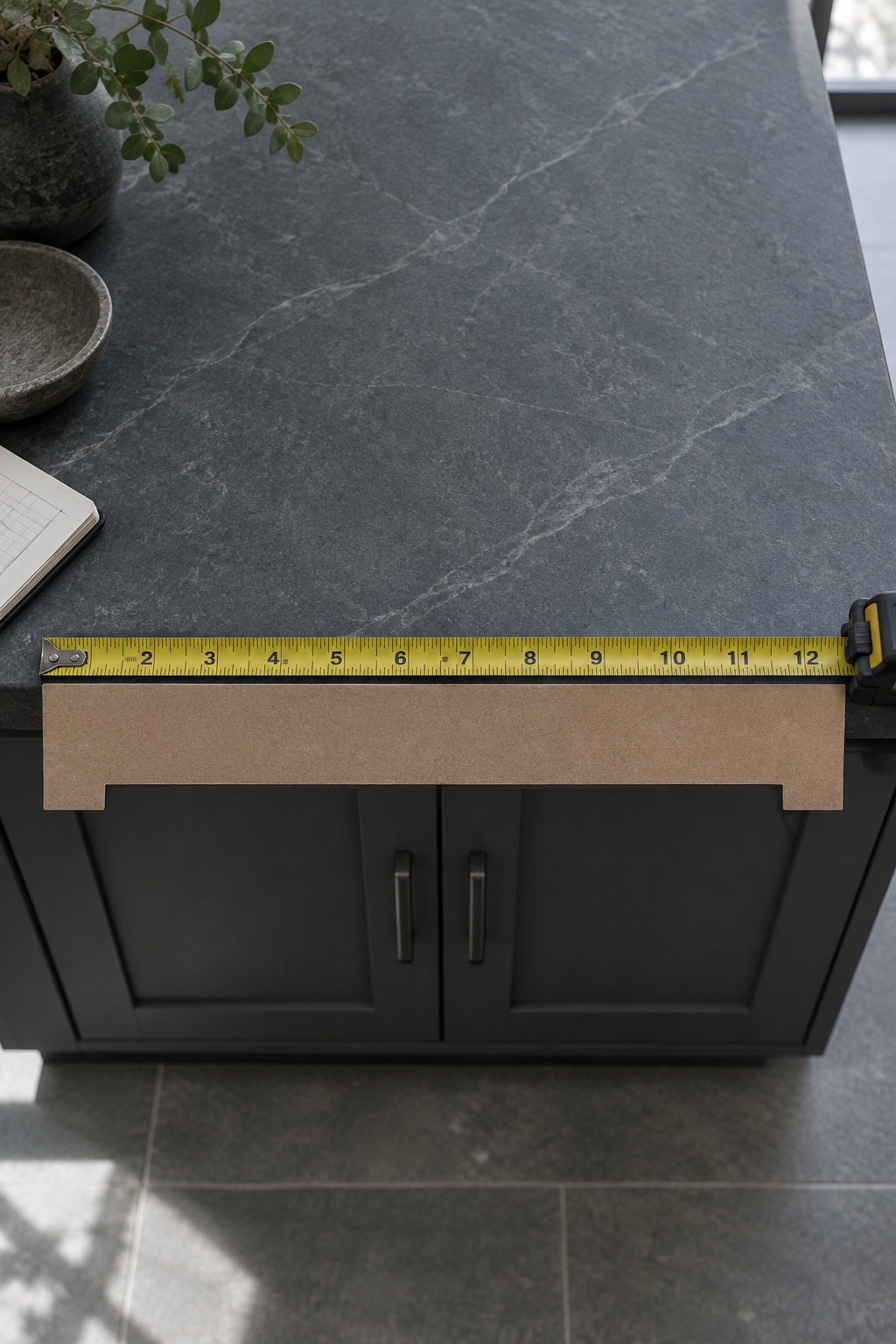
Measure knees before you shop. The National Kitchen & Bath Association gives each seated person a knee space 24 in wide, and the depth shrinks as the surface rises.
| Surface height | Knee space per person (NKBA) | Typical seat height | Width per seat |
|---|---|---|---|
| 30 in table end | 24 in wide × 18 in deep | 17–19 in chair | 24 in minimum |
| 36 in counter | 24 in wide × 15 in deep | 24–26 in counter stool | 24 in minimum, 24–30 in comfortable |
| 42 in bar | 24 in wide × 12 in deep | 28–30 in bar stool | 24 in minimum, 24–30 in comfortable |
| Stools with arms | same as the row above | counter or bar stool with arms | 28–32 in |
The count follows from the width. A 72 in seating side holds three seats at 24 in and two at 30 in (72 ÷ 30 is 2.4, and nobody sits on 0.4 of a seat). A 96 in side holds four at 24 in, or three at 30 in.
I’d plan a family island at the wider figure. Twenty-four inches is the bare minimum per seat, and two kids doing homework shoulder to shoulder at 24 in will spend the afternoon negotiating borders. Count only the run that’s actually free, too, because a corbel, a leg or an appliance can take a seat out of the line.
The seats only fit if the island leaves room to move around it, so start with measuring the aisles around an island.
Overhang and Support: What Holds When a Child Leans, Kicks or Climbs
Knee space and overhang are the same measurement. If NKBA wants 15 in of knee depth at a 36 in counter, the top has to stick out 15 in past the cabinet face. Some guides say 12 in is enough for knees, which leaves a seated adult 3 in short, and a child pushed back from the edge with her homework.
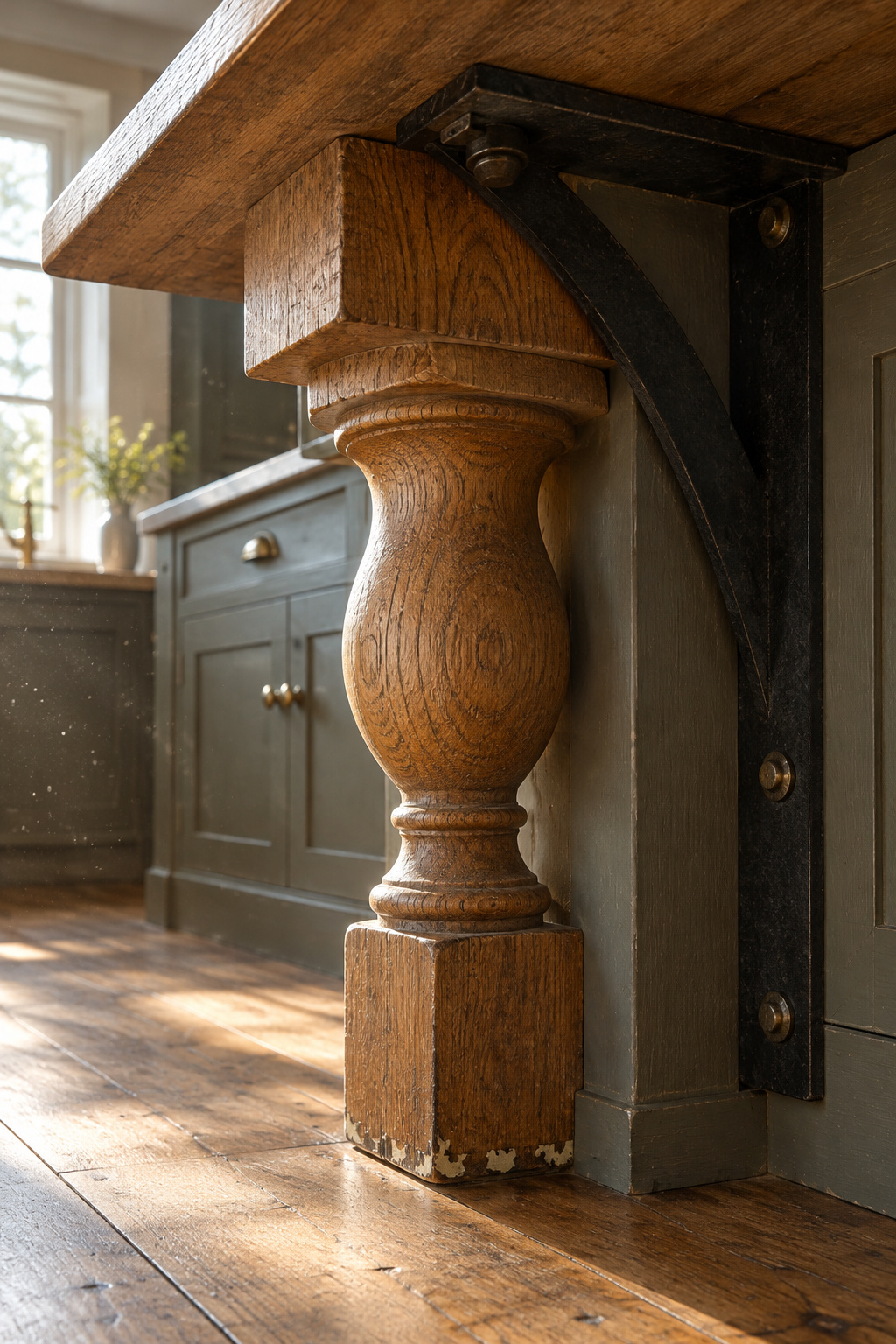
That 15 in is longer than most stone will carry unsupported:
| Top material | Unsupported overhang limit |
|---|---|
| 2 cm natural stone | 6 in (Marble Institute of America) |
| 3 cm natural stone | 10 in (Marble Institute of America) |
| 2–3 cm quartz | 12 in (some fabricators) |
| 2–3 cm quartz | 15 in (another fabricator) |
The quartz rows are two answers to the same question, and your fabricator’s is the one that counts. Either way, a 15 in overhang runs 5 in past the stone limit and 3 in past the 12 in quartz figure. There’s a second check as well: the unsupported part shouldn’t be more than one third of the top’s depth. A 24 in cabinet plus a 15 in overhang makes a 39 in top, and 15 ÷ 39 is 38.5%. That passes only on a top at least 45 in deep.
So a stone island built for real knee space needs support underneath: corbels, steel brackets set a few inches back from the edge where they disappear, or legs.
Stone guides point out that bouncing and sudden sitting do more damage than a steady weight, which describes a child climbing up or hanging off the edge to swing her feet. Turned legs and chunky corbels are also where a farmhouse island gets its character, and you’ll find those styles among the farmhouse island ideas.
Counter Height or Bar Height: Who the Height Shuts Out
Pick the height by asking who can’t get up. Counter stools usually have a 24–26 in seat for a 36 in counter, and bar stools 28–30 in for a 42 in bar. Those pairings are trade convention, since no standards body publishes a stool seat height, but the guides agree on them.
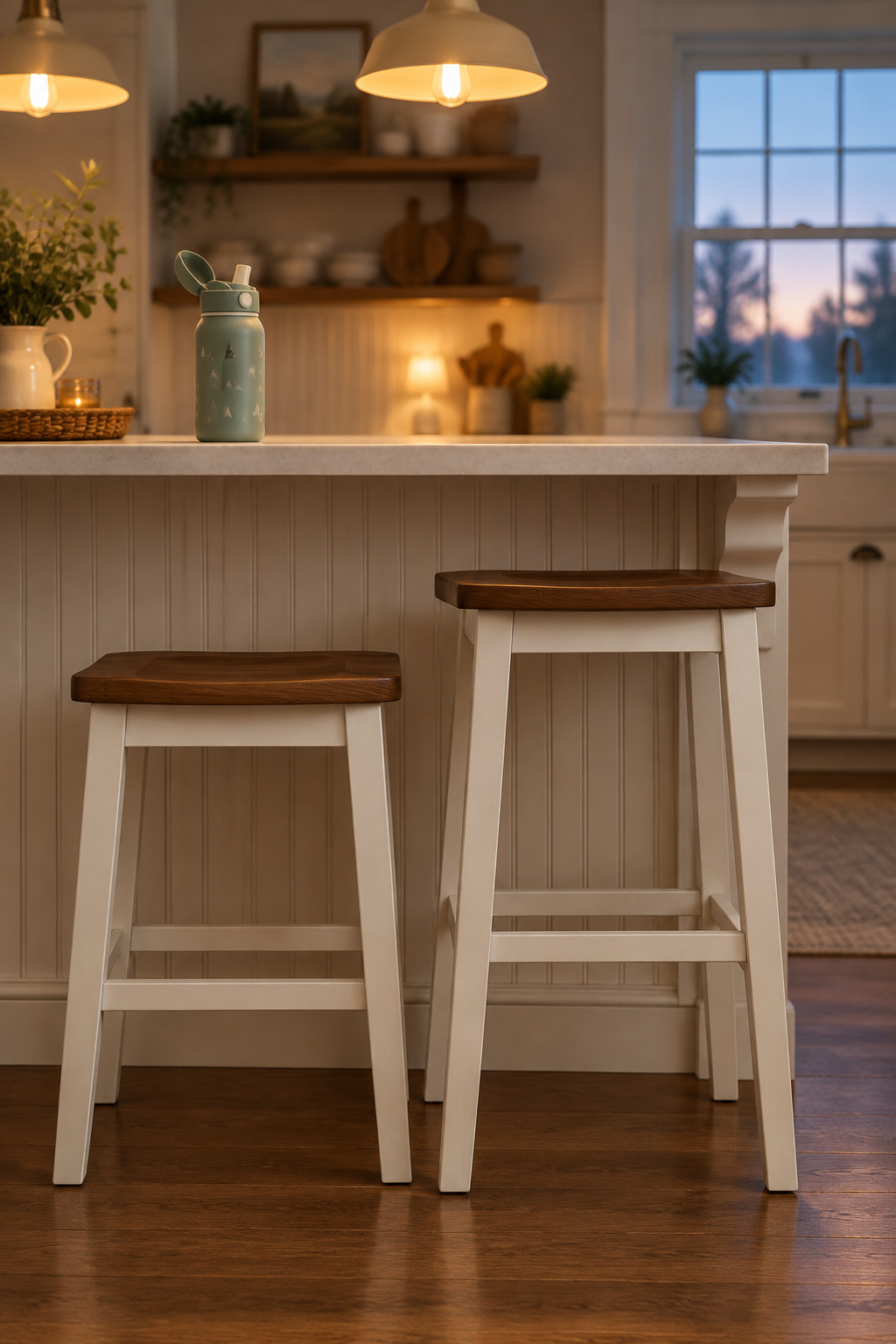
For a child, the gap to the floor is the problem. Trade guides put a child under seven’s feet-flat seat height at roughly 14–16 in. On a counter stool her feet hang 8–12 in off the floor (24 − 16 and 26 − 14). On a bar stool they hang 12–16 in. That’s four more inches to climb and four more to fall.
Height shuts out adults as well. NKBA’s accessible seating range runs 28–34 in high, so a 36 in counter sits 2 in above it and a 42 in bar 8 in above. A grandparent with a stiff knee gets the same message the six-year-old gets. Counter height keeps more of the family at the island, and a dropped 30 in table end keeps even more.
When you shop, read the seat height, not the overall height, and measure your counter to its underside.
Backs, Footrests and Swivel: Choosing the Stool for the Child Who Stays
My test for any stool is the one I use for storage: can a tired kid do it? Picture her at four in the afternoon, climbing on and off without help.
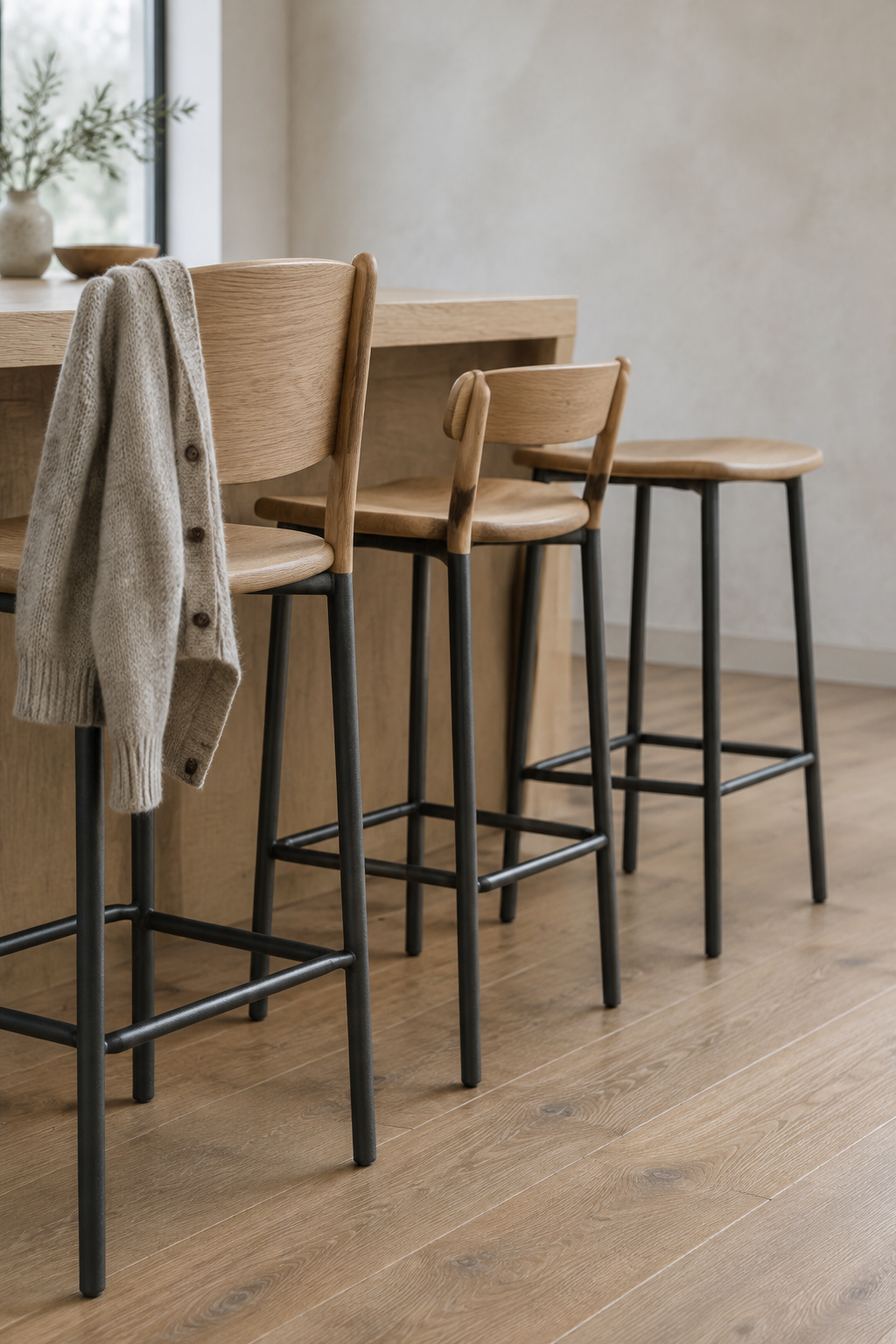
The back comes first. An NHS children’s occupational therapy team lists a full backrest, and a stool back that meets the middle of her back lets her lean instead of hunching.
Next comes a heavy footrest that can’t be kicked away. Put it where her feet land: with a 25 in seat and a child’s feet-flat seat height of 14–16 in, the footrest wants to sit 9–11 in off the floor (25 − 16 = 9, 25 − 14 = 11). Shoes shift that, so try it with your child. A footrest at that height is also the step she’ll climb up on, so make it solid.
Swivel is my own call: fixed stools for the youngest, because a preschooler on a swivel seat has a ride. Later, a swivel that stops when she stops is fine.
If you can, buy for the stage after next. A stool with an adjustable seat, or with two footrest heights, keeps working when the six-year-old is nine.
Before you buy, get down to their height in the shop or your kitchen and check:
- Can you reach the footrest with your knee bent, from a child’s seat height?
- Does the back meet the middle of a child’s back, not the waist?
- Push down and sideways on the seat edge. Does it rock or tip?
- Does the swivel stop the moment you stop?
Where the Seats Go: Ends, Long Sides and a Homework End That Stays Used
Ends that face each other, or one long row
One long row means everyone looks straight ahead. Wrap the overhang around a corner and people face each other, which makes homework help easier. End seats turn into pinch points when they sit in the route through the room, so keep them on the quiet side, away from appliances. If the island has a cooktop, nobody sits directly across from it.
Clearance behind the stool, and the homework end
Behind the seats, NKBA asks for 32 in from the counter edge to a wall where no one passes, 36 in for someone to edge by, and 44 in for someone to walk past. Measure from the counter edge, because the stool and its sitter live inside that space.
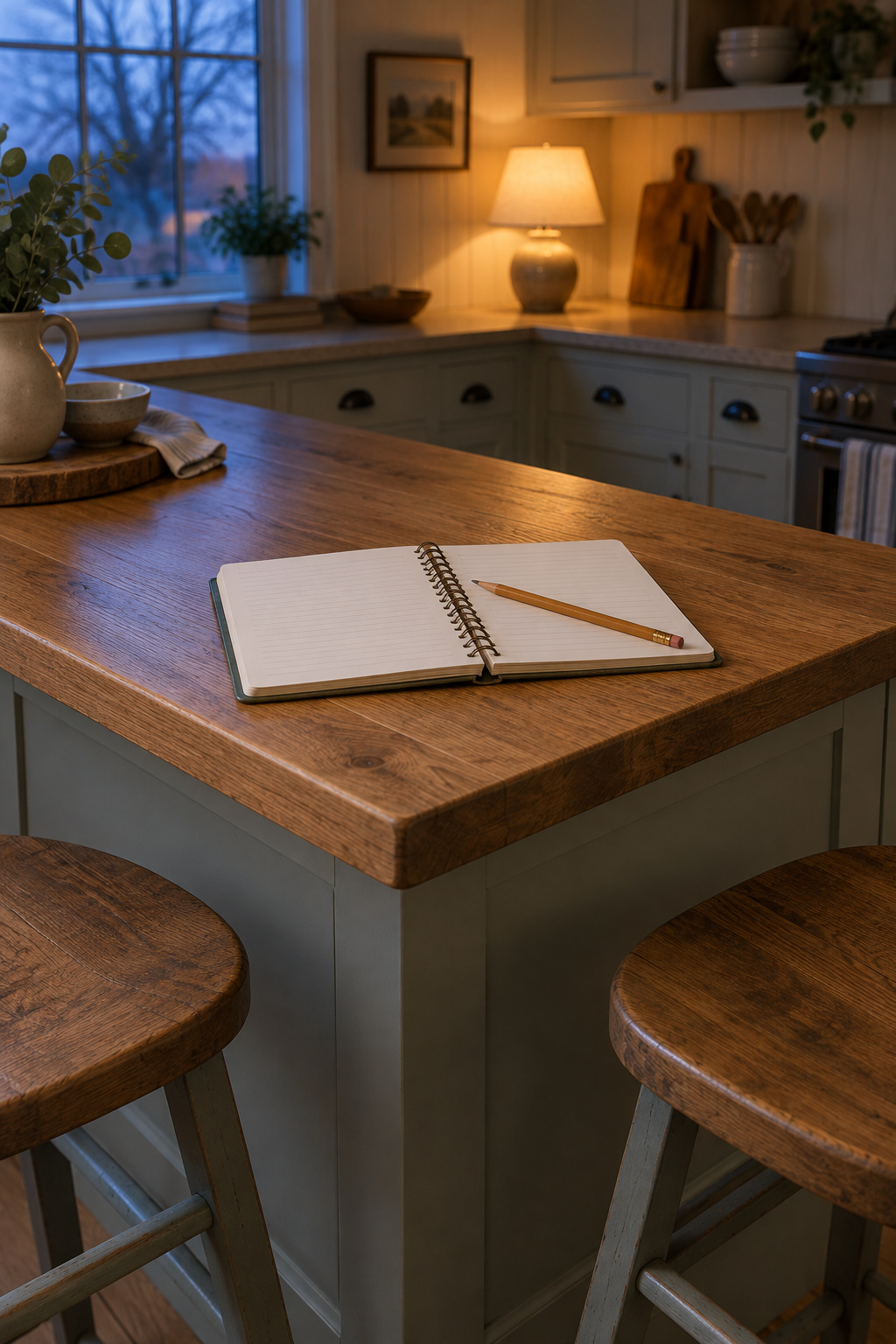
Then make one end the homework end, with good task light, a stool with a back, and an outlet nearby that an electrician fits (never a plain face-up one in the countertop). I’d skip the kids’ desk until they actually want to sit at one. Until then, the island end is the desk, and in a family house that corner matters more than the perfect playroom.
A built-in bench along the island is covered in the kitchen banquette seating guide on the site. A child also needs room to spread out a worksheet, so read up on keeping the seating end clear.
Read the seat height of the stool you’re about to buy, take off 14–16 in, and check that the footrest sits there. Then her foot has somewhere to rest.
FAQ
Can toddlers sit at a kitchen island safely?
No one publishes a safe age for counter stools, so the safest answer is a harnessed high chair or booster at the table for toddlers under about 3. Among small children hurt on high chairs and chairs, most injuries are falls, often while climbing or standing. Never set an infant seat or bouncer on the counter.
Should island stools match the dining chairs?
They can’t match in height. Dining chair seats sit at 17–19 in and counter stool seats at 24–26 in, so a counter stool is 5–9 in taller than any dining chair. Match the wood tone, finish or leg style instead. You can also mix backed stools with a backless extra or two.
How do you stop island stools from scratching the floor?
Fit soft felt pads, not plastic ones, to every stool leg, and check them monthly for wear and trapped grit. Stools and dining chairs move more than other furniture, so their pads clog fastest. Replace pads as soon as they wear thin, and skip rubber that may not suit your floor’s finish.