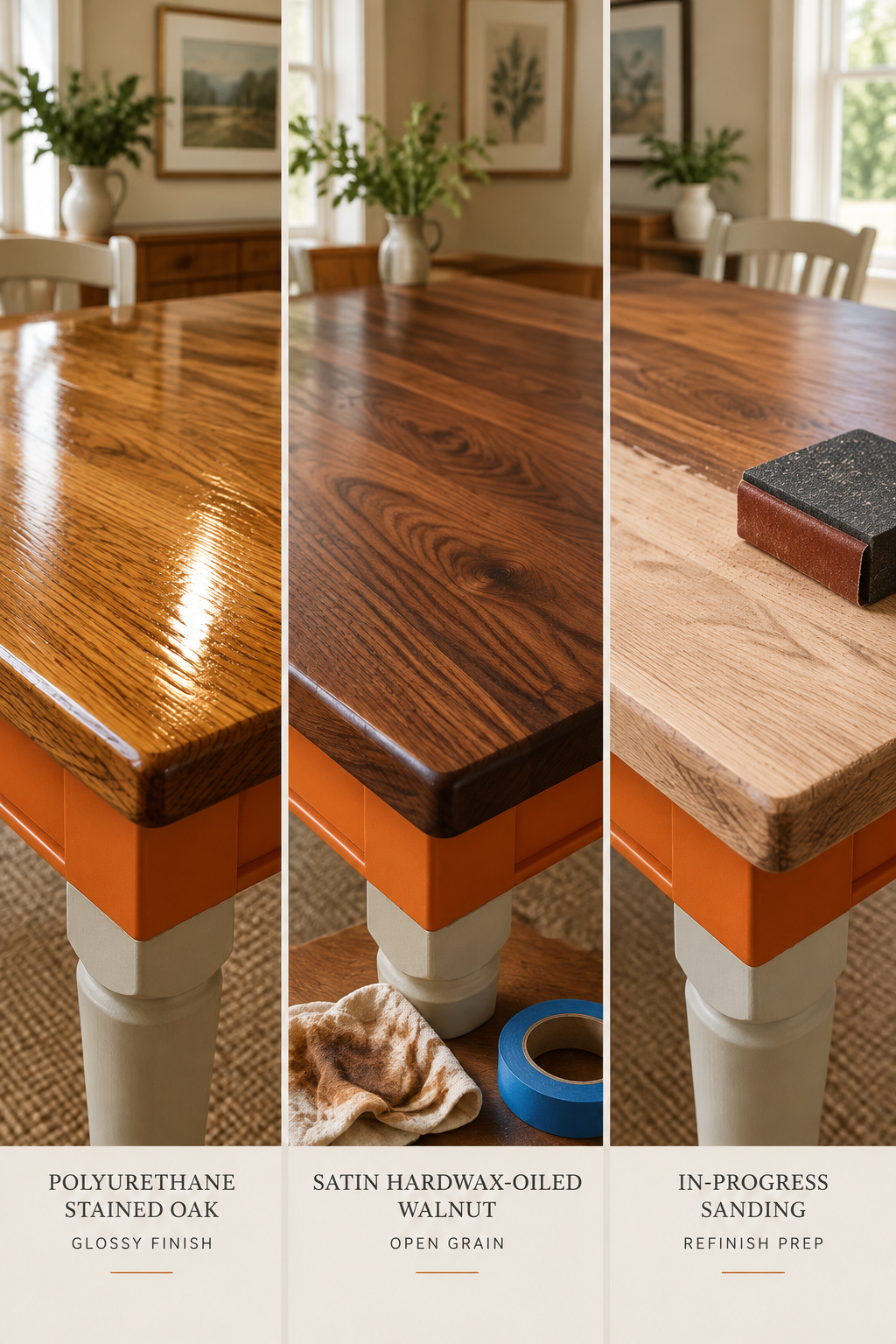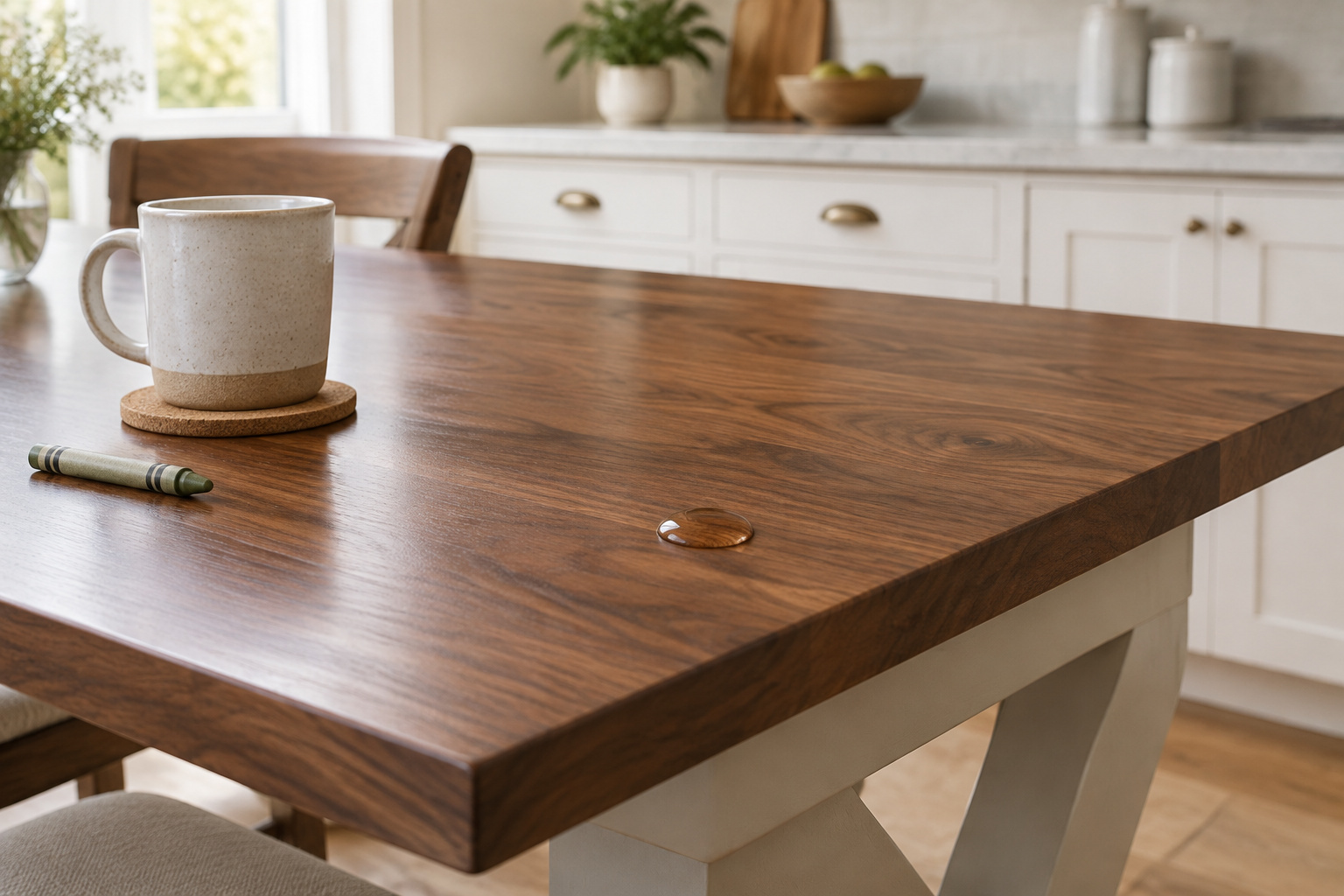
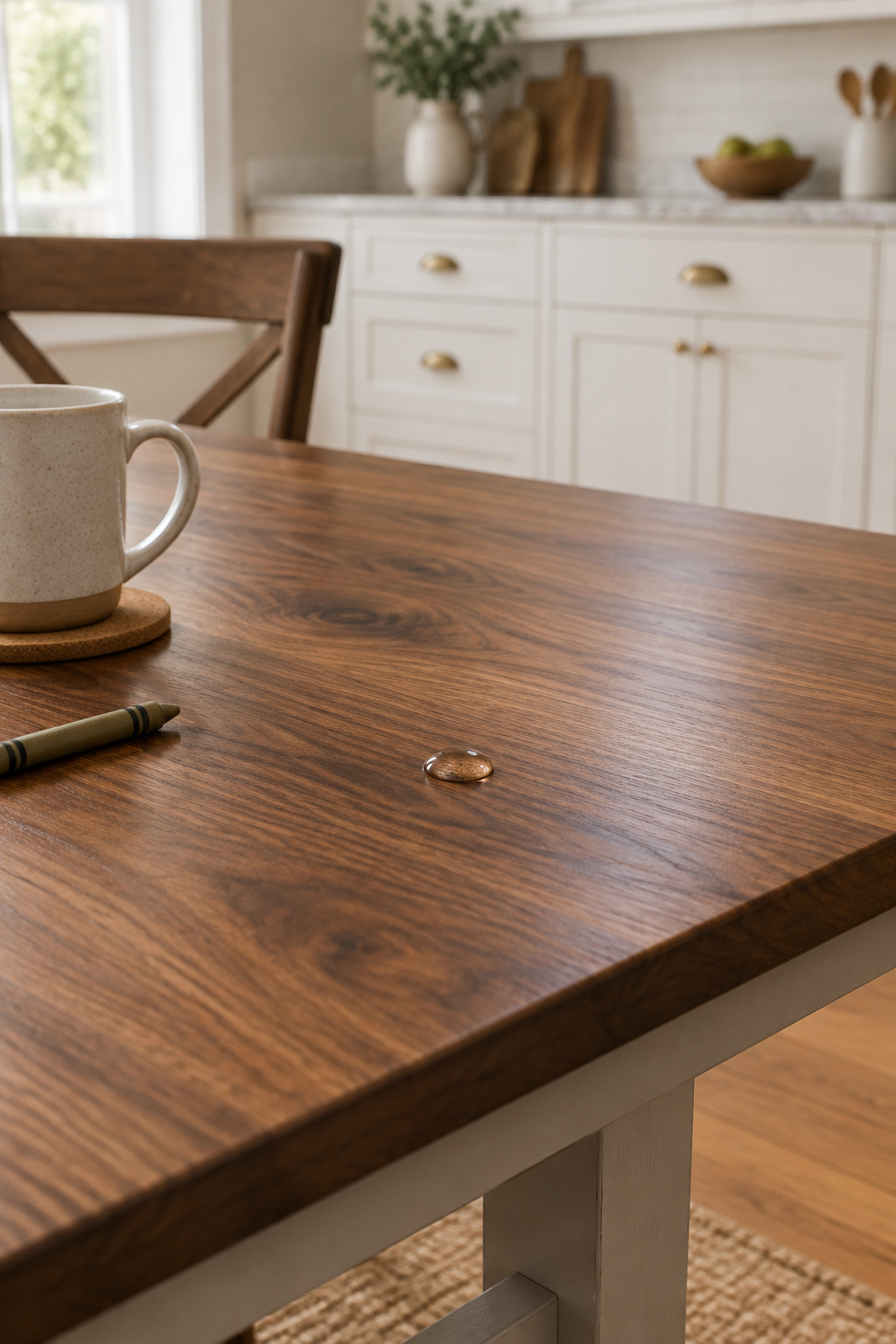
It’s 7:10 on a school morning. A cereal bowl tips. Someone sets a coffee mug straight onto the wood because the trivet is under a library book, and a six-year-old is uncapping a marker. Every can on the hardware-store shelf promised you “durable.” None of them said durable against this. To pick the best finish for kitchen table tops, test it against what your family actually does. The label can’t tell you that.
I learned this from a forward-facing bookshelf I picked for its looks. A toddler emptied it onto the floor every single day, and I quit trusting catalog photos. Finishes are the same problem in a different room. One boundary, stated once: the chemistry below is cited, not my trade, and the test is mine.
TL;DR
- Match cure time to how fast the table goes back into service. Water-based polyurethane fully cures in about 3–5 days and hardwax oil in 7–14. Oil-based poly takes light use at 12 hours but needs 30–45 days to fully cure.
- “Poly always wins on water” is a rule of thumb, not a test result. In Fine Woodworking’s 12-hour water test, two coats of a good hardwax oil protected at least as well as two coats of wipe-on polyurethane.
- Pick the finish you can repair in three years. Hardwax oil can be spot-sanded and recoated. Polyurethane shows a repair edge or needs the whole top redone, and sprayed conversion varnish usually means a full re-spray.
What Your Table Actually Survives in a Week
A “durable” rating on a can describes a lab: a set number of wipes, a set weight dropped from a set height. Your table gets a glass left sweating through a whole movie night. The real list looks like this:
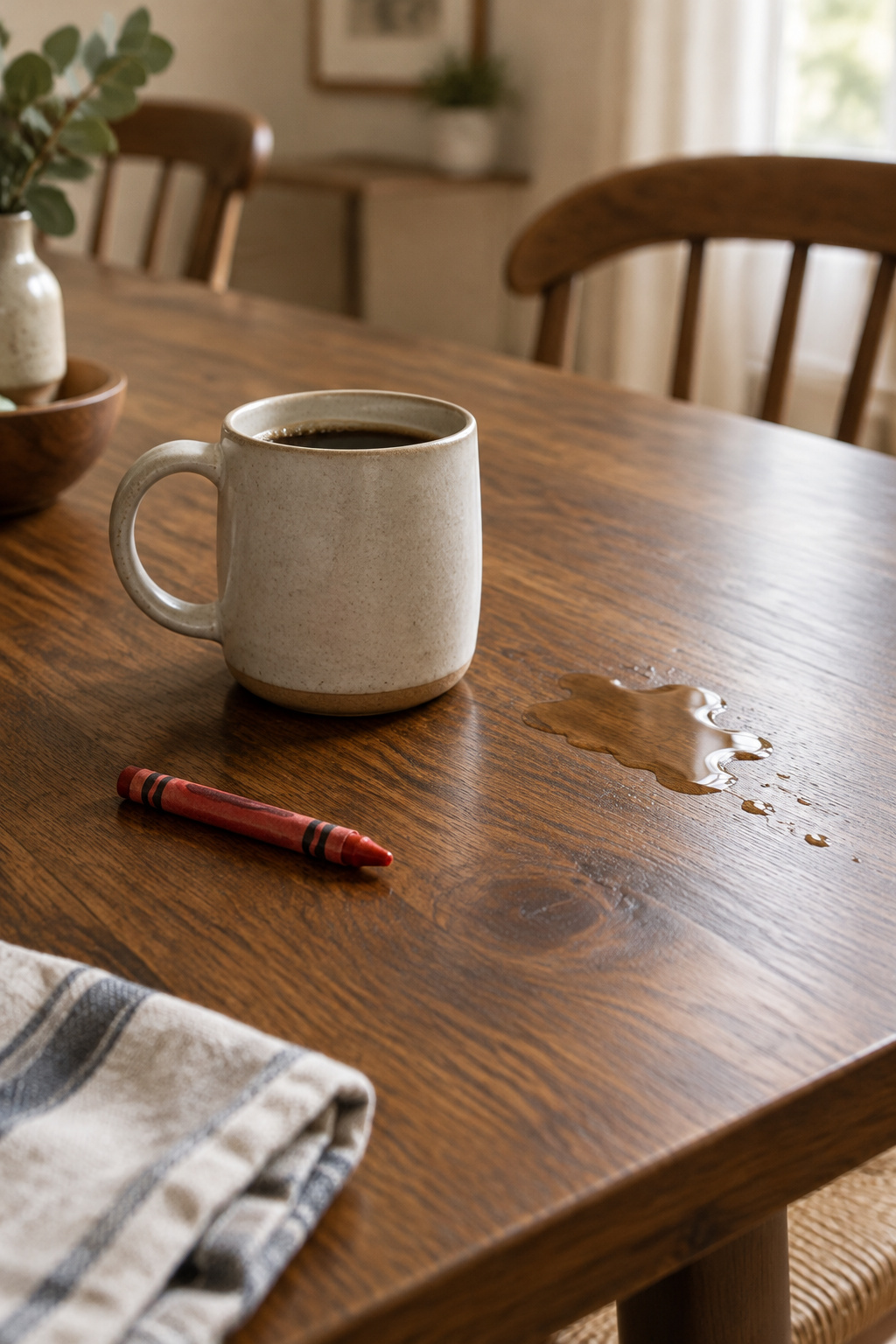
- Standing water. Moisture works into microscopic gaps in the finish and gets trapped there. Trapped moisture scatters light differently from the finish around it, and that’s the white haze of a water ring.
- A hot mug with no trivet. Same mechanism, faster. Heat drives moisture into the film, and it can soften some finishes enough for the haze to set in sooner than a cold spill would.
- Marker and crayon. On a fully cured finish they sit on top of the wood instead of soaking in. That’s good news, and I’ll come back to it.
- The wrong cleaner. Chlorine bleach breaks down lignin, the binder in wood cell walls. Keep bleach-based sprays off the top. If one ever reaches bare wood through a scratch, it’s working on the wood itself.
Daily wiping isn’t on it, because every finish here handles that. They differ on the occasional, inevitable events.
Still planning a painted-base, wood-top table? The top takes all of this, so its clear coat is the decision that matters most.
Polyurethane vs. Hardwax Oil: The Real Difference
Which finish holds up better on a family table? The honest answer has two parts, and they don’t fully agree.
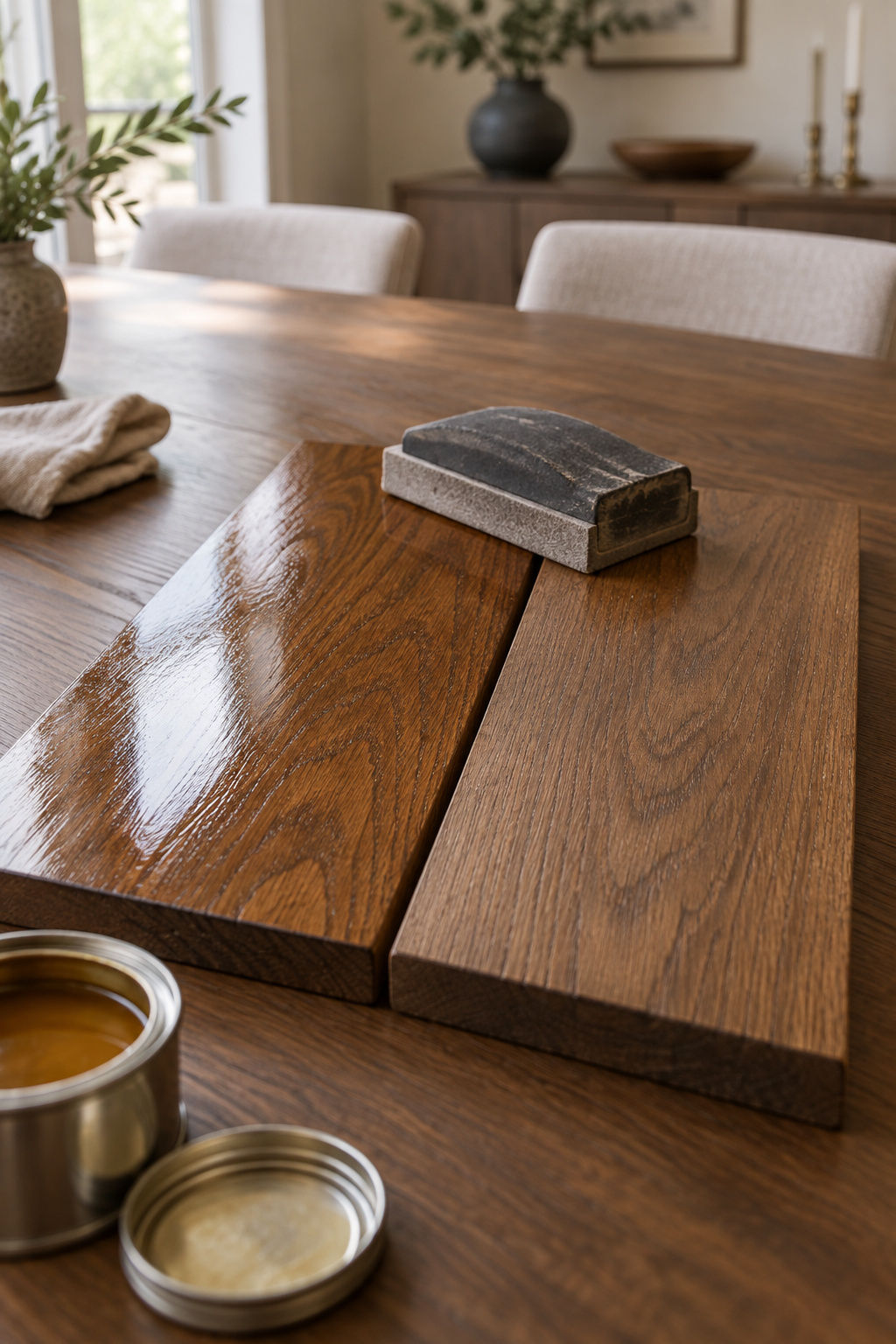
Polyurethane builds a film on top of the wood. Hardwax oil soaks into it. That difference is why one can be patched and the other can’t. With the stain cured, the three brush-on options line up like this:
| Finish | Full cure before hard use | Water resistance | Look over stain | Spot repair |
|---|---|---|---|---|
| Oil-based polyurethane | Light use at 12 hours; full cure 30–45 days | Top of the trade ranking | Ambers over time | No invisible patch |
| Water-based polyurethane | About 3–5 days | Polyurethane family, top of the ranking | Dries clear, stays far paler than oil-based | No invisible patch |
| Hardwax oil | 7–14 days | Moderate by trade rating; matched wipe-on poly in one controlled test | Sits in the wood, not on it | Yes: sand and recoat the patch |
The trade ranking puts polyurethane first, polycrylic second and wax last. That’s a fair rule of thumb, though nobody built it from a head-to-head test against a quality hardwax oil.
Fine Woodworking did run one. Furniture maker Adam Godet put water droplets on finished samples of 12 hardwax oils for 90 minutes, 3 hours and 12 hours, with Minwax Wipe-On Polyurethane as the control. Most products hazed after long exposure. Even so, two coats of hardwax oil protected at least as well as two coats of the poly. The two standouts, Odie’s Oil and Bumblechutes Bee’Nooba Wax, showed only slight haze and no staining after 12 hours.
So both stand. The ranking is convention; the test is one careful measurement. I won’t squash them into a single verdict, because the evidence doesn’t give me one.
Heat is the gap in the chart. Nobody has run a hot-dish test across these finishes side by side, so I can’t give you a heat ranking. With any of them, wait for full cure before a hot dish goes down.
And if the top itself is painted rather than stained, you’re in a different system with its own rules. Oils for cutting boards and butcher-block counters are another job, covered in the site’s butcher-block care guide.
Wax and When It’s Not Enough
Wax feels wonderful under a hand. It also comes last in the trade ranking, and on a family table you find out why fast. It forms no hard film, so the trapped-moisture mechanism behind water rings gets in more easily, and a wet glass set down briefly can leave a mark.
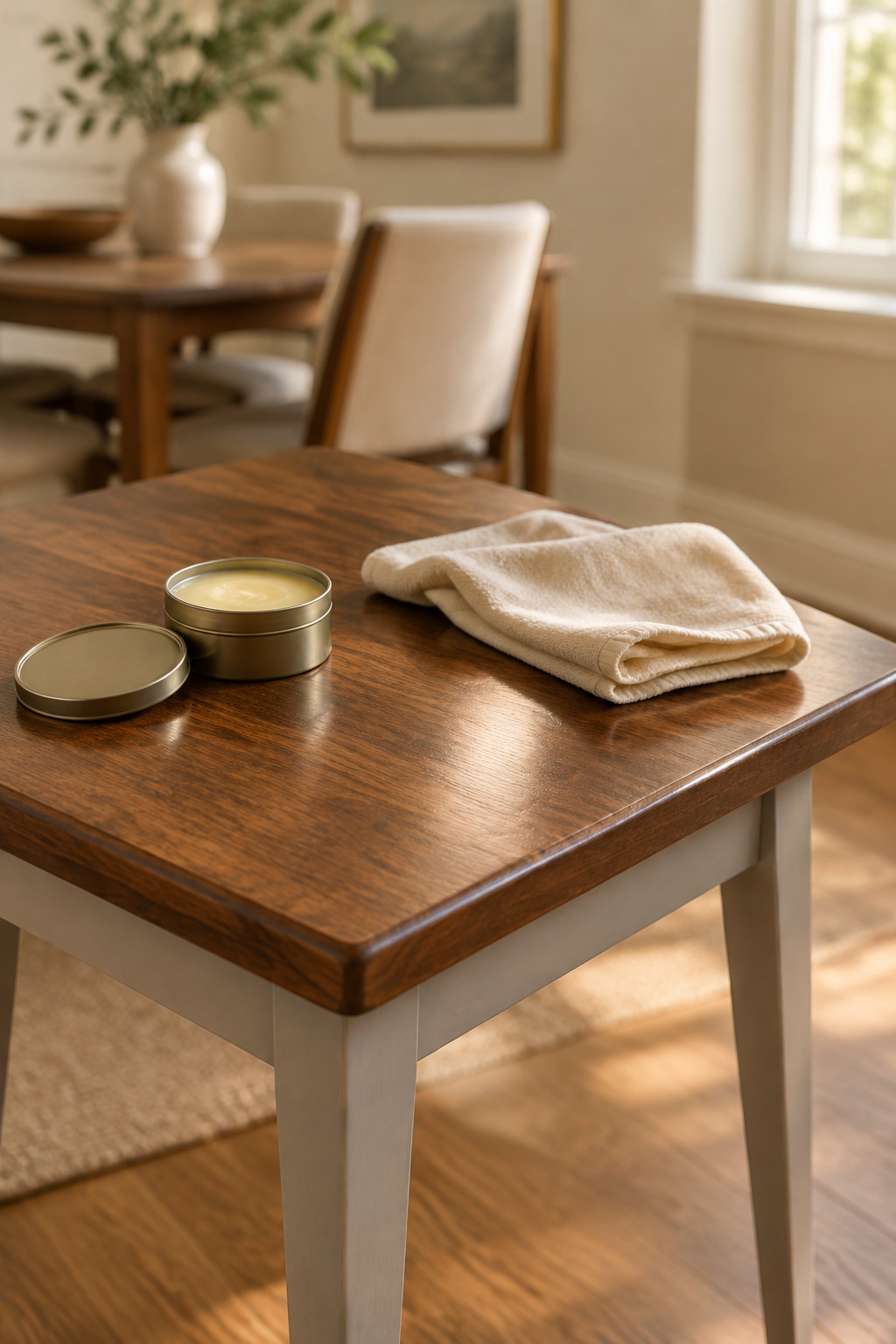
A fresh coat restores sheen and some water resistance. When wax is the only protection, though, the wood and stain underneath do the real work. That’s decorating, not protecting.
Wax still fits a table that mostly sits still, like a rarely used dining room. There, needing a fresh coat every year or two matters far less. (That interval comes from general oil-and-wax guidance, not from anyone measuring a family table.)
For the kitchen table, the one with homework on it tonight, I’d skip it.
The Pro-Grade Option: Catalyzed Finishes
Above the brush-on field sits the tier a cabinet shop would spray, and on paper it wins.
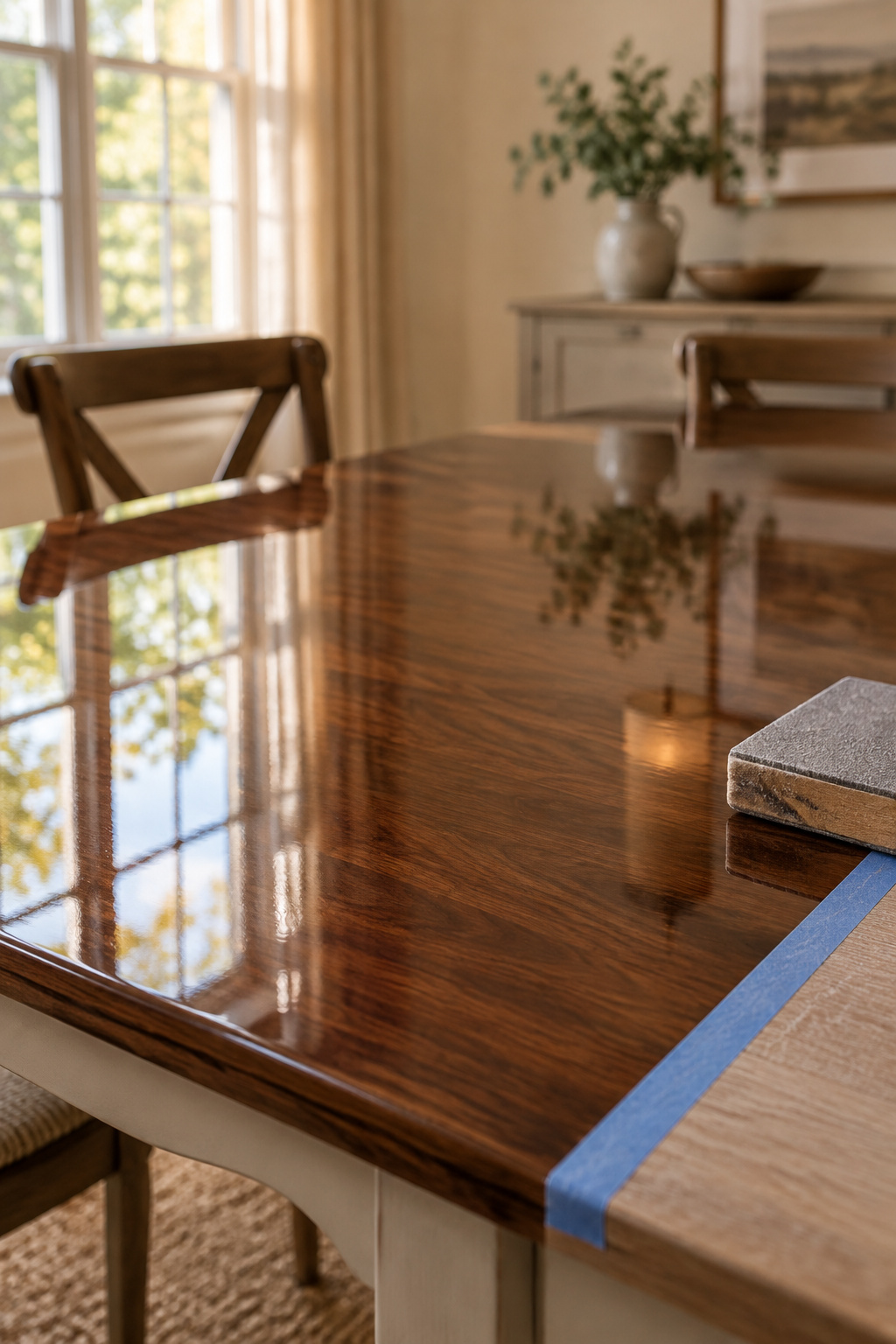
Conversion Varnish: The Cabinet-Shop Standard
General Finishes scopes conversion varnish to high-wear, high-moisture surfaces like countertops and bar tops, with top-tier durability and chemical resistance. Its technical data sheet for the water-based Enduro Conversion Varnish gives 30 minutes to dry to the touch, a 2-hour recoat window, and a full cure of 7 days at 70°F and 50% relative humidity. The sheet calls it the company’s most durable water-based topcoat. According to professional finishers’ trade knowledge, solvent-based conversion varnish is roughly 85% cured within about two days of spraying.
Application is the catch. A trade publication describes it as generally too viscous to spray straight from the container. It’s typically reduced and applied with an air-assisted airless system, after an acid catalyst is measured in, and too much or too little catalyst can leave it brittle or permanently tacky. Finishers who spray it on dining tables use Kremlin pump systems or pressure-pot HVLP setups in ventilated finish rooms. That’s shop equipment, not a brush-on upgrade.
Catalyzed Lacquer: Fast, Hard, Less Forgiving
One experienced hobbyist finisher describes catalyzed lacquers as “for professional use only,” because they call for ventilation and a full-face respirator with carbon filter cartridges, beyond what a typical garage provides.
Pre-catalyzed lacquer is the softer cousin, taking roughly 3–4 weeks to comparable performance by professional finishers’ account. One finisher called lacquer “reasonably resistant to spills” and easy to repair, so it works as a middle option for a home table. Either way, a catalyzed top is a job you hire out.
How to Choose the Best Finish for Kitchen Table Use
Kneel to the height of the smallest person who eats at this table and look across the top. That’s where the marker happens and the cup gets pushed. Then match the finish to your household:
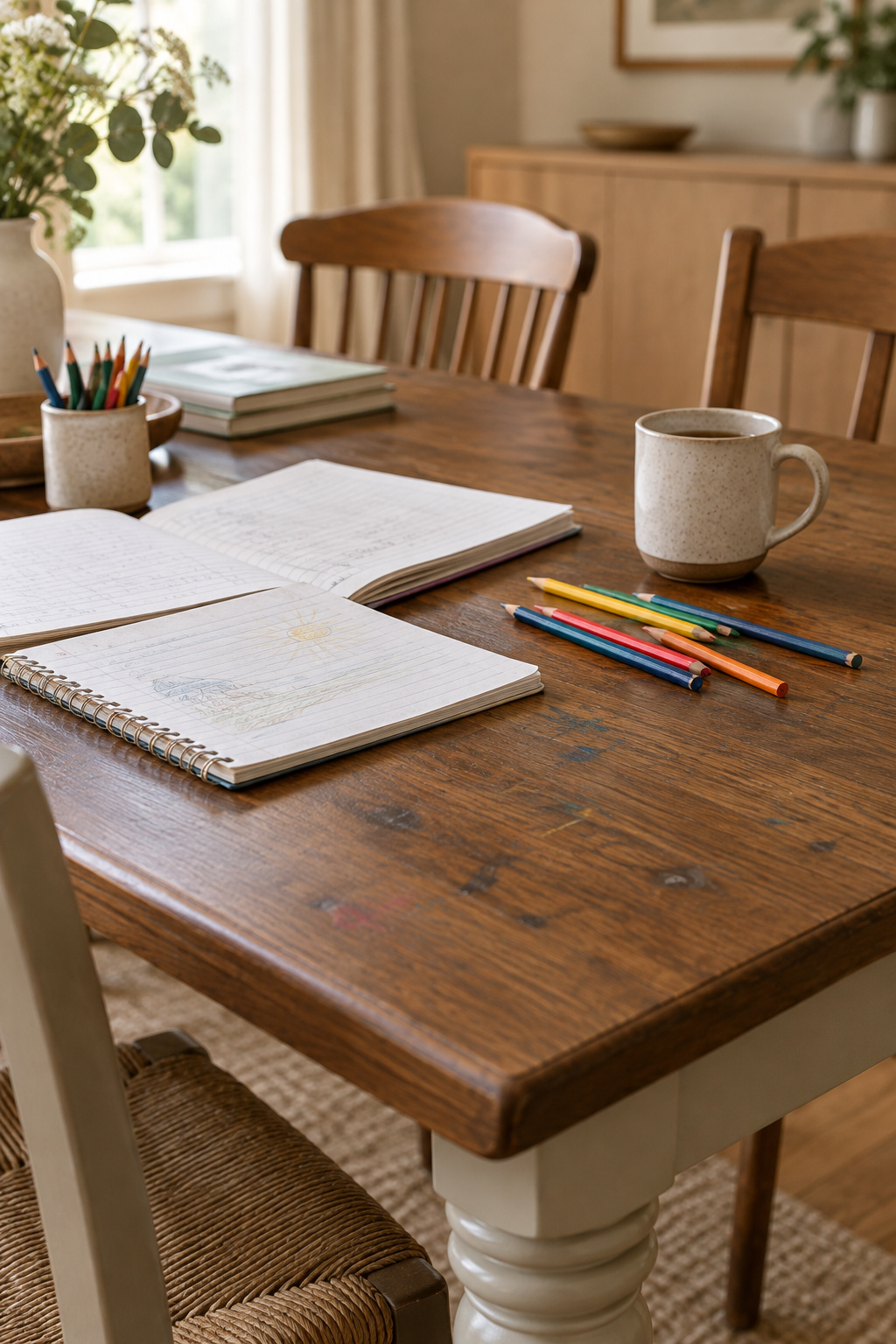
- Young kids, daily homework, meals every day. You need the table back fast and easy to fix. Water-based polyurethane (about 3–5 days to full cure) or hardwax oil (7–14 days, spot-repairable) fits better than oil-based poly’s 30–45 day wait.
- Entertaining and lighter everyday use. You have room for oil-based polyurethane’s warmer, amber look, since you’re less likely to need the table in heavy service days after finishing.
- A table that mostly sits still. This is wax’s one good home.
Think in stages, too. The table a toddler bangs a spoon on is the one a ten-year-old will do long division at. Choose for the stage after next, not this year’s spills.
Softer woods dent under any finish. To see how the wood itself affects the decision, the buying guide covers construction and species properly.
Repair Without Refinishing: What Each Finish Allows
Three years from now, something will have happened to this table. The good news is that most marks aren’t repairs at all. Fresh marker comes off a cured finish with rubbing alcohol, worked from the outer edge of the mark toward the center. If that fails, a non-acetone polish remover is the stronger second step. Use it sparingly, because overdoing it strips finish along with the ink. A white ring in the finish layer can sometimes be drawn out with gentle heat or mineral oil and 0000 steel wool.
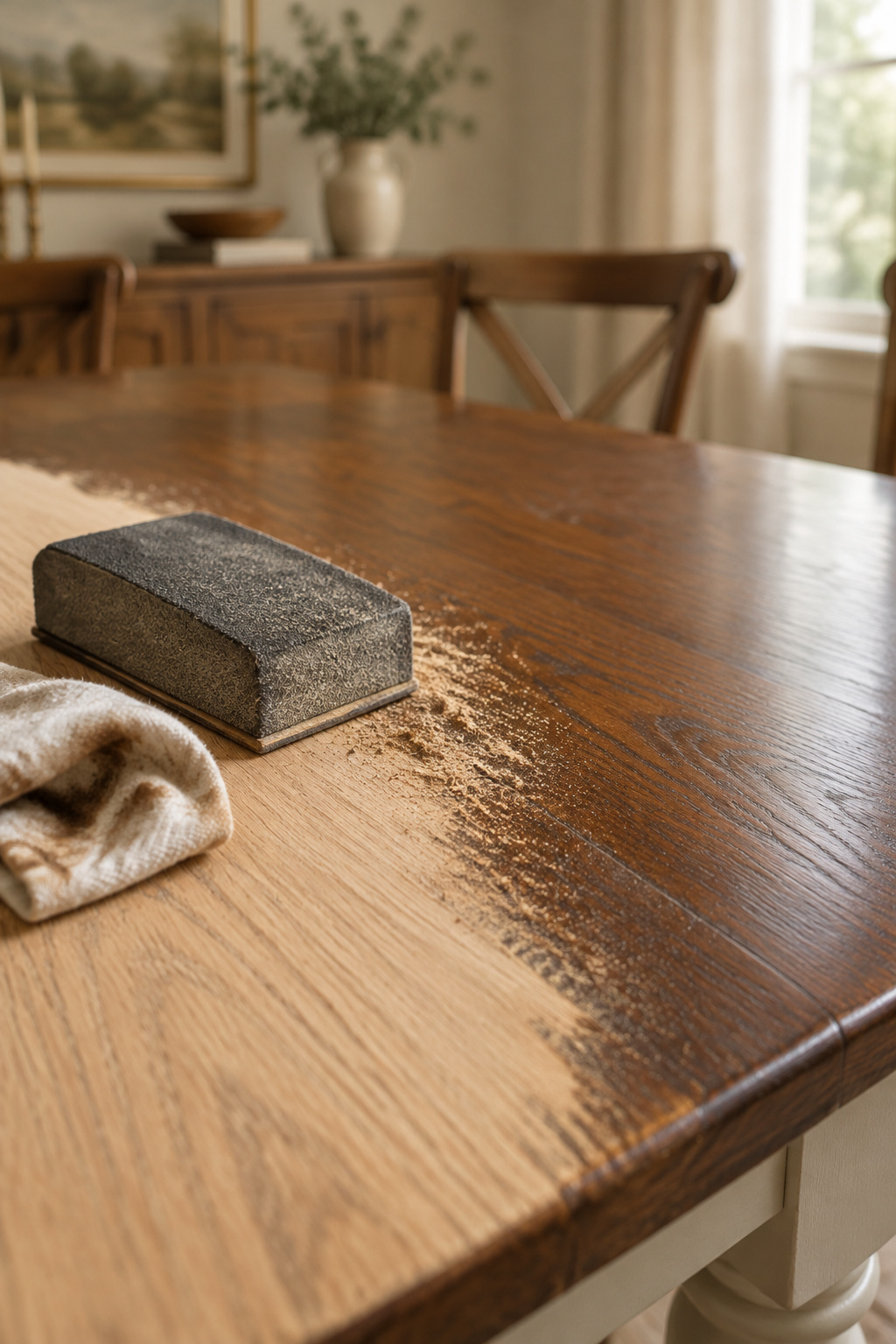
Spot Repair vs. a Full Strip
A worn-through patch is another matter, and each finish asks something different of you:
| Finish | Worn patch | Realistic path |
|---|---|---|
| Hardwax oil | Light sand, recoat the patch | Spot repair, no full resurfacing |
| Polyurethane (either type) | Repair shows a visible edge | Feather it in, or strip and refinish the whole top |
| Conversion varnish | Touch-ups rarely blend | Re-spray the whole top; hard to strip later |
| Pre-catalyzed lacquer | Softer film takes spray-and-blend | Easier professional touch-up |
Before you commit, run the test the can won’t run for you. The bookshelf taught me to test against real behavior, not the photo.
- Finish a scrap board, or the underside of a leaf, with your candidate, and let it reach full cure.
- Leave a puddle of water on it overnight.
- Scribble on it with a washable marker and a crayon, then clean it off with a damp cloth and rubbing alcohol.
- Set a hot mug on it, since nobody has published a heat ranking for you to lean on.
- Scuff a corner and try to repair it.
Whatever survives your board is your finish. If a hardwax oil passes the overnight puddle, you’ll be standing exactly where the evidence stands. The trade ranking says polyurethane beats it on water, one controlled test says two good coats of hardwax oil keep up, and your table gets the deciding vote.
FAQ
Is polyurethane food-safe once it’s fully cured?
Yes. Wood-finishing authority Bob Flexner states that all common wood finishes, polyurethane included, are food-safe once fully cured. The operative words are “fully cured.” A top can feel dry in hours and still be weeks from full cure, so treat a freshly finished table as not ready for food contact.
How long before a newly finished table can get wet or take a hot dish?
Go by full cure, not dry-to-touch. Water-based polyurethane fully cures in about 3–5 days and hardwax oil in 7–14 days. Oil-based polyurethane takes light use at 12 hours but needs 30–45 days for full cure. General Finishes’ water-based conversion varnish cures in 7 days at 70°F and 50% humidity.
Can you refinish just the table top without touching the painted base?
Yes. A stained, clear-coated top and a painted base are separate coating systems by design, so refinishing one doesn’t mean redoing the other. Mask the painted base at the apron line before sanding or recoating the top. The taping method itself is covered in the site’s guide to painting a base and staining a top.