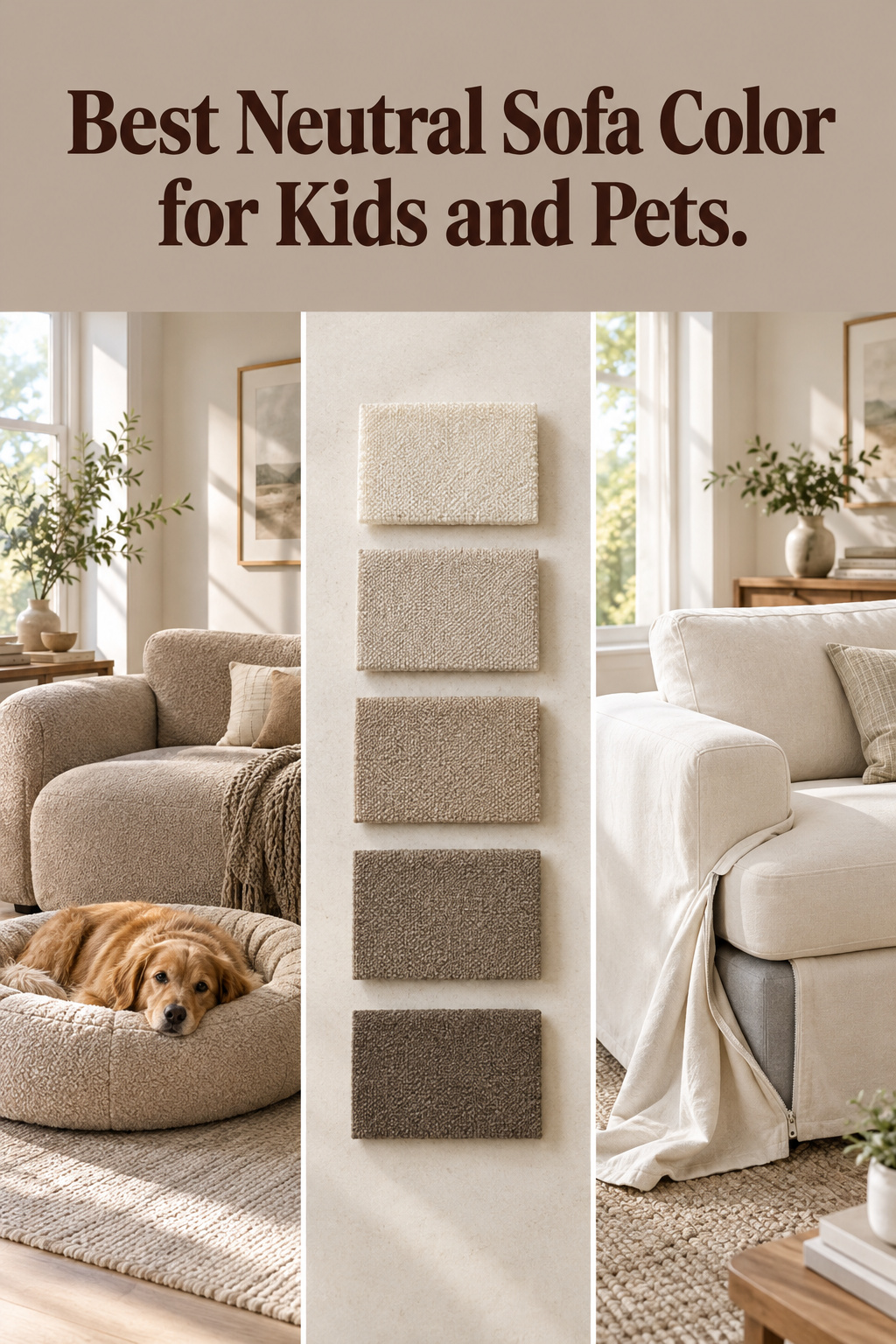
The mistake I see most is choosing a sofa while it stands still. In the showroom nobody sits on it. At home it gets climbed. Watch a four-year-old cross one: up the arm with sticky hands, along the back, a bounce on the middle cushion, then down to the floor with a cracker. Every stop leaves something behind. The best neutral sofa color is the one that hides what your own household leaves, and you can work that out before you spend a cent.
TL;DR
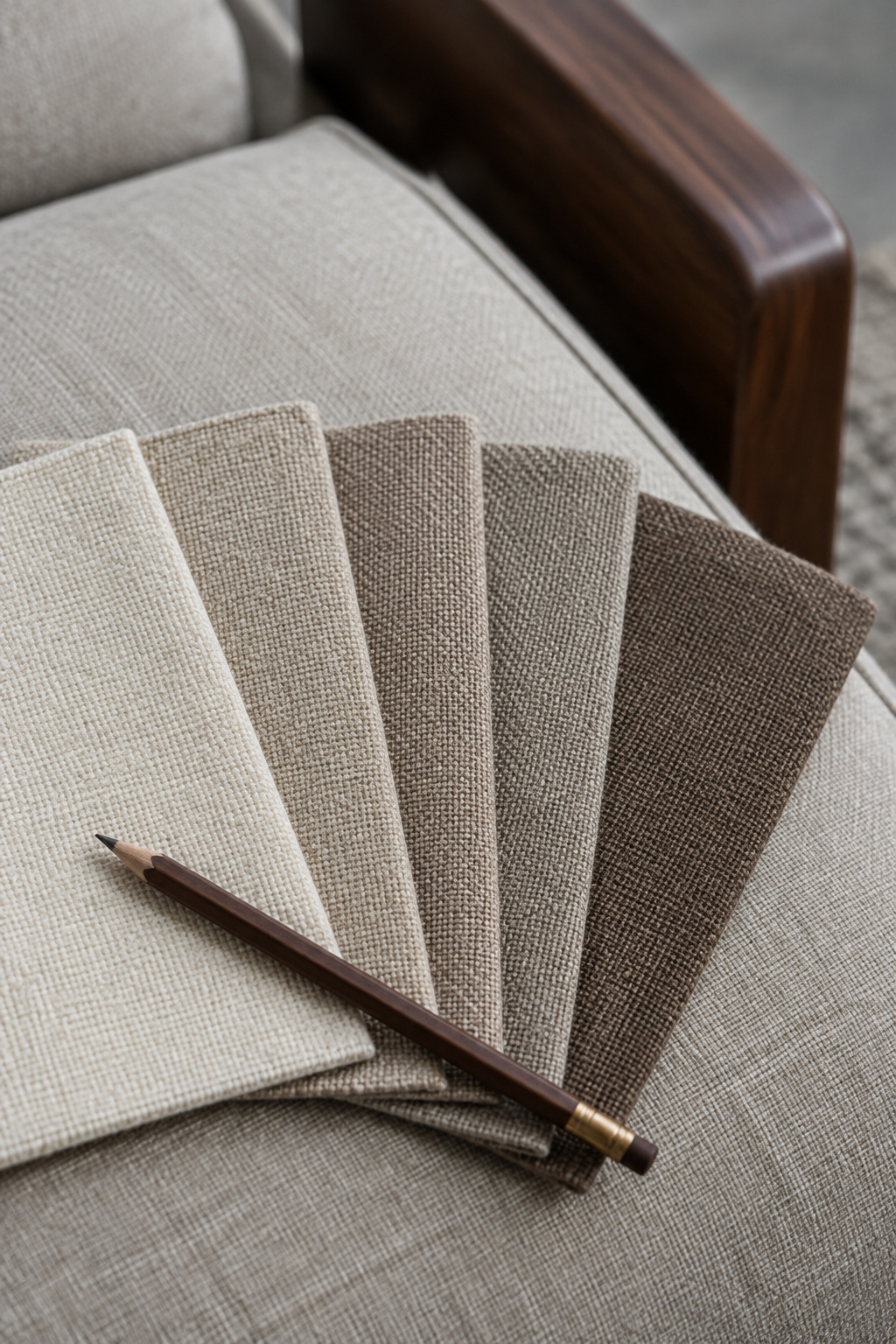
- Mid-tones such as taupe, mushroom, stone and oatmeal hide everyday crumbs and pet hair best, while cream shows food and jeans dye and charcoal shows lint and pale fur.
- For a family sofa, look for a W or W/S cleaning code, a tight weave rather than big loops, and 30,000 double rubs or more if you have kids or pets.
- If you love cream, buy it with a machine-washable cover and a spare, and read the care tag, because a removable cover is not always a washable one.
The Best Neutral Sofa Color Is the One That Matches Your Household’s Dirt
My older daughter went through a phase of putting every book back upside down so she could see the covers. A front-facing ledge fixed it. Sofas work the same way: watch where your kids sit, climb and eat, then choose for that, not for the photo.
And they will be on the sofa. A playroom is often less used than the kitchen floor. The living room sofa takes the snacks, the shoes and the dog.
So start with the color of your mess and pick the shade that hides it.
| Shade | What it hides | What it shows |
|---|---|---|
| White, ivory, cream | Pale pet hair, dust | Food, drinks, dye from jeans, grease on the arms |
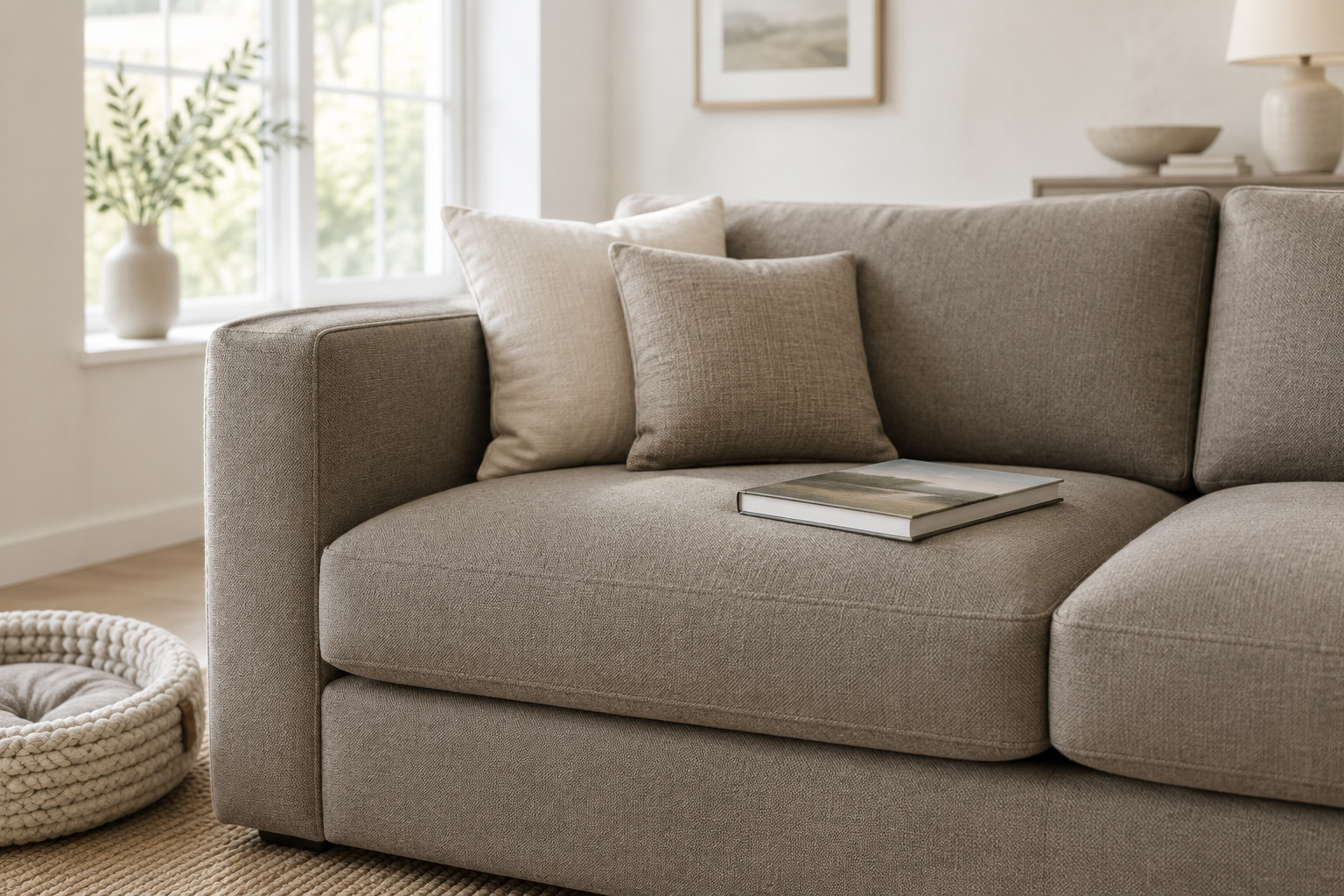
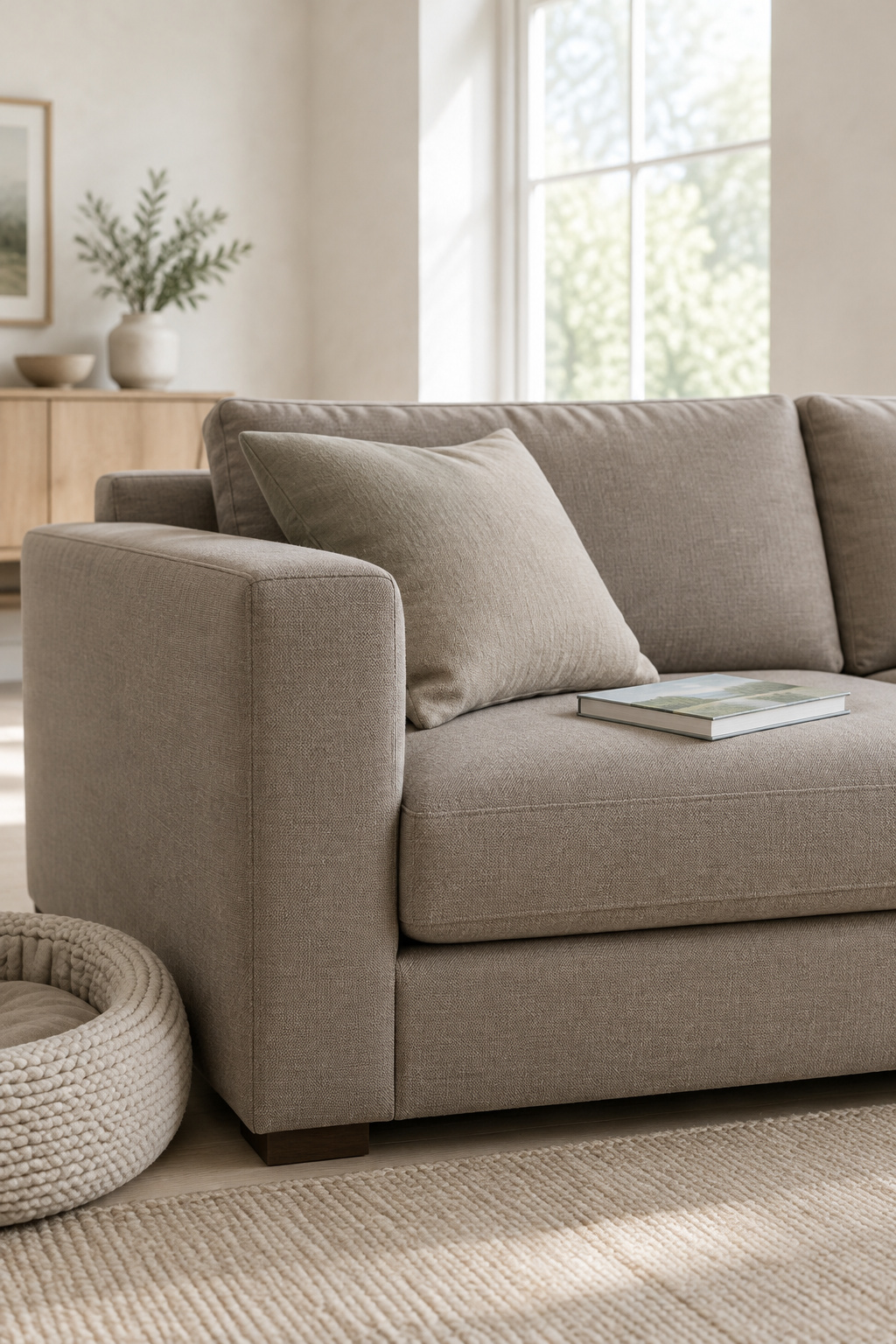
| Oatmeal, stone, mushroom, greige, taupe | Most everyday soil and hair | Very little day to day |
| Charcoal, navy, black | Some small marks | Dust, lint, pale pet hair, dried water marks |
This ranking is designer and trade practice, not a lab result, and one upholstery trade guide puts it bluntly: “Medium-tone fabrics have the lowest callback rate. Light fabrics show soil. Dark fabrics show wear.”
A pale sofa does not get dirtier than a dark one. It shows the dirt sooner. Dye from dark jeans rubs off onto light upholstery even after the jeans have been washed several times, and one upholstery maker treats that as a property of the denim, not a fault in the fabric. And if you have a pet, choose a shade close to its coat. A golden dog on a charcoal sofa is a daily lint-roller job.
A mid-tone sofa also sits in the middle of the room’s range, which helps when you think about where the sofa sits in a tonal palette.
Boucle, Chenille or Tight Weave: What Claws, Crumbs and Pile Do to Your Sofa
The weave is what decides how long the fabric survives claws and crumbs.
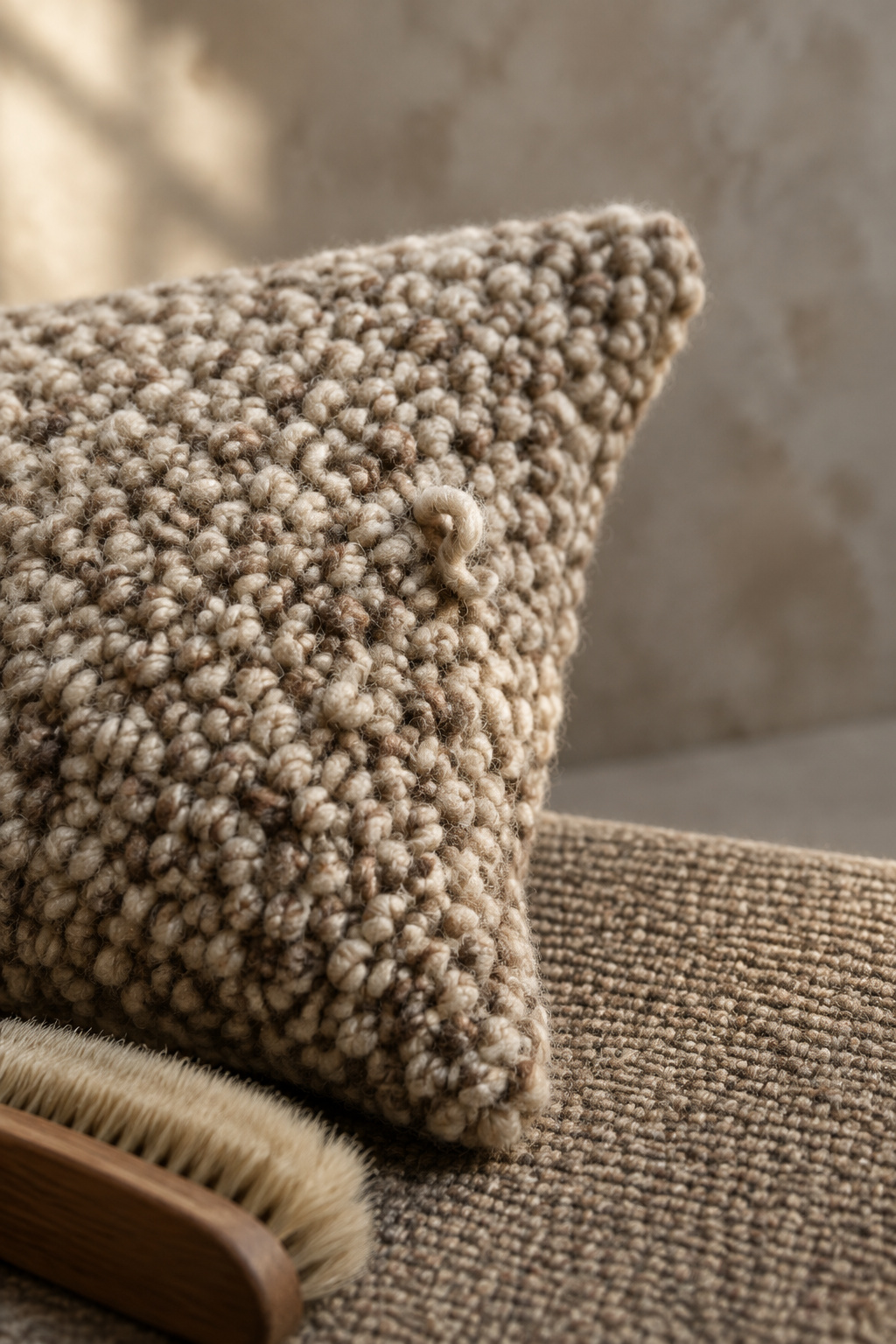
Loops are the weak point. A cat kneading a boucle cushion is pulling at a lot of small handles, and a pulled loop is hard to fix without it showing. Tight boucle with small, densely packed loops resists snagging, while big loose loops belong on an occasional chair. James Fiddy of Make Bespoke Studio says it well: “A loose-looped wool bouclé on a primary sofa with a Labrador is a short-lived choice.” Decorative boucle is typically rated 15,000 to 25,000 Martindale rubs; the technical kind runs 40,000 to 80,000.
If a loop does pull, trim it flush. Never tug it, because one pulled loop draws yarn from its neighbors and can run across a panel.
Loose weaves such as linen or tweed catch claws too, and high pile holds onto pet hair. A smooth, tight weave in microfiber or a performance fabric lets fur and crumbs brush off and wipes clean. Texture hides soil but traps grit, so a looped sofa needs a weekly low-suction vacuum with no beater bar.
A big upholstered sofa also soaks up sound, which is part of what soft furnishings do for echo in a room full of hard surfaces.
Performance Fabric Sofa Codes in Plain Words: W, S, W/S, X and Rub Counts
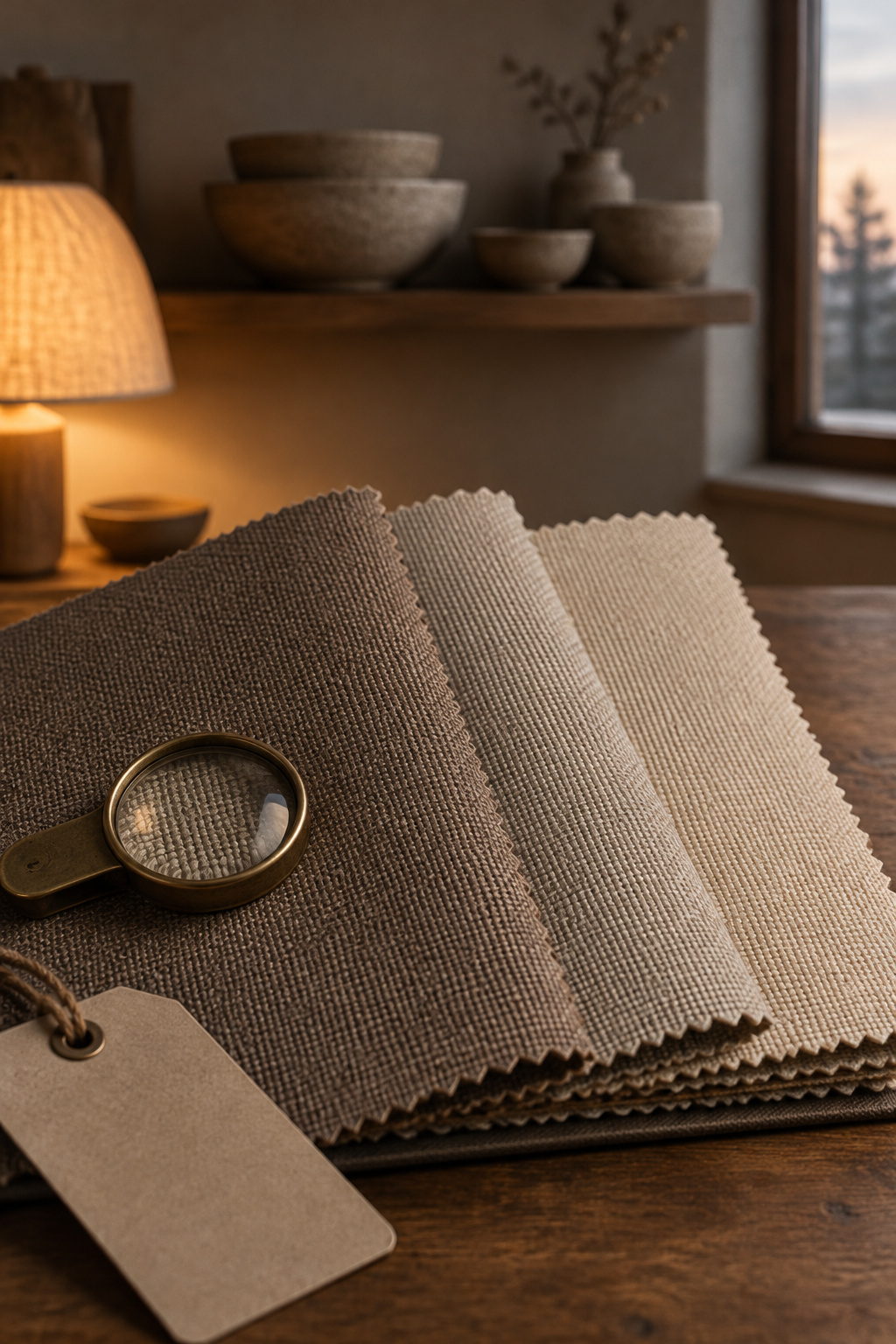
“Performance fabric” on a label tells you less than two small details on the tag: the cleaning code and the rub count.
Cleaning codes: what each letter lets you do
These letters come from the furniture industry’s own voluntary guidelines, and each maker assigns its own code with no outside check. Ask the store to confirm it.
| Code | What you can clean with | What to avoid |
|---|---|---|
| W | Water-based shampoo or foam upholstery cleaner, spot clean | Over-wetting, solvents |
| S | Water-free dry-cleaning solvent only | Any water, saturating the fabric |
| WS (retailers write W/S) | Upholstery shampoo or a furniture solvent | Steam or hot-water extraction |
| X | Vacuuming or a soft, non-metallic brush | Any water or solvent cleaner |
W does not mean machine washable. It means you can spot clean with water-based products, and even then you clean the whole panel from seam to seam, not just the spot, or you get a ring. For a family sofa, pick W or W/S unless you plan to pay a professional every time. An X sofa with a toddler is a nervous life.
Rub counts: how many is enough for a family room
Rub counts measure lab abrasion, and the advice on how many you need splits in two. One scale calls 9,000 to 15,000 Wyzenbeek double rubs medium duty for living and family rooms, with 30,000 and up as heavy-duty residential. The Association for Contract Textiles starts at 15,000 double rubs for private, low-traffic seating and asks for 30,000 in high traffic, and sofa guides aimed at families go further: 30,000 as a floor, 50,000 or more with kids or pets.
With children and animals on the cushions all day, I’d aim for the higher numbers, and I’d keep the units straight. Martindale cycles and Wyzenbeek double rubs come from different tests, and there is no correlation between them, so never compare a number on one scale with a number on the other. And double the rubs is not double the life.
A Washable Sofa Cover Lets You Keep the Cream
I get why people love a cream sofa. You can have one with kids. You just need a cover that comes off and goes in the machine.
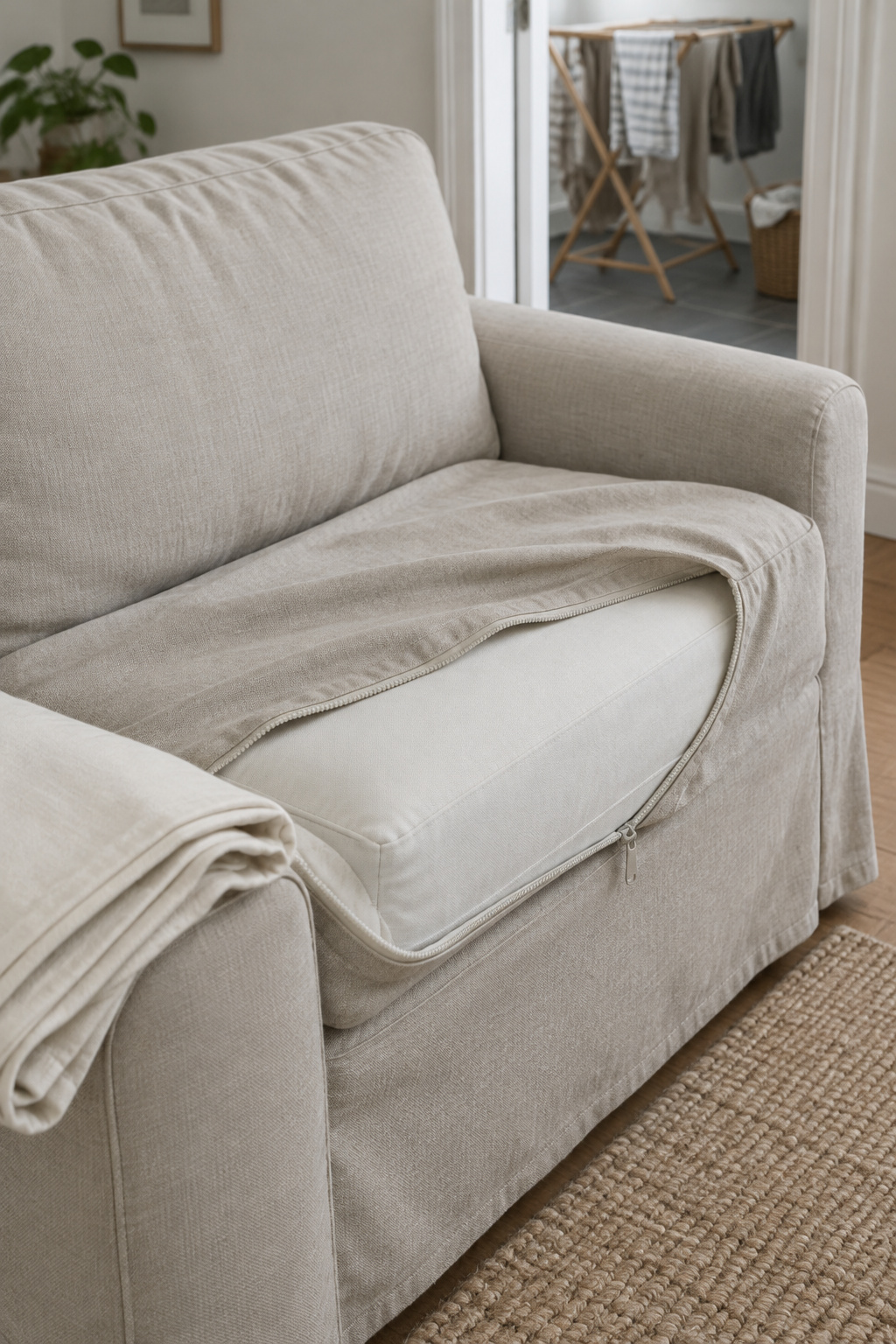
Mainstream makers sell exactly that. Pottery Barn’s washable slipcovers go in a home machine on a gentle, cold cycle, then tumble dry on low until slightly damp and get stretched back over the frame to finish drying. IKEA’s cotton Uppland cover takes a warm wash up to 140°F (60°C) but says do not tumble dry at all. Same idea, opposite instructions, so the tag for your fabric wins every time.
Removable is not the same as washable. Some Pottery Barn slipcover fabrics, boucle, chenille and linen blends among them, are spot clean or dry clean only. Before you buy, check:
- The cover is machine washable, not only removable.
- A spare cover is sold, and what it costs. IKEA lists spare Uppland covers at $119 to $219, depending on the fabric.
- The wash temperature and drying rule on the tag. Hot water and high-heat drying cause most shrinkage.
- That you can wash the whole set at once, so one cushion doesn’t come back a shade lighter than the rest.
As for how often, one maker suggests monthly with pets or young children and every two to three months otherwise.
The Cream Sofa Test: Run a Swatch Through a Week of Real Life
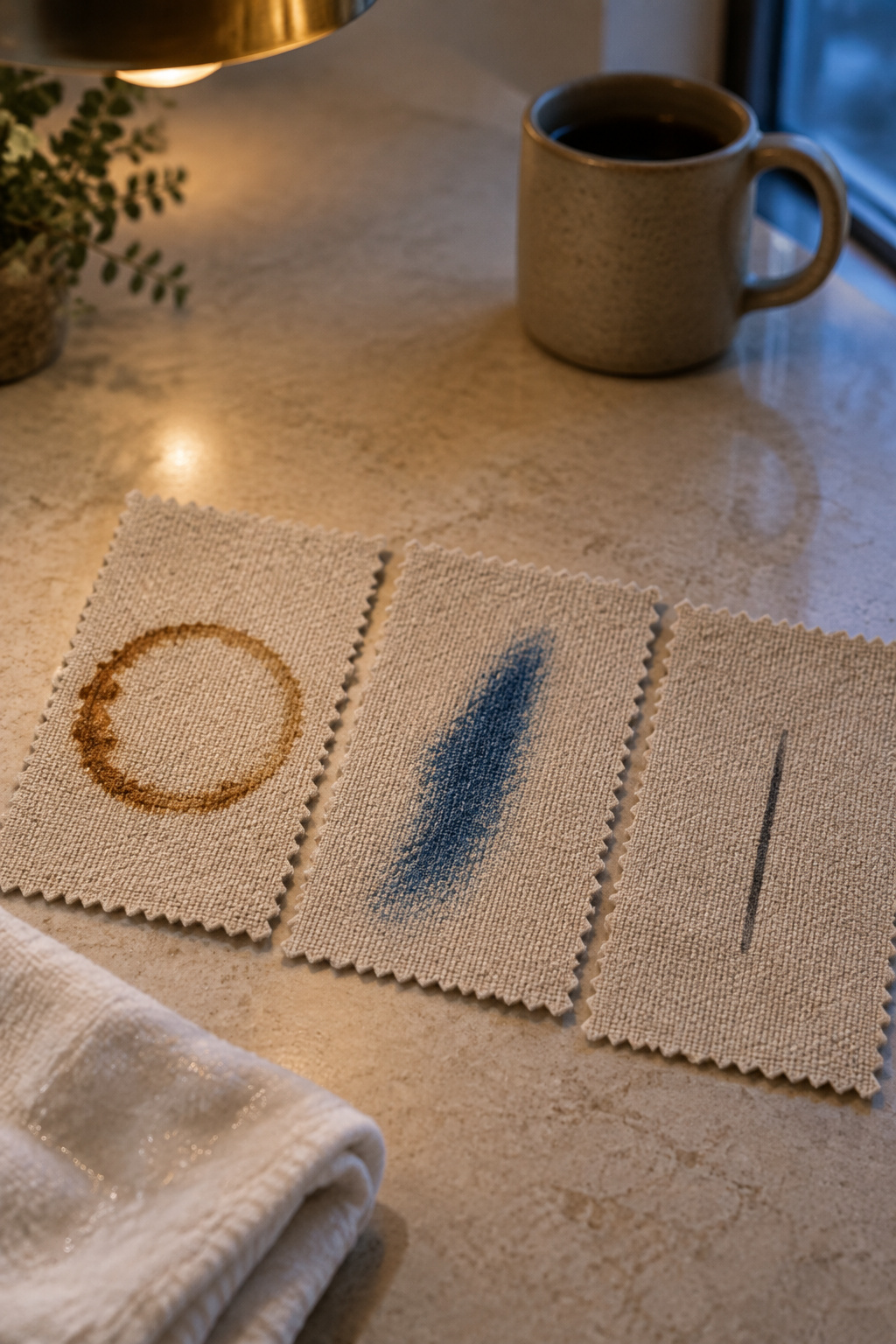
A swatch that has lived through a week of your household tells you almost everything.
In the store: five-minute checks
- Read the tag for the cleaning code and the rub count, with its unit.
- Run a hand across the fabric and gently flick a loop. A loop that lifts easily will meet a claw soon.
- Get down to their height. Sit where your kids sit, kneel where a toddler kneels, and look at the arm and the front edge of the seat, because that is where the hands go.
Then ask about the frame, which no swatch can test. A hardwood frame with good springs can last 15 to 25 years or more; particleboard can be done in 3 to 5.
At home: the week-long swatch test
- Order three samples and keep them for three to five days.
- Look at them in the morning, in the afternoon and under your evening lamps. Two fabrics that match in daylight can drift apart under a different light.
- Rub a corner of dark denim across each one, then a dark cloth and a pale one, to see what transfers.
- Run the swatch through your household, my way: a drip of coffee, the wet dog towel, a washable marker line, a buttery thumbprint.
- Clean each mark with the cleaner the code allows. Press a white towel on the wet spot, let it half dry, and check for color on the towel or a ring on the fabric.
If the cream swatch comes clean with a cleaner you’d actually use on a Tuesday night, buy it.
Choose for Where the Household Is Headed, and Do This One Thing This Weekend
Kids change faster than sofas. Mine are four years apart, and the older one now wants her own room and a door that locks. The sofa has to outlast several of those stages, so I buy for the stage after next: the toddler on the arm becomes the kid eating on the cushions.
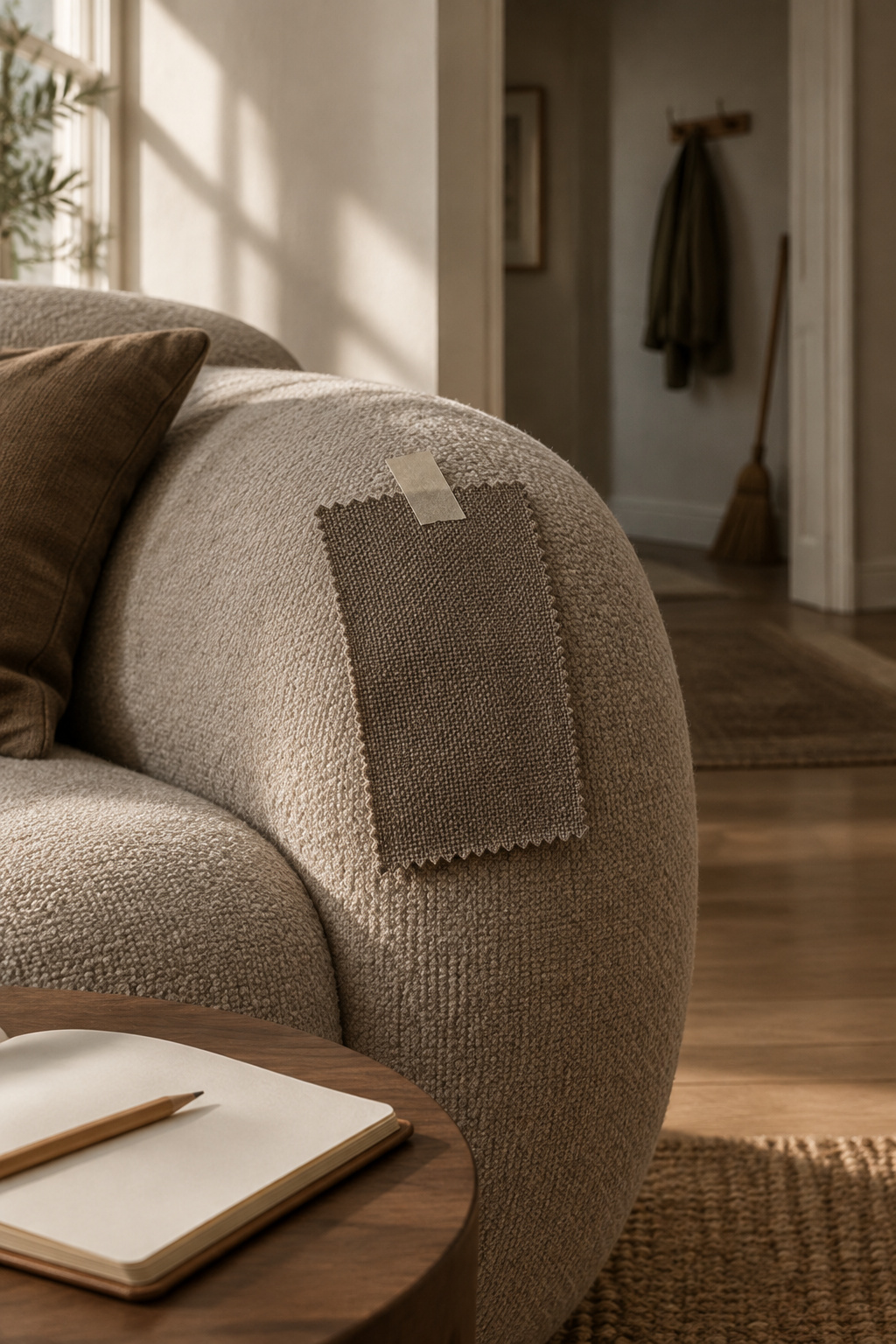
Match the shade to your household’s dirt, choose a tight weave and a W or W/S code, and look for 30,000 double rubs or more. If your heart says cream, buy cream with a washable cover and a spare.
The cheapest version of all of this is also the easiest to undo: order a swatch this weekend, put it on the cushion where your kids actually sit, and live with it for a week. If it fails, you throw away a scrap of fabric instead of a sofa. Once the sofa is settled, the walls and palette of a neutral cozy living room can follow its color.
FAQ
How do you get pet hair off a fabric sofa without damaging it?
Vacuum first with the upholstery tool, cushions off, then drag a slightly damp rubber glove or a rubber squeegee across the fabric in one direction to clump the hair. Finish with a lint roller. On looped fabric, use low suction, skip the beater bar, and don’t scrub, or you’ll pull loops.
Do fabric protector sprays actually keep a sofa clean?
They help, but they don’t keep a sofa clean. A protector gives you extra seconds to blot a spill and makes vacuuming and later cleaning work better. It wears off, so reapply after each cleaning or once a year, test a hidden spot first, and never use it on X-coded fabric.
How often should you rotate and flip sofa cushions?
In a busy family room, rotate and flip cushions about once a month and fluff them every week or two. A room you rarely use needs it only a couple of times a year. Check the maker first: cushions with zippers, Velcro or non-slip backing underneath shouldn’t be flipped.