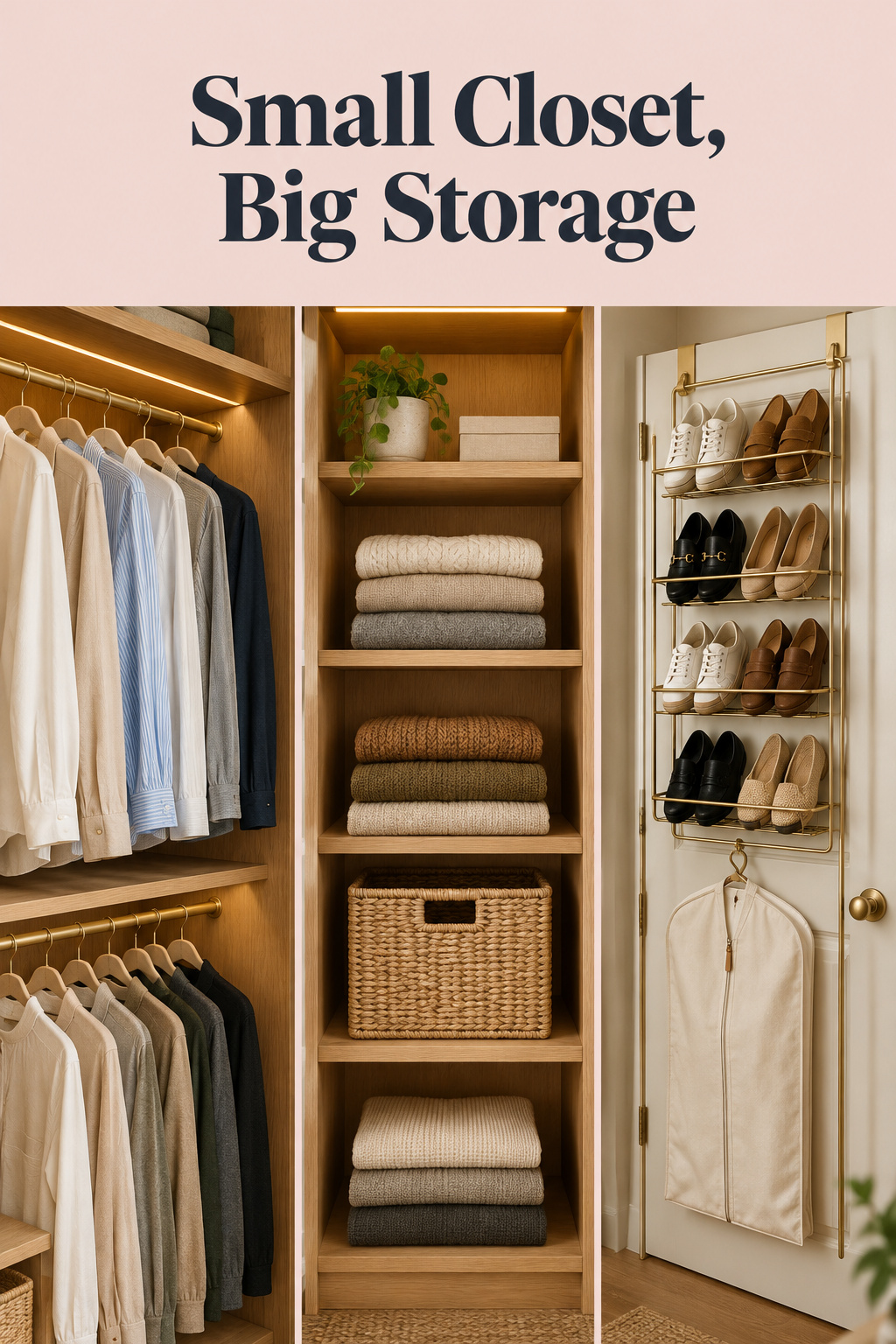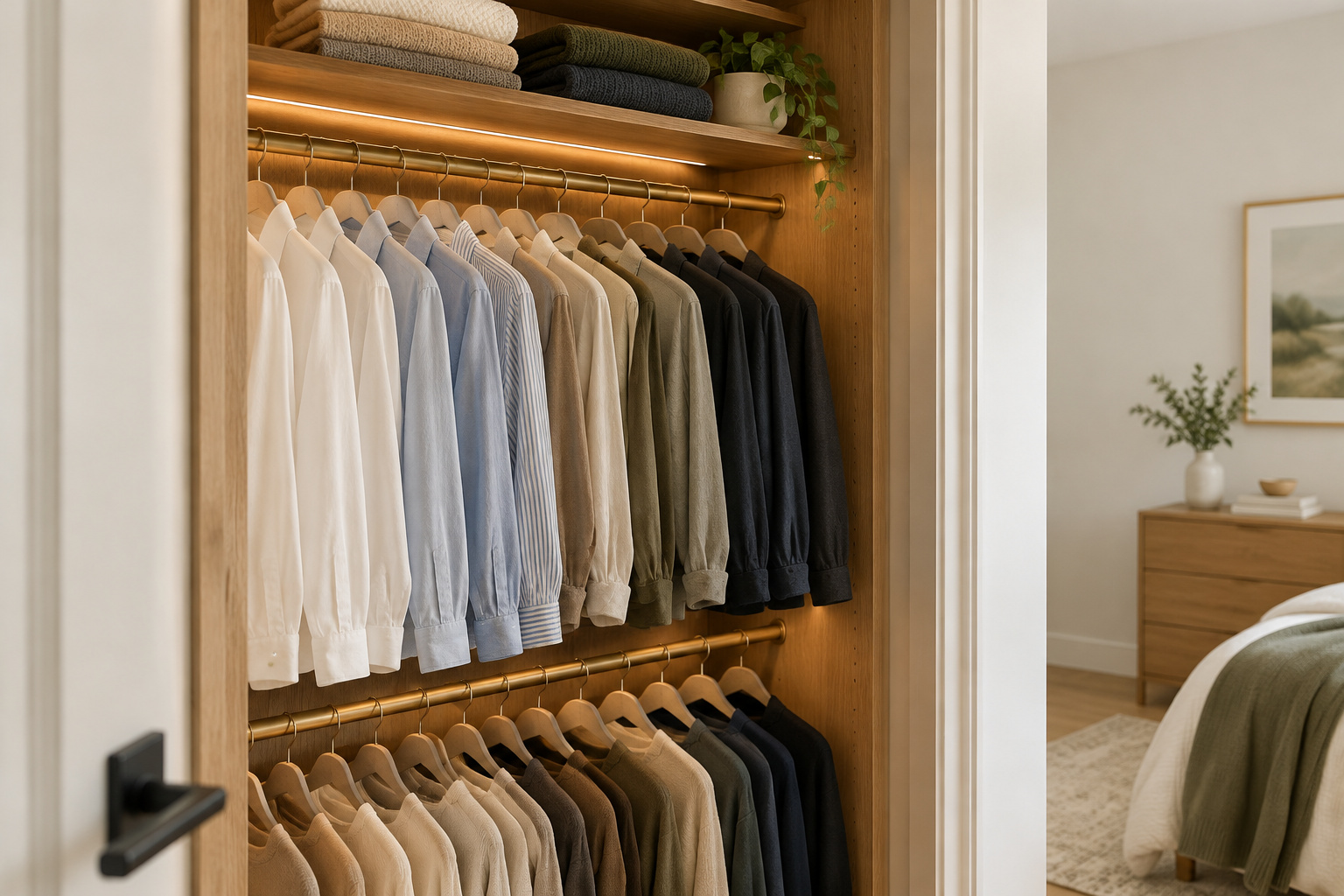

Almost everyone with a tight closet thinks there’s nothing to organize because there isn’t enough closet. Wrong diagnosis. Most small closet ideas fail for two reasons unrelated to square footage. One rod hangs at chest height with three feet of empty air underneath it, and the wardrobe sits on plastic hangers three times thicker than they need to be. Fix both and a four-foot reach-in carries more than you’d guess. Budget $40 and a Saturday, plus the trip back to the store.
TL;DR
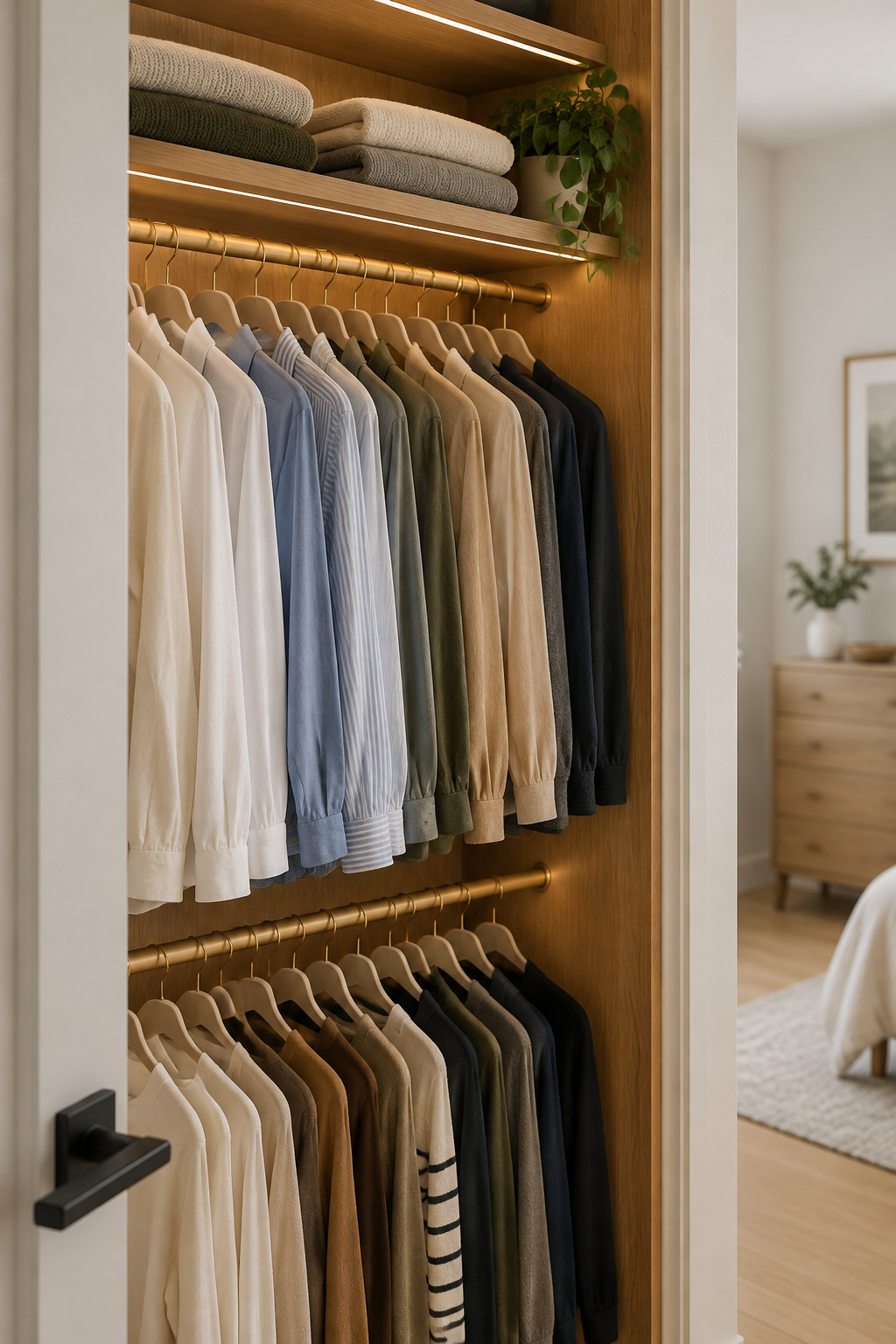
- Double-hang first. A second rod under your existing one costs $15–40 in hardware, and closet-industry guidance puts the gain at roughly double the garments per linear foot.
- Then swap hangers. Slim flocked ones run about 0.2–0.25 inch thick against 0.5–1 inch for plastic, which buys roughly 15–25 more hanging spots on a 48-inch rod.
- Stop when clothes wrinkle from compression and a bin lives permanently on the closet floor. Move the off-season half to under-bed storage instead of buying more bins.
Small Closet Ideas Start With Why the Space Feels Impossible
A standard reach-in runs at least 24 inches deep and 3 to 6 feet wide, enough to clear a hanger when the door shuts (canonical clearance figure owned by spoke-2, diy-closet-organizer-plans). The box is sized for the job. What’s inside it usually isn’t.
The real problem isn’t size — it’s wasted vertical inches
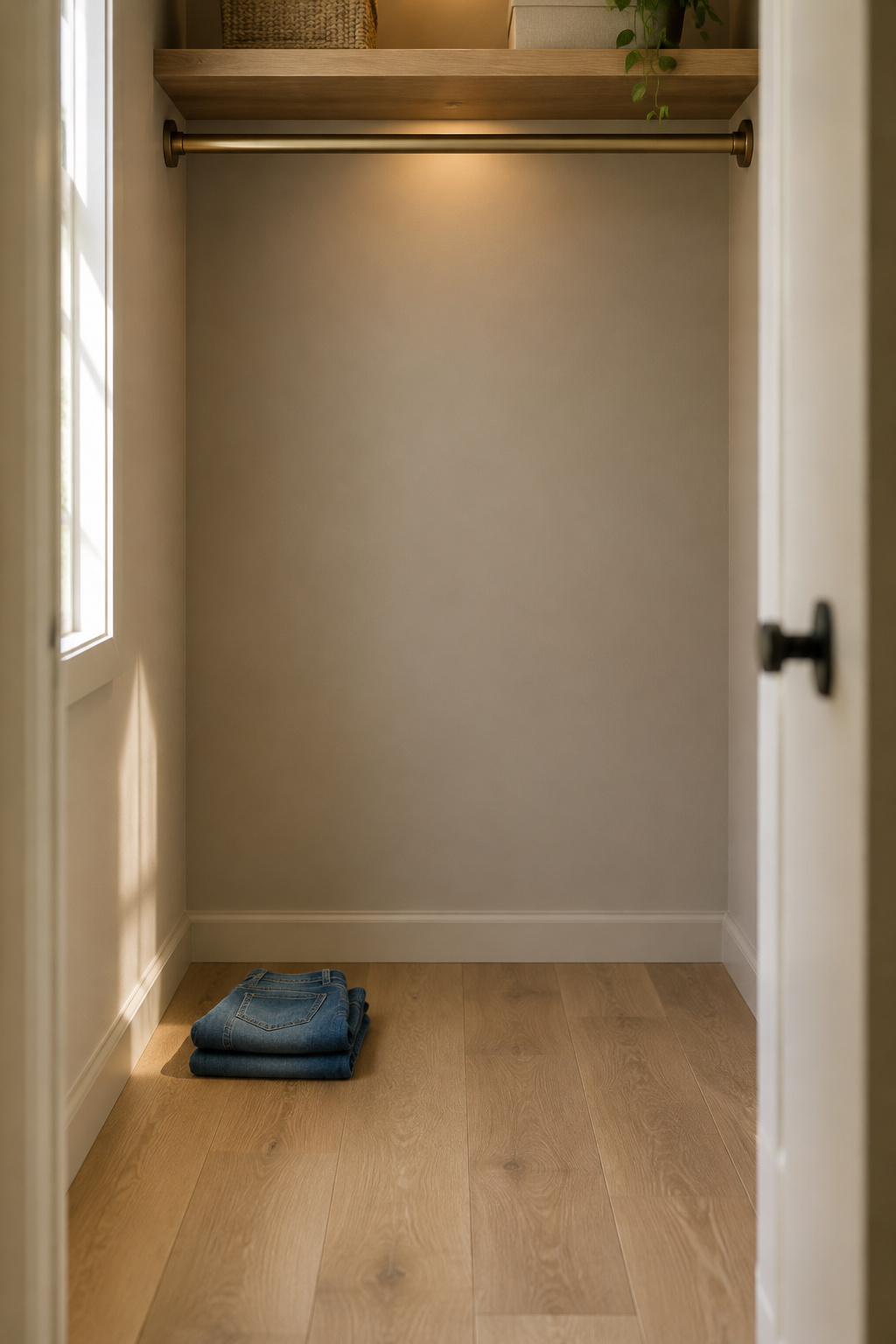
Hang a single rod at the standard height and everything from the floor up to roughly 40 inches is empty air, about the bottom third of the closet doing nothing.
Capacity math: closet-industry guidance puts a single rod at around 8 to 10 garments per linear foot and a double-hung pair at 16 to 20 in the same footprint. Those figures come from closet companies’ own blogs, not independent testing, so treat them as a ballpark. The direction isn’t disputed: stacking rods is the biggest lever you have before spending a dollar, which is why durable closet organization ideas start there.
What a small closet can honestly hold before it needs overflow
Angi suggests a minimum of 3 square feet of closet per person, which is a gut-check on the footprint itself. Past that, do the arithmetic: linear rod feet times garments per foot. A 4-foot closet, double-hung, holds around 64 to 80 hanging items before it’s genuinely full rather than merely messy.
Go Vertical Before You Buy Anything
The most common mis-plan is treating the whole closet as double-hangable. Dresses and coats need a full-length run, and if you stack rods the entire width, you’ll end up folding a wool coat over a bar.
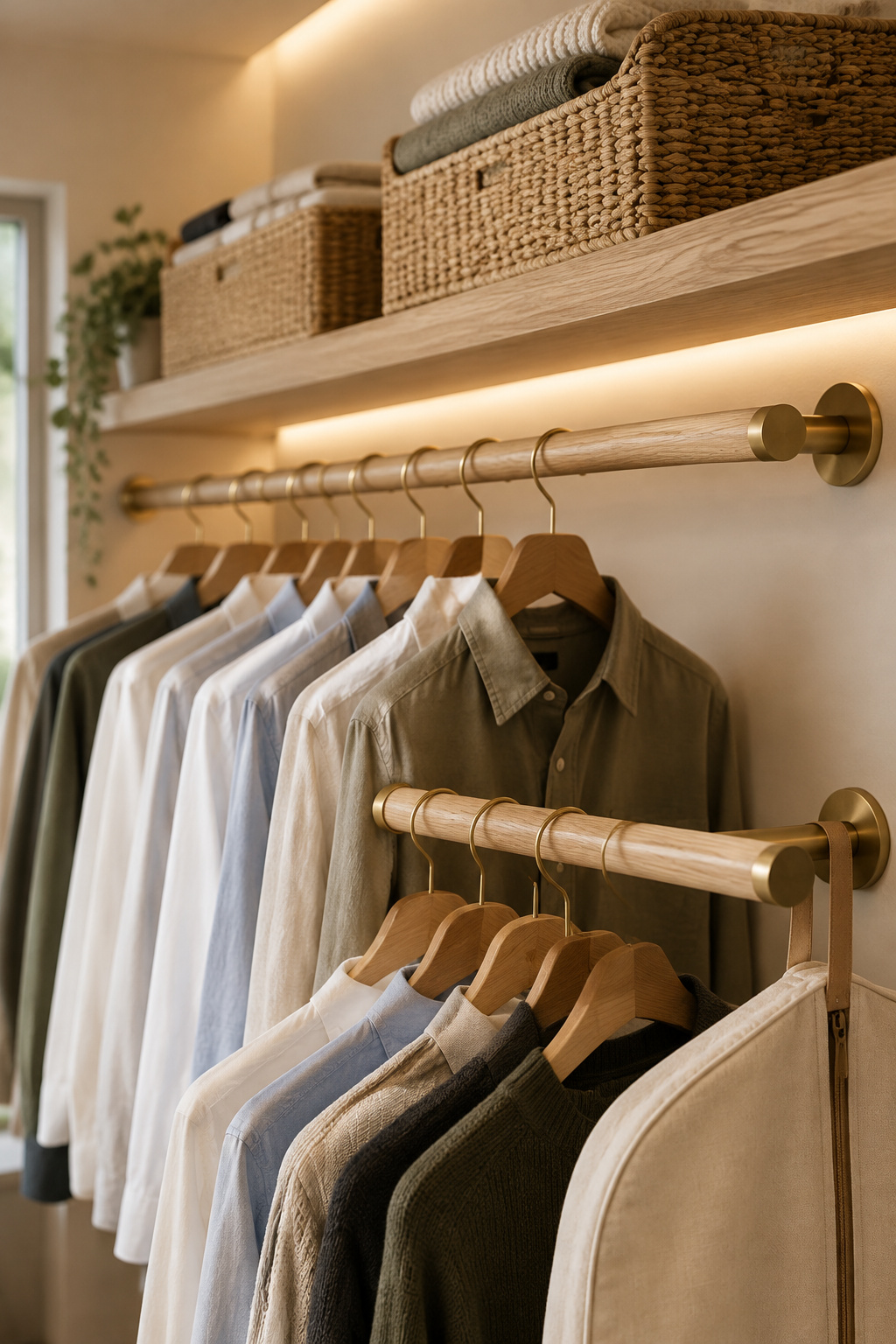
Double-hanging what can be doubled
- Measure the clearance first. Allow roughly 40 inches per rod level so lower-rod shirts don’t drag the floor.
- Use the trade’s standard heights. A single rod sits near 66 inches. Double-hung runs an upper rod near 81.75 inches and a lower near 40.5 (canonical figures owned by spoke-4, walk-in-closet-layout-ideas).
- Budget $15–40. A rod plus brackets, or a hang-and-stack kit. No system replacement.
- Keep one full-length section. Reserve a bay for dresses and coats and double-hang the rest.
Stacking shelving above the rod
- Go up the wall. Bracket or floating shelves go in at any height, turning the wall above the top rod into storage.
- Contain what goes up there. Group small items into baskets. Loose stacks turn a new shelf into a junk shelf fast.
The dead zone above the door most people ignore
- Take the header wall. The band above the doorway, often a full stud bay 12 to 16 inches tall, sits empty in most closets. It holds a shallow shelf for off-season bags and spare linens.
- Use the door itself. An over-the-door organizer uses no floor and no wall, and both faces of the door are fair game.
Slimline Hangers Buy You Real Inches
Years ago the crew I ran kept a $40 oscillating multi-tool in the bottom of the van. Nobody respected it until a baseboard needed a notch cut with the flooring already down, and that ugly thing saved the install. Whatever rescues a job is usually the cheapest item in the box. In a closet, that’s a bag of flocked hangers.
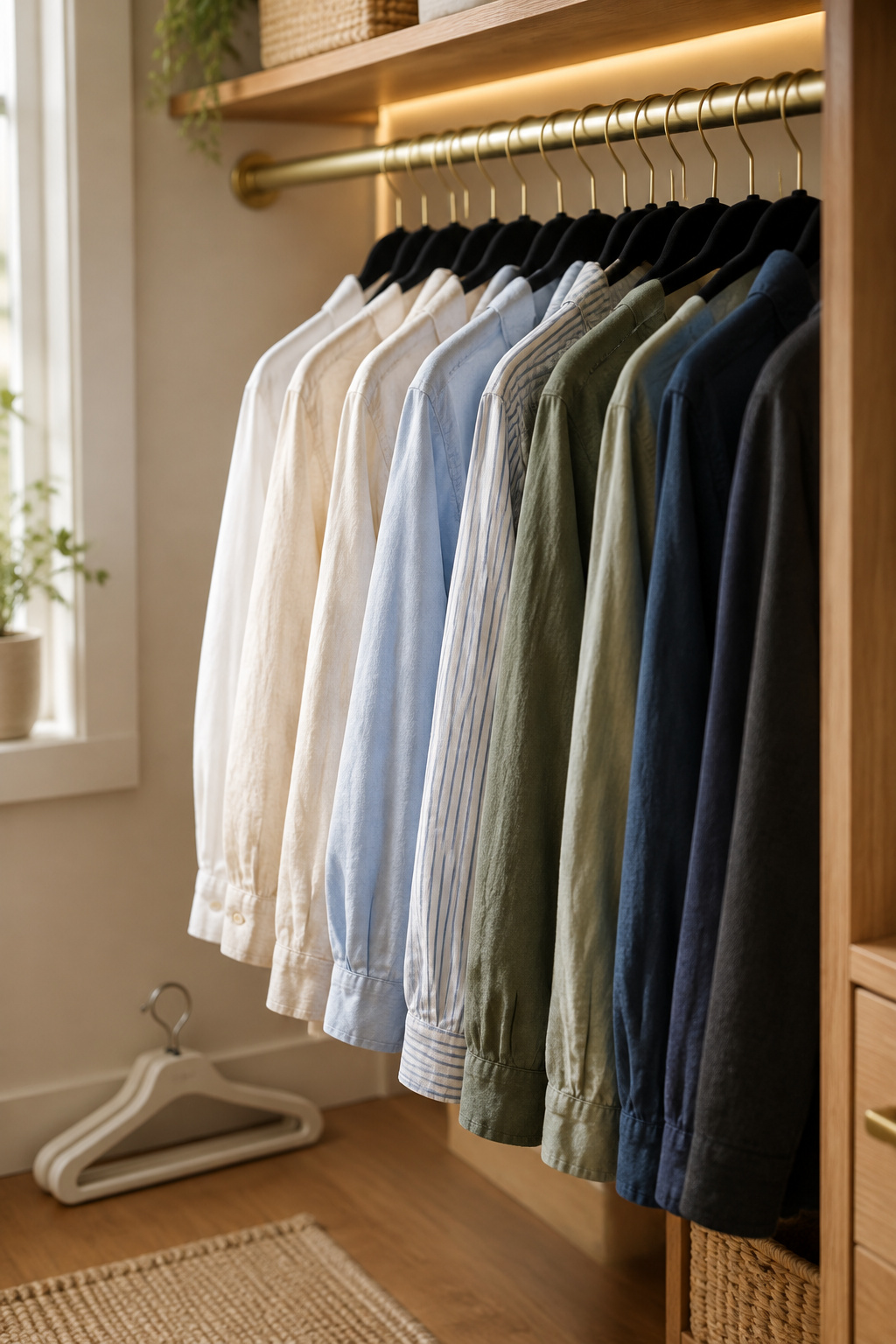
Why flocked hangers beat wire and plastic
Flocked hangers do two jobs. The thin profile fits more per foot of rod, and the velvet grips fabric so clothes stay put when hung closer together.
They aren’t universal. Use them for shirts, blouses and most dresses. Coats, suits and heavy pants bow a thin hanger, so keep sturdier wood or contoured plastic under them.
How much space you actually gain, in numbers
| Hanger type | Thickness | Best for | The catch |
|---|---|---|---|
| Slim flocked (velvet) | ~0.2–0.25 in | Shirts, blouses, dresses | Bows under coats and suits |
| Standard plastic tube | ~0.5–1 in | Structured coats, heavy pants | Costs 0.3–0.75 in per garment |
| Wire (dry cleaner) | Thinnest | Getting clothes home | Distorts shoulders; clothes bunch |
Across a 4-foot rod that difference is roughly 15 to 25 extra hanging spots, another rod’s worth of room for two multipacks. One Homes & Gardens writer reported the swap doubled her hanging space. Take that loosely, since it’s one before-and-after and not a measured average.
Door- and Wall-Mounted Add-Ons That Don’t Need a Full System
Everything so far works whether or not your name is on the deed. Here it splits.
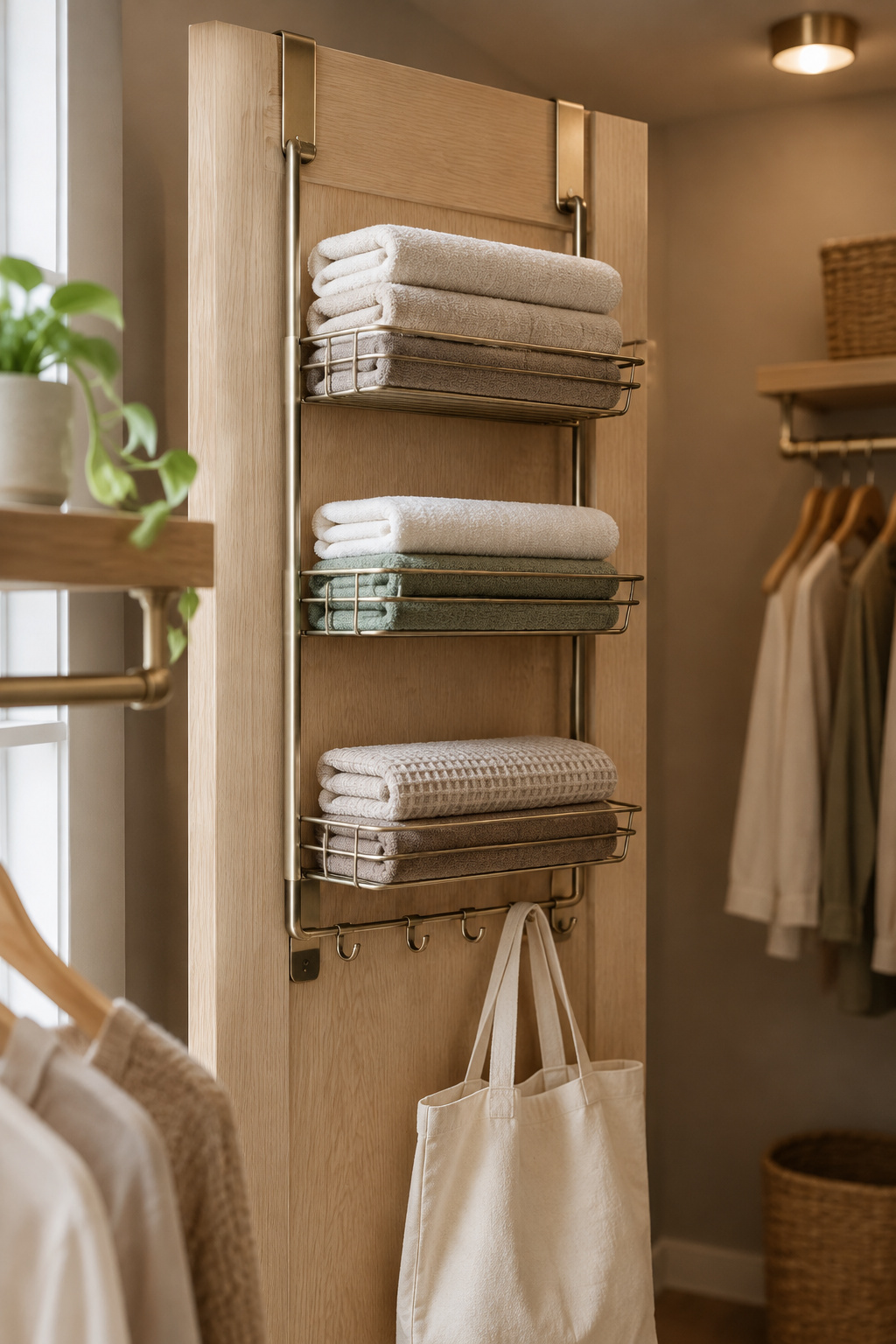
Over-the-door racks and hooks
Adhesive hooks have published ratings. 3M’s Command line runs in tiers: Large holds 5 lb, X-Large 10 lb, Extra Large 15 lb. All three mount on painted walls, cinderblock or concrete with no tools and no holes.
No-drill tension rods are the other zero-hole option, and here I’d slow down. Some are marketed at up to 66 pounds, but I’ve found no independent test of that number. It’s a retail listing, and real hold depends on wall material and rod length. Load one gradually.
Wall-mounted shelving without tearing out the closet
Shelves anchored into studs hold strongest, so anything carrying real weight should land on one. Find studs with a stud finder, or knuckle-knock and listen for hollow turning solid. Where a shelf can’t reach one, drywall anchors extend the hold into hollow wall, roughly 50 to 350 lb depending on the anchor and product.
What requires drilling vs. what doesn’t
Two tactics here install with zero holes: tension-rod shelving and adhesive hooks. Everything else puts holes in something, fine if you own the place. If you don’t, read renter-friendly closet storage instead. That article is built around the permission constraint rather than square footage.
The Honest Limit: When a Small Closet Needs Overflow
How do you know when you’ve stopped optimizing and started cramming? The signals are physical.
Signs you’ve hit the ceiling of what the closet can hold
The clearest is compression: clothes packed tightly enough to wrinkle, or a rod you can’t read without digging. Items falling off shelves count too, as does a door that won’t close or a bin permanently parked on the floor. These are volume problems, and rearranging doesn’t fix volume.
Where overflow belongs elsewhere in the room
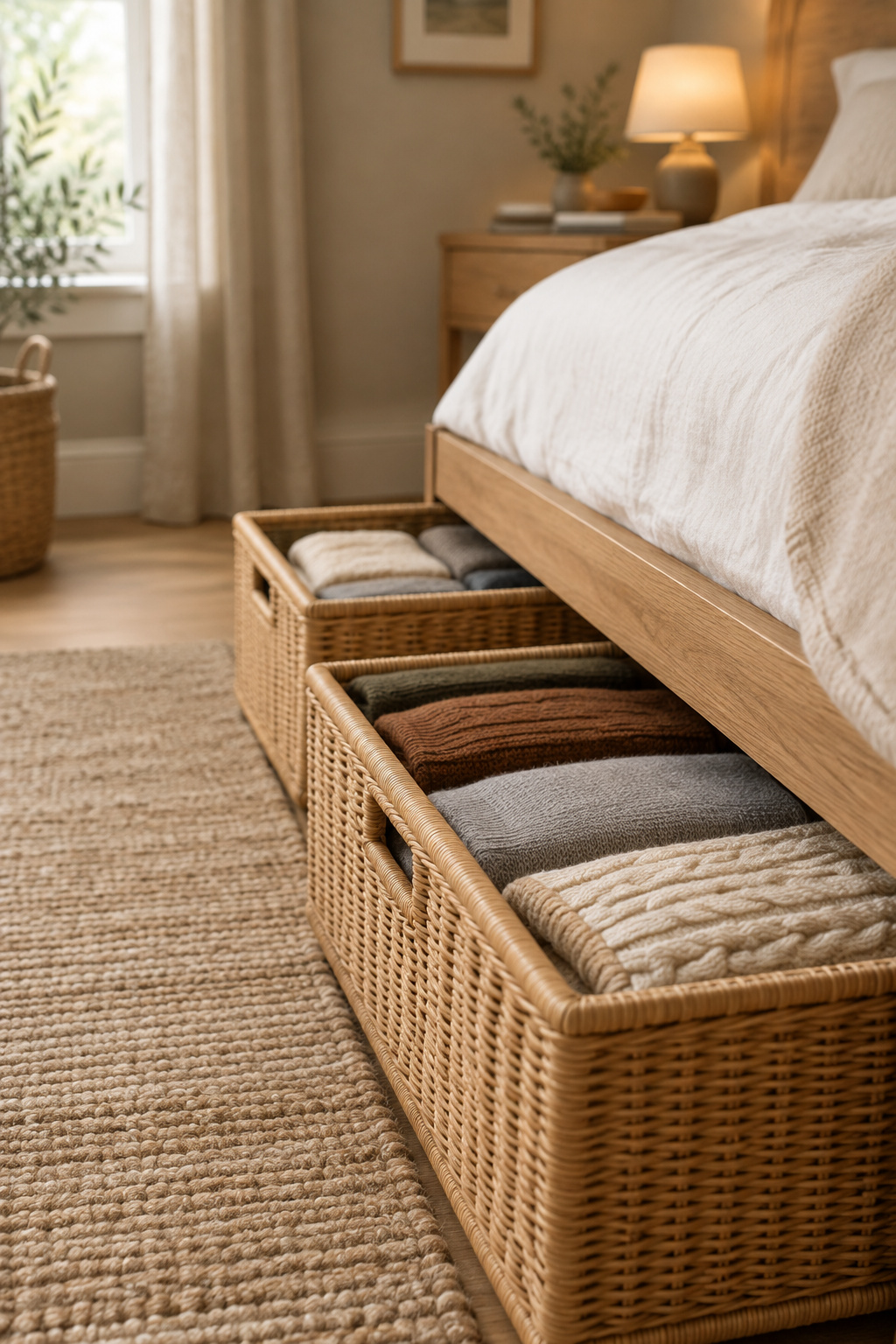
My position: buying another bin for the closet floor is how you make a small closet smaller. Overflow belongs outside the closet. The standard professional move is a seasonal swap: roughly half the wardrobe lives in labeled bins elsewhere, traded twice a year. Under-bed bins suit that, using square footage the room already has.
The Case for Owning Less, If You’ve Tried Everything
There’s a point where the storage plan stops being the constraint.
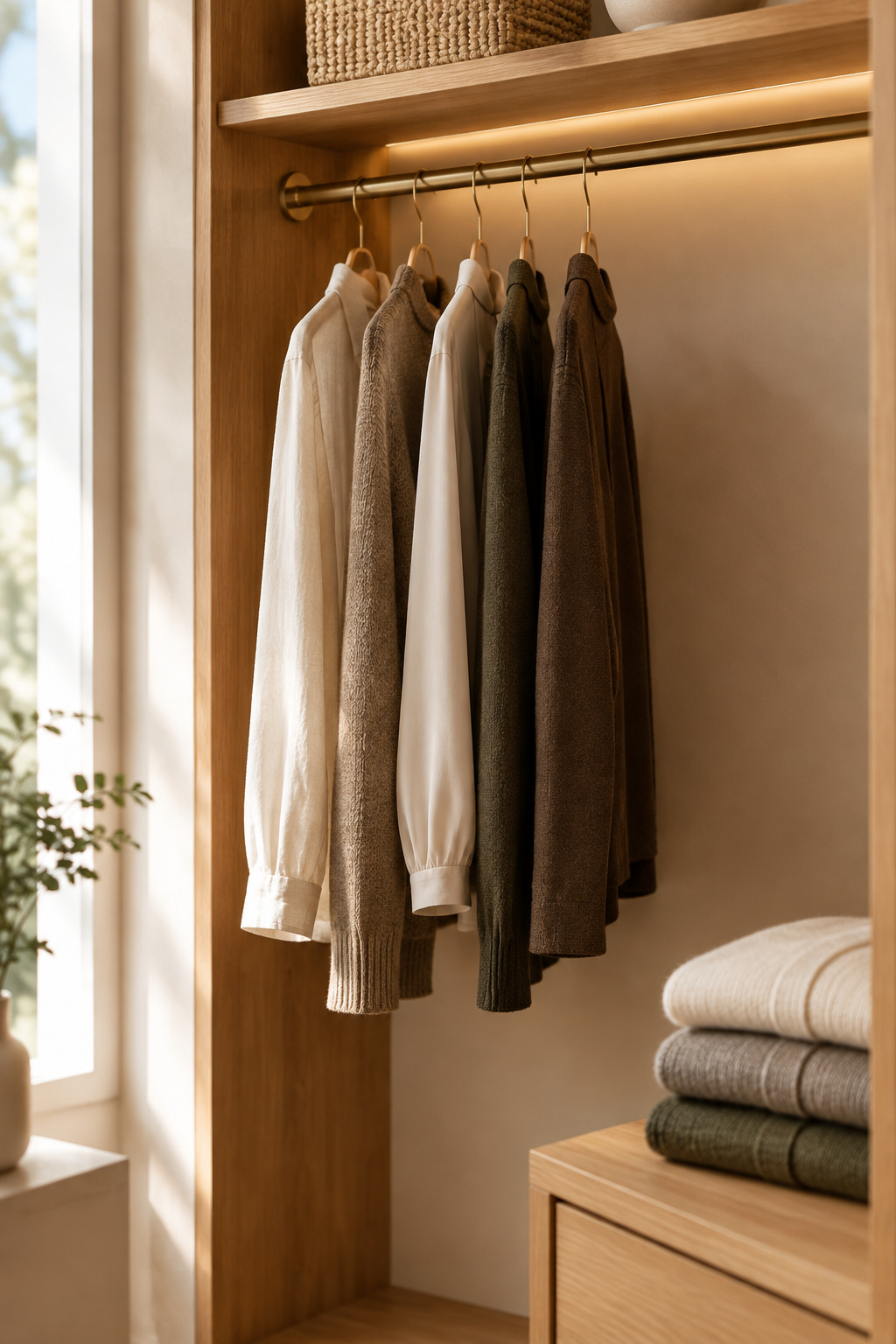
When more storage tricks stop helping
Run the checklist: rods doubled, hangers slim, door and walls working, half the wardrobe under the bed. If things still don’t fit, the wardrobe is the constraint now.
What a smaller wardrobe would change
Fewer items change what storage the closet needs: fewer hanging categories, less pressure on the double-hang, and no bins to swap twice a year. How many items that means is genuinely contested. It belongs to the case for owning less, not a number I’d pin down here.
Start with a tape measure instead of a shopping cart. Measure the closet’s width in linear feet, count what’s hanging there, and compare against 16 to 20 garments per foot. That one calculation tells you which reader you are: a $20 rod from solved, a bag of hangers away, or genuinely past what the closet holds. Rearranging won’t give you that answer.
FAQ
Should I remove the closet door to save space?
Removing it reclaims the door’s swing radius, commonly 24 to 30 inches of floor clearance, for the room. The tradeoff is that the closet stays visible and dust exposure rises, so it suits one that’s already organized. A curtain or slimmer sliding door captures much of the benefit.
Do store-bought closet organizer kits actually help in a small closet?
They can. Product testing rates the better kits (Rubbermaid HomeFree, Rubbermaid Deluxe Custom, ClosetMaid ShelfTrack) as durable and installable without a pro when the locking clips are used correctly. Quality varies sharply at the entry level, with poor laminate and missing pieces reported. Buy the kit, not the category, and size it to your closet’s width.
How often should I redo a small closet’s system as my wardrobe changes?
Organizer Mary Cornetta’s twice-yearly seasonal swap, spring and fall, doubles as the checkpoint: with the bins open, you see whether the system still fits what you own. A full redo (new rod heights, different hangers, added shelving) is warranted only after a real change in what you store, never on a schedule.