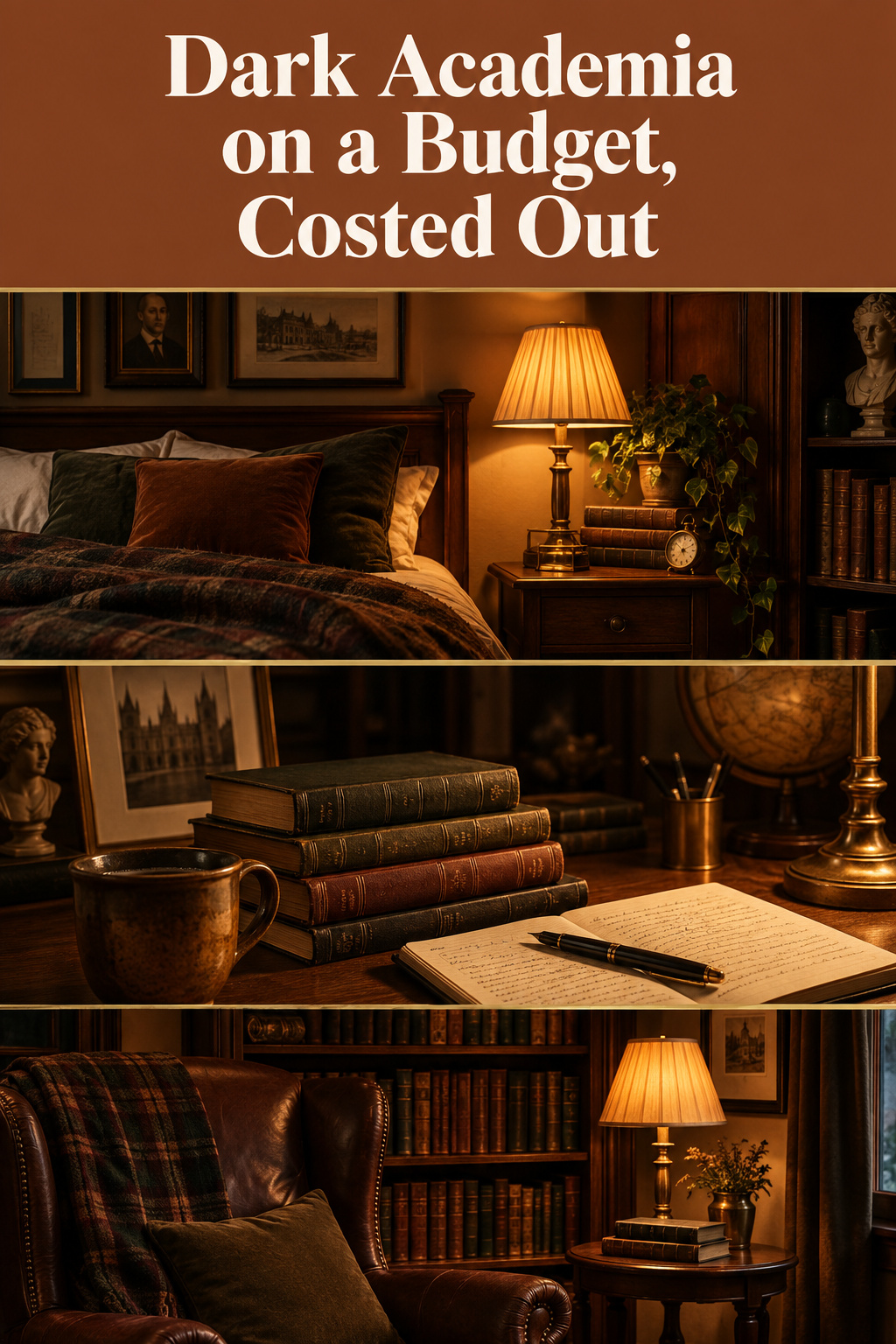

Add it up. A $38 brass-look tray, a $42 throw, a $45 pair of bookends, a $35 three-pack of frames. That is $160 gone, and the room still looks like four separate purchases sitting in it. That is what goes wrong with a dark academia room on a budget. The money leaves in forty-dollar pieces with no order behind them, and order is what makes the spend hold together. Below, the room is priced from the bottom up, rung by rung, arithmetic shown, with the three purchases where buying cheap costs you visibly.
TL;DR
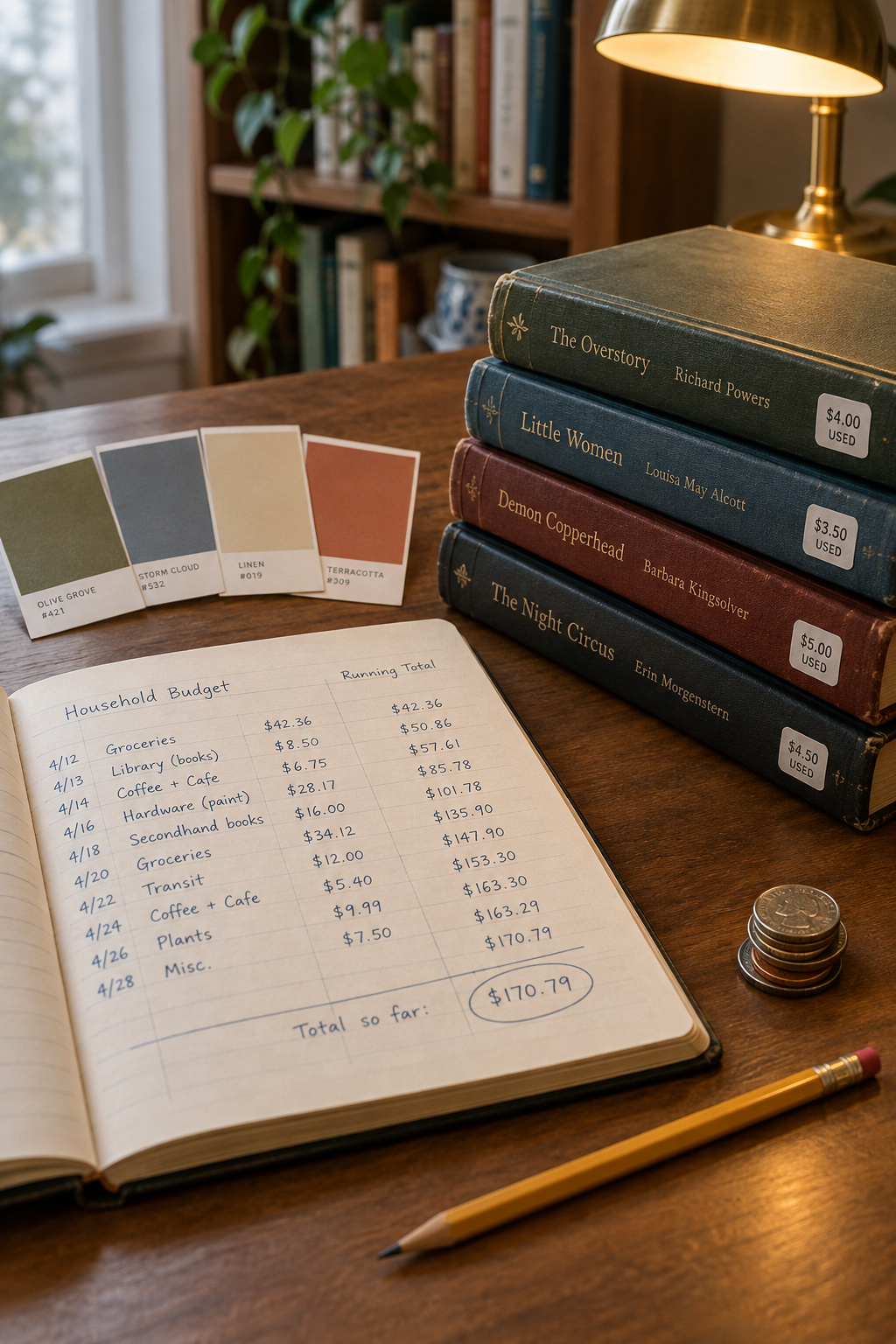
- Spend in three passes, not all at once: paint and thrifted books first ($150–$400), soft goods second (running total $215–$595), one real furniture piece third (running total $265–$894 on the pieces named here, and upward if you save for something better).
- Three purchases show it when they are bought cheap: fake decorative books, plastic frames behind standard glass, and thin electroplated hardware, which wears through at high-touch points in 8 to 12 months.
- Two weekend jobs are worth doing: dark trim (about $40–$65 in materials, 3.5–4.5 active hours) and reframing a thrifted print ($15–$25, under an hour). Start with the reframe.
The cost ladder: what order to spend in
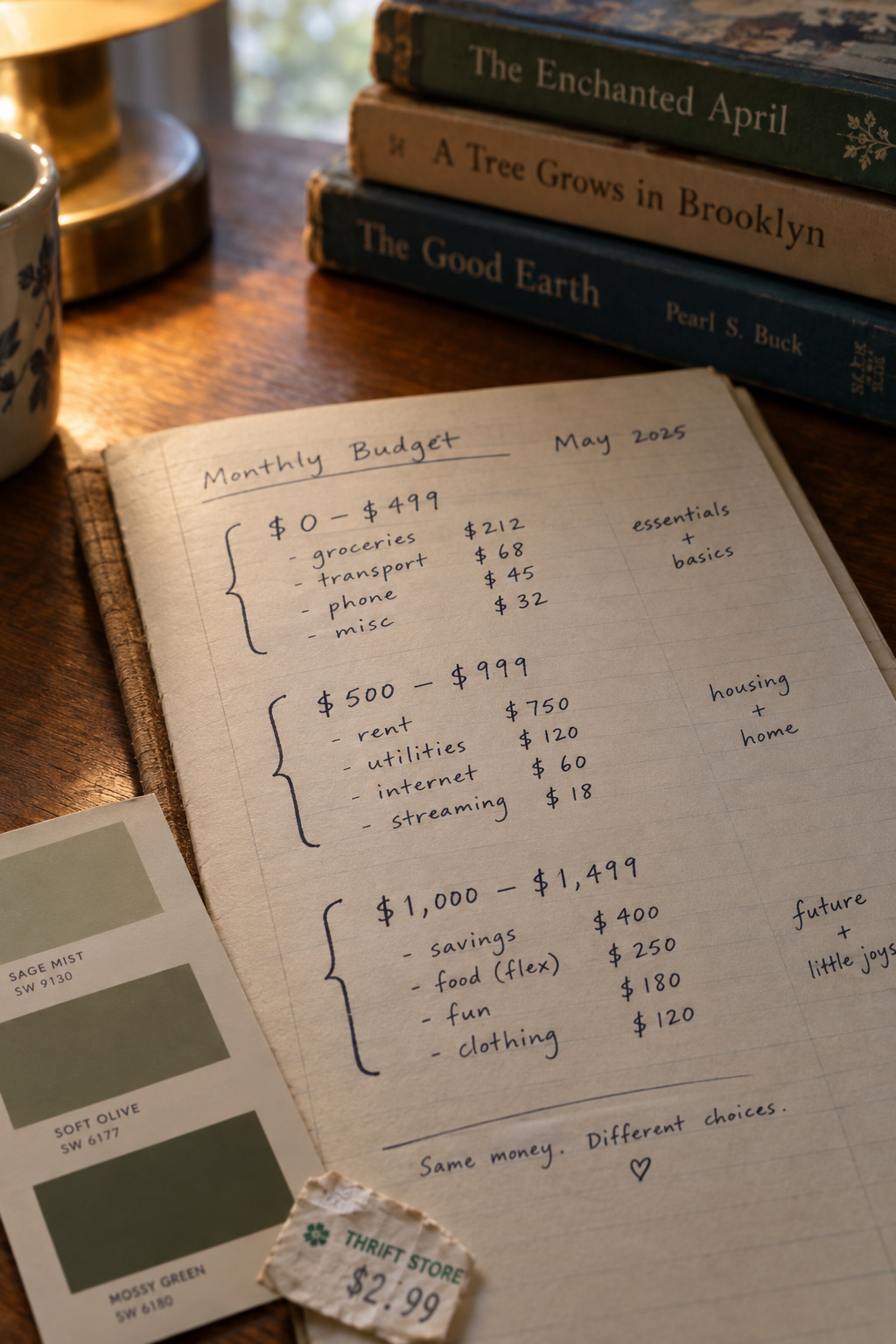
Order matters more than the total. Every rung below is built from real component prices rather than a single invented “dark academia budget” figure, because no such published figure exists, and each rung carries the one before it, so the right-hand column is what you have spent by the time that pass is done.
| Rung | What it buys | Adds | Running total |
|---|---|---|---|
| 1 — Pass One | Paint and supplies $130–$300, plus 20–25 secondhand books at $1–$4 each | $150–$400 | $150–$400 |
| 2 — Pass Two | A throw $25–$35, plus a rug at $40–$160 blended thrift/new — the ladder’s working figure, not the new-only price | $65–$195 | $215–$595 |
| 3 — Pass Three | One furniture piece: thrifted $50–$250, or new flat-pack $179–$299 | $50–$299 | $265–$894 |
| 3, open path | Skip the above and save for one better piece instead | whatever that piece costs | $215–$595, plus it |
Paint $130–$300 + books (20–25 × $1–$4 = $20–$100) = $150–$400; + throw $25–$35 + rug $40–$160 = $215–$595; + furniture $50–$299 = $265–$894. That top figure is the ceiling of the pieces this article actually names. The fourth path has no ceiling I can show you, so I am not going to print one: if you save for a better dresser, the room costs the second rung plus whatever that dresser costs.
Three itemized accounts say the whole room lands under $500 when you thrift hard. Apartment Therapy documented a black bedroom with thrifted lighting, a DIY plywood-and-velvet headboard under $57 and about $114 of molding. A designer’s “realistic $500 refresh” totaled $470, a single $279 rug taking most of it. A third came in at $485 on eBay finds and $3-apiece shelves. Julia Marcum’s rule is the one that travels: a $500 budget spent on ten $40 items looks like ten $40 items. For where these pieces sit in the finished room, see the complete dark academia bedroom walkthrough.
Pass one: paint, thrifted books, and a free Saturday
DIY paint and supplies for a standard 12×12 bedroom, two coats, walls only, land at $130–$300. Five independent trade sources converge on that band: HomeGuide at the top of the range, a Behr Marquee breakdown at $137–$174 near the bottom. A deep color pushes you toward the upper end, because KILZ’s own guidance is to tint the primer for deep and rich colors, and the generic cost guides rarely itemize that.
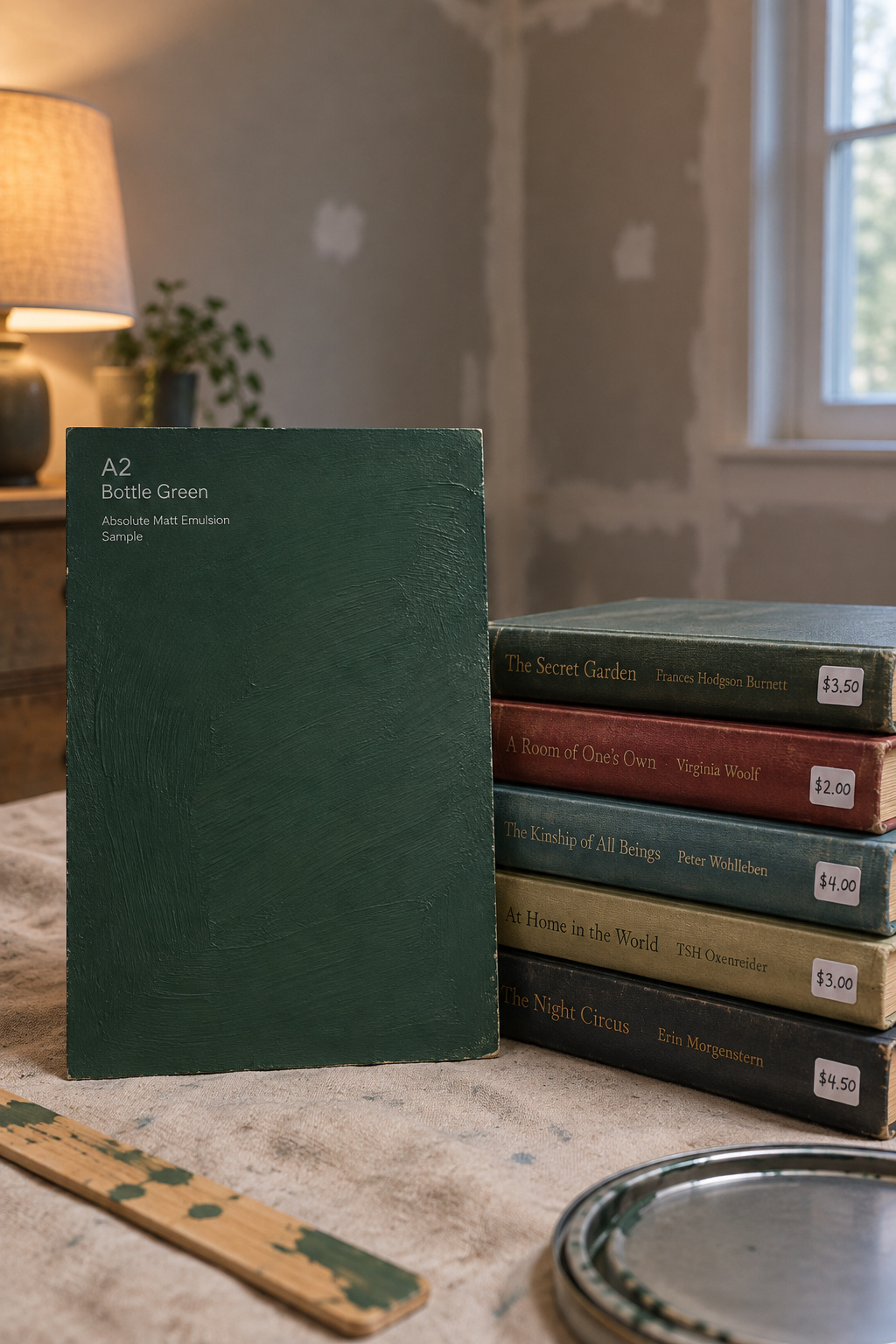
Before the full can, buy the sample. A quart runs $3.50–$8, and the site’s testing standard (an A2 board, two coats, a full 24-hour cure, checked at three separate light moments) is cheap insurance against repainting a wall in the wrong undertone. Which color to test is not my call; that one belongs to the paint colors that actually read dark academia.
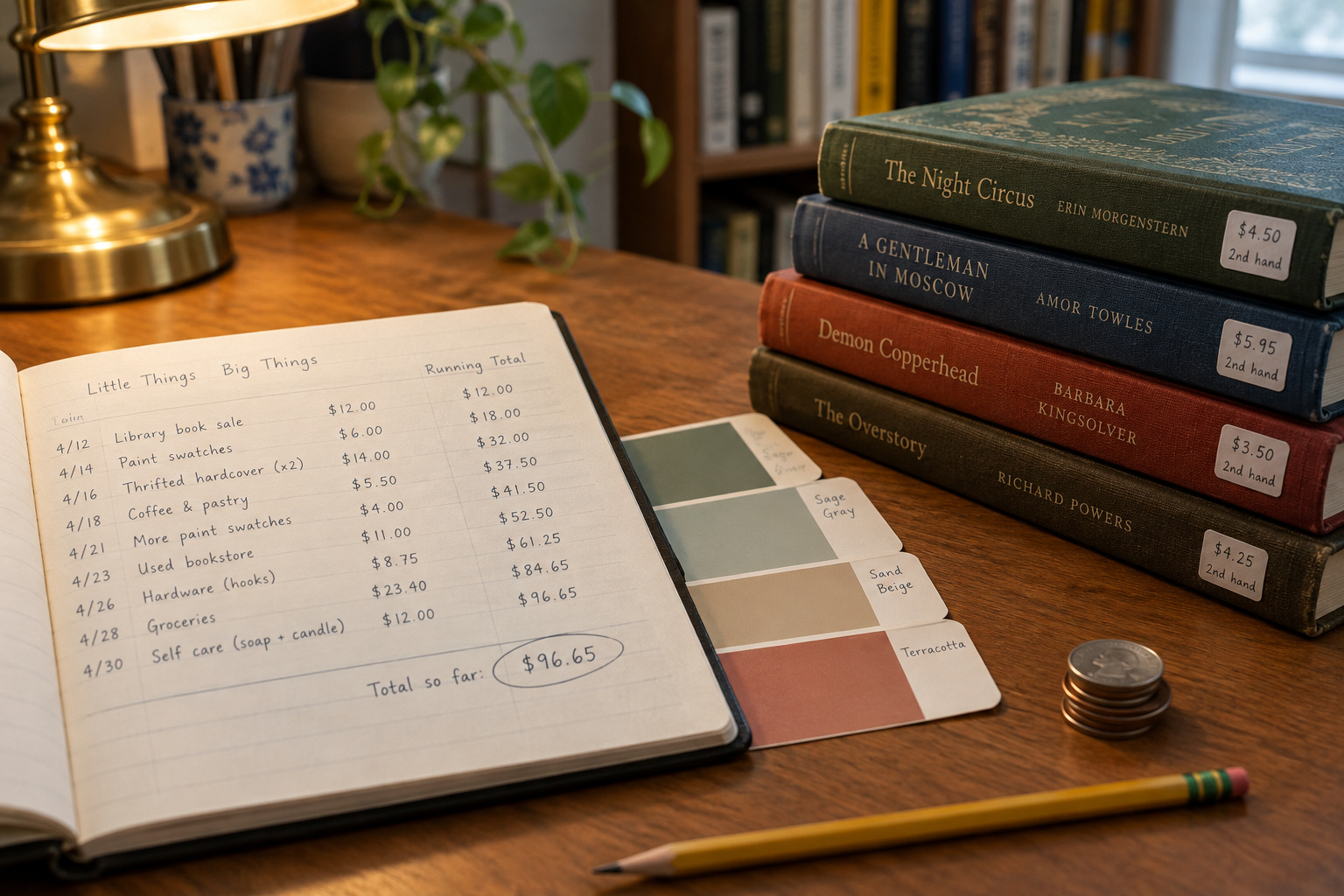
Books are the other half of this pass, and their pricing is genuinely contested. Goodwill of the Southern Piedmont’s posted list is $1.39 hardcover and $0.99 softcover. An outlet store selling by the pound works out to $0.75 and $0.50. An in-person account of a Pasadena store reports $2 and $3. The $3.94–$4.77 figure some design posts repeat looks specific to a boutique Goodwill Bookstore, not to a typical shelf, so I am using $1–$4.
20–25 books × $1–$4 = $20–$100. That is a starter shelf for the price of one throw pillow, and a real Saturday’s work.
Pass two: soft goods that read expensive
The mistake in this pass is budgeting for the windfall. Someone documented a $20 oriental-style rug from a thrift store and expected to pay over $200, a genuine bargain, but not a number you can plan against. I went looking for a defensible typical thrifted-rug price and could not find one; the sources offering a figure were hedging estimates, not data. So there is no thrifted-rug price here. Treat any find as upside.
Plan against the new prices instead, and this is where two figures get confused. New retail for a 5×7 to 8×10 budget rug runs $80–$200, the new-only figure, from a general decor breakdown that allocates $80–$120 at its $500-room tier and $100–$200 at its $1,000-room tier. The ladder above uses $40–$160, which is a blended thrift/new working figure, and it is lower on purpose. Buy the rug new and you land at or above the top of the second rung, not in the middle of it.
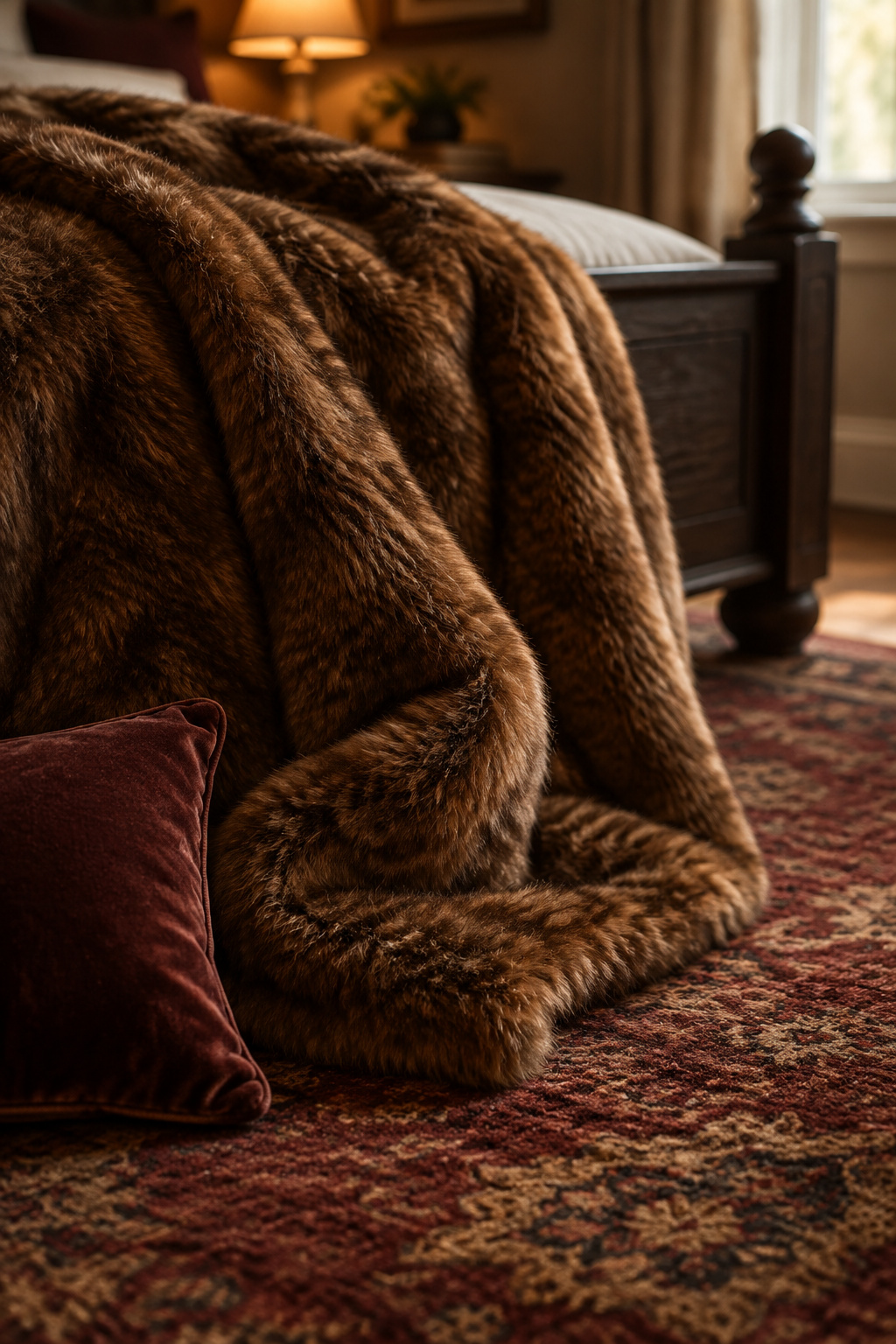
The throw is easier. Target’s Madison Park ruched faux-fur throw is $30.99, which anchors the new-budget end honestly. Sewing one rarely beats that: entry-level faux-fur fabric is $15–$25 a yard and the convincing weaves run to $70, so the material floor sits close to the finished price. Buy the throw. Save the labor for the trim.
Pass three: saving for the one big furniture spend
What is a used dresser actually worth? There are two honest answers, and they do not agree, because they are answering different questions.
| Where you are buying | Share of retail | What that looks like |
|---|---|---|
| Estate sale or thrift (fast clearance) | 10–20% | Bedroom set $50–$250 |
| Individual resale listing (Marketplace, eBay, consignment) | 20–70% by condition and venue | Flat-pack 10–35%; solid wood 40–65% |
| New flat-pack | n/a | IKEA MALM 6-drawer $179 in black-brown, to about $299 in other finishes |
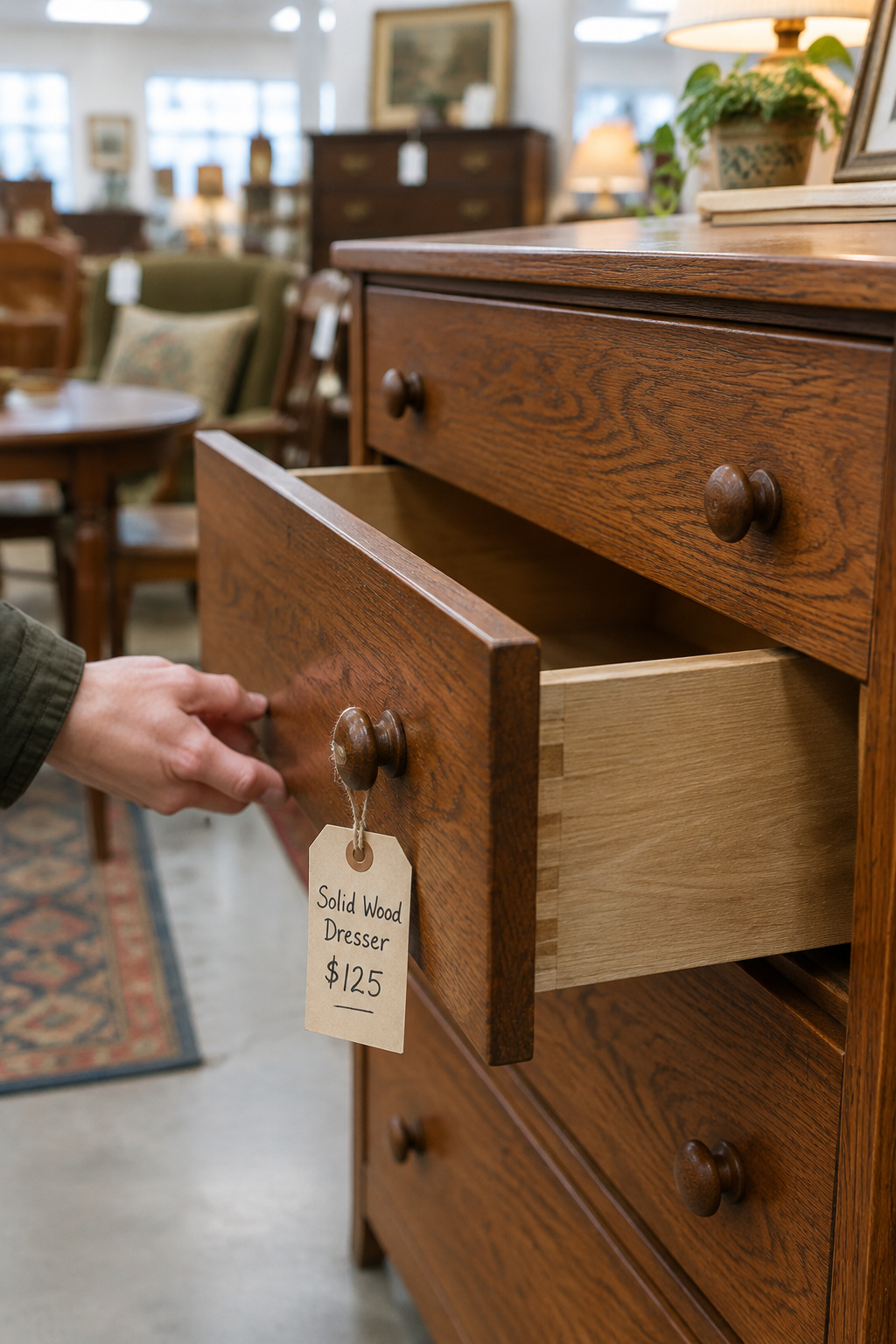
Both percentage rows are real. The mechanism is the finding: a venue clearing inventory by Sunday prices lower than a seller who can wait three weeks for the right buyer. So the $50 estate-sale dresser is not cheap because it is junk. It is cheap because the sale ends.
That gap is why spending this rung secondhand pays off. Remoov’s resale index puts mass-market flat-pack at 10–35% value retention, sagging toward the bottom past five years, against 40–65% for solid wood in shapes that do not date. Pay $150 for a solid piece and you can get real money back out of it. Pay $179 for the new chest and you mostly cannot. Whether the specific piece in front of you is solid or a veneer story is a different skill, and it lives in how to tell a good piece from a bad one before you buy. Read that before you hand anybody cash.
Waiting is a legitimate path. Every one of the under-$500 rooms above let a single item absorb half the budget.
Three things that look cheap when bought cheap
“I will never use fake books.” That is designer Jeanie Chang, quoted in the New York Times, one of three major papers, with the Guardian and the Telegraph, that covered fake decorative books as a real and contested trend rather than a joke.

| The purchase | Why the cheap version shows | Spend it here instead |
|---|---|---|
| Fake decorative books | Hollow boxes, printed spines, a fabric backdrop of shelves — no function, at a unit cost near or above real ones | Secondhand hardcovers, $1–$4 each, readable and resellable |
| Plastic frame, standard glass | Plastic bends, cracks and warps, and looks thin beside real work; standard glass bounces lamplight straight back as glare | A thrifted wood or metal frame; non-glare etched glass is the cheapest glazing upgrade |
| Thin electroplated hardware | Plating microns thick over zinc alloy; visible wear at high-touch points in 8–12 months, against essentially unchanged at two years for a solid or harder substrate | Solid pulls on the drawers you actually open |
One mechanism runs under all three. This look asks its objects to appear handled (read, opened, worn at the edges), and the cheap version fails where it cannot fake that history. A hollow book has no pages to thumb. A glare erases the print it is protecting. A worn patch on a plated pull goes green and blotchy instead of taking the even patina solid brass takes.
Two honest complications. A hands-on comparison of fifteen real cabinet knobs found even the $2–$5 ones surprisingly solid and heavy; the flaw was a glossy finish, not failure. The line is the thinnest, shiniest sub-$2 multipacks, not every budget knob. And when plated brass looks tired, a restoration specialist will tell you the clear lacquer usually failed first, which makes it a re-lacquer job rather than a replacement.
The DIY jobs worth a weekend
Three jobs pay for their weekend. Treat them as multipliers on the three passes above.
| Job | Materials | Active time | Elapsed | Skill |
|---|---|---|---|---|
| Reframe a thrifted print | $15–$25 reusing the frame (mat and glass only); $30–$49 all-new bargain components; $77–$135 archival mat and UV glazing | Under 1 hour | 1–2 days if a mat is custom cut | First build |
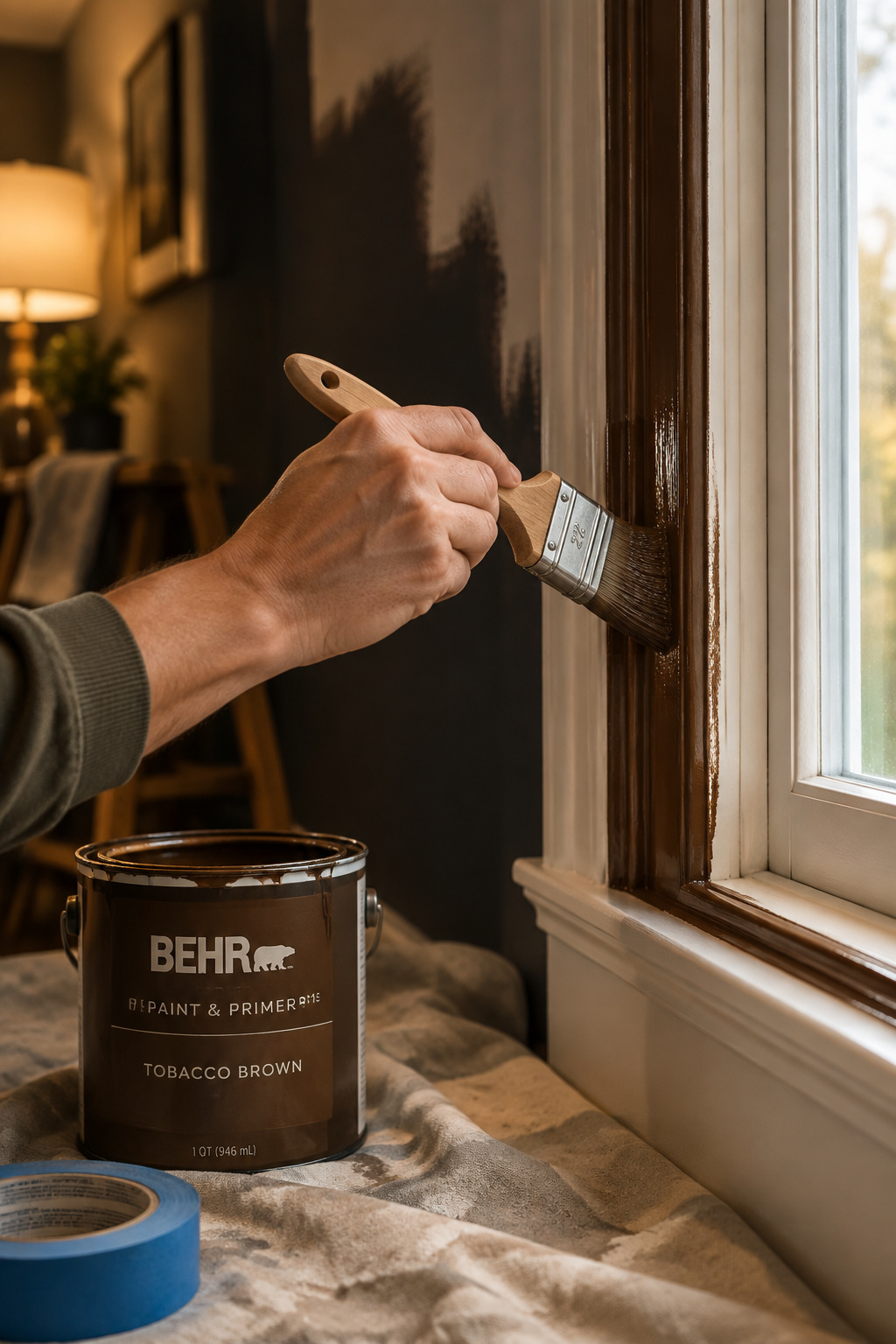
| Dark trim, one bedroom | $40–$65: a quart of trim enamel around $14.98, plus $20–$40 of tape, brush and caulk | 3.5–4.5 hours | About 1.5 days | First build |
| Shelf run, 2–3 shelves | $20–$180 by wood grade, realistically $60–$150; hardware under $15 per shelf | 2–6 hours per shelf | A full weekend | Some builds |
Trim math first, because it is the one people get wrong in both directions. A quart covers 100–150 linear feet per coat, 125 being the standard calculation, and a 12×12 bedroom with one door and one window needs roughly 73 linear feet. One quart does two coats almost every time. Buy the quart, not the gallon.
Taping and caulking 1–1.5 hours, first coat about 1 hour, a mandatory 4–6 hour dry gap, second coat about 1 hour, cleanup 30 minutes: 3.5–4.5 active hours spread across a day and a half. No single source gives a trim-only DIY figure, so that is my arithmetic, shown rather than asserted. The rolling goes fast. It is the cut-in, the tape and the tacky half-cured feel of the first coat under a thumbnail at hour three that eat the day, and every timeline I publish includes the trip back to the store, because there is always one.
The shelf run is the real commitment. It is not the cheapest job in this room, and loaded books are heavier than people expect. Real builds bracket it honestly: about $3 a shelf from scrap pine at one end, $100–$150 for a pair from new lumber at the other.
The reframe is the cheapest job here, it undoes the plastic-frame trap on its own, and finishing something small this weekend is what makes the next rung feel affordable. Start with it: pull one thrifted print, order the mat, clean the glass, and have it back on the wall by Sunday for about $20.
FAQ
Is $500 realistic for a full dark academia bedroom on a budget?
Yes, and it is documented rather than aspirational: three itemized makeovers landed at $470, $485 and under $500. Against this ladder, $500 sits inside the second rung’s $215–$595 band and reaches the third only if the furniture piece is thrifted rather than bought new, which all three of those rooms did.
Should you buy furniture new or thrifted first when money is tight?
Thrifted, and specifically solid wood. Flat-pack retains only 10–35% of its value on resale and depreciates faster past five years, while solid wood in an undated profile holds 40–65%. Estate sales price for fast clearance at 10–20% of retail, which is why a genuinely good piece turns up well under its worth.
How long does a full budget dark academia makeover actually take, start to finish?
The paint pass is a weekend: a few hours of painting, two hours between coats, then 24–48 before furniture goes back. Each DIY job is a weekend or less. Furniture is the open variable: thrifting the right piece has no schedule, so budget extra weeks of looking rather than extra dollars.